Category: 2_Free State / Vrystaat

My Home Province in South Africa

  • Save Precarious Platberg!

    Save Precarious Platberg!

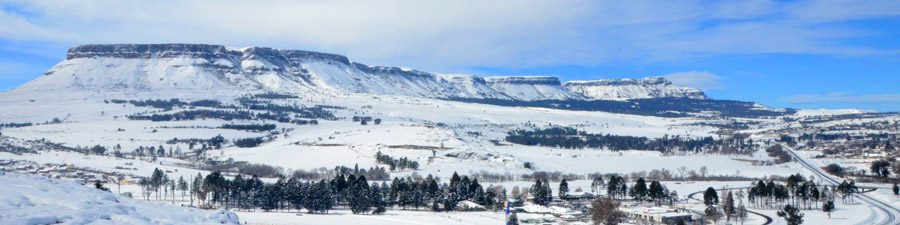
    Platberg, overlooking the town of Harrismith in the Free State, is an inselberg that presents a refuge for indigenous plants and animals. And its status is precarious.

    Platberg from Phutaditjaba side
    – Platberg behind Bakerskop in the foreground –

    ‘Little is known about the different taxa of Platberg and hence a detailed floristic and ecological survey was undertaken in 2009 by UNISA’s Robert F. Brand, Leslie R. Brown and Pieter J. du Preez to quantify threats to the native flora and to establish whether links exist with higher-altitude Afro-alpine flora occurring on the Drakensberg. Vegetation surveys provide information on the different plant communities and plant species present and form the basis of any management plan for a specific area. No extensive vegetation surveys had been undertaken on Platberg prior to this study; Only limited opportunistic floristic collections were done: Firstly, in the mid-1960s by Mrs. Jacobs. These vouchers were mounted and authenticated in 2006 and are now housed at the Geo Potts Herbarium, Botany Department, University of the Free State;

    Secondly, 50 relevés were sampled between 1975 and 1976 by Professor H.J.T. Venter, Department of Genetics and Plant Sciences, University of the Free State.

    Mucina & Rutherford 2006 say: ‘Platberg is the single largest and best preserved high-altitude grassland in the Free State. ‘

    – and I say in 2019: Look how tiny it is! You can hardly see Platberg on this map of all nearby high altitude places. Yet this is our single largest tiny piece of this grassland left!

    The authors plead: ‘As an important high-altitude grassland, it is imperative that Platberg be provided with protection legislated on at least a provincial level.’ At present, Platberg is still municipal, with very little protection! – In fact, I think they hire out the grazing for cattle – I hope not, as that really damages the veld and wetlands.

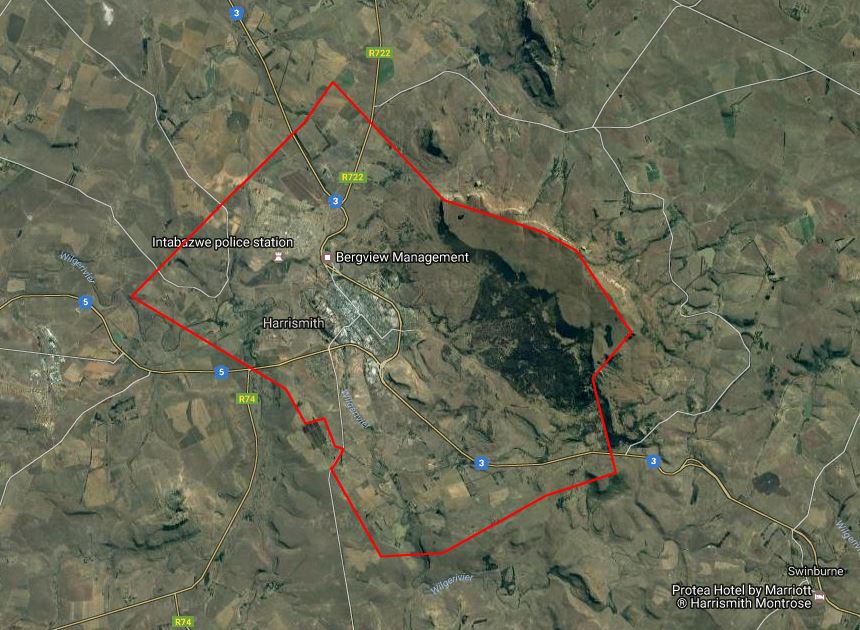
    – That tiny island above the ‘th’ in Harrismith = Platberg –
    Harrismith townlands
    – Harrismith townlands –

    More pics of Platberg.

    ~~~oo0oo~~~

    The UNISA study found 669 plant species in Platberg’s 30km2 area. To compare, Golden Gate Highlands park has 556 species in 48km2.

    Koedoe, African Protected Area Conservation and Science, is a peer-reviewed, open access journal published since 1958, which promotes protected area and biodiversity science and conservation in Africa.

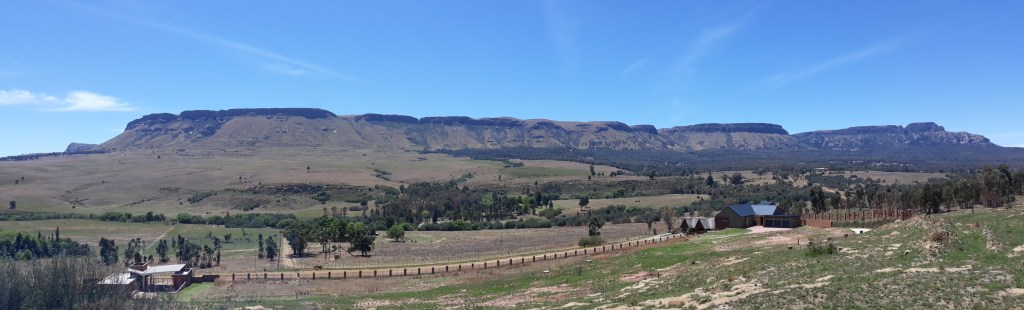
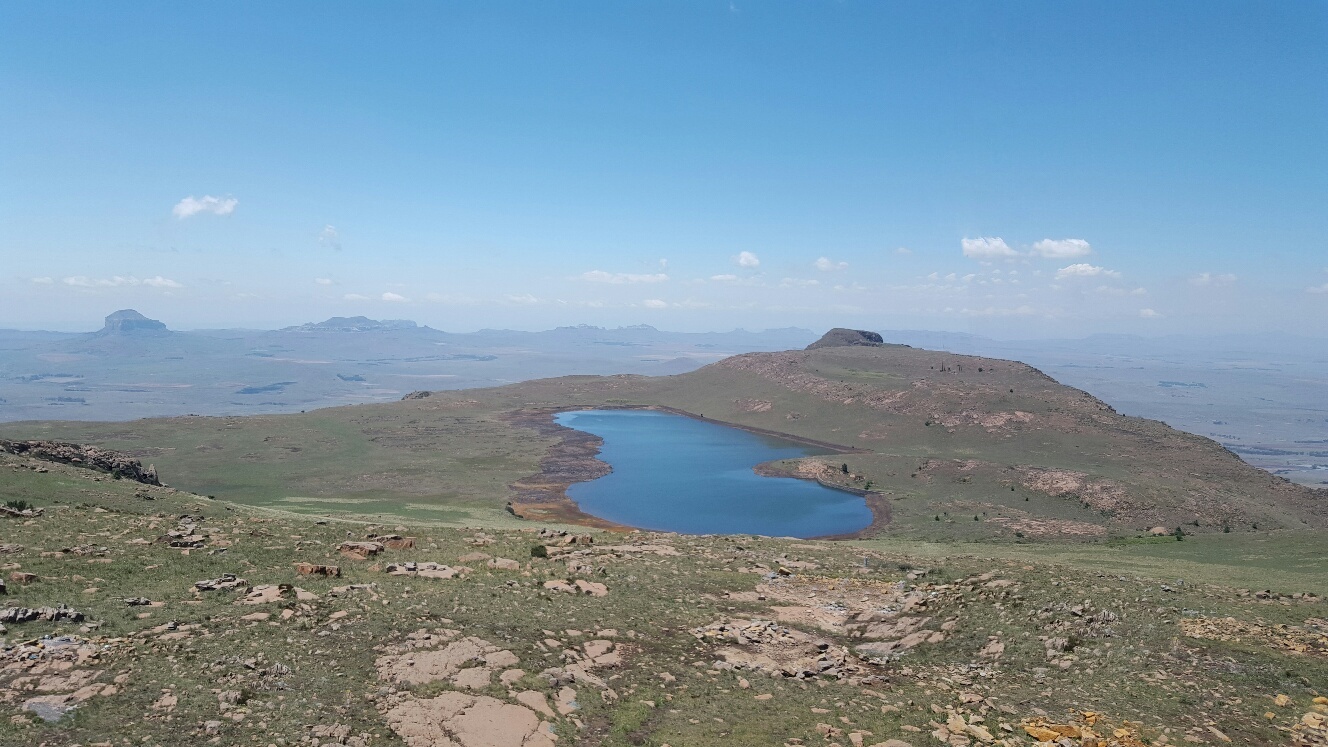
    Platberg’s altitude ranges from 1 900m to 2 394m ASL. The surface area covers approximately 3 000ha. The slopes are steep with numerous vegetated gullies and boulder scree slopes below vertical cliffs that are 20m to 45m high. Waterfalls cascade down the southern cliffs after rain. A permanent stream arising from the vleis around, and the vleis drowned by, Gibson Dam on the undulating plateau flows off the escarpment and cascades as a waterfall. From a distance, Platberg appears to have a distinct flat top. However, once on the summit the plateau is found to be undulating, with rolling grass-covered slopes. The vegetation of the plateau is dominated by grassland, with a few rocky ridges, sheet rock and rubble patches, as well as numerous seasonal wetlands and a permanent open playa (pan) – I’ve always called it a tarn – on its far western side. Woody patches of the genera Leucosidea, Buddleja, Kiggelaria, Polygala, Heteromorpha and Rhus shrubs, as well as the indigenous Mountain bamboo Thamnocalamus tessellatus, grow along the base of the cliffs. The shrubland vegetation is concentrated on the cool (town) side of Platberg, on sandstone of the Clarens Formation, in gullies, on scree slopes, mobile boulder beds, and on rocky ridges. Shrubs and trees also occur in a riparian habitat in the south-facing cleft, in which the only road ascends steeply to the summit up Flat Rock Pass. Platberg falls within the Grassland Biome, generally containing short to tall sour grasses. Platberg is a prominent isolated vegetation ‘island’ with affinities to the Drakensberg Grassland Bioregion, embedded in a lower lying matrix of Eastern Free State Sandy Grassland. Platberg also has elements of Fynbos, False Karoo and Succulent Karoo, as well as elements of Temperate and Transitional Forest, specifically Highland Sourveld veld types.
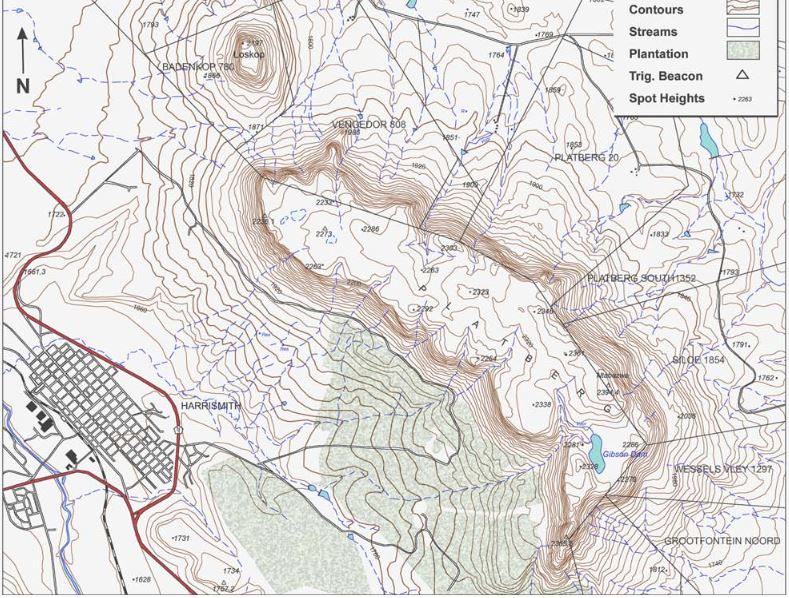
    – spot Platberg’s highest point, Ntabazwe 2394m ASL –
    Looking from highpoint Mtabazwe towards Boobejaanskop eastern tip

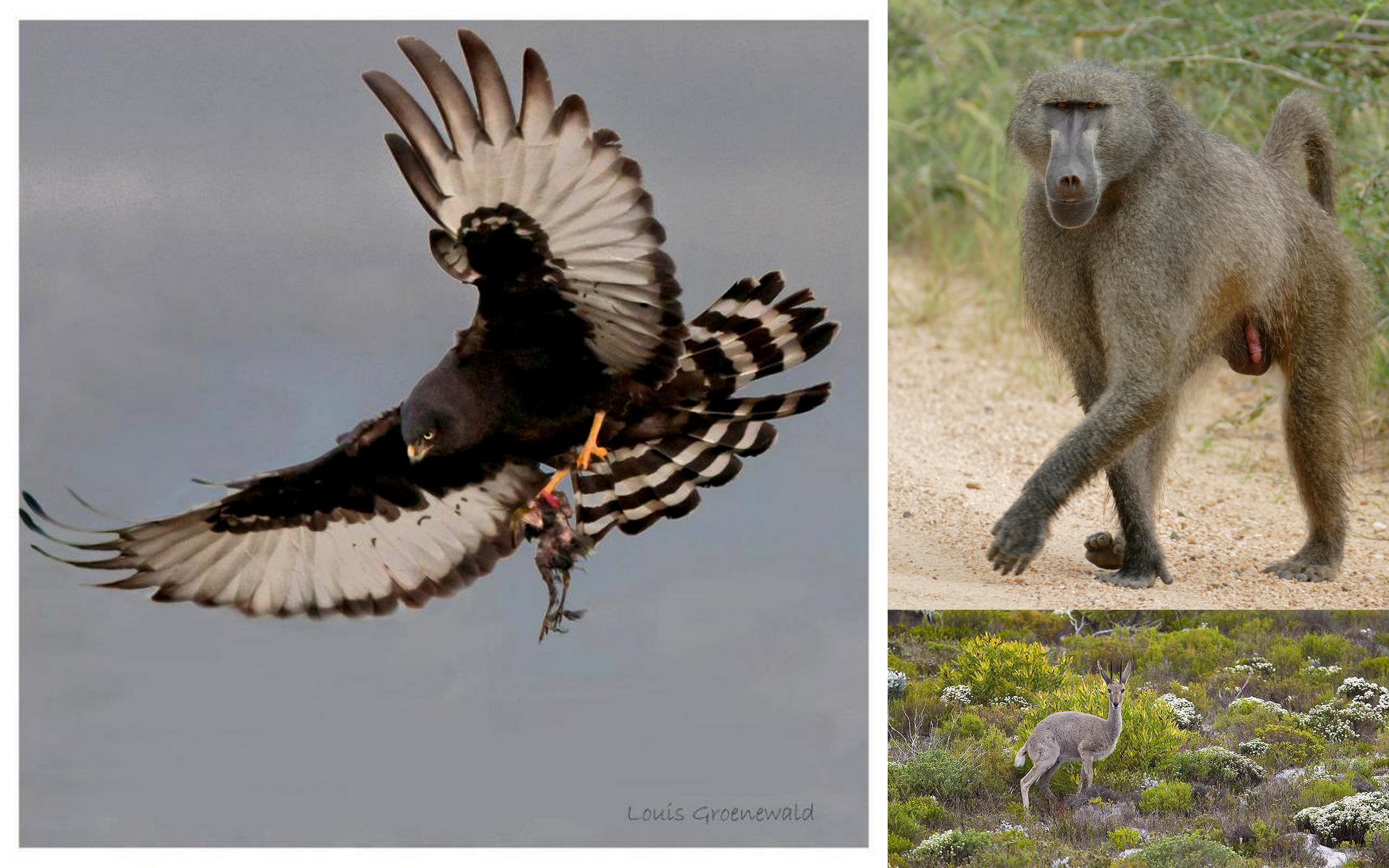
    I wonder if there are any grey rhebok left?
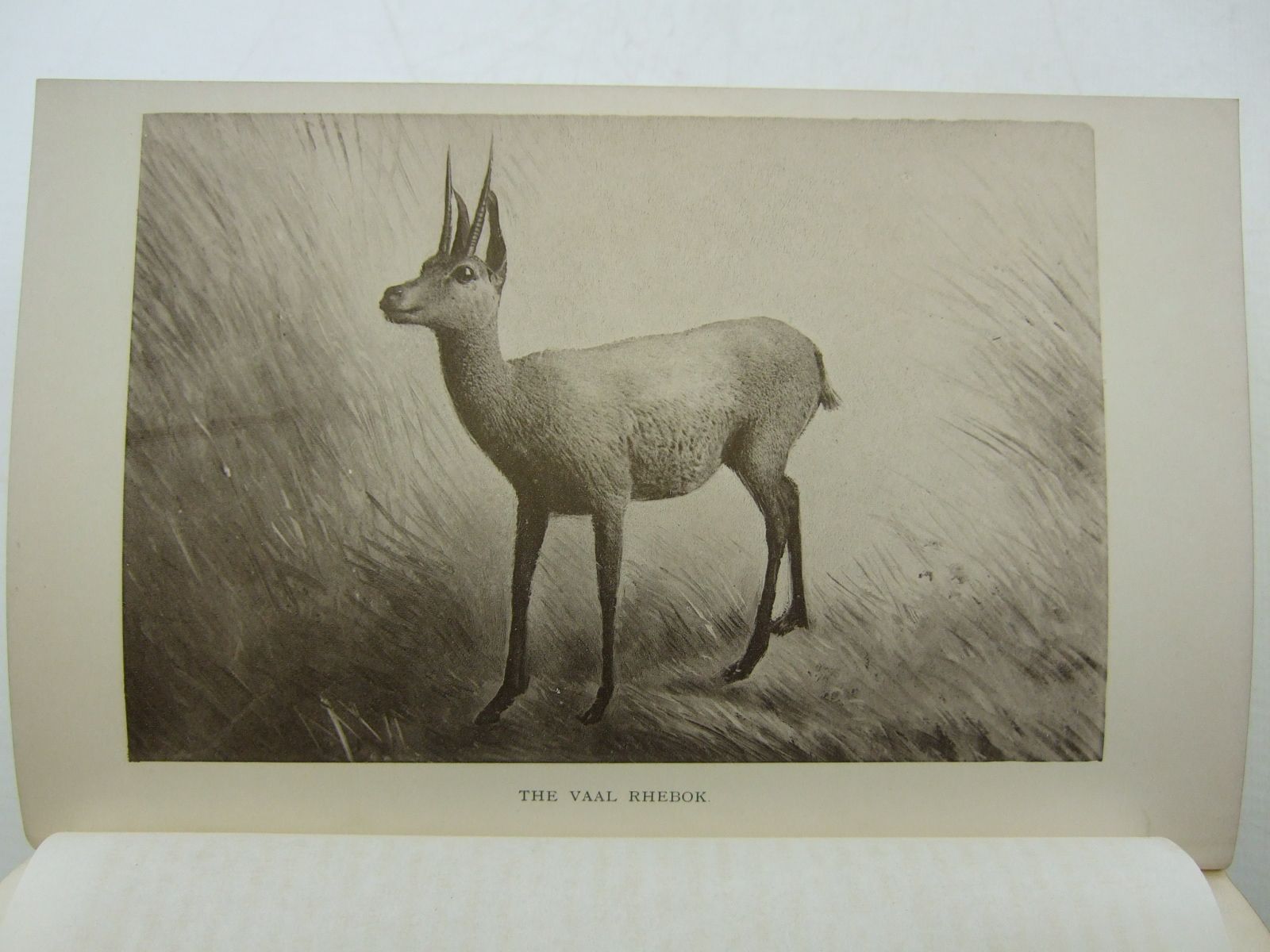
    Platberg specials
    – the road up Flat Rock (or Donkey) Pass –

    Mountain Passes South Africa says our Flat Rock or Donkey Pass is the sixth-highest above sea level, and the second-steepest pass in South Africa.

    See more of Platberg’s beauty in this amazing post. Damn! Sandra seems to have ended her beautiful blog! Pity!

    ~~~ooo0oo~~~

    inselberg – German for ‘island mountain,’ the word first appeared in English in 1913, apparently because German explorers thought isolated mountains rising from the plains of southern Africa looked like islands in the midst of the ocean. Geologically speaking, an inselberg is a hill of hard volcanic rock that has resisted wind and weather and remained strong and tall as the land around it eroded away. Wikipedia says in South Africa it could also be called a koppie but I think we’d klap anyone who called our Platberg mountain or inselberg a ‘koppie.’

    koppie – a smaller thing than Platberg; Just west of Platberg is Loskop; you can call that a koppie, maybe, if you call it a beautiful high koppie with an impressive cliff

    relevé – in population ecology, a plot that encloses the minimal area under a species-area curve; right

    tarn – tarn is a term derived from tjörn an Old Norse word meaning ‘pond.’ The term’s more specific use as a mountain lake comes from the upland regions of Northern England where tarn is the name given to all ponds. The term retains a broader use since it may refer to any pond or small lake regardless of where it is located or its origin. In the Scandinavian languages the terms tjørn, tärn, tjern, or tjärn are used to refer to small natural lakes that are found closely surrounded with vegetation. Other definitions say a tarn is a post-glacial pond, and Platberg’s is not that, I don’t think. I think it’s fine to keep calling ours the tarn on the western end of Platberg.

    ~~~oo0oo~~~

    Aside: Talking of special high altitude grasslands, who knew of the Korannaberg near the mighty metropolis of Excelsior of dominees-wat-meidenaai fame? It has 767 plant species in its 130km2! It sure looks like a must-visit place! 227 bird species too.

    dominees-wat-meidenaai – practicing what you preach against; the old Do as I Say, not as I Do BS that patriarchs try to enforce
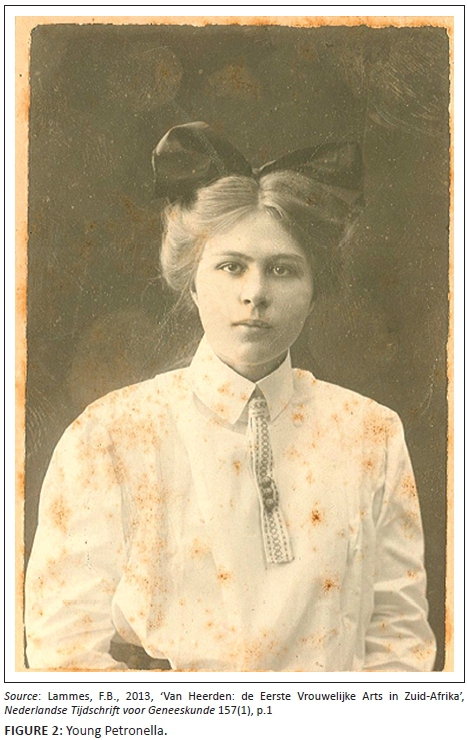
  • Petronella van Heerden

    Petronella van Heerden

    Steve Reed sent a picture of old American cars in Aussie .. I wrote:

    These lovely old motorised wrecks remind me of Swinburne character Abe Sparks‘ Rolls Royce bakkie. And that reminds me of Nell van Heerden.

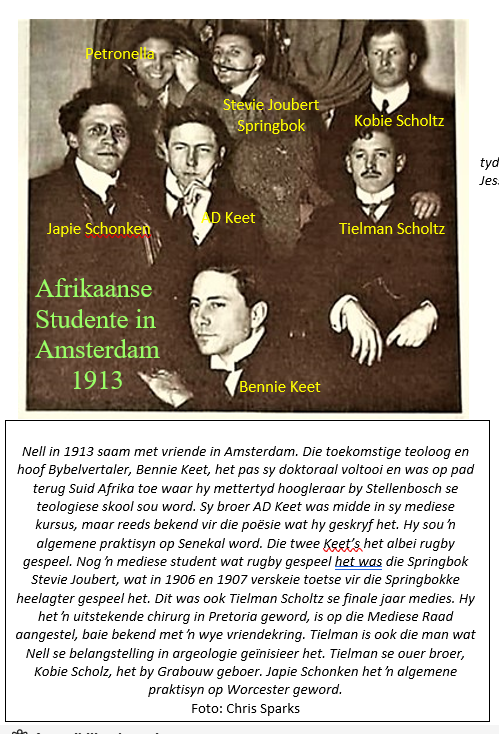
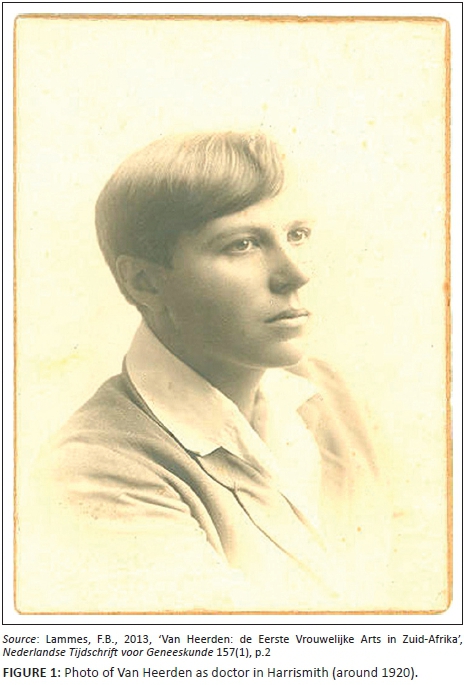
    Dr Anna Petronella van Heerden, born 1887 in Bethlehem. She studied at the University of Amsterdam from 1908 to 1915 where she completed her medical degree. Thanks to our Harrismith historian Leon Strachan and Chris Sparks, Abe Sparks’ grandson, here she is with fellow students, a pretty elite group of South Africans of the day:

    Van Heerden served as an intern at the Volkshuishospitaal in Bloemfontein in 1916 and had her own practice in Harrismith from 1917. She specialised in gynaecology in London from 1921 before returning to Amsterdam to complete her PhD in 1923. She moved to Cape Town where she practiced as a gynaecologist. She retired from her practice in 1942 to go farming in Harrismith.

    Apparently she bought the Roller in England, toured the continent in it, then shipped it back to Kaapstad where she ran her specialist practice. Then, I’m guessing, drove it up to Harrismith to go farming. This part about the car is according to my 96 year-old Dad.

    EXCEPT! The Roller was a Cadillac! Again Leon Strachan’s research to the rescue. I was just believing what I heard from my ole man. Not Leon, he did the research and found out Nell had ordered a custom 1929 Cadillac from the Cape Town General Motors dealer. Also that after swanning around the Cape in it, she decided to tour America with her life partner Freddie Heseltine, and modified the Caddy as a camper for the trip. An enterprising and indefatigable character. – (note the difference between a historian and a peddler of hearsay: The Rolls Royce bought in London and shipped to SA was actually a Cadillac bought in Cape Town and shipped to the USA and back!)

    She gave up practicing medicine and came to Harrismith to farm cattle and was legendary among the boere here.

    Before that, she went digging:

    Usually dressed in khaki trousers, khaki shirt, sturdy shoes and hoed, she would answer my gran Annie’s, How are you, Nell? query with ‘Fair to bloody’ as she filled up her bakkie with Caltex fuel at Annie’s Central Service Station. She had a live-in girlfriend Freddie Heseltine, who sometimes had to move out to the cottage when Nell had city girlfriends over for lekker wild parties on her farm Grootfontein, behind the mountain. So we were told!

    A cattle farmer, she would be seen at the vendusies where if any of the boere made the mistake of saying something, she’d be ready along the lines of “Ja, (Jan, Piet, Koos) ek is n fokken vrou al lyk ek nie so nie!” A true character, salt of the earth, a socialist and a real mensch. Imagine how strong you’d have to be, being ‘anders’ in a milieu where being a Male White Afrikaans Christian made you a baas, made you automatically right, and should have made all women appreciative and in their plek – and NOT at vendusies! And if they must be at vendusies they should serve the tea and koeksisters! The local boere would have known she was well-connected, though – she had served on National Party bodies – and was not to be taken lightly.

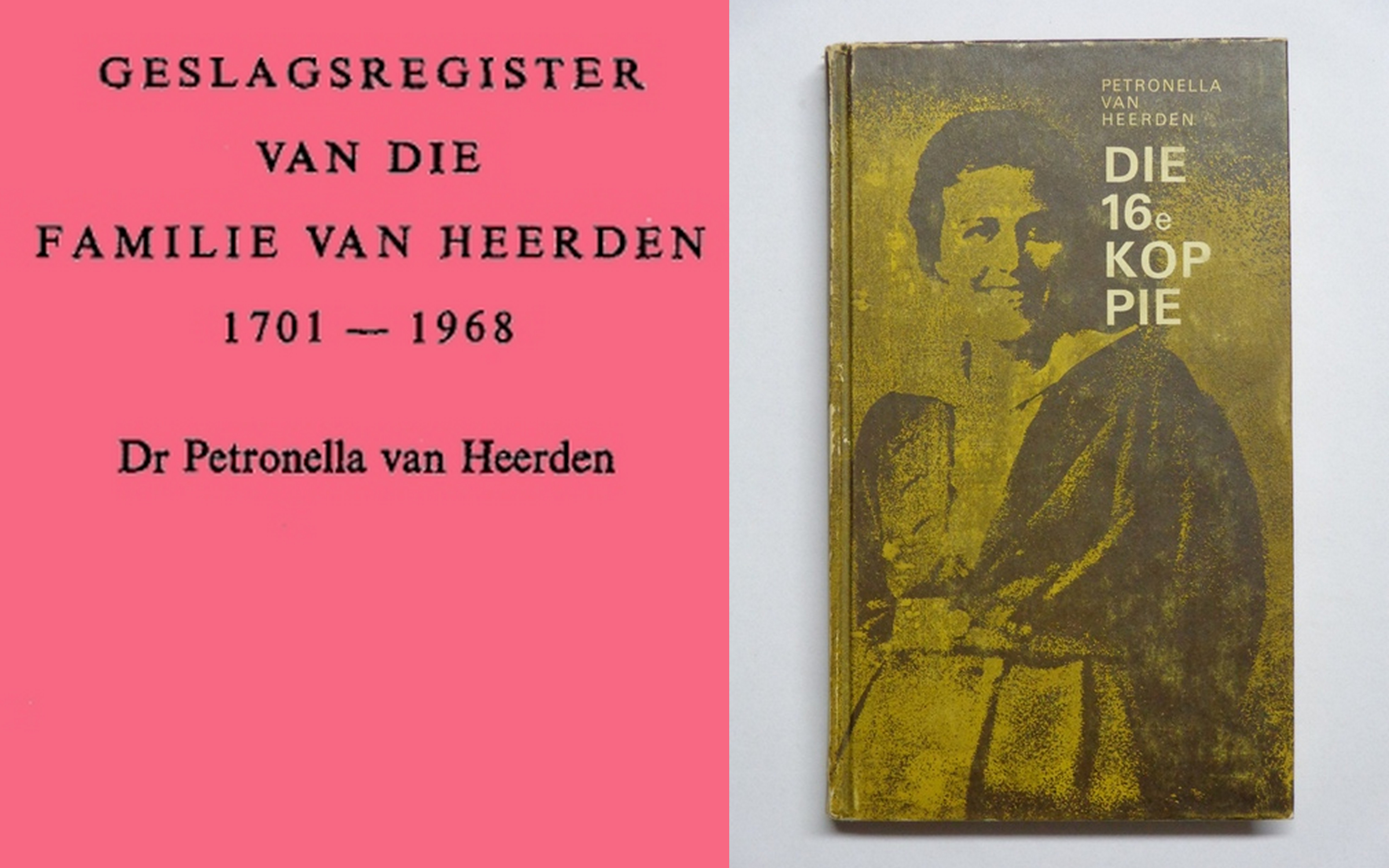
    She did genealogy research and wrote two autobiographical books.

    This from wikipedia and scielo.org.za (Scientific Electronic Library Online):

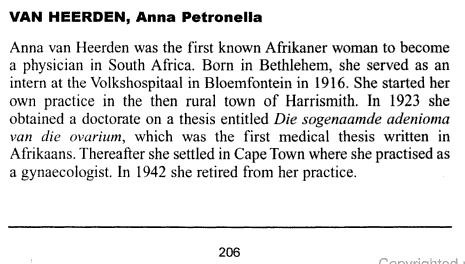
    Anna Petronella van Heerden (1887–1975), was the first Afrikaans woman to qualify as a medical doctor. Her thesis, which she obtained a doctorate on in 1923, was the first medical thesis written in Afrikaans. She practiced as a gynaecologist, retiring in 1942. She also served in the South African medical corps during World War II.

    She campaigned for women’s suffrage in the 1920s, and worked as a farmer after retiring from her medical work. She also published two autobiographical texts, Kerssnuitsels (Candle Snuffings) and Die Sestiende Koppie (the Sixteenth Cup), and other works, including: Waarom Ek ‘n Sosialis Is (1938) (Why I’m a Socialist), and Dames XVII (1969). Her awakening came, she writes in Die Sestiende Koppie, when she found out just how few rights women had, and that they were – she was! – legally classified with children and idiots!

    ~~~oo0oo~~~

    This from Women Marching Into the 21st Century: Wathint’ Abafazi, Wathint’ Imbokodo:

    This from “Nationalism, Gender and Sexuality in the Autobiographical Writing of Two Afrikaner Women,”  Viljoen L. (2008):

    Viljoen investigates questions of nationalism, gender and sexuality in the autobiographical texts of Petronella van Heerden and Elsa Joubert, and makes the point that autobiography, a genre often considered marginal to the literary canon, can be regarded as a site for examining the impact of nationalism on the construction of gendered and sexual identity. Petronella van Heerden (1887-1975) became the first Afrikaner woman to qualify as a medical doctor and published two short autobiographical texts, Kerssnuitsels (‘Candle Snuffings’) and Die Sestiende Koppie (‘the Sixteenth Cup’), in the early 1960s. The article argues that van Heerden’s omission of overt references to her lesbianism can be attributed to the strong, though embattled, position of Afrikaner nationalism at the time her texts were published.

    My guess is there would also have been a fair dose of Nell saying ‘its none of your bloody business’ in there as well.

    There’s an article about Nell in Journal of Literary Studies. (the link takes you to a summary – they want US$43 to read the whole thing!)

    ~~~oo0oo~~~

    From the National Library of Medicine: Petronella van Heerden (1887-1975) was born in South Africa. She studied medicine in Amsterdam from 1908 to 1915 and then worked as the first female doctor in her native country for 4 years before specialising in gynaecology in London. She then returned to Amsterdam, where she gained a PhD in 1923 on a thesis on endometriosis that was written in Afrikaans. She settled in Cape Town and participated in many political and emancipatory activities alongside her work as a doctor. She wrote two autobiographies.

    Nell van Heerden died in 1975, aged 88.

    ~~~oo0oo~~~

    Oh, back to the Rolls Royce Cadillac! I imagine – but I don’t know for sure – that Abe Sparks converted this Rolls Caddy into a bakkie, a pickup, a ute, after buying it from Nell. We always heard stories of how Aussie sheep farmers ‘drove Rolls Royces around their farms, as the running boards were wide enough to carry dead sheep.’ Abe would have liked that, and my guess is he thought ‘Hell, I can do that too.’ Maybe?

    ~~~oo0oo~~~

    Kaapstad – Cape Town

    boere – farmers

    hoed – hat

    vendusies – livestock sales / auctions

    “Ja, (Jan, Piet, Koos) ek is n fokken vrou al lyk ek nie so nie!” – Yes, Koos, I am a fuckin woman even if I don’t look like one!

    anders – different; anything other than white, straight, conformist and obedient

    plek – place; as in ‘know your place’

    koeksisters – ‘South African doughnut’; deep-fried, very sweet

    bakkie – pickup; ute

    Wathint’ Abafazi, Wathint’ Imbokodo: You touch a woman, you touch a rock.

    Tributes:

    Nell was the first female SA citizen to qualify as a doctor – as far as I can tell. Other women practiced medicine in SA before her, but they were not born here.

    Before Nell van Heerden: The first female to practice medicine in South Africa was Margaret Ann Bulkley. She was born in Ireland in 1789. She disguised herself as a man and called herself James Barry from then on. She qualified as a medical doctor in Edinburgh in 1812 and practiced medicine in Cape Town  from 1816 to 1828.  She effected significant changes, among them improvements to sanitation and water systems, improved conditions for enslaved people, prisoners and the mentally ill, and provision of a sanctuary for the leper population; performed one of the first known successful caesarian sections in which both mother and child survived; the child was christened James Barry Munnik in Barry’s honour, and the name was passed down through the family, leading to Barry’s name being borne by a later Prime Minister of South Africa, JBM Hertzog. Her birth sex only became known to the public and to her military colleagues after her death.

    Before Nell: Jane Elizabeth Waterston was born in Inverness in 1843. One of the first women to be trained at the London School of Medicine for Women where she took her medical degree in 1880. She received a medical license from the Irish King and Queen’s College of Physicians. In 1883 she became a physician in Cape Town, where she died in 1932.

    Same time as Nell: Mary Gordon b. 1890 in Lithuania, qualified as a doctor at the University of Durham in 1916 and emigrated to Johannesburg that year, taking up a position at the Johannesburg hospital. By 1944 she was registered as a specialist physician. Died 1971 aged 80. (Wits Review Oct 2017 Vol 38)

    After Nell: In 1947 Mary Malahlele-Xakana (1916 – 1981) was the first black woman to register as a medical doctor in South Africa. Born in Polokwane, she qualified at Wits.

    ~~oo0oo~~

  • Virtuoso

    Virtuoso

    Miss Underwood taught Mom Mary to play the piano and taught her very well; she then also taught big sister Barbara to play and taught her quite well, too; in my imagination this set off the following family discussion:

    Let’s send little Kosie to her as well! He’s such a delicate little chap. If he also does well Sheila will want to follow and then we’ll have four musicians and we can start a band, maybe name it after some insects and become RICH!

    Don’t laugh. This was ca.1959 and John, Paul and George were still The Quarrymen. Ringo hadn’t even joined them. There was a gap in the market.

    I was dispatched to her house in Stuart street and suffered some torture of the ‘put this finger here and that one there’ kind; and then worse: ‘Take this home and practice it.’ One lesson, in my rugby kit, then I escaped and ran home, never to return.

    When the next lesson time came around Barbara called me to the black bakelite phone in the long passage at 95 Stuart street. “It’s Miss Underwood!”

    Yes Miss Underwood; Yes Miss Underwood; Yes Miss Underwood

    SLAM!!

    I’m NOT going!

    Never did.

  • Scotland the Brave 3

    Scotland the Brave 3

    Miz Zobbs was scathing: Why can’t any of you whistle? Listen to Claudio! HE can whistle. Show them Claudio. It takes a boy fresh from Italy to show you lot how to whistle!

    Poor old Claudio Bellato dutifully pursed his lips and tootled some Italian to show us how it was done while probably thinking . . Mama Mia, Dora. You Don’t Pronounce My Name Clawed-ee-oh.

    See?! *SNIFF* *SNIFF* You see! shrieked the old duck, sniffing loudly and wobbling alarmingly.

    Dora Hobbs, snuff-sniffing tour de force of Harrismith Volkskool could rampage. She would march up and down like a galleon in full sail, never happier than when commanding a choir.

    She stopped us in mid-song once to berate us: How many of you can say that!? Huh? How many of you can say you’ve fought and won!? she demanded.

    Us ten to twelve year-olds stared at her blankly. What was she on about? Did she think we actually thought about the kak we were singing? Weird.

    .We’d been singing:

    There was a soldier, A Scottish soldier

    Who wandered far away, And soldiered far away

    There was none bolder, With good broad shoulder

    He’d fought in many a fray, And fought and won

    How many of you can say you’ve fought in many a fray? she brayed.

    Jeesh!

    – foughting and fraying –

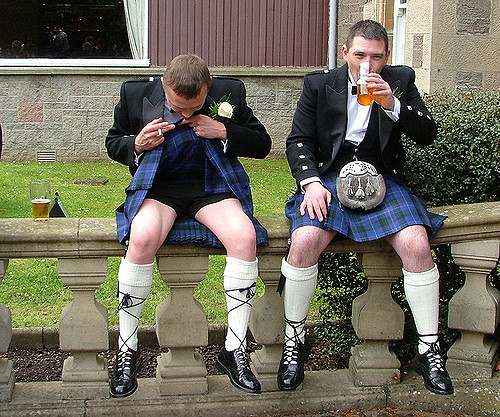
    Dripping disdain and snot, with snuff stuck in her nose hairs, her moustache, on her glasses and on her ample bosom, she’d close her eyes, toss her head and mince around on her toes like a bulk ballerina. I think she was living in another world. When she opened her eyes and saw not dashing broad-shouldered soldiers in kilts, sonder underpants, wanting to woo the wee svelte lassie inside her, but instead snivelling pint-sized Vrystaters who would rather have been anywhere else in the dorp other than in “singing,” her mood probably grew dark.

    Anyway, she probably didn’t know we fought of something totally different when she said ‘fray’ – and no we hadn’t done that either. Yet.

    – Hobbs with a girls choir – the girls probly weren’t asked if they’d fought and fray’d –
    – nor if they’d fought about fraying –

    She could be vicious, too, I’m afraid. She beat Dries and Alvaro mercilessly when they irritated her. Across the shoulders, on the top of their heads, stalking them from where she sat behind us. Face-to-face she would smash the heavy 40cm wooden ruler on their fingertips. She was rooted in Olde English educational methods:

    A. Find out what a child cannot do; and then . .

    B. Repeatedly demonstrate that he cannot do it;

    Stand him up in front of the class and order him to do that thing that you know he cannot do; HUMILIATE HIM; followed sometimes – depending who the child was – by . .

    C. a public beating.

    A bad show, really, even granting that having Std 1, Std 2 and Std 3 in one class was probably not easy. Still: Not right. 26 kids in a class is far from the most anyone ever taught. She picked on the vulnerable. I suspect she knew none of their parents would challenge her on their behalf. Nor would the headmaster. Others of us never got touched; never even a harsh word.

    – tiny Alvaro seated right in front of the formidable Hobbs –

    ~~~oo0oo~~~

    Years later I read a review of what James Joyce had written when his character’s knuckles had been viciously beaten by a sadistic Catholic priest in front of the whole class. I found it now:

    Stephen knelt down quickly pressing his beaten hands to his sides. To think of them beaten and swollen with pain all in a moment made him feel so sorry for them as if they were not his own but someone else’s that he felt sorry for.

    Stephen – the character in Joyce’s novel A Portrait Of The Artist As A Young Man – reported it to the rector and got at least some satisfaction and admiration for being bold enough to defy convention and make the cruelty known. In Harrismith Volkskool no such justice was done; nor even attempted, to my knowledge; no-one brave enough, me included; no-one believing it was any use to expect any justice or fair play.

    ~~~oo0oo~~~

    volkskool – primary school

    fought – thought

    fray – battle, skirmish; In Afrikaans: vry, more like woo, or necking, or kiss, make love, first fumblings;

    kak – shit

    sonder – without; as in sonderbroek: without underpants

    Vrystaters – citizens of the Free State; which was anything but

  • Pedestrian Knocked Down!

    Pedestrian Knocked Down!

    I arrived back in town for the weekend from JHB – 1976 or 1977 – in my shiny new grey and grey 1965 Opel Rekord I’d got from Mom and Dad for my 21st.

    Saturday morning I phoned Tabbo. What’s happening in the City of Sin and Laughter? The usual. Nothing. Come on out to the farm. Gailian.

    I roared out of Piet Uys street into Stuart street, up Bester street into Warden street on a sunny Saturday morning, heading west with the sun behind me. I pass Annie’s Caltex garage, I pass Stewart Bain’s Town Hall, I pass the beautiful Badenhorst gebou on my left (it’s on the right in the picture). One of our metropolis’ three traffic lights is green so I proceed. I notice a fellow on my left who seems a bit under the weather. He walks forward as if to cross against the red. I move out wide but he then stumbles into a run and I hit the brakes but I also hit him! Shit! I’ve hit a pedestrian! Right in front of the Methodist Church nogal!

    I’ve screeched to a halt, horrified, and I hop out. He’s lying about 5m in front of me in the middle of the oncoming lane. His hat is on my bonnet, his carton of sorgum beer is 2m in front of the bonnet, his shoes are 5m past where he’s lying!

    Before I can even think where to phone from, Joseph Bronn is there. He saw the whole thing and has already phoned the cops and an ambulance, thank goodness. They’re there in no time and the fellow is taken off to hospital. The cops take names and statements and let us go.

    From Gailian I phoned the hospital. Already they know who he is and where he works – on a farm, he’s in town shopping but it seems he decided to do a bit of celebrating too. He seems fine but he’s very drunk so they’re keeping him overnight for observation. The next morning I phone again – he has left already. Don’t worry, he was OK.

    Phew! That slow-motion tableau will never be erased. I can see him looking up at me at the last second and hear the thump even today. The car: A small smooth dent in the bonnet, which I never repaired. It would get other dents in time.

  • The Subway

    The Subway

    Greg Seibert arrived in Harrismith from Ohio in 1972 as a Rotary exchange student.

    In 2014 he was sending sister Sheila some of his pictures from those wayback days. He wrote: Here is one I’m sure you will like. It is one of the very first pics that I took in Harrismith, probably the day after I got there. You or Koos took me down to the field hockey field. I remember people saying it was by the subway. Boy was I impressed! The only subways that I knew were the underground trains in London and New York! Imagine little Harrismith being so advanced as to having one of those!

    Well…I was a bit disappointed…lol!

    New York subway’s Grand Central Station

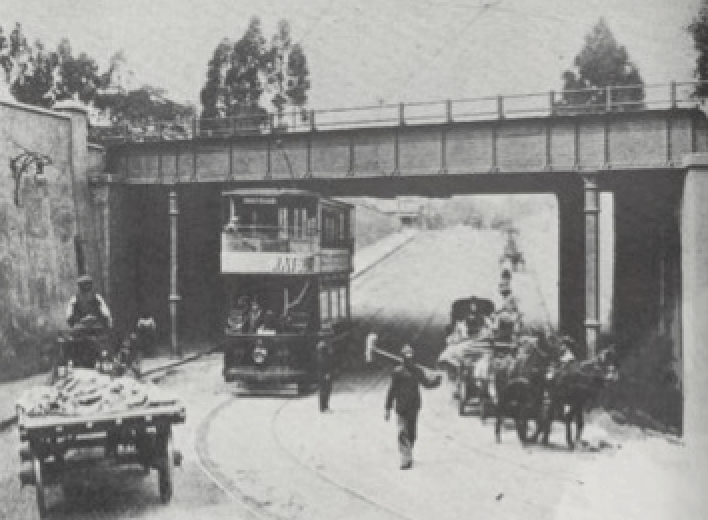
    The feature pic and this pic are not the Harrismth subway, but do give an idea of what it looks like. I’m looking for some actual pics of our illustrious subway.

  • Home-made Bound

    Home-made Bound

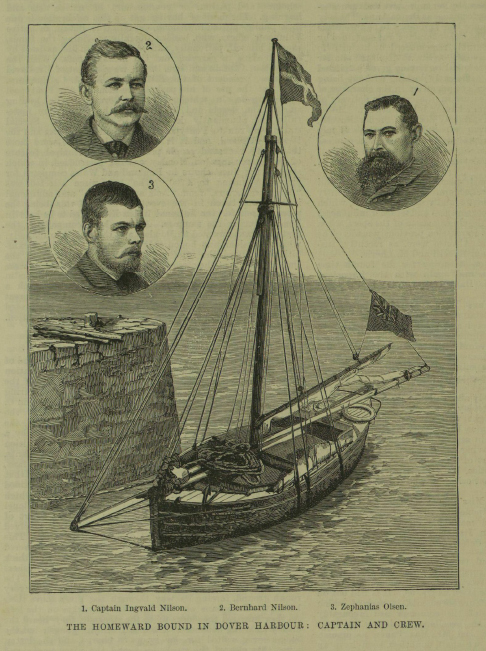
    Three Norwegians in Witsieshoek were homesick and probably horny. They longed to go home to Norway, so they rode their horses to Port Natal, bought a ticket on a sailing ship and off they went, right? Actually not.

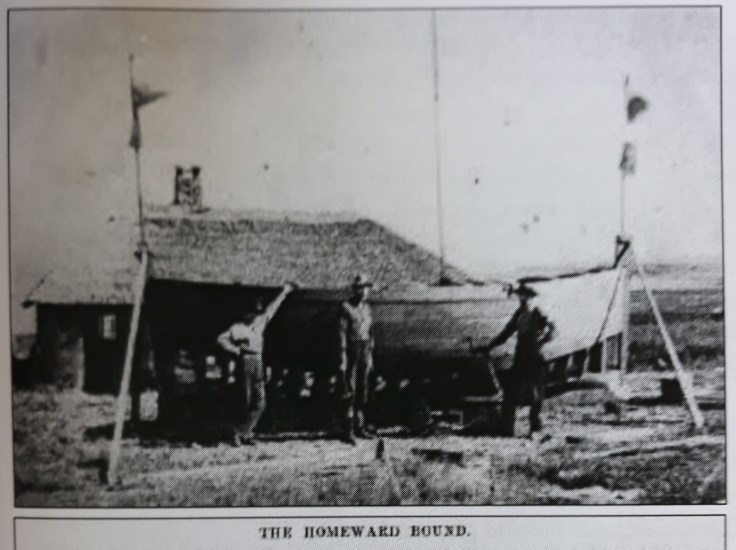
    They decided they would build their own ship in the veld on their farm Bluegumsbosch in the shadow of Qwa Qwa mountain, load it onto an ossewa, trundle it to the coast and then sail themselves to England, seeking – and finding – huge publicity all the way. The huge publicity was because everyone knew it couldn’t be done. They were going to drown in a watery grave and everybody TOLD them so.

    As always: pinch-of-salt alert. This is me talking about history that I have read a bit about. A little bit of knowledge . . . you know. For actual facts and a lot more fascinating detail, including how their boat amused the Laughing Queen (Victoria herself, who actually ended up buying it), rather read Harrismithian Leon Strachan’s highly entertaining book Bergburgers which illustrates clearly that Harrismithans are amazing and wonderful people, we are. More amazingly, some people apparently are unaware of that fact.

    For starters, Hello! what do you build a ship of when you’re living on the vlaktes un-surrounded by trees, just grass? Grass is no good, mielies are no good and ferro-cement has not been invented yet.** The few trees you have are the bluegums the farm is named after, can’t use those, what would you call the place? and some small poplars you planted yourself on the bottom end of your werf ; and poplar wood is no good for keeping water out for long enough to do the Atlantic. And these okes want to do the Atlantic. Now I’ve no doubt they were drunk. I mean, join the dots: Three males, tick; Norwegians, tick; In the Vrystaat, tick; Lonely, tick. They were drinking alright. They were a bit like ignoring the perfectly good bus that runs from Pietermaritzburg to Durban and running there instead; Wait! Some fools did do that some thirty years later and called it the Comrades Marathon.

    Turns out there are trees in the Vrystaat if you know where to look: In the shady, damp south-facing kloofs there were some big old yellowwoods, excellent wood for ship-building if you’re inclined to build ships. So they didn’t use those. They ordered wood from America. I know! Mail order! But apparently this is true. Somewhere in America a pile of pitch pine beams and planks got addressed to c/o Ingvald Nilsen, farm Bluegumsbosch, foot of Qwa Qwa, Witsieshoek, near Harrismith, Oranje Vrijstaat Republiek, and put on a wooden ship. Which crossed the Atlantic, got loaded onto an oxwagon in Port Natal and schlepped across Natal, up the Drakensberg, turned left at the bustling regional centre, transport hub and rooinek metropolis of Harrismith and were delivered: ‘There you go, sir. Please sign here that you received in good order.’ Amazon se moer.

    Up the Drakensberg to Harrismith village; Left to near Qwa Qwa mountain

    So how big do you build a boat you want to sail 10 000km in, knowing the sea can get lumpy at times? Are you asking me? 362m long, 23 stories high, 228 000 tons, sixteen cocktail bars, a massage parlour and better airtight compartments than the Titanic had, please. If you were asking me. Cos I don’t swim in the sea. No, but seriously, this is twenty seven years before the Titanic set sail, and you’re building it in your farmyard in the Free State. Like this: (note the absence of surrounding forest)

    Now hey! Don’t laugh. Read on to see how the Harrismith-built boat fared, and read up how the Belfast-built Titanic fared! Both were trying to cross the Atlantic for the first time – just wait and see who did it better! The rich Poms, or the Harrismith ous. Find out.

    The Nilsen-Olsen craft was 6,7m long and weighed about two tons. They called it Homeward Bound, though they were actually aiming for England. Seems Nilsen had become very British. He had signed up with Baker’s Horse and fought for Britain in their wicked Anglo-Zulu War in 1879. He knew all the hoopla would be in English language newspapers cos the hele wêreld was Engels back then. In Harrismith where the Chronicle was already chronicling, Pietermaritzburg where the Witness was witnessing, Port Natal / Durban and in England. So shrewdly, Nilsen capitalised on that publicity.

    All along the route people would look in amazement and offer advice (‘You’re never gonna make it’) but whenever he could – in Harrismith, Estcourt, PMB and in Durban – Nilsen isolated the boat and charged people a fee to view it and offer their opinion (‘You’re never gonna make it’). He raised so much money this way that in PMB he wrote: ‘. . had not the weather been unfavourable, we should very nearly have cleared our expenses, so general was the interest in the boat.’

    In Port Natal the coastal people really REALLY knew these inland bumpkins were never going to make it and made it so plain that it gave Nilsen great pleasure some months later to enter in his log: ‘ . . sighted Ascension; this we found, in spite of what people said in Durban, without the least trouble and without a chronometer.’ Seat of their pants.

    Long story short – we won’t bother about details like navigating, surviving, hunger, etc now that the Harrismith part is over – they made it to Dover in March 1887 after eleven months, a journey that took passenger ships of the day around two to three months*. Nilsen sold the boat to the queen, who displayed it in the new Crystal Palace exhibition hall; he wrote a book with the natty title, ‘Leaves from the Log of the Homeward Bound – or Eleven Months at Sea in an Open Boat’, went on speaking tours where he was greeted with great enthusiasm, married a Pom, became a Pom citizen and lived happily ever after. I surmise. Or as happily as one can live married on a small wet island after living as a bachelor on the wide open Vrystaat vlaktes.

    Greeted with great enthusiasm, yes, but this was after all, England, so not all were totally enamoured. One commentator harumphed: ‘ . . Their achievement is a magnificent testament to their pluck and endurance, and one can only regret that such qualities have not found some more useful outlet than the making of a totally unnecessary voyage.’

    Here’s a post on Acton Books about the Homeward Bound and Crystal Palace. Do read the fascinating comments, where people who know more local detail add what they know about this saga.

    ~~oo0oo~~

    What’s 362m long, 23 stories high and weighs 228 000 tons? – That’s the Symphony of the Seas, biggest passenger ship afloat as at Feb 2019. Anything smaller won’t get my hard-earned cash.

    veld – savanna; no place for a sea-going shiplet

    bergburgers – citizens of the mountain; Harrismithians

    ossewa – ox wagon.

    vlaktes – plains; not where you’d sail a 2-ton wooden boat

    mielies – maize; corn

    werf – farmyard

    Oranje Vrijstaat – Orange Free State, independent sovereign state; President at the time was Sir Johannes Henricus Brand, Most Distinguished Order of St Michael and St George, abbreviated GCMG ***

    hele wêreld was Engels – Poms can’t speak any other languages, and the Pound Sterling was strong, and the Breetish Umpire stretched far n wide

    Sources:

    1. Bergburgers by Leon Strachan; Tartan Boeke 2017 – ISBN 978-0-620-75393-7

    2. Martin Hedges’ blog actonbooks

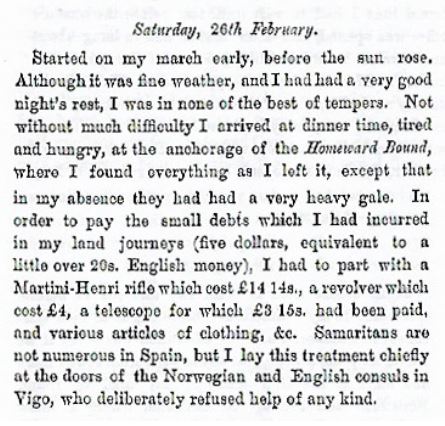
    3. A Spanish blog with pages from the book dealing with their tribulations in Spain – a month on land which was arguably the toughest part of their journey!

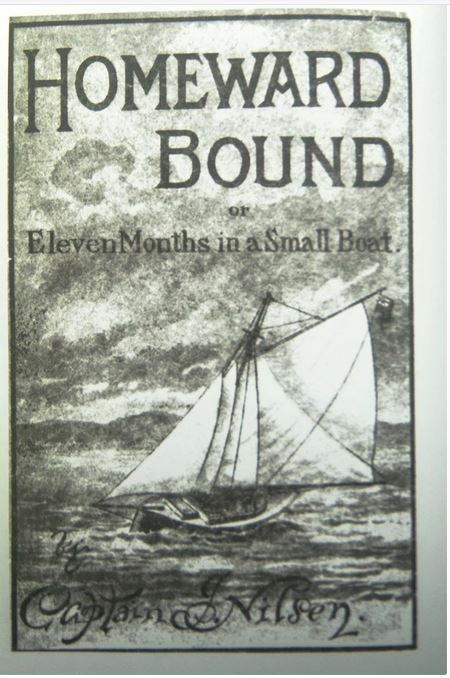
    4. Nilsen’s book ‘Leaves from the Log of the Homeward Bound, or Eleven Months at Sea in an Open Boat’. Here’s a reprint with a snappier title:

    The book sold well; this later edition had a shorter title

    Two pages from the book: Arriving in Spain and walking in Spain looking for food or money or any help!

    ~~oo0oo~~

    * The Lady Bruce, one of the twenty ships that brought Byrne settlers from the UK to Natal, arrived on 8 May 1850. The record says ‘their passage was a speedy one of 70 days.’ – Natal Settler-Agent by Dr John Clarke, A. A. Balkema, 1972. By 1887 the average time may have been shorter?

    ~~oo0oo~~

    ** Amazingly, I was wrong! Ferrocement boats had been invented forty years earlier, in France!

    A bateau built by Lambot in 1848

    Never slow, Harrismith soon hopped onto the ferro-cement lark for crossing oceans.

    *** Enlightenment from the satirical British television program ‘Yes Minister’ season 2, episode 2, ‘Doing the Honours’:

    Woolley: In the civil service, CMG stands for “Call Me God”. And KCMG for “Kindly Call Me God”.
    Hacker: What does GCMG stand for?
    Woolley (deadpan): “God Calls Me God”.

    ~~oo0oo~~

  • A Yacht on the Vlaktes

    A Yacht on the Vlaktes

    One day I went for a drive with Dad out to a farm in the Swinburne district, Rensburgs Kop in the background. We stopped outside a big tin shed and walked inside. To my amazement there was a huge skeleton iron structure in there. I knew immediately what it was: It was an aviary. I grew up with aviaries, I knew aviaries. It would be just like Dad to visit a farmer with an aviary.

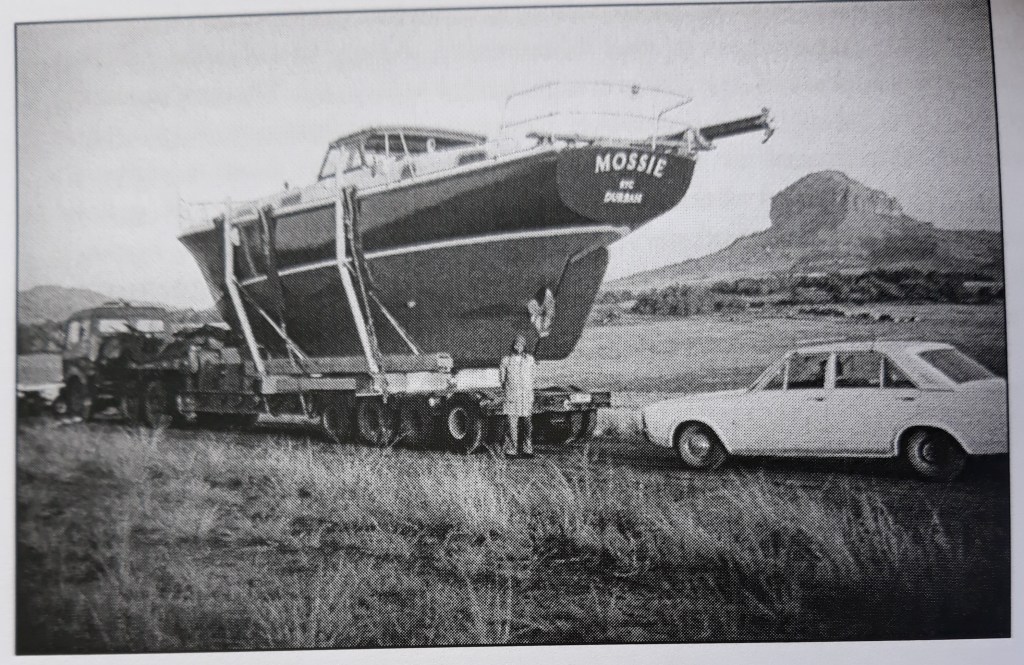
    Except this one was in the graceful shape of an ocean-going yacht! It was a yacht. An ocean-going yacht. Or so Ronnie Mostert told us. He and his wife Mel were building it with the help of their farmworkers! But it would sink, I said. Made of steel and full of holes, it would definitely sink. No, said Ronnie. He told us he was going to fill all the holes with cement. Then he would take it to Durban and then sail around the world.

    Now I knew he was mad. It would sink. Cement also sinks. The mafia use this fact to their advantage when they give a guy cement boots. Cement full of hidden steel will sink even faster. Everybody knows that. Also, Ronnie was a character, maybe he was pulling our legs? Maybe it actually was an aviary and he was going to put an aasvoël in it? I listened carefully, but it seemed he was serious and it seemed Dad believed him. Bliksem!

    And that was the last I saw of it. I heard tell later that he actually had schlepped it to Durban and plonked it in the salty water of that big dam that you-cannot-see-the-other-side-of. And it floated! This seemed a real case where one could say, Wonderlik wat die blerrie Engelse kan doen! 

    ~~~oo0oo~~~

    Now it’s years later – I mean 47 years later if that was 1972 – and I’m reading all about Ronnie Mostert’s yacht in Leon Strachan’s wonderful book ‘Bergburgers’. Ronnie and Mel welded miles of vertical and horizontal steel bars in a shape according to a New Zealand plan they got in a magazine. Talk about faith that could move concrete! Imagine trusting your life to an unseen person – and a Kiwi nogal – sending his plans to you in a book!

    Then they plastered it with cement, with Harrismith builders Koos van Graan and Ben Crawley, both of whom I think I have personally seen drinking beer, just like Ronnie, gooi’ing plaster on it and wiping it with the trowels they usually built solid houses with – and they expected it to float!?

    And blow me down, it did.

    How amazing to see pictures of that remembered glimpse from all those years ago and to reinforce my conviction that I’m not imagining all these things running round in my head. I tell my friends: Hey! I’m the sane one around here, but will they listen? Hmph.
    Thanks, Leon!

    – Mel Mostert builds a boat in a vrystaat shed –
    – It’s a steel boat full of holes, so lets fill them with cement! –

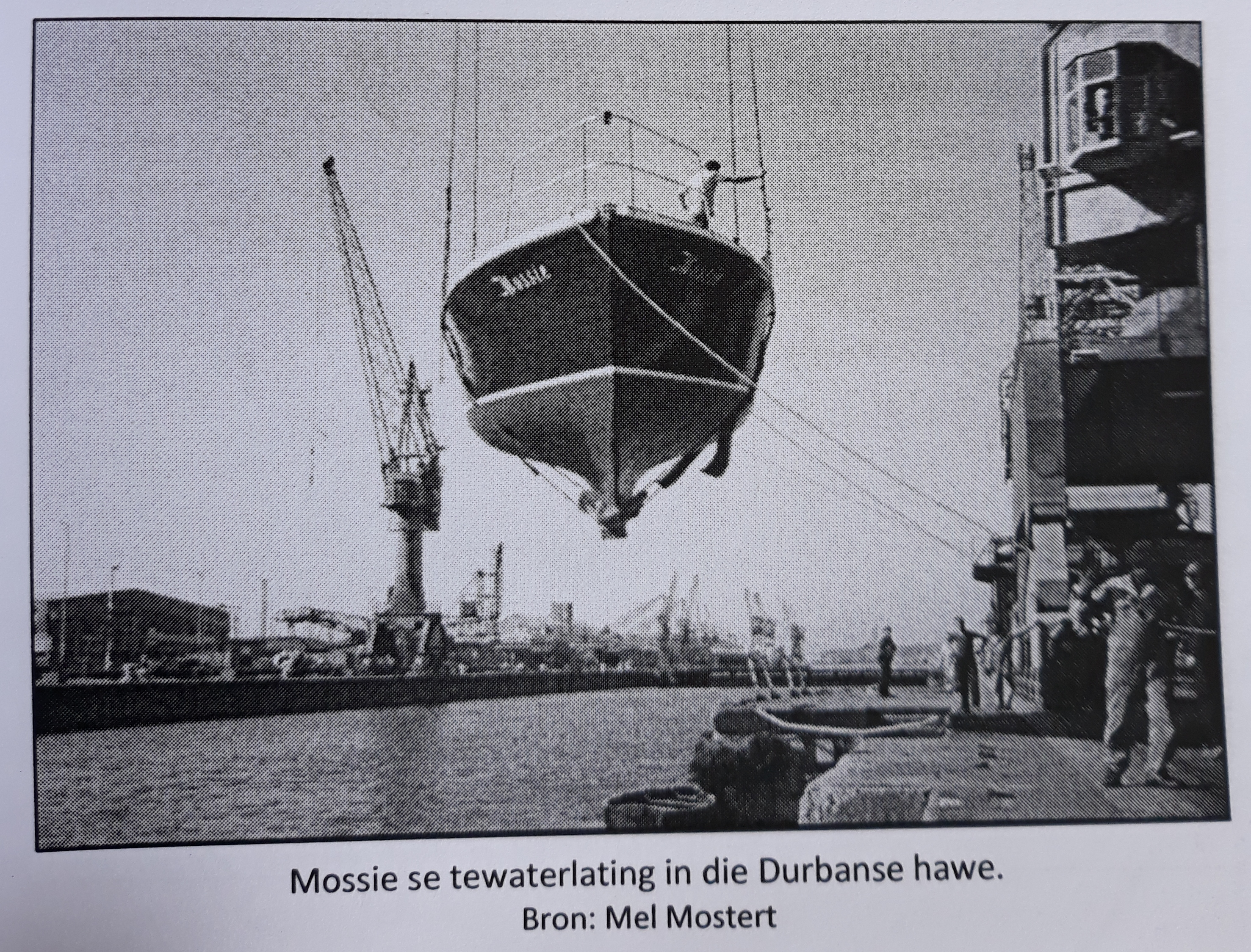
    They christened it Mossie, trucked it down to Durbs in 1983, launched it and sailed and lived on it with their son Gary for eleven years.

    – the moment of truth is about to be cemented – ferro-cemented –

    Cape Town, St Helena, Brasil, the Caribbean, the USA, the Azores and back down south. They didn’t truck it back up to the Free State, though, they settled in Cape Town-on-sea. Isn’t that just a stunning achievement! Hats off!

    Leon’s book tells of another – even crazier – saga of fools building a boat on the Harrismith vlaktes and thinking that it would float. I’ll post that next.

    ~~~oo0oo~~~

    vlaktes – not a place you’d sail a yacht; flats; veld; savannah

    bliksem – blow me down!

    aasvoël – vulture

    Wonderlik wat die blerrie Engelse kan doen! – blow me down!

    nogal – would you believe it

    gooi’ing – slapping

    blow me down – bliksem!

    ‘Bergburgers’ – ‘citizens of the mountain’, meaning Platberg, thus: Harrismithians; us; also a book by Leon Strachan, Harrismithian extraordinaire!

    Mossie – sparrow; many Mosterts are called Mossie but I never heard Ronnie called that; Lovely name for the boat!

    Bergburgers by Leon Strachan; Tartan Boeke 2017 – ISBN 978-0-620-75393-7

    ~~~oo0oo~~~

    Before the Kiwis start calling themselves the Ferrocement All Blacks, note that Les Bleus invented the stuff and built the first ferrocement boat back in 1848.

    – ferrocement Frog bateau 1848 – by les bleus – Frenchmen –

    ~~~oo0oo~~~

    In 2020 Gary Mostert found my blog and could tell me that Ronnie and Mel are alive and well – and building a second yacht on their farm outside Cape Town! (see the comments)

    ~~~oo0oo~~~

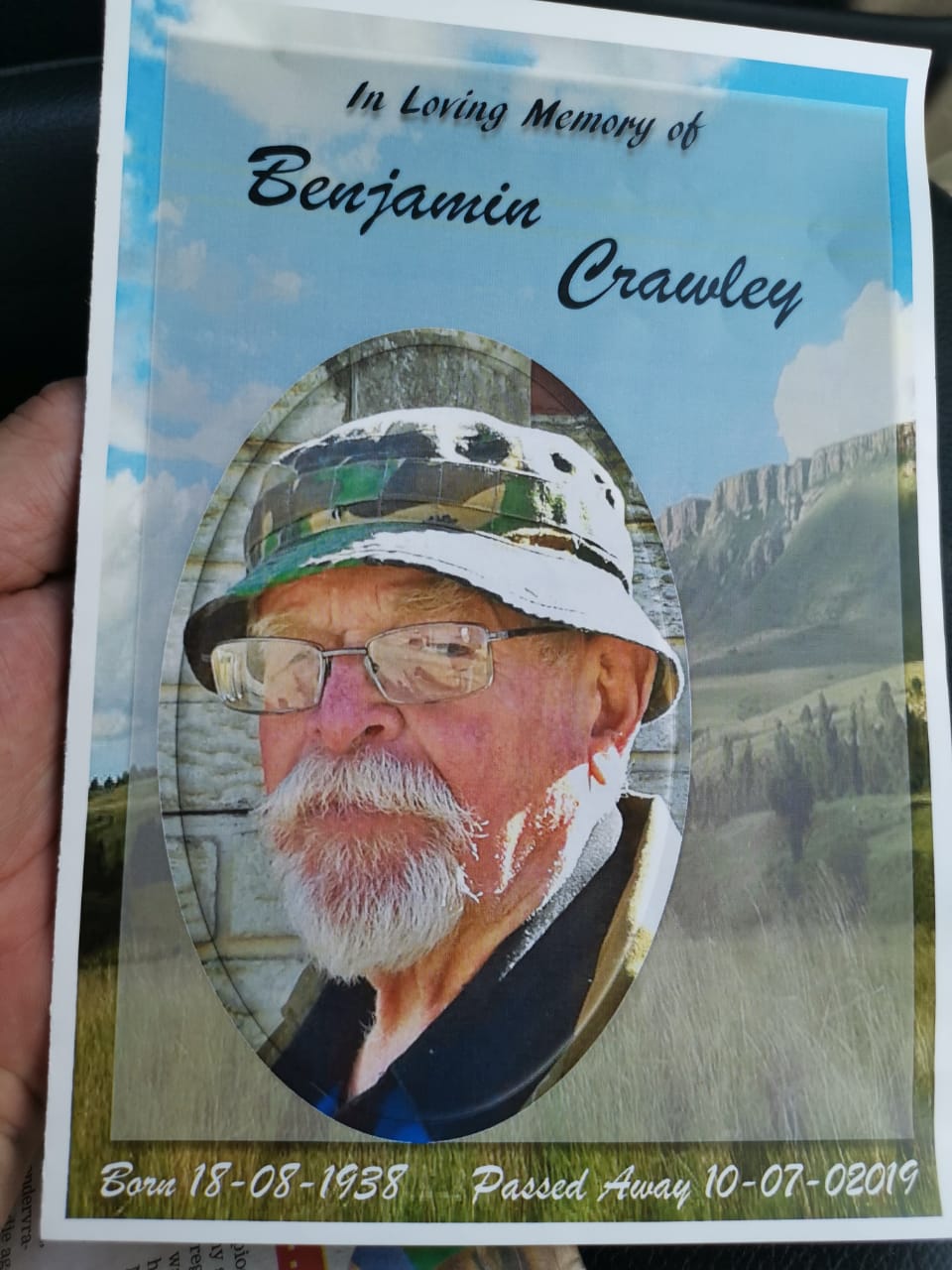
    Just heard Ben Crawley died, aged 80. I’ll try and get some detail on his life. What I know is athlete (held the school mile record for decades), sportsman, Mountain Race stalwart, builder, carpenter, MOTH leader, and (this was news to me – found out today): Anglican church man! (his cousins were Methodists with us).

    ~~~oo0oo~~~

  • Koos Kombi

    Koos Kombi

    Today Mother Mary took a break from playing the piano. She suddenly remembered a time Mona du Plessis came to her some time after a ‘do’ at the town hall. These fifty year old memories come and go, so she must tell them as she thinks of them.

    Mona said to me – says Mary – “Jinne Mary, while we were at the town hall, Kosie took the kombi, loaded up the de Villiers kids and drove to Joan and Jannie’s where our kids were. Then they all got in – Mignon, Jean-Prieur, Sheila, everybody, and they drove up and down Hector Street!”

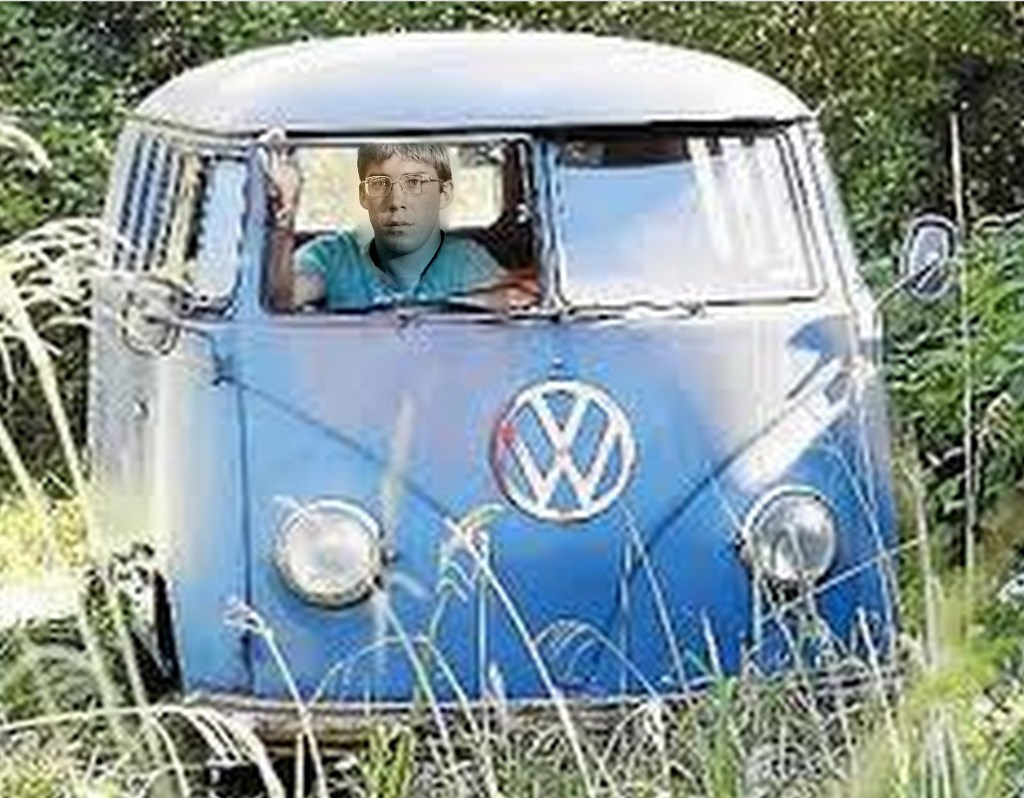
    Of course, I remember doing stuff like this – I loved “borrowing” the kombi – but I don’t really recall that specific escapade. The expedition accomplices would have included these, so here’s a possible montage of what a ‘stolen’ kombi in Hector Street might have looked like:

    Koos Kombi full_2

    Mona would actually have been quite pleased at the ‘naughtiness’ of the kinders, I bet. Mary would have been worried about our safety.  Joan would have shaken her head. Bonner too. We would all have said much the same: ‘Ag don’t worry, Ma!’

    ~~oo0oo~~

  • On Not Playing Rugby

    On Not Playing Rugby

    It’s Matric. Rugby season has started and I’m on my way to the first practice when a thought crosses what passes for my brain: Why am I doing this? Do I want to play rugby? A moment’s reflection had me thinking, Nope, I’m doing it cos it’s expected, I ‘have to.’

    No I don’t, I’m not playing.

    There were some queries and a mild kerfuffle but nothing big. ‘I just don’t want to’ was accepted in a no big loss way. Only Ou Vis made an issue of it.

    Later, pipe-smoking, Andy Capp cap-wearing, grog-loving, moustachioed Ou Stollie Beukes came up to me at school and asked straight-forwardly and politely, no weaseling, no guilt-suggesting.
    “Ons kort a paar manne in die derdespan. Sal jy vir ons speel?”
    “Ja, sekerlik,” I said, “Sal ek oefenings moet bywoon?” That would have ended it. I have an aversion to training in sport. Makes you sweaty. If you enjoy a sport, do the sport. Training? Ha!

    “Nee, net op Saterdag,” he said.
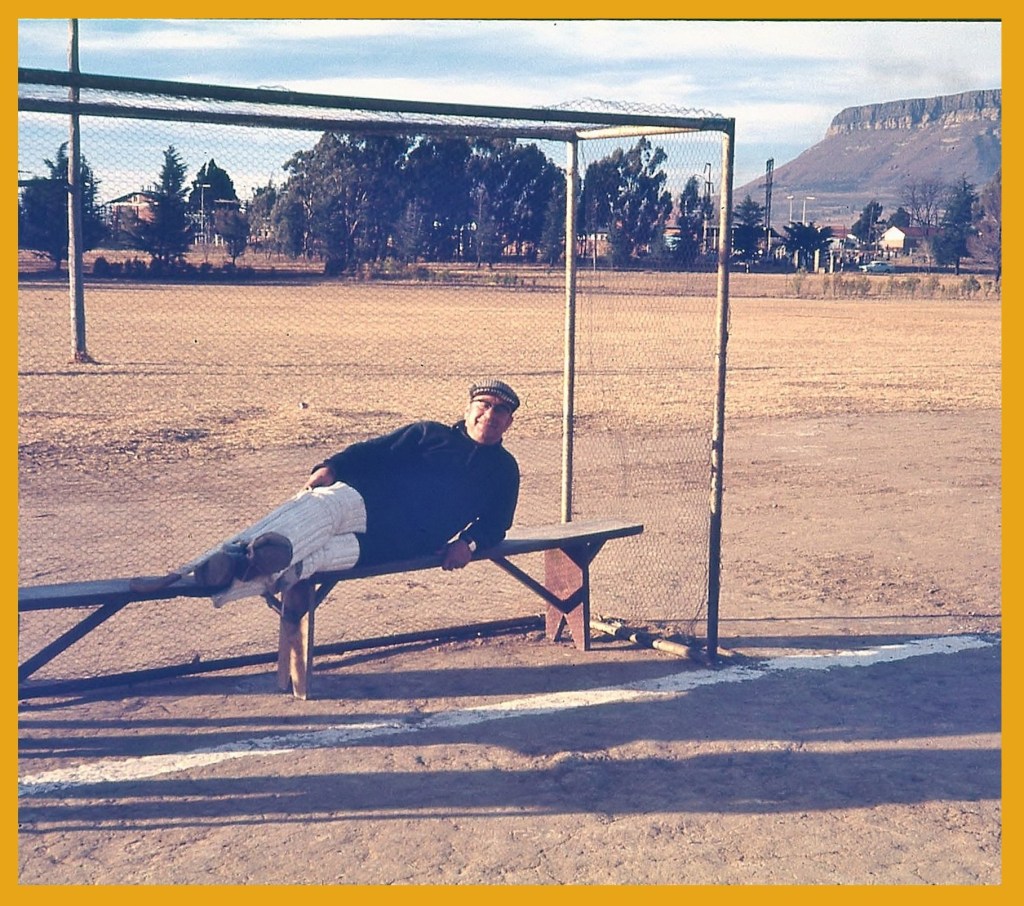
    Cool. So I got a coupla games on the President Brand Park B field; the field with the wooden poles on part of the cricket pitch. You can see the posts behind Ou Stollie in his other role as stand-in goalkeeper for the fun hockey games in the top pic.

    Being the mighty third (also last) team, we played early – before the first team, so we could all go and support them in our smelly kit. If it was in the morning there could be frost in the shade of those trees. The game would attract only a handful of the most die-hard spectators. Who had lots of advice.
    Lekker.
    Then at the end of the season I played in the last game, the traditional matrics vs the rest of school. I don’t know who won? I dislocated my collar bone near the end and went off to see GP Mike van Niekerk, where he glanced at it, told me to wear a sling – “Your mother will know how to do it” – and then spent his time trying to change my future career. And he almost did.

    ~~oo0oo~~

    The next year I played a season of American football; Two years later I played rugger again. In Joburg for Wanderers Club.

    ~~oo0oo~~

    “Ons kort a paar manne in die derdespan. Sal jy vir ons speel?”– We need some superb and exciting talent in the Mighty Thirds. Will you sign up?

    “Ja, sekerlik,” “Sal ek oefenings moet bywoon?” – Sure. I’m naturally fit, (right!) so I’m ready to play!

    “Nee, net op Saterdag”– play the games only, no need to attend practice; a sign of desperation