Category: 1_Harrismith

  • Leon Fluffy Crawley

    Leon Fluffy Crawley

    Talking about the magic photo of the Soap Box Derby on 42nd Hill with Fluffy’s Dad Charlie in it, I got into an extended email conversation with my good mate from Mrs Putterill’s nursery school and Methodist Sunday school in the late 1950’s all the way to matric 1972, Leon Crawley:

    – Charlie Crawley (left kart) and Michael Hastings (crouching); Dr Frank Reitz, looking like Kai, the starter. It looks like his car in the background ‘vimba’-ing the JHB traffic – this is the N3! – (see his car at the bottom) – Note how – just like in F1 – the wheels were standardised – Note also why Charlie bollemakiesie’d – his pedals were too close, raising his centre of gravity – Check the huge gearing advantage of the fella on the right – he must have won? –

    Fluff: Amazing the dress code!!!

    Me: Yes, from kaalvoet kid to full jacket & tie. And three ‘hoeds’. And a cop. Even the most casual of the ‘racing drivers’ has long pants on. I see your Dad clearly, is that Michael Hastings next to him crouched over the reins with his chin between his knees?

    Fluff: Yep, Michael Hastings; I sent the photo to Mom to see if she can identify any others on it. My Dad crashed his kart and came a whopper, apparently had no skin left. He was the moer in when we had our races on the old road, because of the accident he was in. He still owes me a hiding with the kweper lat (quince switch). I bet he is waiting for me in Heaven! But we will just chat about it!!
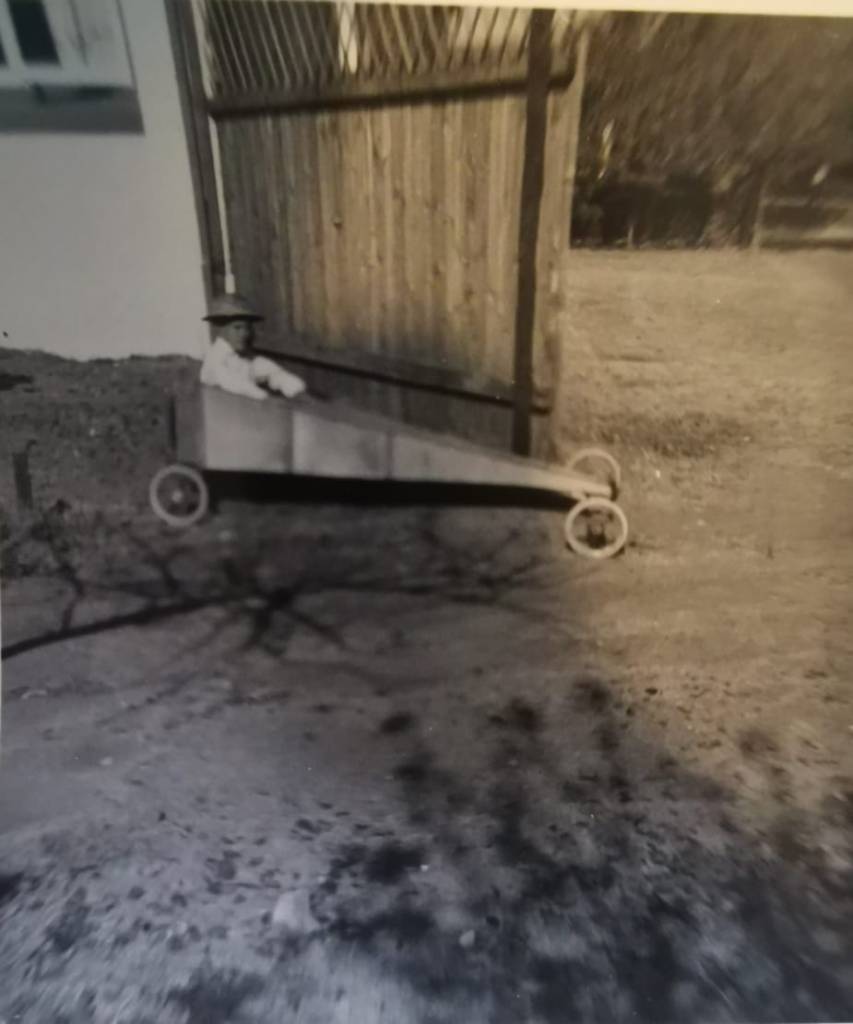
    – Fluffy in the later Crawley go-kart – with new improved streamlining – obviously wind tunnel tested – how’s the hoed!? – doubt if it was wind tunnel tested –

    Me: By the time we raced down that hill the trees were tall next to the road, and it had become the ‘old road’, a new one having been built above it. Traffic volumes had increased and we could no longer just stop the N3 and all the Jo’burg – Durban traffic!

    = = = = = Canoe trip from Swinburne = = = = =

    – we started under this old road bridge in Swinburne –

    Me: So we did the full Swinburne to Harrismith in a day? I remember being picked up at the bridge – I think the same bridge you once caught a huge barbel under – correct? You may remember I went again a few years later with Claudio Bellato. The river was up and we both lost our glasses, spent a wet night sharing one sleeping bag, which was only half wet, the other one was sopping; then wrecked the canoe, which I had borrowed from the Voortrekkers, on a tree block in a rapid on Walton farm. Charlie Ryder fetched us and we got the wrecked boat out two weeks later. Claudio lives in Durban and I see him from time to time. He still introduces me as “Meet my friend Peter. I slept with him.”

    Fluff: Your Dad picked us up in Town, but we did not sleep over en route. The river was terribly low and we did a lot of foot work crossing or bypassing the rapids. We made the trip in one day. I can remember the trip you had with Claudio, jeez terrible to sleep wet, and that with a man. You fixed up the canoe in the backyard if I can recall. That fish: It was a huge barbel from the bridge and that with a split rod, Dad used for bass!! Haha early one morning standing on the bridge, it was still too dark to go down to the river.

    – we finished under the old Hamilton bridge – the ‘ysterbrug’ – in Harrismith –

    = = = = = The Voortrekker Camp = = = = =

    Me: I joined up briefly, thanks to you. Or to your description of the upcoming camp on Bok or Boy Venter’s farm! I remember the camp in the wattles, a campfire, canvas tents with wooden pegs – and not much else.

    Fluff: I remember the Voortrekkers and I think our membership lasted until after the camp. A huge bonfire, that night; Boy Venter. That was about it.

    = = = The 1969 South West Africa Trip . . That Kestell Trip = = =

    Fluff: We have good memories of the SWA Trek and I still have some photo’s as well.

    Strangely not of the group or individuals!! I will scan at some stage and put them in mail.

    The welwitchia plant; Namutoni in Etosha; the Finger of God; the ‘bottomless’ lake Otjikoto with schools of small fish – apparently the Germans dumped their weaponry in these lakes, close to Tsumeb. Did we go to a disco in Tsumeb?

    Do you remember the beers we ordered, but we were under age but we reckoned there was no age limit buying booze?! You were on the bell and it got stuck and the barman kakked us out and chased us out of the hotel!!!

    The visit to the karakul farm, the meerkats!! Eish the price of that lovely freshly baked brown bread near Twee Rivieren….17 cents OMW – the price of brown bead was about 6 cents back home!!!

    Lovely memories; Braam Venter was the guy from Kestell…and who were the brothers who played cowboy and crooks with .303 rifles on horseback!?

    I can recall yourself, Pierre, Tuffy, myself who else was in the party from Harrismith?

    Swakopmund’s Dune 7 with that huge Chevy bonnet that did not work!!

    ~~~~~ooo000ooo~~~~~

    Me: Was the hiding “on the cards” when he died? Heart attack, was it? How old was he? That was such a damned shame. I can actually still feel (feel, not remember) how I felt standing in the kitchen at 95 Stuart Street when I first heard uncle Charlie had died.
    And here’s my old man turned ninety one after sixty two years of smoking and all that dop – cane spirits – in the Club and Moth Hall!! Each old toppie I see – and my work consists of seeing old toppies! – has a theory of why he has lived so long but I can tell you right now there’s one main factor: LUCK.
    For every “formula” they have for their longevity I know someone who did just that but died young. About the dop my old man used to say, “Ah, but remember he drank cane and WATER. It was the mixers other ous drank that stuffed them up (!!)”. That was his theory and you can say what you like, he’s sticking to it! You know you’re not drinking for the taste when your dop is cane and water!

    I’d love to see the SWA photos. I didn’t take any. I still have the ossewawiel (axle centre – what’s it called?) that I got there. It had everyone’s names on it, but they’ve faded now as it has spent a few decades outside propping up my offroad trailer’s disselboom.

    From HY I can only add Pikkie Loots and Marble Hall’s names. From Kestell I remember ‘Aasvoel’ and ‘Kleine Aischenvogel’. And my name was Steve McQueen thanks to you suggesting it then not using it at the last minute!

    I don’t remember a disco but I do recall the beers at Karasburg and the oke storming in to ask Waddefokgaanieraan? Wie’s Julle? Waar’s Julle Onderwyser? Also the springbokke caught in the fence and the shout Ek Debs Die Balsak! from a savvy farm kid. I’d never heard of turning a balsak into an ashtray till that day! And the huge bonfire in the riverbed and sleeping out in the open and shifting closer to the embers as the fire died down. COLD nights! Also slept on the ground outside Etosha gates.

    I’ll have to cc Pierre & Tuffy on this one!

    I don’t recall cowboys & crooks and 303’s.

    ~~~oo0oo~~~

    I got one letter from Fluffy in 1973 while I was in Oklahoma: Something along the lines of ‘Horrible inflation’ – it was the time of the fuel crisis – ‘a pint of milk has gone up to 6c a litre, and SCOPE magazine is now 20c!!’ Well, we were to learn a lot more about inflation and our Rand’s depreciation in the decades that followed!

    ~~~oo0oo~~~

    Here’s Dr. Frank Reitz’s car OHS 71 on the banks of the Tugela River on The Bend, his farm outside Bergville. Pretty sure this is the car in the 42nd Hill soapbox derby picture.
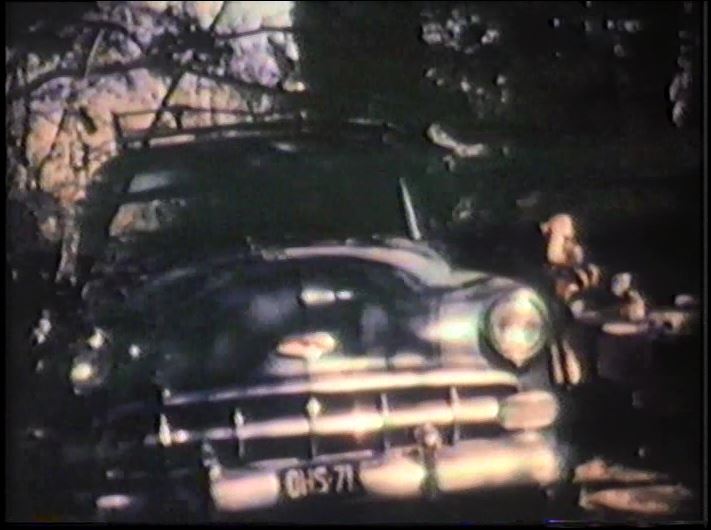
    Fluffy Crawley and I probably met at the Methodist Church Sunday School as toddlers, making us fellow-Methylated Spirits. We definitely both went to Kathy Putterill’s pre-school and then from Sub A to matric in school and Sunday school together. A fine human being.

    ~~~oo0oo~~~

    kaalvoet – barefoot

    hoeds – hats

    the moer in – not happy

    Voortrekkers – youth group for volk and fatherland – somewhat like Scouts, but less knots and more nots

    ~~~oo0oo~~~

  • Annie’s Abodes

    Annie’s Abodes

    Annie was one of the seven Royal Bains in Harrismith. She was born in the cottage behind the hotel where her parents Stewart and Janet raised all the kids.

    Cottage behind Royal Hotel Harrismith

    Her daughter Mary says they were Ginger, Stewart, Carrie, Jessie, Annie, Hector and Bennett. They had eight cousins who were ‘Central Bains’ – children of James Bain who owned the Central Hotel.

    Mom Mary says only Hector got off his bum and got a job – he went off to become a bank manager in Ndola, Northern Rhodesia, now Zambia. The rest hung around the hotel and had fun, got married, whatever. Ginger played polo; Carrie got married and left for Australia. Stuart did a bit of work on their farm, Sarclet, not far out of town on the Jo’burg road. None of the other six felt compelled to move on, up or out. After all, the hotel had a bar, and Dad was the Lord Mayor of the metropolis and was known as The Grand Old Man of Harrismith to many townsfolk, and ‘oupa’ to his grandkids; so enjoy! Why leave!?

    – His Worship the Lord Mayor of Harrismith”, known to his many grandkids as ‘Oupa“’ Bain –

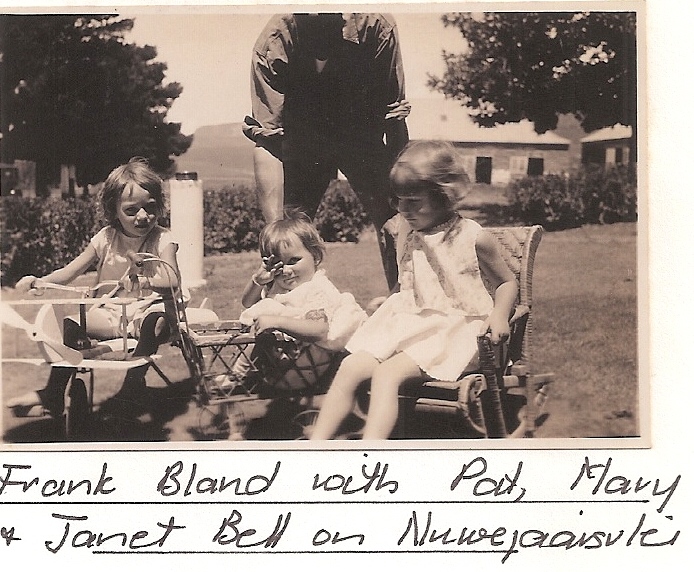
    When Annie married Frank Bland, she moved out to their farm Nuwejaarsvlei on the Witsieshoek road;

    – I have no pictures of Frank! –

    When the farm could no longer support the horseracing they moved in with Frank’s mother Granny Mary Bland, nee Caskie, now with two daughters, Pat and Mary. When Frank died aged only 49, Annie and the girls stayed on. They were joined there by her sister Jessie when her husband Arthur Bell died in Dundee, where he had been the dentist; Then later they were joined by now married daughter Mary, husband Pieter Swanepoel, and daughter Barbara when they arrived back from his work in the Post Office in Pietermaritzburg.

    Some time after that – maybe when Granny Bland died? – Annie moved into Randolph Stiller’s Central Hotel; She then left Harrismith for the first time in her life and went to stay with sister Jessie down in George for a few years after Jessie’s daughter Leslie had died; When Jessie died, Annie returned to Harrismith and lived in John Annandale’s Grand National Hotel. John said to Mary he was battling to cope with hosting her, so Mary moved her home. Much to Pieter’s delight. NOT.

    So within a month Mary moved Annie into the Eliza Liddell old age home. Two years or so later, Mom remembers a night hosting bowling club friends to dinner when the phone rang. It was Sister Hermien Beyers from the home. “Jou Ma is nie lekker nie,” she said. Mom said I’ll be right over and drove straight there, she remembers in her red car wearing a navy blue dress. She sat with her dear Mom Annie holding her hand that night and – experienced nursing sister that she was – knew when Annie breathed her last in the wee hours.

    Her visitors the next morning included Mrs Woodcock and Miss Hawkins. Mom regrets not letting Miss Hawkins in to see Annie. She should have, she says. She remembers being fifteen years old and not being allowed to see her Dad lying in Granny Bland’s home and has always been glad that she snuck in when no-one was watching and saw his body on his bed and so knew it really was true.

    ~~~oo0oo~~~

  • Granny Bland’s Home

    Granny Bland’s Home

    Part of the stone wall which surrounded Granny Bland‘s home in Stuart Street, Harrismith; and the oak tree her grand-daughter Pat Bland planted.

    – Granny Bland’s garden wall –
    – The oak that Pat planted –

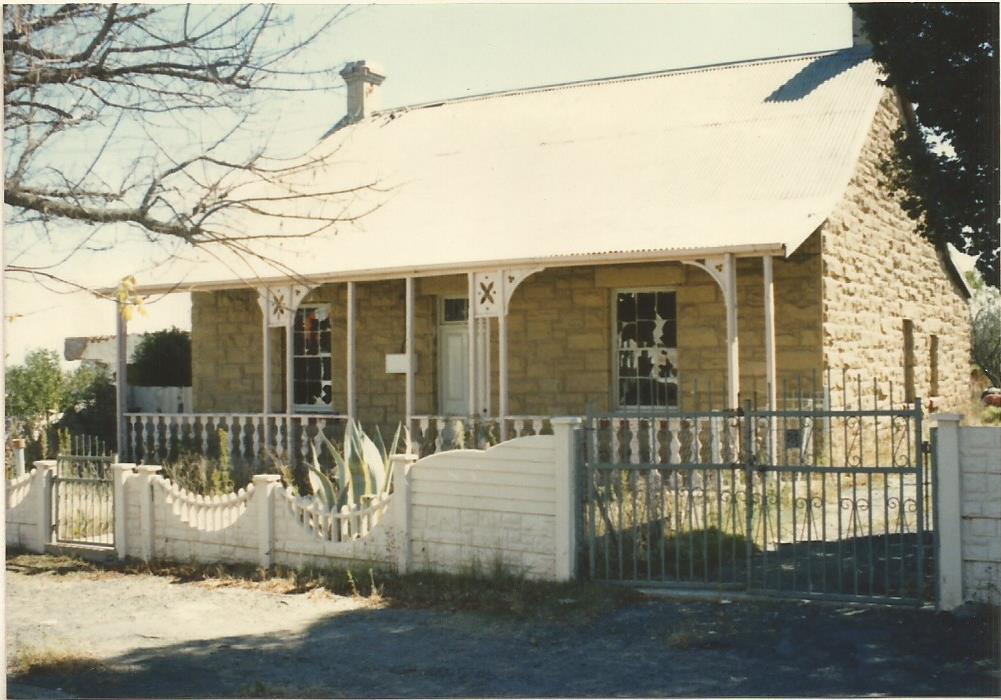
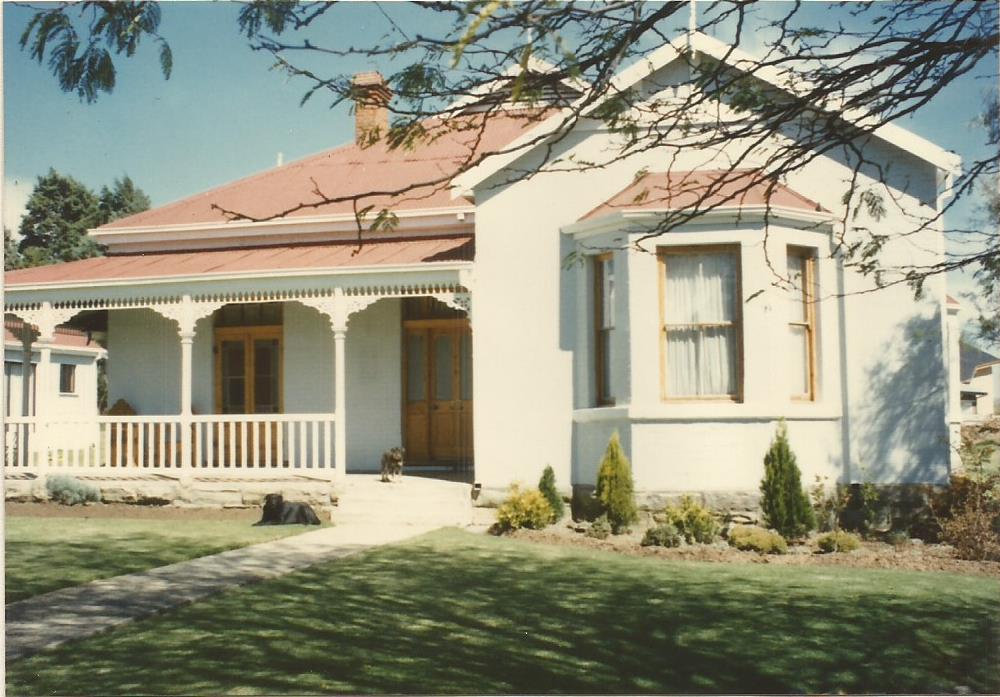
    Our great-grandmother ‘Granny Bland’ was a Caskie who married a Bland who begat Frank (JFA) Bland who married Annie Watson Bain. Bain Sisters Annie Bland and Jessie Bell lived there with Granny Bland after their husbands died. Her granddaughter – Annie’s daughter – Mary and great-granddaughter Barbara also lived there for a while, some sixty five years ago. Four generations in one home!

    The old home now has an artist family living in it and has been beautifully restored.

    Granny Bland’s house Stuart Street – renovated again
  • Post Office Lineman

    Post Office Lineman

    Dad was a Post Office technician. Back before we were born. He applied for telephones, which was more technical, but was given electrician. He did his apprenticeship ca.1938 and was soon put on telephones, given a truck and sent off to Ixopo where he was assigned a ‘line boy.’ Actually an adult to do lots of the hard work for you. His lineman’s name in Ixopo was Freddie.

    – here’s his truck, his dog and his shadow –
    telephone linesman from pinterest
    – testing, testing – an American lineman
    – testing, testing, a South African lineman from HeritagePortal.co.za –

    Himeville fell within his area and he got to know the lady in charge of the General Post Office there – Miss Viven Wise. Miss Viven D Wise, actually, which got the young techies snorting as “VD” was rude. She spoke of the Sani Pass up into Basutoland and how beautiful and rugged it was, so when out that way one day Dad decided to see if he could get there. He soon came across a stream he had to ford, so out jumped Freddie to pack stones in the stream so the truck could get across. Soon another stream and the same procedure. After the fourth stream he decided this is going to take too long and turned back.

    He also tells of putting in new telephone lines. From one farm to the next the line would go as the crow flies, over hills and through valleys. They’d be allocated long gum poles treated with creosote and they’d take them as close as they could in the truck, but to some places they had to be carried on their shoulders. Heavy and the creosote burning their shoulders, they’d lug them over the veld, dig the holes and plant them. I’m guessing Freddie did his fair share of the heavy lifting.

    telephone linesman handsets
    – linesman handsets –

    In 1973 I had another Dad, also a lineman. Rotarian Don Lehnertz worked for the electrical utility in Apache Oklahoma. Wish I’d noted which company. He and Jackie very kindly hosted me as an exchange student for three months of that year.

    Interesting that the famous song Wichita Lineman was written about a lineman up a pole in Washita County Oklahoma just west of my town Apache in Caddo County: (wikipedia) Webb’s inspiration for the lyric came while driving through rural southwestern Oklahoma. At that time, many telephone companies were county-owned utilities, and their linemen were county employees. Heading westward on a straight road into the setting sun, Webb drove past a seemingly endless line of telephone poles, each looking exactly the same as the last. Then he noticed, in the distance, the silhouette of a solitary lineman atop a pole. He described it as “the picture of loneliness.”

    Back in Harrismith, before too long, Dad got rescued from the Post Office by his beloved Mother-in-Law. Who gave him a job.

    ~~oo0oo~~

  • Victor Simmonds, Artist

    Victor Simmonds, Artist

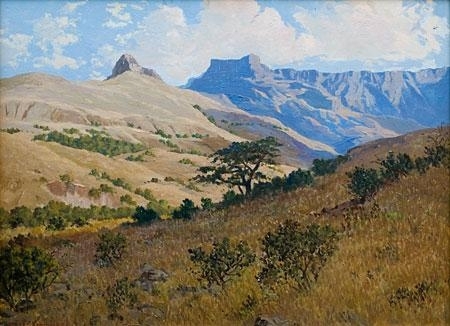
    Dad: “Victor Simmonds was a lovely chap and a very good artist. He was a little man, grey, a lot older than me. What? How old? Well, I was probably 35 then and he was grey. He was probably 50. He lodged with Ruth Wright (Ruth Dominy by then) on the plot next door to ours, Glen Khyber. I doubt if he paid them any rent, they were probably just helping him out. He moved to the hotel in Royal Natal National Park where they allowed him to sell his art to the guests and that probably paid his rent.

    “He was a hopeless alcoholic, unfortunately. He used to come to me begging for a bottle of brandy late at night, his clothes torn from coming straight across to Birdhaven from Glen Khyber, through the barbed wire fences. (Mom and Dad owned a bottle store, liquor store, in town) I said ‘Fuck off, Victor, I won’t do that to you,’ and sent him away. I wish I had bought one of his paintings. Sheila found these four paintings he gave me for nothing. He said he did these as a young student. As I took them he said, ‘Wait, let me sign them for you.’”

    – maybe a self portrait? –
    – nude with amphora? –
    – semi-nude with two amphorae? –
    – maybe the Kak Spruit at or near Glen Khyber? – possibly –

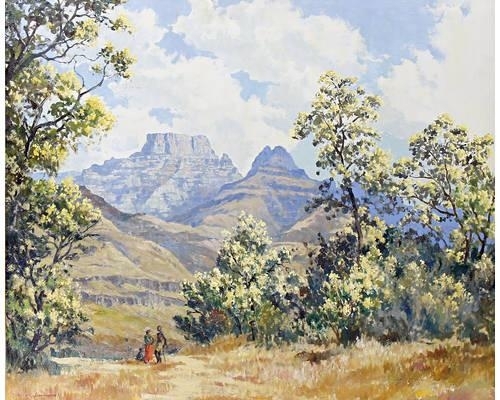
    So I went looking and found a lot of his work available on the internet. Once again Dad’s memory proved sound. Victor was born in 1909, thus thirteen years older than Dad:

    Victor Simmonds’ work has been offered at auction multiple times, with realized prices ranging from $126 to $256, depending on the size and medium of the artwork. Since 2012 the record price for this artist at auction is $256 for South African landscape with two women carrying wood, sold at Bonhams Oxford in 2012. Also see here and here and here

    – South African Landscape With Two Women Carrying Wood –
    – shrubs beside a cascading stream –

    I knew this scene! I recognised it immediately! To me this looks like the stream above the Mahai campsite in Royal Natal National Park – So I went looking and at lovecamping.co.za I found this:

    – spot on!! – an image locked in my brain for maybe fifty years! –
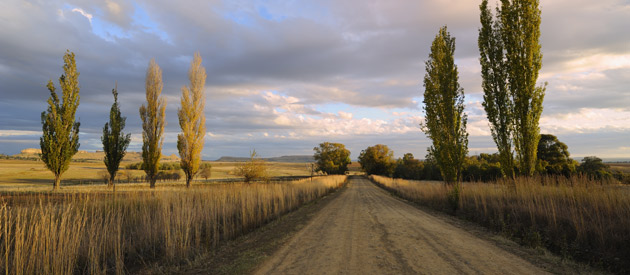
    – sunset, poplar trees, a river – the Wilge near Walton farm? – (or – see below . . )

    A number of his paintings are available for sale. I’d love to see his ‘The Gorge, Royal Natal National Park, Showing the Inner Buttress and Devils Tooth’ but I’d have to subscribe for one day at 30 euros! That one was apparently painted in 1980, so he kept going for at least 23 years after he stayed in our neck of the woods. That would have made Victor around 70 and his liver a resilient organ.

    ~~oo0oo~~

    Now its 2024 and look who has popped up onto my vrystaat confessions: All my life I’d heard Mom speak of Corry Cronje and Len Cronje, and Corry’s daughter Liz found my scribblings. Or rather, Liz wrote a delightful nostalgic personal memoir about the Cronjes of Witsieshoek, (post it online Liz and I’ll link to it!). Anthony Maeder sent it to me and put me in touch with her. We got talking and got onto the topic of this talented artist who spent time on a neighbouring plot to the one we grew up on, and on a neighbouring farm to the one Liz grew up on.

    Brothers Corry and Len lived in Witsieshoek on neighbouring farms, Patricksdale and Mountainview respectively. Victor Simmonds stayed with Len and his wife Lettie on Mountainview for quite a while and painted on both farms and the surrounding area. Liz Finnie Cronje is Corry’s daughter and when I told Mom she immediately said, “Oh Corry’s wife Rosalie was a big friend of Annie’s (her mom). They would have long chats at Annie’s Caltex garage when the Cronje’s came to town.”

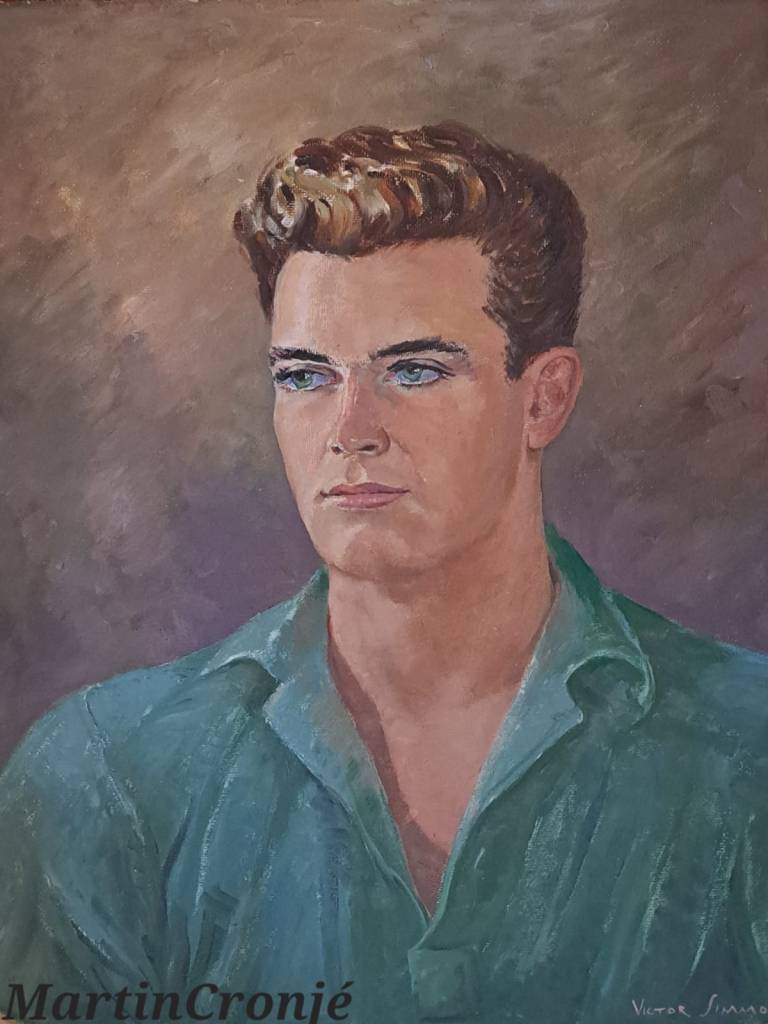
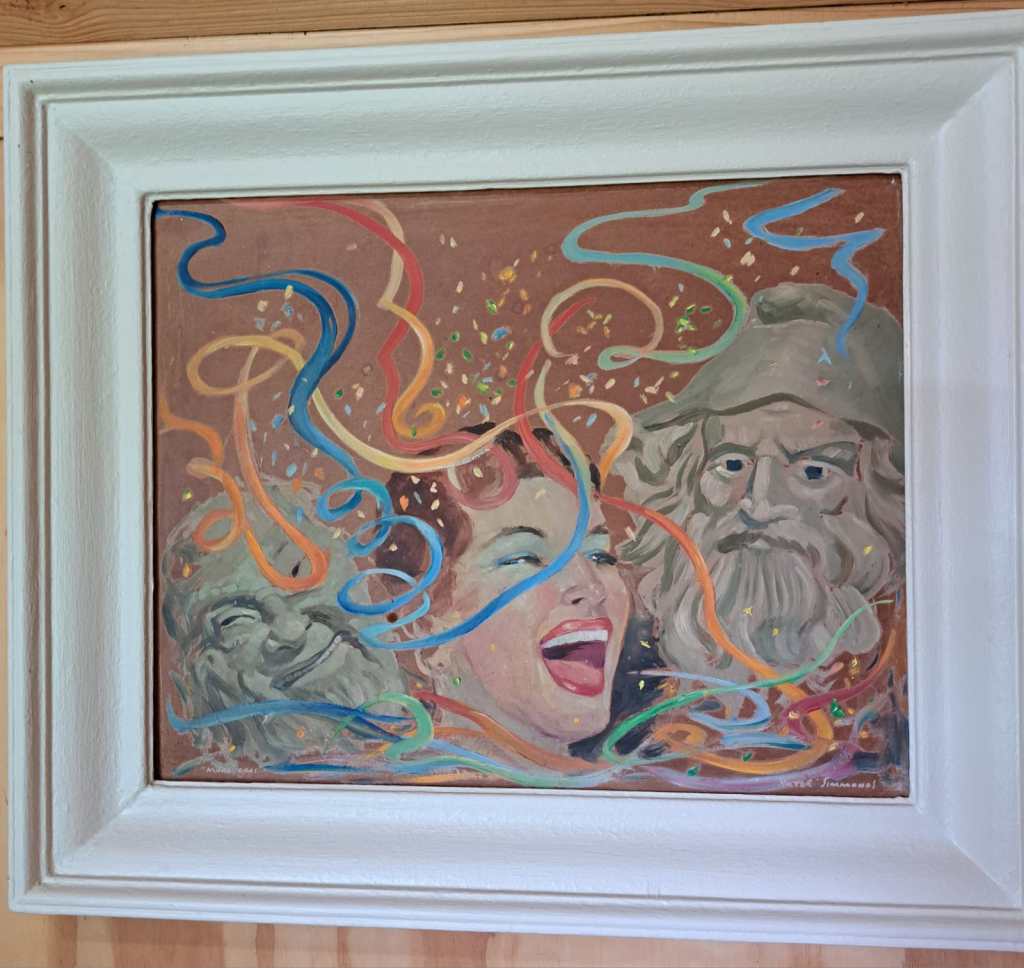
    Len and Lettie’s daughter Josie Cronje Batchelor has a number of Victor Simmonds’ paintings and she has OK’d my posting them here. Wonderful! One more place where his talent can be appreciated.

    – View from Mountainview across Patricksdale to the ‘Berg –

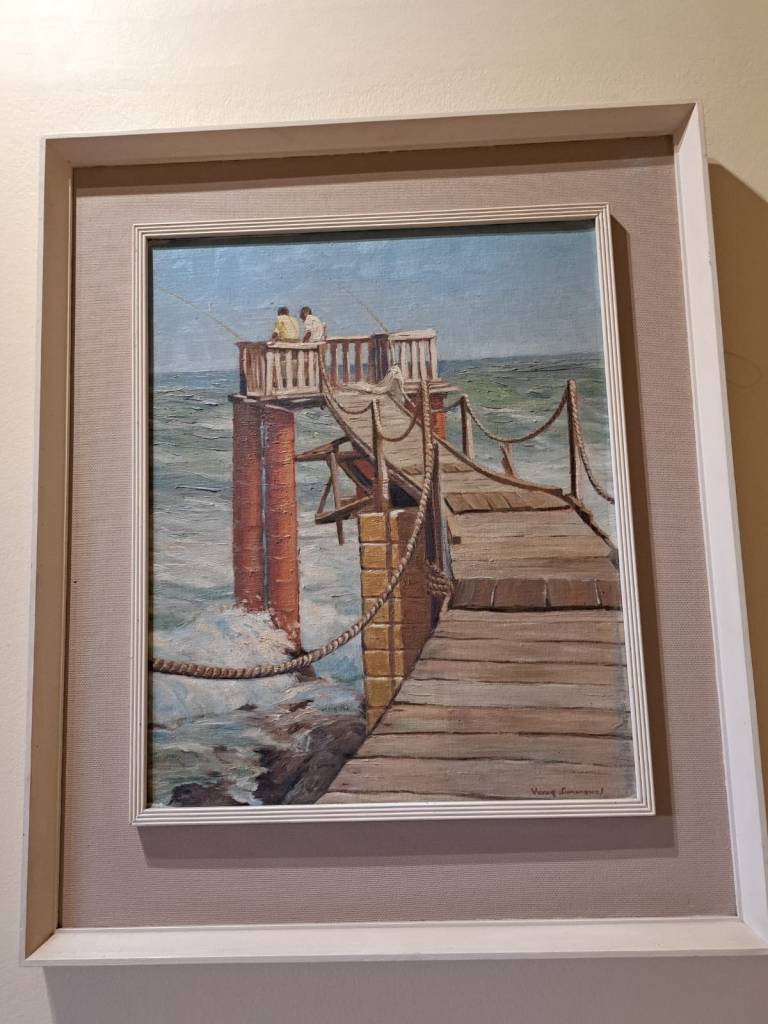
    Click to enlarge – Left: Pier – Right: The poplars in Autumn –

    Left: Martin Cronje, Lettie Cronje’s brother, Josie’s uncle – Right: ‘Mardi Gras’ –

    This next one has to be on its own. Here’s why: Josie Bachelor, nee Cronje of Mountainview wrote: This is my favourite. The Gold Lamé in the background was my mom’s evening dress. The vase and porcelain horse also Mom’s.  Mom did the arrangement. The table belonged to Vic.

    Knowing a picture’s background and place and story makes it so much more interesting and valuable, doesn’t it?

    ~~oo0oo~~

    Two more! With a note from Liz: I think I missed out on two more paintings. Both on Mountainview of the original Randall Bros. store in Witzieshoek taken over by Arthur Gray late 19th century I think. The chief (forget his name – ed. maybe Ntsane 1898 – 1918) asked if Arthur could open a shop in Witzieshoek as his people had difficulty getting to the shop during very rainy weather owing to the full Elands River. When my grandparents, Kerneels and Edie Cronje returned after the Boer War they renovated the shop and turned it into a cottage where all but the eldest Cronje (Andries) was born beginning about 1906 when my Dad, Corry was born.

    – Mountainview Cottage –
    – Mountainview Cronje’s Birthplace –

    ~~oo0oo~~

  • Sgt Culling on Kings Hill

    Sgt Culling on Kings Hill

    One of Annie’s forecourt attendants at the Central Service Station on the corner of Warden street and Southey street – the ‘Caltex garage’ as we knew it – was called Johannes. Because he looked so different from the other petrol attendants, we learnt his surname. He was Johannes Culling.

    Today I found out a bit more:

    The Boer War started in 1899 and ended in 1902, but a lot of British soldiers stayed on in the garrison stationed at Harrismith until 1913, when they finally left. One of these was Sergeant Culling, stationed on Kings Hill, east of town. He, in fact stayed on even longer, as he married a local lady and went to live with her in the ‘location’ as the townships under apartheid were known. Our location was called ‘Skoonplaas’ (but see below), when it was south of Queens Hill on the far (left) bank of the Wilge river.

    Dad knows of three children: Johannes, Henry and a daughter. They could not have had an easy life in the Free State of yore and Dad tells of problems: ‘run-ins with the police due to drinking and fighting.’

    That’s all I know . . .

    Now there’s more! A visit to this post by someone with way more knowledge than me. Rev. Mbuyisazwe Tshabalala commented in November 2024:

    “The township was called Skomplaas, not Skoonplaas. It is a combination of two Afrikaans words, “kom” and “plaas”. This is where people were dumped when their ancestral land became farms (plase) They came from the farms Hulle KOM van die PLAAS. I SPENT THE FIRST 21 years of my life in this township. The Cullings are now our In-laws. My brother’s son is married to one of the great grand children of Sgt CULLING.”

    I replied: Hi Rev Tshabalala

    Thank you for visiting my tiny little post about the Cullings. So much history gets lost unless we write down what we know.

    I have added your comment to the post to clarify things.

    Kind regards

    Peter Swanepoel (I was in Harrismith from 1955 to 1972; My Mom was there from 1928 to about 1999; My Gran Annie Bland of the Central Service Station from 1893 to 1983).

    PS: You may also be interested in this post from those faraway days in Harrismith: https://vrystaatconfessions.com/2020/09/27/max-express/

    Rev Tshabalala again – Hi, Pete

    My father used to buy his suits at Du Toit’s. I bought one there a few years ago. 

    We are also related to the Waterman’s.  I notice that there were two British soldiers named Waterman who were garrisoned at Kings Hill during the Anglo-Boer War. One of them married an African woman. My father’s younger brother married his granddaughter, Miss Goqo. 

    ~~oo0oo~~

    Fascinating, all this hidden history, buried in people’s brains and often not seeing the light of day.

    Later the township was moved – further from town and out of sight, as was usually done under apartheid – up to the top of 42nd Hill to the west of Harrismith, where it was known as Phomolong.

    ~~oo0oo~~

  • Local Knowledge

    Local Knowledge

    Another of Dad’s tales:

    Koos Mof van Wyk was a bachelor who lived with his Ma out on the Kestell road. One evening he drove home and a Joburg driver drove right up his bum as he slowed suddenly on the main road in order to turn in at his gate.

    The Joburg oke was angry, ‘Waddefok maak jy dat jy sommer so skielik stilhou innie mirrel vannie pad!?’

    Koos Mof was astounded. Waddefok maak JY!? he yelled.

    Almal weet dis my hek hierie en ek draai altyd hier in. Ek is Koos Mof en ek BLY HIER!

    ~~~~~ooo000ooo~~~~~

    Joburg driver: How can you just stop in the middle of the highway!?

    Koos Mof: What do you mean!? Everyone knows this is my gate and I always turn in here! I LIVE HERE!

  • Old Oak Desk

    Old Oak Desk

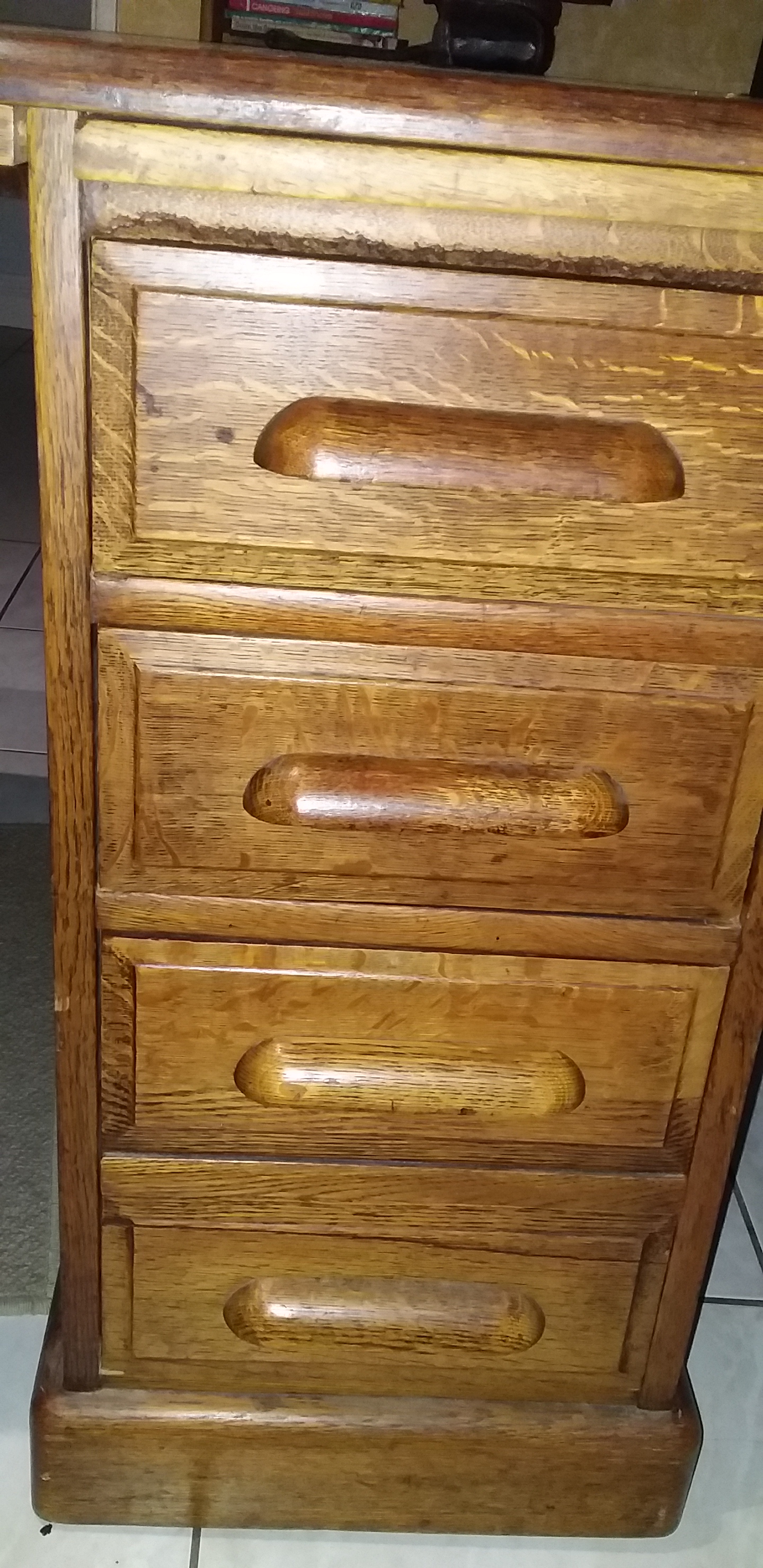
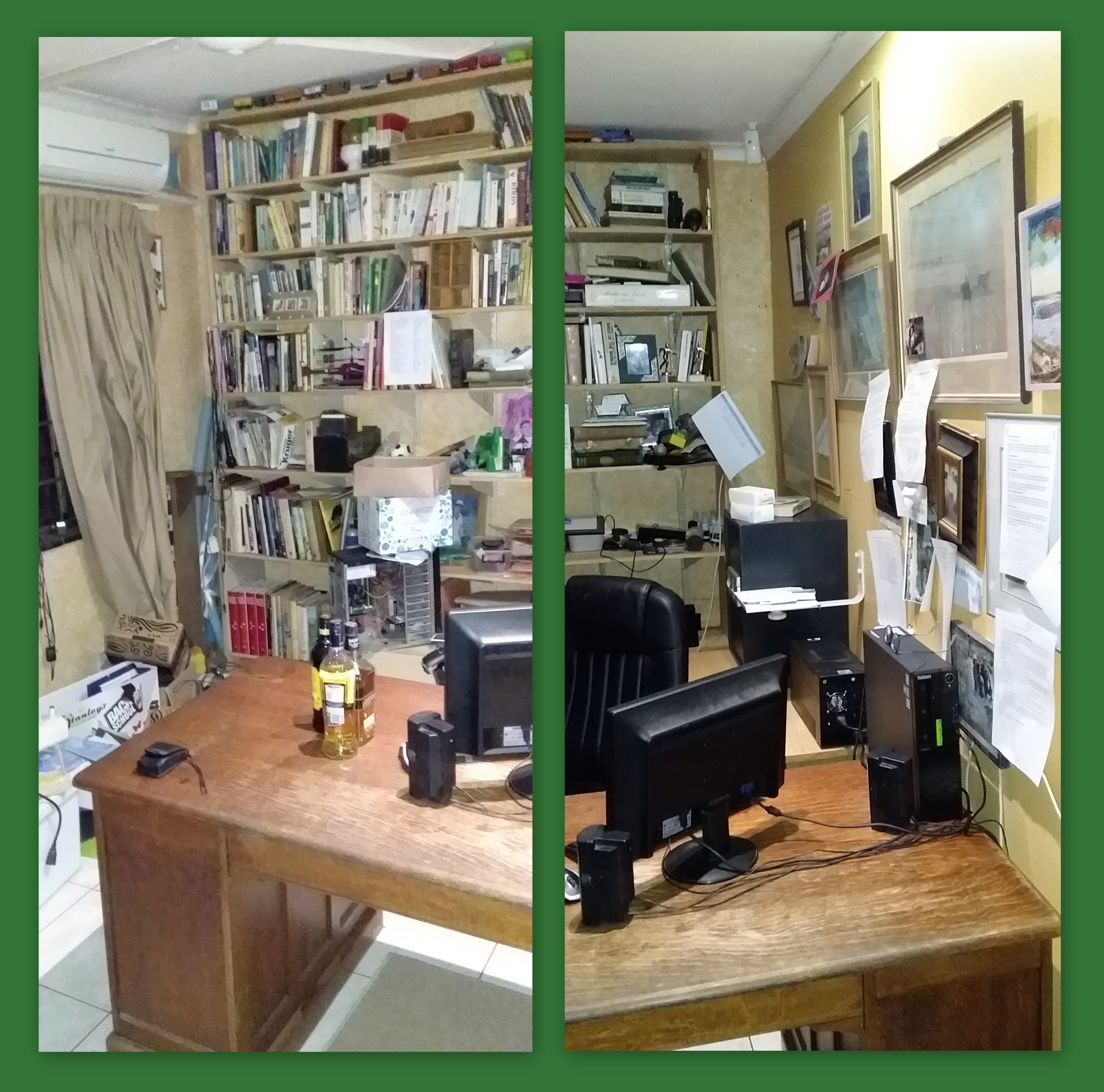
    Long long ago Annie said to me I should get her beloved husband Frank’s oak desk. We never knew Frank. He died when Mom was just fifteen or so, still in school. Annie had five grandkids and I suppose her reasoning was the only grandson should get it? A lot of mysterious value was attached to having a penis in ye olden days. OK, so not that much has changed, really.

    So now Mom’s in Azalea Gardens and Dad will be joining her soon, so it was time to fetch the desk. Dismantle, ship on the back of and inside of my Ford bakkie and re-assemble in my office.

    It looks good.

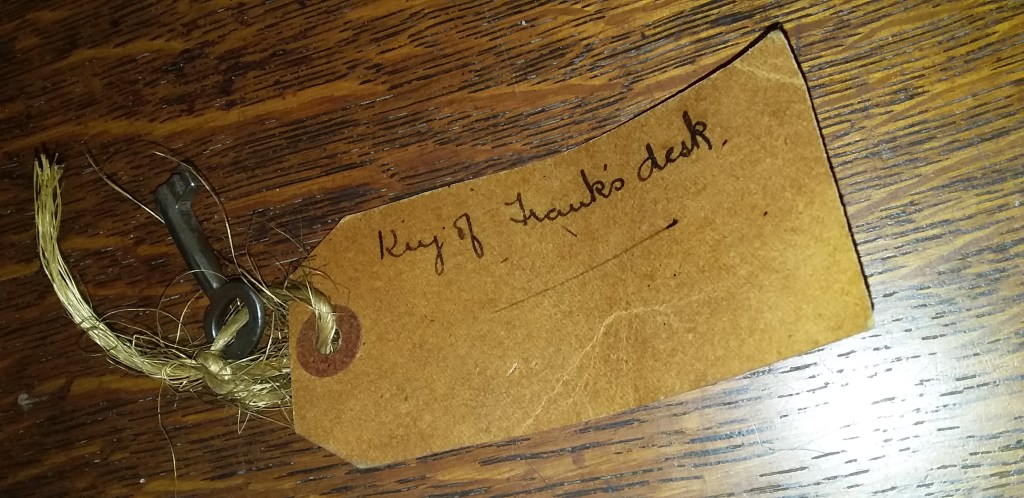
    Very importantly, the key is in the top drawer, attached to a label ticket. Written in (I suppose) Annie’s handwriting: “Key of Frank’s Desk.” Interesting, as there’s no lock or keyhole in the desk, nor any of its drawers!

    ~~~oo0oo~~~
    ‘Fraid it wasnt in my care for long, Annie! It has moved on. Into Sheila’s care now, as I’ve sold my home. Took it apart again – 14 separate pieces) and schlepped it down to her in my same Ford bakkie. I took care to make sure she got the key, too.

    I spose this means the penis (lineage) has been severed!

  • Our Automotive Designer

    Our Automotive Designer

    Harrismith had a very successful sportscar designer! Sheila reminded me on her facebook. He was a big mate of Polly du Plessis. They called each other Sissel Pud (du Plessis backwards) and Tweedie (de Witt backwards). Verster was captain of the rugby team and Mary Bland’s boyfriend. He dopped a few years and was in JC when she wrote matric. A real gentleman, says Mary. When she left to go nursing he said, ‘My fear is that we don’t meet again – worse, that we’re living in the same city and we don’t even know it.’ Sensitive soul.

    Here’s the story of Verster de Witt – or the parts I could fish out:

    Two Stellenbosch university pals wanted to make a great sportscar. They were Bob van Niekerk and Willie Meissner. In 1958 Meissner went to England and saw a new technology called fibreglass. He wrote a letter to Bob van Niekerk asking him to come to England to study fibreglass crafting. Bob hopped onto a Union Castle ship and joined his mate. In those days that was called ‘instant response’: The letter took a week; the response took a week; the ship took a month; Bang! Two months later there his mate was, ready to help.

    Bob recalls: ‘We had full confidence in our ability to produce the mechanicals and a good chassis, but needed someone to put a ‘face’ on it – a good looking design. As luck would have it, Willie knew a lady Joan, nee Peters, who was married to a stylist working at Rootes who would hopefully stop us from producing a mediocre, unattractive body.’

    Mary & Polly in Harrismith schooldays

    His name was Verster de Wit, an ex-Harrismith boykie and good friend of our Polly du Plessis and Mary Bland-Swanepoel. He very soon had them building quarter-scale models with plasticene during the week in their one-roomed flat in Earls Court while he was off working in Coventry on the Sunbeam Alpine. Fridays, Verster would come down to London to inspect the work they had done. When they got to scale model number 13, it suddenly all came together, and ‘a unanimous decision was made to progress to full-scale.’

    – Bob van Niekerk racing a Dart –
    – a 1962 GSM Dart –

    ‘We rented a garage in Gleneldin Mews in Streatham and built the mock-up using wooden formers and plaster of paris. The first body came out of the mold in April 1957 and was sold for 75 pounds, which helped to pay for my trip back to Cape Town where Willie had started the Glassport Motor Company (GSM).’

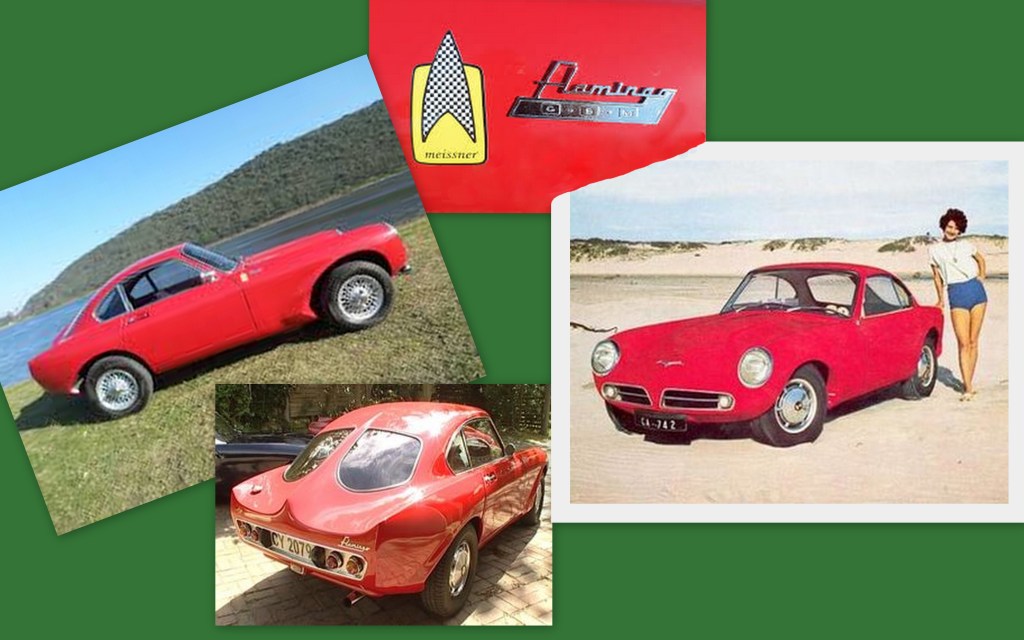
    They considered what to name their cars: Cheetah, Mamba, Simba, Zebra, Kudu, Lynx or Tyger? Eventually they called the open top the GSM Dart and the hardtop the GSM Flamingo. On returning to South Africa, they built four prototypes in 1957, and the first production car rolled off the line in early 1958. In total, 116 GSM Darts and 128 GSM Flamingos were produced from 1958 to 1964. Actually, the GSM club tracked down many of them and reckoned there were a few more than that.

    The GSM cars were astonishingly quick and agile and won a lot of races. In their first nine hour in JHB, a Dart beat Sarel vd Merwe in his Porsche into second place; they were followed by an MG, another Porsche, a Volvo and an Alfa Romeo!

    But perhaps the best story was after they had sold 41 cars by 1959, for racing and road use in Cape Town, they decided they could also be sold in England and Bob set sail with a complete body and chassis kit on the Union Castle liner. In England Bob was introduced to Mr John P Scott at Windsor Garage, West Malling in Kent. Scott agreed to give him a place to build a car and fund all the parts on condition that Bob built the car in 10 days! AND that he entered it in a race at Brands Hatch! AND that he won the race! What a tall – almost impossible – order!

    Bob accepted the challenge and worked day and night to complete the Dart by the Friday before the race. On the Saturday, April 18, 1960 Bob found himself in the middle of the grid on an unfamiliar circuit in a brand new and untested car. He steadily worked his way up into first place and won the race! He actually did it! Setting a Brands Hatch lap record that stood for seven years! A delighted Mr Scott then established a GSM production facility in a 5000 square foot factory behind the Windsor Garage to produce the first batch of cars. They couldn’t call them Dart in England, so they used ‘Delta’. Records are vague – it seems somewhere between 35 and 76 GSM Deltas were made in Kent.

    The little cars developed a legendary winning reputation in the UK, Europe and SA. To show they weren’t only about racing, the Flamingo was marketed as the road-going version:

    In 1964 they ran out of money.

    ~~~~~ooo000ooo~~~~~

    Aftermath with Verster de Wit: 1976

    A GSM club was formed in JHB and they tracked down Verster at his home in Kosmos on the Hartebeespoort Dam. He and his new wife Eva hauled out a suitcase full of his photos and sketches of his design days in England and in SA. They regaled the club members with tales of the hours of dedication and hard work Verster had put into his automotive design career. Another well-known design he had also been involved with – in addition to the Sunbeam Alpine – was the Humber Super Snipe.

    In the 1980s the design got another lease of life when Jeff Levy got Verster to help him make a series of accurate replicas known as Levy Darts.

    ~~~~oo0oo~~~~

    Anyone who knows more, I’d love to hear from you

    ~~~oo0oo~~~
    archive.org

    wikipedia

    wheels24

    motorsportmagazine.com

    carmag.co.za

    cartorque.co.za

    ~~~~oo0oo~~~~
  • Smuggies. And Justice.

    Smuggies. And Justice.

    A visit to Tuffy, then stationed on the Bluff in Durban with Recce Battalion was a happy reunion. There he was in uniform and me with long hair, his student mate from Harrismith. He introduced me to his sergeant ‘Vingers’ Kruger and all his comrades and announced we’d be partying tonight.

    We started off at the famous / notorious Smugglers Inn off Point Road and had a good few there, warming up to a fun night on the tiles. On our way out, en route to a nice place one of the guys knew where ladies would remove their tops with sufficient encouragement, we heard shouting – screaming really – in the alley next to the entrance to Smuggies: ‘You’re married to my sister and here I catch you fucking a man!’ We didn’t wait to hear the fellow’s explanation for his errant behaviour – the other side of the story, y’know, in fairness – but there were some smacking sounds.

    Later outside another nightclub a few insults thrown around started a fight between some of the short-haired soldiers and a group of longer-haired ‘civvies’. In the interests of transparency, one of our boys had started it. It soon developed into a brawl and the cops were there in a flash. They took no nonsense and a number of prisoners, throwing anyone near the fighting indiscriminately into the back of the black maria. Which was grey, not black. I tried to explain how very innocent I was, having hung back and danced around the edges of the fight, but was told to fokkin keep quiet and shoved into the van.

    like this, just newer; and grey; with mesh windows

    As we huddled uncomfortably and with foreboding with some of the okes who minutes before had been throwing punches at us – OK, for me, potentially anyway – I saw through the mesh window Sersant Vingers having a quiet word with the cop in charge. Probably something about fellows-in-uniform, our obvious innocence, how little we’d had to drink, how the blackguards had attacked us, look at their hairstyles and other good, if biased, points. The cop in charge nodded and approached the door of our van. As Vingers pointed out his men – we all looked the same in civilian clothes – the cop brusquely shouted ‘You, you and you! OUT!’ Thankfully Vingers included me among ‘his’ men. Any friend of Tuffy’s was a friend of Vingers’.

    Once Vingers had counted his men he trooped us back into the club with a grin for a victory drink, with lots of congratulatory slaps raining down on his back. ‘Justice’ had been served.

    ~~~~~ooo000ooo~~~~~