Whaddabout?

  • A Swanepoel-Solomon Stone

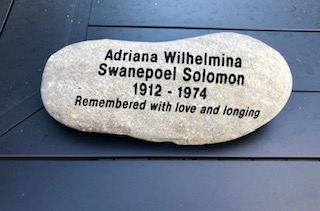
    A Swanepoel-Solomon Stone

    A memorial stone. This story started in Pietermaritzburg, grew in Pretoria – and ended up here:

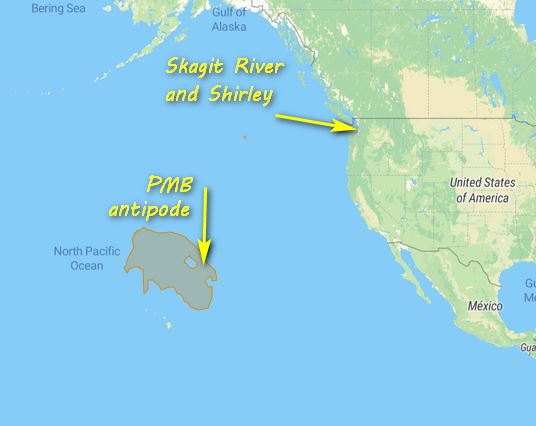
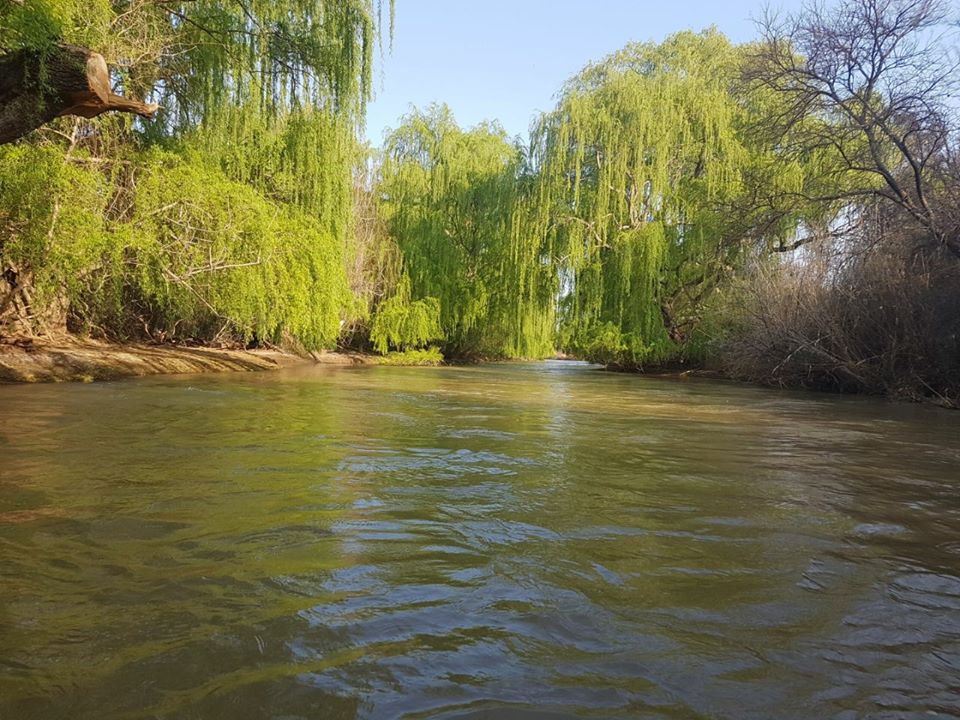
    – The Skagit River splits, then feeds into Skagit Bay –

    The beautiful delta of the Skagit River in North-West Washington state! Up on the Pacific coast; up near Canada; not too far off the exact opposite side of the world. Here’s where South Africa lies if you could look right through the world from Above the Pacific Ocean:

    It happened like this:

    My dear cousins: On Sunday August 11 my family and I are holding a memorial for my mother. When she died so unexpectedly in March 1974 I was a long way away. I did not participate in any of the funeral arrangements and I did not attend the funeral.

    After cousin Lizzie died I had a “conversation” with Koosie and he asked me where my mother was buried and I realized, to my shame, that I did not know and have not since been able to find out.

    So on Sunday, a day before her 109th birthday and 45 years after she died, I am symbolically bringing her home to me and to my family. We have chosen for her headstone a rock we collected from a nearby river and it will pass from me, to my daughter, to my grandson and beyond in ongoing commemoration.

    Please send your prayers and loving thoughts our way and join us in recognition of Adriana Wilhelmina Swanepoel Solomon, my beloved mother and your Auntie Janie.

    Much love to you all, Shirley

    Afterwards:

    My dear Cousins: Thanks and appreciation to all of you for your thoughts and prayers. We spent a heartfelt couple of hours together talking about Adriana and the Swanepoels. Warren was not with us as he is visiting friends in Nebraska. We looked through the old shoebox of pictures and told the old stories that, by this time, are part of the family cannon and are probably quite richly embellished. We laughed, we teared up, we remembered other family members who are no longer with us. We brought out the big Atlas and checked out where exactly South Africa is, we took down the pictures that have been on the wall for years and examined them more closely: the four Swanepoel siblings taken when Pieter was around two, the montage of the ten cousins that I cherish, the wedding picture of my parents. All in all, it was a lovely time, topped off by my reading the kind and thoughtful messages that you sent us. Our love from our family to yours. Shirley

    Hi Shirley, What a beautiful gesture. Our thoughts will be with you on Sunday. I can still remember the time that my dad went to Aunt Liz’s funeral and ended up having to bury two sisters. He was so sad at the time. May they all rest in peace. Love from us. Solly

    That’s beautiful Shirley. My thoughts are with you and I have put a reminder on my phone. I’ll drink a toast Sunday! ( I did – Jerepigo!). Auntie Janie will enjoy Washington, the Northwest and the river, I’m sure! Love, Koos – P.S. The last time I saw her was 1973 in Apache, Oklahoma and friends took a polaroid picture:

    – Janie Solomon – Dad’s eldest sister – visits me in Apache Oklahoma – my host siblings Mary-Kate and Jimmy Patterson

    Dear Shirley, You and your family are in our thoughts and prayers today. May your commemoration bring the peace in your heart that you so long sought for. Remember, those we so dearly love, don’t go away, they walk beside us every day. Love you all, Johan

    Dear Cousin Shirley, Thank you for sharing the family memorial for your mother with your cousins. May your family be richly blessed for placing her at the centre of your lives on this day.

    Although 10 200 plus miles separate us, know that we will be with you in heart and spirit on this memorable occasion. To this end, a proverb, a prayer, a photo and a couple of fond memories for you.

    An appropriate Hebrew proverb: Say not in grief ‘she is no more’ but live in thankfulness that she was.

    A prayer for the occasion: Lord of all, we praise you for Aunty A who rests peacefully in your presence. Give all who remember her grace to follow in her footsteps as she followed the way of your Son. Thank you for the memory of Aunty A who you unexpectedly gathered to you. May our memories of her lead our hearts from the things we can see to the unseen things we trust you for. Lead us too until we enter the eternal rest you have prepared for us. We ask this in your precious name Lord. Amen.

    A photo of the Swanepoel sisters taken in Camperdown when Aunty A visited. Two ladies who remain dear to me to this day.

    – Janie, Jack, Lizzie –

    A couple of fond memories of a lady with class: Aunty A was the only Aunt I knew – I can’t remember meeting any of my Dad’s sisters. Aunty A was always very kind to me. When given our first pass from the Air Force Gymnasium in 1964 it was Aunty A who collected me to spend a delightful Sunday in their home at 54?Prospect Street, Hatfield, Pretoria. It only occurred to me much later why she and Uncle Solly gave me a spare box set of King Lear long-player records with the subtle suggestion that it would improve my English! Clearly Mathematics and Science was my forte and not languages. After having qualified to give flying instruction at Central Flying School Dunnottar and trying to be an officer and a gentleman whilst vigorously courting the East Rand chicks, it was Aunty A who suggested that taking them to ballet shows at the Aula Theatre at Pretoria University would impress them favourably. She accompanied us on occasion but didn’t seem too impressed with the company I was keeping at that stage. Aunty A helped me select and purchase a 1968 painting of the artist Christiaan Saint Peter Nice one Sunday afternoon at the Magnolia Dell. This artist has since passed on but subsequently became well known and his paintings continue to grow in value. The painting hangs in the study serving as a reminder of the good times we spent together. Aunty A was not just classy but fun-loving too. Travelling together from Pretoria to Camperdown in my recently acquired MGB GT (before entering the Free State where the traffic cops always laid in wait for unsuspecting speedsters) I can’t quite remember whether it was Aunty A who wanted to know how fast this thing can go or me who wanted to show her? Other than with my lady companions, Aunty A was truly impressed with what the MG could do given that it was a sporting offspring of her Morris Cowley which she used to drive hell-for-leather down Burnett Street heading for the City. Her memory remains indelible in my mind.

    Here’s wishing you every success and many happy memories of the day! With love, Cousin Jack G

    ~~~~oo0oo~~~~

  • Serious Optometric Research

    Serious Optometric Research

    We were in second year and had just moved out of downtown Joburg and Eloff Street to the salubrious semi-suburban delightful area of Doornfontein which was once Joburg’s premier suburb where all the gold mining magnates and Randlords lived and built their mansions.

    – that was a while ago, ’tis true –

    So some final year students asked us to help them in their research for their – whatever.

    They needed volunteers to see if blood alcohol levels affected your esotropia. We gave it a moment’s thought and thought that sounded like a HELLUVA good idea as it involved free drink and would provide valuable data and it involved free drink. We volunteered. None of asked ‘what’s esotropia?’ a number of said “Free Drink!?”

    It was very formal. We had to – No, you can’t have a drink yet; Hey! Step away from the drinks table, we need baseline levels before you . . you have? Well, how many? SO many? Well, quick, come, let’s measure you before – Hey! Not another one . .

    Well, give them their due, they tried their best and we did our best and it was a WONDERFUL evening filled with laughter and witty repartee and I don’t know if they got any data but we did get the promised drinks and they didn’t need to return any unopened bottles to the grog shop, which I’m sure saved them a lot of bother..

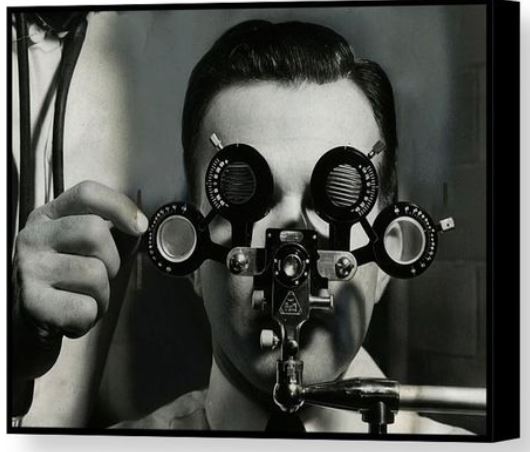
    Quite a lot was learned, too. Like if you give a person who has had one too many even a little bit of vertical prism he will push the phoropter away and make barfing noises and run out of the clinic. That might come in handy to future researchers, and I give it here free for anyone to use.

    – look at her – she’s obviously had a few –

    ~~~oo0oo~~~

    In final year, Brauer, Zena Jacobson and I did some more serious research, popping contact lenses into people’s eyes and then forgetting about them. My eyes and Pierre Leibbrandt’s eyes, as two f the guinea pigs I ca remember. Silicon extended wear we called it. I think our verdict was “Not Yet.”

  • Serious, Focused Paddling

    Serious, Focused Paddling

    . . racing, in fact.

    I put my head down, leaned forward and reached for a flat blade-full of Umgeni water and pulled it back to behind my hip. This was not a characteristic action. I was not used to putting effort into my paddling, but this was serious: I had team-mates, and we were in a race. This was the Kingfisher Canoe Club 12-hour enduro. I think we were raising funds for the new clubhouse, and I was in a KCC team, maybe the F-Team or the Z-Team.

    When I got back from my blistering lap under the big concrete Athlone bridge pier in the Umgeni river at Blue Lagoon, my team-mates assured me it was the slowest lap in the history of canoeing, a record unlikely ever to be broken and they had all grown a beard, shaved it off and grown another while waiting for me. Rude bastids.

    Thanks guys. It was nothing.

    Roly Bennett took over from me (yes, we were a crack squad) and fell out three times before he got out from under the shadow of the Athlone bridge.

    He then stood on his long knobbly legs in the mud of the shallow water and filled the boat halfway with water, reckoning this gave him some stability. Being a yachtsman he knew all about lead in your keel. He got back in and paddled off with half a millimetre of freeboard, gunwales awash half the time;

    When Roly – eventually – got back my team-mates assured me:

    A. That my record had been shattered and I was now only the second-most useless member of our crack squad;

    * alternative ending (I can’t remember which is true): *

    B. That despite Roly being handicapped by a pathetic tap-tapping paddling action, an absence of calves and a half-sunken ship, my record still stood.

    Sadly, I think it was B.

    ~~oo0oo~~

    – the scene of that intense action years later –
  • Caltex Calenders

    Caltex Calenders

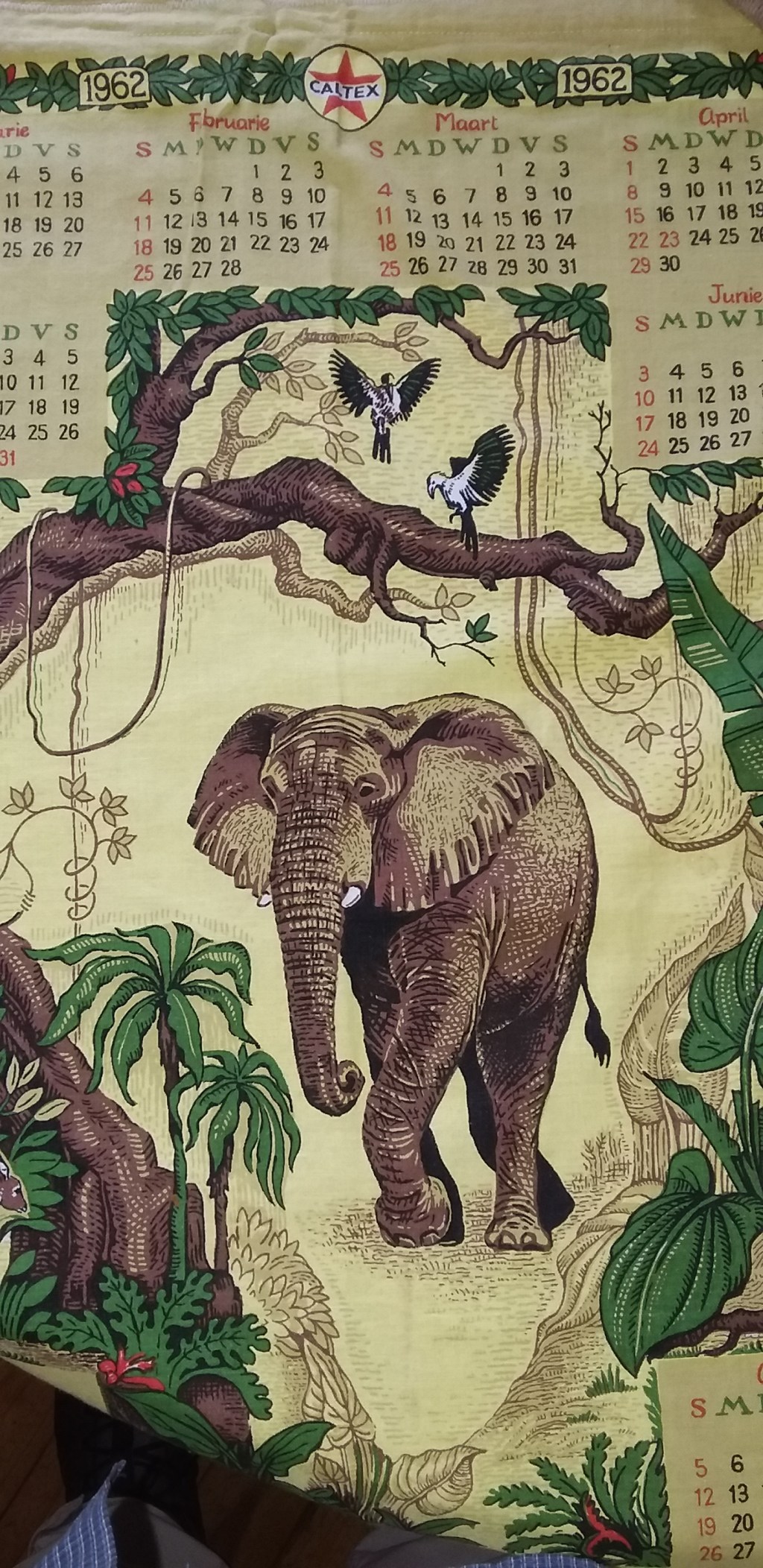
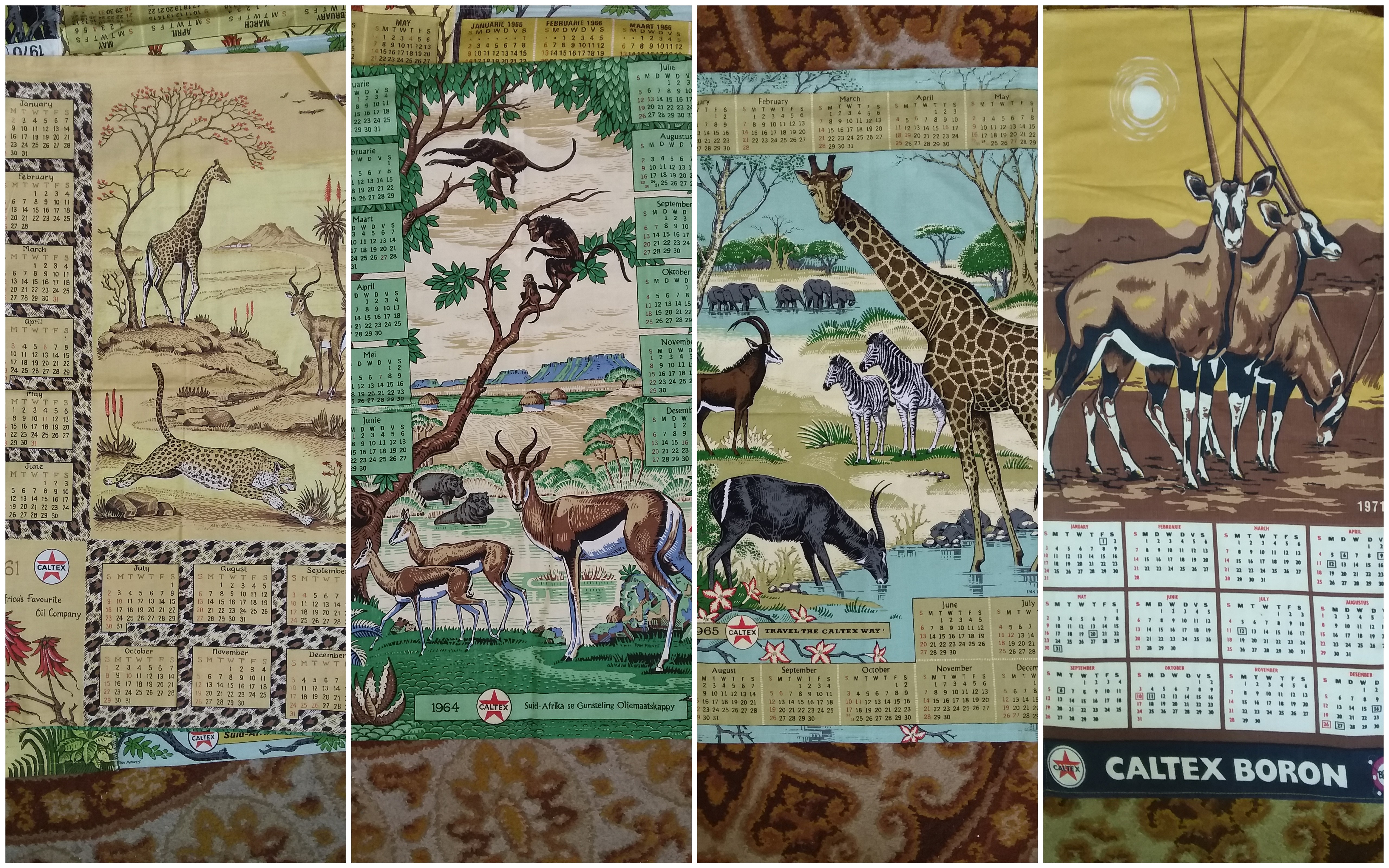
    Annie had a Caltex garage; Dad worked for Annie; Louis Schoeman traveled for Caltex. Between 1962 and 1971 Caltex gave cloth wildlife calenders as their gift to their filling station owners.

    Dad (now 96) says Louis would ‘forget’ to hand them out and he would insist on seeing what was in his boot. And there, ‘along with the sheep shit’ were the calenders! An inveterate collector, Dad would get ‘his’ share! Right! That’s why he has quite a few duplicates!

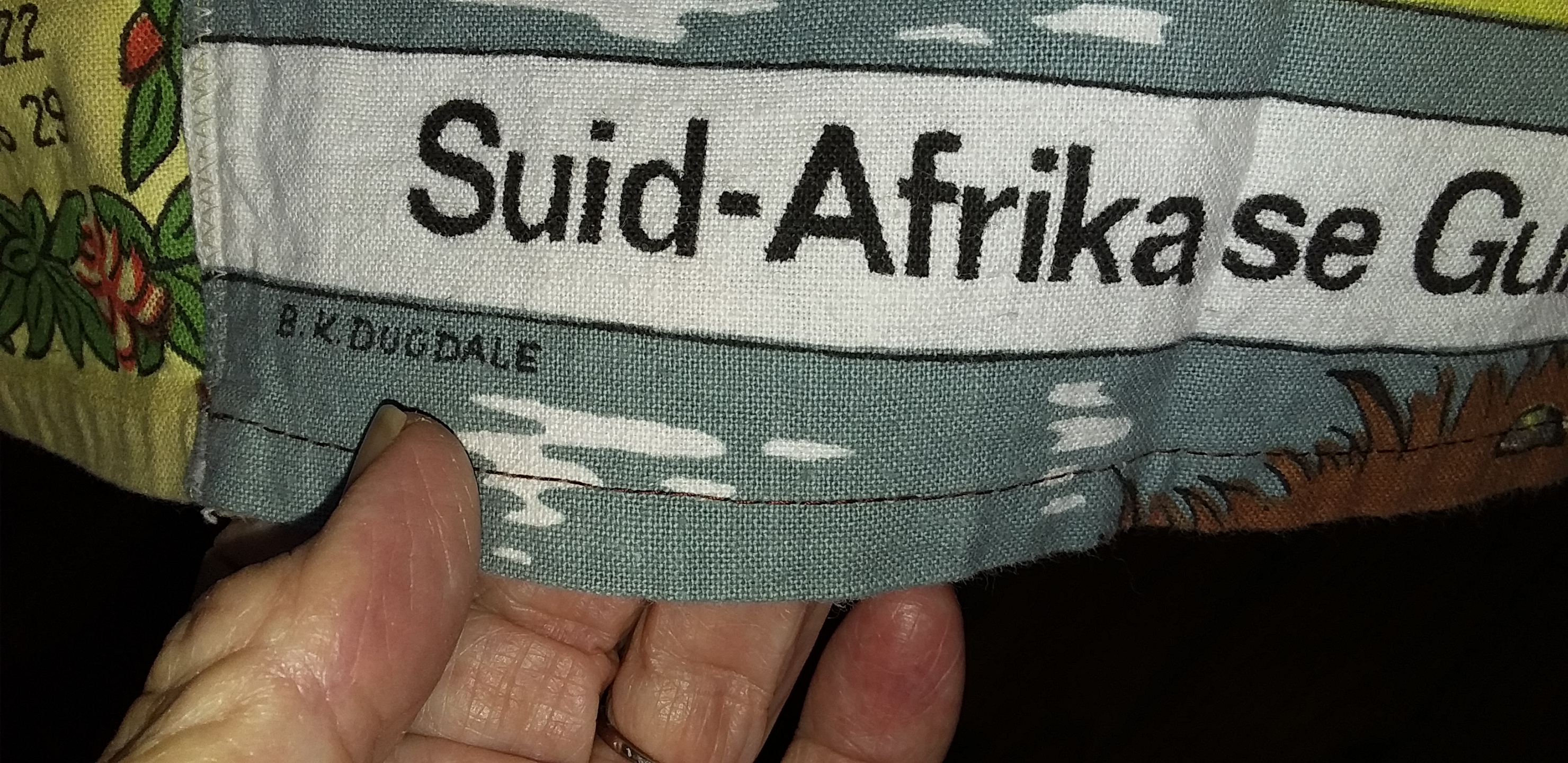
    – I could find nothing on the internet about BK Dugdale – Mom’s hand here in pic –

    Some have been sewn together to make table cloths. He still has plans for them, can’t get rid of them. He knows someone who will make them into cushion covers. Then he’ll get some cushions . .

    ~~~oo0oo~~~

    He’s had it done: The calendars are now table cloths and cushion covers and he’s very proud of them. Can’t understand why his eldest daughter didn’t rave about them! She doesn’t like them, I dunno why; I like them. Nice and colourful.

  • New Country, New Identity, New Skill

    New Country, New Identity, New Skill

    We’re all exhorted to Sieze the Day! Carpe diem, said Horace. Grab Opportunities as they arise! Well, some people do just that.

    I was reading about Andrew Geddes Bain, geologist, road engineer, palaeontologist and explorer in the Cape up to 1864, and his son Thomas Charles Bain, road engineer in the Cape up to 1888, when it suddenly struck me!

    First, let’s see what these two very capable men achieved: Andrew Geddes Bain was in charge of the building of eight mountain passes, including the famous Bain’s Kloof Pass, which opened up the route to the interior from Cape Town. And he (and his wife) had about thirteen children. His son Thomas Charles Bain saw to the building of nineteen passes! His crowning glory was the Swartberg Pass that connects Oudtshoorn in the Little Karoo with Prince Albert beyond the Swartberg mountains in the open plains of the Great Karoo. And he (and his wife) also had about thirteen children.

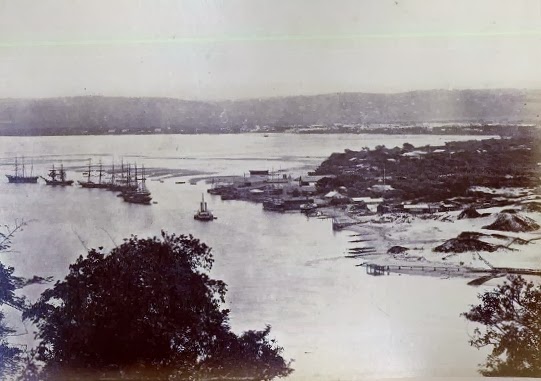
    And I suddenly knew exactly what happened when my Great-Grandfather Stewart Bain and his brother James Bain got off the ship in Durban in 1880. They were fishermen from the tiny fishing village of Wick, in the far north-eastern corner of Scotland, used to being ‘knee-high in brine, mud, and herring refuse.’ * They left Wick and gave up fishing some time after an uncle Stewart had drowned in a fierce storm while out fishing off Wick in one of those little boats. They got onto bigger boats and headed for warmer climes in the colonies: Durban, Natal.

    – Durban harbour ca.1880 looking inland from the Bluff, showing the Point at right –

    When they arrived in Durban people asked them: ‘Bain? Are you the famous Bain road builders? We need road builders here. Can you build bridges too?’

    And I know just what the brothers Bain said. ‘Roads? Och aye, we can build roads. And bridges? We can build them with one hand tied behind our back.’ You know, the old, ‘You’re payin’ how much to do that? Well, you’re in luck. I Happen to be Very Good at it . . . ‘

    – some nice bridges there – this one in Swinburne –

    And so they built the railway bridges between Ladysmith and Harrismith, utilising their herring netting experience, learning as they went, ‘upskilling’ – thus goes this theory of mine – no doubt with the help of African labourers who had done this before.

    And thereby they helped the railroad reach that wonderful picturesque town in the shadow of Platberg, so that I could be born. This subterfuge and venture made them enough money to buy the Railway Hotel (Stewart; he re-named it the Royal cos every Saffrican town has to have one), and build the Central Hotel (James); Then they could marry, have children – only about nine and eight apiece, though – and become leading citizens of their adopted dorp in Die Oranje Vrijstaat Republiek, a sovereign non-British country.

    Then: One of Stewart ‘Oupa’ and Janet ‘Ouma’ Bain’s nine ‘Royal Bain’ children Annie, had two daughters; and one of those – Mary – had me! And here I am.

    ~~oo0oo~~
    Think I’m being unkind to Wick, village of my ancestors? Read what Robert Louis Stevenson wrote about Wick to his mother when he stayed there in 1868:

    ‘Certainly Wick in itself possesses no beauty: bare, grey shores, grim grey houses, grim grey sea; not even the gleam of red tiles; not even the greenness of a tree. The southerly heights, when I came here, were black with people, fishers waiting on wind and night. Now all the boats have beaten out of the bay, and the Wick men stay indoors or wrangle on the quays with dissatisfied fish-curers, knee-high in brine, mud, and herring refuse. The day when the boats put out to go home to the Hebrides, the girl here told me there was ‘a black wind’; and on going out, I found the epithet as justifiable as it was picturesque. A cold, BLACK southerly wind, with occasional rising showers of rain; it was a fine sight to see the boats beat out a-teeth of it. In Wick I have never heard any one greet his neighbour with the usual ‘Fine day’ or ‘Good morning.’ Both come shaking their heads, and both say, ‘Breezy, breezy!’ And such is the atrocious quality of the climate, that the remark is almost invariably justified by the fact. The streets are full of the Highland fishers, lubberly, stupid, inconceivably lazy and heavy to move. You bruise against them, tumble over them, elbow them against the wall — all to no purpose; they will not budge; and you are forced to leave the pavement every step.’

    ~~oo0oo~~

    Now read a sterling and spirited defence of our ancestral Scottish dorp by Janis Paterson – a feisty distant cousin, and also a descendant of the Bains of Wick; who read my post and reached for her quill (I have paraphrased somewhat):

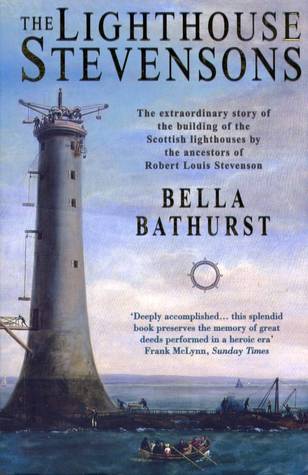
    Ya boo sucks to RLS! Robert Louis Stevenson was a sickly child. His father and his uncles were engineers who built lighthouses all over Scotland. Robert was sent to Wick, likely to get involved in building a breakwater there with his Uncle. But he was more interested in writing stories and was just not cut out for this sort of work. I believe he was also ill while in Wick. The first attempt at building the breakwater was washed away during a storm and also the second attempt. The work was then abandoned. I therefore propose that Robert just didn’t want to be in Wick, was ill, fed up with the weather and just wanted to get away to concentrate on his writing. The Stevenson family must have been excellent engineers, as all the lighthouses are still standing. Did Robert also feel that he was a failure as an apprentice engineer?

    Stick it to him, Janis! How dare he call Wick fishy? Or smelly!? Or breezy!? Even if it was! Just cos a dorp is fishy smelly and breezy doesn’t mean strangers can call it fishy smelly and breezy!

    Janis adds ‘Read this book review:’ ‘ . . fourteen lighthouses dotting the Scottish coast were all built by the same Stevenson family that produced Robert Louis Stevenson, Scotland’s most famous novelist. Who, unlike the rest of his strong-willed, determined family, was certainly not up to the astonishing rigours of  lighthouse building.’

    Janis was right! 😉 All HE could do was scribble. Like me. But better.

    ~~oo0oo~~
    ~~oo0oo~~

    On our big Karoo / Garden Route tour in 2023 Jess and I stopped at a monument to the original road-building Bains who I say inspired our newly-arrived, soon-to-be Vrystaat Bains to do likewise.

    ~~oo0oo~~
    Later I found this on the Ladysmith to Harrismith extension of the rail line. Maybe the Bain bros got a piece of this action?

    LADYSMITH – VAN REENEN – HARRISMITH

    After the survey for the rail link from Ladysmith to Van Reenen was finalised, the route was pegged out in June 1889. A junction was formed a mile north of Ladysmith Station, recorded as 190¼ miles from Durban and 3350ft asl, and appropriately named Orange Free State Junction. However, terminating the line at Van Reenen was not considered very remunerative, and tapping into the OFS’s rich agricultural eastern region would make the undertaking more profitable. Negotiations with the OFS Volksraad resulted in the Natal Railway Administration being granted the sole right to build, equip and operate the extension from Van Reenen to Harrismith. Representatives of both Governments met in Harrismith on 25 February 1890 to work out the agreement’s details. In terms of the agreement signed on 24 June 1890, the railway was to be completed within three years of the turning of the first sod. Significantly, while profits would be equally shared between the two Governments, all operating losses would be borne by Natal alone. The Free State could, at any time, after giving six months’ notice, take over the railway at the cost of its original construction and any other capital expenditure.

    Contracts for the earthworks and masonry culverts from Van Reenen to Harrismith were awarded on 22 January 1891†. The route generally followed the course of the Wilge River, graded at 1 in 80 with 600ft minimum radius curves. The energetic approach of the work crews completed the extension four months ahead of schedule. The extension from Van Reenen to Harrismith was taken into use on 13 July 1892. Initially, there was only one station, Albertina, later renamed Swinburne, between Van Reenen and Harrismith.

    Distance from Durban, elevation in feet

    Van Reenen  226       5520·49     Staging Station at the Natal/OFS border

    Albertina     234¼     5408·46     Passing Station

    Harrismith      249½     5322·30     Temporary Terminus

    † The section from Van Reenen to Harrismith was built and operated by the NGR under an agreement signed on 24 June 1890 between the Orange Free State Volksraad and the Natal Colonial Government. The Orange Free State Volksraad authorised the Natal Railway Administration to construct, maintain and work, at its own risk, the line from Van Reenen to Harrismith. The working of the line was taken over by the CENTRAL SOUTH AFRICAN RAILWAYS (CSAR) in November 1903. No construction maintenance was allowed under capital expenditure (Under Law 29 of 1890, a sum of £260 000 was authorised for the construction of this section).

    This ‘Bain’s Railway Map, c. 1903’ must surely be one of the famous Bains?

  • Our Mountain Burns

    Our Mountain Burns

    Once again Platberg is burning. Old school friends Noeline Bester and Annatjie Labuschagne sent these images.

    Sure hope the Grey Rhebok and Mountain Reedbuck and Chacma Baboons that Koos Beukes and Pierre du Plessis tell me are still there, are OK.

    See these lovely pics of Platberg.

    ~~~oo0oo~~~

  • Flower Fountain

    Flower Fountain

    We mocked Bloemfontein as Flower Fountain and always looked on Durban as the big city, seldom Joburg, as we would head 299km to the coast not 268km inland to JHB when going for any city business. Bloem never featured. It was 378km and more of a backwater. Once you got there, you’d ask yourself WHY? And yet Bloem was our capital and everything official that went upwards in our little hierarchy summitted in Bloemfontein.

    Especially the sporting ladder. If you climbed the sporting ladder and your head popped up through the clouds, there was Naval Hill!

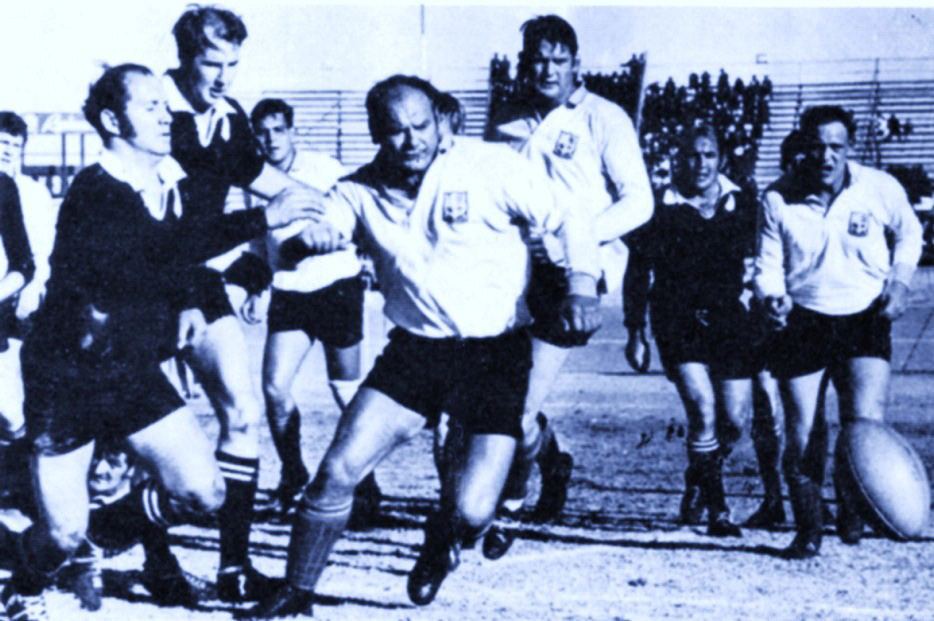
    As far as I recall I reached this valhalla of advancing upwards in your sporting code three times at school: For rugby I was not chosen for the Eastern Free State U/13 team in 1967. But I was chosen to be a reserve. The reserve, maybe? – or was there more than one? So I trekked to Bloemfontein, pulled on my togs and sat shivering on the sideline at the Free State Stadium for the whole match. The top pic gives a glimpse in the background of how the stadium looked. Our sponsors didn’t supply us with branded blankets and there was no attractive physio to massage our limbs. I don’t even know if the poor reserve got his quarter orange ration at half time. It was rugged. Of course we had already beaten another little Flower Fountain Bloemfontein school called Grey College at rugby earlier.

    For tennis Bruce Humphries entered us for Free State Champs.

    All I remember is we drove there in his white Cortina and after I had blasted some booming high-speed double backhands – ala Frew McMillan – in the warmup of the first round, a guy called Symington sent me home 6-0 6-0. I even think he may have yawned while he was doing it. I can’t recall if the famous double pairing of me and Fluffy Crawley played. I have asked him. He can’t remember either.

    And lastly, one year I went to Inter-High, which was the Free State athletics champs and I got a bronze medal for my troubles (actually a piece of paper that said ‘derde’) in the high jump.

    Other than that, we once went for an ordinary rugby game. Daan Smuts drove us there in his VW Beetle to play against Sentraal or JBM Hertzog. Being Daan, we had beer! Yay!! All teachers should be like Daan. When he remembered that he had forgotten to arrange a place for us to sleep we didn’t mind at all. He dropped us off at an abandoned (for the holidays) koshuis where we shivered on beds with no bedclothes. That was maybe the first time we were glad we had blue and yellow and green blazers. Sure it was cold, but we would not have swopped the beers – die binne-kombers – for blankets!

    ~~~~~ooo000ooo~~~~~

    derde – third; bronze!

    koshuis – food house; school hostel

    die binne kombers – the inner blanket; booze

  • Leon Fluffy Crawley

    Leon Fluffy Crawley

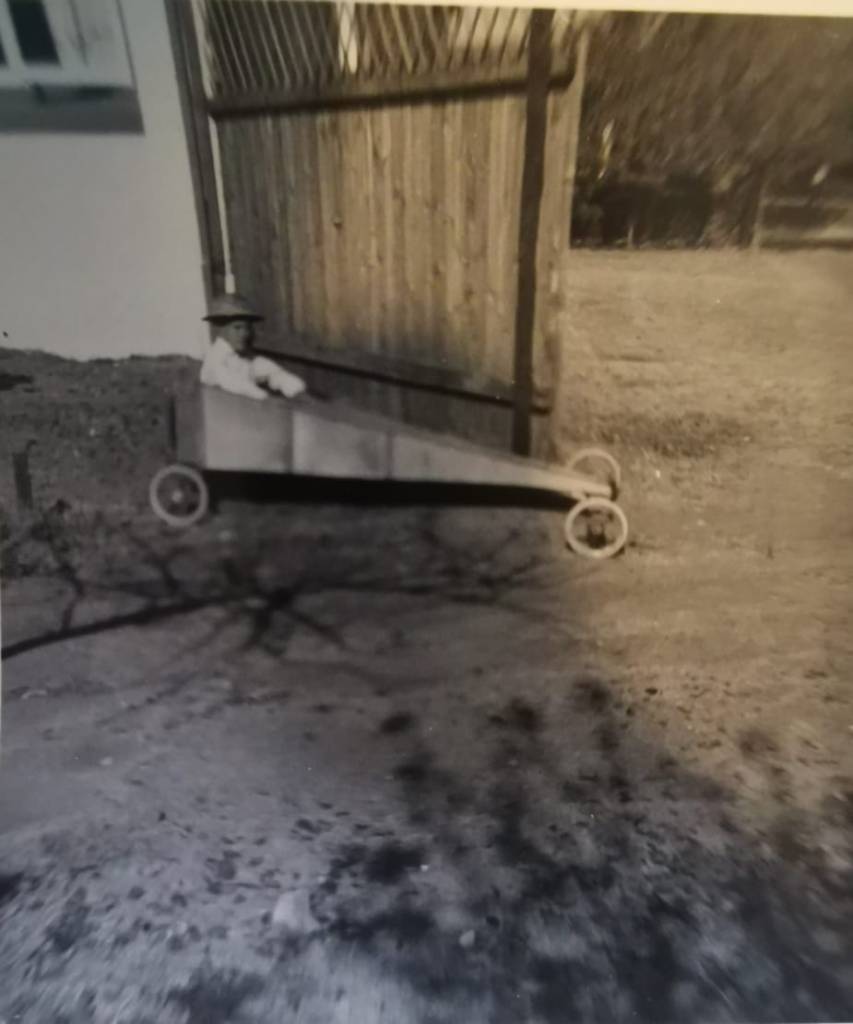
    Talking about the magic photo of the Soap Box Derby on 42nd Hill with Fluffy’s Dad Charlie in it, I got into an extended email conversation with my good mate from Mrs Putterill’s nursery school and Methodist Sunday school in the late 1950’s all the way to matric 1972, Leon Crawley:

    – Charlie Crawley (left kart) and Michael Hastings (crouching); Dr Frank Reitz, looking like Kai, the starter. It looks like his car in the background ‘vimba’-ing the JHB traffic – this is the N3! – (see his car at the bottom) – Note how – just like in F1 – the wheels were standardised – Note also why Charlie bollemakiesie’d – his pedals were too close, raising his centre of gravity – Check the huge gearing advantage of the fella on the right – he must have won? –

    Fluff: Amazing the dress code!!!

    Me: Yes, from kaalvoet kid to full jacket & tie. And three ‘hoeds’. And a cop. Even the most casual of the ‘racing drivers’ has long pants on. I see your Dad clearly, is that Michael Hastings next to him crouched over the reins with his chin between his knees?

    Fluff: Yep, Michael Hastings; I sent the photo to Mom to see if she can identify any others on it. My Dad crashed his kart and came a whopper, apparently had no skin left. He was the moer in when we had our races on the old road, because of the accident he was in. He still owes me a hiding with the kweper lat (quince switch). I bet he is waiting for me in Heaven! But we will just chat about it!!

    – Fluffy in the later Crawley go-kart – with new improved streamlining – obviously wind tunnel tested – how’s the hoed!? – doubt if it was wind tunnel tested –

    Me: By the time we raced down that hill the trees were tall next to the road, and it had become the ‘old road’, a new one having been built above it. Traffic volumes had increased and we could no longer just stop the N3 and all the Jo’burg – Durban traffic!

    = = = = = Canoe trip from Swinburne = = = = =

    – we started under this old road bridge in Swinburne –

    Me: So we did the full Swinburne to Harrismith in a day? I remember being picked up at the bridge – I think the same bridge you once caught a huge barbel under – correct? You may remember I went again a few years later with Claudio Bellato. The river was up and we both lost our glasses, spent a wet night sharing one sleeping bag, which was only half wet, the other one was sopping; then wrecked the canoe, which I had borrowed from the Voortrekkers, on a tree block in a rapid on Walton farm. Charlie Ryder fetched us and we got the wrecked boat out two weeks later. Claudio lives in Durban and I see him from time to time. He still introduces me as “Meet my friend Peter. I slept with him.”

    Fluff: Your Dad picked us up in Town, but we did not sleep over en route. The river was terribly low and we did a lot of foot work crossing or bypassing the rapids. We made the trip in one day. I can remember the trip you had with Claudio, jeez terrible to sleep wet, and that with a man. You fixed up the canoe in the backyard if I can recall. That fish: It was a huge barbel from the bridge and that with a split rod, Dad used for bass!! Haha early one morning standing on the bridge, it was still too dark to go down to the river.

    – we finished under the old Hamilton bridge – the ‘ysterbrug’ – in Harrismith –

    = = = = = The Voortrekker Camp = = = = =

    Me: I joined up briefly, thanks to you. Or to your description of the upcoming camp on Bok or Boy Venter’s farm! I remember the camp in the wattles, a campfire, canvas tents with wooden pegs – and not much else.

    Fluff: I remember the Voortrekkers and I think our membership lasted until after the camp. A huge bonfire, that night; Boy Venter. That was about it.

    = = = The 1969 South West Africa Trip . . That Kestell Trip = = =

    Fluff: We have good memories of the SWA Trek and I still have some photo’s as well.

    Strangely not of the group or individuals!! I will scan at some stage and put them in mail.

    The welwitchia plant; Namutoni in Etosha; the Finger of God; the ‘bottomless’ lake Otjikoto with schools of small fish – apparently the Germans dumped their weaponry in these lakes, close to Tsumeb. Did we go to a disco in Tsumeb?

    Do you remember the beers we ordered, but we were under age but we reckoned there was no age limit buying booze?! You were on the bell and it got stuck and the barman kakked us out and chased us out of the hotel!!!

    The visit to the karakul farm, the meerkats!! Eish the price of that lovely freshly baked brown bread near Twee Rivieren….17 cents OMW – the price of brown bead was about 6 cents back home!!!

    Lovely memories; Braam Venter was the guy from Kestell…and who were the brothers who played cowboy and crooks with .303 rifles on horseback!?

    I can recall yourself, Pierre, Tuffy, myself who else was in the party from Harrismith?

    Swakopmund’s Dune 7 with that huge Chevy bonnet that did not work!!

    ~~~~~ooo000ooo~~~~~

    Me: Was the hiding “on the cards” when he died? Heart attack, was it? How old was he? That was such a damned shame. I can actually still feel (feel, not remember) how I felt standing in the kitchen at 95 Stuart Street when I first heard uncle Charlie had died.
    And here’s my old man turned ninety one after sixty two years of smoking and all that dop – cane spirits – in the Club and Moth Hall!! Each old toppie I see – and my work consists of seeing old toppies! – has a theory of why he has lived so long but I can tell you right now there’s one main factor: LUCK.
    For every “formula” they have for their longevity I know someone who did just that but died young. About the dop my old man used to say, “Ah, but remember he drank cane and WATER. It was the mixers other ous drank that stuffed them up (!!)”. That was his theory and you can say what you like, he’s sticking to it! You know you’re not drinking for the taste when your dop is cane and water!

    I’d love to see the SWA photos. I didn’t take any. I still have the ossewawiel (axle centre – what’s it called?) that I got there. It had everyone’s names on it, but they’ve faded now as it has spent a few decades outside propping up my offroad trailer’s disselboom.

    From HY I can only add Pikkie Loots and Marble Hall’s names. From Kestell I remember ‘Aasvoel’ and ‘Kleine Aischenvogel’. And my name was Steve McQueen thanks to you suggesting it then not using it at the last minute!

    I don’t remember a disco but I do recall the beers at Karasburg and the oke storming in to ask Waddefokgaanieraan? Wie’s Julle? Waar’s Julle Onderwyser? Also the springbokke caught in the fence and the shout Ek Debs Die Balsak! from a savvy farm kid. I’d never heard of turning a balsak into an ashtray till that day! And the huge bonfire in the riverbed and sleeping out in the open and shifting closer to the embers as the fire died down. COLD nights! Also slept on the ground outside Etosha gates.

    I’ll have to cc Pierre & Tuffy on this one!

    I don’t recall cowboys & crooks and 303’s.

    ~~~oo0oo~~~

    I got one letter from Fluffy in 1973 while I was in Oklahoma: Something along the lines of ‘Horrible inflation’ – it was the time of the fuel crisis – ‘a pint of milk has gone up to 6c a litre, and SCOPE magazine is now 20c!!’ Well, we were to learn a lot more about inflation and our Rand’s depreciation in the decades that followed!

    ~~~oo0oo~~~

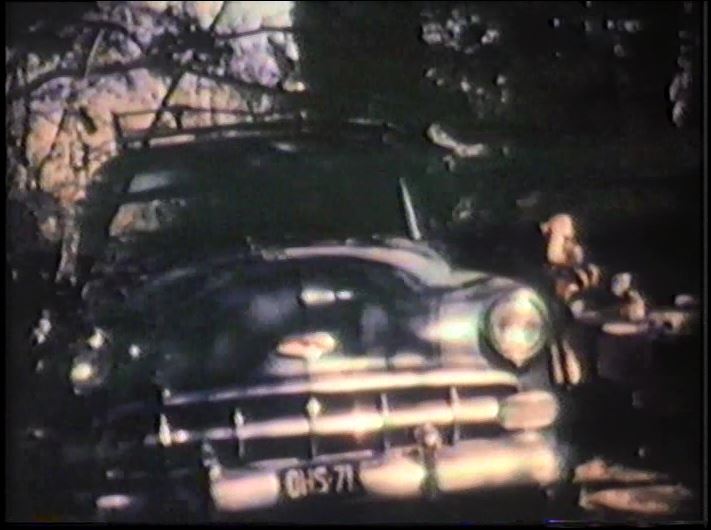
    Here’s Dr. Frank Reitz’s car OHS 71 on the banks of the Tugela River on The Bend, his farm outside Bergville. Pretty sure this is the car in the 42nd Hill soapbox derby picture.

    Fluffy Crawley and I probably met at the Methodist Church Sunday School as toddlers, making us fellow-Methylated Spirits. We definitely both went to Kathy Putterill’s pre-school and then from Sub A to matric in school and Sunday school together. A fine human being.

    ~~~oo0oo~~~

    kaalvoet – barefoot

    hoeds – hats

    the moer in – not happy

    Voortrekkers – youth group for volk and fatherland – somewhat like Scouts, but less knots and more nots

    ~~~oo0oo~~~

  • Annie’s Abodes

    Annie’s Abodes

    Annie was one of the seven Royal Bains in Harrismith. She was born in the cottage behind the hotel where her parents Stewart and Janet raised all the kids.

    Cottage behind Royal Hotel Harrismith

    Her daughter Mary says they were Ginger, Stewart, Carrie, Jessie, Annie, Hector and Bennett. They had eight cousins who were ‘Central Bains’ – children of James Bain who owned the Central Hotel.

    Mom Mary says only Hector got off his bum and got a job – he went off to become a bank manager in Ndola, Northern Rhodesia, now Zambia. The rest hung around the hotel and had fun, got married, whatever. Ginger played polo; Carrie got married and left for Australia. Stuart did a bit of work on their farm, Sarclet, not far out of town on the Jo’burg road. None of the other six felt compelled to move on, up or out. After all, the hotel had a bar, and Dad was the Lord Mayor of the metropolis and was known as The Grand Old Man of Harrismith to many townsfolk, and ‘oupa’ to his grandkids; so enjoy! Why leave!?

    – His Worship the Lord Mayor of Harrismith”, known to his many grandkids as ‘Oupa“’ Bain –

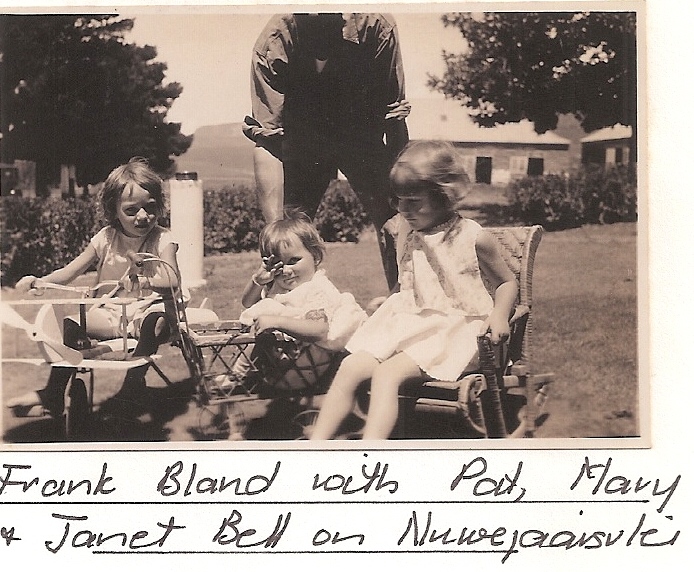
    When Annie married Frank Bland, she moved out to their farm Nuwejaarsvlei on the Witsieshoek road;

    – I have no pictures of Frank! –

    When the farm could no longer support the horseracing they moved in with Frank’s mother Granny Mary Bland, nee Caskie, now with two daughters, Pat and Mary. When Frank died aged only 49, Annie and the girls stayed on. They were joined there by her sister Jessie when her husband Arthur Bell died in Dundee, where he had been the dentist; Then later they were joined by now married daughter Mary, husband Pieter Swanepoel, and daughter Barbara when they arrived back from his work in the Post Office in Pietermaritzburg.

    Some time after that – maybe when Granny Bland died? – Annie moved into Randolph Stiller’s Central Hotel; She then left Harrismith for the first time in her life and went to stay with sister Jessie down in George for a few years after Jessie’s daughter Leslie had died; When Jessie died, Annie returned to Harrismith and lived in John Annandale’s Grand National Hotel. John said to Mary he was battling to cope with hosting her, so Mary moved her home. Much to Pieter’s delight. NOT.

    So within a month Mary moved Annie into the Eliza Liddell old age home. Two years or so later, Mom remembers a night hosting bowling club friends to dinner when the phone rang. It was Sister Hermien Beyers from the home. “Jou Ma is nie lekker nie,” she said. Mom said I’ll be right over and drove straight there, she remembers in her red car wearing a navy blue dress. She sat with her dear Mom Annie holding her hand that night and – experienced nursing sister that she was – knew when Annie breathed her last in the wee hours.

    Her visitors the next morning included Mrs Woodcock and Miss Hawkins. Mom regrets not letting Miss Hawkins in to see Annie. She should have, she says. She remembers being fifteen years old and not being allowed to see her Dad lying in Granny Bland’s home and has always been glad that she snuck in when no-one was watching and saw his body on his bed and so knew it really was true.

    ~~~oo0oo~~~

  • Granny Bland’s Home

    Granny Bland’s Home

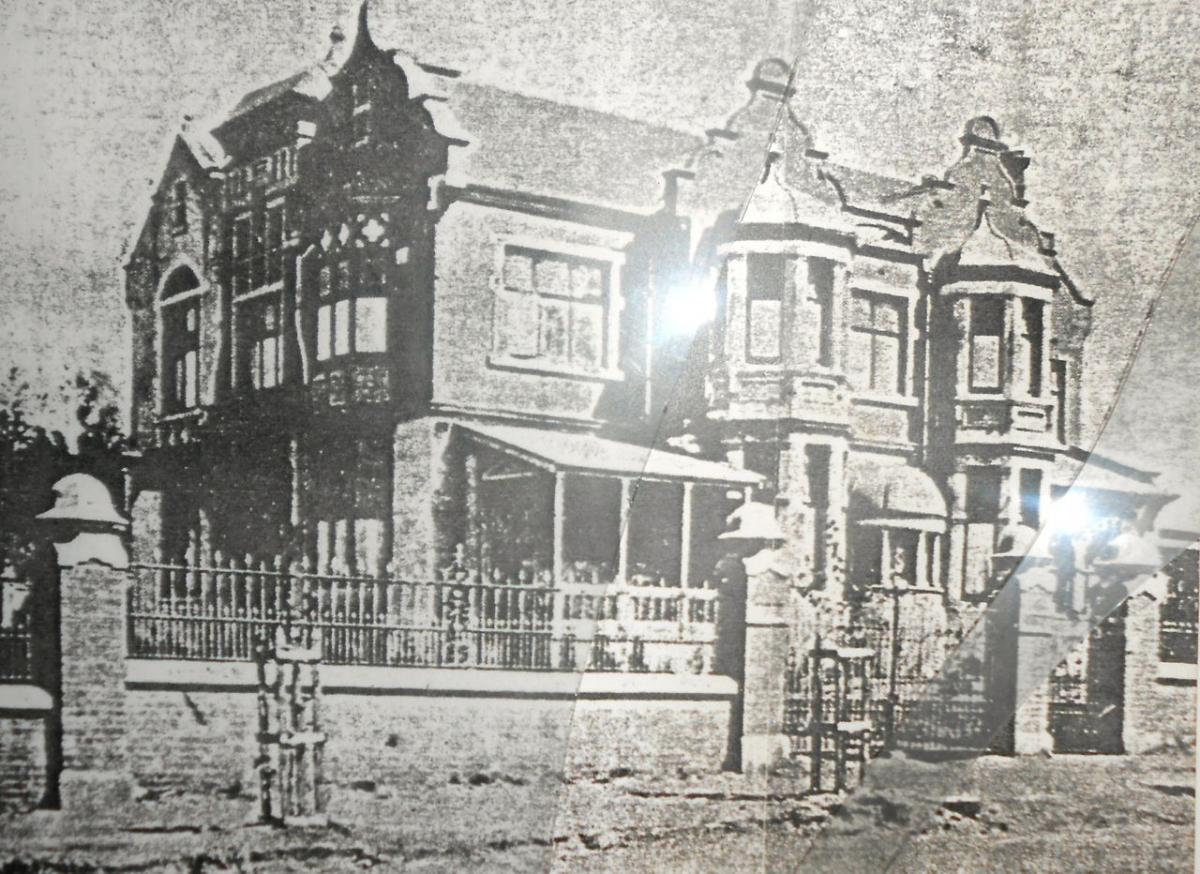
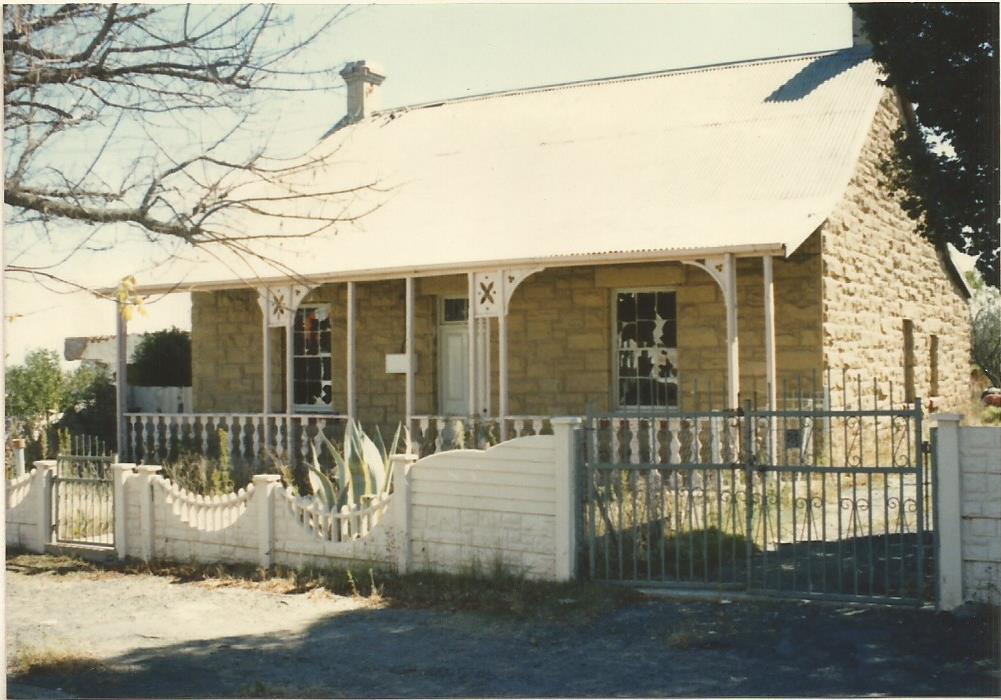
    Part of the stone wall which surrounded Granny Bland‘s home in Stuart Street, Harrismith; and the oak tree her grand-daughter Pat Bland planted.

    – Granny Bland’s garden wall –
    – The oak that Pat planted –

    Our great-grandmother ‘Granny Bland’ was a Caskie who married a Bland who begat Frank (JFA) Bland who married Annie Watson Bain. Bain Sisters Annie Bland and Jessie Bell lived there with Granny Bland after their husbands died. Her granddaughter – Annie’s daughter – Mary and great-granddaughter Barbara also lived there for a while, some sixty five years ago. Four generations in one home!

    The old home now has an artist family living in it and has been beautifully restored.

    Granny Bland’s house Stuart Street – renovated again