

– Hanlie and Adri – 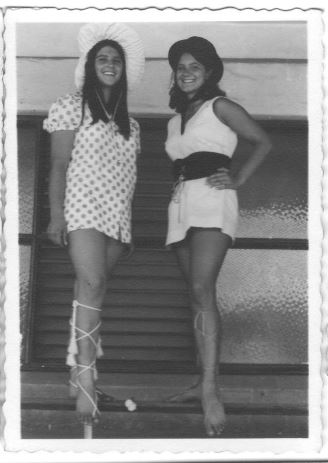
– Ilse and Hanlie – 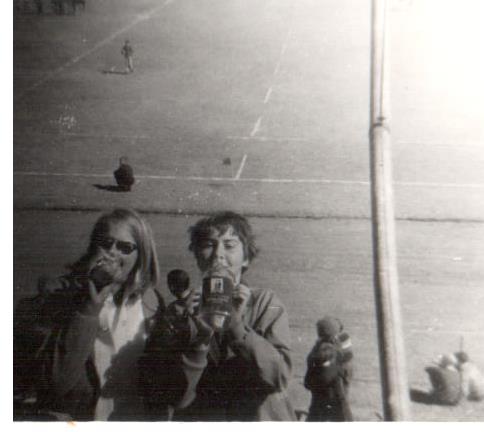
– Lulu & Sheila at ‘the pavilion’ –
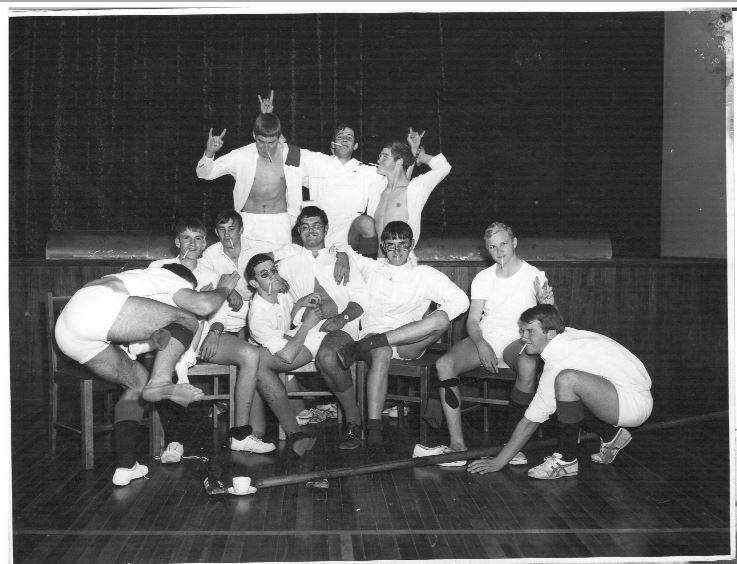


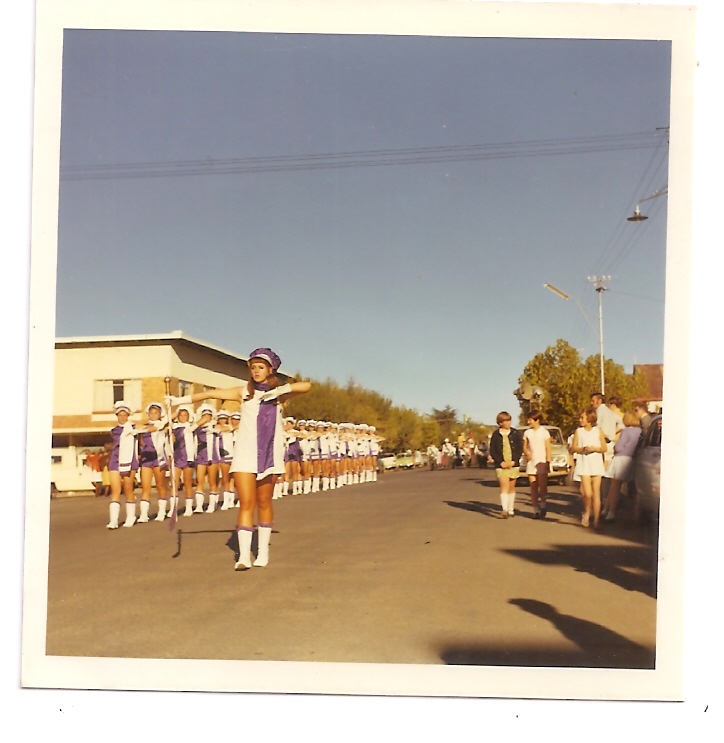
– here comes the cadet orkes marching parum pum –
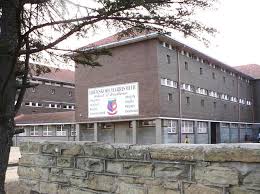



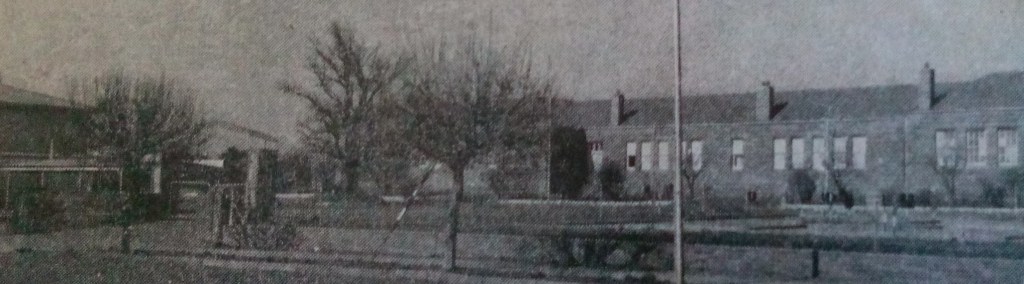
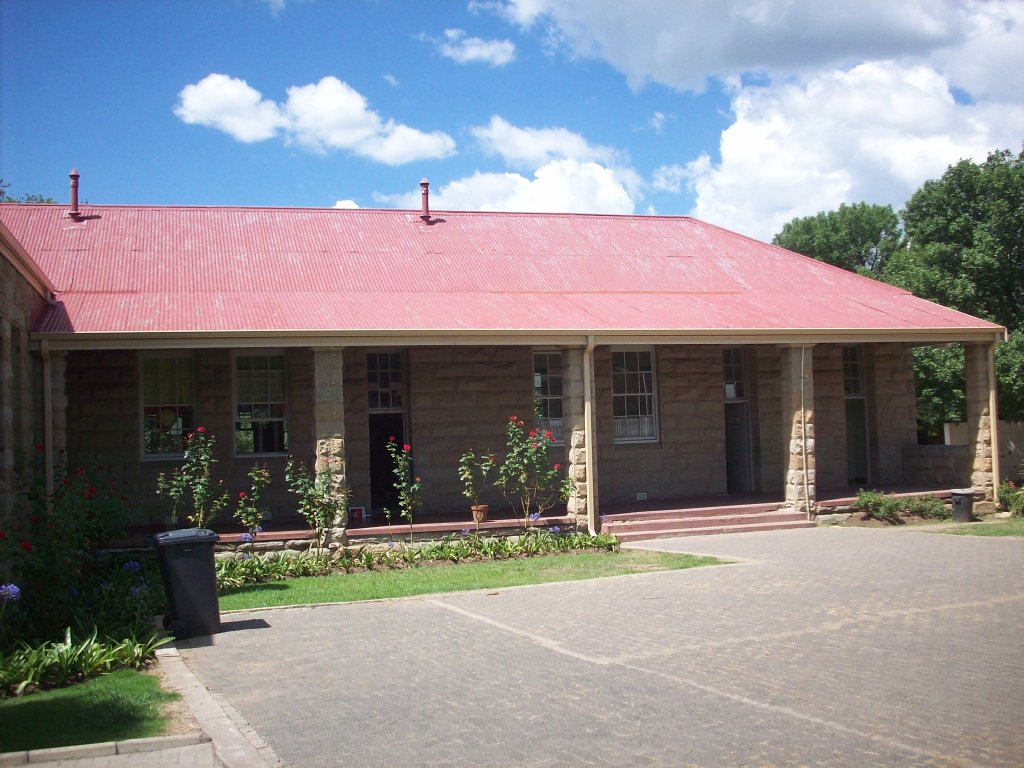
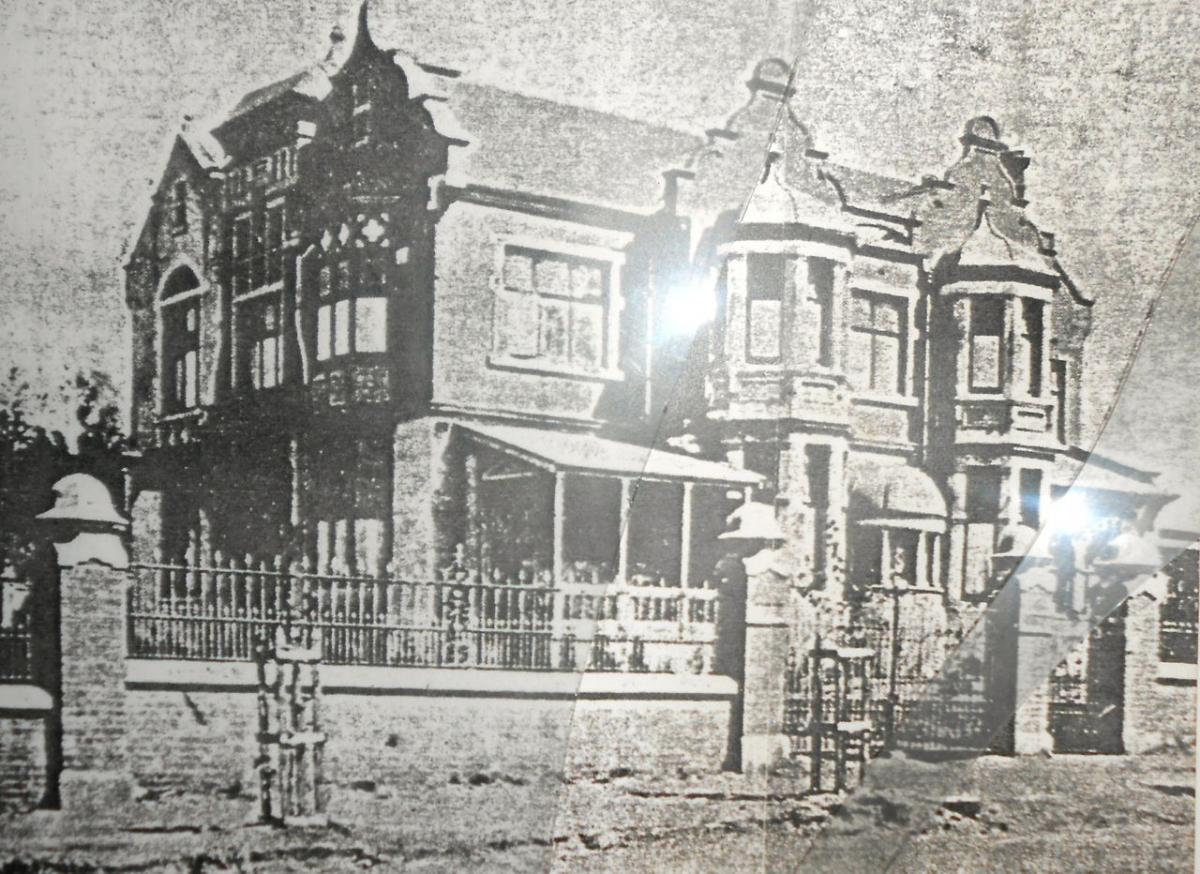
This building used to be something else, I think – not sure – but in our time it was the junior primary school. Occupying a full block between Stuart and Warden Streets near the centre of the metropolis, our Sub A to Std 1 classes were here. Except if your Std 1, 2 and 3 was all together in one room with one teacher (‘die Engelse klas’). Then you went down to the next school in Std 1. So I had Sub A and Sub B in this old sandstone building. I entered age five and departed age seven. With a blue bicycle. A Rudge, I believe.

My greatest achievement in this time was probably winning a high-pissing contest in the sandstone boys room and having big mate Fanie Schoeman report the feat to Mrs Van Reenen. Miss! Miss! Peter pee’d on my head, he said. Brief fame, diplomatically handled. The urinal was open to the sky and we’d been trying to see who could leave his wet mark highest up on the sandstone wall above the trough. Wee on sandstone leaves a very satisfactory, undeniable mark which cannot be disputed, in contests like these. It lasts long enough for judges to judge and disputes to be resolved. Mine was highest. And some did go astray and hit Fanie, it’s true.
Here’s a view of our classroom taken from the boys toilets. In fact this photographer’s head is very near where Fanie’s head was back then. Chips! or Duck!
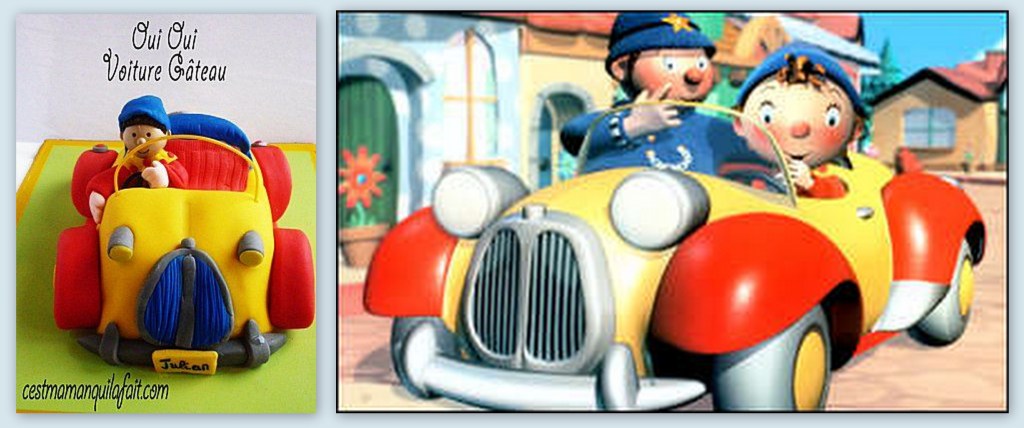
Another clear memory of that class was admiring the beautifully accurate Noddy car Lincoln Michell made of yellow and red plasticine.
That sums up my first year of formal education. Luckily it didn’t cost a lot.
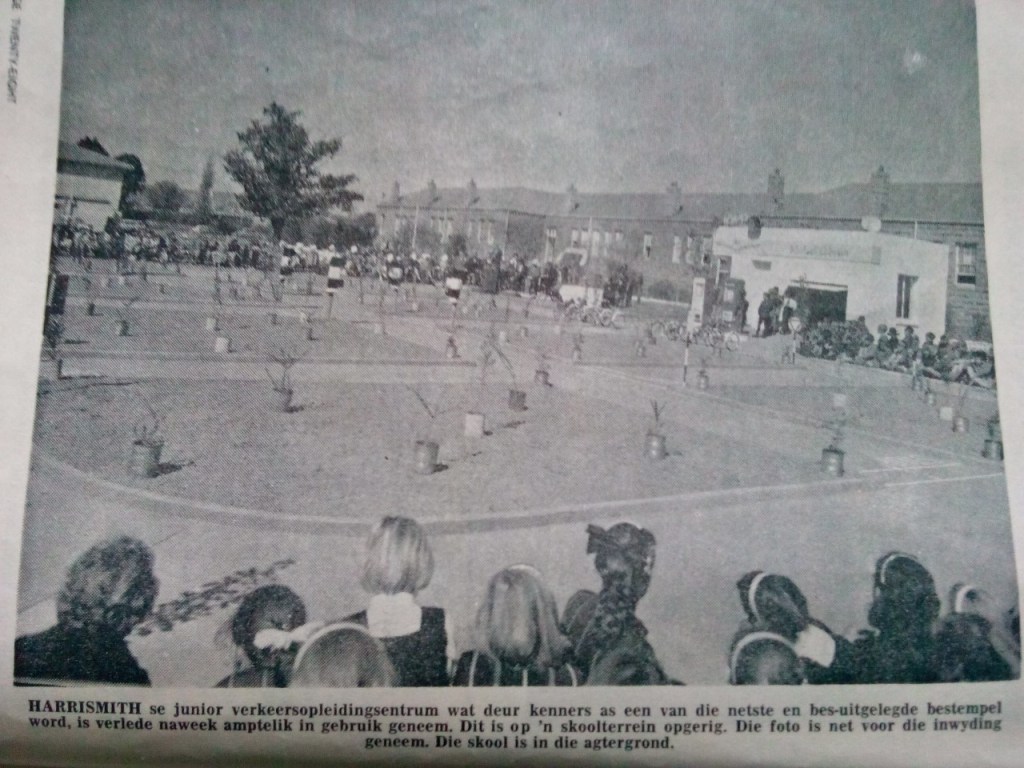
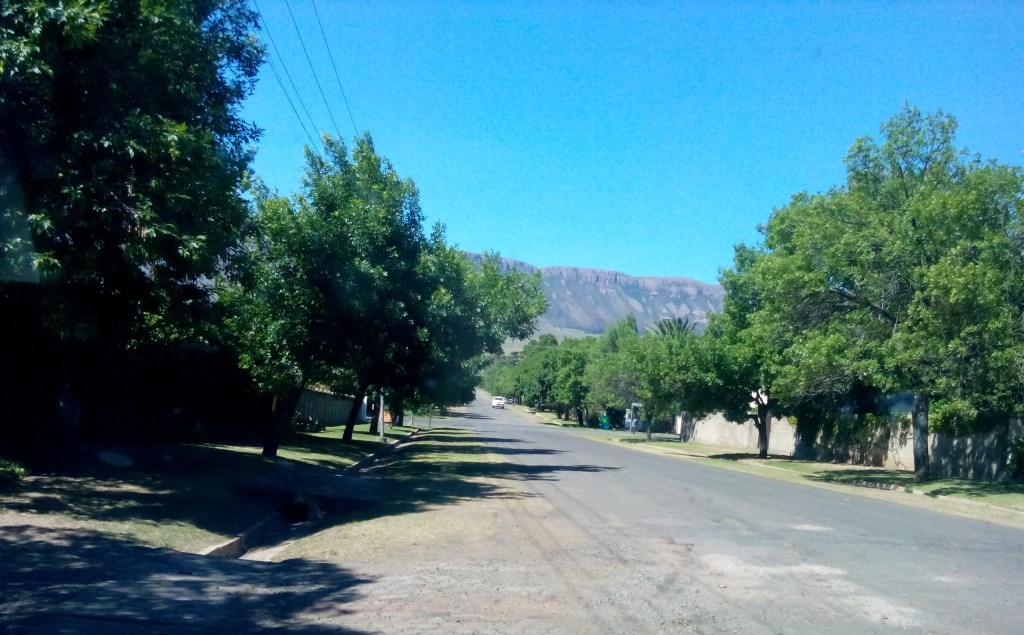
One of the joys of being in this kleinspanskool was it was a junior part of the bigger primary school down the road and quite regularly something would need to be schlepped down there. To be chosen to pull the wooden trailer or trolley, with its rubber wheels from one school to the other was a much sought-after diversion from classtime. You’d be FREE! FREE AT LAST! and wandering the shady tree-lined streets in school time on a Long Walk To Freedom! Bliss!

~~~oo0oo~~~
Behind that long building was a rugby field where Giel du Toit despaired of my ever learning one end of a rugby ball from the other – or one end of the rugby field, for that matter. His coaching methods consisted of patting me on the head and muttering ‘There, there; Moenie worrie nie!’ Everyone was very kind to me in my young days. Occasionally onse Giel (Joyce Joubert called him Heilige Giel) would get a faraway look in his eyes and talk about walking behind the ploughshare and picking up a clod of freshly-turned earth, smelling it and saying something about nothing in the world could ever smell better. The dorpsjapie in me thought ‘huh?’ Years later I speculated he was angling to marry a farmer’s daughter and was practicing his pitch to Pa. Then verily, that came to pass.
I played for the under-eleven B team, and the only reason for that was there was no C team. Although we were now down the road at the bigger school, rugby practice was at the old kleinspan school, as the bigger school didn’t have a field.
The end of the season arrived – near the end of winter – and the last game loomed. The traditional big derby day against the Olde Enemy, Vrede, played home and away each year. This year the final game was away, in that far-off dusty city of sin and ribaldry. OK, dusty dorp. Now famous for not having a dairy, back then it was famous for losing at a range of sports to Harrismith. Though, every now and then they’d spring a surprise and beat us.
For some unfathomable reason, Giel decided I would captain the under-eleven B’s on that auspicious occasion. It was 1966, so maybe England winning the soccer world cup got him thinking, ‘Miracles Can Happen?’ Anyway, as the lowest of the most junior teams, we would be playing the first game early in the cold Vrede winter morning, long before most spectators arrived, only dedicated Ma’s and Pa’s on the rickety stand. Our job was to break through the frost on the dead grass on the rock-hard ground for the more important games to follow. With our bare feet.
Which is how I came to have the leather odd-shaped ball in my hand that morning. This was a novel experience. Usually I was only vaguely aware that there WAS even a ball involved in this mysterious game that onse Giel was despairing that I’d ever get the hang of.
My orange-clad barefoot underlings, now fully under my command, dutifully formed a line behind me as I ran onto the field and skopped the leather ball to start the game. I remember only four things about that game, but they are indelibly etched in my newly rugby-focused tactical brain:
1. We were awarded a penalty quite late in the game with the score still on 0 – 0;
2. I made a show of going down on my haunches, and staring at the posts, then tapped the ball and hared straight for the line and dotted the ball down. TRY!!
3. The ref awarded the try. We were 3 – 0 up!
4. There was a muttering from the tiny partisan home crowd of early-morning Ma’s and Pa’s, and the ref seemed agitated. At the next lineout I asked him ‘That was a try, nê?’ and he growled ‘Play on!’ So we won the game. My record as captain was 100% wins.
The next year – 1967 – I was suddenly a rugby player and in the U/13 A team. I’d like to say it was because of this revelation, revival, awakening and discovery of deep latent talent, plus a realisation of my brilliance thanks to Giel’s inspired and kind gesture and talent-forecasting genius, but it was mainly cos my balls dropped, and I shot up four inches and became the tallest oke among the under-thirteens! Size counts in a shoving and huffing and puffing game. When guys have to look up to you they often give way to you. We had a helluva year in 1967, so achieving Harrismith-wide fame by becoming the undisputed World Champions . . OK maybe I’m getting ahead of us here.
~~oo0oo~~
Kleinspanskool – small persons school; junior primary school
‘die Engelse klas’ – the English patient
‘Moenie worrie nie! ‘ – Dinnae Fash Yersel’; Don’ Wurry
dorpsjapie – townie; urban chap; not rural; the finer points of ploughing escape him
dorp – village; hamlet; one-horse town
skopped – kicked with pinpoint accuracy

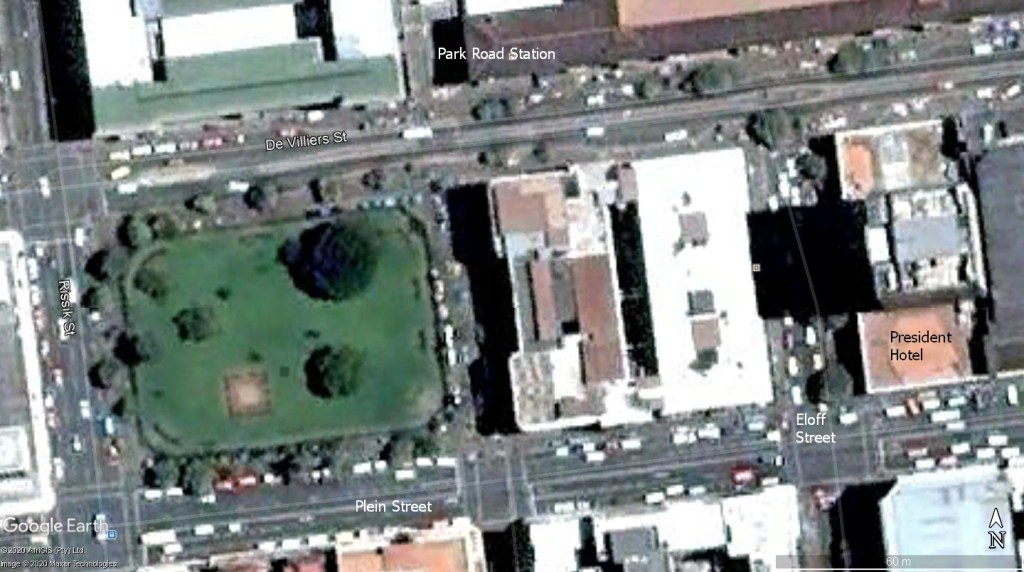
Earnest and diligent students eagerly absorbing the maths being taught in a chalkdust-filled classroom overlooking a little park on the corner of De Villiers and Rissik streets back in 1974, will be pleased to hear that said classroom has been restored – chalkdust and all. Also the window ledge.
When City Prop’s Alec Wapnick and Jeffrey Wapnick – well-known for their revitalization efforts in Pretoria’s inner city – saw the historic early 20th century Wits Technikon building, they not only realized the potential for restoration but also the opportunity to create a distinct node for learning and education, which had been given a big boost ca.1974 when we math’d in that classroom. Alec had the vision to purchase the Wits Tech buildings, and Jeffrey had the foresight to restore and redevelop them to a standard way beyond the basics.
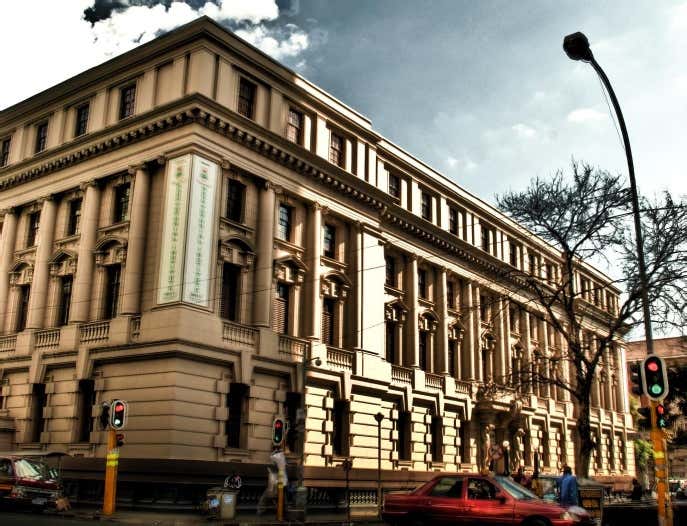
The project is in line with City Property’s comprehensive approach to inner cities, encompassing all the elements of everyday life, from working, to living and shopping, to schooling.
Established as a technical institution in 1903 to support the city’s flourishing gold mining industry, the building fronts onto Eloff, Plein and De Villiers Streets. It will continue to educate, like it did us, and we it, ca.1974. The west block was already occupied by Johannesburg Polytech the east block will house Basa Educational Institute, an inner city school with excellent credentials, which was looking for a new home. Its focus is on the melting pot that is inner city schooling in Johannesburg today, started by us ca.1974 when we blended people from Kaapstad, Tshwane, Beaufort Wes, Clarens, Umzinto, Kokstad, Petrus Steyn, Paarl and Harrismith, thus inching the others up towards Harrismith standards. This dovetails well with City Property’s holistic approach to local development. They teach in all eleven official languages, as well as a number of others, including Portuguese and New Devonshire.
The restoration of the Wits Tech building was something of a labour of love for the Wapnicks, whose long history of restoring architectural beauty show they believe that buildings are themselves works of art, to be shared and enjoyed. A lot of work had to be carried out. The building had been vacant for several years, with the result that fittings had been stripped, the structure itself vandalized and left in a state of disrepair. Architecturally, it was originally designed in the classic Greek revival style, an aesthetic that was popular in Johannesburg at the time: the nearby Supreme Court building is a good example of the same vintage. “The neo-Classical style is very typical, very ornate and a reference to renaissance architecture,” says City Property project manager Anita du Plessis. “It has been designed on a breathtaking scale in a style specific to the time.”

She points to the three different architectural orders used in the building concept: the plain Doric columns on the ground floor, to the distinctive scrolled Ionic columns on the first floor, to the leaves of the Corinthian columns above.
Original fittings, like the marble floors, have been carefully restored and repaired; the original viewing panes in the doors were replaced with safety glass; and the stained glass windows were repaired.

Although the grand architectural style needed to be restored, a key outcome for the project team was an updated space suitable for a contemporary user. For this reason, practical, modern features were worked into the project. For a start, the building is now compliant with all the modern building standards and criteria.
The entrance hall and atrium are equipped with security systems, while the air of a tranquil and dignified place of learning has been carefully maintained. The large, bright airy classrooms with sash windows create a positive learning environment, while the solid structure of the historic property blocks out the noise of the city.
~~~oo0oo~~~
Fellow Wits Tech alumnus 1974 – 1978 Steve Reed wrote: Hope they keep the alternative entrance to Kleinman’s classroom – the ledge along the outside…
Steve is speaking of our chalk-dust encrusted 1974 maths lecturer here who lectured in a classroom overlooking the little park on the rear of the building – the front being on Eloff Street. Some wicked students climbed out the windows onto the window ledge before Kleinman got to class. Once he was there they climbed in one by one, each waiting until he got going with his lecture before interrupting him mid-sentence by climbing back in and greeting him cordially. Must have been the B (rauer) class.
~~~oo0oo~~~
“We are the custodians of these magnificent buildings and it is our responsibility to return them to their former glory,” says Wapnick.
These okes are now eyeball pasiente of Brauer’s.
Wonder if he’ll claim he gave them their vision and foresight . .
~~~oo0oo~~~

The old man inviting me to go someplace! How’s that!? I hopped into the old faded-blue VW Kombi OHS 153 with alacrity. This sounded interesting. We never went to the railway station. We’d go near there to the old MOTH hall and occasionally to the circus field when the Boswell & Wilkie’s Big Top was pitched there! But never to the station itself.

‘We’re fetching a family from Italy. The father is coming to work at the Standard Woollen Mills and they can’t speak English,’ says the old man. He picked up Italian in Italy around 1943 to 1945, first wending his way up the Adriatic coast in the Italian campaign and then later on involved in the post-war stuff armies do after the end of WW2, y’know, loafing, eating, drinking, before flying home, having traveled the length of Italy south to north and into Austria.
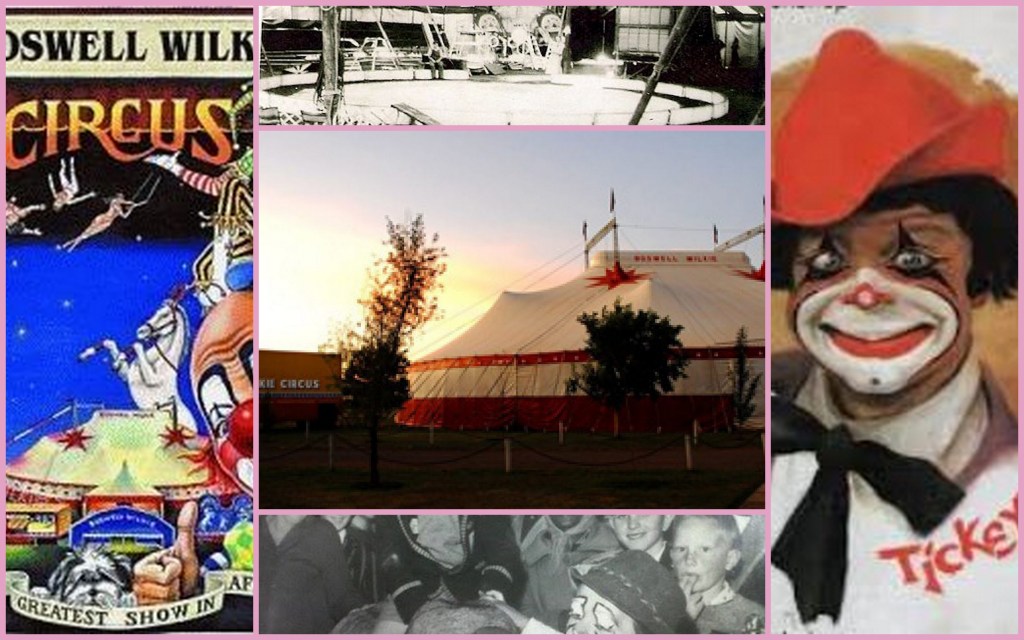
He kept up the language over the years mainly by fraternising with Boswell-Wilkie** circus folk when they hit the Vrystaat vlaktes on the circus train and pitched the Big Top next to the railway line on the west edge of our famous dorp.
This exciting station trip was in 1965 or thereabouts. So we got to the stasie, the train rolled in, and there hanging out of a window was a family of four: Luigi, Luigina and two sons about my age, fresh from Italy out. They were probably staring at my bare feet. But I’m just guessing.

I carried one suitcase to the kombi and then from the kombi into the Royal Hotel, where my great-uncle Smollie Bain was the barman. His Dad owned the hotel and I think he stayed there all his life.

Soon Claudio and Ennio were in school, Claudio a standard below me in sister Sheila’s class, and Ennio a standard or two lower. They got a house in Wilge Park and so started many happy visits and sumptuous Luigina meals with the Bellatos – I can still picture her kitchen so clearly. And sundry happy adventures with Claudio.
~~~oo0oo~~~
The only time before this anything Italian might have rolled up at Harrismith stasie might have been these Italian things ca. 1914.
~~~oo0oo~~~
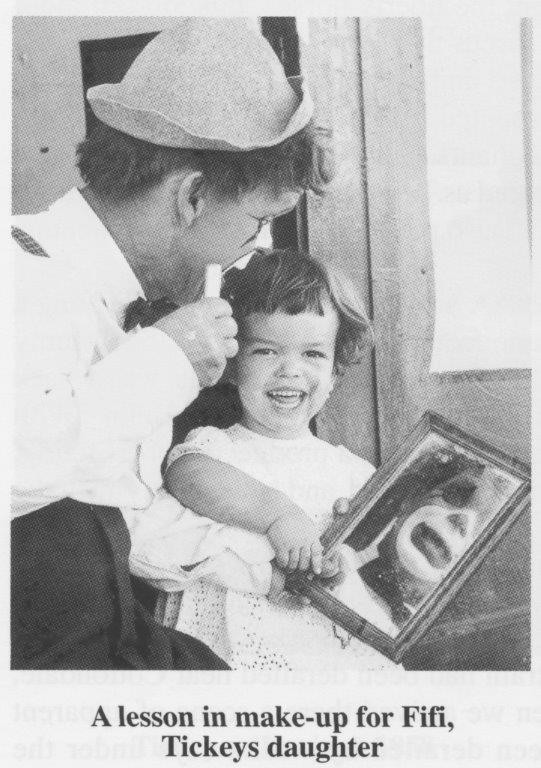
** Boswell-Wilkie Circus: Every few years for a while we would suddenly have clowns, lion-tamers and acrobats in our home! They all looked very ordinary, frankly, in their normal kit; except Tickey the clown. He and his daughter were instantly recognisable even without make-up because of their small stature and strong faces.
~~~oo0oo~~~
Ah! Claudio read it and responded with compliments and corrections:
‘Excellent Koos. The year was 1967 – 24 March. Otherwise pretty accurate. A good read and great memories. ** laughing emoji – thumbs-up emoji ** Well done.’
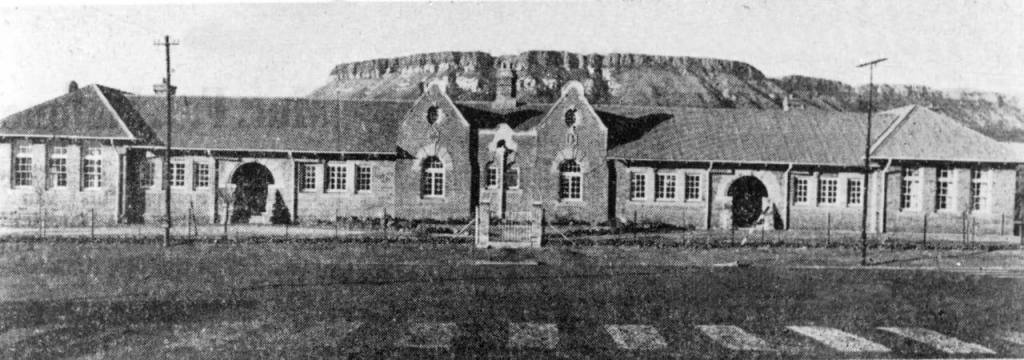

Mom went to this school, as did all three of us kids. Annie, Mom’s Mom, would not have, as it seems it was established in 1915, see below, and Annie was 22yrs old by then.
Before us, Etienne Joubert went, and he remembers:
Playing ‘Hasie’ under the Bluegums near the old Golf club house; Eating ‘Manna’ under the Bluegums; Playing ‘Bok-bok’ behind the bottom class rooms; Playing marbles in the main playground.
Also he remembers the woodwork teacher Giel du Toit – his mother Joyce had a hilarious ‘holy’ nickname for Onse Giel – Heilige Giel, I think it was; and he remembers the smell of the old fashioned wood glue; And the wood vice where ‘we tied a guy’s tie in & walloped his behind. I’ve forgotten his name, but not his face … I can see it now!
He then confesses – I do not remember much about plays & music . . .’ – No worries, sister Barbara does:
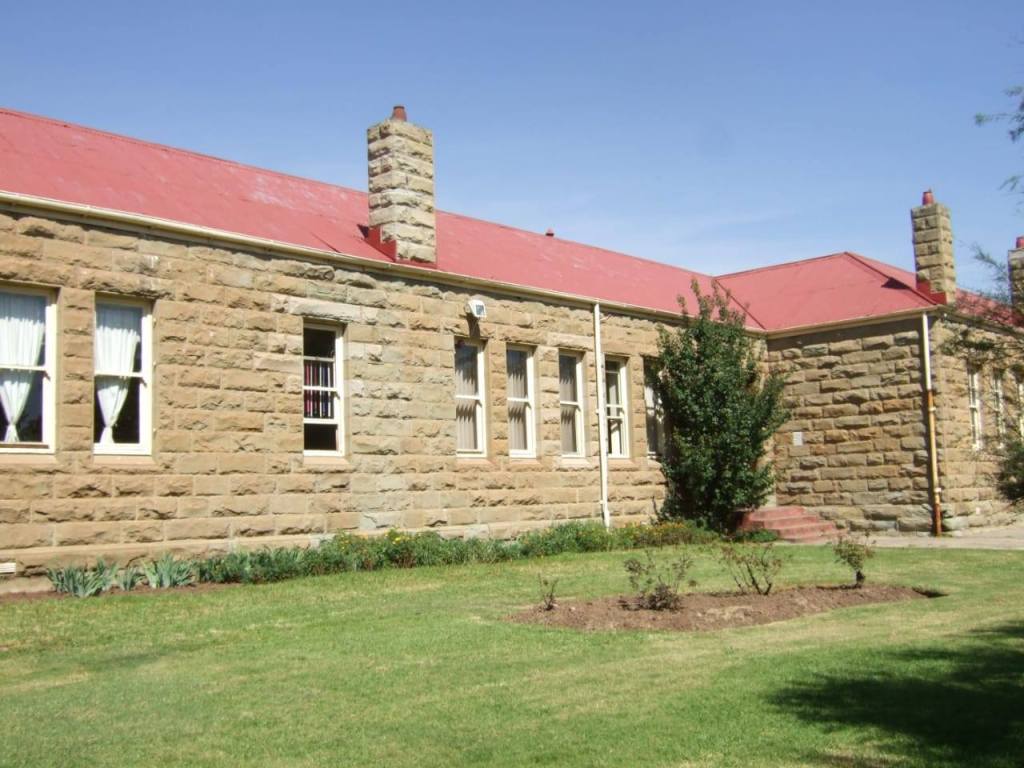
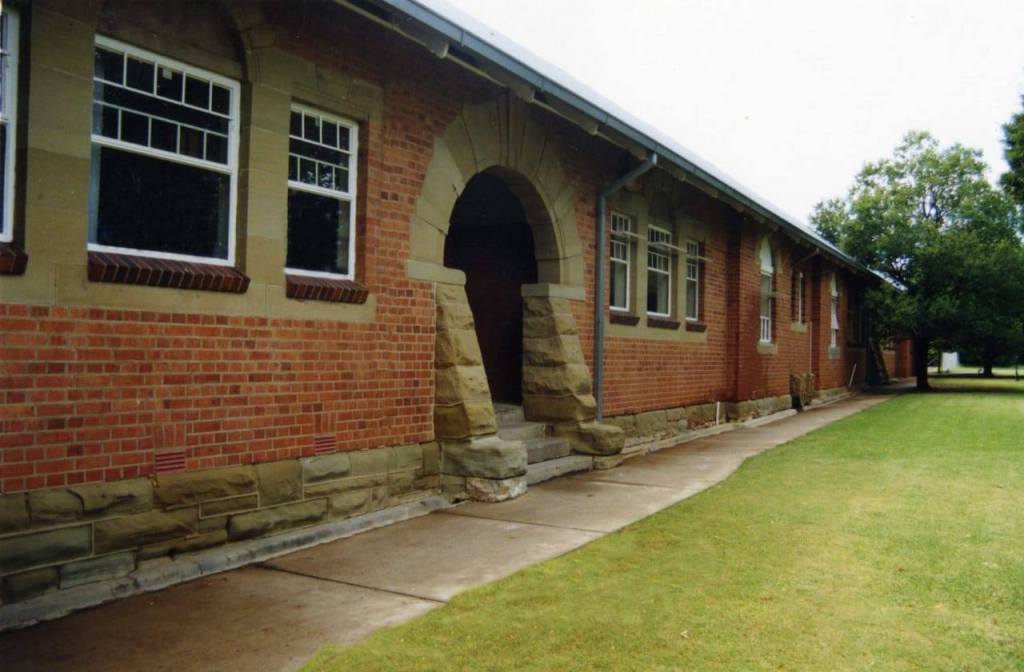
Sister Barbara was a year or two later – she finished Std 5 in 1965. She definitely remembers about plays and music, you Philistine, Etienne! She remembers that year was the school’s Golden Jubilee year – so established 1915, I guess? – and an exciting concert was planned and held on the 28th and 29th of October 1965, with all the classes in the Kleinspan School and Primary School – Volkskool – participating.
How could she remember in such detail? Well, she had her program carefully stored away in a shoe-box! She remembers the play her class put on: ‘TO BE OR NOT TO BE’ – by B.J.J. (Bruce) Humphries with Pierre du Plessis and Llewellyn Mileham – or was it Kevin Crawley? – as the smart guys, and Timothy Brockett as Mr. van Snoggery-Boggery, the drunk guy – Pierre remembered this name – and herself – Barbara Swanepoel – as the unnamed lady on the railway station platform.
Interludes between plays were filled by music by the ‘Harrismith Volkskool Orkes / Primary School Band.’ Band members were Rina Minny en Estelle Meyer on trekklaviere – pull pianos – piano accordions; Sylvia Doman on piano; Barbara Swanepoel on melodica; Pierre du Plessis on drums; Willie du Plessis on electric guitar; So much of du Plessis!; Theuns Bam en Bertus Hattingh on acoustic guitars; They were called Die Dorps Mense. Years later The Village People modelled a band on this lot. Um, so I believe.
Then came the Primary School Boys Choir – Die Seunskoor. Under the charming direction of Miss L. Fourie and that delectable redhead Miss Ethel Cronje. I was a soprano in this lot, warbling away merrily before my balls dropped. We sang (according to that program which won’t lie) Wiegeliedjie van Mozart; Drummer Boy; and Dominique; I still remember – and can still sing majestically – the second and third of these liedjies. My kids dispute this fact, unreasonably.

Barbara asks: ‘Now wasn’t there a record produced for this choir? I think so – our own famous ‘Platberg Boys Choir.’ Indeed there were two records cut. Vinyl. The Vienna Boys Sausages were nervous. Especially when we launched a smash hit successful sold-out tour of Zululand. If it wasn’t for rugby and puberty, we’d have usurped those Austrian suckers. We’d have parum pu pum pum’d them out of business . .
~~~oo0oo~~~
We were in second year and had just moved out of downtown Joburg and Eloff Street to the salubrious semi-suburban delightful area of Doornfontein which was once Joburg’s premier suburb where all the gold mining magnates and Randlords lived and built their mansions.
So some final year students asked us to help them in their research for their – whatever.
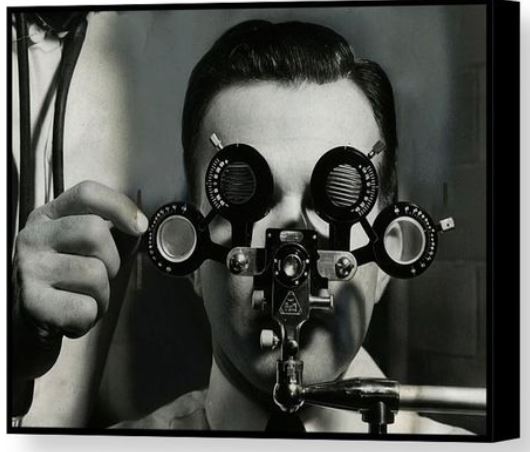
They needed volunteers to see if blood alcohol levels affected your esotropia. We gave it a moment’s thought and thought that sounded like a HELLUVA good idea as it involved free drink and would provide valuable data and it involved free drink. We volunteered. None of asked ‘what’s esotropia?’ a number of said “Free Drink!?”
It was very formal. We had to – No, you can’t have a drink yet; Hey! Step away from the drinks table, we need baseline levels before you . . you have? Well, how many? SO many? Well, quick, come, let’s measure you before – Hey! Not another one . .
Well, give them their due, they tried their best and we did our best and it was a WONDERFUL evening filled with laughter and witty repartee and I don’t know if they got any data but we did get the promised drinks and they didn’t need to return any unopened bottles to the grog shop, which I’m sure saved them a lot of bother..
Quite a lot was learned, too. Like if you give a person who has had one too many even a little bit of vertical prism he will push the phoropter away and make barfing noises and run out of the clinic. That might come in handy to future researchers, and I give it here free for anyone to use.

~~~oo0oo~~~
In final year, Brauer, Zena Jacobson and I did some more serious research, popping contact lenses into people’s eyes and then forgetting about them. My eyes and Pierre Leibbrandt’s eyes, as two f the guinea pigs I ca remember. Silicon extended wear we called it. I think our verdict was “Not Yet.”

Once again Platberg is burning. Old school friends Noeline Bester and Annatjie Labuschagne sent these images.
Sure hope the Grey Rhebok and Mountain Reedbuck and Chacma Baboons that Koos Beukes and Pierre du Plessis tell me are still there, are OK.
See these lovely pics of Platberg.
~~~oo0oo~~~
We mocked Bloemfontein as Flower Fountain and always looked on Durban as the big city, seldom Joburg, as we would head 299km to the coast not 268km inland to JHB when going for any city business. Bloem never featured. It was 378km and more of a backwater. Once you got there, you’d ask yourself WHY? And yet Bloem was our capital and everything official that went upwards in our little hierarchy summitted in Bloemfontein.
Especially the sporting ladder. If you climbed the sporting ladder and your head popped up through the clouds, there was Naval Hill!
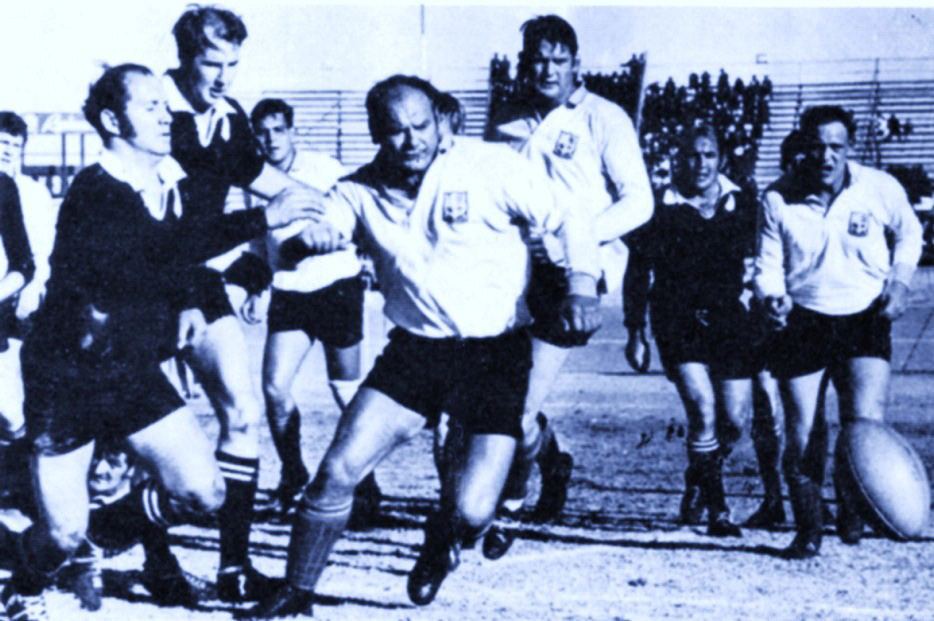
As far as I recall I reached this valhalla of advancing upwards in your sporting code three times at school: For rugby I was not chosen for the Eastern Free State U/13 team in 1967. But I was chosen to be a reserve. The reserve, maybe? – or was there more than one? So I trekked to Bloemfontein, pulled on my togs and sat shivering on the sideline at the Free State Stadium for the whole match. The top pic gives a glimpse in the background of how the stadium looked. Our sponsors didn’t supply us with branded blankets and there was no attractive physio to massage our limbs. I don’t even know if the poor reserve got his quarter orange ration at half time. It was rugged. Of course we had already beaten another little Flower Fountain Bloemfontein school called Grey College at rugby earlier.
For tennis Bruce Humphries entered us for Free State Champs.
All I remember is we drove there in his white Cortina and after I had blasted some booming high-speed double backhands – ala Frew McMillan – in the warmup of the first round, a guy called Symington sent me home 6-0 6-0. I even think he may have yawned while he was doing it. I can’t recall if the famous double pairing of me and Fluffy Crawley played. I have asked him. He can’t remember either.
And lastly, one year I went to Inter-High, which was the Free State athletics champs and I got a bronze medal for my troubles (actually a piece of paper that said ‘derde’) in the high jump.
Other than that, we once went for an ordinary rugby game. Daan Smuts drove us there in his VW Beetle to play against Sentraal or JBM Hertzog. Being Daan, we had beer! Yay!! All teachers should be like Daan. When he remembered that he had forgotten to arrange a place for us to sleep we didn’t mind at all. He dropped us off at an abandoned (for the holidays) koshuis where we shivered on beds with no bedclothes. That was maybe the first time we were glad we had blue and yellow and green blazers. Sure it was cold, but we would not have swopped the beers – die binne-kombers – for blankets!
~~~~~ooo000ooo~~~~~
derde – third; bronze!
koshuis – food house; school hostel
die binne kombers – the inner blanket; booze

Talking about the magic photo of the Soap Box Derby on 42nd Hill with Fluffy’s Dad Charlie in it, I got into an extended email conversation with my good mate from Mrs Putterill’s nursery school and Methodist Sunday school in the late 1950’s all the way to matric 1972, Leon Crawley:

Fluff: Amazing the dress code!!!
Me: Yes, from kaalvoet kid to full jacket & tie. And three ‘hoeds’. And a cop. Even the most casual of the ‘racing drivers’ has long pants on. I see your Dad clearly, is that Michael Hastings next to him crouched over the reins with his chin between his knees?
Fluff: Yep, Michael Hastings; I sent the photo to Mom to see if she can identify any others on it. My Dad crashed his kart and came a whopper, apparently had no skin left. He was the moer in when we had our races on the old road, because of the accident he was in. He still owes me a hiding with the kweper lat (quince switch). I bet he is waiting for me in Heaven! But we will just chat about it!!
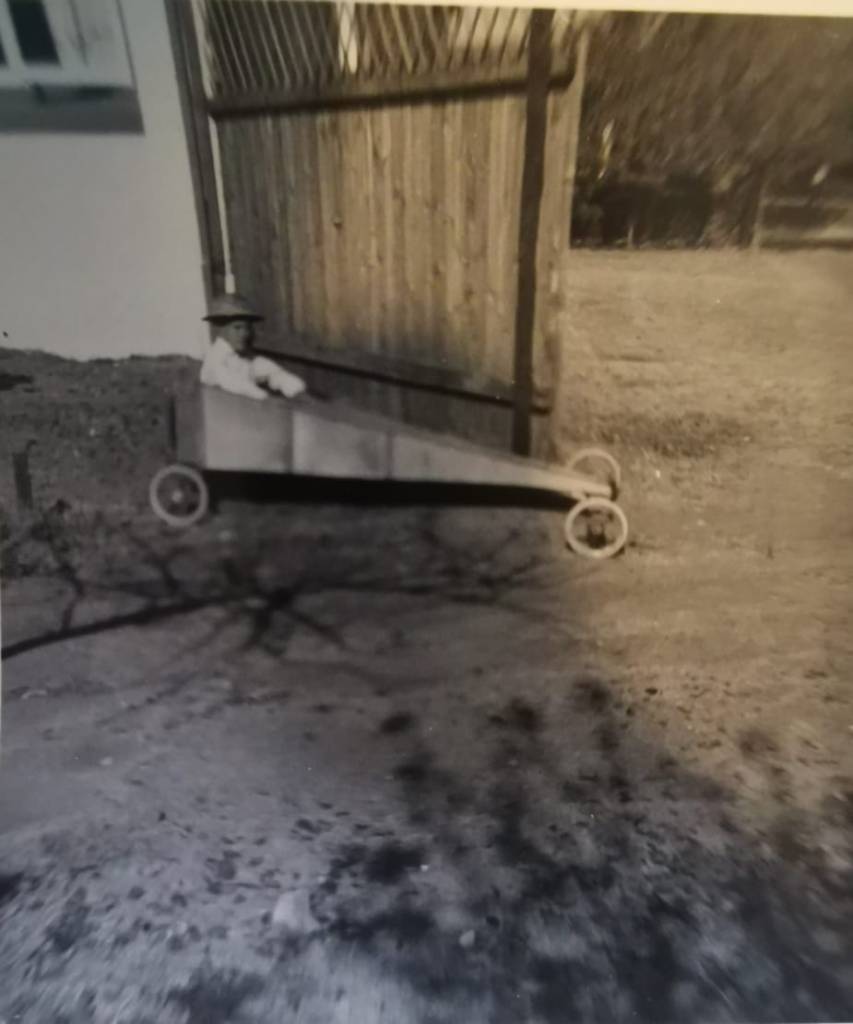
Me: By the time we raced down that hill the trees were tall next to the road, and it had become the ‘old road’, a new one having been built above it. Traffic volumes had increased and we could no longer just stop the N3 and all the Jo’burg – Durban traffic!
= = = = = Canoe trip from Swinburne = = = = =

Me: So we did the full Swinburne to Harrismith in a day? I remember being picked up at the bridge – I think the same bridge you once caught a huge barbel under – correct? You may remember I went again a few years later with Claudio Bellato. The river was up and we both lost our glasses, spent a wet night sharing one sleeping bag, which was only half wet, the other one was sopping; then wrecked the canoe, which I had borrowed from the Voortrekkers, on a tree block in a rapid on Walton farm. Charlie Ryder fetched us and we got the wrecked boat out two weeks later. Claudio lives in Durban and I see him from time to time. He still introduces me as “Meet my friend Peter. I slept with him.”
Fluff: Your Dad picked us up in Town, but we did not sleep over en route. The river was terribly low and we did a lot of foot work crossing or bypassing the rapids. We made the trip in one day. I can remember the trip you had with Claudio, jeez terrible to sleep wet, and that with a man. You fixed up the canoe in the backyard if I can recall. That fish: It was a huge barbel from the bridge and that with a split rod, Dad used for bass!! Haha early one morning standing on the bridge, it was still too dark to go down to the river.

= = = = = The Voortrekker Camp = = = = =
Me: I joined up briefly, thanks to you. Or to your description of the upcoming camp on Bok or Boy Venter’s farm! I remember the camp in the wattles, a campfire, canvas tents with wooden pegs – and not much else.
Fluff: I remember the Voortrekkers and I think our membership lasted until after the camp. A huge bonfire, that night; Boy Venter. That was about it.
= = = The 1969 South West Africa Trip . . That Kestell Trip = = =
Fluff: We have good memories of the SWA Trek and I still have some photo’s as well.
Strangely not of the group or individuals!! I will scan at some stage and put them in mail.
The welwitchia plant; Namutoni in Etosha; the Finger of God; the ‘bottomless’ lake Otjikoto with schools of small fish – apparently the Germans dumped their weaponry in these lakes, close to Tsumeb. Did we go to a disco in Tsumeb?
Do you remember the beers we ordered, but we were under age but we reckoned there was no age limit buying booze?! You were on the bell and it got stuck and the barman kakked us out and chased us out of the hotel!!!
The visit to the karakul farm, the meerkats!! Eish the price of that lovely freshly baked brown bread near Twee Rivieren….17 cents OMW – the price of brown bead was about 6 cents back home!!!
Lovely memories; Braam Venter was the guy from Kestell…and who were the brothers who played cowboy and crooks with .303 rifles on horseback!?
I can recall yourself, Pierre, Tuffy, myself who else was in the party from Harrismith?
Swakopmund’s Dune 7 with that huge Chevy bonnet that did not work!!
~~~~~ooo000ooo~~~~~
Me: Was the hiding “on the cards” when he died? Heart attack, was it? How old was he? That was such a damned shame. I can actually still feel (feel, not remember) how I felt standing in the kitchen at 95 Stuart Street when I first heard uncle Charlie had died.
And here’s my old man turned ninety one after sixty two years of smoking and all that dop – cane spirits – in the Club and Moth Hall!! Each old toppie I see – and my work consists of seeing old toppies! – has a theory of why he has lived so long but I can tell you right now there’s one main factor: LUCK.
For every “formula” they have for their longevity I know someone who did just that but died young. About the dop my old man used to say, “Ah, but remember he drank cane and WATER. It was the mixers other ous drank that stuffed them up (!!)”. That was his theory and you can say what you like, he’s sticking to it! You know you’re not drinking for the taste when your dop is cane and water!
I’d love to see the SWA photos. I didn’t take any. I still have the ossewawiel (axle centre – what’s it called?) that I got there. It had everyone’s names on it, but they’ve faded now as it has spent a few decades outside propping up my offroad trailer’s disselboom.
From HY I can only add Pikkie Loots and Marble Hall’s names. From Kestell I remember ‘Aasvoel’ and ‘Kleine Aischenvogel’. And my name was Steve McQueen thanks to you suggesting it then not using it at the last minute!
I don’t remember a disco but I do recall the beers at Karasburg and the oke storming in to ask Waddefokgaanieraan? Wie’s Julle? Waar’s Julle Onderwyser? Also the springbokke caught in the fence and the shout Ek Debs Die Balsak! from a savvy farm kid. I’d never heard of turning a balsak into an ashtray till that day! And the huge bonfire in the riverbed and sleeping out in the open and shifting closer to the embers as the fire died down. COLD nights! Also slept on the ground outside Etosha gates.
I’ll have to cc Pierre & Tuffy on this one!
I don’t recall cowboys & crooks and 303’s.
~~~oo0oo~~~
I got one letter from Fluffy in 1973 while I was in Oklahoma: Something along the lines of ‘Horrible inflation’ – it was the time of the fuel crisis – ‘a pint of milk has gone up to 6c a litre, and SCOPE magazine is now 20c!!’ Well, we were to learn a lot more about inflation and our Rand’s depreciation in the decades that followed!
~~~oo0oo~~~
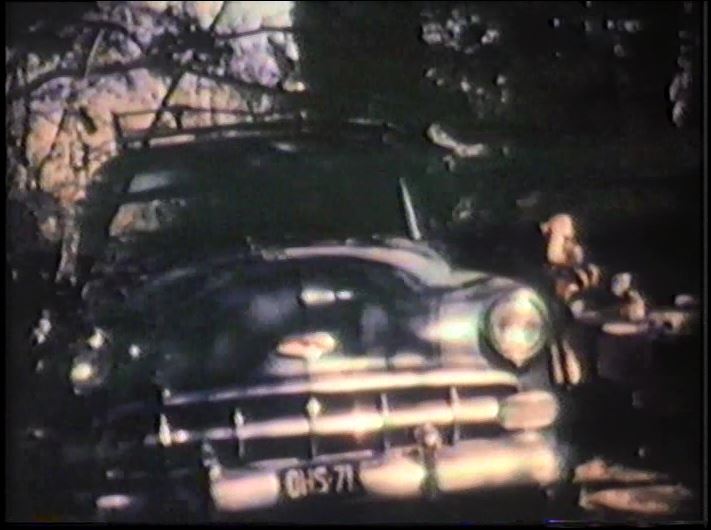
Here’s Dr. Frank Reitz’s car OHS 71 on the banks of the Tugela River on The Bend, his farm outside Bergville. Pretty sure this is the car in the 42nd Hill soapbox derby picture.
Fluffy Crawley and I probably met at the Methodist Church Sunday School as toddlers, making us fellow-Methylated Spirits. We definitely both went to Kathy Putterill’s pre-school and then from Sub A to matric in school and Sunday school together. A fine human being.
~~~oo0oo~~~
kaalvoet – barefoot
hoeds – hats
the moer in – not happy
Voortrekkers – youth group for volk and fatherland – somewhat like Scouts, but less knots and more nots
~~~oo0oo~~~
Miz Zobbs was scathing: Why can’t any of you whistle? Listen to Claudio! HE can whistle. Show them Claudio. It takes a boy fresh from Italy to show you lot how to whistle!
Poor old Claudio Bellato dutifully pursed his lips and tootled some Italian to show us how it was done while probably thinking . . Mama Mia, Dora. You Don’t Pronounce My Name Clawed-ee-oh.
See?! *SNIFF* *SNIFF* You see! shrieked the old duck, sniffing loudly and wobbling alarmingly.
Dora Hobbs, snuff-sniffing tour de force of Harrismith Volkskool could rampage. She would march up and down like a galleon in full sail, never happier than when commanding a choir.
She stopped us in mid-song once to berate us: How many of you can say that!? Huh? How many of you can say you’ve fought and won!? she demanded.
Us ten to twelve year-olds stared at her blankly. What was she on about? Did she think we actually thought about the kak we were singing? Weird.
.We’d been singing:
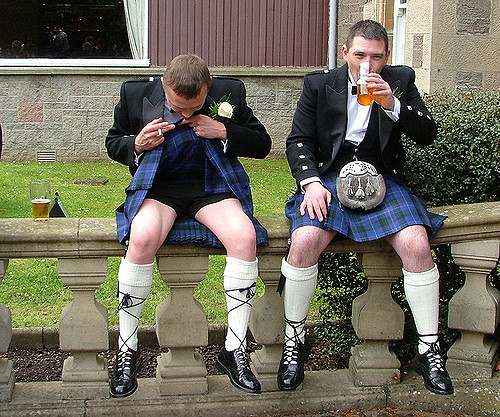
There was a soldier, A Scottish soldier
Who wandered far away, And soldiered far away
There was none bolder, With good broad shoulder
He’d fought in many a fray, And fought and won
How many of you can say you’ve fought in many a fray? she brayed.
Jeesh!
Dripping disdain and snot, with snuff stuck in her nose hairs, her moustache, on her glasses and on her ample bosom, she’d close her eyes, toss her head and mince around on her toes like a bulk ballerina. I think she was living in another world. When she opened her eyes and saw not dashing broad-shouldered soldiers in kilts, sonder underpants, wanting to woo the wee svelte lassie inside her, but instead snivelling pint-sized Vrystaters who would rather have been anywhere else in the dorp other than in “singing,” her mood probably grew dark.
Anyway, she probably didn’t know we fought of something totally different when she said ‘fray’ – and no we hadn’t done that either. Yet.

She could be vicious, too, I’m afraid. She beat Dries and Alvaro mercilessly when they irritated her. Across the shoulders, on the top of their heads, stalking them from where she sat behind us. Face-to-face she would smash the heavy 40cm wooden ruler on their fingertips. She was rooted in Olde English educational methods:
A. Find out what a child cannot do; and then . .
B. Repeatedly demonstrate that he cannot do it;
Stand him up in front of the class and order him to do that thing that you know he cannot do; HUMILIATE HIM; followed sometimes – depending who the child was – by . .
C. a public beating.
A bad show, really, even granting that having Std 1, Std 2 and Std 3 in one class was probably not easy. Still: Not right. 26 kids in a class is far from the most anyone ever taught. She picked on the vulnerable. I suspect she knew none of their parents would challenge her on their behalf. Nor would the headmaster. Others of us never got touched; never even a harsh word.

~~~oo0oo~~~
Years later I read a review of what James Joyce had written when his character’s knuckles had been viciously beaten by a sadistic Catholic priest in front of the whole class. I found it now:
Stephen knelt down quickly pressing his beaten hands to his sides. To think of them beaten and swollen with pain all in a moment made him feel so sorry for them as if they were not his own but someone else’s that he felt sorry for.
Stephen – the character in Joyce’s novel A Portrait Of The Artist As A Young Man – reported it to the rector and got at least some satisfaction and admiration for being bold enough to defy convention and make the cruelty known. In Harrismith Volkskool no such justice was done; nor even attempted, to my knowledge; no-one brave enough, me included; no-one believing it was any use to expect any justice or fair play.
~~~oo0oo~~~
volkskool – primary school
fought – thought
fray – battle, skirmish; In Afrikaans: vry, more like woo, or necking, or kiss, make love, first fumblings;
kak – shit
sonder – without; as in sonderbroek: without underpants
Vrystaters – citizens of the Free State; which was anything but
 Vrystaat Confessions