I was working with Serge in the UBS building in Field Street, ca.1981
Bending over someone with my right eye one centimetre from their right eye, I was gazing deep through their pupil with my ophthalmoscope when the building trembled and I heard a loud, dull thud.
WTF? I thought; ‘Hmm’ I said, ‘Sounds like the UBS sign fell off the building!’ I was about to change eyes when my door flew open and Serge darted in “Excuse Me” he panted, flung open my window and hopped out nimble as a cricket, as old and grey as he was. WTF again?
I stuck my head out and there was Serge in his ice cream suit bending over a man in a grey suit lying face-down on the tarry-stuff covering the roof over the street-level shops below us.
Turns out the grey suit was a lawyer. Partner in the firm on the fifth floor, who took to plummeting. We were on the second floor so he only fell three stories and survived. Came back to work a few months later limping with a stick.
I dunno. Haven’t a clue. Lawyer stuff? Money stuff? Or am I repeating myself here?
~~oo0oo~~
pic of downtown durban from thegreengallery.co.za
Serge = Serge de Marigny, longstanding venerable catholic optometrist; venerated the archbishop, who came to us for his multifocals. Brought them back once, “I have to lift my chin to read.” I made him new lenses, a millimetre higher. Brought them back again, “Now I have to lower my chin to drive.” I scurried about, muttering three hail marys and re-made them again, half a millimetre lower. “One low, one high and this one smack in the middle” he announced and swept out triumphant, frock swirling. Very sure of himself was old Denis.
When checking his eyes I had asked him what a sinner like me should call him. “Your Grace,” he boomed, thought about it – about me being un-catholic maybe? – and said “or just Archbishop.” I called him neither. Maybe that’s why he wound me up with his new specs!
I see when they made a graven image of him to worship after he’d keeled over, they left off my specs, the buggers. See how he has to peer without them!
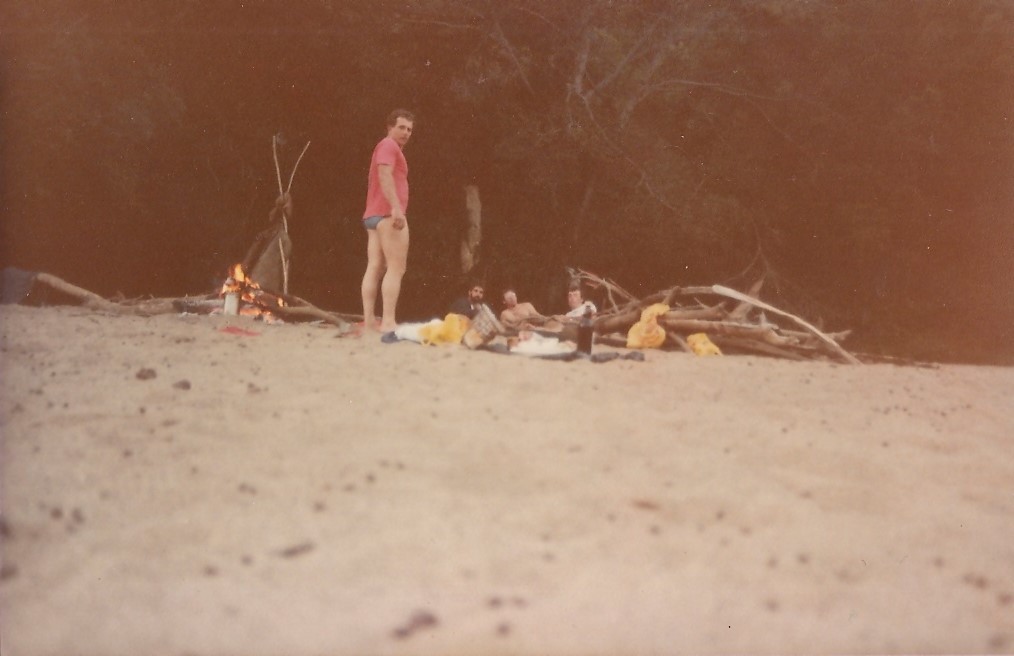
Bumbling down from Ngubevu through the legendary Tugela Gorge. Here’s Bernie Garcin (Bernie and the Jets), Doug Retief (Doug the Thief), Dave Walker (Lang Dawid) and me, preparing to spend the night at Fig Tree Sandbank campsite, one of the planet’s most beautiful spots.
Four plastic Perception kayaks – Dancer, Mirage and Quest. We tripped in 1984 and 1985. In those early days old-timers would still mock plastic boats, saying ‘tupperware keeps turkeys fresh,’ but we knew the joy of not having to nurse the boats, nor having to schlep fibreglass patch kits along, and just smiled! You can do more in plastic!
– the bog roll got damp and needed drying –
At the time Greg Bennett was sponsoring and competing in a motorised rubber duck race down the Tugela. Sacrilege! In ’84 he had Jerome Truran as crew, in ’85 Rip Kirby was his sidekick and pilot. Greg knew how to pick his rapid-readers while he ‘put foot’ in the back of the boat. We used Greg’s bakkie to get to Ngubevu. Then someone must have fetched us at Jamieson’s Bridge at the end.
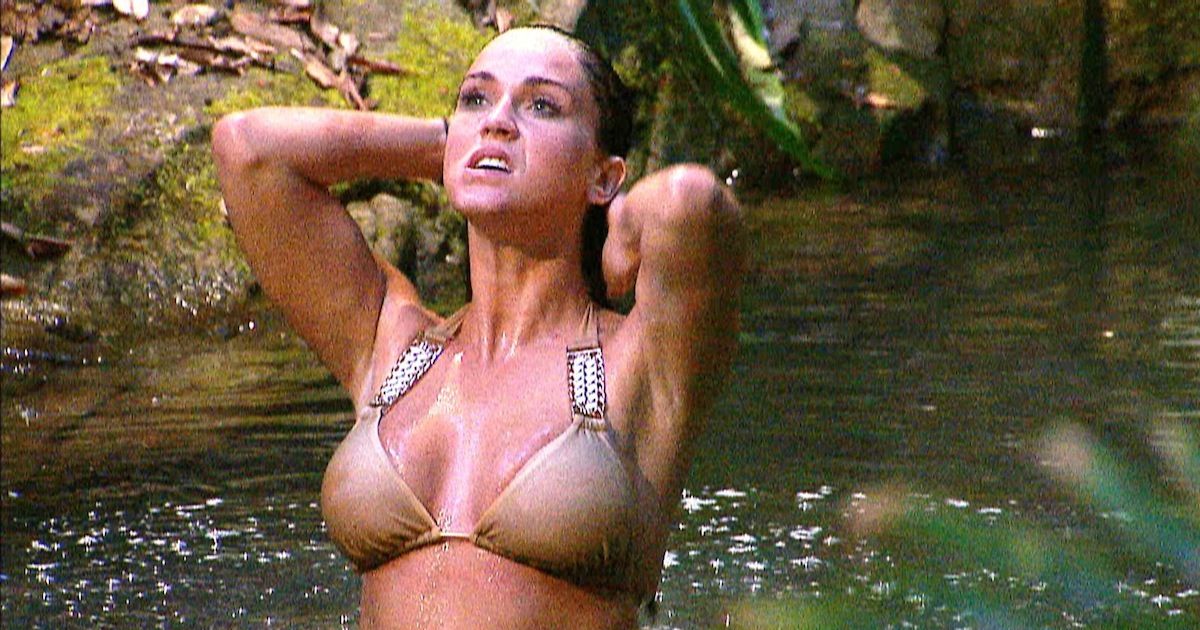
On one of the trips bare-breasted maidens flashed us! We saw a Landrover parked on a hill on the left bank, then saw some swimmers in the river. As they spotted us they ducked down, but then as we passed two of the girls popped up their lily-white tits to huge approval. They were like this except the water was brown and there were no cozzies and the parts hidden by this cozzie were lily-white – except for the central little bump, which was beautifully darker, and perky. Not that we stared.
The current swept us past them, but the mammaries lingered on.
Four-man Hole was soon after that and I crowded into a Bernie-occupied eddy straight after the drop and punched the nose of my Quest into his ribs. Being Bernie he didn’t wince, but I knew it had hurt.
Overnight at the crowded duck race camp the sponsors Lion Lager thought we were competitors, so their beautiful beer hostesses liberally plied us with ale. OK, lager. It was exactly like I imagine heaven is going to be: You walked up to the beer can-shaped trailer, said to the gorgeous lady ‘One Case Please’ and she plonked a tray of 24 cans on the counter, opened every tab pfft pfft pfft pfft – all 24 – and off you went. Stagger back to where you were pontificating.
When they ran out of beer, I rummaged cleverly in the boats and found wine papsaks we used for flotation and squeezed out the dregs. Karen the gorgeous, voluptuous newspaper reporter – remember the days when they wrote stuff on paper? – was covering the event for The Natal Mercury or The Natal Witness or some-such. Went under the byline Karen Bliksem if I remember correctly. She held out her mug and as I dispensed I gave her the patter: “A good wine. Not a great wine, but a good wine, with a delicate bouquet.” She shook her mug impatiently and said endearingly, “I know fuckall about flowers, I’m in it for the alcohol,” and I fell deeply in love. Again. My kinda dreamboat lady in shape and attitude. She was like . . .
Dave too, was smitten as one of the comely lager hostesses joined him in his laager and treated him to sincere sleeping bag hospitality above and beyond the call of duty, ending the session with a farewell flash of delightful décolletage as she kissed him goodbye in the morning. She was like . . .
or like . . .
As we drifted downstream Lang Dawid led the singing. We sang:
The landlord had a daughter fair – parlez vous
The landlord had a daughter fair – parlez vous
The landlord had a daughter fair
Lily-white tits and golden hair
Inky Pinky parlez vous
~~~oo0oo~~~
We sang to the resident goats:
I ain’t afraid of no goats
That was Doug the Thief's chirp.
~~~oo0oo~~~
We sang - to the tune of He Aint Heavy . . . :
Hy’s nie swaar nie . . .
hy’s my swa-a-a-er
Walker again.
~~~oo0oo~~~
Ah! Those were carefree daze!
~~~oo0oo~~~
Hy’s nie swaar nie, hy’s my swaer – He aint heavy, he’s my brother-in-law
John Newby was an LLB attorney and a CA accountant, wine connoisseur, boyfriend of the lovely Heather – and a crayfisherman. A very capable and interesting fella. That’s him in the pic above, ‘cept I gave him more hair on top. He would shove his scrawny frame into a wetsuit and disappear under the waves among the rocks at low tide, then emerge with crayfish. Which he would then very generously cook and share with his fellow inmates at 72 Hunt Road, our communal house on the Berea in Durban.
I always knew when a crayfish treat was coming cos he’d walk into my room, mumble an apology, roll back the carpet and shove his scrawny frame into a hole. He’d disappear under the floor of my baronial-style bedroom and emerge covered in cobwebs clutching a dusty wine bottle or two talking French and flowery oenologicalwords which I took with a pinch of salt. Some people are just like that and you tolerate them, nodding gravely, while quaffing their wine. You don’t contradict if they’re buying.
But lo! As with everything he did, Newby wasn’t bullshitting. We suddenly found out he had won the Natal Wine-Tasters Guild sniffing and spitting finals and was off to represent us at the nationals in Cape Town! I mean I always thought of myself as an oenophile, but that was in a volume and enthusiasm sense, not so much as a nexpert judge. I always swallow.
– our Hunt Rd neighbours – our house looked much the same –
So now we were rooting for Nubile! We always knew he was a connoisseur, we now said. We had helped him train, we said. My memory is that he won that tasting too, and Hunt Road thus had an SA champion under our roof; WE were expert wine tasters.
..
If I were you, I would take this 38yr-old self-serving memory with another sizable pinch of salt. And a large swallow of chablis.
~~~oo0oo~~~
Nubile upped and offed to Aussie, which we didn’t like, but worse: he took Heather with him!
Thanks to coincidence, luck and connections, I have an eyewitness account to the time my good friend Tuffy fell out of a helicopter!
Chris Greeff is one of the most connected people I know. He mentioned that John Lee is a parabat. I said: My two schoolmates did parabats in 1971 (Pierre du Plessis) and around 1975 I’d guess (Tuffy Joubert). He asked: Tuffy Joubert – that became a Recce – and raced Rubber Ducks with Maddies?
I said Yep. He’s a Harrismith boykie. So Chris sent me a pdf file: Read page 10, he said.
Interview – Major Peter Schofield by Mike Cadman 21 August 2007
Reconnaissance Regiment – Project Missing Voices
Schofield on arrival at Recce base on the Bluff in Durban:
Then I had lunch and went looking for the climbing course. Now, it wasn’t a very long walk but I walked along the length of the camp where there was a helicopter hovering at about a hundred feet. And I stopped on the edge of the hockey field where this was taking place and watched this, and out came a couple of ropes and a couple of guys came whizzing down in sort of abseil fashion. And a couple more came whizzing down sort of abseil fashion. And a couple more.
Then one came out, and came into free fall. And he literally, he got hold of the rope a little bit, but he just fell a hundred feet flat on his back wearing a rucksack and a rifle. And I didn’t even bother to walk over to him, I thought, He’s Dead. He can’t fall that far and not be.
And obviously the ropes were cast off and the chopper landed. They whipped him into the chopper and flew away. I didn’t know where to, but it was in fact to Addington Hospital, which is about three minutes flight away. And, I thought well this must be quite something of a unit, because basically they carried on with the rest of the course as though nothing had happened.
I thought, Well, I better introduce myself to the senior people here and see what’s going on. So I walked over and met the senior members of the course, and it was being run by a bunch of senior NCOs and I was impressed by the lack of concern that anybody showed for the fact that the guy had just fallen a hundred feet from a helicopter. A guy called (Tuffie?) Joubert. And Tuffie is still alive and kicking and serving in Baghdad right now.
And I said, What the hell are you doing? How did he fall over there? They said, Well nobody’s ever done it before. I said, OK, show me what you’re doing. And they were actually tying the abseil ropes direct to the gearbox of the rotor box in the roof, I think it was, in the Puma. Which gets to about a thousand degrees in no time flat. So if they had gone on long enough, they’d have broken at least one if not all four of the ropes with people on them. I said, Well let’s change that. And anyway you’re not abseiling properly so let’s send the helicopter away and let’s do some theory on abseiling and then we’ll go and do it off a building or something that stands still for a while before we progress to helicopters.
Then I went back to report to the commanding officer, John Moore, that I wasn’t really terribly satisfied with the way things were proceeding on this climbing course. He said, Oh well, have you done it before? I said Yes, I’ve done a hell of a lot of it, I was a rock climbing instructor apart from anything else. And he said, OK, well take over, run the climbing course. So I did just that. And again I was so impressed with the fairly laid back attitude of everything.
=======ooo000ooo=======
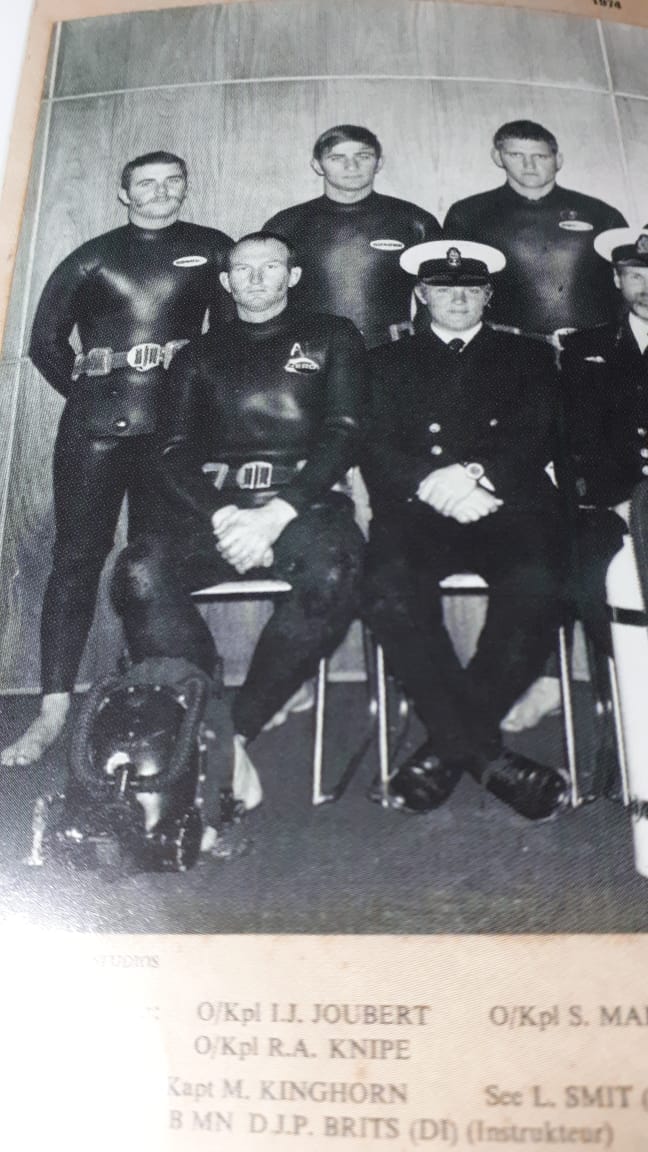
Tuffy Joubert (right) with me in his Durban recce days
I told Tuffy and he replied in his laid-back Recce way:
Good morning Koos,
Trust to find you well; This side of the coast we are all well and we think we have everything under control.
Maj Peter Schofield was a Brit, he was part of the Red Devils if I recall correctly; came to South Africa and joined the Recces. His first day at work on the Bluff he had to take over the Mountaineering Course that included abseiling. As he walked out to see what was going on, “Yes, I fell out of the helicopter”. He was not impressed.
He lived in Harrismith for a few years after retiring, Pierre knew him. He passed away a few years ago here in Cape Town.
No I have not heard or seen his talk.
Lekker dag verder, enjoy and go for gold – Groetnis – Tuffy.
Just been checking some crested guineafowl in Mkhuze and they reminded me of an SAOA Natal Branch meeting we had in our waiting room in Musgrave Centre, way back in the early eighties.
Ballin had just had a stylish haircut and waltzed in with his new “do.”
I said to Geoff Kay “crested guineafowl” and Kay took one look and said “Gallinus Ballinus” – and that’s exactly what he looked like:
I see now this guinea is actually Guttera pucherani. The domestic chicken is Gallus gallus domesticus.
~~oo0oo~~
Here are the stunning Gallus ancestors of the domestic chicken in the wild:
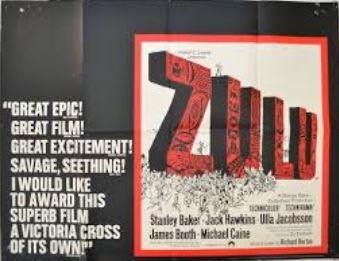
The film ZULU starring Stanley Baker, Michael Caine and Jack Hawkins was one of the biggest box-office hits of all time in England. It ‘premiered’ in 1964 and for the next twelve years it remained in constant cinema circulation before making its first appearance on television. It has since become a Bank holiday television perennial, and remains beloved by the British public. Some pommies watch it every Christmas, year after year. You know, Tell me lies, Tell me sweet little lie-ies.
The film premiered on 22 January 1964, 85 years to the day after the 1879 event it commemorates – the snotklap of Isandlwana (ignored) and the defence of Rorke’s Drift (faked into a glorious victory).
Very few people know though, that it had its REAL, ACTUAL WORLD PREMIERE in our lounge at 95 Stuart Street, Harrismith, Vrystaat in late 1963.Count yourself as one of a very tiny privileged minority who’s “in the know”!
True! If an amateur snippet can count as a premiere. Say it can!
Here’s what happened:
Back in late 1963 my old man showed us a movie he and Mom had filmed with his state-of-the-art 8mm cine Eumig camera.
Whirr whirrr whirr – those of you who watched them will remember the noise of the projector. Also maybe Thuk! Oh shit! Eina! as the film broke and had to be re-threaded in the projector and a finger touched its super-hot bulb. .
Super 8 Sound Projector Eumig Mark S810
..
He and Mom had been to Royal Natal National Park about 50 miles from Harrismith down Oliviershoek Pass to film the filming of the film ZULU.
What I remember seeing in our film was a lot of standing around, some dust and a lot of be-feathered (dead ostriches) and be-leathered (dead leopards) Zulu warriors charging at some umLungus in funny red coats, falling down in a cloud of dust and then getting up laughing, walking back and doing it all over again. And again, And a building burning.
Mom remembers being asked to stop filming, and then once the knobs saw it was just a tiny 8mm camera, being asked to stay politely out of the way. They continued filming the filming.
~~oo0oo~~
snotklap – defeat, but humiliating, embarrassing, obvious, best not spoken of; usually hugely altered in the telling (y’know, ‘there were millions of them and the two of us only had pea-shooters’)
umlungus – pale people; forked tongues
~~oo0oo~~
Thanks to the huge success of the film – which was longer than the seven or so minutes we saw in our lounge – the Battle of Rorke’s Drift has entered British folklore. Of course its main success was due to its ignoring the massive same-day British defeat at Isandlwana and portraying the defence of a hospital as a massive victory, and not mentioning the war crimes that the Poms committed.
New Film about The Film (maybe . . )
Now a New Film is being shot this year (2019/2020) by Henry Coleman which might just include some of the ole man’s 8mm footage! See all about that here.
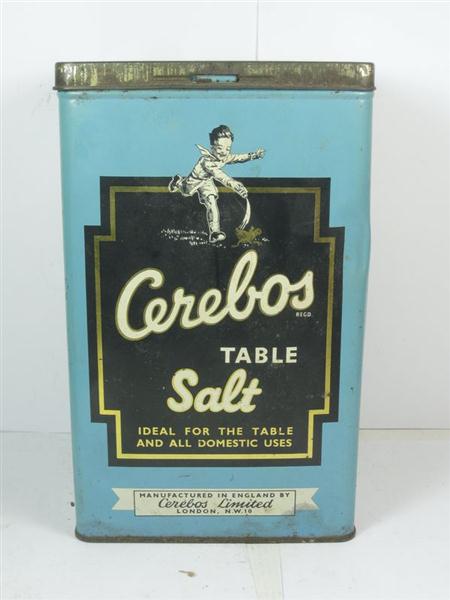
Remember always, though, to take the British ‘jingo’ version of the battle with a very large pinch of cerebos salt.
~~oo0oo~~
The background story of the film Zulu, 54 years on
Firstly, a bit of the Real History. The lesson here is always to be skeptical of ‘official’ histories.
On 22 January 1879, at a remote mission station in Natal, South Africa, 157 men, mainly British soldiers (the number is usually downplayed, sometimes “under 100”) held off wave after wave of attacks by “some 3,000 to 4,000 Zulu warriors” (the number is certainly exaggerated – your son’s rugby opposition was always MUCH bigger than your boys, right?). Remember who wrote about the battle – jingoist reporters for jingoist newspapers in a little country that thought it was a mighty empire. A defeat couldn’t be tolerated. The toffs had to be placated, not least the Queen who had a medal named after her.
Although the Zulus had some old-fashioned muskets and a few modern rifles, most of their warriors were only armed with spears, with hide shields for protection. The Battle of Rorke’s Drift lasted 10 hours (often stated as ‘over 12’), from late afternoon till just before dawn the following morning. By the end of the fighting, around 365 men lay dead. Fifteen (or maybe seventeen) British inside the barricaded buildings they had defended, and around 350 Zulu soldiers outside them. Plus many wounded Zulu men, most of whom were murdered after the battle!
The defences are almost always characterised as ‘biscuit boxes and bags’ and paintings show the British defenders hugely exposed and vulnerable. A photo taken soon after the battle looks very different to those descriptions and paintings. I haven’t seen a painting showing soldiers firing through holes in a stone wall. Is there one?
– Rorke’s Drift battle site soon after –
Historically the battle was a minor incident, which had little influence on the course of the Anglo-Zulu War. It might have – should have – remained a footnote in the history books or an anecdote told at regimental dinners had it not been for:
1. The fact that there had been a truly epic defeatat Isandlwana earlier the same day. This defence of a hospital half-heartedly attacked by men ignoring their leaders order to go home after Isandlwana, needed to be a cover-up; Needed to be hailed as a victory – and then an epic victory. In truth it was actually simply a non-defeat. It bears repeating: The mighty British army was EPICALLY DEFEATED by the Zulu army earlier that day and the British press did NOT like having to admit that. Refused to admit that. Possibly to reinforce the cover-up, the bloke in charge – LORD Chelmsford – wasn’t blamed. Was he even reprimanded for his epic mismanagement and lack of leadership?
2. The crazy number of Victoria Crosses and other awards that were dished out for this ordinary defensive battle – mainly as propaganda figleaves because of the prior resounding defeat earlier that day. Not all those possibly deserving some recognition got VC’s; and some who definitely should not have, did get VC’s. In fact the truth of the battle was far more sordid than the glorious accounts a desperate British government and press wanted to portray. This made-up story and image of valour and nobility in the Anglo-Zulu war of 1879 turned to shame when documents were uncovered which show that Rorke’s Drift was the scene of an atrocity – a war crime, in today’s language – which Britain covered up. In the hours after the battle senior officers and enlisted men of a force sent to relieve the garrison killed hundreds of wounded Zulu prisoners. Some were bayoneted, some hanged and others buried alive in mass graves. More Zulus are estimated to have died in this criminal slaughter than in true combat, but the executions were hushed up to preserve Rorke’s Drift’s image as a bloody but clean fight between two forces which saluted each other’s courage. The Zulu salute in the film was FAKE. Made-up. Never happened. A blatant lie.
3. And then, and especially, this battle became super-famous because many years later a film – ZULU – depicted the defence as a heroic victory. It wrote a story dramatically depicting British heroism, including nothing of the massive defeat earlier the same day, and none of the war crimes committed the next day. It dramatised a new story and has kept it in the public mind ever since. This film of falsities elevated a fake narrative and burnt the lies into the memories of a nation.
~~oo0oo~~
A better depiction of why Rorkes Drift was exaggerated is told here:
Oops, BBC won’t embed the video but you can find it. Also look for better, more honest accounts on history sites. You may have to search. Myths can get embedded. If what you’re reading says ‘Glorious’ keep looking.
~~~oo0oo~~~
The Film:
The story behind the film’s making. Most of this account taken from talks by Sheldon Hall, Sr Lecturer, Stage and Screen Studies Sheffield Hallam University.
The filmmakers
The principal artists responsible for Zulu were hardly Establishment figures. Screenwriter John Prebble was a former Communist Party member who had volunteered to fight in the Spanish Civil War. His co-writer, the American director Cy Endfield, had fled Hollywood in the early 1950s after he was named as a Communist during the McCarthyite witch-hunts. Endfield’s production partner and the film’s main star was Stanley Baker, a life-long supporter of the Labour Party.
All three were committed to progressive causes, but their motives in making Zulu were not political. It is not an anti-imperial diatribe any more than it is a celebration of colonial conquest. Its main purpose was frankly commercial, but Baker also saw the story as a chance to pay tribute to his Welsh homeland. This certainly explains the strong emphasis on the Welshness of the private soldiers – one of the many fictionalised elements of Zulu that have created a myth around the battle.
Filming under Apartheid
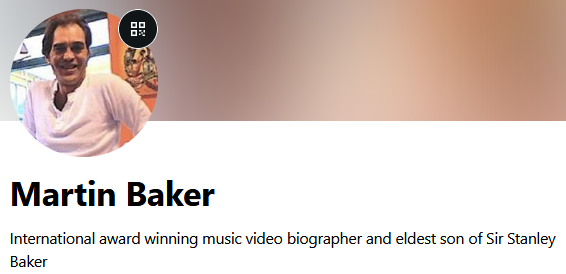
Update hot off the press: More drama in 2025! A sort of “cease and desist” letter in my comments from Stanley Baker’s eldest son! See below . .
The producers had to keep their political views in check when they made the decision to shoot the film in South Africa, then in the grip of Apartheid. There were strict, legally enforced guidelines regarding the degree of freedom permitted to the cast and crew. It was impressed upon the 60-odd British visitors that sexual relations with people of other races would result in possible imprisonment, deportation or worse. Warned that miscegenation was a flogging offence, Baker is reported to have asked – in glorious Pom tradition – if he could have the lashes while ‘doing it’. The authorities were not amused.
The main filming location was at the foot of the spectacular Drakensberg Mountains in the Royal Natal National Park, a popular tourist spot distant from any large township. But a number of incidents brought home the realities of the oppressive regime. Chatting to John Marcus, one of several professional black stuntmen employed on the film, assistant editor Jennifer Bates invited him for a drink in the bar/canteen that had been built on site for the crew. Marcus pointed out that he was forbidden by law to mix socially with whites and could not enter.
In his autobiography, Michael Caine recalls an incident in which a black labourer was reprimanded by an Afrikaans foreman with a punch in the face. Baker sacked the foreman on the spot and made clear that such behaviour would not be tolerated. Caine swore never to make another film in South Africa while Apartheid was in force, and kept to his word.
Introducing Michael Caine
Keeping watch over the tightly budgeted film was production supervisor Colin Lesslie. “I am very glad to be able to tell you,” he wrote at one point to the Embassy Pictures’ chief in London, “that in my opinion and from the little he has done so far, Michael Caine as ‘Bromhead’ is very good indeed. When he was cast for the part I couldn’t see it but I think (and hope) I was wrong.” This must have been a common reaction.
Not quite an unknown, the 30-year-old Caine was already making a name for himself on television but was becoming type-cast in working-class Cockney parts. Casting him as a blue-blooded officer in his first major film role represented a considerable risk, but it was one that paid off.
Thousands of ’em?
The soldiers were played by real soldiers – eighty national servicemen borrowed from the South African National Defence Force. And most of the Zulus were real Zulus. A mere 240 Zulu extras were employed for the battle scenes, bussed in from their tribal homes over a hundred miles away. Around 1,000 additional tribesmen were filmed by the second unit in Zululand, but most of these scenes hit the cutting-room floor.
Living in remote rural areas, few if any Zulus had visited a cinema and television would not reach Natal until thirteen years later. The crew rigged up a projector and outdoor screen, and the Zulus’ first sight of a motion picture was a Western. From then on, the “warriors” had a better idea of what they were being asked to do. Responsible for training and rehearsing them were stunt arrangers John Sullivan and Joe Powell. “The Zulus were initially suspicious of us in case we were taking the mickey,” says Powell, now 91. “After a couple of days they realised we weren’t and got into it. After that you couldn’t hold them back.”
Contrary to stories, the Zulus were not paid with gifts of cattle or wristwatches but received wages in Rand. The main corps was paid the equivalent of nine shillings per day each, additional extras eight shillings, and the female dancers slightly less again. Associate producer Basil Keys remarked: “There is no equality of pay for women in the Zulu nation!”
Buthelezi’s tribute
For the opening sequence depicting a mass Zulu wedding, 600 additional background artists were brought in, including nightclub performers from Johannesburg, to play the principal dancers. During breaks in filming, they twisted and jived to modern pop records played over Tannoys, with director Cy Endfield among the crew members joining them.
The small but key role of King Cetshwayo was given to his direct descendant, the present-day Prince Mangosuthu Buthelezi. The wedding dance was choreographed by Buthelezi’s mother, a tribal historian, and supervised by stuntman Simon Sabela, who later became South Africa’s first black film director.
History and politics
Like all films, Zulu is of its time and captures the mood of its time more profoundly than is often realised. A conservative view would see it as a hymn to gung-ho heroism, to flag-waving patriotism and the glory days of the British Empire. In fact, by 1964 the sun was already setting on the empire and undoubtedly Zulu stirred a lot of nostalgia for it. For some, that explains its appeal.
But look again. The knowledge that colonialism was in its dying fall is there in the film. The script is filled with a sense that the soldiers are in a place they don’t belong and don’t want to be. The indigenous people are not disorganised savages but a disciplined army. And the young lieutenant, played by Caine, who had earlier dismissed the enemy as “fuzzies” and the levies on his own side as “cowardly blacks”, now declares himself ashamed at the “butcher’s yard” he has brought about.
A modern awareness of racial representation means that Zulu has undoubtedly “dated”. If the film were to be remade today, as internet rumours continually suggest, it would certainly be done differently. But the absence of individuated black characters doesn’t make it racist. Though told from the British point of view, it shows that viewpoint change from dismissive contempt and naked fear to respect and even admiration. The famous (and entirely fictional) salute the departing Zulu army pays to the garrison survivors is returned with their – and our – gaze of awe and wonder.
Adapted from an article in Cinema Retro No 28 (c) Sheldon Hall 2014
Sheldon Hall is a Senior Lecturer in Stage and Screen Studies at Sheffield Hallam University. See an expanded second edition of his book ‘Zulu: With Some Guts Behind It – The Making of the Epic Movie’ – Tomahawk Press.
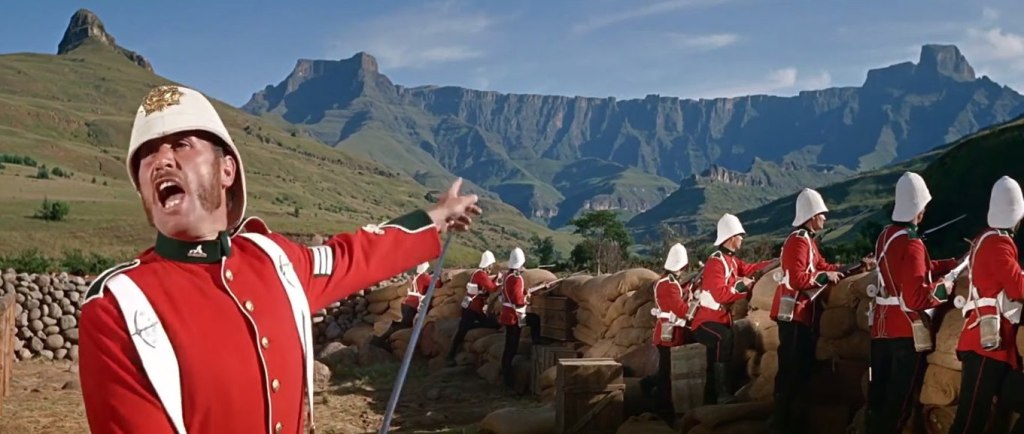
Cy Endfield’s epic military marathon about the Battle of Rorke’s Drift was actually shot 90 miles south-west of Rorke’s Drift in the Royal Natal National Park in the KwaZulu Natal province of South Africa. It had the far more mountainous and picturesque Drakensberg Amphitheatre as backdrop, rather than the low hills like the Oscarberg at the real site of the battle.
Below see the movie backdrop, the Drakensberg Amphitheatre (left) – and the real backdrop, the Oscarberg (right):
2.Many of the Zulu extras had never seen a motion picture
Many of the Zulus who were hired as extras for the film had never seen a motion picture prior to filming and were unsure what to expect. With this in mind, director Cy Endfield and Stanley Baker, who played Lieutenant John Chard, set up a projector in order for them to watch a western, starring Gene Autry. Then the Zulus probably said “Ah, so its all bulldust?” and acted accordingly.
3. The real Lieutenant Gonville Bromhead was extremely deaf…
Played expertly by Michael Caine, this snobbish character was described by Lieutenant Henry Curling, who fought alongside Bromhead at Rorke’s Drift, as “a stupid old fellow, as deaf as a post.” Major Francis Clery, who spent time with Bromhead after Rorke’s Drift, described him as “a capital fellow at everything except soldiering”, while his commanding officer said in private that Bromhead was “hopeless.” Still, political face-saving at the time saw Bromhead awarded the Victoria Cross.
4. Michael Caine initially auditioned for the role of Private Henry Hook
This was Michael Caine’s first major film role and, although he eventually put in an exceptional performance as Lieutenant Gonville Bromhead, he was crippled by nerves and beaten to the role he initially auditioned for, that of Private Henry Hook, by James Booth. Interestingly, Caine was also unable to ride a horse so a member of the filming crew took his place in the scene where he crosses the stream on horseback at the beginning of the film. This explains why the camera pans down on to the horse.
5. Private Henry Hook was badly portrayed in the film
In the film, Private Henry Hook (James Booth) is placed under arrest for insubordination. He is seen lounging around in the shade and trying to pilfer free booze as his comrades prepare for battle in the stifling heat. In reality, Private Hook was an exemplary soldier and teetotal, who was also awarded the Victoria Cross for his gallantry. Hook’s daughter walked out of the film’s premiere in disgust at this inaccurate portrayal.
6. Eleven British soldiers were given a Victoria Cross; Twelve had been nominated
Colour Sergeant Frank Bourne (played by Nigel Green in the film), requested a commission rather than the Victoria Cross. He was duly granted this wish and went on to become a Lieutenant Colonel. When he died in 1945, he was the last surviving British soldier from the battle.
7. Mangosuthu Buthelezi played his great grandfather Zulu King Cetshwayo kaMpande in the movie
Mangosuthu Buthelezi was the chieftain of the Buthelezi clan of the amaZulu when he played the role of Zulu King Cetshwayo kaMpande in 1964. Buthelezi went on to found the Inkatha Freedom Party and was the leader of the former KwaZulu bantustan. He has also held positions in the new, legitimate SA government and parliament. In fact, the Zulus “won back” the whole of the Zulu kingdom in South Africa’s first legitimate elections in 1994.
umLungus – paleface; speak with forked tongue; in Africa as well as America;
~~oo0oo~~
I’ll add a link to the 8mm movie footage the old man took on the film set in the ‘berg as soon as I can. A new movie about the making of the film is in the offing and we have offered this seven minutes of behind-the-scenes footage to Henry Coleman the film-maker. As we have undertaken not to use the footage till after his premiere, we have forfeited a chance to repeat our 1963 scoop!! Darn!
2025: I have finally added our 8mm home movie, as Coleman’s movie seems to be stuck, and Baker is mumbling.
And oops, it’s underwhelming!
– my folks’ amateur clip on-set of the filming of Zulu in 1963 –
~~oo0oo~~
2025 and no sign of Coleman’s movie yet. Recently I received a sort of “cease and desist” in this post’s comments from An Important Figure! See below:
~~oo0oo~~
Please be on notice that Henry Coleman no longer has the permission of the family of Stanley Baker to produce his proposed documentary Zulu and the Zulus nor to use the 16mm behind the scenes film print he holds, which is the property of Diamond Films.
~~oo0oo~~
Upon the downfall of his government the year after the great defeat at Isandlwana, and soon after the death of the Prince Imperial Louis-Napoleon, British Prime Minister Benjamin Disraeli asked In parliament – showing that he and his generals had not bothered to do their homework and learn about these African people – “Who are these Zulus? Who are these remarkable people who defeat our generals, convert our bishops and who on this day have put an end to a great dynasty?”.
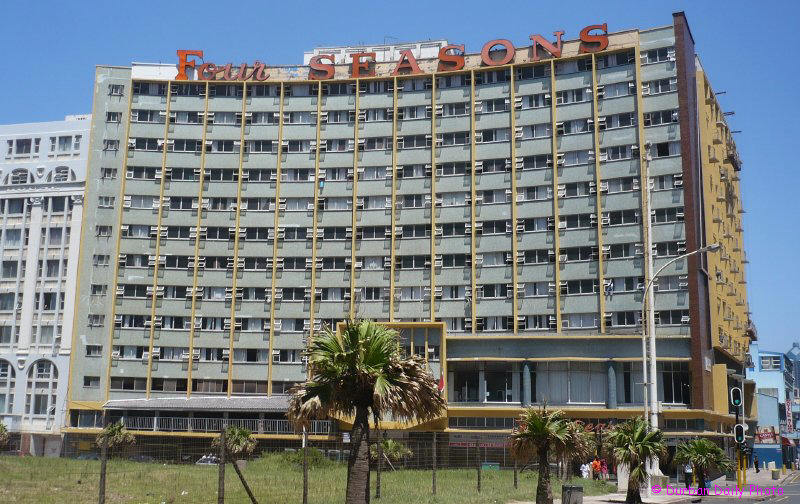
Off they’d go in Mary’s pale blue VW Beetle OHS 155. Off to Durbs-by-the-Sea, the Lonsdale Hotel or the Four Seasons for a whole week!
Might that be Mary’s VW outside the Lonsdale in this picture? Three cars behind the Borgward?
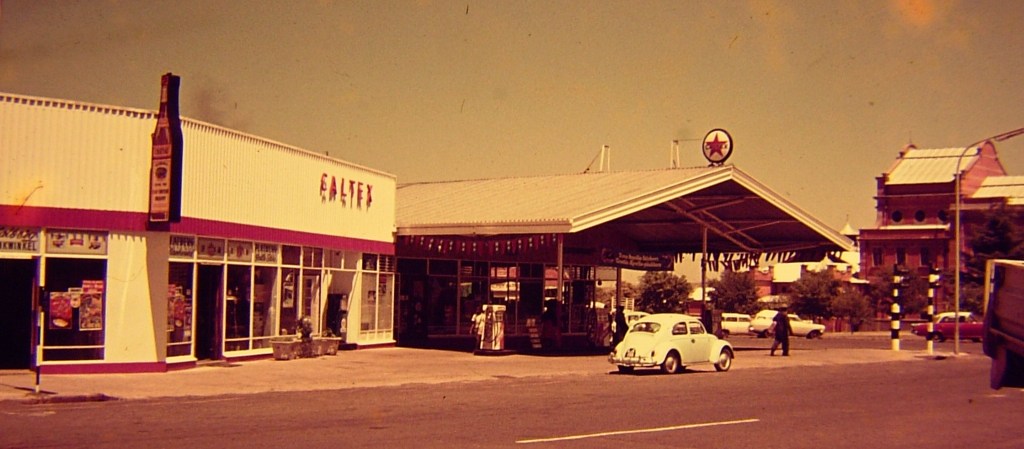
The cost of their stay: R2.95 each per day including meals. Mom thinks Randolph Stiller may have owned the Four Seasons. He and Bebe certainly owned the Central Hotel in Harrismith where Annie stayed, one block away from her Caltex garage in Warden Street. Only the Deborah Retief gardens between her hotel room and her office, but she drove there in her great big old beige Chev Fleetline, OHS 974; one block up to the garage. Mom – ever kind – says her legs were too sore to walk.
In Durban Mom and Annie would visit Annie’s sister Jessie (Bain Bell) and her daughter Lesley (Malcolm-Smith ) in their flat in Finsbury Court in West Street. Lesley worked at Daytons – a supermarket, Mom thinks.
They would all hop into Mom’s car and head off on a drive – to the beach, to the Japanese Gardens; and – always – to visit Annie’s bridesmaid Maggie McPherson who lived in a ‘posh flat up on the Berea. Looked like a bit of Olde England’.
1922 wedding
~~~oo0oo~~~
Many years later – 1980’s – we would go and listen to Joe Parker in the Lonsdale. Beer-soaked, we hosed ourselves, but I don’t think Mom and Annie would have approved!
While we’re getting nostalgic, some names to remember: Gillespie Street; The Italian restaurant Villa d’Este; The Four Seasons Hotel, with its Pink Panther steakhouse; Palm Beach Hotel; Millionaires’ Club; Lonsdale Hotel (Joe Parker being rude); The El Castilian nightclub (remember The Bats?); The Killarney Hotel, where the Monks Inn used to be (“Steak, Egg and Strips” said the sign); Thatcher’s Bar at the former Parkview Hotel.
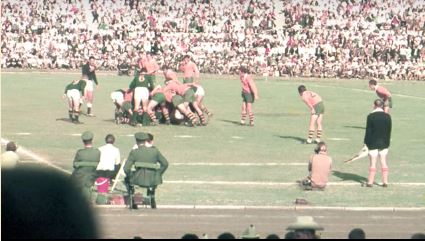
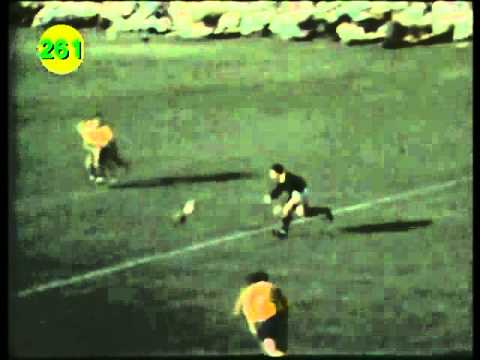
In 1969 a bunch of us were taken to Durban to watch a rugby test match – Springboks against the Australian Wallabies. “Our” Tommy Bedford was captain of the ‘Boks. We didn’t know it, but it was to be one of his last games.
– Boks 16 – Aussies 9 –
Schoolboy “seats” were flat on your bum on the grass in front of the main stand at Kings Park. Looking around we spotted old Ella Bedford – “Mis Betfit” as her pupils called her – Harrismith’s English-as-second-language teacher. Also: Springbok captain’s Mom! Hence our feeling like special guests! She was up in the stands directly behind us. Sitting next to her was a really spunky blonde so we whistled and hooted and waved until she returned the wave.
Back at school the next week ‘Mis Betfit’ told us how her daughter-in-law had turned to her and said: “Ooh look, those boys are waving at me!” And she replied (and some of you will hear her tone of voice in your mind’s ear): “No they’re not! They’re my boys. They’re waving at me!”
We just smiled, thinking ‘So, Mis Betfit isn’t always right’. Here’s Jane. We did NOT mistake her for Mis Betfit.
.
“corrections of corrections of corrections”
Mrs Bedford taught English to people not exactly enamoured of the language. Apparently anything you got wrong had to be fixed below your work under the heading “corrections”. Anything you got wrong in your corrections had to be fixed under the heading “corrections of corrections”. Mistakes in those would be “corrections of corrections of corrections”. And so on, ad infinitum! She never gave up. You WOULD get it all right eventually!
Stop Press! Today I saw an actual bona-fide example of this! Schoolmate Gerda has kept this for nigh-on fifty years! (this is in 2020)
– genuine rare Harrismith Africana ! – or is it Engels-cana? –
~~~oo0oo~~~
Tommy’s last game for the Boks came in 1971 against the French – again in Durban.
~~~oo0oo~~~
Two or three years later:
In matric the 1972 rugby season started and I suddenly thought: ‘Why’m I playing rugby? I’m playing because people think I have to play rugby! I don’t.’
So I didn’t.
It caused a mild little stir, especially for ou Vis, mnr Alberts in the primary school. He came up from the laerskool specially to politely voice his dismay. Nee man, jy moet ons tweede Tommy Bedford wees! he protested. That was optimistic. I had played some good rugby when I shot up and became the tallest in the team, not because of any real talent for the game – as I went on to prove.
~~~oo0oo~~~
ou Vis – nickname meaning old fish – dunno why
Nee man, jy moet ons tweede Tommy Bedford wees! – Don’t give up rugby. You should become our ‘second Tommy Bedford’ – Not.
~~oo0oo~~~
Meantime Jane Bedford has become famous in her own right in the African art world, and in olde Durban colonial circles. Sister Sheila and Jane have become good friends.
~~oo0oo~~
Two more pupils who remember Miss Betfit with, um, fondness are Etienne and Leon
Leon:
Out of the blue Miss Bedford would streak down one of the isles with astounding acceleration, grab an inattentive victim’s arm and bang his/her elbow mercilessly on the well marked desk. It used to be bloody sore, especially if you were inattentive often…
Or, if you dared to fish a crib note out of your case while she was on about something, she would storm down the isle, grab your boeksak and scatter the contents gleefully all over the length of the isle ― the rest of the class never failed to find it absolutely hilarious. And the contents of your partitioned fake leather case could be embarrassing on occasion.
On one occasion she flew down our isle red with indignation. I sat immobilised with trepidation (this doesn’t sound right) *ed: do some corrections* as she came right towards me. I was daydreaming, so I clutched my elbows as tight as I could… but this time my elbow was spared ― it was Gabba on the other side of the isle who was caught fiddling in his case. She viciously shook his case as she walked back. Books, blikkie, pencils, notes, everything scattered indecently all over the place. Much funnier than usual (hey it was Gabba FGS, the longstanding Eastern Free State rugby captain) I roared with laughter and relief.
Five minutes later the bell rang, I dived down to stuff a prescribed book into my case, but no case. I looked up in bewilderment, to see Gabba walking off with his unaffected case and that evil half-moon grin.
Etienne:
I only had trouble with Missus Bedford right at the beginning of standard six when I saw that it was serious that you’d come back at three. I went back at three once and then made a conscious decision not to mess around with the English teacher & she never terrified me after that. In fact she was my favourite teacher in complete contrast to Eben Louw who really gunned for me. He & my old man had political issues.
Seeing the pic of her brought a tear to my eye & I remembered Fran Hurter as well. I went to see Fran Hurter in her Riversdale old age home before she passed on.
Yep I’m too nostalgic at this ripe age, Cheers & tears, Etienne
~~oo0oo~~
Leon again:
you were wise beyond your years regarding Ella Bedford. I spent half my flippen school-life doing corrections in the afternoons.
Still, I agree, she had a much bigger influence than most teachers. Definitely not academically though, I still cannot speak the lingo (isles versus aisles), but in life skills, I think.
Work-ethic (surely more could have rubbed off), never giving up on the Moore-cousins, but especially never getting personal. The latter really got me.
We went to Durban around this time and stayed in the Impala Holiday Flats, self-catering. Free Staters on the loose in Durbs-by-the-Sea!
We probably drove down in OHS 154, a beige Morris Isis – or in OHS 155, a pale blue VW 1200 Beetle, along the narrow national road between Joburg and Durban. I remember talk of dreading the infamous “Colenso Heights” – apparently the most challenging section of the route.
The high-rise we stayed in was in Gillespie Street one street back from the Golden Mile, or Esplanade. If you took all Harrismith’s houses and stacked them, you’d have a building like this. I remember the lifts and I remember getting back tired and full of sand from the beach. I don’t seem to recall the beach – weird.
Tuffy has hit the bright lights. School friend and class mate Mariette van Wyk edits a lovely magazine Atlantic Gull down in the Dryest Fairest Wettest Cape.
She got the fascinating life story (well actually, snippets of it!) of Irené John Joubert out of him recently.
Fascinating thing is, Tuffy DID this stuff, Chuck Norris acts it out. Here’s an eyewitness account of his famous plummet from a chopper.
Here he is in those far-off days when you could see more chin and not so much forehead:
Tuffy’s older brother Etienne remembers him getting his nickname like this: In the very English environment of the Harrismith Methodist church some soutie made the mistake of calling the French masculine name Irené the English feminine name Irene in Sunday school and promptly got dondered right then and there by said Irené. And hence the nickname Tuffy was born.
I see Tuffy says he has no trouble in Afghanistan, Iraq and the Congo as “with my honest face, people just love me.” What I want to know is: How do they see his face?
Well, now that his cover is bust, his anonymity lost, learn more about Tuffy being a domkrag and then tackling an unsuspecting ox here.
~~oo0oo~~ soutie – engelsman, pom, english ou; the story was English-speaking South Africans had one foot in England and one foot in SA; this left their willies hanging in the brine, giving them salty cocks, therefore ‘soutpiel’
~~oo0oo~~
This is the last in a series of famous friends I have known. And ja, also the first . .



















 Vrystaat Confessions