I just read a lovely post from an Irish woman who grew up in the sixties. She wrote:“In 1960, we had no fridge, no TV, no car, no central heating – only open fires, water heated by an old ‘pot-bellied’ stove, no electric immersion heater, no automatic washing machine. Chilblains were a fact of life every winter. Stuffed material sausage dogs were at the bottom of many doors to keep the draughts out (and there were many draughts!)”
. . . and those stuffed sausage doorstops got me thinking. So I wrote a bit about what I can remember about “Harrismith’s mild winters” and asked friends to add their sixpence worth! How cold was Harrismith? ——————
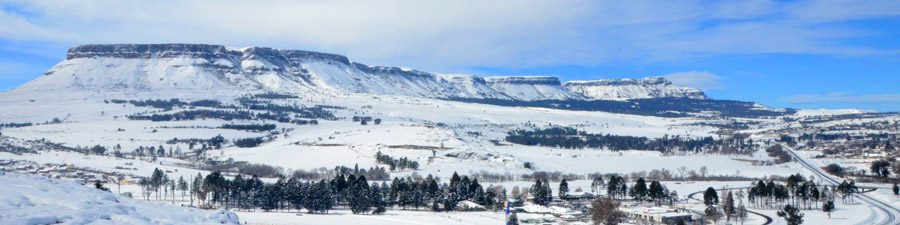
Ceilings had no insulation and the windows were wooden sash or steel frame, single-glazed; Windows would mist over, but you would still try and see if Platberg had its table-cloth on. Always coldest when the east wind blew and put a ‘blanket’ or ‘table cloth’ on the mountain like this:
Weather – that blanket settles on our mountainDoor-stop ‘sausages’ to block the icy breeze whistling under doors – sometimes plain sausages, sometimes made into sausage dogs! Huddling in front of a red-hot bar heater giving a little ring of warmth; Move back a yard and the room was frigid!
The black coal stove in the kitchen was lit through the whole of winter, thank goodness; A cruel boyhood confession: I murdered a few flies at this stove in our kitchen! Tore off their wings and turned them into ‘walks’ then tossed them into the stove to die! Yikes! Here’s an old one, no longer installed, no longer black:
On the beds lots of blankets, no duvets; If you were lucky your Mom would cut the tassles off the Standard Woollen Mills blankets and sew on a strip of smooth silk-like tape that didn’t tickle your nose! I remember some of our old pillows weighing ‘a ton’. Probably a quarter ton of feathers, a quarter ton of live mites, a quarter ton of dead mites and a quarter ton of sweat and snot! Luxury was having flannel ‘winter sheets’ rather than those smooth, thin, cold ordinary cotton sheets.
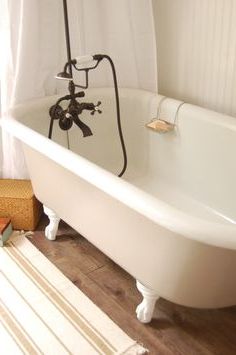
We were lucky to have hot baths from an electric geyser warming us up. You would wallow in the big old iron bath with ball-and-claw feet, trying to get your scrawny carcass under the shallow water, then start dreading having to get out; Soon, though, the decision would be an easy one, as the water cooled rapidly.
Getting into those long flannel winter jarmies was such a treat. Cosy. Some of ours were hand-made – machine-sewn by Mom.
Leaving for school in the mornings was jersey on, socks pulled up high, gloves on, and off you’d go on yer bike; Riding along Stuart Street your eyes would water and your nose would run, so gloves and sleeves had to do snot duty; When you got there you’d slide your hands off the handle-bar grips as they didn’t want to ‘uncurl’! Your bare knees would be frozen yet somehow you didn’t feel them as much as you felt your toes in your socks and shoes! Funny that. As uncool as it was, sometimes you’d even wear the grey balaclava Mom had knitted for you.
I remember it like this:
Except, it wasn’t really. That’s Europe and maybe their winters are worse!
We had a horse trough in the backyard about 2m long, 40cm wide and 40cm deep. It was concrete grey but later on it got painted Caltex green. A lot of our stuff got painted Caltex green. Thanks, Annie! The water in the trough would freeze solid. The ice would thaw a bit by day and freeze again every night. That was OK, though, we didn’t have horses.
——-ooo000ooo——-
Harry ‘Pikkie’ Loots added his memories:
How about: Frost in the fields, with little wind blown ice crystals making it look like a sprokiesland instead of the grey-yellow vrystaatse vlakte that it was once the frost melted . . .
The little black tube-shaped coal stoves in the classroom where we thawed our hands – remember how it hurt as they ‘defrosted’? . . Newspaper under your mattress to stop the cold coming from below . . Taping up the air vents in the bedroom to stop the cold air from coming in . . Doing homework (occasionally) by the coal stove in the kitchen . . Hot water bottles . .
—— And a couple he remembered from his gran, who lived in Clocolan: She never had – nor apparently ever wanted – an indoor bathroom or toilet, despite her children offering to have one installed for her; The potty under the bed so that you didn’t have to walk to the outhouse in the middle of the night . . And bathing in a tin bath in the middle of the kitchen, filled with water boiled on the coal stove . .
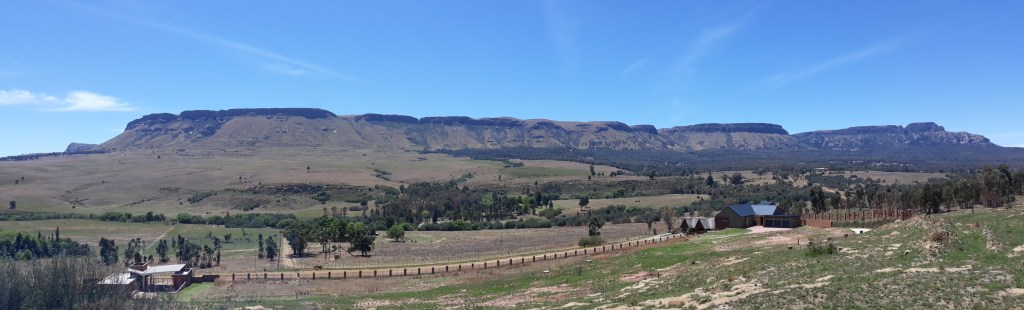
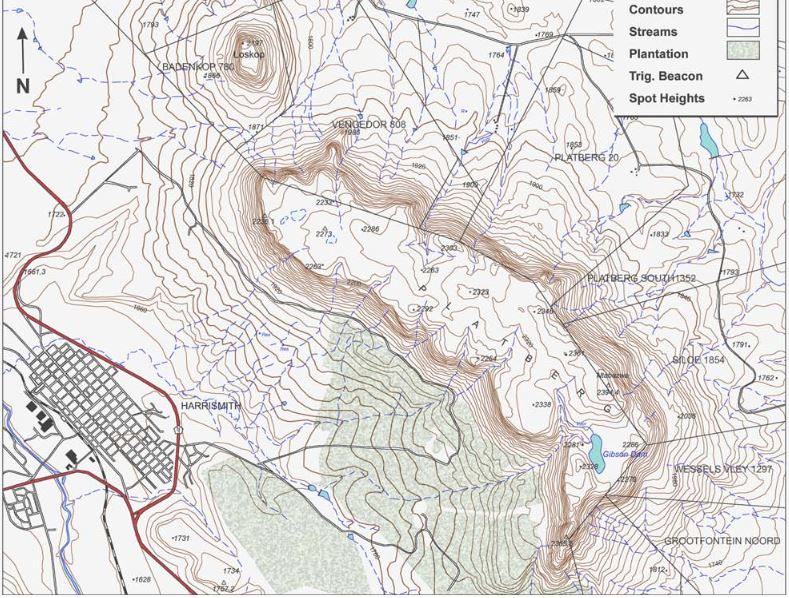
Platberg, overlooking the town of Harrismith in the Free State, is an inselberg that presents a refuge for indigenous plants and animals. And its status is precarious.
– Platberg behind Bakerskop in the foreground –
‘Little is known about the different taxa of Platberg and hence a detailed floristic and ecological survey was undertaken in 2009 by UNISA’s Robert F. Brand, Leslie R. Brown and Pieter J. du Preez to quantify threats to the native flora and to establish whether links exist with higher-altitude Afro-alpine flora occurring on the Drakensberg. Vegetation surveys provide information on the different plant communities and plant species present and form the basis of any management plan for a specific area. No extensive vegetation surveys had been undertaken on Platberg prior to this study; Only limited opportunistic floristic collections were done: Firstly, in the mid-1960s by Mrs. Jacobs. These vouchers were mounted and authenticated in 2006 and are now housed at the Geo Potts Herbarium, Botany Department, University of the Free State;
Secondly, 50 relevés were sampled between 1975 and 1976 by Professor H.J.T. Venter, Department of Genetics and Plant Sciences, University of the Free State.
Mucina & Rutherford 2006 say: ‘Platberg is the single largest and best preserved high-altitude grassland in the Free State. ‘
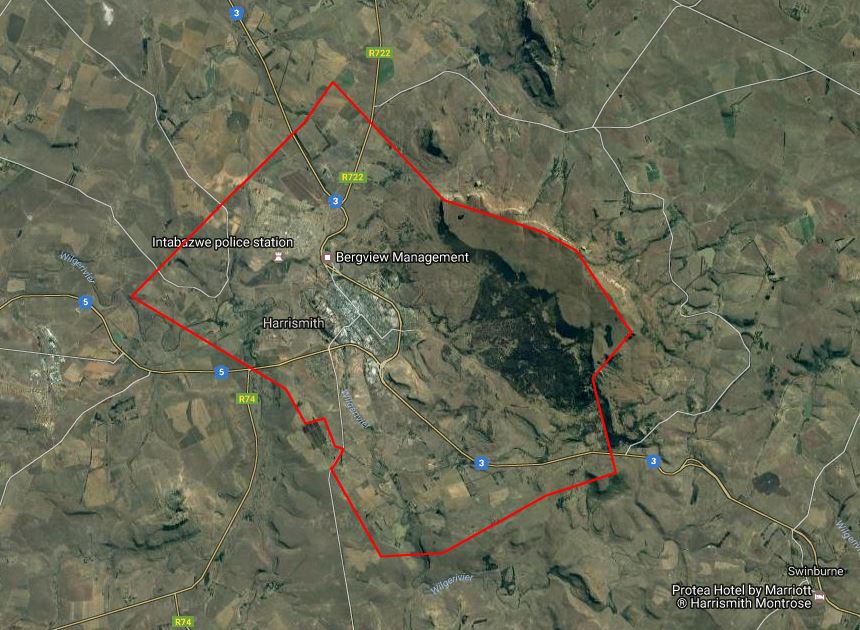
– and I say in 2019: Look how tiny it is! You can hardly see Platberg on this map of all nearby high altitude places. Yet this is our single largest tiny piece of this grassland left!
The authors plead: ‘As an important high-altitude grassland, it is imperative that Platberg be provided with protection legislated on at least a provincial level.’ At present, Platberg is still municipal, with very little protection! – In fact, I think they hire out the grazing for cattle – I hope not, as that really damages the veld and wetlands.
– That tiny island above the ‘th’ in Harrismith = Platberg – – Harrismith townlands –
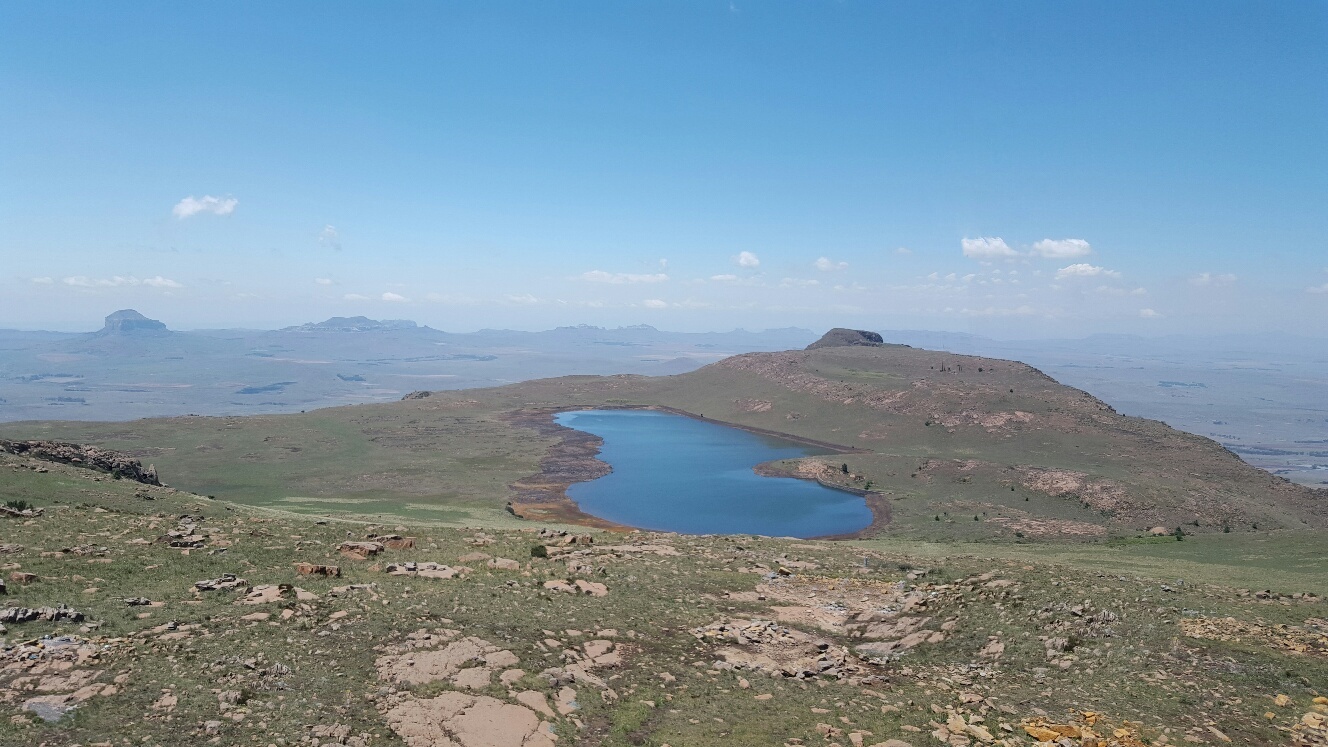
Platberg’s altitude ranges from 1 900m to 2 394m ASL. The surface area covers approximately 3 000ha. The slopes are steep with numerous vegetated gullies and boulder scree slopes below vertical cliffs that are 20m to 45m high. Waterfalls cascade down the southern cliffs after rain. A permanent stream arising from the vleis around, and the vleis drowned by, Gibson Dam on the undulating plateau flows off the escarpment and cascades as a waterfall. From a distance, Platberg appears to have a distinct flat top. However, once on the summit the plateau is found to be undulating, with rolling grass-covered slopes. The vegetation of the plateau is dominated by grassland, with a few rocky ridges, sheet rock and rubble patches, as well as numerous seasonal wetlands and a permanent open playa (pan) – I’ve always called it a tarn – on its far western side. Woody patches of the genera Leucosidea, Buddleja, Kiggelaria, Polygala, Heteromorpha and Rhus shrubs, as well as the indigenous Mountain bamboo Thamnocalamus tessellatus, grow along the base of the cliffs. The shrubland vegetation is concentrated on the cool (town) side of Platberg, on sandstone of the Clarens Formation, in gullies, on scree slopes, mobile boulder beds, and on rocky ridges. Shrubs and trees also occur in a riparian habitat in the south-facing cleft, in which the only road ascends steeply to the summit up Flat Rock Pass. Platberg falls within the Grassland Biome, generally containing short to tall sour grasses. Platberg is a prominent isolated vegetation ‘island’ with affinities to the Drakensberg Grassland Bioregion, embedded in a lower lying matrix of Eastern Free State Sandy Grassland. Platberg also has elements of Fynbos, False Karoo and Succulent Karoo, as well as elements of Temperate and Transitional Forest, specifically Highland Sourveld veld types.
– spot Platberg’s highest point, Ntabazwe 2394m ASL –Looking from highpoint Mtabazwe towards Boobejaanskop eastern tip
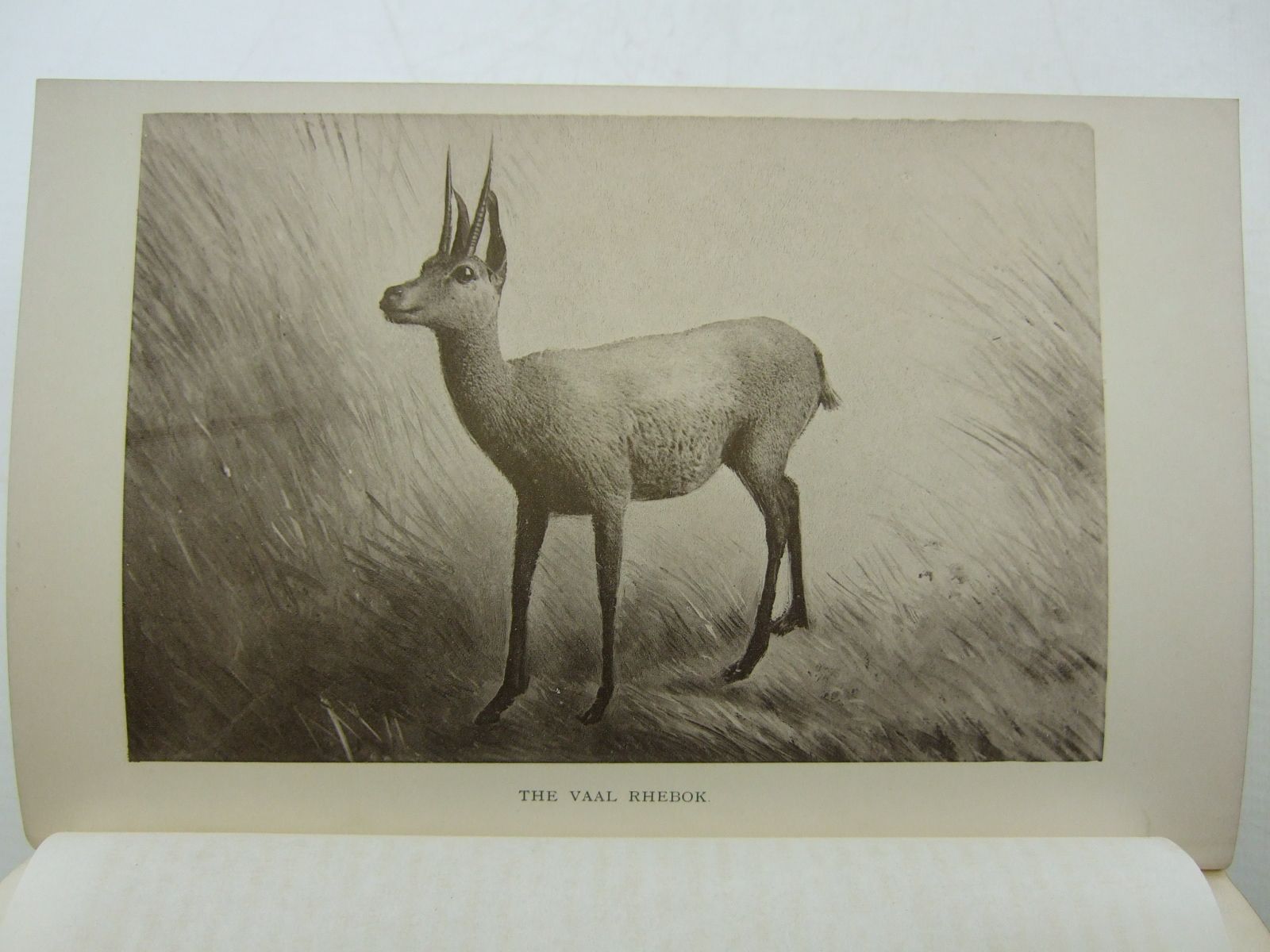
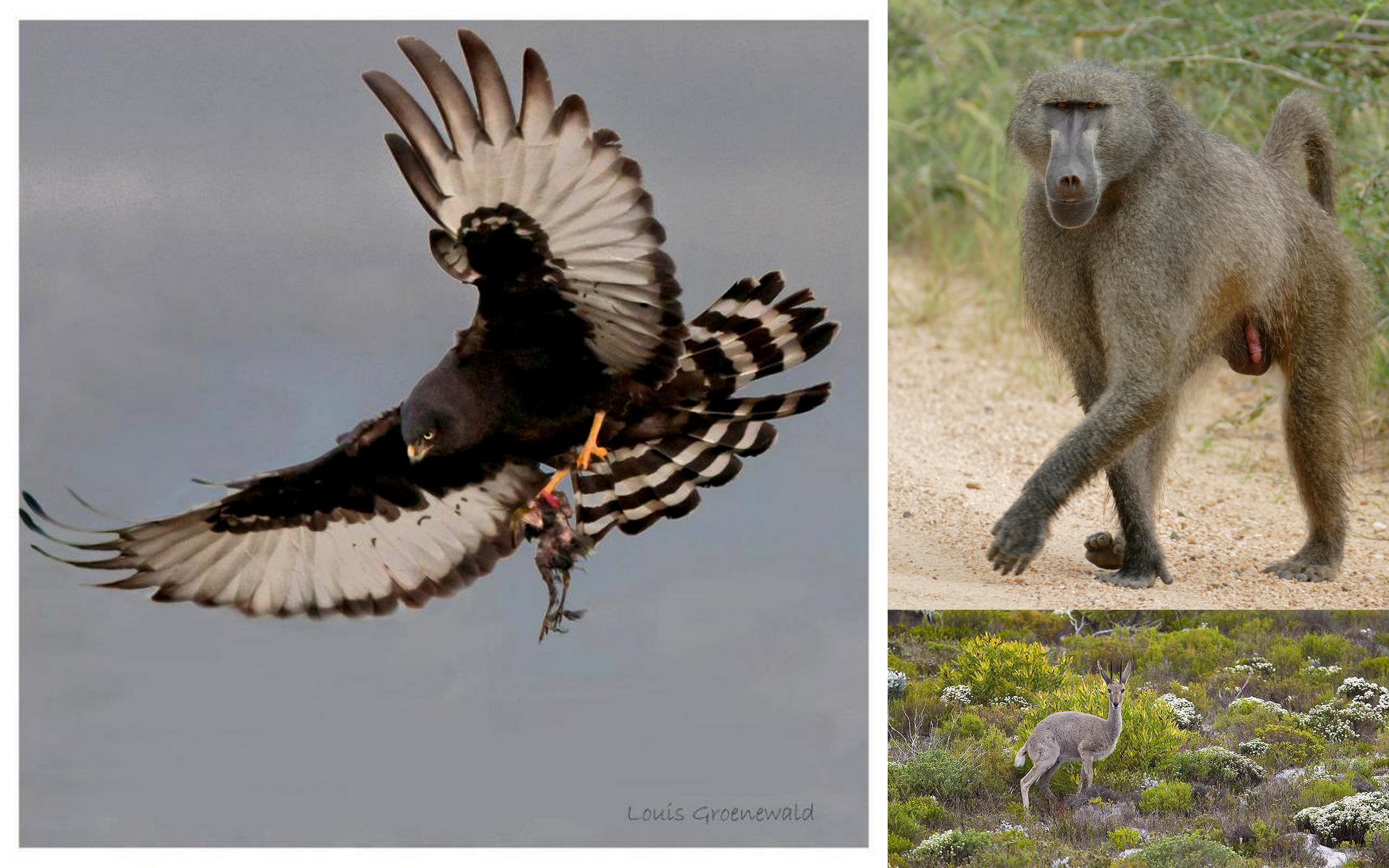
I wonder if there are any grey rhebok left?
Platberg specials– the road up Flat Rock (or Donkey) Pass –
See more of Platberg’s beauty in this amazing post. Damn! Sandra seems to have ended her beautiful blog! Pity!
~~~ooo0oo~~~
inselberg – German for ‘island mountain,’ the word first appeared in English in 1913, apparently because German explorers thought isolated mountains rising from the plains of southern Africa looked like islands in the midst of the ocean. Geologically speaking, an inselberg is a hill of hard volcanic rock that has resisted wind and weather and remained strong and tall as the land around it eroded away. Wikipedia says in South Africa it could also be called a koppie but I think we’d klap anyone who called our Platberg mountain or inselberg a ‘koppie.’
koppie – a smaller thing than Platberg; Just west of Platberg is Loskop; you can call that a koppie, maybe, if you call it a beautiful high koppie with an impressive cliff
relevé – in population ecology, a plot that encloses the minimal area under a species-area curve; right
tarn – tarn is a term derived from tjörn an Old Norse word meaning ‘pond.’ The term’s more specific use as a mountain lake comes from the upland regions of Northern England where tarn is the name given to all ponds. The term retains a broader use since it may refer to any pond or small lake regardless of where it is located or its origin. In the Scandinavian languages the terms tjørn, tärn, tjern, or tjärn are used to refer to small natural lakes that are found closely surrounded with vegetation. Other definitions say a tarn is a post-glacial pond, and Platberg’s is not that, I don’t think. I think it’s fine to keep calling ours the tarn on the western end of Platberg.
~~~oo0oo~~~
Aside: Talking of special high altitude grasslands, who knew of the Korannaberg near the mighty metropolis of Excelsior of dominees-wat-meidenaai fame? It has 767 plant species in its 130km2! It sure looks like a must-visit place! 227 bird species too.
dominees-wat-meidenaai – practicing what you preach against; the old Do as I Say, not as I Do BS that patriarchs try to enforce
Steve Reed sent a picture of old American cars in Aussie .. I wrote:
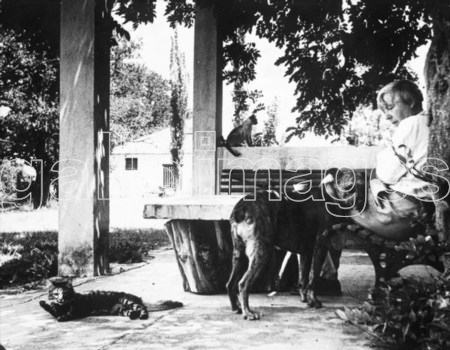
These lovely old motorised wrecks remind me of Swinburne character Abe Sparks‘ Rolls Royce bakkie*. And that reminds me of Nell van Heerden.
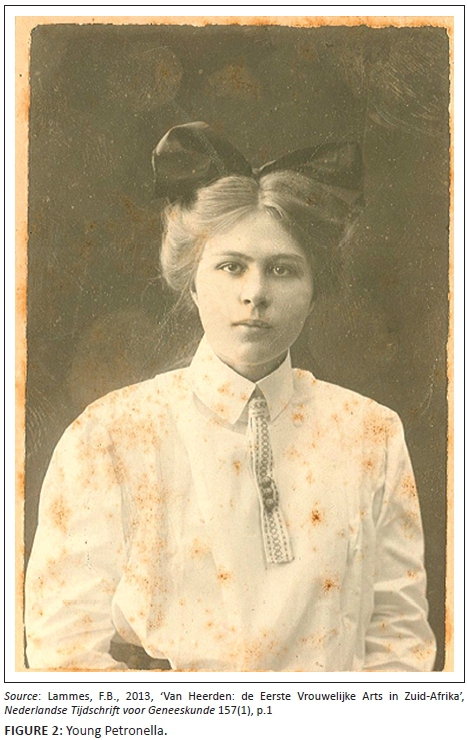
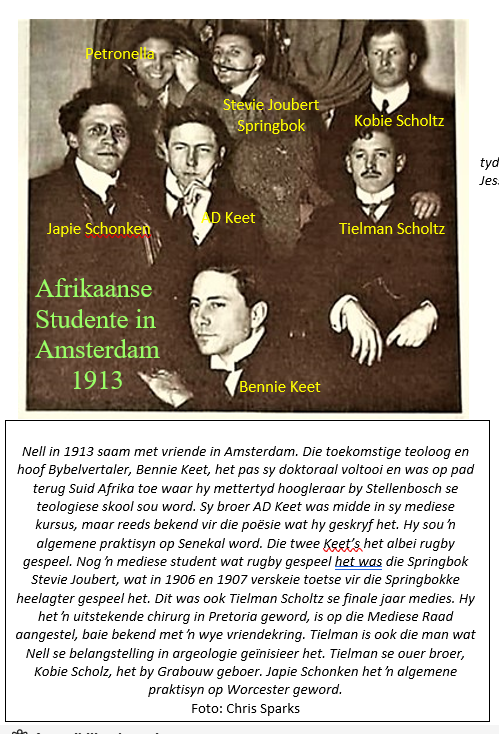
Dr Anna Petronella van Heerden, born 1887 in Bethlehem. She studied at the University of Amsterdam from 1908 to 1915 where she completed her medical degree. Thanks to our Harrismith historian Leon Strachan and Chris Sparks, Abe Sparks’ grandson, here she is with fellow students, a pretty elite group of South Africans of the day:
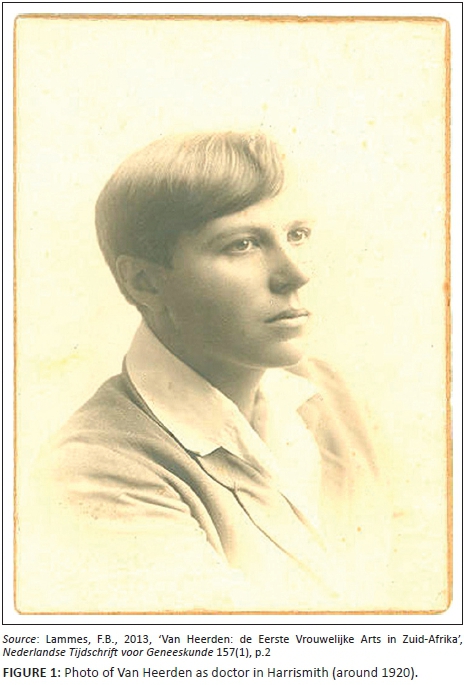
Van Heerden served as an intern at the Volkshuishospitaal in Bloemfontein in 1916 and had her own practice in Harrismith from 1917. She specialised in gynaecology in London from 1921 before returning to Amsterdam to complete her PhD in 1923. She moved to Cape Town where she practiced as a gynaecologist. She retired from her practice in 1942 to go farming in Harrismith.
Apparently, she bought the Roller in England, toured the continent in it, then shipped it back to Kaapstad where she ran her specialist practice. Then, I’m guessing, drove it up to Harrismith to go farming. This part about the car is according to my 96 year-old Dad.
*EXCEPT! The Roller was a Cadillac! Again Leon Strachan’s research to the rescue. I was just believing what I heard from my ole man. Not Leon, he did the research and found out Nell had ordered a custom 1929 Cadillac from the Cape Town General Motors dealer. Also that after swanning around the Cape in it, she decided to tour America with her life partner Freddie Heseltine, and modified the Caddy as a camper for the trip. An enterprising and indefatigable character. – (note the difference between a historian and a peddler of hearsay: The Rolls Royce bought in London and shipped to SA was actually a Cadillac bought in Cape Town and shipped to the USA and back!)
She gave up practicing medicine – one story has it after a tragedy – and came to Harrismith to farm cattle and was legendary among the boere here.
Before that, she went digging:
Usually dressed in khaki trousers, khaki shirt, sturdy shoes and hoed, she would answer my gran Annie’s, How are you, Nell? query with ‘Fair to bloody’ as she filled up her bakkie with Caltex fuel at Annie’s Central Service Station. She had a live-in girlfriend Freddie Heseltine, who sometimes had to move out to the cottage when Nell had city girlfriends over for lekker wild parties on her farm Grootfontein, behind the mountain. So we were told!
A cattle farmer, she would be seen at the vendusies where if any of the boere made the mistake of saying something, she’d be ready along the lines of “Ja, (Jan, Piet, Koos) ek is n fokken vrou al lyk ek nie so nie!” A true character, salt of the earth, a socialist and a real mensch. Imagine how strong you’d have to be, being ‘anders’ in a milieu where being a Male White Afrikaans Christian automatically made you a baas, made you automatically right, and should have made all women appreciative and in their plek – and NOT at vendusies! And if they must be at vendusies they should serve the tea and koeksisters! The local boere would have known she was well-connected, though – she had served on National Party bodies – and was not to be taken lightly.
She did genealogy research and wrote two autobiographical books.
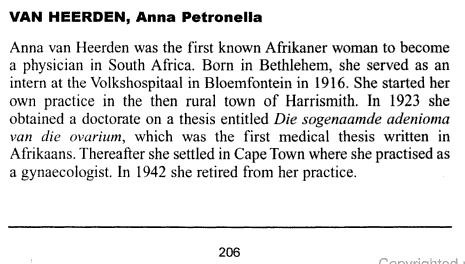
Anna Petronella van Heerden (1887–1975), was the first Afrikaans woman to qualify as a medical doctor. Her thesis, which she obtained a doctorate on in 1923, was the first medical thesis written in Afrikaans. She practiced as a gynaecologist, retiring in 1942. She also served in the South African medical corps during World War II.
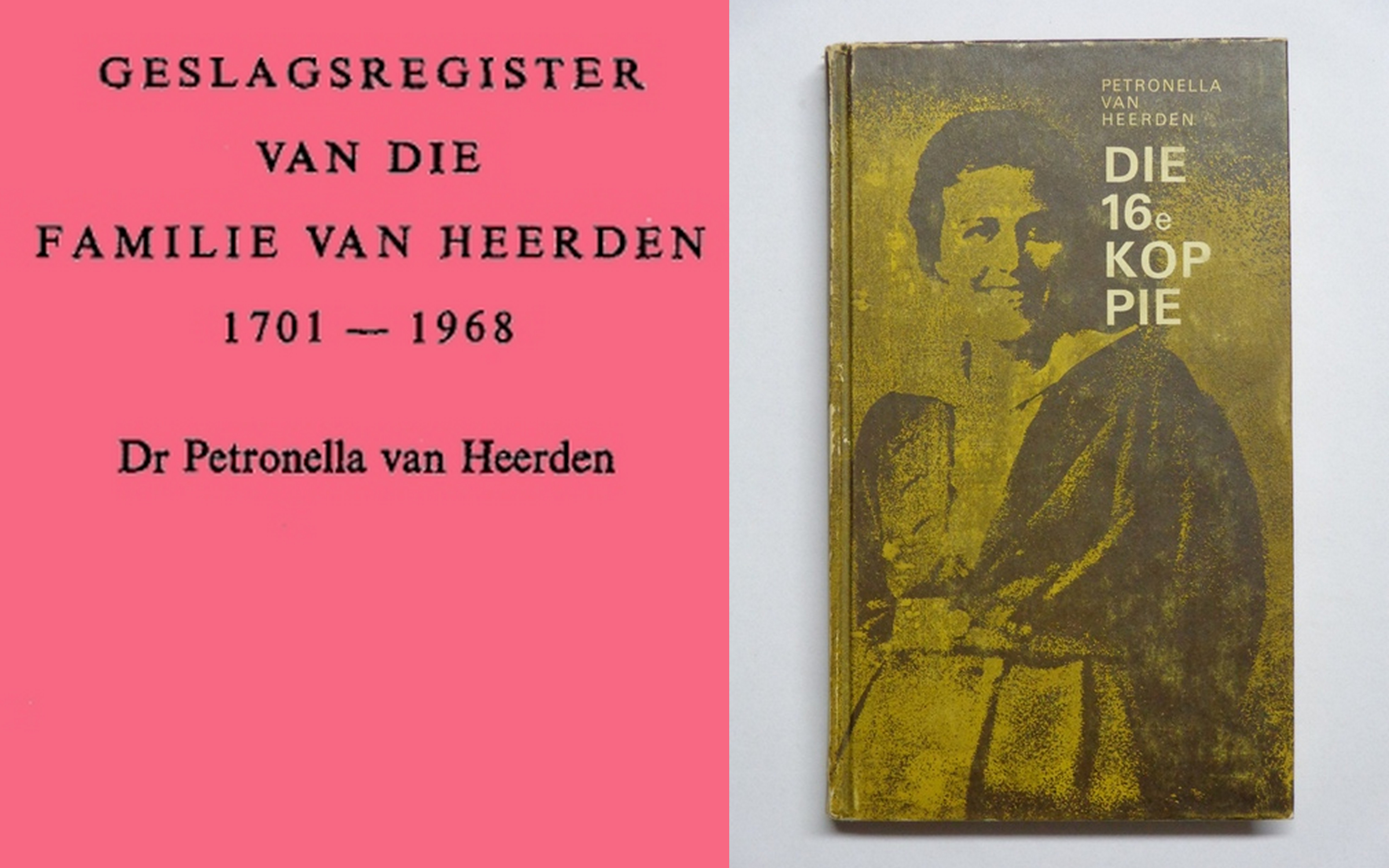
She campaigned for women’s suffrage in the 1920s, and worked as a farmer after retiring from her medical work. She also published two autobiographical texts, Kerssnuitsels (Candle Snuffings) and Die Sestiende Koppie (the Sixteenth Cup), and other works, including: Waarom Ek ‘n Sosialis Is (1938) (Why I’m a Socialist), and Dames XVII (1969) – referring to the revered, dominant Here XVII of Dutch lore. Her awakening came, she writes in Die Sestiende Koppie, when she found out just how few rights women had, and that they were – she was! – legally classified with children and idiots!
~~oo0oo~~
This from Women Marching Into the 21st Century: Wathint’ Abafazi, Wathint’ Imbokodo:
This from “Nationalism, Gender and Sexuality in the Autobiographical Writing of Two Afrikaner Women,” Viljoen L. (2008):
Viljoen investigates questions of nationalism, gender and sexuality in the autobiographical texts of Petronella van Heerden and Elsa Joubert, and makes the point that autobiography, a genre often considered marginal to the literary canon, can be regarded as a site for examining the impact of nationalism on the construction of gendered and sexual identity. Petronella van Heerden (1887-1975) became the first Afrikaner woman to qualify as a medical doctor and published two short autobiographical texts, Kerssnuitsels (‘Candle Snuffings’) and Die Sestiende Koppie (‘the Sixteenth Cup’), in the early 1960s. The article argues that van Heerden’s omission of overt references to her lesbianism can be attributed to the strong, though embattled, position of Afrikaner nationalism at the time her texts were published.
My guess is there would also have been a fair dose of Nell saying ‘its none of your bloody business’ in there as well.
There’s an article about Nell in Journal of Literary Studies. (the link takes you to a summary – they want US$43 to read the whole thing!)
~~~oo0oo~~~
From the National Library of Medicine: Petronella van Heerden (1887-1975) was born in South Africa. She studied medicine in Amsterdam from 1908 to 1915 and then worked as the first female doctor in her native country for 4 years before specialising in gynaecology in London. She then returned to Amsterdam, where she gained a PhD in 1923 on a thesis on endometriosis that was written in Afrikaans. She settled in Cape Town and participated in many political and emancipatory activities alongside her work as a doctor. She wrote two autobiographies.
Nell van Heerden died in 1975, aged 88.
~~~oo0oo~~~
Oh, back to the Rolls Royce Cadillac! I imagine – but I don’t know for sure – that Abe Sparks converted this Rolls Caddy into a bakkie, a pickup, a ute, after buying it from Nell. We always heard stories of how Aussie sheep farmers ‘drove Rolls Royces around their farms, as the running boards were wide enough to carry dead sheep.’ Abe would have liked that, and my guess is he thought ‘Hell, I can do that too.’ Maybe?
~~~oo0oo~~~
Kaapstad – Cape Town
boere – farmers
hoed – hat
vendusies – livestock sales / auctions
“Ja, (Jan, Piet, Koos) ek is n fokken vrou al lyk ek nie so nie!” – Yes, Koos, I am a fuckin woman even if I don’t look like one!
anders – different; anything other than white, straight, conformist and obedient
plek – place; as in ‘know your place’
koeksisters– ‘South African doughnut’; deep-fried, very sweet
bakkie – pickup; ute
Wathint’ Abafazi, Wathint’ Imbokodo: You touch a woman, you touch a rock.
Tributes:
Nell was the first female SA citizen to qualify as a doctor – as far as I can tell. Other women practiced medicine in SA before her, but they were not born here.
Before Nell van Heerden: The first female to practice medicine in South Africa was Margaret Ann Bulkley. She was born in Ireland in 1789. She disguised herself as a man and called herself James Barry from then on. She qualified as a medical doctor in Edinburgh in 1812 and practiced medicine in Cape Town from 1816 to 1828. She effected significant changes, among them improvements to sanitation and water systems, improved conditions for enslaved people, prisoners and the mentally ill, and provision of a sanctuary for the leper population; performed one of the first known successful caesarian sections in which both mother and child survived; the child was christened James Barry Munnik in Barry’s honour, and the name was passed down through the family, leading to Barry’s name being borne by a later Prime Minister of South Africa, JBM Hertzog. Her birth sex only became known to the public and to her military colleagues after her death.
Before Nell:Jane Elizabeth Waterston was born in Inverness in 1843. One of the first women to be trained at the London School of Medicine for Women where she took her medical degree in 1880. She received a medical license from the Irish King and Queen’s College of Physicians. In 1883 she became a physician in Cape Town, where she died in 1932.
Same time as Nell:Mary Gordon b. 1890 in Lithuania, qualified as a doctor at the University of Durham in 1916 and emigrated to Johannesburg that year, taking up a position at the Johannesburg hospital. By 1944 she was registered as a specialist physician. Died 1971 aged 80. (Wits Review Oct 2017 Vol 38)
After Nell: In 1947 Mary Malahlele-Xakana (1916 – 1981) was the first black woman to register as a medical doctor in South Africa. Born in Polokwane, she qualified at Wits.
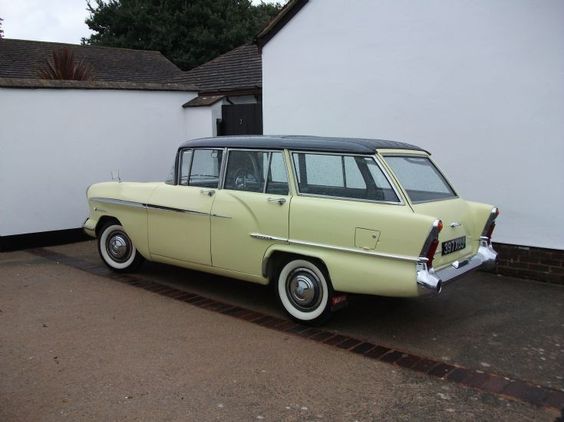
Sometime back in the fifties Mom’s uncle and the family lawyer Bunty Bland needed to go up to Rhodesia – ‘up north’ – to sort out the sale of his sister’s property. His Rhodesian brother-in-law drove down to Harrismith to fetch him. As ever, the finer details of my story should be checked out . . . pinch of salt. The car is probably right, the country – now Zimbabwe – is certainly right, and two of the people – Dad and Bunty – are right, that’s all I know. At first Dad said they drove up in Bunty’s Rover, but I couldn’t find a Rover station wagon. Seems they left ‘that sort of thing’ to Land Rover. I found this Vauxhall Victor station wagon and then Dad remembered it was the bro-in-law’s car and yes, it was a Vauxhall! Memories! Dodgy things.
The reason they took young Pieter Swanepoel, husband of favourite niece Mary, along was to share the driving. He says he ended up driving all the way there and back.
With him he had his new Eumig 8mm cine camera! He took footage of the ruins of the magnificent Great Zimbabwe. Bunty features in his trademark ‘fairisle’ sleeveless jersey . .
Other footage featured the Vauxhall, Bunty again and some fountains . .
Miss Underwood taught Mom Mary to play the piano and taught her very well; she then also taught big sister Barbara to play and taught her quite well, too; in my imagination this set off the following family discussion:
Let’s send little Kosie to her as well! He’s such a delicate little chap. If he also does well Sheila will want to follow and then we’ll have four musicians and we can start a band, maybe name it after some insects and become RICH!
Don’t laugh. This was ca.1959 and John, Paul and George were still The Quarrymen. Ringo hadn’t even joined them. There was a gap in the market.
I was duly dispatched to the old spinster’s house in Stuart street, right on the pavement, and suffered some torture of the ‘put this finger here and that one there’ kind; and then worse: ‘Take this home and practice it.’ One lesson, in my rugby kit, then I escaped and ran home, never to return.
When the next lesson time came around Barbara called me to the black bakelite phone in the long passage at 95 Stuart street. “It’s Miss Underwood!”
Yes Miss Underwood; Yes Miss Underwood; Yes Miss Underwood
Miz Zobbs was scathing: Why can’t any of you whistle? Listen to Claudio! HE can whistle. Show them Claudio. It takes a boy fresh from Italy to show you lot how to whistle!
Poor old Claudio Bellato dutifully pursed his lips and tootled some Italian to show us how it was done while probably thinking . . Mama Mia, Dora. You Don’t Pronounce My Name Clawed-ee-oh.
See?! *SNIFF* *SNIFF* You see! shrieked the old duck, sniffing loudly and wobbling alarmingly.
Dora Hobbs, snuff-sniffing tour de force of Harrismith Volkskool could rampage. She would march up and down like a galleon in full sail, never happier than when commanding a choir.
She stopped us in mid-song once to berate us: How many of you can say that!? Huh? How many of you can say you’ve fought and won!? she demanded.
Us ten to twelve year-olds stared at her blankly. What was she on about? Did she think we actually thought about the kak we were singing? Weird.
.We’d been singing:
There was a soldier, A Scottish soldier
Who wandered far away, And soldiered far away
There was none bolder, With good broad shoulder
He’d fought in many a fray, And fought and won
How many of you can say you’ve fought in many a fray? she brayed.
Jeesh!
– foughting and fraying –
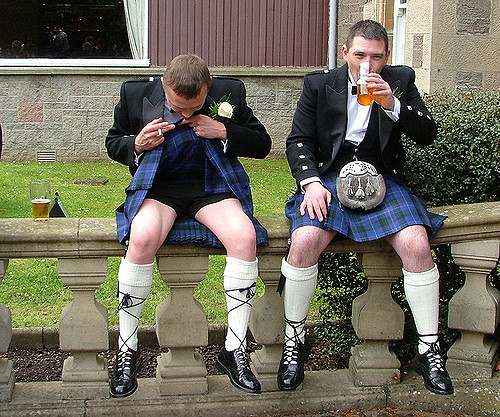
Dripping disdain and snot, with snuff stuck in her nose hairs, her moustache, on her glasses and on her ample bosom, she’d close her eyes, toss her head and mince around on her toes like a bulk ballerina. I think she was living in another world. When she opened her eyes and saw not dashing broad-shouldered soldiers in kilts, sonder underpants, wanting to woo the wee svelte lassie inside her, but instead snivelling pint-sized Vrystaters who would rather have been anywhere else in the dorp other than in “singing,” her mood probably grew dark.
Anyway, she probably didn’t know we fought of something totally different when she said ‘fray’ – and no we hadn’t done that either. Yet.
– Hobbs with a girls choir – the girls probly weren’t asked if they’d fought and fray’d – – nor if they’d fought about fraying –
She could be vicious, too, I’m afraid. She beat Dries and Alvaro mercilessly when they irritated her. Across the shoulders, on the top of their heads, stalking them from where she sat behind us. Face-to-face she would smash the heavy 40cm wooden ruler on their fingertips. She was rooted in Olde English educational methods:
A. Find out what a child cannot do; and then . .
B. Repeatedly demonstrate that he cannot do it;
Stand him up in front of the class and order him to do that thing that you know he cannot do; HUMILIATE HIM; followed sometimes – depending who the child was – by . .
C. a public beating.
A bad show, really, even granting that having Std 1, Std 2 and Std 3 in one class was probably not easy. Still: Not right. 26 kids in a class is far from the most anyone ever taught. She picked on the vulnerable. I suspect she knew none of their parents would challenge her on their behalf. Nor would the headmaster. Others of us never got touched; never even a harsh word.
– tiny Alvaro seated right in front of the formidable Hobbs –
~~~oo0oo~~~
Years later I read a review of what James Joyce had written when his character’s knuckles had been viciously beaten by a sadistic Catholic priest in front of the whole class. I found it now:
Stephen knelt down quickly pressing his beaten hands to his sides. To think of them beaten and swollen with pain all in a moment made him feel so sorry for them as if they were not his own but someone else’s that he felt sorry for.
Stephen – the character in Joyce’s novel A Portrait Of The Artist As A Young Man – reported it to the rector and got at least some satisfaction and admiration for being bold enough to defy convention and make the cruelty known. In Harrismith Volkskool no such justice was done; nor even attempted, to my knowledge; no-one brave enough, me included; no-one believing it was any use to expect any justice or fair play.
~~~oo0oo~~~
volkskool – primary school
fought – thought
fray – battle, skirmish; In Afrikaans: vry, more like woo, or necking, or kiss, make love, first fumblings;
kak – shit
sonder – without; as in sonderbroek: without underpants
Vrystaters – citizens of the Free State; which was anything but
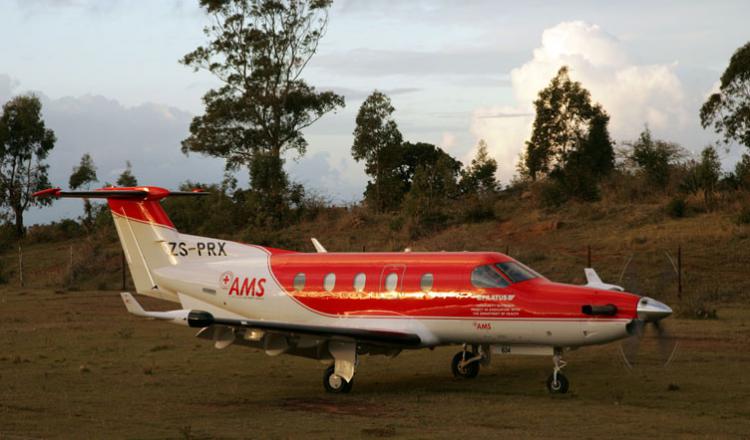
Scottish doctors. A delightful lot. The female of the species that is; I prefer them female. The guys with their kilts, beards and medical sporrans full of scalpels and aspirins, not so much. I mean, how do they scrub up with all those areas to disinfect? No thank you, give me the ladies. A few years before I had fallen deeply in love with a Scottish doctor (see Scotland the Brave) and now I was told as I got onto the Pilatus ‘flying doctor’ aircraft something like the one above, probly a PC-6 or 7 STOL craft, to fly to Charles Johnson Hospital in rural Nquthu, that a Scottish doctor – actually medical student, same as my topless surfing ‘doctor’ in Durbs – would be shadowing me to learn about eyes. I was the volunteer optometrist on this ‘flying doctor’ trip.
Before we landed outside Nquthu, we flew low over a small ragged-looking airstrip with an old Dakota parked near a big double-story homestead. Our pilot told of a famous inyanga or sangoma who got so well known and in such demand that he had to travel all over. Like house calls. Eventually road travel was no longer feasible, so he got a Dakota and a pilot to extend his reach. I’ve searched for him now, but can’t find anything about him on the ‘net! I’ll keep searching, his sounds like a fascinating story. Meantime, I’ll fantasize:
As I was settling in and unpacking my equipment in the Charles Johnson hospital outpatients department . . .
. . a whirlwind blew in! My Scottish doctor student! She was six foot tall, her smile was six foot wide and she demanded in a broad Scottish accent: “Teach me about eyes!” She was like this:
What a lovely day. We tested plenty eyes, talked non-stop, had lunch together and once again I fell in love with a Scottish doctor! Sadly she decreed dreadlocks would not suit me. To this day I think she was mistaken. They could have provided much-needed cover-up in the middle at the back.
–oo0oo–
The pic is not my second Scottish doc, just as the numbis in the last post weren’t that Scottish doc’s. It’s of a Scottish student who reminds me of my doc who, like her, was born in Edinburgh of Nigerian parents.
sangoma – a practitioner of ngoma, a philosophy based on a belief in the amadlozi – the ancestral spirits;
inyanga – concerned mainly with medicines made from plants and animals;
numbis – breasts
–oo0oo–
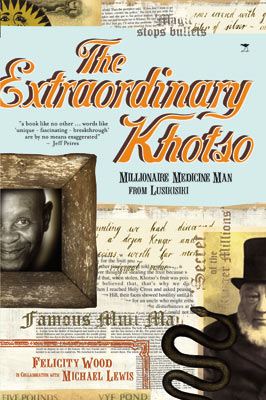
While I search for ‘my’ sangoma, read about this one that Hugh Raw reminded me about; from the fascinating village of Lusikisiki, home of the Shy Stallion Shebeen, which serves good cold beer in quart bottles:
–oo0oo–
So pleased to confirm again that I ain’t imagining this shit! My mind is strong, my memory faultless, my exaggerations few and low-key. Hugh Bland, photographic historian, river paddling mate and fifth cousin, tells me thus: Your info on the Nyanga at Nqutu is correct, but I can’t add any more info than you have. His house or mansion is on the right about two kms outside Nqutu coming from Dundee. See?
So, who’s Charles Johnson?
Charles F. Marquart Johnson was a transport rider who became a teacher who became a priest who became a bush dentist. Opportunist, perhaps? After the the Anglo-Zulu wars he decided to stay on in Zululand, having apparently been asked by one of the chieftains, Hlubi, to be a teacher. He became a priest, then archdeacon of the area. With the nearest medical facility being at Dundee, a difficult 52 km journey away, he also involved his mission station at Masotsheni in helping the local people with their medical problems. He was, by Anthony & Margaret Barker‘s account – they ran the hospital for years – a formidable holy tooth puller. Headache? Here, lemme pull out a tooth. Open Wide . .
Anthony & Margaret Barker
Anthony Barker had a lovely isiZulu nickname: ‘Umhlekehlatini‘ – ‘He laughs in the forest’ – referencing the frequent laughter that emanated from his bushy beard.
The Barker’s mobile clinic 1960
On another eyeball mechanic mission, I flew to Centocow to test eyes, and landed on that airstrip with the spectacular dropoff at the end
Two delightful Scottish medical students arrived at Addington hospital. They were here to “do their elective” they said. We didn’t mind what they were doing, we were just happy they were in Darkest Africa and drank beer. Always a better chance if a lady will drink alcohol.
One of them asked me if I surf, which is a terribly unfair question to ask a Free Stater by the sea. It puts great pressure on us and reveals our secret fear of that-big-dam-that-you-cannot-see-the-other-side-of. Ask us when there’s no sea within miles and we can tell a good story, but the sea is right on Addington’s doorstep. “Even better,” I said casually, leaning against the bar in The Cock and Bottle on the first floor of Addington doctors’ quarters and gazing down her decolletage, “I paddle-ski.”
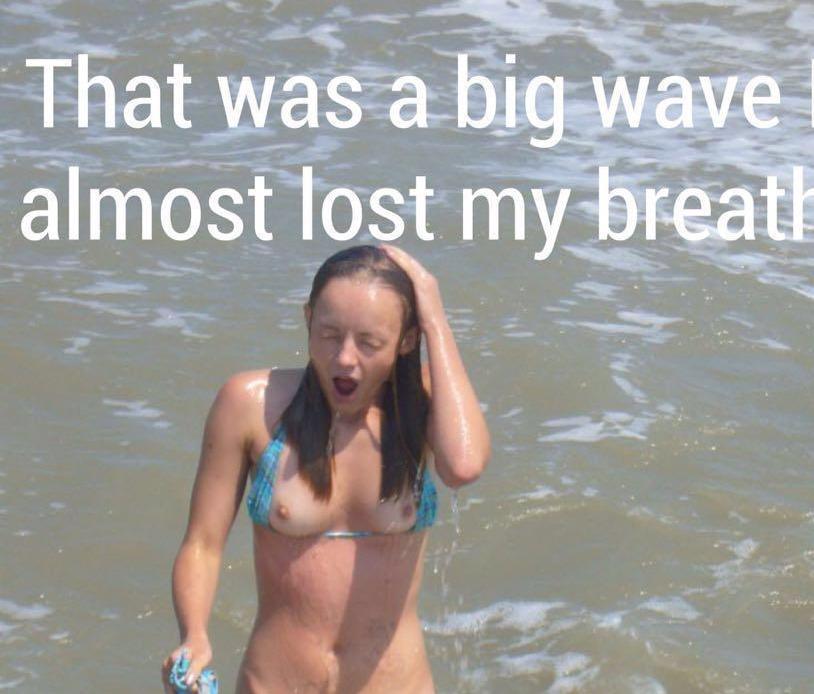
Ooh, will you show me? she asked, which put great pressure on me. “Come to my flat in Wakefield Court after work,” I ordered and she meekly nodded. Wakefield was part of doctors’ quarters, over the road from the hospital. Next day after work I hared off to Stephen Charles Reed’s flat in 10th Avenue and borrowed his Fat Boy paddle ski, threw it in my green 1974 Peugeot 404 station wagon OHS 5678 and hared back to Prince Street in time to casually say, “Hop in,” as she arrived. Addington beach was right there and I proceeded to give lessons in the surf. Little did she know it was like the drowning leading the drowned. I’d help her on, hold her steady, time the waves and say “Now! Paddle!” and she’d tumble over like a Scottish person in the warm Indian Ocean, time and again. One wave was better than the rest, nicely obliging and kindly masculine, and it did something like this:
Marvelously, she didn’t notice for a while until I blurted out “God you’re gorgeous!” Following my grinning gaze, she giggled and hoicked her boob tube top up over her boobs from where it was sitting around her waist. *Sigh*
Greg Seibert arrived in Harrismith from Ohio in 1972 as a Rotary exchange student.
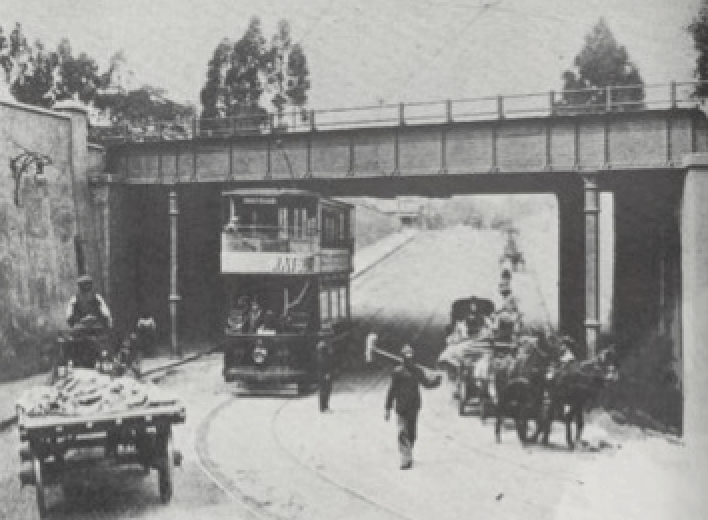
In 2014 he was sending sister Sheila some of his pictures from those wayback days. He wrote: Here is one I’m sure you will like. It is one of the very first pics that I took in Harrismith, probably the day after I got there. You or Koos took me down to the field hockey field. I remember people saying it was by the subway. Boy was I impressed! The only subways that I knew were the underground trains in London and New York! Imagine little Harrismith being so advanced as to having one of those!
The feature pic and this pic are not the Harrismth subway, but do give an idea of what it looks like. I’m looking for some actual pics of our illustrious subway.
Three Norwegians in Witsieshoek were homesick and probably horny. They longed to go home to Norway, so they rode their horses to Port Natal, bought a ticket on a sailing ship and off they went, right? Actually not.
They decided they would build their own ship in the veld on their farm Bluegumsbosch in the shadow of Qwa Qwa mountain, load it onto an ossewa, trundle it to the coast and then sail themselves to England, seeking – and finding – huge publicity all the way. The huge publicity was because everyone knew it couldn’t be done. They were going to drown in a watery grave and everybody TOLD them so.
As always: pinch-of-salt alert. This is me talking about history that I have read a bit about. A little bit of knowledge . . . you know. For actual facts and a lot more fascinating detail, including how their boat amused the Laughing Queen (Victoria herself, who actually ended up buying it), rather read Harrismithian Leon Strachan’s highly entertaining book Bergburgers which illustrates clearly that Harrismithans are amazing and wonderful people, we are. More amazingly, some people apparently are unaware of that fact.
For starters, Hello! what do you build a ship of when you’re living on the vlaktes un-surrounded by trees, just grass? Grass is no good, mielies are no good and ferro-cement has not been invented yet.** The few trees you have are the bluegums the farm is named after, can’t use those, what would you call the place? and some small poplars you planted yourself on the bottom end of your werf ; and poplar wood is no good for keeping water out for long enough to do the Atlantic. And these okes want to do the Atlantic. Now I’ve no doubt they were drunk. I mean, join the dots: Three males, tick; Norwegians, tick; In the Vrystaat, tick; Lonely, tick. They were drinking alright. They were a bit like ignoring the perfectly good bus that runs from Pietermaritzburg to Durban and running there instead; Wait! Some fools did do that some thirty years later and called it the Comrades Marathon.
Turns out there are trees in the Vrystaat if you know where to look: In the shady, damp south-facing kloofs there were some big old yellowwoods, excellent wood for ship-building if you’re inclined to build ships. So they didn’t use those. They ordered wood from America. I know! Mail order! But apparently this is true. Somewhere in America a pile of pitch pine beams and planks got addressed to c/o Ingvald Nilsen, farm Bluegumsbosch, foot of Qwa Qwa, Witsieshoek, near Harrismith, Oranje Vrijstaat Republiek, and put on a wooden ship. Which crossed the Atlantic, got loaded onto an oxwagon in Port Natal and schlepped across Natal, up the Drakensberg, turned left at the bustling regional centre, transport hub and rooinek metropolis of Harrismith and were delivered: ‘There you go, sir. Please sign here that you received in good order.’ Amazon se moer.
Up the Drakensberg to Harrismith village; Left to near Qwa Qwa mountain
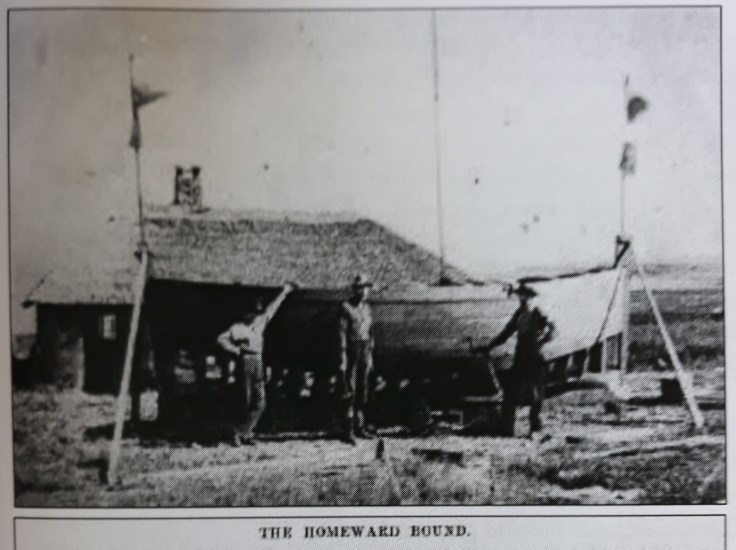
So how big do you build a boat you want to sail 10 000km in, knowing the sea can get lumpy at times? Are you asking me? 362m long, 23 stories high, 228 000 tons, sixteen cocktail bars, a massage parlour and better airtight compartments than the Titanic had, please. If you were asking me. Cos I don’t swim in the sea. No, but seriously, this is twenty seven years before the Titanic set sail, and you’re building it in your farmyard in the Free State. Like this: (note the absence of surrounding forest)
Now hey! Don’t laugh. Read on to see how the Harrismith-built boat fared, and read up how the Belfast-built Titanic fared! Both were trying to cross the Atlantic for the first time – just wait and see who did it better! The rich Poms, or the Harrismith ous. Find out.
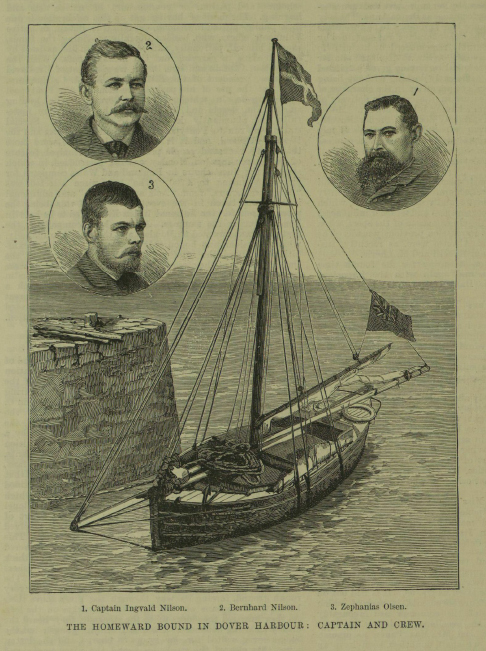
The Nilsen-Olsen craft was 6,7m long and weighed about two tons. They called it Homeward Bound, though they were actually aiming for England. Seems Nilsen had become very British. He had signed up with Baker’s Horse and fought for Britain in their wicked Anglo-Zulu War in 1879. He knew all the hoopla would be in English language newspapers cos the hele wêreld was Engels back then. In Harrismith where the Chronicle was already chronicling, Pietermaritzburg where the Witness was witnessing, Port Natal / Durban and in England. So shrewdly, Nilsen capitalised on that publicity.
All along the route people would look in amazement and offer advice (‘You’re never gonna make it’) but whenever he could – in Harrismith, Estcourt, PMB and in Durban – Nilsen isolated the boat and charged people a fee to view it and offer their opinion (‘You’re never gonna make it’). He raised so much money this way that in PMB he wrote: ‘. . had not the weather been unfavourable, we should very nearly have cleared our expenses, so general was the interest in the boat.’
In Port Natal the coastal people really REALLY knew these inland bumpkins were never going to make it and made it so plain that it gave Nilsen great pleasure some months later to enter in his log: ‘ . . sighted Ascension; this we found, in spite of what people said in Durban, without the least trouble and without a chronometer.’ Seat of their pants.
Long story short – we won’t bother about details like navigating, surviving, hunger, etc now that the Harrismith part is over – they made it to Dover in March 1887 after eleven months, a journey that took passenger ships of the day around two to three months*. Nilsen sold the boat to the queen, who displayed it in the new Crystal Palace exhibition hall; he wrote a book with the natty title, ‘Leaves from the Log of the Homeward Bound – or Eleven Months at Sea in an Open Boat’, went on speaking tours where he was greeted with great enthusiasm, married a Pom, became a Pom citizen and lived happily ever after. I surmise. Or as happily as one can live married on a small wet island after living as a bachelor on the wide open Vrystaat vlaktes.
Greeted with great enthusiasm, yes, but this was after all, England, so not all were totally enamoured. One commentator harumphed: ‘ . . Their achievement is a magnificent testament to their pluck and endurance, and one can only regret that such qualities have not found some more useful outlet than the making of a totally unnecessary voyage.’
Here’s a post on Acton Books about the Homeward Bound and Crystal Palace. Do read the fascinating comments, where people who know more local detail add what they know about this saga.
~~oo0oo~~
What’s 362m long, 23 stories high and weighs 228 000 tons? – That’s the Symphony of the Seas, biggest passenger ship afloat as at Feb 2019. Anything smaller won’t get my hard-earned cash.
veld – savanna; no place for a sea-going shiplet
bergburgers – citizens of the mountain; Harrismithians
ossewa – ox wagon.
vlaktes – plains; not where you’d sail a 2-ton wooden boat
mielies – maize; corn
werf – farmyard
Oranje Vrijstaat – Orange Free State, independent sovereign state; President at the time was Sir Johannes Henricus Brand, Most Distinguished Order of St Michael and St George, abbreviated GCMG ***
hele wêreld was Engels – Poms can’t speak any other languages, and the Pound Sterling was strong, and the Breetish Umpire stretched far n wide
Sources:
Bergburgers by Leon Strachan; Tartan Boeke 2017 – ISBN 978-0-620-75393-7
3. A Spanish blog with pages from the book dealing with their tribulations in Spain – a month on land which was arguably the toughest part of their journey!
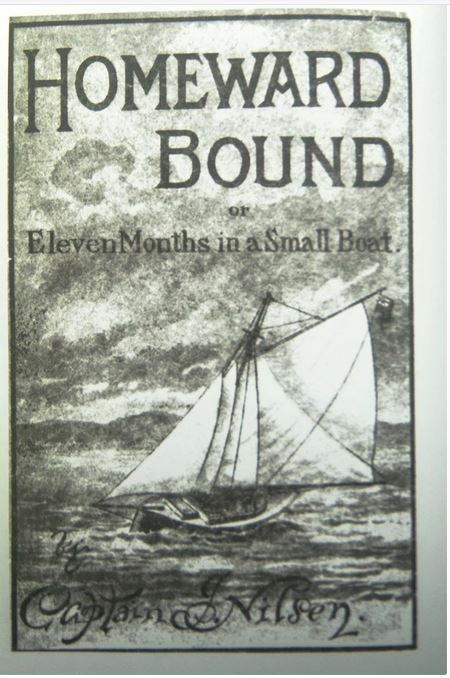
4. Nilsen’s book ‘Leaves from the Log of the Homeward Bound, or Eleven Months at Sea in an Open Boat’. Here’s a reprint with a snappier title:
The book sold well; this later edition had a shorter title
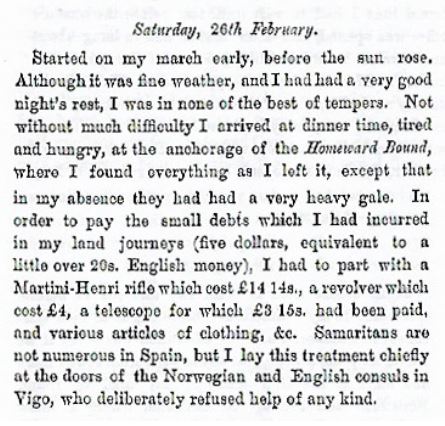
Two pages from the book: Arriving in Spain and walking in Spain looking for food or money or any help!
~~oo0oo~~
* The Lady Bruce, one of the twenty ships that brought Byrne settlers from the UK to Natal, arrived on 8 May 1850. The record says ‘their passage was a speedy one of 70 days.’ – Natal Settler-Agent by Dr John Clarke, A. A. Balkema, 1972. By 1887 the average time may have been shorter?
~~oo0oo~~
** Amazingly, I was wrong! Ferrocement boats had been invented forty years earlier, in France!
*** Enlightenment from the satirical British television program ‘Yes Minister’ season 2, episode 2, ‘Doing the Honours’:
Woolley: In the civil service, CMG stands for “Call Me God”. And KCMG for “Kindly Call Me God”. Hacker: What does GCMG stand for? Woolley (deadpan): “God Calls Me God”.