A. Ross & Co. General Dealers in Harrismith had gone phut, sold out to OK Bazaars. Their big old building was being gutted. Dad enquired about the ‘pressed steel’ ceilings* and was told ‘You can have the ceilings gratis if you strip them and remove them within a week.’
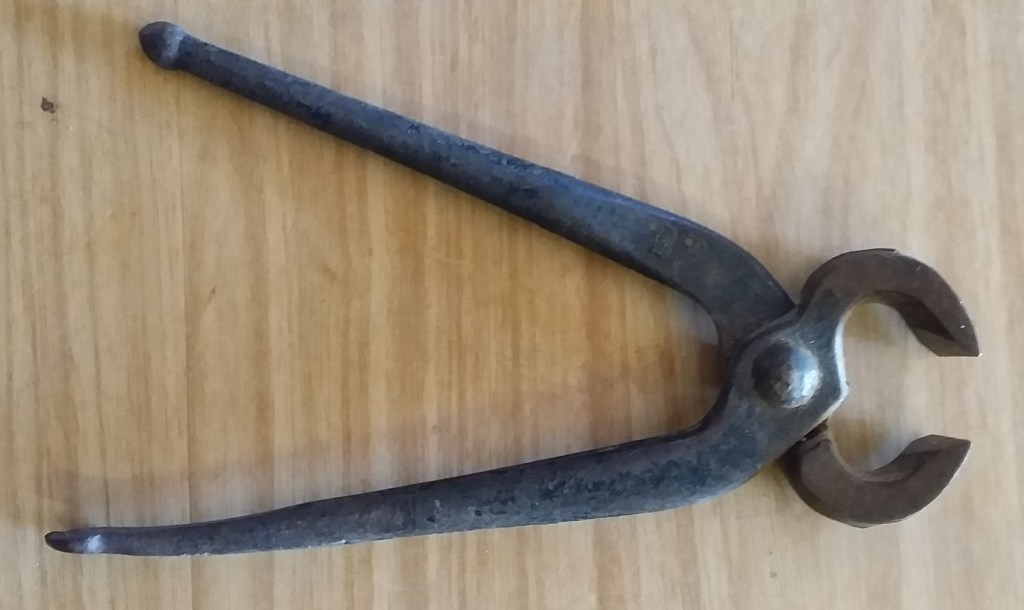
He bought six ‘nail puller pliers’ like these, and ‘did it himself’ (SA-style):
. . by hiring six men (not that he used a decent word like men), having them take down the panels, scrape them down, scrub them with wire brushes and seal them with clear varnish; then they painted them with a mix of glossy and matt white paint to get a lovely finish: not shiny, not dull.
He put them up in our huge lounge, our long passage and our spacious dining room of the old house at 95 Stuart Street.
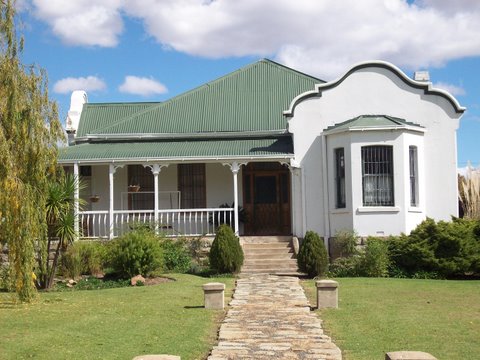
Old family home 95 Stuart Street Harrismith
He sold the excess panels to someone in JHB who paid and fetched.
Dad says while he was fitting them, Ouma paid us a visit from PMB. She would sit up with him as he worked till late at night. When it got late she would encourage him to stop: ‘Kom my seun, nou moet jy gaan rus. Gaan slaap nou.’
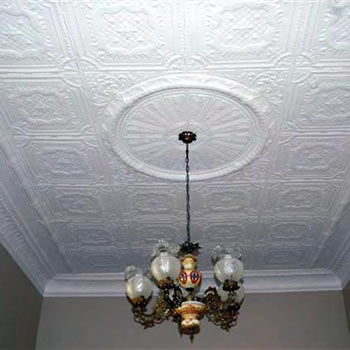
I’ve no pics of the ceilings . . . The feature pic and these are from the ‘net. They give a good idea of the look. Wait! See below . .
When I was taking pictures of his old tools I lined up these pliers and he said ‘Oh, those aren’t old. I bought them.’ Yeah, I laughed; Like fifty years ago! He saw the humour in that.
~~oo0oo~~
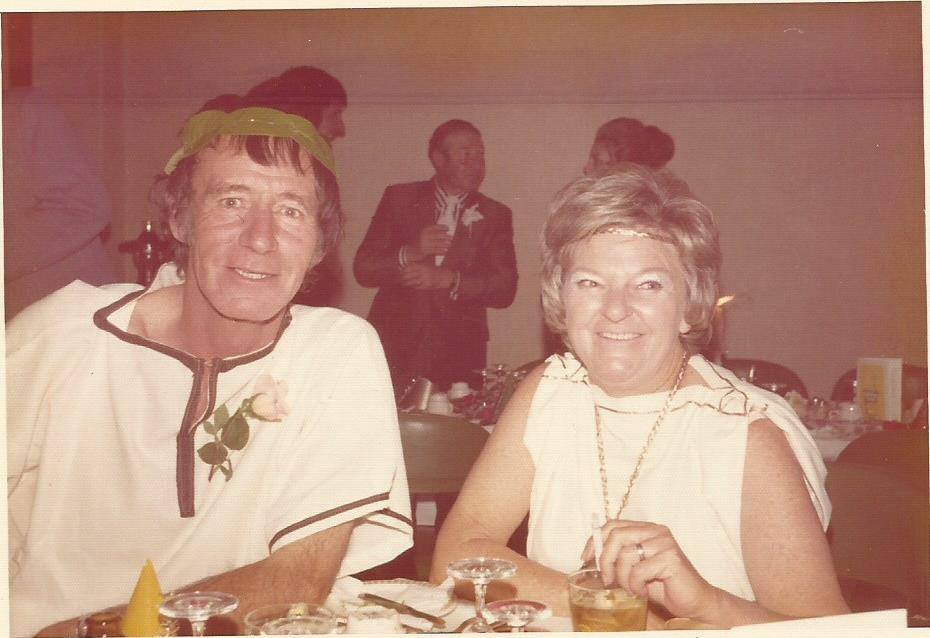
Sheila found pics of the lounge ceiling – a lovely pic of a gathering of friends on the occasion of Mom’s 45th birthday!
– members of the choir gather together –
~~~~oo0oo~~~~
*Tin ceilings were introduced to North America as an affordable alternative to the exquisite plasterwork used in wealthy European homes. They gained popularity in the late 1800s as Americans sought sophisticated interior design. Durable, lightweight and fireproof, tin ceilings were appealing to home and business owners alike as a functionally attractive design element that was readily available.
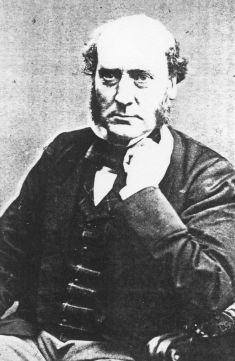
Important chaps like this one harumphed . .
. . that it was morally wrong and deceptive to imitate another material and blamed the degradation of society (on) the “art of shamming” rather than honesty in architecture. Oh well . . we weren’t going to invite him for tea to 95 Stuart street anyway.
Despite these old farts, tin ceilings were also popular in South Africa and in Australia where they were commonly known as pressed metal ceilings or Wunderlich ceilings;
Fresh from trying to drink an aeroplane dry we sauntered up to the car hire counter in the Atlanta airport and asked the lovely lady for a medium-sized American car. We had decided American cars were so big that a medium would be plenty big enough for the five of us. We got into our car, drove fifty metres – OK, fifty yards in America – and threw a u-turn. We sauntered back up to the car hire counter in the Atlanta airport and asked the lovely lady if we could swap it for a fullsize American car. She said, Sure Thing, I have a Lincoln Continental Town Car (check a review of the Lincoln at the end of this post!), Will that be good? We said if its fullsize and can take roofracks it’ll be good. Oh, No-one Puts Roofracks on a Lincoln Continental Town Car, she said, so we kept quiet. Diplomatically.
– Herve, me, Chris and Jurie with our 1984 Lincoln Town Car –
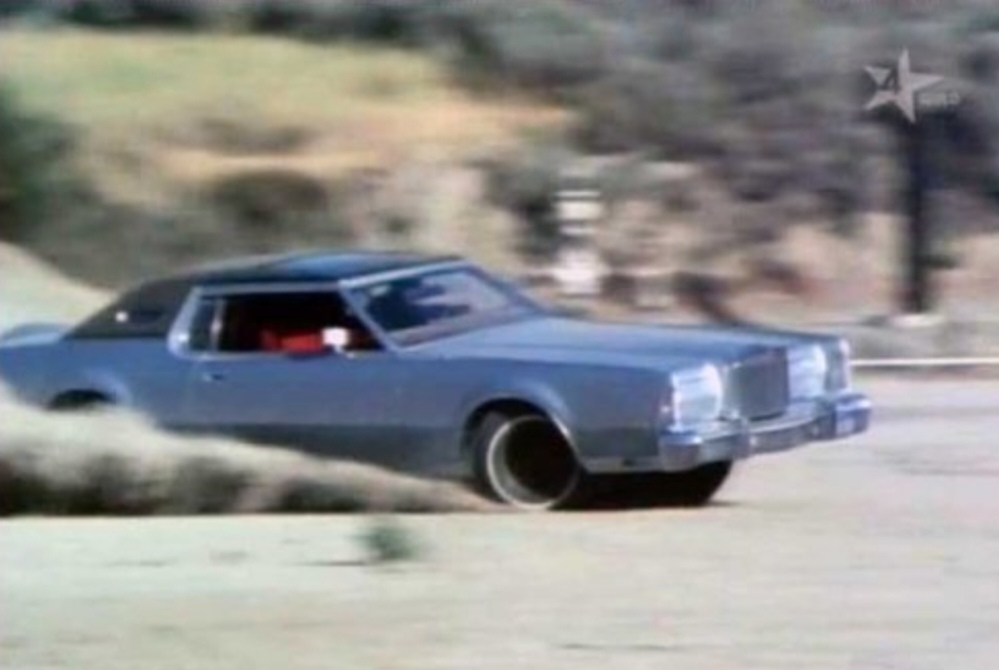
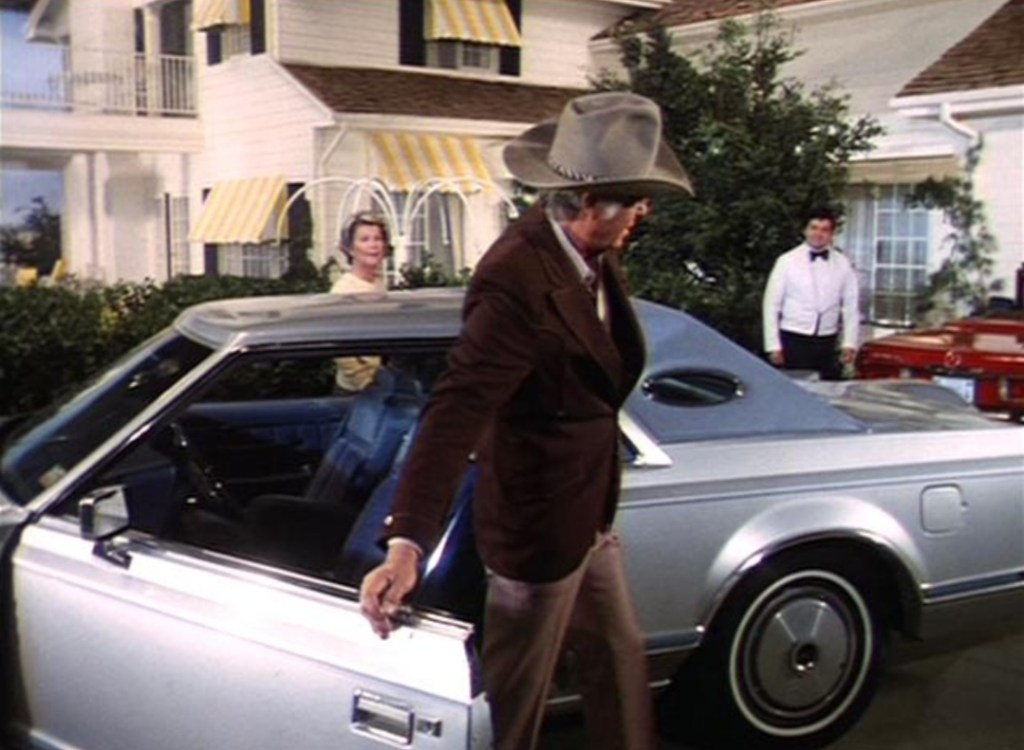
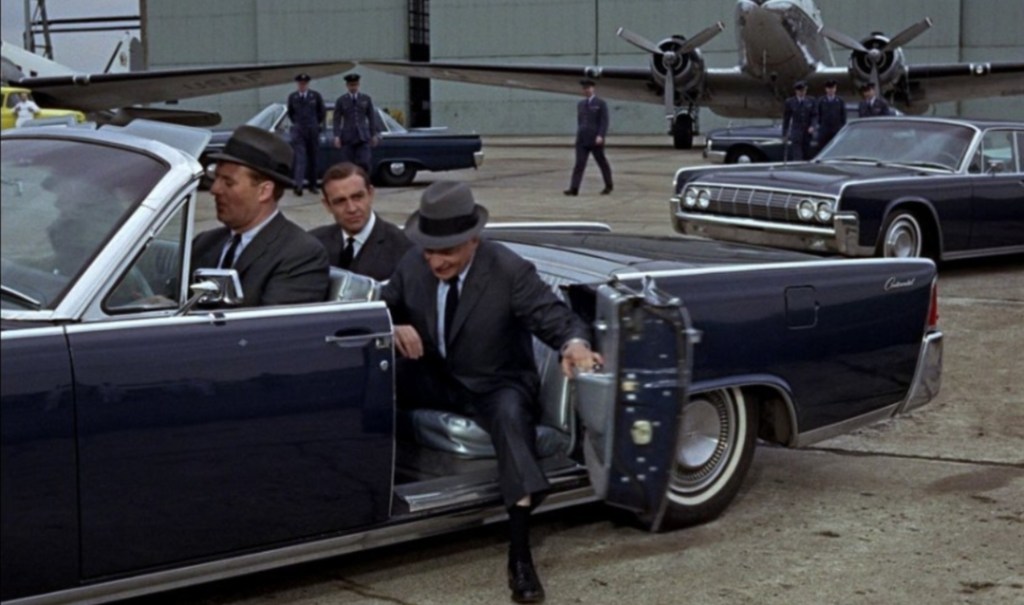
Now this was a car. A Lang en Slap car. This was like the one Fat Frank Cannon drove in the Cannon TV series; Jock Ewing drove in Dallas; Also Frank Sinatra and Jack Kennedy, but theirs were convertibles and we needed a roof.
– me, Herve, Dave, Jurie and Steve and the Lincoln with roofrack – which the rental lady said no-one would do –
Trip lead-stirrer Chris drove us straight to the outfitters to fit a roofrack. He’s a legendary kayaker who has his national colours and has won national and international kayak races. He’s also a military man and a dentist and a fine beer drinker. With roofracks on he drove us to his friend’s home where we to spend the night. Dave Jones is a legendary kayaker who has his national colours and has won national and international kayak races. He’s also a military man and a dentist and a fine beer drinker. True’s Bob, I kid you not – talk about double trouble!
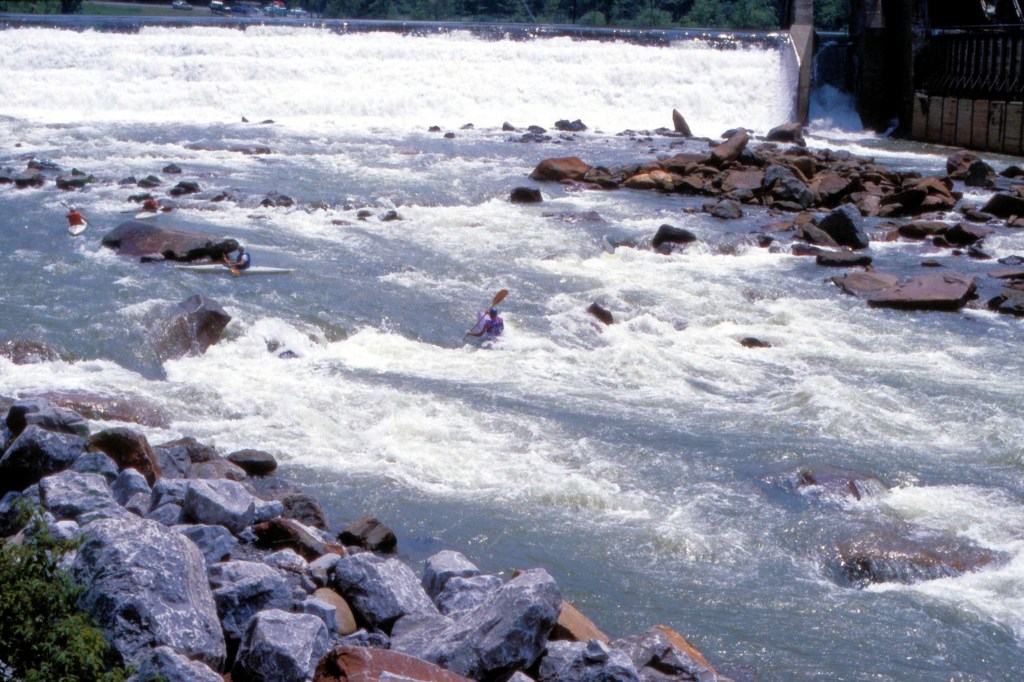
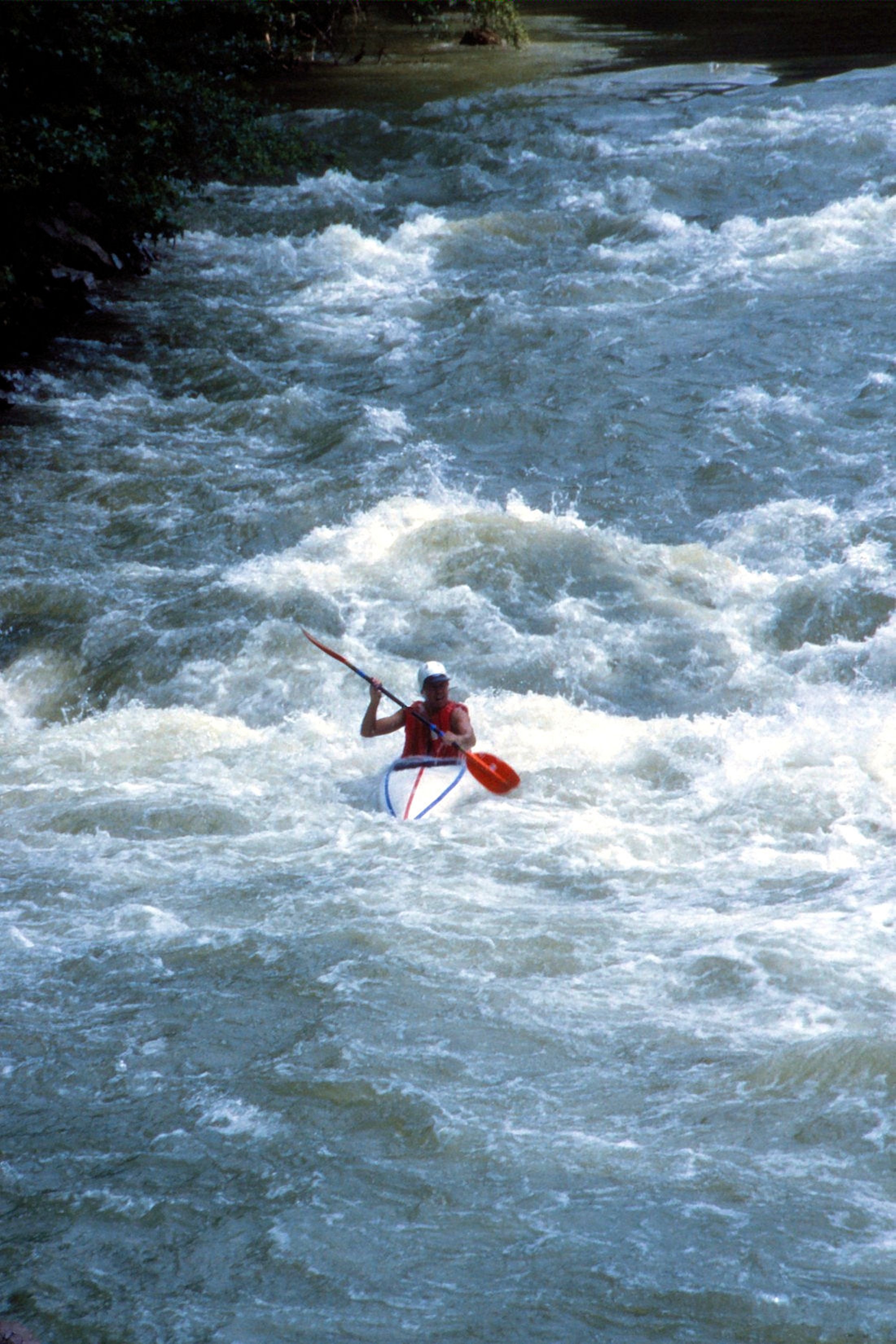
The next morning, after the hospitality of Dave’s home pub, we headed North to the Ocoee River in Tennessee. Which was completely empty. Not low. Empty.
Then they turned on the tap at twelve noon and we could paddle. The full flow of the Ocoee gets diverted to generate power! How criminal is that!? That it even flows occasionally is only thanks to hard lobbying by paddlers and environmentalists. From around 1913 to 1977 the river was mostly bone dry – all the water diverted to generate power. Now sections of it flow again at certain times.
I’m in orange.
Here’s a description of the short stretch of river we paddled:
The Middle Ocoee The Middle Ocoee is the portion of whitewater, on this stretch of water, paddlers and rafting enthusiasts, have been paddling for decades. Beginning at Rogers Branch and just over 5 miles long, this class 3-4 section of whitewater is an adrenaline junkies dream, crammed with waves and holes.
Entrance rapid gives you whitewater from the get-go. As soon as you launch onto the middle Ocoee you are in a class 4 rapid, paddling through waves and dropping ledges. It’s a fun and exciting way to begin your trip. Broken Nose begins with a large S-shaped wave. Swirling water behind it will send you to a series of ledges. This is a great place for pictures, so smile. Next, Slice and Dice: two widely spaced ledges, fun to drop, especially the second ledge. If done correctly, you can get a great surf here “on the fly”. An interesting and humorous set of rock formations highlights the rapid, Moon Chute. After making your way behind the elephant shaped rock, do some 360’s in front of “sweet-cheeks,” then drop through the chute and over the ledge at the bottom. Double Suck, an appropriately named rapid, where a good-sized ledge drops you into two hydraulics. Paddle hard or you might catch another surf here. Double Trouble, which is more ominous in name than in structure, is a set of three large waves, which will have everybody yelling. This is another great photo spot. You won’t find an easier, more fun rapid. Next is Flipper (No, it’s not named after the dolphin). Here, a great ledge drop puts you into a diagonal wave. Hit this wave with a right hand angle and enjoy the ride, or angle left to eddy out. Then enjoy one of the best surfs on the river. Table saw was originally named for a giant saw-blade shaped wave in the middle of it. The rock forming the wave was moved during a flood several years ago, making this one of the most exciting rapids on the Middle Ocoee. The big waves in this one will make the boat buck like a bronco. At Diamond Splitter, point your boat upstream and ferry it between two rocks. Once there get a couple of 360’s in before dropping through the chute and into the hydraulic.
Slingshot is where most of the water in the river is pushed through a narrow space, making a deep channel with a very swift current. To make this one a little more interesting, see how many 360’s you can complete from top to bottom. Cat’s Pajamas start with a couple of good ledges, with nice hydraulics. After those, it will look as though you are paddling toward a big dry rock, but keep going. At the last second, there will be a big splash and you will be pushed clear. Hell’s Hole is the biggest wave on the river. Start this one in the middle of the river, drifting right. Just above the wave, start paddling! When you crest this 7-8 ft. wave, you will drop into a large hydraulic. Stay focused because just downstream are the last two ledges known as
Powerhouse. Drop these ledges just right of center for a great ride. Once through Powerhouse, collect yourself and take out at Caney Creek.
–oo0oo~~
The dry river when they turn off the taps. Very sad:
Lang en Slap – American. We opened the bonnet – the hood – and stared in awe at the space between the grille and the radiator. It looked like we could have fitted all our suitcases in there!
Mary Craig married Alex Caskie; they had a daughter
Mary Caskie, who married John Francis Adam Bland; their eldest son was
Frank, who married Annie Watson Bain; their second daughter was
Mary Frances, who married PG Swanepoel; their eldest daughter was
Barbara Mary, who married Jeff Tarr; their eldest daughter was
Linda Mary, who married Dawie Pieterse; their eldest daughter was
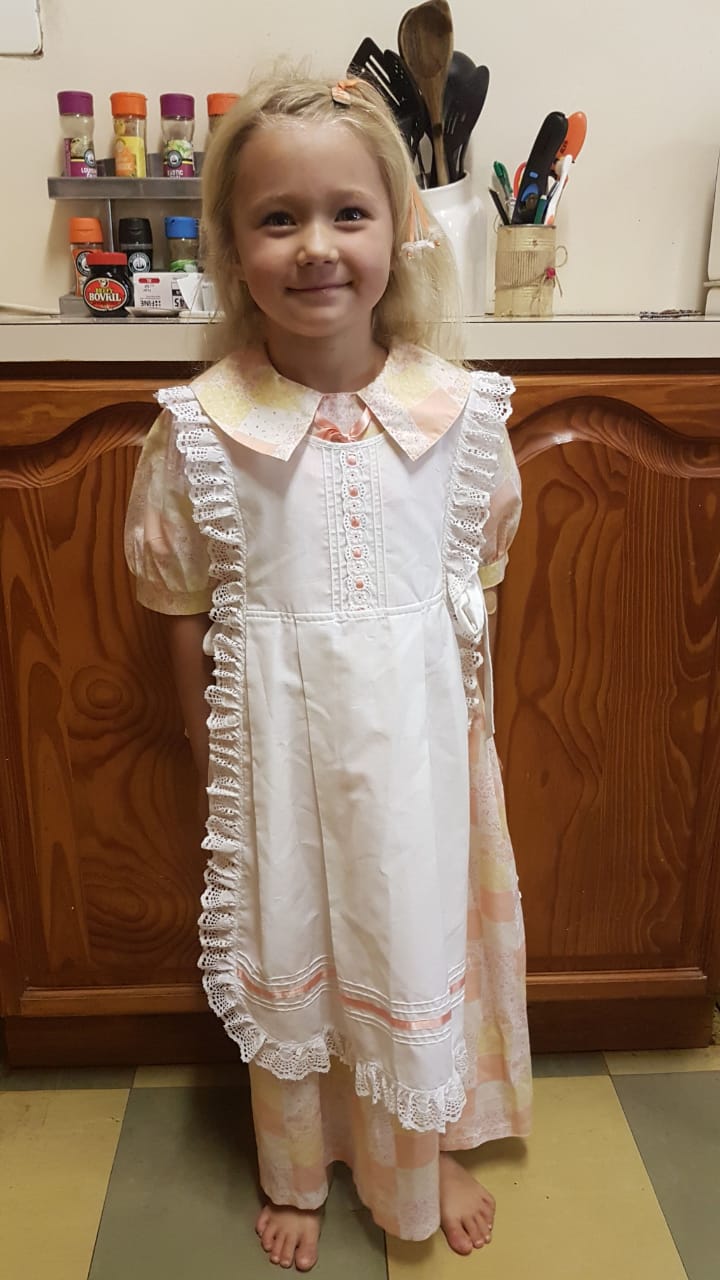
Mary-Kate, boss of the house, turning six this year!
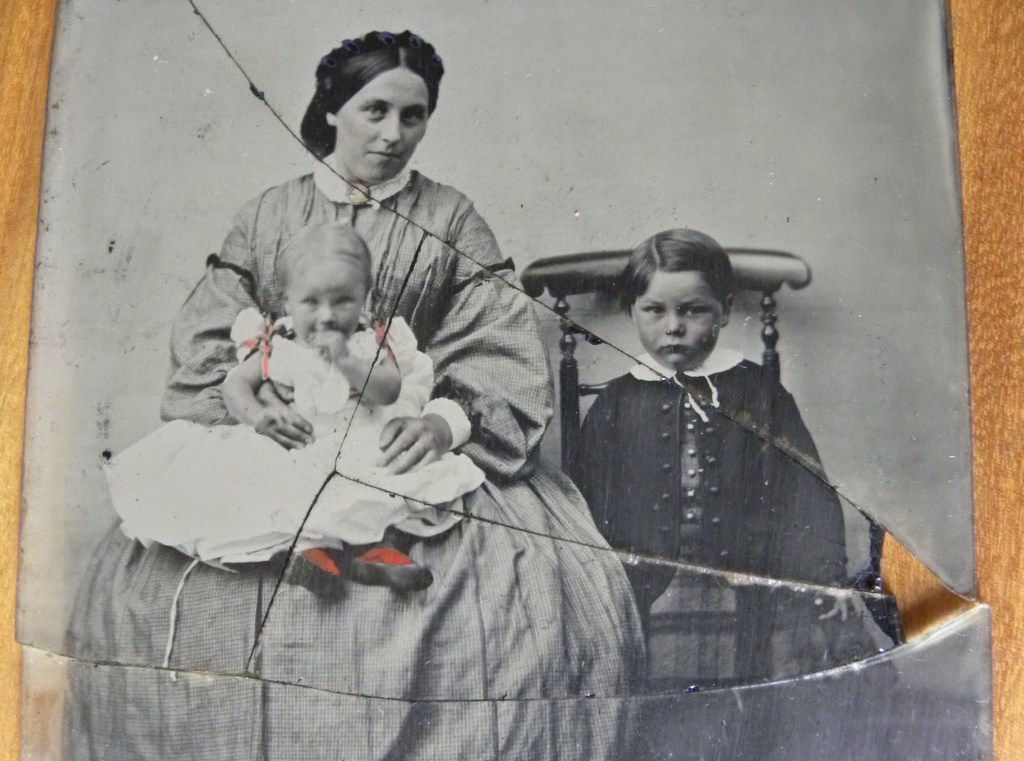
– Sheila has this old daguerrotype of Great-Great Gran Mary Craig and Great Gran Mary Caskie and a suspicious chap –
In this day of easy instant photography I find it fascinating to read how this image was made:
To make the image, a daguerrotypist would – 1. polish a sheet of silver-platedcopper to a mirror finish; 2. treat it with fumes that made its surface light sensitive; 3. expose it in a camera for as long as was judged to be necessary, which could be as little as a few seconds for brightly sunlit subjects or much longer with less intense lighting; 4. make the resulting latent image on it visible by fuming it with mercury vapor; 5. remove its sensitivity to light by liquid chemical treatment, 6. rinse and dry it; 7. seal the easily marred result behind glass in a protective enclosure.
The image is on a mirror-like silver surface, normally kept under glass, and will appear either positive or negative, depending on the angle at which it is viewed, how it is lit and whether a light or dark background is being reflected in the metal. The darkest areas of the image are simply bare silver; lighter areas have a microscopically fine light-scattering texture. The surface is very delicate, and even the lightest wiping can permanently scuff it. Some tarnish around the edges is normal. (thanks wikipedia)
~~oo0oo~~
Nowadays a few quick sweeps of free software Faststone and I can hide most of the cracks of the broken glass:
Who remembers the Canadian Hell Drivers performing in Harrismith? It did happen, right? I’m not imagining it? I think I remember white Chevs roaring around and jumping ramps, with a clown playing dangerous games among them. I think it was at the groot pawiljoen down in the park.
I asked Leanne Hilkovitz Williamson about Poccolan / Robinson’s Bush and this brought a flood of memories:
She takes up the story:
I was born on the farm De Nook which belonged to my grandfather Elias Hilkovitz and was inherited by my father Leo Hilkovitz after the 2nd World War probably round about 1945, two years before I was born.
Dad built Little Switzerland Hotel on the farm and we made pathways through the forest called Robinson’s Bush for guests to hike to various spots: The Wishing Well, Protea Plateau, etc. I named most of the spots, and one that meandered in and out of the forest edge I named Hilky’s Way after my grandfather who was affectionately known as Hilky.
We sold the hotel when I was in my early twenties but the various owners over the years have kept the use of the forest and the guests continue to enjoy its wonderful beauty – it is wonderfully exhilarating to either clamber down Breakneck Pass from the Wishing Well or climb up to it from the road below. The path twists and turns in amongst indigenous trees, true and mock yellowwoods, and lianas and ferns along the side of a stream full of huge beautiful boulders in all shades of grey & lichen & dappled shade. So one experiences the mountain air, the refreshing sound of the steam and always the melodious bird song. I particularly loved calling up the Mocking Chats and Natal Robins that mimic other birds and have a whole repartee of calls, copying them and they’d call back. A wonderful game that Dad taught me.
According to my father, Robinson’s Bush is the biggest natural forest in the Drakensberg. I wouldn’t take that as gospel. I’ve come to be a bit circumspect about those sorts of claims that locals all over the world tend to lay claim to!
Robinson’s Bush abuts on De Nook and we treated it as part of our farm. Dad looked after it although it is part of government nature conservation; at one stage in my late teenage years there were two nature conservation officers who lived in a hut on the edge of the forest and tended it but that did not last.
I was there for my 70th birthday in 2017 with my two sons and their families and we climbed up Breakneck Pass through the forest and I showed it to my granddaughters and taught them the things my Dad had taught me.
Some of my earliest memories are of picnics in the forest on the side of the stream with our neighbours Udo and Margo Zunkle of Cathkin Hotel fame when they lived on Windmill farm. Udo would put small pieces of raw steak on the river rocks and we’d be fascinated by the crabs that came from all sides to feast on it.
~~~oo0oo~~~
Leanne again later:
Hi Again
I put together a Power Point family history together for the family and we had an evening when Ishowed it to them. It started with the great grandparents on both sides and their cars and the farm in the very early days and the beginnings of the hotel and its growth as I grew up & went to HS Volkschool & then boarding school, varsity, etc. and then our children growing up and then finally the grandchildren from babies to present. I can never leave the farm & the berg for long & return there often – even if it is just up and down in a day – and I climb a mountain, drink in the soul food and return home refreshed, invigorated and together. The families also love it and visit but we have never all been there together at the same time & so took advantage of my 70th to ask this favour. So we stayed in the timeshare from 24-28 Dec & had a wonderful Christmas & my birthday on 27th. We had a wonderful time and I was able to share some of my favourite places & stories with them just this once as you know how short attention spans are when kids are having fun. Didn’t want to bore them!
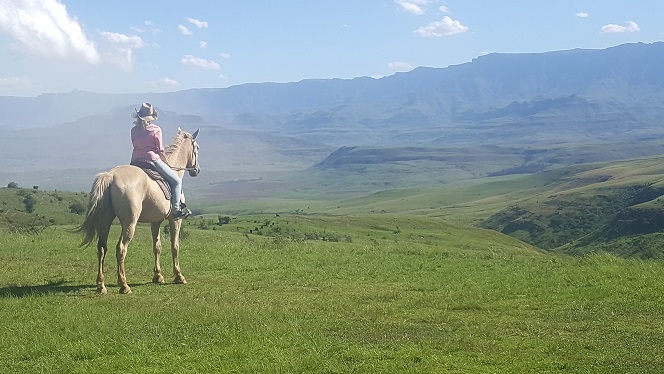
Pic of me on my birthday in my most favourite place in all the world.
~~~oo0oo~~~
Famous shenanigans: South Africa’s most notorious bank robber, Trust Bank robber Derek Whitehead, was arrested at Little Switzerland in 1971 at 3am on Friday morning the 14th of May. They had arrived at 4.30pm the previous day. A team of CID detectives from Johannesburg, the Orange Free State and Natal were involved in the swoop. After the arrest, the Whiteheads were taken to Bloemfontein for questioning
~~~oo0oo~~~
Drunken shenanigans: Omigoodness; You don’t want to know . .
~~~oo0oo~~~
Genealogy: Our Bruno the doberman was a Hilkovitz! Dad Pieter Swanepoel told me Leo came to town one day, called in at the Caltex garage and said ‘Come and look!’ On the back of his bakkie he had a bunch of little black pups in a box. Dobermans.
Dad chose one – he says he gave Leo a pocket of potatoes! – and we grew up with ‘Bruno’ – I only now found out he was a citizen of Little Switzerland! He grew up to be a handsome lad!
Mom and Dad’s big mates Hester and Steve Schreiber became Mr & Mrs Mayor and Burgemeester of the City of Song and Laughter, Harrismith OFS. A celebration was called for and hizzoner your worship Oom Steve decided to go big.
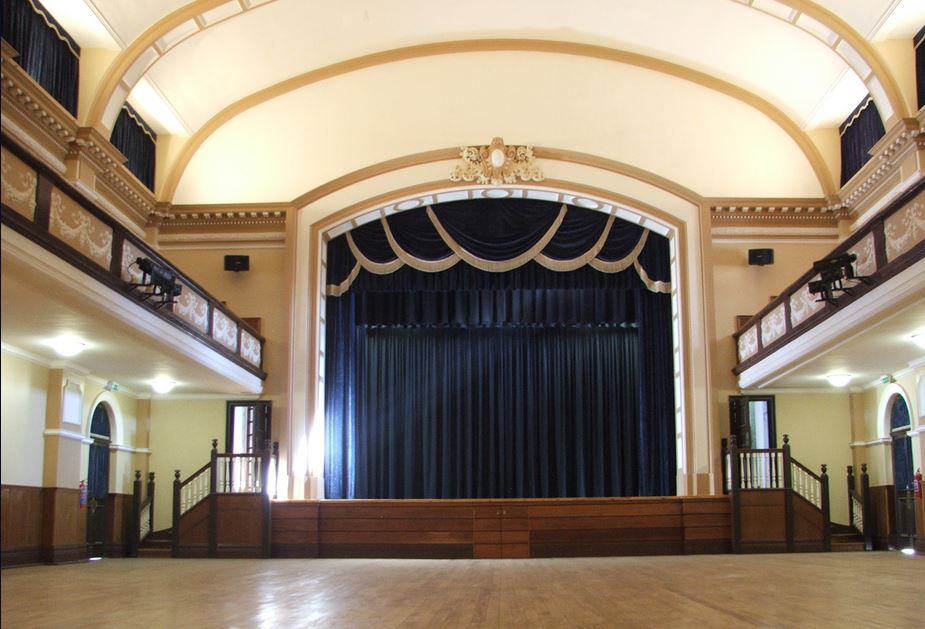
Not only would they use the huge and impressive stadsaal, they would get the new Holiday Inn to cater! They chose as their theme: Mexican! Edelagbare Mexican.
That may have been a continent too far for the dorp as, although they had a wonderful time thanks to the liquid refreshments, it was generally agreed the food was terrible. Much grumbling was heard, but the irrepressible Jack Shannon brought light relief when he said solemnly to his wife Joan: “Ma, next time we go on our around the world tour we must remember to give Mexico a miss!”
~~oo0oo~~
burgemeester – mayor
stadsaal – city hall; we always called it the town hall, though so dorpsaal
dorpsaal – town hall
edelagbare – like hizzonner, your worship, all the OTT shit politicians add to their names; it should be mercilessly mocked
First run in 1921 – or in 1926 ? – over 3200m for a stake of 2000 pounds sterling, the Gold Cup is Africa’s premier marathon for long-distance runners. It boasts a proud history and captures the public imagination. The race starts at the 400m mark in the short Greyville straight; there’s much jockeying for position as the runners pass the winning post for the first time before turning sharply right and heading towards the Drill Hall; normally many runners are under pressure before they turn into the home straight; the race is known to suffer no fools when it comes to fitness and stamina, and it takes a special type of horse and jockey to win the event.
And away they go!
Usually the final big race meeting of the South African racing season, the Gold Cup is often decisive in determining the Equus Award winners for the season. Initially a Grade 1 race, the Gold Cup was downgraded to Grade 2 in 2016 and to Grade 3 in 2017. Nevertheless, it is still the most important horse-racing marathon in the country.
– 1985 – Occult wins –
The distance and unforgiving conditions that prevail as the field go past the Greyville winning post twice, are great levelers and a look at the list of champions beaten in the Gold Cup is a long one, with less-fancied runners carrying less weight often winning.
Sun Lad won the first running in 1926. He raced in the silks of leading owner-breeder Sir Abe Bailey. The Gold Cup was one of just two wins for Sun Lad that season. He is frankly unlikely to be regarded as one of the race’s better winners.
The first horse to win the Gold Cup on two occasions was Humidor, who was victorious in 1933 and 1935.
And so to us:
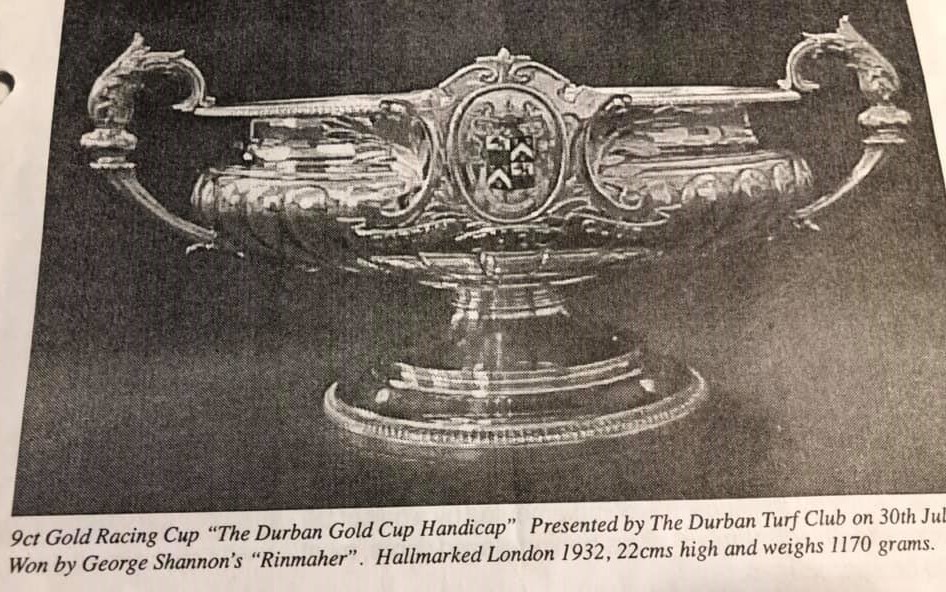
Harrismith’s winner was the horse Rinmaher (pronounced ‘Rinmahar’) owned by the George Shannons of Kindrochart. What year? Probably 1932 or 1934?
Mom and Dad both tell the story of raucous parties on the Shannon farm where at a suitably ‘sensible’ stage the Gold Cup would be taken off the mantelpiece, filled with champagne or whatever hooch was going, and passed around to the ritual comments from the more sober of “Here we go! We’re drinking moths and mosquitoes again!” At least it had lovely handles to give an imbiber a good grip!
– Jack Shannon on his Shetland pony ‘Suzanne’ on Kindrochart – with Peter Bell –
~~~oo0oo~~~
Later: Sheila rousted Colleen Walker, granddaughter of George Shannon, who straightened me out on some Gold Cup details. She even had an earlier pic of Jack and Suzanne the Shetland. More questions: Is that Kindrochart? Is that George?
~~~oo0oo~~~
May 2020 – Mom sent a message that I must phone her! She wants to tell me the full story of the brothers Shannon. Phone Me Soon does not mean that her cellphone will be on, or charged, or answered; so it was a full two days later I got hold of her;
And away they go! She took a deep breath and set off:
Jim and George Shannon left Ireland on a ship bound for South Africa. Somewhere on the journey they had a fight and fell out; They never spoke to each other again!
They reached Harrismith where they both became ‘rough riders’ – breaking in horses for the British army – I guess also for anyone else who wanted horses broken in and/or trained? Somehow and sometime, they both ended up as farmers, George on Kindrochart and Jim on Glen Gariff.
George married Mrs Belle Stephens who came complete with two daughters Betty and Bobby. Then they had a son Jack – some called him Jock – who also featured in our lives as a friendly, lean, handsome, side-burned, smiling, pipe-smoking, pickup-driving, genial figure in khaki. We loved Uncle Jack! He married Joan from Joburg – Mom Mary and her older sister Pat went to the wedding. Later Bobby married a mine manager and some people thought that was very important. Betty never married, stayed on Kindrochart, worked in town and became a beloved young-in-spirit ‘auntie’ of ours, always a smile and always a tease and some fun. We called her Betty Brooks.
Meantime Jim on Glengariff married Amy, and they had three kids, one of whom they named George, despite the feud ongoing! Maybe there was a prior ancestor George? Other kids were Marshal (died young, not sure what of) and Sylvia. George married Betty McGore and they had sons Jim and Patrick who we knew in Harrismith in the sixties. Handsome lads, Patrick maybe too handsome for his own good!
– Jack and Joan years later –
When the second of the original Jim and George died (I think it was Jim), Jack contacted young George, son of Jim, and said ‘We’re having a party. You and Betty should be there.’ And so a reconciliation took place and they normalised family relations. Up until then, their mothers Belle and Amy had been forbidden to talk to each other! She remembers that after a good few drinks and a meal and another good few drinks, the Gold Cup was taken down off the Kindrochart mantelpiece, filled with wine and passed around! George offered his wife Betty first sip and after a gulp she exclaimed ‘George! It’s full of moths and mosquitoes!’
~~~oo0oo~~~
No doubt there’ll be other versions of this tale – and much more detail. But this is how 91yr-old Mother Mary fondly remembers the story of these good friends from days of yore.
~~~oo0oo~~~
Elizabeth de Kock spotted this post and wrote:
This was so interesting for me to read. My grandfather, William Stocks, was a neighbouring farmer. We spent many holidays on their farm called Lust. We visited Aunty Betty often and enjoyed sitting on the big swing overlooking the dam. She gave us the use of a little grey pony (very naughty) to ride during our holidays. As children we got our blankets from her shop in Harrismith. The shop was an experience in itself. I’m 69 years old now and still have very fond memories of Aunty Betty.
I replied: Hi Liz – Thanks so much for commenting! Lovely memories! Betty was a lovely lady.
I’ll ask my mother Mary Bland Swanepoel (93) what she remembers about the Stocks family. I know I have heard her talk about the Stocks but can’t remember any detail.
Kind regards – BTW, I’m 66, my sister Barbara will 69 in January – maybe you remember her?
I phoned my Mom Mary Bland. She was tickled pink to reminisce about her friend! Here’s her tale:
She nursed with Margaret Stocks at the Harrismith hospital and they were great friends. She says Margaret wasfive years older and much bolder and naughtier than she was!
She once visited her on their farm at Lust. Margaret’s brother was there. Later, that brother was killed in a plane accident in the airforce. His plane wing clipped a sand dune. When she heard about it, Mary phoned Margaret to say, If you like, you can join me to mourn your brother. Margaret said, No thanks, we may as well stay here on the farm and be miserable together.
Margaret married John Reed, a farmer. A few years later, Mary took her two year old daughter Barbara and visited Margaret on the Reed’s farm near Belfast in the Transvaal. (I wasn’t born yet, so this was probably early 1955). One day he was lying in the bath and Barbara wanted to go and see him. Margaret said ‘No my girl, you’ll have to wait another twenty years for that!’ Once in Harrismith, Margaret called out the houseman on duty for her patient. When he didn’t arrive, she sent her junior nurse (who she called ‘Ginger Biscuit’) to call him. The nurse found the houseman in bed with the matron. He had to leave town.
Those were Mary’s memories of Margaret Stocks!
Liz Kibblewhite wrote again:
I was brought up on a gold mine just outside Krugersdorp and went to Lust during school holidays. If I remember correctly, Jury Swart was a neighbouring farmer to my grandfather William Stocks.
The last time I saw Aunty Betty was in 1975 with my future husband, spending the night with her reminiscing. We were on our way to Durban and I wanted to show him the beautiful Orange Free State Drakensberg and particularly Kerkenberg and the old farm before we returned to the UK.
Margaret had a twin sister Edna. My mother Joan was their younger sister.
I have been living in England for 46 years now and am proud to have passed a bit of my South African even to my grand children who live in France – they love bobotie and say muti for medicine.
There was David, Margaret and Edna, Joan (my mother), and Neil. Margaret and John (Umpie) lived in Pretoria after he left farming. Margaret died about 8/9 years ago and John before that.
Mary isn’t getting mixed up: Neil flew in Italy during WW2 and was decorated. DFC. The squadron was called 13th Hellenic Squadron. He also flew in Korea and after that a test pilot in SA.
I always wondered how his crash happened.
He was buried on the farm.
~~oo0oo~~
Ah, that’s lovely that you visited Betty before leaving South Africa!
I said to Mary: Margaret had a twin. “Edna” she said immediately. And she had a younger sister. she thought a while . . “Joan” “Their brother was Neil” she said. “He was younger than the twins.” Mary says, “When I first started dating, Margaret – never slow with her opinions! – huffed: “These people that just say yes to the first person that comes along!” Well, this time Margaret was mistaken, as Mary married her date, and seventy years later they’re still married.
When I got back to Harrismith in December 1973, we were moving house. The ole man had sold the old house . .
. . and built a new one in Piet Uys street uptown.
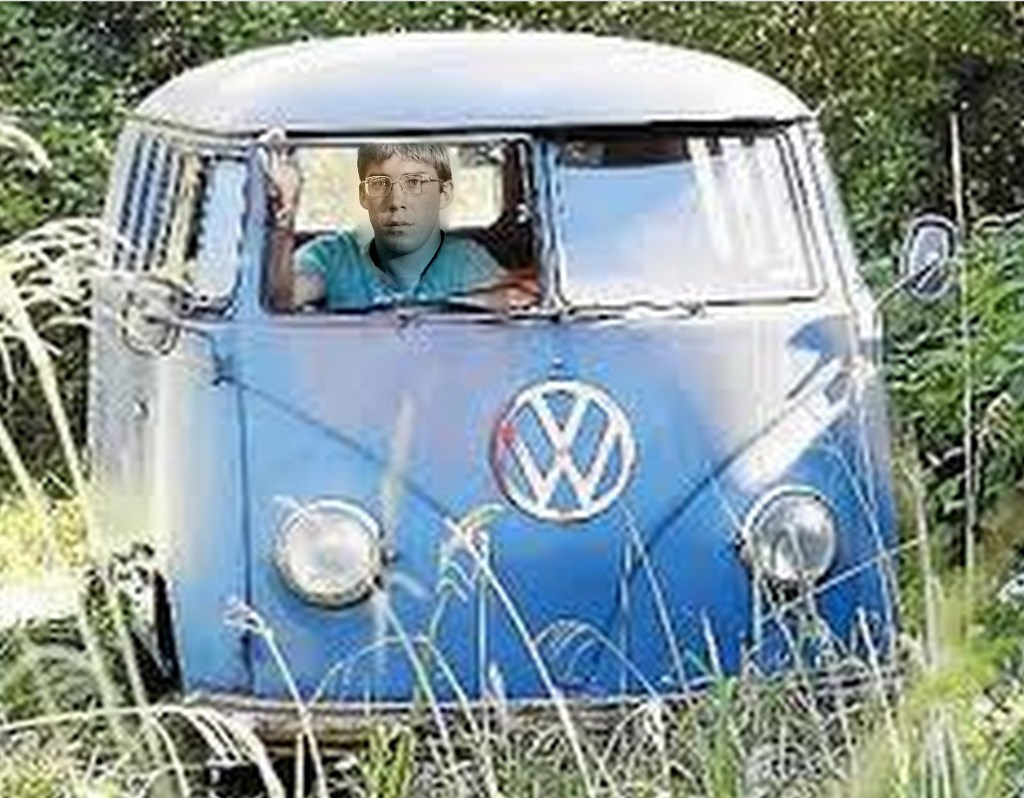
I filled the blue kombi with stuff – small furniture, paintings and odds – and drove it the kilometre or so down Stuart Street to Piet Uys street; then back, again and again. Load after load. I loved it, I had driven very little in the USA.
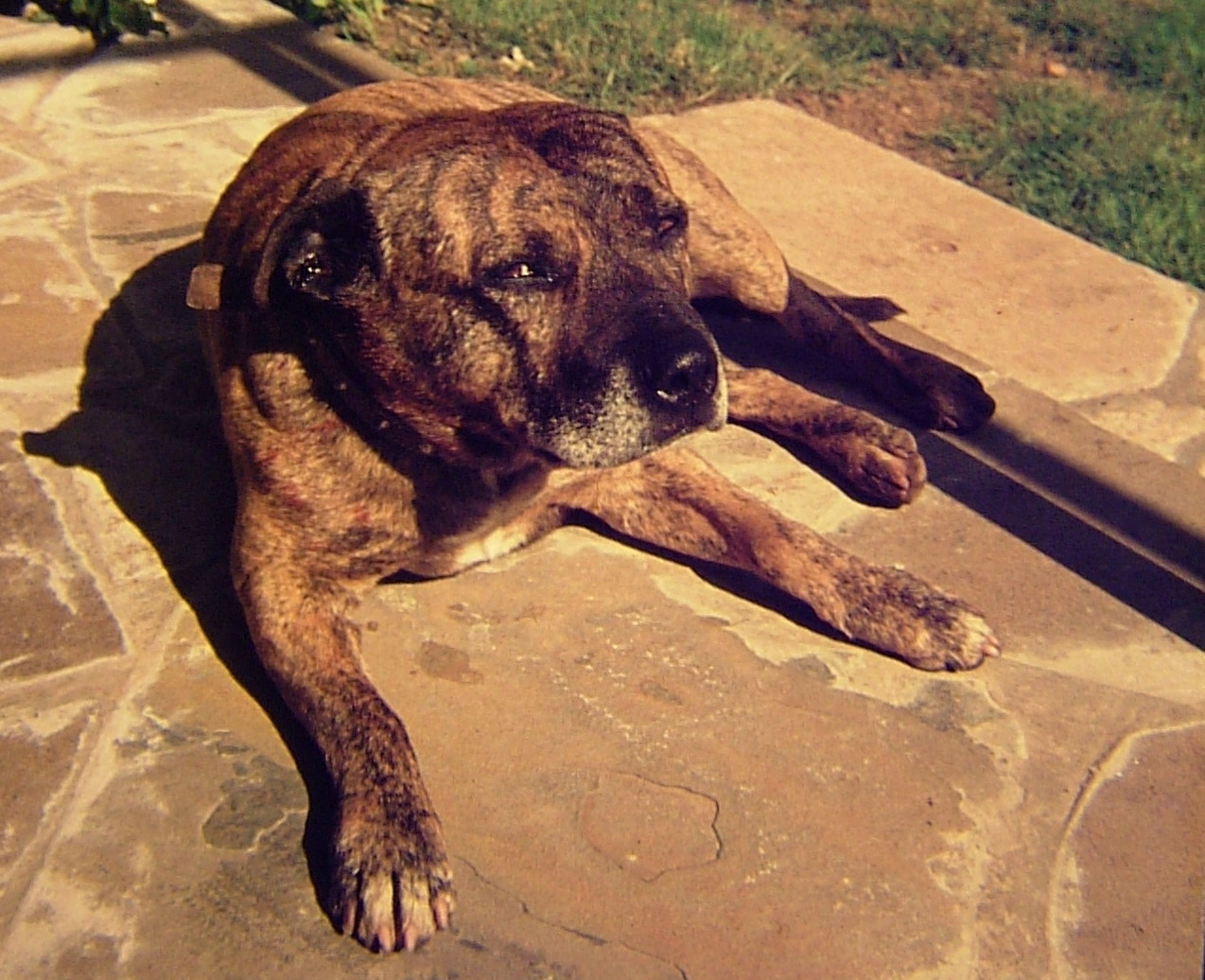
We had LOTS of stuff to go. Including Jock, the brindle staffie terrier, who was unimpressed.
Finally when I’d moved all the stuff I went for my drivers licence. Overdue. I had turned eighteen eight months prior. I drove myself there. After a short drive the traffic cop turned to me and said “You’ve driven before”. I said Um, Ja and he told me to turn round, go back and he signed on the dotted line.
As I was leaving he asked “Who drove you here?” Um, Me I said. He just grinned.
Six foot four inch Pete Stoute was running the Comrades Marathon, that foolish 89km exercise in torture held annually in KwaZuluNatal, when suddenly he heard a shout from around knee-level: “Yiss, Stoute, hoezit?”
He looked around, nothing. He looked down: There was Skim, short and round as a beachball, choofing alongside. Skim du Preez, kranige scrumhalf of the great Optometry rugby team of 1975.
Skim! What the hell are YOU doing here! he exclaimed. No, Stoute, I thought I must do this thing, seeing I’m a boykie from Dundee, said Skim. – Dundee pronounced “DinDear,” the Afrikaans way – it means ‘steenkool.’ Stoute pronounced ‘stotah,’ the Afrikaans way – it means naughty.
They chatted a few minutes and then Skim said, Oh Well, Be Seeing You and ran off into the distance!! Left the long-legged Stoute in his dust!
~~~oo0oo~~~
As often, one of my dodgy history lessons: Dundee, pronounced DinDear, is the famous site where British army troops, tired of being shot through their red coats and their white helmets, finally wore khaki uniforms for the first time in battle. I wonder if their commander Major-General Sir William Penn Symons KCB still wore his red coat that day, though? He got shot in the stomach and died three days later as a prisoner of war in Dundee.
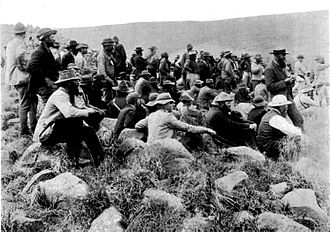
These Boers would know: The caption says they were ‘watching the fight’ that day! Like a movie!
The British claimed a ‘tactical victory’ in the battle. Here’s the actual scorecard – a lesson whenever you read battle reports. To the Poms, this (as they were informed by their jingo press) amounted to a tactical victory:
British casualties and losses – 41 killed, 185 wounded, 220 captured or missing; Boer casualties and losses – 23 killed, 66 wounded, 20 missing. So – Total count 446 down vs 109 down, but “we won.”
And so the dispatch goes back to Mrs Queen in Blighty (perhaps sent by jingo war correspondent Winston Churchill?): “We won a tactical victory, Ya Majesty.” Maybe he at least added “Um, send reinforcements” – ?
Always remember that one thing all military outfits do without fail . . is lie.
~~~oo0oo~~~
stoute – the Afrikaans pronunciation “stotah” as in kabouter; it means ‘naughty.’
kabouter – Snow White and the seven kabouters
choofing – running like a gazelle
kranige – capable; brave; gallant; dashing
scrumhalf – not only a scrumhalf – see the comments
No – yes
DinDear – Dundee; coal-mining village; not in Scotland
steenkool – coal; or stone coal; you can’t say just ‘kool’ cos that would mean cabbage
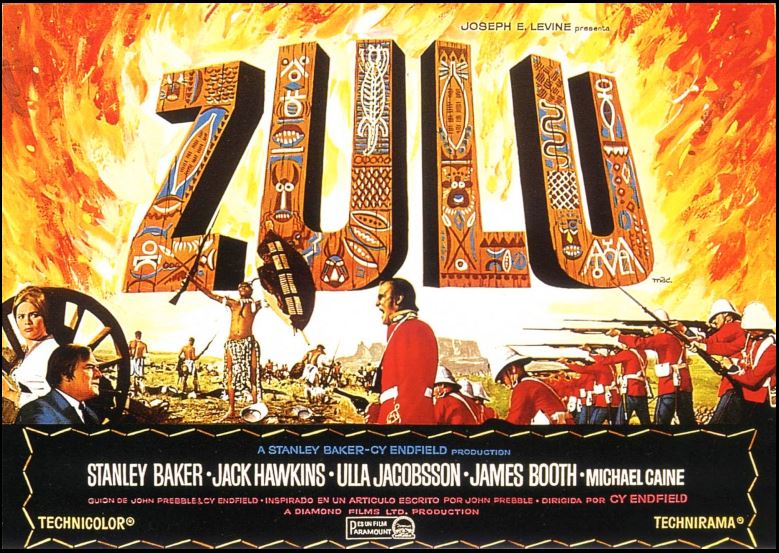
Released in 1964, ‘Zulu’ has become one of most iconic British films ever – directed by Cy Endfield, and starring Stanley Baker, Jack Hawkins and Michael Caine. I joked here that we had held the World Premiere of this famous film in our lounge in Harrismith! Hey! Sorta true!
Now, fifty five years later, a new film, ‘Zulu and the Zulus’ is planned. Scheduled to be a ninety minute feature length documentary to be shot in England and in KwaZuluNatal, South Africa, the film will tell about the making of the classic war film ‘Zulu’, and – un-colonially – also tell the stories of the Zulu people involved in the making of that famous film.
Here’s a trailer of the planned movie:
– ‘Zulu and the Zulus’ promo trailer –
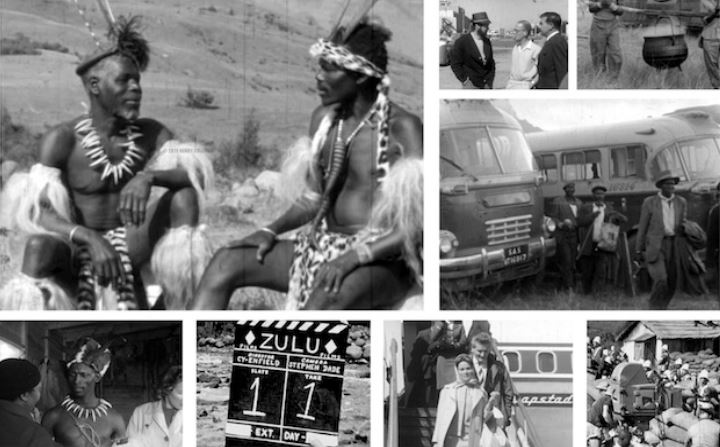
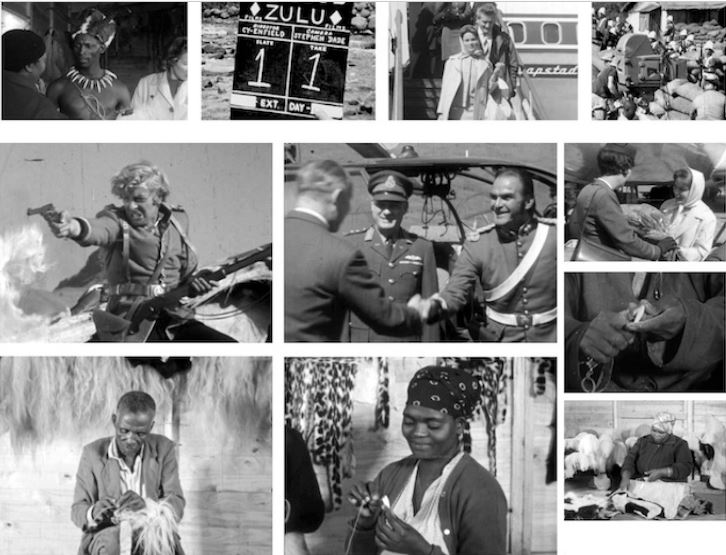
Director Henry Coleman is sole owner of the only print of the making of ‘Zulu’. Shot in Natal in 1963, it contains 26 minutes of unique black & white behind-the-scenes footage showing cast and crew at work and play while making one of the most iconic and loved war films of all time.
Coleman and Producer Mark Tinkler, will take this Behind the Scenes footage back to KwaZulu Natal, screen it for the Zulu people and talk to them about this historic and well-loved film – Zulus who appeared in the original film as extras. Many rural Zulu people have no access to cinemas, and no electricity in their villages, and so would have not seen the film. The production team will travel out to the remote parts of KwaZulu and screen the film either in huts or on a portable screen outdoors using a generator, DVD player and screen, film the audience watching the film, interview them and draw out their stories on the making of the film in 1963. Some of them saw the film and rushes at special screenings organised by star & Producer Stanley Baker – as seen in this rare still of film extras watching themselves in the rushes:
But many of them have never seen it since, or indeed ever. ‘Zulu and the Zulus’ will examine the making of film to the Zulus, visiting the locations in Natal where the film was shot, a Then and Now sequence. They will also visit the original battle site at Rorkes Drift. It will be a fascinating journey.
It will be a very visual experience, with Zulu warriors watching themselves and their parents playing their ancestors. Chief Mangosuthu Buthelezi, who became a minister in the first legitimate government of South Africa upon liberation in 1994, appeared in ‘Zulu’ as his Great Grandfather, King Cetshwayo ka Mpande. He has agreed to participate in this project and has given us his full support. At the heart of ‘Zulu and the Zulus’ is 26 minutes of never-seen-before ‘making of’ footage. This original 16mm silent footage has been painstakingly restored in a top post-production house in London, and this unique footage not only features the film’s ‘famous’ cast and crew on set, it also includes the building of key sets in KwaZuluNatal as well as costume design, creation and fitting, stunt work, battle scenes and much more. But more importantly, it is an historical record detailing the extent of contribution from the local community in bringing the famous film ‘Zulu’ to life.
We have also found, and gained exclusive access to, another 40 minutes of colour home movie footage shot on set, giving us a unique insight into the production of Zulu.
Seven minutes of these forty minutes of ‘home movie’ footage were taken by Dad with his new Eumig 8mm cine camera when he and Mom went to the set in the Royal Natal National Park back in 1963. Sister Sheila had the film digitised, but I won’t be showing it here as Henry Coleman has asked to use it for his movie. Hopefully some of it will make it onto the big screen!
More from Henry: ‘Zulu and the Zulus’ will tell the behind the scenes story of the classic British Movie ‘ZULU’. We will be interviewing European cast and crew and for the first time, hear the tribal ZULU actors, stuntmen & crew stories from behind the scenes. We hear tales of the making of the film, what it meant to the Zulus, then and now, and the film’s legacy to Zulus today. Everyone knows the film, it’s iconic set pieces, and the lead European actors… but no-one has ever spoken to the hundreds of Zulu warriors who took part in the film, the Zulus of the title. This is a unique opportunity to get the Zulu peoples’ point of view on a classic film named after them, but whose voices we’ve never heard before – there will be stories we’ve never even imagined, illustrated, intercut with the rare footage of the making of Zulu.
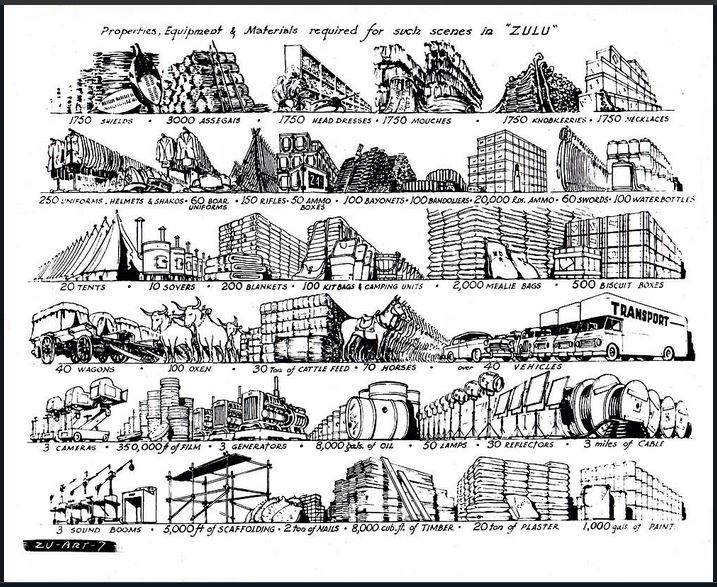
An illustration of props, equipment and ‘stuff’ used on the remote location of the set of Zulu in 1963 (from Henry Coleman’s Zulu and the Zulus twitter feed), giving an indication of the challenging logistics: