Category: 1_Harrismith

  • Uh, Correction, Mis Betfit

    Uh, Correction, Mis Betfit

    Here’s a re-post – I’m running out of things to say as the era of this blog recedes ever-further into the mists of time – and the misseds of my time. This blog’s era ends around about when I met Aitch – 1985-eish. Post-aitch, marriage, kids and other catastrophes, and current stuff are over at bewilderbeast.org

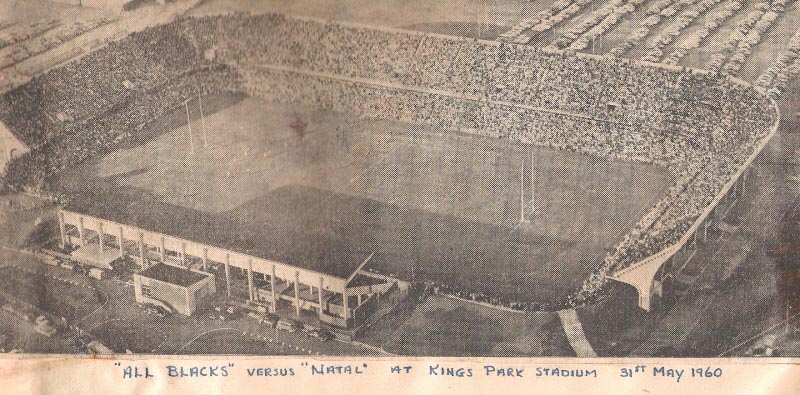
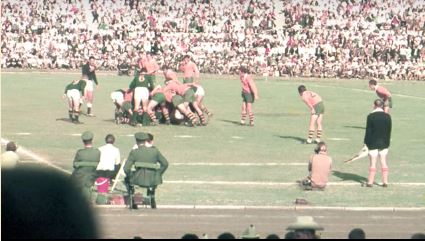
    In 1969 a bunch of us were taken to Durban to watch a rugby test match – Springboks against the Australian Wallabies. “Our” Tommy Bedford was captain of the ‘Boks. We didn’t know it, but it was to be one of his last games.

    Schoolboy “seats” were flat on your bum on the grass in front of the main stand at Kings Park. Looking around we spotted old Ella Bedford – “Mis Betfit” as her pupils called her – Harrismith’s English-as-second-language teacher. Also: Springbok captain’s Mom! Hence our feeling like special guests! She was up in the stands directly behind us. Sitting next to her was a really spunky blonde so we whistled and hooted and waved until she returned the wave.

    Tommy Bedford Springbok
    – This is Ella, a Harrismith teacher’s son –

    Back at school the next week ‘Mis Betfit’ told us how her daughter-in-law had turned to her and said: “Ooh look, those boys are waving at me!” And she replied (and some of you will hear her tone of voice in your mind’s ear): “No they’re not! They’re my boys. They’re waving at me!”

    We just smiled, thinking ‘So, Mis Betfit isn’t always right’. Here’s Jane. We did NOT mistake her for Mis Betfit.

    jane-bedford-portrait

    “corrections of corrections of corrections”

    Mrs Bedford taught English to people not exactly enamoured of the language. Apparently anything you got wrong had to be fixed below your work under the heading “corrections.” Anything you got wrong in your corrections had to be fixed under the heading “corrections of corrections.” Mistakes in those would be “corrections of corrections of corrections.” And so on, ad infinitum, ad nauseum and ad weereens! She never gave up. You WOULD get it all right eventually!

    Stop Press! Today I saw an actual bona-fide example of this! Schoolmate Gerda van Schalkwyk has kept this for nigh-on fifty years!

    – genuine rare Harrismith Africana ! – or is that Engelscana? –

    ~~oo0oo~~

    Tommy’s last game for the Springboks came in 1971 against the French – again in Durban.

    ~~oo0oo~~

    Two or three years later:

    In matric the rugby season started and I suddenly thought: Why’m I playing rugby? I’m playing because people think I have to play rugby! I don’t.

    So I didn’t.

    It caused a mild little stir, especially for Ou Vis, mnr Alberts, in the primary school. He came up from the laerskool specially to politely voice his dismay. Nee man, jy moet ons tweede Tommy Bedford wees! he protested. That was optimistic. I had played some good rugby when I shot up and became the tallest in the team, not because of any real talent for the game – as I went on to prove.

    ~~oo0oo~~

    weereens – again n again

    ou Vis – nickname meaning old fish – dunno why

    Nee man, jy moet ons tweede Tommy Bedford wees! – Don’t give up rugby. You should become our ‘second Tommy Bedford’ – Not.

    ~~oo0oo~~

    Meantime Jane Bedford has become famous in her own right in the African art world and Durban colonial circles, and sister Sheila and Jane have become good friends.

    ~~oo0oo~~

    Also meanwhile, our sterling Mrs Bedford’s very famous brother – one of twelve siblings – Lourens vd Post, turned out to be a real cad a fraud, an adulterer and a downright liar. Fooled Prince Charlie, but then, that’s hardly a difficult achievement. The vegetables he talks to probably tell him fibs.

  • The EM Diet

    The EM Diet

    Childhood friend Harry Loots is writing a lovely book on his mountaineering exploits and the journey he has made from climbing the mountain outside our town to climbing bigger and more famous mountains all over the world!!

    – Platberg panorama –

    Flatteringly, he asked me and a Pommy work and climber friend to proofread his latest draft. Being a techno-boff, he soon hooked us up on dropbox where we could read and comment and suggest.

    I immediately launched into making sensible and well-thought out recommendations. But some of them were instantly rejected, side-stepped or ignored, I dunno WHY!!

    Like the title I thought could be spiced up. Three African Peaks is all very well. But it’s boring compared to Free A-frickin’ Picks!!! to lend drama and a Seffrican accent to it, right?! I know, you can’t understand some people!

    John, very much under the weight of a monarchy – meaning one has to behave – was more formal:

    ‘What is it with south africans and the “!”? (which is my major comment on your writing style!)

    Well!!! Once we had puffed down and soothed our egos by rubbing some Mrs Balls Chutney on it, the back-n-forth started. I mean started!!

    My defensive gambit was: ‘We’re drama queens!!’

    My attacking gambit was an accusation: ‘Poms hugely under-use the ! In fact, they neglect it terribly! John was quickly back though, wielding his quill like a rapier:

    John

    ‘Not true. We use our national quota. We just give almost all of them to teenage girls.’

    Ooof!!!

    I was on the back foot. When it came to the cover, the Boer War re-enactment resumed. I mean resumed!! I chose a lovely cover with an African mountain and a lot of greenery on the slopes. The Pom chose an ice wall, no doubt thinking of the London market. Stalemate.

    Next thing he’ll be suggesting a stiff upper cover.

    ~~oo0oo~~

    A strange thing has happened since John’s exaggerated critique!!! I am using less exclamation marks!! I have even written sentences without any! It actually feels quite good. I’ve discovered the full stop. The new, restrained me. Exciting.

  • Duzi 1972

    Duzi 1972

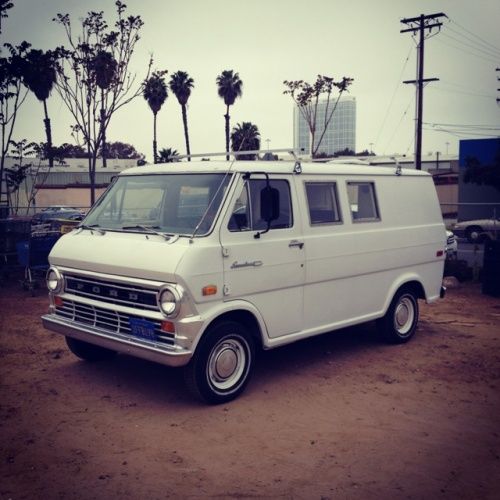
    I canoed the Vrystaat Vlaktes thanks to Charles Ryder, who arrived in Harrismith in about 1968 or ’69 I’d guess, to start his electrical business, a rooinek from Natal. He roared into town in a light green Volvo 122S with a long white fibreglass thing on top of it like this:

    I asked:
    What’s that?
    It’s a canoe
    What’s a canoe?
    You do the Dusi in it
    What’s the Dusi?

    Well, Charlie now knew he was deep behind the boerewors curtain! He patiently made me wiser and got me going and I got really excited the more I learned. I decided I just HAD TO do the Dusi. What could be more exciting than paddling your own canoe 120km over three days from Pietermaritzburg to the sparkling blue Indian Ocean at the Blue Lagoon in Durban? Charlie made it sound like the best, most adventurous thing you could possibly think of. He showed me how to paddle (how was I to know at the time he was making me a ‘Left Feather’?) and was so generous with his time. Both in paddling and with Harrismith’s first Boy Scouts troop, which he helped establish.

    I started running in the mornings with a gang of friends. Tuffy Joubert, Louis Wessels, Fluffy Crawley, Leon Blignaut, who else? We called ourselves the mossies as we got up at sparrow’s fart (and because we weren’t makoue. A teacher named Makou trained our rivals. We couldn’t join them cos we considered ourselves untrainable). Then I would cycle about two miles  to the park in the afternoons and paddle on the flat water of the mighty Vulgar River in Charles’ Limfjorden, or Limfy, canoe, which he had kindly lent me/given to me. It was the fittest I’ve ever been, before or since.

    Overnight I would leave it on the bank tethered to a weeping willow down there. One day around Christmas time with only a couple of weeks to go before Dusi I got there and it was missing. I searched high and low, to no avail. So I missed doing the Dusi. Not that I had done anything but train for it – I hadn’t entered, didn’t know where to, didn’t belong to a club, didn’t have a lift to the race, no seconds, nothing!

    Still enthused, though, I persuaded my mate Jean Roux to join me in hitch-hiking to the race. We were going to do the Duzi! All except the part where you used a boat.

    We got to Pietermaritzburg, and early the next morning to the start in Alexander Park. Milling around among the competitors and their helpers, we watched the start and as the last boats paddled off downstream Alexandra Park started emptying, everyone seemed in a big hurry to leave. We asked Wassup? and someone said, We’re Following Our Paddler! so we bummed a lift with some paddler’s seconds to the overnight stop at Dusi Bridge. We slept under the stars and cadged supper from all those friendly people. They let us continue with them the next day to the second overnight stop at Dip Tank and on the third and last day to the sea, the estuary at Blue Lagoon, following the race along the way. In Durbs we slept on the beach, but were herded off it by the cops, so we slept on the stoep at the Point Road police station – and that’s another story! And then I spose we hitched back to Harrismith – I can’t remember – must ask Jean.

    Back in the City of Sin and Laughter I continued the search for my missing Limfy, and eventually found a bottle floating in the Kakspruit, a little tributary that flows down from Platberg and enters the river downstream of the weir. I was born on the left bank of this Kakspruit about 5km upstream of here. The bottle had a string attached to it. I pulled that up and slowly raised the boat – now painted black and blue, but clearly identifiable as I had completely rebuilt it after breaking it in half in a rapid in the valley between Swinburne and Harrismith. Come to remember, that’s why Charles gave it to me! I knew every inch of that boat: the kink in the repaired hull, the repaired cockpit, the wooden gunwales, brass screws, shaped wooden cross members, long wooden stringer, shaped wooden uprights from the cross members vertically up to the stringer, the white nylon deck, genkem glue to stick the deck onto the hull before screwing on the gunwales, the brass carrying handles, aluminium rudder and mechanism, steel cables, the lot. In great detail.
    ~~oo0oo~~

    Except! I recently (2020) cleared out my garage under lockdown and discovered this: My notes preparing for the Duzi! I was less disorganised than I remember. I may not have DONE much, but at least I did do a bit of planning! Check: “Phone Mr Pearce” (Duzi boss) – not done; and “Buy canoe?” – not done; uh, OK, maybe not so very well organised!

    Graeme Pope-Ellis won his first Duzi that year.

    ~~oo0oo~~

  • The Chronic: Terminal?

    The Chronic: Terminal?

    The Harrismith Chronicle started publishing in 1903. Annie was ten years old, still living in the cottage behind the Royal Hotel. Eighty years later the paper celebrated. That milestone edition included our dear old Annie’s obituary. The Chronicle had reached eighty; Annie had reached ninety. Lovingly cared for from when her husband Frank died in 1943 right to the end forty years later, by her daughter Mary, our loving Mom.

    Now in 2020 comes more sad news. After 117 years, the old Chronic has folded. Maybe it won’t be the end? Maybe someone can revive it in digital form, online? Sure hope so.

    ~~oo0oo~~

    On the 23 March 2021 came a glimmer of hope:

    Dandre Kleyn commented on my post The Chronic: Terminal?

    Interesting post and very nice to read. So, good news, the Harrismith Chronicle is being revived! The 1st new issue is hitting the shelves 25 March 2021. New ownership and a new newspaper coming to you.

    2024: It seems the Chronic is alive and well on facebook, whatsapp and maybe also on harrismithgazette.co.za

    harrismithgazette.co.za

    ~~oo0oo~~

  • Max Express Ntshingila

    Max Express Ntshingila

    This is a repost from 2016 – updated:

    I saw Mr Thandinkosi Ntshingila for an eye test recently. He was born in 1940. I told him I knew a Mr Max Ntshingila in Harrismith many moons ago, who owned a fleet of buses.

    He said “Hayibo! That’s my Dad!!”

    He grew up in Harrismith! Strictly speaking Max was his uncle, but his Dad died when he was very young and his uncle Max took him in and raised him as his own in Phomolong.

    He told me that besides the buses – remember “Max Express” buses? yellow and green, I seem to remember – Max owned two shops, plus a petrol station in Swaziland.

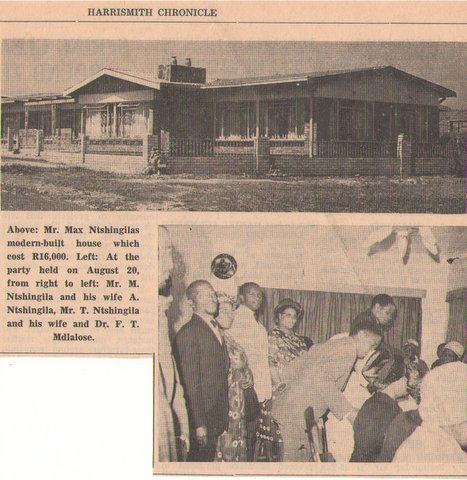
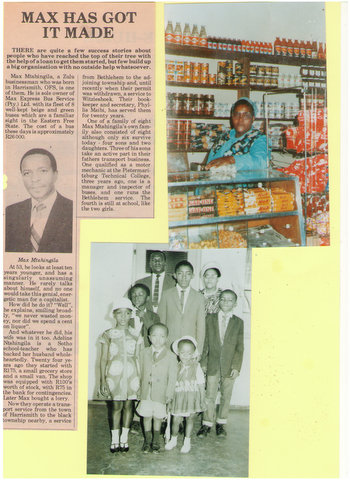
    Max died in 1978 aged 60 (so the news cuttings below are ca.1971). His empire collapsed when he died, as his kids “were spoilt” and “none of them could manage anything”, according to Thandinkosi. And although he was like a son, not when it came to inheritance.

    Max sent Thandinkosi to college and he ended up in Durban working for Engen or Sapref or one of those fuel refinery places. Retired now, he plays the horses for fun and I see him at the tote on the roof of our centre occasionally.

    – a Biscayne like Max Ntshingila’s –

    I had wondered vaguely all these years about something, and I never expected to get the answer. But Thandinkosi had the answer for me: That creamy-gold coloured yank tank Max drove was a 1963 Chev Biscayne. I just LOVE it that I finally did find out! Never thought I would or could.

    Thandinkosi still goes to Harrismith regularly to look after the house in Phomolong where he was raised. One of his nieces lives in it.

    Leon Strachan sent me some pictures and newspaper cuttings. Note how Dr Frank Mdlalose, who we only got to know of post-1994, when he became KwaZulu Natal’s first Premier, was a house guest of the Ntshingila’s in Harrismith.

    Max Express 3
    Max Express 4
    – snarky apartheid headline, methinks –

    ~~oo0oo~~

    Update: Today – 12 December 2019 – I saw Mr Thandinkosi Ntshingila again. I phoned him to come in so I could give him copies of these pictures. He’ll be 80 next year. I hoped he was one of the kids in the photo, but he wasn’t. Not one of the people in the photo are still alive, he tells me. They all died quite young. He’s the only survivor of that household. He was chuffed and moved to receive these mementos, and says he’s going to frame the family photo!

    – Mr Thandinkosi Ntshingila studies the photos –

    ~~oo0oo~~

    Dr Frank Mdlalose died in March 2021 of COVID-19. His wikipedia entry tells a lovely story: Representing the students at the segregated medical school in Durban, established by Jan Smuts for Black and Indian students, he attended the only conference of the Association of Medical Students of South Africa attended by students from one of the Afrikaans-medium medical schools. They had hitherto refused to attend if Black students were present. One of the Afrikaner students said, as the conference finished, “I thank the Chair for having organised this conference. This is the first time I have met a black man with an intelligence equal to, or superior to, my own.” To which Frank responded, “I, too, thank the Chair for having organised this conference. This is the first time I have met an Afrikaner with an intelligence equal to, or superior to, my own.”

    What a man!

    ~~oo0oo~~

  • le frog

    le frog

    So we were drinking beer on Tabbo’s farm when a younger chap arrived and was introduced to us as the young Frenchman whose parents wanted him to experience agriculture before he started to study it at university. Tabbo had gladly agreed to host a frog for a weekend so he could learn agriculture on a farm in Africa in English before going back to learn it in French at a university in France. Ours not to reason why . .

    – the agriculture oke with the greenest fingers I know

    I’m Tabbo; I’m Koos; we said. Hervé, he said. Ah, hello Hervé! Non non! Hervé.

    Ah! Hervé, we said, copying his pronunciation carefully. Non! Hervé. OK, Hervé. Non! Non! Hervé! Hervé!

    Um, yes, hello Hervé, welcome to the Vrystaat. Hervé! he muttered.

    And that set the tone for the visit of eighteen year old Hervé, le frog, to the Vrystaat vlaktes.

    We piled into Tabs’ pickup and drove around the farm, Tabbo pointing out a cow chewing the cud, a sheep walking and a mielie growing. He showed little interest. The only animation was whenever we mentioned his name. He would immediately say Non, Non. Hervé! So we stopped using his name. Also, we didn’t tell him ‘agriculture’ wasn’t pronounced ‘agriculsh-her.’

    Back to the lovely sandstone homestead at Gailian and lunch, where he refused a beer, muttering something that sounded like muffy arse. We were to hear muffy arse A LOT.

    Lunch arrived, a delicious roast something expertly produced by Julia and ____ in the large and splendid Gailian kitchen, origin of many a magnificent meal. Non, Non. Muffy arse, came the response after he’d peered at the meat on his plate intently, nose 20mm from it. He ate the potatoes.

    I’ve never met such such an impossible eighteen year old! Obnoxious, opinionated, impossible to please. We didn’t slap him.

    In the afternoon Tabbo drove him around some more. We – yes, even I was lecturing agriculsh-her! – helpfully pointed out the grass, and the clouds, which would hopefully bring rain and grow that same grass; which animals would eat and convert into delicious roasts so that he could mutter muffy arse. We generally gave him a thorough education in agriculture which we were sure would put him ahead of his fellow amphibious classmates when he went back across the pond to study utilisées pour l’agriculture at l’école agricole. And I’m sure le frog would have had a lot to correct there. Pardon my French.

    That evening we were back into the beer and offered him one. Non, Non. Muffy arse, the response we’d grown used to. We went through all the grog in the Fyvie’s very well stocked pub and at last we got a oui !

    I forget if it was Ricard or Benedictine or Cointreau, but it was definitely Made In France and I think that was all le frog was interested in. By the look on his face as he took his first sip, he hadn’t actually tasted it before, but we were beyond caring any more. He was impossible to please and we were now just keeping him quiet, happy that a sixpack of beer divided more easily into two than into three.

    – Gailian’s well-stocked pub on a less surreal evening – just drunkards –

    After a while the silly little frog whipped out a tiny little French-English dictionary out of his pocket and pointed to the word méfiance and muttered urgently muffy arse. So THAT was muffy arse! méfiance!

    The translation: MISTRUST!

    We hosed ourselves, which miffed le frog. He got all miffy arsed.

    We were not sad to see him go. Still, being polite we asked him if he thought he’d learnt enough to help him when he went back to study his agriculture? Non, Non. he said indignantly. Not agriculsh-her! He was going to l’université to study mathematique!

    ~~oo0oo~~

  • Up the Creek

    Up the Creek

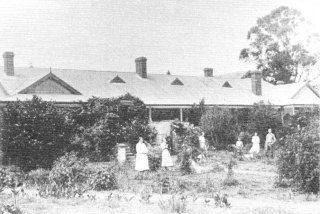
    I was Born up Shit Creek without a Paddle. Quite literally. OK, my actual birth, per se, was in Duggie Dugmore’s maternity home, less than half a kilometer away on Kings Hill. See pic above – the old British officers mess (or the doctor’s residence?) became the maternity home. But mere days after I was born – as soon as I could be wrapped in swaddling clothes – I was taken home to my manger on a plot on the banks of Shit Creek (more accurately Kakspruit) in the shadow of Platberg mountain. And it was twelve years or so before I owned my first paddle. So this is a true story.

    – ruins of our house on the plot – trees in in the middle ground are on the banks of Shit Creek –
    – inset: me on the lawn thinking, ‘where’s me paddle?’ –

    I paddled my own canoe about twelve years later after we lost the plot. OK, sold the plot, moved into town and bought a red and blue canoe with paddle. The first place we paddled it was in a little inlet off the Wilge river above the Sunnymede weir, some distance upstream of town. Right here:

    – younger sis Sheila operates the paddle I was born without –
    Sunnymede on the Wilge River upstream from Harrismith FS ca1965
    – same little inlet – Mother Mary and Sheila on land, me airborne, Barbara sitting on water –

    Before this, I had paddled a home-made canoe made of a folded corrugated zinc roofing sheet, the ends nailed onto a four-by-four and sealed with pitch. Made by good school friend Gerie Hansen and his younger boet Nikolai – or maybe his older boet Hein; or by their carpenter father Jes? We paddled it, wobbling unsteadily, on their tiny little pond in the deep shade of wattle trees above their house up against the northern cliff of Kings Hill, halfway between the plot on the banks of the Kakspruit and our new house in town.

    Then Charlie Ryder came to town, and one thing led to another . . . also, eventually I got myself a Lekker Canadian Paddle.

    ~~oo0oo~~

    School friend Piet Steyl wrote of the wonderful days he also spent in the company of Gerie Hansen – who died tragically early, adding to the feeling that the good die young. Piet told of fun days spent paddling that zinc canoe, gooi’ing kleilat, shooting the windbuks and smoking tea leaves next to that same little pond. We both remembered Gerie winning a caption contest in Scope magazine and getting reprimanded for humourously suggesting Japanese quality was perhaps dodgy back then. Irony was, the Hansens actually owned one of the first Japanese bakkies seen in town – a little HINO.

    Gerie used to say ‘He No Go So Good!’ and Piet says when it finally gave up the ghost he said, ‘He No Go No More!’

    ~~oo0oo~~

    Shit Creek – actually the Kak Spruit; a tributary of the Wilge River which originates on Platberg mountain, flows down past our old plot and then westward through the golf course on the northern edge of town, then turns south and flows into the mighty Wilge below the old park weir on the right bank; Sensitive Harrismith people refer to it as ‘die spruit met die naam;’ Bah humbug.

    die spruit met die naam – ‘the creek with the name’ – that’s a kak description – too coy! It’s Kakspruit – one word; always will be; Shit Creek.

    gooi’ing kleilat – lethal weapon; a lump of clay on the end of a whippy stick or lath; spoken about way more than practiced, in my experience; and about 10% accuracy when you do get it going; Here’s a kid loading one:

    windbuks – air rifle; pellet gun.

    ~~oo0oo~~

  • Drunken Revelry

    Drunken Revelry

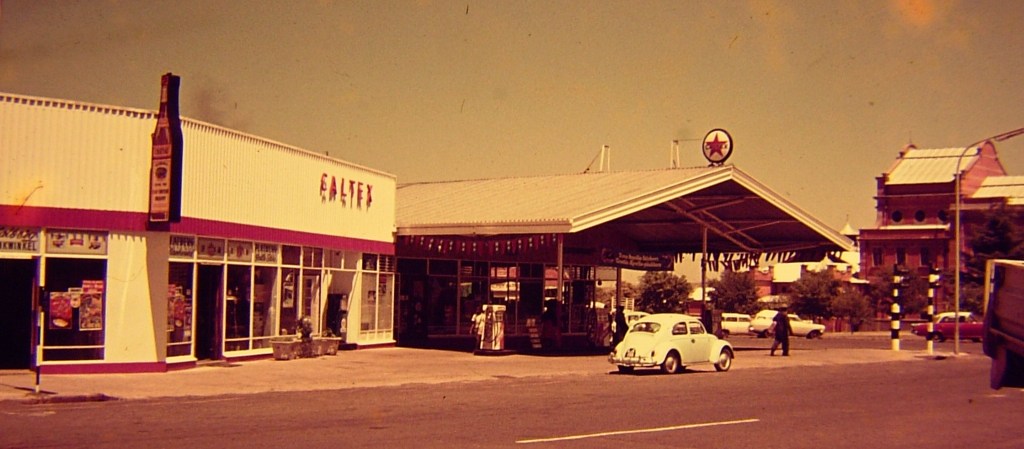
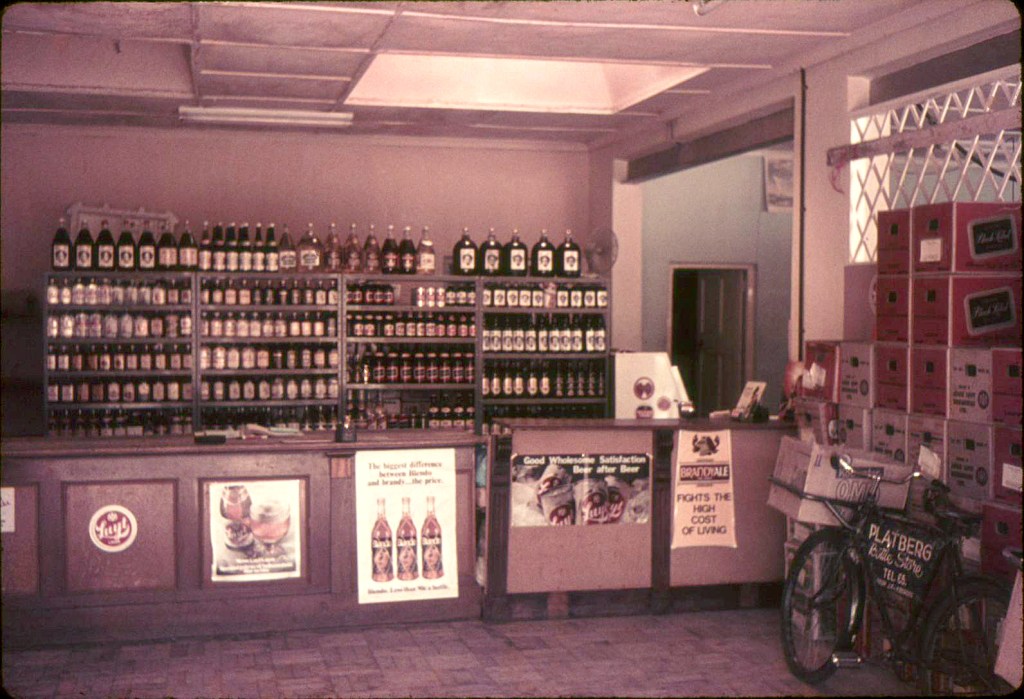
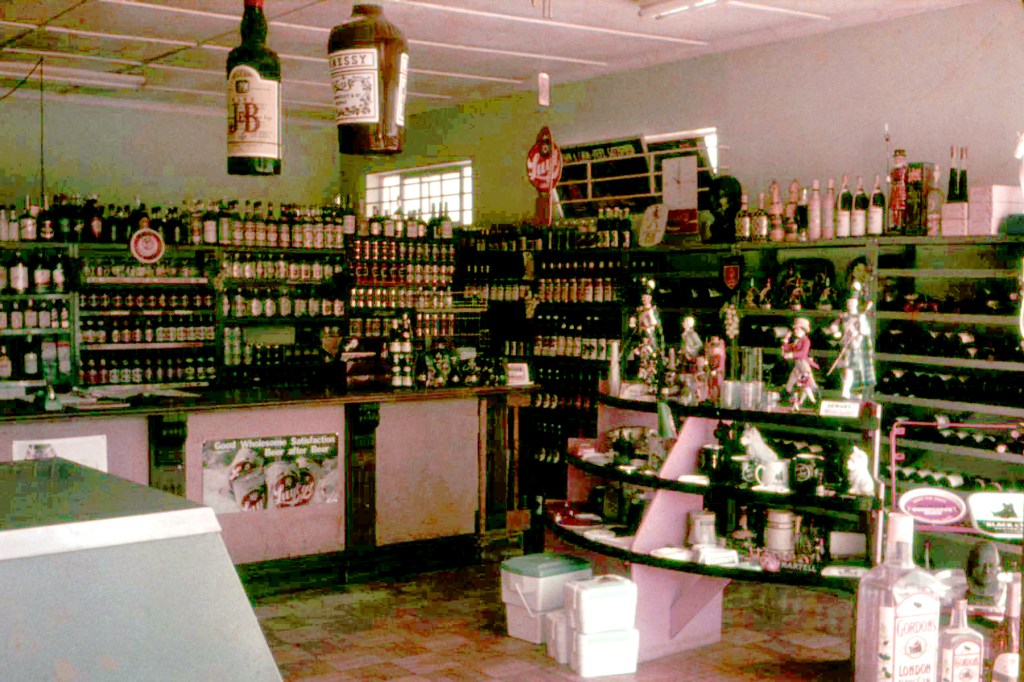
    OK, not really; more a reverie on drink – a nostalgic lookback on a bottle store. Platberg Bottle Store / Drankwinkel in Harrismith, the Vrystaat. The Swanepoel family business. We all worked here at times. You could say we were raised on grog.

    We were talking about the trinkets, decor and marketing stuff. Like those big blow-up bottles hanging from the ceiling. Turns out big sister Barbara kept some of them from way back when:

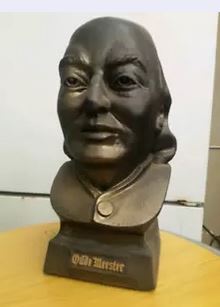
    Younger sister Sheila has some whisky jugs; and I found an old familiar brandy-making figure online: the Oude Meester bust. We fondly remember Jan Jan die Oudemeester Man! Jan Robertson, the rep who would visit us to sell his popular product.

    ..

    This is where the big blow-up bottles were displayed, along with the striding statue of Johnny Walker whisky; Dewars White Label whisky’s Scottish soldier ‘drum major;’ Black & White whisky with their black and white Scotty dogs; Beefeater Gin’s ‘beefeater’ in his red uniform, etc. Spot them below. All were shouting a loud Drink More! and in small print; um, drink responsibly.

    BrandyAle had people’s best interests at heart when they told you how drinking BrandyAle would “Fight the High Cost of Living.”

    Methodists are pretty strongly anti-alcohol, so I believe it is testimony to Mother Mary’s organ-playing skills (and her much-loved status among all who know her) that we could run a bottle store six days a week and still be Methodists on the Sabbath! (Kidding! It was the collection plate. Kidding!).

    ~~oo0oo~~

  • Ancient Fillums & Stills

    Ancient Fillums & Stills

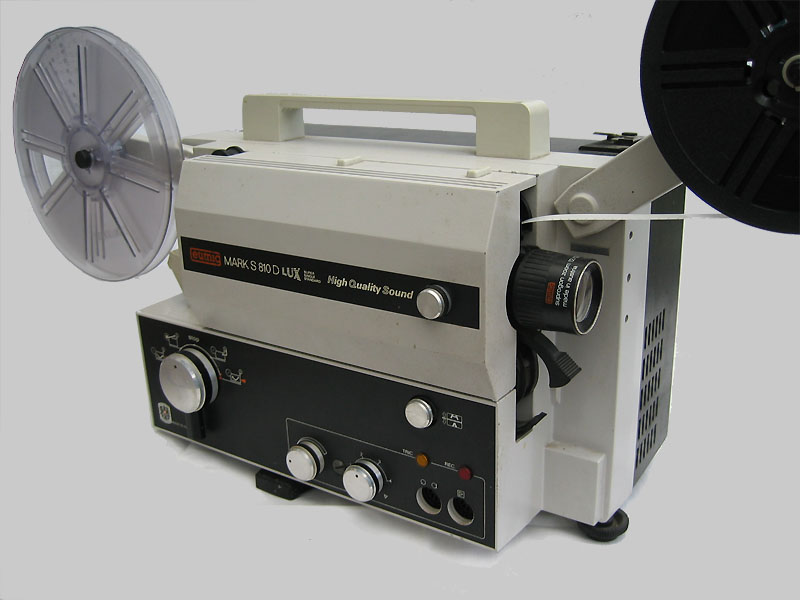
    The old man bought an 8mm cine film Eumig camera and Eumig projector very like these. Made in Austria. This was ca.1963, I’d guess. It once did a bit of – potentially – famous footage!

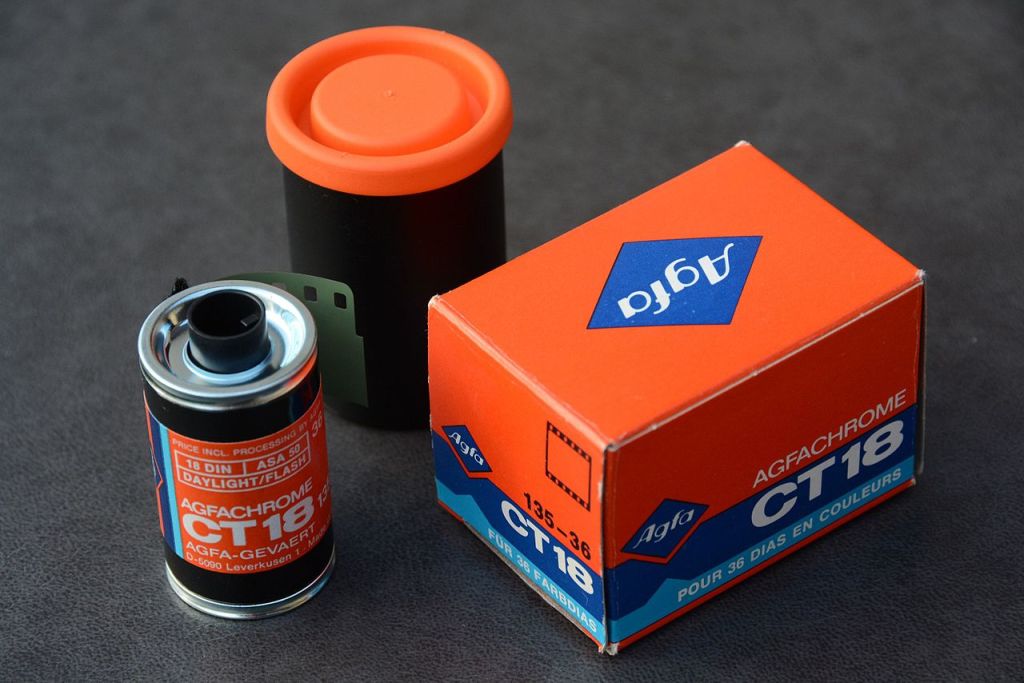
    Later he bought a Canon SLR camera with a 50mm lens like this, and a 300mm telephoto lens. An FT QL exactly like this one. He used Agfa slide film. Had to be Agfa, not Kodak! Agfa ‘had better greens and blues.’

    Once I heard Dad had been present when I won a 100m race at the town’s President Brand Park athletic track. I didn’t know he was there – found out later that he had been taking photos. At the finish, in my lunge for the tape, I fell and somersaulted, skidding on my back on the cinder track. I tied for first place. Never did see a photo of that finish – !? Had two roasties on my back for a while.

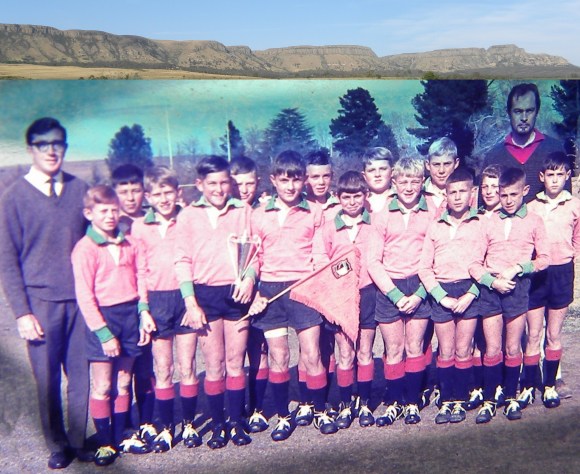
    Once – 1967 – he took a photo of the all-winning U/13 rugby team holding a trophy. I must try and find out what the trophy was for. So I do have one photo a father took of his son’s school sporting career!

    ~~~oo0oo~~~

    fillums – films, movies, videos, moving pictures; usually not talkies

    stills – pictures on paper, photos; often in ‘albums’

    We saw other ancient movies too – those were 16mm.

    ~~oo0oo~~

    EUMIG was an Austrian company producing audio and video equipment that existed from 1919. The name is an acronym for Elektrizitäts und Metallwaren Industrie Gesellschaft – “Electricity and Metalwarendustry Company” –

    In 1982 EUMIG went bankrupt – punishment for choosing such a boringname?

    Eumig’s patent for the macro system in lenses was sold to the Japanese company Canon.

  • Harrismith Mountain Race

    Harrismith Mountain Race

    Mountain-Race site - Copy
    Way back in 1922 a Pom army major sat in the gentleman’s club in Harrismith and spoke condescendingly about our mountain, Platberg, as “that little hill”. What was ‘e on about? It rises 7800 ft above sea level and he was from a tiny chilly island whose ‘ighest point is a mere 3209 ft above sea level! Being a Pom he was no doubt gin-fuelled at the time. Anyway, this ended up in a challenge to see if he could reach the top in under an hour, which led to me having to run up it years later. Because it’s there, see.

    mountain race harrismith_crop
    – at this point I wished I had done some training! –

    I had often run the short cross-country course and twice the longer course, which followed the mountain race route except for the actual, y’know, ‘mountain’ part. I had also often climbed the mountain, but strolling and packing lunch. When I finally decided I really needed to cross the actual mountain race proper off my list of “should do’s” I was larger, slower and should have been wiser.

    Here’s some 8mm cine camera footage taken by Dad Pieter Swanepoel of Platberg Bottle Store of the start and finish in front of the Post Office – 1960’s I guess:

    The race used to be from town to the top of the mountain, along the top for a mile or so and back down. Sensible. That’s how I ran it in 1979. The medal then had a handy bottle opener attached!

    HS Mtn Race badges, medal
    – mountain Race badges and medals – these are the legitimate four – where I actually finished in the allotted time! –

    I recently found some old papers which told me I once ran the race in 79 minutes, and in 85 minutes another year.

    We also walked the race for fun a couple times:

    The 12km distance was enough. But no, some fools decided that wasn’t long enough! Apparently a cross-country route needed to be 15km to be “official”, so they added three kilometres of perfectly senseless lost-fart meanderings around the streets of our dorp causing fatigue before I even started the climb when I ran with Jon and Dizzi Taylor one year. At least I did get to see old friend Steve de Villiers who enquired after my sanity as I shuffled past his home on the backstreets of the dorp.

    The finish at the Groen Pawiljoen grounds
    – run to A then to B and back (who added three km of tar road!?) –

    Oh by the way, Major Belcher did get to the top in under an hour, winning the bet.

    Here’s more about Platberg.

    ~~~oo0oo~~~

    Some history from friend Ettienne Joubert, who has also trotted the course:

    The Harrismith Mountain Race held annually since 1922, was described as the ‘toughest in the world’ by Wally Hayward, who won five Comrades marathons, the London to Brighton Marathon and the Bath to London 100-miler! (I once spent a wonderful day with Wally).

    It originated when, in 1922, a British soldier, Maj A E Belcher, returned to Harrismith where he had been stationed near 42nd Hill during the war. He was referring to Platberg as ‘that small hill of yours’, one Friday evening [lots of silly things are done on Friday evenings] and one of the locals (a certain Van Reenen – or maybe the chemist Scruby) immediately bet him that he could not reach the top (591 metres – just under 2000ft – above the town) in less than an hour.

    The major accepted the challenge and set off from the corner of Stuart & Bester streets outside the old Harrismith Club near where the Athertons ran The Harrismith Chronicle the very next day. He reached the summit with eight minutes to spare.

    During a later visit to the town, Major Belcher (now a schoolteacher in Dundee, Natal) found out that his record still stood so he took it upon himself to donate a trophy to the Harrismith Club to be awarded to the first club member to break his record to the top.  In 1929 the Club management, as the organizers of the race, decided to open the race up to the residents of Harrismith and a Mr Swanepoel won the race to the top of the mountain in 32 minutes. (The last record time I have is 22 minutes and 9 seconds – from town to the top of the mountain! Amazingly quick).

    The race route has changed over time – starting in Piet Retief Street outside the post office and police station for some years. Nowadays it starts at the town’s sports grounds, passing the jail, then through the terrain where the concentration camp (second site) once stood, up the steep slopes of Platberg to the top via One Man’s Pass, close to where a fort was built during the Anglo-Boer War. After traversing a short distance along the top, the descent is made via Zig-Zag Pass, and the race is completed back at the ‘Groen Pawiljoen’ sports grounds.

    Our friends Steph and JP de Witt’s Mom, Alet de Witt became the first lady to complete the race. She ran in the year her husband, JN ‘Koos’ de Witt died tragically suddenly in January 1967. She then donated a trophy for the winner of the newly allowed (!) women’s category, which was awarded for the first time only in 1986.

    Later the apartheid ‘whites-only’ ruling was dropped and as soon as McDermott* stopped winning, the race was won by black athletes, including Harrismith locals; starting with Michael Miya who holds the record for the newer, longer 15km course at 1hr 03mins 08secs.

    *McDermott won sixteen times consecutively from 1982 to 1997 and in 1985 established the “short course 12.3km” record at 50mins 30secs.

    ~~~oo0oo~~~