Original message from Etienne Joubert in 2014 – (translation below)
Good morning all you Harrismith followers!
Who was Paul de Witt . . ?? . . Skande gemaak vir Harrismith se mense.
KAAPSTAD – ’n Predikant en bekende restaurateur in Hentiesbaai is Maandag in die vroeë oggendure deur doeanebeamptes met sowat 11 400 witmossels en 20 kg calamari in sy besit by die Vioolsdrift-grenspos vasgetrek.
Ds. Paul de Witt (63) het die twee spesies, wat albei beskerm word, sonder vervoerpermitte in sy Nissan X-Trail van Kaapstad na Hentiesbaai vervoer.
De Witt is omstreeks 01:30 deur die polisie voorgekeer en sy voertuig is deursoek. Verskeie sakke vol mossels met ’n geskatte waarde van R11 400, en ’n sak met 20 kg calamari is agter in sy voertuig gevind.
De Witt is deur die eenheid teen georganiseerde misdaad in hegtenis geneem en daar is beslag gelê op sy voertuig, sowel as die sakke seekos.
De Witt is ’n boorling van Harrismith.
~~~~oo000oo~~~~
I immediately contacted my mate Steph de Witt:
Hey Steph – I vaguely remember a Paul de Witt. Who and what was he op Herries? He got caught with his hand in the cookie jar! Cheers – Koos
~~~~oo000oo~~~~
On 2014/07/08 Steph de Witt replied:
Koos! Dis my bloedfamilie, my own cousin !!
~~~~oo000oo~~~~
Me:Fokkit I can still live with the witmossel-steel part, but the DOMINEE part? THAT’s the skande!
~~~~oo000oo~~~~
Translation:
Eina! and Skande! – ouch! and scandal!
A Harrismith old boy who became a preacherman was caught smuggling protected seafood – mussels and calamari – from South Africa into Namibia.
He was an interesting character: My sister remembers him as one of a gang of ‘naughty / rude’ boys as a teenager. As does happen with some naughty / rude boys, he became a preacher. But as less often happens, a preacher who operated a pub. He sold salvation on Sundays and booze from Mondays to Saturdays! Like, ‘create your own sinners.’
His pub obviously needed seafood so he ‘fetched’ some from across the border – illegally. And got caught.
Sadly, he died in a car wreck soon after!
~~~~oo000oo~~~~
Steph: Poor fella died in a motoraccident on Friday afternoon, can you
believe it ?!
Me: No!! That's very sad! Dammitall. Jammer ou Steph - do you know his vrou and family?
Steph: Ja, had a sad but interesting innings, will keep you posted.
Subject: Paul de Witt
Hey Et – Steph has just informed me that Paul died in a car accident on Friday.
Dammitall. From sudden fame / notoriety to tragic end.
Etienne:
Yo ....that's sad, my condolences if you make
contact again. But at least we know he's gone
to Paradise, where there's lots of white & black
muscles & of course, calamari .........!!
Cheers - Et
---------------

Vraagtekens oor kroegdominee se storie
~~~~oo0oo~~~~
Tragically, Steph never did keep me posted. Our dear friend Steph also died in a car accident ten months later!
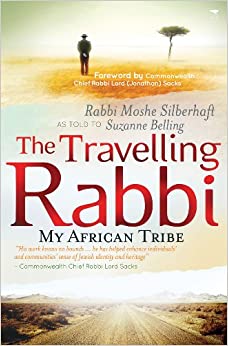
I just read a book (this was in 2014) The Traveling Rabbi by Moshe Silberhaft. It was loaned to me by Pauline Shapiro, Montclair character of note. We got chatting – instead of doing her eyeballs – about how Durban had lost most of its Jews and Harrismith had lost all of its Jews.
Rabbi Moshe went around the country from 1995 to small dorps where the ever-diminishing number of Jews allowed them to live in peace and eat whatever they wanted till he came to give them a skrik and some guilt feelings. He tells me in his book that Bethlehem comes from Beit Lechem, which means House of Bread. His book has three pages on Bethlehem and the main talk is about Rabbi Altshuler, who died in 1983, and the de-consecration of the synagogue, which was converted into offices by attorney Gerald Meyerowitz. Then converted again: car parts shop. That’s pretty hefty de-consecration! That’s like being smote!
With the closing down of the Bethlehem shul Rabbi Silberhaft did the rabbi stuff: “The three Sifrei Torah were removed from the Ark and carried out of the shul by Syd Goldberg, Saville Jankelowitz and Sam Jankelowitz, then aged 90, assisted by Dr Harold Tobias, who had a bad back, in a very solemn procession.”
Shockingly, Moshe didn’t mention my mate Steve Reed as an honorary Jew and extra son of Harold Tobias! Obviously he hadn’t heard Stefanus spin his yiddish. Even more shockingly, he leaves out my whole town! He writes of Parys, Brandfort, the metropolis of Phillipolis, Bloemfontein, Bothaville, the ‘Hem (ahem), Sasolburg, Marquard, Marseilles (Marseilles?!), Heilbron, Winburg, Senekal, Ficksburg, Kroonstad, and other no-name-brand towns, but no mention of that jewel of the Eastern Free State – Harrismith!
Amazing. He writes about all those flat dusty nothing-dorps and he omits the one shining-light green-oasis in the Vrystaat!
I suspect Harrismith “died” before the others? We grew up with the Woolf Chodos’, the Cohens, the Shadfords, Mrs Schwartz, Fanny Glick, the Longbottoms, Randolf & Bebe Stiller and others whose faces I can see but names . . my Mom and Dad, Barbara and Sheila will remember . .
But by 1972 we were dancing to Creedence Clearwater Revival at discos put on by Round Table in the already de-commissioned synagogue – at least fifteen years before Bethlehem’s was closed. So Harrismith’s shul got elevated in its deconsternation – unlike Beflehem’s descent into legal then commercial ignominy!
Sigh! But once again Harrismith got smoked by Bethlehem in the fame stakes. Something to remember: A possible cause for our C-rating in the progress stakes post-1948: Harrismith was a big verraaier-dorp in the Anglo-Boer War: Its citizens that did so well for themselves (my ancestors included) in an independent Republic, WELCOMED and aided and abetted the invaders!! Not good. One of my ancestors was principled, fought for the Boers and was sent to Ceylon as a POW. The others benefited even more after the war from money the British army spent in the town. ‘War is hell, I’m not to blame’ –
~~~oo0oo~~~
– Bethlehem –
The book has plenty amusing snippets. As the last few Jews die in the dorps, Silberhaft buries them, sometimes in cemeteries that haven’t had burials in them for yonks and decades. “Gave the cemetery a new lease on life,” he says . . .
One oke’s Dad was scared of flying and specified: “Don’t you dare send me in a coffin in an airplane hold”, so his son rented a kombi and drove the body to West Park cemetery in Joburg. Silberhaft then buried him and wrote to the son “I know your Dad liked to jol, so I buried him near the fence in case he wants to get out and hit the town.”
Some okes had long given up the faith, so when he tried to visit them in their little dorp some skrikked and quickly – and maybe briefly? – became kosher again! Others were way past all that and “voetsekked” him! Sent him packing.
Seems Silberhaft had a big thing about strict kosher living and – especially – eating. He would make a big thing if people were kosher and a bigger scene if they had slipped off the strict and narrow – and slippery! – path. Even though to stay kosher meant you had to have your meat brought in from outside, or have a kosher slaughterer come to you to slit your animals! He would take kosher meat in his boot to give to people – which suggests that in between his visits they probably ate pragmatically? Hey! Bacon. Some things are forgivable. Pigs have no chance of amnesty cos of bacon; I even have a best man who will occasionally wobble off the straight and narrow and into a bacon sandwich and that’s what forgiveness is for.
Pictures of the Bethlehem shul by Jono David at jewishphotolibrary.wordpress.com. It’s now a car parts shop, but check the lovely pressed-steel ceiling and the chandelier.
The
Bethlehem cemetery picture is also Jono David’s. He’s also at
jewishphotolibrary.smugmug.com
~~~oo0oo~~~
Steve Reed, Bethlehem Boy, wrote:
Thanks Koos, interesting stuff. We lived across the road from the Bethlehem shul. In a flat which was the subject of great intrigue to my school friends, all of whom had huge family homes in Oxford street and Cambridge street. The Tobias residence was in an even fancier part of town, along with the Meyerowitz residence, the Goldberg residence and others, high on the hill. Here you found swimming pools and things called “rumpus rooms.” I was an adopted member of the Tobias family, yes. From the wrong side of town, near Kraay’s Bakery. The Mann brothers, the paint magnates who lived even higher on the hill, referred to them as ‘Kraay the Beloved Baker.’ Once again, the bread connection!
For
Les Tobias’s bar mitzvah, I pitched up in my school (shul?) uniform
as there was no way we could afford a suit. Having been a St. Andrews
boy before moving to Bethlehem, this was an OK thing to do –
presumably with the Saints fees, it was understood there was no money
for suits. Must have got a few tongues wagging. Surprised we didn’t
start getting food parcels from the Jewish community after that.
Brauer wrote: The travelling rabbi’s old man is my mom’s neighbour in JAFFA – the Pretoria Jewish old age home.
~~~oo0oo~~~
skrik – frighten them; put the fear of G_d into them; see that? I wrote the Jewish god G_d
dorp – village; dusty; not Harrismith
voetsek – bugger off; voetsak’d – sent packing
verraaier – traitor
~~~oo0oo~~~
correspondence
followed:
Me: Wrote a little blog post about that book on Bethlehem where they battled to find three wise men.
Brauer: So the shul is a car parts shop? They probably sold the shofar as a much sought-after retro hooter (or horn).
Me: Couldn’t there be a market for a mobile Jewish wedding car – with removable roof and twin shofars, with a floor to dance and smash things on? I have to think of something to make cash post-optometry. Could I be the rabbi, or would I have to use a rent-a-rabbi?
Brauer: Conditional. We’ll let you be the rabbi if you have the snip.
Me: Eish!! It just shrank and retreated to only eleven inches in the shade at the very thought. What the rabbis don’t know is my definition of minor surgery: Minor surgery is Surgery On Someone Else.
I’ll have to stick to driving the mobile wedding car – you could say, ‘being the shofar . . ‘
~~~oo0oo~~~
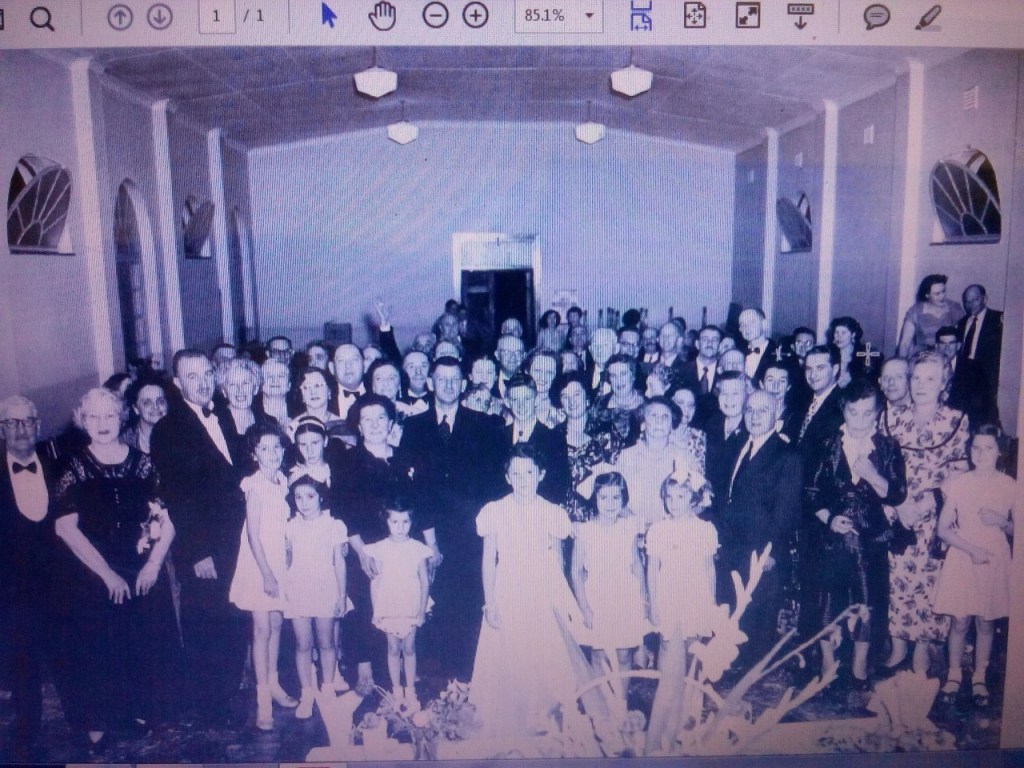
Here’s a lovely old picture taken inside the Harrismith synagogue!
– must get this to the folks for them to ID the people – old friends –
~~~oo0oo~~~
Dec 2020: I learnt today from big sis Barbara that the occasion above was Ivan Katz’s bar mitzvah. He turned 80 this year and has spent most of the year COVID-trapped in New York (state or city, I don’t know) with his daughter. He was matric 1957 in Harrismith. His Dad owned a bakery next door to my gran Annie Bland’s Caltex garage. Barbara found more old Jewish friends and wrote to them – an extract here.
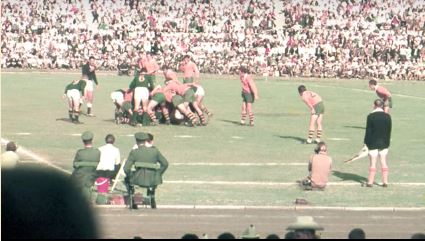
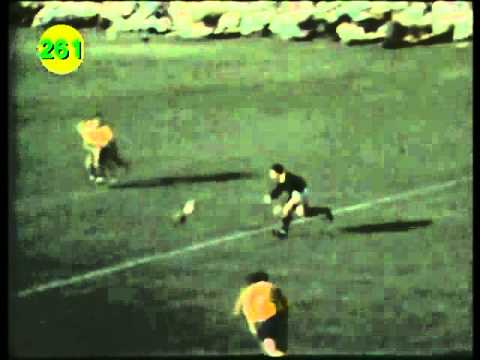
In 1969 a bunch of us were taken to Durban to watch a rugby test match – Springboks against the Australian Wallabies. “Our” Tommy Bedford was captain of the ‘Boks. We didn’t know it, but it was to be one of his last games.
– Boks 16 – Aussies 9 –
Schoolboy “seats” were flat on your bum on the grass in front of the main stand at Kings Park. Looking around we spotted old Ella Bedford – “Mis Betfit” as her pupils called her – Harrismith’s English-as-second-language teacher. Also: Springbok captain’s Mom! Hence our feeling like special guests! She was up in the stands directly behind us. Sitting next to her was a really spunky blonde so we whistled and hooted and waved until she returned the wave.
Back at school the next week ‘Mis Betfit’ told us how her daughter-in-law had turned to her and said: “Ooh look, those boys are waving at me!” And she replied (and some of you will hear her tone of voice in your mind’s ear): “No they’re not! They’re my boys. They’re waving at me!”
We just smiled, thinking ‘So, Mis Betfit isn’t always right’. Here’s Jane. We did NOT mistake her for Mis Betfit.
.
“corrections of corrections of corrections”
Mrs Bedford taught English to people not exactly enamoured of the language. Apparently anything you got wrong had to be fixed below your work under the heading “corrections”. Anything you got wrong in your corrections had to be fixed under the heading “corrections of corrections”. Mistakes in those would be “corrections of corrections of corrections”. And so on, ad infinitum! She never gave up. You WOULD get it all right eventually!
Stop Press! Today I saw an actual bona-fide example of this! Schoolmate Gerda has kept this for nigh-on fifty years! (this is in 2020)
– genuine rare Harrismith Africana ! – or is it Engels-cana? –
~~~oo0oo~~~
Tommy’s last game for the Boks came in 1971 against the French – again in Durban.
~~~oo0oo~~~
Two or three years later:
In matric the 1972 rugby season started and I suddenly thought: ‘Why’m I playing rugby? I’m playing because people think I have to play rugby! I don’t.’
So I didn’t.
It caused a mild little stir, especially for ou Vis, mnr Alberts in the primary school. He came up from the laerskool specially to politely voice his dismay. Nee man, jy moet ons tweede Tommy Bedford wees! he protested. That was optimistic. I had played some good rugby when I shot up and became the tallest in the team, not because of any real talent for the game – as I went on to prove.
~~~oo0oo~~~
ou Vis – nickname meaning old fish – dunno why
Nee man, jy moet ons tweede Tommy Bedford wees! – Don’t give up rugby. You should become our ‘second Tommy Bedford’ – Not.
~~oo0oo~~~
Meantime Jane Bedford has become famous in her own right in the African art world, and in olde Durban colonial circles. Sister Sheila and Jane have become good friends.
~~oo0oo~~
Two more pupils who remember Miss Betfit with, um, fondness are Etienne and Leon
Leon:
Out of the blue Miss Bedford would streak down one of the isles with astounding acceleration, grab an inattentive victim’s arm and bang his/her elbow mercilessly on the well marked desk. It used to be bloody sore, especially if you were inattentive often…
Or, if you dared to fish a crib note out of your case while she was on about something, she would storm down the isle, grab your boeksak and scatter the contents gleefully all over the length of the isle ― the rest of the class never failed to find it absolutely hilarious. And the contents of your partitioned fake leather case could be embarrassing on occasion.
On one occasion she flew down our isle red with indignation. I sat immobilised with trepidation (this doesn’t sound right) *ed: do some corrections* as she came right towards me. I was daydreaming, so I clutched my elbows as tight as I could… but this time my elbow was spared ― it was Gabba on the other side of the isle who was caught fiddling in his case. She viciously shook his case as she walked back. Books, blikkie, pencils, notes, everything scattered indecently all over the place. Much funnier than usual (hey it was Gabba FGS, the longstanding Eastern Free State rugby captain) I roared with laughter and relief.
Five minutes later the bell rang, I dived down to stuff a prescribed book into my case, but no case. I looked up in bewilderment, to see Gabba walking off with his unaffected case and that evil half-moon grin.
Etienne:
I only had trouble with Missus Bedford right at the beginning of standard six when I saw that it was serious that you’d come back at three. I went back at three once and then made a conscious decision not to mess around with the English teacher & she never terrified me after that. In fact she was my favourite teacher in complete contrast to Eben Louw who really gunned for me. He & my old man had political issues.
Seeing the pic of her brought a tear to my eye & I remembered Fran Hurter as well. I went to see Fran Hurter in her Riversdale old age home before she passed on.
Yep I’m too nostalgic at this ripe age, Cheers & tears, Etienne
~~oo0oo~~
Leon again:
you were wise beyond your years regarding Ella Bedford. I spent half my flippen school-life doing corrections in the afternoons.
Still, I agree, she had a much bigger influence than most teachers. Definitely not academically though, I still cannot speak the lingo (isles versus aisles), but in life skills, I think.
Work-ethic (surely more could have rubbed off), never giving up on the Moore-cousins, but especially never getting personal. The latter really got me.
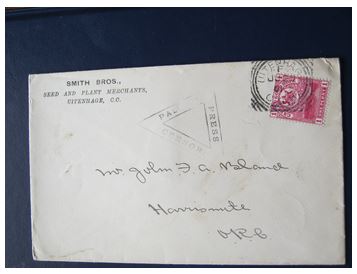
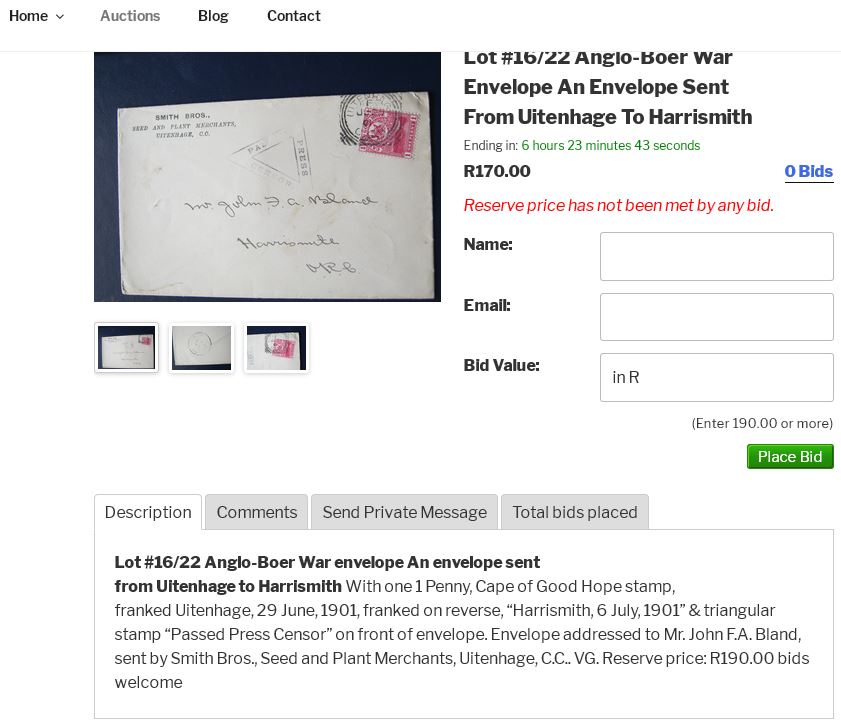
My great grandfather got a letter from a seed and plant merchant in Uitenhage in July 1901. I know cos I found the envelope on an online auction site. It was sent to Harrismith, Orange River Colony (ORC).
It was stamped ‘Passed by the wartime Press Censor’ as the wicked Poms were trying to steal our diamonds and gold at the time and were waging the Anglo-Boer War.
~~oo0oo~~
Sheila responded:
“Yes, I would think it was JFA Bland II who was our Grandad Frank’s father. He came to Harrismith by oxwagon with his father JFA Bland I and they settled near Witzieshoek.
JFA Bland I is buried in Senekal apparently – I made contact with someone in Senekal who offered to go looking for his grave, but she’s never come back to me – so if you ever find yourself in Senekal with nothing to do …….”
The eastern-most pass up Harrismith’s Platberg is the fabled Donkey Pass. We called it Flat Rock Pass. Mountain Passes South Africa says it’s the sixth highest above sea level, and the second steepest pass in South Africa.
The road traverses a nature reserve and you need a permit to drive up. The steep parts – with sections as steep as 1:3 – are concrete stripped to aid traction. 4X4 and low range is essential for a safe and – especially – non-destructive ascent.
For those that do get to drive this amazing pass, you will be one of a select few to have done so.
The fauna and flora are special – adapted to the high altitude – up to 2394m – that’s 7854 feet to those stuck in ancient Empirical measures! When the sun never used to set on old whatsername’s empire. Remember? Plant species, over 669; I know of these animals: grey rhebok; chacma baboon; dassie; there must be many more. I hope the rhebok are still there. They live a precarious existence on this little 3000ha ‘island’, with people, fires and cattle around and encroaching.
On top you’ll find Gibson Dam, built by British soldiers soon after the Boer War. The donkeys that carried the building material up gave the pass its alternative name.
Other passes on Platberg’s south side – the side facing the town – are Khyber Pass, ZigZag Pass and One Man’s Pass. They’re all footpaths only though.
Hopefully Platberg’s custodians limit the number of vehicles they allow on top to keep the mountain top as undamaged as possible. Sensitive wetlands!
Here’s the extent of Harrismith’s townlands. This means the rare grassland and wetland top of Platberg is unprotected and could be developed. We really need to up its conservation status:
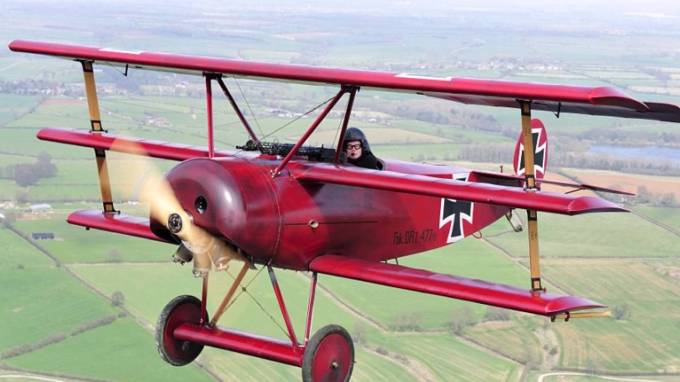
– von Richthofen’s famous red Fokker Dr.1 triplane –
Sheila found this:
On the 16 April 1917, the crimson killer Manfred Von Richthofen shot down his 45th Allied aircraft, which included 2nd Lieutenant Frederick Seymour Andrews, the son of Thomas Frederick and Louisa G. Andrews, of Warden Street, Harrismith, in the Orange Free State, South Africa.
Andrews was born in 1889, and was educated at Merchiston College, Pietermaritzburg and – even better – at school in Harrismith. Like many of his countrymen Andrews made the trek to England to volunteer his services in the ‘Great War.’ Approximately 10,000 South Africans and Rhodesians served in the British Armed forces during World War 1, around 3,000 of them in the Royal Flying Corps (RFC).
Andrews joined the RFC and initially served in the ranks with No.1 Squadron, before being commissioned and gazetted as 2nd Lieutenant to the General List in March 1917. He was then posted to No.53 Squadron where he was to meet his pilot, Lieutenant Alphonso Pascoe, who hailed from Cornwall. Andrews and Pascoe were subsequently transferred, in tandem, to No.13 Squadron on the 18 March 1917, the squadron helping to pioneer formation bombing during the war.
Unfortunate timing. April 1917 has gone down in British history as ‘Bloody April’ as the RFC was to suffer a disproportionate amount of casualties – three times as many – in relation to German losses. Since September 1916, the Germans had held the upper hand in the contest for air supremacy on the Western Front, with the Albatros DII and DIII outclassing the British and French fighters charged with protecting their exceptionally vulnerable two-seater reconnaissance and bomber machines.
On the 9 April 1917 the Battle of Arras began with RFC support. In subsequent engagements with the German air-force, the British lost roughly 245 aircraft, with 211 aircrew killed or missing, and a further 108 taken prisoner. A catastrophic period of RFC history.
Andrews’s squadron was equipped with the Royal Aircraft Factory Bleriot Experimental 2 single engine two-seat biplane, the BE2. Approximately 3,500 were built during the war and used as fighters, interceptors, light bombers, trainers and reconnaissance aircraft. The BE2 was not a popular aircraft with the British airmen, being seriously under-powered and unreliable – even by the standards of the time.
Due to bad weather, rain and low clouds, there had been few combats on 16 April but at 14:50 hours, Pascoe and Andrews were dispatched in their BE2e aircraft No. 3156 on an Artillery Observation sortie. According to Von Richthofen, flying his red DIII, No. 2253/17, he approached Pacsoe and Andrews from approximately 1,000 metres. The two ‘British’ pilots were flying at an altitude of 800 metres, and were supposedly totally unaware of the enemy. Von Richtofen promptly attacked, whereupon Pascoe’s aircraft lost control and began smoking. The pilot regained control, but in the end the plane plummeted from approximately 100 meters to the ground below, coming down between Bailleul and Gavrelle. It was the Baron’s 45th victory in total.
Pascoe and Andrews survived the initial crash. Pascoe was the luckier and could be sent home to England to recover from his wounds. His ‘Springbok’ observer was not so fortunate. Desperately wounded, Fred Andrews was lifted from the smashed wreckage and passed through a series of casualty stations until he finally reached Le Tocquet Hospital, where he was to die thirteen days later, on the 29 April 1917.
How short and hurried life can be in war. Fred Andrews lasted barely a month in combat. Von Richthofen’s spell was much longer, but still pitifully short.
Von Richthofen earned his pilot’s license in June 1915. After honing his skills flying combat missions over France and Russia, he met the famed German flying ace Oswald Boelcke, who enlisted him in a new fighter squadron called Jasta 2.
Under Boelcke’s tutelage, Richthofen grew into a seasoned fighter pilot. He recorded his first confirmed aerial victory in September 1916 by shooting down a British aircraft over France. He soon racked up four more kills to earn the title of “flying ace.”
He had his Albatros D.III fighter plane painted blood red. The distinctive paint scheme gave rise to the immortal nickname ‘The Red Baron’.
In June 1917 Richthofen was promoted to leader of his own four-squadron fighter wing and was outfitted with the Fokker Dr.1 – Dreidecker = triplane – the distinctive three-winged machine that would become his most famous aircraft.
The Red Baron’s final flight took place on April 21 1918, when pilots from his Flying Circus engaged a group of British planes over Vaux-sur-Somme, France. As Richthofen swooped low in pursuit of an enemy fighter, he came under attack from Australian machine gunners on the ground and a plane piloted by Canadian ace Arthur Roy Brown.
During the exchange of fire, Richthofen was struck in the torso by a bullet and died after crash-landing in a field. Brown got official credit for the victory, but it seems it was probably the Australian infantrymen who fired the fatal shot.
Allied troops recovered Manfred von Richthofen’s body and buried him with full military honors. The 25-year-old had only prowled the skies for a little over two years, but his 80 confirmed aerial victories proved to be the most of any pilot in World War 1.
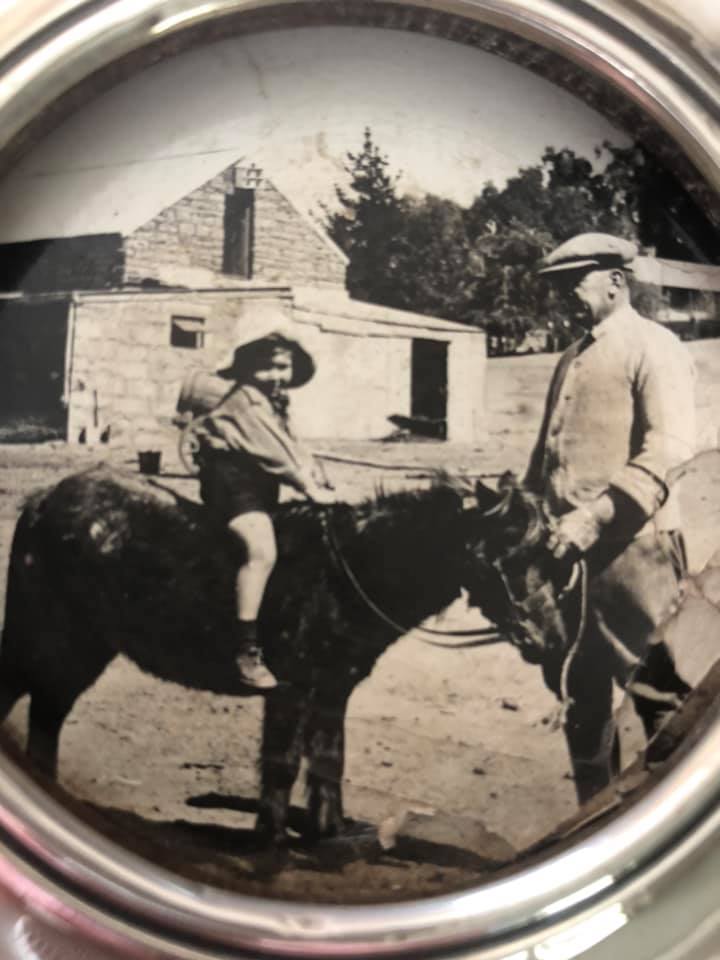
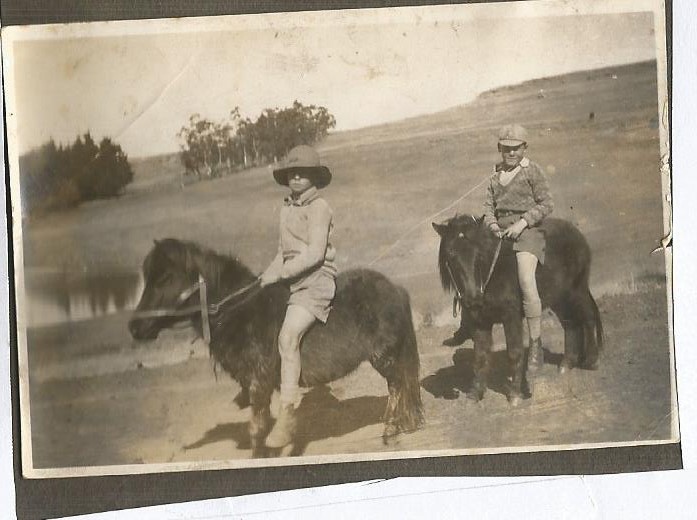
Sister Sheila sent this lovely old photo – she thinks ca 1920 – of Jack Shannon and our Mom Mary’s cousin Peter Bell on their ponies on Kindrochart, the Shannon farm on the Oliviershoek road and near Mom’s parents Frank and Annie Bland’s farm Nuwejaarspruit, on the Witzieshoek road. Sterkfontein Dam now lies between the two farms – in fact, the Nuwejaarspruit homestead is now submerged under the clear waters of the dam.
Peter Bell was Mary’s first cousin – his Mom Jessie Hastings-Bell (neé Bain of the Royal Bains) was Annie’s sister. Peter joined the Rhodesian Air Force in WW2 and went MIA – missing in action – his body was never found.
Mom tells the story of how Jack was urged to give his Shetland pony to “the Bland girls”, Mary and her sister Pat, once he’d outgrown it. He was reluctant but his folks urged him to be generous and asked again if he would be so kind.
Tue 2nd May 2017 – I got a phone call at work from a friend who had just visited Mom & Dad – “Your Mom was saying strange things and was not herself, I think you should visit”, said Keith Griffiths. I phoned sister Sheila (who phoned other sister Barbara) and drove to Maritzburg.
Mom was physically fine, but a bit confused and – tragically – with marked short-term memory loss. Trying hard to be alright she asked me “How’s Trish?” Trish who died six years ago. Dear old Mom has had a probable TIA leading to sudden short-term memory loss. Tragic, she has always been so sharp and organised. Luckily her longterm memory and sharp sense of humour is unaffected.
DAMN!!
Probably a transient ischaemic attack (TIA) or “mini stroke”.
~~~oo0oo~~~
A TIA is caused by a temporary disruption in the blood supply to part of the brain. The disruption in blood supply results in a lack of oxygen. This can cause sudden symptoms similar to a stroke, such as speech and visual disturbance, and numbness or weakness in the face, arms and legs. However, a TIA doesn’t last as long as a stroke. The effects often only last for a few minutes or hours and fully resolve within 24 hours.
But Mom’s memory loss is still apparent a week later.
~~~oo0oo~~~
Phoned them this morning
Dad says he told Mom to stay in bed till the sun came up but she didn’t. He wants her to see an audiologist as she doesn’t listen! (He’s as deaf as a post and her hearing is great, making the joke all the better).
~~~oo0oo~~~
Mom says she prays for Tom n Jessie every day that they’ll understand their lessons and pass their tests. I asked her if that wasn’t cheating? Mary Methodist hosed herself. But slightly cautiously – she was raised not to tempt fate.
~~oo0oo~~
A Missive From Sheila:
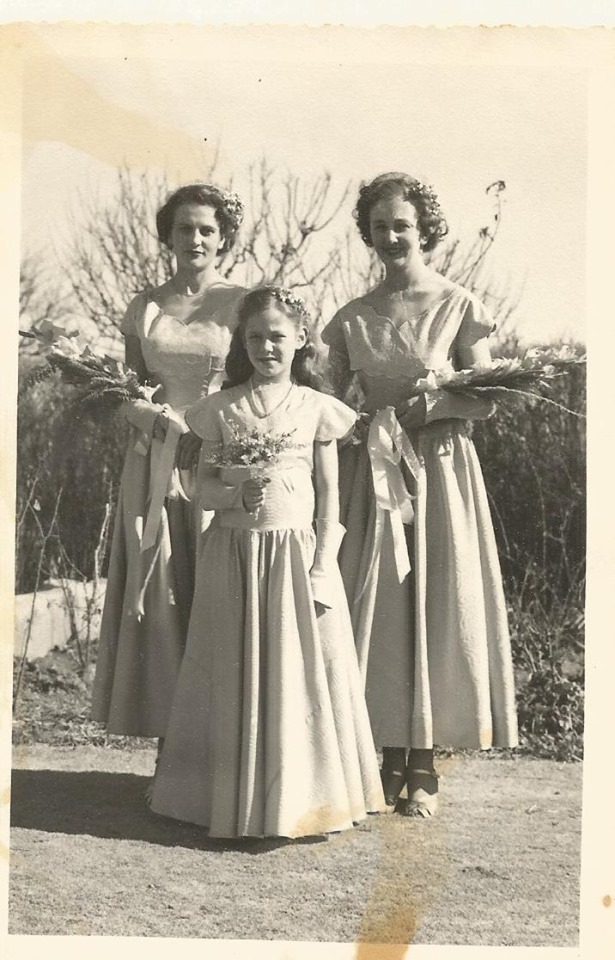
Hi Everyone – I’m in the middle of a massive clean-up and came across this – on the back is written:Marjory, Pat & Peggy – Harrismith 1938 – Signed DC Reed
Pat Bland and Marjory Farquhar. In front, Peggy Hastings
So I phoned Mum for more info:
Marjory was Farquhar – her younger sister was Dossie, who was Mum’s great mate – Dossie lives in an old age home in Bethlehem and she and Mum chat quite often.
Pat was Bland, Mom’s older sister.
Peggy was Hastings – Michael’s sister – she had a lovely sense of humour – she had 3 kids and then her husband walked out on her – she came back to Harrismith and married Bert Starkey – her kids were Barbara, Stuart and 1 other.
The Hastings were leaving Harrismith! Michael Hastings to Mary Swanepoel as they were leaving Harrismith in 1964: “There’s been a Hastings in Harrismith since 1066 and now we’re leaving.”
The “DC Reed” Mum thinks was Peggy’s cousin Daphne, whom they called Dodo – Mum says she was lovely and they all loved her.
It’s really a gorgeous pic and Pat looks so full of fun and nonsense, which she usually was!
So now you know. Love Sheila
~~~oo0oo~~~
One day, before Mum started school, Brenda Longbottom came to play. She lived across the road in Stuart Street and was 18 months older. Mum very proudly told Brenda about a book she was reading – all about a little girl called Lucky.
When Brenda saw the book she told Mum in a withering tone that the little girl’s name was Lucy, pronounced Loosie, not Lucky! Mum was devastated.
.
Years later I was also teased for getting hard and soft ‘c”s mixed when I said SirSumFurrAnce for circumference. Hey, we read phonetically when we read ‘by our own selves’, so this will happen!
~~oo0oo~~
Mum says Barnie Neveling had a rather caustic tongue at times – it was he who told Mum that Frank Bland’s brother – either Bobby or Bertie – had committed suicide – although Mum used the words “taken his own life” – he was a pharmacist and couldn’t live with his asthma any longer – Granny Bland spoke of it as an accidental overdose. Mum didn’t think it was necessary for Barnie to tell her that.
One of Granny Bland’s other sons, Alex, who was the Royal Hotel barman, played the piano – he cut his finger and it couldn’t straighten properly, so a friend offered to pay for the op to straighten it – Dr Reitz did the op and Alex died on the operating table.
One of his favourite pieces was Rachmaninoff’s Prelude – Mum couldn’t remember the key – she sang a bit of it to me – looked it up and I think it was G Minor (the other one was C Sharp Minor) – Mum says that whenever it was played on the radio, they had to switch the radio off because it made Granny Bland too sad.
Today (June 2020) Mum has so many jerseys on that Sister Rose asked if she was going to the North Pole.
She asked what Mexico’s biggest volcano was – for the crossword – I looked it up while we were chatting – Popocatepetl – I’ve never heard of it – but Mum knew / remembered it! She had asked a friend who was going to her cottage to look it up on her computer – but now, when this friend comes back with the answer – Mum will know it already – she liked that! She’s always been good at geography. Knew all the countries of the world and their capitals, and lots more. She’s not particularly charmed at recent name changes.
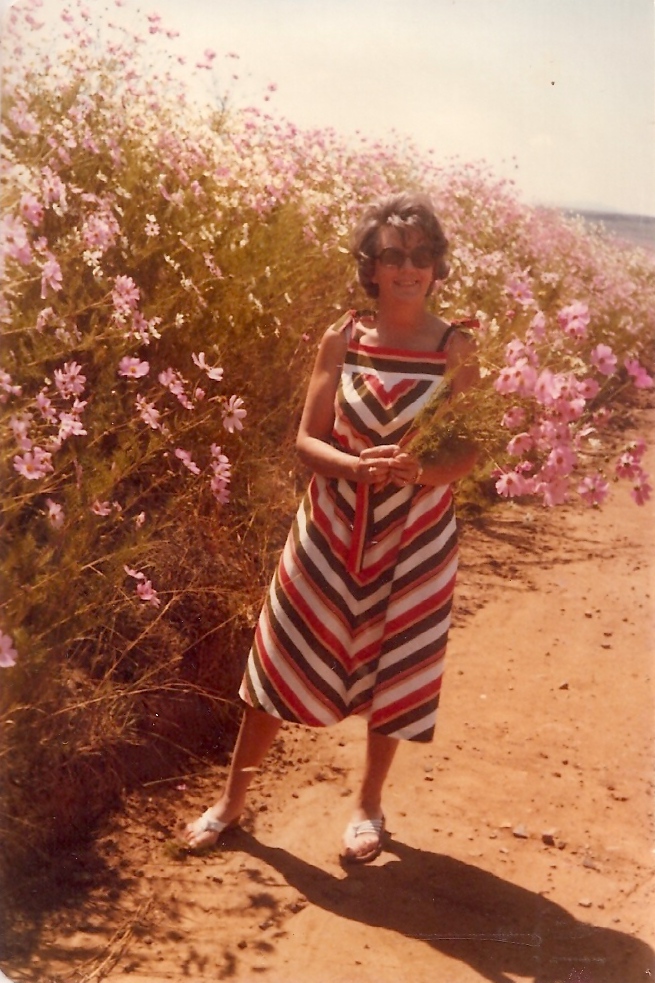
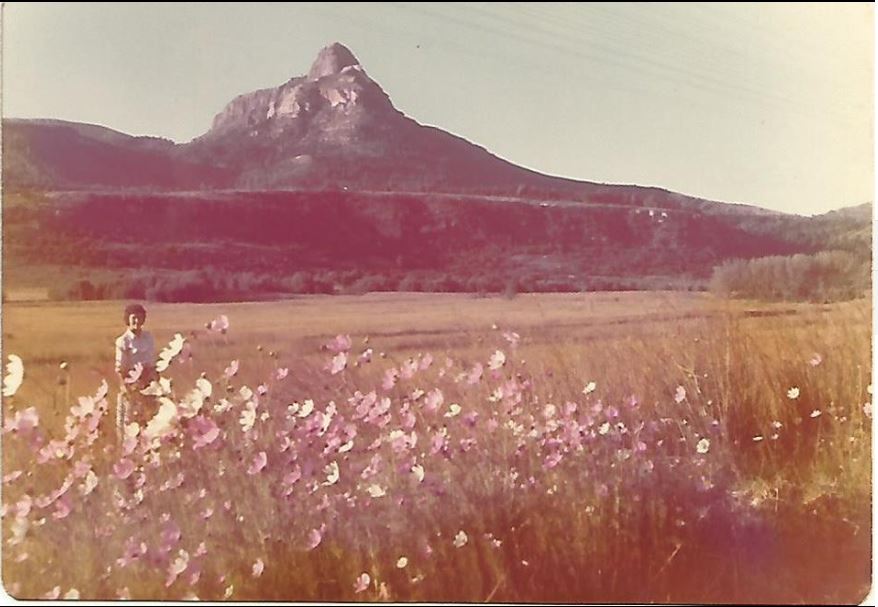
Mom Mary in the cosmos outside Witsieshoek back ca. 1970:
Sheila years later at the foot of the eastern tip of Platberg – some call it Bobbejaankop:
Sheila sent a 2018 pic of Brenda Sharratt in the cosmos behind Platberg:
Apparently cosmos got here in horsefeed imported from Argentina during the Boer War for the Poms’ horses. Hopefully only the seed, as the greenery must have tasted foul! It has a pungent smell.
~~oo0oo~~
wikipedia: Cosmos is native to scrub and meadowland in Mexico where most of the species occur, as well as the USA, Central America and South America as far south as Paraguay. One mainly Mexican species, Cosmos bipinnatus, is naturalized and widespread over the high eastern plains of South Africa. It has also spread to the West Indies, Italy, Australia and Asia.
Sheila sent this pic of the Old de Witt Hardware store to Steph:
2014/11/03, Steph de Witt wrote:
In those days Plascon had a traveling sign writer who was available for free, you only had to house and feed him, thus all the signwriting on the shop. He also did the vehicles. In later years we made use of Arthur Kennedy, if he was not doing handstands on a pole. Today it’s a Sign Shop. Lucky we have these wonderful photos. Thanks, Steph
~~oo000oo~~
Sheila:
Hello Steph. Thanks for the mail. Loved your comment on Arthur – he certainly was a character. Wonder where his two sons, Marlon and André, are these days? And his daughter – remember he named her Jackie Kennedy? No pretensions there. Mum remembers that he grew up in an orphanage, so he certainly did well for himself. Greg wants to contact you – he’s on gregory.seibert@gmail.com . What wonderful pics he is sharing with us! Do you have any school pics you can share with us? Are you still living in Clarens? Love Sheila
~~oo0oo~~
Steph to Greg Seibert:
Greg, we are all old people now, please get in touch that we can reminis on days gone by.
Sheila, I never were big on photographs, which I deeply regret today, but if you come up with more jewels that you have, it would be great. Who took the one of Alet’s shop? The car in front was a Fiat of some sort. I have just had Alet’s Karman Ghia (OHS 99 ) and Beatle (OHS 9 ) restored and am planning to build an old Garage-type building for them and my Dad’s Dodge 88 (OHS 778 ).
I am getting real sentimental here in my old age !
Mooibly
~~oo0oo~~
Me:
That’s wonderful. If it weren’t for sentimental people there’d be fokol left! Those cars are icons* and it would be great to see them again.
I was also Mr No-Camera Man. I would say “I’m video-ing it in my head”. Well, what happens when those pixels run into a Black Label?
Luckily I later got married and Trish took 40 million photos – which I’m still trying to sort through!
Mind you, maybe some of the escapades were best not captured on film. Back in the days when a six-pack was six longtom cans and went a long way!
I think you’re a photographer or not. I now have all the cameras but very often forget to shoot. Or remember at the end and get 1 or 2 boring pics, none of the action.
*or aikonas as Pieter-Dirk Uys says.
~~oo0oo~~
Note yet another Harrismith first: Pierre wore only one glove long before Michael Jackson copied him.














![Brenda_Sharratt_cosmos_Platberg[1].jpg](https://vrystaatconfessions.com/wp-content/uploads/2018/04/brenda_sharratt_cosmos_platberg1.jpg)




 Vrystaat Confessions