Before we learnt to drink beer on the banks of the mighty Tugela, we drank oros and water while observing our elders drinking beer on those same rocks on the same bend in the river that gives the farm its name. Here’s an 8mm ‘cine’ movie taken back in the early 1960’s – before we followed suit in the seventies.
These were the days when Thankful and Grateful – as that incorrigible axis of mirth Sheila-Bess-Georgie-Lettuce called Frank and Gretel Reitz – would have large soirees on the farm with the Swanies, the Kemps and others gathering ‘in their numbers.’
In the movie Gretel, Joyce, Mary and Isabel walk along that stunning driveway lined with (amIright here?) Grecian (Roman?) columns to the old double-rondawel thatched homestead. Then the drinking party moves down to the river where Gee and Kai pilot the motorboat and Barbara and Bess paddle in the shallows. Check out Doc Reitz’s old Chev OHS 71.
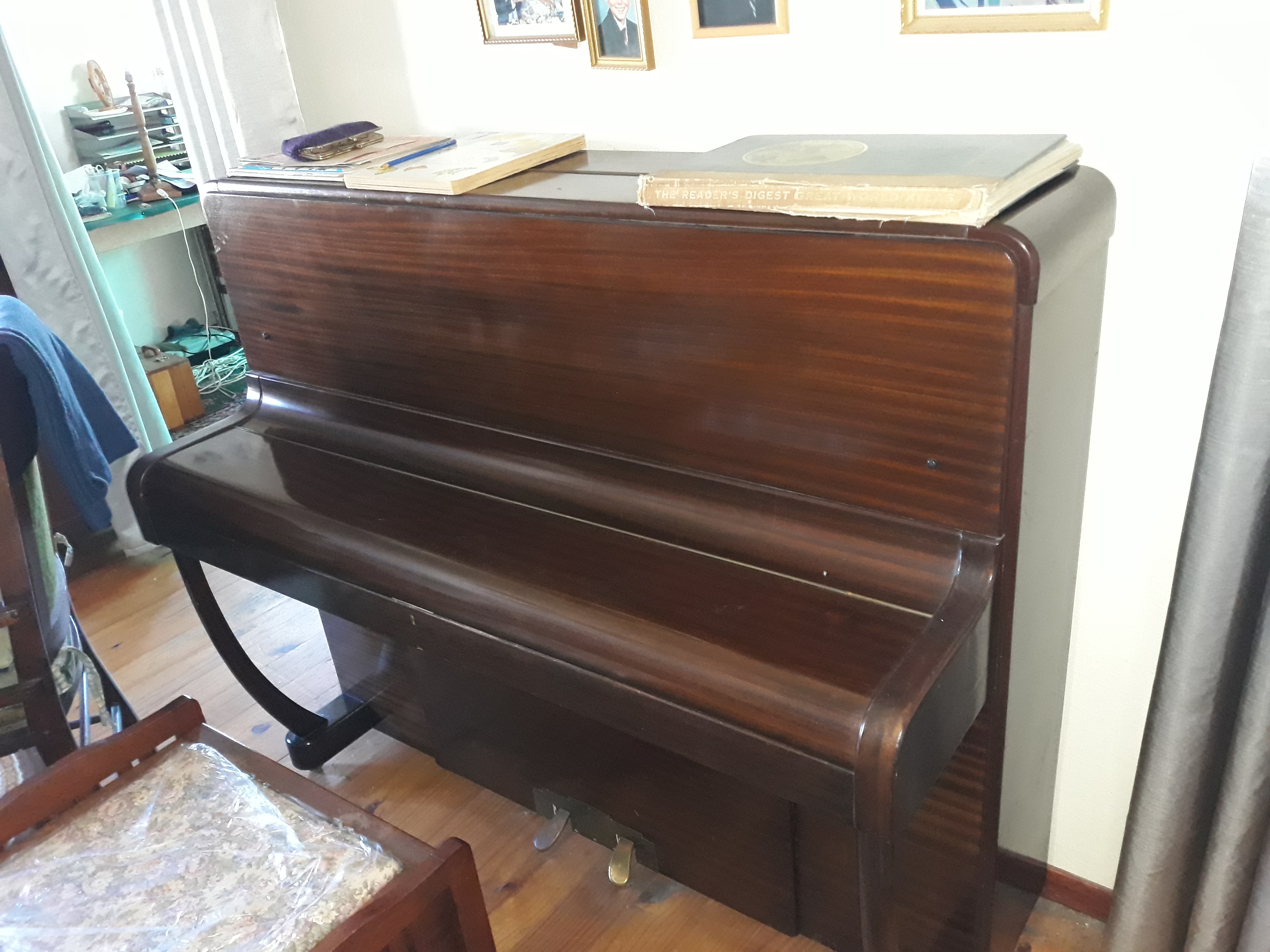
My Mom Mary Bland learnt to play the piano on her Granny Mary Bland’s upright Otto Bach at 13 Stuart Street. Mom’s sister Pat Cowie didn’t play, but when Granny Bland died the piano had to go to the older granddaughter. But how to get it there?
Jack Shannon had a bakkie and he volunteered to schlep it to Blyvooruitzicht, or as the Cowies called it, ‘Blayfore’. It got dropped at some stage in the loading or offloading and had to be repaired when it got there. All was well.
Years later Pat died and Bill decided it should go to Barbara as she played, and his daughters Frankie and Gemma did not. So another farmer with a bakkie was roped in to schlep it back from Blayfore – this time Barbara’s long-suffering husband Jeff Tarr carted it to PMB or Howick or Greytown (must ask Barbara). Barbara still has the piano in her home on their farm Umvoti Villa on the Mispah road outside Greytown. It’s now her daughter Linda’s home and Linda does play – hockey, jolling, all else – just not the piano. Maybe her daughter Mary-Kate will keep up the tradition of ‘Marys that play that piano’?
– the Otto Bach – now at Umvoti Villa –
Meantime Mom had bought another: an upright Bentley. Marie Bain had bought her daughter, Mom’s cousin, Lynn the Bentley hoping she’d learn to play ‘like Mary.’ Well, Lynn never took to playing, so Mom bought it from Marie for the same £100 she had paid for it years before. This was the piano we were so privileged to grow up with at 95 Stuart Street, listening to Mom playing her Methodist Hymns, and her Classical and Popular music. Who could forget the late night drinking songs when the Goor Koor gang would gather round her and bellow out their alcohol fumes, cigarette ash and varying levels of talent with gay abandon.
Mom still has the Bentley in PMB and still plays it beautifully. They’re upright pianos, not ‘grand’ pianos, but they certainly have been a grand part of our lives from about 1920-something – Mom Mary was born in 1928 – to 2019. And hopefully many more to come.
Here Mary at 90 plays someone else’s piano. Her classical pieces she always played with the music score in front of her. She can no longer see well enough to read it, so mainly plays her popular pieces by memory now.
We grew up to these sounds in the background. How lucky can you get!? These next few classical pieces are ones she played. Played here by some wonderful pianists who are almost as good as Mom in her prime!
also this:
I remember a few times getting so overcome by the music – melancholy or something? – I’d run down the passage and ask Mom to stop playing! weird.
~~~oo0oo~~~
Which are the ‘good’ pianos?
In the last 200yrs about 12 500 brands of pianos have been sold – and many more models – 12 500 actual brand names! The branding of pianos is a minefield of bulldust. Here Martha Beth writes amusingly about her forthright opinion on the quality of the pianos she is asked about:
Hilariously, the more authentically German the name sounds, the more it may have been made in Indonesia, Korea, Malaysia, South Africa, America or anywhere else! Once a piano did get a good name, a host of others suddenly had that or a very similar name! Steinway success spawned Steinbergs, Steinburgs, Steinerman, Steiner, Steingraber, Steinbach, Steinhoven, Steinmeyer, you get the picture. Each of them would claim to be THE famous Stein-what-you-call!
English piano makers Whelpdale Maxwell & Codd made – or ‘controlled’ – these brands, among others: Bentley, Broadwood, Knight, Welmar. They’re now out of business.
Otto Bach: See Dietman and Zimmerman for manufacture details. Otto Bach piano are possibly the most popular intermediate pianos in South Africa; the brand is certainly the most well known in South Africa. There are a wide range of Otto Bach pianos assembled in South Africa and some that were manufactured in the Zimmerman Factory in Germany.
“Otto Bach” ~~~~ seems originally to have been a name for pianos exported by Zimmermann, Leipzig for their export range. It appears that they took on the “Otto Bach, Leipzig” name by the twenties. It then seems that Dietmann, South Africa, purchased the “Otto Bach” brand in the 1950s and out it onto pianos they made, apparently not mentioning Leipzig. Alastair Laurence tells me that Knights supplied the piano parts to Dietmann for these, so they were virtually Knight pianos. There are still thousands of these Otto Bach pianos around; besides famous brands such as Steinway or Bösendorfer, it is probably the best-known piano brand in South African homes. By 1971, there were also “Otto Bach” pianos made entirely by Knight in Essex, and identical to their others except for the name on the front. Because of the varying origins of the name, it is not possible to date the pianos by their numbers.
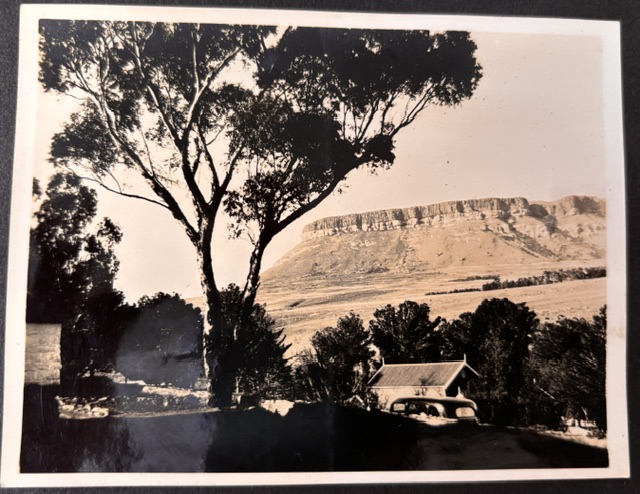
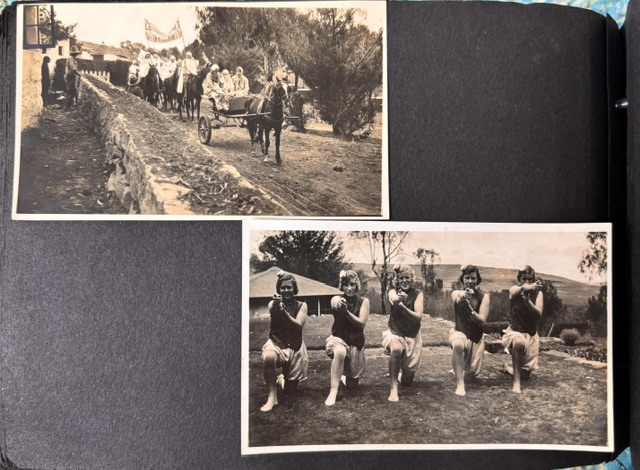
I know very little about Boschetto Agricultural College on the slopes below Platberg and above the town of Harrismith, Free State, so I’m writing this hoping someone who knows more will make sure we preserve the history.
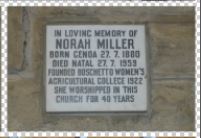
‘No successful South African settlement for women’s agricultural or horticultural training appeared until Miss Norah Miller, an émigré from the Edinburgh College of Domestic Service, acquired a farm and began receiving students in 1922, forming the basis for the Boschetto Agricultural College.’
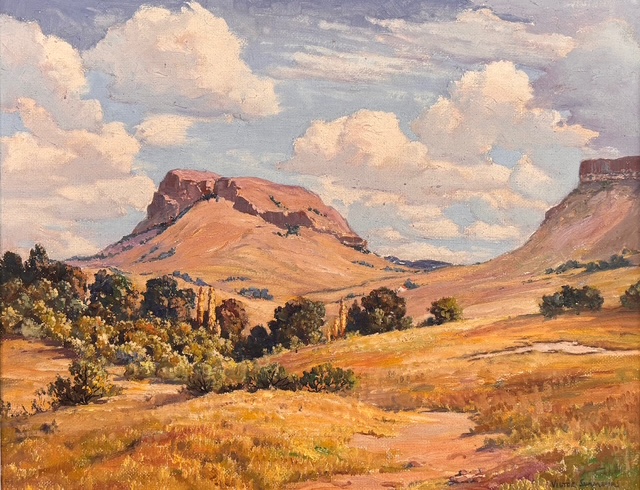
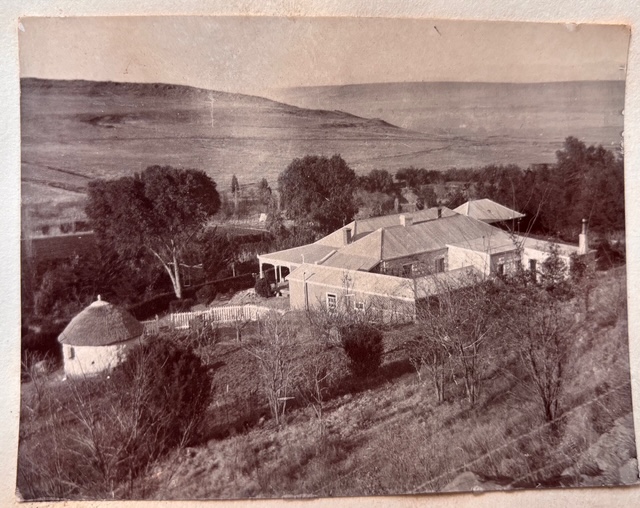
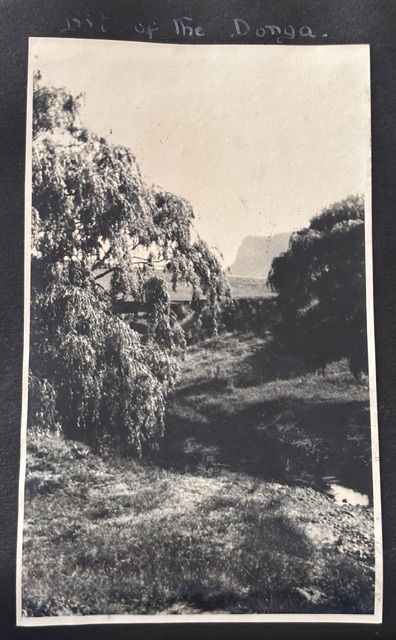
– it’s somewhere near here . . – up in those trees – those ‘boschettos’ of trees –
‘Boschetto’ is Italian for a copse or grove – and there are a few of them in that picture. Ah! Leon Strachan found a bit more – a snippet from Eric Rosenthal’s 1967 Encyclopedia of Southern Africa: The Boschetto property was about 250 acres and had belonged to a relative of Norah Miller’s named H.R. Wisely. It was named after a house in Malta that belonged to the family. Although it was a private undertaking, Boschetto enjoyed the support of the government. Rosenthal noted ‘it no longer exists.’
Here’s a fairly recent pic of the ruins of one of the buildings:
– one of the pics Candia Bradshaw sent me –
The driving force was the College head, Norah Miller, a formidable capable and well-liked person who wore a leg brace and limped – until her brace was replaced by Dr Frank Reitz – had one lens of her spectacles blacked out, and apparently smoked cigarettes all day long.
I found a 1931 video clip on Boschetto showing the students working in the grounds of the college. Platberg can be seen in the background. The students are seen milking a cow, making butter, spraying trees with fertiliser or pesticide, and tending to beehives wearing protective clothing. The clip is worth watching if only to shake your head at the jolly, gung-ho, empire-confident British what-what voice of the narrator!
– the west end of Platberg in a still capture from that 1931 video –
Here’s something on a Boschetto graduate. See the comments after the post for more.
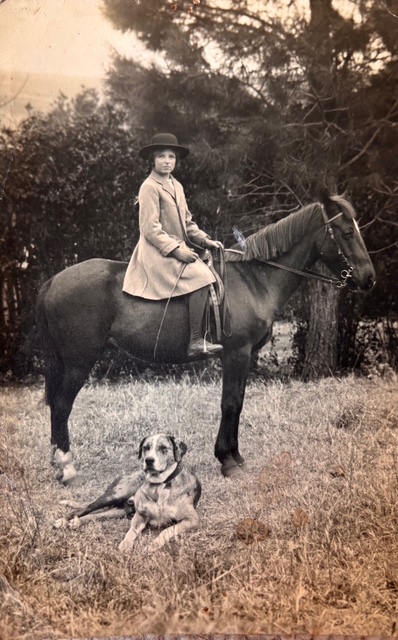
Gwendaline Bessie Ryan was born on 22 January1917 in Keiskammahoek, Cape, the daughter of Hugh Joseph Ryan and Louise Alvilde Thesen. She was educated at Boschetto Agricultural College in Harrismith. Gwen founded a dairy farm at Charlesford, on the Phantom Pass near Knysna, and was a keen horsewoman – in one article she is called the doyenne of Cape polocrosse – and was a well known horse breeder. Gwen also bred racehorses. She ran a horse livery yard and riding school from the farm and held regular polocrosse events at the Old Drift.
Gwendaline married Col Robert Devenish, Dep Commissioner South African Police, son of Robert Devenish, of Rush Hill, county Roscommon, Ireland, on 29 Nov 1952. Gwendaline died on 8 August 2002, in Knysna, Western Cape, and is buried in Knysna cemetery.
More Boschetto old girls that Mom Mary remembers:
Rosemary Dyke-Wells was in or near Kruger Park in the 50’s. Mom & Dad Pieter & Mary Bland Swanepoel visited her on their honeymoon in 1951. She was married to famous game ranger Harry Wolhuter’s son.
Sir Percy Fitzpatrick‘s daughter, ‘who dated Michael Hastings for a while.’ Fitzpatrick had a farm near Verkykerskop where he wrote his famous book Jock of the Bushveld.
~~oo0oo~~
Before I forget them, I must tell you Dad Pieter Swanepoel’s story about Norah Miller:
As a bachelor working on telephones for the Post office, he lived on a smallholding on the right bank of the Wilge River just west (downstream) of town. He tells how he used to ride his horse over to Boschetto hoping to meet girls. The first time he went, Miss Miller asked him to sort out some pictures or things in her office and he was able to do so. He says from then on he was “in,” and she was was always helpful to him.
and Mom’s story: (Mary Bland)
Leslie Bell told the story of a house in town, where someone said: “There’s someone at the door.”
Who is it? asked somebody else, from inside.
“I don’t know,” said the one at the door, “but it’s got one eye, one leg and a hell of a cough!”
Of course, it was Norah!
Mom tells of a visit to the hospital by Norah where Mom was Sister Mary Bland. It was her last day there as she was getting married – so it was 1951.
“Nora of Boschetto came in – I can’t remember what for. She was very excited about her leg. ‘Dr Reitz took an interest in my leg brace and made me a new one, It’s wonderful! So much more comfortable, and I can walk evenly!’ She was delighted.”
~~oo0oo~~
Miss Peggy Wiseley wrote a puff piece in “United Empire”, Brisbane, Australia, on 14 January, 1932. Try and sound like Mrs Queen – also an agricultural woman after all – when you read it.
Women Farmers in South Africa
In most countries of the Empire, the farmer has his part to play, and this is essentially true of South Africa, where the farming community is so important a factor and one in which the influence of women cannot be overlooked
During my recent tour in South Africa I was very much impressed by the opportunities that are opening up for the trained woman farmer, and it has been shown that an agricultural career need not necessarily be confined to men. Women farmers are to be found all over South Africa: on fruit farms, more especially in the Cape, and on dairy, poultry, and horticultural farms in all parts of the country.
In the second group are the wives and daughters of farmers. It is only fair that these women should be given some interest beyond the ordinary household duties, and be allowed a share in the life of the farm. Many cases of discontent could be avoided if farmers would allow their wives and daughters to run a section of the farm, such as the dairy or poultry, thus giving them some responsibility to counteract the attractions of the towns where many women go to escape from the boredom of farm life, a boredom which would not present itself if sufficient Interests were forthcoming at home.
In the third group are those women who are filling paid posts. Until recent years “Land Girls” were practically unheard of in South Africa, and although they are by no means general, a few posts are offering where girls are employed by farmers, either to run some special section or to give all round assistance. The salaries vary from £5 to £10 a month or more with keep. To some people these figures may appear low, but they compare very favourably with the average secretarial posts in England, where girls, many of them with University degrees, receive £3 a week, and out of this have to keep themselves, and have all the heavy expenses of town life. The South African Government provides excellent agricultural colleges for men all over the Union, but makes very little provision for the women farmers.
It is in this connection that a great work is being done for South Africa by Miss Norah Miller, the principal of Boschetto Agricultural College, Harrismith, Orange Free State, which she started privately in 1922, and which is the only Institution of its kind in the country providing women with a thorough training in all branches of agriculture. While I was in South Africa at the beginning of this year I spent two months at this college, and I was very much impressed with the work that is being done.
The place is charmingly situated at the foot of Platberg Mountain, two miles from Harrismith, in the Orange Free State, and about 5500 ft. above sea level in one of the most healthy parts of the country. The college is fitted with the most up-to date equipment in all sections, and has sleeping accommodation for about twenty students. The tuition is in the hands of four highly qualified young women from agricultural colleges In England, and the students are divided into town sections—lands, dairy, poultry, and horticulture—on which they work in rotation for three weeks at a time, thus obtaining the individual attention of the experts and the opportunity of acquiring an intimate knowledge of every branch of agriculture.
The usual course at Boschetto occupies a year, at the end of which time a certificate is given to those students who are successful in the examination set by the Government College for men at Glen, and all along the results attained have been amazingly good. Lately a second-year diploma course has been started for those students wishing to qualify still further, and for these more advanced subjects the Government provides supplementary lecturers. A bursary is awarded in alternate years to girls from England and South Africa.
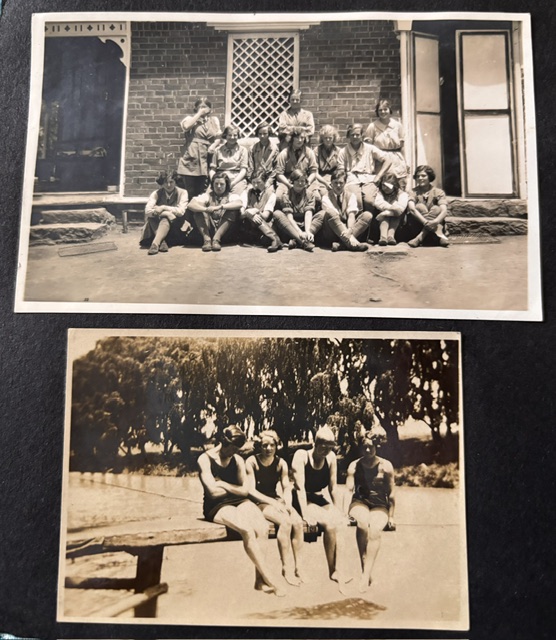
The practical as well as the theoretical side of the training is well maintained, a portion of each day being spent at work on the farm, at lectures, and at study. But although the students are kept busy, there is time enough for amusement. They are free most week-ends and on Thursday afternoons, and at these times you can see the girls going off for rides and picnics, while some amuse themselves In Harrismith with hockey and tennis, and all enjoy the swimming baths which have lately been opened in the town. At half-term a week-end camp is organised, and it would be hard to find a more jolly or healthy party of girls.
Each year the students are given the opportunity of attending one the large agricultural shows of the Union, either at Bloemfontein or at Johannesburg, and at the latter place, in 1930, the Boschetto butter-making team beat all the men’s colleges in open competition, and were awarded the silver cup. This year none of the men’s colleges entered for the competition, but the judges decided to award the silver cup to Boschetto for the second year In succession, seeing that the marks gained by that team were 86 per cent, four points higher than anything attained for several years. Both at Johannesburg and at Bloemfontein the college has gained numerous prizes for butter, cheese, honey, and poultry, while at a recent show in Harrismith, out of 19 entries, 12 first prizes, four specials, three seconds, and a silver cup in the poultry section were won in open competition.
The success gained by Boschetto at these various shows, where the college has to compete with experienced men farmers from all over the country, is proof indeed that the woman farmer is able to hold her own. A still further proof is seen in the past students of the college, who are to be found in every part of the Union, and in Rhodesia. Some are now married to farmers, and find that their agricultural training has made all the difference in their married life, while parents constantly write to say that their daughters now have a new interest in life.
~~oo0oo~~
In 2023 Mary Pitchford wrote:I was intrigued and delighted to read about Boschetto as my mother, Kate Hoare Taute, was a lecturer at Boschetto, having travelled from England to take up a position at the College. My husband and I have travelled to Harrismith to try and find out more about the College but found it quite run down. My husband’s aunt, Anne Pitchford Palmer, was also one of my mothers students, along with Gwen Devenish. I grew up in Knysna and my parents remained friends with Gwen and her husband, Bob, until first Bob, then my parents and then Gwen died. I do have some photos of Mum’s stay at Boschetto – I wonder if there would be anyone interested in them. We would indeed! They will be uploaded right here when you send them:
**pics will be uploaded here when I receive them**
Mary Pitchford also told another lovely tale of a recent link with Boschetto: About 10 – 15 years ago, the Riding for the Disabled ponies were stabled at our small holding in Birnham wood and the riding lessons were held there every week during the school terms. We had a man called Andy Ward who helped with saddling up and leading the ponies that were used in the lessons. He lived in Harrismith at the time that Boschetto was running. He remembered the ‘girls’ that used to ride into town to dances held in the town hall? They carried their dresses in saddle bags, changed into the dresses and then back into their riding gear to be able to ride back to the college again. My mum told me about how seasick she got riding in the pitch dark but could rely on her horse who knew exactly where to go. Andy said they were referred to as the ‘broekie girls’.
~~oo0oo~~
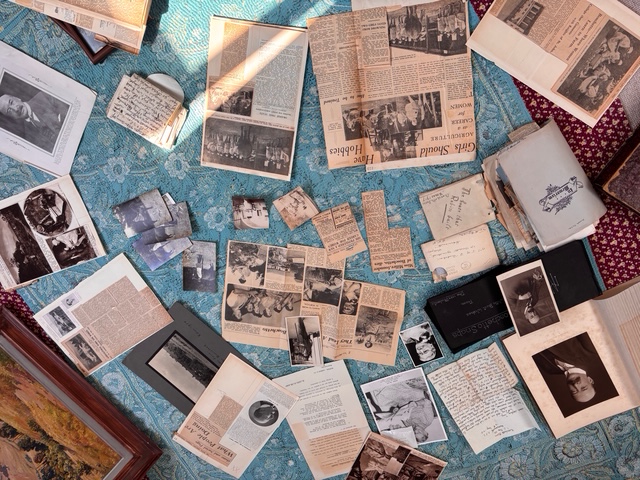
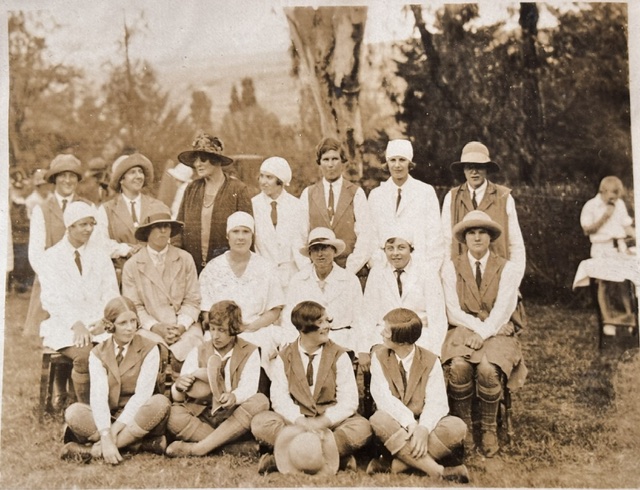
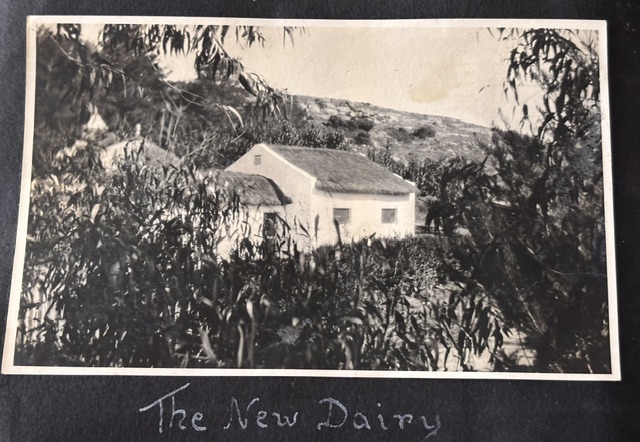
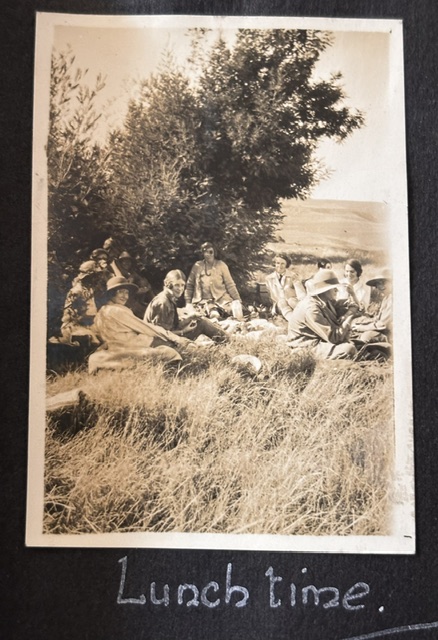
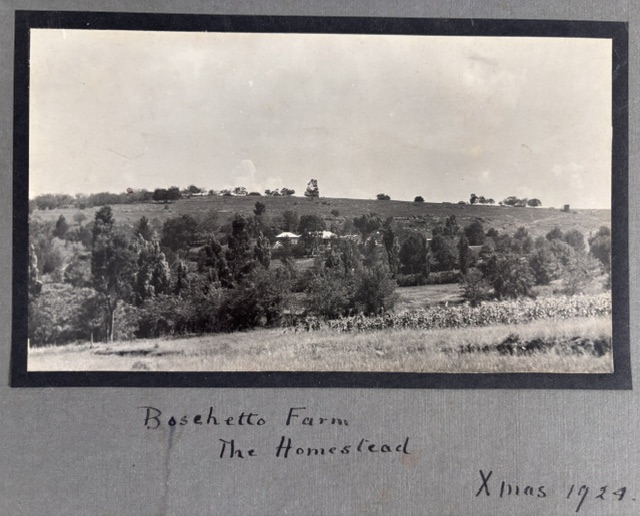
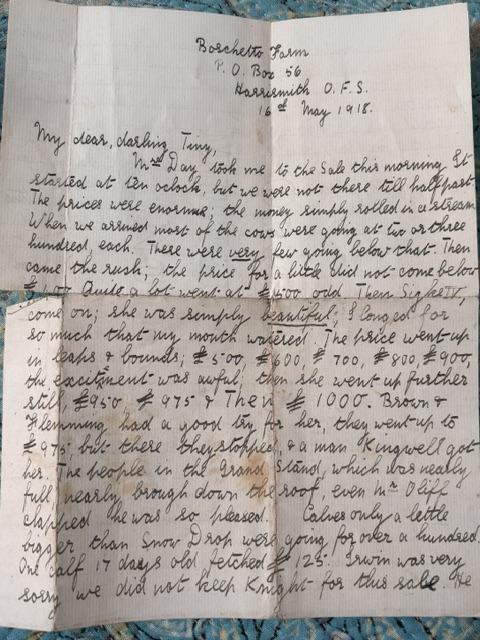
In 2025 Candia Bradshaw found this post and made a welcome contribution, with precious photos:Hello! H.R Wisely was my great-grandfather (He built Boschetto) and Peggy Wisely was my grandmother. Norah Miller was her cousin. My father, Robin Bradshaw lived at Boschetto during the 2nd World War and had many very memorable stores of his time there. I have lots of photographs, letters and other documents relating to Boschetto if you are interested? Interested indeed, here they are: Click to see each pic separately.
I have also used one of Candia’s pics as the feature pic at the beginning.
Steve Reed visited SA from Aussie. He’s a Vrystaat boykie, mainly Bethlehem and was the mayor of Clarens – the first son actually – so was on a visit home.
Him: When visiting my bro in Johannesburg we had plenty of jams and preserves all from ‘Annies Kitchen’ in Harrismith. Wouldn’t be the famous Ann Euthimiou from Harries, would it?
– Annie’s Jams from Nesshurst –
Me: No, not the gorgeous young Annie the Greek, another Annie from Harrismith, a contemporary of my gran – who was also Annie.
Her grandson Leon Strachan was one year ahead of me at Harrismith se Hoerskool. Lived on a farm, but his gran lived next door to us in town. He hopped over the fence one day ca.1965 to come and moer me for my insults. He was giving me a good and well-deserved whipping when younger sister Sheila came to my rescue, jumping on his back and beating him wif a bamboo, putting him to flight.
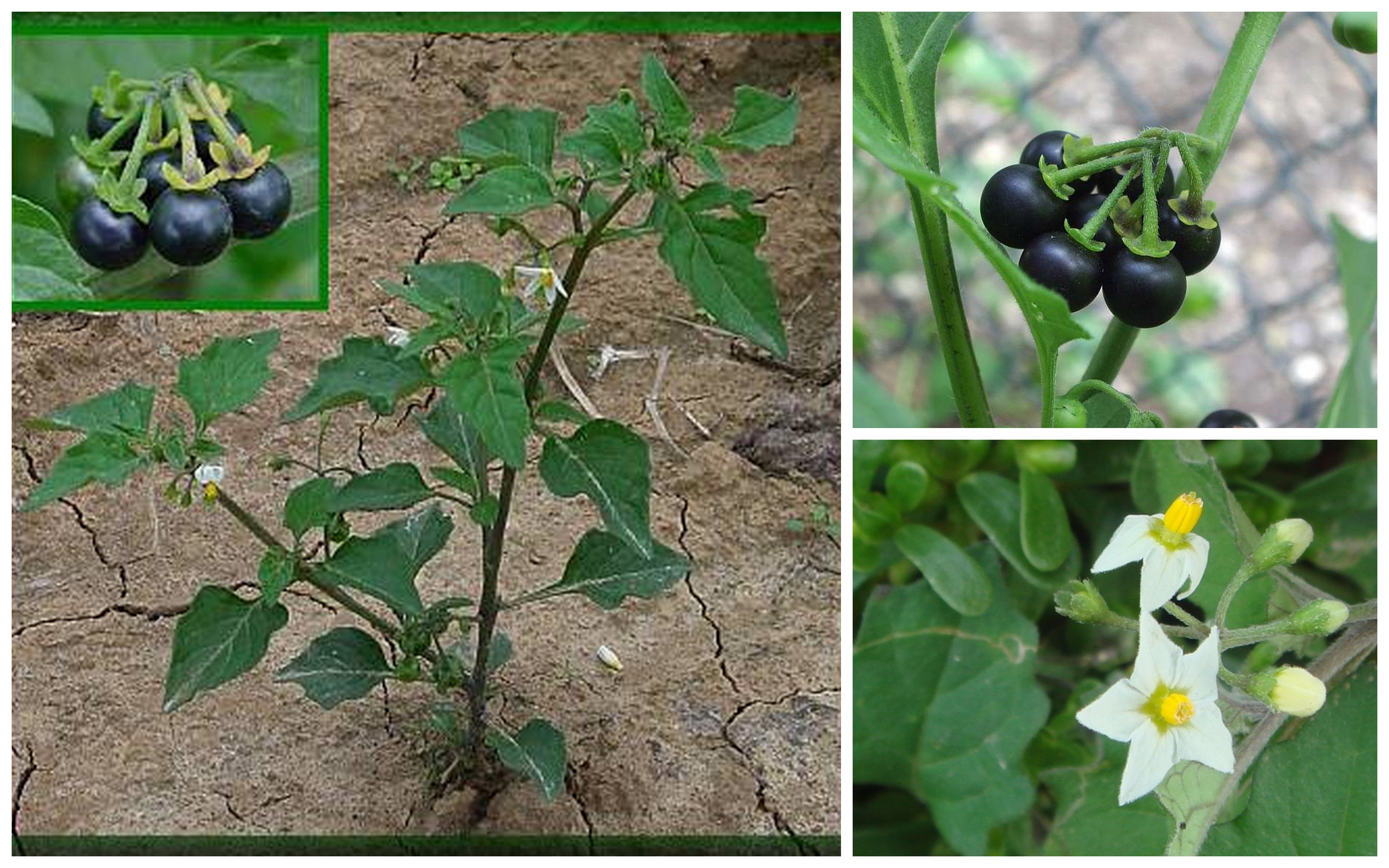
A first-class fella, he has written four books about Harrismith. I have one, Sheila has loaned me two more, and I have borrowed the fourth from Leon himself. He and his wife Elsa farm on Nesshurst, south of Harrismith on the Natal border. He grows and harvests black nightshade (nastergal – Solanum nigrum) and makes that mauve jam with black berries we called masawba – more correctly umsobo or sobosobo. They also make lots of other jams ‘in season.’
They branded it ‘Annie’s’ after his rooinek gran. Like me he had an Afrikaans side Strachan that originated in Scotland, and an Engelse side Davie. ‘Twas his rockspider gran Strachan what lived next door to us.
This
info from the defunct harrismith.co website:
Op Nesshurst met sy allemintige dam groei en besproei Leon en Elsa Strachan nastergal wat hulle in die plaasfabriek inmaak om die wyd-bekende Annie’s konfyte met die veelkleurige etiket met twee tarentale op te maak. Jare lank reeds sien ‘n mens nou oral in die land die bekende flessies met nastergal en tot soveel as twintig ander soorte konfyt. Die beroemde Annie’s konfyte van Nesshurst. Nastergal (Solanum nigrum) dra bossies klein, ronde bessies wat donkerpers is wanneer hulle ryp is.
My translation: Leon and Elsa Strachan make lovely jams (American: jellies) on their farm Nesshurst near the Free State / KwaZulu Natal border. Probably their most famous one uses Solanum nigrum berries, European black nightshade. Although parts of this plant can be toxic, the real deadly nightshade is a different plant. The good one’s berries are a dull, powdery, dark purple in bunches, the deadly one has single glossy black berries.
– Solanum nigrum – black nightshade – nastergal – umsobo – – the museum on Nesshurst – Leon in the hat –
Steve:Well it was blerrie lekker konfyt. And he obviously did not moer any significant amount of sense into you from what I have been able to observe since ca.1974.My eldest brother Doug (68) looks after his health, having had a couple of stents a few years ago. He cycles furiously (the Argus, the 96.4 or whatever long races are going) and golfs twice a week. His one weakness is for the blue cheese, crackers and Annie’s preserves, accompanied by bottomless refills of post-prandial brandy, port, or whatever other alcohol comes to hand. I spent seven nights with them and woke up with a headache on all seven mornings. He woke me up fresh as a daisy with heart-stopping strength coffee every day. Most mornings I was in an arrhythmic state as a result. He couldn’t understand what the hell was wrong with me.
~~oo0oo~~
2025 update: Annie’s Jams have cut back on their jam making, mainly just servicing a few long time outlets – but they also do orders via courier. So you can try and order on mobile number (as well as Whatsapp) 083 277 1891 and e-mail: anniesjam50@gmail.com
~~oo0oo~~
Harrismith se Hoerskool – Harrismith High School; remember your umlauts for decorum; altho without the umlaut you could learn a lot more
moer – thump; but when Steve said it: educate
Rooinek – English-speaking; Pommy; uitlander; often preceded by fokkin
Engelse – English, but usually not from England; more ‘not Afrikaans’; Like when any new product or gadget impresses, someone might say admiringly / mockingly ‘Dis wonderlik wat die Engelse kan doen,’ even if the gadget was made in Sweden
blerrie lekker konfyt – bladdy nice jam
Dis wonderlik wat die Engelse kan doen – this is a nifty new gadget
On 2018/12/18 Stephen Reed wrote: Had a late afternoon chat with Kevin ‘Stanrey Kraarke’ this afternoon . .
(
that would be a phone call across the Tasman Sea )
I replied: Ah, good to hear the ancient old bullet is still alive!!
Hoezit Kev!!? ( I have cc’d him here – Kevin Stanley-Clarke, pharmacist and our older boet in res, back in the day).
I can’t think of Doories without thinking of you, the green TAV 5556 Datsun from the metropolis of Grootfontein, the chocolate Alfa Romeo; and old Krazalski, Wartski, What-ski? – those are wrong – what ‘ski was he, your boss?
– Doories student cars – and Ponte; Check out our salubrious quarters –
I can still see the meticulous care with which you changed the crunchy, notchety gears in the Alfa, and remember how you taught me if you open the window you must also wind down the rear window three inches, then the breeze won’t muss your blow-dried hair.
Often when driving I remember your sage advice: WATCH OUT for old toppies wearing hats! Mostly nowadays I see the old toppie wearing a hat in my own rear-view mirror! Gives me a bit of a start every time: Who’s that fuckin old fart? Oh, OK – only me . . . . As for Forever Young! I think we still are! Well, I think we should keep imagining that!
Oh, and we musn’t forget the outbreak of Dobie’s Itch in the Doories Res! Kev rushed back to work and got going amongst the pots and stills and fires and wooden ladles, pestles and mortars and other witchcraft paraphenalia he and Wartski used to keep in their secret Doories factory; he came back with a double-strength potion stronger than anything Dumbledore could have made, and CURED the dreaded ballache! He was our hero!
Stephen Reed wrote: By gosh, we had a few laughs.
Another
one: Sunday morning, Kevin having a sleep in – eyes closed …
Are
you sleeping Kevin?
Kevin: one eye slightly opens, ‘No No … Just coasting . . ‘
I wrote: Ha HA!! I’d forgotten these! Exactly right!!!
PS: We were so lucky Stanley-Clarke decided to stay in Res that extra year while he re-wrote ?pharmacology? I mean, he could have stayed with any one of a dozen beautiful chicks. They all wanted his moustache! And we would never have met him. It turned into a magic, unforgettable year, and he was no small part of that!
Stephen Reed wrote: Bullshit.
HE was lucky to have had US there.
Bloody
boring time he would have had otherwise . . .
I wrote: Ja!! Too True My Bru!
And
now here’s the man himself:
Kevin Stanley-Clarke wrote: Kia Ora both of you; What a wonderful surprise hearing from the DOORIE BRO’s in particular the very Articulate Rhodes student Mr Koos Swanepoel himself, from Harrismith; and the attention-to-detail Mr Stevie Reed the boat builder raconteur himself from a little town in the free state that eludes me at this time!
This
really made my day – thank you both for all the very happy memories
and to think I could have missed that wonderful year if I had passed
Pharmacology first go – and to think it was 45 years ago which has
basically passed in a flash.
My boss in the very clandestine factory in Doories was Mr Pogeralski – so Pete, the grey matter is still intact;
As for that ointment which I prepared it was Whitefields ointment aka “Ung acid benz co.” Had I given that to you today I would be in serious trouble with “Health and safety”, “Quality and risk”, “Public safety”, you name it! But it certainly works.
Yes, and how can we forget the times we all went to the Jeppe Street post office to use their services “pro bono” utilizing your unbelievable skills with ‘the long tickey” to gain access to their phone lines – Hello World.
Also will never forget the rugby test at Ellis Park “pro bono” an absolute blast – thank you both for the wonderful memories that always bring a smile to my face. Which was it? –
And Stevie, can you remember the movie we went to on a Saturday morning at the Cinerama we saw “Papillon” ??
I could go on forever – The Dev ? The Bend ? and many more. May leave that for another day.
Take
care both of you and please keep in touch
Kakite Ano
Dee Student aka ‘Giscard . . . d’Estaing’ – Kevin Stanley-Clarke
~~~oo0oo~~~
Notes:
Ellis Park “pro bono” – Less than fully legal entry to the rugby stadium for a test match; ahem . .
The Jeppe Street post office and the Hillbrow “pro bono long tickey” – Less than entirely legal as well, say no more . . . ahem . . There were consequences! I got a phone call in the holidays in Harrismith from the GPO: Are Your Name Swanepoel? Did you phone a number in Oklahoma? I meekly coughed up for sundry long-distance international ‘trunk calls’!
Aside: While shaking a tin collecting money for our eye clinic charities outside the big old Jeppe Street Post Office one year, a pigeon shat on my shoulder. I took that as an omen from above and went and handed in my tin.
Corrie Roodt was the Barclays bank manager and Mom say he and his wife Lettie were great friends to her and Dad. But ‘Boy, could she talk! She could talk up a storm!’
Mom had a real good laugh as she remembered the story: Lettie was apparently famous for her lo-ong stories.
Once they went overseas and when they got back Theunis van Wyk said to Mom:
“Mary, I just hope I don’t bump into her until she’s over it.”
=======ooo000ooo=======
landradig – long-winded; tedious; um, can you get to the point already?
Dad remembers the gymkhanas he took part in and so enjoyed in the late 1930’s and mid-to-late 1940’s.
They were held in Harrismith, Eeram, Verkykerskop, Mont Pelaan and Aberfeldy; and on the farms Appin near Swinburne, Primrose near van Reenen, and Maraishoek.
The entry fee was one pound per event – and he remembers prize money being less than the entry fee!
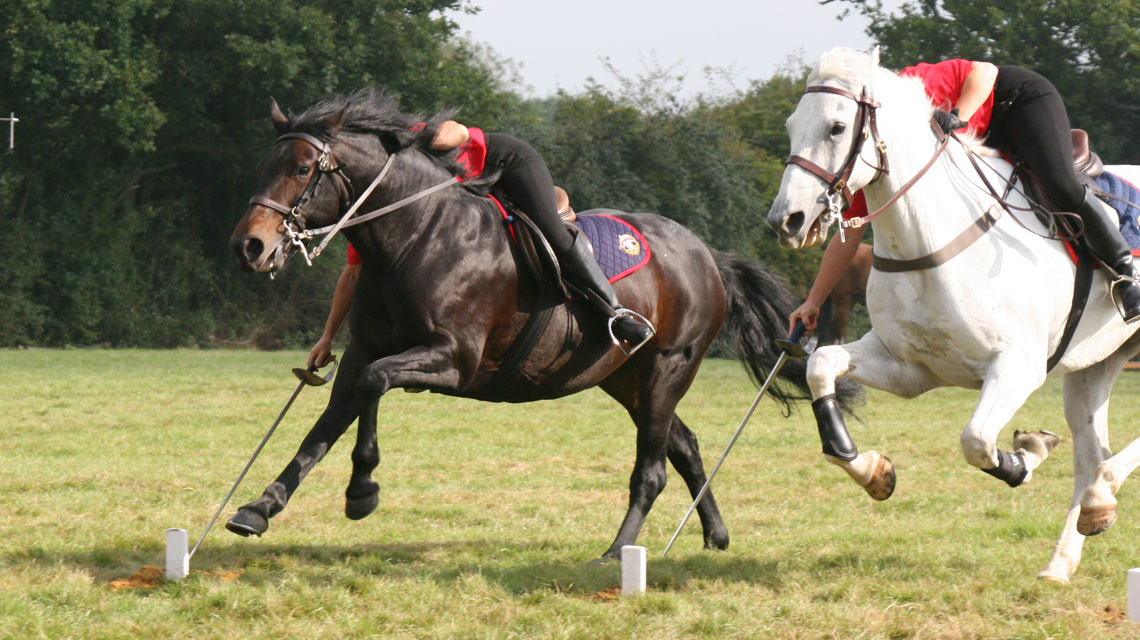
Events included Tent pegging; Sword and ring; Sword; Lance & ring; Potato & bucket.
Races were the bending race, we’ll need to ask him what that was; and the owners race, where the owner him or herself had to ride, no hiring a jockey!
Regular participants he recalls are Manie Parkhurst Wessels; Bertie van Niekerk; Kerneels Retief; Richard Goble; John Goble; Kehlaan Odendaal; his son Adriaan and his daughter Laura; Laurie Campher; Hans Spies and his kids Hansie, Pieter and Anna (Anna later married Jannie Campher, who helped Frank Bland with his farming for a while before going on to become a very successful farmer on his own account).
Dad says he was the only non-farmer riding! Kerneels was usually his partner.
Tent pegging ** these are all internet pics ** If anyone has some real Harrismith district gymkhana pics I’d sure love to display them – with full acknowledgment of course.
~~~oo0oo~~~
Ah, trust Leon Strachan, Harrismith’s Helpful Historian to have something – and its a good ‘un:
– SA Champions from Harrismith – photo from Leon Strachan –
Overflowing ashtrays. That’s one of my clearest memories of the old Moth Hall down near the railroad track, and I was pleased when Etienne Joubert also mentioned them; proving once again that some of my memories are real. Even if some feel surreal! Ja, the smell of old ashtrays and stale beer in the morning… Us kids roped in to clear up the mess after the oldies night of revelry. We loved it. We looked. We learned.
We always called it The Moth Hall, and for a while it was where Dad was probably drinking. But it was more correctly called Platberg Shellhole of the M.O.T.Hs – The Memorable Order of Tin Hats. And there was an older shellhole before that one – an older ‘Moth Hall’. It was down near the railway line; down near the Royal Hotel.
This was where old servicemen would lie to each other and themselves in song:
“Old Soldiers Never Die;
Never Die, Never Die;
Old Soldiers Never Die;
They Just Fade Away.”
Back then they were all survivors of WW1 and WW2. Only later did they take in ever-more members from ever-more wars. And there’s an endless supply of those; the armaments industry sees to that.
The things I remember about the old shellhole was playing in the dark next to and behind the building – big adventure; And seeing 16mm movies, with big reels whirring in the dark; some were sponsored by Caltex and other companies; I remember Hatari! about yanks in darkest Africa, catching animals for zoos; It starred John Wayne, but who was he to us, back then?
. . and Northern Safari, about a 4X4 safari in the Australian outback with a very annoying theme song “We’re Going NORTH on a Northern Safari! We’re Going NORTH on a Northern Safari! We’re Going NORTH on a Northern Safari!” ad nauseum. We loved it!
What the folks would remember, if the truth be told, would be booze and sing-alongs and booze and skits and booze and plays; these were the order of the day. * click on the pic * if you want to read some names.
Seated on the left next to Mary Swanepoel and Trudi Else in full voice, is Harold Taylor, veteran of WW1. Under those voluminous trousers is one wooden leg. The other is buried at Delville Wood. He would take his turn standing next to the piano singing:
Mary & Trudy
Etienne Joubert remembers:
The old MOTH hall was not opposite the Royal Hotel but in the vicinity. In fact it was next to Llewellyn & Eugene Georgiou’s home. It was near the railway line below the G’s house.
I remember Ray Taylor who had some shrapnel in his head, not Harold with a wooden leg; also Uncle Jack Hunt; Arthur Gray & of course your folks. I also remember playing in the dark outside. I remember my first sip of beer which I did not like; but I overcame this in years to come to absolutely love it!
I remember the song A Long Way To Tipperary; The piano was very rickety, as was the wooden floor, which squeaked with the slightest step. On the walls were very big portraits of Winston Churchill & Jan Smuts; Dan Pienaar was also there, but smaller; and a pin-up of Jayne Mansfield. This pin up made it to the “new” Moth Hall.
One thing I did not like was helping my Old Man clean the Shellhole on a Saturday morning; the smell of stale beer & cigarette smoke remains very vivid in my memory.
– royalty-free pic dreamstime –
=======ooo000ooo=======
Still nostalgic?
and here’s Vera Lynn, 101 yrs old and still going (Nov 2018). In 2009, at the age of 92, Lynn became the oldest living artist to make it to number 1 in the British album chart.
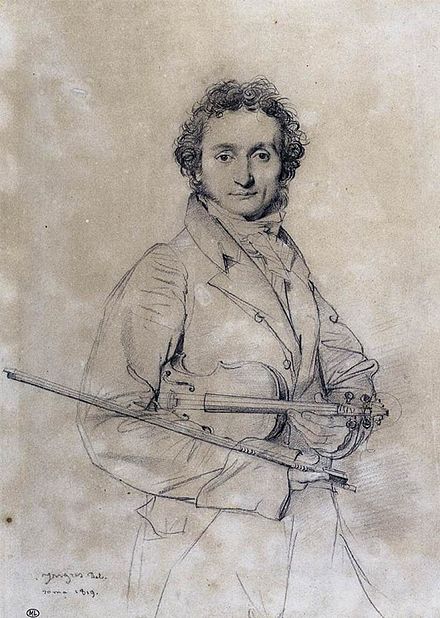
The ole man acting Paganini:
The real Niccolo Paganini – and probly why the ole man wanted to be him:
When he was eighteen the young virtuoso escaped his father’s control, following his elder brother to the Tuscan city of Lucca. “Freed from parental control, Paganini embarked on a life of famous excess. As he later put it, ‘When at last I was my own master I drew in the pleasures of life in deep draughts.’ He would spend the next twenty-seven years in Italy, filling his life with music, love affairs, and gambling, interrupted by long periods of utter exhaustion.”
The Bain brothers Stewart and James Bain of the villages Sarclet and Wick in Scotland, who came to South Africa around 1880 and built railway bridges from Ladysmith in the British colony of Natal to Harrismith in the independent Oranje Vrystaat had seven and nine children respectively. Despite their valiant efforts the Bain line dwindled to one single strand: Chadd Bain, the last Bain from that lineage! Luckily, Kate gave Chadd three sons before he passed away at a young age in a tragic motorbike accident; so now there are four: The three boys and their grandad Peter. If I have it right it went this way: Stewart begat Ginger, who begat Dudley, who begat Peter who begat Chadd who by gad had three boys.
In the year 2000, after two years of adventure in the UK, Chadd Bain returned to Mevamhlope in Kwa Zulu Natal. In 2001 he became involved with an orphanage called ‘Nkosinathi’, building, providing beds and blankets, organising food donations, and teaching the residents to grow vegetables.
In late 2002 Chadd met Kate, and they married in September 2004. They grew the charity along with Chadd’s Mum Shelley and the first Orphan Christmas party was held in 2002 for 80 kids. The next year they had 150 children. The next year they decided to do more and started with educating 17 of the kids.
In 2009 Chadd was tragically killed in a motorbike accident in the sugarcane fields. He was only __ years old.
Kate and Shelley and their team have carried on and continued to grow Izulu Orphan Project (IOP) ever since. Do go and have a look at the sterling work they’re doing.
Read a bit about Chadd’s grandad Dudley here and about his first-to-SA ancestors here and about his Scottish roots here
It’s pinch-of-salt history, but its a bit of fun for family (and I record the little I know in the hope that someone WILL pick up the threads and do it properly!).
In the shadow of old Platberg this weekend I sat down to lunch with an array of superb swimmers at my table. On my right was Sonja du Plessis, Top Ten swimmer; and on my right was Lyn du Plessis, Top Ten swimmer; and on my right was Pierre du Plessis, Top Ten swimmer. And that got me thinking of the days I’d line up next to the pool and on my right there’d be nobody. Nobody.
That’s because I’d fought (and easily won, you’ll see why) for the right-most lane in the shallowest part of the pool at swimming lessons. On my left was Francois vd Merwe, coming up to my navel; and on my left was Deon Joubert, coming up to my navel; and then some even shorter girls; That blerrie whistle would shriek, they’d dive in and I’d jump in – bravely; I’d sink to the bottom – very bravely – then kick powerfully in the direction of the distant other side of the pool. We were swimming breadths. The older kids – some of them as old as my younger sister Sheila and the even-younger Sonja – would swim lengths. A few kicks off the bottom and much spluttering and gasping later I’d finally get to the blessed sanctuary of the other side of the pool just short of an asthmatic panic attack, sometimes even earning a podium place – well, if there were absentees due to coughs and colds and Harrismith’s notorious cold weather.
And thinking about this long-forgotten little tale, sparked off by sitting amongst those swimmers which may have sparked off a DNA debate had testing been available – I mean did they have mermaid genes? dolphin genes? They swam like polystyrene, I swam like a corobrik.
This made me think something else: Why didn’t Joan and Joyce think of something that could have sparked me off Mark Spitz-like? Like Giel – who Joyce used to call ‘Heilige Giel’ – did. I dunno: Maybe choose me to hand out the oranges at half time at a gala or something equally inspirational?
Makes you think. Joan and Joyce may have missed a big one here.
~~oo0oo~~
nê? – just nod; except, not about the netbal
‘moenie worrie nie’ – tut tuts
‘Luister volgende week is netbal proewe, nê?’ – Look, you don’t have a talent for rugby, OK? maybe you can sing?
laaities – athletes of note
~~oo0oo~~
Two Length Swimmers at the scene of the torture


























 Vrystaat Confessions