
I don’t like Harry Smith, so make my bias obvious upfront. I have taken the things I dislike about him from some very interesting writings on him by Andrew L. Harington and Thomas Keegan. So this is not a one-eyed view; I believe it to be true as these fellas do their homework! Maybe his redeeming quality was his abiding love for his wife; and maybe the fact that he was just doing what the white supremacists who reigned at the time and who were his ‘bosses’ and his fellows, secretly or overtly actually wanted him to do.
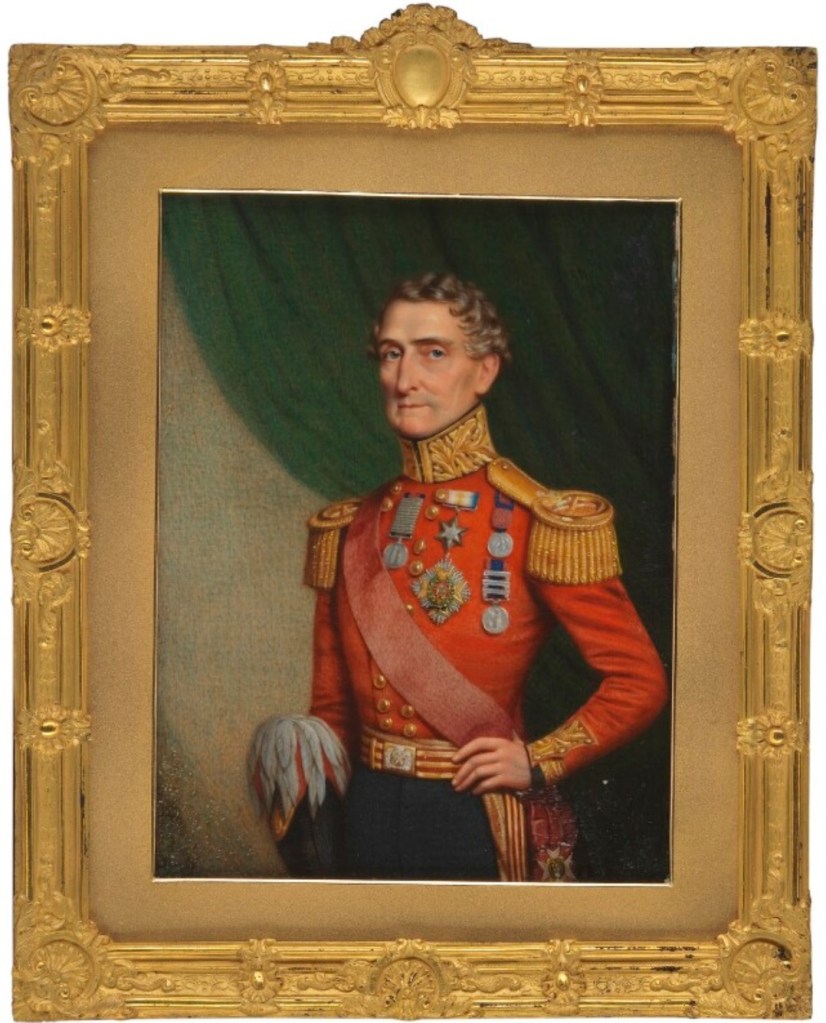
Henry Wakelyn Smith or, as his juniors sometimes called him behind his back, Hurry Wackalong Smite’s first entry into Grahamstown as governor of the Cape ‘was the greatest celebration the town had ever known. Triumphal arches and every means of decoration and salute that could be devised adorned the streets.’
The white people of Grahamstown were welcoming one of the most villainous characters in South African history, renowned for his excitable nature, appalling temper and unfortunate habit of ferocious swearing. They were wanting him to lead the war against the Africans who lived there. Smith was, by all accounts, incredibly belittling and aggressive in his interaction with the native chiefs. Soon after arriving at the Cape in 1847, Smith announced himself as the ‘Paramount Chief’ and ‘father’ of all the Xhosa. Smith believed that, ‘The Kaffir, like every other barbarian, is a desponding creature; and, when, once subdued, easily kept subordinate.’ On a number of occasions Smith presented himself as an overly antagonistic bully. Upon his arrival on the docks at Port Elizabeth, he was greeted by hundreds of individuals who gathered to hear him speak. One of these was said to be Chief Maqoma of the Ngqika Xhosa – a general who had fought against Smith to great avail in the Sixth Frontier War of 1835. Upon seeing Maqoma, Smith apparently glared at the chief whilst half drawing his sword from his scabbard. After the speech, Maqoma was summoned by Smith and ordered to his knees. Smith lay his boot onto Maqoma’s neck and is claimed to have said, ‘This is to teach you that I am come hither to show Kaffirland that I am chief and master here.’ Later, in an incident wherein Chief Sandile offered to shake Smith’s hand, Smith ordered that he kiss his boots instead. He was also said to have torn up a piece of paper, symbolizing the treaty of 1835, in front of a gathering of Xhosa chiefs, and thereafter ordered these chiefs to once again kiss his boots.
To this day we are are living the consequences of his – and many others’ – brutal arrogance.
There’s a good Harry Smith?
Wikipedia has four baseball Harry Smiths; six cricketer Harry Smiths, one who appeared to always bat number nine for Transvaal and South Africa, yet never bowled! Ten footballing Harry Smiths; And sundry others, one of whom I think was a good Harry Smith: Harry Leslie Smith, born in England in 1923 and died in Canada on 28 November 2018.
My kind of Harry Smith tweeted common sense like this at the age of 92: If a dentist can afford to spend $50,000 to kill a lion, it tells me the rich aren’t taxed enough. #CecilTheLion http://t.co/8kKuzPRE0b — Harry Leslie Smith (@Harryslaststand) July 28, 2015
This Harry Smith was the son of a coalminer; he grew up in poverty after his father became unemployed. His sister Marion died of tuberculosis. When he was seven he was working as a barrow boy for a beer bottler in Bradford, supporting his entire family. They moved frequently and he spent time sleeping in workhouses. He joined the RAF, subsequently spending several years in Germany as part of the Allied occupation force. While there he met his future wife, Friede.
Here’s Good Harry Smith’s decision to not honour ongoing warfare:
https://www.theguardian.com/commentisfree/2013/nov/08/poppy-last-time-remembrance-harry-leslie-smith
Modest Circumstances
SIR Harry Smith’s biographers will tell you he was also born in modest circumstances. However, there’s modest and modest: He was born in Whittlesea, Cambridgeshire in 1787, where his father was a surgeon. In 1805 he caught the eye of Brigadier-General Sir William Stewart, who made him an officer, immediately hugely improving his prospects.
~~o0o~~
update: So I for one am happy to call my town by the old name for the mountain that makes the town what it is: Ntabazwe
~~oo0oo~~
Here’s a kinder look at the soldier Harry Smith by Harrismith blogger Sandra of deoudehuizeyard.
 Vrystaat Confessions
Leave a comment