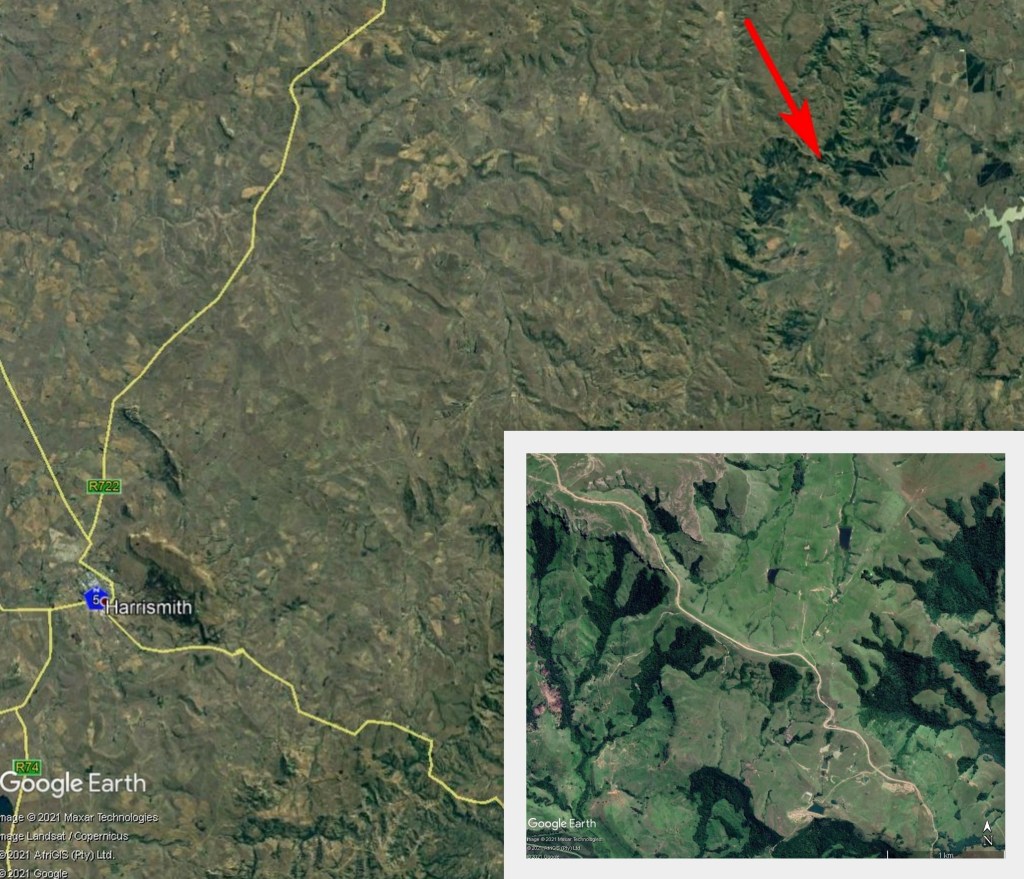
We drove off the dirt road and onto a green hill, stopped the light blue Holden station wagon and walked up to the top of the low hill which ended in a steep cliff overlooking Natal down below. We were on the edge of the Drakensberg escarpment and about 30m below us (I’d guess) was a nest, just as Robbie Sharratt had told Dad there would be, and on the nest was an eagle chick.
– location Normandien Pass arrowed – detail in inset –
The main reason the ole man had taken his dearly beloved son on a rare outing was his new Canon FT QL SLR camera with a 200mm telephoto lens. It needed a subject, and there was the Black Eagle chick right there in the hot sun. Aquila verreauxii, now called Verreaux’s Eagle.
The way I recall it, we got pics of the nest and the chick, and a parent landed on or near the nest while we waited, but I could be imagining that part. Wonder where those Agfa slide pics are? I’d guess this was ca.1965 when I was ten years old.
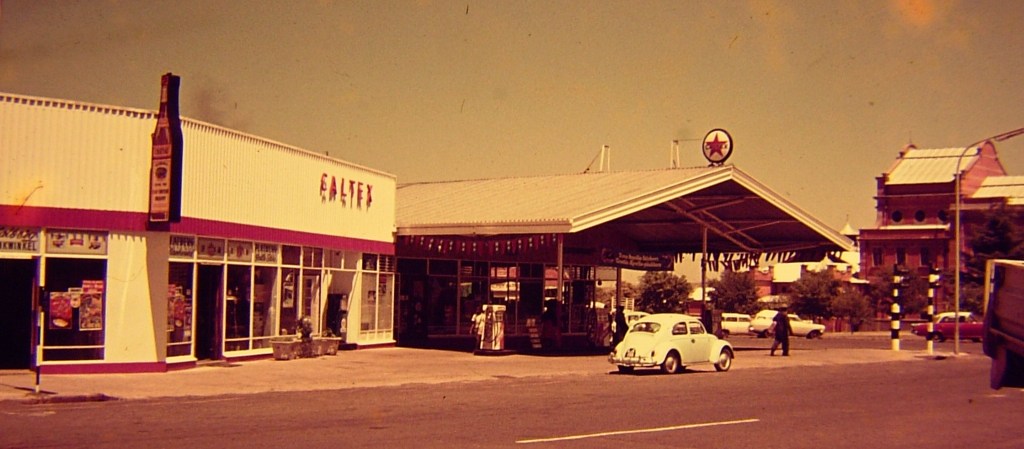
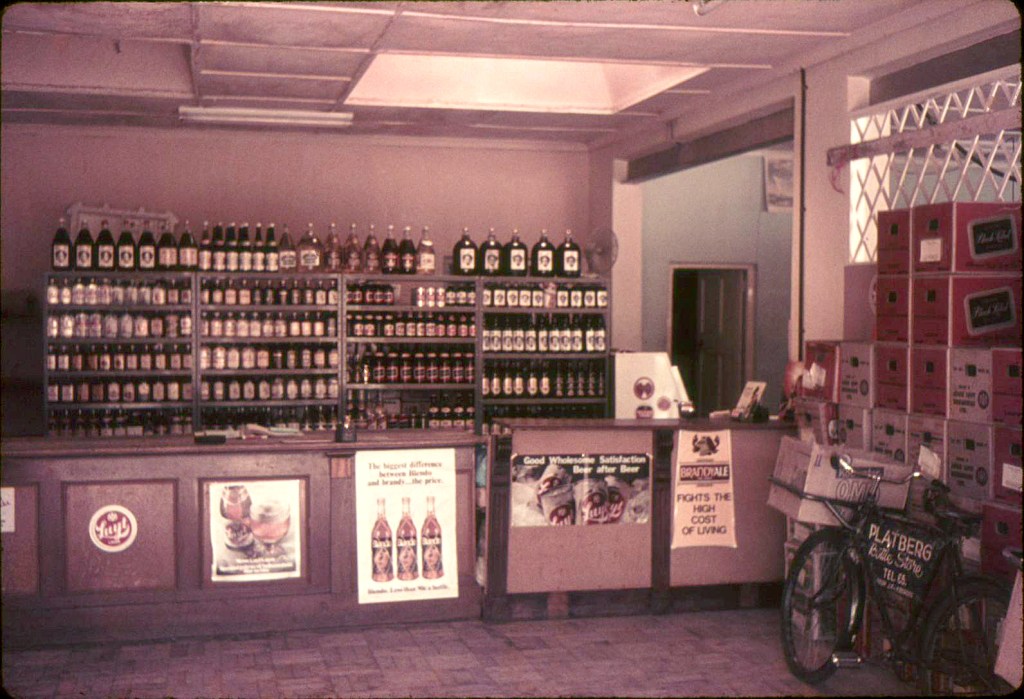
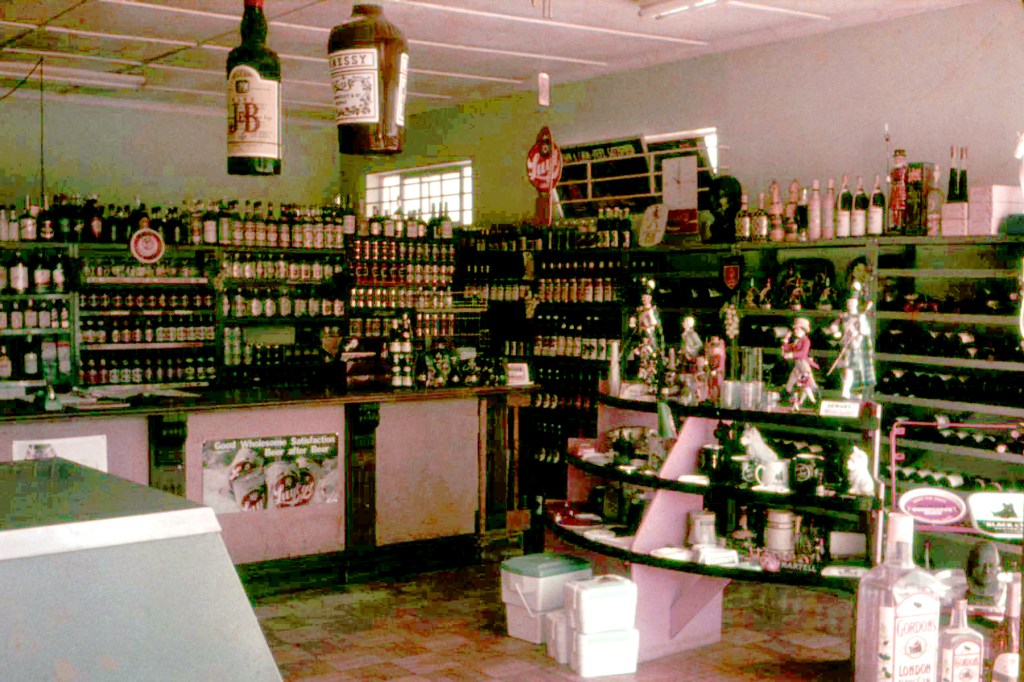
OK, not really; more a reverie on drink – a nostalgic lookback on a bottle store. Platberg Bottle Store / Drankwinkel in Harrismith, the Vrystaat. The Swanepoel family business. We all worked here at times. You could say we were raised on grog.
– the dark side –– the pale side –
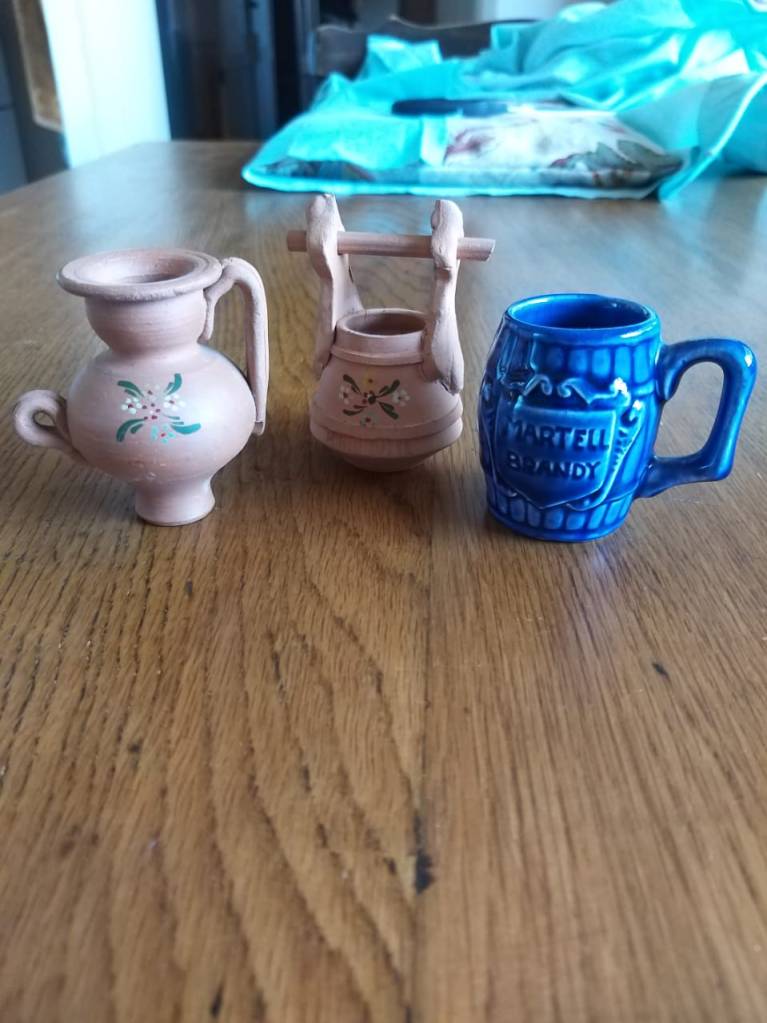
We were talking about the trinkets, decor and marketing stuff. Like those big blow-up bottles hanging from the ceiling. Turns out big sister Barbara kept some of them from way back when:
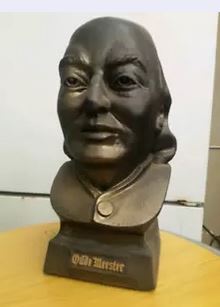
Younger sister Sheila has some whisky jugs; and I found an old familiar brandy-making figure online: the Oude Meester bust. We fondly remember Jan Jan die Oudemeester Man! Jan Robertson, the rep who would visit us to sell his popular product.
..
This is where the big blow-up bottles were displayed, along with the striding statue of Johnny Walker whisky; Dewars White Label whisky’s Scottish soldier ‘drum major;’ Black & White whisky with their black and white Scotty dogs; Beefeater Gin’s ‘beefeater’ in his red uniform, etc. Spot them below. All were shouting a loud Drink More! and in small print; um, drink responsibly.
BrandyAle had people’s best interests at heart when they told you how drinking BrandyAle would “Fight the High Cost of Living.”
Methodists are pretty strongly anti-alcohol, so I believe it is testimony to Mother Mary’s organ-playing skills (and her much-loved status among all who know her) that we could run a bottle store six days a week and still be Methodists on the Sabbath! (Kidding! It was the collection plate. Kidding!).
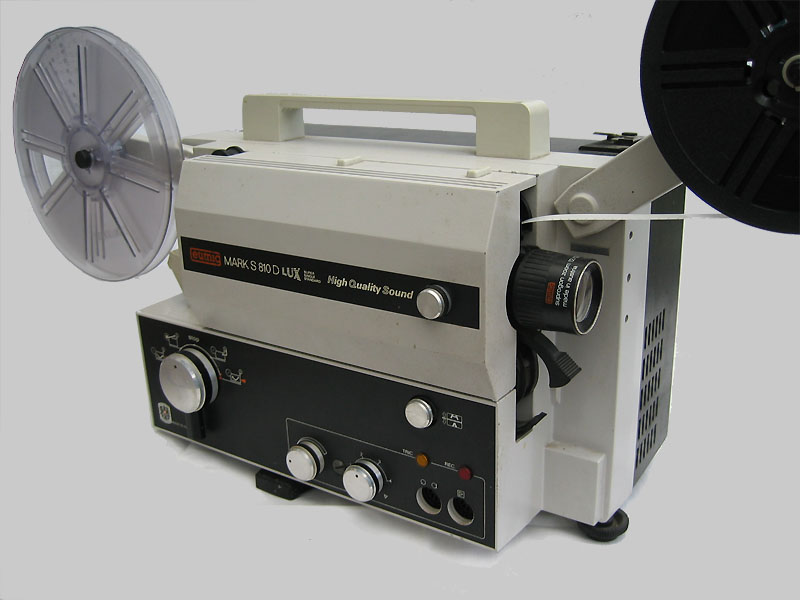
The old man bought an 8mm cine film Eumig camera and Eumig projector very like these. Made in Austria. This was ca.1963, I’d guess. It once did a bit of – potentially – famous footage!
eumig 8mm cine cameraSuper 8 Sound Projector Eumig Mark S810
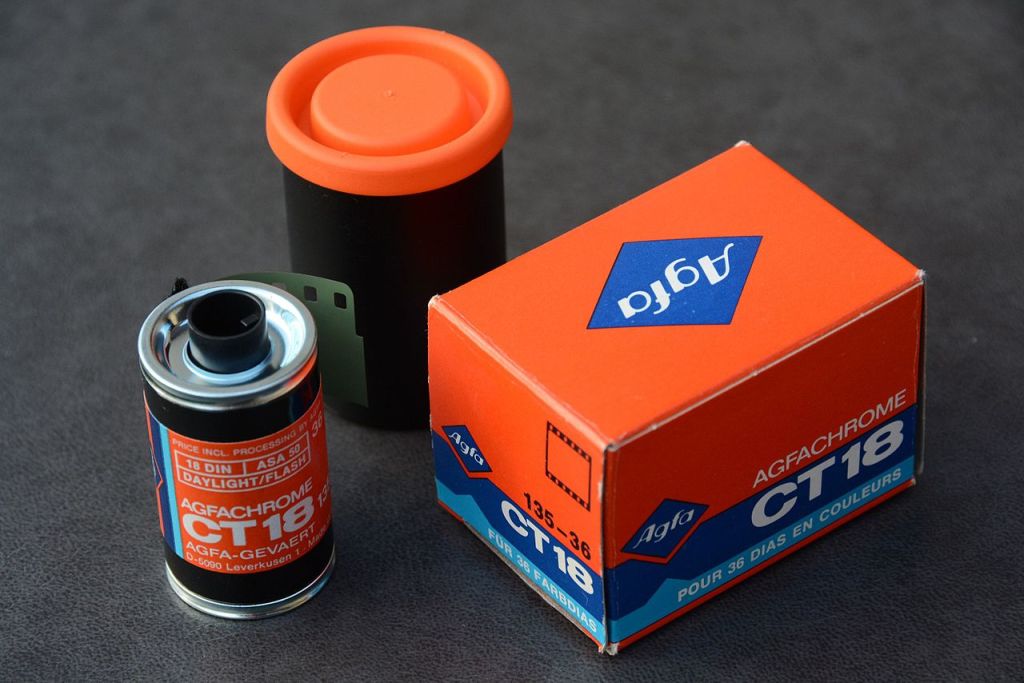
Later he bought a Canon SLR camera with a 50mm lens like this, and a 300mm telephoto lens. An FT QL exactly like this one. He used Agfa slide film. Had to be Agfa, not Kodak! Agfa ‘had better greens and blues.’
Once I heard Dad had been present when I won a 100m race at the town’s President Brand Park athletic track. I didn’t know he was there – found out later that he had been taking photos. At the finish, in my lunge for the tape, I fell and somersaulted, skidding on my back on the cinder track. I tied for first place. Never did see a photo of that finish – !? Had two roasties on my back for a while.
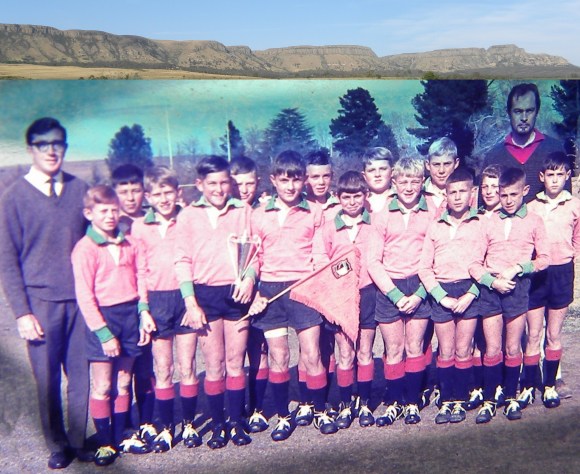
Once – 1967 – he took a photo of the all-winning U/13 rugby team holding a trophy. I must try and find out what the trophy was for. So I do have one photo a father took of his son’s school sporting career!
~~~oo0oo~~~
fillums – films, movies, videos, moving pictures; usually not talkies
stills – pictures on paper, photos; often in ‘albums’
EUMIG was an Austrian company producing audio and video equipment that existed from 1919. The name is an acronym for Elektrizitäts und Metallwaren Industrie Gesellschaft – “Electricity and Metalwarendustry Company” –
In 1982 EUMIG went bankrupt – punishment for choosing such a boringname?
Eumig’s patent for the macro system in lenses was sold to the Japanese company Canon.
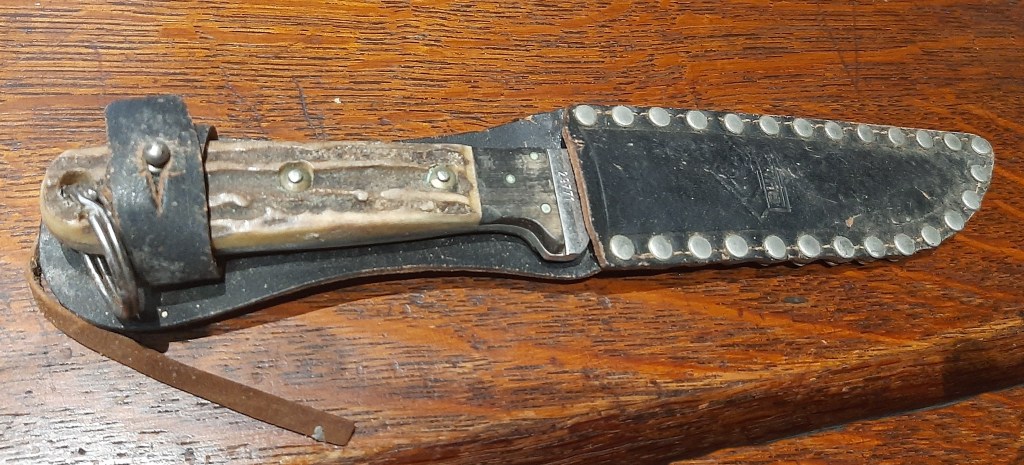
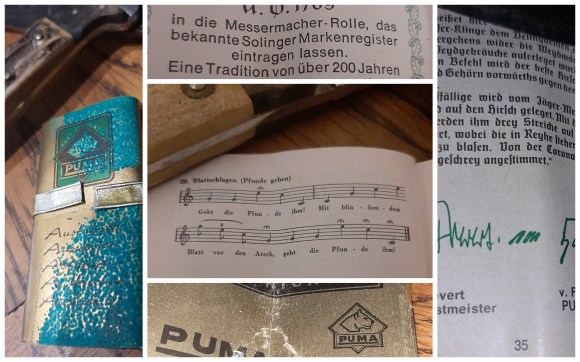
The ole man gave me a knife quite recently. Well, in the last ten or fifteen years or so. He told a story in a rare letter to his darling son, written on the back of a Maxprop invoice and folded into the special PUMA green and yellow case:
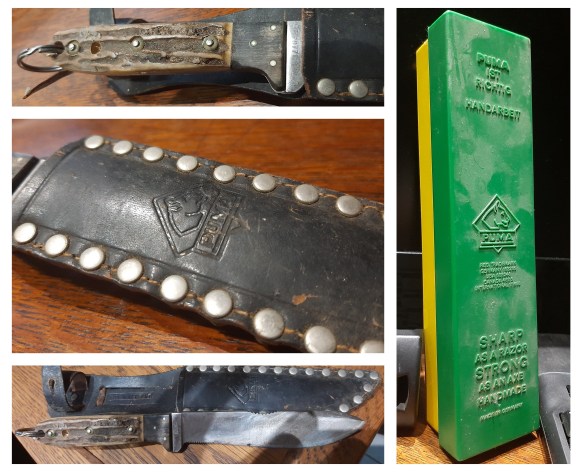
– PUMA knife – model 3585 – serial no. 29771 –
Let me tell you about this knife, he writes. I first saw it in Rosenthals, a big safari shop in Windhoek more than 30 years ago. This on one of his family holidays he took in the family car. Without the family.
When friends of ours, the Maeders, went to Germany on holiday, he asked them to get the knife for him in Austria, where it is made, by one man, whose name appears in the brochure – a small 50-page brochure that comes with each knife.
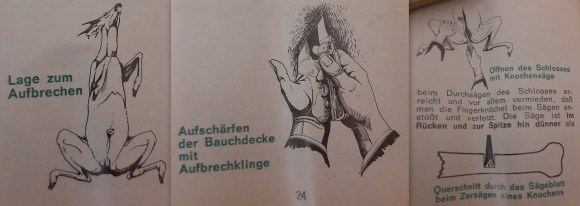
– PUMA knife model 3585 – with skinning tips – can also sagen through knochens –
The letter continues: Anyway, the knife arrives by post in Harrismith. Uproar!! Urgent meeting: Me, the police and the postmaster – in his office. I had imported a dangerous weapon – the blade was more than 4″ long – illegal!
The postmaster unlocks his safe in the presence of all concerned, removes the knife, makes a tracing of the blade. This is to be sent to the SA Police in Pretoria. Meantime, the dangerous weapon goes back into the safe.
I told them not to be bloody silly; I could walk over to the OK Bazaars right now and buy a butchers knife with a 12″ blade!
After all the dust had settled and all charges paid, the knife cost me R64.00
The ‘over the counter’ price at Rosenthals in Windhoek – which he refused to pay, knowing he could save money by ‘getting it direct’ – had been R63.00!
And I’m always trying to get a better price, to save money! Love Dad
– PUMA knife – 50-page brochure – even a song! – ‘beating of the blade’ –PUMA knife 3585 details – made by senior forester Frevert, I think –
~~~oo0oo~~~
As a kid way back in the sixties, I took over my Dad’s much bigger dagger; also with a bone handle. One day the duP’s came to visit and Pierre and I were playing with it, stabbing it into the hard Vrystaat ground on our side lawn on the aviary side of the house, seeing how deeply we could bury the blade. I plunged it down with all my might, not seeing Pierre was still tamping down the ground and lawn from his attempt! I just about cut his finger off! Typically, stoic Pierre said Shh! and kept it quiet, going straight off to show his Ma Joan, who cleaned and bandaged it!
But then Sheila revealed her 1971 diary: Our winter trip to Pennington, where Dad had bought a plot of land and was having a cottage built. Or as South African men often say, ‘building a cottage.’
I remember trees and dirt roads and that we were near a boundary. On the other side of that was ‘Umdoni Park’ said Dad. The cottage was on a corner plot at a crossroad. The road that ran towards Umdoni ended just half a block past the corner. A halfway down that short dead-end road, a big tree stood on the right with a branch stretching out over the dirt road. On that branch sat a Nerina Trogon. My firstvsighting ofcthat striking bird. And that’s all I remember from that trip to Pennington.
But Sheila kept a diary. It was a nine-day holiday. We camped in the half-built house; We met six young guys on three 50cc buzzbikes and had a great time buzzing around the empty dirt roads on the sparsely-built sub-tropical coastal village of Pennington, three-up per bike!
We walked to the beach, we swam in the rock pool, we walked on the beach; we drove further south to Margate and (fill in here from Sheila’s diary in my whatsapp) – to be continued . .
~~oo0oo~~
The Narina trogon of Africa utilises a wider range of habitats than any other of the world’s fifty-odd trogon species. It can live in habitats ranging from dense forest to fairly open savannah, and from the Equator to southern South Africa. It is the most widespread and successful of all the trogons.
Mom Mary fondly says bachelor Louis Schoeman was quite important and quite full of himself – ‘He thought he was the Prince Imperial!’ she says teasingly. ‘Louis the Seventeenth,’ she says, adding one to the last of that French line of kings.
‘He played polo, you know, and that was very posh. He walked with a regal bearing. So when he walked in to Havengas bookstore one day and threw down a document on the counter in front of Dad saying, ‘Pieter! Sign here!’ Dad said ‘What for? I don’t sign anything unless I know what I’m signing!’ all the assembled men’s heads turned to Louis, sensing drama.’
‘I’m getting married!’ he announced, ‘to Cathy, the sister at the hospital.’ Well, like sympathetic, caring, thoughtful bachelors will do when a friend is in need, the men roared with laughter and teased Louis unmercifully!
‘And you know what?’ says Mom Mary: ‘It was the best thing that ever happened to him! Cathy bore them five lovely children and was a wonderful companion, mother and home-maker. Wonderful sense of fun and humour, and they were very happy together.’
After Maritzburg College, Dad joined the General Post Office as an apprentice electrician. He recalls leaving school on 1st April 1938. Here’s a spirit level he was issued that day:
– Spirit level – Wilson Lovatt & sons Wolverhampton –
While he was still apprenticing, he tried to enlist to join the WW2 war effort, but was sent back. He was sent to the Himeville/Underberg area with a GPO truck and a sidekick called Freddie to do his bidding. Later he was transferred to Harrismith – which fell under Natal for the GPO although it was actually in the Orange Free State – from where he again made his way to Durban to try and enlist, and was again sent home, finally being allowed to join after Oupa reluctantly signed his papers. He left for ‘up north’ in 1941.
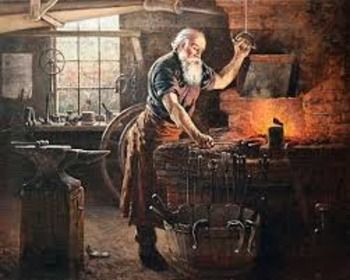
While in Harrismith ca.1940, he met old Mr Buckle the Blacksmith down in McKechnie street, near the railway station. He was from England.
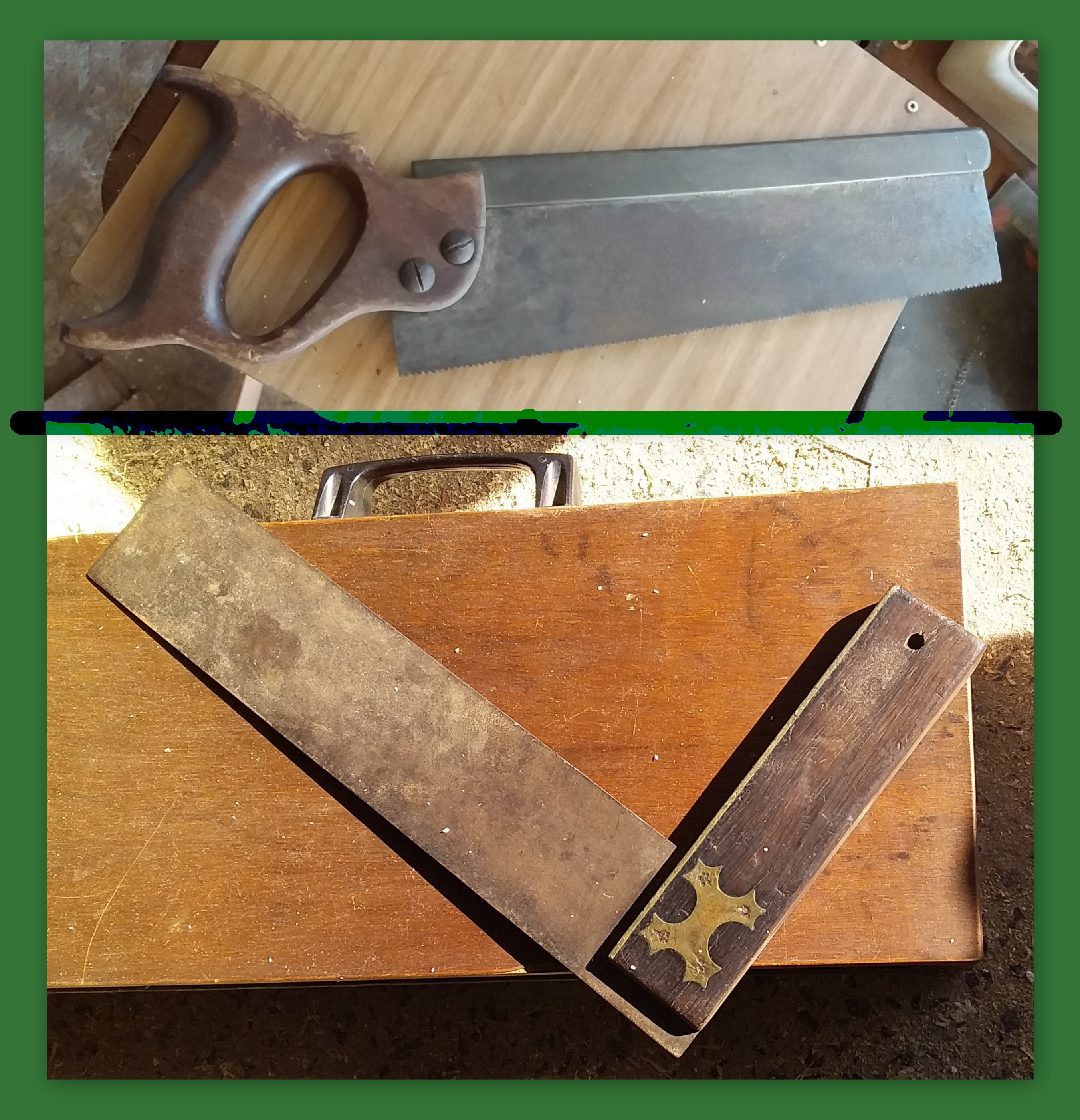
He ended up with a few tools from old man Buckle: a back saw and a set square with a beautiful brass inlay and brass leading edge.
After boarding at the Royal Hotel, whicvh had stables, Dad moved to a plot outside town – townlands – west of town on the Wilge River, downstream of town. There he bought horses, schooled them and sold them for a profit. I assumed he’d had them shod by Buckle but he corrected me. Buckle was a blacksmith, upholsterer, wheelwright and wainwright/wagon-maker. He didn’t shoe horses. That was up to Charlie Rustov, Harrismith’s only farrier.
From his plot on townlands out west of town** he would ride out to Boschetto Agricultural College for Ladies on the slopes of Platberg, the mountain that dominates the town. Boschetto was where the girls were. They were the main buyers of his ponies. The first time he went there, he met the formidable Miss Norah Miller, the founder and principal. Luckily for him she needed a few pictures on her office wall. He was able to help and so became a firm favourite of hers from the outset.
While he was telling the story Mom remembered a story about Norah: She knocked on someone’s door. Whoever answered went back and was asked ‘Who was there?’ They said, I don’t know, but she’s got one eye, one leg and a hell of a cough! Norah had one lens of her glasses frosted out, she wore a leg brace (probably childhood polio?) and smoked like a chimney. When her leg brace buckled, Dr Frank Reitz made her a new one. A better one. He would have loved that challenge. He was a hands-on fixer.
~~~oo0oo~~~
Harrismith author Leon Strachan found some fascinating info on Norah Miller’s leg – it was not polio. His source, Isobel Kemp (Dr Frank Reitz’s receptionist for thirty years. Isobel knew everything): It was probably osteoporosis resulting in a hip fracture in 1928, only six years after she established her college. Usually this would have resulted in incapacity and excruciating pain, but Norah was in luck: she was in the right place at the right time, and knew just the right man, bold innovator and pioneering surgeon Frank Reitz, trained at Guys Hospital in London, then did surgery specialisation in Germany.
He operated and joined the femur using an ordinary screw to hold the femur ends together! This technique would only become common decades later, in the fifties. Thirty years later she was still walking – with difficulty, but still mobile, and in charge of her college. When Cedara took over Boschetto she moved there, where she died in 1959, aged 79.
~~~oo0oo~~~
Aug 2021: Ole man phoned me. He found some (one? more? maybe the one I photographed above?) old ‘tri-squares’ with handles made of ebony with brass inlay. Do I want them? I bought them in the late 40s and Buckle was already an old man, maybe eighty. So they are probably 100yrs old. Hell yes, I’d like to have them!
~~~oo0oo~~~
** Old man bought his first townlands from old Englishman Bill Mundy. On the right bank of the Wilge river downstream from town; out on the road that turns south towards Swallow Bridge after leaving the west edge of town below 42nd Hill.
If it wasn’t for Arthur Kennedy the ladies of Harrismith would have had a more boring Republic Day in 1961. They would only have seen kids waving flags and men on horseback. Thanks to Arthur there was also a strapping male physique in a tight-fitting white leotard with a bulge in the broek. No ways the komitee vir die viering van hierdie groot dag would have arranged that. That needed Arthur Kennedy.
Here’s footage of the goings-on down at the pawiljoen in the President Brand Park that day. Preserved thanks to the old man Pieter Swanepoel filming it back then with his 8mm Eumig cine camera, and preserved thanks to his daughter Sheila recently having it digitised:
~~~oo0oo~~~
wappering – waving, fluttering
broek – trousers; leotard
komitee vir die viering van hierdie groot dag – prize committee to be on; demonstrated status and power; you got to have input into the celebrations of the day South Africa left the British Commonwealth – uiteindelik! You did not, on said committee, suggest that all South Africans be allowed to be present; if you had those kind of thoughts you would not be on the said komitee
uiteindelik! – at last! Free At Last! Thank Goddlemydee Free At Last!Oh, no that was Martin Luther King Jr
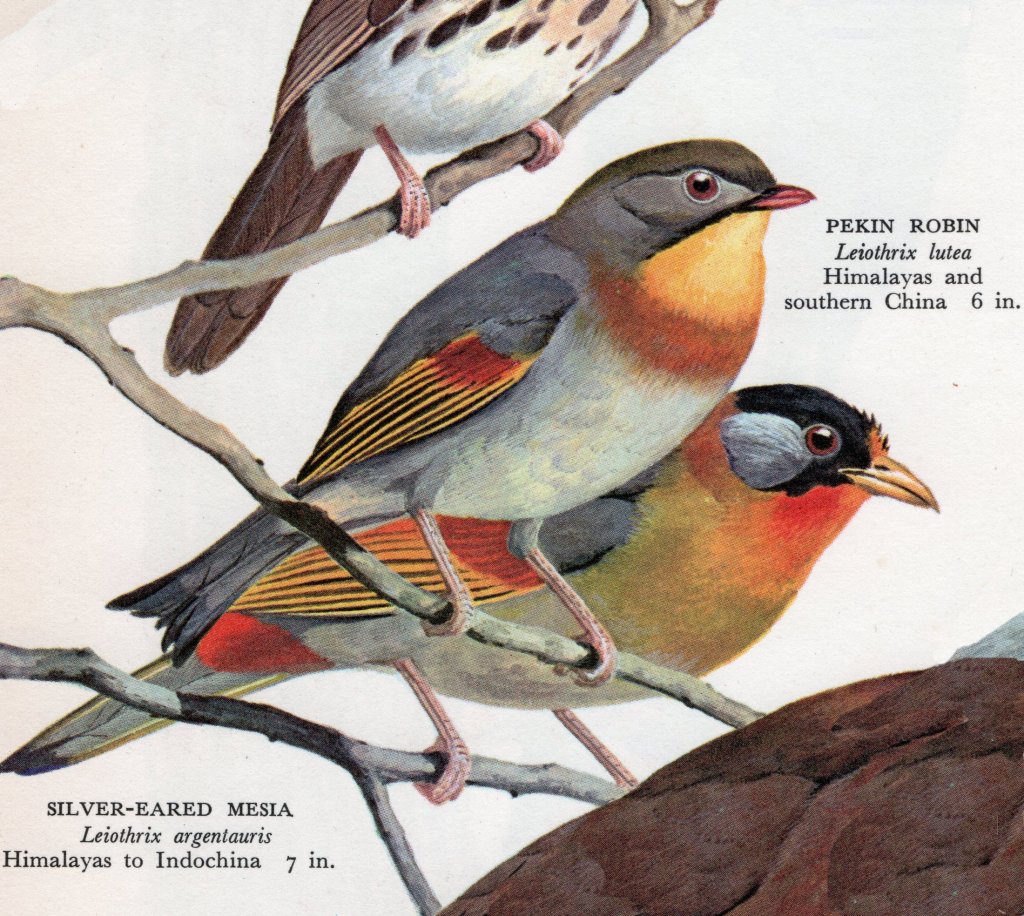
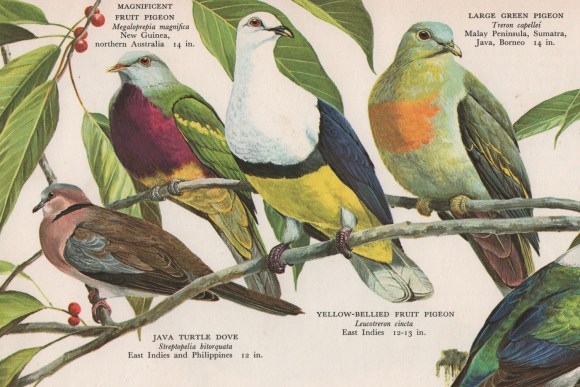
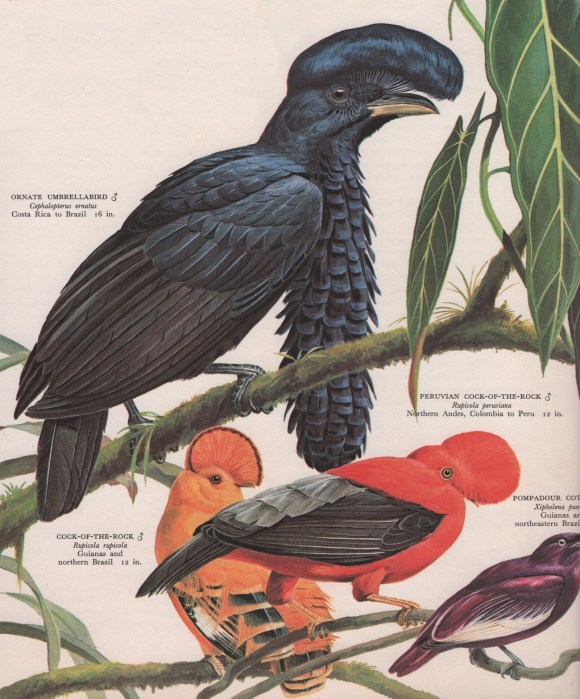
Way back around 1968 a new book appeared at 95 Stuart Street Harrismith. I was fascinated. Nearly as fascinated as I’d been when cousin Jack Grundling was reading Valley Of The Dolls and left it in the big wooden bookshelf in our long, dark, carpeted passage. That novel must have been good, as Mom actually physically took it from me, saying ‘You can’t read that’! Oh? Censorship!
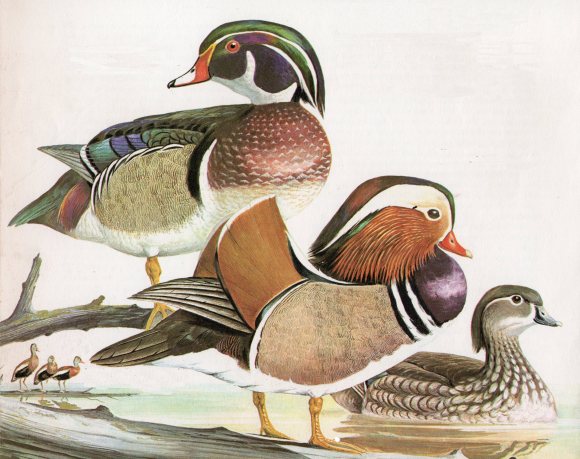
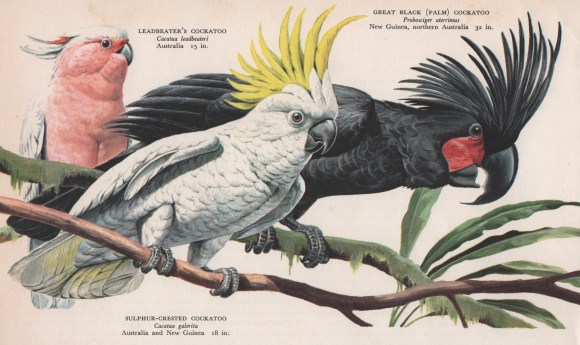
by Oliver Austin, beautifully illustrated by Arthur Singer. I was fascinated by the orange Cock-of-the-Rock on the cover. Fifty years later the book was on my bookshelf in Westville and I was sad recently to discover other bookworms also liked it and had got into it in a big – and deep – way. It was riddled with holes. I copied the pages with the plates I remembered best before turfing it out. Hopefully a whole extended family of borer beetles went with it!
Roberts bird book and this book fuelled a lasting fascination.
~~oo0oo~~
Valley of the Dolls – by Jacqueline Susann was about film stars, their raunchy pecadilloes and their use of ‘dolls’ – amphetamines and barbiturates. Time magazine called it the ‘Dirty Book of the Month,’ probably thinking ‘that’ll kill sales,’ but that and other anti-reviews made people think ‘that sounds interesting,’ and the book was a runaway commercial success, becoming the best selling novel of 1966. I mean, a review saying ‘Dirty Book of the Month’ might have made Mom Mary not buy it, but it likely had cousin Jack head straight for the bookstore! So there it was: From one metropolis to another – New York to Harrismith – in no time.
By the time of Susann’s death in 1974, it was the best selling novel in publishing history, with more than 17 million copies sold. By 2016, the book had sold more than 31 million copies. In 1967, the book was adapted into a film. Like the book, the reviews were scathing, but it was an enormous box-office hit, becoming the sixth most popular film of the year, making $44 million at the box office. Author Jacqueline Susann had a cameo role in it as a news reporter, but she said she hated the film, telling director Robson that it was ‘a piece of shit.’ – wikipedia
~~oo0oo~~
Birds of the world: a survey of the twenty-seven orders and one hundred and fifty-five families, by Oliver L. Austin, (1961); Illustrated by Arthur Singer; Edited by Herbert S. Zim, New York, Golden Press; Many reprints were made and it was eventually published in seven languages over many years. I think ours was the 1968 edition published by Paul Hamlyn;
~~oo0oo~~
bookworms: The damage to books attributed to ‘bookworms’ is usually caused by the larvae of various types of insects including beetles, moths and cockroaches, which may bore or chew through books seeking food. Mine were little brown beetles. Buggers. I’m procrastinating about checking all my other books! Must do it . .
The old man inviting me to go someplace! How’s that!? I hopped into the old faded-blue VW Kombi OHS 153 with alacrity. This sounded interesting. We never went to the railway station. We’d go near there to the old MOTH hall and occasionally to the circus field when the Boswell & Wilkie’s Big Top was pitched there! But never to the station itself.
‘We’re fetching a family from Italy. The father is coming to work at the Standard Woollen Mills and they can’t speak English,’ says the old man. He picked up Italian in Italy around 1943 to 1945, first wending his way up the Adriatic coast in the Italian campaign and then later on involved in the post-war stuff armies do after the end of WW2, y’know, loafing, eating, drinking, before flying home, having traveled the length of Italy south to north and into Austria.
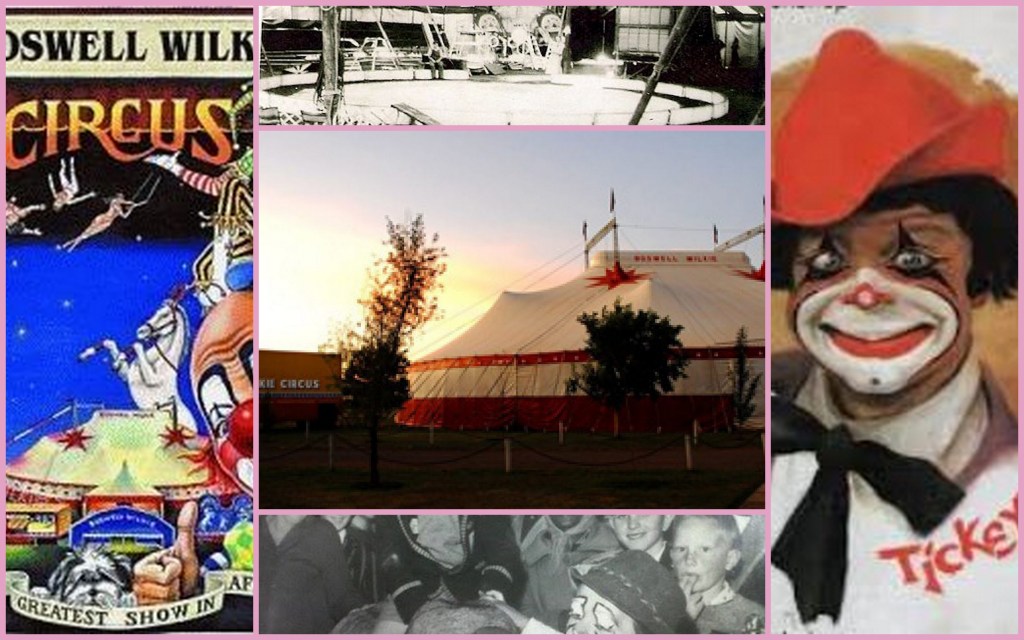
He kept up the language over the years mainly by fraternising with Boswell-Wilkie** circus folk when they hit the Vrystaat vlaktes on the circus train and pitched the Big Top next to the railway line on the west edge of our famous dorp.
This exciting station trip was in 1965 or thereabouts. So we got to the stasie, the train rolled in, and there hanging out of a window was a family of four: Luigi, Luigina and two sons about my age, fresh from Italy out. They were probably staring at my bare feet. But I’m just guessing.
– we met Claudio with some fanfare – maybe not this much –
I carried one suitcase to the kombi and then from the kombi into the Royal Hotel, where my great-uncle Smollie Bain was the barman. His Dad owned the hotel and I think he stayed there all his life.
– the Royal – here’s where we took Claudio to stay – it was shortly after this photo was taken –
Soon Claudio and Ennio were in school, Claudio a standard below me in sister Sheila’s class, and Ennio a standard or two lower. They got a house in Wilge Park and so started many happy visits and sumptuous Luigina meals with the Bellatos – I can still picture her kitchen so clearly. And sundry happy adventures with Claudio.
~~~oo0oo~~~
The only time before this anything Italian might have rolled up at Harrismith stasie might have been these Italian things ca. 1914.
~~~oo0oo~~~
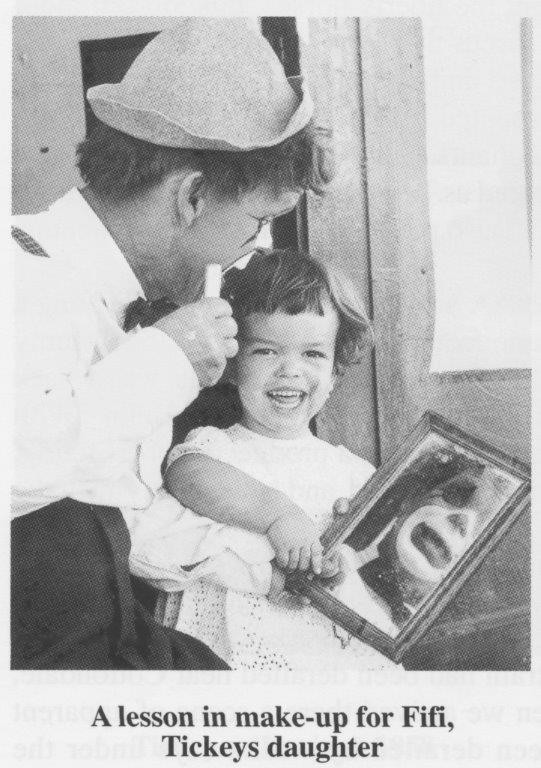
** Boswell-Wilkie Circus: Every few years for a while we would suddenly have clowns, lion-tamers and acrobats in our home! They all looked very ordinary, frankly, in their normal kit; except Tickey the clown. He and his daughter were instantly recognisable even without make-up because of their small stature and strong faces.
~~~oo0oo~~~
Ah! Claudio read it and responded with compliments and corrections:
‘Excellent Koos. The year was 1967 – 24 March. Otherwise pretty accurate. A good read and great memories. ** laughing emoji – thumbs-up emoji ** Well done.’


















 Vrystaat Confessions