Then Hikes: Like down Normandien Pass from Robbie Sharratt’s farm. Down the pass and along the railway line, through the rail tunnels to van Reenen.
Then Bicycle Rides: Like day trips to Swallow Bridge over the Wilge River downstream of town on the map below. And out to Oliviershoek Pass in mid-winter, sleeping the night on Jack Shannon’s farm Kindrochart.
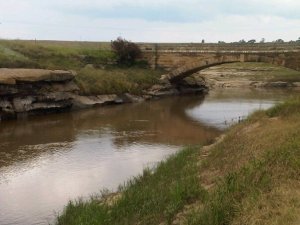
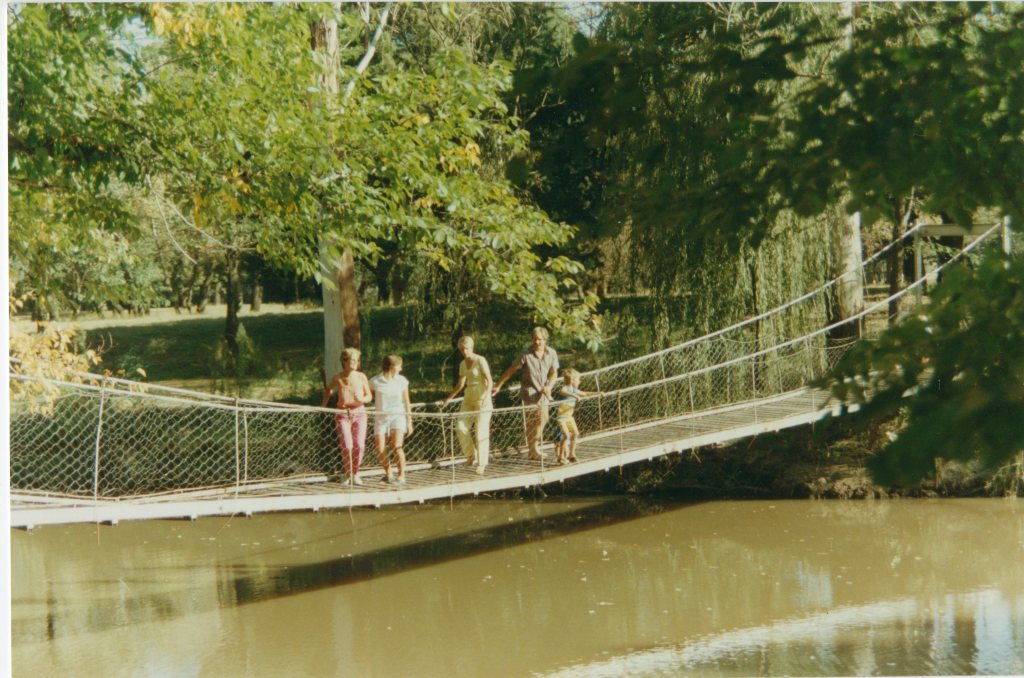
– Swallow bridge over the Mighty Vulgar River downstream of Harrismith –– Ina v Reenen found this lovely pic –
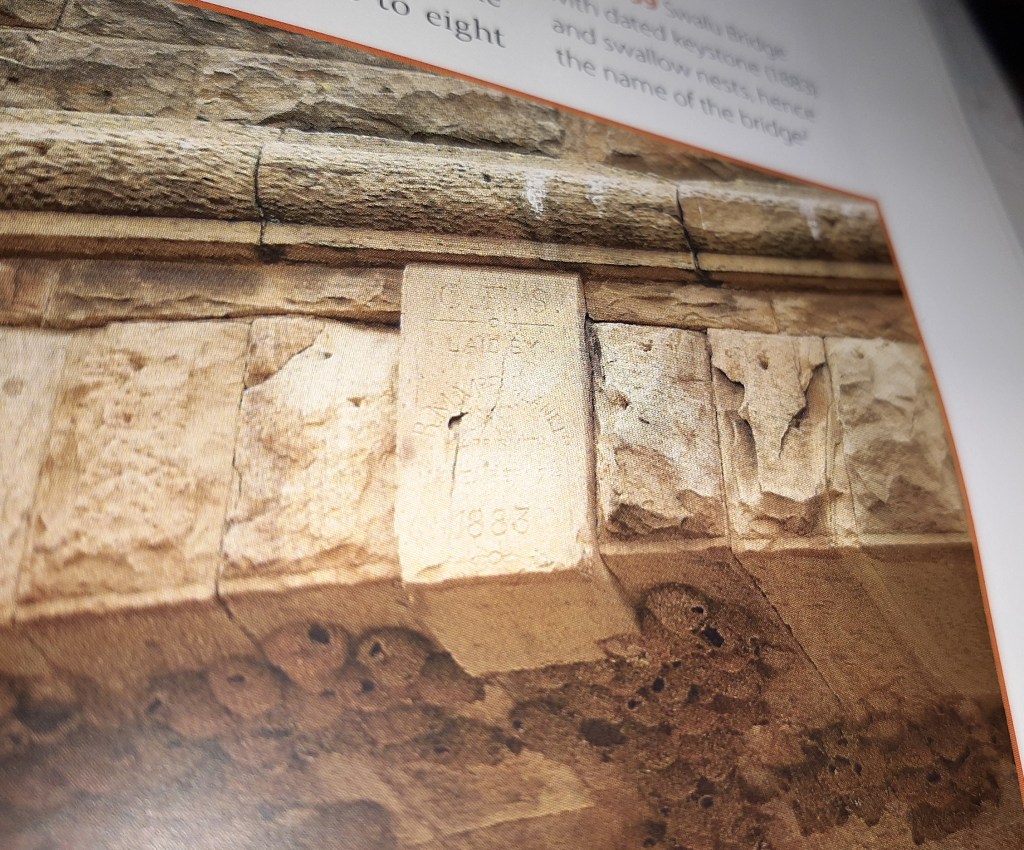
This was the first bridge across the Wilge River, built in 1883 on the farm Reenens Hoop. First called Landdrost Bridge before swifts and swallows happily colonised it and gave it a new name.
– swallow nests –
~~~oo0oo~~~
Then Airplane Trips: The first aged seventeen on a Boeing 707 ‘passenger jet’ to New York. Then the furthest west to Orcas island on the US-Canada border in Washington state. The longest east to Lombok island in Indonesia, east of the famous “Wallace line”.
Kleinspanskool schooltime ended around twelve noon or one o’ clock I guess, and we lived less than a mile east along Stuart Street and so one bleak and chilly winter day, after absorbing a lot of prescribed, standard knowledge, Donald Coleman and I set off for home in our grey shirts, grey shorts, grey socks and grey jerseys. He’d probly being absorbing wisdom from Miss Jordan, me from Mrs van Reenen, and it seems I may also have had a grey jacket at the time. Mom felt the cold keenly.
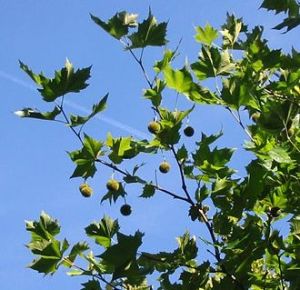
We had lots to talk about and so we walked along on the pavement under those big old London Plane trees you can see above, mostly bereft of leaves, many of which were now lying morsdood, yellow and brown, in the deep sandstone gutters. Mainly brown. While they’re yellow they still hang onto their twigs.
It was really cold but Donald had a box of matches in his pocket and a plan. We raked together a pile of the dry leaves with our chilly hands and started a nice fire and sat down to warm those same hands and our bare shins as the fire crackled away.
It soon burnt out – leaf fires disappoint – and we meandered on in deep conversation about important things. A block or two later we made another blazing but short-lived fire to sit and chat and warm up by.
Far too quickly we reached Hector Street and Donald turned down toward his home and I turned up to mine. Mine on the corner and his a block or two closer to the mountain.
“WHERE HAVE YOU BEEN!?” greeted me. The tone of the question surprised me and ruined the quiet, gentle ambience of our leisurely journey home. At his home Donald was being asked the same unreasonable question. We’d been to school. Everyone knew that, why were they asking?
“IT’S FIVE O’ CLOCK! SCHOOL ENDED OVER FOUR HOURS AGO!” We weren’t arguing. We didn’t say it didn’t. What was their point? “WHAT TOOK YOU SO LONG?” Uh, we were talking . . . time flies?
We were left to ponder the mysteries of the adult world. They obviously marched to a different drum as we sauntered to our flutes. We knew our Moms loved us and were just worried like we weren’t.
They didn’t know – yet – that Donald was an archeologist, paleontologist, cosmologist, naturalist, philosopher and music-lover and had LOTS to think about and consider, and me lots to learn. Life lay before us and what that was was to be pondered. They just assumed we were buggering around.
And anyway, whose stress levels were highest? I arse you that now that I know about stress levels.
Plane trees have itchy balls
~~oo0oo~~
morsdood – messily deceased; autumn leaves in winter
Huge thanks to Sandra of Harrismith’s best blog DeDoudeHuizeYard for the pictures – exactly right! That is the SAME gutter we sat in. You can even see a few of the plane leaves, great-great-great descendants of the ones we burned, um, (surely it can’t be!) about fifty six years ago.
Helios gave his son Phaeton permission to drive the Sun chariot around the Earth. Helios was the Sun God, and a son of almighty Zeus.
Talk about “Don’t Spare the Horses”! Typical youth, the lad Phaeton took some sporting chicks along for the ride, lost control of those horses and the chariot ran amok. The world was at risk of being incinerated!
Grandfather Zeus was thus forced to kill him. Zap! He killed his grandson! Zeus could gooi a mean lightning bolt if you pissed him off.
I’m sure glad the punishment became a bit milder in our day, a few millennia later.
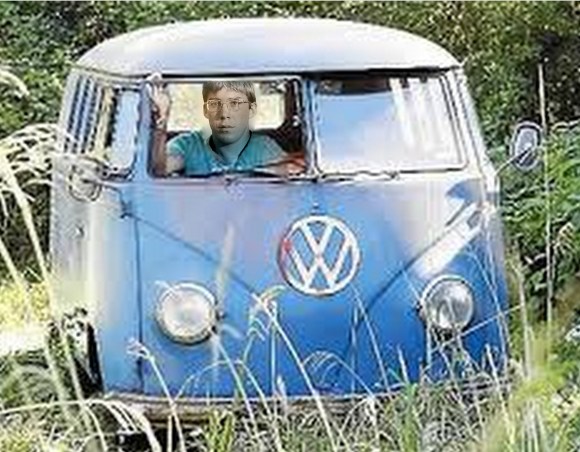
Come to think of it, we never did get punished. Never got caught, actually, though I can’t imagine our folks didn’t have a shrewd idea of what was happening – at least an inkling. See, we used to say we didn’t steal our parents’ cars. We ‘borrowed them on the non-permission system,’ we’d say. In the early days of illicit driving I used to drive the old blue VW Kombi OHS 153 around our large garden at 95 Stuart Street.
Round the circular driveway, out into Hector Street and back in again. Back near the garages was the washing line and the kombi just fit under it. Except I’d forgotten about the flip-up airvent on the roof. It caught the wires and pulled down the washing line poles. Some feverish spadework got them more or less vertical again and the old blue kombi was parked back in its exact spot outside the garage.
Another time I reversed into the tap at the horse trough, the pipe broke and water sprayed out in a long arc. It was evening and the folks were out. Parking the kombi I hastened to the tap and straightened the downpipe, getting drenched in the freezing water – it was mid-winter. That caused less water to gush but there was still a very visible spout. Rushing down to the front gate I found the stopcock that turned off the main water supply. That fixed it and I went to bed before the folks got home. The next morning I rose very early and turned the stopcock back on. “Hmm, the pipe must have frozen and burst last night” was the consensus at breakfast.
My butt was saved by Harrismith’s frigid winter weather!
~~~oo0oo~~~
*Some apparently did, though, as my friend Fanie Schoeman hastened to inform me here.
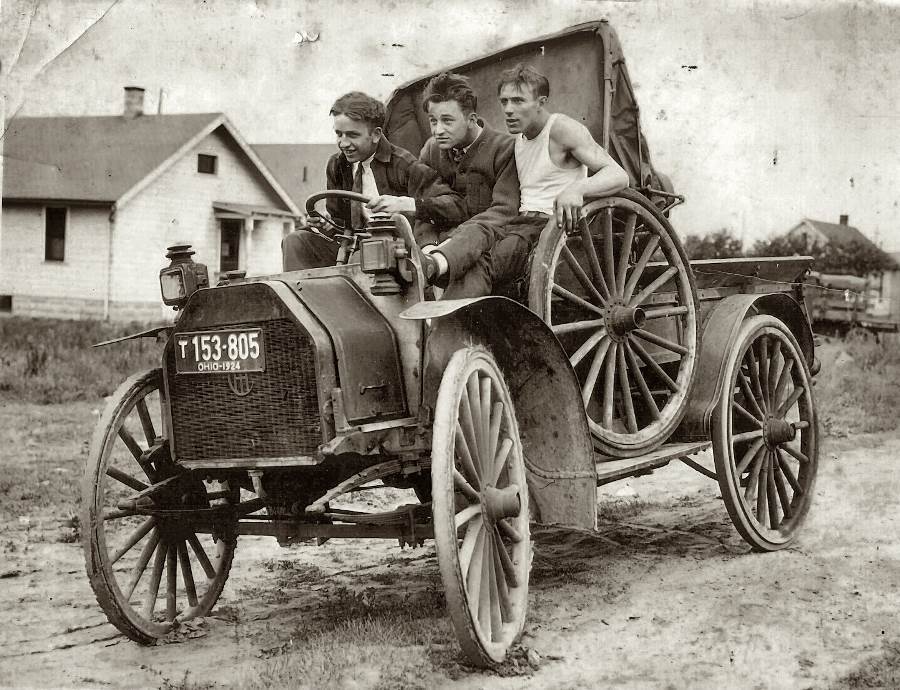
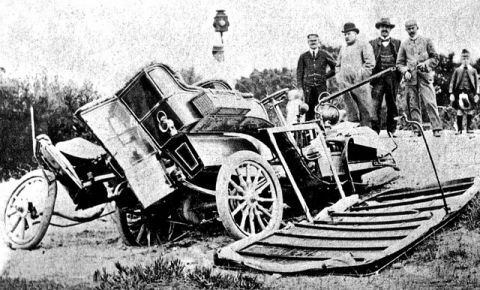
‘Son borrows Dad’s car’ predictably caused South Africa’s first serious automobile accident – 1903:
On 1st October 1903, Mr Charles Garlick driving his father’s new 24hp Darracq with his friend Harry Markham and chaffeur Snellgrove as passengers, entered the Maitland level crossing from an open gate, only to find the opposite gate closed. Before they could open the gate or reverse out of the crossing, they were hit by the Johannesburg Express traveling at full speed.
Snellgrove was thrown clear, Garlick suffered minor injuries and Markham, with his arm already in splints from a previous engine-cranking mishap, had a badly broken thigh.
It was announced that the Garlick workshop would undertake repairs to the Darracq. A new chassis was obtained from Paris and the final result testified to the efficiency of Cape Town’s first motor repairers.
From ‘Early Motoring in South Africa’ by R.H. Johnston
Booze opened wonderful opportunities for us as kids in the olden days. Firstly, it paid the bills, as Mom and Dad ran the Platberg bottle store for profit. Socially it was a big help too – as our hawk-eyed parents and their crowd became bleary-eyed and witty and hilarious, so their surveillance levels dropped and we could get on with doing more interesting things than we could when they were sober.
So it was at the MOTH picnic one year on the far bank of the mighty Vulgar river down in the President Brand park where, after a lekker braai and quite a few pots the folks were suitably shickered and plans could go afoot.
The older boys formed a syndicate which consisted of them hiding and the younger boys being sent in to do the dangerous stuff. See if you can get us some beer from the pub, was the thinking. So (some of or all of) Pierre, Fluffy, Tuffy and I approached the MOTH barman and WW2 ex-serviceman Ray Taylor – as always alone at the bar, teetotal. The other old WW2 servicemen and their wives a little way off making a lot of noise. Uncle Ray, quiet as ever, was easily distracted by my accomplices and as he was being his kind and obliging self to them, I slid a full case of dumpy beers off the makeshift bar counter and turned round, hugging it vertically straight in front of me against my chest. I walked straight away with my back to Uncle Ray into the darkness of the poplar and oak trees towards the river. I had become a thief. Recruited into a crime.
Under the suspension bridge the receivers of stolen goods waited. Etienne Joubert, a Brockett and a Putterill, I seem to recall. They took the loot and told us to move along then. We were too young to be allowed to partake; we were simply a small part of the supply chain!
~~oo0oo~~
Etienne remembers: “I remember this incident well. We drank them on the river bank upstream. We had female company as well, but best we do not dwell on that subject. There was also unhappiness about the brand that was procured . . . (Me: Bloody cheek! We put our reputations at risk for those teenage beer drinkers!)
Dear old Uncle Ray with his Alsatians (Etienne continues) . . Twice I went on walks with him up our beloved Platberg! He was an interesting man, who behind a façade of dullness was very wise!!
Stories like this bring back a thousand other memories……!! Cheers vir eers, Et
~~oo0oo~~
Another memory of The Far Side – of the river: Roaring around the dirt roads between those big trees in Dr Dick Venning’s light blue Triumph and in his Land Rover, Tim Venning at the helm. Hell for leather, running commentary all the way, huge grin on his face, sliding sideways around the tight corners.
~~oo0oo~~
Uncle Ray was attacked by baboons on one of his Platberg walks. Not sure if his dog/s were with him, but he said he fought off the babs with his walking stick. We were told he had suffered “shell shock” in the war.
Didn’t steal much as a kid. But I did slug down a bottle of Monis red grapejuice on the quiet in the back storeroom of the Platberg Bottle Store / Drankwinkel working for Mom & Dad one Saturday morning. You can see the door to the storeroom in the pic. Warm, straight out of one of those cardboard boxes all the bottles were packed in.
– Platberg Bottle Store – the dark side – Note that BrandyAle poster – booze “fights the high cost of living”!! –
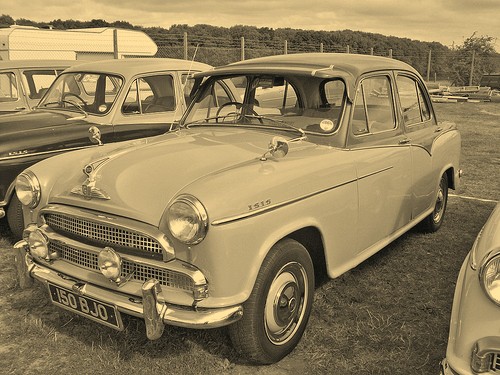
That afternoon we went for a long drive out Witsieshoek way in the beige 1956 Morris Isis (no, not Islamic State of Iraq & Syria, just Isis, after the river in England that most call the Thames).
After a while the car door had to be flung open for me to have a hearty grapey chunder out onto the gravel road in the veld. It would have looked like blood, so I imagine a confession then also would have had to take place. Can’t remember.
I haven’t liked red grape juice since. Communion in the teetotal Methodist church had me being possibly the only sinner rudely reminded of theft and puke every time the shed for you came round. Divine retribution? Communion? Confession? He does seem to move in mysterious ways!
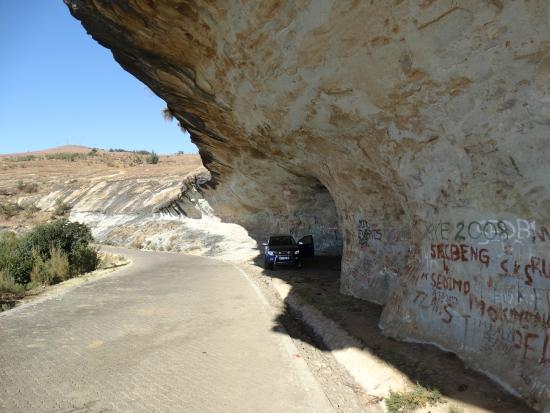
Here’s the cave on the Witsieshoek road:
~~~oo0oo~~~
As an aside –
– just like this one – but no visor – no spotlights – not two-tone –
The Morris Isis was named after the River Isis – which is actually just the Thames in Oxford, you know how Poms are with names. The Morris Isis was “designed for work in the Dominions, Colonies and Protectorates” . . . “the factory’s output . . . is entirely for export. Great attention was given to providing a low appearance without sacrifice of ground clearance. The all-metal 5-seater saloon body is stated to be practically indestructible and climate-proof.”
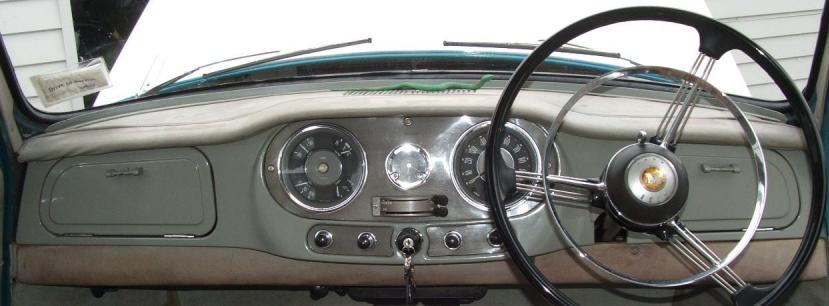
The 1956 version had the fascinatingly bizarre feature that both the gear lever and the handbrake were on the floor to the right of the driver, wedged in the narrow space between the seat and the driver’s door. When changing gear it looked like you were fiddling for something you’d dropped between your right thigh and the door.
The Morris Isis Series II was based on the Morris Oxford Series III. The engine power increased to 90 bhp. The manual version had a four-speed box operated by a short gearstick located on the right-hand side of the front bench seat. The handbrake lever was located just behind the gearstick.
Sales remained weak, and the line ended in 1958. It had a top speed of 90 mph and could accelerate from 0-60 mph in 17.6 seconds. Fuel consumption of 26.2 miles per imperial gallon (10.8 litres/100 km) was recorded. The test car cost UK£1025 including taxes.
– other wimps don’t want power! they don’t want acceleration! – No, only us Aussies like those things! ‘Cos we’re Aussies! Other guys like going slowly, of course. Marketing people never change. And guys love flattery and BS.
Here’s how we’ll always remember you, Steph. Us who knew you in the 60’s and 1970 – your matric year.
– the fab five strikes! Pierre, Larry, Steph, Koos; Tuffy must have taken the picture – – Larry & Steph collapsing – Pierre and me keeping an eye out for the gendarmes – – Omar Sharif looking stoic –
His more recent friends and family remember him like this: Mad keen fisherman, yachtsman, can-do builder, taker-on of major projects. Big-hearted friend, builder of schools for underprivileged people, generous to a fault, though he would dispute the ‘fault’ part.
Later: JP, his boet, his family, his workers and his colleagues put on an amazing memorial service and wake for Steph at The Pines this Saturday. Entertained and feted us royally. His daughter tells me he has seen to it that each of them are set up with something to do to keep going. ‘Kom ons organise dit,’ was his saying. There were grandkids running around and the day was just as if he had organised it himself. It typified Steph de Witt, as it was Generous and Inclusive. The family did him proud.
We were a gang of five that came of age together. Really fun days. Beer, wit, song, wisdom, ‘borrowed’ cars, adventures and escapades * and um, extra homework (some of these things may be disputed by some) . . . Pierre du Plessis and Steph and Larry Wingert, our American Rotary exchange student, were 1970 matrics, me and Tuffy Joubert were 1972 matrics. I phoned Larry in Ohio to let him know the sad news last night.
One of the things I am most grateful for (I’m in awe, really) and I try hard to apply some of it in a balanced way to my Jess & Tom, is just how tolerant and patient our 1960’s and ’70’s Vrystaat parents were! I’m sure Steph’s Mom Alet and my Mom Mary, Pierre’s Mom Joan, Tuffy’s Mom Joyce often knew we were out and about but they would just check we were OK in the morning. ** Larry’s Mom would have been blissfully unaware of her son’s shenanigans in Africa!
Steph’s Dad the legendary Koos de Witt died when Steph was in Std 6. He was a prominent builder: Built many Much Deformed churches all over SA. Steph did civil engineering at varsity then started building. Made and lost fortunes. Owned a huge ocean-going catamaran, house in Cape Town, ‘cottage’ in Kommetjie, game farm in Limpopo. Then he was back – bought the biggest stone house in Kestell while he had big contracts to build roads and a shopping centre in Qwa Qwa. I looked him up there on our way to Lesotho once. He was driving a huge imported Ford F250 pickup truck. When I told him which road we were taking into Lesotho in my kombi he said “You can’t go that way, Koos! I built the road to the border and that’s fine, but after that you’ll never make it!” Well, we did, but Aitch veto’d that route thereafter.
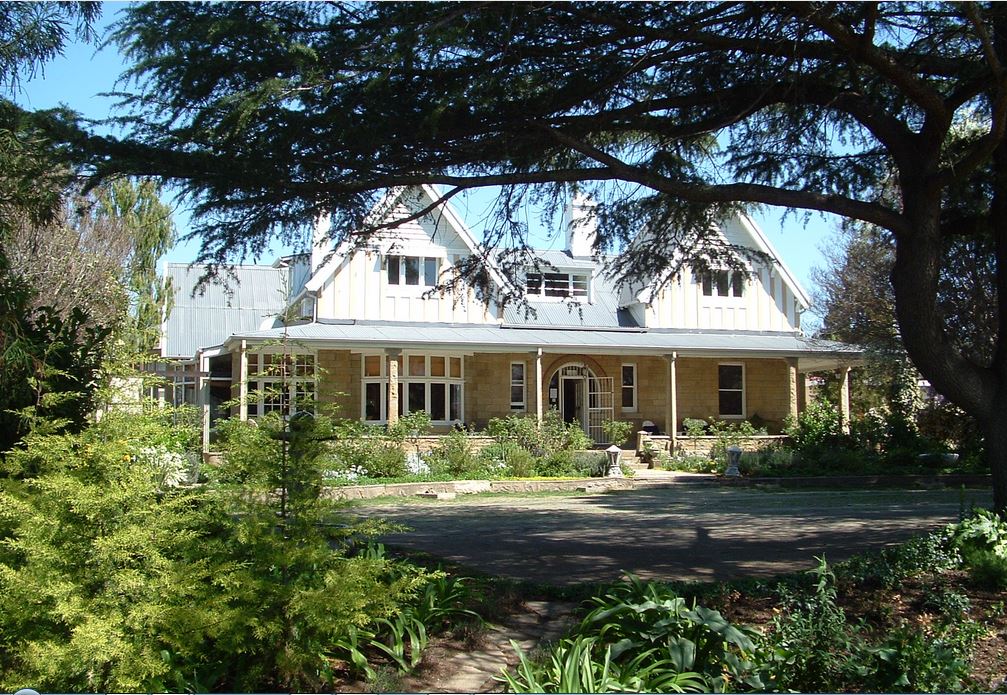
He always kept The Pines – or Shady Pines – their big old house in Harrismith and ran it as a B&B. He wanted to start a museum and had bought and restored his Dad’s big old Dodge and his Mom’s old Karmann Ghia.
Next month Steph was going to take another exchange student from my year who they hosted to his game farm – Greg Seibert’s first visit back to SA since 1972. We’ll have to fill in that part of his itinerary.
His year had their 45th matric reunion last week. Older sister Barbara was in his class and was involved in organising it. But Steph didn’t go. Getting together with the hele klas wasn’t his style. A few beers with the boys would have done it. Although: For their 40th reunion he and Pierre organised, hosted and paid for the whole thing. Wouldn’t take any money from the rest of the class! Generous people. His funeral was organised by his brother JP, his kids and his wife and ex-wife just as he’d have wanted it. All his workers invited, all his friends and more. LOTS of food and drink and lasting the whole day. At The Pines.
Now he’s gone. Well, none of us would have predicted Steph dying of old age in bed, that’s for sure. But this soon? No, no, no!
Our last reunion was in 1996 when Larry visited from Ohio:
– Pierre, Francois, Koos, Steph, Tuffy, Larry –
*I told you how we stood innocently in assembly while the headmaster promised threateningly that he would catch the blighters who had left tyre-mark donuts on the netball courts – “Ons sal hulle vang!” – and we thought, “No you won’t”.
** The other day I was about to growl “Turn down that noise!” to Tom when I thought to myself I don’t remember my folks ever doing that to my full-blast Jethro Tull or Led Zeppelin! Amazing!
~~~oo0oo~~~
Pierre at Steph’s funeral:
Shady Pines
I pulled over to catch this moonrise over Bobbejaanskop, Platberg as I left Harrismith that sad and joyful day:
A great pleasure in (a schoolboy’s) life is doing what people say you cannot – or may not – do.
– paraphrasing Walter Bagehot
“Education is the sum of what students teach each other between lectures and seminars.” ― Stephen Fry
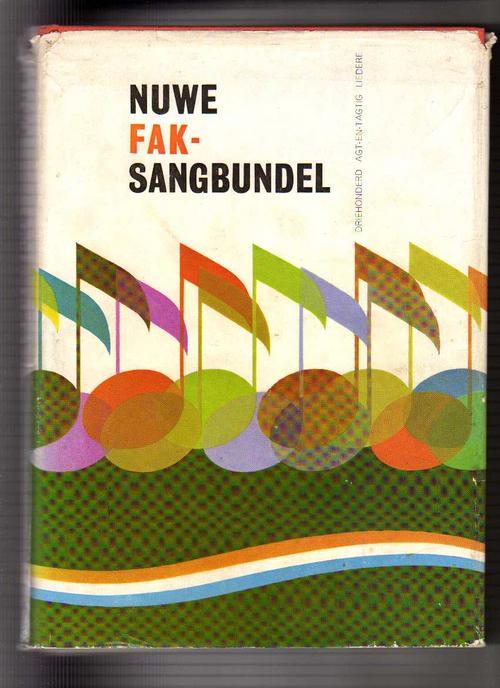
At the Harrismith se Hoerskool, we were taught “sang” by Eben, well-known HNP lid of the Harrismith Tak who we thought fancied himself as a singer and a ladies man. Rather vroom, onse Eben – which has an opposite meaning to the English vroom.
He tried his best, but we were not an easy task. The RIGHT way was very clear in ou Eben’s mind: Die Volk, Afrikaans, Die Voortrekkers, Die FAK Sangbundel, no “anglisismes” and no Engels. And modern music was the work of the devil. This much was not in doubt. This meant, of course, that the RIGHT way in our minds was – well, definitely something other than that.
He announced one day in the asbestos pre-fab sangklas that we would now sing “Heb je al gehoord van den silveren vloot”, which wasn’t actually Afrikaans, being Hoog Hollands, but that was kosher in his world; followed by the pure Afrikaans “Wie is die dapper generaal? DE WET!” which made us all think we were singing a song of praise for our flyhalf, De Wet Ras.
At this, Skottie Meyer sighed audibly: “O, jis, sing ons al weer vir Fokken Faderland?”
Well! Despite Skottie’s protestations that he had said “Volk en Vaderland”, he was despatched by a puce-faced Eben to the headmaster’s office, forthwith! Inderdaad! But he must have forgotten to go all the way because he appeared at the window behind Eben a minute later and proceeded to have us stifling grins the rest of the singing session.
I will confess we did sometimes sing words other than those strictly written down in the sangbundel.
Skottie the irreverent and Eben the reverent have both since shuffled off this mortal coil.
~~oo0oo~~
HNP lid of the Harrismith tak – member of the Herstigte Nasionale Party – an extreme nationalist apartheid political movement
vroom – not vroom; pious; saintly
O, jis, sing ons al weer vir Fokken Faderland? – Omigawd, are we singing boring, dreary old nationalistic songs again? Any chance of a Rolling Stones number?
I canoed the Vrystaat Vlaktes thanks to Charles Ryder, who arrived with Jenny in Harrismith – about 1968 or ’69 I’d guess – to start his electrical business, a rooinek from Natal. He roared into town in a light green Volvo 122S with a long white fibreglass thing on top of it like this:
I asked:
What’s that? It’s a canoe
What’s a canoe? You do the Dusi in it
What’s the Dusi?
Well, Charles now knew he was deep behind the boerewors curtain! He patiently made me wiser and got me going and I got really excited the more I learned. I decided I just HAD TO do the Dusi. What could be more exciting than paddling your own canoe 120km over three days from Pietermaritzburg to the sparkling blue Indian Ocean at the Blue Lagoon in Durban? Charles made it sound like the best, most adventurous thing you could possibly think of. He showed me how to paddle and was so generous with his time. Both in paddling and with Harrismith’s first Boy Scouts troop, which he helped establish.
I started running in the early mornings before school with a gang of friends. Tuffy Joubert, Louis Wessels, Fluffy Crawley, who else? We called ourselves the mossies as we got up at sparrow’s fart. Then I would cycle about two miles to the park in the afternoons and paddle on the flat water of the mighty Vulgar River in Charles’ Limfjorden, or Limfy, canoe, which he had kindly lent me/given to me. That was in 1971 and it was the fittest I’ve ever been, before or since.
Overnight I would leave it on the bank tethered to a weeping willow down there. One day around Christmas time with only a couple of weeks to go before Dusi I got there and it was missing. I searched high and low, to no avail. So I missed doing the Dusi. Not that I had done anything but train for it – I hadn’t entered, didn’t know where to, didn’t belong to a club, didn’t have a lift to the race, no seconds, nothing! Still enthused, though, I persuaded my mate Jean Roux to join me in hitch-hiking to the race.
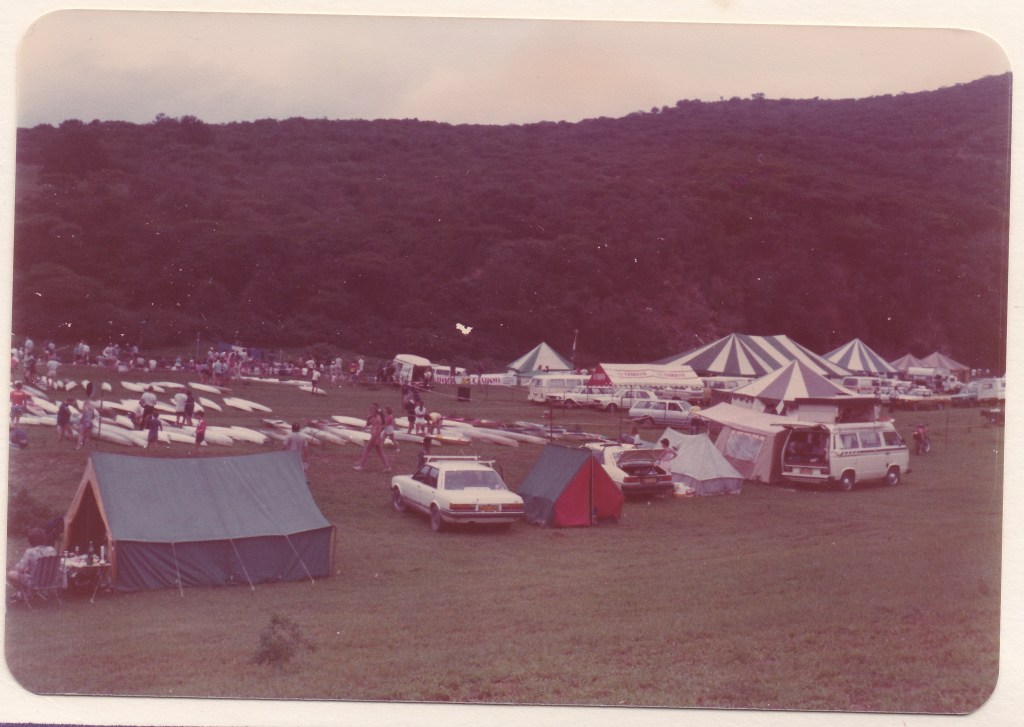
1972 Dusi: We got to Pietermaritzburg and the next morning to the start in Alexander Par PMB. Milling around among the competitors and their helpers, we watched the start and as the last boats paddled off downstream Alexandra Park started emptying, everyone seemed in a big hurry to leave. We asked Wassup? and someone said, We’re Following Our Paddler! so we bummed a lift with some paddler’s seconds to the overnight stop at Dusi Bridge. We slept under the stars and cadged supper from all those friendly people. They let us continue with them the next day to the second overnight stop at Dip Tank and on the third and last day to the sea, the estuary at Blue Lagoon, following the race along the way.
Back in Harriesvlei I continued the search for my missing kayak and found a bottle floating in the Kak Spruit, a little tributary that flows down from Platberg and enters the river downstream of the weir. It had a string attached to it. I pulled that up and slowly raised the boat – now painted black and blue, but clearly identifiable as I had completely rebuilt it after breaking it in half in a rapid in the valley between Swinburne and Harrismith. Come to remember, that’s why Charles gave it to me! I knew every inch of that boat: the kink in the repaired hull, the repaired cockpit, the wooden gunwales, brass screws, shaped wooden cross members, long wooden stringer, shaped wooden uprights from the cross members vertically up to the stringer, the white nylon deck, genkem glue to stick the deck onto the hull before screwing on the gunwales, the brass carrying handles, aluminium rudder and mechanism, steel cables, the lot. In great detail.
1976 Duzi – In 1976 I entered the race and convinced a friend at College Louis van Reenen to join me. He had asked ‘What’s that?’ when he saw my Limfy on my grey and grey 1965 Opel Concorde in Doornfontein, and ‘What’s that?’ when I said ‘The Dusi,’ so he was ripe for convincing. Later in the holidays he bought a red Hai white-water boat with a closed cockpit from Neville Truran and paddled it once or twice on Emmerentia Dam. In those days that sort-of qualified you for Dusi! Then he loaded it up on his light blue VW Beetle and drove down from Jo’burg to meet me in Harrismith. Only one of us could paddle, the other had to drive as the ‘second’ taking food and kit to the overnight stops. So we tossed a coin. I lost, and so we headed for Alexandra Park in PMB with the red Hai on the roofrack. A great pity for me, as I had done a lot of canoeing, also in flood-level rivers, and had broken two boats in half and repaired one, getting it going again in time for the 1972 Dusi as related above. But – a coin toss is a coin toss. For Louis, the coin toss won him first-ever trip down a river. And what a river!
In that 1976 flood-level high water Louis swam his first Dusi!
He swam and he swam and he drank half the water, lowering the level somewhat, but not enough, as it continued raining and filled up faster than he could drink it down. Evenings he had to hang his bum out the tent door, wracked with ‘Dusi Guts’, but he rinsed and repeated the performance three days in a row and finished the marathon. He was a tough character, Louis!
I drove that pale blue VW in the thick mud of the Valley of a Thousand Hills. Us seconds took turns getting stuck and helping each other out. In places there was a queue of dozens of cars, but one-by-one we’d give each car a shove and we all got through.
Here’s Louis at Blue Lagoon finishing that epic Duzi!
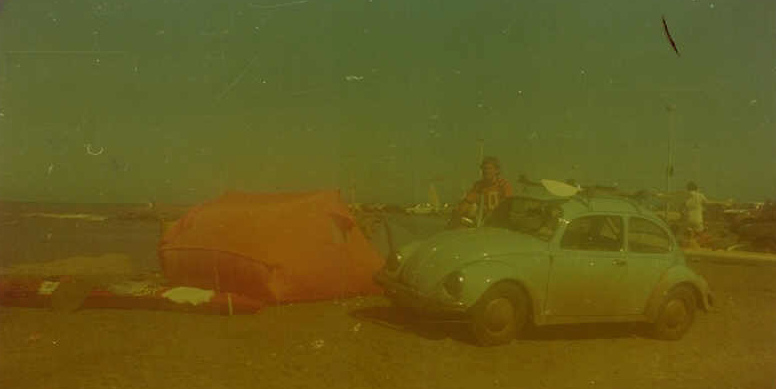
Here’s my orange pup tent and Louis’ red Hai and blue VW at Blue Lagoon after the race, wind howling:
Waiting for Louis van Reenen, probably floating in the swollen Umgeni next to his Hai!
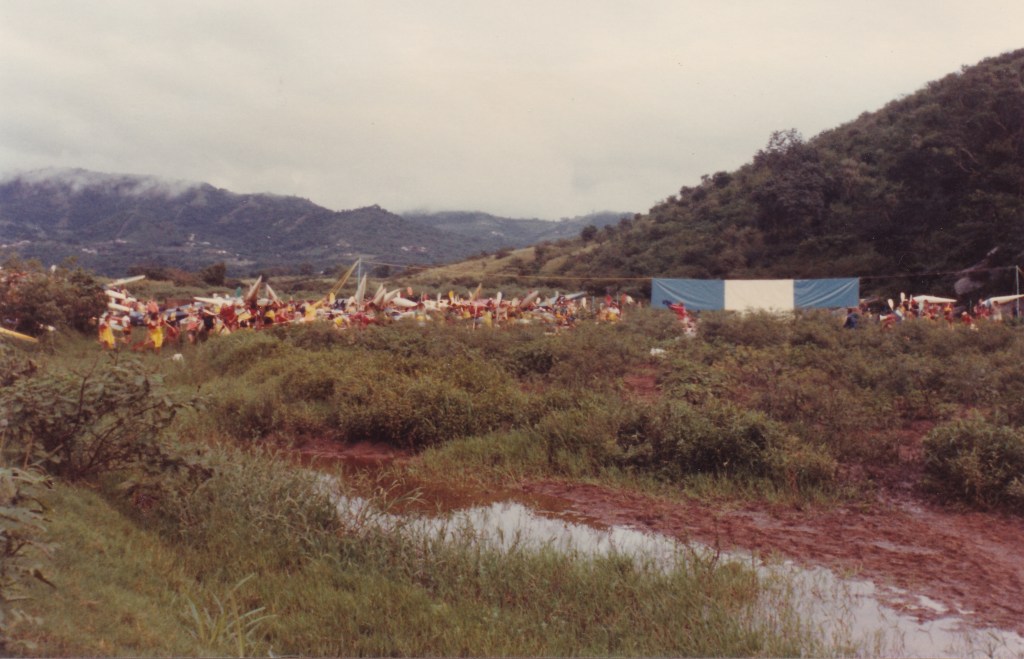
1983 Duzi – It was only in 1982 that I eventually got round to paddling again – and then in 1983 I finally did my first Dusi. On a low river:
first overnight stopstart last day
1983 Umko:
1983 Berg:
Berg RiverBerg River Canoe Marathon 1983
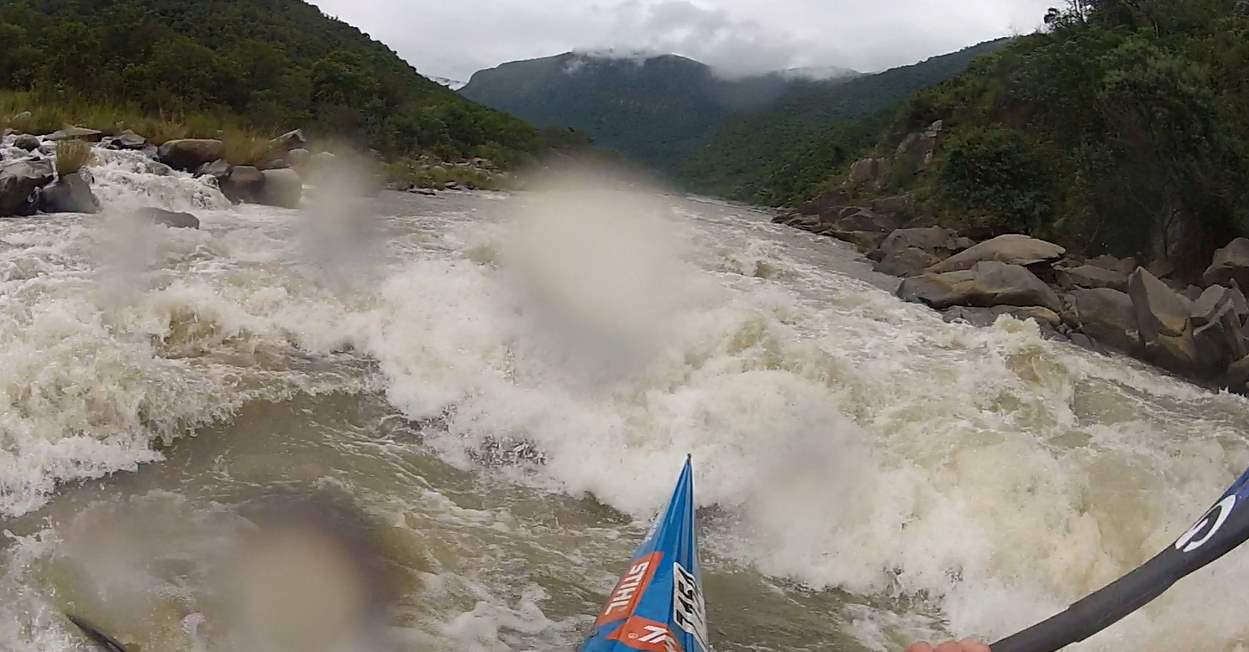
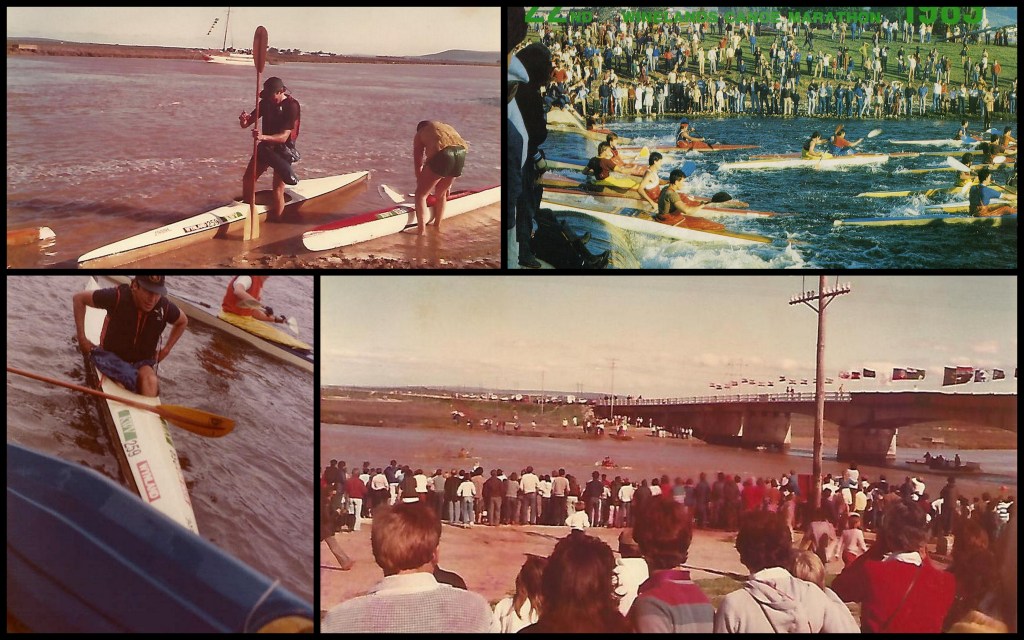
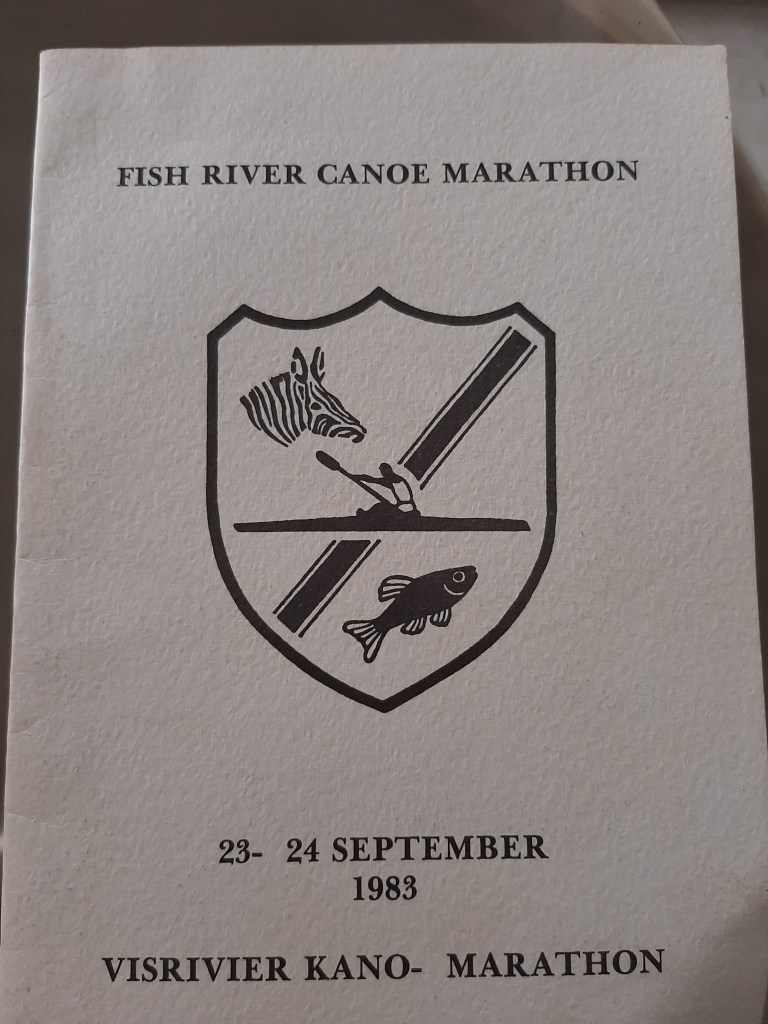
1983 Fish:
a more recent ‘Fish’
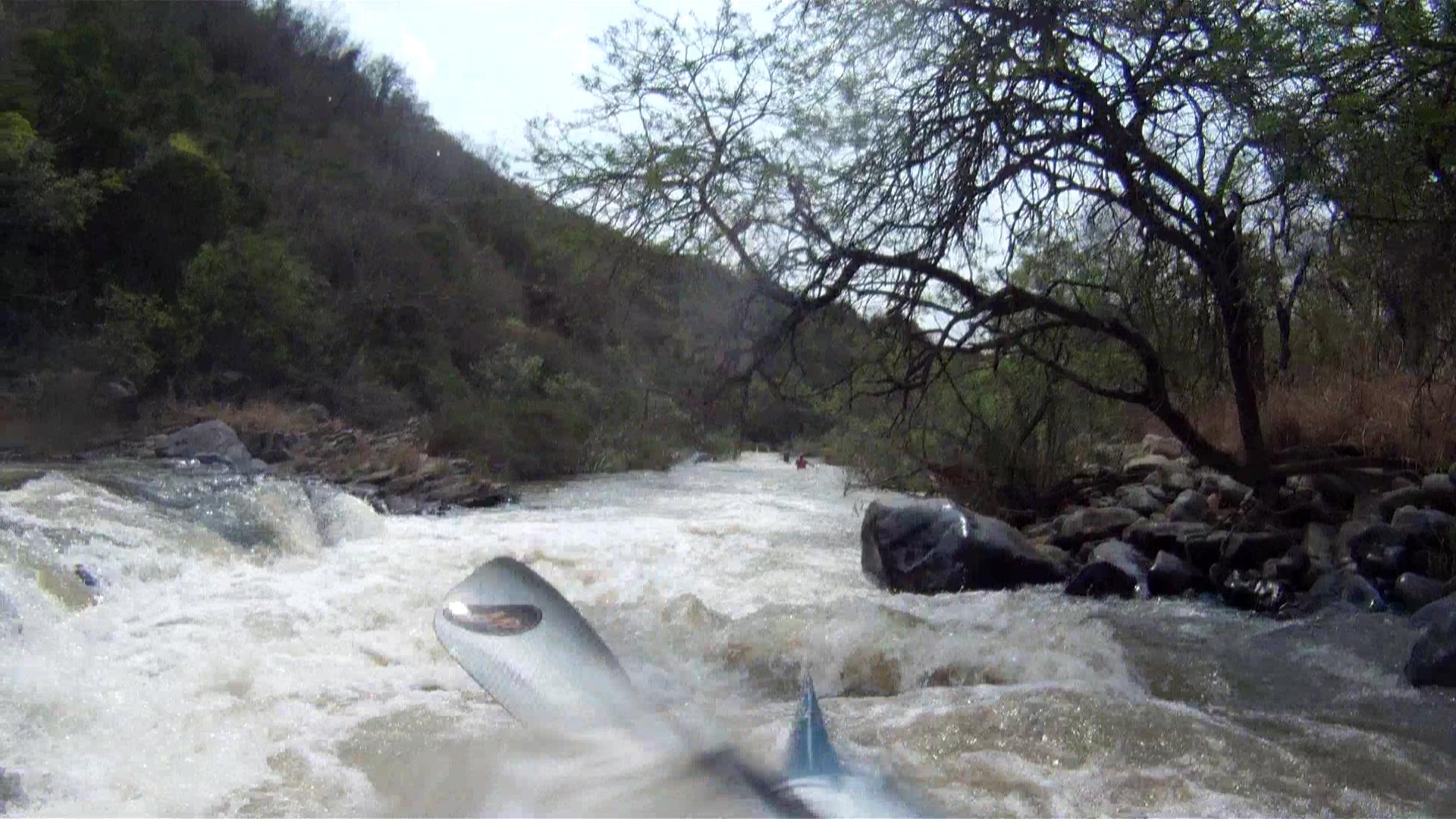
and the Lowveld Croc:
– a more recent ‘Croc’ –
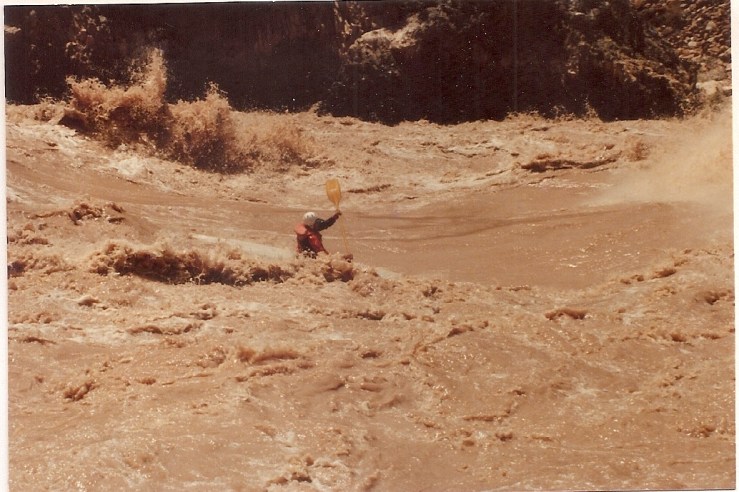
All in quick succession, and all at my not-furious pace, staring at the scenery, which was good practice for kayaking the Colorado through the Grand Canyon in 1984.
– Colorado River 1984; Crystal rapid –
When I got back from America I thought I must get hold of Charles and tell him what his enthusiasm had led to.
But I didn’t do it then – procrastination – and then I was too late. His heart had attacked him, he was no more. Thank you Charlie Ryder. You changed my life. Enhanced it. Wish I had told you.
~~~oo0oo~~~
Years later good friend Harry Pikkie Loots forwarded this post to Charlie’s son Bradley. I hope Jenny also got to see it.
When I was called up to the army in 1979 my friend Tabs Fyvie offered to deliver me to the (not so pearly) gates of Voortrekkerhoogte (or as Barks always insisted: Roberts’ Heights. Now thankfully at last it has a non-bullshit name: Thaba Tshwane!).
Off we went to Pretoria and sought out a pub. A kroeg, really – we were on the Central Gevangenis side of downtown Pretoria. A final drink before disappearing into uniform.
Many drinks later the 5pm deadline was approaching. Walking to the car we passed a sangoma’s emporium with enticing offers and claims written crudely on the window. Opportunity beckoned.
Turning in we were met by the great consultant himself. Tabs explained he would like to get rid of his paunch, and the man indicated this was a very minor thing which he could do with one hand tied behind his back. We were not sharp enough at that particular juncture to enquire how come he didn’t use it on himself . As in, y’know: “Physician, Heal Thyself .”
He reached for a metal rasp, took down a piece of bark from the many shelves behind him piled with bark, skins, leaves, string, dead animals, bottles of various sizes, seeds, skulls and who knows what else and grated off a pile of sawdust onto a newspaper, folded it up and said “Twenty bucks”.
Shit! Twenty Ront! In 1979! We were both pickled and we hadn’t spent that much on beer! Still, Tabs coughed up and the great man asked me my pleasure.
“I want to get out of going to the army”, I said, “Two years is too long, I’d rather dodge it altogether”. “Not a problem” he said, and “That is easy” he said. He whipped around, reached for the same metal rasp, took down the same piece of bark, grated the same amount into the next page of the same newspaper, folded it up and said – you guessed it: “Twenty bucks.”
We paid him quite solemnly, not wanting to damage or weaken the muti with any faint tinges of doubt and repaired to a nearby dive for two more beers to wash down the potion. It was vile, bitter and powder-dry, but we managed, one pinch at a time.
Well, it worked for me: Days later* I emerged from the army a free man – just like the man said.
* OK, 730 days later to be exact.
Tabs, I’m sorry to say, on the other hand, still had his little paunch. Maybe he’d harboured secret doubts? Or maybe the Sangoma had specialised in psychiatry rather than physiology? **
** Decades later Tabbo DID lose his paunch. He credits it to Tim Noakes’ eating plan, but I can’t help wondering . . . .
=======ooo000ooo=======
Peter Brauer wrote:
Clearly he mistakenly gave you the “slow release” version and probly just underestimated the dosage required for Tabs.
I replied: Or maybe it’s because we were “double blind”?
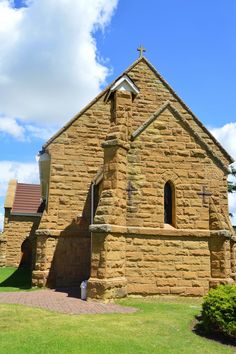
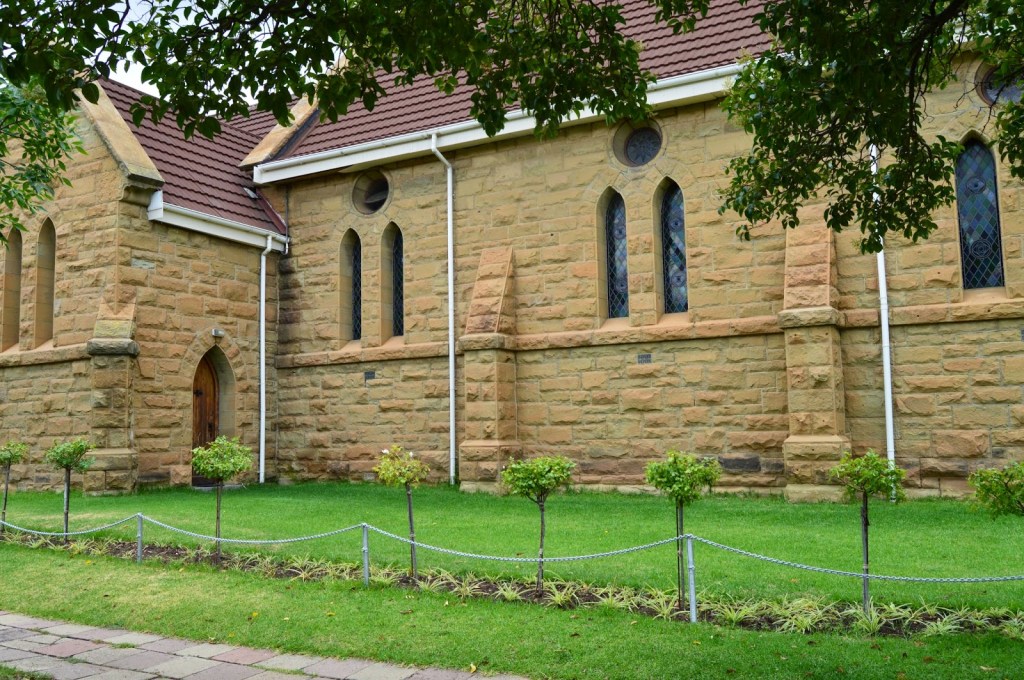
The Church of England, Vrystaat Outpost of the British Empire Division (diocese?), in its small sandstone building in Harrismith – off the beaten track, not even in the shadow of the tall, imposing Kerk of ve Chosen People in the square which sat smack in the middle of Warden Street, interrupting the flow of traffic, forcing ox-wagons and – later – automobiles to go AROUND it – had a big problem:
Dwindling membership and a severe shortage of people able to serve the Queen and the Home Country – oh, and the Lord – as deacons.
Not a new problem, this shortage had occupied the minds of these good Anglican, Anglophile Colonialists even before the darned Nationalists had taken over Colonial Rule in 1948 and the death of their dear King George in 1952. Long gone were the days when the mayor and a few councilors might occupy these pews (and speak English at town meetings!). Everyone who was anyone now sat in the Kerk pews of a Sunday and listened to thundering donder n bliksem sermons of power and guilt (and what one could quite legitimately do to the sons of Ham) up the road.
Part of the problem was those families who might cough up good English deacons sent their sons away. Hilton, Michaelhouse, St Andrews, Treverton. You know, good Church schools (yes, some of them might be Methodist, but one has to make do out here in the Colonies). Trouble was, these good schools’ chapels cured them of any desire to spend more Sundays on cold, hard wooden benches. So what to do?
A thought: What about young Clive Oswald? An approving murmur started up among the little group of Church elders, a quiet buzz . . . He had recently returned to the district to join his father and mother on the farm. Young, good-looking, polite, capable; why, it was like manna sent from . . .
“Has his shadow ever darkened the door of this church!?” boomed a voice.
Belonging to Joan Simpson. Dairy farmer; Long-serving deacon; Anglophile; Known for sleeping on her bed on the open porch of the farmhouse she shared with her sister Vera. Year-round, even in Harrismith’s freezing winter. And for delivering milk in big metal cans on the back of her grey Morris Minor pickup – made in England, what. And for wearing khaki trousers at all times. Occasionally a dress to a MOTH do or high church. She’d served in the war in defence of Empire, and was still now serving in defence of what was right. After all, sleeping on the stoep within earshot of the N3 highway which linked the town pubs and Gailian probably gave her more insight than most as to which doorways shadows had darkened on many nights well past closing time.Hmph!
Well, that settled that question. Tabs Fyvie was safe. England expects every Church of England in the Provinces to do its duty and die quietly, fizzling away with dignity.
~~oo0oo~~
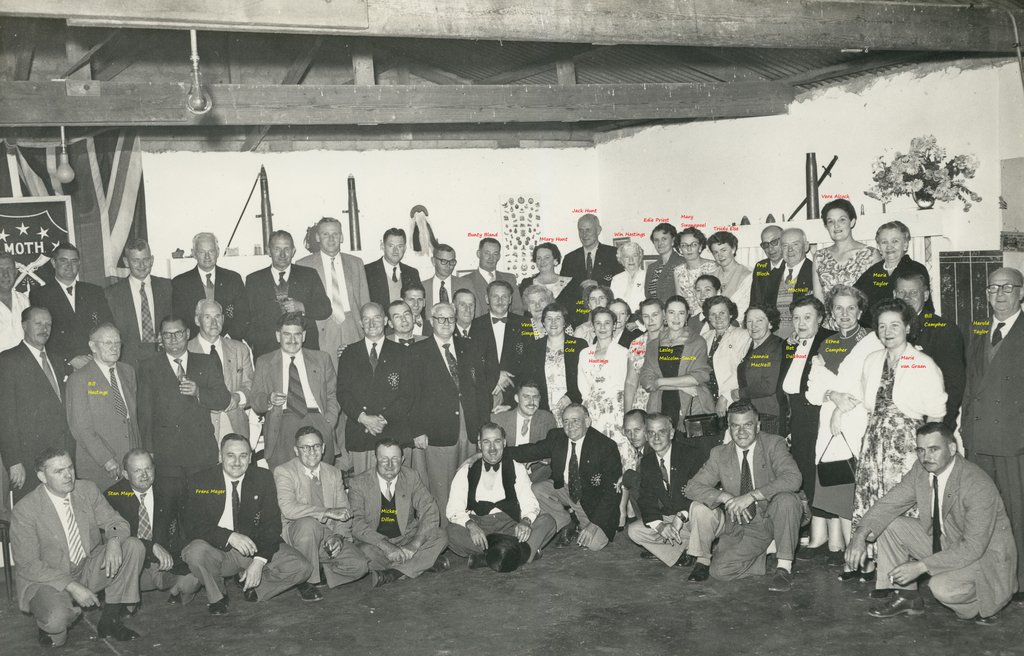
Joan is probably in this picture somewhere:
– Platberg MOTH Shellhole, Harrismith ca.1960 –
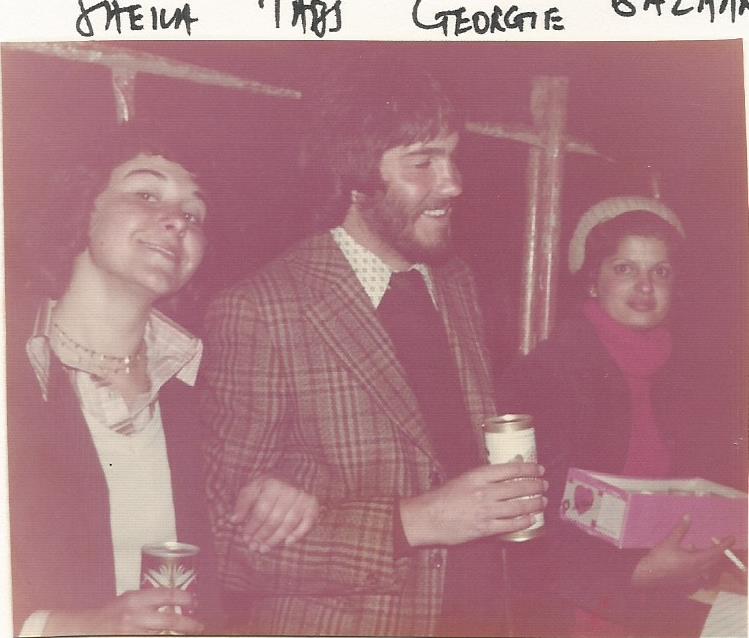
Luckily Joan probably hadn’t spotted Tabbo patronising the Anglican Bazaar, or she might have mollified her stance and he might have been sentenced to carry the collection plate for decades.
– he and his cousin Desmond would only have been there for the chicks –
~~~oo0oo~~~
kerk – stepping stone to heaven; compulsory; ladies, wear a hoed!



























 Vrystaat Confessions
