Tag: Harrismith

  • Buckland Downs to the ‘Fitzstitute’

    Buckland Downs to the ‘Fitzstitute’

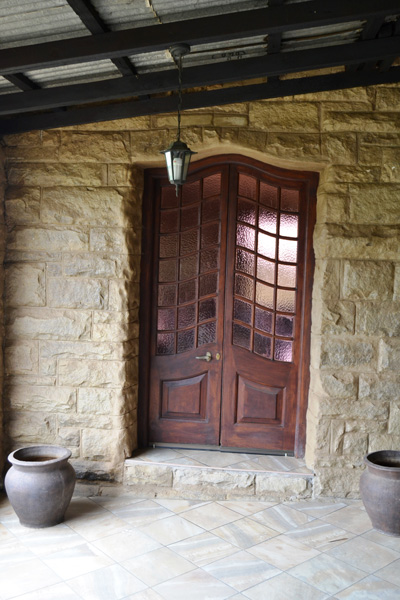
    In October 1902, just four months after the end of the Anglo-Boer War, Sir Percy Fitzpatrick bought the farm Dreyersgeluk near Verkykerskop in the Harrismith district from the insolvent estate of Petrus Dreyer, poor bugger. Fitzpatrick then got Herbert Baker to design a fine sandstone homestead, and to assist him in building it in 1903 – ‘but without full professional services’ (Keath 1992:104-105).

    Baker, who became Sir Herbert in 1926, was an English architect who worked in South Africa from 1892 to 1913. His first job was for Cecil Rhodes on Groote Schuur; over the next twenty years he dominated the architectural scene in South Africa, designing the Union Buildings in Pretoria in 1910.

    – Fitzpatrick changed the farm’s name to Buckland Downs –

    James Percy Fitzpatrick was born in 1862 in King William’s Town, the son of Irish immigrants from Tipperary.

    Active in politics and very pro-England, Fitz agitated for war against the boers. Calling for an invasion of the sovereign state he was living in! He was convicted of treason against the Transvaal state in 1896. Nasty! Being on the winning side, though, meant he was knighted in 1902. All is forgotten if you win, and what happened gets re-written.

    As an author, his most famous work was ‘Jock of the Bushveld’. Written in 1907 while staying at Buckland Downs, it told about his life as a transport rider in the lowveld goldfields of the old Zuid Afrikaanse Republiek. The Jock stories began as bedtime stories told to his children. Apparently urged to publish them by his friend, famous author Rudyard Kipling, the stories became one of South Africa’s most famous books of all time.

    Around 1910 Fitzpatrick ordered a large number of different varieties of oak trees from England and planted them in the shape of the Union Jack on about 35ha of land on Buckland Downs. Despite these two obvious anti-local actions, Sir Percy said “I would rather be a meerkat in Africa, than a millionaire in England.” Of course, he meant that only as long as Africa was under British rule.

    Fitzpatrick’s daughter Cecily (1899-1992) later stayed on the farm with her husband Jack Niven. In the 1940’s the famous ornithologist Austin Roberts (1883-1948) used to visit them on Buckland Downs. Patrick Niven tells how Roberts involved the family during a 1942 visit in a collecting expedition to the nearby Spitzkop for specimens of swifts – probably at a nesting site?

    Cecily became very involved in birds – her name is reflected in the List of Members of the Southern African Ornithological Society (SAOS) for April 1935, the receipt for her subscription is signed by Austin Roberts himself – honorary secretary at the time. In 1948 she established a Committee for Bird Protection as a subsection of the Wild Life Protection Society. In 1957 Cecily was the driving force behind the first Pan African Ornithological Congress which took place in Livingstone, Zambia. In 1960 she established an Institute for African Ornithology – now fondly known as the ‘Fitzstitute’ – dedicated to the memory of her father, Sir Percy FitzPatrick, through a £15,000 endowment (around ten million Rand in 2007 money) from the FitzPatrick Memorial Trust.

    ~~~oo0oo~~~

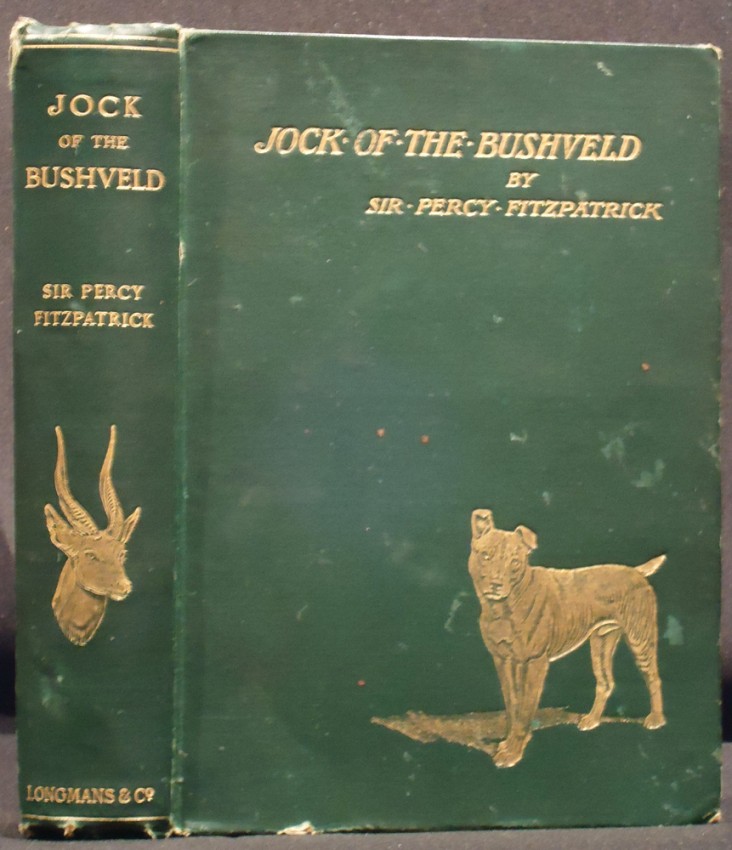
    A first edition copy of Jock is going for $7500 in 2019. And then THE first edition is for sale by Clarke’s Bookstore. I wonder how much that will fetch? Here’s the inscription Percy himself inscribed in it:

    Illustrated by E.Caldwell

    DESCRIPTION:

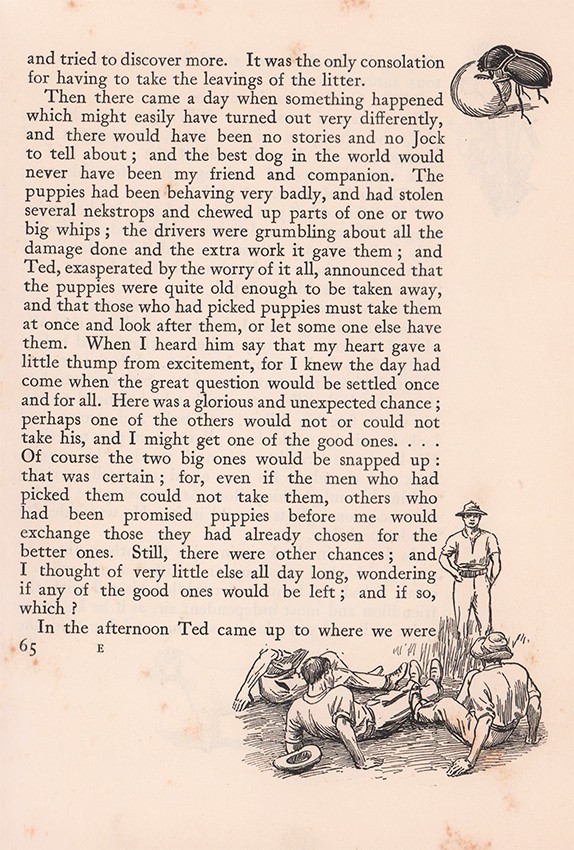
    First edition, First impression. 475 pages, colour frontispiece, plates and marginal illustrations, dark green cloth with gilt titling and gilt vignette of Jock on the upper cover, light foxing throughout mainly in the text and on the page edges, with the drawings of a dung beetle pushing his load with his front legs rather than his back legs on pages 65, 337 and 457 and Snowball the horse being dragged out of the river on page 316 – these drawings were changed in later impressions. The spine is starting to fray at the top and the bottom, the bottom edge of the upper cover and the corners are slightly scuffed, housed in a specially made oatmeal textured cloth solander box with a dark green title label gilt on the spine, a very good copy of the first edition. Overall Condition: A Very Good Copy

    5000 copies of the first impression were printed at a total cost to Longmans of £416. 7s. 11d.

    Signed on the title page by J Percy Fitzpatrick. His full name was Sir James Percy Fitzpatrick.

    Inscription on the front paste-down end paper reads: This – the first copy of “Jock”- “belongs to the Likkle People” and the mere narrator desires to acknowledge that fact in proper form. J Percy Fitzpatrick, Hohenheim October 1907

    The dedications page reads: It was the youngest of the High Authorities who gravely informed the Inquiring Stranger that “Jock belongs to the Likkle People!” That being so, it is clearly the duty, no less than the privilege, of the mere Narrator to dedicate the Story of Jock to those Keenest and Kindest of critics, Best of Friends, and Most Delightful of Comrades, The Likkle People.

    Fitzpatrick’s adventures – centred on his dog Jock, a Staffordshire Bull Terrier cross – when he was pioneering in the Bushveld, are vividly described in this South African classic. He used to recount them in the early 1900’s to his four children, Nugent, Alan, Oliver, and Cecily, to whom the book was dedicated – the likkle people.

    Rudyard Kipling, an intimate friend, at some time took part in these story-telling evenings, and he it was who persuaded Fitzpatrick to put the stories together in book form. Having done this, Fitzpatrick searched for a suitable artist to illustrate the book and eventually came across Edmund Caldwell in London and brought him to South Africa to visit the Bushveld and make the drawings on the spot.

    The book, which appeared in 1907 for the first time, was an immediate and overwhelming success, being reprinted four times in that year.

    Extracted from his South African Memories pages 24 -25: Of course to those who have read Jock of the Bushveld he needs no introduction. Jock and Jess and Jim will always live in the memories of the Likkle People whom he was addressing and whom in every generation of young South Africans he will continue to address. The Likkle People have always loved Jock and his companions because they know what was being told to them was true and that it was all about their own wonderful country.

    ~~~oo0oo~~~

    http://www.krugerpark.co.za/sir-percy-fitzpatrick-kruger-national-park.html

    ~~~oo0oo~~~

    I had a dog called Jock ca.1970. Got him from the Jellimans who farmed very near Buckland Downs.

  • New Country, New Identity, New Skill

    New Country, New Identity, New Skill

    We’re all exhorted to Sieze the Day! Carpe diem, said Horace. Grab Opportunities as they arise! Well, some people do just that.

    I was reading about Andrew Geddes Bain, geologist, road engineer, palaeontologist and explorer in the Cape up to 1864, and his son Thomas Charles Bain, road engineer in the Cape up to 1888, when it suddenly struck me!

    First, let’s see what these two very capable men achieved: Andrew Geddes Bain was in charge of the building of eight mountain passes, including the famous Bain’s Kloof Pass, which opened up the route to the interior from Cape Town. And he (and his wife) had about thirteen children. His son Thomas Charles Bain saw to the building of nineteen passes! His crowning glory was the Swartberg Pass that connects Oudtshoorn in the Little Karoo with Prince Albert beyond the Swartberg mountains in the open plains of the Great Karoo. And he (and his wife) also had about thirteen children.

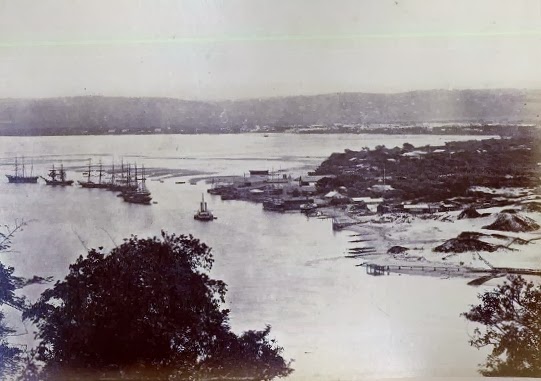
    And I suddenly knew exactly what happened when my Great-Grandfather Stewart Bain and his brother James Bain got off the ship in Durban in 1880. They were fishermen from the tiny fishing village of Wick, in the far north-eastern corner of Scotland, used to being ‘knee-high in brine, mud, and herring refuse.’ * They left Wick and gave up fishing some time after an uncle Stewart had drowned in a fierce storm while out fishing off Wick in one of those little boats. They got onto bigger boats and headed for warmer climes in the colonies: Durban, Natal.

    – Durban harbour ca.1880 looking inland from the Bluff, showing the Point at right –

    When they arrived in Durban people asked them: ‘Bain? Are you the famous Bain road builders? We need road builders here. Can you build bridges too?’

    And I know just what the brothers Bain said. ‘Roads? Och aye, we can build roads. And bridges? We can build them with one hand tied behind our back.’ You know, the old, ‘You’re payin’ how much to do that? Well, you’re in luck. I Happen to be Very Good at it . . . ‘

    – some nice bridges there – this one in Swinburne –

    And so they built the railway bridges between Ladysmith and Harrismith, utilising their herring netting experience, learning as they went, ‘upskilling’ – thus goes this theory of mine – no doubt with the help of African labourers who had done this before.

    And thereby they helped the railroad reach that wonderful picturesque town in the shadow of Platberg, so that I could be born. This subterfuge and venture made them enough money to buy the Railway Hotel (Stewart; he re-named it the Royal cos every Saffrican town has to have one), and build the Central Hotel (James); Then they could marry, have children – only about nine and eight apiece, though – and become leading citizens of their adopted dorp in Die Oranje Vrijstaat Republiek, a sovereign non-British country.

    Then: One of Stewart ‘Oupa’ and Janet ‘Ouma’ Bain’s nine ‘Royal Bain’ children Annie, had two daughters; and one of those – Mary – had me! And here I am.

    ~~oo0oo~~

    Think I’m being unkind to Wick, village of my ancestors? Read what Robert Louis Stevenson wrote about Wick to his mother when he stayed there in 1868:

    ‘Certainly Wick in itself possesses no beauty: bare, grey shores, grim grey houses, grim grey sea; not even the gleam of red tiles; not even the greenness of a tree. The southerly heights, when I came here, were black with people, fishers waiting on wind and night. Now all the boats have beaten out of the bay, and the Wick men stay indoors or wrangle on the quays with dissatisfied fish-curers, knee-high in brine, mud, and herring refuse. The day when the boats put out to go home to the Hebrides, the girl here told me there was ‘a black wind’; and on going out, I found the epithet as justifiable as it was picturesque. A cold, BLACK southerly wind, with occasional rising showers of rain; it was a fine sight to see the boats beat out a-teeth of it. In Wick I have never heard any one greet his neighbour with the usual ‘Fine day’ or ‘Good morning.’ Both come shaking their heads, and both say, ‘Breezy, breezy!’ And such is the atrocious quality of the climate, that the remark is almost invariably justified by the fact. The streets are full of the Highland fishers, lubberly, stupid, inconceivably lazy and heavy to move. You bruise against them, tumble over them, elbow them against the wall — all to no purpose; they will not budge; and you are forced to leave the pavement every step.’

    ~~oo0oo~~

    Now read a sterling and spirited defence of our ancestral Scottish dorp by Janis Paterson – a feisty distant cousin, and also a descendant of the Bains of Wick; who read my post and reached for her quill (I have paraphrased somewhat):

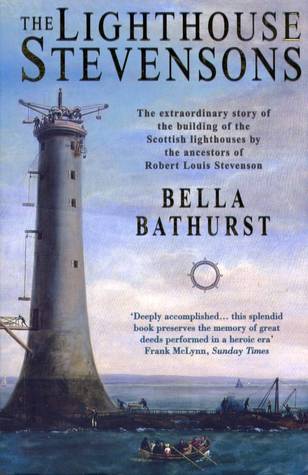
    Ya boo sucks to RLS! Robert Louis Stevenson was a sickly child. His father and his uncles were engineers who built lighthouses all over Scotland. Robert was sent to Wick, likely to get involved in building a breakwater there with his Uncle. But he was more interested in writing stories and was just not cut out for this sort of work. I believe he was also ill while in Wick. The first attempt at building the breakwater was washed away during a storm and also the second attempt. The work was then abandoned. I therefore propose that Robert just didn’t want to be in Wick, was ill, fed up with the weather and just wanted to get away to concentrate on his writing. The Stevenson family must have been excellent engineers, as all the lighthouses are still standing. Did Robert also feel that he was a failure as an apprentice engineer?

    Stick it to him, Janis! How dare he call Wick fishy? Or smelly!? Or breezy!? Even if it was! Just cos a dorp is fishy smelly and breezy doesn’t mean strangers can call it fishy smelly and breezy!

    Janis adds ‘Read this book review:’ ‘ . . fourteen lighthouses dotting the Scottish coast were all built by the same Stevenson family that produced Robert Louis Stevenson, Scotland’s most famous novelist. Who, unlike the rest of his strong-willed, determined family, was certainly not up to the astonishing rigours of  lighthouse building.’

    Janis was right! 😉 All HE could do was scribble. Like me. But better.

    ~~oo0oo~~

    ~~oo0oo~~

    On our big Karoo / Garden Route tour in 2023 Jess and I stopped at a monument to the original road-building Bains who I say inspired our newly-arrived, soon-to-be Vrystaat Bains to do likewise.

    ~~oo0oo~~

    Later I found this on the Ladysmith to Harrismith extension of the rail line. Maybe the Bain bros got a piece of this action?

    LADYSMITH – VAN REENEN – HARRISMITH

    After the survey for the rail link from Ladysmith to Van Reenen was finalised, the route was pegged out in June 1889. A junction was formed a mile north of Ladysmith Station, recorded as 190¼ miles from Durban and 3350ft asl, and appropriately named Orange Free State Junction. However, terminating the line at Van Reenen was not considered very remunerative, and tapping into the OFS’s rich agricultural eastern region would make the undertaking more profitable. Negotiations with the OFS Volksraad resulted in the Natal Railway Administration being granted the sole right to build, equip and operate the extension from Van Reenen to Harrismith. Representatives of both Governments met in Harrismith on 25 February 1890 to work out the agreement’s details. In terms of the agreement signed on 24 June 1890, the railway was to be completed within three years of the turning of the first sod. Significantly, while profits would be equally shared between the two Governments, all operating losses would be borne by Natal alone. The Free State could, at any time, after giving six months’ notice, take over the railway at the cost of its original construction and any other capital expenditure.

    Contracts for the earthworks and masonry culverts from Van Reenen to Harrismith were awarded on 22 January 1891†. The route generally followed the course of the Wilge River, graded at 1 in 80 with 600ft minimum radius curves. The energetic approach of the work crews completed the extension four months ahead of schedule. The extension from Van Reenen to Harrismith was taken into use on 13 July 1892. Initially, there was only one station, Albertina, later renamed Swinburne, between Van Reenen and Harrismith.

    Distance from Durban, elevation in feet

    Van Reenen  226       5520·49     Staging Station at the Natal/OFS border

    Albertina     234¼     5408·46     Passing Station

    Harrismith      249½     5322·30     Temporary Terminus

    † The section from Van Reenen to Harrismith was built and operated by the NGR under an agreement signed on 24 June 1890 between the Orange Free State Volksraad and the Natal Colonial Government. The Orange Free State Volksraad authorised the Natal Railway Administration to construct, maintain and work, at its own risk, the line from Van Reenen to Harrismith. The working of the line was taken over by the CENTRAL SOUTH AFRICAN RAILWAYS (CSAR) in November 1903. No construction maintenance was allowed under capital expenditure (Under Law 29 of 1890, a sum of £260 000 was authorised for the construction of this section).

    This ‘Bain’s Railway Map, c. 1903’ must surely be one of the famous Bains?

    So when the wicked Poms invaded the tiny Vrijstaat independent sovereign state which had made these Bain ancestors of mine wealthy, did they leap to the defence of their new country? Nope, they sided with – and profited off – the invaders . . .

  • Post Office Lineman

    Post Office Lineman

    Dad was a Post Office technician. Back before we were born. He applied for telephones, which was more technical, but was given electrician. He did his apprenticeship ca.1938 and was soon put on telephones, given a truck and sent off to Ixopo where he was assigned a ‘line boy.’ Actually an adult to do lots of the hard work for you. His lineman’s name in Ixopo was Freddie.

    – here’s his truck, his dog and his shadow –
    telephone linesman from pinterest
    – testing, testing – an American lineman
    – testing, testing, a South African lineman from HeritagePortal.co.za –

    Himeville fell within his area and he got to know the lady in charge of the General Post Office there – Miss Viven Wise. Miss Viven D Wise, actually, which got the young techies snorting as “VD” was rude. She spoke of the Sani Pass up into Basutoland and how beautiful and rugged it was, so when out that way one day Dad decided to see if he could get there. He soon came across a stream he had to ford, so out jumped Freddie to pack stones in the stream so the truck could get across. Soon another stream and the same procedure. After the fourth stream he decided this is going to take too long and turned back.

    He also tells of putting in new telephone lines. From one farm to the next the line would go as the crow flies, over hills and through valleys. They’d be allocated long gum poles treated with creosote and they’d take them as close as they could in the truck, but to some places they had to be carried on their shoulders. Heavy and the creosote burning their shoulders, they’d lug them over the veld, dig the holes and plant them. I’m guessing Freddie did his fair share of the heavy lifting.

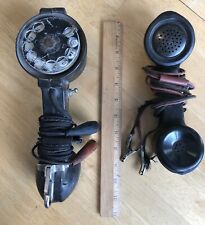
    telephone linesman handsets
    – linesman handsets –

    In 1973 I had another Dad, also a lineman. Rotarian Don Lehnertz worked for the electrical utility in Apache Oklahoma. Wish I’d noted which company. He and Jackie very kindly hosted me as an exchange student for three months of that year.

    Interesting that the famous song Wichita Lineman was written about a lineman up a pole in Washita County Oklahoma just west of my town Apache in Caddo County: (wikipedia) Webb’s inspiration for the lyric came while driving through rural southwestern Oklahoma. At that time, many telephone companies were county-owned utilities, and their linemen were county employees. Heading westward on a straight road into the setting sun, Webb drove past a seemingly endless line of telephone poles, each looking exactly the same as the last. Then he noticed, in the distance, the silhouette of a solitary lineman atop a pole. He described it as “the picture of loneliness.”

    Back in Harrismith, before too long, Dad got rescued from the Post Office by his beloved Mother-in-Law. Who gave him a job.

    ~~oo0oo~~

  • The Subway

    The Subway

    Greg Seibert arrived in Harrismith from Ohio in 1972 as a Rotary exchange student.

    In 2014 he was sending sister Sheila some of his pictures from those wayback days. He wrote: Here is one I’m sure you will like. It is one of the very first pics that I took in Harrismith, probably the day after I got there. You or Koos took me down to the field hockey field. I remember people saying it was by the subway. Boy was I impressed! The only subways that I knew were the underground trains in London and New York! Imagine little Harrismith being so advanced as to having one of those!

    Well…I was a bit disappointed…lol!

    New York subway’s Grand Central Station

    The feature pic and this pic are not the Harrismth subway, but do give an idea of what it looks like. I’m looking for some actual pics of our illustrious subway.

  • Home-made Bound

    Home-made Bound

    Three Norwegians in Witsieshoek were homesick and probably horny. They longed to go home to Norway, so they rode their horses to Port Natal, bought a ticket on a sailing ship and off they went, right? Actually not.

    They decided they would build their own ship in the veld on their farm Bluegumsbosch in the shadow of Qwa Qwa mountain, load it onto an ossewa, trundle it to the coast and then sail themselves to England, seeking – and finding – huge publicity all the way. The huge publicity was because everyone knew it couldn’t be done. They were going to drown in a watery grave and everybody TOLD them so.

    As always: pinch-of-salt alert. This is me talking about history that I have read a bit about. A little bit of knowledge . . . you know. For actual facts and a lot more fascinating detail, including how their boat amused the Laughing Queen (Victoria herself, who actually ended up buying it), rather read Harrismithian Leon Strachan’s highly entertaining book Bergburgers which illustrates clearly that Harrismithans are amazing and wonderful people, we are. More amazingly, some people apparently are unaware of that fact.

    For starters, Hello! what do you build a ship of when you’re living on the vlaktes un-surrounded by trees, just grass? Grass is no good, mielies are no good and ferro-cement has not been invented yet.** The few trees you have are the bluegums the farm is named after, can’t use those, what would you call the place? and some small poplars you planted yourself on the bottom end of your werf ; and poplar wood is no good for keeping water out for long enough to do the Atlantic. And these okes want to do the Atlantic. Now I’ve no doubt they were drunk. I mean, join the dots: Three males, tick; Norwegians, tick; In the Vrystaat, tick; Lonely, tick. They were drinking alright. They were a bit like ignoring the perfectly good bus that runs from Pietermaritzburg to Durban and running there instead; Wait! Some fools did do that some thirty years later and called it the Comrades Marathon.

    Turns out there are trees in the Vrystaat if you know where to look: In the shady, damp south-facing kloofs there were some big old yellowwoods, excellent wood for ship-building if you’re inclined to build ships. So they didn’t use those. They ordered wood from America. I know! Mail order! But apparently this is true. Somewhere in America a pile of pitch pine beams and planks got addressed to c/o Ingvald Nilsen, farm Bluegumsbosch, foot of Qwa Qwa, Witsieshoek, near Harrismith, Oranje Vrijstaat Republiek, and put on a wooden ship. Which crossed the Atlantic, got loaded onto an oxwagon in Port Natal and schlepped across Natal, up the Drakensberg, turned left at the bustling regional centre, transport hub and rooinek metropolis of Harrismith and were delivered: ‘There you go, sir. Please sign here that you received in good order.’ Amazon se moer.

    Up the Drakensberg to Harrismith village; Left to near Qwa Qwa mountain

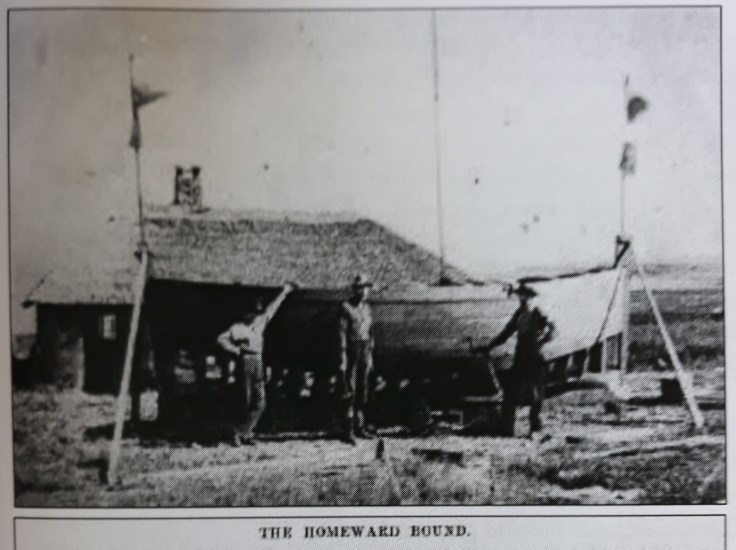
    So how big do you build a boat you want to sail 10 000km in, knowing the sea can get lumpy at times? Are you asking me? 362m long, 23 stories high, 228 000 tons, sixteen cocktail bars, a massage parlour and better airtight compartments than the Titanic had, please. If you were asking me. Cos I don’t swim in the sea. No, but seriously, this is twenty seven years before the Titanic set sail, and you’re building it in your farmyard in the Free State. Like this: (note the absence of surrounding forest)

    Now hey! Don’t laugh. Read on to see how the Harrismith-built boat fared, and read up how the Belfast-built Titanic fared! Both were trying to cross the Atlantic for the first time – just wait and see who did it better! The rich Poms, or the Harrismith ous. Find out.

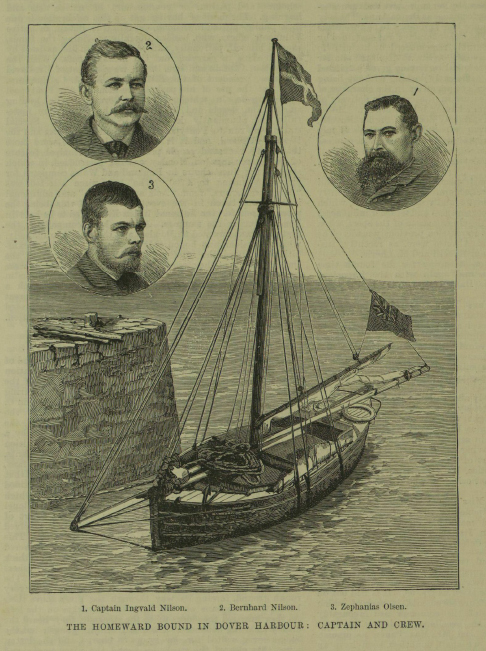
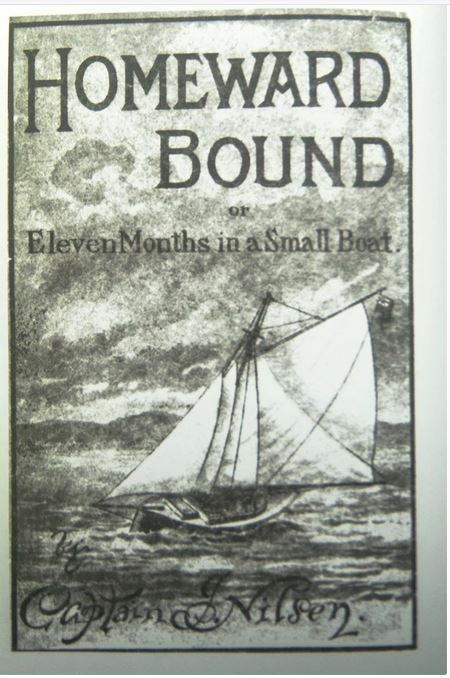
    The Nilsen-Olsen craft was 6,7m long and weighed about two tons. They called it Homeward Bound, though they were actually aiming for England. Seems Nilsen had become very British. He had signed up with Baker’s Horse and fought for Britain in their wicked Anglo-Zulu War in 1879. He knew all the hoopla would be in English language newspapers cos the hele wêreld was Engels back then. In Harrismith where the Chronicle was already chronicling, Pietermaritzburg where the Witness was witnessing, Port Natal / Durban and in England. So shrewdly, Nilsen capitalised on that publicity.

    All along the route people would look in amazement and offer advice (‘You’re never gonna make it’) but whenever he could – in Harrismith, Estcourt, PMB and in Durban – Nilsen isolated the boat and charged people a fee to view it and offer their opinion (‘You’re never gonna make it’). He raised so much money this way that in PMB he wrote: ‘. . had not the weather been unfavourable, we should very nearly have cleared our expenses, so general was the interest in the boat.’

    In Port Natal the coastal people really REALLY knew these inland bumpkins were never going to make it and made it so plain that it gave Nilsen great pleasure some months later to enter in his log: ‘ . . sighted Ascension; this we found, in spite of what people said in Durban, without the least trouble and without a chronometer.’ Seat of their pants.

    Long story short – we won’t bother about details like navigating, surviving, hunger, etc now that the Harrismith part is over – they made it to Dover in March 1887 after eleven months, a journey that took passenger ships of the day around two to three months*. Nilsen sold the boat to the queen, who displayed it in the new Crystal Palace exhibition hall; he wrote a book with the natty title, ‘Leaves from the Log of the Homeward Bound – or Eleven Months at Sea in an Open Boat’, went on speaking tours where he was greeted with great enthusiasm, married a Pom, became a Pom citizen and lived happily ever after. I surmise. Or as happily as one can live married on a small wet island after living as a bachelor on the wide open Vrystaat vlaktes.

    Greeted with great enthusiasm, yes, but this was after all, England, so not all were totally enamoured. One commentator harumphed: ‘ . . Their achievement is a magnificent testament to their pluck and endurance, and one can only regret that such qualities have not found some more useful outlet than the making of a totally unnecessary voyage.’

    Here’s a post on Acton Books about the Homeward Bound and Crystal Palace. Do read the fascinating comments, where people who know more local detail add what they know about this saga.

    ~~oo0oo~~

    What’s 362m long, 23 stories high and weighs 228 000 tons? – That’s the Symphony of the Seas, biggest passenger ship afloat as at Feb 2019. Anything smaller won’t get my hard-earned cash.

    veld – savanna; no place for a sea-going shiplet

    bergburgers – citizens of the mountain; Harrismithians

    ossewa – ox wagon.

    vlaktes – plains; not where you’d sail a 2-ton wooden boat

    mielies – maize; corn

    werf – farmyard

    Oranje Vrijstaat – Orange Free State, independent sovereign state; President at the time was Sir Johannes Henricus Brand, Most Distinguished Order of St Michael and St George, abbreviated GCMG ***

    hele wêreld was Engels – Poms can’t speak any other languages, and the Pound Sterling was strong, and the Breetish Umpire stretched far n wide

    Sources:

    1. Bergburgers by Leon Strachan; Tartan Boeke 2017 – ISBN 978-0-620-75393-7

    2. Martin Hedges’ blog actonbooks

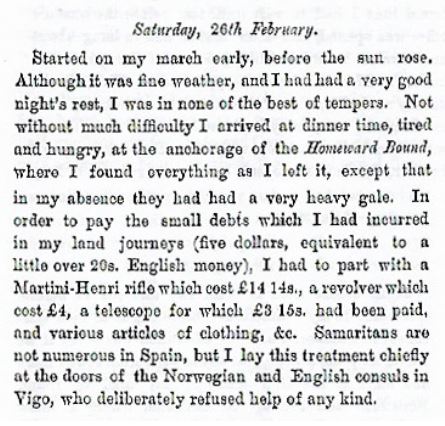
    3. A Spanish blog with pages from the book dealing with their tribulations in Spain – a month on land which was arguably the toughest part of their journey!

    4. Nilsen’s book ‘Leaves from the Log of the Homeward Bound, or Eleven Months at Sea in an Open Boat’. Here’s a reprint with a snappier title:

    The book sold well; this later edition had a shorter title

    Two pages from the book: Arriving in Spain and walking in Spain looking for food or money or any help!

    ~~oo0oo~~

    * The Lady Bruce, one of the twenty ships that brought Byrne settlers from the UK to Natal, arrived on 8 May 1850. The record says ‘their passage was a speedy one of 70 days.’ – Natal Settler-Agent by Dr John Clarke, A. A. Balkema, 1972. By 1887 the average time may have been shorter?

    ~~oo0oo~~

    ** Amazingly, I was wrong! Ferrocement boats had been invented forty years earlier, in France!

    A bateau built by Lambot in 1848

    Never slow, Harrismith soon hopped onto the ferro-cement lark for crossing oceans.

    *** Enlightenment from the satirical British television program ‘Yes Minister’ season 2, episode 2, ‘Doing the Honours’:

    Woolley: In the civil service, CMG stands for “Call Me God”. And KCMG for “Kindly Call Me God”.
    Hacker: What does GCMG stand for?
    Woolley (deadpan): “God Calls Me God”.

    ~~oo0oo~~

  • Arthur Kennedy

    Arthur Kennedy

    Arthur Kennedy arrived in Harrismith like a dwarrelwind. Why we were so lucky as to get Arthur to our town I don’t know, but I think his wife Zita had family here. I think she was related to the Kerkenberg mountain vd Bosch’s.

    He brought an exciting new venture to the dorp: A new motel on the N3 on the south-east end of town – at the Jo’burg-Durban-Bloemfontein junction – or the Warden-Swinburne-Kestell junction you could say if you weren’t going to drive far.

    The motel – Kennedy Motel – was going to have a ‘flyover’ restaurant suspended over the road so diners could watch the road as they munched their mixed grills. All the Durban-Joburg traffic – the busiest rural freeway in South Africa by far – would have to drive underneath them. But meantime the motel and petrol station had to be built, plus all the rooms – the chalets. A cable car to the top of Platberg was also in the pipeline, according to Arthur. Big plans!

    The Kennedy family stayed right on-site in novel half-round semi-portable wooden bungalows above the building site and below the track that was an extension of Vowe Street, below the SE end of Hector Street. Arthur was very hands-on and was deeply involved in everything. He made the cardinal apartheid error of starting to pay his workers more than the “known” Harrismith wage which, according to Steph de Witt, got 5ft 6 inch Arthur a visit from 6ft 4 inch Koos de Witt, Steph’s Dad. Steph says Koos found Arthur in a foundation ditch. He jumped in next to him and “explained” to him in international language how he was not to bend the “local rules” of wage exploitation.

    Later he built a triangular house of wood and glass above Vowe Street – a huge novelty for the town. It was next door to the du Plessis home, and Pierre and I hopped the fence and inspected it while under construction. The bathroom had a novelty in it which we hadn’t seen before. We didn’t know it was called a bidet, but we spotted right away what it was for. HaHaHa! Our schoolboy humour kicked in. Arthur’s initials were AW (were they? or did we invent that?) and we proceeded to call him Arse Washer after that bathroom furniture that so tickled our crude funny bones. We weren’t always Methodist-polite, ’tis true.

    He even became a town councillor, this foreign rooinek in the vrystaat! If America could have a President Kennedy at that time, why couldn’t we have a possible future mayor Kennedy? Quite a guy was our Arthur!

    ~~~oo0oo~~~

    The Cupboard Snake

    For a while the Kennedys lived in the middle of town – in or near the house where Nick Duursema lived, near the circle in Warden street, just down from Arthur Grey’s corner store. That’s where the puff adder landed on top of the bedroom wardrobe.

    The first and last puff adder I saw ‘in the wild’ was in Hector Street outside our house in about 1965 when – ware vrystater that she was – Mother Mary ran over the poor thing in the blue VW OHS 155. Doelbewus! Swear! The old man was called out from the pub. He came home, caught it and put it in a box which he gave to Zita Kennedy to give to her brother Tommy van den Bosch. Maybe he’d first stunned it with a blast of cane spirits breath. Probably.

    Tommy lived against the slopes of Kerkenberg and wore a cowboy hat and played the guitar. He’d sing you a mournful – or toe-tapping if that was your poison – cowboy song at the drop of a hat. His 10-gallon stetson hat. He collected snakes and took them to the Durban snake park who paid him by the foot. They estimated this puffy at five foot, though of course that length may have grown over time! SSSSS – Snake Stories Seldom Suffer Shrinkage. And: Who knew snakes even had feet?

    That night in bed just before lights out Arthur Kennedy asked Zita “What’s that box up on the cupboard?” She hadn’t finished telling him and he was already out in Bester Street opposite the ou groot kerk near the traffic circle in his tiny pie-jarm shorts shouting “Get that thing out of there ! I am NEVER going into that house again until that thing is gone!” and other earnest entreaties.

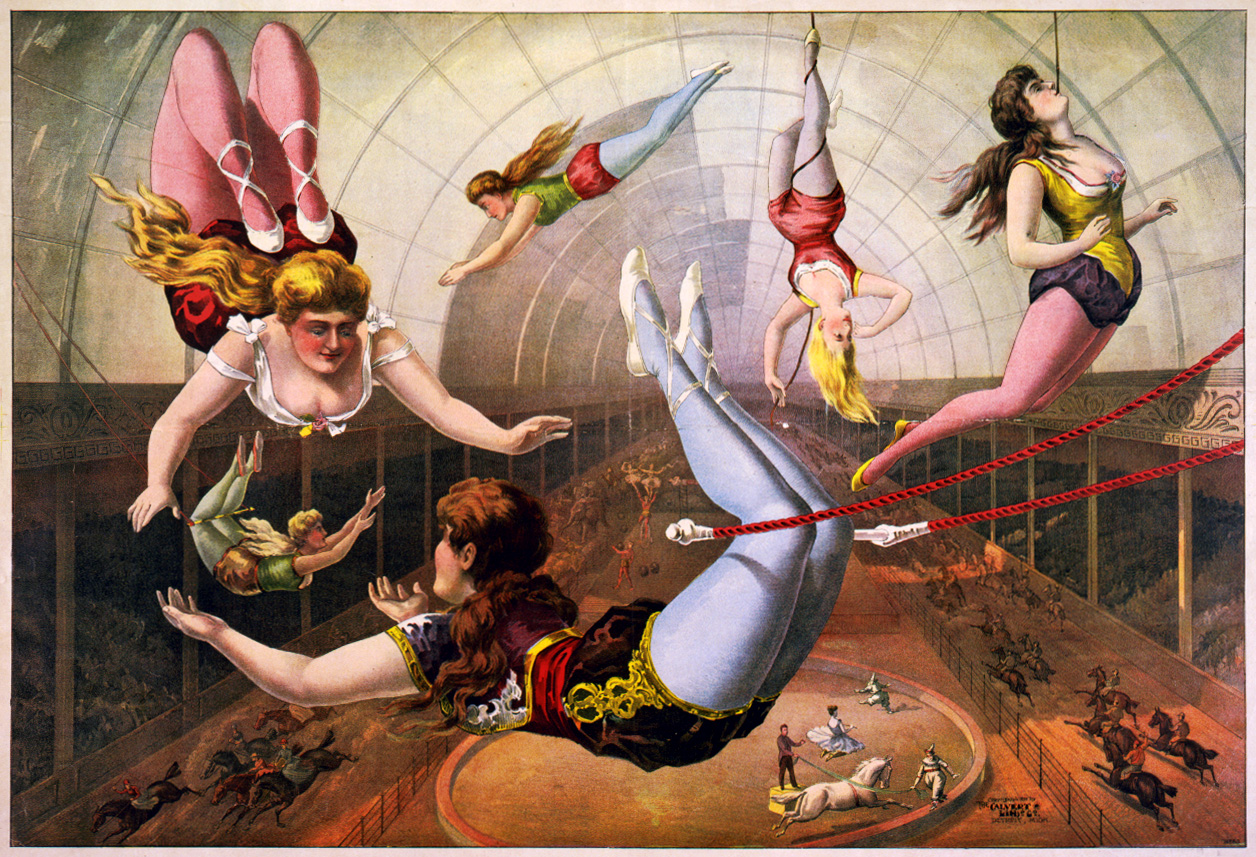
    Flying through the air with the greatest of ease – Flew Arthur K on his flying trapeze!

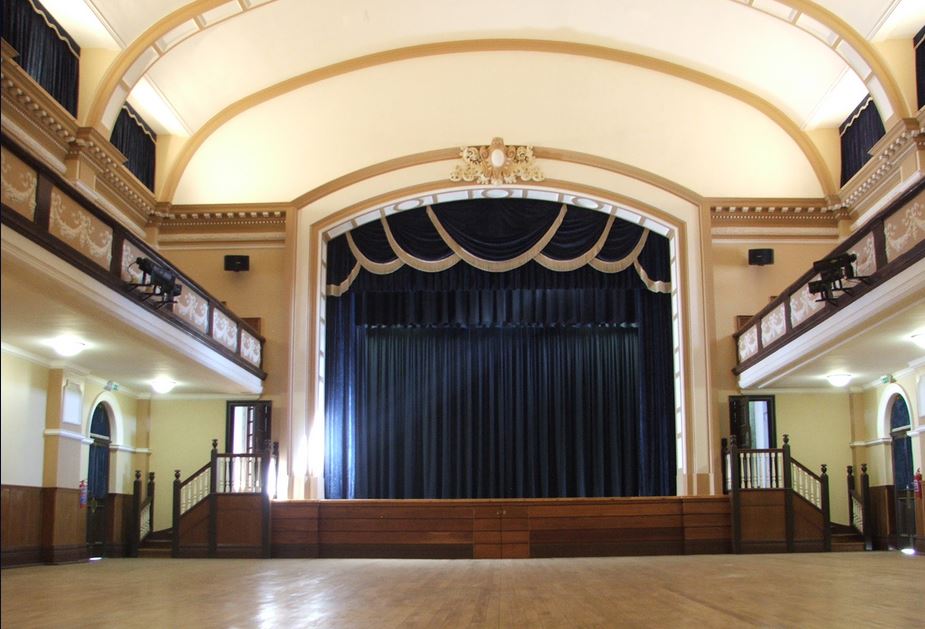
    He did! He flew the full length of the stadsaal; again in his tight broeks. So he might have had a fear of snakes, but he was fearless in other ways: Who can forget Arthur Kennedy dressed only in a white Tarzan loincloth, swinging right across the hele stadsaal on a trapeze high above the gob-smacked and ge-be-indrukte Harrismith dorpsmense? And outdoors upside-down high on a thin pole above the skougronde? Fearless aerobatics and acrobatics.

    But a snake on his cupboard? That was too much for him!

    For a while he made Harrismith seem part of the wider world! It was a bit like this: Flying onderbroeks flashing past your very eyes. In daytime!

    Trapeze.jpg

    Here’s the actual scene of the thrill (the curtains were red back then):

    Republic Day 31 May 1961: On the big day celebrating South Africa’s freedom from the tyranny (or oversight?) of Mrs British Queen, Arthur gave a stunning performance on his own equipment down at the President Brand Park in front of a full pawiljoen of ge-be-indrukte Harrismith mense! Dad filmed it:

    ~~~oo0oo~~~

    Arthur ran our mountain race and, further proving his commitment to Harrismith he married a second local girl – much, much younger than him.

    ~~~oo0oo~~~

    dwarrelwind – breath of fresh air; or whirlwind, tornado

    doelbewus – with murderous intent; or on purpose; Swear! ‘Strue’s God! Gentle Mary did that. In those days you did. The only thing that made you think maybe you wouldn’t drive over it was the story that it would wind itself around your axle and then climb up into your engine, then climb under your dashboard and THEN . . pik you on the foot! Swear!

    pik – snakebite

    ware vrystater – genuine free stater; born and bred in the free state, as was her mother before her (who would not have been celebrating the 1961 demotion of QEII from monarch to foreign tannie)

    tannie – auntie

    ou groot kerk – the old Dutch Reformed Church, the Moederkerk

    hele stadsaal – the full length of the town hall

    ge-be-indrukte – highly impressed, awe-struck, yes, gob-smacked

    mense – people, citizens; pale, of course

    skougronde – agricultural show grounds

    pawiljoen – pavilion; stadium, place of worship

    rooinek – English-speaking; andersgesinde

    andersgesinde – blerrie rooinek

    freedom from the tyranny of Mrs British Queen – Republic Day 31 May 1961 on which the Union of South Africa became the Republic of South Africa

    ~~~oo0oo~~~

  • Harrismith & District Gymkhanas

    Harrismith & District Gymkhanas

    Dad remembers the gymkhanas he took part in and so enjoyed in the late 1930’s and mid-to-late 1940’s.

    They were held in Harrismith, Eeram, Verkykerskop, Mont Pelaan and Aberfeldy; and on the farms Appin near Swinburne, Primrose near van Reenen, and Maraishoek.

    The entry fee was one pound per event – and he remembers prize money being less than the entry fee!

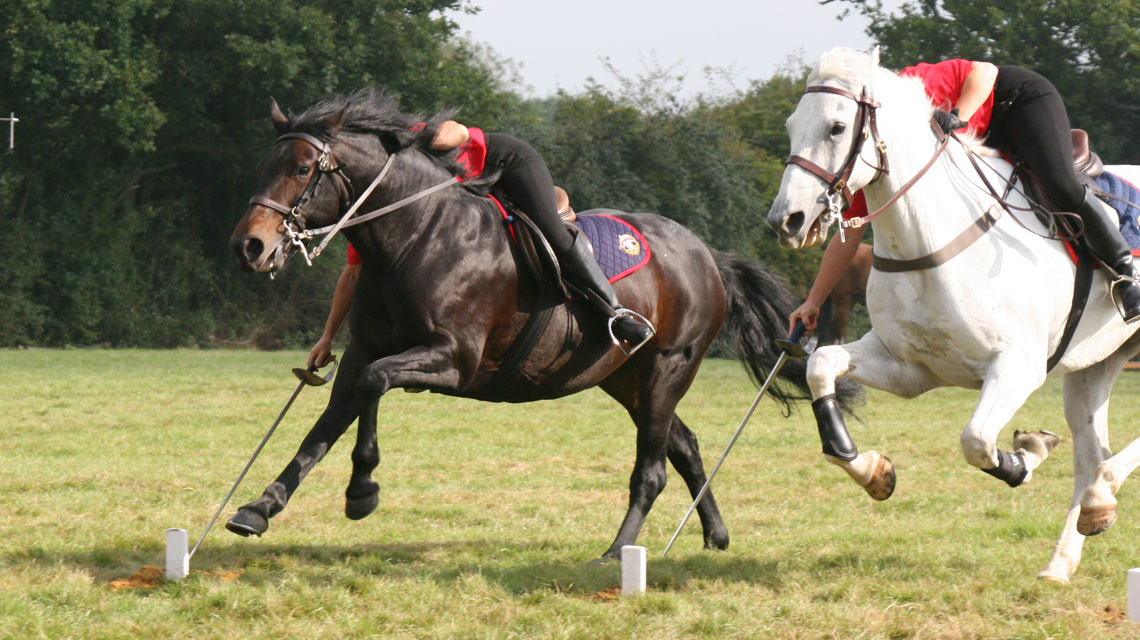
    Events included Tent pegging; Sword and ring; Sword; Lance & ring; Potato & bucket.

    Races were the bending race, we’ll need to ask him what that was; and the owners race, where the owner him or herself had to ride, no hiring a jockey!

    Regular participants he recalls are Manie Parkhurst Wessels; Bertie van Niekerk; Kerneels Retief; Richard Goble; John Goble; Kehlaan Odendaal; his son Adriaan and his daughter Laura; Laurie Campher; Hans Spies and his kids Hansie, Pieter and Anna (Anna later married Jannie Campher, who helped Frank Bland with his farming for a while before going on to become a very successful farmer on his own account).

    Dad says he was the only non-farmer riding! Kerneels was usually his partner.

    gymkhana-tent-peg

    Tent pegging **  these are all internet pics  ** If anyone has some real Harrismith district gymkhana pics I’d sure love to display them – with full acknowledgment of course.

    ~~~oo0oo~~~

    Ah, trust Leon Strachan, Harrismith’s Helpful Historian to have something – and its a good ‘un:

    – SA Champions from Harrismith – photo from Leon Strachan –

    ~~oo0oo~~

  • Platberg Shellhole

    Platberg Shellhole

    Overflowing ashtrays. That’s one of my clearest memories of the old Moth Hall down near the railroad track, and I was pleased when Etienne Joubert also mentioned them; proving once again that some of my memories are real. Even if some feel surreal! Ja, the smell of old ashtrays and stale beer in the morning… Us kids roped in to clear up the mess after the oldies night of revelry. We loved it. We looked. We learned.

    We always called it The Moth Hall, and for a while it was where Dad was probably drinking. But it was more correctly called Platberg Shellhole of the M.O.T.Hs – The Memorable Order of Tin Hats. And there was an older shellhole before that one – an older ‘Moth Hall’. It was down near the railway line; down near the Royal Hotel.

    This was where old servicemen would lie to each other and themselves in song:

    “Old Soldiers Never Die;

    Never Die, Never Die;

    Old Soldiers Never Die;

    They Just Fade Away.”


    Back then they were all survivors of WW1 and WW2. Only later did they take in ever-more members from ever-more wars. And there’s an endless supply of those; the armaments industry sees to that.

    The things I remember about the old shellhole was playing in the dark next to and behind the building – big adventure; And seeing 16mm movies, with big reels whirring in the dark; some were sponsored by Caltex and other companies; I remember Hatari! about yanks in darkest Africa, catching animals for zoos; It starred John Wayne, but who was he to us, back then?

    Hatari_(movie_poster)

    . . and Northern Safari, about a 4X4 safari in the Australian outback with a very annoying theme song “We’re Going NORTH on a Northern Safari! We’re Going NORTH on a Northern Safari! We’re Going NORTH on a Northern Safari!” ad nauseum. We loved it!

    Northern Safari movie poster

    What the folks would remember, if the truth be told, would be booze and sing-alongs and booze and skits and booze and plays; these were the order of the day. * click on the pic * if you want to read some names.

    MOTHs names-001

    Seated on the left next to Mary Swanepoel and Trudi Else in full voice, is Harold Taylor, veteran of WW1. Under those voluminous trousers is one wooden leg. The other is buried at Delville Wood. He would take his turn standing next to the piano singing:


    Etienne Joubert remembers:

    The old MOTH hall was not opposite the Royal Hotel but in the vicinity. In fact it was next to Llewellyn & Eugene Georgiou’s home. It was near the railway line below the G’s house.

    I remember Ray Taylor who had some shrapnel in his head, not Harold with a wooden leg; also Uncle Jack Hunt; Arthur Gray & of course your folks. I also remember playing in the dark outside. I remember my first sip of beer which I did not like; but I overcame this in years to come to absolutely love it!

    I remember the song A Long Way To Tipperary; The piano was very rickety, as was the wooden floor, which squeaked with the slightest step. On the walls were very big portraits of Winston Churchill & Jan Smuts; Dan Pienaar was also there, but smaller; and a pin-up of Jayne Mansfield. This pin up made it to the “new” Moth Hall.

    One thing I did not like was helping my Old Man clean the Shellhole on a Saturday morning; the smell of stale beer & cigarette smoke remains very vivid in my memory.

    ashtray full
    – royalty-free pic dreamstime –

    =======ooo000ooo=======

    Still nostalgic?

    and here’s Vera Lynn, 101 yrs old and still going (Nov 2018). In 2009, at the age of 92, Lynn became the oldest living artist to make it to number 1 in the British album chart.

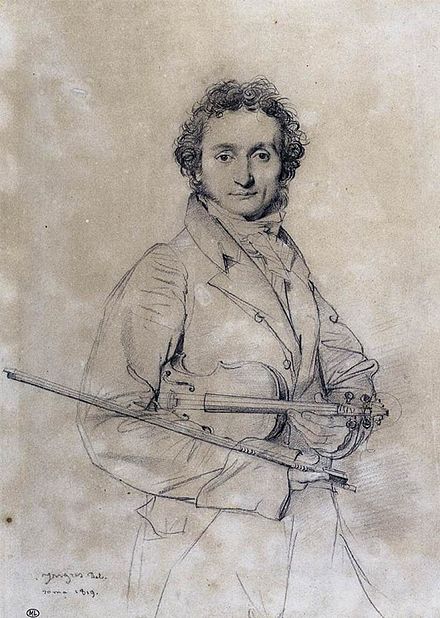
    The ole man acting Paganini:

    The real Niccolo Paganini – and probly why the ole man wanted to be him:

    When he was eighteen the young virtuoso escaped his father’s control, following his elder brother to the Tuscan city of Lucca. “Freed from parental control, Paganini embarked on a life of famous excess. As he later put it, ‘When at last I was my own master I drew in the pleasures of life in deep draughts.’ He would spend the next twenty-seven years in Italy, filling his life with music, love affairs, and gambling, interrupted by long peri­ods of utter exhaustion.”

  • What a Lovely Reunion!

    What a Lovely Reunion!

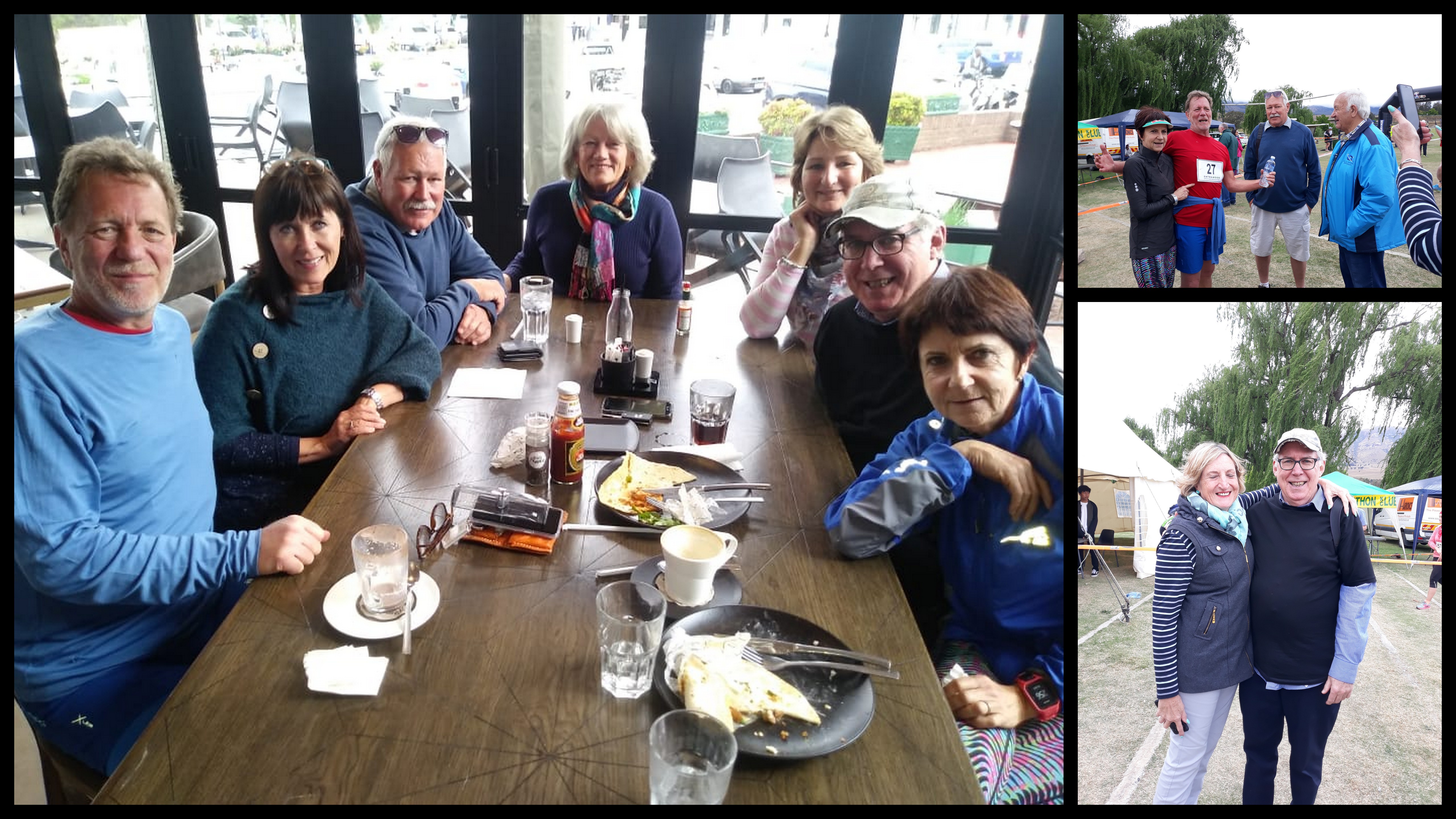
    Pierre & Erika, Jacquie, Pikkie and me. Joined by the much younger Bonita who is seeking a single, life-long, male partner and who got much invaluable advice from us wiser, more experienced – OK, old – toppies. Mainly: “Don’t”.

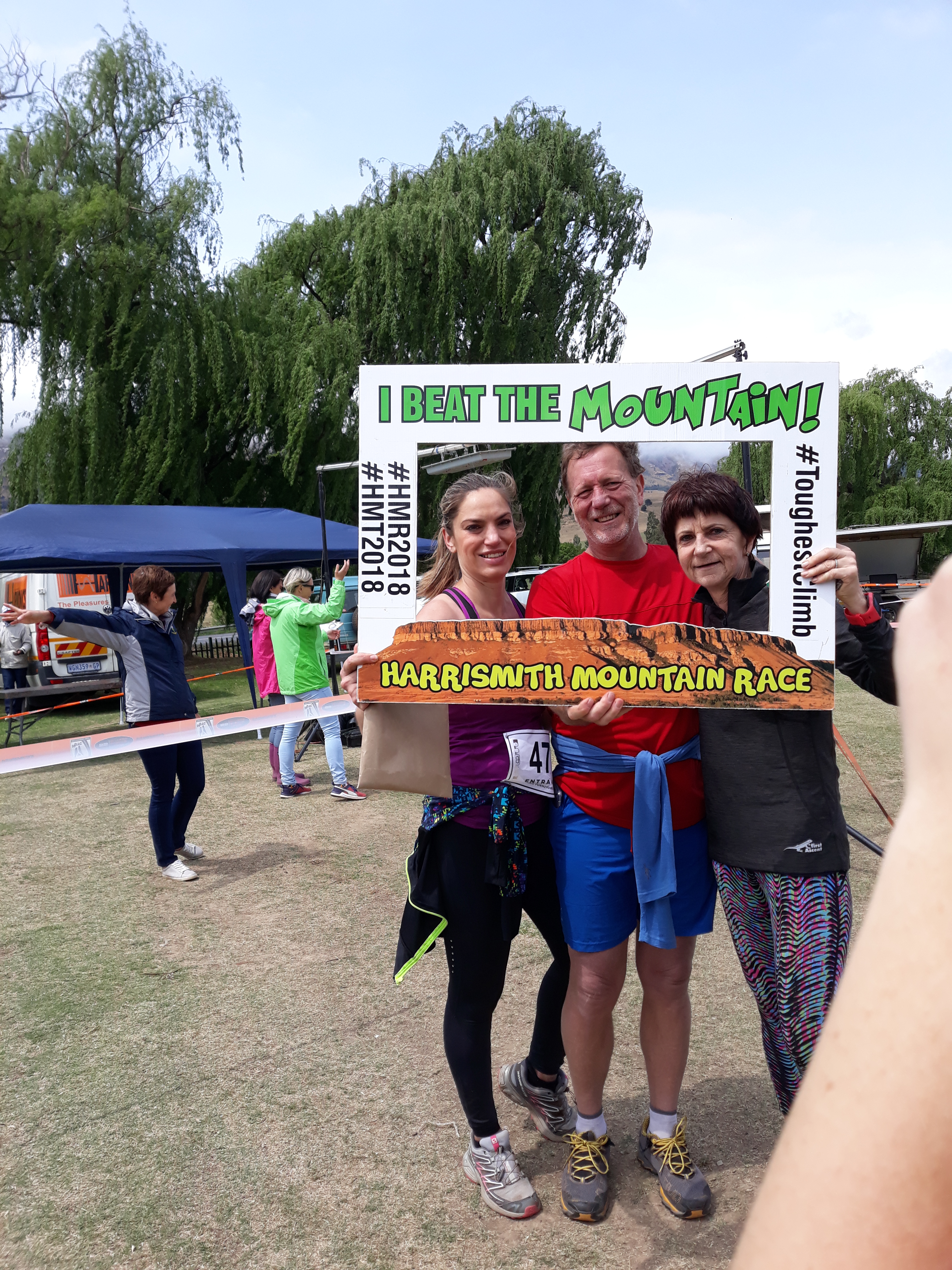
    We had gathered in the old home town to run the annual Harrismith Mountain Race, and some us even did just that. In fact, we even won one of the trophies on offer!

    Harrismith Mtn Race 2018 (46)

    Pierre and I? Well, we gave much invaluable advice as wiser, more experienced – OK, old – ex-participants on that subject, too. Mainly: “Don’t”.

    We were joined in the advice department by Lyn & Sonja du Plessis, Ina van Reenen and James Bell – all in the giving afdeling, none of us in advice-receiving.

    Harrismith Trip

    We had to wait in the post-race chill for prize-giving to receive our trophy. Normally we’d have been doing our warming-down exercises at this stage:

    Harrismith Mtn Race 2018 (1).jpg

    OK, its true that Jacquie Wessels du Toit did all the actual winning per se, but still, it felt like a team trophy.

    The weekend started off chilly, a full table-cloth blanketing the mountain and a fresh east wind-in-the-willows, as seen in this picture, but it ended off perfect, as per the top picture, taken on Sunday from the top of Kings Hill. ¶ ♫ The robots changed when we drove thru, the clouds dissolved and the sky turned blue . . . . and everybody loves me baby, what’s the matter with you? ¶ ♫

    Harrismith Mtn Race 2018 (6).jpg

    Saturday night at Chez Doep was delicious fresh home-made mushroom soup and bread ala Erika with light smatterings of alcohol and layers of sage advice (yep, more of the same: Don’t), all of which was ignored. Bonita still seeks Prince Charming and Pikkie and Jacquie are going to run again.

    Hulle wil nie luister nie.

    ~~~oo0oo~~~

    Hulle wil nie luister nie – invaluable, experienced advice spurned

    invaluable – Of great value; costly; precious; priceless; very useful; beyond calculable or appraisable value; of inestimable worth; See?

    ~~~oo0oo~~~

  • Pencil Thin Moustache

    Pencil Thin Moustache

    Here’s a stirring tale of Boy Scouts and Girl Guides and my family. It also obliquely references a lockdown and social distancing. In fact a much longer lockdown than we have endured: From 13 October 1899 to 17 May 1900, the people of Mahikeng – which the Poms called Mafeking were locked down and besieged by the locals – during the Anglo-Boer War. 217 days.

    In Oct 2018 I wrote: Whenever I hear Jimmy Buffet singing Pencil Thin Mustache I think of my uncle Dudley, oops, my cousin Dudley.

    Dudley Bain was a character and my second cousin. I had known him over the years when he used to visit his old home town of Harrismith, but really got to know him once I started practicing optometry in Durban. He was very fond of his first cousin, my Mom Mary – and thus, by extension, of me.

    Dudley worked in the Mens Department of John Orrs in downtown Durban back when there was only downtown. Anybody who was anybody worked in downtown. Anywhere else was “the sticks”. Even in 1980 I remember someone saying “Why would you want to be out there?” when optometrists De Marigny & Lello opened a practice in a little insignificant upstairs room on the Berea above a small gathering of shops called Musgrave Centre.

    Dapper, hair coiffed, neatly dressed, often sporting a cravat, Dudley had a pencil thin moustache and definite opinions. He was highly chuffed he now had a pet family optometrist to look after him when I first hit downtown and then Musgrave centre.

    Fitting his spectacle frame was a challenge as he got skin cancer and his surgeon lopped off ever-bigger pieces of his nose and ears until he had no ear one side and a tiny little projection on which to hook his glasses on the other side. He would hide these ala Donald Trump by combing his hair over them and spraying it carefully in place. I am glad I wasn’t his hairdresser.

    – here he is at Ethne’s 80th birthday with me sitting behind him –

    He would pop into the practice frequently ‘to see my cousin’ – for me to adjust his frames by micro-millimetres to his satisfaction. He walk in and demand ‘Where’s my cousin?’ If the ladies said I was busy he’d get an imperious look, clutch his little handbag a bit tighter and state determinedly, ‘I know he’ll see me.’ They loved him and always made sure I saw him. He’d ‘only need a minute; just to adjust my frame, not to test my eyes,’ and half an hour later their knocks on the door would get ever more urgent. Then they’d ring me on the internal line, and I’d say ‘Dudley, I got to go.’

    I would visit him occasionally at their lovely old double-storey home in Sherwood – on a panhandle off Browns Grove. Then they moved to an A-frame-shaped double-storey home out Hillcrest way, in West Riding.

    We had long chats while I was his pet optometrist and I wish I could remember more of them. I’ll add as they come floating back. I’m trying to remember his favourite car. One thing he often mentioned was the sound of the doves in his youth. How that was his background noise that epitomised Harrismith for him. The Cape Turtle Dove . .

    ~~~oo0oo~~~

    Dudley married the redoubtable Ethne, Girl Guides maven. I found this website, a tribute to Lady Baden-Powell, World Chief Guide – so that’s what me link this post tenuously to our lockdown:

    Olave St. Clair Soames, Lady Baden-Powell, G.B.E., World Chief Guide, died in 1977. In 1987 her daughter and granddaughter, Betty Clay and Patience Baden-Powell, invited readers to send in their memories of the Chief Guide to The Guider magazine.

    They wrote:-
    Everyone who knew Olave Baden-Powell would have a different story to tell, but if all the stories were gathered together, we would find certain threads which ran through them all, the characteristics which made her beloved. Here are a few of the remembrances that people have of her, and if these spark off similar memories for you, will you please tell us?

    Here’s Ethne’s contribution:
    3 West Riding Rd., Hillcrest, Natal 3610, South Africa
    When I was a newly-qualified teacher and warranted Brownie Guider in Kenya in 1941, our Colony Commissioner – Lady Baden-Powell – paid a visit to the Kitale Brownie Pack.  Due to an epidemic of mumps, the school closed early and Lady B-P was not able to see the children, but she took the trouble to find me and had a chat across the driveway (quarantine distance) for a short time.

    A year later at a big Guide Rally at Government House in Nairobi, the Guides and Brownies were on parade, and after inspection Lady B-P greeted us all individually, and without hesitation recognized me as the Guider who had mumps at Kitale.  Each time we met in the future, she joked about the mumps.

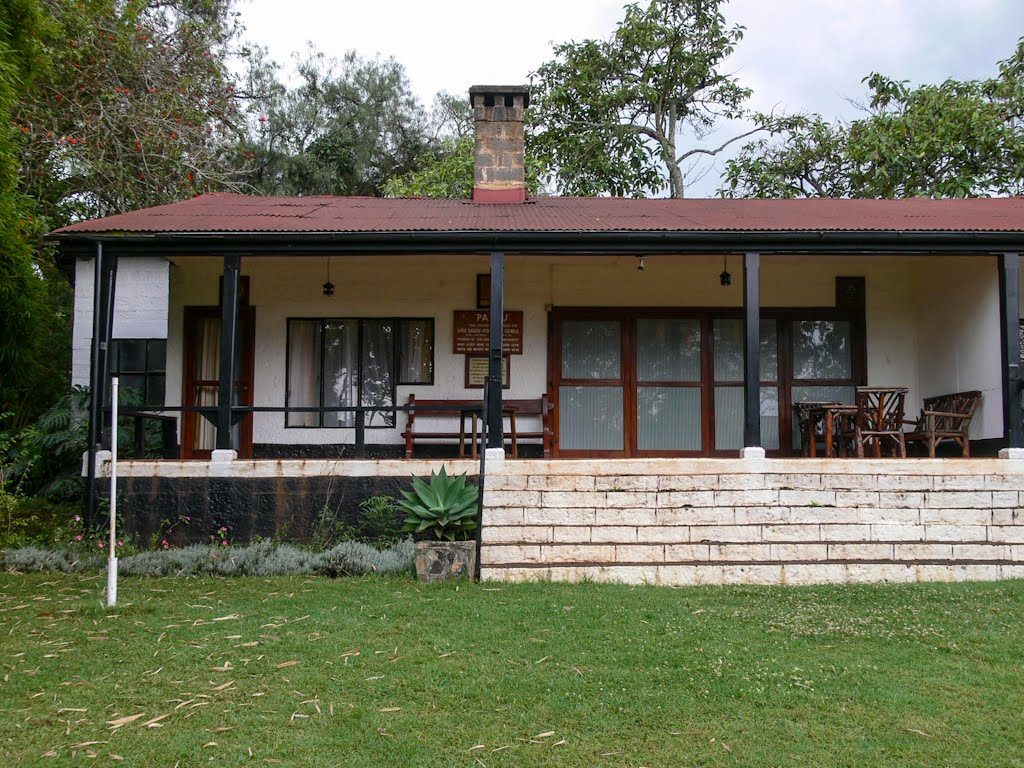
    My next encounter was some twenty years later, on a return visit to Kenya, in 1963, with my husband (that’s our Dudley!), our Guide daughter D. (Diana) and our Scout son P (Peter).  We stayed at the Outspan Hotel at Nyeri where the B-Ps had their second home Paxtu.  We soon discovered that Lady B-P was at home, but the Hotel staff were much against us disturbing their distinguished resident.  However, we knew that if she knew that a South African Scout/Guide family were at hand she would hastily call us in.  A note was written – “A S.A. Scout, Guide and Guider greet you.”  Diana followed the messenger to her bungalow but waited a short distance away.  As lady B-P took the note she glanced up and saw our daughter.  We, of course, were not far behind.  Immediately she waved and beckoned us to come, and for half-an-hour we chatted and were shown round the bungalow, still cherished and cared for as it had been in 1940-41.

    Baden-Powell house Nyeri Kenya
    – paxtu at Nyeri –

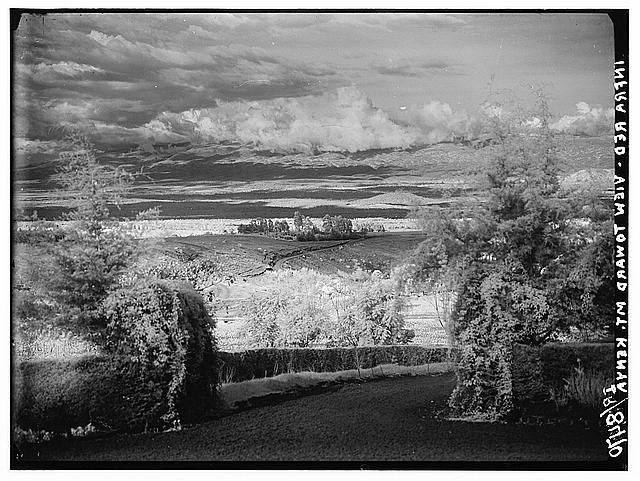
    It was easy to understand her great longing to keep returning to this beautiful peaceful place, facing the magnificent peaks of Mount Kenya with such special memories of the last four years of B-P’s life.  From her little trinket-box, Lady B-P gave me a World Badge as a memento of this visit which unfortunately was lost in London some years later.  Before leaving Nyeri we visited the beautiful cedar-wood Church and B-P’s grave facing his beloved mountain.

    – Mt Kenya from Nyeri –

    My most valued association with Lady B-P was the privilege and honour of leading the organization for the last week of her Visit to South Africa in March 1970.  Each function had a lighter side and sometimes humorous disruption by our guest of honour.  The magnificent Cavalcade held at King’s Park, PieterMaritzBurg deviated from schedule at the end when Lady B-P called the Guides and Brownies of all race groups to come off the stand to her side; they were too far away.  A surge of young humanity made for the small platform in the centre of the field where she stood with one Commissioner, a Guide and three Guiders.  Without hesitation, Gervas Clay (her son-in-law) leapt down from the grandstand two steps at a time and just made Lady B-P’s side before the avalanche of children knocked her over.  Anxious Guide officials wondered how they were going to get rid of them all again.  The Chief Guide said to them, “When I say SHOO, go back to your places, you will disappear.”  Lo, and behold, when she said “SHOO, GO back!” they all turned round and went back.  You could hear the Guiders’ sighs of relief.

    ~~~oo0oo~~~

    Steve Reed wrote: Hilarious – I reckon every family worth its salt should have had an uncle like that. Something for the kids to giggle about in secret at the family gatherings while the adult dads make grim poker faced humorous comments under their breath while turning the chops on the braai. And for the mums to adore the company of. Good value.

    And funny Steve should mention that!

    Sheila remembers: “After Annie’s funeral, in our lounge in Harrismith, Dudley was pontificating about something and John Taylor muttered to me under his breath ‘Still an old windgat.‘”

    ~~~oo0oo~~~

    Family tree: (Sheila to check): Dudley Bain was the eldest son of Ginger Bain, eldest son of Stewart Bain who came out to Harrismith from Scotland in 1878. My gran Annie Bain Bland was Ginger’s sister, so Mom Mary Bland Swanepoel and Dudley Bain were first cousins.

    Here’s his Funeral notice. He would have loved the picture on it – maybe he had requested it?

    and a lovely family notice in the paper: