(reposted as I received a surprise visit – see the end of the post)
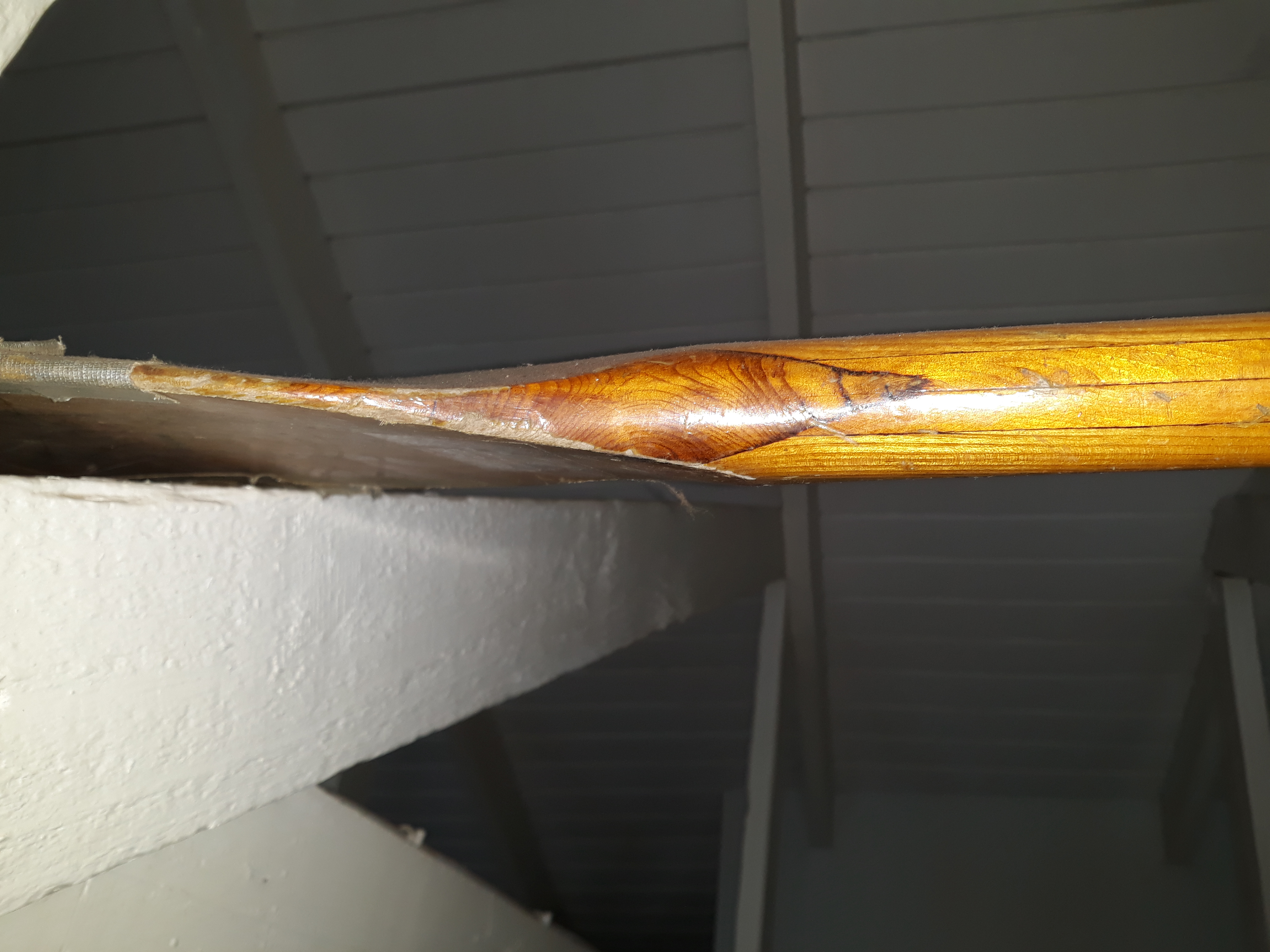
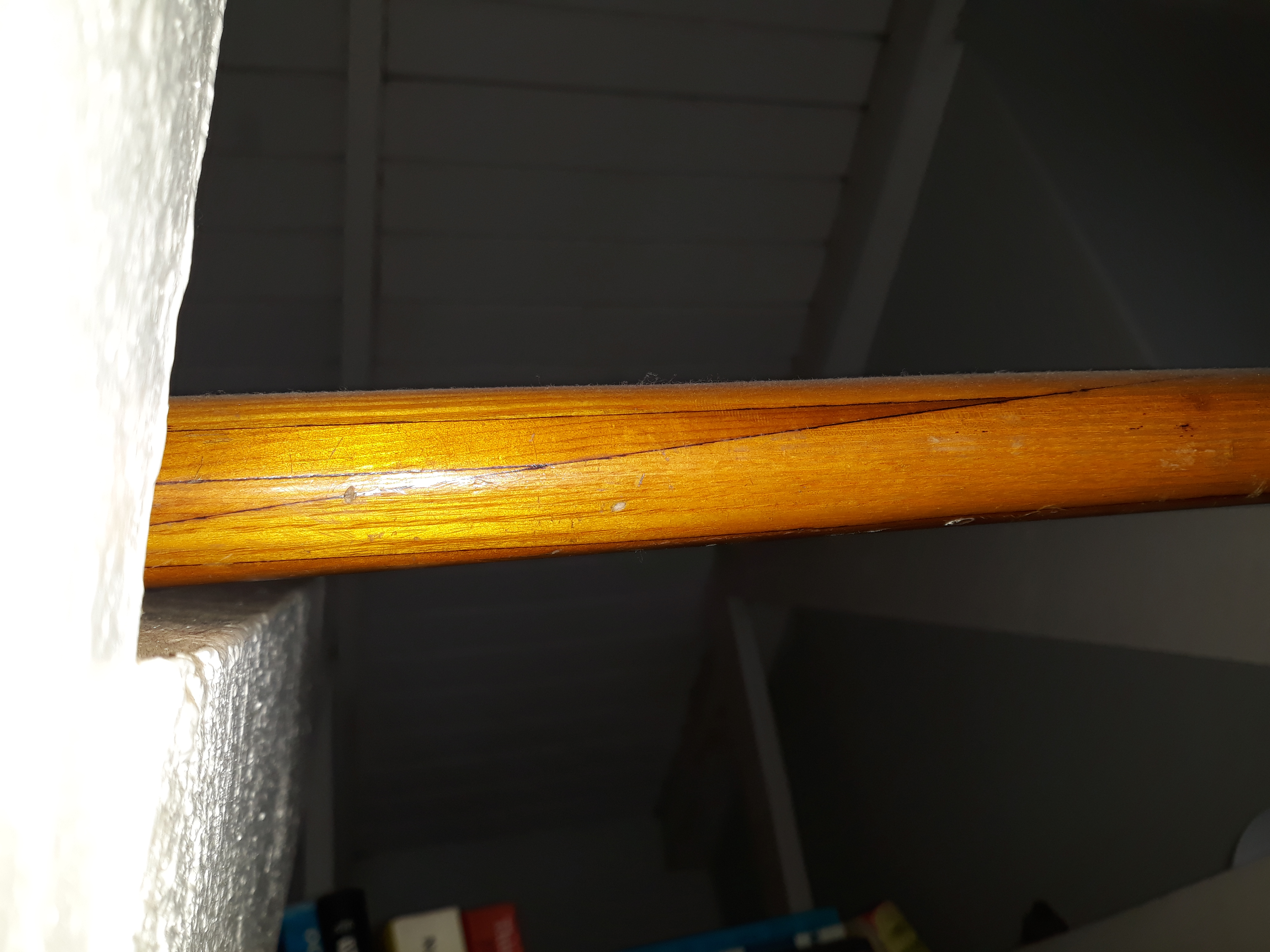
Made of Beech, Birch, Cherry and Maple wood*, it has a hollow laminated oval shaft, the oval at right angles so each hand has its own correct oval. The blade is also laminated, then kevlar-clad and teflon-tipped.
Bruce the Moose Clark of Gauteng and Umko paddling fame was waxing lyrical about Struer sprinting paddles and that got me thinking about my Nimbus river paddle from Port Coquitlam in British Columbia. Not a racing paddle, not a flatwater paddle. A wild rivers work of art for slow-boating. See, I have an arrangement with rivers: I bring a boat to keep afloat, and a paddle to keep upright; All forward motion must be provided by the current.
I ordered two from our trip leader Cully Erdman before we paddled the Colorado in 1984. Being left feather I didn’t want to risk being stuck up a canyon without a paddle. Or with a dreaded right feather paddle.
Dave ‘Lang Dawid’ Walker is also left feather so he used the second paddle for the twelve days. The river was running high, so I didn’t touch a rock the whole 480km way. The only person I heard did touch a rock was Dave in Crystal and the gentleman he is, he immediately came to me to show me the damage: a slight scratch on the kevlar! Chris Greeff, who led the South African trip through the Canyon in Arizona, is also a left feather paddler aus Parys, Vrystaat!
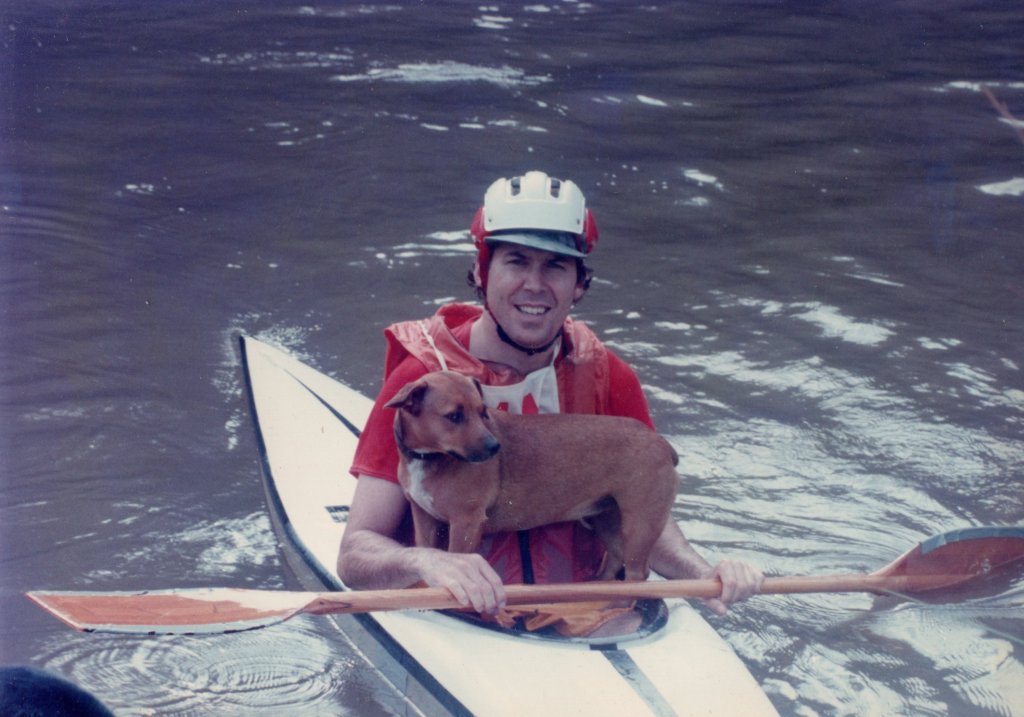
Good friend and tripping companion Bernie Garcin is holding my paddle in the top picture.
Here’s some more paddle porn; Feast your eyes:
~~oo0oo~~
I Meet My Maker!
We paddled thru the Grand Canyon back in 1984; I wrote this post in 2018, and now in 2023, this pleasant surprise: My Paddle Maker!
Since I am the one who designed and build most of the Nimbus wooden paddles in the 1970s and 80s, here the scoop. *The shaft was made of American Ash, the inner laminates are Sitka spruce hollowed a bit more than 3/8 inch. The blades are Sitka spruce, the hardwood edges usually african mahogany. the blades were reinforced with 2 oz. kevlar / epoxy. The tips are urethane, the same material for roller blade wheels. the tips were also cross reinforced with carbon fiber / fiberglass (the black stripes – carbon fiber).
Stephen Charles R, First Son of the famous Artists Village called Clarens, Vrystaat posted a story on chairs, showing this beautifully-made wooden one, on display in the Auckland Art Gallery.
I stared at it, fascinated and was moved to comment on his blog: ‘Your first pic, the wooden chair, looks like it could stick to the rear of a person with just the wrong-sized bum, poor thing! He’d get up and walk round with people pointing at him and laughing.’
We spoke about chairs, both confessing to using what Stefaans called, ‘a small folding campfire stool. Footstool size. Useful for lots of things. I use mine for pumping bicycle tires, weeding and any other chore for which I would otherwise have to crouch. ‘Cause I can’t get up.’
‘Haha!’ I replied, ‘I have one in my bakkie for changing n pumping car tyres for that same reason: Fear of being unable to rise and lying on the dirt laughing helplessly at the indignity!’
This reminded me of two of Mom Mary’s favourite stories. At 95 and following a few TIA’s Mary’s recollection of the olden days is still strong. About yesterday she is not bad, considering, but she recalls tentatively. About some funny incidents fifty years ago, of course, she is crystal clear. These two stories both involve her good friend Hester and falls and Getting Up. Hester was a barrel of laughs, sense of humour deluxe; barrel-shaped and vertically challenged, she could tell stories and laugh like a drain; the butt of her humour often being Hester herself.
The first story, Mary witnessed herself. They were at Hester and her husband Steve’s home. Steve was also barrel-shaped but had plenty of height as well. Visits to their home – which take note was across the road from the big Dutch Reformed Church. the NGK, the National Party at Prayer – entailed eating mountains of food to fill those barrels, and gallons of drink, followed by song, Mary on the piano. On some days if you listened carefully you could hear hymns being sung from across the road, but they’d be drowned out by the non-hymns sung by these revelers, singing lustily on that day when you’re not meant to be having fun. And now followeth a sermon: People past a certain age who imbibe and who have polished parquet floors, should not scatter rugs on those floors. Especially not rugs which are actually dried skins of dead animals, shot by your husband for biltong. Here endeth the lesson.
Hester bustled about, slipped on a loose springbok skin and landed flat on her back under her large coffee table laden with food and drink and overflowing ashtrays, all of which were wobbling as her tummy jiggled from hosing herself at her predicament. Trapped and helpless and unable to move except for the wobbling.
The second story Hester told. She went for a walk, slipped and landed in the gutter outside their home. Thus also opposite that church, remember. She was lying there giggling helplessly when Gerrie the town dandy, out for his constitutional, happened on her. I see him with hat, walking stick and cravat. ‘Kom Hester, laat ek jou help,‘ he offered gallantly. NEE Gerrie, LOS! she protested determinedly. Netnou beland jy ook in die sloot langs my, en wat sal die dominee dan se?
~~oo0oo~~
biltong – dried meat; jerky in the ‘states
Kom Hester, laat ek jou help – Let me help you up
NEE Gerrie, LOS!Netnou beland jy ook in die sloot langs my, en wat sal die dominee dan se? -No! Leave me. What if you land in the gutter next to me? What will the dominee say then!?
dominee – preacherman
~~oo0oo~~
I must find a picture of dear old Hester. This one is Mary on the right with another great friend Mary Wessels.
‘There is nothing – absolutely nothing – half so much worth doing as simply messing about in boats.‘ Kenneth Grahame Wind in the Willows
Random thoughts on various boats I’ve enjoyed in my largely landlubber life.
Motorboating
The first thing I knew about boats was they took up the whole lounge and nothing else could happen in there. The old man built a wooden-hull motorboat in our lounge on the plot outside Harrismith ca.1959. There was a lot more room to move about in that lounge when we visited it about half a century later, ca.2007:
As far as I recall Dad used the boat just a few times on the Wilge River (‘The Mighty Vulgar’) at Sunnymede.
Then he sold it and bought a bigger boat. It had a 50hp Mercury outboard. He soon sold that one to local farmer Harry Mandy for delivery to Richards Bay, where the Mandys were going to use it for fishing. I went with Dad towing it behind our 1956 Morris Isis to Richards Bay, my first visit to ‘Zululand’ ca.1965. Someone else – Jimmy Horsley? – went along for the ride. The two adults sat in front, smoked cigarettes and talked, ignoring me. I could happily daydream and stare out the window. Maybe I “looked out the window and dreamed I was a cowboy” – ala John Denver?
At a re-fuelling stop, I stood on the forecourt after we had refuelled the Isis. Always in a hurry, the old man said impatiently, ‘Come on! Hop in!’ and I said, ‘But the boat isn’t hitched up,’ It had been unhitched so the numberplate could be dropped to get at the filler cap under it. They had to quickly hook up the trailer before we could go! I felt very important. Like, needed, almost.
I remember crossing an impressive high-arched bridge – probably this one across the Umhlatuze.
– pic: Hugh Bland kznpr.co.za –
In the village of Richards Bay we stayed in a motel-type hotel; rustic, but still luxury – or at least novelty – to me.
~~oo0oo~~
Sunnymede on the Wilge River, waterskiing behind Richard Scott’s boat.
Tabs’ Balmoral dam. Tabs Fyvie’s first boat we fetched in Howick – On the way home a wheel came past us and we chuckled at the misfortune of ‘whoever’s it was!’ It was ours!
When Tabs finally got the little boat to Sarclet a week or two later, we battled to start the old Johnson outboard motor. We all took turns pulling and plukking the cord. EVENTUALLY it started, so we all jumped aboard the tiny boat – and promptly sank it! Drowned the motor! Three hours of schlep and zero minutes of skiing!
Later Tabs got a bigger boat, ‘The Pheasant Plucker’ with a V6 inboard motor and a Hamilton jet. I once embarrassingly beached it when the motor cut at speed as I slammed it into reverse, aiming for a windgat sudden stop; I landed up high and dry next to the cars parked on the bank;
Back in 1958, Drove an old V8 . . .
Canoeing
The old weir on the Wilge river – shooting the old sandstone weir on tubes and our mostly-open red-and-blue canoe. We didn’t realise then how dangerous weirs are!
– Once with Fluffy Crawley – very low level in that same open red-and-blue canoe.
– Once with Claudio Bellato – river at a high level – we both lost our spectacles – in an Accord K2 owned by the Voortrekkers, white fibreglass with green vinyl deck. We proceeded to wreck it in Island Rapid on Mrs Girly and the Misses – Bessie and Marie – Jacobs’ farm Walton. Had to pay for it. R50!
ca.1969, Charles Ryder arrived in Harrismith in a lime-green Volvo 122S. On his roofrack he had a fibreglass Limfjorden 17’6″, glass cockpit, white vinyl deck, clear hull, wooden struts, crossbars and gunwales, brass handles.
I wrapped (‘wrecked’) it on the Wilge – also on the Jacobs’ farm Walton. There’s an island and the river descends in rapids on both sides of it.
I then completely rebuilt that boat. Learnt a lot about kayak construction. Also that I don’t like fiberglass. Not at all.
Trained for the ’72 Dusi on the mighty Wilge River. Then the boat disappeared! So I hitchhiked to PMB to follow the Dusi. Later I found the boat submerged in the Kakspruit and reclaimed it.
One day I saw the late zoo warthog Justin floating downstream, bloated and feet-in-the-air after the zoo closed down and he’d been turned loose.
Before I knew the danger of creeks in flood, I took a short trip under the bridge on HS-Swinburne road N3, on the Swartspruit to test the Limfy (and me!) as it was running high – Mom took me in her car, trusting soul.
USA
1973 – Lake of the Woods near Quetico National Park, Ontario Canada in open ‘Canadian’ canoes. With Oklahomans Sherry Higgs, Dottie Moffett, Dale Moffett and Jonathan Kneebone from Aussie. The no-see-ems (black flies) and mozzies drove us out after just one night!
Canoe Marathons
Dusi 1972 – My Limfy stolen in Harrismith, so no boat! Hitched to PMB with Jean Roux. Hitched a ride with someone’s second to 1st overnight stop at Dusi bridge; Hitched on to Diptank 2nd overnight stop; Slept in the open under the stars; On to Blue lagoon; Slept on the beach near Addington, then at Point Road police station (an eye- and ear-opener!).
Dusi 1976 – Drove down with Louis van Reenen in his blue VW Beetle. I had a white Limfy with a vinyl deck, he had a red all-glass Hai whitewater boat (small cockpit, rudderless) from Jerome Truran’s Dad in JHB! We tossed a coin and he won, so I seconded him driving his VW. We stayed in my orange puptent. It was a very high river – he swam and swam! But he finished, tough character that he was!
Dusi 1983 – at last I paddled the Dusi! New white hulled Limfy with a red fibreglass deck. At the start I spied Louis, starting his second Dusi.
Umko 1983 – Hella Hella to Goodenough’s weir in my Limfy.
Berg 1983 in a Sabre – after (luckily!) training in ‘Toti with Chris Logan. Cold as hell! Freezing! Gail-force winds! Horizontal rain! Madness.
Fish 1983 – ( from the Fish website): In those days, the race was held on a much lower river (roughly half of the current level!) and it started with a very long first day (over 50km). The paddlers left the Grassridge Dam wall and paddled back around the island on the dam (the WORST part of the race for my hangover!!) before hitting the river, eventually finishing at the Baroda weir, 2,5 km below the current overnight stop. The paddlers all camped at Baroda overnight, before racing the shorter (33km) second stage into Cradock. “In those days the paddlers had to lift the fences, and the river mats (fences weighed down by reeds and flotsam and jetsam) took out quite a few paddlers”, said Stanford Slabbert (winner of the first Fish in 1982). “Getting under (or over) them was quite an art. I recall one double crew, the front paddler bent forward to get under the fence and flicked the fence hoping to get it over his partners head as well. It didn’t. The fence caught his hair and pulled him right out of the boat and they swam!”
Legends were already being born. Herve de Rauville stunned the spectators by pioneering a way to shoot Marlow weir. He managed to reverse his boat into the chute on the extreme left, and took the massive slide back into the river going forward, and made it!
The field doubled in 1983, as the word of this great race spread. 145 paddlers in 110 boats. It was won on debut by Joburg paddler Niels Verkerk, who recalls, “It was a very long first day, especially as the river was not as full as it is now (it was running at 17 cumecs in 1983). Less than half the guys shot Keiths Flyover, which was not that bad as the hole at the bottom wasn’t that big. Very few people shot Cradock weir in those days. I won the race without shooting Cradock”, he added.
At a medium level, the lines at Soutpansdrift were also different. The weir above Soutpans was always a problem, as there was no chute, and even the pipes that created a slide down the weir face were not there yet. At the bottom of the rapid, the only line was extreme left, underneath the willow tree, and then a sharp turn at the bottom to avoid hitting the rocks, where the spectators gathered in numbers hoping to see you come short.
Crocodile 1984 (lowveld croc) marathon to Nelspruit. Back in the days when the race finished in Nelspruit and you had to portage the Montrose Falls. Scouts would check ahead on the second day to see where the hippos were. Sometimes you had to portage round their pool. Other times it was deemed OK to paddle past them. Our year they were in Nelspruit, so the race was ended just above their pool in the river. I loved that river and was disappointed to dip out on those last couple of kays. Short-changed by the river horses!
Tripping
Umko, Tugela, Umzimkulu, Orange, Vaal, Ocoee River in Tennessee 1984, Colorado river in Arizona 1984
—————————————————–
Other boats – I got a Sella – white deck, clear hull new from Rick Whitton at Kayak Centre.
Later I bought a second hand Jaguar (I think) at the KCC club auction. Red deck.
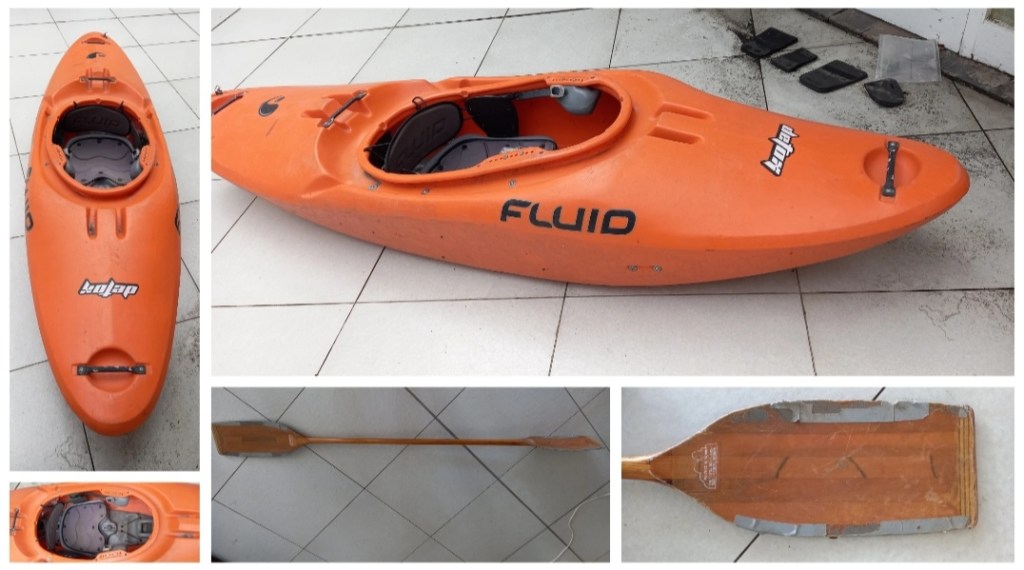
Now I have plastics – my old Perception Quest Greg Bennett imported for his Paddlers Paradise venture, and sold to us at a generous discount; a Fluid Flirt, an Epic something – a bit bigger – and a Fluid Detox bought from Owen Hemingway. Gathering dust.
In 2020 I gave the Flirt and the Epic to Rob Hill, who does great work teaching kids to handle swift water, and vital sweeping, and plus river rescue.
Later: Also donated the Fluid Detox plus paddling kit to Rob.
Wilge Swinburne – Harrismith
Wilge Harrismith to Swiss Valley (Near Nieuwejaarspruit confluence)
Vaal near Parys
Orange above Augrabies falls
In 1983 or 84 I bought a Perception Quest plastic from Greg Bennett at Paddlers Paradise – in the first batch he imported – for R525.
Tugela – Colenso to Tugela Ferry;
Tugela – Ngubevu to Jamieson’s – with Doug Retief, Dave Walker, Bernie Garcin
Umko – Mpendle – Lundys Hill
Umko – Lundys Hill – Deepdale
Umko – Deepdale – Hella Hella
Umko – Hella Hella – No. 8
Umko marathon – Hella Hella to Goodenoughs Weir
Umzimkulu Hatchery to Coleford bridge
Lake St Lucia – Dukandlovu – Robbie Stewart, Bernie Garcin, and –?
Ocoee river in Tennessee – rented Perception Mirage
Grand Canyon Colorado – rented Quest-like plastic
Colorado river in Arizona (480km through the Grand Canyon). Got two wonderful wooden paddles made in Canada: Hollow oval shaft at right angles, laminated blade kevlar-clad and teflon-tipped. Left feather, of course. Beaut! Still got one, gave Greg Bennett the other.
Vaal near Parys
Orange above Augrabies with Aitch with some local outfitter recommended by Dave Walker.
Trip: We paddled in the Umfula’s store area for the last time before the Inanda dam flooded the Umgeni valley. I borrowed extra boats for non-paddling friends, but we ended up walking it was so low!
Botswana – in borrowed plastic expedition sit-in kayaks, we paddled the Thamalekane river – outside Maun, Botswana; and the Nhabe river in flood – Aitch, Janet, Duncan and I paddled the last 5 to 8 km into Lake Ngami and then back upstream to our vehicle.
Never kayak’d the Zambesi. Rafted a one-day trip below the Falls.
I love rivers and river valleys; water, especially water rushing downhill in the direction I wish to go; big water, we call it; hairy rapids; fun and scary and I enjoy the . . let’s call it excited, tense anticipation. Yeah, fear. My approach to scary rapids is logical / statistical: I know that big water is high perceived danger, but low real danger and that driving to the river is low perceived danger, but high real danger. So I’d reassure myself with that, have a pee, then fasten my splashy and push off into the current. Of course once you’re there on the riverbank, ‘scouting your line’ through the rapid, peer pressure does have a bit to do with it! You going? Yeah? So’m I.
I love little rapids too. As long as the water is flowing I’m happy. If I can do much of the trip with my arms folded and the current schlepping me downstream, I’m in paradise. Still water may run deep, but it’s hard work – no progress unless you’re paddling. And the wind is always agin ya!
Perspiration? Not so much. On many a trip my crazy paddle mates would paddle back upstream to where I was drifting in awesome wonder and ask, ‘What’s Wrong Swanie?’ Nothing was wrong, the day was long. My thought was, What’s the hurry?
In big water my mate ace paddler Chris Greeff would say, ‘If you ain’t scared, you ain’t havin’ fun!’ a quote he got from Cully Erdman. ** Now Chris – he was a very good one. And also a FreeStater who was ‘born to be’ a kayaker. Like me, he grew up on the banks of a Vrystaat river – the lesser Vile (Vaal) as opposed to my mighty Vulgar (Wilge). I used to give him good advice but he’d ignore it and win races. He has no handbrake; He won just about every race you can win except the one South African laymen ask about. And he nearly won that one, despite short and sensibly reluctant legs. These things are hard to verify, but if there was a combination trophy for the highest beer consumption the night before, coupled on the tote with winning the race the next day, I reckon the only other paddler who would maybe come close was Jimmy Potgieter, a decade earlier.
Chris should write a book.
~~oo0oo~~
* I saw this lovely basketball quote –
‘I was born to be a point guard, but not a very good one,’ by Pat Conroy (interesting man)
seen on Dr Mardy’s Quotes
** fear quotes:
Closest I can find are –
‘It ain’t brave if you ain’t scared,’ by Victor J. Banis in Deadly Nightshade.
‘If you ain’t scared you ain’t human,’ by James Dashner in The Maze Runner.
Phoned Mother Mary today. 5:15pm and she’s already tucked up in bed in her room in frailcare. As always, she’s positive. She says, ‘I’m warm and comfy, I’ve had my eyedrops, and I’m ready to sleep. They’ll give me my sleeping tablet soon.’
Then a story or two. Tonight it’s remembering her Granny Bland’s brother in Australia. ‘He went missing, you know. Wandered into the Outback and was never seen again. Alec Caskie.’
I remember my great granma, Granny Bland. I can see her lying in a high bed in her lovely big home in Stuart Street. I was about four or five when she died, so it could have been a normal-height bed, of course. She had been Mary Caskie; came here from Australia and married JFA Bland, lived a long life; buried her husband and all but one of her five sons.
Mary also had a concern tonight: ‘I’ve got such phlegm in my throat and when I hawk it up it sounds so unladylike!’
I sympathise with her. She wouldn’t like being unladylike.
There was a knock at our front door. A stranger. No-one who was anyone went to our front door at 95 Stuart Street. They had a long walk up our front path from the seldom-used front gate half hidden in the high hedge, and then a long wait while people inside thought Who The Hell Comes To The Front Door? I walked the long trek down our long dark passage and opened up. There stood a little poephol with a hat and a camera. Are you Peterrr Swaaanepoel? he asked. Yep. Oh, I’m from ve Volksblad and I’m here to take your picture. That gave me a huge grin. What for!? I asked, curious. For the best student award after when the Vrystaat matric results come out, he explained. Ah, you’ve come to the wrong place. Someone has sadly misled you, I’m sorry, I said, starting to shut the door.
He was ready, he had his foot in the door, brave little poephol doing a good journalistic job. No, Mnr Steyl said you might resist, but I’m not wrong, I do want a picture of you please.
He said Please. I’m a sucker for people who say please.
OK, shoot, I said. No, please, will you put your school tie on, and can I come inside and get a good shot? He said please. Into the lounge we went. I went off to fetch my multi-coloured school tie, demurely coloured in dark blue, orangy-yellow and green. I stood at the mantelpiece, tie loosely attached. Next to me grinned the illegal stolen skull of the poor San Bushman from South West Africa. Can you do up your tie, please?
A bridge too far. No, this is as good as you’re going to get. Shoot now or forever hold onto your piece, I said, peering over the top of my specs. If he wanted perfesser, I’d give him perfesser. He shoots, he leaves, panda-like (old joke).
Wragtig, that thing was published some time later! There I was, 2cm by 1cm in black and white, looking for all the world like a scruffy schoolboy in poorly-fitting spectacles who couldn’t tie a decent tie knot. So an accurate rendition. Apparently among the dwindling few rooineks in the province, I was one of the very few who knew how to skryf an eksamen. Bugger me. A bit like early facebook, I spose.
~~oo0oo~~
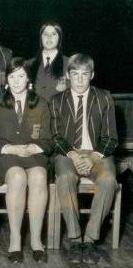
(In this school annual pic taken earlier that year – 1972 – I had also tried to peer over my specs for a professorial look. Well, it was the akademiese presteerders photo)
~~oo0oo~~
poephol – fellow
Volksblad – the Chosen Nation’s Facebook (stand down Israel, there was a chosen nation before you ous)
Blast from the past. Memories can linger now, and be enhanced with the passage of time. Hard copies of dust-collecting mementoes have been discarded in a long overdue house-cleaning.
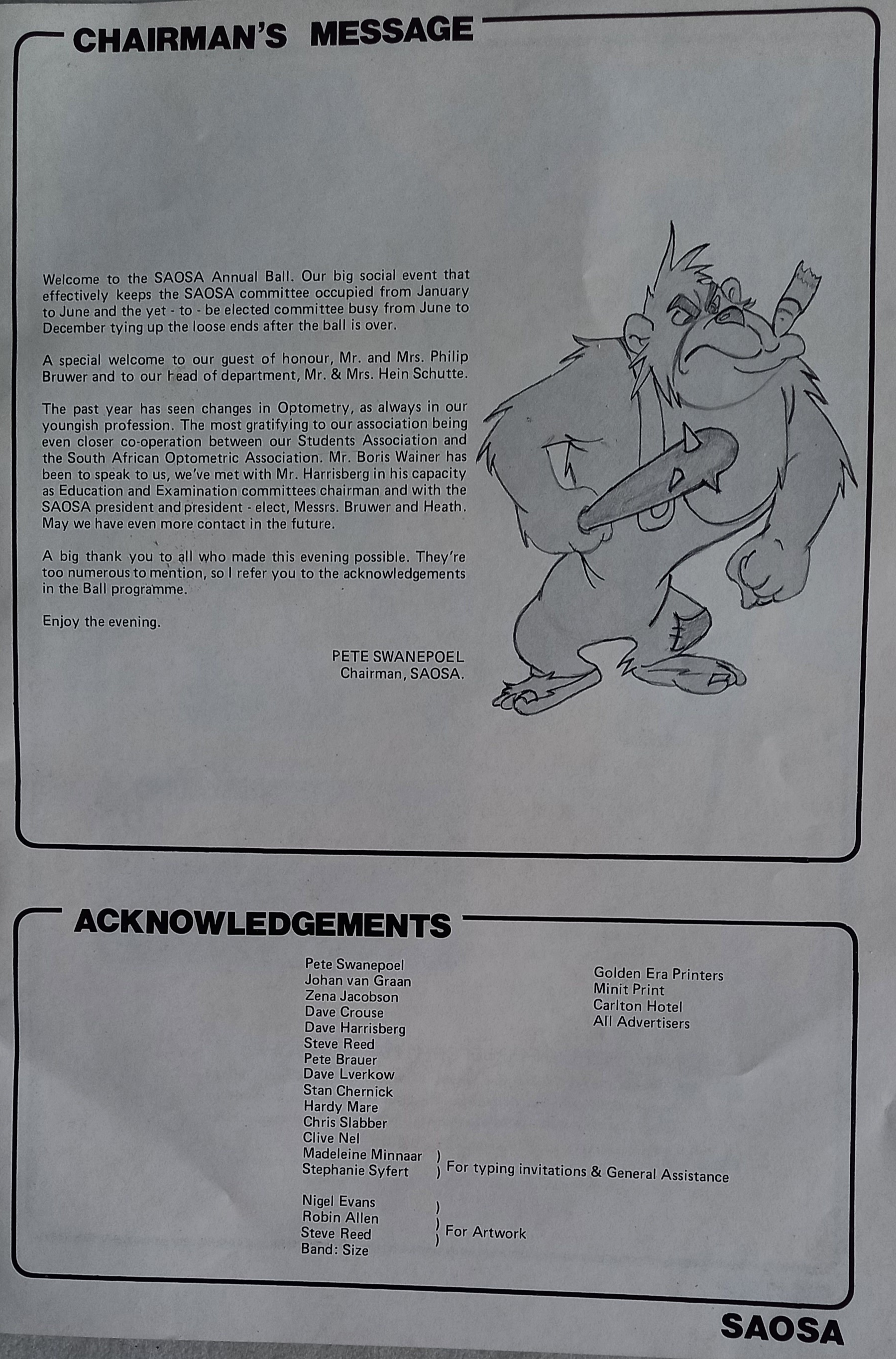
Our final year student ball in 1977 was a lavish, sponsored affair in the ballroom of South Africa’s famous Carlton Hotel in downtown Johannesburg.
– menu Carlton Hotel Johannesburg 1977 –
Rob Allen and Steve Reed’s lovely cartoon drawings enhanced the booklet that served as program and menu.
Now we can get on with the old truism: The Older We Get, The Better We Were!
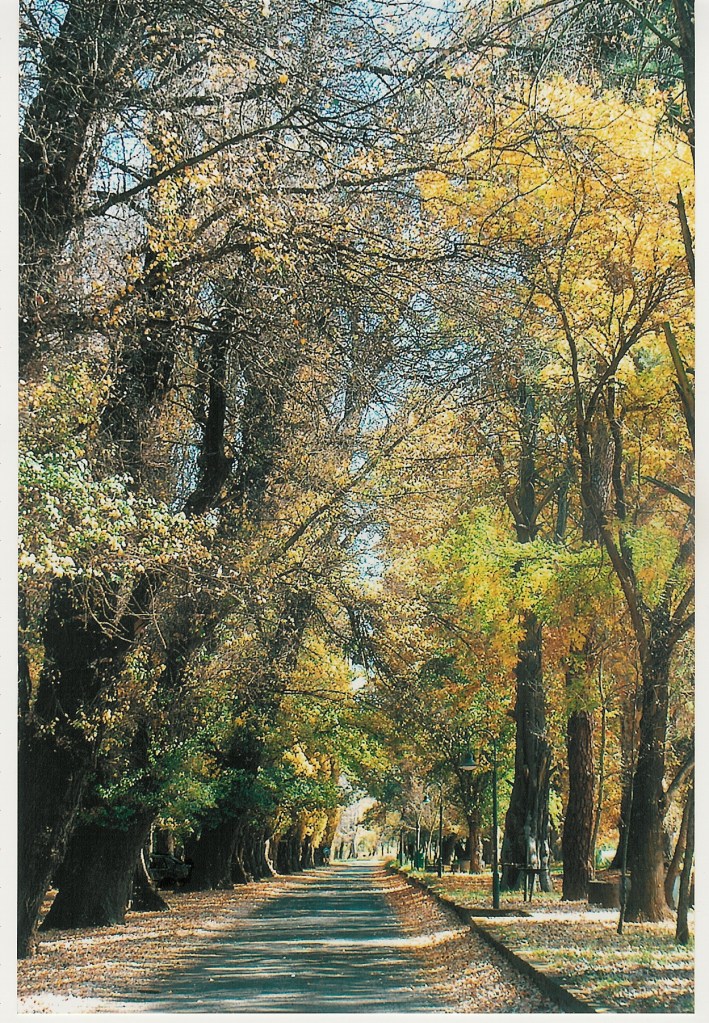
(I’ve done a similar post! on the park in more recent days – ‘Our era,’ the 1960s. Enjoy both, and take both with a pincha cerebos).
~~oo0oo~~
Harrismith’s young town council, established only in 1875, though the town had been going for much longer, decided in 1877 to lay out a large park for its citizens to enjoy on the banks of the Wilge River on the south-west edge of the new dorpie.
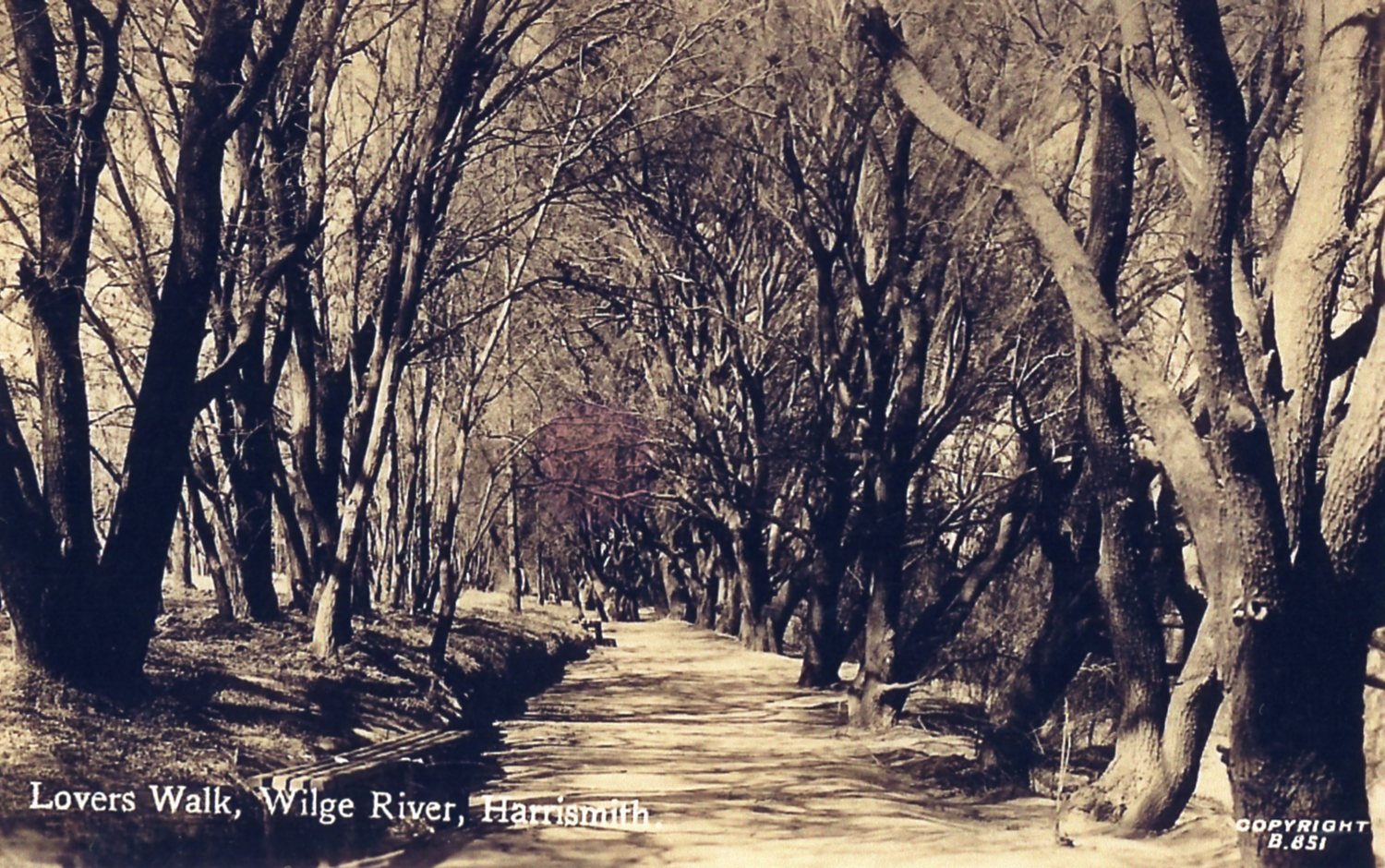
Over the following years – and mainly thanks to the efforts of the Landdrost Warden who came to Harrismith in 1884, and Harrismith’s first Town Clerk A. Milne, the area was laid out with winding roads, walking paths, a “lovers lane of poplar trees” and up to 38 species of other foreign trees, in what was then highveld grassland. Or, as described by park praise-singers: “a bare, crude piece of ground!”
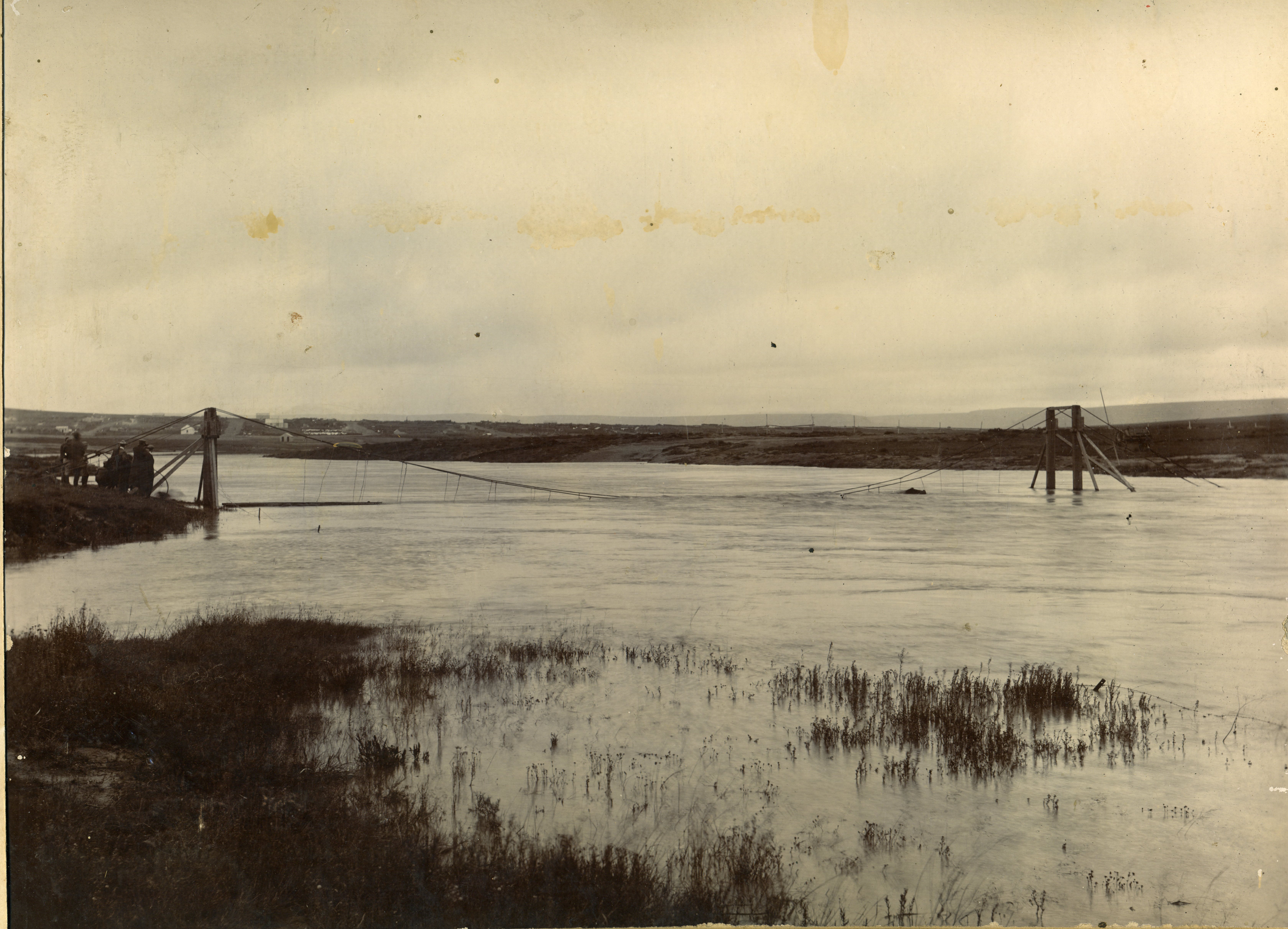
Here we see the Wilge River banks and surrounds just upstream of the park site – near where the ysterbrug, or Hamilton Goold bridge was later built:
– the troops stationed in the town around the time of the Anglo-Boer War erected this suspension bridge –
Tree planting commences. Platberg the backdrop.
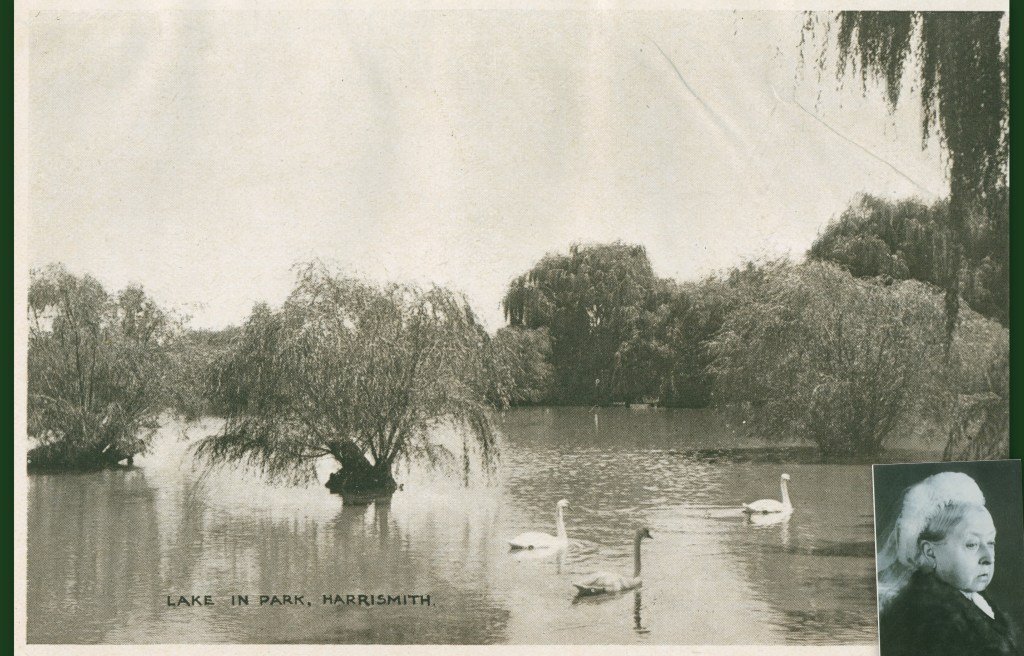
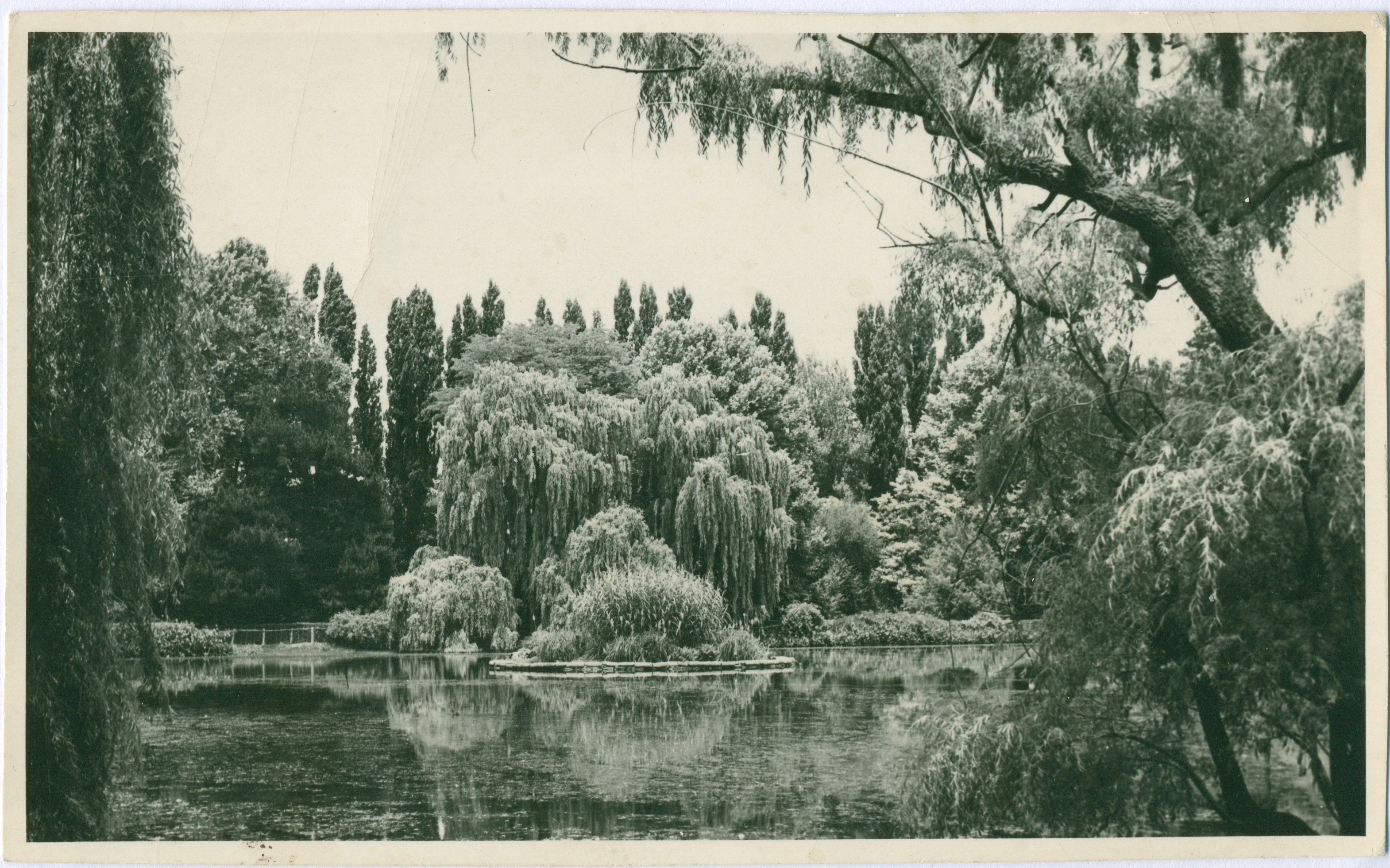
The typical Free State river was narrow and shallow, so an attractive little lake with a central island was built on the right bank (town side) and used for boating. Swans were introduced from London ‘for beauty.’ As for trees, so all local life **sniff** was regarded as inferior to things imported from “home”! Home being a small island to the NW of France. The swans did quite well, settled in and bred, the cygnets being sold for £15 a pair, but not long after, they met their end at the hand of ‘some unidentified vandal with a .22 gun.’ Probably an early indigenous wildlife fan, I’d like to suggest?
As the trees grew, so more and more birds roosted in them, large heronries eventually being established. Predictably people complained and as predictably, the council “did something about it,” shooting the local birds while pontificating against the shooting of the foreign birds! The birds’ carcasses dropped into and frotted in the lake, causing a big stink! In the 60s there were still many cattle egrets in the trees and I recall lots of white poo and some dead babies on the ground beneath their nests.
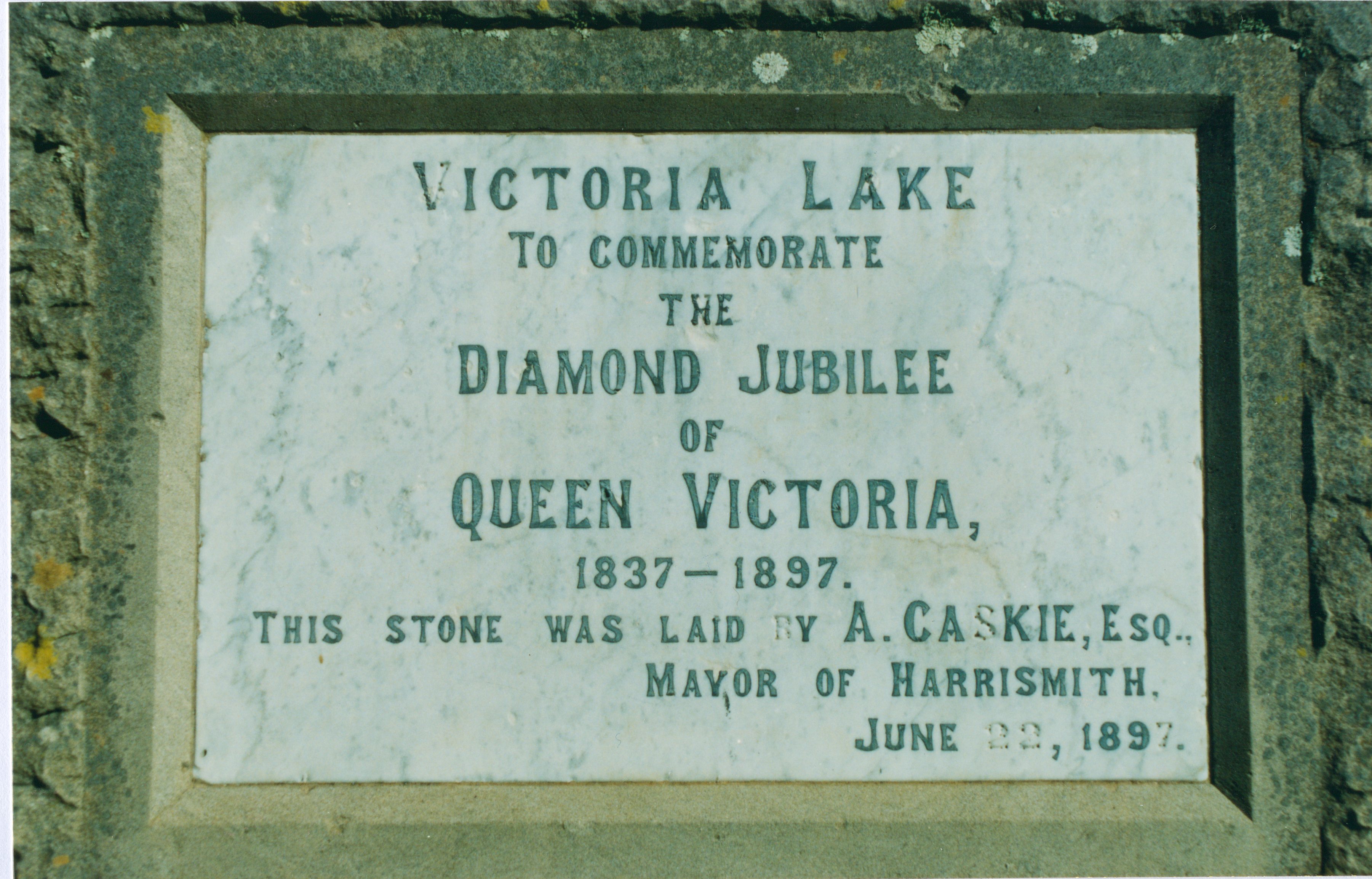
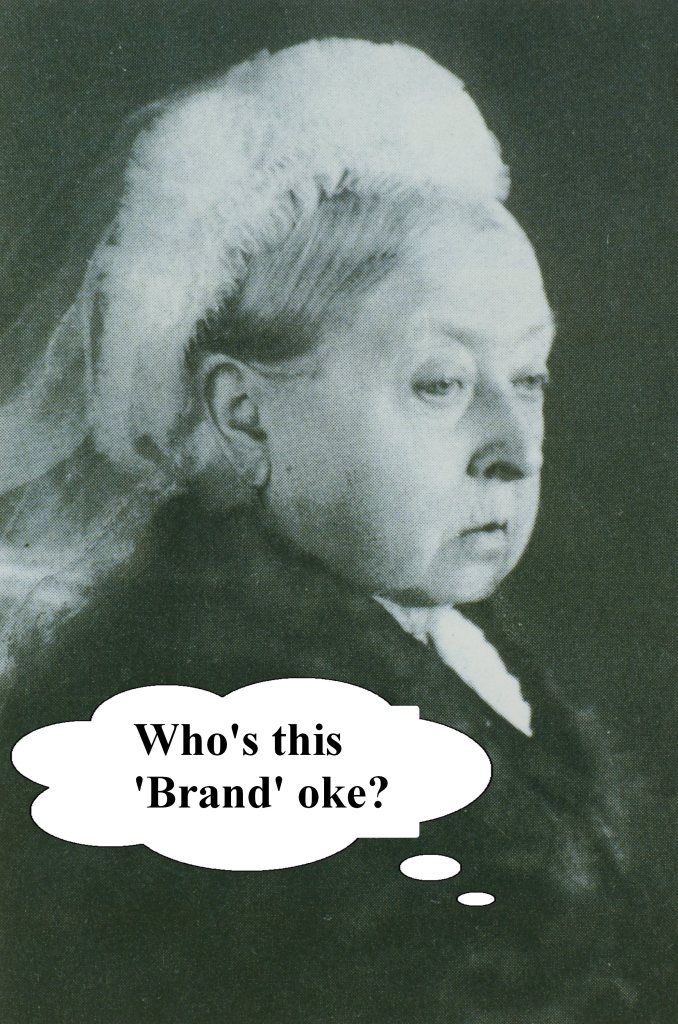
In 1897 the lake was named Victoria Lake in honour of the silver jubilee of the Queen – that’s the queen of England, that little island to the NW of France – along with thousands of other things named “Victoria” that year around the world – much genuflection was expected of the colonies. Also they were probably trying to ease her pain over the royal pasting (or snotklap) we had given her at Majuba.
– they named the lake “Victoria” to arse-creep the queen . . of England – didn’t amuse her, though – never once came to ghoef in it –– more recently – sans swans – we shot them all –
More & more trees would be planted over the years by schoolkids and enthusiasts. Gotta get this place looking more like England, dammit!
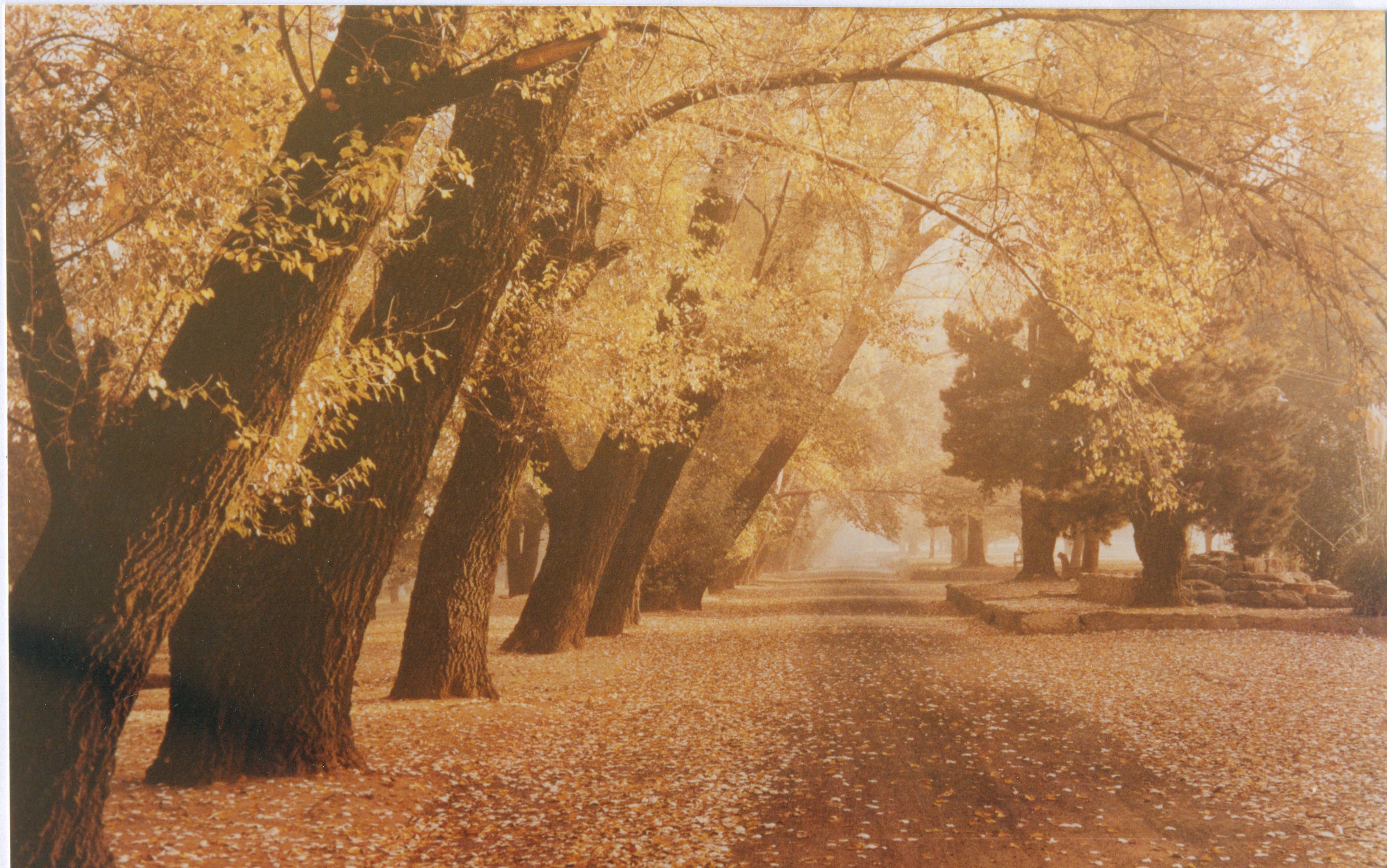
– lovers walk – I remember the poplar trees leaning ominously – were they trying to tell me something about my lovelife? –
The park was officially opened in 1906 by Sir Hamilton Goold Adams, at “a colourful ceremony with troops on parade and a military band in attendance.” Now they were gloating, having given us a revenge pasting in the 1899-1902 Tweede Vryheids Oorlog (Anglo-Boer War).
In 1907 the river was dammed by a weir just downstream of the park, thus creating a wider and deeper river for the full length of the park.
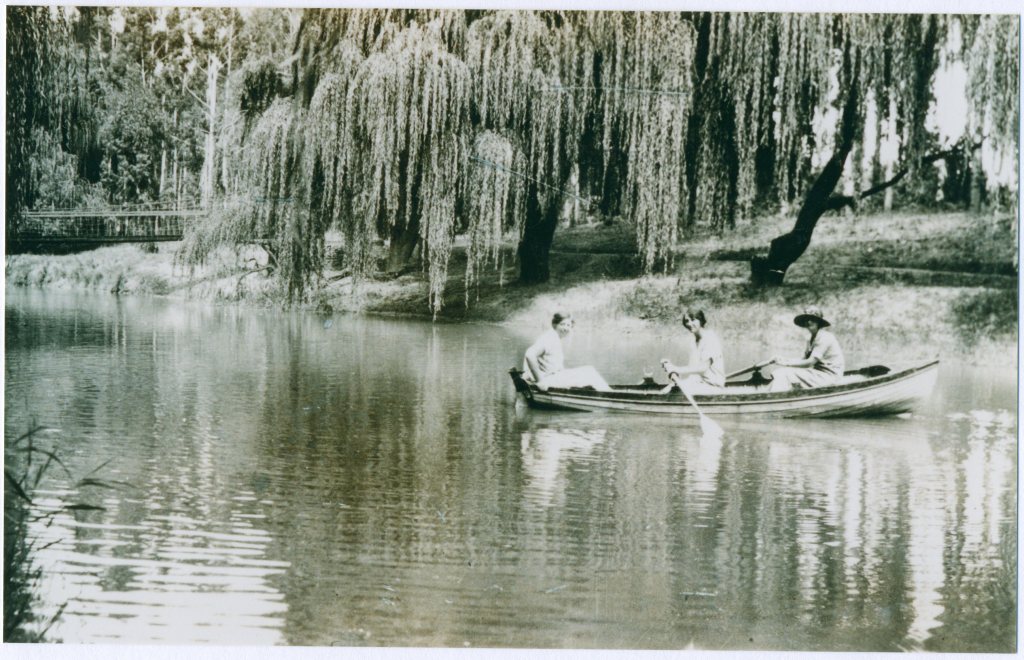
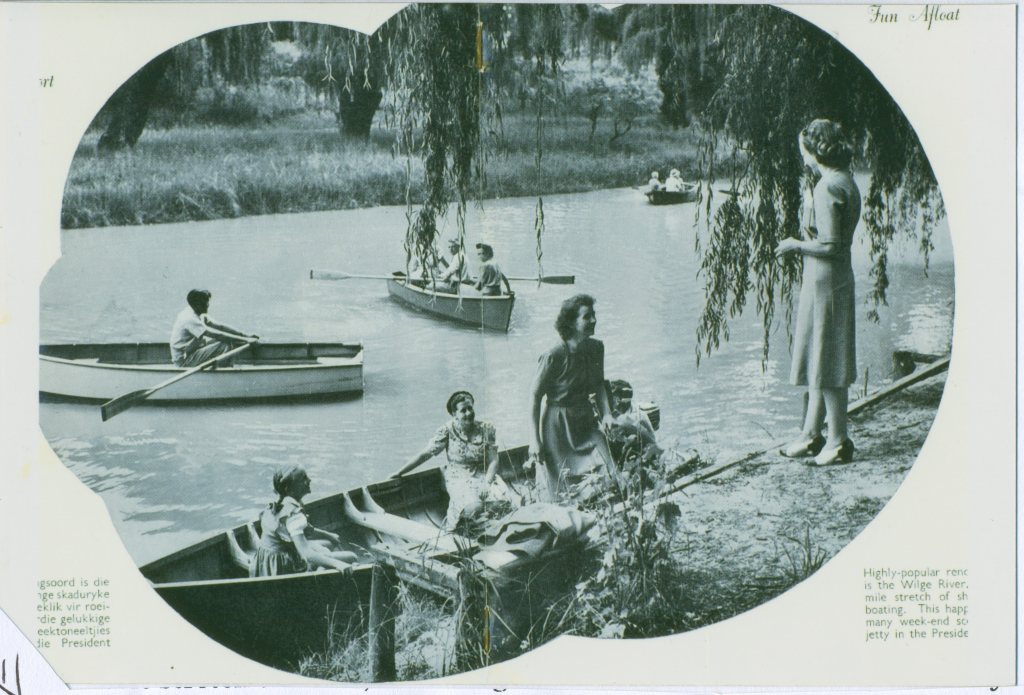
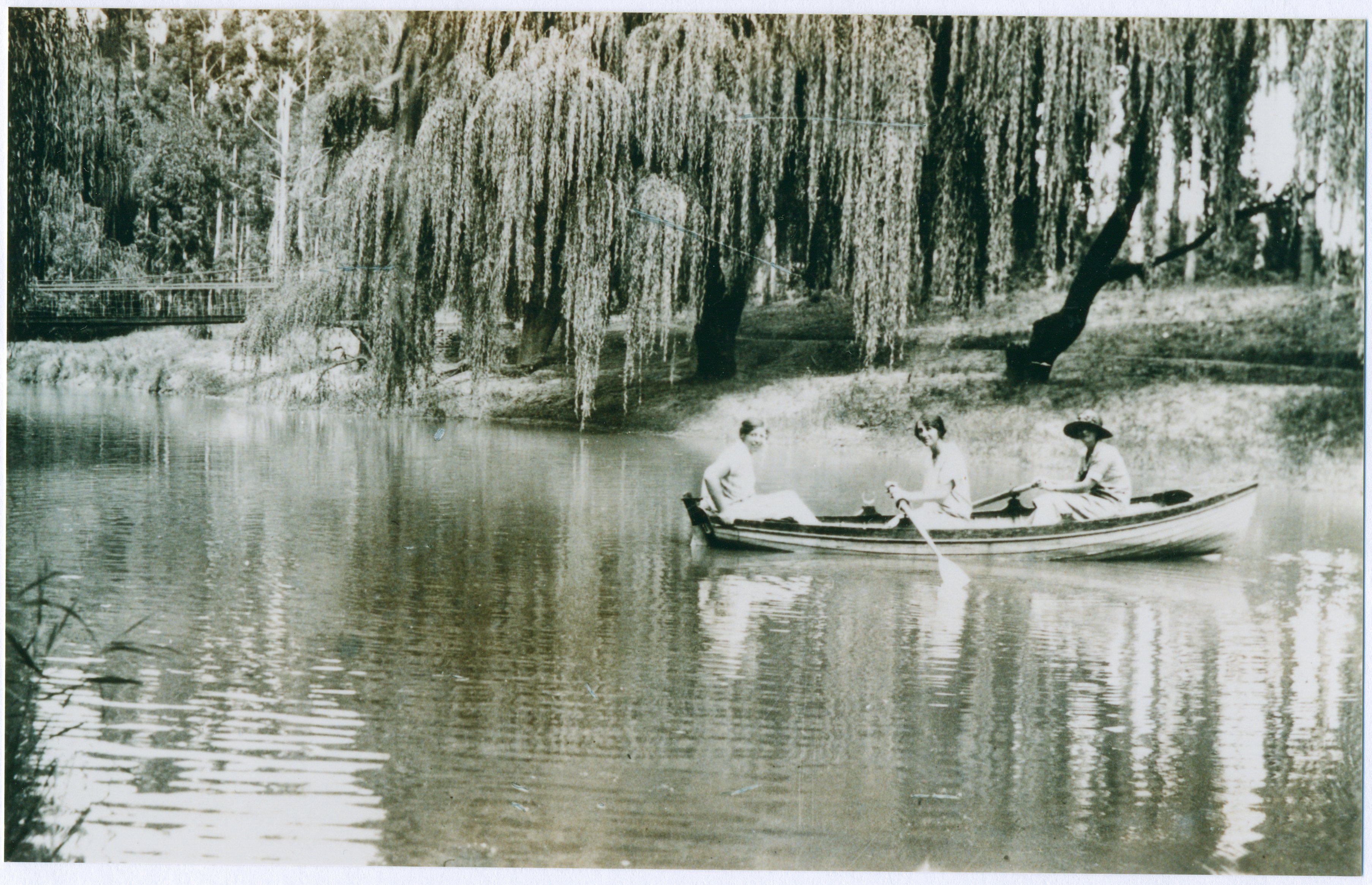
This greatly added to the river’s charm and utility, allowing for swimming, drowning, more boating and bigger boats – even the first motorboat in 1918, owned by Mr E.H Friday. Later a boat house and a landing stage were erected by the Boating Syndicate who advertised ‘Boats for 2 and boats for 4 and boats for all’ in 1922. The Syndicate graduated to a motor launch capable of taking 14 passengers slowly along the river, including full-moon evenings where people would sing the songs of the day, accompanied by “the plaintive sounds of the ukelele”.
On the edge of the park nearest town sportsfields were laid out, starting with a cricket oval and an athletic track, then rugby, soccer, softball and hockey fields; and jukskei lanes. No croquet?
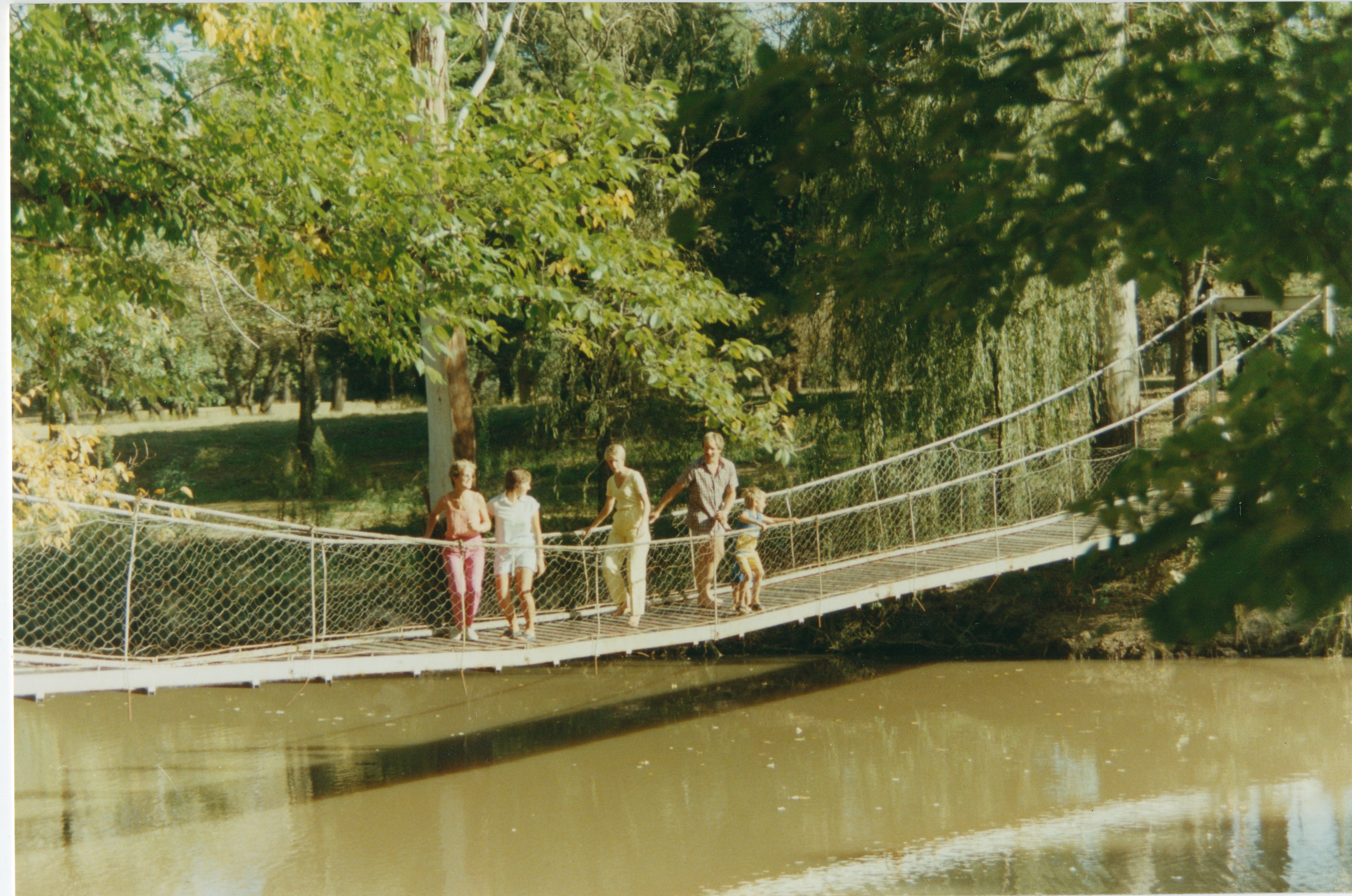
The park was extended across the river and a new suspension bridge about 300 yards downstream replaced the one the military had erected (the thrifty town council using some of the metal from the original in the replacement). In time a caravan park was started, but this was soon moved to the town side of the park.
An impressive entrance – wrought iron gates between sandstone pillars – was erected and named the Warden-Milne gate in honour of those who had done so much to get the park established. Well done, chaps! We enjoyed the fruits of your labour in our youth in the 1960s! OK, not really labour, organisational abilities, nê?
~~oo0oo~~
It’s only thanks to the preservation efforts of Biebie de Vos that we can see these old pics. Thanks, Biebie! Also thanks to SA Watt’s military history articles here and here.
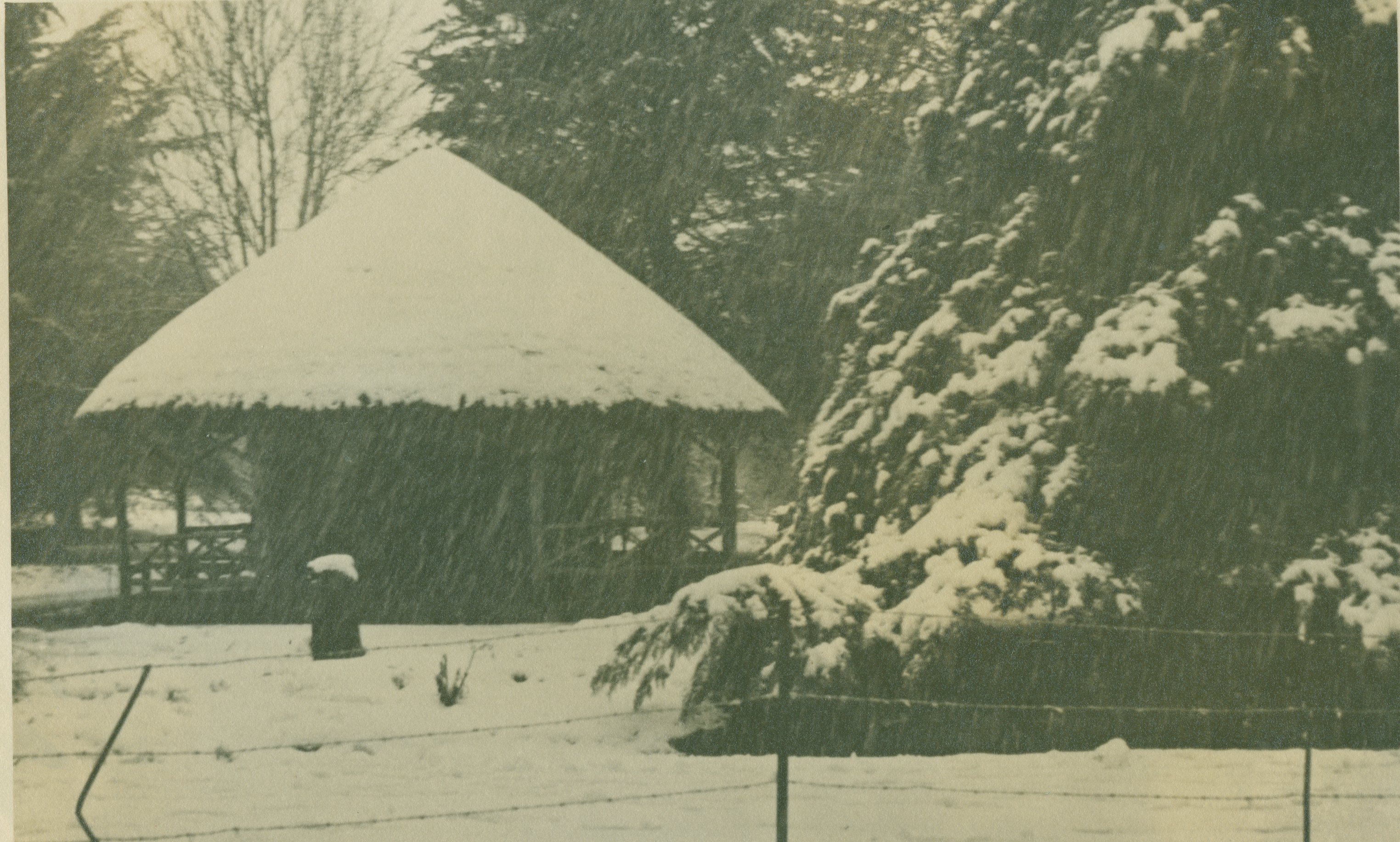
Gallery:
~~oo0oo~~
Gotta love marketing! In a brochure extolling the virtues of our lovely dorp, the blurb says – where we would have said Dammit, it’s FREEZING! – “the town enjoys a bracing climate.”
More Gallery:
~~oo0oo~~
Wilge river – Willow river; Interesting name, as the willows are from the northern hemisphere, and were planted later; only after a while would they have become such a feature of this river (and many other South African rivers); Wonder if our river had another name when the town was first settled?
dorpie – village
ysterbrug – iron bridge; for horsedrawn carriages and those newfangled automobiles / motorcars
snotklap – a tight slap that – if timed right – whips the snot out of the klap-ee’s nose and leaves it wrapped round his face ear-to-ear
In high school in 1973 in Oklahoma, I was asked to go to the Model UN to represent another country. I asked to represent SA. Why, I don’t know. I could have learned more by representing a new country I’m sure. The organisers said ‘Sure.’
I think it was in Norman at OU but pinch of salt: Fifty years ago next year! ( Ah, it was, I see. )
We had fun and I did learn a lot. But I have embarrassing recollections of passionately defending 1973 SA when the motion against us was tabled – all the Nats points came bubbling up. Parallel development, Separate but equal, blah blah. Sheeeesh!! The old wanting to win was fierce in my young days. I must have sounded like blerrie Pik Botha without a snor! I think we lost and were defeated. I hope they declared apartheid a crime against humanity – or did that only come later? ( Oh, soon after: November 1973 I see. )
It was very formal and procedural. I remember younger kids called ‘pages’ running up and down the hall passing notes between delegates. One addressed to me said: Good speech. Are you Australian?
They’re still going. Hopefully strong. Being Oklahoma, I bet they catch a fair amount of flak. Especially now with the MAGA disease sweeping that fair state. And an education minister bent on un-educating.
Another re-cycled post to save ink, pixels and perspiration. I tried to reason with these ous, but would they lissen to me?
~~oo0oo~~
My lift from JHB dropped me off at home. The dorp was empty. The city of sin and laughter was somnolent. Soporific even. Where WAS everyone?
I phoned 2630 pring pring pring. Or was it 2603 priiiiing priiiing priiiing? I forget. Can you fetch me? No, get yourself here quick, we’re going to Warden to scare some guineafowls. Now.
What could I do? The imported white Ford Econoline 302 cu. inch V8 van was in the garage, I knew where the keys were, and the folks were away. And after all, I’d only be using it to get to Gailian then hop into Tabs’ bakkie and away we’d go. What could possibly go wrong? Oh, and I’d better borrow Dad’s cheap Russian 12-gauge shotgun, too. The R139 one. And take a few beers.
As I drew up next to the prefab on Gailian, a cry of ‘Perfect! A real shooting brake!‘ went up and six pre-lubricated gentlemen holding shotguns and beers piled in, calling Tommy the diffident short-haired German Pointer in with them. No, guys, hang on, I said feebly . .
The day at Rust was a blur, but the drive back came into sharp focus. We ‘had to’ pull in to the Warden village pub. The dorpskroeg. I, of course, had suggested we go straight home, but that went down like a lead balloon. A vote wasn’t taken, and I lost, blithely ignored. Overruled. In the pub, the barman took one look at us and refused to serve us. Someone who shall remain nameless but whose surname maybe started with a Gee and ended with a Zee, fetched his shotgun and casually aimed it at the expensive bottles of hooch above the barman’s head whereupon said barman suddenly remembered our order and delivered seven beers pronto. When we decided we’d like to play snooker, same thing: It was a No Way, until a The Simpsons-like character aimed a shotgun at the white ball and the cues were produced with alacrity. And chalk.
When to my huge relief, we finally got going, the clutchplate G-man, who was riding shotgun on my right (the van was Left-Hand-Drive), sat on the windowsill and two of Warden’s four streetlamps went ‘pop’. There he is, in the window, next to the weapon in question. Tommy’s wondering What.The.Hell!? The guinea is mortally wounded, deceased and bleeding on the van carpet.
– riding shotgun –
Now I KNEW I was going to jail forever. Putting my head down and roaring for home I wasn’t stopping again for NOBODY. Except the gentle tickle of a shotgun against my ear persuaded me otherwise and I stopped as instructed with my headlights shining on the Eeram roadsign. A firing squad lined up, three kneeling in front and four standing behind them. This is for Ram, guys, he’s getting married in Bergville next weekend! BLAM!! The ‘Ee’ disappeared, and there was just ‘ram’. In honour of Ram’s wedding. Nor do I believe it. Maybe it was a dream?
I finally got rid of the miscreants, got home and looked at the van. Holy cow! Dog hair, guineafowl feathers and the mud and the blood and the beer all over the carpets and upholstery of Dad’s white Ford Econoline V8 camper van! 302 cu. inches. I set to work cleaning it. And cleaning it. And scrubbing it. Still, it stank of that mixture. In desperation, I took a jerrycan and spread petrol liberally on the carpet and scrubbed again.
When the folks got home I made a full – OK, partial – confession: Dad, I spilled some petrol in your van, but I’ve cleaned it all up. Sorry about that!





















 Vrystaat Confessions