Here’s a stirring tale of Boy Scouts and Girl Guides and my family. It also obliquely references a lockdown and social distancing. In fact a much longer lockdown than we have endured: From 13 October 1899 to 17 May 1900, the people of Mahikeng – which the Poms called Mafeking were locked down and besieged by the locals – during the Anglo-Boer War. 217 days.
In Oct 2018 I wrote: Whenever I hear Jimmy Buffet singing Pencil Thin Mustache I think of my uncle Dudley, oops, my cousin Dudley.
Dudley Bain was a character and my second cousin. I had known him over the years when he used to visit his old home town of Harrismith, but really got to know him once I started practicing optometry in Durban. He was very fond of his first cousin, my Mom Mary – and thus, by extension, of me.
Dudley worked in the Mens Department of John Orrs in downtown Durban back when there was only downtown. Anybody who was anybody worked in downtown. Anywhere else was “the sticks”. Even in 1980 I remember someone saying “Why would you want to be out there?” when optometrists De Marigny & Lello opened a practice in a little insignificant upstairs room on the Berea above a small gathering of shops called Musgrave Centre.
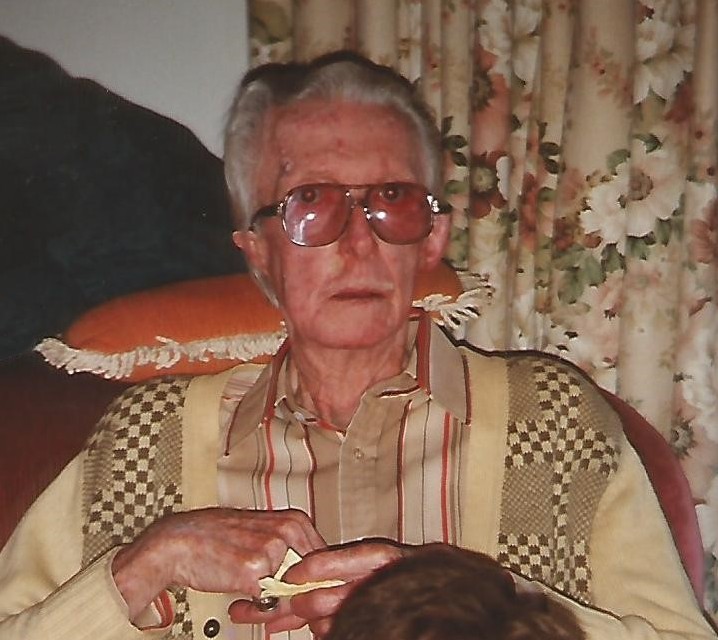
Dapper, hair coiffed, neatly dressed, often sporting a cravat, Dudley had a pencil thin moustache and definite opinions. He was highly chuffed he now had a pet family optometrist to look after him when I first hit downtown and then Musgrave centre.
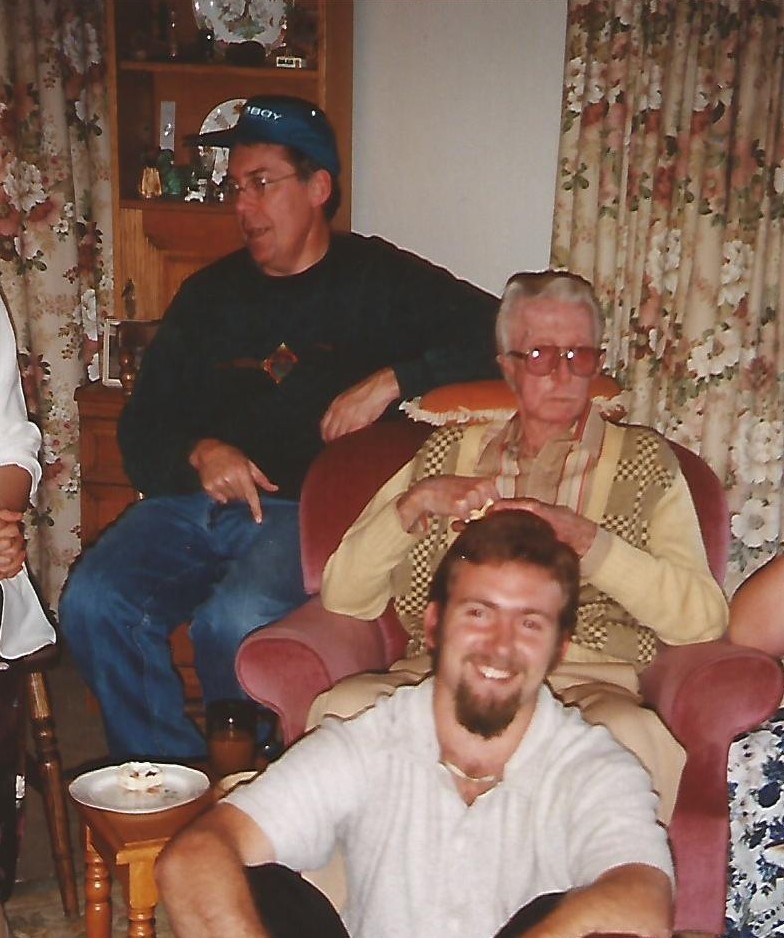
Fitting his spectacle frame was a challenge as he got skin cancer and his surgeon lopped off ever-bigger pieces of his nose and ears until he had no ear one side and a tiny little projection on which to hook his glasses on the other side. He would hide these ala Donald Trump by combing his hair over them and spraying it carefully in place. I am glad I wasn’t his hairdresser.
– here he is at Ethne’s 80th birthday with me sitting behind him –
He would pop into the practice frequently ‘to see my cousin’ – for me to adjust his frames by micro-millimetres to his satisfaction. He walk in and demand ‘Where’s my cousin?’ If the ladies said I was busy he’d get an imperious look, clutch his little handbag a bit tighter and state determinedly, ‘I know he’ll see me.’ They loved him and always made sure I saw him. He’d ‘only need a minute; just to adjust my frame, not to test my eyes,’ and half an hour later their knocks on the door would get ever more urgent. Then they’d ring me on the internal line, and I’d say ‘Dudley, I got to go.’
I would visit him occasionally at their lovely old double-storey home in Sherwood – on a panhandle off Browns Grove. Then they moved to an A-frame-shaped double-storey home out Hillcrest way, in West Riding.
We had long chats while I was his pet optometrist and I wish I could remember more of them. I’ll add as they come floating back. I’m trying to remember his favourite car. One thing he often mentioned was the sound of the doves in his youth. How that was his background noise that epitomised Harrismith for him. The Cape Turtle Dove . .
~~~oo0oo~~~
Dudley married the redoubtable Ethne, Girl Guides maven. I found this website, a tribute to Lady Baden-Powell, World Chief Guide – so that’s what me link this post tenuously to our lockdown:
Olave St. Clair Soames, Lady Baden-Powell, G.B.E., World Chief Guide, died in 1977. In 1987 her daughter and granddaughter, Betty Clay and Patience Baden-Powell, invited readers to send in their memories of the Chief Guide to The Guider magazine.
They wrote:- Everyone who knew Olave Baden-Powell would have a different story to tell, but if all the stories were gathered together, we would find certain threads which ran through them all, the characteristics which made her beloved. Here are a few of the remembrances that people have of her, and if these spark off similar memories for you, will you please tell us?
Here’s Ethne’s contribution: 3 West Riding Rd., Hillcrest, Natal 3610, South Africa When I was a newly-qualified teacher and warranted Brownie Guider in Kenya in 1941, our Colony Commissioner – Lady Baden-Powell – paid a visit to the Kitale Brownie Pack. Due to an epidemic of mumps, the school closed early and Lady B-P was not able to see the children, but she took the trouble to find me and had a chat across the driveway (quarantine distance) for a short time.
A year later at a big Guide Rally at Government House in Nairobi, the Guides and Brownies were on parade, and after inspection Lady B-P greeted us all individually, and without hesitation recognized me as the Guider who had mumps at Kitale. Each time we met in the future, she joked about the mumps.
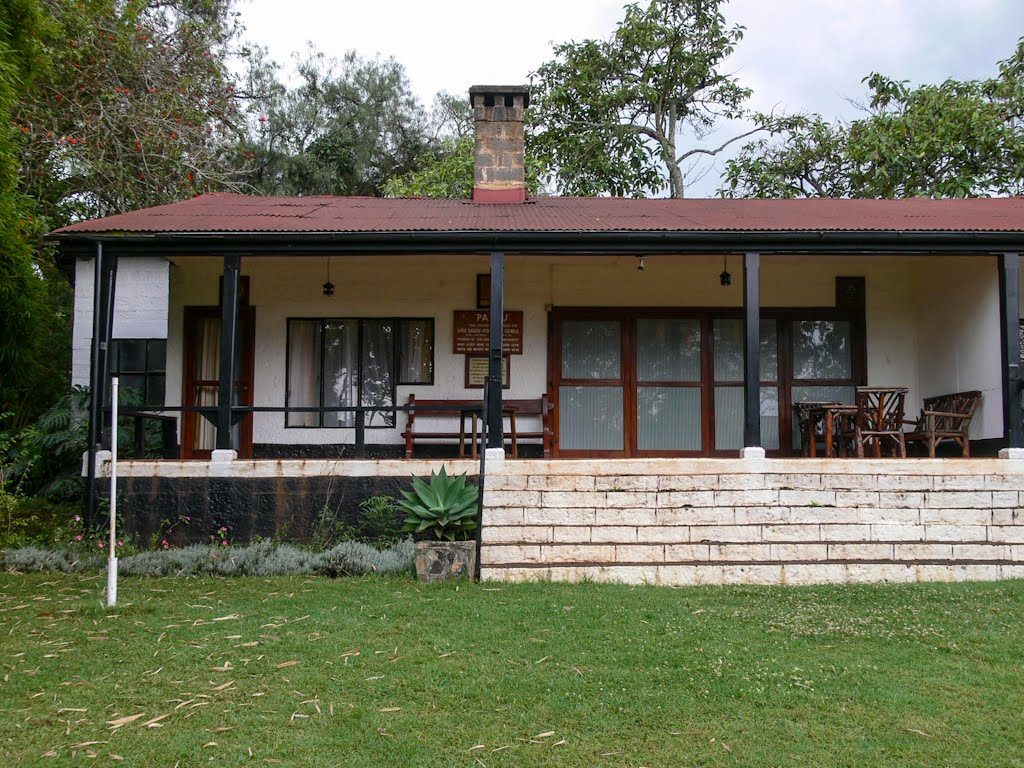
My next encounter was some twenty years later, on a return visit to Kenya, in 1963, with my husband (that’s our Dudley!), our Guide daughter D. (Diana) and our Scout son P (Peter). We stayed at the Outspan Hotel at Nyeri where the B-Ps had their second home Paxtu. We soon discovered that Lady B-P was at home, but the Hotel staff were much against us disturbing their distinguished resident. However, we knew that if she knew that a South African Scout/Guide family were at hand she would hastily call us in. A note was written – “A S.A. Scout, Guide and Guider greet you.” Diana followed the messenger to her bungalow but waited a short distance away. As lady B-P took the note she glanced up and saw our daughter. We, of course, were not far behind. Immediately she waved and beckoned us to come, and for half-an-hour we chatted and were shown round the bungalow, still cherished and cared for as it had been in 1940-41.
– paxtu at Nyeri –
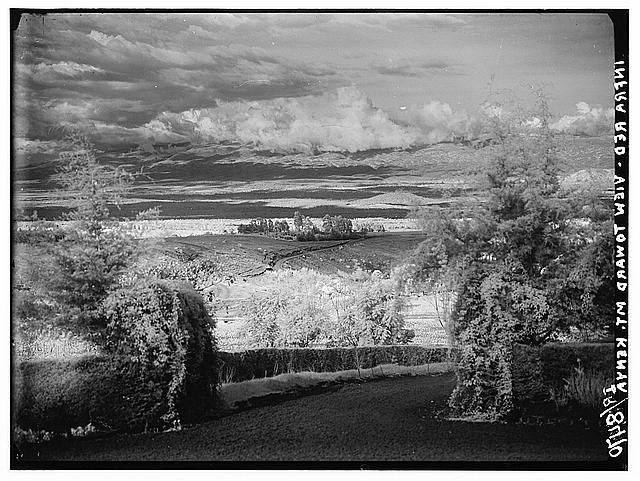
It was easy to understand her great longing to keep returning to this beautiful peaceful place, facing the magnificent peaks of Mount Kenya with such special memories of the last four years of B-P’s life. From her little trinket-box, Lady B-P gave me a World Badge as a memento of this visit which unfortunately was lost in London some years later. Before leaving Nyeri we visited the beautiful cedar-wood Church and B-P’s grave facing his beloved mountain.
– Mt Kenya from Nyeri –
My most valued association with Lady B-P was the privilege and honour of leading the organization for the last week of her Visit to South Africa in March 1970. Each function had a lighter side and sometimes humorous disruption by our guest of honour. The magnificent Cavalcade held at King’s Park, PieterMaritzBurg deviated from schedule at the end when Lady B-P called the Guides and Brownies of all race groups to come off the stand to her side; they were too far away. A surge of young humanity made for the small platform in the centre of the field where she stood with one Commissioner, a Guide and three Guiders. Without hesitation, Gervas Clay (her son-in-law) leapt down from the grandstand two steps at a time and just made Lady B-P’s side before the avalanche of children knocked her over. Anxious Guide officials wondered how they were going to get rid of them all again. The Chief Guide said to them, “When I say SHOO, go back to your places, you will disappear.” Lo, and behold, when she said “SHOO, GO back!” they all turned round and went back. You could hear the Guiders’ sighs of relief.
~~~oo0oo~~~
Steve Reed wrote: Hilarious – I reckon every family worth its salt should have had an uncle like that. Something for the kids to giggle about in secret at the family gatherings while the adult dads make grim poker faced humorous comments under their breath while turning the chops on the braai. And for the mums to adore the company of. Good value.
And funny Steve should mention that!
Sheila remembers: “After Annie’s funeral, in our lounge in Harrismith, Dudley was pontificating about something and John Taylor muttered to me under his breath ‘Still an old windgat.‘”
~~~oo0oo~~~
Family tree: (Sheila to check): Dudley Bain was the eldest son of Ginger Bain, eldest son of Stewart Bain who came out to Harrismith from Scotland in 1878. My gran Annie Bain Bland was Ginger’s sister, so Mom Mary Bland Swanepoel and Dudley Bain were first cousins.
Here’s his Funeral notice. He would have loved the picture on it – maybe he had requested it?
Me and Sarah. When one of my favourite comedians Sarah Silverman wrote her autobiography she compared herself to Ernest Hemingway and Fyodor Dostoevsky, classing herself as a brilliant and serious writer . . that’s Sarah. Bashful.
And also bashfully, her book’s ‘afterword’ is by God. He – yes, HIM – writes about Silverman in the year 2063, on the occasion of her death at 93, with the epitaph “She loved dogs, New York, television, children, friendship, sex, laughing, heartbreaking songs, marijuana, farts, and cuddling.”
In the book she tells how at age two she would make her father laugh by saying “fuck”; She admits to avidly smoking marijuana; and she tells how she wet the bed until age sixteen. It was an important enough part of her childhood that she titled the book after that fact. That’s what I love most about Sarah: Her honesty.
Well . . I wet my bed until I was eleven or twelve or thirteen, too. So I am glad to find out other good people did as well. I also love the leveling effect: You know the boy who was so clever and in the first rugby team? Teachers’ favourite? You envied him? Well, he wet his bed. My message (and I think Sarah’s)? – You’re OK.
=======ooo000ooo=======
Nocturnal enuresis, also called bedwetting, is involuntary urination while asleep after the age at which bladder control usually occurs. Bedwetting in children and adults can result in emotional stress. Can and did!
Bedwetting is the most common childhood complaint. Most girls achieve bladder control by ages 4–7 and most boys by ages 4–6. By ten years old, 95% of children are dry at night. I was a five-percenter.
Most bedwetting is a developmental delay – not an emotional problem or physical illness, so most treatment plans aim to protect or improve improve self-esteem – and my Mom certainly did that. At first she’d help and reassure, but as I grew older, I would kick almost automatically into a procedure Mom gave me: I would wake up horrified, jump up, roll up the wet sheets, soak them in the bath, wash, put on dry piejams and go back to sleep. The mattress would be protected by the plastic sheet we put under the bottom sheet. Usually only me and Mom would know. Thanks to her, here I am, relatively unscathed!!
Sheila asked: Hi Koos. What make were our bikes? Something with an R. Ruttludge? Rudling?
I answered, ‘Rudge’. The same Rudge ridden by the English King.
‘Strue!
Sheila’s and Barbara’s were red, mine was blue. Given to us by Mom and Dad around 1960 to 1965, I’d guess. We were certainly in the Kleinspan School and Barbara would have started there in 1958 or 1959, Sheila in 1961 or 1962 and me in-between those dates. They made the level, less-than-one-mile trip to school and back a breeze. We’d park them under cover at school in special bike parks with a slot in the concrete for the front wheel to go in and metal hoops to hold them upright.
Ours were WAY more basic than the one above though. Only a back brake, no gears, no cables, no light. They did have a little L-shaped attachment in front of the handle-bar where we could attach a battery-powered square silver torchlight.
The company Rudge-Whitworth Ltd. Coventry, Englandwas one of the prominent pushbike makers of the classic British era … Eventually bought by Raleigh in 1943, the Rudge name takes a rightfully prominent spot in England’s cycling history.
Dan Rudge built the first Rudge high bicycles in 1870. In 1894 Rudge merged with the Whitworth Cycle Co. to form Rudge-Whitworth. They made an excellent reputation for themselves over the next twenty years for producing a full range of beautifully made machines with many clever and unique features. Rudges were ridden by King George V and family. See?There it is! Royal bums sat on seats just like ours!
The name was finally killed sometime in the early 1960s in Britain, but may well have been used in export markets later.
Later on, in high school, I got a bigger black ‘dikwiel’ bike – a ‘balloon tyre bike’ – tougher more adventurous! Somewhat like these:
I asked Pierre: Can you remember what we called our dikwiel bikes? Each one had a nickname. His immediate reply: Bolts, Schlump and Arrii. I had only remembered Arrii, named after a desert camel joke. Pierre continued: Like yesterday. Also recall the (world’s) first mountain bike race now known as MBR’s down Queens Hill and Tuffy whipping out the barbed wire fence. Regards Pierre
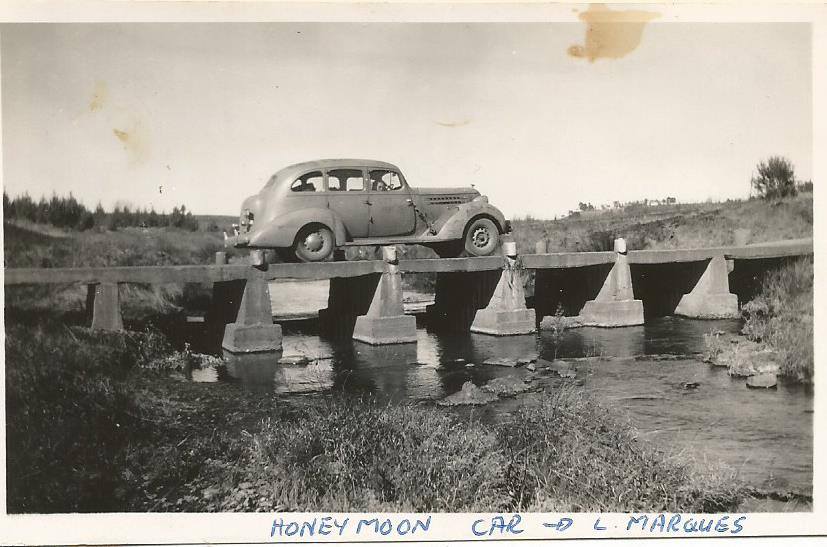
Mom & Dad went to Lourenco Marques in Mocambique for their honeymoon in 1951.
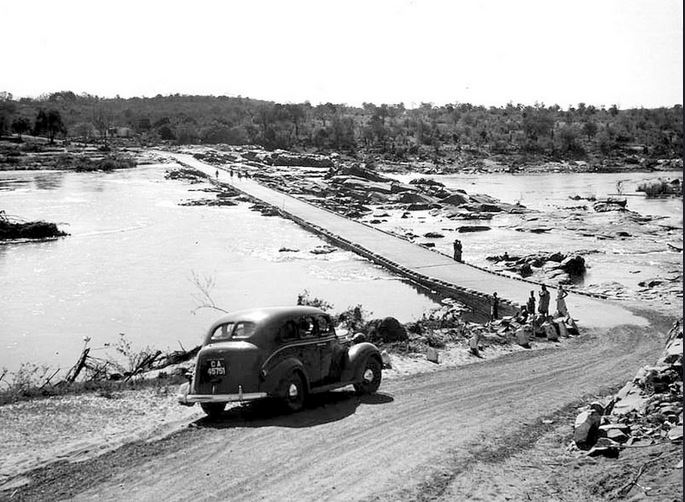
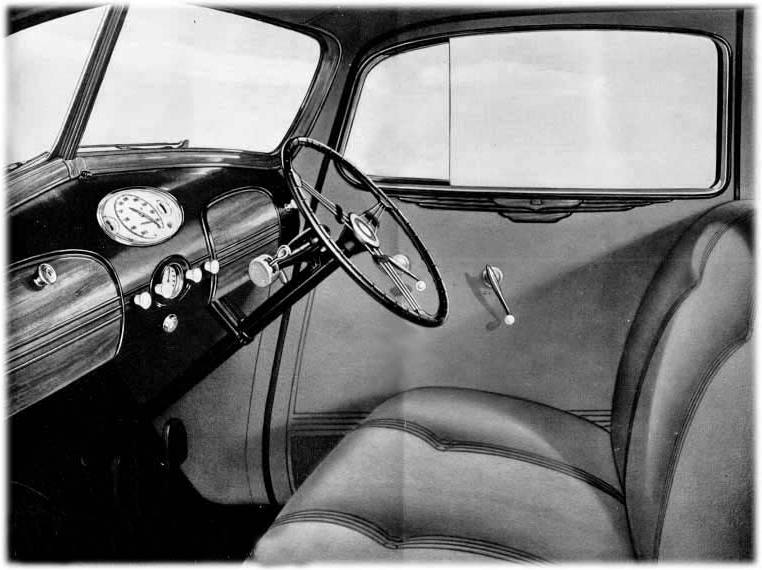
With cars being very scarce after the war, Dad looked around for anything he could afford. He found a Mr Smith selling a fifteen year old Hudson Terraplane 4-door for £100. It came with a spare engine in the boot – and the feeling that it would probably be needed.
– Mary behind the wheel –
On the way after the second day, somewhere in the old Transvaal, they smelt fish – and the smell got worse. They stopped, the ole man opened the bonnet and found a dead fish on the manifold. He said immediately, I know who did this; He’s put it where it will stink, but it won’t cause any harm Only Upsy would do this. Upsy Sorenson. He removed the fish, burning his hand in doing so. Mom says, ‘To think we went to Lourenco Marques in that old thing. Dad says he wouldn’t drive to the gate in it now.’
But it made it to LM – and back. Mom had to put her feet on the seat – the floor got too hot, even with shoes on. While in Lourenco Marques the Hudson started missing, so Dad took it to a garage but the Portuguese owners couldn’t understand him. He tried Italian, which he’d learnt in the war. “Candela?” – Ah! Candela! Yes, they had sparkplugs and they could sort him out.
They stayed in a boarding house a couple blocks back from the seafront. ‘It was cheaper than a hotel’. While there they met with Frank Cabral a big game hunter married to some relative of Mom’s. They swam – Mom remembers the huge beach and the shallow sea with only tiny waves. They had fish for breakfast one morning – a whole fish whose eye gazed balefully at Mom, spoiling her appetite.
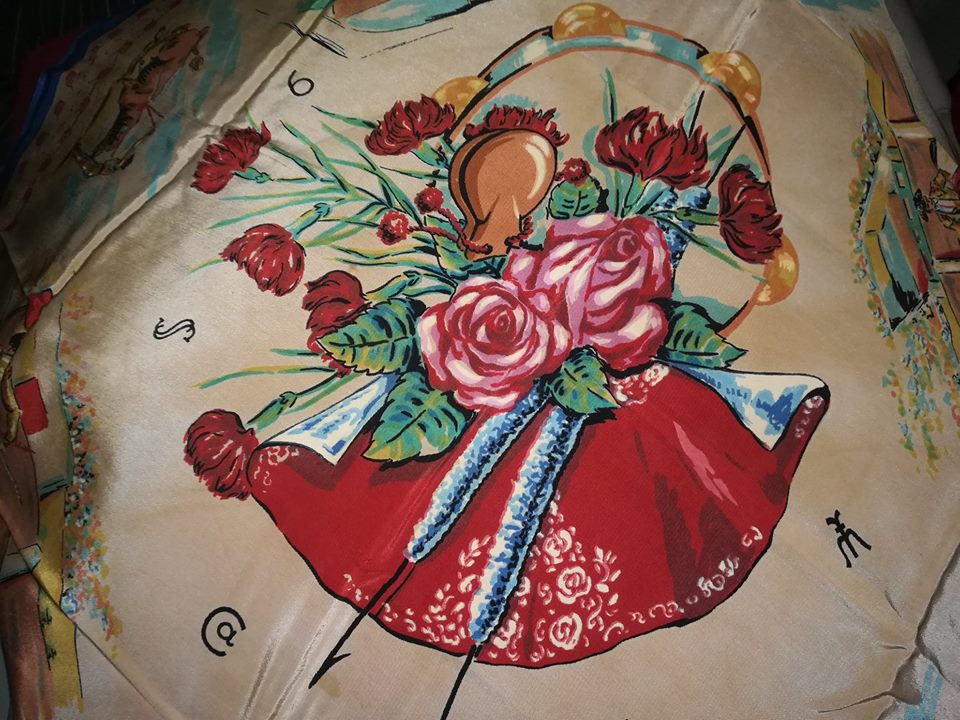
– they went to a bullfight and the matadors signed Mom’s scarf – – detail from the signed matador cloth / scarf –
Outside the zoo Dad bought six parakeets or lovebirds with red faces and a cage for them; as they approached the border he hid it behind the large Hudson cubbyhole – there was plenty of space under the dashboard. So he’s a budgie smuggler.
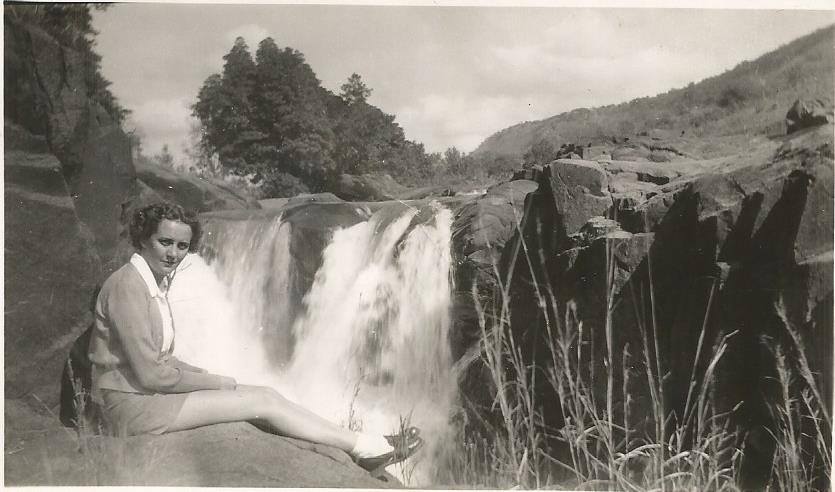
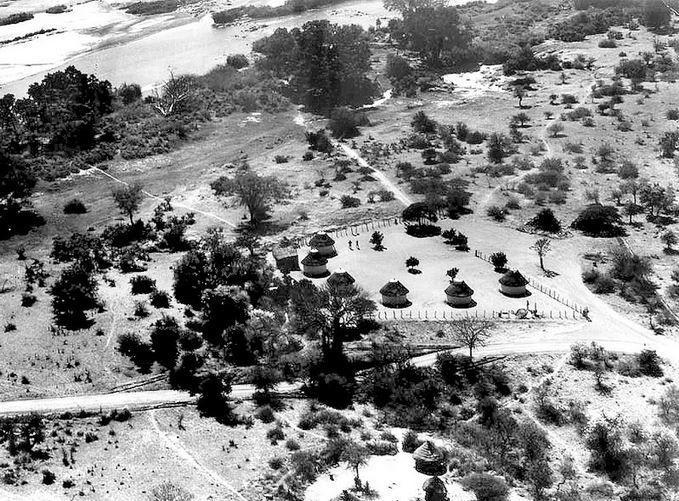
On the way back they went through Kruger Park and Mom recalls feeling very uncomfortable at how flimsy the reed walls of the park huts at Skukuza seemed when she thought of the wild animals outside! They went to visit an old friend of Dad’s, Rosemary Dyke-Wells, a Boschetto agricultural college old girl who was married to a game ranger there, the son of the famous Harry Wolhuter.
– Montrose Falls in the Lowveld Crocodile River –
~~oo0oo~~
The Kruger Park was opened to tourism in 1927 and after a slow start – only three cars entered the Reserve in that first year – soon turned into a popular destination. Within a decade, 3600 kilometres of roads had been built and several camps established. In 1935, some 26,000 people passed through the gates. By 1950 a research station and rest camp had been developed at Skukuza, transforming Stevenson-Hamilton’s base into the “capital” of Kruger.
Some Kruger Park pics from the later fifties – 1956 to 1958:
…
– Skukuza from the air –
~~oo0oo~~
Later back in Harrismith when the clutch packed up, Dad found out the Hudson had a cork clutch. He bought dozens of cork medicine bottle tops from the chemist and hammered them into the angled holes set in concentric circles in the clutchplate, then cut the protruding parts off as level as he could and it worked again.
When it came time to sell it he can’t remember who he sold it to and for how much, but he does remember Pye von During would pay £25 for them and convert them into horse carts.
Years later they came across one at a vintage car show. Dunno when this was, but this year (edited 2023) they had their 72nd wedding anniversary.
1936 Hudson Terraplane
~~oo0oo~~
Soon after this the Post Office moved Dad back to Pietermaritzburg following a back injury. They stayed in the Creamery Hotel – ‘a dive, but cheap’. They moved to the slightly better (but ‘very hot in the afternoon’ – Mom) Windsor Hotel. Mom took a sewing course at ‘the tech’ while pregnant and then, just before first child Barbara was born they moved in with Ouma Swanepoel in Bourke Street in downtown PMB. Mom gave birth at Greys Hospital in mid-summer, 7th January, then came home to Ouma. Mom remembers Ouma’s kindness and the Bourke street home being beautifully cool.
Somewhere before or after, they stayed in Howick, in The Falls Hotel.
~~oo0oo~~
First ‘date’
Annie came to Mom and said ‘Peter Swanepoel has tickets to the Al Debbo concert in the Town Hall, would you like to go?’ He sat between Mom and Annie in the upstairs stalls, and ‘that was the beginning of their romance,’ says Mom.
– Al Debbo around then – 1949 –
~~oo0oo~~
An old LM citizen spotted this post and used the pic of Mom & Dad sitting on the seawall in his bloghere– but first he deftly tidied it and colorised it. It looks terrific! Thanks Antonio!
2021 update: They hit 70yrs marriage – platinum! Well done Ma! You deserve a medal!
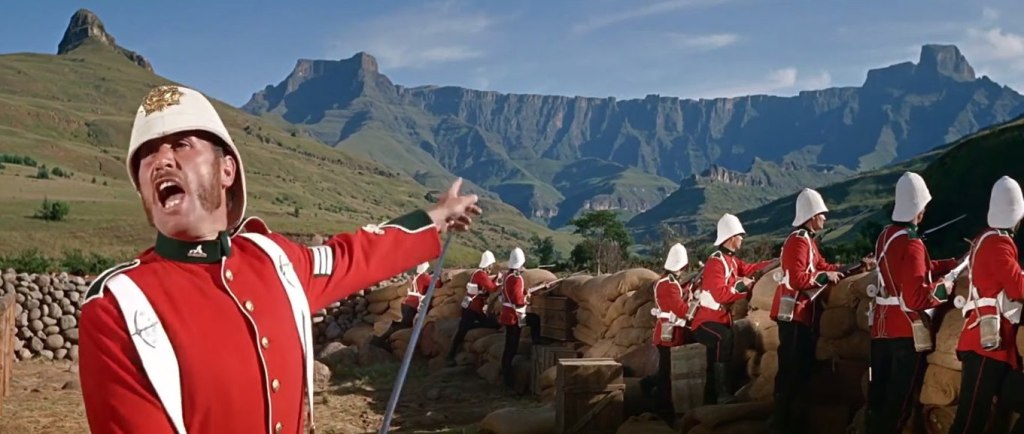
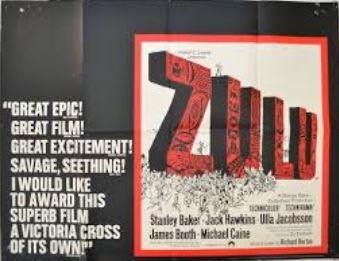
The film ZULU starring Stanley Baker, Michael Caine and Jack Hawkins was one of the biggest box-office hits of all time in England. It ‘premiered’ in 1964 and for the next twelve years it remained in constant cinema circulation before making its first appearance on television. It has since become a Bank holiday television perennial, and remains beloved by the British public. Some pommies watch it every Christmas, year after year. You know, Tell me lies, Tell me sweet little lie-ies.
The film premiered on 22 January 1964, 85 years to the day after the 1879 event it commemorates – the snotklap of Isandlwana (ignored) and the defence of Rorke’s Drift (faked into a glorious victory).
Very few people know though, that it had its REAL, ACTUAL WORLD PREMIERE in our lounge at 95 Stuart Street, Harrismith, Vrystaat in late 1963.Count yourself as one of a very tiny privileged minority who’s “in the know”!
True! If an amateur snippet can count as a premiere. Say it can!
Here’s what happened:
Back in late 1963 my old man showed us a movie he and Mom had filmed with his state-of-the-art 8mm cine Eumig camera.
Whirr whirrr whirr – those of you who watched them will remember the noise of the projector. Also maybe Thuk! Oh shit! Eina! as the film broke and had to be re-threaded in the projector and a finger touched its super-hot bulb. .
Super 8 Sound Projector Eumig Mark S810
..
He and Mom had been to Royal Natal National Park about 50 miles from Harrismith down Oliviershoek Pass to film the filming of the film ZULU.
What I remember seeing in our film was a lot of standing around, some dust and a lot of be-feathered (dead ostriches) and be-leathered (dead leopards) Zulu warriors charging at some umLungus in funny red coats, falling down in a cloud of dust and then getting up laughing, walking back and doing it all over again. And again, And a building burning.
Mom remembers being asked to stop filming, and then once the knobs saw it was just a tiny 8mm camera, being asked to stay politely out of the way. They continued filming the filming.
~~oo0oo~~
snotklap – defeat, but humiliating, embarrassing, obvious, best not spoken of; usually hugely altered in the telling (y’know, ‘there were millions of them and the two of us only had pea-shooters’)
umlungus – pale people; forked tongues
~~oo0oo~~
Thanks to the huge success of the film – which was longer than the seven or so minutes we saw in our lounge – the Battle of Rorke’s Drift has entered British folklore. Of course its main success was due to its ignoring the massive same-day British defeat at Isandlwana and portraying the defence of a hospital as a massive victory, and not mentioning the war crimes that the Poms committed.
New Film about The Film (maybe . . )
Now a New Film is being shot this year (2019/2020) by Henry Coleman which might just include some of the ole man’s 8mm footage! See all about that here.
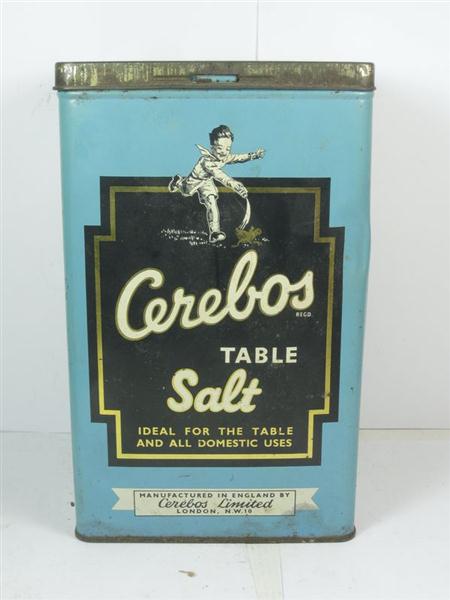
Remember always, though, to take the British ‘jingo’ version of the battle with a very large pinch of cerebos salt.
~~oo0oo~~
The background story of the film Zulu, 54 years on
Firstly, a bit of the Real History. The lesson here is always to be skeptical of ‘official’ histories.
On 22 January 1879, at a remote mission station in Natal, South Africa, 157 men, mainly British soldiers (the number is usually downplayed, sometimes “under 100”) held off wave after wave of attacks by “some 3,000 to 4,000 Zulu warriors” (the number is certainly exaggerated – your son’s rugby opposition was always MUCH bigger than your boys, right?). Remember who wrote about the battle – jingoist reporters for jingoist newspapers in a little country that thought it was a mighty empire. A defeat couldn’t be tolerated. The toffs had to be placated, not least the Queen who had a medal named after her.
Although the Zulus had some old-fashioned muskets and a few modern rifles, most of their warriors were only armed with spears, with hide shields for protection. The Battle of Rorke’s Drift lasted 10 hours (often stated as ‘over 12’), from late afternoon till just before dawn the following morning. By the end of the fighting, around 365 men lay dead. Fifteen (or maybe seventeen) British inside the barricaded buildings they had defended, and around 350 Zulu soldiers outside them. Plus many wounded Zulu men, most of whom were murdered after the battle!
The defences are almost always characterised as ‘biscuit boxes and bags’ and paintings show the British defenders hugely exposed and vulnerable. A photo taken soon after the battle looks very different to those descriptions and paintings. I haven’t seen a painting showing soldiers firing through holes in a stone wall. Is there one?
– Rorke’s Drift battle site soon after –
Historically the battle was a minor incident, which had little influence on the course of the Anglo-Zulu War. It might have – should have – remained a footnote in the history books or an anecdote told at regimental dinners had it not been for:
1. The fact that there had been a truly epic defeatat Isandlwana earlier the same day. This defence of a hospital half-heartedly attacked by men ignoring their leaders order to go home after Isandlwana, needed to be a cover-up; Needed to be hailed as a victory – and then an epic victory. In truth it was actually simply a non-defeat. It bears repeating: The mighty British army was EPICALLY DEFEATED by the Zulu army earlier that day and the British press did NOT like having to admit that. Refused to admit that. Possibly to reinforce the cover-up, the bloke in charge – LORD Chelmsford – wasn’t blamed. Was he even reprimanded for his epic mismanagement and lack of leadership?
2. The crazy number of Victoria Crosses and other awards that were dished out for this ordinary defensive battle – mainly as propaganda figleaves because of the prior resounding defeat earlier that day. Not all those possibly deserving some recognition got VC’s; and some who definitely should not have, did get VC’s. In fact the truth of the battle was far more sordid than the glorious accounts a desperate British government and press wanted to portray. This made-up story and image of valour and nobility in the Anglo-Zulu war of 1879 turned to shame when documents were uncovered which show that Rorke’s Drift was the scene of an atrocity – a war crime, in today’s language – which Britain covered up. In the hours after the battle senior officers and enlisted men of a force sent to relieve the garrison killed hundreds of wounded Zulu prisoners. Some were bayoneted, some hanged and others buried alive in mass graves. More Zulus are estimated to have died in this criminal slaughter than in true combat, but the executions were hushed up to preserve Rorke’s Drift’s image as a bloody but clean fight between two forces which saluted each other’s courage. The Zulu salute in the film was FAKE. Made-up. Never happened. A blatant lie.
3. And then, and especially, this battle became super-famous because many years later a film – ZULU – depicted the defence as a heroic victory. It wrote a story dramatically depicting British heroism, including nothing of the massive defeat earlier the same day, and none of the war crimes committed the next day. It dramatised a new story and has kept it in the public mind ever since. This film of falsities elevated a fake narrative and burnt the lies into the memories of a nation.
~~oo0oo~~
A better depiction of why Rorkes Drift was exaggerated is told here:
Oops, BBC won’t embed the video but you can find it. Also look for better, more honest accounts on history sites. You may have to search. Myths can get embedded. If what you’re reading says ‘Glorious’ keep looking.
~~~oo0oo~~~
The Film:
The story behind the film’s making. Most of this account taken from talks by Sheldon Hall, Sr Lecturer, Stage and Screen Studies Sheffield Hallam University.
The filmmakers
The principal artists responsible for Zulu were hardly Establishment figures. Screenwriter John Prebble was a former Communist Party member who had volunteered to fight in the Spanish Civil War. His co-writer, the American director Cy Endfield, had fled Hollywood in the early 1950s after he was named as a Communist during the McCarthyite witch-hunts. Endfield’s production partner and the film’s main star was Stanley Baker, a life-long supporter of the Labour Party.
All three were committed to progressive causes, but their motives in making Zulu were not political. It is not an anti-imperial diatribe any more than it is a celebration of colonial conquest. Its main purpose was frankly commercial, but Baker also saw the story as a chance to pay tribute to his Welsh homeland. This certainly explains the strong emphasis on the Welshness of the private soldiers – one of the many fictionalised elements of Zulu that have created a myth around the battle.
Filming under Apartheid
Update hot off the press: More drama in 2025! A sort of “cease and desist” letter in my comments from Stanley Baker’s eldest son! See below . .
The producers had to keep their political views in check when they made the decision to shoot the film in South Africa, then in the grip of Apartheid. There were strict, legally enforced guidelines regarding the degree of freedom permitted to the cast and crew. It was impressed upon the 60-odd British visitors that sexual relations with people of other races would result in possible imprisonment, deportation or worse. Warned that miscegenation was a flogging offence, Baker is reported to have asked – in glorious Pom tradition – if he could have the lashes while ‘doing it’. The authorities were not amused.
The main filming location was at the foot of the spectacular Drakensberg Mountains in the Royal Natal National Park, a popular tourist spot distant from any large township. But a number of incidents brought home the realities of the oppressive regime. Chatting to John Marcus, one of several professional black stuntmen employed on the film, assistant editor Jennifer Bates invited him for a drink in the bar/canteen that had been built on site for the crew. Marcus pointed out that he was forbidden by law to mix socially with whites and could not enter.
In his autobiography, Michael Caine recalls an incident in which a black labourer was reprimanded by an Afrikaans foreman with a punch in the face. Baker sacked the foreman on the spot and made clear that such behaviour would not be tolerated. Caine swore never to make another film in South Africa while Apartheid was in force, and kept to his word.
Introducing Michael Caine
Keeping watch over the tightly budgeted film was production supervisor Colin Lesslie. “I am very glad to be able to tell you,” he wrote at one point to the Embassy Pictures’ chief in London, “that in my opinion and from the little he has done so far, Michael Caine as ‘Bromhead’ is very good indeed. When he was cast for the part I couldn’t see it but I think (and hope) I was wrong.” This must have been a common reaction.
Not quite an unknown, the 30-year-old Caine was already making a name for himself on television but was becoming type-cast in working-class Cockney parts. Casting him as a blue-blooded officer in his first major film role represented a considerable risk, but it was one that paid off.
Thousands of ’em?
The soldiers were played by real soldiers – eighty national servicemen borrowed from the South African National Defence Force. And most of the Zulus were real Zulus. A mere 240 Zulu extras were employed for the battle scenes, bussed in from their tribal homes over a hundred miles away. Around 1,000 additional tribesmen were filmed by the second unit in Zululand, but most of these scenes hit the cutting-room floor.
Living in remote rural areas, few if any Zulus had visited a cinema and television would not reach Natal until thirteen years later. The crew rigged up a projector and outdoor screen, and the Zulus’ first sight of a motion picture was a Western. From then on, the “warriors” had a better idea of what they were being asked to do. Responsible for training and rehearsing them were stunt arrangers John Sullivan and Joe Powell. “The Zulus were initially suspicious of us in case we were taking the mickey,” says Powell, now 91. “After a couple of days they realised we weren’t and got into it. After that you couldn’t hold them back.”
Contrary to stories, the Zulus were not paid with gifts of cattle or wristwatches but received wages in Rand. The main corps was paid the equivalent of nine shillings per day each, additional extras eight shillings, and the female dancers slightly less again. Associate producer Basil Keys remarked: “There is no equality of pay for women in the Zulu nation!”
Buthelezi’s tribute
For the opening sequence depicting a mass Zulu wedding, 600 additional background artists were brought in, including nightclub performers from Johannesburg, to play the principal dancers. During breaks in filming, they twisted and jived to modern pop records played over Tannoys, with director Cy Endfield among the crew members joining them.
The small but key role of King Cetshwayo was given to his direct descendant, the present-day Prince Mangosuthu Buthelezi. The wedding dance was choreographed by Buthelezi’s mother, a tribal historian, and supervised by stuntman Simon Sabela, who later became South Africa’s first black film director.
History and politics
Like all films, Zulu is of its time and captures the mood of its time more profoundly than is often realised. A conservative view would see it as a hymn to gung-ho heroism, to flag-waving patriotism and the glory days of the British Empire. In fact, by 1964 the sun was already setting on the empire and undoubtedly Zulu stirred a lot of nostalgia for it. For some, that explains its appeal.
But look again. The knowledge that colonialism was in its dying fall is there in the film. The script is filled with a sense that the soldiers are in a place they don’t belong and don’t want to be. The indigenous people are not disorganised savages but a disciplined army. And the young lieutenant, played by Caine, who had earlier dismissed the enemy as “fuzzies” and the levies on his own side as “cowardly blacks”, now declares himself ashamed at the “butcher’s yard” he has brought about.
A modern awareness of racial representation means that Zulu has undoubtedly “dated”. If the film were to be remade today, as internet rumours continually suggest, it would certainly be done differently. But the absence of individuated black characters doesn’t make it racist. Though told from the British point of view, it shows that viewpoint change from dismissive contempt and naked fear to respect and even admiration. The famous (and entirely fictional) salute the departing Zulu army pays to the garrison survivors is returned with their – and our – gaze of awe and wonder.
Adapted from an article in Cinema Retro No 28 (c) Sheldon Hall 2014
Sheldon Hall is a Senior Lecturer in Stage and Screen Studies at Sheffield Hallam University. See an expanded second edition of his book ‘Zulu: With Some Guts Behind It – The Making of the Epic Movie’ – Tomahawk Press.
Cy Endfield’s epic military marathon about the Battle of Rorke’s Drift was actually shot 90 miles south-west of Rorke’s Drift in the Royal Natal National Park in the KwaZulu Natal province of South Africa. It had the far more mountainous and picturesque Drakensberg Amphitheatre as backdrop, rather than the low hills like the Oscarberg at the real site of the battle.
Below see the movie backdrop, the Drakensberg Amphitheatre (left) – and the real backdrop, the Oscarberg (right):
2.Many of the Zulu extras had never seen a motion picture
Many of the Zulus who were hired as extras for the film had never seen a motion picture prior to filming and were unsure what to expect. With this in mind, director Cy Endfield and Stanley Baker, who played Lieutenant John Chard, set up a projector in order for them to watch a western, starring Gene Autry. Then the Zulus probably said “Ah, so its all bulldust?” and acted accordingly.
3. The real Lieutenant Gonville Bromhead was extremely deaf…
Played expertly by Michael Caine, this snobbish character was described by Lieutenant Henry Curling, who fought alongside Bromhead at Rorke’s Drift, as “a stupid old fellow, as deaf as a post.” Major Francis Clery, who spent time with Bromhead after Rorke’s Drift, described him as “a capital fellow at everything except soldiering”, while his commanding officer said in private that Bromhead was “hopeless.” Still, political face-saving at the time saw Bromhead awarded the Victoria Cross.
4. Michael Caine initially auditioned for the role of Private Henry Hook
This was Michael Caine’s first major film role and, although he eventually put in an exceptional performance as Lieutenant Gonville Bromhead, he was crippled by nerves and beaten to the role he initially auditioned for, that of Private Henry Hook, by James Booth. Interestingly, Caine was also unable to ride a horse so a member of the filming crew took his place in the scene where he crosses the stream on horseback at the beginning of the film. This explains why the camera pans down on to the horse.
5. Private Henry Hook was badly portrayed in the film
In the film, Private Henry Hook (James Booth) is placed under arrest for insubordination. He is seen lounging around in the shade and trying to pilfer free booze as his comrades prepare for battle in the stifling heat. In reality, Private Hook was an exemplary soldier and teetotal, who was also awarded the Victoria Cross for his gallantry. Hook’s daughter walked out of the film’s premiere in disgust at this inaccurate portrayal.
6. Eleven British soldiers were given a Victoria Cross; Twelve had been nominated
Colour Sergeant Frank Bourne (played by Nigel Green in the film), requested a commission rather than the Victoria Cross. He was duly granted this wish and went on to become a Lieutenant Colonel. When he died in 1945, he was the last surviving British soldier from the battle.
7. Mangosuthu Buthelezi played his great grandfather Zulu King Cetshwayo kaMpande in the movie
Mangosuthu Buthelezi was the chieftain of the Buthelezi clan of the amaZulu when he played the role of Zulu King Cetshwayo kaMpande in 1964. Buthelezi went on to found the Inkatha Freedom Party and was the leader of the former KwaZulu bantustan. He has also held positions in the new, legitimate SA government and parliament. In fact, the Zulus “won back” the whole of the Zulu kingdom in South Africa’s first legitimate elections in 1994.
umLungus – paleface; speak with forked tongue; in Africa as well as America;
~~oo0oo~~
I’ll add a link to the 8mm movie footage the old man took on the film set in the ‘berg as soon as I can. A new movie about the making of the film is in the offing and we have offered this seven minutes of behind-the-scenes footage to Henry Coleman the film-maker. As we have undertaken not to use the footage till after his premiere, we have forfeited a chance to repeat our 1963 scoop!! Darn!
2025: I have finally added our 8mm home movie, as Coleman’s movie seems to be stuck, and Baker is mumbling.
And oops, it’s underwhelming!
– my folks’ amateur clip on-set of the filming of Zulu in 1963 –
~~oo0oo~~
2025 and no sign of Coleman’s movie yet. Recently I received a sort of “cease and desist” in this post’s comments from An Important Figure! See below:
~~oo0oo~~
Please be on notice that Henry Coleman no longer has the permission of the family of Stanley Baker to produce his proposed documentary Zulu and the Zulus nor to use the 16mm behind the scenes film print he holds, which is the property of Diamond Films.
~~oo0oo~~
Upon the downfall of his government the year after the great defeat at Isandlwana, and soon after the death of the Prince Imperial Louis-Napoleon, British Prime Minister Benjamin Disraeli asked In parliament – showing that he and his generals had not bothered to do their homework and learn about these African people – “Who are these Zulus? Who are these remarkable people who defeat our generals, convert our bishops and who on this day have put an end to a great dynasty?”.
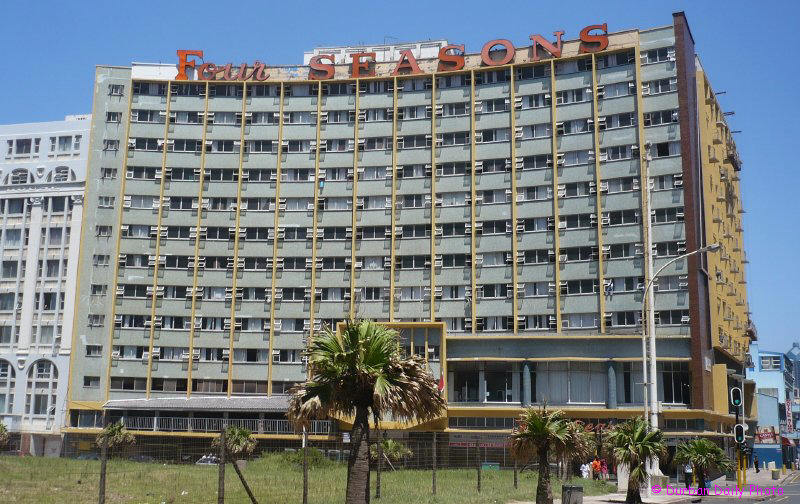
Off they’d go in Mary’s pale blue VW Beetle OHS 155. Off to Durbs-by-the-Sea, the Lonsdale Hotel or the Four Seasons for a whole week!
Might that be Mary’s VW outside the Lonsdale in this picture? Three cars behind the Borgward?
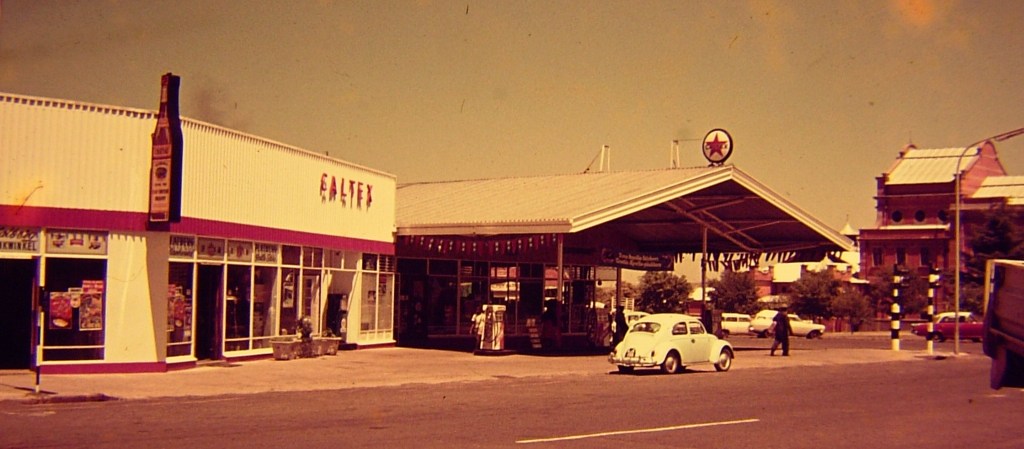
The cost of their stay: R2.95 each per day including meals. Mom thinks Randolph Stiller may have owned the Four Seasons. He and Bebe certainly owned the Central Hotel in Harrismith where Annie stayed, one block away from her Caltex garage in Warden Street. Only the Deborah Retief gardens between her hotel room and her office, but she drove there in her great big old beige Chev Fleetline, OHS 974; one block up to the garage. Mom – ever kind – says her legs were too sore to walk.
In Durban Mom and Annie would visit Annie’s sister Jessie (Bain Bell) and her daughter Lesley (Malcolm-Smith ) in their flat in Finsbury Court in West Street. Lesley worked at Daytons – a supermarket, Mom thinks.
They would all hop into Mom’s car and head off on a drive – to the beach, to the Japanese Gardens; and – always – to visit Annie’s bridesmaid Maggie McPherson who lived in a ‘posh flat up on the Berea. Looked like a bit of Olde England’.
1922 wedding
~~~oo0oo~~~
Many years later – 1980’s – we would go and listen to Joe Parker in the Lonsdale. Beer-soaked, we hosed ourselves, but I don’t think Mom and Annie would have approved!
While we’re getting nostalgic, some names to remember: Gillespie Street; The Italian restaurant Villa d’Este; The Four Seasons Hotel, with its Pink Panther steakhouse; Palm Beach Hotel; Millionaires’ Club; Lonsdale Hotel (Joe Parker being rude); The El Castilian nightclub (remember The Bats?); The Killarney Hotel, where the Monks Inn used to be (“Steak, Egg and Strips” said the sign); Thatcher’s Bar at the former Parkview Hotel.
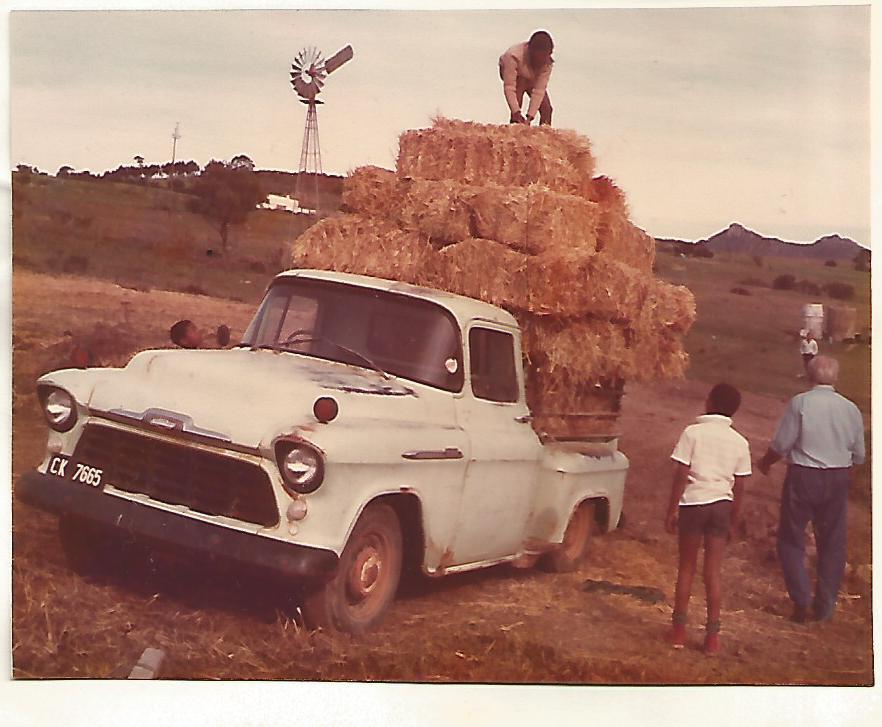
After the 1983 Berg River Canoe Marathon ended in Velddrif, we stopped in at Boet & Anna Swanepoel’s smallholding outside Malmesbury, about 50km north of Cape Town. Boet was Dad’s older brother. Mom and Sheila had seconded me on the race, driving my Cortina to each of the three overnight stops.
I’d forgotten this visit, remembering only an earlier 1977 visit with Larry Wingert, but Sheila had pictures! And there I am, sticking up above Uncle Boet’s head, watching the activity from a safe distance, hands in pockets. Probably too tired and cold to help after the four-day freeze I had just endured? Or lazy? I do know my hands would not have appreciated hoisting hay bales after 240km of holding a wet paddle!
We won’t mention child labour, nor overloading, nor our way of saying “I loaded the Chev with hay” rather than “I had the Chev loaded with hay”, OK?
=======ooo000ooo=======
The bakkie: My research suggests this was a 1955 Chev 3200 ‘Task Force’ 3/4 tonner. Probly with a bit more than that onboard!
We went to Durban around this time and stayed in the Impala Holiday Flats, self-catering. Free Staters on the loose in Durbs-by-the-Sea!
We probably drove down in OHS 154, a beige Morris Isis – or in OHS 155, a pale blue VW 1200 Beetle, along the narrow national road between Joburg and Durban. I remember talk of dreading the infamous “Colenso Heights” – apparently the most challenging section of the route.
The high-rise we stayed in was in Gillespie Street one street back from the Golden Mile, or Esplanade. If you took all Harrismith’s houses and stacked them, you’d have a building like this. I remember the lifts and I remember getting back tired and full of sand from the beach. I don’t seem to recall the beach – weird.
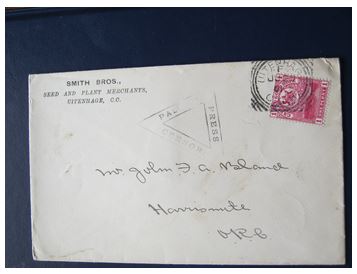
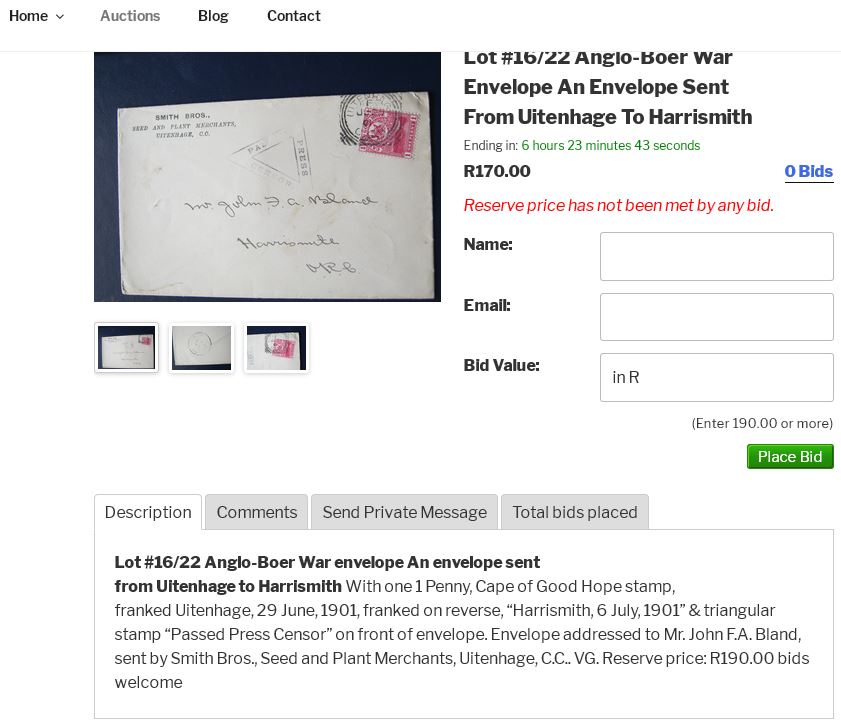
My great grandfather got a letter from a seed and plant merchant in Uitenhage in July 1901. I know cos I found the envelope on an online auction site. It was sent to Harrismith, Orange River Colony (ORC).
It was stamped ‘Passed by the wartime Press Censor’ as the wicked Poms were trying to steal our diamonds and gold at the time and were waging the Anglo-Boer War.
~~oo0oo~~
Sheila responded:
“Yes, I would think it was JFA Bland II who was our Grandad Frank’s father. He came to Harrismith by oxwagon with his father JFA Bland I and they settled near Witzieshoek.
JFA Bland I is buried in Senekal apparently – I made contact with someone in Senekal who offered to go looking for his grave, but she’s never come back to me – so if you ever find yourself in Senekal with nothing to do …….”
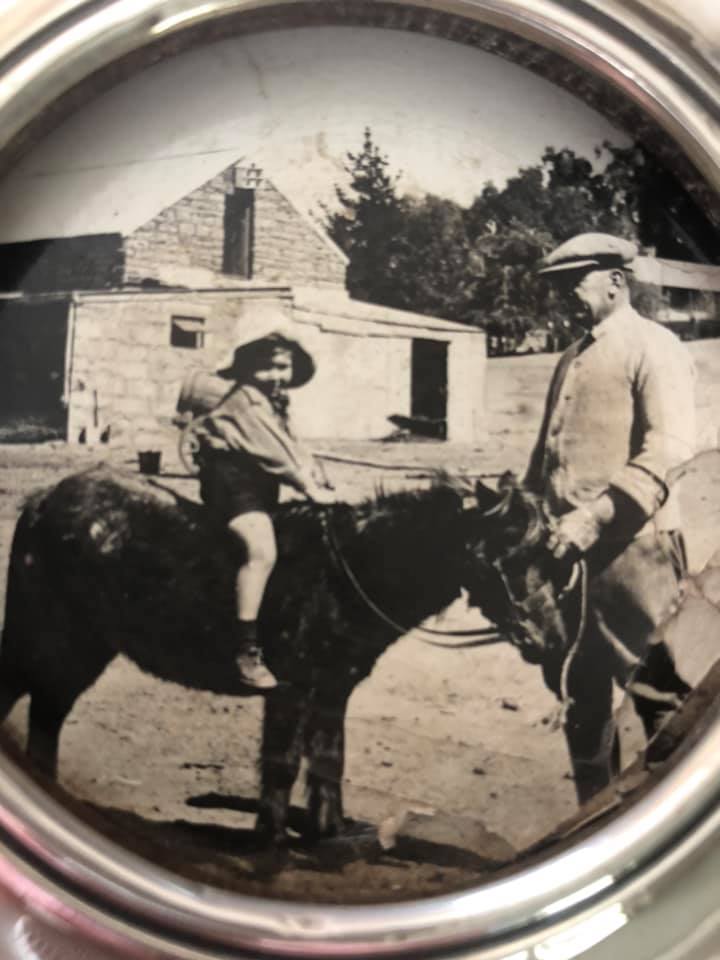
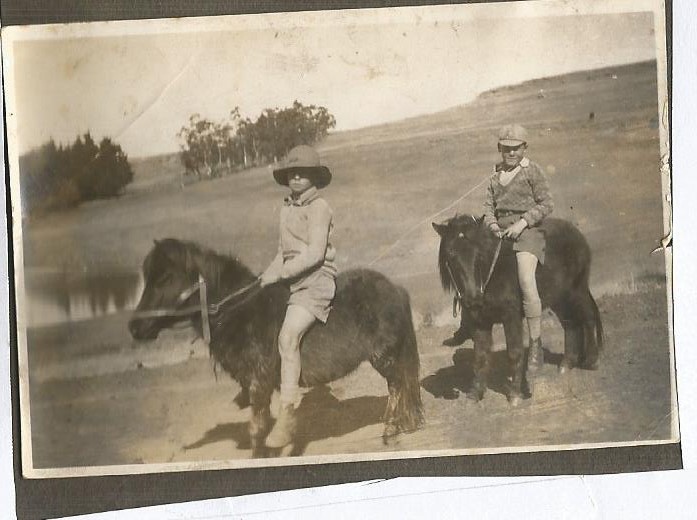
Sister Sheila sent this lovely old photo – she thinks ca 1920 – of Jack Shannon and our Mom Mary’s cousin Peter Bell on their ponies on Kindrochart, the Shannon farm on the Oliviershoek road and near Mom’s parents Frank and Annie Bland’s farm Nuwejaarspruit, on the Witzieshoek road. Sterkfontein Dam now lies between the two farms – in fact, the Nuwejaarspruit homestead is now submerged under the clear waters of the dam.
Peter Bell was Mary’s first cousin – his Mom Jessie Hastings-Bell (neé Bain of the Royal Bains) was Annie’s sister. Peter joined the Rhodesian Air Force in WW2 and went MIA – missing in action – his body was never found.
Mom tells the story of how Jack was urged to give his Shetland pony to “the Bland girls”, Mary and her sister Pat, once he’d outgrown it. He was reluctant but his folks urged him to be generous and asked again if he would be so kind.
















 After the


 Vrystaat Confessions