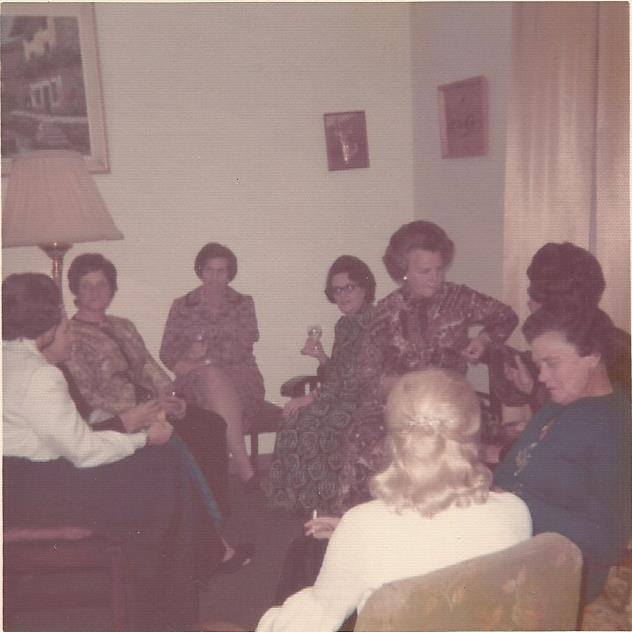
A large gathering of the Goor Koor – that assembly of happy inebriates led and accompanied by virtual-teetotaller Mary Methodist, our Mom, gathered together – assembled, amassed – on the occasion of Mom’s 45th birthday. Usually there were far fewer of them gathered at any one time, an occasional Lubricated Quartet perhaps, but this was a special occasion in the big loungexat 95 Stuart Street!
And Sheila – thanks goodness! – took pictures. She was in matric at the time, I was in Oklahoma, Barbara in Pietermaritzburg.
– Joyce Joubert; Marie Roux peeping out; Isobel Kemp; Stella Fyvie; Mary the birthday girl, wearing specs, grog in hand; Mary Wessels; Martie Dreyer; Baby Mandy; Annemarie van Wyk –
. . and here – precious picture! – Mary at the keyboard and Hugo Wessels right there, ready to belt out a number! Two very talented people, 45 years old, who were in matric together in 1945. And this fun gathering happened 45 years ago, as Mom is now 90! I think all my stats are right . . .
– in earlier years my ear would be near the floor right outside that door behind Hugo – listening in fascination –– Dina de Kock; Hester Schreiber; Koekie de Bruyn; Hugo Wessels; Hannes van Wyk; Jack Kemp; Pierre Roux; Hector Fyvie; Steve Schreiber; Dad; Bennie Dreyer; Joyce Joubert Isobel Kemp; Stella Fyvie: Anna-Marie van Wyk –
Wonderful memories of crawling down the long passage to get nearer to the sound of Mom playing the piano; Also of sundry ‘choir members’ over the years, belting out popular songs with high enthusiasm and various degrees of talent. If spotted by any of the choir it would be ‘Hello Kosie!’ – if spotted by Mom or Dad it would be ‘Get back to bed!’
Also memories of the smell of ash trays! Always plenty of ash trays. Ours were from tyre companies, so they were glass inside miniature Dunlop or Goodyear tyres!
– I couldnt find one overflowing with butts and ash! –
~~~~oo0oo~~~~
Goor Koor – Dire Choir
~~~~oo0oo~~~~
– 45yrs later here’s Mary, still beautifully at it –
Now we know why, when you have had a few too many, your lumpy laughter can be so spectacular . . .
Check out ‘bevshots‘ where some dudes* had a sudden thought – probly while suitably under the affluence of incohol? BevShots® are photographs of alcohol under a microscope. These high-quality photographs of your favorite beers, wines, cocktails, liquers and mixers were taken after they had been crystallized on a slide and shot under a polarized light microscope. As the light refracts through the beverage crystals, the resulting photos have naturally magnificent colors and composition. Just like we had a naturally magnificent complexion, and erudite verbal composition while it was in our veins on its way to our brains where it belongs. Cheers!
These quality scientific macro photographs explain why sometimes when you shoot a cat, it turns out to be a whole Bengal Tiger.
~~oo0oo~~
Thanks @lowqualityfacts@mstdn.social
Improve your vocabulary: Don’t just say ‘vomit,’ be like Shakespeare and use descriptive terms and synonyms: sidewalk pizza; burp cubed; spew; lumpy laughter; technicolor yawn; shoot a cat; chunder; upchuck; barf; vomit; hurl; ralph; brauer; purge; puke; hork; honk; buick; huey; louis; regurgitate; throw up; belch your boerewors; toss your cookies; lose your lunch; toss a pavement pizza; perform peristaltic pyrotechnics; paint the town red . . and yellow-green, orange and pink; calling Ralph on the big white telephone; pray to the porcelain gods; grocery yodel. (Your favourites in the comments, please!)
Scientific puzzle: Why, no matter what you have eaten, are there always bits of carrot in the mix?
Hypothesis: They hide in the appendix, waiting for just the right occasion to hu- hu- hu-ppear?
*sigh* Nostalgia just isn’t what it used to be . . . (Quote by – Peter De Vries)
Nothing is more responsible for the good old days than a bad old memory. (Quote by – Franklin Pierce Adams)
Nostalgia: A device that removes the ruts and potholes from memory lane. (Quote by – Doug Larson)
Nostalgia is like a grammar lesson: you find the present tense, but the past perfect! (Quote by – Owens Lee Pomeroy)
Don’t be nostalgic about something until you’re absolutely certain there’s no chance of its coming back! (Quote by – Bill Vaughn)
If you’re really determined to relive the good old days: SWITCH OFF THE AIRCON!
…
Lindy Stiebel, English Prof at UKZN wrote about Victor Stiebel (probably some relation?), who couldn’t wait to leave Natal, became very famous in England, then wrote about his childhood forty years later. My brief takeaway on her discussion on nostalgia was roughly: Nostalgia does not necessarily mean you want to go back. .. Excerpts:
While there is certainly affection in the gaze Stiebel casts over his family and his upbringing, the nostalgia is of a reflective kind rather than restorative, in Boym’s terms: ‘[w]hile restorative nostalgia returns and rebuilds one’s homeland with paranoic determination, reflective nostalgia fears return with the same passion.’ Reflective nostalgia has no wish to return home, accepting that the past is the past; instead, an aesthetic distance can be maintained, memories of the past home – because sealed off from the present – can be a source of pleasure.
Not . . the exile’s or immigrant’s longing for home . . instead nostalgia . . precisely because he wanted to escape from home, not cling to it.
As Nasta states: ‘[h]ome, it has been said, is not necessarily where one belongs but the place where one starts from.’
. . finally, his childhood home was a place to run from . .
Harrismith is still a lekker dorp thanks to some hard-drinking maniacs that hang out there, bitter-einders clinging to life behind the boerewors curtain.
Here’s a dispatch to Mev Queen on the result of a highly important, highly competitive Boer War re-enactment golf – or moer-en-soek – tournament in 2017. It did not go well.
~~~~oo0oo~~~~
“Boer
War” Defeat – 2017 – Letter to the Queen
Her Majesty The Queen
Buckingham Palace, London, England
5th June, 2017
Our Dearest & Beloved Queen,
It is with deep regret that I inform you that your courageous soldiers have been severely defeated, at the hands of the Boers, at the battle of Harrismith on 3rd & 4th June 2017.
Although there were no fatalities, the Boer Commando, led by General Wessel Hamman, showed immense bravery, superior marksmanship, and deft field skills in the heat of battle. Your loyal soldiers raised the white flag of surrender at 12 noon on this bloody Sunday.
The Royal Medical team of nurses, led by Sister Mandy Pollock on Spionkop, are still very busy treating your loyal and wounded troops. The most severe and common treatments, were for the after effects of the toxic Boer medicine ‘Mampoer.’ All your troops are showing signs of making a full recovery. I would recommend that our soldiers be shipped back to London, and returned to Her Majesty’s Military Academy, Sandhurst, for further instruction in the skills of warfare.
Apart from this humiliating defeat, I have pleasure in advising Her Majesty, that your troops have been well treated by the Boer Commandos, and have enhanced the tattered relationship that existed between the Boer Republic and the British Empire. Our soldiers and their spouses were treated to a Royal Gala dinner, featuring a clash of British & Boer cuisine, expertly prepared by Afrikaner chefs, Anel Bekker & Lizet Du Plessis. Your troops were further entertained by guest speakers. Nick Leslie spoke eloquently about previous battles, and the bravery of both the Boer and British forces. Dr Braam Joubert, from The Orange Free State, added a good deal of humour to this illustrious occasion. It was a grand banquet indeed!
There was a fly-past, performed by a Royal Airforce squadron of fighter aircraft, led by Flight Commander Sir Gareth Pollock (MBE). The Boers entertained our troops with “Boere Musiek” and “Volkspele” dancers and singers. Our own Captain Venning (OBE), joined in to demonstrate the British version of these Boer dance moves.
In order to commemorate this battle, and to remind future generations to further develop Anglo Boer relationships in Harrismith, Captain Venning (OBE) has donated a perfectly “in-scale” model of an ox-wagon. I wish to appeal to you to consider rewarding Capt. Venning at Your Majesty’s Birthday Honours ceremony. (with some more alphabets?)
Other candidates to receive your Majesty’s recognition at this ceremony should include Major Gert van Tonder, who chose to enlist in Her Majesty’s Army, and then donated the battle dress to all the foot soldiers. There were others who have not only enlisted in your forces, but have made considerable contributions to this historical battle. These include Private George Galloway and the Scottish piper, Dr. Martin Reeve, who certainly stirred up the patriotic emotions of your troops. I respectfully recommend that the following be granted British citizenship with immediate effect, Dries Lategan, Steve Niewoudt, Justin van Tonder, and Quintin König. I was going to request that Kobus Bester should also be granted British citizenship, but on second thoughts, your Empire could do without this rascal.
Many of your troops traveled from the Last Outpost of your Empire (Natal Colony), as well as from the Transvaal Goldfields, in order to fight this battle. They too, should receive your recognition. These include Craig Surmon, Gary Bellars, Andrew Miller, Reggie Jelliman, Richard Butcher, Wayne Warburton, Gavin Scholefield and Chris Smith. I would sincerely appreciate your kind consideration of the above. Mark Bebington also answered your call to take up arms, and should be given Royal recognition.
I am under the impression that your troops are enjoying the warm sun in Africa, and may wish not to return to your United Kingdom. Perhaps Your Majesty could tempt them to return, with the lure of a “danger-pay” bonus, of a few Pounds Sterling.
I await your further instructions.
Your humble military servant,
Field Marshall Mark Russell VC
~~~~oo0oo~~~~
lekker – respectable
bitter-einders – to the bitter end; last to leave the pub
boerewors – secret sausage; used in hide-the-sausage games in bedrooms in the colonies
moer-en-soek – pointless game administered by the ancient Scots – and the newer Americans, proving that it’s pointless
‘Mampoer’ – moonshine liquor; anything distilled illegally; high octane rating
Mev Queen – that small tannie who wears the funny hats; the one with the rude Greek husband who crashes cars
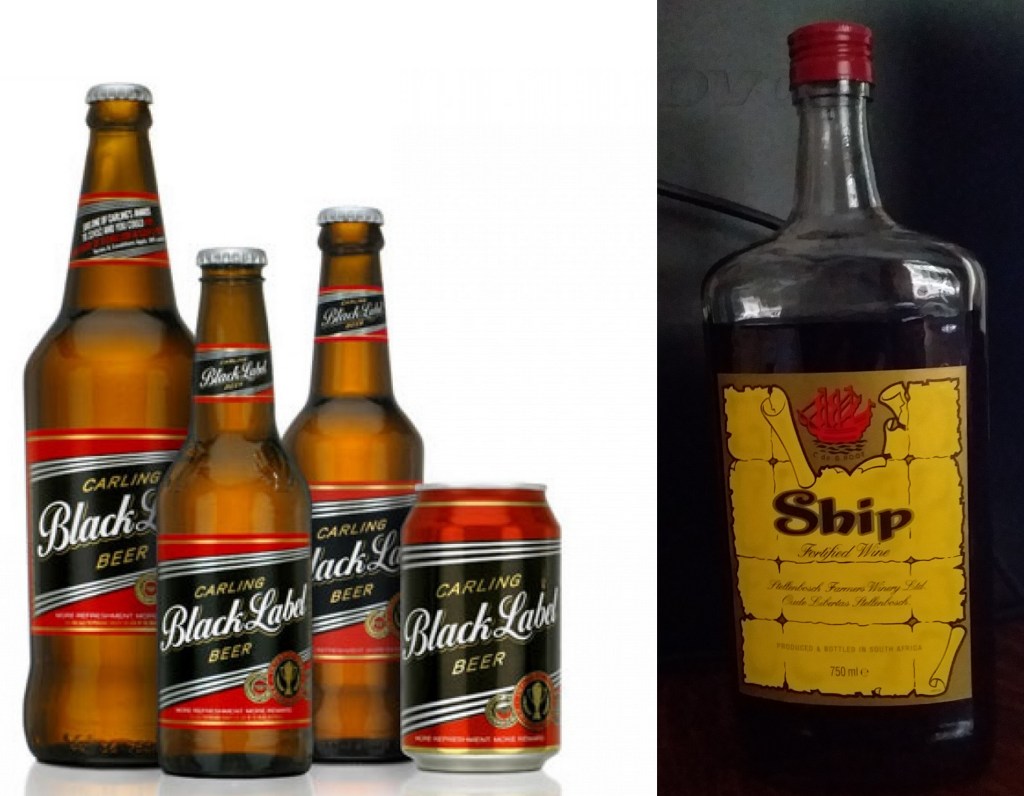
It was advice from my chairman and as a new, fairly young member, I trusted him implicitly. You add sherry to your beer, said Allie Peter with a knowing nod. When we got to the bottle store in Cradock he spotted me at the till with a dozen Black Labels and a bottle of Old Brown Sherry.
‘No, Swanie,’ he came with more advice, given in his local Eastern Cape-inflected accent, ‘Get Ship Sherry. You can get TWO bottles for the price of one Old Brown.’ As a new, fairly young member, I trusted my chairman of the Kingfisher Canoe Club implicitly, so I dutifully swopped my bottle for two Ship Sherries. This decision was going to reverberate . .
– a good blend, I was told – I notice bevshots haven’t analysed it yet –
At Gattie’s townhouse (that’s Malcolm Phillips Esq. to you) we stood around with cans of beer in our hands, topping them up with sherry every so often. It worked a treat and was a marvelous idea. I could see my chairman had been around and knew a thing or two. The mix seemed to enhance my paddling knowledge and experience vastly.
Much later that night I was busy expounding on some finer point of competitive paddling – probably on how one could win the race the next day – when I realised in mid-sentence, with my one finger held high to emphasise that important point I was making, that I was completely alone in Gattie’s lounge. Everyone had buggered off to bed and I had no-one to drink with. I looked around and found a corner, downed the rest of my berry mix and lay down to sleep. It was carpeted, I think.
Later I remember through a slight haze seeing Gattie asking if his prize bull was being slaughtered, but when he saw it was only me kneeling and hugging the porcelain bowl, he said ‘Oh’ and went back to bed. The porcelain bowl had amplified my sounds of slight distress like a large white telephone, waking him up in his bedroom far down the other end of the house.
It must have been a good clearing out as I felt fine when we left for the Grassridge Dam and the start of the marathon in Bruce Gillmer’s kombi a few hours later. Dave and Michelle were there and I spose some other hooligan paddlers and I’m sure my boat was on the roofrack. After a few km’s there was an ominous rumble and I knew I had a little lower intestinal challenge; which would have been fine – and some fun – if there hadn’t been a lady – and a real lady she is, too – in the bus.
I had to warn them. It was soon after a famous nuclear disaster, so I announced ‘We need to stop the bus or there will be a Chernobyl-like disaster on board.’ Bruce was a bit slow to respond, he’s a psychologist, see. So it was only when the waft hit his own personal nostrils that he pulled over smartly and let me release the rest of the powerful vapour at the roadside on the outside if the sliding door. Ah, that was better. With the pressure off I was fine again. I did notice I wasn’t talking so much about winning the race though.
The grumbling re-occurred on the dam, making that start the roughest I have ever endured. The wind and the waves on Grassridge Dam were worse than any rapids I have ever paddled. I was very glad to carry my boat down to the Fish River – leaving the dam stone last, I’m sure. Paddling river races on dams would be banned, verboten and illegal if I was the Ayatollah of Downriver Paddling.
– comparatively, this is a mild day on Grassridge Dam –
The river was plain sailing and the rest of the day a pleasure.
– higher water than we enjoyed –
That night I sipped daintily at plain beer. I was beginning the long slow process of learning to think carefully when considering advice freely given by sundry Chairmen of Kingfisher Canoe Club. I’m thinking of Charlie, Alli, Billy. Don’t let their nicknames fool you.
Day two was short and easy and I probably kept my usual respectful back-of-the-field place.
The first race in 1982 attracted 77 paddlers in 52 boats. 37 boats finished the race, as the thick willows and many fences on the upper stretches of the river took their toll. It was won by Sunley Uys from Chris Greeff, the first person to shoot Cradock weir in the race.
In those days, the race was held on a much lower river, 13 cumecs (roughly half of the current level!) and it started with a very long – over 50km – first day. The paddlers left the Grassridge Dam wall and paddled back around the island on the dam before hitting the river, eventually finishing at the Baroda weir, 2,5km below the current overnight stop. The paddlers all camped at Baroda overnight, before racing the shorter 33km second stage into Cradock.
Stanford Slabbert says of the first race “In those days the paddlers had to lift the fences – yussis! remember the fences! – and the river mats (fences weighed down by reeds and flotsam and jetsam) took out quite a few paddlers. Getting under (or over) them was quite an art”.
“I recall one double crew”, says Slabbert. “The front paddler bent forward to get under the fence and flicked the fence hoping to get it over his partners head as well. It didn’t. The fence caught his hair and pulled him right out of the boat and they swam!”
Legends were already being born. Herve ‘Caveman’ de Rauville stunned spectators by pioneering a way to shoot Marlow weir. He managed to reverse his boat into the chute on the extreme left, and took the massive slide back into the river going forward, and made it!
The field doubled in 1983, as the word of this great race spread. 145 paddlers in 110 boats. It was won on debut by Joburg paddler Niels Verkerk, who recalls, ‘It was a very long first day, especially as the river was not as full as it is now (it was running at 17 cumecs in 1983). Less than half the guys shot Keiths, which was not that bad as the hole at the bottom wasn’t that big.’
At a medium level, the lines at Soutpansdrift were also different. The weir above Soutpans was always a problem, as there was no chute, no pipes. At the bottom of the rapid, the only line was extreme left, underneath the willow tree – yussis! remember the low-hanging willow trees! – and then a sharp turn at the bottom to avoid hitting the rocks, where the spectators gather like vultures.
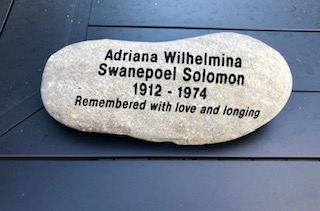
A memorial stone. This story started in Pietermaritzburg, grew in Pretoria – and ended up here:
– The Skagit River splits, then feeds into Skagit Bay –
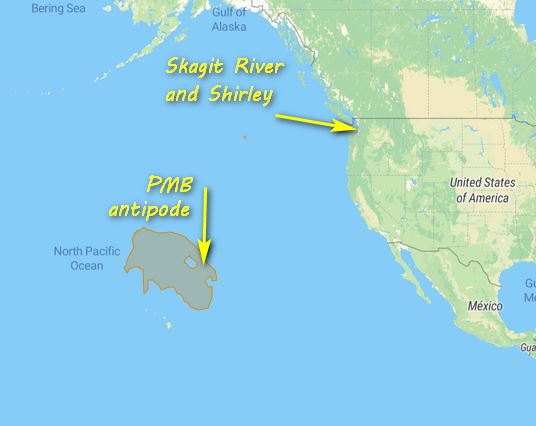
The beautiful delta of the Skagit River in North-West Washington state! Up on the Pacific coast; up near Canada; not too far off the exact opposite side of the world. Here’s where South Africa lies if you could look right through the world from Above the Pacific Ocean:
It happened like this:
My dear cousins: On Sunday August 11 my family and I are holding a memorial for my mother. When she died so unexpectedly in March 1974 I was a long way away. I did not participate in any of the funeral arrangements and I did not attend the funeral.
After cousin Lizzie died I had a “conversation” with Koosie and he asked me where my mother was buried and I realized, to my shame, that I did not know and have not since been able to find out.
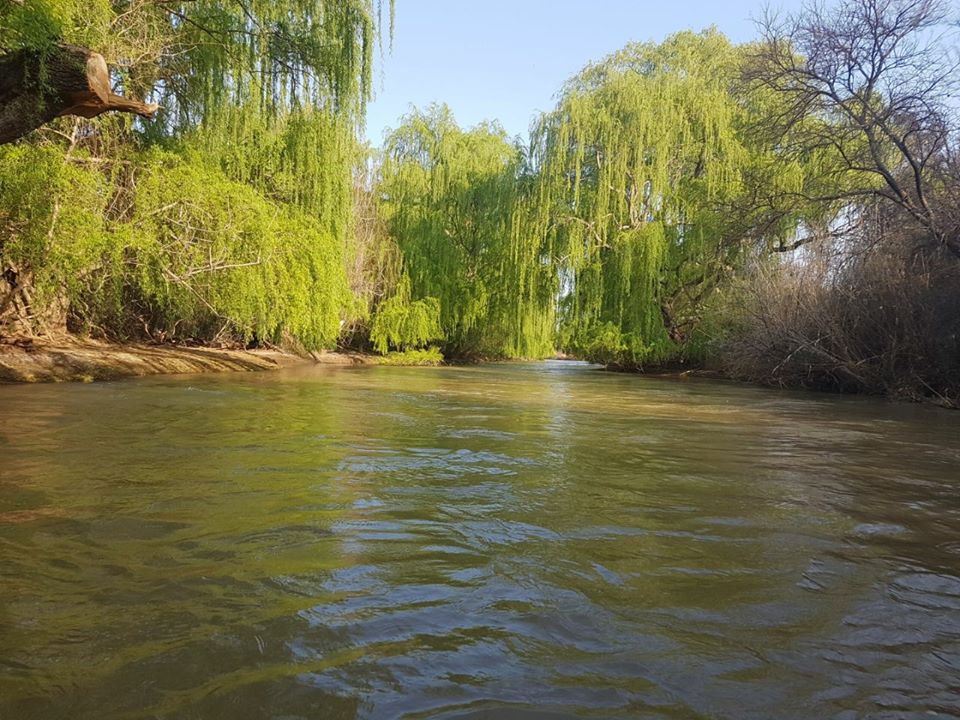
So on Sunday, a day before her 109th birthday and 45 years after she died, I am symbolically bringing her home to me and to my family. We have chosen for her headstone a rock we collected from a nearby river and it will pass from me, to my daughter, to my grandson and beyond in ongoing commemoration.
Please send your prayers and loving thoughts our way and join us in recognition of Adriana Wilhelmina Swanepoel Solomon, my beloved mother and your Auntie Janie.
Much love to you all, Shirley
Afterwards:
My
dear Cousins: Thanks and appreciation to all of you for your thoughts
and prayers. We spent a heartfelt couple of hours together talking
about Adriana and the Swanepoels. Warren was not with us as he is
visiting friends in Nebraska. We looked through the old shoebox of
pictures and told the old stories that, by this time, are part of the
family cannon and are probably quite richly embellished. We laughed,
we teared up, we remembered other family members who are no longer
with us. We brought out the big Atlas and checked out where exactly
South Africa is, we took down the pictures that have been on the wall
for years and examined them more closely: the four Swanepoel siblings
taken when Pieter was around two, the montage of the ten cousins that
I cherish, the wedding picture of my parents. All in all, it was a
lovely time, topped off by my reading the kind and thoughtful
messages that you sent us. Our love from our family to yours.
Shirley
Hi Shirley, What a beautiful gesture. Our thoughts will be with you on Sunday. I can still remember the time that my dad went to Aunt Liz’s funeral and ended up having to bury two sisters. He was so sad at the time. May they all rest in peace. Love from us. Solly
That’s beautiful Shirley. My thoughts are with you and I have put a reminder on my phone. I’ll drink a toast Sunday! ( I did – Jerepigo!). Auntie Janie will enjoy Washington, the Northwest and the river, I’m sure! Love, Koos – P.S. The last time I saw her was 1973 in Apache, Oklahoma and friends took a polaroid picture:
– Janie Solomon – Dad’s eldest sister – visits me in Apache Oklahoma – my host siblings Mary-Kate and Jimmy Patterson
Dear Shirley, You and your family are in our thoughts and prayers today. May your commemoration bring the peace in your heart that you so long sought for. Remember, those we so dearly love, don’t go away, they walk beside us every day. Love you all, Johan
Dear Cousin Shirley, Thank you for sharing the family memorial for your mother with your cousins. May your family be richly blessed for placing her at the centre of your lives on this day.
Although 10 200 plus miles separate us, know that we will be with you in heart and spirit on this memorable occasion. To this end, a proverb, a prayer, a photo and a couple of fond memories for you.
An appropriate Hebrew proverb: Say not in grief ‘she is no more’ but live in thankfulness that she was.
A prayer for the occasion: Lord of all, we praise you for Aunty A who rests peacefully in your presence. Give all who remember her grace to follow in her footsteps as she followed the way of your Son. Thank you for the memory of Aunty A who you unexpectedly gathered to you. May our memories of her lead our hearts from the things we can see to the unseen things we trust you for. Lead us too until we enter the eternal rest you have prepared for us. We ask this in your precious name Lord. Amen.
A photo of the Swanepoel sisters taken in Camperdown when Aunty A visited. Two ladies who remain dear to me to this day.
– Janie, Jack, Lizzie –
A couple of fond memories of a lady with class: Aunty A was the only Aunt I knew – I can’t remember meeting any of my Dad’s sisters. Aunty A was always very kind to me. When given our first pass from the Air Force Gymnasium in 1964 it was Aunty A who collected me to spend a delightful Sunday in their home at 54?Prospect Street, Hatfield, Pretoria. It only occurred to me much later why she and Uncle Solly gave me a spare box set of King Lear long-player records with the subtle suggestion that it would improve my English! Clearly Mathematics and Science was my forte and not languages. After having qualified to give flying instruction at Central Flying School Dunnottar and trying to be an officer and a gentleman whilst vigorously courting the East Rand chicks, it was Aunty A who suggested that taking them to ballet shows at the Aula Theatre at Pretoria University would impress them favourably. She accompanied us on occasion but didn’t seem too impressed with the company I was keeping at that stage. Aunty A helped me select and purchase a 1968 painting of the artist Christiaan Saint Peter Nice one Sunday afternoon at the Magnolia Dell. This artist has since passed on but subsequently became well known and his paintings continue to grow in value. The painting hangs in the study serving as a reminder of the good times we spent together. Aunty A was not just classy but fun-loving too. Travelling together from Pretoria to Camperdown in my recently acquired MGB GT (before entering the Free State where the traffic cops always laid in wait for unsuspecting speedsters) I can’t quite remember whether it was Aunty A who wanted to know how fast this thing can go or me who wanted to show her? Other than with my lady companions, Aunty A was truly impressed with what the MG could do given that it was a sporting offspring of her Morris Cowley which she used to drive hell-for-leather down Burnett Street heading for the City. Her memory remains indelible in my mind.
Here’s wishing you every success and many happy memories of the day! With love, Cousin Jack G
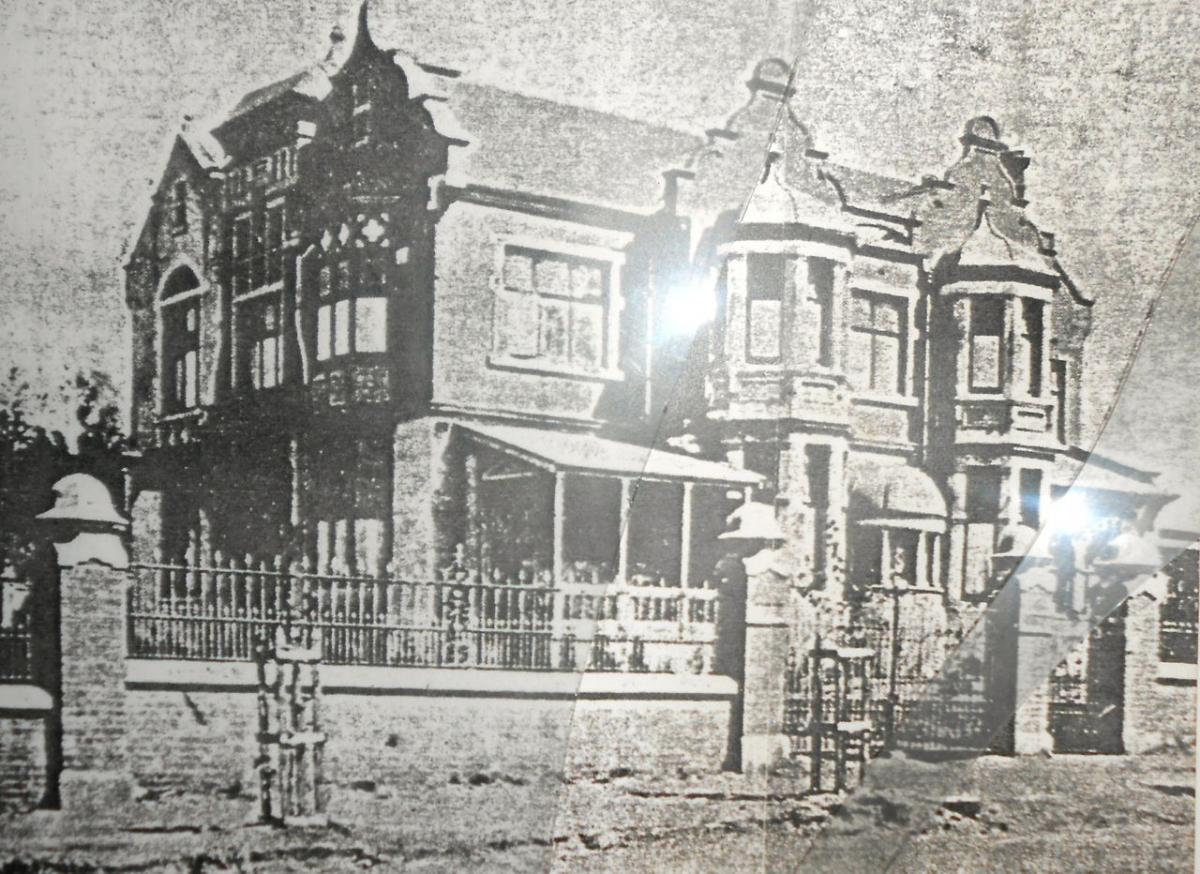
We were in second year and had just moved out of downtown Joburg and Eloff Street to the salubrious semi-suburban delightful area of Doornfontein which was once Joburg’s premier suburb where all the gold mining magnates and Randlords lived and built their mansions.
– that was a while ago, ’tis true –
So some final year students asked us to help them in their research for their – whatever.
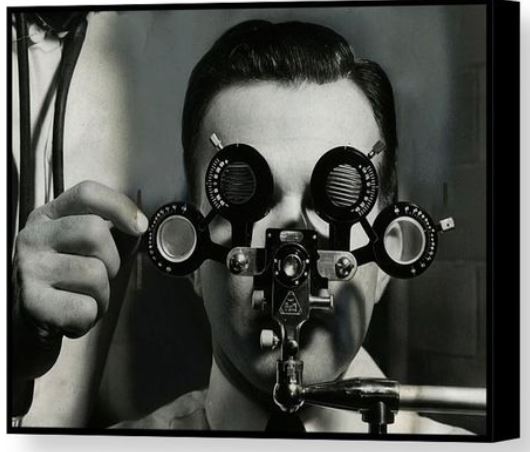
They needed volunteers to see if blood alcohol levels affected your esotropia. We gave it a moment’s thought and thought that sounded like a HELLUVA good idea as it involved free drink and would provide valuable data and it involved free drink. We volunteered. None of asked ‘what’s esotropia?’ a number of said “Free Drink!?”
It was very formal. We had to – No, you can’t have a drink yet; Hey! Step away from the drinks table, we need baseline levels before you . . you have? Well, how many? SO many? Well, quick, come, let’s measure you before – Hey! Not another one . .
Well, give them their due, they tried their best and we did our best and it was a WONDERFUL evening filled with laughter and witty repartee and I don’t know if they got any data but we did get the promised drinks and they didn’t need to return any unopened bottles to the grog shop, which I’m sure saved them a lot of bother..
Quite a lot was learned, too. Like if you give a person who has had one too many even a little bit of vertical prism he will push the phoropter away and make barfing noises and run out of the clinic. That might come in handy to future researchers, and I give it here free for anyone to use.
– look at her – she’s obviously had a few –
~~~oo0oo~~~
In final year, Brauer, Zena Jacobson and I did some more serious research, popping contact lenses into people’s eyes and then forgetting about them. My eyes and Pierre Leibbrandt’s eyes, as two f the guinea pigs I ca remember. Silicon extended wear we called it. I think our verdict was “Not Yet.”
I put my head down, leaned forward and reached for a flat blade-full of Umgeni water and pulled it back to behind my hip. This was not a characteristic action. I was not used to putting effort into my paddling, but this was serious: I had team-mates, and we were in a race. This was the Kingfisher Canoe Club 12-hour enduro. I think we were raising funds for the new clubhouse, and I was in a KCC team, maybe the F-Team or the Z-Team.
When I got back from my blistering lap under the big concrete Athlone bridge pier in the Umgeni river at Blue Lagoon, my team-mates assured me it was the slowest lap in the history of canoeing, a record unlikely ever to be broken and they had all grown a beard, shaved it off and grown another while waiting for me. Rude bastids.
Thanks guys. It was nothing.
Roly Bennett took over from me (yes, we were a crack squad) and fell out three times before he got out from under the shadow of the Athlone bridge.
He then stood on his long knobbly legs in the mud of the shallow water and filled the boat halfway with water, reckoning this gave him some stability. Being a yachtsman he knew all about lead in your keel. He got back in and paddled off with half a millimetre of freeboard, gunwales awash half the time;
When Roly – eventually – got back my team-mates assured me:
A. That my record had been shattered and I was now only the second-most useless member of our crack squad;
* alternative ending (I can’t remember which is true): *
B. That despite Roly being handicapped by a pathetic tap-tapping paddling action, an absence of calves and a half-sunken ship, my record still stood.
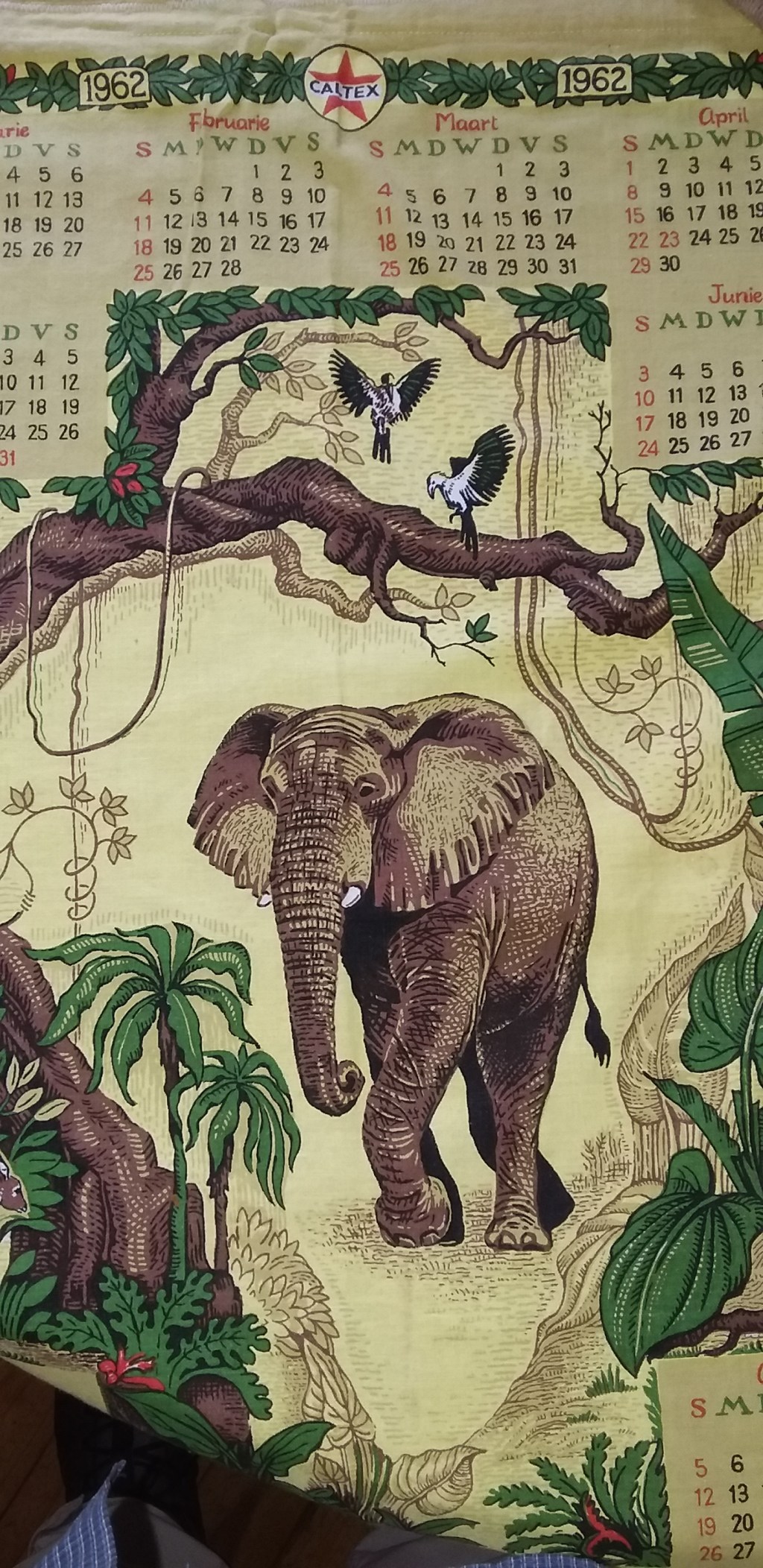
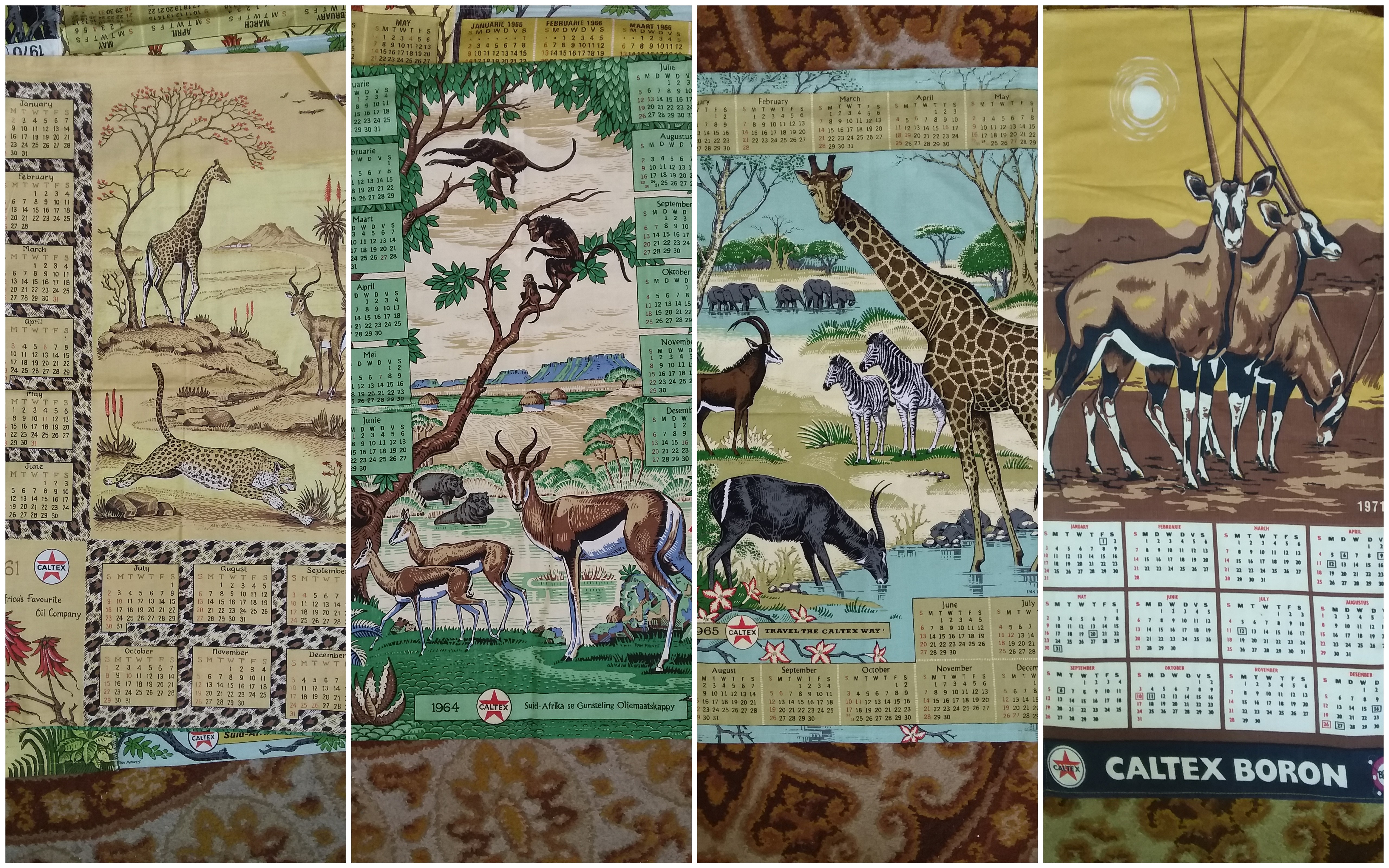
Annie had a Caltex garage; Dad worked for Annie; Louis Schoeman traveled for Caltex. Between 1962 and 1971 Caltex gave cloth wildlife calenders as their gift to their filling station owners.
Dad (now 96) says Louis would ‘forget’ to hand them out and he would insist on seeing what was in his boot. And there, ‘along with the sheep shit’ were the calenders! An inveterate collector, Dad would get ‘his’ share! Right! That’s why he has quite a few duplicates!
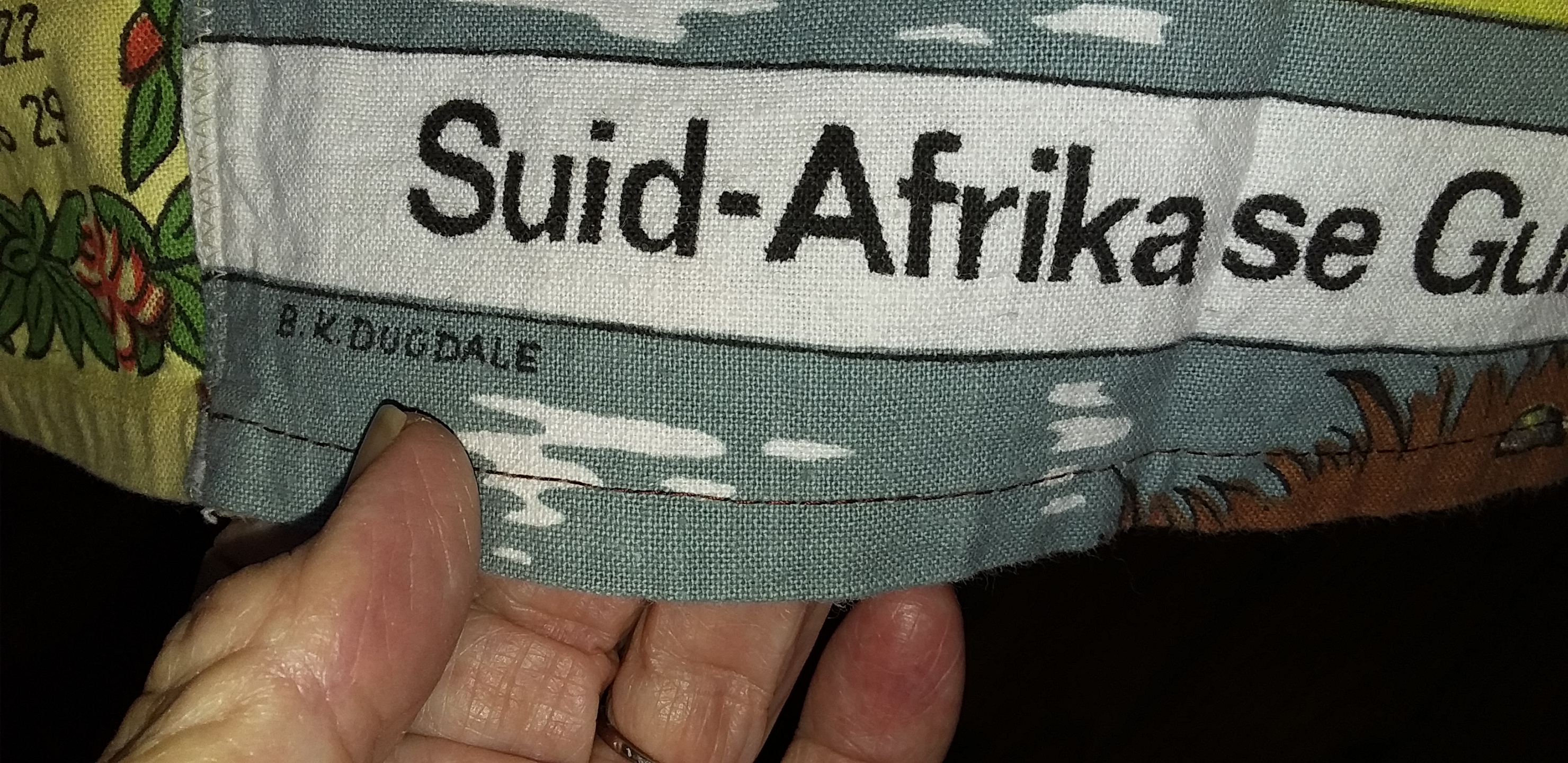
– I could find nothing on the internet about BK Dugdale – Mom’s hand here in pic –
Some have been sewn together to make table cloths. He still has plans for them, can’t get rid of them. He knows someone who will make them into cushion covers. Then he’ll get some cushions . .
~~~oo0oo~~~
He’s had it done: The calendars are now table cloths and cushion covers and he’s very proud of them. Can’t understand why his eldest daughter didn’t rave about them! She doesn’t like them, I dunno why; I like them. Nice and colourful.
We’re all exhorted to Sieze the Day! Carpe diem, said Horace. Grab Opportunities as they arise! Well, some people do just that.
I was reading about Andrew Geddes Bain, geologist, road engineer, palaeontologist and explorer in the Cape up to 1864, and his son Thomas Charles Bain, road engineer in the Cape up to 1888, when it suddenly struck me!
First, let’s see what these two very capable men achieved: Andrew Geddes Bain was in charge of the building of eight mountain passes, including the famous Bain’s Kloof Pass, which opened up the route to the interior from Cape Town. And he (and his wife) had about thirteen children. His son Thomas Charles Bain saw to the building of nineteen passes! His crowning glory was the Swartberg Pass that connects Oudtshoorn in the Little Karoo with Prince Albert beyond the Swartberg mountains in the open plains of the Great Karoo. And he (and his wife) also had about thirteen children.
And I suddenly knew exactly what happened when my Great-Grandfather Stewart Bain and his brother James Bain got off the ship in Durban in 1880. They were fishermen from the tiny fishing village of Wick, in the far north-eastern corner of Scotland, used to being ‘knee-high in brine, mud, and herring refuse.’ * They left Wick and gave up fishing some time after an uncle Stewart had drowned in a fierce storm while out fishing off Wick in one of those little boats. They got onto bigger boats and headed for warmer climes in the colonies: Durban, Natal.
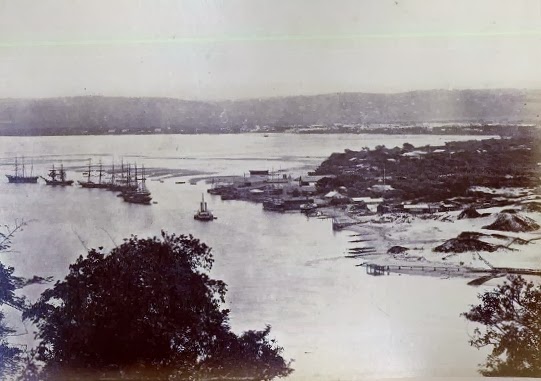
– Durban harbour ca.1880 looking inland from the Bluff, showing the Point at right –
When they arrived in Durban people asked them: ‘Bain? Are you the famous Bain road builders? We need road builders here. Can you build bridges too?’
And I know just what the brothers Bain said. ‘Roads? Och aye, we can build roads. And bridges? We can build them with one hand tied behind our back.’ You know, the old, ‘You’re payin’ how much to do that? Well, you’re in luck. I Happen to be Very Good at it . . . ‘
– some nice bridges there – this one in Swinburne –
And so they built the railway bridges between Ladysmith and Harrismith, utilising their herring netting experience, learning as they went, ‘upskilling’ – thus goes this theory of mine – no doubt with the help of African labourers who had done this before.
And thereby they helped the railroad reach that wonderful picturesque town in the shadow of Platberg, so that I could be born. This subterfuge and venture made them enough money to buy the Railway Hotel (Stewart; he re-named it the Royal cos every Saffrican town has to have one), and build the Central Hotel (James); Then they could marry, have children – only about nine and eight apiece, though – and become leading citizens of their adopted dorp in Die Oranje Vrijstaat Republiek, a sovereign non-British country.
Then: One of Stewart ‘Oupa’ and Janet ‘Ouma’ Bain’s nine ‘Royal Bain’ children Annie, had two daughters; and one of those – Mary – had me! And here I am.
~~oo0oo~~
Think I’m being unkind to Wick, village of my ancestors? Read what Robert Louis Stevenson wrote about Wick to his mother when he stayed there in 1868:
‘Certainly Wick in itself possesses no beauty: bare, grey shores, grim grey houses, grim grey sea; not even the gleam of red tiles; not even the greenness of a tree. The southerly heights, when I came here, were black with people, fishers waiting on wind and night. Now all the boats have beaten out of the bay, and the Wick men stay indoors or wrangle on the quays with dissatisfied fish-curers, knee-high in brine, mud, and herring refuse. The day when the boats put out to go home to the Hebrides, the girl here told me there was ‘a black wind’; and on going out, I found the epithet as justifiable as it was picturesque. A cold, BLACK southerly wind, with occasional rising showers of rain; it was a fine sight to see the boats beat out a-teeth of it. In Wick I have never heard any one greet his neighbour with the usual ‘Fine day’ or ‘Good morning.’ Both come shaking their heads, and both say, ‘Breezy, breezy!’ And such is the atrocious quality of the climate, that the remark is almost invariably justified by the fact. The streets are full of the Highland fishers, lubberly, stupid, inconceivably lazy and heavy to move. You bruise against them, tumble over them, elbow them against the wall — all to no purpose; they will not budge; and you are forced to leave the pavement every step.’
~~oo0oo~~
Now read a sterling and spirited defence of our ancestral Scottish dorp by Janis Paterson – a feisty distant cousin, and also a descendant of the Bains of Wick; who read my post and reached for her quill (I have paraphrased somewhat):
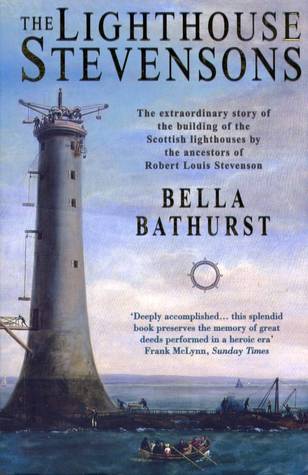
Ya boo sucks to RLS! Robert Louis Stevenson was a sickly child. His father and his uncles were engineers who built lighthouses all over Scotland. Robert was sent to Wick, likely to get involved in building a breakwater there with his Uncle. But he was more interested in writing stories and was just not cut out for this sort of work. I believe he was also ill while in Wick. The first attempt at building the breakwater was washed away during a storm and also the second attempt. The work was then abandoned. I therefore propose that Robert just didn’t want to be in Wick, was ill, fed up with the weather and just wanted to get away to concentrate on his writing. The Stevenson family must have been excellent engineers, as all the lighthouses are still standing. Did Robert also feel that he was a failure as an apprentice engineer?
Stick it to him, Janis! How dare he call Wick fishy? Or smelly!? Or breezy!? Even if it was! Just cos a dorp is fishy smelly and breezy doesn’t mean strangers can call it fishy smelly and breezy!
Janis adds ‘Read this book review:’ ‘ . .fourteen lighthouses dotting the Scottish coast were all built by the same Stevenson family that produced Robert Louis Stevenson, Scotland’s most famous novelist. Who, unlike the rest of his strong-willed, determined family, was certainly not up to the astonishing rigours of lighthouse building.’
Janis was right! 😉 All HE could do was scribble. Like me. But better.
Lots of confusion about the Baines, Baynes and Bains, so Prof Emeritus at UNISA Jane Carruthers set about unravelling eleven of them here in an article titled, The Bane(s) of South African Historians: https://www.theheritageportal.co.za/article/banes-south-african-historians?utm_source=substack&utm_medium=email – Road-builders, hoteliers, preachers, artists and one good trade unionist who fought for the poor honest working people and so gets the appellation “notorious!” Also, a Donald Bain of fighting for a Bushman Homeland Fame was born of a father who, like our Oupa Bain, was from Wick, so possibly related and may also have smelt of herring when he first got to South Africa.
~~oo0oo~~
On our big Karoo / Garden Route tour in 2023 Jess and I stopped at a monument to the original road-building Bains who I say inspired our newly-arrived, soon-to-be Vrystaat Bains to do likewise.
~~oo0oo~~
Later I found this on the Ladysmith to Harrismith extension of the rail line. Maybe the Bain bros got a piece of this action?
LADYSMITH – VAN REENEN – HARRISMITH
After the survey for the rail link from Ladysmith to Van Reenen was finalised, the route was pegged out in June 1889. A junction was formed a mile north of Ladysmith Station, recorded as 190¼ miles from Durban and 3350ft asl, and appropriately named Orange Free State Junction. However, terminating the line at Van Reenen was not considered very remunerative, and tapping into the OFS’s rich agricultural eastern region would make the undertaking more profitable. Negotiations with the OFS Volksraad resulted in the Natal Railway Administration being granted the sole right to build, equip and operate the extension from Van Reenen to Harrismith. Representatives of both Governments met in Harrismith on 25 February 1890 to work out the agreement’s details. In terms of the agreement signed on 24 June 1890, the railway was to be completed within three years of the turning of the first sod. Significantly, while profits would be equally shared between the two Governments, all operating losses would be borne by Natal alone. The Free State could, at any time, after giving six months’ notice, take over the railway at the cost of its original construction and any other capital expenditure.
Contracts for the earthworks and masonry culverts from Van Reenen to Harrismith were awarded on 22 January 1891†. The route generally followed the course of the Wilge River, graded at 1 in 80 with 600ft minimum radius curves. The energetic approach of the work crews completed the extension four months ahead of schedule. The extension from Van Reenen to Harrismith was taken into use on 13 July 1892. Initially, there was only one station, Albertina, later renamed Swinburne, between Van Reenen and Harrismith.
Distance from Durban, elevation in feet
Van Reenen 226 5520·49 Staging Station at the Natal/OFS border
Albertina 234¼ 5408·46 Passing Station
Harrismith 249½ 5322·30 Temporary Terminus
† The section from Van Reenen to Harrismith was built and operated by the NGR under an agreement signed on 24 June 1890 between the Orange Free State Volksraad and the Natal Colonial Government. The Orange Free State Volksraad authorised the Natal Railway Administration to construct, maintain and work, at its own risk, the line from Van Reenen to Harrismith. The working of the line was taken over by the CENTRAL SOUTH AFRICAN RAILWAYS (CSAR) in November 1903. No construction maintenance was allowed under capital expenditure (Under Law 29 of 1890, a sum of £260 000 was authorised for the construction of this section).
This ‘Bain’s Railway Map, c. 1903’ must surely be one of the famous Bains?



















 Vrystaat Confessions