Category: 8_Nostalgia

Looking back with fondness on those things we couldn’t wait to get rid of, or away from, back then . .

  • Old Harrismith Cars

    Old Harrismith Cars

    A post for you, if you’re A. Ancient; B. A Harrismith, Vrystaat okie; and C. A nerd or a petrolhead.

    Who drove What cars When, back in the day. And: WHAT COLOUR were they? Also, for extra points, can you recall their number plates?

    Old bullets – and those of us who spoke to dear-departed old bullets – remember that Harrismith was OI before it was OHS – Oh, Aye! It was indeed. Here’s a picnic on the slopes of the mountain back in those days.

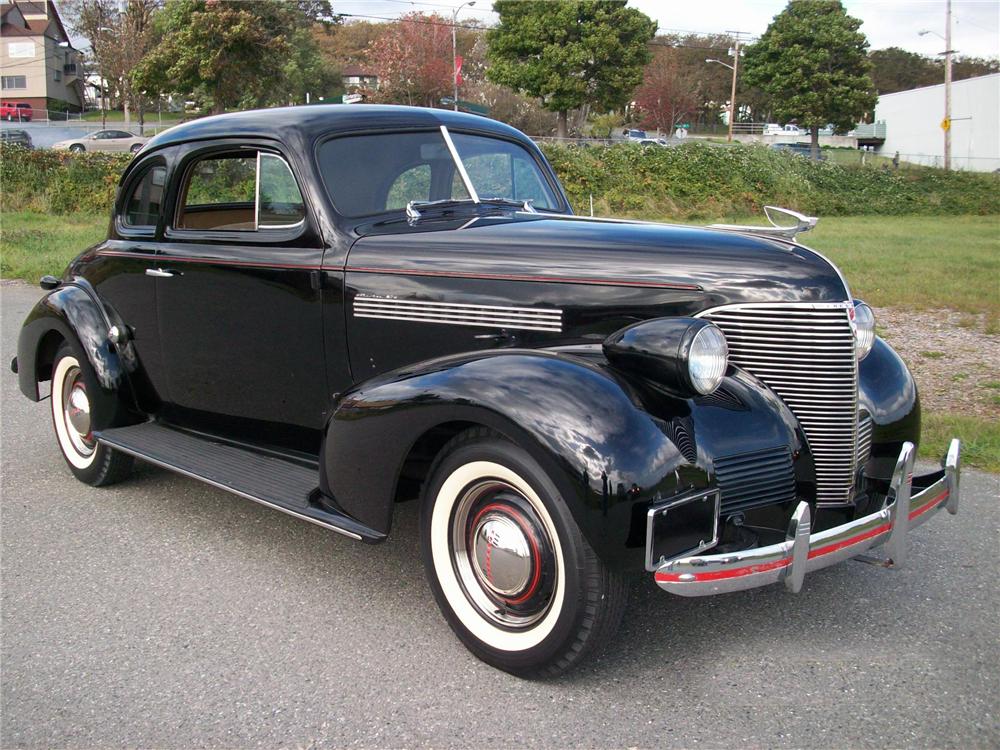
    – 1939 2-door Chev like this one, I wonder? –

    Vic Crawley bought Sep de Beer’s 2-door Chev 1939 number plate OI 1

    Abe Sparks, the Mayor of Swinburne – silver? Rolls Royce pickup conversion (Abe with stetson hat, cowboy boots and string tie with a semi-precious stone clasp; Lulu looking swish next to him). Abe bought the Rolls from Petronella van Heerden beforevconvertingbit to a pickup. She had toured Europe in it, then shipped ot to Cap Town wherecshechad her obs n gynae practice.

    Beno Sammel – big Packard, according to Dad

    – Dr Leo Hoenigsberger

    Dr Leo Hoenigsberger drove ‘a big old German Sperber’ according to his grandson Leo Caskie Wade. Sperber means sparrowhawk

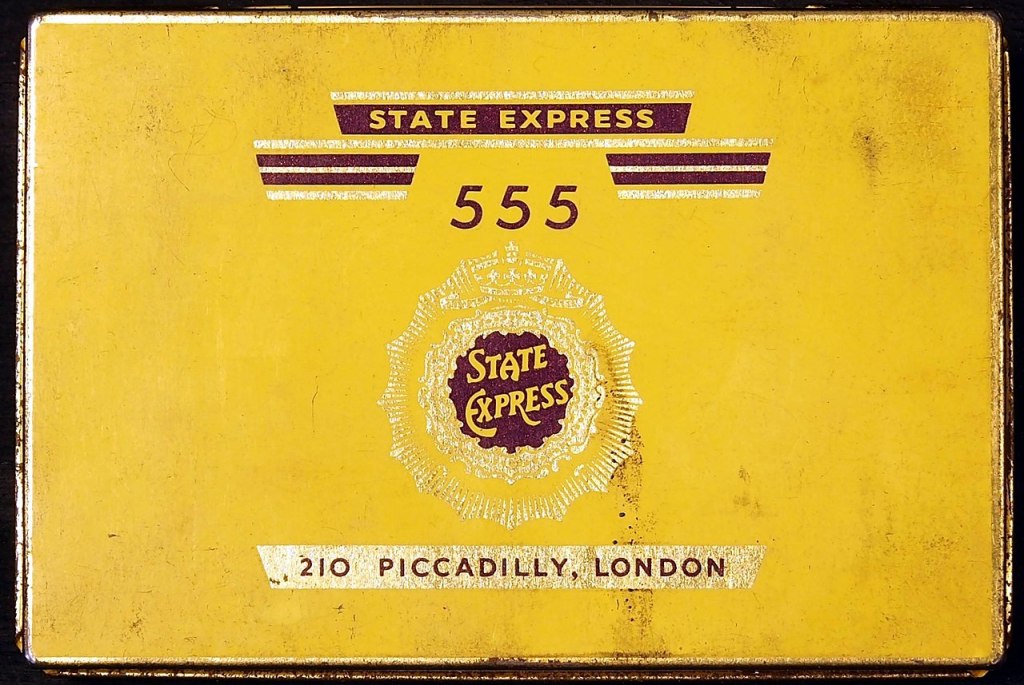
    Pikkie Loots’ grandad’s ‘lovely old blue Desoto Suburban – probably late 1940s model – OHS 555 ‘State Express’ (remember the State Express 555 cigarettes – they came in a tin?).
    Pikkie also added: What about the Herringtons, Charlie and George? They had a few cars between them. At least one Karmann Ghia if I remember. At van Niekerk (Dries’ brother) – a Porsche. Ronnie (Hector) Pienaar’s Alpha Romeo. Abel Caixinha’s uncle’s beige station wagon. Hoender’s (Gerrit – Rigter? – Kok) Volvo B16?

    Annie Bland – beige Chevrolet Fleetline 1948 OHS 974

    – I put a milk can in the back so it would like the Simpsons –

    Joan & Vera Simpson – grey Morris Minor pickup, milk cans on the back this one photoshopped on by me).

    Martha McDonald & Carrie Friday – British racing green 1938 Buick Roadster coupe. See the feature pic above of their actual car, lovingly restored by Ty Terreblanche in PMB.

    Charlie Crawley & Michael Hasting’s ‘s flatbed truck – dark green, wooden bed Chev (1934 – 35 according to Dad);

    JN ‘Koos’ de Witt – big black de Soto

    Alet de Witt – VW Karmann Ghia
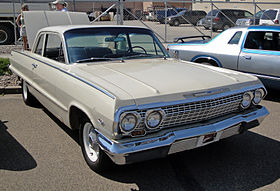
    Biscayne

    Max Ntshingila (Max Express bus fleet owner) . He drove a sleek yank tank and I thought I’d never get to know what it was. Then I met his son Thembinkosi, and he told me: A gold Chev Biscayne

    – Parisienne – the Canadian Pontiac –

    Hec & Stel Fyvie – a white Pontiac Parisienne and a lang slap off-white Merc 220S that Tabs drove; Tabs’ red Datsun 1600 (was it a SSS?) with the round rear lights that the girls at NTC in PMB called a Ferrari; Then Tabs had a green Datsun 1800 SSS which Geoff Leslie called his ‘Triple Ess Ess Ess’

    Patrick Shannon – Chevrolet El Camino pickup (I saw him using it as a pick-up, too!)

    Other farmers’ cars: I remember Bertie van Niekerk getting out of a huge car wearing a huge hat, but details are missing. Someone will know; I also have a mental picture of him wearing a huge hat and coattails sitting astride a horse and looking down at the admiring throng . . by die skou, I suppose. I remember Chev Kommandos, one driven by an Odendaal, one by Hertzog van Wyk

    Ronnie van Tubergh – Ford Ranchero pickup

    Piet Steyn – grey Borgward
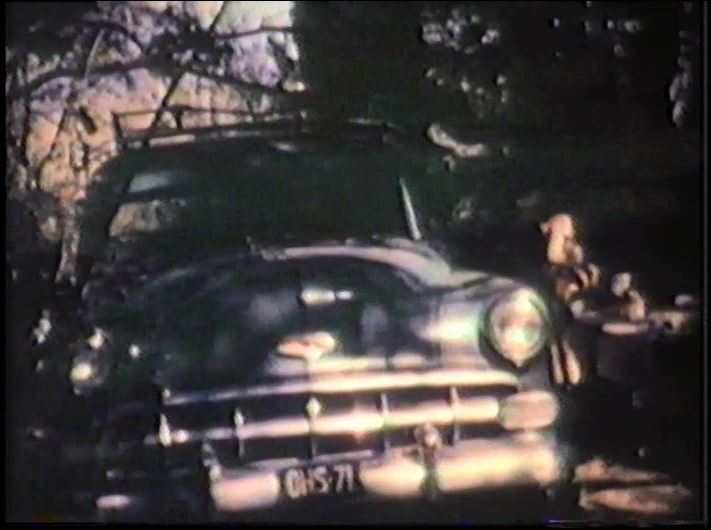
    Chev sedan – Fleetmaster? 1948?

    Gretel Reitz – black VW Karmann Ghia; Dr Frank Reitz – big old black Chev OHS 71, seen here parked in the shade of the big old trees on the banks of the Tugela river on The Bend.

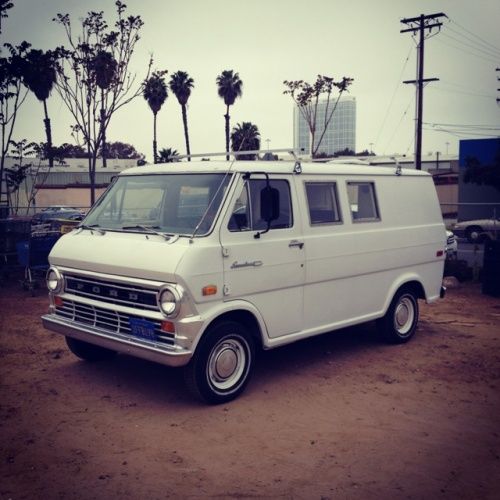
    Pieter Swanepoel – beige Morris Isis OHS 154 – dark blue VW Kombi OHS 153 – light blue Holden station wagon – white Holden station wagon – white V8 Ford Econoline, all OHS 154

    Mary Swanepoel – green & black Ford Prefect – light blue VW 1200 Beetle OHS 155

    Jannie Jan Bal du Plessis – green Datsun 300C

    Jes Hansen – Harrismith’s first Hino pickup; small and grey, I seem to remember; we laughed at it and Gerie Hansen used to say ‘Hino go so good’ but this Hino was the forerunner of the all-conquering Toyota Hilux; in fact, the first Hilux bakkies were built in the Hino factory.

    Charles Ryder – lime green Volvo 122S – whattacar!

    Teachers’ cars: Bruce Humphries – new white Ford Cortina; Heilige Giel du Toit – old black Mercedes 190; Ben Marais – blue VW beetle; Ou Rot Malherbe – little green Fiat 500; Ou Eier Meyer – something with wings – a Zephyr? Daan Smuts – white VW beetle;

    Cappie Joubert – green Ford Zephyr 6 with wings; gold ‘stompgat’ Zephyr 6

  • Dad’s Van

    Dad’s Van

    Larry wrote to me – old-fashioned ink and paper, lick the stamp, seal the envelope and drop it into a postbox – on 4 Nov 1970, his 19th birthday.

    He was getting brochures for Dad for a van – Ford, Chev and Dodge. ‘I’m glad your father is really getting interested in the scheme of getting a van. If he is serious about importing me too (to come with the van), I could be ready to leave in June. It seems a bit too good to be true, so I am not counting on it at all.’

    Well, it didn’t happen. But the van did.

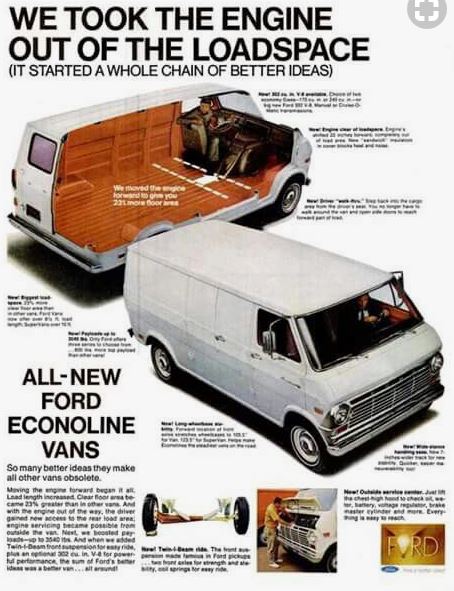
    – 1973 Ford Econoline van –

    The old man needed a delivery van for the bottle store. Twelve years of Joseph faithfully delivering booze to the needy on his bicycle clearly wasn’t hacking it anymore.

    – Joseph’s bicycle stands idle –

    People needed their dop on the double; their brannewyn and beer briefly; their cane kona manje; their Paarl Perle pronto; This called for a V8! A five litre V8 – 302 cubic inches of inefficiency was ordered from across the Atlantic. Two pedals, one to GO one to STOP; it was automatic . . hydromatic . . greased lightning!

    It was a delivery van, so no windows were needed. These were only cut in the week it arrived. Then it needed to be fitted out to take crates of beer: Two beds, a fridge and a stove were fitted above the new green carpets.

    A test run was called for: I drove it to Joburg, loaded it up with fellow students and headed for Hillbrow. At the lights on the uphill section of Quartz or Twist street some unsuspecting sucker pulled up alongside.

    I gave him a withering look and revved the V8, which didn’t really growl, the ole man refusing to tweak the exhaust like it could have been tweaked. It sounded OK, but not “like God clearing his throat.”

    I stomped down hard on the brake with my left foot and pressed full down on the accelerator with my right. A fraction before the light turned green I let go the brake and the bus squealed and roared and bucked as we gunned off up the hill. Dunno if the other bloke even noticed but we were hosing ourselves – we had fun.

    The van cost the ole man R1500 and then shipping it across the Atlantic another R1500.

    ~~oo0oo~~

    We got up to a few other stunts with the van.

  • Uh, Correction, Mis Betfit

    Uh, Correction, Mis Betfit

    Here’s a re-post – I’m running out of things to say as the era of this blog recedes ever-further into the mists of time – and the misseds of my time. This blog’s era ends around about when I met Aitch – 1985-eish. Post-aitch, marriage, kids and other catastrophes, and current stuff are over at bewilderbeast.org

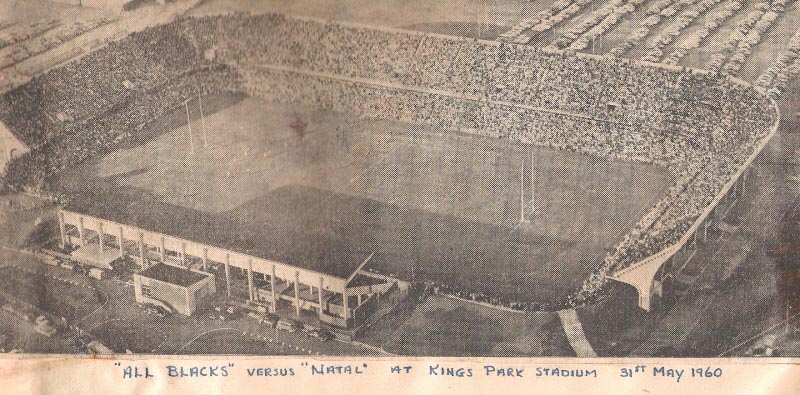
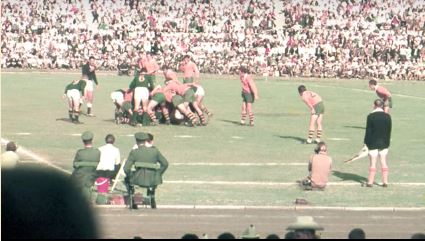
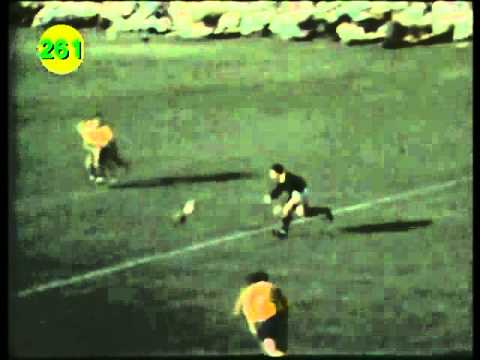
    In 1969 a bunch of us were taken to Durban to watch a rugby test match – Springboks against the Australian Wallabies. “Our” Tommy Bedford was captain of the ‘Boks. We didn’t know it, but it was to be one of his last games.

    Schoolboy “seats” were flat on your bum on the grass in front of the main stand at Kings Park. Looking around we spotted old Ella Bedford – “Mis Betfit” as her pupils called her – Harrismith’s English-as-second-language teacher. Also: Springbok captain’s Mom! Hence our feeling like special guests! She was up in the stands directly behind us. Sitting next to her was a really spunky blonde so we whistled and hooted and waved until she returned the wave.

    Tommy Bedford Springbok
    – This is Ella, a Harrismith teacher’s son –

    Back at school the next week ‘Mis Betfit’ told us how her daughter-in-law had turned to her and said: “Ooh look, those boys are waving at me!” And she replied (and some of you will hear her tone of voice in your mind’s ear): “No they’re not! They’re my boys. They’re waving at me!”

    We just smiled, thinking ‘So, Mis Betfit isn’t always right’. Here’s Jane. We did NOT mistake her for Mis Betfit.

    jane-bedford-portrait

    “corrections of corrections of corrections”

    Mrs Bedford taught English to people not exactly enamoured of the language. Apparently anything you got wrong had to be fixed below your work under the heading “corrections.” Anything you got wrong in your corrections had to be fixed under the heading “corrections of corrections.” Mistakes in those would be “corrections of corrections of corrections.” And so on, ad infinitum, ad nauseum and ad weereens! She never gave up. You WOULD get it all right eventually!

    Stop Press! Today I saw an actual bona-fide example of this! Schoolmate Gerda van Schalkwyk has kept this for nigh-on fifty years!

    – genuine rare Harrismith Africana ! – or is that Engelscana? –

    ~~oo0oo~~

    Tommy’s last game for the Springboks came in 1971 against the French – again in Durban.

    ~~oo0oo~~

    Two or three years later:

    In matric the rugby season started and I suddenly thought: Why’m I playing rugby? I’m playing because people think I have to play rugby! I don’t.

    So I didn’t.

    It caused a mild little stir, especially for Ou Vis, mnr Alberts, in the primary school. He came up from the laerskool specially to politely voice his dismay. Nee man, jy moet ons tweede Tommy Bedford wees! he protested. That was optimistic. I had played some good rugby when I shot up and became the tallest in the team, not because of any real talent for the game – as I went on to prove.

    ~~oo0oo~~

    weereens – again n again

    ou Vis – nickname meaning old fish – dunno why

    Nee man, jy moet ons tweede Tommy Bedford wees! – Don’t give up rugby. You should become our ‘second Tommy Bedford’ – Not.

    ~~oo0oo~~

    Meantime Jane Bedford has become famous in her own right in the African art world and Durban colonial circles, and sister Sheila and Jane have become good friends.

    ~~oo0oo~~

    Also meanwhile, our sterling Mrs Bedford’s very famous brother – one of twelve siblings – Lourens vd Post, turned out to be a real cad a fraud, an adulterer and a downright liar. Fooled Prince Charlie, but then, that’s hardly a difficult achievement. The vegetables he talks to probably tell him fibs.

  • The EM Diet

    The EM Diet

    Childhood friend Harry Loots is writing a lovely book on his mountaineering exploits and the journey he has made from climbing the mountain outside our town to climbing bigger and more famous mountains all over the world!!

    – Platberg panorama –

    Flatteringly, he asked me and a Pommy work and climber friend to proofread his latest draft. Being a techno-boff, he soon hooked us up on dropbox where we could read and comment and suggest.

    I immediately launched into making sensible and well-thought out recommendations. But some of them were instantly rejected, side-stepped or ignored, I dunno WHY!!

    Like the title I thought could be spiced up. Three African Peaks is all very well. But it’s boring compared to Free A-frickin’ Picks!!! to lend drama and a Seffrican accent to it, right?! I know, you can’t understand some people!

    John, very much under the weight of a monarchy – meaning one has to behave – was more formal:

    ‘What is it with south africans and the “!”? (which is my major comment on your writing style!)

    Well!!! Once we had puffed down and soothed our egos by rubbing some Mrs Balls Chutney on it, the back-n-forth started. I mean started!!

    My defensive gambit was: ‘We’re drama queens!!’

    My attacking gambit was an accusation: ‘Poms hugely under-use the ! In fact, they neglect it terribly! John was quickly back though, wielding his quill like a rapier:

    John

    ‘Not true. We use our national quota. We just give almost all of them to teenage girls.’

    Ooof!!!

    I was on the back foot. When it came to the cover, the Boer War re-enactment resumed. I mean resumed!! I chose a lovely cover with an African mountain and a lot of greenery on the slopes. The Pom chose an ice wall, no doubt thinking of the London market. Stalemate.

    Next thing he’ll be suggesting a stiff upper cover.

    ~~oo0oo~~

    A strange thing has happened since John’s exaggerated critique!!! I am using less exclamation marks!! I have even written sentences without any! It actually feels quite good. I’ve discovered the full stop. The new, restrained me. Exciting.

  • My Neighbour Dr Clancey

    My Neighbour Dr Clancey

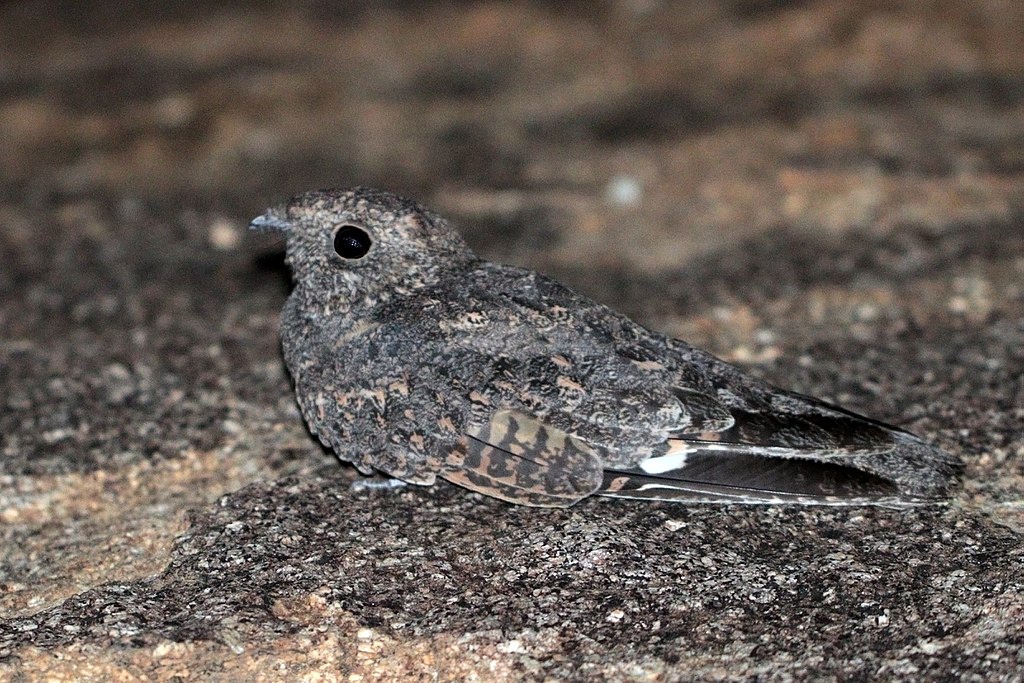
    I didn’t ever meet the famous old sub-species bird man*, but for a while he lived next door to me in Marriott Road. I was in Whittington Court, he was in Eden Gardens; I found this out when I spotted a nightjar at my window one night and got very excited; I listened every night and finally heard it – it was the freckled; Now more excited – a Freckled Nightjar in the city! – I was about to announce my discovery when I read Dr Clancey knew all about it – it roosted on his roof next door! The Eden Gardens had a flat roof and it was covered in stones or gravel. Good spot for a Freckled to conceal itself by day.

    – Freckled Nightjar – Caprimulgus tristigma

    So after I found info on the bird; and after Aitch and I had prowled around the gardens of his hotel at night and found our first Bush Squeaker frog one rainy night (Arthroleptis wahlbergi), I went looking for info on the man (usual warning here: This is me, approximate and amateur historian, giving my version of things – look at the references if you need accuracy).

    Clancey was director of the Durban Museum and Art Gallery for thirty years until his retirement in 1982. He then continued as a research associate until his death in 2001, aged 83. He was a confirmed bachelor and the most ruthlessly dedicated and hardworking of ornithologists. He wrote a number of books of which The Birds of Natal and Zululand (1964), The Game Birds of South Africa (1967) and The Rare Birds of Southern Africa (1985) are now valuable Africana. Yeah, I hope so! I have two of them. So far my “investment” in bird books has been a damp squib.

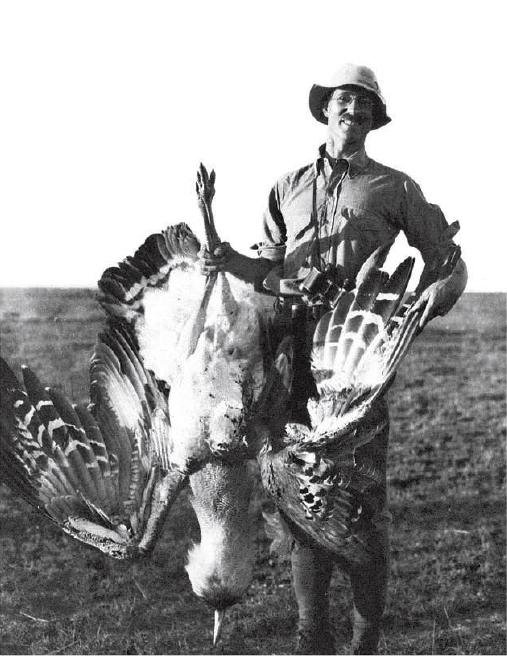
    – dodgy Pommy fraud Meinertzhagen with a fellow bustard –

    As a young man ca.1949 he was a field assistant to the famous British military and ornithological fraud, Colonel Richard Meinertzhagen, a dodgy, lying, philandering Englishman who faked much of his life and got away with murdering his wife. They once nearly shot each other in a heated disagreement over bustards in Namibia. Guns were drawn before the hired skinner stepped between the protagonists. Sanity prevailed and tempers cooled. On another occasion Clancey fell ill in a remote spot and was abandoned to his fate by Meinertzhagen. Clancey was not given his due by Meinertzhagen in his writings – those who knew Meinertzhagen were not surprised.

    In 1950 Clancey moved to South Africa, to Durban as curator of the natural hiftory museum.

    – Durban Natural Sciences Museum is in the City Hall –

    Years later, Clancey had a famous professional rivalry with Colonel John Vincent, one time head of the Natal Parks Board and himself an ornithologist of note. On one occasion Vincent had him arrested for collecting without a permit. His shotgun was confiscated. Undeterred, Clancey bought it back at a subsequent auction.

    He must have rubbed people up the wrong way! Vincent Parker prominent atlasser and bird survey guru, in his 1999 The Atlas of the Birds of Sul do Save, southern Mozambique, also didn’t give Clancey his due, ignoring many of his records and relegating others to an appendix (‘subject to confirmation’), which ‘in most cases was quite unjustified’ (see the obituary in Ibis by Dowsett, Allan, and McGowan).

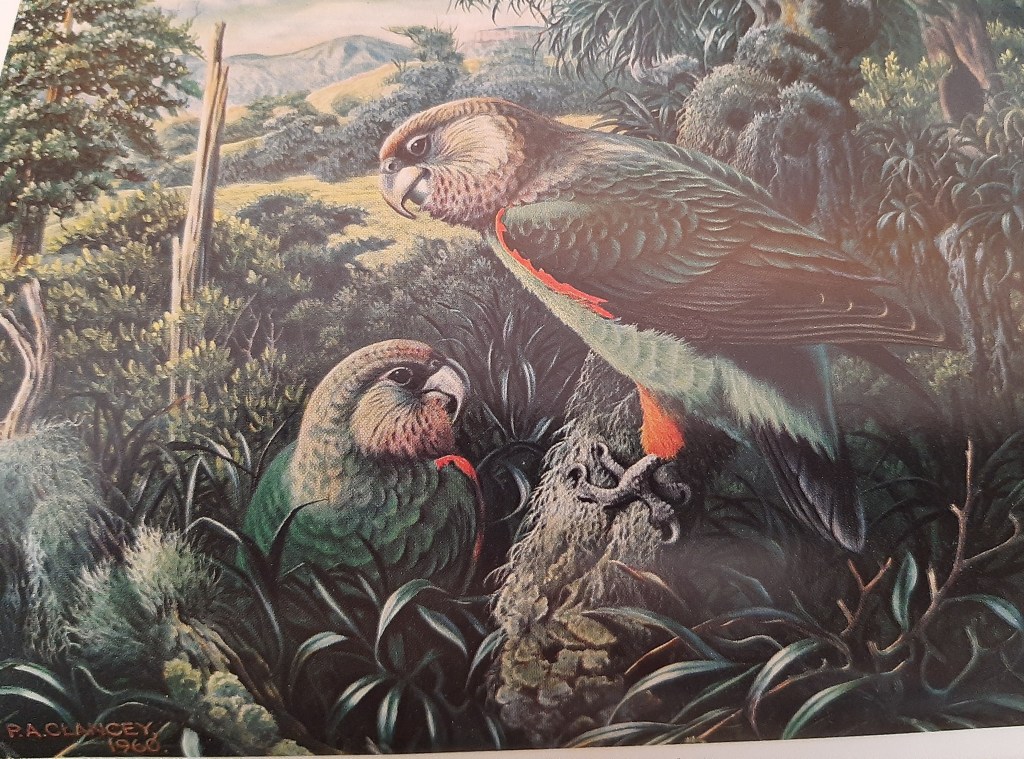
    Clancey never had much regard for unnecessary luxury, and retired to a small room in a residential hotel – right next door to my Marriott road flat – in Durban. He continued to write papers, named 328 African bird taxa (more than any other contemporary scientist). The majority of his holotypes are in Durban Museum or the National Museum of Zimbabwe. R J Dowsett wrote: ‘I know of over 550 publications on African birds by Phillip Clancey, for most of which he was sole author (and not counting the sub-divisions of his miscellaneous taxonomic notes series).’ Later he increasingly devoted himself to his painting. His style was unmistakable, rich colours, attention to detail, and always the correct ecological background.

    Any birder who has spent time in Natal will have seen these birds in just that habitat! Eminently recognisable.

    Clancey donated his collection of some 5,500 mainly Western Palaearctic bird-skins to the National Museum of Scotland in Edinburgh. He donated his collection of over 32,000 other bird-skins – a collection considered the finest in Africa – to the Durban Museum and Art Gallery.

    And also – unbeknown to him or his biographers – he was my neighbour.

    ~~oo0oo~~

    References

    ~~oo0oo~~

    * sub-species bird man? I think Clancey was that dreaded sub-species of ornithologists called a splitter! He keenly added sub-species to existing species if he felt they were different enough. He found many birds in new localities, expanded the known range of many, and did find good sub-species. Plus, he found one new full species, the Lemon-Breasted Canary Crithagra citrinipectus in the Maputaland coastal grasslands. Unbeknown to him, his last neighbour was a lumper.

    ~~oo0oo~~

  • Duzi 1972

    Duzi 1972

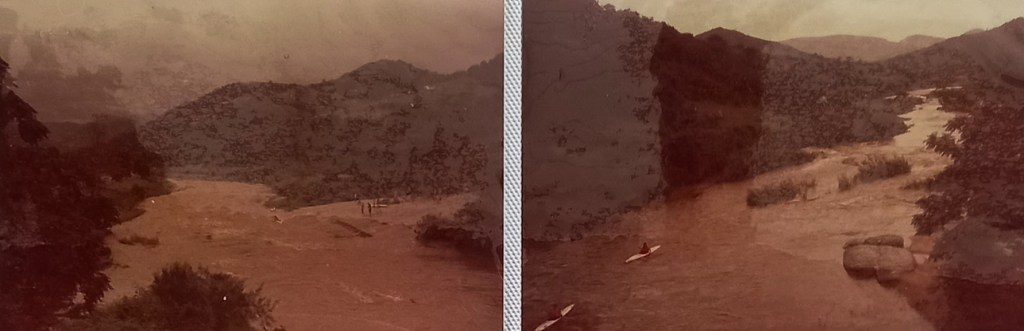
    I canoed the Vrystaat Vlaktes thanks to Charles Ryder, who arrived in Harrismith in about 1968 or ’69 I’d guess, to start his electrical business, a rooinek from Natal. He roared into town in a light green Volvo 122S with a long white fibreglass thing on top of it like this:

    I asked:
    What’s that?
    It’s a canoe
    What’s a canoe?
    You do the Dusi in it
    What’s the Dusi?

    Well, Charlie now knew he was deep behind the boerewors curtain! He patiently made me wiser and got me going and I got really excited the more I learned. I decided I just HAD TO do the Dusi. What could be more exciting than paddling your own canoe 120km over three days from Pietermaritzburg to the sparkling blue Indian Ocean at the Blue Lagoon in Durban? Charlie made it sound like the best, most adventurous thing you could possibly think of. He showed me how to paddle (how was I to know at the time he was making me a ‘Left Feather’?) and was so generous with his time. Both in paddling and with Harrismith’s first Boy Scouts troop, which he helped establish.

    I started running in the mornings with a gang of friends. Tuffy Joubert, Louis Wessels, Fluffy Crawley, Leon Blignaut, who else? We called ourselves the mossies as we got up at sparrow’s fart (and because we weren’t makoue. A teacher named Makou trained our rivals. We couldn’t join them cos we considered ourselves untrainable). Then I would cycle about two miles  to the park in the afternoons and paddle on the flat water of the mighty Vulgar River in Charles’ Limfjorden, or Limfy, canoe, which he had kindly lent me/given to me. It was the fittest I’ve ever been, before or since.

    Overnight I would leave it on the bank tethered to a weeping willow down there. One day around Christmas time with only a couple of weeks to go before Dusi I got there and it was missing. I searched high and low, to no avail. So I missed doing the Dusi. Not that I had done anything but train for it – I hadn’t entered, didn’t know where to, didn’t belong to a club, didn’t have a lift to the race, no seconds, nothing!

    Still enthused, though, I persuaded my mate Jean Roux to join me in hitch-hiking to the race. We were going to do the Duzi! All except the part where you used a boat.

    We got to Pietermaritzburg, and early the next morning to the start in Alexander Park. Milling around among the competitors and their helpers, we watched the start and as the last boats paddled off downstream Alexandra Park started emptying, everyone seemed in a big hurry to leave. We asked Wassup? and someone said, We’re Following Our Paddler! so we bummed a lift with some paddler’s seconds to the overnight stop at Dusi Bridge. We slept under the stars and cadged supper from all those friendly people. They let us continue with them the next day to the second overnight stop at Dip Tank and on the third and last day to the sea, the estuary at Blue Lagoon, following the race along the way. In Durbs we slept on the beach, but were herded off it by the cops, so we slept on the stoep at the Point Road police station – and that’s another story! And then I spose we hitched back to Harrismith – I can’t remember – must ask Jean.

    Back in the City of Sin and Laughter I continued the search for my missing Limfy, and eventually found a bottle floating in the Kakspruit, a little tributary that flows down from Platberg and enters the river downstream of the weir. I was born on the left bank of this Kakspruit about 5km upstream of here. The bottle had a string attached to it. I pulled that up and slowly raised the boat – now painted black and blue, but clearly identifiable as I had completely rebuilt it after breaking it in half in a rapid in the valley between Swinburne and Harrismith. Come to remember, that’s why Charles gave it to me! I knew every inch of that boat: the kink in the repaired hull, the repaired cockpit, the wooden gunwales, brass screws, shaped wooden cross members, long wooden stringer, shaped wooden uprights from the cross members vertically up to the stringer, the white nylon deck, genkem glue to stick the deck onto the hull before screwing on the gunwales, the brass carrying handles, aluminium rudder and mechanism, steel cables, the lot. In great detail.

    ~~oo0oo~~

    Except! I recently (2020) cleared out my garage under lockdown and discovered this: My notes preparing for the Duzi! I was less disorganised than I remember. I may not have DONE much, but at least I did do a bit of planning! Check: “Phone Mr Pearce” (Duzi boss) – not done; and “Buy canoe?” – not done; uh, OK, maybe not so very well organised!

    Graeme Pope-Ellis won his first Duzi that year.

    ~~oo0oo~~

  • Duzi 1976

    Duzi 1976

    1976 Duzi – In 1976 I dusted off my old repaired Limfy and entered the race, ready to finally ‘Do the Dusi.’

    (BTW: ‘The Duzi’ or ‘Dusi’ is the Duzi Canoe Marathon, a 120km downstream river race from Pietermaritzburg to the sea in Durban, in KwaZulu Natal, South Africa. Next year should see the 70th annual running of this crazy biathlon, COVID-permitting).

    Like I had asked Charlie Ryder about six years earlier, Louis van Reenen, a fellow student in Doornfontein, asked me, ‘What’s that?’ when I said I was going to ‘Do the Dusi,’ so he was ripe for convincing. Or brainwashing? He decided to join me. I was happy, as he had a car! I headed off to Harrismith for the December holidays, leaving him with wise counsel: Buy a boat and paddle in it a bit.’

    A month later in January, he arrived in Harrismith in his light blue VW Beetle with a new roofrack and a brand new boat – a red Hai white-water boat with a ‘closed’ (smaller) cockpit. He had bought it from Neville Truran at his Kensington shop, and had paddled it once or twice on Emmerentia Dam. In those days that could sort-of qualify you for Dusi!

    We now had to tackle the dilemma we had left unspoken: Two of us, two boats and one car. Who would paddle, who would drive as the ‘second’ or supporter, taking food and kit to the overnight stops? So we tossed a coin. I lost. DAMN!

    We headed for Alexandra Park in PMB with the red Hai on the roofrack. A great pity for me, as I had done a lot of canoeing, also in flood-level rivers, and had broken two boats in half and repaired one. But – a coin toss is a coin toss. And it was his car!

    For Louis, the coin toss won him a first-ever trip down a river. And what a river! Here’s how two-times Duzi winner Charles Mason described it. I have paraphrased excerpts from his memoirs Bakgat:

    Charles: The 1976 Duzi was arguably the fullest level ever. The record 420 starters on the first day on the uMsunduzi River were greeted with a very full river, resulting in many casualties.

    I helped Louis get onto the water at Alexandra Park and he was relaxed. Although it was moving, the water looked similar to Emmerentia dam as it was flat, so he should be fine, right?

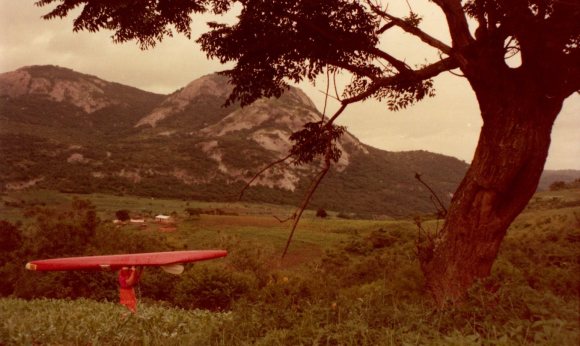
    – Louis’ red Hai in the foreground –

    That night at the first overnight stop at Dusi Bridge, Louis’ eyes were a lot bigger. He told of big water, scary rapids and numerous swims. I had pitched my little orange puptent and made him supper. He slept with his rear end out of the tent, ready to sprint off yet again – the dreaded ‘Dusi Guts’ diarrhoea had got him!

    Charles again: That night the Kingfisher marquee was abuzz with speculation regarding the river conditions for the next two days on the much larger Umgeni. Our first day’s paddle on the much smaller and narrower Duzi River had been enjoyable and exhilarating. I remember being told many years before that the word ‘uMsunduzi’ is isiZulu for ‘the one that pushes and travels very fast when in flood.’ It had really been pushing that day. I was relaxing in a corner of the Kingfisher marquee, listening to the excited banter and anxious anticipation of the largely novice competitors in the tent, regarding the prospects for the next day’s paddle. Few of them had experienced such conditions previously.

    Blissfully unaware, utter novices Louis and I were in my little orange pup tent nearby.

    Charles: Around 9pm race organiser and ‘Duzi Boss’ Ernie Pearce came to see me:- Ernie said: “I have just had a visit from the engineer at Nagle Dam. He came to warn us that they have opened all the sluices of the dam to reduce water levels in preparation for a massive plug of flood water making it’s way down the Umgeni. The river will be in full flood below the dam by tomorrow morning!” Very early the next morning, I went to inspect the river downstream for Ernie and then reported back to anxiously-waiting paddlers and officials: “The Umgeni is pumping – it’s bloody big – and I am wearing a life jacket!” Life jackets were optional in those days and in any event, very few paddlers possessed them. I overheard one paddler remarking, “That’s enough for me.” He left to tie his boat onto his car. A few others followed suit. The second and third days were big and exciting.

    Louis van Reenen, Duzi novice, first time ever on a river, carried on bravely. Paddling some, swimming some, and portaging – a lot! A lot of portaging was done by a lot of paddlers to avoid the big water.

    New watercourses and new islands opened up:

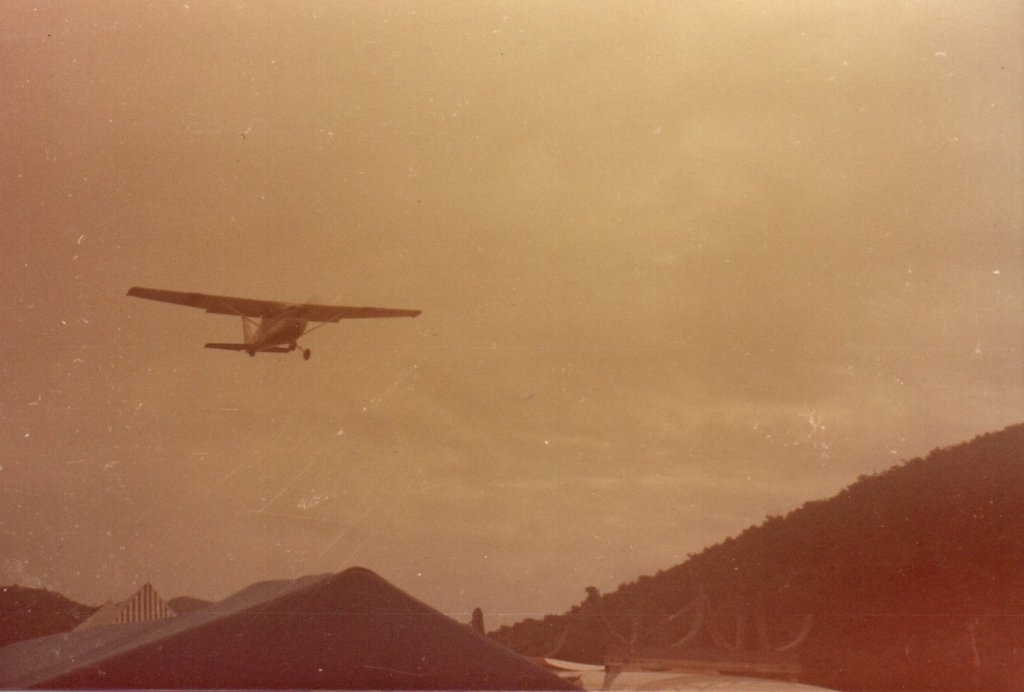
    The weather cleared up enough for the welcome newspaper drop by Frank Smith in his light plane at the second overnight stop at diptank:

    Us seconds and supporters were kept busy rescuing cars stuck in the mud, including our own Volksie. We’d all be stopped in a long line; We’d get out, walk to the front, push the front car, push the next car, and so on.

    Never-Say-Die Louis got to Durban, to the Blue Lagoon, to the salty water of a high-tide Indian Ocean. Hours before him Graeme Pope-Ellis had equalled the best, winning his fifth Duzi, paddling with Pete Peacock.

    That night we slept right there at Blue Lagoon, at the finish. Here’s a satisfied and relieved Louis with his Hai and his paddle, and me at the driver’s door of the pale blue Volksie:

    Seven years later I FINALLY got round to doing my first Duzi. Sitting in my boat at Alexandra Park in Pietermaritzburg waiting for the starter’s gun, I thought I saw a familiar face and paddled over. Louis! It IS you! He had come back seven years later to do his second Duzi! Never-say-Die!

    That 1983 Duzi was the opposite of his first. A low river, lots of portaging because of NO water, not because of high water!

    ~~~oo0oo~~~

  • The Chronic: Terminal?

    The Chronic: Terminal?

    The Harrismith Chronicle started publishing in 1903. Annie was ten years old, still living in the cottage behind the Royal Hotel. Eighty years later the paper celebrated. That milestone edition included our dear old Annie’s obituary. The Chronicle had reached eighty; Annie had reached ninety. Lovingly cared for from when her husband Frank died in 1943 right to the end forty years later, by her daughter Mary, our loving Mom.

    Now in 2020 comes more sad news. After 117 years, the old Chronic has folded. Maybe it won’t be the end? Maybe someone can revive it in digital form, online? Sure hope so.

    ~~oo0oo~~

    On the 23 March 2021 came a glimmer of hope:

    Dandre Kleyn commented on my post The Chronic: Terminal?

    Interesting post and very nice to read. So, good news, the Harrismith Chronicle is being revived! The 1st new issue is hitting the shelves 25 March 2021. New ownership and a new newspaper coming to you.

    2024: It seems the Chronic is alive and well on facebook, whatsapp and maybe also on harrismithgazette.co.za

    harrismithgazette.co.za

    ~~oo0oo~~

  • Golf. Ho Hum

    Golf. Ho Hum

    So I retired from golf. Hung up my plus fours, put my spectacles back on. They’re minus four. Optometrists will understand. The reason I retired was I had reached a pinnacle. I had tired of listening to golfers’ bulldust, cos although I was a golfer, I wasn’t one of the boring tedious kind who play every week and sometimes more often. No, I would play occasionally and then very well. Usually with borrowed clubs and the shoes I was wearing. None of this changing shoes n shit. My forte was the so-called halfway house and the pub afterwards.

    After listening for years and decades and it seems centuries to the blah blah from one Brauer about scratch something and then a pearler and it faded, bounced once and rolled onto the green and blah blah I decided something had to be done. He had to be silenced.

    I challenged him to a showdown. Winner takes all. Sudden death. Strict rules (listed below for evidence). Being generous and not wanting any arguments or excuses I decided we’d play on his home ground, a course he’d played hundreds, if not thousands of times and knew like the back of his head. San Lameer, aka Dutchman’s Paradise. Often spoken of as a ‘challenging course.’ I used to yawn when they said that, but I’d cover my mouth politely with the back of my hand, which I knew well.

    – oof!! –

    So the day dawns, the first tee looms and the first hole ends. Brauer shot 3 or 4 and I got about fifteen. Unfortunately he insisted we ‘putt out’ which is a very boring aspect of golf. I mean, once you’re on that smooth patch, pick up your ball and go to the next hole, no? The putting is embarrassing, looking for all the world like an ancient Pommy playing croquet instead of what I like. What I like is taking wild swings with a long shaft with a big knob on the end of it, as the actress said to the bishop. The second hole Brauer shot 3 or 4 and I carded an improved fourteen. On the third hole Brauer shot 3 or 4 (see what I mean about blah blah boring, right?) and I loomed ominously with a massively sharper eleven. I will confess that we’re not counting the moooligans I got from the hoooligan, and there might have been a few ladies tees, but read the rules.

    Come the fourth hole. A short hole. Not really my kind of hole as my vast improvement so far had come about cos of my technique, which was to hit the ball harder, followed by much harder. So I chose one of the skewer implements and wound up, warming up while Brauer very boringly hit a somnolent gentle shot which landed on the smooth area near the flag. He grinned. Fatal mistake. I decided to tee the ball up much higher than usual and take a running attack approach. Unfortunately my foot slipped and I smashed the heavy end of the implement into the ground, knocking out some lawn which hit the ball and sent it off at 45 degrees, but fast. I picked myself off the ground in time to see it hit a tree and head for the same smooth area where Brauer’s ball was smugly and boringly lurking. It crept onto the smooth and stopped. He was very lucky. He almost lost there and then – read the rules.

    So we’re both there for one. Legitimately. No free tee shot, no moooligans. Dead square, as though I was a scratch golfer, which I always felt like. Brauer asked me to smash my ball first, making out like he was being a gentleman, but it was my right. It was my turn. Read the other rules. The Royal and Ancient ones. I chose a smaller klap this time with a flatter heavy end and strode determinedly to where my ball was cowering, grinning at me from ear to ear, rubber bands showing. I was on a roll! It is true that I rolled, losing my footing and mishitting my planned shot which therefore ended up down the hole at the bottom of the flag pole.

    Brauer’s grin faded. His cocky demeanour melted. His windgat attitude dried up. His shoulders drooped. His tension rose. His moustache bristled. Picking myself up and dusting myself off, I grinned. Ha! Golf is a gentleman’s game so I shouted outed out HAHA!! HA!

    Talk about pressure! He started acting like a typical golfer, lining up the ball, walking to the flag, walking to the far opposite side, squatting, standing, all that kak, you know how they are. Finally he stepped up to the ball only to step away again and repeat the 5km walk and pantomime. Then he took a deep breath, stepped up to his ball, bent over looking like an old toppie playing croquet, and paused. Yip, he did. Then stepped away again and walked round and round, brushing away imaginary specks of grass, eyeing with one eye, eyeing the another eye. I wondered if he was going to use a third eye when he finally, FINALLY, committed and poked at that ball like a wimp.

    So whatta you think? Of course he missed the bladdy hole. He took so long the bladdy ball had probably forgotten how to roll.

    Ever the gentleman, I keep my whooping and hollering and Nyah! Nyahs!! to an acceptable level and repaired the divots I made with my pole and grasshopper shoes and hands when I did flik-flaks and put the flag back with which I had done a loud victory lap shouting Ha HA!! Ha HA!!

    I walked straight back to the clubhouse. I had won! He wanted to play on! What for!? End of tournament. Read the rules.

    So I retired from golf.

    Rules for the Great Face-Off:

    1. Handicaps count. Mine is 36, yours is scratch, I’m being ellen the generous.
    2. If my drive fails to reach the ladies tee, I can have a free repeat, this time from the ladies tee.
    3. Obviously ‘fresh airs’ don’t count! How do you know what I was thinking?
    4. If I win anything, anything at all, I have won the day. If I win longest drive (no matter in which direction), I have won. Closest to the pin (regardless of how I got there), I have won. Ens. Never mind winning an actual hole – then obviously I have won, I said beforehand. Presciently.
    5. No correspondence will be entered into. No whinging unless I lose.
    6. These rules may be amended on the course if needs be. By me.

    ~~oo0oo~~

    Postscript: I could never understand how they could write books on something as simple as golf, which can be described in one sentence; but I am thinking of writing a book on this little joust. I feel it will serve a good purpose in helping people retire from golf.

  • Max Express Ntshingila

    Max Express Ntshingila

    This is a repost from 2016 – updated:

    I saw Mr Thandinkosi Ntshingila for an eye test recently. He was born in 1940. I told him I knew a Mr Max Ntshingila in Harrismith many moons ago, who owned a fleet of buses.

    He said “Hayibo! That’s my Dad!!”

    He grew up in Harrismith! Strictly speaking Max was his uncle, but his Dad died when he was very young and his uncle Max took him in and raised him as his own in Phomolong.

    He told me that besides the buses – remember “Max Express” buses? yellow and green, I seem to remember – Max owned two shops, plus a petrol station in Swaziland.

    Max died in 1978 aged 60 (so the news cuttings below are ca.1971). His empire collapsed when he died, as his kids “were spoilt” and “none of them could manage anything”, according to Thandinkosi. And although he was like a son, not when it came to inheritance.

    Max sent Thandinkosi to college and he ended up in Durban working for Engen or Sapref or one of those fuel refinery places. Retired now, he plays the horses for fun and I see him at the tote on the roof of our centre occasionally.

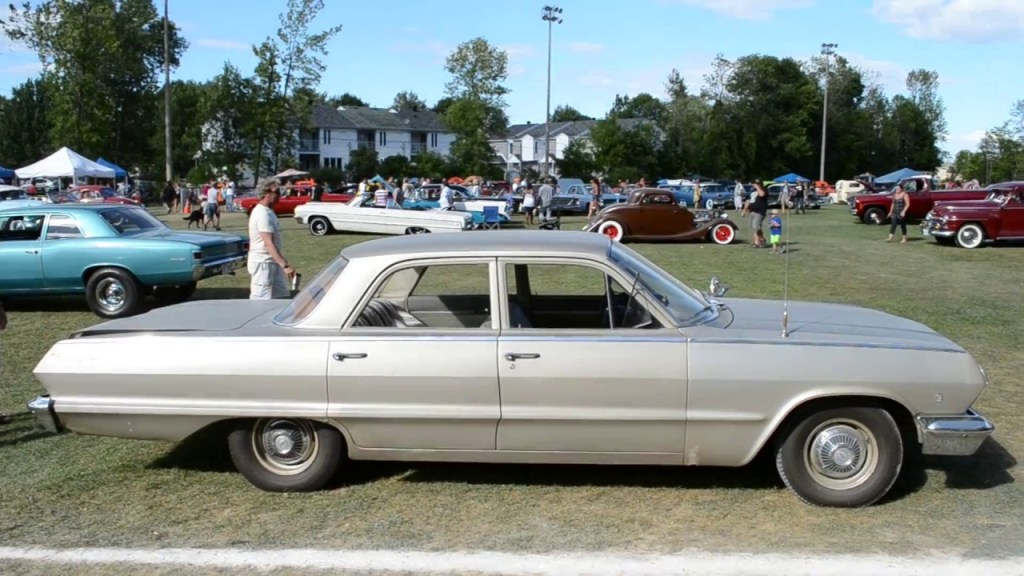
    – a Biscayne like Max Ntshingila’s –

    I had wondered vaguely all these years about something, and I never expected to get the answer. But Thandinkosi had the answer for me: That creamy-gold coloured yank tank Max drove was a 1963 Chev Biscayne. I just LOVE it that I finally did find out! Never thought I would or could.

    Thandinkosi still goes to Harrismith regularly to look after the house in Phomolong where he was raised. One of his nieces lives in it.

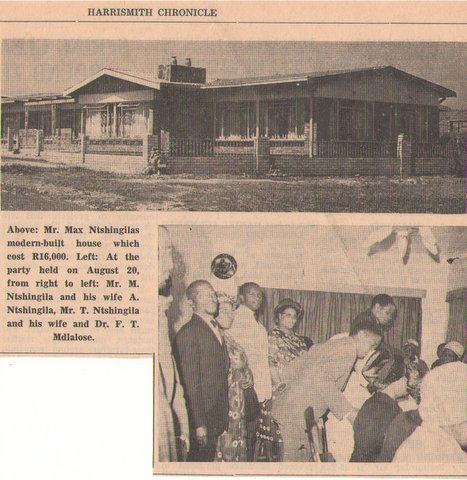
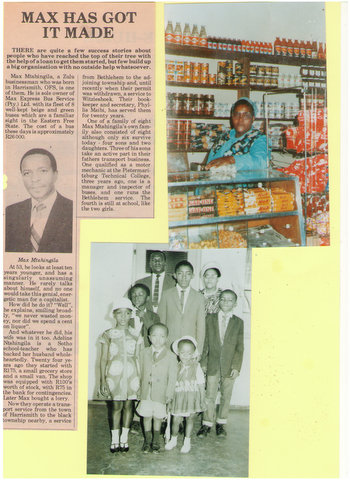
    Leon Strachan sent me some pictures and newspaper cuttings. Note how Dr Frank Mdlalose, who we only got to know of post-1994, when he became KwaZulu Natal’s first Premier, was a house guest of the Ntshingila’s in Harrismith.

    Max Express 3
    Max Express 4
    – snarky apartheid headline, methinks –

    ~~oo0oo~~

    Update: Today – 12 December 2019 – I saw Mr Thandinkosi Ntshingila again. I phoned him to come in so I could give him copies of these pictures. He’ll be 80 next year. I hoped he was one of the kids in the photo, but he wasn’t. Not one of the people in the photo are still alive, he tells me. They all died quite young. He’s the only survivor of that household. He was chuffed and moved to receive these mementos, and says he’s going to frame the family photo!

    – Mr Thandinkosi Ntshingila studies the photos –

    ~~oo0oo~~

    Dr Frank Mdlalose died in March 2021 of COVID-19. His wikipedia entry tells a lovely story: Representing the students at the segregated medical school in Durban, established by Jan Smuts for Black and Indian students, he attended the only conference of the Association of Medical Students of South Africa attended by students from one of the Afrikaans-medium medical schools. They had hitherto refused to attend if Black students were present. One of the Afrikaner students said, as the conference finished, “I thank the Chair for having organised this conference. This is the first time I have met a black man with an intelligence equal to, or superior to, my own.” To which Frank responded, “I, too, thank the Chair for having organised this conference. This is the first time I have met an Afrikaner with an intelligence equal to, or superior to, my own.”

    What a man!

    ~~oo0oo~~