I remember a lovely day, spectacular scenery, an easy river level, quite gentle, good company, lots of laughs, but very little else till near the end when we came to the only rapid we decided not to go ‘down the middle’!
Among us were (as I recall) Doug Retief, Martin Lowenstein, Marlene Boshoff, Pete Zietsman and Bernie Garcin. Around 1983 or 1984 I guess? I wonder who drove our vehicles?
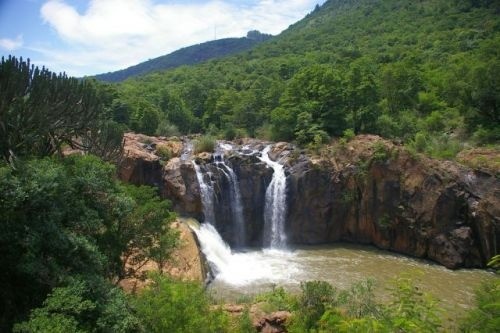
The rapid had a deep slot with the water dropping vertically over a ledge on three sides, a bit like a weir. Did someone call it The Coffin? We decided to take a sneak around it on the right and as I was on river left I started to ferry-glide across but lost my angle and decided ‘Too late, I’ll have to go for it’
I paddled hard and shot down into the slot, shuddered to a halt but then managed to pull away. All turned out alright, but I berated myself for a sloppy ferry-glide! Focus!
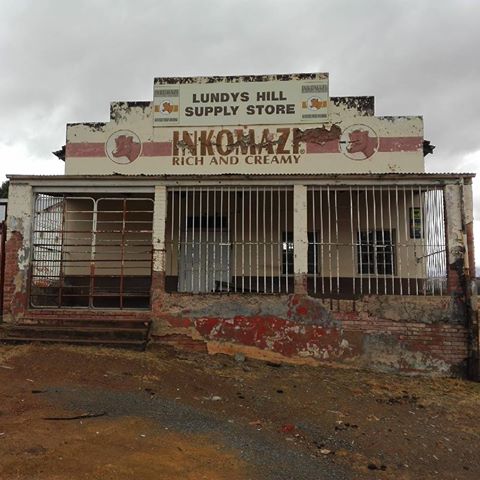
Don’t remember much else except a nice cold drink at this trading store on top of the hill. I wonder if anyone took a camera?
Map from paddler celliers kruger; photos from mapio.net – thanks!
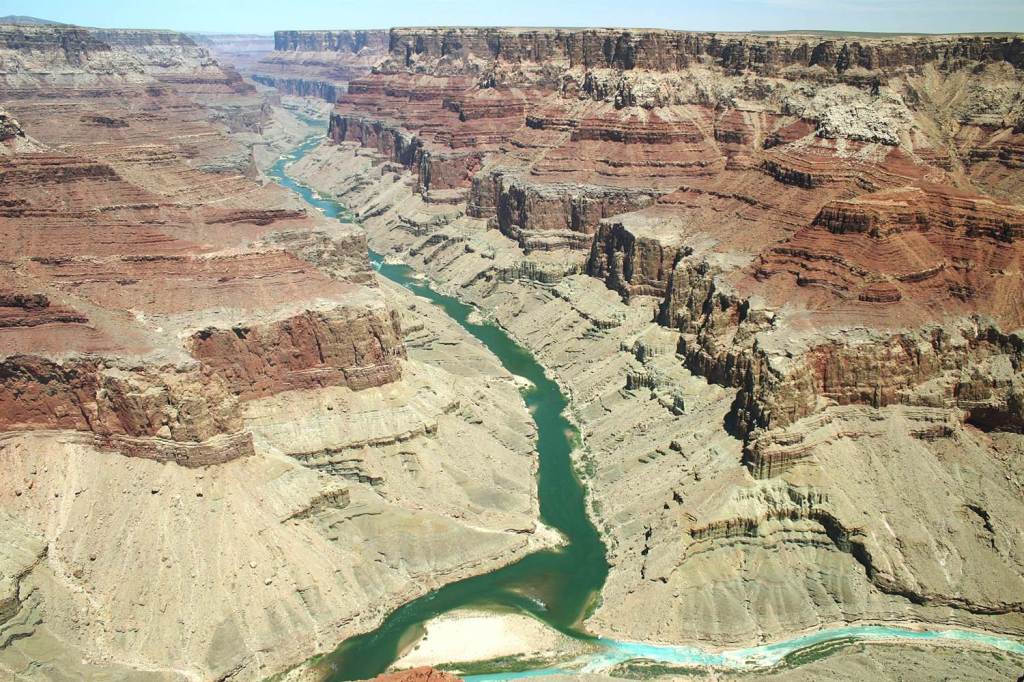
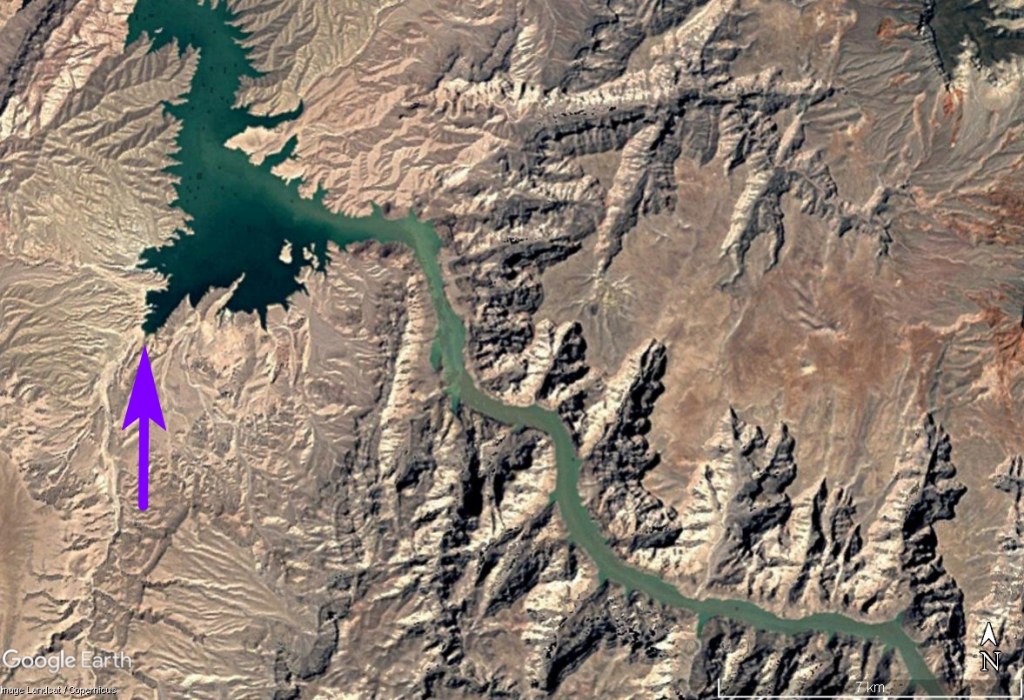
As the Colorado River coming down from the high Rockies in Colorado state carves a deep canyon through the Arizona desert, it is met by the Little Colorado, coming from dryer country in Eastern Arizona and Western New Mexico – bottom right in the picture.
Approaching the confluence, the Little Colorado River carves an extremely steep and narrow gorge into the Colorado Plateau, eventually achieving a maximum depth of about 980m. The depth of the canyon is such that numerous springs restore a perennial river flow.
It joins the Colorado deep inside the Grand Canyon, miles from any major settlement. The confluence marks the end of Marble Canyon and the beginning of Upper Granite Gorge.
It’s a remote and peaceful place which can only be reached by river craft or by a long steep hike into the canyon.
Some developers thought it would be a good idea to put 3km of cable cars or ‘aerial trams’ and walkways down from the South Rim to the confluence, aiming to transport ten thousand paying guests a day down to this special place which they could then reach without effort, scoff fast food at a McD or KFC joint and zoom up out again. They planned the hideous Grand Canyon Escalade:
They planned to ruin a special place. Luckily Canoe & Kayak Magazine reports the Navajo Nation Council voted 16-2 against the development proposal on 31st October 2017. The proposal by developers Confluence Partners from Scottsdale, Arizona, also included a 420-acre commercial and lodging “village” on the rim, huge restrooms, an RV park, gas station, helipad, restaurants, retail shops, motel, luxury hotel, the ‘Navajoland Discovery Center’ and additional infrastructure.
Under the proposal, the tribe would be on the hook for an initial $65 million investment for roads, water and powerlines and communications, while providing a non-revocable 20-year operating license including a non-compete clause. In return, the Navajos would receive just 8 percent of the revenue. A “totally one-sided” and “rip-off” proposal, it met with a cold reception since project lobbying began seven years ago. Even after lengthy debate during the council’s special session led to significant amendments, overwhelming opposition to the project remained, prompting council delegates to pound a stake through its heart.
“We never said we were against economic development but, please, not in our sacred space,” activist Renae Yellowhorse from Save the Confluence said afterward. “We’re going to always be here to defend our Mother, to defend our sacred sites.”
Greedy developers, including some Navajo leaders, aim to try again, so vigilance is called for. Bottom line: There is no need for casual in-and-out tourists to ruin a special area when they can see pictures, videos and even 360º videos – even live footage – without crowding and ruining the place. We must be careful not to turn genuine natural areas into theme parks! We cannot re-create these places. They are not movie sets, they are real, often sensitive, ecosystems.
~~oo0oo~~
When we got there in 1984 the rivers were running strongly, the Colorado at 50 000cfs, clear from deep in Lake Powell, and the Little Colorado running rich red-brown (“colorado”) from a flash flood upstream. Here you can see the waters starting to mix. From here on we had brown water all the way to Lake Mead.
 And Colorado River water should be brown: Colorado means “ruddy, reddish.” Literally “colored.” Past participle of colorar “to color, dye, paint.” From Latin colorare.
There’s a Crocodile River in Gauteng, so the river near Nelspruit that flows east into Mocambique and forms the southern boundary of the Kruger National Park has to be called the “Lowveld Croc”.
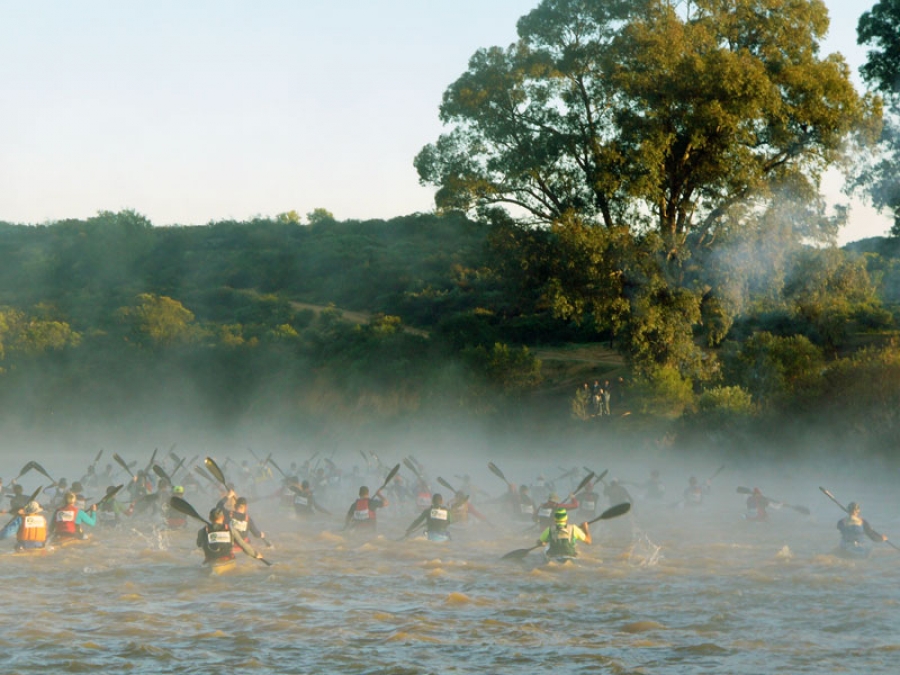
A wonderful canoe (kayak really) race is held annually on this river. The presence of hippopotamuses in the river adds a risk and a thrill to the two-day race. Race organisers engage with local farmers and wildlife people and trip the river in the weeks before the race in order to identify possible hippo hotspots which are then compulsory portages on race days. Sometimes a helicopter is used to do a scouting flight on race day morning, and volunteer paddlers also scout the route by starting ahead of the competing racers.
The year I did the race (1983) I remember the route as from above Montrose falls to Mbombela town (formerly Nelspruit). We portaged around the falls.
The hippo were in the last pool before the finish in Nelspruit, so the race was ended a few km short at the last accessible spot before the hippo pool. I see they now start higher up and end the race above Montrose falls.
~~~oo0oo~~~
Here’s video of the 1989 race. The second day here was our first day. We portaged around the Montrose Falls and paddled to Nelspruit (today’s Mbombelo). Actually, just short of town, as hippos in a pool at the usual finish dictated we end a couple km early.
~~~oo0oo~~~
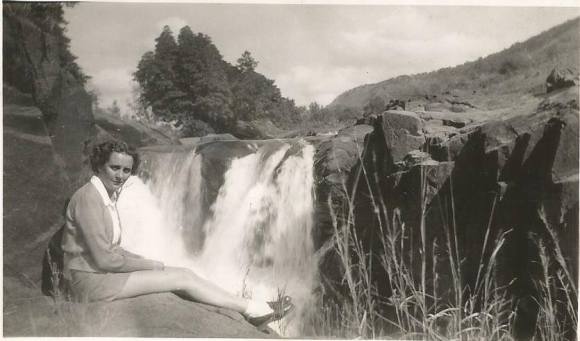
Back in 1951 Mom and Dad had stopped here on honeymoon, on their way to Lourenco Marques:
Dukandlovu rustic camp was underutilised. Parks Board wanted to increase its use and were looking for new ideas. It was a walk-in or cycle-in rustic camp and they were reluctant to open it up to drive-in access, so wanted to try other ideas first.
Rustic, but splendid, it’s a four hut, eight bed camp with basic kitchen facilities and cold water showers. The widows are openings with roll-down reed blinds which keep about half the wind and none of the mozzies out. The beds had mattresses, but bring your own bedding.
It was doomed. So few people want to rough it! Not ‘nowadays’ – always. Since humans first walked upright the majority have chosen the cushiest of whatever’s available. ‘I prefer roughing it’ has always been the weirdness of a few.
– our pic – the rest are internet pics –
But the rugged few in Parks Board were reluctant to give in too easily, so first they tried us: “Let’s test the feasibility of adding canoeing-in to the access menu!” they said. Robbie Stewart was approached and he took Bernie Garcin and I (and others – who?) to test the waters. Literally. We set off with our plastic kayaks to False Bay, launched them and headed south towards the mouth of the Hluhluwe river on the Western Shores. Right from the outset we could see this wasn’t promising: We touched bottom often. Our draft was mere inches, but the lake was that shallow in places. Great for small worms and other marine creatures and for the wading birds that spear them from above, but not good for paddling. Oh well, we had tried. Not long after this they actually did open it to vehicle access. With a sigh, I’ve no doubt.
After staying a night the rest of the guys went home on the Sunday. I stayed over with Parks Board Rangers Dick Nash and Trevor Strydom. Monday morning I woke, eagerly looking forward to my day of ‘rangering’. What derring-do would we get up to with me as ‘ranger-for-a-day’?
Paperwork at a desk, that’s what. As head ranger, Dick first had a whole bunch of admin to sort out! Not what I’d imagined.
But later we got going on their regular bird count in the wilderness area in the north-east arm of the lake. We set off in their spacious craft with a Hamilton jet propulsion system (an impellor rather than a propellor, it sucks water in the underbelly and spits it out the back). This was fine in clear deep water, but when we nosed up the Mkhuze river we soon sucked up waterweeds and came to a halt. Dick pulled rank and ordered Trevor to jump overboard and remove the weed from under the boat. On the bird count we had seen at least fifty thousand and ten of their distant cousins – crocodiles – so the thought of jumping overboard was not inviting! Anyway, before Trevor could remove his shirt Dick was already under the boat doing it himself. A bit disconcerting when you looked at his hand as he chucked the weed away: He only had two fingers and a thumb. Had a croc taken the other fingers?
Looked like this, but I think this is maybe Kosi?
We got going again in fits and starts and after a few more stops to clear the impeller we turned back to the lake and continued to count birds. And thumb our noses at the crocodiles.
So do go to Dukandlovu, you can drive there now. You wimp.
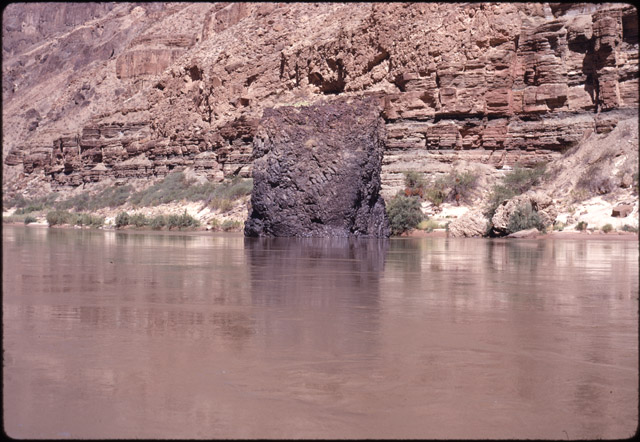
Hance Rapid at Mile 76.5 stands sentinel at the Colorado river’s entry into the Granite Gorge. The river drops 30 feet as it passes through a natural constriction formed by the Red Canyon. The dark dike cutting through the red Hakatai Shale is one of the most photographed features in the Canyon.
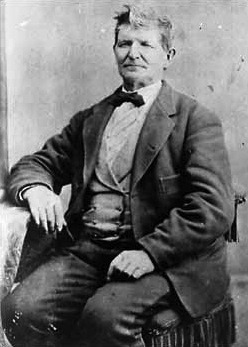
I found out more about the man the rapid was named after:John Hance (1840 – January 8, 1919) – thought to be the first non-native resident of the Grand Canyon.
He opened the first tourist trail in the canyon before the canyon was a national park, giving tours of the canyon after his ca.1866 attempts at mining asbestos failed. “Captain” John Hance was said to be one of the Grand Canyon’s most colorful characters, and one early visitor declared that “To see the canyon only and not to see Captain John Hance, is to miss half the show.”
Hance delighted in telling canyon stories to visitors, favoring the whopper of a tale over mere facts. With a straight face, Hance told travelers how he had dug the canyon himself, piling the excavated earth down near Flagstaff (thus ‘explaining’ those mysterious then-unexplained dirt piles).
– wikipedia and archive.org –
John Hance died in 1919, the year the Grand Canyon became a National Park, and was the first person buried in what would become the Grand Canyon Pioneer Cemetery.
In May 1891 one Charley Greenlaw wrote this in John Hance’s guestbook: I can cheerfully say that this, the Grand Canon of the Colorado River, is the grandest sight of my life. As I noticed in this little book of Capt. John Hance, a great many people say ‘indescribable.’ I can say nothing more. It is beyond reason to think of describing it in any way. You must see it to appreciate it. A grand sight of this kind and so few people know of it. By accident I formed the acquaintance of two ladies en route to the Grand Canon. I joined them. We have enjoyed our trip; the stage ride from Flagstaff to the Grand Canon is grand. Good horses, competent and accommodating drivers. I have seen the Yosemite, have visited California several different times, in fact seen all the principal points of interest in the United States, but the most wonderful, awe-inspiring piece of Nature’s own work is this, the Grand Canon of the Colorado River.
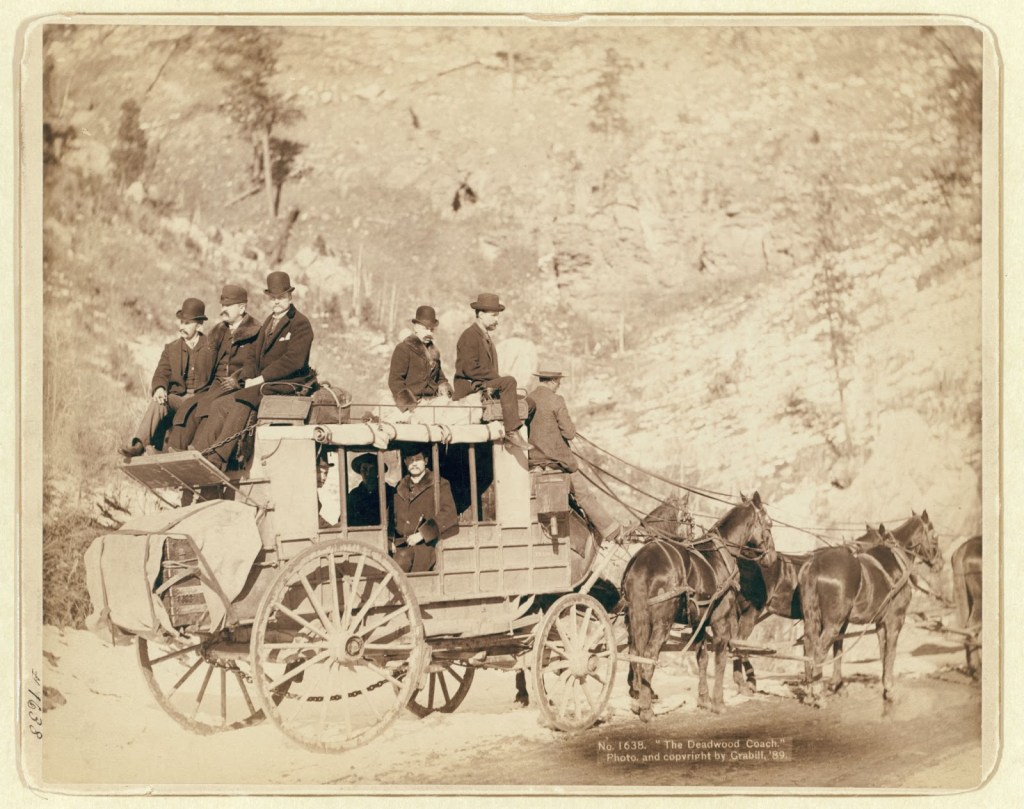
Another Hance guestbook entry by J. Curtis Wasson told of the twelve hour stage coach journey after alighting from the Santa Fe Railroad Company’s train: From Flagstaff at 7 o’clock a.m. our stage-and-six goes out. Arriving at Little Springs Station, where a new relay of six horses is added, we make haste until the half-way station is reached, passing through a fine unbroken forest of Pinus ponderosa, quaking aspen, balsam fir, and spruce. The open forest, the waving grasses, the gorgeously colored mountain flowers, the occasional chirp of the forest songsters, the ice-cold springs traversing our smooth compact road, the peaks, clear-cut and massive, towering up nearly 14,000 feet into the blue above, the low rumbling of our great Concord stage, the sound of two dozen hoofs, the sharp crack of the driver’s whip, the clear, bracing atmosphere, every breath of which seems to stimulate, the indescribably beautiful Painted Desert outstretching for a hundred miles to our right.
– a stage-and-six – high-speed travel –
One fain would linger on scenes like these but we have arrived at Cedar Station, and after partaking of a very refreshing luncheon we are given a new relay of horses and hasten over the desert portion of our ride to Moqui Station, where another relay is provided, which takes us to the hotel at the rim of the Grand canon, where we arrive at 7 o’clock p.m.
Leaving our Concord stage, giving our grips to the porter, not even waiting for “facial ablutions,” we hasten across the yard and up to the rim of the canon, when, looking over — the Chasm of the Creator, the Gulf of God, the Erosion of the Ages, that Erosive Entity, that Awful Abyss, lies in all its awfulness before us, — awful, yet grand; appalling, yet attractive; awe inspiring, yet fascinating in its greetings.
This story will be fuzzy in parts because of the long passage of time. But although some details may be slightly different, ‘strue. So I must tell the tale before those last few grey cells that hold the memory get blitzed by the box wine.
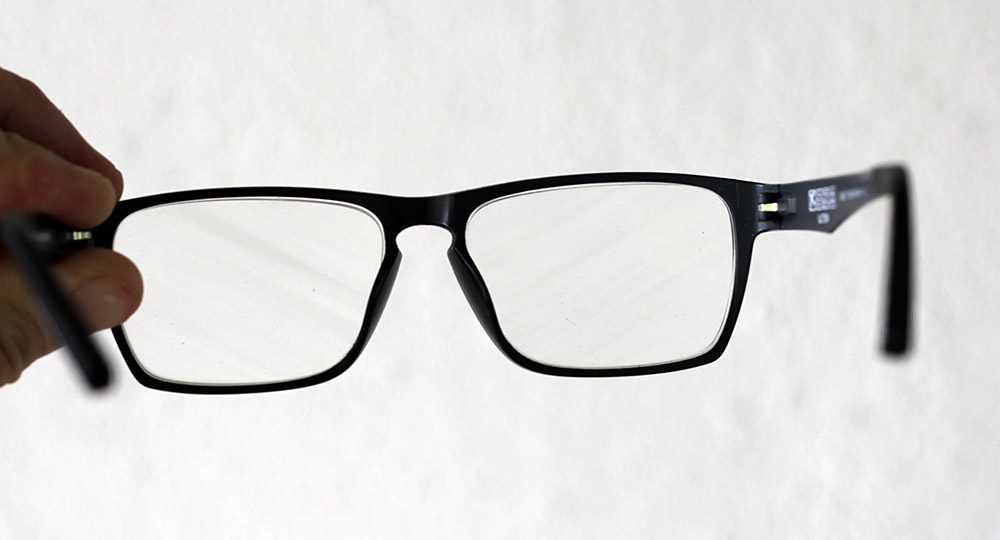
It was on the Berg River Canoe Marathon that Christof Heyns came to tell me was pulling out of the race. Why!? I asked, dismayed. He’d fallen out in the frigid flooded Berg river and lost his glasses. Couldn’t see past his nose, so it was way too dangerous to carry on in the mid-winter Cape cold and the flooding brown water in the gale-force wind that was the 1983 second day.
Hell, no, I said, I’ve got a spare pair, you can use mine.
He rolled his eyes and smiled sadly at my ignorance. His eyes were very special, his glasses were very thick and there was no way just any ‘arb’ specs would do, he mansplained patiently. In his defence, he didn’t know I was an optometrist, that I was wearing contact lenses, that I had a spare pair of specs in my luggage and another tied to the rudder cable in my boat; nor could he know that I had a very good idea of what his prescription was from seeing his glasses on his nose both on this race and on a Tugela trip we had been on together earlier. I knew about his eyes better than he knew about my soul (he might have known a bit about that, as his Dad was a very belangrike dominee in the Much Deformed Church – top dog, in fact).
So I said, trust me swaer and went and fetched my spares. He put them on and was amazed. I can see! he shouted like I was Jesus who had just restored his sight. I know, I said.
So he wore the glasses and finished the race and I said keep them till we next meet.
Many months later I saw an article in the SA Canews, the paddling magazine, titled: “My Broer se Bril”. Christof wrote the story of how he had lost hope when some arb oke said “Here, try mine” and he could see! And he could finish the race.
He ended off by saying “Actually they were so good I’m wearing them to this day”. Ja, you bugger, I know, I thought. I could have written an article “How a dominee’s son appropriated my bril,” but I didn’t. I’m way too kind! In his defence, we haven’t seen each other since that race.
. . and today – April 2021 – I heard he died, aged only 62. Damn!
~~~oo0oo~~~
belangrike dominee – important churchman; flock leader; the lord is my shepherd, I am a sheep;
swaer – bro;
my broer se bril – my brother’s spectacles;
mansplain – when a man laboriously, carefully and ‘kindly’ explains something to you that you already know; usually inflicted on women;
Lee’s Ferry on the right bank of the Colorado River, just above the mouth of the Paria River, at an elevation of 3,170 feet asl is the site of the start for most river trips through the Grand Canyon.
Originally called Lonely Dell by Mormon church-man with 19 wives and 67 children John D Lee, who established the ferry in 1872, it provided the only access across more than 300 miles of river for many years. Actually one of Lee’s 19 wives, Emma ran the ferry for a number of years while he was on the lam – hiding from the law for his leading part in the wicked 1857 Mountain Meadows Massacre.
The massacre near St George, Utah involved a group of emigrants known as the Fancher Party trekking west from Arkansas who were camped at Mountain Meadows in southern Utah preparing for their final push across the Mohave Desert when they were attacked by a group of Mormon Militia who disguised themselves as Native Americans so as to cowardly deflect blame for the attack.
It was a time of great tension between Mormons and the rest of the United States, and the massacred party was most likely attacked because they were not Mormons.
After an initial siege, the treacherous Lee approached the emigrants saying he’d negotiated safe passage for them with protection from their supposed Native American attackers if they surrendered their weapons. The group agreed, whereupon the militia proceeded to kill all but the children under 8 years of age.
One hundred and twenty men, women and children died that day. For almost two decades, the incident was covered up, but in 1874, Lee was brought to trial. Never denying his complicity in the massacre, Lee did insist – probably correctly – that he was acting on orders from high up in the church. He was the only one of about fifty men involved in the massacre to be brought to book. He was convicted and executed by firing squad in 1877.
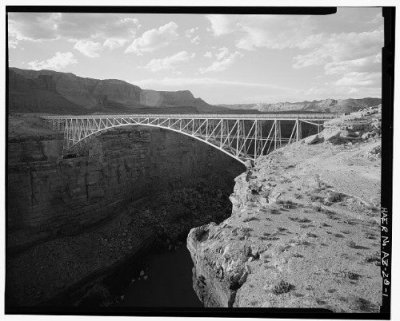
His widow Emma Lee sold the ferry in 1879 for 100 milk cows to the Mormon Church who continued to operate it until 1910 when it was taken over by Coconino County, Arizona. The ferry stayed mostly in use until 1929 when the Navajo Bridge was completed. Ironically, the ferry was used to ship much of the material to build the bridge that put it out of business.
1984: There was only one bridge when we crossed to the right – or ‘north’ (rivers only have left or right banks – think about it) – bank of the river. It was completed in 1929. A larger parallel second bridge was added in 1995. The bridge we crossed is now used for pedestrian sight-seeing.
Now: To make sure there are no misunderstandings, our John Lee on the 1984 trip down the Colorado is a good ou who, at that stage, had zero wives:
That’s what Jacques de Rauville told my business partner when he heard I was going to do the 1983 Berg River Canoe Marathon. He had come across me one evening on the Bay and I’d asked which way to go, it being my first time out there and the lights and the reflections were confusing. “Follow me” said Jacques, and off he went, but within 50m I was 49m behind him. He waited and told me “Left at the third green buoy” or whatever he said. When he passed me again on his way back and I obviously hadn’t made enough headway, he thought whatever he thought that made him tell his optometrist Mike Lello: “Tell Pete Swanie not to attempt the Berg.”
Jacques was probably right, but he was a bit of a fusspot as far as preparations go. I thought. Luckily for me friend and all-round good bugger Chris Logan was also dubious about my fitness, so he took me for a marathon training session on the ‘Toti lagoon one day which got my mind around sitting on a hard seat for hours on end, numbing both my bum and my brain.
Chris was a great taskmaster. We stopped only once – for lunch (chocolate and a coke, it was early Noakes, not Banting Noakes. Also, according to Noakes, It’s not your muscles that limit you; it’s your brain. See, Noakes said my muscles were fine). So Chris selflessly sacrificed a day of his training intensity to stay with and encourage this TapTap Makathini mud-paddler. Before Chris, my training method entailed using the first half of a race for training, then hanging on grimly for the second half, going slower and slower till the finish. Between races, I would focus on recovery, mainly using the tried-and-tested cold beer and couch methodology.
We set off for Cape Town in my white 2,0l GL Cortina, me and Bernie Garcin the paddlers and sister Sheila and mom Mary to drive the car while we paddled. I was feeling invincible from my full day of training.
The night before the first day of the race in Paarl, the race organisers pointed out a shed where we could sleep. Cold hard concrete floor. Winter in the Cape. Luckily I had been warned and had brought along a brand-new inflatable mattress and an electric tyre pump that plugged into my white 2,0l Cortina GL’s cigarette lighter socket. So I plugged in and went for a few beers.
*BANG* I heard in the background as we stood around talking shit and comparing paddling styles and training methods. I wondered vaguely what that was. The bang, as well as ‘training methods.’ A few more beers later we retired to sleep and I thought, “So that’s what that bang was” – a huge rip in my now-useless brand-new no-longer-inflatable mattress, and the little pump still purring and pumping air uselessly into the atmosphere. So I slept on the concrete, good practice for a chill that was going to enter my bones and then my marrow over the next four days.
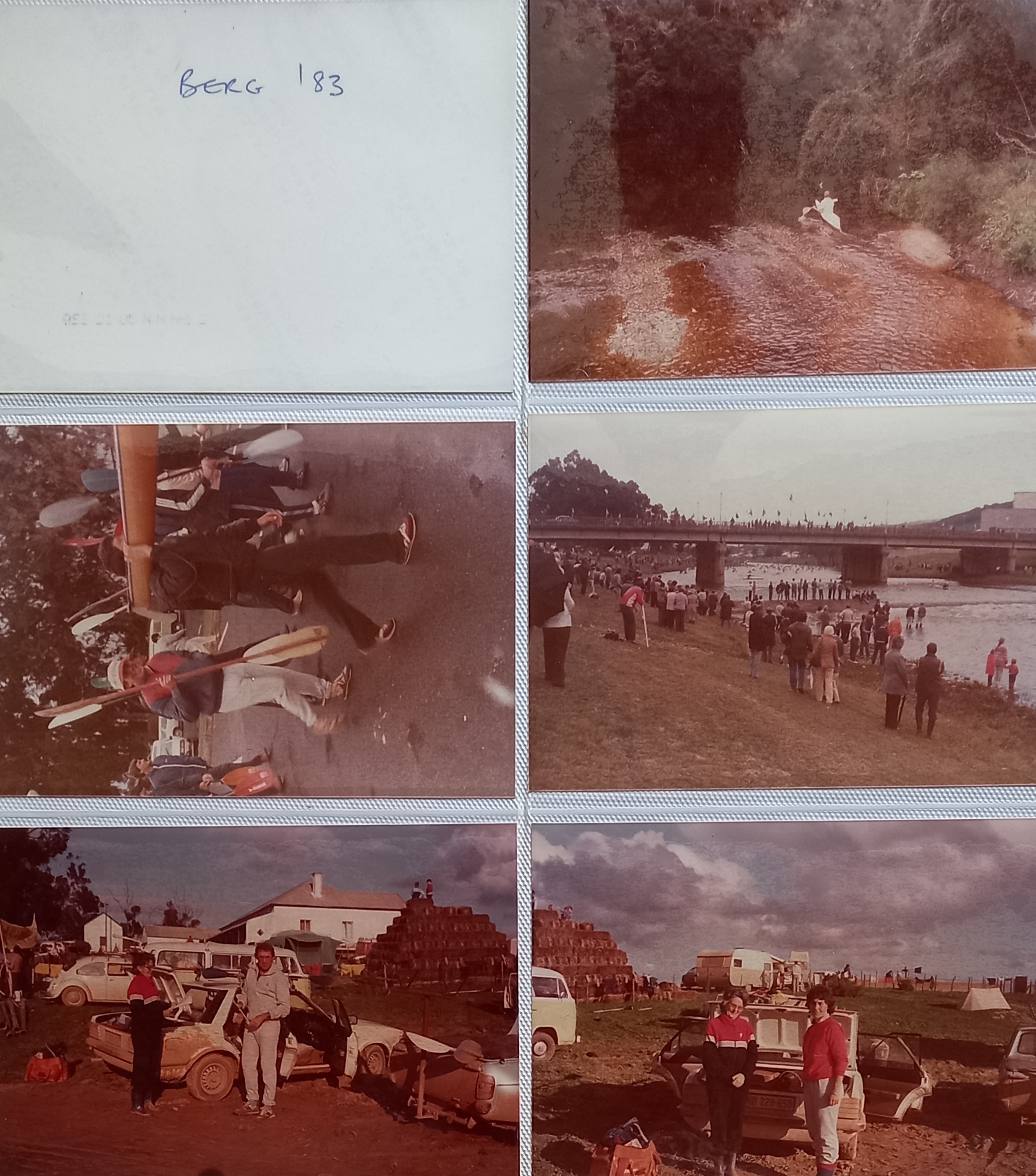
The first day was long, cold, windy and miserable, but the second day on the ’83 Berg made it seem like a balmy breeze. That second day was one of the longest days of my life! As the vrou cries it was the shortest day – those Cape nutters call 49km of ice a short day – but a howling gale and horizontal freezing rain driving right into your teeth made it last forever. Icy waves continuously sloshing over the cockpit rim onto your splashcover. It was the day Gerrie died – Gerrie Rossouw, the first paddler ever to drown on an official race day. I saw him, right near the back of the field where I was and looking even colder than me. He wasn’t wearing a life jacket. It wasn’t macho to wear a life jacket and I admit that I wore my T-shirt over mine to make it less conspicuous and I told myself I was wearing it mainly as a windbreaker. Fools that we were. Kids: Never paddle without a life jacket.
Later in amongst a grove of flooded trees I saw Gerrie’s boat nose-down with the rudder waving in the wind, caught in the underwater branches, and I wondered where he was, as both banks were far away and not easy to reach being tree-lined and the trees underwater. Very worrying, but no way I could do anything heroic in that freezing strong current. I needed to stay afloat, so I paddled on to hear that night that he was missing. His body was only found two days later.
Mom and Sheila second us in the mud
That night a bunch of paddlers pulled out. Fuck this, they said with infinite good sense. Standing in the rain with water pouring down his impressive moustache my mate Greg Jamfomf Bennett made a pact with the elements: He would paddle the next day IF – and only if – the day dawned bright, sunny and windless. He was actually saying Fuck this I’m going home to Durban where ‘winter’ is just an amusing joke, not a serious thing like it is here. He and Allie were then rescued and taken out of the rain to a farmer’s luxury home where about six of them were each given their own room and bathroom! Bloody unfair luxury! This then gave them an advantage and allowed them to narrowly beat me in the race! By just a few hours. Per day.
– me and my lady benefactor –
After devouring a whole chicken each, washed down with KWV wine and sherry supplied by the sponsors, us poor nogschleppers climbed up into the loft on the riverbank and slept on the hard floor. Here I have to confess Greyling Viljoen also slept in the loft and he won the race – which weakens my tale of hardship somewhat.
We braced ourselves for the third – and longest – day . . . which turned into the easiest day as the wind had died and the sun shone brightly on us. ‘The clouds dissolved and the sky turned blue’ – thanks to Jamfomf’s arrangement with the weather gods I spose? So the long day became a really pleasant day which seemed half as long under blue skies – even though it was 70km compared to that LO-ONG 49km second day.
Before the start Capies were seen writhing on the ground, gasping, unable to breathe. They usually breathe by simply facing into the wind and don’t have diaphragm muscles. So a windless day is an unknown phenomenon to those weirdos. At the start, about ten Kingfisher paddlers bunched together in our black T-shirts: Allie Peter, Jacques de Rauville, Herve de Rauville, Bernie Garcin, Dave Gillmer, who else? Greg Bennett was also there, to his own amazement. I hopped on to their wave and within 50m I was 49m behind. I watched the flock of black T-shirts disappear into the distance. I was used to that. Anyway, I have my own race tactics.
By the fourth day I was getting fit. I was building up a head of steam and could have become a threat to the leaders. Or at least to the black T-shirt armada. I could now paddle for quite a while without resting on my paddle and admiring the scenery. I paddled with – OK, behind, on her wave – a lady paddler for a while, focused for once. Busting for a leak, I didn’t want to lose the tug, so eventually let go and relieved myself in my boat. Aah! Bliss! But never again! I had to stop to empty the boat before the finish anyway (the smell! Must be the KWV sherry), so no point in not stopping to have a leak. I caught up to her again and finished with her, as can be seen in the pic.
Not that there will be a next time! Charlie’s Rule of Certifiability states quite clearly “Doing the Berg More Than Once Is Certifiable.” And while Charles Mason may have done fifty Umkos he has done only one Berg. Being a lot more sensible, I have done only one of each.
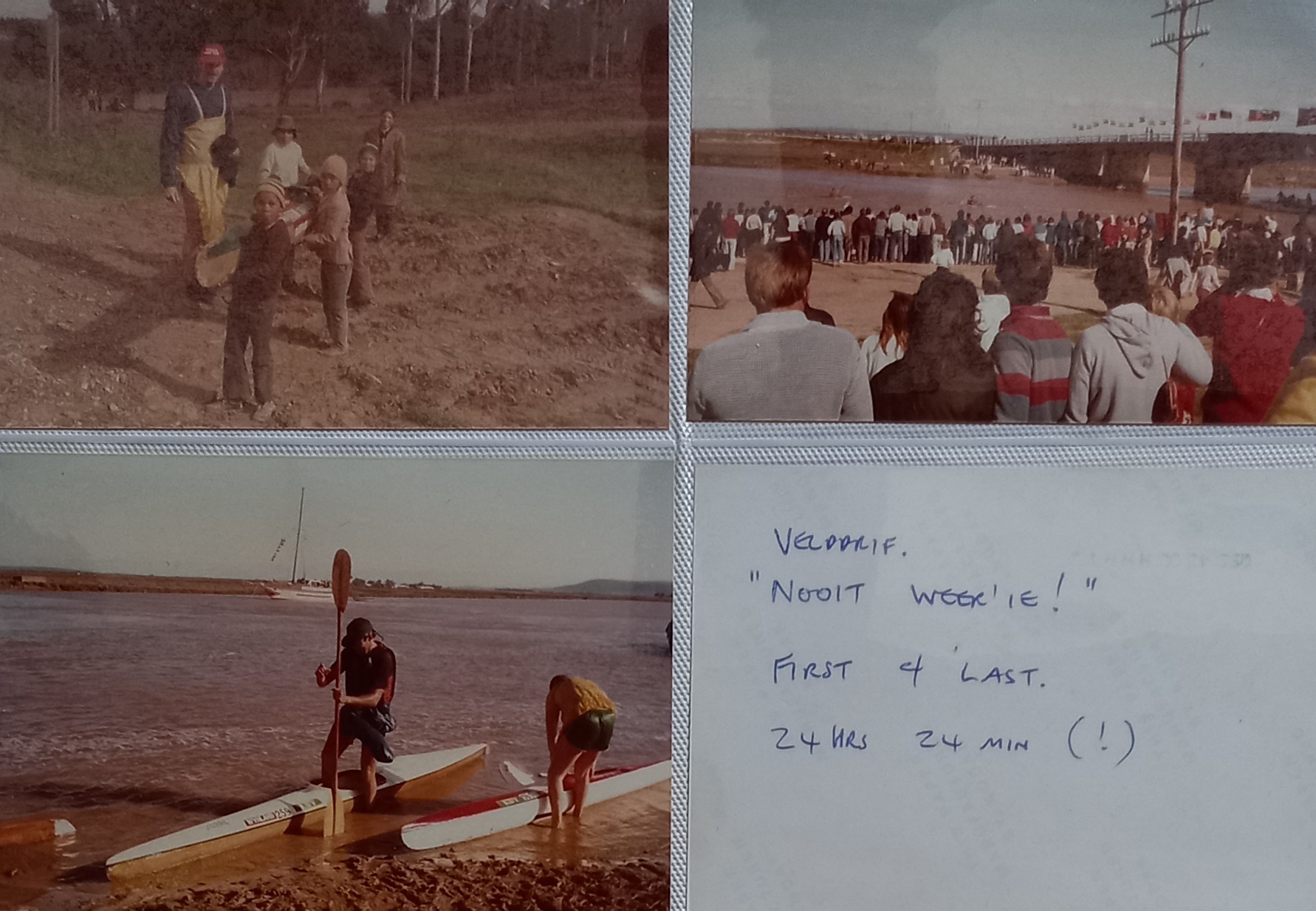
Greyling Viljoen won the race in 16hrs 7mins; I took 24hrs 24mins and probably 24 seconds; 225 maniacs finished the race; I was cold deep into my spinal bone marrow.
The freezing finish at Velddrif at last!
– at this stage when asked, you say, ‘Fine. It was nothing. No problems’ –
The Velddrift Hotel bed that night was bliss with all my clothes on and the bedclothes from both beds piled on top of me. In Cape Town the next day I bought clothes I couldn’t wear again until I went skiing in Austria years later. Brrrr!! Yussis! Nooit! The Berg joins quite high up on my list of ‘Stupid Things I’ve Done’. Top of which is the Comrades Marathon Which is also the only ‘Stupid Thing I’ve Done and Not Even Finished.’
~~oo0oo~~
Some interesting stats and numbers for the Berg River Canoe Marathon
241km from Paarl to Velddrif. Four days of approx 62, 46, 74 and 60km. 46 300 – The estimated number of paddle strokes required to complete the Berg
I thought ours was a really high-water Berg. At 19cumecs it was the 7th highest of the 21 Bergs up to then. But since then the river has often been higher and 1983 is now only the 21st highest of 55 races. The very first race in 1962 was a staggering 342 cumecs! Liewe bliksem! The lowest in 1978 was a mere 1.44 cumecs. You could almost say fokol.
Only twice – in 1965 and 1967 – was the overall winning time more than 21 hours (I took 24hrs, but that’s OK, I didn’t win). The fastest overall time: 13hrs 20mins. Giel doesn’t make mistakes, so I must have the 1983 time wrong.
Five paddlers have completed 40 or more Bergs. Giel van Deventer – Berg Historian, who compiled these facts – has finished the race 45 times! In the book on the Umko canoe marathon I wrote in a draft which I sent to him “the Berg, over 200km long” and he hastened to write to me saying “Pete, it’s 241km long, don’t get it wrong.” I changed it to 241km. (note: Giel went on to do 50 Bergs, then sadly drowned in the Breede river race. Thank goodness though, he did travel to Natal to do ONE UMKO! ).
One of the toughest years was 1971. Only 49% of starters finished – the lowest percentage so far. The oldest finisher of the Berg, Jannie Malherbe was 74 when he did that crazy thing in 2014. He made our Ian Myers in 1983 seem like a spring chicken.
1 401 – The number of paddlers who have completed one Berg only. Us sensible ous. 2 939 – The number of paddlers who came back for at least one more – maniacs!
Andy Birkett won the Berg in 2016. He makes no bones about the fact that the grueling race takes its toll, even on well conditioned paddlers. “Flip, it was tough!” he recalls. “It was cold, putting on beanies and two or three hallies and long pants when you are busy paddling. But that is all part of it.” He speaks of how one needs to discreetly tuck in behind the experienced local elite racers, particularly on the earlier sections of the course where local knowledge through the tree blocks and small channels is important.
~~oo0oo~~
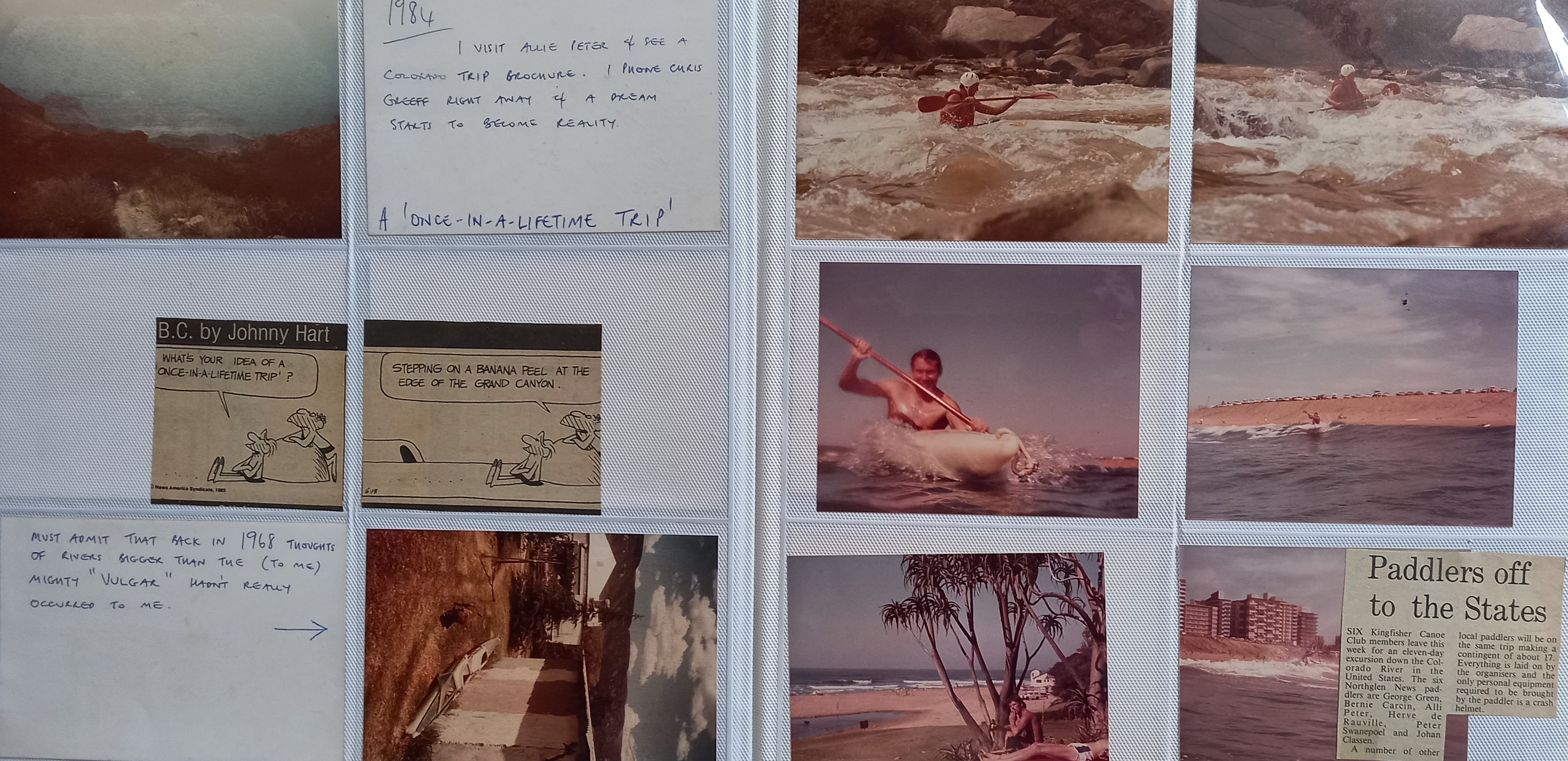
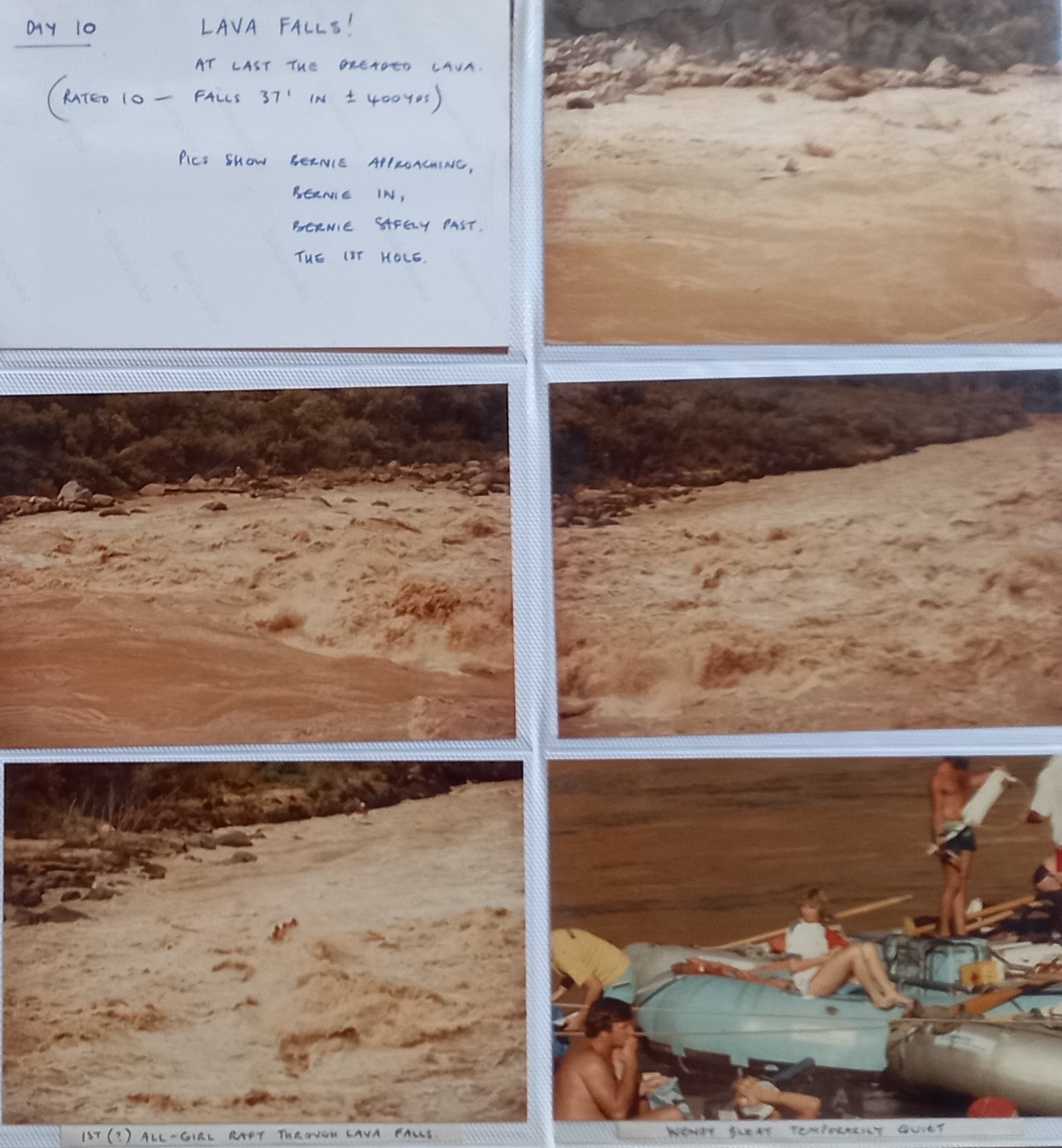
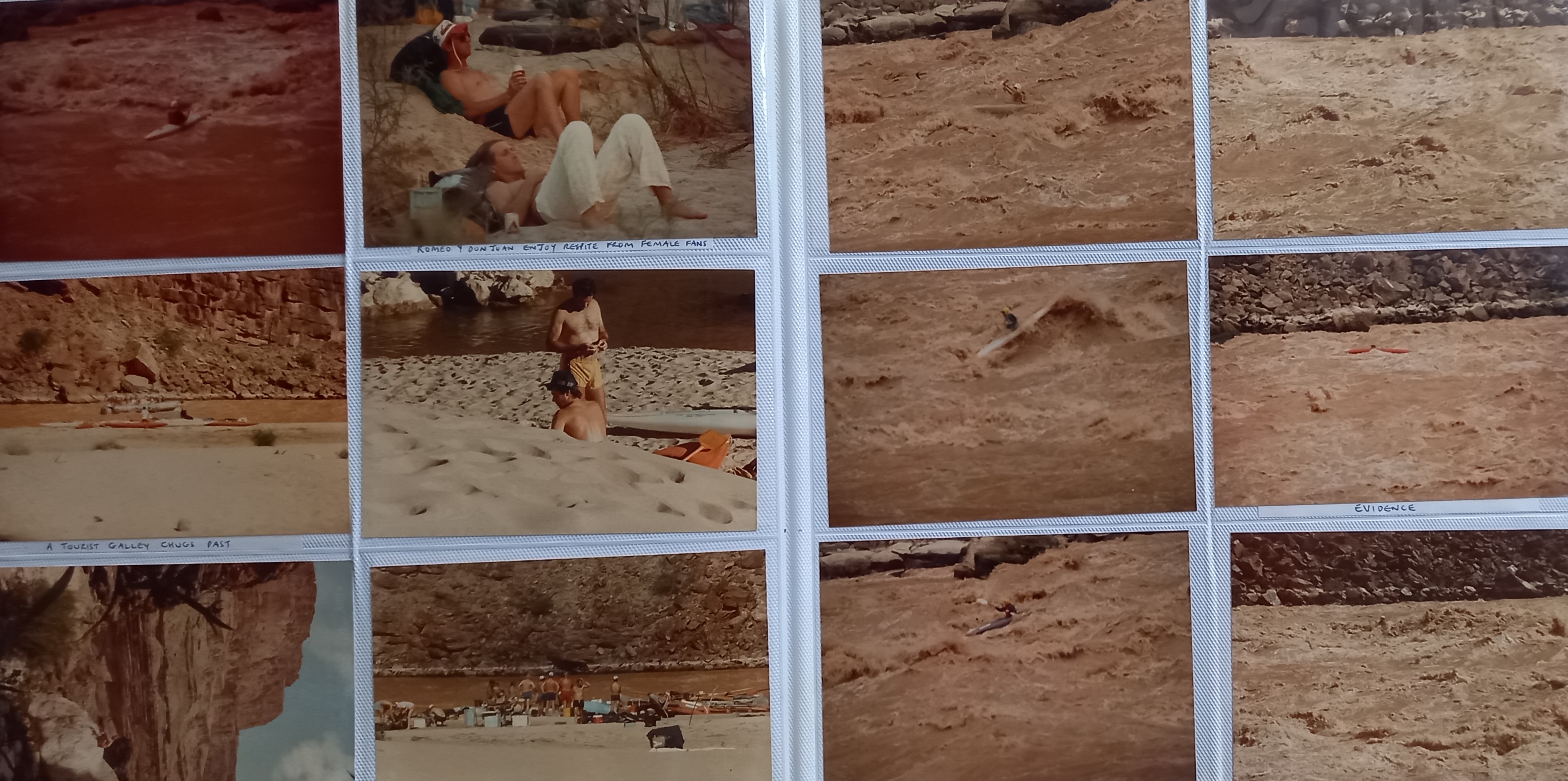
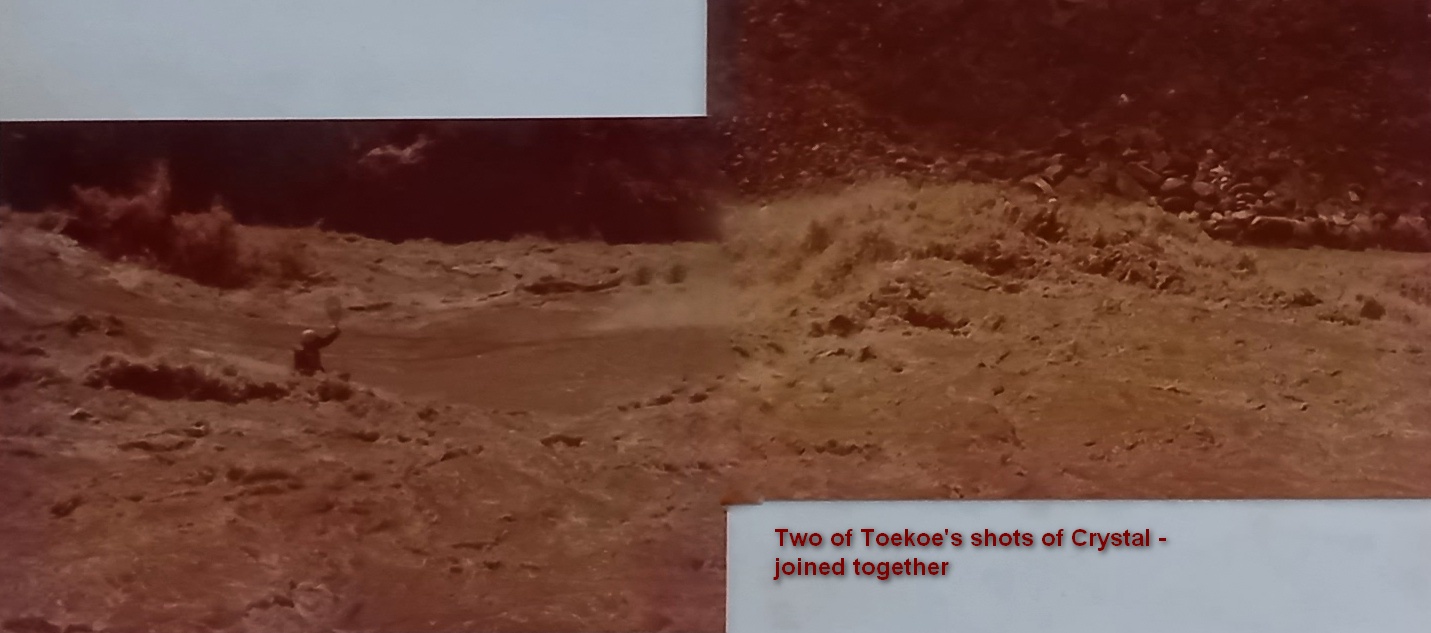
Photo albums are history, so here’s a digital copy of my now discarded hard copy. Thanks to sister Sheila for the pics.
Tshwane – An interesting place, Tshwane, famous for the protection of its inebriates.
Home of the Self-Guided Car
– Brauer crashes Audi into school, dances on roof –
Few people know that Pretoria Boys High, Audi and Elon Musk were secretly piloting a new self-driving car in Tshwane when their test pilot, one PH Brauer, Esq, pulled out of the program for reasons unknown, although rumour has it his wife gave him a thick ear one evening after golf. Details are sketchy, as is the test pilot, a Pretoria Boys High old boy. A PHB from PBH you could say. Some of the project’s left-over funds were spent re-building a school wall. You’d think they would speed up the research, cos some people really do need to have their steering wheel removed – as in the top picture.
So that didn’t really work out.
Home of the Amphibious Canoe
– roof about to be danced on –
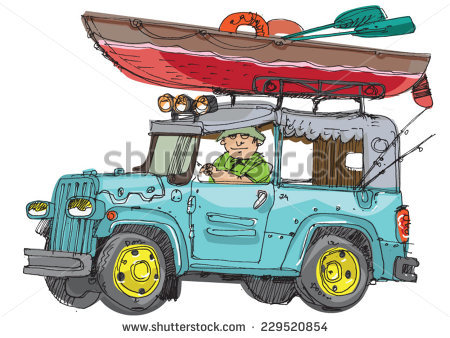
OK, that didn’t work so well either, but at least there was no ongeluk thanks to the presence of two more responsible parties and the same long-suffering wife who took over the wheel of a high-powered vehicle at a crucial point when the inebriated one on the white Ford Cortina roofrack, one PH Brauer, Esq, thought paddling the Dusi was as easy as running Comrades.
Home of the Original Toilet Bowl Airbag
– toilet airbag –
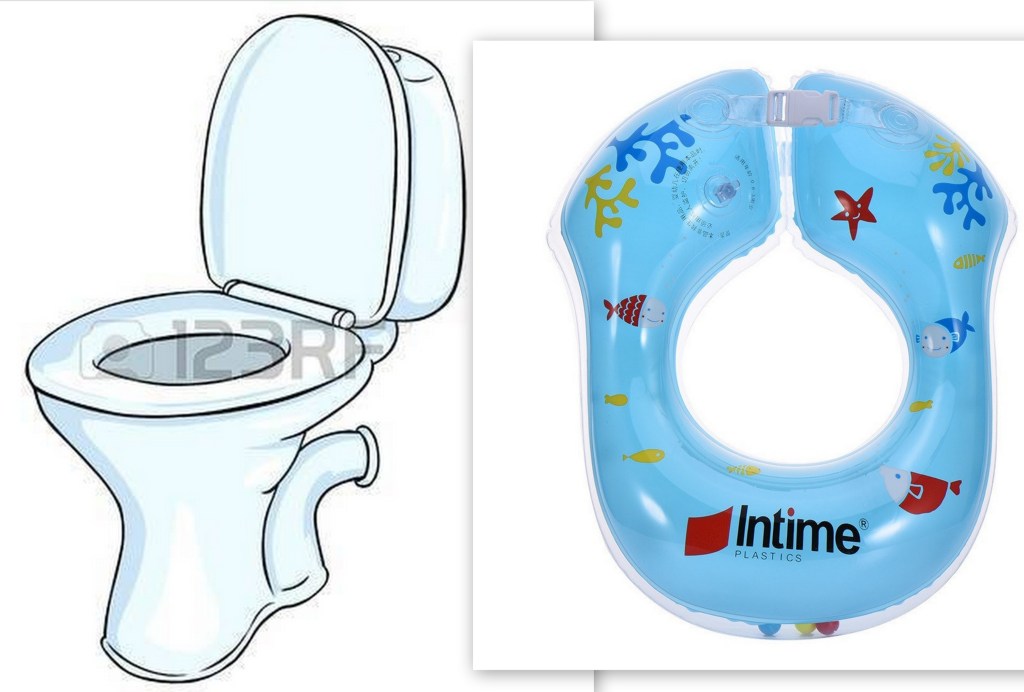
This field project took place outside Tshwane city limits in rural Yeoville on the second floor of a two-storey building. It also didn’t really work so well, as the protective airbag failed to deploy until after the teeth of the main character in the act, one PH Brauer, Esq, had already chipped the porcelain. Work is continuing on developing a more robust alcohol fume sensor that triggers the bag. It seems the original sensor was simply overwhelmed by the overload and went phhht.t.t. and instead of inflating the bag it caused deflation in more areas than one. Some left-over shards of porcelain from the shattered toilet were used as a temporary stop-gap in the teeth gaps. Thutty years later they were still there and he was still saying he’d go for the permanent crowns ‘soon.’
Home of Gullible Stromberg Suckers
Although handicapped by the absence of any alcohol consumption, this project went surprisingly well, when the sucker in question, one PH Brauer, Esq, paid a premium price for a piece of inert plastic to attach to his car’s sparkplug cable. Or fuel pipe. Or windscreen wiper cable. It doesn’t matter where you clamp it. The resulting imaginary marginal improvement in performance from sat to so-so was enough to impress another Tshwane deskundige – a brother-in-law of the original sucker – into believing the scam. Both were so taken in they gave the old pale blue Cortina its first service and wax.
Home of a Future Dynasty
– australopithecine swanies out birding –
Interesting place, Tshwane, ancestral home of the australopithecine Tshwanepoels, where we have land claims we haven’t exercised. Yet. But we know the area well from having lived there for many generations, eating various antelope and picking berries. Also Terry’s famous roast and extra veg cos some people don’t eat their vegetables.
~~oo0oo~~
ongeluk – smash; prang; crash; motor vehicle accident
sat – farktap – sluggish+; very sluggish; unimpressive
farktap – not well
deskundige – ‘like Des’; spurt; eggspurt; would-be expert; given to calling things ‘kak’
1984 was one of the
very few years since 1960 that Colorado river water from the Grand
Canyon actually reached the sea. High snow melt pushed it past the
point where golf courses and old-age homes drain it of all its water
and so – at last! – the waters of the Colorado reached the beautiful
estuary at Baja California and flowed into the Sea of Cortez again!
Unknown to many, 1984 was also the ONLY year Mexicans would have been able to taste Mainstay cane spirits, distilled from South African sugar cane, mixed into that Colorado river water. Well, recycled Mainstay and river water, as the Mainstay that reached the sea had first passed through the kidneys of a mad bunch of South Africans that Chris Greeff had assembled to paddle through the famous American Canyon.
– Dave Jones’ place – Our host in Atlanta – He paddled for the USA – – See the SAA hooch we had decanted into 2litre bottles! –
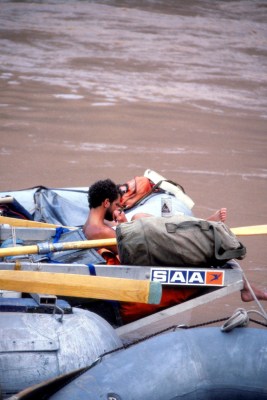
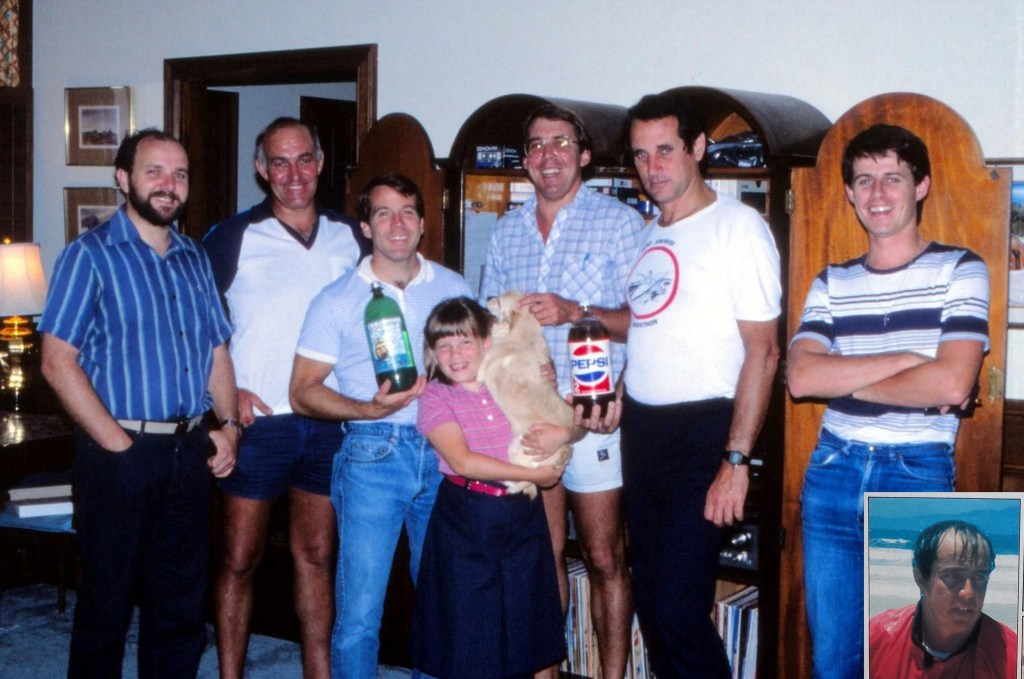
That’s because we were on the river sponsored by Mainstay Cane Spirits and South African Airways. The ‘Mainstay’ we drank was actually an SAA Boeing 747’s supply of tot bottles of whisky, brandy, gin, vodka, rum – and Mainstay cane spirits. We decanted all the little bottles we could find into two two-litre plastic bottles to help the stewardesses on board with their end-of-Atlantic-crossing stock-take. We had resolved to drink the plane dry, but man, they carry a lot of hooch on those big babies. Maybe in case they end up with all 350 passengers happening to be as thirsty as paddlers are? Here we are in Atlanta with the loot. Note the Mainstay sticker on one bottle held by our host Dave Jones, a paddler himself. Paddled for the USA in K1, C1 and C2 wildwater, US national champ and also coached the USA team. So we were saddled with not one but TWO national paddling champs who are dentists and military men, like beer and do crazy things!
Personally I reckon mixing guns, boats and teeth with beer can only bring trouble . .
– Saffers busy ‘outfitting’ as the Yanks say –
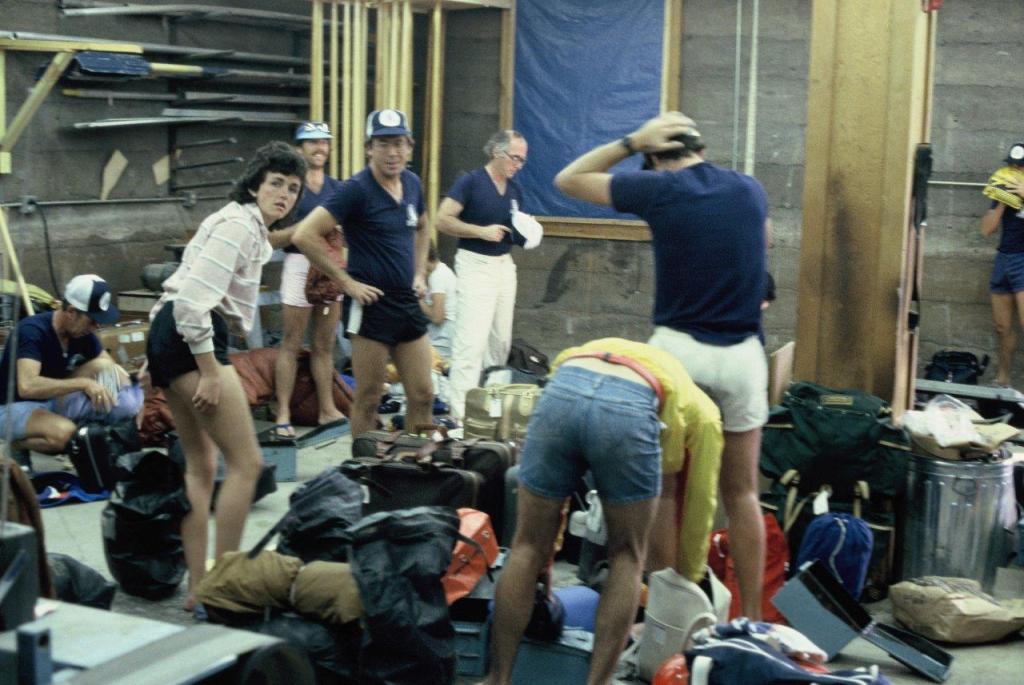
From Atlanta we jetted on to Phoenix Arizona. There we hired another lang slap car and took a slow drive to Flagstaff where we got ‘outfitted’ with kit for the trip. Fifteen canoeists from South Africa joined our guide Cully Erdman and his delightful partner JoJo Suchowiejko on a trip down the Grand Canyon from Lee’s Ferry to the take-out on Lake Mead three hundred miles downstream. We were accompanied by one other paddler, an Argentine José Luis Fonrouge who was ticking off his bucket list, having climbed Everest. Five rubber inflatable rafts crewed by experienced canyon runners carried the food and the ‘Mainstay’ and hundreds of beers, plus a motley assortment of tag-along raft passengers from South Africa. Talking of motley: Us paddlers ranged from capable rough water paddlers to flatwater sprinters to happy trippers to complete novices. Some had Springbok colours, others had a lot of cheek.
Outfitting was also needed for supplies and Greeff put himself in charge of catering for the liquid refreshments. He was good at maths back in Parys se hoerskool so he did some sums: Seventeen kayakers plus some rafters times 12 days times 10 beers each is, lessee . . . OK, and then after breakfast we’ll need . . .
Apparently the yanks thought he’d grossly over-catered and they were worried about how they were going to carry the left-over beer out of the canyon at the end. That’s if the rafts stayed afloat. Well, ons sal sien . .
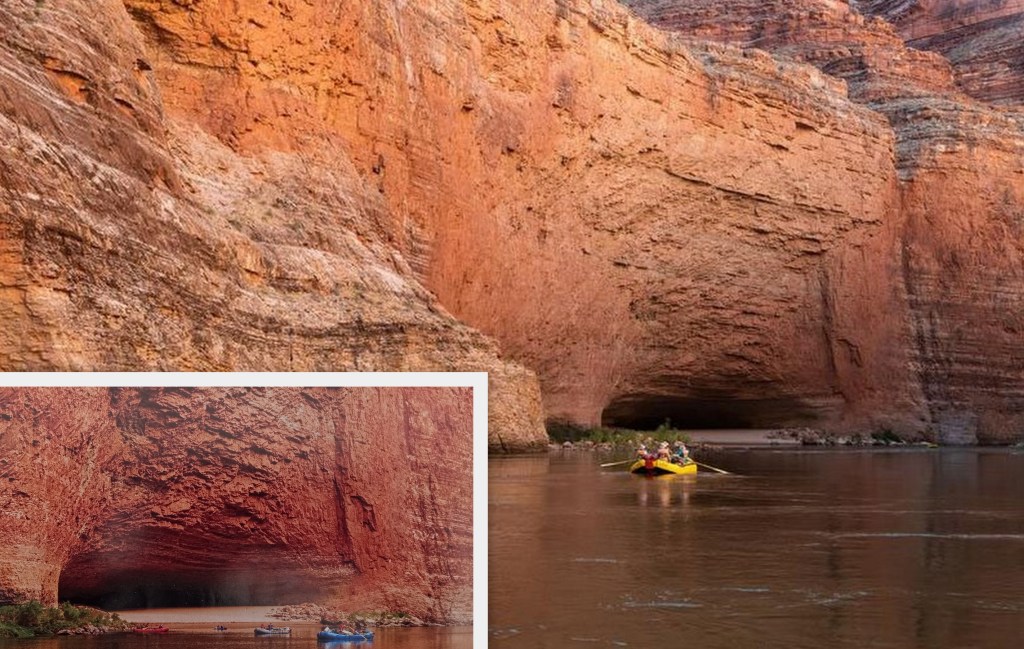
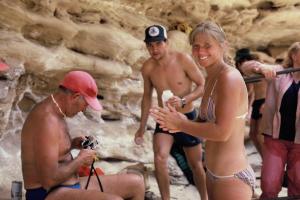
– ‘our’ five rafts with the beer – high water had shrunk this beach, but we stopped to walk up a side canyon –– our river guide Cully Erdman shows us how – he has done it before –– massive Redwall Cavern at mile 33 – pics National Geographic and oars.com – thanks! –– Herve, George & Jojo with her bikini ON –
Some twists in the tale:
My boyhood kayaking heroes had been the van Riet brothers, Willem and Roelof, who won the Dusi three times just as I was first learning about the race ca 1970. As I started to participate in the race in 1972 Graeme Pope-Ellis won the first of his eventual fifteen Dusi wins. Both Willem and Graeme were with us on this trip, along with other paddling legends I had met in my recent entry into the world of canoeing. Having ‘paddled lonely‘ from 1970 to 1982, I was now rubbing shoulders with legends!
– legends of paddling – and me – out of respect for them, I’m wearing longs –
Another twist: In the year I first saw the Colorado river after walking/running down the Bright Angel trail from the South Rim to the Colorado’s swiftly-flowing clear green water, 1973, Willem had launched a boat at Lee’s Ferry, done an eskimo roll and come up with ice in his hair, causing him to postpone his trip. Now he was back, eleven years later – in the summer! And so was I.
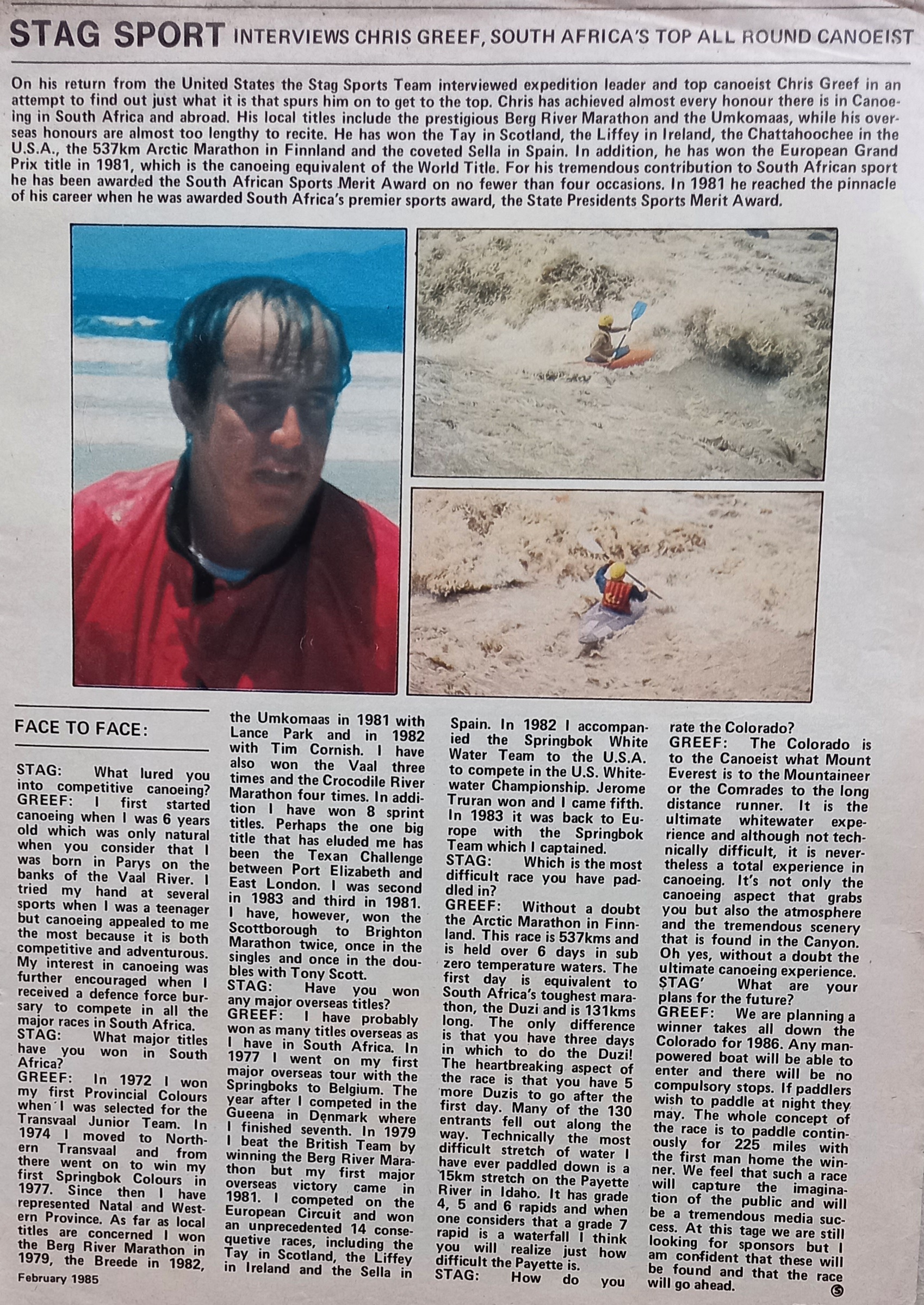
The trip was put together by yet another iconic paddler Chris Greeff, winner of more kayak races than I’d had breakfasts. One of the craziest races he won was the Arctic Canoe Race on the border between Finland and Sweden. About 500km of good pool and drop rapids in cold water. When he arrived at the start with his sleek flatwater racing kayak the other paddlers and the officials looked at their wider, slower, more stable canoes and thought ‘Ha! he intends portaging around all the rapids!’ They had heard of the Dusi and how mad South Africans run with kayaks on their heads, so they amended the rules: Every rapid avoided would incur a stiff time penalty. You portage, you pay! Chris grinned and agreed enthusiastically with their ruling: He was no Dusi runner and he had no intention of getting out of his boat!
Later: On the trip, our American kayak and raft guides kept asking us about the sponsors stickers we had attached to kayaks and rafts. SAA they understood, South African Airways; but what was this “Mainstay” stuff? Ooh! You’ll see! was all we’d say. At ___ rapid on Day __ around the camp fire we hauled out our two-litre bottles filled with a suspicious amber liquid. THIS we said, was that famous stuff!
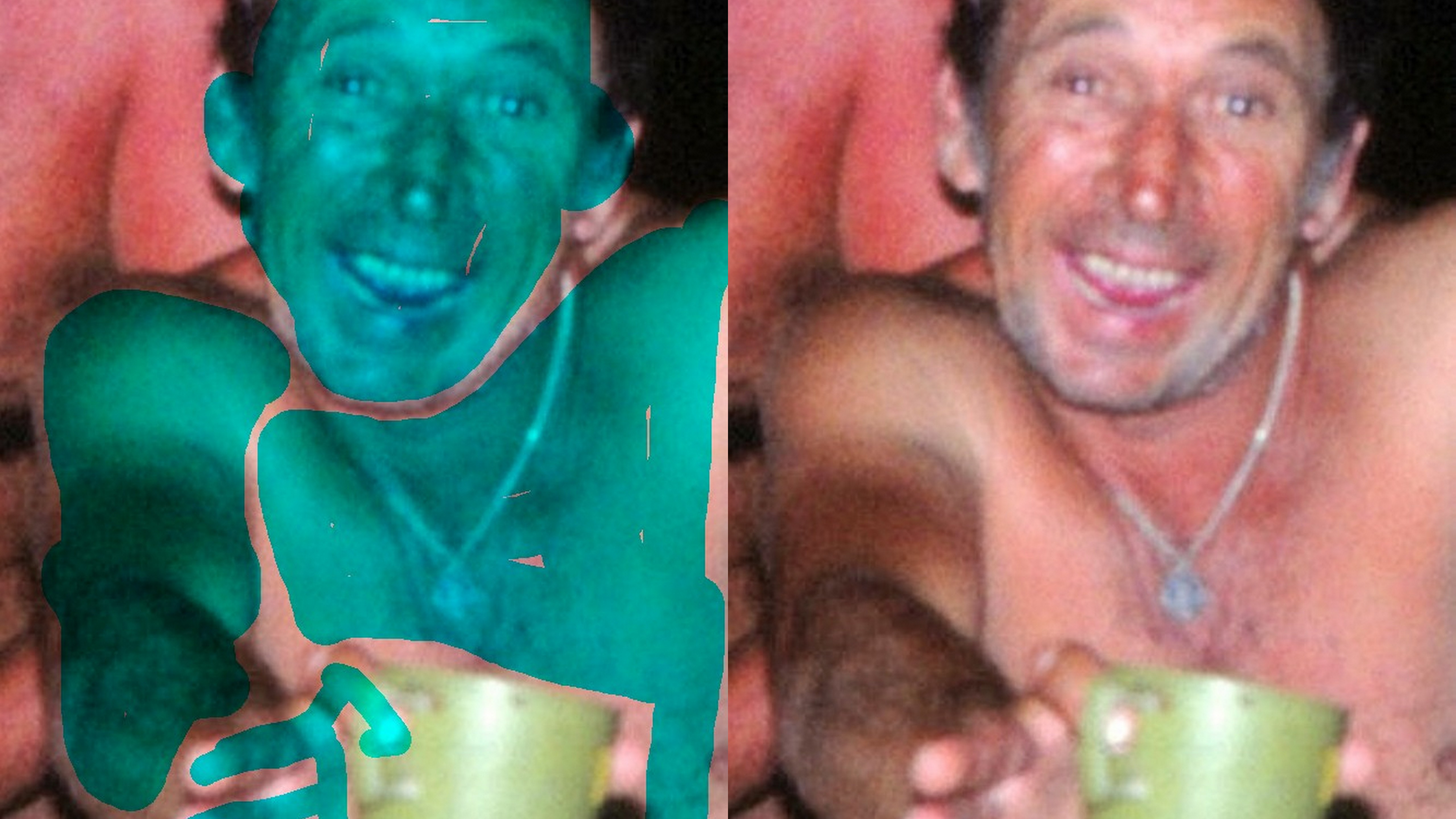
Colorado Toekoe – Pre- and Post a shot of Mainstay –
The first thing about Mainstay, we told them, was its medicinal properties. Toekoe Egerton had turned blue from too much swimming, but after a slug of Mainstay he got his colour back as the ‘before and after’ pictures above clearly show.
As more Mainstay was swallowed, hilarity and a bit of insanity ensued. I have a picture frozen in my mind of Willem sprinting past me, running nimbly across the pontoons of a raft and launching himself in the darkness into the swift current of the Colorado running at 50 000 cfs shouting Yee-ha!! – A bit like this, but at night and in the summer:
– Willem could stay as he was for the rest of his life; But he chose to change to Mainstay – Mainstay –
IQ’s soared:
– George, Allie, Swys & Toekoe, full of Mainstay –– John Lee of Lee’s Ferry – a striking resemblance to our own John Lee – obviously separated at birth –
Besides this fortified and fortifying SAA loot, Greeff had also arranged for beers on the trip. John Lee tells the story:
I recall how our Yankee rafting crew were somewhat taken aback at the rather large drinks order they received prior to the departure from Lees Ferry! Despite the huge stocks, somewhere downstream in the depths of the Grand Canyon, to their utter disbelief, the only liquid left was the raging Colorado River. Stocks had run dry .
There were some thirsty, desperate river runners in camp. We were way upstream from the next available beer at Phantom Ranch’s shop.
Desperate times call for desperate measures …….
Some of us (hello Felix!) resorted to performing like trained seals, executing dashing eskimo rolls for passing J-Rigs, and being rewarded with frosties for our efforts!
One Captain (PF) Christiaan Lodewikus Greeff called quietly for volunteers, and assembled a raiding party – could also call them ‘SEALs’, one was a parabat – to address the situation. This unbeknown to our unsuspecting, law-abiding river crew.
In the dead of night, wearing beanies, faces blackened, they slid silently into the icy waters of the flooded Colorado River and headed into an upstream eddy towards the distant sounds of happy laughter from a neighbouring campsite.
Reaching tethered rafts, they found the holy Grand Canyon grail . . . multiple nets strung from the rafts, laden with tins of sunset amber liquid.
Their return to our camp was triumphant.
I cannot recall the composition of that courageous group. Suffice it to say, that I am certain that it included one Lieutenant-Colonel A Gordon-Peter (SAB with bar).
The reaction of our guides, later, was somewhat different!
Mules heavily laden with liquor were later cajoled down the treacherous track from Phantom Ranch, and our evenings were once again fueled with fun, laughter and Willie’s moerse yarns!
In closing, who will ever forget that wonderful mirage in the middle of the shimmering Lake Mead – a very naked, very tall and statuesque blonde River Goddess on a drifting raft … … or was it ?
– some of our wonderful American rafters – law-abiding folk – – lawyer lee ponders –
Well, I dunno – but there was at least one naked lady that I do know of: JoJo posed butt naked for a stealthily-taken pic on George’s camera. What a sport, she removed her bikini top and bottom for the gentlemen doing research on just how much trouble George would get into with his wife back home.
Lee plans his arguments for the court cases sure to follow: YaRonna! These were just Merry Pranksters, M’Lord . . .
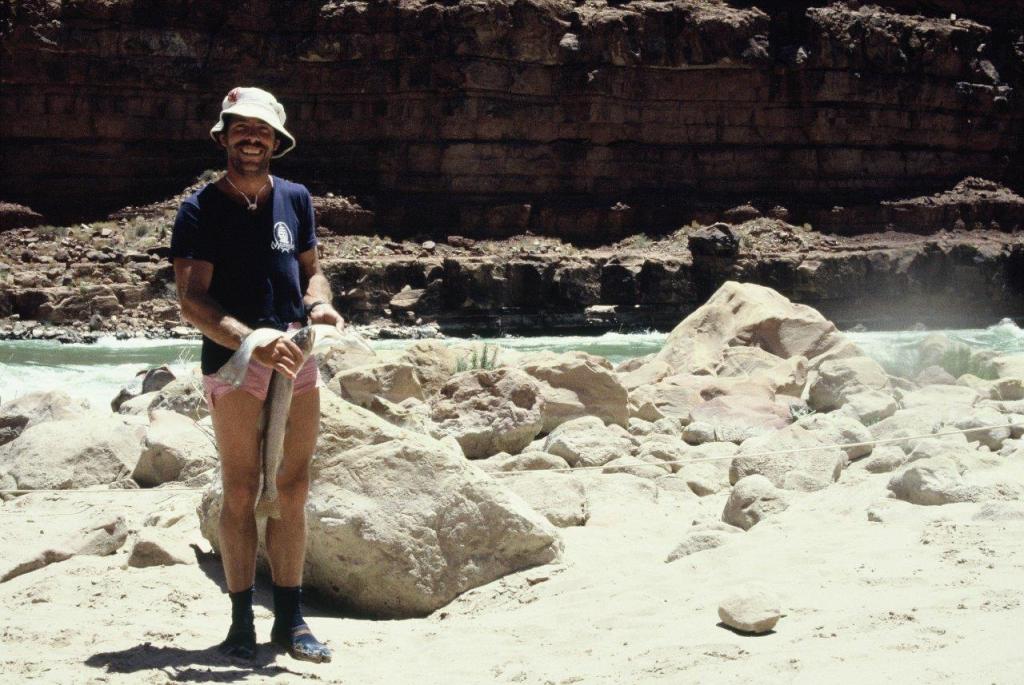
– Felix – looking semi-naked – caught trout in the Little Colorado –– Foreground and background: Muddy and warm water of the Little Colorado. In the middle: Clear cold Colorado water from deep down in Lake Powell. Ryan practices the roll that didn’t work in Lava Falls a few days later –
At the confluence of the Colorado and the Little Colorado the Little was flooding and massively silt-laden. We stopped on a skinny sandbank and had mud fights and mud rolls. The muddy water from the flooding Little Colorado was so thick that the two trout Felix Unite caught thanked him for rescuing them!
It merged here with the clear water coming out of Lake Powell – seen behind Felix – and from here on we had traditionally red-coloured water – ‘colorado.’
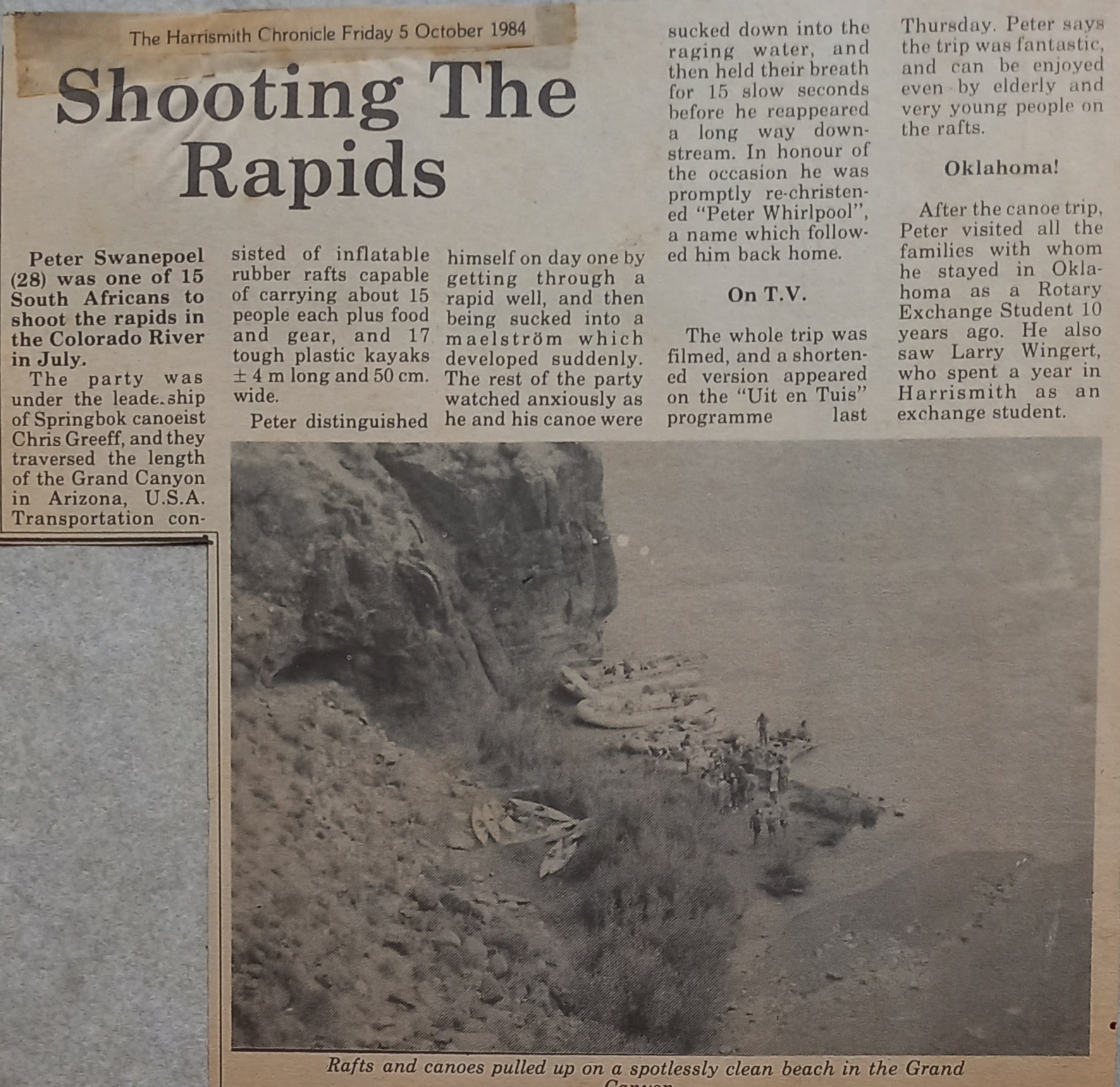
Just downstream of the confluence I got sucked under by a big whirlpool that formed under my boat that I couldn’t escape. As I went down I set up to roll but stayed down until I thought ‘I’m outa here’ as I was now loose in the cockpit and my splashie had leaked. So I bailed. Up on the surface the guys told a more dramatic tale: ‘Swanie! You disappeared for AGES! Then your boat popped up; Then your paddle popped up; And still there was no you! Then at last you popped up!’ So then they started calling me Pete Whirlpool. Lots of that muddy water stayed up my snout and I had a few bad sinus headaches but Wendy – Dave Walker’s connection – very kindly stepped in and saved my butt with strong painkillers and nightly TLC. Back in Durban a month later I was rushed into theatre by another very kind lady, my boss at Addington Hospital, ophthalmology professor Anne Peters. She took me to her ENT friend for an emergency sinus washout! As Saffeffricans say ‘Ah neely dahd!’ Some Little Colorado River mud was washed down Durban’s St Augustine Hospital’s outlet pipes into the Indian Ocean that day. Probly also had a smattering of Mainstay in it.
– lunch on a small sandbank – five rafts, seventeen kayaks squeeze on – the water level was up – – seated among legends as I was, I wore my langbroek out of respect – Graeme & Wendy Pope-Ellis; Wendy Walwyn; John Lee; Cully Erdman; Me; Willem van Riet; Jannie Claassens; Herve de Rauville in red cap – – Expedition Leader Greeff bombs through – – Me in Crystal rapid –
Hikes up the side-canyons:
– Thunder River Falls up a side canyon. Canyon lore has it that the ‘river’ flows into a ‘creek’ which flows into the Colorado River –– splendid desert scenery; and always the river’s presence below – – council of elder map readers – see my map at the end of this post –
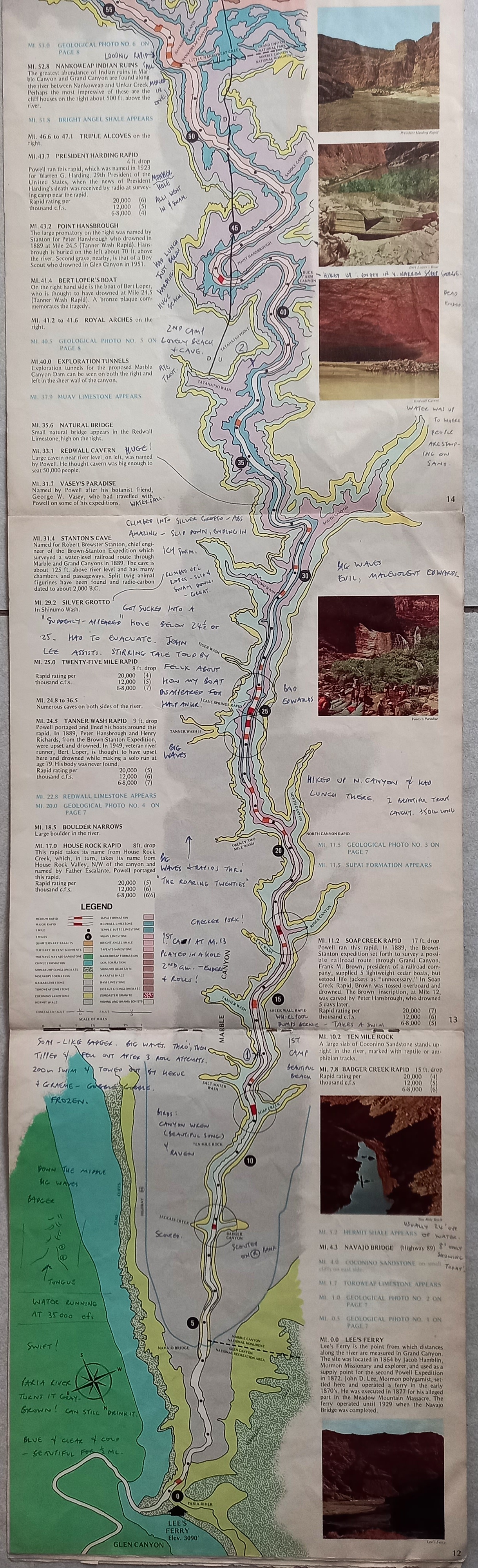
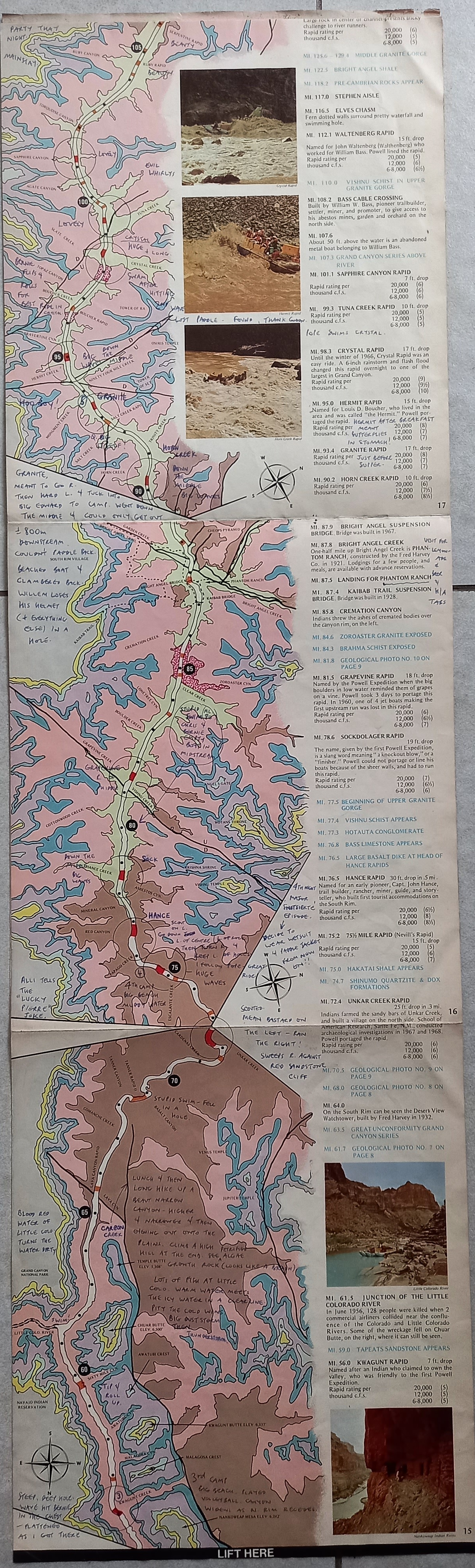
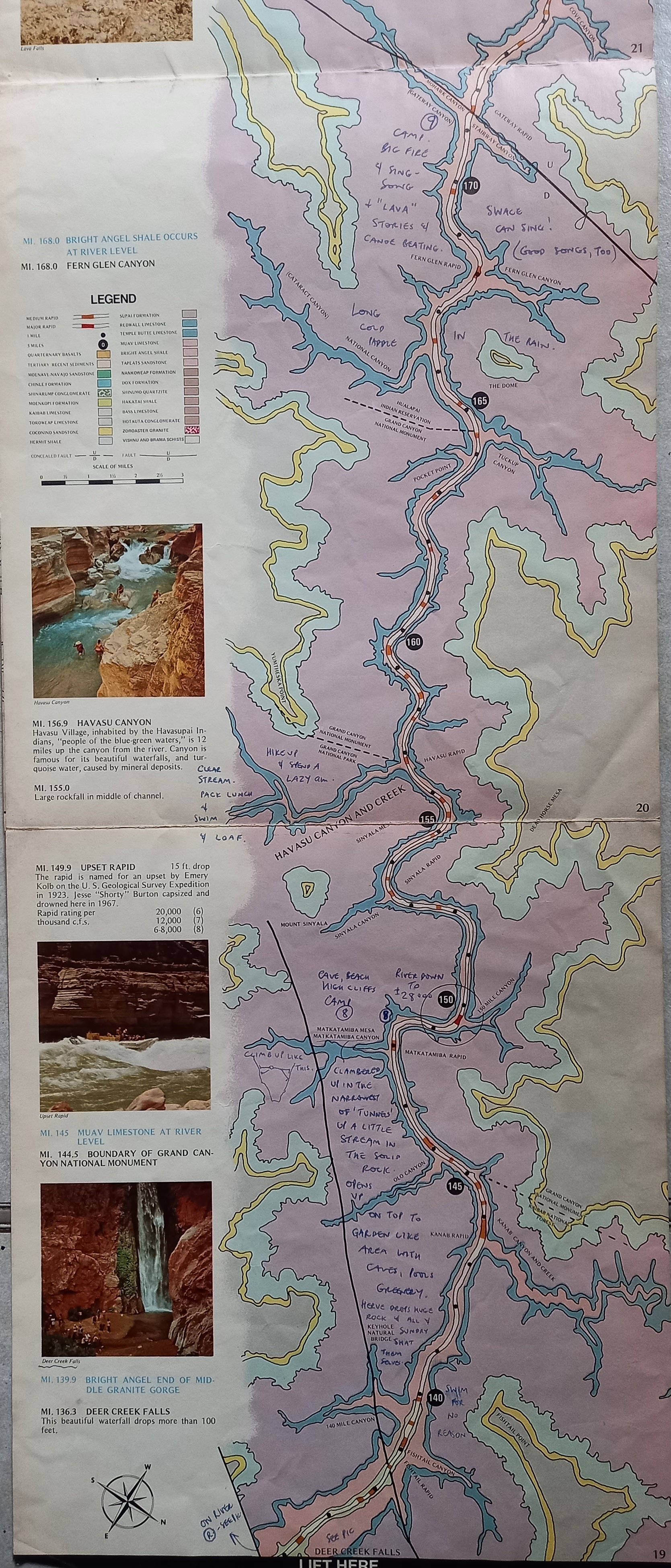
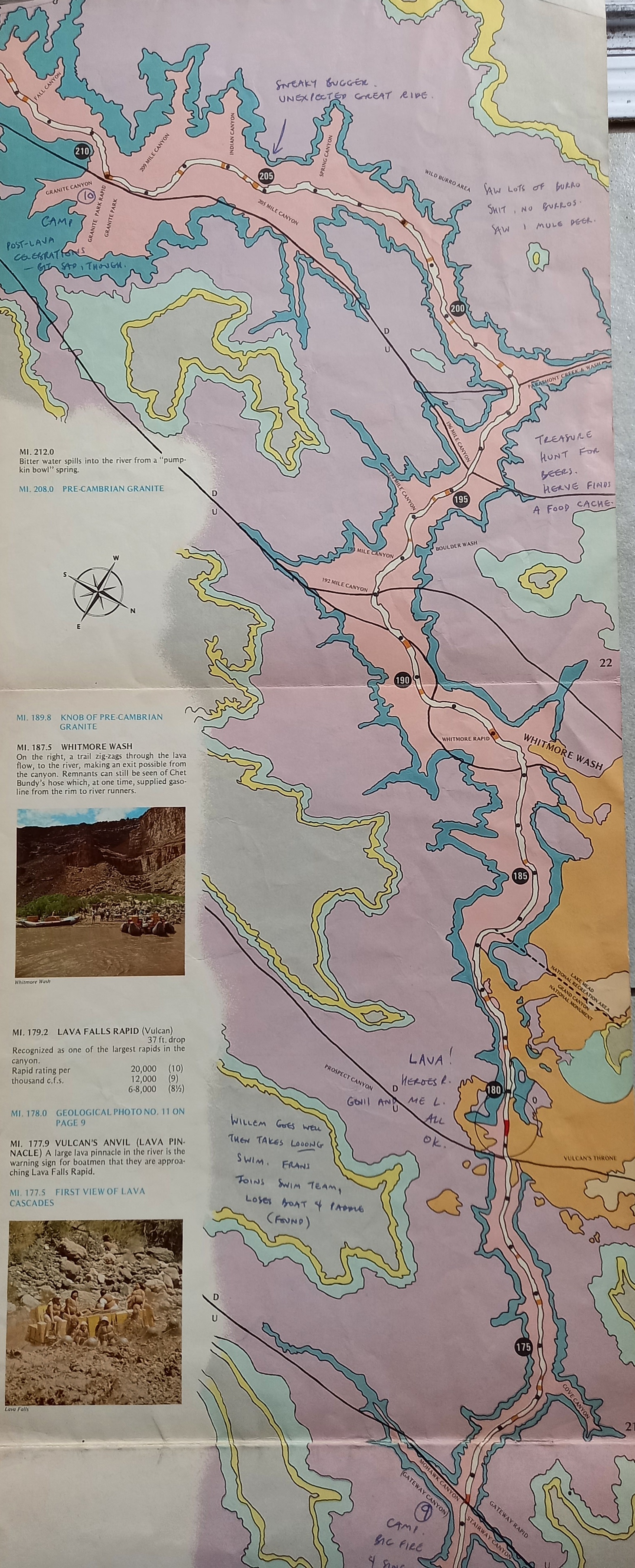
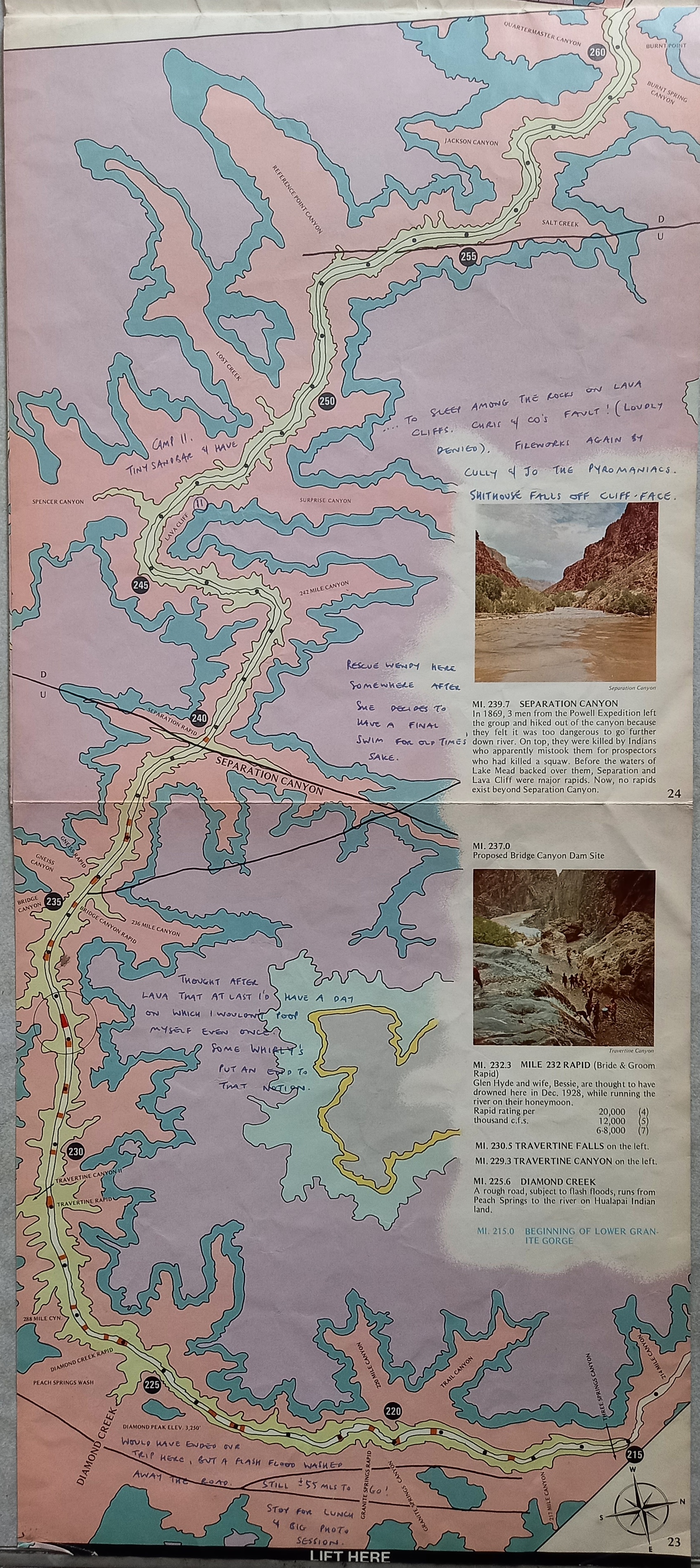
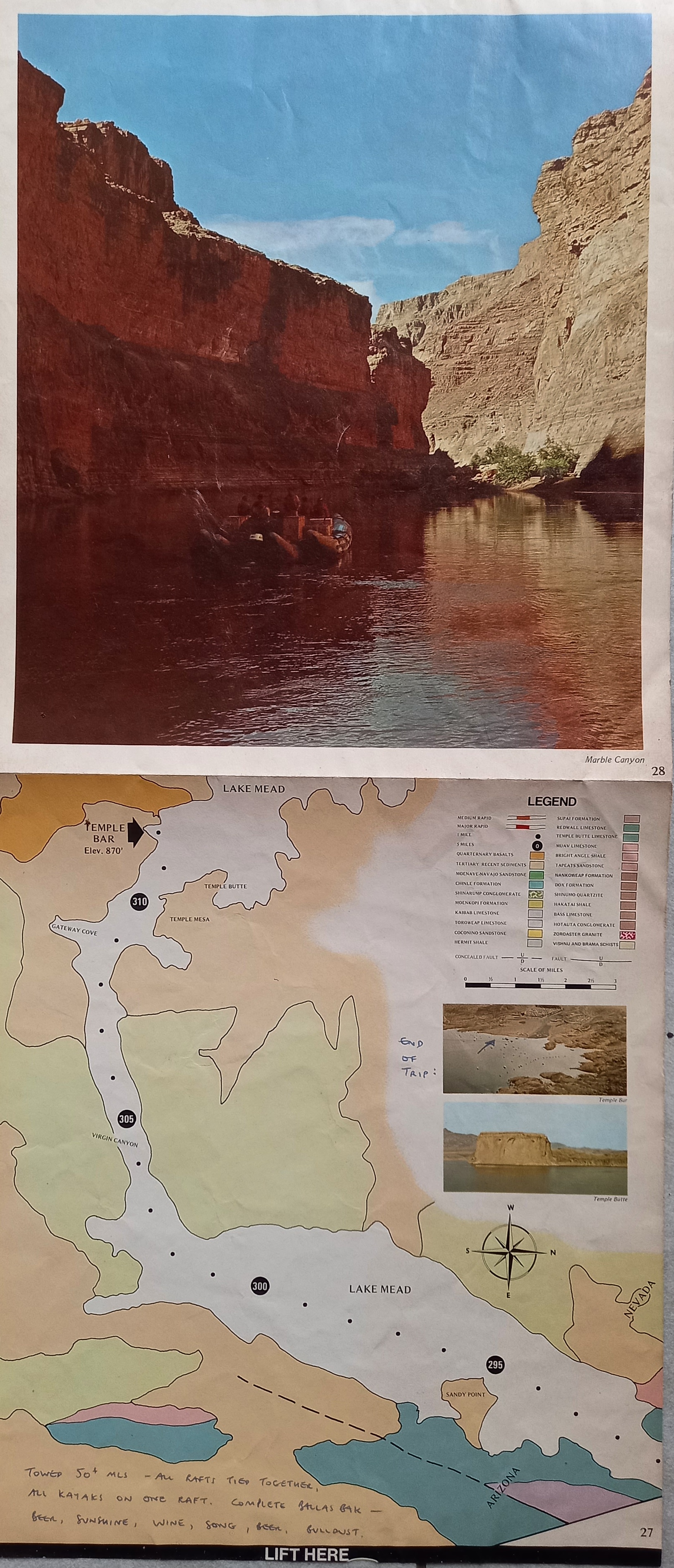
Map reading: I had a lovely large-scale map of the river through the canyon showing all the rapids. We would pore over it, going over the day and plotting our tomorrow. Here Jannie Claassens stands left, Swys du Plessis is prominent in red shorts, I am just visible behind him, Dave Walker wears a cap, Willem van Riet sports a ducktail probly cos of his last swim, Herve de Rauville kneels like a good Catholic, Allie Peter lying down in the background cursing his shoulder, Chris Greeff in the Mainstay cap ponders his next move, Bernie The Jet Garcin has a beer in his hand and a sock in his speedo, Wendy Walwyn is planning her first eskimo roll soon, and Cully Erdman in blue shorts thinks ‘Wwho ARE these okes? and where was that huge rapid Willem is talking about!?’
– internet pic – river at a lower level –– Bernie Garcin – great mate; – – and WHAT a campsite! – nice paddle, too –
Happy daze drifting in the current, lying back gazing up at the cliffs and watching the waterline as century after millenium of geological lines rose up out of the water and each day rose higher and higher above us. Willem the geologist would explain some of it to us. The latest view seems to be that the river is around six million years old, and it has exposed rocks up to two billion years old as it carves downwards, aided also by wind erosion.
– at 50 000cfs, Vulcan’s Anvil, one mile above Lava, was covered up to where the dark grey meets the brown –
Then every so often you would sit up and listen intently. Then peer ahead with a stretched neck and drift in a quickening current as the roar of the next rapid grew in the canyon air. The river was running at an estimated high of 50 000cfs – that’s about 1650 cumecs, big water. 1984 was a high year. Once you could see where the rapid was, you pulled over and got out to scout it and plot your way through it. It was no use asking Greeff. His stock answer was ‘Down The Middle!’
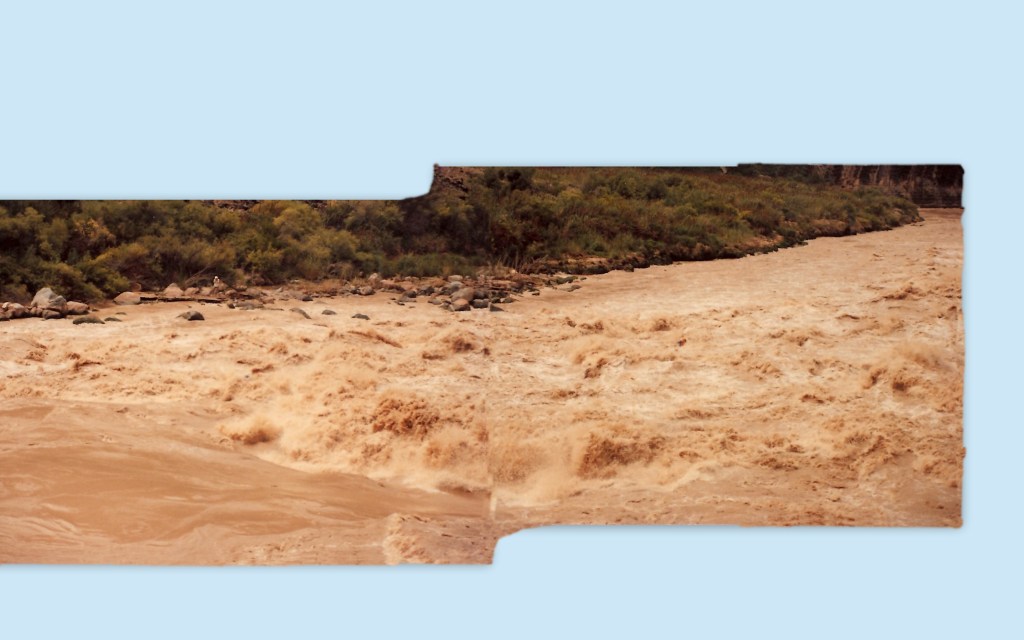
– Lava Falls –
For days before Lava, the bullshit build-up built up: ‘Rain? That’s not rain! That’s the mist from LAVA FALLS!’
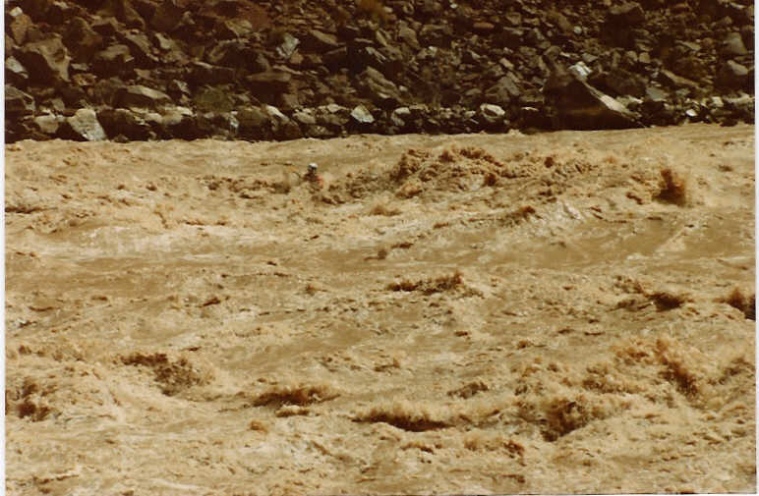
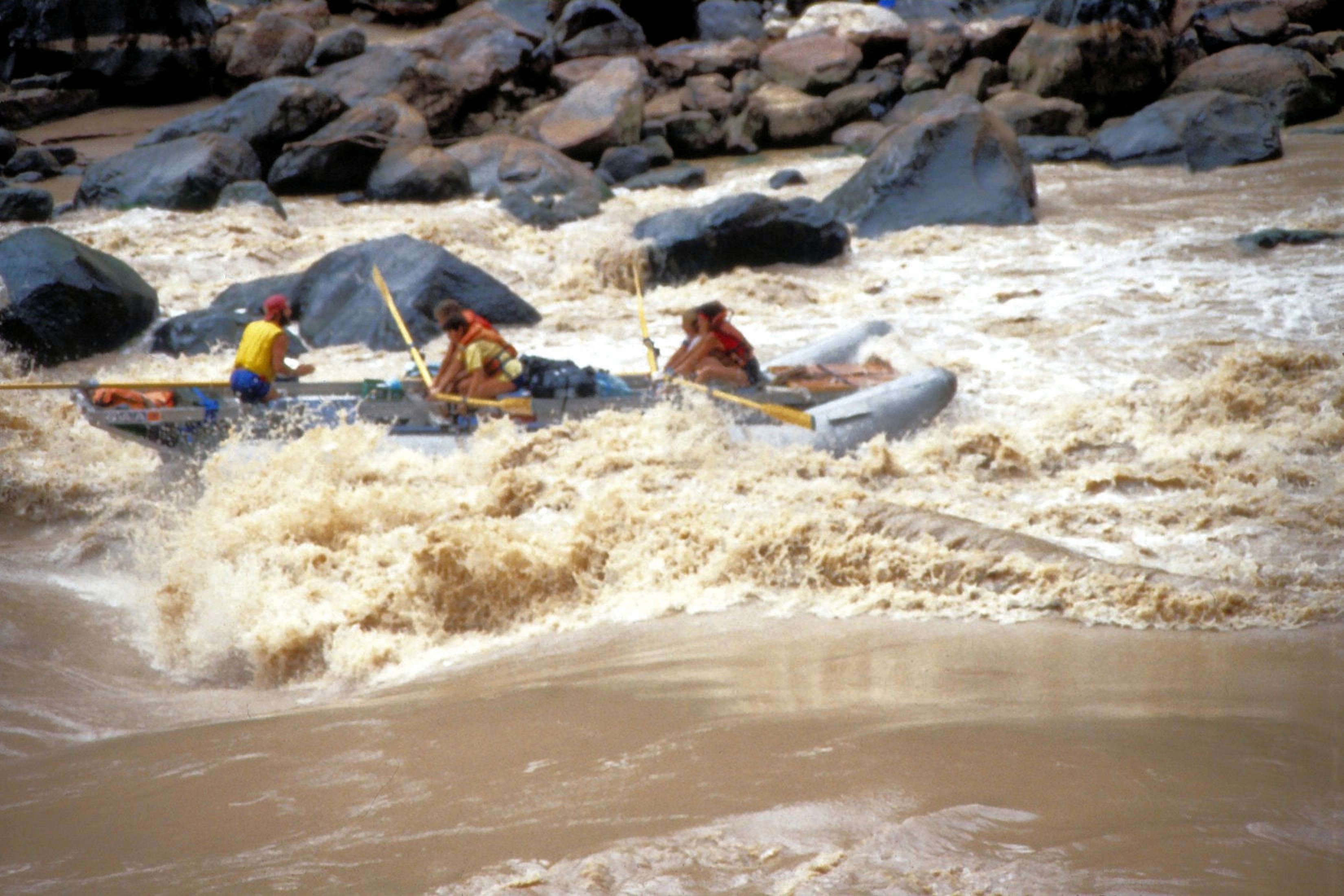
Arriving at Lava we hopped out and checked it out, butterflies no longer flying in formation. After scouting carefully most of us went left; a few went right. One – Ryan – went snorkeling straight into the big hole and got chomped, rinsed and spat out. His blue helmet can be seen in the picture if you have a magnifying glass.
– Lava Falls – there’s a paddler there somewhere –– an all-girl team gets coached down Lava Falls –
And then typical ladies: As we strutted and boasted of derring-do, they quietly commandeered one of the rafts and rowed it ladies-only down Lava! They took one yank with them, just to show him they could . .
– Team Mainstay SAA from South Africa; At the usual take-out before Lake Mead –
At the usual take-out at Diamond Creek before Lake Mead, we stopped for a rest and some team photos. The high water had washed away the road. We had to keep going. Some miles later we hit the dead waters of Lake Mead. The river ran out of push, tamed by a damn dam. Paddling was over for most of us! We piled our kayaks onto the rafts and lay on them – there were still a few beers that needed polishing. Our five-raft flotilla was tugged out by a motorboat to another take-out point, Pearce Ferry on Lake Mead miles downstream.
– final take-out on the lake at Pearce Ferry – the river bottom right, flowing right to left into the lake –
Downstream? Except of course there was now no longer any ‘stream’ – we were on flat water. Greeff and a few other crazies – including Wendy Walwyn – you know, the types who weren’t issued with handbrakes, brains or limits, paddled the whole flat water way! Holy shit! I drank beer lying on a raft, gazing at the blue Arizona sky.
Too soon, it was over.
~~~oo0oo~~~
Drifting downstream, Dave Walker led the singing:
The canyon burro is a mournful bloke He very seldom gets a poke But when he DOES . . . He . LETS . it soak As he revels in the joys of forni- CA-TION!
and (to the tune of He Ain’t Heavy):
Hy’s nie Swaar nie
Hy’s my Swaer . a . a . aer
~~~oo0oo~~~
We went down the Canyon twice
I always say we did the Canyon twice. Once we would bomb down in our kayaks, crashing through the exhilarating big water; The second time was much hairier, with bigger rapids, higher water and far more danger: That was around the campfire at night when Willem would regale us with tales of his day on the water. ‘Raconteur’ is too mild a word! The word ‘MOERSE’ featured prominently in his epic tales and his long arm would be held high to show you where the crest of the wave sat. And this from a man who bombed ‘blind’ down the Cunene River in 1963.
~~~oo0oo~~~
When? I wanted to know when exactly we were on the water to look up the flow on those days, but no-one knew. Now! Aha! I found an old letter (or Sheila did) written just before we flew to Arizona). I think we paddled – near as dammit – from 18 to 30 July 1984.
– Monday? 16 July in 1984 was a Monday –
Postscript: While we were paddling Chris spoke of attempting to beat the record for the fastest non-stop descent of the Canyon – the 277 mile stretch we had just done from Lee’s Ferry to our eventual take-out at Pearce Ferry.
– The Dory ‘Emerald Mile’ – our 12-day trip in 36 hours non-stop – no thanks –
Only
a handful of boaters have been crazy enough to undertake such a
mission. After all, doing it non-stop means having to shoot Lava
Falls at night! The Riggs brothers made what could be considered the
first speed run in 1951 when they rowed a cataract-style wooden boat
through the canyon in 53 hours; Fletcher Anderson, a pioneering
Southwestern boater, made a 49-hour solo kayak descent in the late
1970s; and then in 1983, just a year before our leisure trip, Kenton
Grua, Rudi Petschek, and Steve Reynolds completed a now-legendary run
on a flood of 70,000 cfs in a wooden dory named the Emerald Mile.
Their record of 36 hours and 38 minutes was the time to beat.
– Ben Orkin – saw little of the canyon –
Nothing came of it – it would have been a very expensive undertaking from South Africa for an obscure record only the small expedition rafting and kayaking fraternity would have known of; and anyway, why do it? But the record is ever-present in some people’s minds. In January 2016 the record was beaten twice. First by ‘Team Beer’: Ben Luck, Matt and Nate Klemas and Ryan Casey in three Piranha Speeders and a Perception Wavehopper, boats much like the ones we used. Then three days later by Ben Orkin, paddling solo in a composite Epic 18X sea kayak, a boat lighter than the models Team Beer had used and with a metre longer waterline. He reduced the time to 34 hours and 2 minutes. The Emerald Mile’s record, which had stood for over three decades, had been broken twice in three days.
I do (sort of) understand the quest for records (sort of), humans always will go for fastest; but for me,
. . floating down in awesome wonder is really the way to do it.
Before the river became crowded and the park service slapped restrictions on trip lengths, private boatmen in the ’70s vied at ‘slow-boating’, or making a trip last as long as possible. The crowning glory of slow-boating has gone down in river history as the Hundred Day Trip. Legendary boatman Regan Dale and his extended family floated away from Lees Ferry and spent a whopping 103 days in the canyon. They hiked every side canyon, spent as long as a week in favorite camps like Nankoweap and Granite Park, baked their own bread and wallowed in the vast silence of stone cathedrals broken only by the rustle of the river. The moon waxed and waned three times while they were there. It was roughly as long as the very first trip down the canyon led by John Wesley Powell in 1869, over a hundred years earlier – and 150 years ago now; and this over 300 miles whereas Powell had done 1000 miles. So the Regan Dale trip really was the slowboating trip supreme. I wonder if there will ever be trips like that again.
Later: A letter from Cully and JoJo – “do come again!” and “boknaai!”
John Lee wrote:
…running Crystal Creek down the left , Lava down the right was all complete childs play when compared to what felix , Cully and Bridgette put me through at Havasu Falls .
The four of us did that looooong hike up that pristine side canyon .
When we reached the aquamarine coloured waters below the falls , the travertine rimmed pools below , I immediately saw the photo-opp.
I had them climb to the rock above the falls from which they launched themselves , simultaneously and spectacularly , into space and fell about forty to fifty foot into the waters below .
Magnificent photos it turned out a long time later …….
It took them about half an hour to talk me , in turn , off that ledge .
That is by far the single most courageous thing I’ve done to date !
My fear of heights is a raging mental all-encompassing melt down …..
Still don’t know how I did it .
Then …..there was the Rattler I very nearly stood on, on the way back …..
Felix Unite wrote:
What memories! For me that GC trip remains one of my life’s highlights/milestones!
Location, action and memories of great friendship and camaraderie – not to mention how much I kakked myself!!!
Thank you all.
~~~oo0oo~~~
Chris Greeff wrote in May 2018:
R.I.P Herve de Rauville, Graeme Pope-Ellis, Swys du Plessis, Johan Claassen and Arthur Egerton ! – Also R.I.P Jose Luis Fonrouge
~~~oo0oo~~~
Our quiet, laid-back fellow kayaker from Argentina
Jose Luis Fonrouge had climbed Mt Everest, we heard. He had done much more:
Fitz Roy: First Alpine Style New Route
By Marcelo Eduardo Espejo
January 16, 1965 two climbers accomplished what is still today considered as one of the most remarkable climbs on the Patagonian spires. Jose Luis Fonrouge and Carlos Comesana reached the summit of Fitz Roy for the second time in history.
They had climbed the virgin super-couloir known as the Supercanaleta. For summit proof, they retrieved a carabiner left there by the 1952’s French expedition and left an Argentinean flag in its place. See route 18 below.
January 14, they went for the Supercanaleta. It took them only three days to summit and climb back in alpine style, fixing 20 pitches on the way. This was a big difference compared to the French expedition, the only ones who had summited Fitzroy before. The French team, led by the European climbing legend Lionel Terray, worked the route for a month and aid-climbed most of the wall to get to the top.
Carlos Comesaña and Jose Fonrouge went on to other amazing climbs – the Poincenot spire, Aconcagua’s South face, Torres del Paine, South face of Cerro Catedral and climbs in the Antarctic Peninsula. In 2001, the saga ended when Jose died in a plane crash.
Journalist and mountaineer Toncek Arko, from Bariloche, said that “Fonrouge animated the last romantic period of Andean Andeanism, when Patagonia was still unexplored and most of the mountains unclimbed.” “Argentina had to wait two decades before other Argentine mountaineers repeated the memorable climbs of José Luis,” said Arko. He recalled that Fonrouge began climbing in Bariloche, when he arrived as part of a group of young backpackers.
Fonrouge also reached the top of Aconcagua (6,989) through the complicated South Wall and in 1971, Fonrouge participated in the second Argentine expedition to Everest.
..
Happiness, always close to danger. At the beginning of the eighties, he saw on television two English climbers descending in a kayak down the Dudkhosi river, which comes down from Everest, and began with this white-water activity, along the Limay, the Traful rivers, El Manso or El Atuel. So at the age of forty he began kayaking, an activity that he developed for seven years and then returned to the mountain, through the production of television programs and documentaries. Together with the journalist Germán Sopeña and the businessman Agostino Rocca, his fellow travelers, he tirelessly toured our Patagonia and the most remote places in the world. This vast trajectory earned him the appointment as director of National Parks, a role he had held for a little more than one month.
His life was always in contact with nature: near the mountain, as a mountaineer, and on his kayak he crossed the most turbulent rivers in the country: “I find parallelism between both activities”, he mentioned on several occasions. “I consider myself a self-taught person,” said Fonrouge, for whom nature was a mystery to be unveiled, which would only be ajar for some and gave them a moment, a state of grace. “That state was given to me when I reached the summit of del Fitz Roy, it is a combination of happiness and extreme danger (…) Yes, I find my balance with the Universe in nature,” he stated years ago in a report. In November 1999 Fonrouge presented his first and only mountain book in Buenos Aires, entitled “Vertical horizons in Patagonia”, in which he recounted his Andean ascents during the fifties and sixties.
..
April 2001 – Shock caused by tragedy: Ten dead in a plane crash: All the passengers lost their lives when the plane in which they were traveling fell over a flooded field, in Roque Pérez, province of Buenos Aires.
The businessman Agostino Rocca, president of the Techint company, the General Secretary of the newspaper La Nación, Germán Sopeña, the director of National Parks José Luis Fonrouge and seven other people died yesterday when the private plane in which they were traveling over a field fell. flooded the town of Roque Pérez. The tragic accident that shocked the entire country occurred at 6.15 am when the Cessna 208 Caravan, registration LV-WSC, with nine passengers and a pilot, crashed on the “El socorro” ranch , in the Tronconi area, about 17 kilometers from Roque Pérez, near Route 205.
..
The death of José Luis Fonrouge, who died in the plane crash registered in Roque Pérez, where his wife and daughter also died, is mourned by the entire mountaineering community of Argentina, which still remembers among the exploits of the mountaineer when in 1965 he reached the summit of Fitz Roy. Born in 1942, Jose Luis Fonrouge was married to María Elena Tezanos Pinto and had three children.
~~~oo0oo~~~
– Jose (foreground) chills after another day paddling with us in 1984 –
In 1968 some climbers shot a movie in Yosemite on climbing El Capitan. They needed another climber. Tompkins suggested Argentine alpinist Jose Luis Fonrouge, who was staying with him and climbing in Yosemite that spring. Although Fonrouge was just twenty-six, three years earlier he’d made the second ascent of Fitz Roy—putting up a new route, alpinestyle, on that fearsome peak. (Fonrouge died in 2001.) When they filmed a screen test of Fonrouge climbing, the rest of the team was unimpressed. “Colliver and McCracken refused to climb with Fonrouge,” says Padula. “They thought he was too cavalier.” “I liked that Fonrouge was from a different place,” adds Tompkins. “It would put some spice into the film. But it didn’t work. He didn’t talk much.” (Sounds like our Jose! Of the few words he spoke in the Canyon, these I remember: He had flipped in Lava and semi-rolled up three times while we watched. I asked him about it and he said, roughly, ‘Every time I looked up it looked crazy, so I thought I’d just stay upside down – it was more peaceful underneath.’)
~~~oo0oo~~~
Old-Fashioned Photo Album
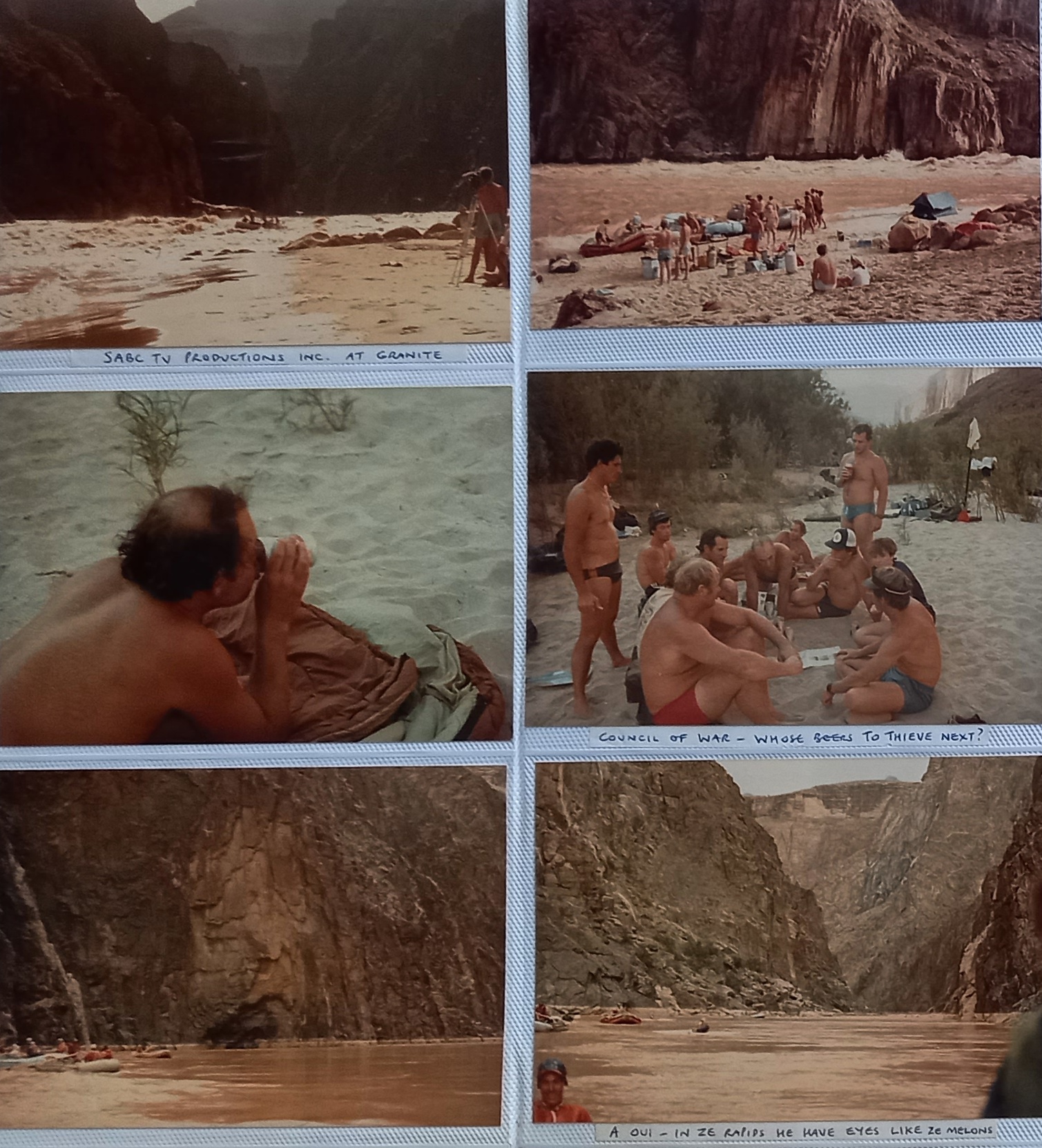
Pics from my photo album – copied and now discarded:
That Map
And here’s my famous map that was such a boon on the trip. Fifteen pages each 30cm long, the map was 4,5m long all told. Lots of detail. Which I then added to!
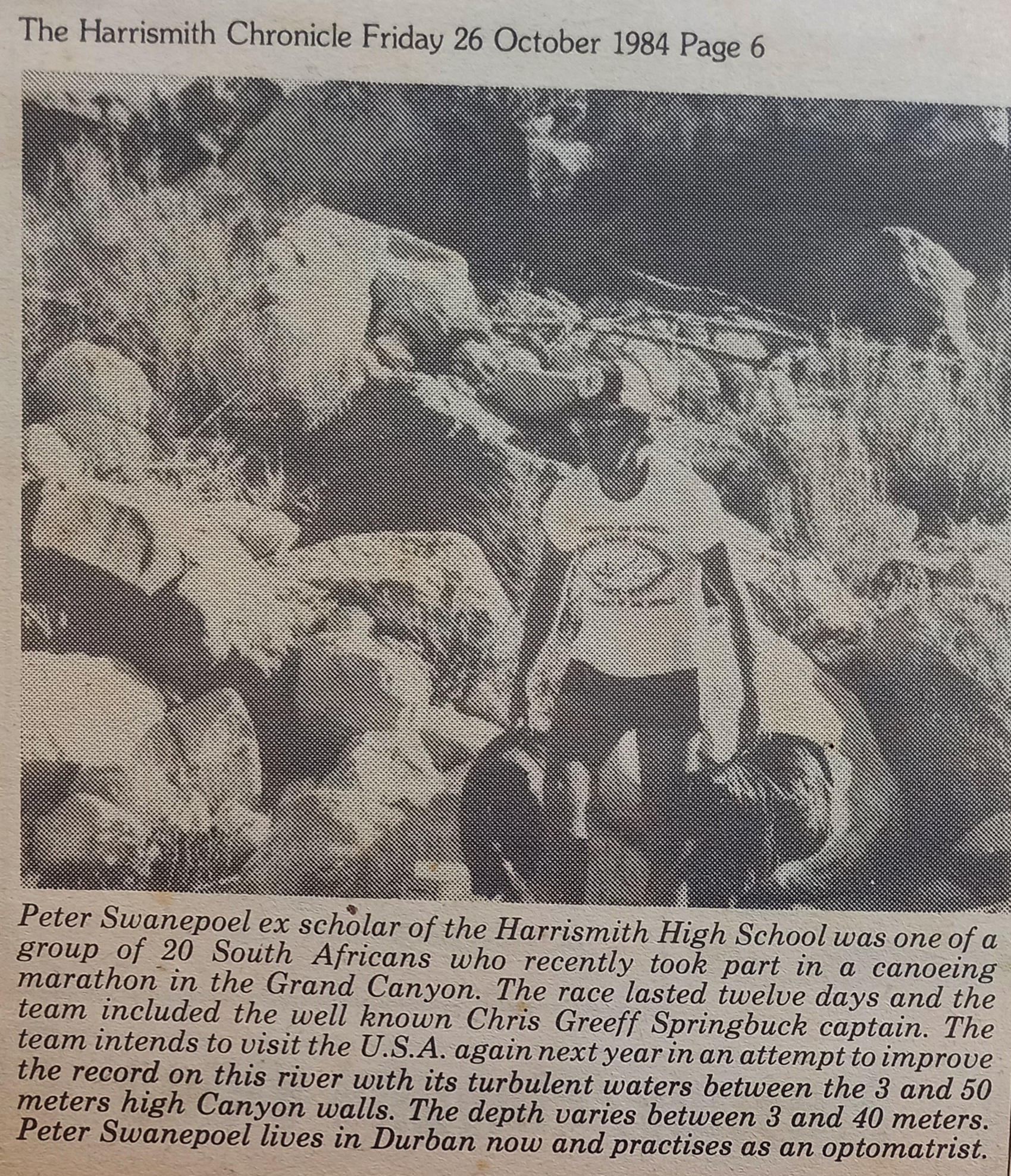
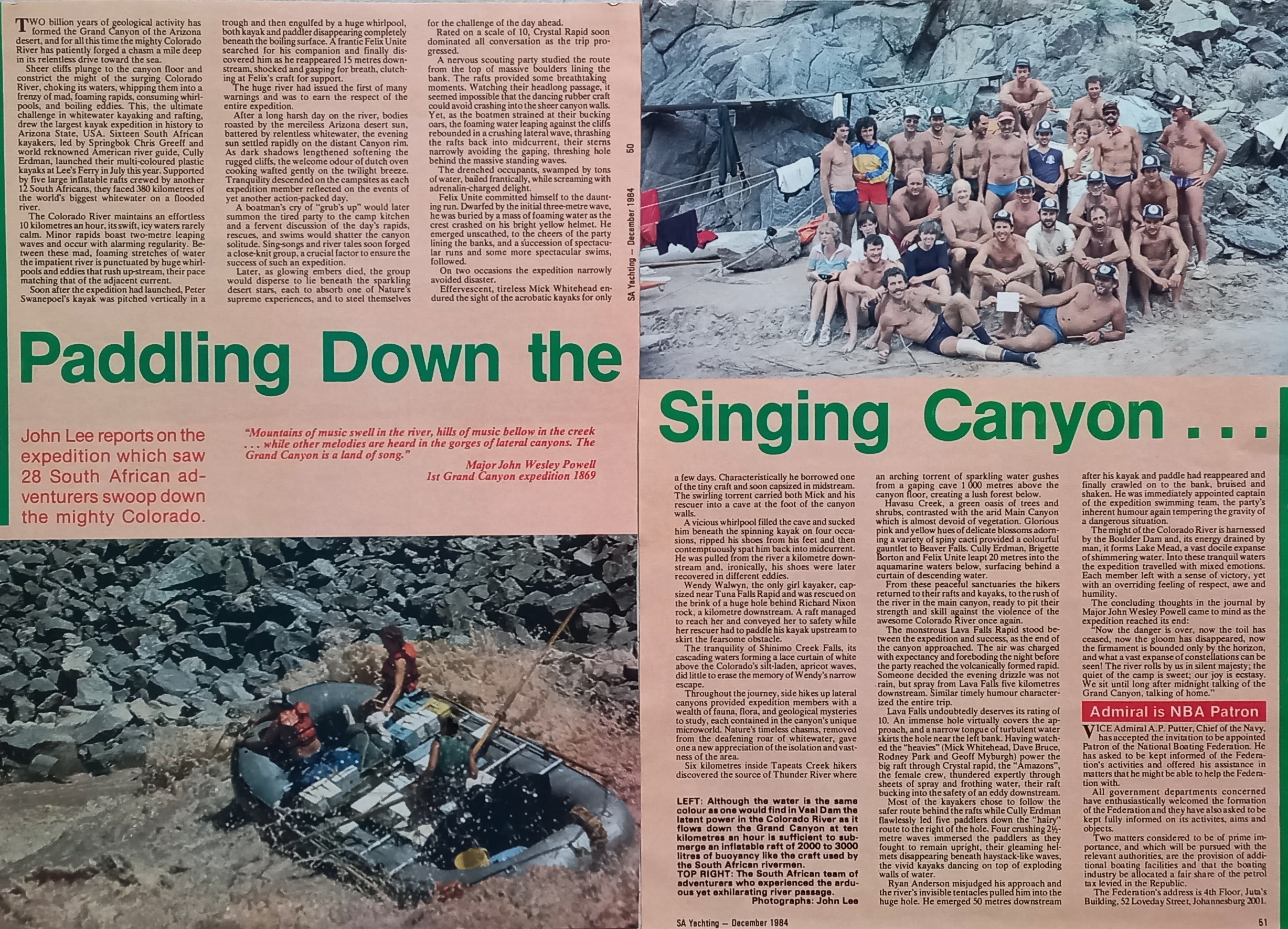
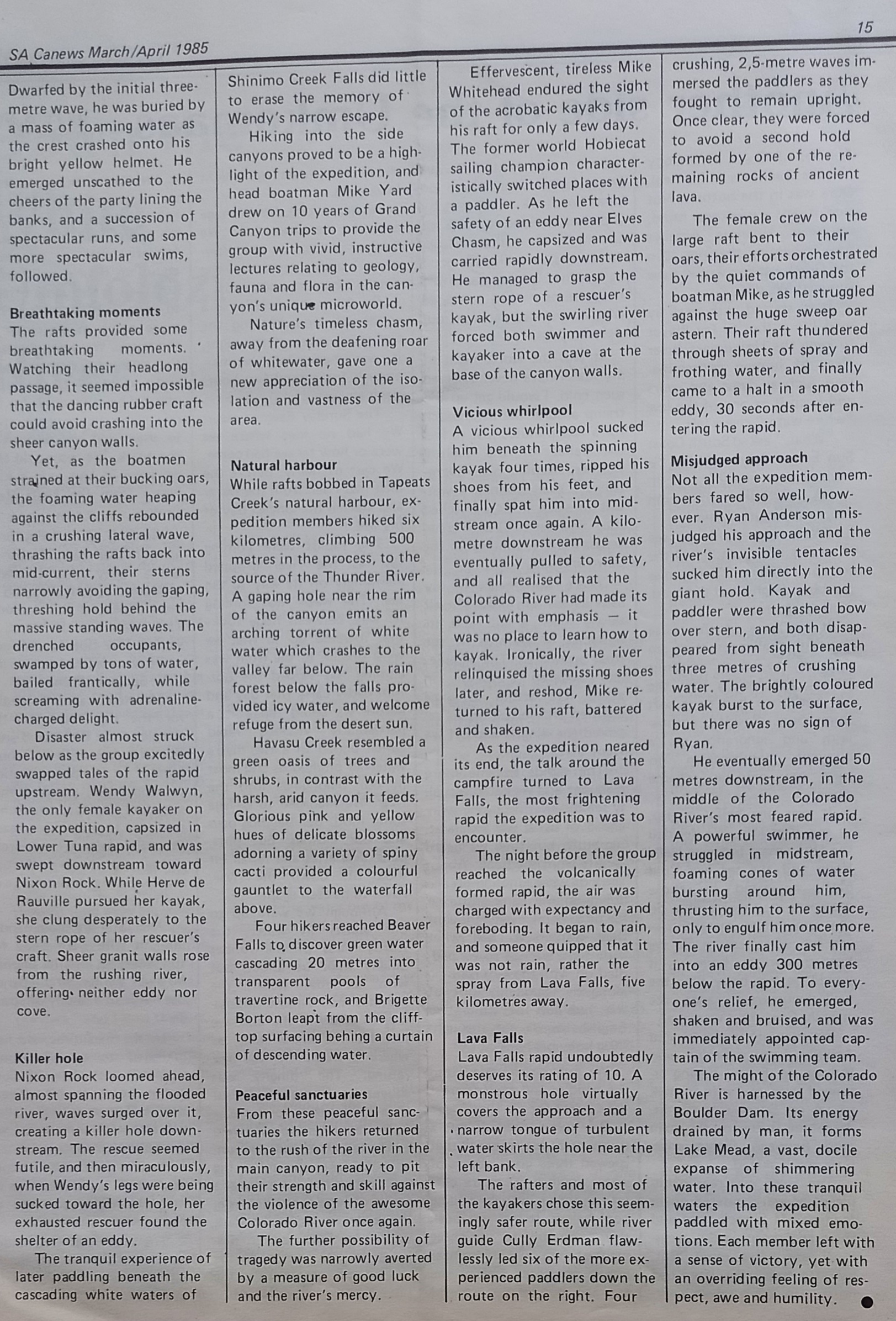
Sundry reports in the SA press afterwards
(all uploaded here as the hardcopies are being tossed)

















































 Vrystaat Confessions