Stephen Charles Reed was the laat lammetjie son of Vincent and Doreen Reed. Vin and Dor. Butch was the big black Labrador in residence.
Vincent was hizzonner, the Lord Mayor of Clarens, so although Stevie was by a long shot not their first son he was the First Son of Clarens. I moved in high circles.
In the holidays I would ring up Oom Lappies Labuschagne at the Harrismith sentrale. I’d say Clarens asseblief; He’d say ‘seker‘ and patch me through to the Clarens telephone exchange – their ‘sentrale‘. The operator lady would answer with a chirpy “Clarr-RINSE”!
Three Four Please. Seemed somehow wrong that their number was 34. I mean, Vincent was the Mayor. Surely it should have been One Please?
Anyway, Three Four Please.
“No, Stevie’s not there, he’s at the Goldblatts, I’ll put you through”.
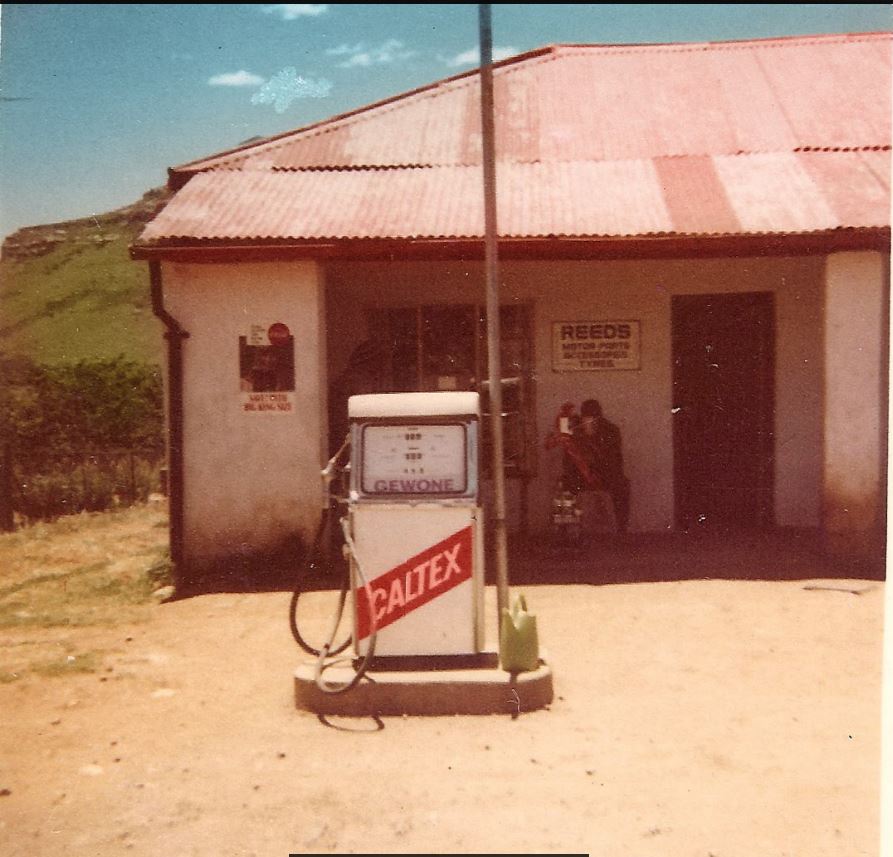
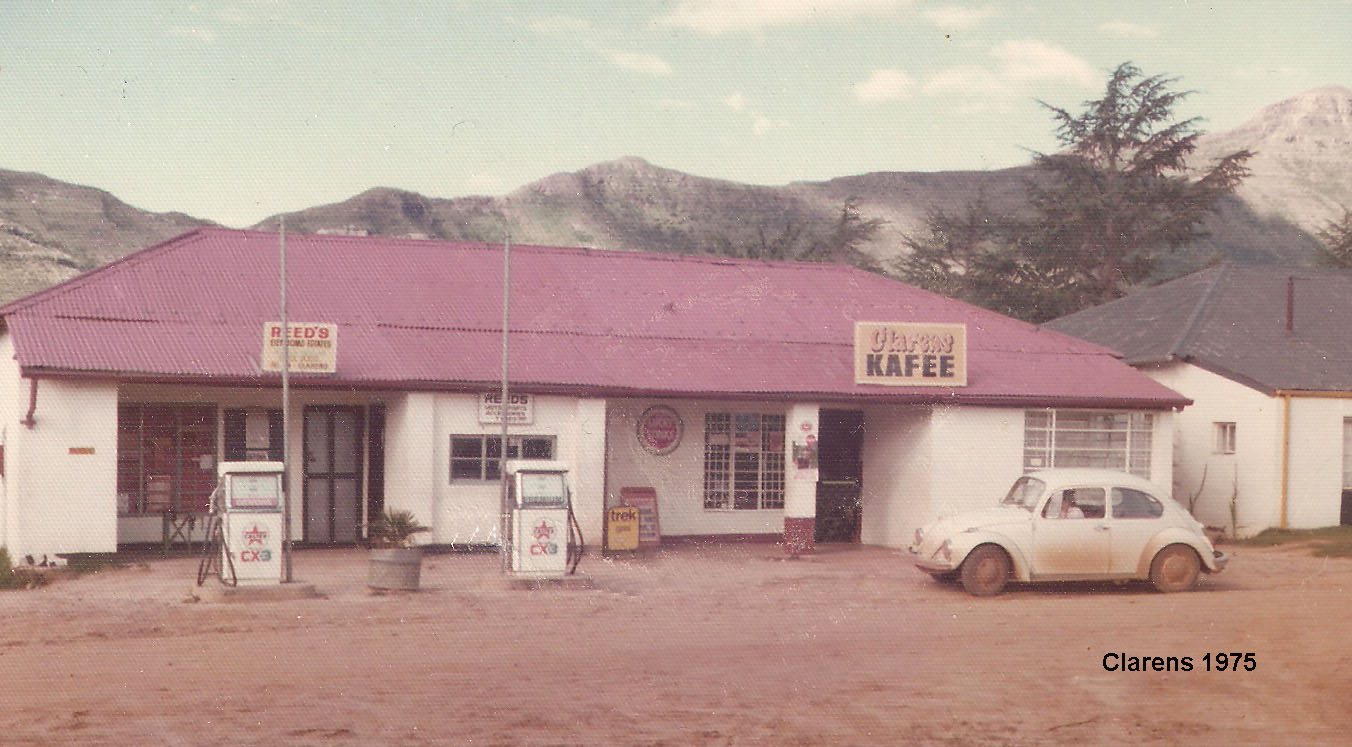
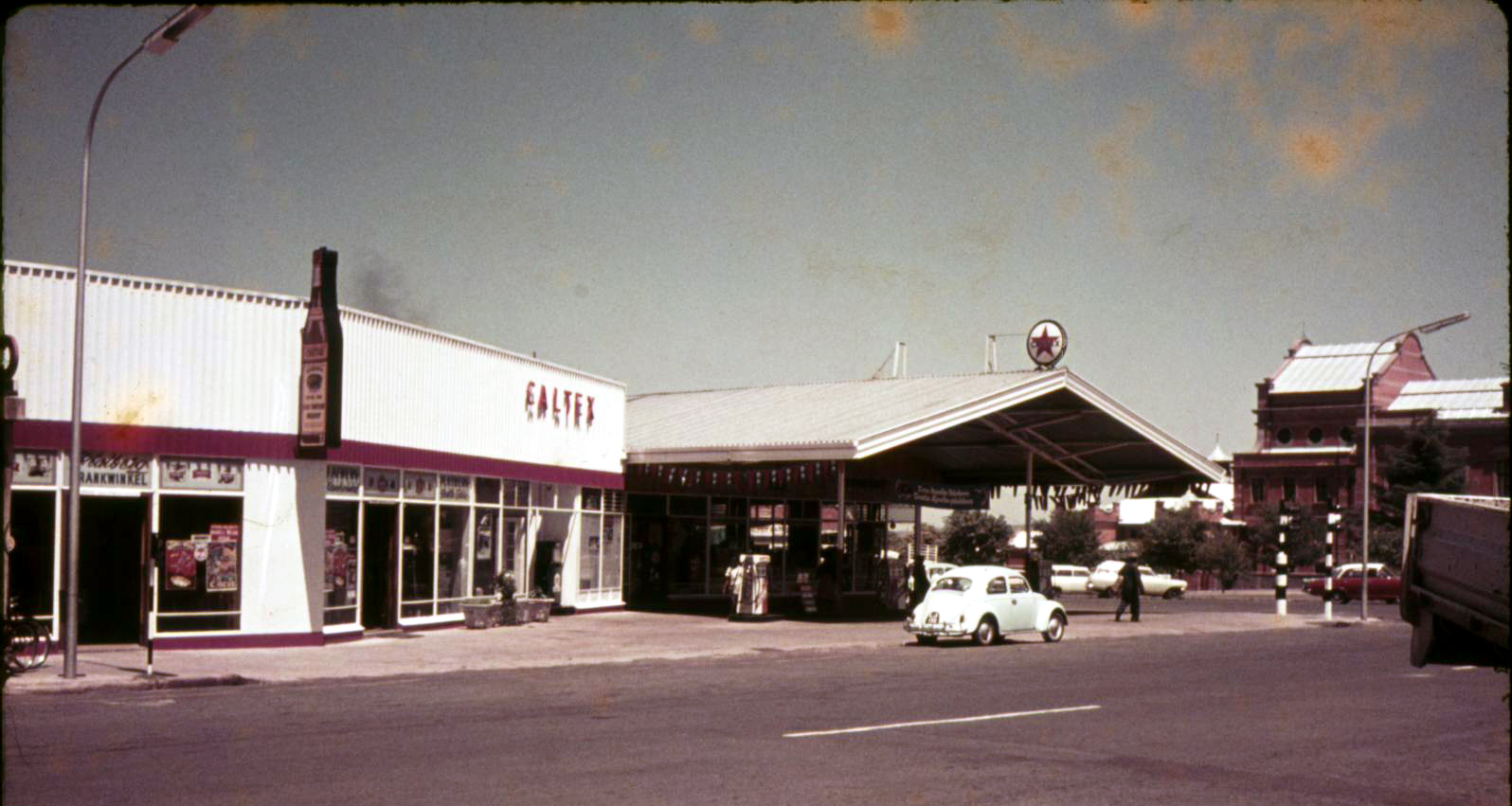
Old Clarens, before the rush. Here’s the Reed’s store and filling station.
~~oo0oo~~
laat lammetjie – afterthought child, unplanned, not to be confused with unwanted
Can’t remember Steve, did your family own the garage? I remember your dad being the mayor though. And I remember the craziest dog I had ever seen called Dennis – a cross between a Labrador and a dachshund or something! I also remember the “centrale” telephone exchange lady, who kept interrupting every three minutes to tell you how long you have been talking, and one day I got irritated, and said something like “aw shut up!” and she scolded me for being so rude! I was mortified!
You should see Clarens now! Although I haven’t been back, it’s the central art and antiques weekend getaway in the country. Quite the arty place, with hotels, B&Bs and coffee shops by the dozen.
~~oo0oo~~
I wrote:
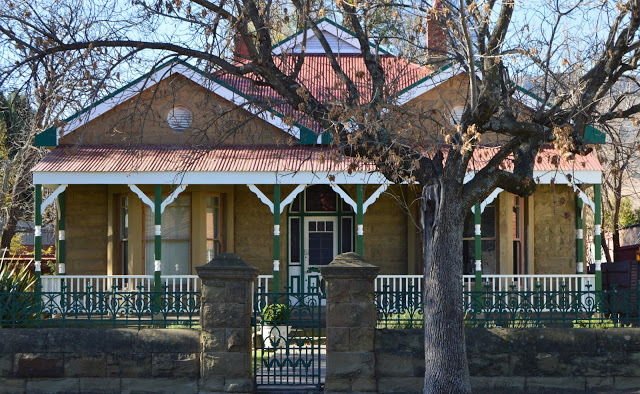
AND – they have a brewery! One of my favourite newer tales of Clarens involves young Rod Stedall. He and Karen bought a stand, built a lovely sandstone cottage, made a good income from it for years, had some lovely holidays there and then sold it for a handsome profit. Boom! I stood and watched as all this happened, thinking “That’s a great idea, I should do something about that,” and doing buggerall.
Rod then bought a house in the bustling metropolis of Memel, thinking that would be the next big Vrystaat thing thanks to their huge vlei and great birdlife. I thought “That’s a great idea, I should do something about that!” Yeah, right.
OK, Memel didn’t happen in Rod’s time here (he offered to sell me the Memel house when he was leaving for Noo Zealand), but guess what: SANRAL are talking of bypassing Harrismith and running the new N3 past Memel. Boom time! It would be a bust for Harrismith, though, so I’m more likely to buy a house there.
~~oo0oo~~
Terry Brauer wrote:
Clarens is one of my favourite getaways in SA. Who’d have thought, Mr Reed?! We stayed in that wonderful home with the Stedalls. Had we not owned San Lameer we’d have considered buying it. Fabulous place. Fabulous hosts.
Pete, join the Brauer Investment Club. Fail. Epic fail every time.
~~oo0oo~~
A brief history: Clarens, South Africa, was established in 1912CE and named after the town of Clarens in Switzerland, established around 200CE, where exiled Paul Kruger, who some think a hero of South African independence from Britain, died in 1904 after fleeing there. He fled there – yes, fled, like ‘ran away’, a coward – after calling my great-great uncle a coward! Koos De la Rey didn’t want the war with Engeland, but when it came he bravely fought the whole war against the thieving, war-crime British to the bitter end. Sabre-rattling Kruger ran away! The swine!
A company wanting to establish a village in the area bought two farms: Leliehoek from Hermanus Steyn in 1910/11 and Naauwpoort from Piet de Villiers, situated near the Titanic rock. The two farms were divided into erven, and these were offered for sale at fifty pounds sterling apiece. And voila! – French for ‘Daar’s Hy!’ -the metropolis of Clarens, Oranje Vrijstaat was born / gestig.
Behind the Crawley’s house in Warden street was an amazing garden. Huge trees and a fascinating big wooden shed, filled with all sorts of interesting stuff. And a fascinating big old green truck with a flat wooden bed parked under one tree.
Everything was big – industrial size. I remember long planks and pipes in shelves with pots and tins and everything. Everything. A robin nested in one of the pots on one of the shelves. I don’t know why I think it was a robin, but I’m sure I saw a bird’s nest there anyway. Leon confirms this memory.
The old Chevy truck was quite unlike any other in town. You couldn’t mistake it. I checked with the old man. He says it said ‘Hastings & Crawley Builders’ and it was a Chev – “1934 or 1935 judging by the grille”.
I remember it looking something like these:
Close. But not quite right, the one on the right is a Studebaker.
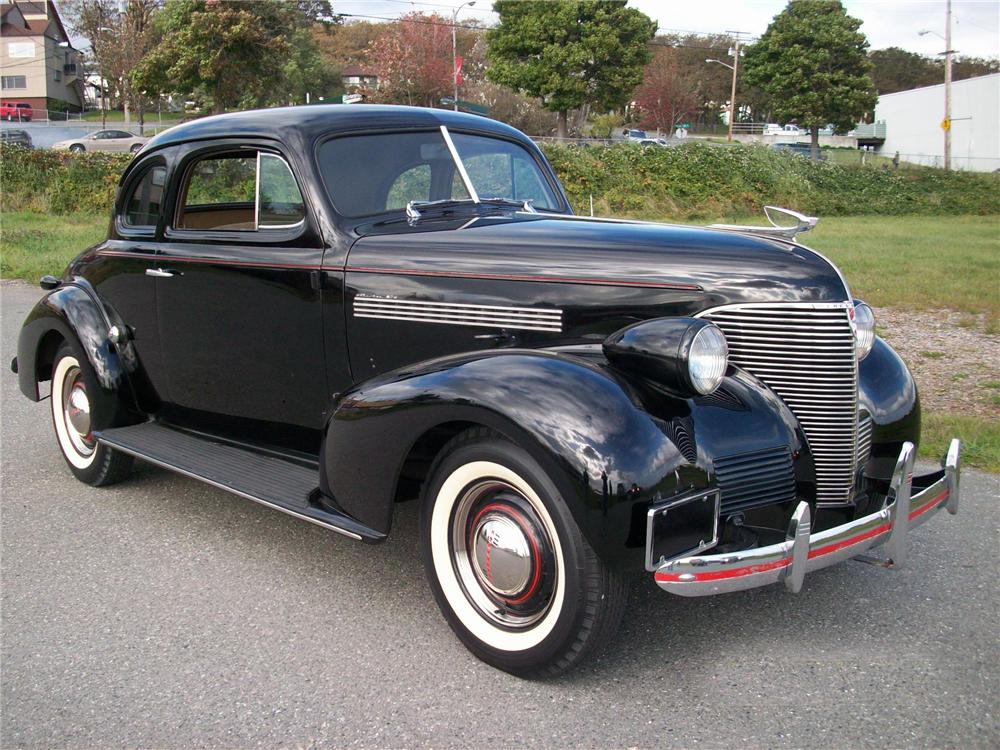
Dad also says he thinks Charlie’s first car was a 1939 2-door Chev he bought from the mayor Sepp de Beer, whose numberplate was OI 1 (we were Oh Eye before we were OHS). That’s all I got from him on the phone. His hearing is a bit ‘Whut?’.
I thought of Abe Sparks as the “Lord Mayor of Swinburne.”
Ever since he went to Texas he wore a stetson, cowboy boots and a string tie with a polished stone clasp. He was a larger than life character, colourful. He and Lulu were always very friendly to me. He drove an old Rolls Royce which I believe he bought from fellow eccentric farmer Petronella van Heerden. Which he converted it into a pickup truck, a bakkie. It looked something like the silver one in the pic. I think a darker colour, though, like the one below. (Oops, this Roller was actually a 1929 Cadillac which Dr Petronella had bought in Cape town! – I should always check my dodgy history with Harrismith’s historian Leon Strachan. He knows things).
I have a clear childhood memory of it parked in Stuart Street near the corner of Retief Street, opposite the Post Office. Near Havenga’s. Near Basil’s Cafe. Near the corner Kovisco Butchery. Opposite Herano Hof. Opposite that Co-Op building. You know where I mean. Uncle Abe staring down at me with a big smile: ‘How are you Koosie?’
Abe owned the Swinburne Hotel which became the Montrose Motel, later bought by Jock Grant; scene of an interestingbrandy-filled nightmany years later.
He and Lulu would throw big parties and the story goes . . yes, the old story goes – Rural Legend Alert! – that one night they decided to cook the mushrooms they had gathered in the veld / garden / woods that day. To be safe they fed some to the dog and asked the kitchen staff to keep an eye on it for the next hour or so. They continued partying up a storm with the grog flowing, then ate supper and carried on jolling until one of the staff came in to say “Baas die hond is dood”.
Panic ensued. They all bundled into cars and rushed off to the Harrismith Hospital twelve miles away, driving fast and furious and well-oiled on the national Durban-Joburg highway, to have their stomachs pumped out – no doubt by one of their mates, whichever doc was on call. Then returning much later to the farm looking chastened, wan and sober.
Next morning Abe asked to see the dog and was shown where it lay dead and mangled. It had been run over by a passing car.
I imagine a pinch of salt was added to the wild mushrooms.
~~oo0oo~~
Baas, die hond is dood – Boss, the dog is dead
~~oo0oo~~
Leon Strachan, Harrismith’s finest author (nine books or more), gentleman, publisher, historian, military buff, farmer, jam bottler, businessman, tour guide and all-round mensch has a much better grip on Abe’s life in Swinburne. His farm Nesshurst is in the same area as many of Abe’s sixteen farms over the years. He tells of pub tales, a Swinburne cricket team made up of eleven Sparkses (one was even selected to play for South Africa!), brandy taken internally and externally, and how the sheer size of Louis Bischoff’s schlong displayed for all to see on the pub counter was one of the few things that ever rendered Abe speechless.
Blafboom 1991, Leon Strachan – ISBN – 1-919740-21-1
~~oo0oo~~
I found a lot of pics of Rolls Royce pickup conversions, but so far none of a Cadillac conversion. So that’s a 1929 sedan in the feature pic.
This guy Nudie reminded me of Uncle Abe: Abe would have wanted his car!
Dad tells me Abe bought the Rolls Royce* from fellow Harrismith farmer and characterNell van Heerden. *Caddy
An old-car-nut Aussie confirms another version of the old sheep farmers / Rollers rural legend thus:‘I can see why the conversion was done. When the Silver Shadow was introduced, it was unpopular with graziers: it could fit only two sheep on the back seat; the Silver Cloud could hold three.’
Stewart Bain was born in Wick, Scotland on 9 September 1854. He and his brother James came to South Africa in 1878, to Durban. They soon got a job building bridges for the railway line extension up the Drakensberg from Ladysmith to Harrismith. How, one wonders, did two herring fishermen convince people they could build bridges? And so they reached the metropolis of Harrismith in the Oranje Vrijstaat, an independent sovereign state at the time. Britain had recognised the independence of the Orange River Sovereignty – before that it had been the Orange River Colony ORC – after losing the first Anglo-Boer War at Majuba. The Vrijstaat officially became independent on 23 February 1854, seven months before Stewart was born, with the signing of the Orange River Convention. This history is important in view of Britain’s and many of Harrismith’s inhabitants’ conduct in the Anglo-Boer War of 1899-1902.
– sandstone bridge across the Wilge River at Swinburne –
So they built bridges. I am not sure, but I fondly imagine they built the beautiful sandstone bridge across the Wilge River at Swinburne, where I launched two separate canoe ‘expeditions’ with good friends Fluffy Crawley and Claudio Bellato many decades later.
Settling down in Harrismith after their bridge-building days, Stewart bought the Railway Hotel and changed its name to the Royal – we believe with official ‘royal” permission – while brother James built the Central Hotel uptown, on the central market square.
It appears here as if some people (!) carried on referring to the Vrijstaat as the ORC, even though it was actually the sovereign nation Oranje Vrijstaat by then!?
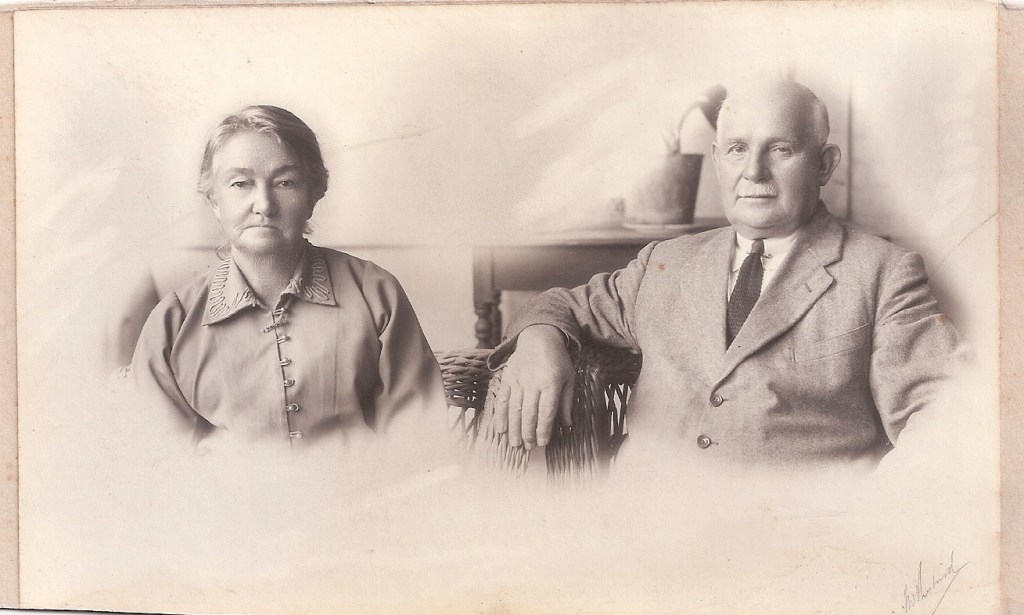
Stewart married Janet Burley in Community of Property in Durban, I’m not sure whether that was before moving to Harrismith or after. Janet was born in Hanley, Staffordshire, England in 1859 of David Burley and Caroline Vaughan. They had __ children between 18 __ and 18__ . . . the fifth child in 1893 being our grandma Annie. Annie married Frank Bland and had two daughters, Pat and Mom Mary, Mom Mary remembered the hotel as having two big (‘huge’ says Mom, but she was little back then!) statues at the front door: A lion rampant with a human face, fighting; an antelope rampant on the other side of the door – she thinks a hartebees or a sable or something. Both were rearing up on their hind legs.
Stewart became Mayor of the town and ‘reigned with the gold chain’ for years, becoming known – by some – as ‘The Grand Old Man of Harrismith.’ To their grandkids they were always ‘Oupa’ and ‘Ouma’ Bain;
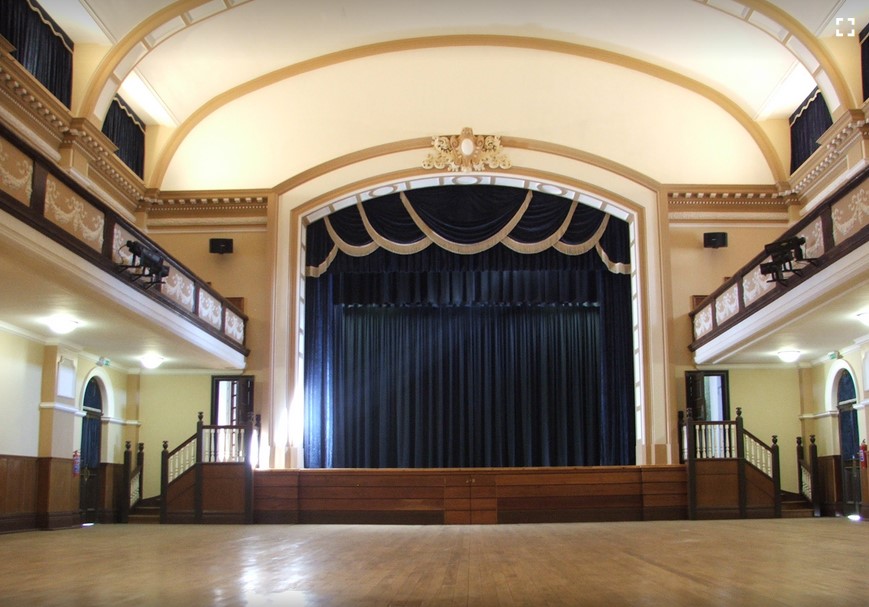
He pushed for the building of a very smart town hall. Some thought it was way too fancy – and too big – and too expensive – and called it ‘Bain’s Folly.’ Did Stewart have the tender? Was he an early tenderpreneur? Was it an inside job? *
Here’s a reason someone gave for the “need” for such a grend gebou: ‘The erection of the new Town Hall, officially opened in September 1908, was largely the result of support the troops had given for theatrical performances and concerts in the former building which had proven unsuitable.’ – (found that here: http://samilitaryhistory.org/vol082sw.html)
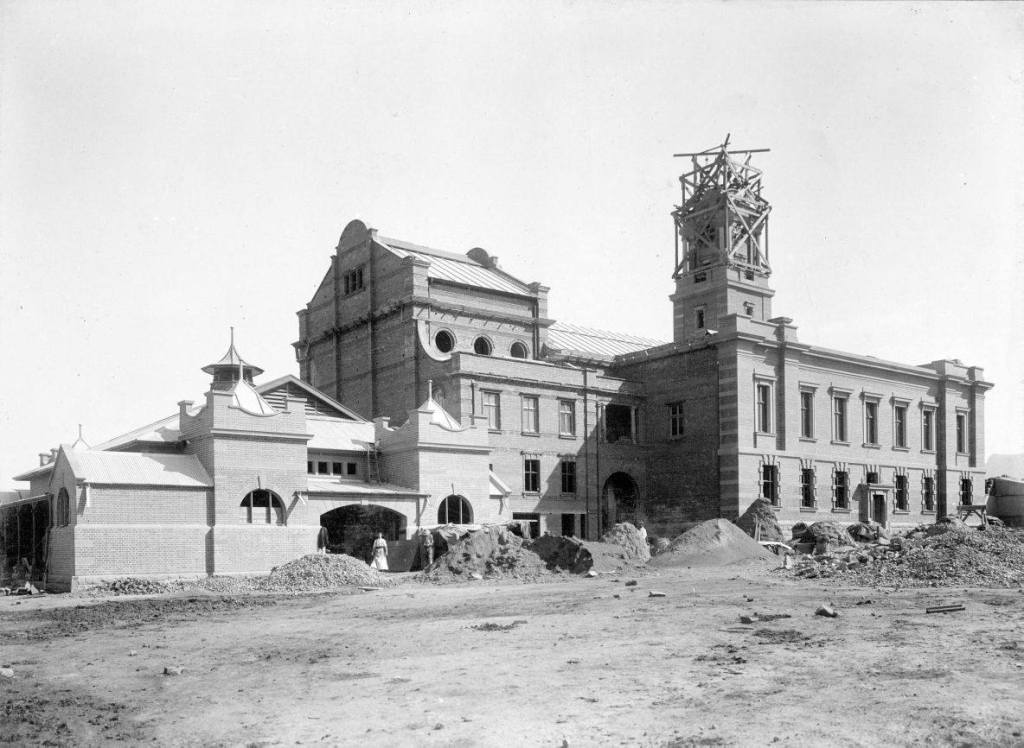
– building operations – lots of imported stuff –– ta da! – a palace fit for a dorp –
Here’s a lovely 3min slide show of the building of Bain’s Folly – completed in 1908 – by Hennie & Sandra Cronje of deoudehuizeyard.com and thanks to Biebie de Vos, Harrismith’s archive and treasures man. Thank goodness for all the stuff that Biebie ** has saved and rescued!
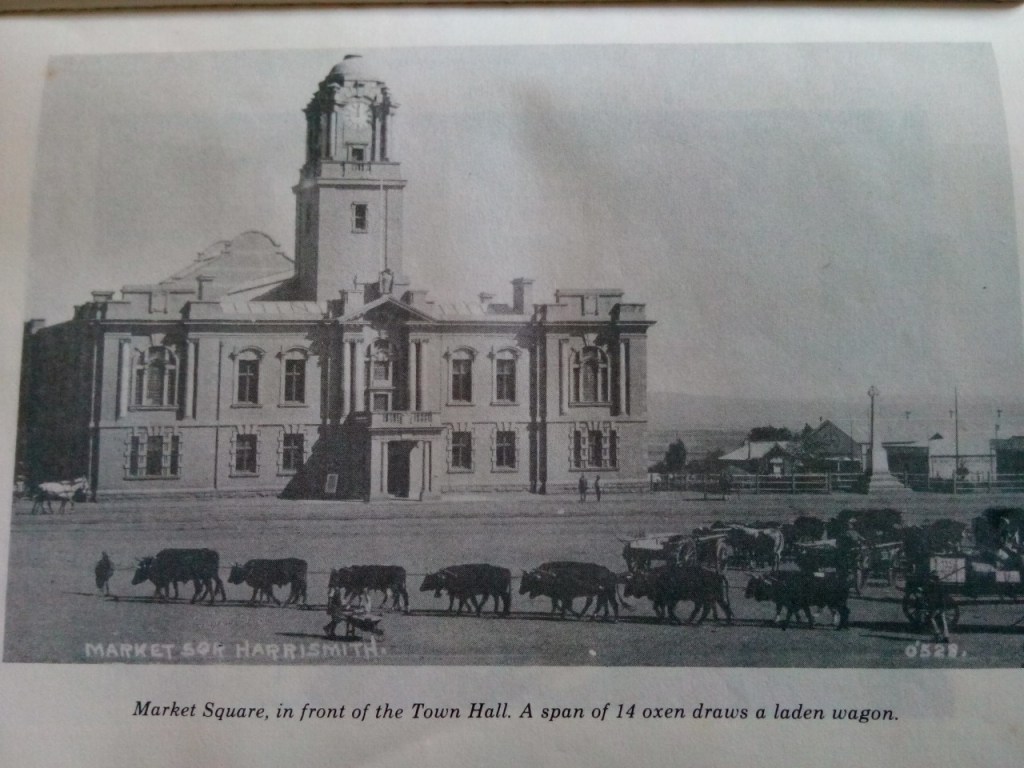
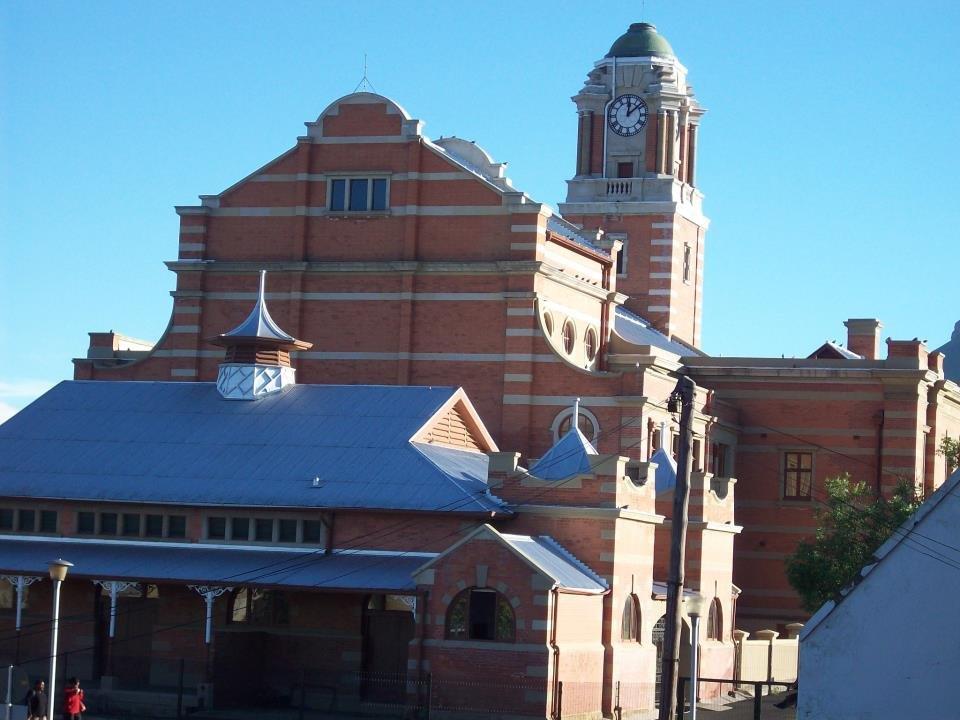
Here’s that impressive building in a dorp on the vlaktes!
– the market at the rear of the building soon after completion – 1908 –
Opskops probably had to be arranged to justify the place, and the occupying British force that remained after the illegal and unjust invasion that was the Anglo-Boer War which saw so many war crimes committed by the British, benefited hugely, their officers dancing nights away with the local lasses.
Janet died on 15 January 1924; Her daughters Jessie & Annie (who was then aged thirty) were with her when she collapsed. They summoned Dr Hoenigsburger (Hoenigsburg?), but Ouma died within minutes. The Harrismith Chronicle article reads in part: ‘Ex-Mayoress’s Death. Sudden demise of Mrs S Bain. The news which stunned the town on Tuesday morning of the painfully sudden death of Mrs Stewart Bain, evoked a feeling of deepest sympathy from all who knew the deceased lady, not only in Harrismith and the district but in places far remote.’
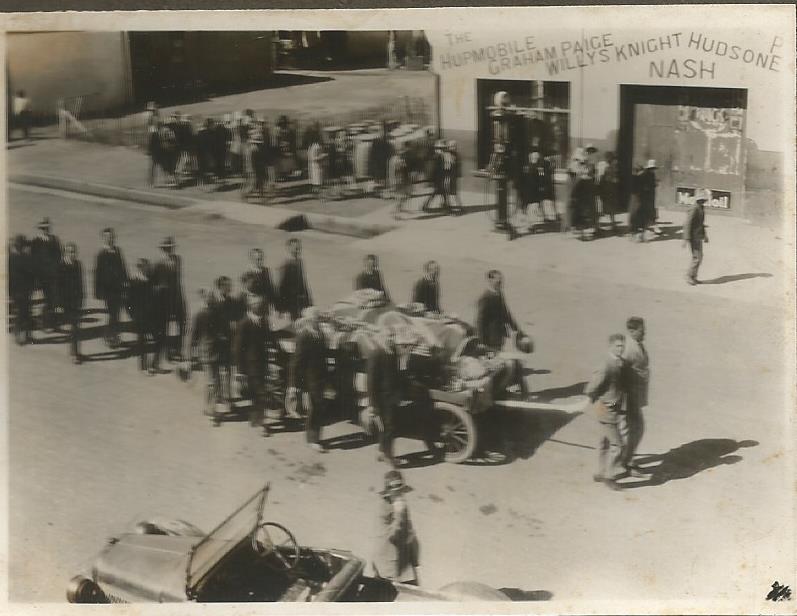
When the dust settled on the town hall, the townsfolk must have quite liked the result, as when Stewart Bain died in September 1939, the town pulled out all the stops for his funeral; These pictures were taken from the balcony of his Royal Hotel, with ‘his’ Town Hall visible in the background, and ‘his’ mountain behind that. Most Harrismithers and Harrismithians regard Platberg as ‘theirs.’
– Oupa Bain’s funeral procession – who paid?! –
At one notable local event ca.1949 in this huge hall – an Al Debbo concert! – Stewart’s grand-daughter Mary met her future husband. Maybe that was the Lord Mayor Hizzonner’s intention in building this impressive edifice all along? In 1951 they got married there. Years later Stewart’s great grandaughter Barbara also got married in ‘his’ town hall.
~~~oo0oo~~~
Found this pic of the town hall in Wick and wondered if Stewart got the idea of a bigger, better town hall for his new town from his old town?
– built in 1828 –
~~~oo0oo~~~
Snippet: Old Mrs Batty was Stewart Bain’s housekeeper at the Royal Hotel. Mum’s cheeky cousin, Janet Bell – later enhanced to Hastings-Bell – asked Mrs Batty one day, “Why do you say ‘somethink and nothink?” Back came the reply, “Cos I aren’t eddacated.” Mrs Batty lived around the corner from the Royal, on the same block, in a little house right on the pavement.
~~~oo0oo~~~
I thought I remembered that, despite every dorp in South Africa seeming to boast a ‘Royal Hotel’ – from whence ‘hier sirrie manne innie Royal Hotel’ – the Harrismith Royal Hotel was one of only two in South Africa that could officially call itself ‘Royal’. Sister Sheila, family Keeper-of-the-Archives, has hereby confirmed that I have a flawless memory. Well, something along those lines:
– evidence – or “evidence” – of our close link to royalty –
~~~oo0oo~~~
Couldn’t resist this close-up so enthusiasts can read which cars were around in 1939:
~~~oo0oo~~~
Postscript:
A young post office worker left his little 1935 Morris in that garage in the care of the owner Cathy Reynolds (nee Bain), while he went off to war, ca 1941; When he returned around 1946 it was waiting for him. He then met Mary, second daughter of Annie Bland, nee Annie Watson Bain, Stewart’s fifth child. Their first date was in the Town Hall. Best and luckiest thing that ever happened to him. They got married in the Town Hall in 1951. He was Pieter G Swanepoel, originally from Pietermaritzburg, and my Dad.
So two women, a Central Bain and a Royal Bain, ran garages in Harrismith.
* Shades of our Moses Mabida stadium in Durban for the 2010 FIFA soccer world cup – ‘Do we need such a big, fancy stadium!?’ I called it the Moses MaFIFA stadium. Call it FIFA Folly, Corruption it almost certainly is. Americans call it a boondoggle.
opskops – parties, shindigs, events, pissups, balls, dances, concerts; involve alcohol; kick up your heels
grend gebou – grand building
~~oo0oo~~
Phone call to Mom May 2025, Talk turned to the Bains, her Oupa Bain and his Royal Hotel. He was Stewart Bain, Mayor of Harrismith.
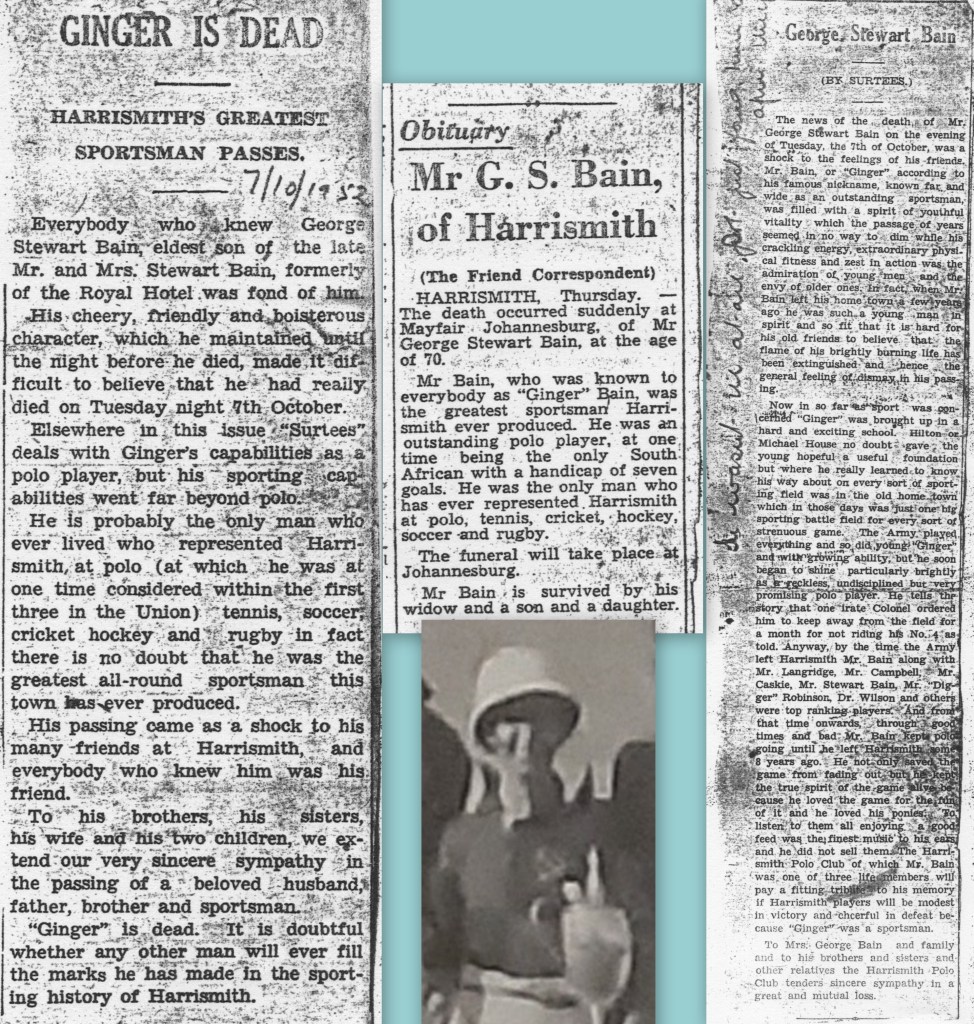
The Bain sons went to Hilton. At least two – Ginger and Stewart – came home to work for Oupa, their Dad, and play sport. Never studied after school.
Dick the Waiter
Ginger played polo and rugby. Stewart (Smollie) worked in the bar. Smollie was thin and stooped, walked with a shuffle. Getting in and out of his wife Marie’s car was a struggle. Something about his legs couldn’t bend. Like ‘welded straight.’ Arthritis maybe?
The chef’s name was Kaiser Adam. He wore a white uniform and a tall white hat. The two waiters were Dick and Shabalala – ‘smartly dressed waiters.’ Kaiser and Dick were Indians from Durban. They must have had a lonely life living in Harrismith, unable to go anywhere really. They lived on the large hotel grounds with their families. Shabalala was a local Sotho man. Dick, with his jet black hair and little moustache, was said by local wags to look just like Rhett Butler from the movie Gone With The Wind! …
Koos (me): This is weird, and maybe I’m constructing the memory from tales told at home, but I have a clear memory of sitting at a table in the dining room; being handed a paper menu; then a tiny bit of fish arriving on a large plate followed by a piece of meat and two veg on a large plate, followed by a tiny bit of pudding in a bowl. I do remember the dining room and the big fireplace and the staircase. The bar leading off the front stoep I remember from later years, once we started looking for beer after dark.
Big sis Barbara remembers visting the Royal when her good friend and cousin Glenda Taylor used to visit Smollie and Marie Bain.
My granny Annie had an older brother Ginger. He was the oldest of the seven ‘Royal Bains’ and a great sportsman. They owned the Royal Hotel and they were ‘Royal’ so as not to be confused with the ‘Central Bains’, who owned the Central Hotel! As fishermen from the tiny hamlet of Wick on the more freezing end of Scotland, they couldn’t really claim the traditional ‘Balmoral Castle’ kind of royalty.
Playing rugby for Hilton, ‘Bain of Harrismith’ became the bane of Michaelhouse in the first rugby game between these two toffee-nosed schools, where vaguely bored and lazy shouts of ‘a bit more pressure in the rear, chaps!’ are heard through the gin fumes surrounding the rugby fields.
Here’s the report on the 1904 derby – the first game between the two schools:
– reprinted in the 1997 Hilton vs Michaelhouse sports day brochure –
Drop goals were four points and tries were three in those distant days. I like that the one side was “smarter with their feet” . . and that being smarter with your feet was better than “pretty passing.”
A century later these rugby genes would shine again as Bain’s great-great-grandson – grandnephew actually – also whipped Michaelhouse.
I’ve included a lovely picture of the Michaelhouse scrum on top.
~~oo0o~~
Rugby in Harrismith was full of Bains and Blands, seven in this team:
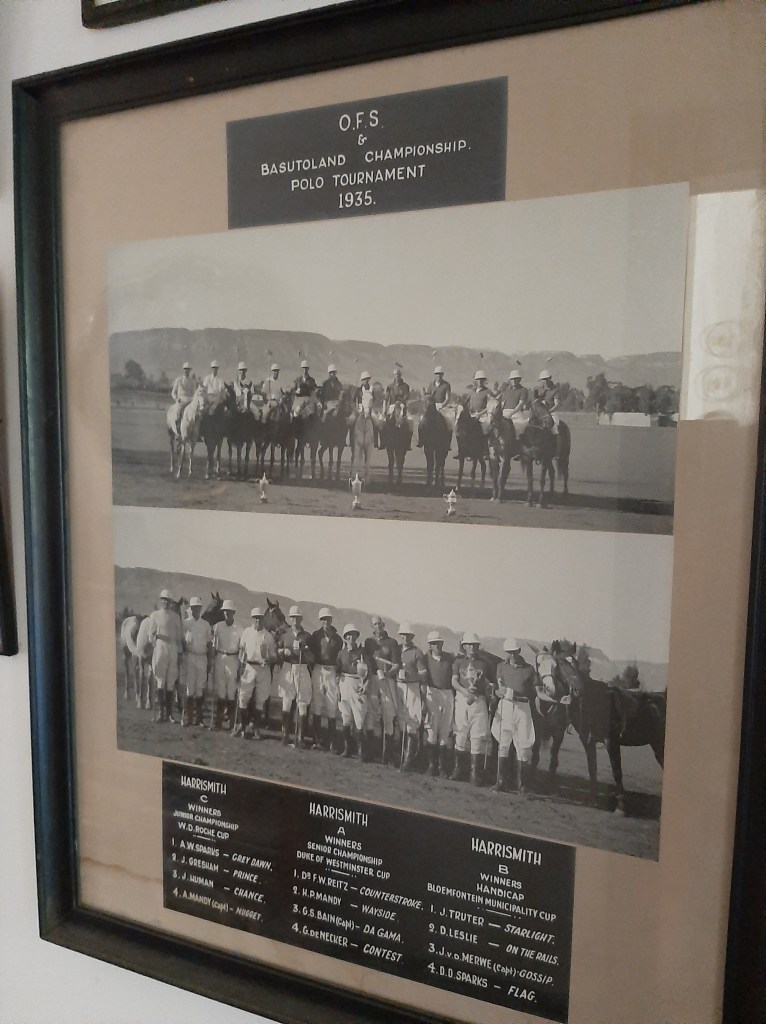
– Ginger also captained the Harrismith A Polo team –
~~oo0oo~~
~~oo0oo~~
Handwritten on the edge of one of these is “He wasn’t ill at all. (illegible) just found him (illegible) “
Katrina (nee Miller) Duncan, from near Oban in Scotland, stumbled across my other blog here and made contact with us. She sounds delightful, but so she would – she’s family!
– pick one –
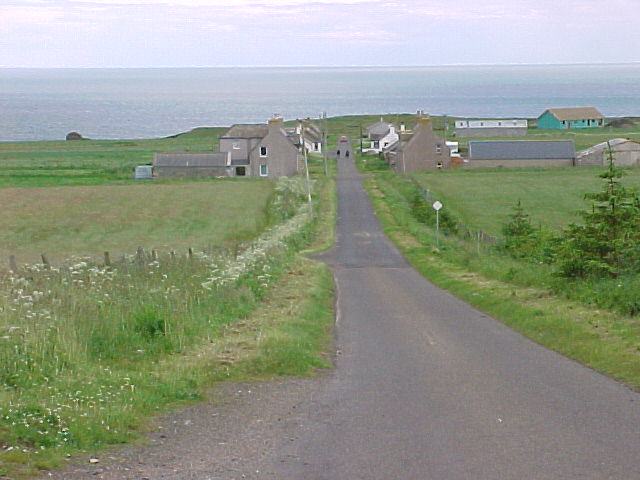
She has been researching the Bain family tree and she and my sister Sheila have worked out that we share a Great-Great-Great Grandfather, one Donald Bain, born in Wick on the 14th of April 1777. He married Katherine Bremner and they lived in Sarclet, just south of Wick way up in north-east Scotland. And then I spose they had children and then those had children, and – you know how it goes.
– Sarclet coast –– Sarclet village –
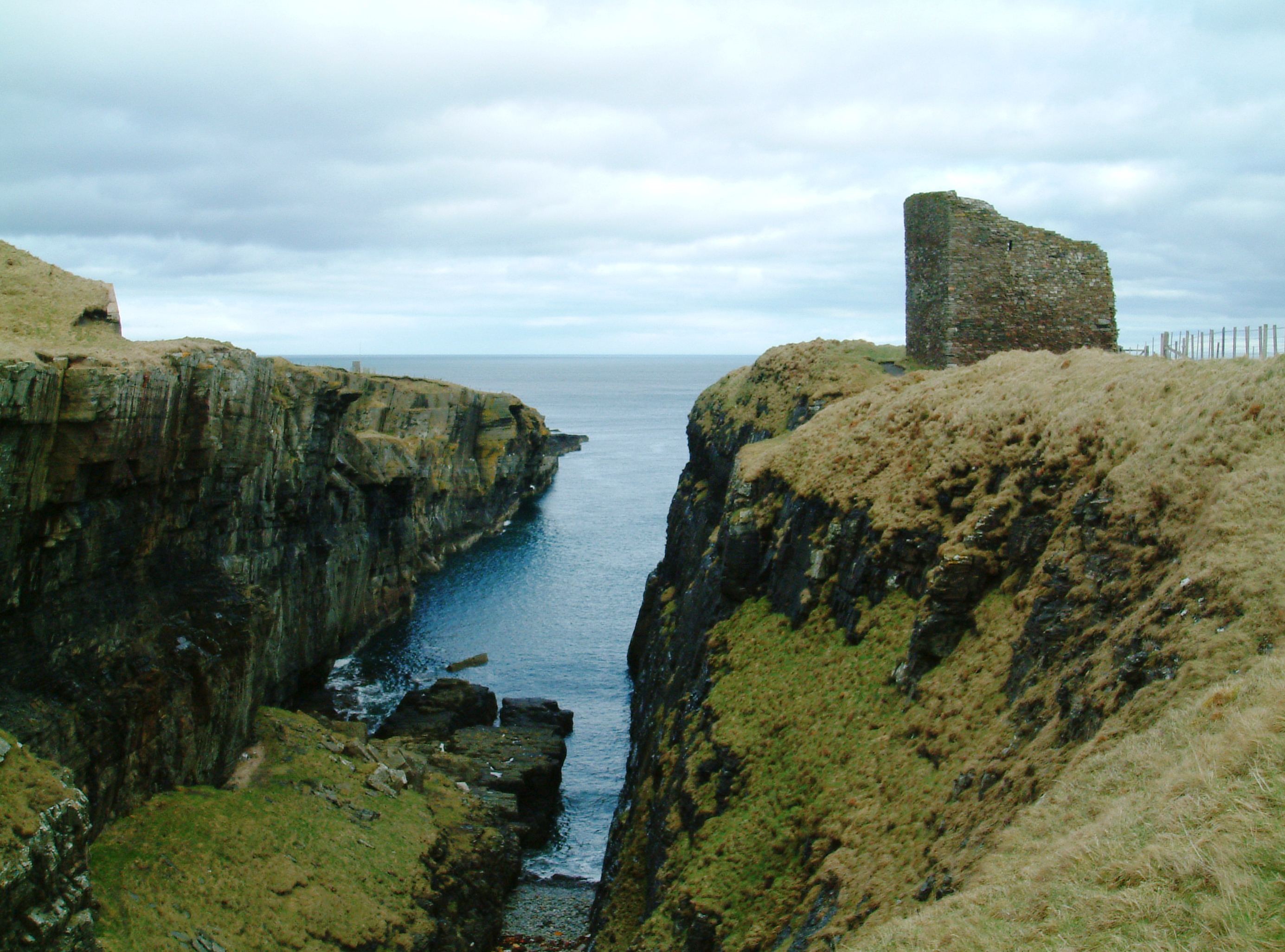
I reckon if you dipped your toe in that Wick water you’d know why some Bains moved to Africa! Also, they may have been dodging giving the castle a much-needed revamp . . .
– Wick Castle –
Stewart Bain was born in 1819 in Caithness, to Donald (42) and Katherine (41). On the 7th of February 1845 Stewart married Christina Watson in his hometown. They had four children during their marriage.
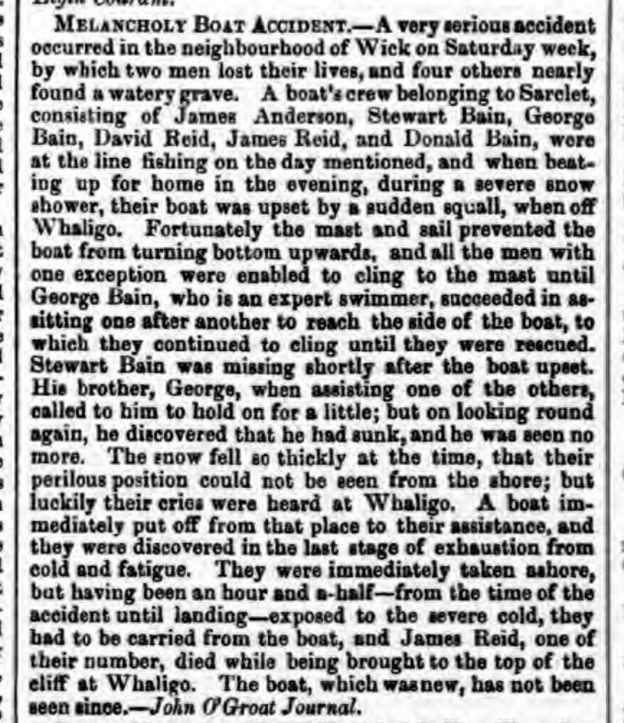
In 1853 Donald’s sons George and Stewart were out fishing when their boat was swamped and Stewart drowned in the freezing winter sea. He died as a young father aged 34 on 19 February 1853, and was buried in Thrumster, Caithness.
Katrina found an 1853 newspaper article about the tragedy.
It seems Stewart’s father Donald also died that year. The next year, 1854, his brother George and wife Annie (nee Watson) had a son. They named him Stewart.
This Stewart is the Stewart Bain who came to Harrismith, Orange Free State – the sovereign country Oranje Vrijstaat – in South Africa with his brother James in 1878 and married Janet Burley. They had seven kids: The seven ‘Royal Bains’ of Harrismith, named after their hotel, The Royal Hotel in Station Road. This ‘title’ was to distinguish them from the ‘Central Bains’, not to claim royalty! My grandmother was the fifth of these seven ‘Royal Bains’ – Annie Watson Bain. She got her paternal grandmother’s surname as her second name.
Stewart and Janet raised their ‘Royal Bain’ brood in this cottage adjacent to their hotel in Station Road, down near the railway line:
James Bain, Stewart’s brother and owner of the Central Hotel, called his rather larger home ‘Caithness’. It was in Stuart Street near their hotel in the centre of town. There they raised their brood – eight ‘Central Bains.’ One of them was also named Annie Watson Bain. Her story ended tragically early, in World War 1 in France. Thanks to Katrina we know more about it.
– Caithness, Harrismith –
On Katrina’s ancestry web page “Miller Family Tree” the names Annie, Jessie, Stewart, Katherine, Donald etc have been used for generations.
The Scottish Tartan register confirms that there is no ancient Clan Bain tartan. This one – ‘The Bains of Caithness’ – was designed in 1993 for Robert Bain of Caithness.
There are a few coats of arms; I chose two examples.
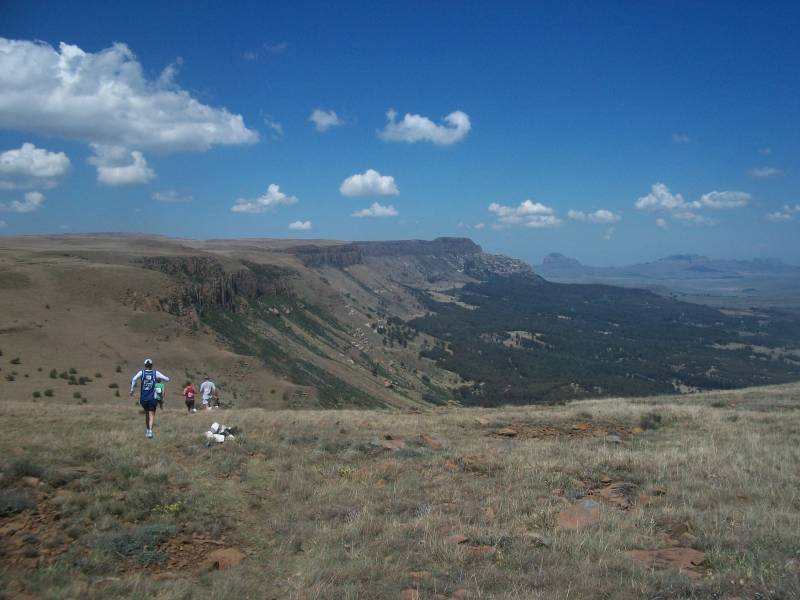
The people of Harrismith dubbed Michael McDermott ‘The Mountain Goat’. The mountain being Platberg.
Or so running e-zine ‘Modern Athlete’ says of SIXTEEN-times winner of our Mountain Race. Apparently we used to write supportive messages for him along the route of the Harrismith Mountain Race, much like supporters do in the Tour De France. Race organisers would set him up in our local hotel with the room number that corresponded with the win he was going for. Michael became a hugely popular and inspirational figure thanks to his sixteen-consecutive-year winning streak in our rugged annual race.
They go on: Michael’s love affair with Harrismith’s imposing Platberg began in 1978, when he was just 13. “I was alone at home and ran 5km to the Harrismith Harriers clubhouse because I wanted to run that day, but no-one was there, so I ran back home. Then they called me up to ask where I was and came to fetch me. So before the race, I already run 10km,” says Michael, who ran the race and finished 32nd. “Nobody believed I had completed the race, though, because I was so small!” he laughs.
In 1980, he finished eighth and qualified for a gold medal, but had to receive it unofficially, behind the tent, as he was still below the minimum 16-year age limit for the race. A year later and now ‘legal,’ he finished fifth, and then in 1982 he posted the first of his sixteen consecutive wins, an amazing record putting him right up there in the crazy stakes with uber-talented athletes Michael McLeod of England (won the Saltwell 10km sixteen years in a row), and Jim Pearson of America (won the Birch Bay marathon sixteen times).
Michael held the record for the short 12.3km course at 50mins 30secs in 1985 and the long 15km course at 1hr 05mins 05secs as the first winner over the new distance in 1996. It came to an end when he ‘stepped skew’ and tore ligaments in his ankle while well in the lead on his way to a 17th straight win in 1998. Michael Miya took over and won the race in a new record time of 1hr 04mins 06secs and became the first black South African winner. While McDermott was really disappointed, it was also “a relief as there wasn’t that pressure to win after that.”
SPRINGBOK
Michael earned Springbok colours in 1988 for cross-country, and was invited to run a number of international mountain running events in the early 1990s. He won the Swiss Alpine Marathon three times, shattering the course record in 1993. He also represented South Africa seven times in the World Mountain Trophy, from 1993 to 1999, with a best placing of fifth in 1993 in France. http://www.modernathlete.co.za
In “our day” Johnny Halberstadt was the King – wonder where he is today? (Koos: In America: Just sold his sports shop in Colorado).
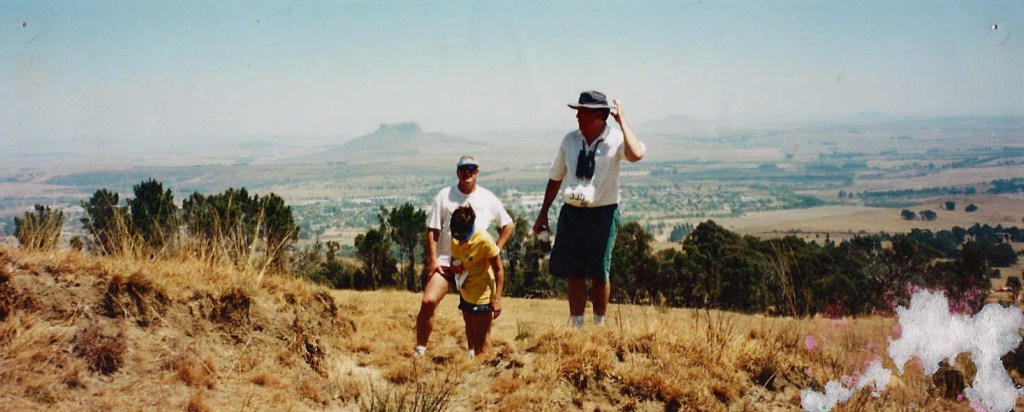
I strolled the race two or three times in the 1990s – never finished in the allotted time, but always walked away with a medal, ’cause I knew Jacqui Wessels (du Toit) who handed out the medals!
Remember the year we did it after “peaking” at Pierre’s home the night before – about 3am. You remarked as you crossed the Start Line (not the Finishing Line) – “I think I’m under-trained”. The hangovers were monumental. As we strolled past the adoring, cheering spectators, one guy was heard to remark “Daai mal ou het sy verkyker om sy nek!” That was you! (Koos: Actually, it was Wimpie Lombard and he said “wadafokmaakjymedarieverkykers?” You’ve forgotten: Afrikaans is always one word).
The year Karin Goss and I did it, (circa 1998) we were so last that even the Coke truck had packed up and left by the time we strolled into Die Groen Paviljoen! We were so busy ‘phoning the whole world from the summit that we forgot to be competitive. Jacqui insisted on giving us medals, but drew the line at Gold – we had to be content with Bronze. Don’t know why she was so strict – there were a few Golds lying in the bottom of the box.
Was Alet de Witt the first lady to compete?
Love – stroller Sheila Swanepoel
———————————————————————————————————————–
Jacquie replied: Sheila, I think you forgot that when we allowed you to go through the finish banner after cut-off time, there was a breathalyser test for the finishers. This you seemed to have forgotten! Legal limits are 0,24 milligrams per 1000 millilitres. Finishers (at sunset) with this reading all get GOLD.
Unfortunately your readings were 0.60 . . . hence the Bronze medal. 😉
All the best (hope you enter the Mountain Race again this Year).
Kind Regards – actual finisher Jacquie Du Toit, ex-Mountain Race high-up official
——————————————————————————————————————-
Kar Goss got excited: Hey Sheils
I think we must do it once more!! Seriously!
What comes after bronze?? And is there a medi-vac chopper available?
Thanks for the interesting article Koos!
Happy Women’s Day everyone.
Love- (Sheila-like stroller) Kar Goss xx
—————————————————————————————————-
JP de Witt reminisced: Sheila, As far I can remember my Mom Alet and Mavis Hutchison did the race around 1969 / 1970. Koos Keyser won it five times 1964-68. Wally Hayward (five-times Comrades winner) won in 1952.
actual finisher JP de Witt
————————————————————————————–
Pikkie Loots committed: Sheila, For what it’s worth – I’m seriously considering doing it this year… if anyone wants to join me, perhaps we can motivate each other 🙂 **(Hushed silence from the sundry assorted 60-somethings – *sound of crickets*)**
And yes, there is a ‘medi-vac’ chopper 🙂 I was running the race in about 1985-ish, when a runner from Welkom dislodged a rock on One-Man’s Pass. The rock fell onto his thigh, cutting and damaging the muscle. Tony Perry, a fellow runner from Newcastle, and I were immediately behind and below the unfortunate gent. With the help of two of his team mates we carried him to the top. Another of his team mates went ahead to tell Doc Mike van Niekerk that we needed a casualty to be taken off the mountain. By the time we got to the top, both Mike and the chopper were ready….
Tony and I missed out on our silver medals by about 10 minutes (silver time was 1 hour 40 minutes). I moved to Cape Town and never ran another mountain race! So I still only have a bronze. [PS! Mike asked the committee to award Tony and I silver medals, but they must have had a shortage that year 🙂 ]
Footnote: Michael McDermott was at school when he joined our running club in Newcastle, in about 1979… there were a few ‘windhonde’ in the club at the time, but pretty soon he was chasing and beating most of them on the shorter runs. There were a few Harrismitters I saw regularly at races: Pieter Oosthuyzen and Koos Rautenbach, I especially remember, as I often chatted to them at races.
Has anyone from Harrismith ever won this besides Volschenk? and btw, I thought it was Koos Keyser who was the big hero winner of our school days? (Koos Swanepoel – not Keyser: True that. Koos Keyser won five times in a row).
PS: Note I said ‘doing’ the mountain race… no commitment to running it at this stage, but that may change on the day 🙂
Love to you all – actual finisher Pikkie Loots
—————————————————-
Pikkie, you must shine up! The year I strolled it with Sheila, Pierre and Ilse we got silver medals. OK, to be fully honest we gave those back to Jacquie and settled for (unearned) bronzes, but we DID briefly hold silver. So shine up, mate. Try harder.
Koos
(and just for the record, I do have four legitimate finishes from pre-rinderpest days – once, I got a medal with a handy bottle opener attached). I ran without binoculars in those days.
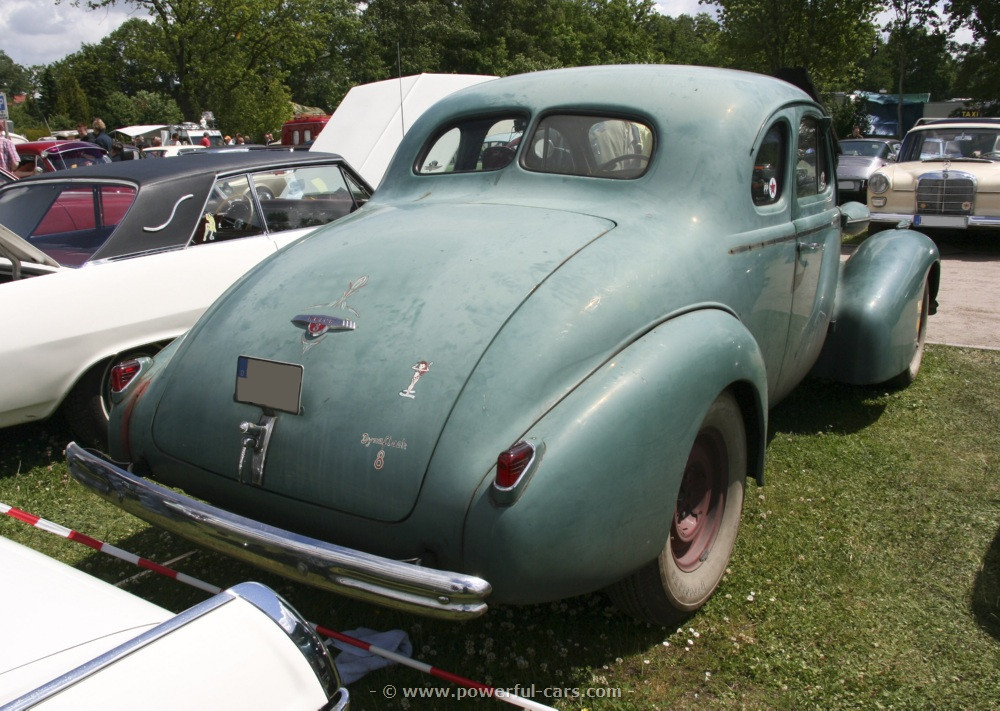
This beautiful 1938 Buick Coupe was a regular sight on the streets of Harrismith back in the Sixties.
Martha McDonald and her friend Carrie Friday used to cruise the streets going nowhere. Mom Mary called them Martha and My Man Friday after Robinson Crusoe. She says Roy Cartwright coined the nickname. Roy ran the Tattersalls horse racing gambling joint in town and was full of wit.
Years later Sheila found out that Pietermaritzburg car enthusiast and restorer Ty Terblanche had found it, bought it and restored it to its former glory. Well done Ty! What a beaut!
– here’s the actual Buick we frew wif a stone decades ago! Martha and My Man Friday cruised around the metropolis of Harrismith ca. 1960’s –
With childish logic and mischief we’d occasionally throw it wif a stone (as we’d mockingly say). Always missed, mind you.
The redoubtable Martha McDonald, asked one day if she had any children replied in the negative, adding loftily “My husband is too much of a gentleman.”
~~~oo0oo~~~
Here’s a better angle to showcase those beautiful lines:
From the front it’s much like other cars of its era, but from the side and half-back you can see why it gets so many oohs and aahs!
1938 Buick Century Sports Coupe 66s interior (I’ve made them look RHD)
edit March 2019: I read in ‘Blafboom’, Leon Strachan’s first book about Harrismith, that Martha had actually bought this gorgeous 1938 Buick Century Sports Coupe 66S from Nic Wessels; and that she lived in Murray Street.
for images, my thanks to conceptcarz.com and powerful-cars.com
~~~oo0oo~~~
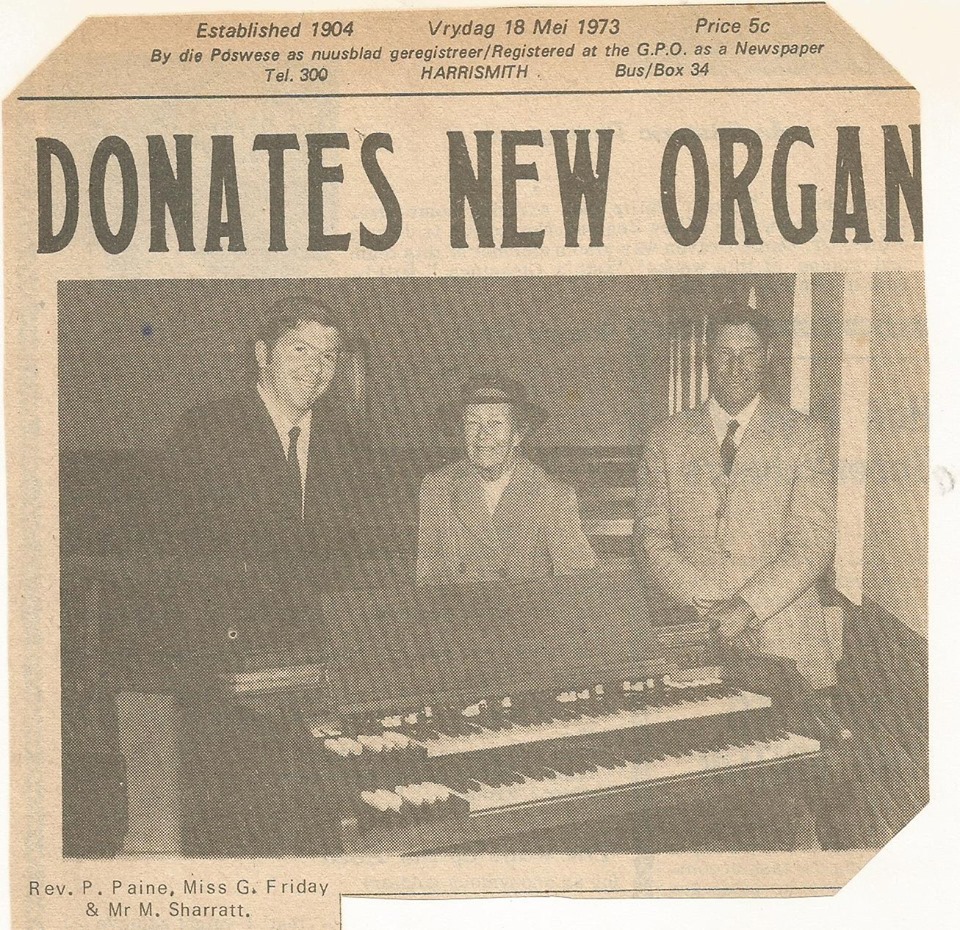
Later, Carrie Friday became an organ donor:
– the Methodists get a new organ for Mary Methodist to thump out her hymns on –
This year when Mom Mary put on a pirates eye patch to play the piano as she sometimes gets double vision ‘and I can’t play if there are two keyboards,’ I reminded her ‘But you used to play a double keyboard, Mom!’ She couldn’t remember that, so I must show her this picture of the My Man Friday organ.
They would play England and thrash them at their own game. We would listen to the games, ears glued to the steam-powered radio.
Representing England you had names like Hicks, Lamb, Greig and Smith who sound OK, except they were all born in South Africa. Then you had Tavare, de Freitas, Ramprakash, D’Oliviera and Hussain. All Englishmen.
In the other team you had posh and correct names like Sir Garfield Sobers, Sir Wesley Hall, Charlie Griffith, Sir Andy Roberts, Michael Holding, Colin Croft, Malcolm Marshal, Courtney Walsh, Sir Curtly Ambrose and Ian Bishop.
So Uncle Hec – always quick to spot an anomaly – would refer to them as . . .
By the time we knew her she was Annie Bland. Never ‘granny’. Only Annie. She was our dear Mom’s dear Mom.
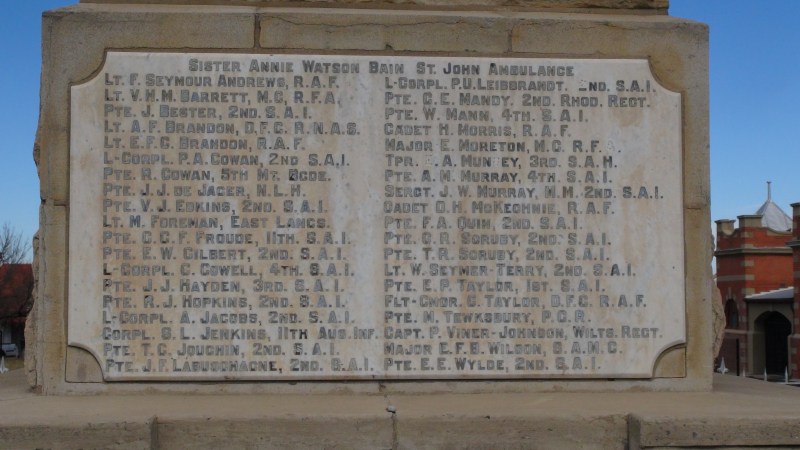
In fact ‘Annie Watson Bain’ to me was the lady who died in World War 1 and whose name was on one of the monuments outside the Town Hall. She was our Annie’s first cousin, their Dads, brothers Stewart and James Bain, had come out from Scotland together.
We never knew our Grandad, Annie’s husband JFA ‘Frank’ Bland. They’d already lost the farms and the racehorses, and they’d moved to town. He had died aged fifty and Annie now owned the ‘Caltex Garage’, as we called it – one of the many petrol filling stations in town. At one time there were seventeen of them! Hers was on ‘Caskie Corner’, opposite our posh Town Hall which her father Stewart Bain had been instrumental in building.
At the time some called the town hall ‘Bain’s Folly’ as it was such an imposing structure for our modest dorp. I remember exploring inside it with fascination as a kid. High up in the rafters and steel gangways above the stage, with all sorts of ropes and chains hanging down and black curtains behind the red velvet main curtains; the backstage rooms, along the marble-floored passages past the toilets, the museum with the taxidermied animals – a lion, a vulture, what else? The galley above the main hall. I never did get up into the clock tower, come to think of it! Nor onto the outside balcony overlooking Warden Street. I wonder why? Locked doors?
Annie always spoke with great admiration of her late husband Frank – the granpa we never knew – and told me proudly how she’d never seen his fingernails dirty. This as she looked mildly disapprovingly – probably more disappointedly, she never had a harsh word for me – at mine. She called me Koosie and the way she pronounced it, it rhymed with ‘wussie’ and ‘pussy’, but don’t say that out loud. And don’t tell anyone. I had been out playing in the mud one Xmas morning with me sisters Barbara and Sheila and cousins Frankie and Jemma and we had arrived back muddy – on WAY more than our fingernails; we were made to wash in the horse trough – and happy, and run into dear ole Annie. I spose the ancient ones were a bit panicked as we still had to get dressed and go to church.
The car she drove was like this one, except faded beige, and OHS 794:
A Chevrolet Fleetline, I’d guess a 1948 model. It had a cushion on the seat for her to see over the dash, but under the top rim of the steering wheel.
It looks better like this. Omigoodness, are our memories actually in sepia tones?
She was born in 1893, the fifth of seven Bain kids of the ‘Royal Bains’ – meaning the Bains of the Royal Hotel. There were also ‘Central Bains’.
She went to St Andrews Collegiate School in Harrismith (pic somewhere below) . . . and then to St Anne’s in Pietermaritzburg where she played good hockey ‘if she would learn to keep her place on the field.’ She’s the little one on a chair second from left:
– Hmm, looks like St Anne’s in Pietermartizburg was a riot of fun and laughter! –
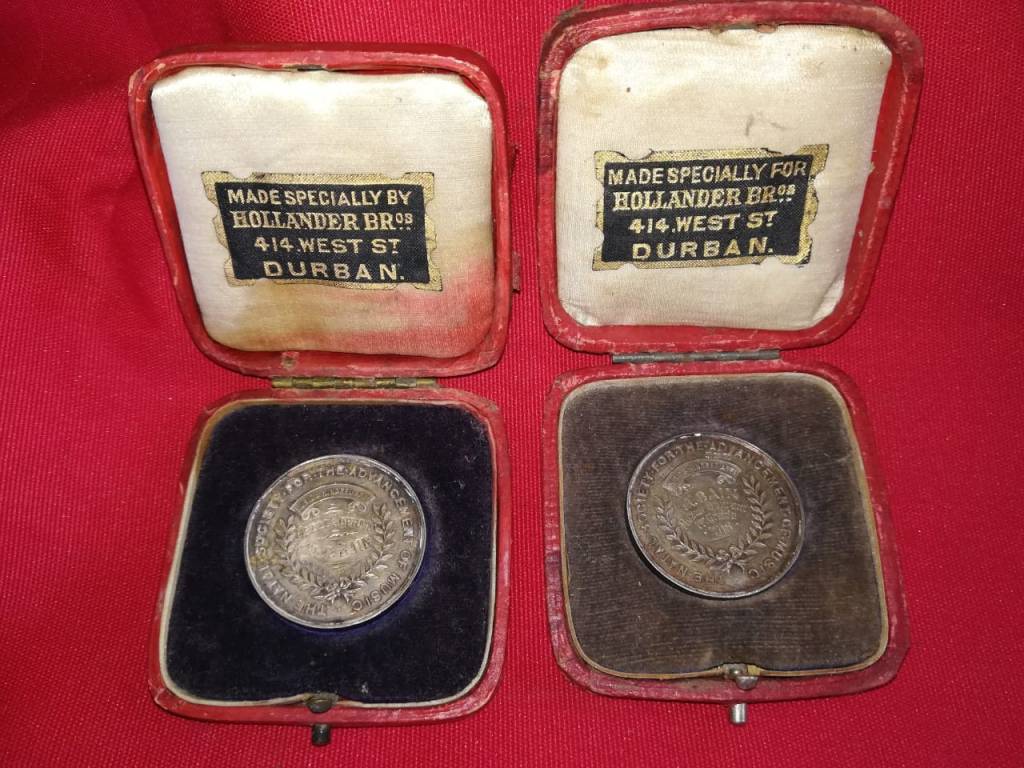
Medals Annie won for singing in 1915 from The Natal Society for the Advancement of Music. Both say mezzo soprano and one says 1st Grade 1915. (Must tell the kids. THAT’s probly where I got my fine singing voice).
She ran the Caltex forecourt and the workshop at the back, where At Truscott fixed cars. I can still see him tip-toeing, bending over the edge, raised bonnet above him and a lightbulb in a wire cage in his hand, peering through glasses below his bald head. She rented out the adjoining Flamingo Cafe and Platberg Bottle Store premises. At that time she lived in the Central Hotel a short block away across the Deborah Retief Gardens and I do believe she drove to work every day. Maybe drove back for lunch even?
Sundays were special with Annie as your gran. She’d roll up at our house in the big beige Chev, we’d pile in freshly sanctified, having been to church and Sunday school, and off we’d go on a drive. The back seat was like a large lounge sofa. Sometimes she’d drive to nowhere, sometimes to the park, sometimes cruising the suburbs. OK, the one and only suburb. Usually there’d be a long boring spell parked somewhere like the top of 42nd Hill overlooking the town and watching the traffic. Annie and Glick chatting away on the front seat and us sitting on the back thinking, OK, that’s long enough now. I’m sure they told us the whole history of Harrismith and who lived where and who was who and maybe even who was doing what and with whom. But maybe not, as ‘Anna’ and ‘Glick’ (as they called each other) were discreet gentlefolk. All of which we ignored anyway, so I can’t tell you nothing!
– our view from the back seat – in sepia –
Later she got a green Opel and for some reason – maybe after she could no longer drive? – it was parked on our lawn for long spells. I sat in it and changed gears on its column shift about seventy thousand times. Probably why I (like most males in their own opinion) am such a good driver today. It was a Kapitan or Rekord like this, but green and white:
Annie died in Harrismith in 1983 aged 90. Looked after to the end by her loving daughter Mary. She was ready. ‘All my friends are gone,’ she told me. Her husband Frank had died forty years earlier, and her eldest daughter Pat had died around ten years earlier.
~~~oo0oo~~~
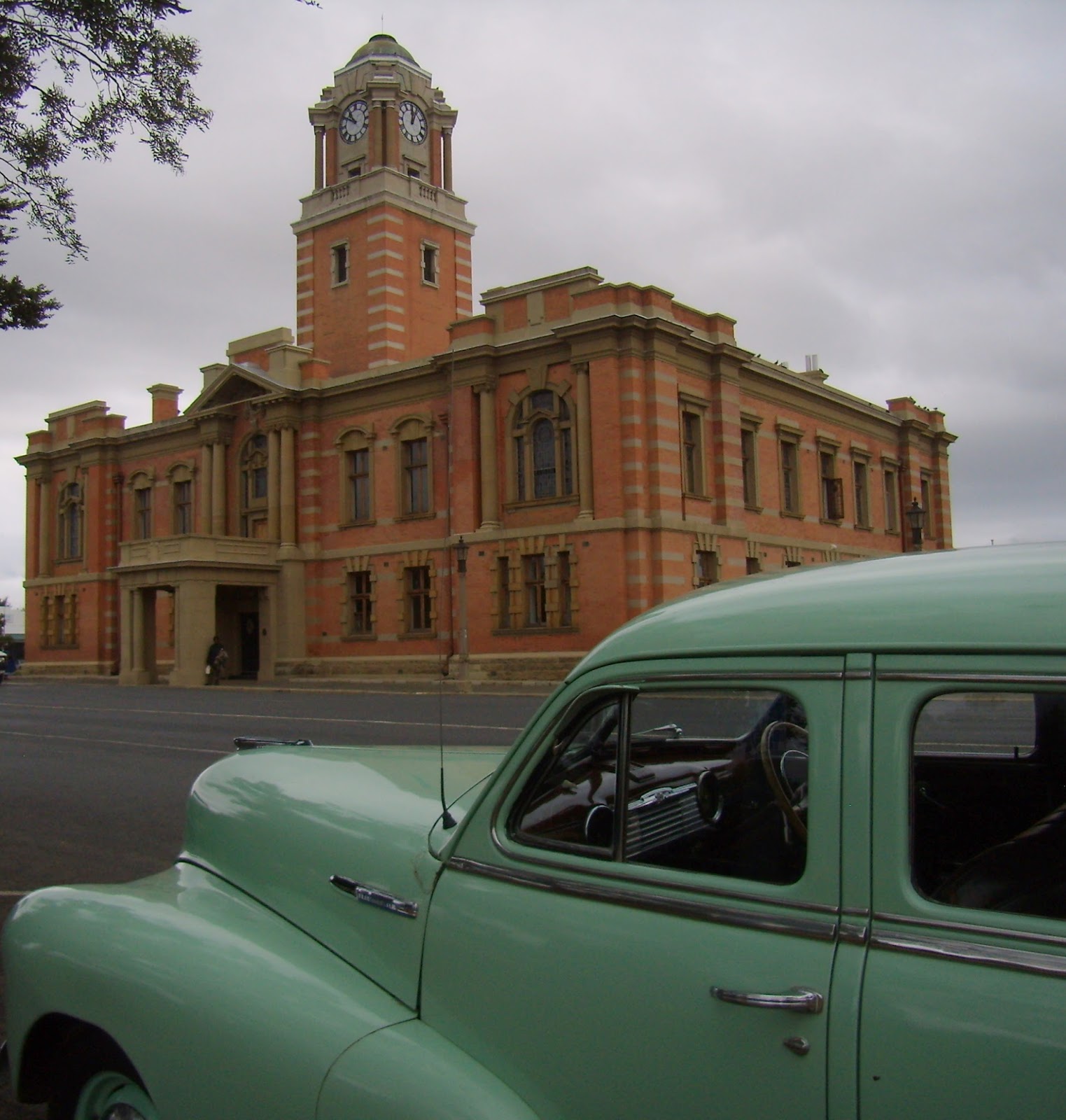
The pic of the Town Hall with the green Chev is thanks to De Oude Huize Yard – do go and see their blog. (Ah! Sandra’s blog is no more! They have left town! Sad). They’re doing great things in the old dorp, keeping us from destroying everything old and replacing it with corrugated iron and plastic.
~~~oo0oo~~~
Also from DeOudeHuizeYard, this information about the building that housed Annie’s school:
The Dutch Reformed dominee Rev A.A. van der Lingen began his years of service in Harrismith on the 6th May 1875 and remained there until the 12th July 1893. He and the church ouderlings built a new church on the site of the original building. The cornerstone of the new building was laid on the 25th August 1892.
– home, military HQ, school, school, boarding house, demolished –
Around then the Rev van der Lingen ran for President of the Orange Free State. In the hope of impressing the townsfolk and swaying their vote in his favour, he built an impressive house, the first double-story building in Harrismith. The townsfolk seemingly were not impressed though, and he was not elected. Later, with the British occupation of Harrismith in the Anglo-Boer War, the military authorities made the double-story building their headquarters.
After the cessation of hostilities, Vrede House (Peace House) as it was then known, became St Andrews Collegiate School (1903-1918), then Oakland’s School and finally a boarding house in the 1930’s.
Five weeks prior to the unveiling of that church cornerstone, on the 14th July 1892, the town had enjoyed a four-day celebration of the momentous arrival of the railroad from Natal. The festival was paid for by a £5 500 donation by the Free State government! Harrismith was now online!
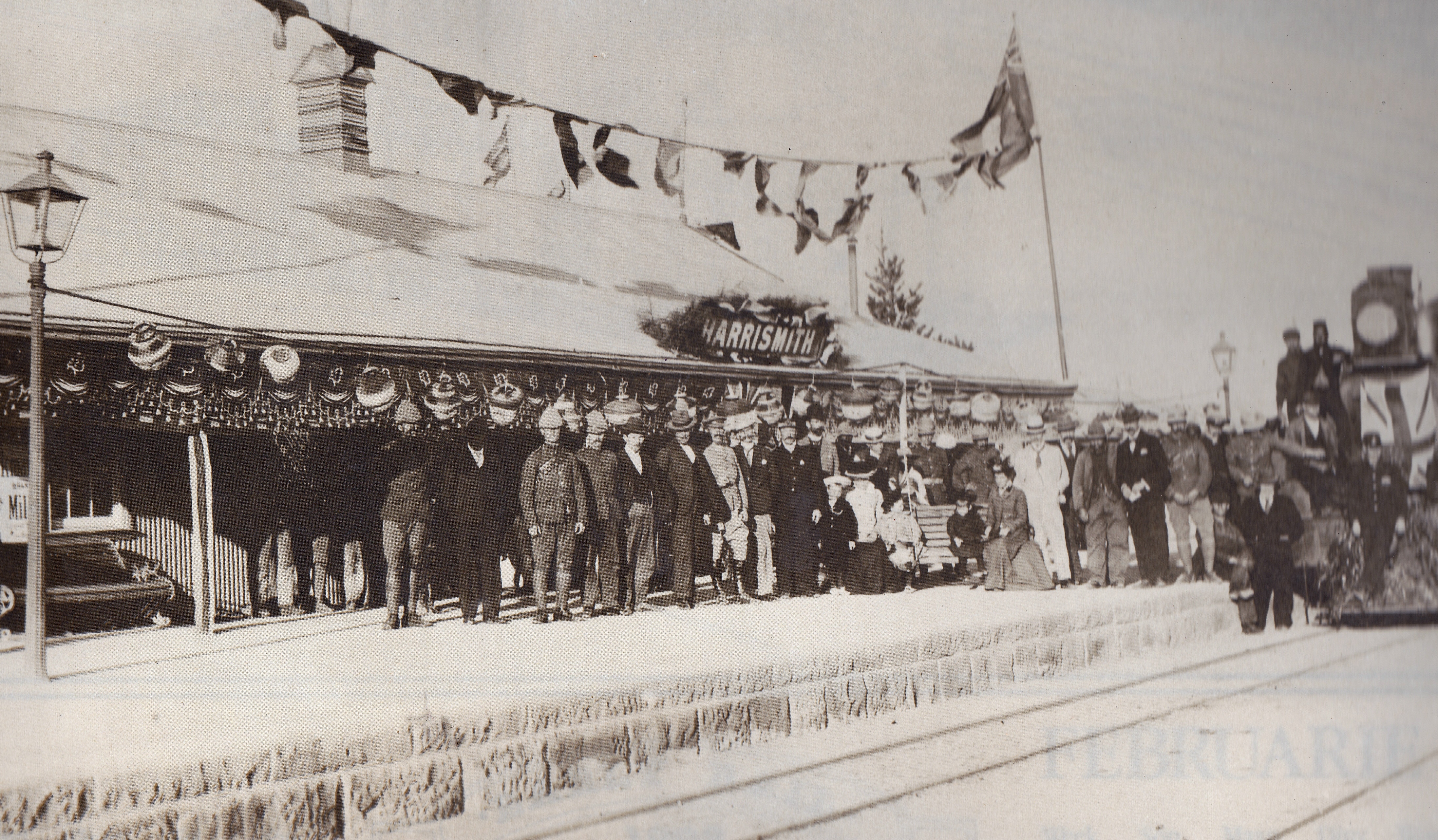
– Is this when the first train choofed in? Who was there? –
~~~oo0oo~~~
The Other Annie Watson Bain
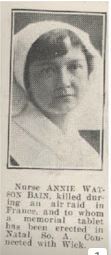
Here’s some info and pics from the Imperial War Museum (IWM) of the bombing that killed Annie’s namesake, Annie Watson Bain in World War II in France, found by Bain descendant Janis Paterson, raised in Wick, now living in England:
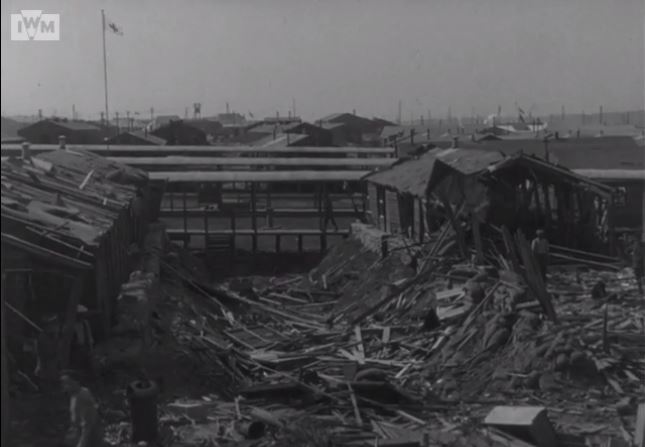
– hospital at Etaples after bombing 1918 –
Filmed at a stationary hospital near Etaples, probably 9 Canadian Hospital three days after a bombing raid hit the hospital on the night of 31 May 1918.
The
wooden huts of the hospital show various bomb blasts but little fire
damage. Four coffins, covered in Union Jacks, are wheeled on trollies
by soldiers.
A single coffin, also covered with a Union Jack on a wheeled trolley, is followed by a funeral procession of nurses, soldiers with wreaths, and a few civilians. – ** this could have been our Annie’s ** – The procession arrives at a temporary but extensive cemetery where a burial service is held.
Stills
taken off the IWM movie:
Seeing the acres of graves – another Harrismithian was buried here or nearby – and knowing about the “War To End All Wars” who would think mankind would go on to fight another World war just twenty years later – and then be at war continually after that up to today 2018 with no end in sight!? – – – Thanks, America! (* sarcasm *) – Update: 2021 and America says its getting out of Afghanistan after 20 years. Predictably, those making money out of death are screaming “Too Soon!”
Janis Paterson, Bain descendant, distant ‘cousin,’ who keeps a photo record here, visited the cemetery in France and found Harrismith’s other Annie’s grave:
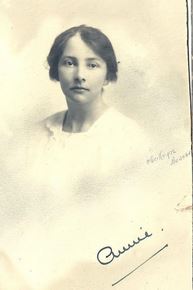
Our two Annie Watson Bains, first cousins from Harrismith, born of two Scottish brothers, both hoteliers in this small African town in the Oranje Vrij Staat, at that time a free and independent Republic:
~~~oo0oo~~~
Footnote:
Maybe this Canadian sister attended our Annie in her last hours?
Edith Campbell, RRC, MM (1871 – 1951) was a Canadian nurse, one of the first to arrive in England in World War 1 to assist in the establishment of a field hospital. She served in both England and France, earning a number of medals, and was twice mentioned in dispatches. First she received the Royal Red Cross, first class, for her actions in England and France, and again for her bravery during enemy air raids at No. 1 Canadian General Hospital in Etaples, France, during which she attended to wounded nurses. For this, she and five other nurses received the Military Medal.
Her
citation read:
For gallantry and devotion to duty during an enemy air raid. Regardless of personal danger she attended to the wounded sisters and by her personal example inspired the sisters under her charge.
~~~oo0oo~~~
Footnote 2:
Janis Paterson loves flower arranging and has won cups at local shows. In 2014, one of the floral themes was related to the beginning of WW1.
Janis’ entry was a tribute to nurses like Annie Watson Bain and won the best in show award. We’re a talented lot, all put together, us Bains! The book in her arrangement “The Roses of No Man’s Land” is about those brave nurses. She thinks that people often forget what nurses like Annie had to endure. The person escorting the judge told Janis the judge was almost moved to tears. Isn’t it stunning?:

































 Vrystaat Confessions