I’ve long been confused about the hartebeest and the tsessebe, which I thought must be closely related.
This weekend we saw a small herd of blesbok on top of Platberg, and a few hartebeest on the slopes of Platberg in the pine forest, so I thought I must look into this.
And its quite complicated!
As always with classification you get ‘lumpers’ who say ‘They’re the same,’ and ‘splitters’ who say ‘No! Look, it’s a different colour.’ I’ve been a lumper by nature meself, needing real DNA differences before I’d want to say something was a completely different species, no matter how different they look. Hunters are often splitters, wanting to say they shot a red bushbuck and a grey bushbuck and a brown bushbuck; or a brindled wildebeest and a Cookson’s wildebeest; or a Burchell’s zebra and a Crawshay’s zebra; and if you have the money they’ll even sell you a ‘Blue,’ a ‘Golden’ and a ‘King’s’ wildebeests – all on the same farm! Then a pure white springbok and a pitch black impala!
DNA has helped a lot – it’s harder for people to ‘invent’ species now. But even now, debate continues and not everyone agrees on all the ‘sub-species vs separate species’ cases!
So let’s start with a family of big well-known mammals – the Bovidae, which evolved 20 million years ago, in the early Miocene. Cloven-hoofed, ruminant mammals, including domestic cattle, sheep and goats. A member of this family is called a bovid; the family Bovidae consists of eight major subfamilies with about 143 species.
The subfamily I’m interested in here, where the hartebeest fits, is called Alcelaphinae, which has four genera:
Genus Beatragus
Hirola, Beatragus hunteri – very rare, found in Kenya and Ethiopia.
Genus Damaliscus
Tsessebe, Damaliscus lunatus
Bontebok, Damaliscus pygargus
2 sub-species
Genus Alcelaphus
Hartebeest, Alcephalus buselaphus
8 sub-species
Genus Connochaetes
Black wildebeest, Connochaetes gnou
Blue wildebeest, Connochaetes taurinus
Things that fascinated me in looking this up:
=The hartebeest has only one species, with eight sub-species (although some splitters will dispute this; some like two species, some like three – adding Liechtenstein’s and Bangweulu Hartebeest as separate species).
=The Tsessebe is closer to the Blesbok than the Hartebeest. Except there’s no blesbok! Those buck we saw on top of Platberg? They’re Blesbok – a sub-species of the Bontebok.
Other antelope
The kudu, nyala, sitatunga, bongo and bushbuck spiral-horned antelope are closer to the cattle, bison and buffalo than they are to other antelope.
The impala is all on its own. Its closest relative being the rare and shy suni.
~~oo0oo~~
Classifying antelope is not easy, and this with only 143 species. Imagine how hard it is to classify the small mammals: – about 2200 species of rodents; and about 1200 bats.
~~oo0oo~~
Mankind!
The northernmost hartebeest – the bubal hartebeest – was found in Morocco and Algeria, north of the Atlas Mountains. The subspecies declined sharply during the course of the 19th century, especially after the French conquest of Algeria, when entire herds were massacred at once by the colonial military. By 1867 it could only be found in the mountain ranges of north-western Africa that are near or within the Sahara desert. In Morocco the last known herd, numbering only 15 animals, was located by a hunter near Outat El Haj in 1917; He shot twelve of them. The last specimen was ‘collected’ in 1920. The bubal hartebeest was finally ‘protected’ under the London Convention of 1933. Too late . . .
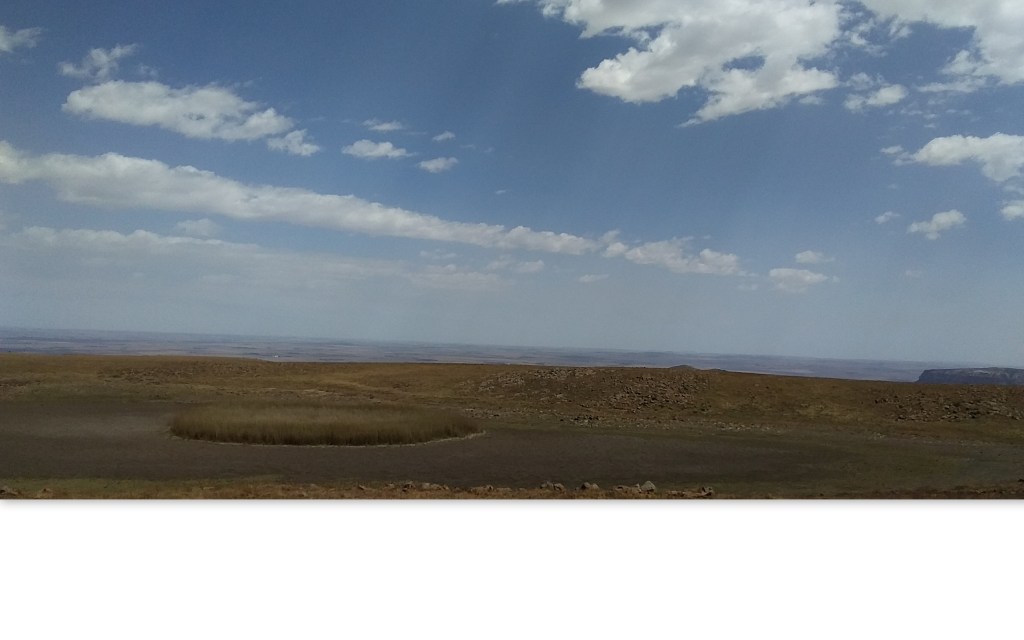
Here’s my reliable report from the front line. The heliograph was a bit shaky in the stiff breeze, but I wrote down what I think happened:
A well-drilled, orderly troop of Queen and Empire Poms marched up Platberg. And when they were up they were up **
– when I say ‘marched’ I mean they Four-Wheel-Drove –
They reconnoitered the surrounding area looking for Boer commandos, ready to report any sightings to some grand old Duke, or Lord, or someone. Ridiculously dressed in anti-camouflage bright red tunics, or similar, they stuck out like sore thumbs; But at least they were together and obeying the orders of Field Marshall Lello RSVP. This would not last very long.
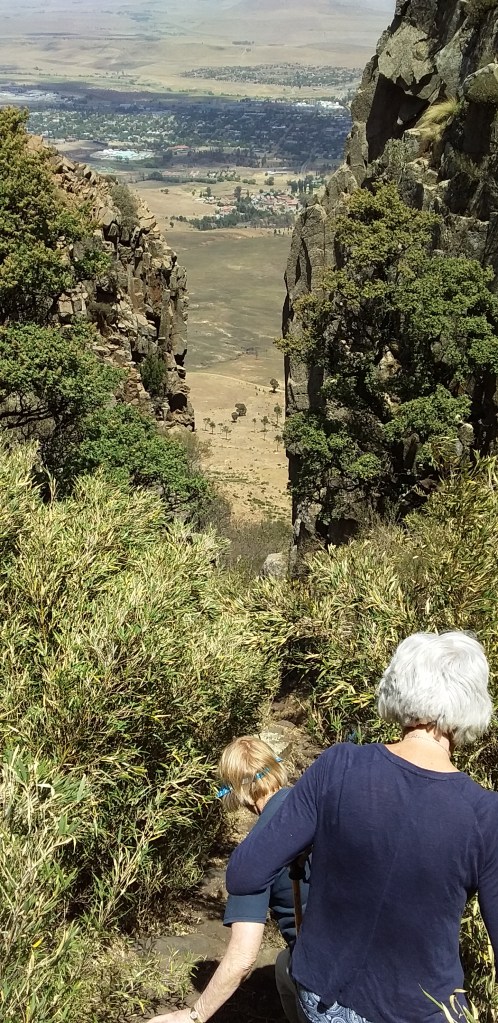
Once on top the cohesion started to wobble and soon a small breakaway happened. Some of the troops began behaving like Boers, thinking they could just go home when they felt like it. Five of them headed off down One Man’s Pass, misled by a trooper who said he had local knowledge, had run up this pass in the past four times and ‘it wasn’t far.’
It was far and it was steep and soon more than just cohesion was wobbling.
The remains of the patrol, now only nineteen strong, headed East back to Flat Rock Pass – or Donkey Pass – where a further split took place with trooper Soutar suddenly developing a deep longing for his ancestral home, Howick. I know, who would want to go to Howick?
Down to fifteen, the remainder headed for the Akkerbos for lunch and booze, where another defection saw four more wander off the beaten track and puncture the one wheel of their Ford Platberg Cape Cart. Field Marshall Lello RSVP set off to rescue them, dispatching sergeant Garth, corporal Nigel and Generaal Leon to rescue the original five deserters. Who of course, didn’t need rescuing as they had the whole thing under control and knew exactly where they were as they had a knowledgeable local guide with them. (Right!)
Back at the Oak Forest – where the princesses Elizabeth and Margaret had been kerfuffling in the bushes with equerry Group Captain Peter Townsend back in 1947 when most of us were busy being born – a laager had been formed and tables laden with provisions, especially booze.
A re-grouping took place and the size of the force stabilised at fifteen, with no wounds or injuries other than some grazes and some wobbly legs and some mild miffedness. (Justified, BTW). The disorderly conduct and the booze, together with the coating of dust and black soot on all the troops made the patrol look less and less like a plundering invading force from a small island, and more and more like good, patriotic, camouflaged local defenders.
Back down at the bottom of the mountain, the numbers swelled to nineteen and confidence grew to such an extent that a decision was made by the now almost completely Boer commando, to attack the blerrie Breetish in their blockhouse situated on the banks of that sparkling brook called the Kak Spruit. A clever encircling movement was made and we attacked the crows nest from above, putting the occupants to flight. Bladdy Poms!
– if you look carefully you can see the pockmarks of our accurate rifle shots*** all over –
So ended another successful campaign by us Boer guerillas. Generaal Leon could heave a sigh of relief and return to his farm after successfully converting a motley band of misled ‘joiners’ and getting them to support the right side at last.
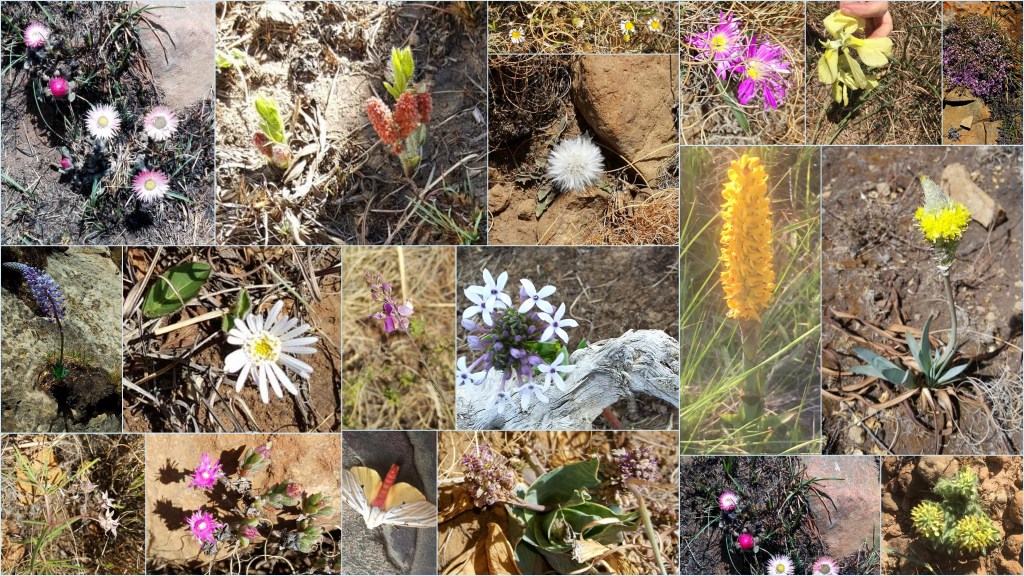
– some Eastern Free State wildflowers –
~~oo0oo~~
PS: I forgot to mention – During the whole campaign there was a westerly breeze which caused some heliograph wobble.
*** Have you ever seen an old sandstone structure without ‘Boer War bullet holes?’ Me, I think those holes are where the iron calipers used to lift the heavy blocks gripped them. Amiright?
Harrismith had the biggest influx of people in its history recently. Well, that would be my guess. I don’t think even the Rhino Rally ever brought in THIS amount of people! I mean those rowwe hard-drinking bliksems fit a maximum of two people on their vehicles . . and often only one cos nobody really understands them.
– here’s a rhino rally – and a wish –
. . . whereas I would guess the teetotal Shembes are unlikely to put less than sixty people in a sixty-seater bus? And there were LOTS of those buses in town. The view is the eastern side of town with the Platberg mountain behind you.
– shembe buses and cars – 95 Stuart Street in the yellow oval – our house 1960 to 1973 –
In a way they were coming home: The founder of the Shembe church, Isaiah Mloyiswa Mdliwamafa Shembe, was born in 1865 at Ntabamhlophe outside Estcourt in the Drakensberg region of Natal. When he was very young his family fled from Shaka during the Mfecane period to the Harrismith district of the Orange Free State, ending up there as tenants on a farm of ‘an Afrikaner family named the Graabes.’
Then the stories start: Like many other people of Harrismith he absorbed the local spirits; and like many ‘prophets’ before him, young Shembe ‘died and was resurrected at the age of three when relatives sacrificed a bull before his body could be interred.’ He was ‘visited by God on many occasions.’ He was ‘taught how to pray by God himself.’
The call of Isaiah Shembe to his life’s vocation can be traced back to an experience at Ntabazwe Mountain in Harrismith. The mountain is also called Platberg in Afrikaans, meaning ‘Flat Mountain;’ and Thabantsho in seSotho, Black Mountain. Earlier he was on a farm (near) Witzieshoek in the Harrismith district; and then he moved to the land on the outskirts of Harrismith, (near) the mountain of Ntabazwe. Here Shembe experienced several revelations as a young boy, and it was through the means of lightning that he ‘received his call.’ As they do.
When he was told to ‘find a place to pray to God’, he tried the Wesleyan Church that was nearby. However they were not right for him: they didn’t know how to baptise properly. Then came the Boer War and, abandoning his wives, he spent some time on the Rand. He joined a Baptist church there. After he returned to Harrismith the leader of his new church came to his place in 1906 to baptise Shembe. Proper baptism under water, not just a drop of water on your forehead, you Wesleyan Methodists!
Shembe went to Natal and started accumulating followers. He would send them ahead to new areas to pronounce his arrival as ‘A Man of Heaven Cometh.’ Marketing. As his success and number of followers grew, so did his power. What you eat, what you think, what you wear, what you do, and that favourite of most religious leaders chosen by God: how men are to rule over their women, was all prescribed by the now Great Man. A lot of what you ‘had to do’ happened to make him rich. Hey! Coincidence!
The legend grew. Shembe must have been highly intelligent and astute, as he told vivid parables, and showed uncanny insights into people’s thoughts. He composed music, writing many moving hymns; he had his sermons reduced to writing and they became scripture, and he provided his followers with a rich liturgical tradition based on modified forms of traditional Zulu dancing. He also often did the dramatic healing trick. You know: Lo! He was lying down; Now he walks!
In 1913 Shembe visited Nhlangakazi Mountain which now became the movement’s holy mountain. Ntabazwe was too far from his followers. At Nhlangakazi he was told by the Holy Spirit to form his own church. This place later became his place of annual pilgrimage every first Sunday of the year. That too, made money.
The Shembe Bible is known as the Book of the Birth of the Prophet Shembe. Their holy writings say, ‘On March 10, 1910 it was the arrival of the Prophet Isaiah Shembe at KwaZulu Natal (Durban) from Ntabazwe (Harrismith), as he was instructed by the Word of God to do so. The Word of God told Shembe that they will meet at KwaZulu (Natal).’ See?
In the 1930s Shembe commissioned his friend and neighbour, the renowned John Dube, to write his biography. The book uShembe, appeared shortly after his death, and contains much of the essential Shembe lore and hagiography, but Dube was an ordained minister and not a Nazarite, so he does not only present Shembe in flattering terms. Shembe’s bona fides as a prophet are questioned, and his undoubted skill at extracting money from his membership is highlighted. Dube alleged that Shembe was overtaxing rentals; that he was conducting baptism for payment – part of his fundraising for the church; that he was extorting money from members as he paid lobola for young girls whom he married; and that he was corrupt and exploitative. – Tch!and Eish! Just what an ambitious prophet / saviour / manifestation of God doesn’t need: an honest biographer! Shembe’s son and heir, Shembe II, Galilee Shembe forbade his followers to read the book. Hey! You know that book my father asked his friend, uMfundisi Dube to write? Don’t Read It!
A factor of the huge success of African Independent Churches like the amaNazaretha has been their emphasis on ‘Africa for Africans. ‘ Often implicit, but explicitly verbalised by Shembe, this has been the main cause for the break-away from the mainline or mission – or European – churches. They wanted their own identity. However, discontent has continued to plague these church formations, even after self-governance and independence. Money and power corrupts, and they have splintered into many different internal groups and factions. Succession wrangles in the Shembe Nazaretha Baptist Church have given birth to the current seven factions, six of them headed by Shembe family members. Various battles have raged since 1935 when the original Shembe, Isaiah, died. The latest succession struggle started in 2011.
So who decides who is divinely anointed to lead the church? Very modernly, it is not God . . not a God . . not a king . . not a council of elders . . not even a new legitimate national democratic government. No! A judge of the courts. The legal system! They’re like, Step aside, this is not a small matter! I have brought my lawyers! The prize is reportedly worth many millions. As with all human endeavours, greed is always a big factor.
So who went to Harrismith this year? Which faction? I don’t know . . we’d have to ask an insider. I just hope they didn’t ascend the mountain. Fragile Platberg does not need 6000 humans on it. The poor grysbok will skrik.
Lucky Dube wrote a song about the Shembe religion –
~~oo0oo~~
update: 2021 and the saga continues. The highest court in the land made a pronouncement in June as to who the legitimate leader of one of the factions was. Now in August another breakaway faction has formed. ‘Don’t you tell me what to do… ‘
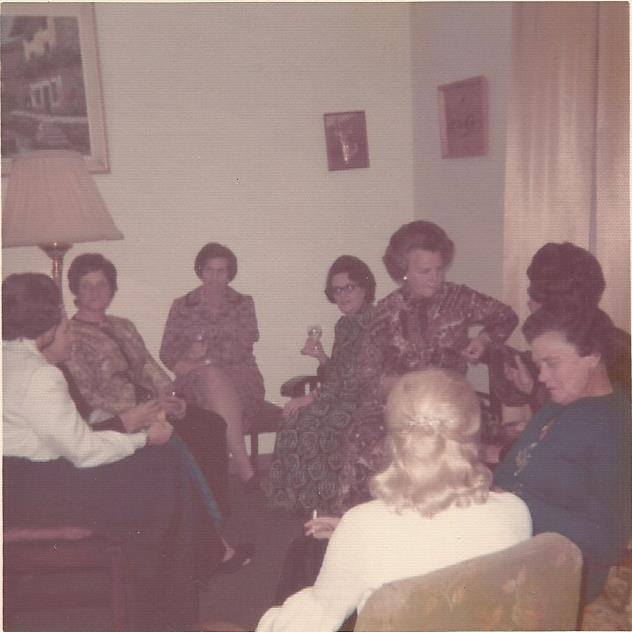
A large gathering of the Goor Koor – that assembly of happy inebriates led and accompanied by virtual-teetotaller Mary Methodist, our Mom, gathered together – assembled, amassed – on the occasion of Mom’s 45th birthday. Usually there were far fewer of them gathered at any one time, an occasional Lubricated Quartet perhaps, but this was a special occasion in the big loungexat 95 Stuart Street!
And Sheila – thanks goodness! – took pictures. She was in matric at the time, I was in Oklahoma, Barbara in Pietermaritzburg.
– Joyce Joubert; Marie Roux peeping out; Isobel Kemp; Stella Fyvie; Mary the birthday girl, wearing specs, grog in hand; Mary Wessels; Martie Dreyer; Baby Mandy; Annemarie van Wyk –
. . and here – precious picture! – Mary at the keyboard and Hugo Wessels right there, ready to belt out a number! Two very talented people, 45 years old, who were in matric together in 1945. And this fun gathering happened 45 years ago, as Mom is now 90! I think all my stats are right . . .
– in earlier years my ear would be near the floor right outside that door behind Hugo – listening in fascination –– Dina de Kock; Hester Schreiber; Koekie de Bruyn; Hugo Wessels; Hannes van Wyk; Jack Kemp; Pierre Roux; Hector Fyvie; Steve Schreiber; Dad; Bennie Dreyer; Joyce Joubert Isobel Kemp; Stella Fyvie: Anna-Marie van Wyk –
Wonderful memories of crawling down the long passage to get nearer to the sound of Mom playing the piano; Also of sundry ‘choir members’ over the years, belting out popular songs with high enthusiasm and various degrees of talent. If spotted by any of the choir it would be ‘Hello Kosie!’ – if spotted by Mom or Dad it would be ‘Get back to bed!’
Also memories of the smell of ash trays! Always plenty of ash trays. Ours were from tyre companies, so they were glass inside miniature Dunlop or Goodyear tyres!
– I couldnt find one overflowing with butts and ash! –
~~~~oo0oo~~~~
Goor Koor – Dire Choir
~~~~oo0oo~~~~
– 45yrs later here’s Mary, still beautifully at it –
Harrismith is still a lekker dorp thanks to some hard-drinking maniacs that hang out there, bitter-einders clinging to life behind the boerewors curtain.
See this report – reproduced below – of a highly important, highly competitive Boer War re-enactment golf – or moer-en-soek – tournament last year.
~~~~oo0oo~~~~
Conquering
of the Boers
Her
Majesty The Queen
Buckingham
Palace
London, England
4th
June 2018
Our
dearest and beloved Queen,
After
the marriage of Prince Harry to Ms Megan Markle, I wish to convey
further good news to you, and to the rest of your Royal family.
As
your military attaché in Africa, it gives me great pleasure to
advise that the Boers have been conquered at the battle of
Harrismith which took place on the 2nd & 3rd June 2018. The
white flag of surrender was raised by General Hamman, at 13h00 on
this historical day for your universal British Empire.
During
my lengthy military career I have never witnessed a display of such
loyalty and courage, as shown by your troops in this bloody battle.
Your forces received only a few minor scratches and bruises, while
the Boer field hospital has called for additional nursing staff,
surgeons and even psychiatrists to treat their mentally scarred
soldiers. There were no fatalities.
Your
Majesty will also be most pleased to hear that during the cease-fire
period, as declared by Chief Justice Lord George Galloway, the
British and Boer troops were treated to an elaborate Royal Banquet.
At this very grand occasion, the soldiers from both sides mingled
and socialized well. In some cases, too well! This developing
inter-continental relationship seems to be getting stronger, despite
the humiliating defeat dealt out to the Boers.
On
a personal note, please pass on my fondest greetings to my old friend
Prince Phillip. I trust he is enjoying his retirement.
I
await your instructions regarding any further military operations
required .
Your
loyal Military Attaché,
Field Marshall Mark Russell VC
– The Field Marshal tall, left of middle – Venning in jacket and tie next to his ossewa – – Jelliman in the mid-background, most of his hair on his upper lip –
After the 2017 tournament Field Marshall Russell VC’s report to Her Majesty, Mev Queen had been far more tragic . . . and despondent.
~~~~~ooo000ooo~~~~~
lekker – romantic
bitter-einders – to the bitter end; lager, ale, bitters
boerewors – sausage; and like laws, you may not want to know how it’s made – based on a quote by: John Godfrey Saxe American poet
moer-en-soek – golf as prescribed by the Royal and Ancient, which only frowned on women membership for the first 260 years, kindly allowing them in after that cooling-down period
boere musiek – noise emitted by farm implements called ‘constant screamers’ and ‘pull pianos’
volkspele – dance in which you can grip your meisie in a dominee-approved manner
Harrismith is still a lekker dorp thanks to some hard-drinking maniacs that hang out there, bitter-einders clinging to life behind the boerewors curtain.
Here’s a dispatch to Mev Queen on the result of a highly important, highly competitive Boer War re-enactment golf – or moer-en-soek – tournament in 2017. It did not go well.
~~~~oo0oo~~~~
“Boer
War” Defeat – 2017 – Letter to the Queen
Her Majesty The Queen
Buckingham Palace, London, England
5th June, 2017
Our Dearest & Beloved Queen,
It is with deep regret that I inform you that your courageous soldiers have been severely defeated, at the hands of the Boers, at the battle of Harrismith on 3rd & 4th June 2017.
Although there were no fatalities, the Boer Commando, led by General Wessel Hamman, showed immense bravery, superior marksmanship, and deft field skills in the heat of battle. Your loyal soldiers raised the white flag of surrender at 12 noon on this bloody Sunday.
The Royal Medical team of nurses, led by Sister Mandy Pollock on Spionkop, are still very busy treating your loyal and wounded troops. The most severe and common treatments, were for the after effects of the toxic Boer medicine ‘Mampoer.’ All your troops are showing signs of making a full recovery. I would recommend that our soldiers be shipped back to London, and returned to Her Majesty’s Military Academy, Sandhurst, for further instruction in the skills of warfare.
Apart from this humiliating defeat, I have pleasure in advising Her Majesty, that your troops have been well treated by the Boer Commandos, and have enhanced the tattered relationship that existed between the Boer Republic and the British Empire. Our soldiers and their spouses were treated to a Royal Gala dinner, featuring a clash of British & Boer cuisine, expertly prepared by Afrikaner chefs, Anel Bekker & Lizet Du Plessis. Your troops were further entertained by guest speakers. Nick Leslie spoke eloquently about previous battles, and the bravery of both the Boer and British forces. Dr Braam Joubert, from The Orange Free State, added a good deal of humour to this illustrious occasion. It was a grand banquet indeed!
There was a fly-past, performed by a Royal Airforce squadron of fighter aircraft, led by Flight Commander Sir Gareth Pollock (MBE). The Boers entertained our troops with “Boere Musiek” and “Volkspele” dancers and singers. Our own Captain Venning (OBE), joined in to demonstrate the British version of these Boer dance moves.
In order to commemorate this battle, and to remind future generations to further develop Anglo Boer relationships in Harrismith, Captain Venning (OBE) has donated a perfectly “in-scale” model of an ox-wagon. I wish to appeal to you to consider rewarding Capt. Venning at Your Majesty’s Birthday Honours ceremony. (with some more alphabets?)
Other candidates to receive your Majesty’s recognition at this ceremony should include Major Gert van Tonder, who chose to enlist in Her Majesty’s Army, and then donated the battle dress to all the foot soldiers. There were others who have not only enlisted in your forces, but have made considerable contributions to this historical battle. These include Private George Galloway and the Scottish piper, Dr. Martin Reeve, who certainly stirred up the patriotic emotions of your troops. I respectfully recommend that the following be granted British citizenship with immediate effect, Dries Lategan, Steve Niewoudt, Justin van Tonder, and Quintin König. I was going to request that Kobus Bester should also be granted British citizenship, but on second thoughts, your Empire could do without this rascal.
Many of your troops traveled from the Last Outpost of your Empire (Natal Colony), as well as from the Transvaal Goldfields, in order to fight this battle. They too, should receive your recognition. These include Craig Surmon, Gary Bellars, Andrew Miller, Reggie Jelliman, Richard Butcher, Wayne Warburton, Gavin Scholefield and Chris Smith. I would sincerely appreciate your kind consideration of the above. Mark Bebington also answered your call to take up arms, and should be given Royal recognition.
I am under the impression that your troops are enjoying the warm sun in Africa, and may wish not to return to your United Kingdom. Perhaps Your Majesty could tempt them to return, with the lure of a “danger-pay” bonus, of a few Pounds Sterling.
I await your further instructions.
Your humble military servant,
Field Marshall Mark Russell VC
~~~~oo0oo~~~~
lekker – respectable
bitter-einders – to the bitter end; last to leave the pub
boerewors – secret sausage; used in hide-the-sausage games in bedrooms in the colonies
moer-en-soek – pointless game administered by the ancient Scots – and the newer Americans, proving that it’s pointless
‘Mampoer’ – moonshine liquor; anything distilled illegally; high octane rating
Mev Queen – that small tannie who wears the funny hats; the one with the rude Greek husband who crashes cars
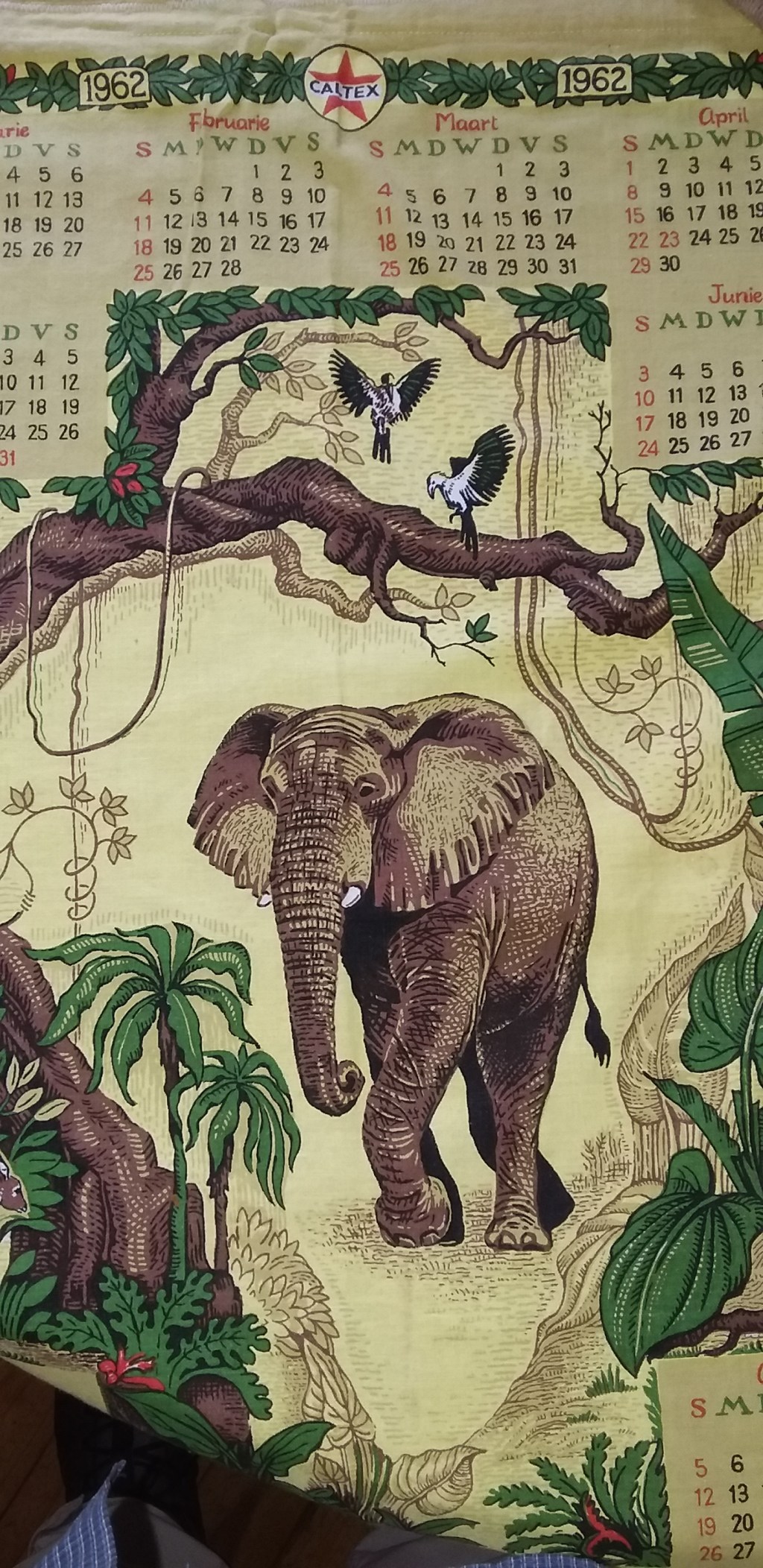
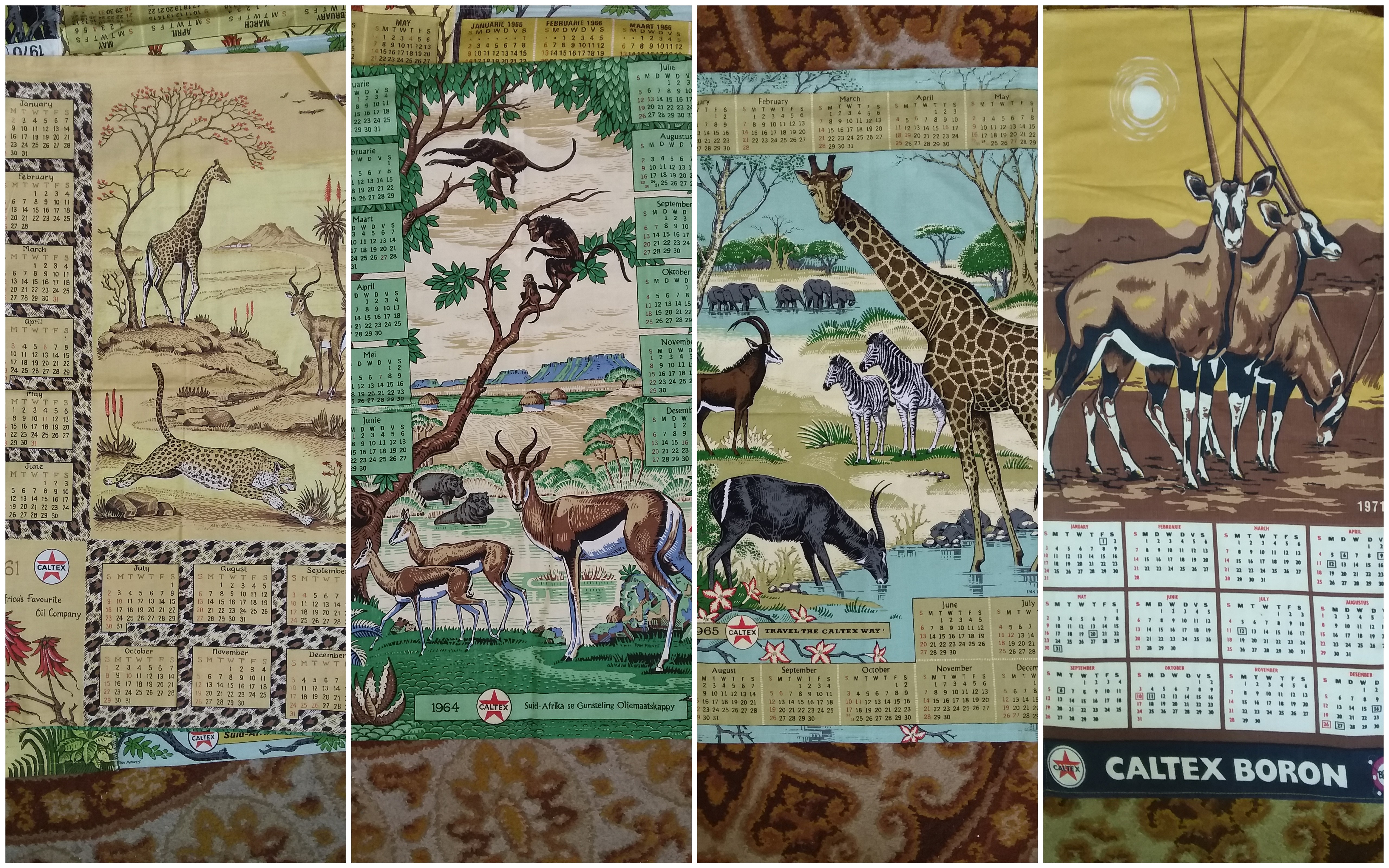
Annie had a Caltex garage; Dad worked for Annie; Louis Schoeman traveled for Caltex. Between 1962 and 1971 Caltex gave cloth wildlife calenders as their gift to their filling station owners.
Dad (now 96) says Louis would ‘forget’ to hand them out and he would insist on seeing what was in his boot. And there, ‘along with the sheep shit’ were the calenders! An inveterate collector, Dad would get ‘his’ share! Right! That’s why he has quite a few duplicates!
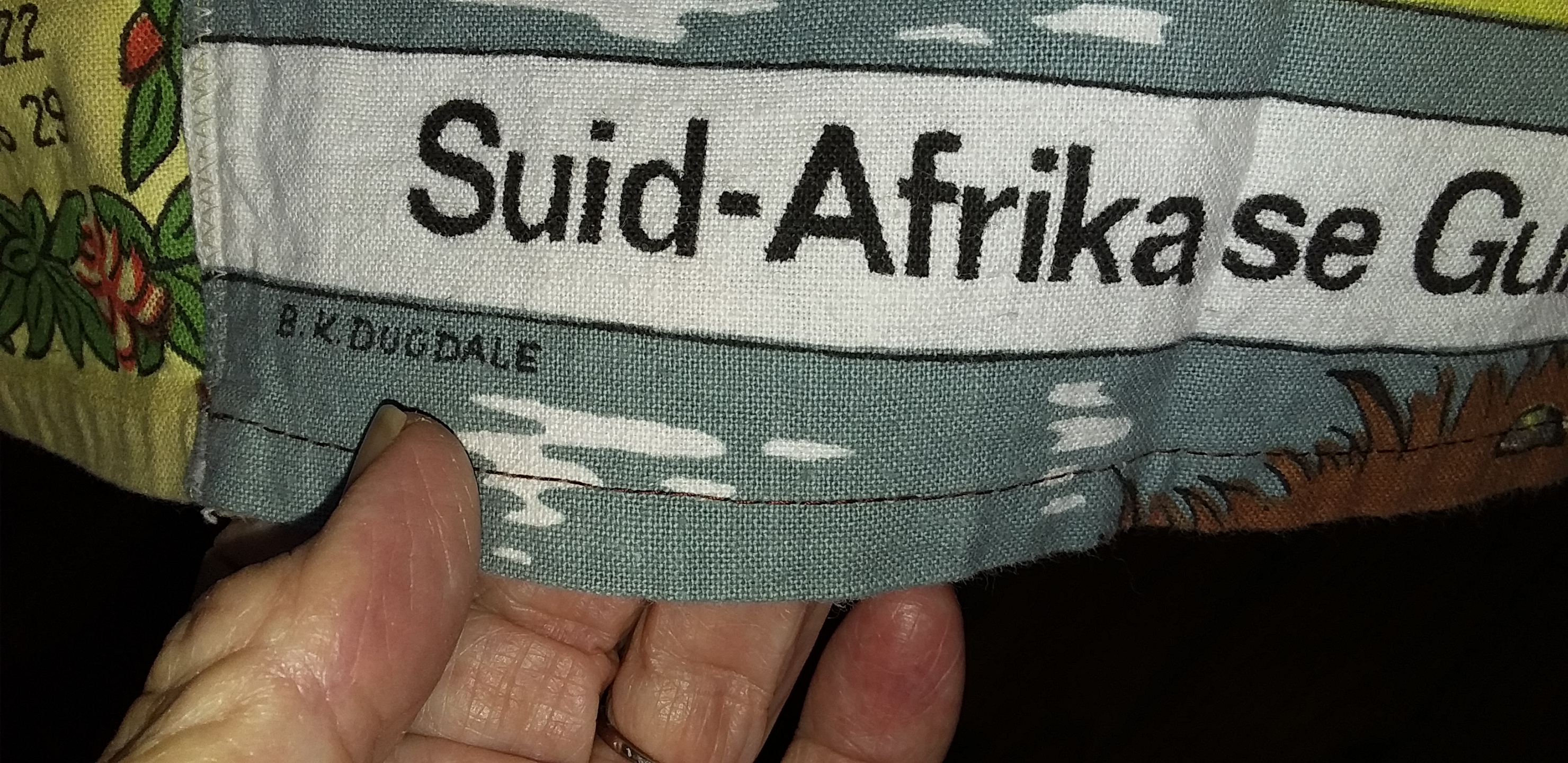
– I could find nothing on the internet about BK Dugdale – Mom’s hand here in pic –
Some have been sewn together to make table cloths. He still has plans for them, can’t get rid of them. He knows someone who will make them into cushion covers. Then he’ll get some cushions . .
~~~oo0oo~~~
He’s had it done: The calendars are now table cloths and cushion covers and he’s very proud of them. Can’t understand why his eldest daughter didn’t rave about them! She doesn’t like them, I dunno why; I like them. Nice and colourful.
We’re all exhorted to Sieze the Day! Carpe diem, said Horace. Grab Opportunities as they arise! Well, some people do just that.
I was reading about Andrew Geddes Bain, geologist, road engineer, palaeontologist and explorer in the Cape up to 1864, and his son Thomas Charles Bain, road engineer in the Cape up to 1888, when it suddenly struck me!
First, let’s see what these two very capable men achieved: Andrew Geddes Bain was in charge of the building of eight mountain passes, including the famous Bain’s Kloof Pass, which opened up the route to the interior from Cape Town. And he (and his wife) had about thirteen children. His son Thomas Charles Bain saw to the building of nineteen passes! His crowning glory was the Swartberg Pass that connects Oudtshoorn in the Little Karoo with Prince Albert beyond the Swartberg mountains in the open plains of the Great Karoo. And he (and his wife) also had about thirteen children.
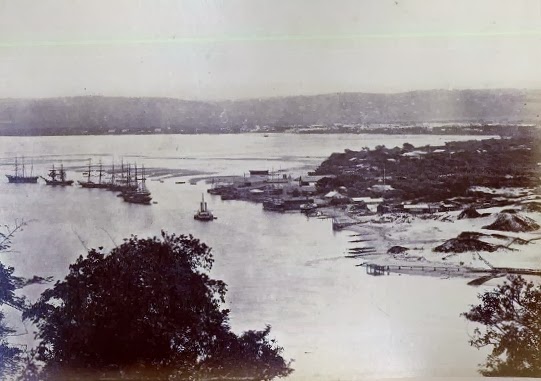
And I suddenly knew exactly what happened when my Great-Grandfather Stewart Bain and his brother James Bain got off the ship in Durban in 1880. They were fishermen from the tiny fishing village of Wick, in the far north-eastern corner of Scotland, used to being ‘knee-high in brine, mud, and herring refuse.’ * They left Wick and gave up fishing some time after an uncle Stewart had drowned in a fierce storm while out fishing off Wick in one of those little boats. They got onto bigger boats and headed for warmer climes in the colonies: Durban, Natal.
– Durban harbour ca.1880 looking inland from the Bluff, showing the Point at right –
When they arrived in Durban people asked them: ‘Bain? Are you the famous Bain road builders? We need road builders here. Can you build bridges too?’
And I know just what the brothers Bain said. ‘Roads? Och aye, we can build roads. And bridges? We can build them with one hand tied behind our back.’ You know, the old, ‘You’re payin’ how much to do that? Well, you’re in luck. I Happen to be Very Good at it . . . ‘
– some nice bridges there – this one in Swinburne –
And so they built the railway bridges between Ladysmith and Harrismith, utilising their herring netting experience, learning as they went, ‘upskilling’ – thus goes this theory of mine – no doubt with the help of African labourers who had done this before.
And thereby they helped the railroad reach that wonderful picturesque town in the shadow of Platberg, so that I could be born. This subterfuge and venture made them enough money to buy the Railway Hotel (Stewart; he re-named it the Royal cos every Saffrican town has to have one), and build the Central Hotel (James); Then they could marry, have children – only about nine and eight apiece, though – and become leading citizens of their adopted dorp in Die Oranje Vrijstaat Republiek, a sovereign non-British country.
Then: One of Stewart ‘Oupa’ and Janet ‘Ouma’ Bain’s nine ‘Royal Bain’ children Annie, had two daughters; and one of those – Mary – had me! And here I am.
~~oo0oo~~
Think I’m being unkind to Wick, village of my ancestors? Read what Robert Louis Stevenson wrote about Wick to his mother when he stayed there in 1868:
‘Certainly Wick in itself possesses no beauty: bare, grey shores, grim grey houses, grim grey sea; not even the gleam of red tiles; not even the greenness of a tree. The southerly heights, when I came here, were black with people, fishers waiting on wind and night. Now all the boats have beaten out of the bay, and the Wick men stay indoors or wrangle on the quays with dissatisfied fish-curers, knee-high in brine, mud, and herring refuse. The day when the boats put out to go home to the Hebrides, the girl here told me there was ‘a black wind’; and on going out, I found the epithet as justifiable as it was picturesque. A cold, BLACK southerly wind, with occasional rising showers of rain; it was a fine sight to see the boats beat out a-teeth of it. In Wick I have never heard any one greet his neighbour with the usual ‘Fine day’ or ‘Good morning.’ Both come shaking their heads, and both say, ‘Breezy, breezy!’ And such is the atrocious quality of the climate, that the remark is almost invariably justified by the fact. The streets are full of the Highland fishers, lubberly, stupid, inconceivably lazy and heavy to move. You bruise against them, tumble over them, elbow them against the wall — all to no purpose; they will not budge; and you are forced to leave the pavement every step.’
~~oo0oo~~
Now read a sterling and spirited defence of our ancestral Scottish dorp by Janis Paterson – a feisty distant cousin, and also a descendant of the Bains of Wick; who read my post and reached for her quill (I have paraphrased somewhat):
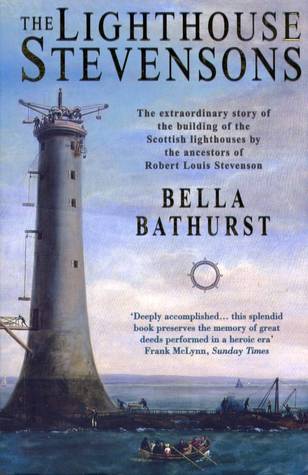
Ya boo sucks to RLS! Robert Louis Stevenson was a sickly child. His father and his uncles were engineers who built lighthouses all over Scotland. Robert was sent to Wick, likely to get involved in building a breakwater there with his Uncle. But he was more interested in writing stories and was just not cut out for this sort of work. I believe he was also ill while in Wick. The first attempt at building the breakwater was washed away during a storm and also the second attempt. The work was then abandoned. I therefore propose that Robert just didn’t want to be in Wick, was ill, fed up with the weather and just wanted to get away to concentrate on his writing. The Stevenson family must have been excellent engineers, as all the lighthouses are still standing. Did Robert also feel that he was a failure as an apprentice engineer?
Stick it to him, Janis! How dare he call Wick fishy? Or smelly!? Or breezy!? Even if it was! Just cos a dorp is fishy smelly and breezy doesn’t mean strangers can call it fishy smelly and breezy!
Janis adds ‘Read this book review:’ ‘ . .fourteen lighthouses dotting the Scottish coast were all built by the same Stevenson family that produced Robert Louis Stevenson, Scotland’s most famous novelist. Who, unlike the rest of his strong-willed, determined family, was certainly not up to the astonishing rigours of lighthouse building.’
Janis was right! 😉 All HE could do was scribble. Like me. But better.
Lots of confusion about the Baines, Baynes and Bains, so Prof Emeritus at UNISA Jane Carruthers set about unravelling eleven of them here in an article titled, The Bane(s) of South African Historians: https://www.theheritageportal.co.za/article/banes-south-african-historians?utm_source=substack&utm_medium=email – Road-builders, hoteliers, preachers, artists and one good trade unionist who fought for the poor honest working people and so gets the appellation “notorious!” Also, a Donald Bain of fighting for a Bushman Homeland Fame was born of a father who, like our Oupa Bain, was from Wick, so possibly related and may also have smelt of herring when he first got to South Africa.
~~oo0oo~~
On our big Karoo / Garden Route tour in 2023 Jess and I stopped at a monument to the original road-building Bains who I say inspired our newly-arrived, soon-to-be Vrystaat Bains to do likewise.
~~oo0oo~~
Later I found this on the Ladysmith to Harrismith extension of the rail line. Maybe the Bain bros got a piece of this action?
LADYSMITH – VAN REENEN – HARRISMITH
After the survey for the rail link from Ladysmith to Van Reenen was finalised, the route was pegged out in June 1889. A junction was formed a mile north of Ladysmith Station, recorded as 190¼ miles from Durban and 3350ft asl, and appropriately named Orange Free State Junction. However, terminating the line at Van Reenen was not considered very remunerative, and tapping into the OFS’s rich agricultural eastern region would make the undertaking more profitable. Negotiations with the OFS Volksraad resulted in the Natal Railway Administration being granted the sole right to build, equip and operate the extension from Van Reenen to Harrismith. Representatives of both Governments met in Harrismith on 25 February 1890 to work out the agreement’s details. In terms of the agreement signed on 24 June 1890, the railway was to be completed within three years of the turning of the first sod. Significantly, while profits would be equally shared between the two Governments, all operating losses would be borne by Natal alone. The Free State could, at any time, after giving six months’ notice, take over the railway at the cost of its original construction and any other capital expenditure.
Contracts for the earthworks and masonry culverts from Van Reenen to Harrismith were awarded on 22 January 1891†. The route generally followed the course of the Wilge River, graded at 1 in 80 with 600ft minimum radius curves. The energetic approach of the work crews completed the extension four months ahead of schedule. The extension from Van Reenen to Harrismith was taken into use on 13 July 1892. Initially, there was only one station, Albertina, later renamed Swinburne, between Van Reenen and Harrismith.
Distance from Durban, elevation in feet
Van Reenen 226 5520·49 Staging Station at the Natal/OFS border
Albertina 234¼ 5408·46 Passing Station
Harrismith 249½ 5322·30 Temporary Terminus
† The section from Van Reenen to Harrismith was built and operated by the NGR under an agreement signed on 24 June 1890 between the Orange Free State Volksraad and the Natal Colonial Government. The Orange Free State Volksraad authorised the Natal Railway Administration to construct, maintain and work, at its own risk, the line from Van Reenen to Harrismith. The working of the line was taken over by the CENTRAL SOUTH AFRICAN RAILWAYS (CSAR) in November 1903. No construction maintenance was allowed under capital expenditure (Under Law 29 of 1890, a sum of £260 000 was authorised for the construction of this section).
This ‘Bain’s Railway Map, c. 1903’ must surely be one of the famous Bains?
We mocked Bloemfontein as Flower Fountain and always looked on Durban as the big city, seldom Joburg, as we would head 299km to the coast not 268km inland to JHB when going for any city business. Bloem never featured. It was 378km and more of a backwater. Once you got there, you’d ask yourself WHY? And yet Bloem was our capital and everything official that went upwards in our little hierarchy summitted in Bloemfontein.
Especially the sporting ladder. If you climbed the sporting ladder and your head popped up through the clouds, there was Naval Hill!
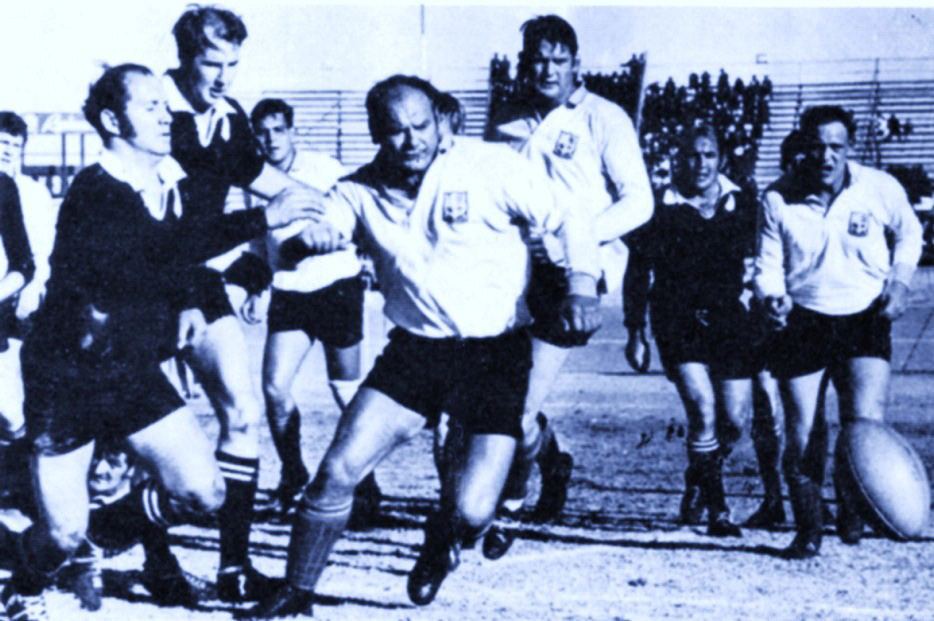
As far as I recall I reached this valhalla of advancing upwards in your sporting code three times at school: For rugby I was not chosen for the Eastern Free State U/13 team in 1967. But I was chosen to be a reserve. The reserve, maybe? – or was there more than one? So I trekked to Bloemfontein, pulled on my togs and sat shivering on the sideline at the Free State Stadium for the whole match. The top pic gives a glimpse in the background of how the stadium looked. Our sponsors didn’t supply us with branded blankets and there was no attractive physio to massage our limbs. I don’t even know if the poor reserve got his quarter orange ration at half time. It was rugged. Of course we had already beaten another little Flower Fountain Bloemfontein school called Grey Collegeat rugby earlier.
For tennis Bruce Humphries entered us for Free State Champs.
All I remember is we drove there in his white Cortina and after I had blasted some booming high-speed double backhands – ala Frew McMillan – in the warmup of the first round, a guy called Symington sent me home 6-0 6-0. I even think he may have yawned while he was doing it. I can’t recall if the famous double pairing of me and Fluffy Crawley played. I have asked him. He can’t remember either.
And lastly, one year I went to Inter-High, which was the Free State athletics champs and I got a bronze medal for my troubles (actually a piece of paper that said ‘derde’) in the high jump.
Other than that, we once went for an ordinary rugby game. Daan Smuts drove us there in his VW Beetle to play against Sentraal or JBM Hertzog. Being Daan, we had beer! Yay!! All teachers should be like Daan. When he remembered that he had forgotten to arrange a place for us to sleep we didn’t mind at all. He dropped us off at an abandoned (for the holidays) koshuis where we shivered on beds with no bedclothes. That was maybe the first time we were glad we had blue and yellow and green blazers. Sure it was cold, but we would not have swopped the beers – die binne-kombers – for blankets!














 Vrystaat Confessions