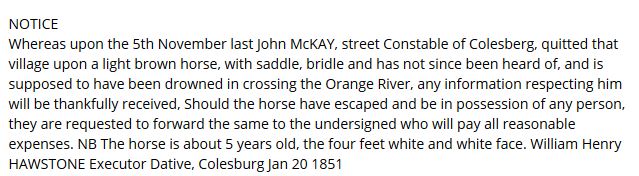
A magistrate’s life could be kept very busy back in 1851 if ruffians, escaped prisoners, adulterers, inebriates and horse thieves had their way . .




~~~oo0oo~~~
Fascinating info from eGGSA.org

A magistrate’s life could be kept very busy back in 1851 if ruffians, escaped prisoners, adulterers, inebriates and horse thieves had their way . .
~~~oo0oo~~~
Fascinating info from eGGSA.org

The old man inviting me to go someplace! How’s that!? I hopped into the old faded-blue VW Kombi OHS 153 with alacrity. This sounded interesting. We never went to the railway station. We’d go near there to the old MOTH hall and occasionally to the circus field when the Boswell & Wilkie’s Big Top was pitched there! But never to the station itself.

‘We’re fetching a family from Italy. The father is coming to work at the Standard Woollen Mills and they can’t speak English,’ says the old man. He picked up Italian in Italy around 1943 to 1945, first wending his way up the Adriatic coast in the Italian campaign and then later on involved in the post-war stuff armies do after the end of WW2, y’know, loafing, eating, drinking, before flying home, having traveled the length of Italy south to north and into Austria.
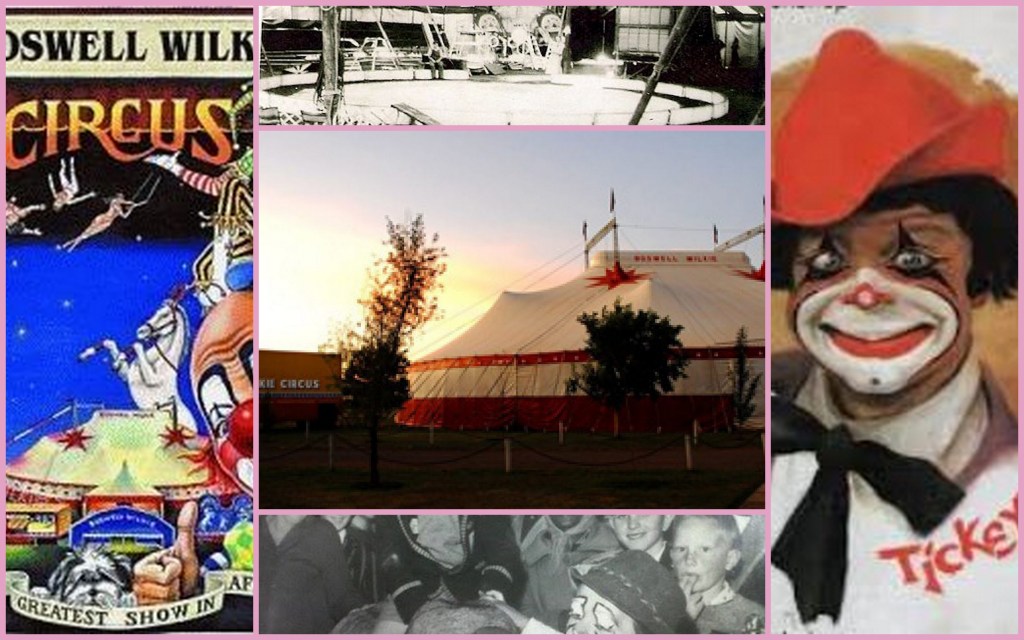
He kept up the language over the years mainly by fraternising with Boswell-Wilkie** circus folk when they hit the Vrystaat vlaktes on the circus train and pitched the Big Top next to the railway line on the west edge of our famous dorp.
This exciting station trip was in 1965 or thereabouts. So we got to the stasie, the train rolled in, and there hanging out of a window was a family of four: Luigi, Luigina and two sons about my age, fresh from Italy out. They were probably staring at my bare feet. But I’m just guessing.

I carried one suitcase to the kombi and then from the kombi into the Royal Hotel, where my great-uncle Smollie Bain was the barman. His Dad owned the hotel and I think he stayed there all his life.

Soon Claudio and Ennio were in school, Claudio a standard below me in sister Sheila’s class, and Ennio a standard or two lower. They got a house in Wilge Park and so started many happy visits and sumptuous Luigina meals with the Bellatos – I can still picture her kitchen so clearly. And sundry happy adventures with Claudio.
~~~oo0oo~~~
The only time before this anything Italian might have rolled up at Harrismith stasie might have been these Italian things ca. 1914.
~~~oo0oo~~~
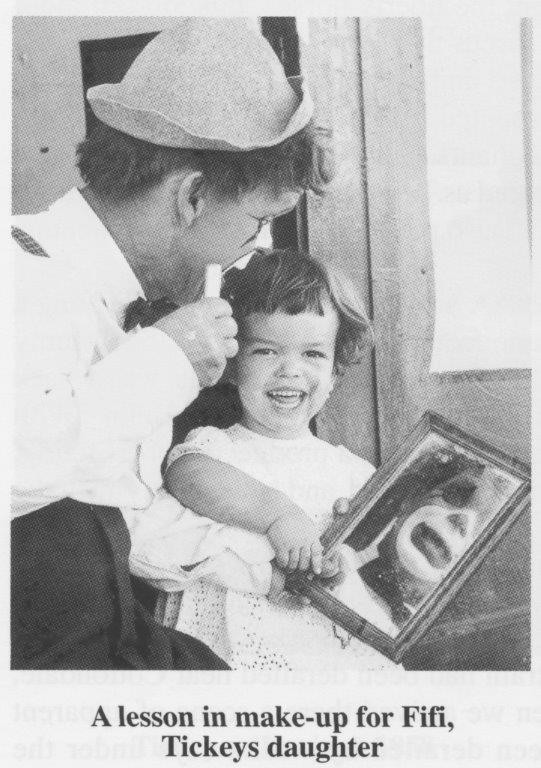
** Boswell-Wilkie Circus: Every few years for a while we would suddenly have clowns, lion-tamers and acrobats in our home! They all looked very ordinary, frankly, in their normal kit; except Tickey the clown. He and his daughter were instantly recognisable even without make-up because of their small stature and strong faces.
~~~oo0oo~~~
Ah! Claudio read it and responded with compliments and corrections:
‘Excellent Koos. The year was 1967 – 24 March. Otherwise pretty accurate. A good read and great memories. ** laughing emoji – thumbs-up emoji ** Well done.’
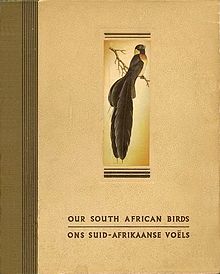
We grew up with Roberts Bird Book in the house. First edition, but about the sixth impression. It still had its dust jacket with the kingfishers and bee-eaters beautifully depicted on it. Mom and Dad still have it – I took this pic at their home in Pietermaritzburg. We also had a newer McLachlan & Liversidge edition of ‘Roberts.’
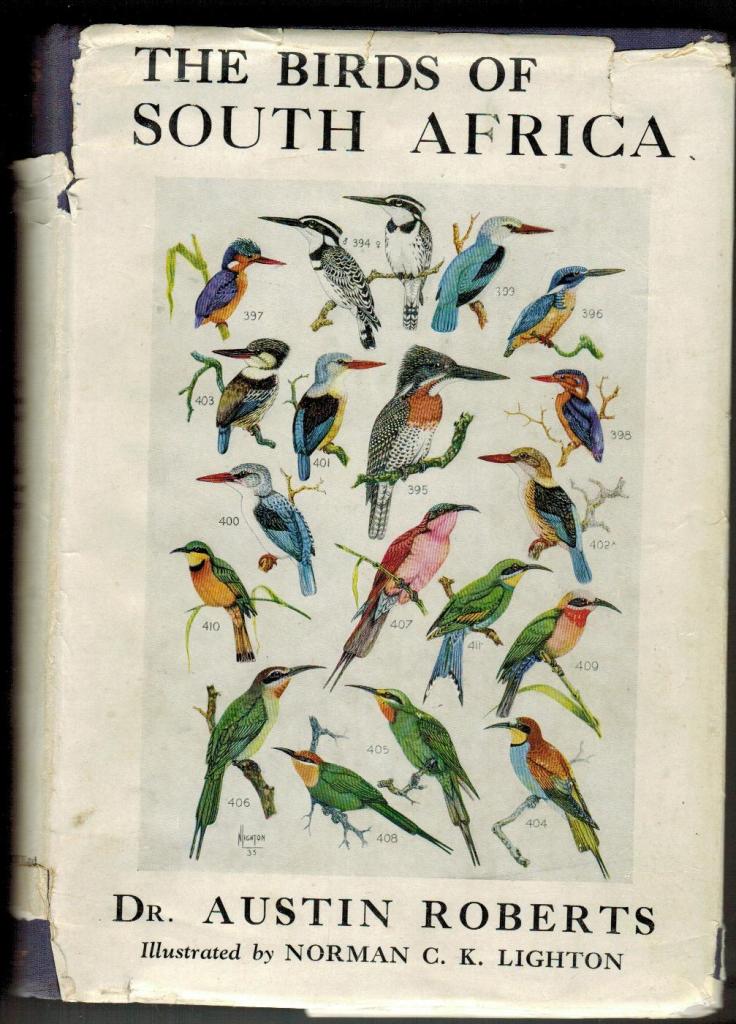
Here’s the plate I turned to in eager anticipation after hearing a wonderful and startling nocturnal call while camping in the dennebos with Stephen Charles Reed:


~~~oo0oo~~~
Another bird book on the shelf at 95 Stuart Street. This one you collected cigarette cards. Keep smoking till you have the complete set!
ROBERTS, Austin | Our South African Birds
Johannesburg and Cape Town, United Tobaccos Cos, Westminster Tobacco, Policansky Bros 1941; hbk, 25×21 cm, 106pp, colour illus with 150 cigarette cards and five colour frontisp.
~~~oo0oo~~~
Later this beauty arrived. Published in 1961 we got it some years later:
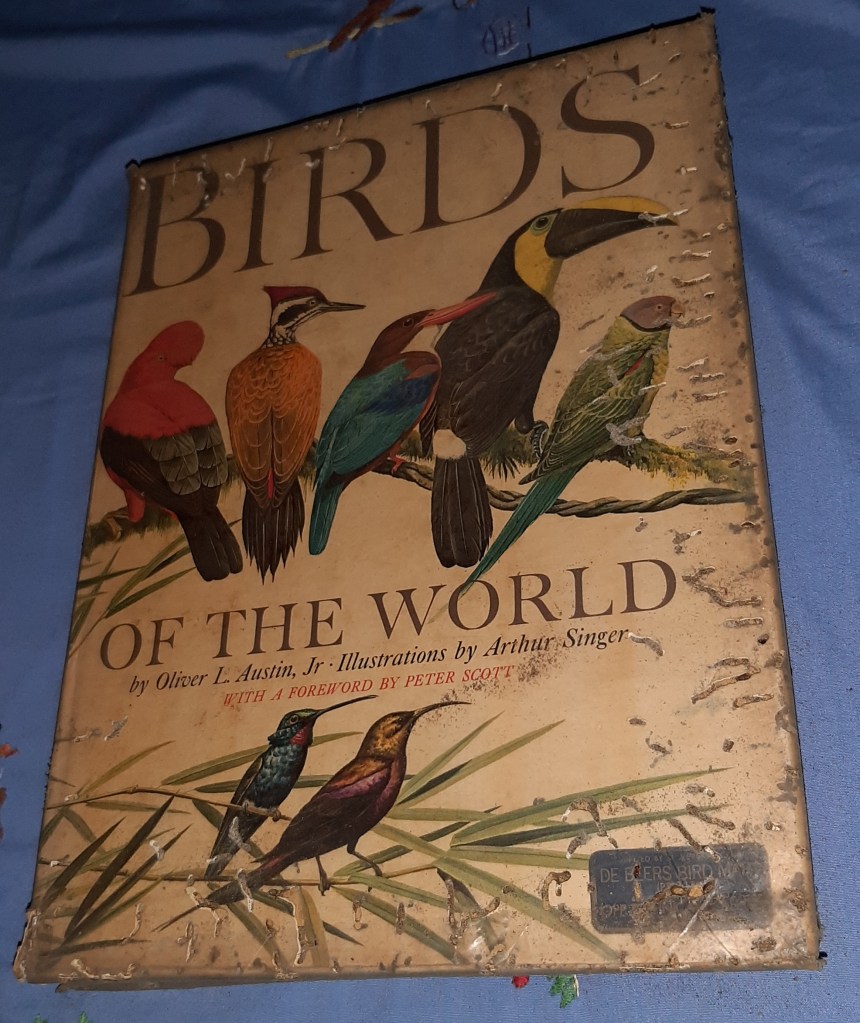
Bloody insects have got into it now!
~~~oo0oo~~~
Asked what could be inferred about the Creator from a study of His works, British scientist and naturalist JBS Haldane replied:
“The Creator, if he existed, had an inordinate fondness for beetles”
Now it’s true he meant the one on the left, not the one on the right, but still . .


My gran Annie’s Caltex garage in Harrismith had a filling station, a restaurant on the forecourt, a workshop behind – and the VW agency. My gran Annie sold VW Beetles!


One of the perks of Annie having a VW dealership was Volkswagen’s toy models of their cars & kombis. They were fascinating! They had moving doors, flaps, engine covers, side loading locker in kombi pickups; some had a clear sunroof that clipped off. Something like these:




At one time – I don’t think I’m imagining this – the VW Beetle cost less than R1 per cc: The 1200cc engine model cost R1199. Let’s check: A VW Bug in the USA was around $1563; A US dollar cost us 72 SA cents – Yep, about right.
A long concrete ramp lead up into the workshop behind the Flamingo Cafe. At Truscott was the mechanic – I remember him as small, bald and kind. I remember the big jacks that lifted the cars; the lights they shone into the engine bay – an incandescent bulb in a cage to protect it, with a 220V cable dangling behind it; There was a high ‘shelf’ overhead – above the wall of the ‘office’ inside the big shed-like workshop on which lots of tyres were stacked; The wooden workbenches were full of interesting vices and spare parts and grease.
One of Annie’s forecourt attendants was Joseph Culling. He was a son of Sgt Culling, who was demobbed in 1913, when the British finally left Harrismith after the Anglo-Boer War. He had been stationed on Kings Hill and unlike most of his fellows, he stayed behind and married a local Harrismith lady. In the apartheid classification of the day that immediately – and magically!? – made his children ‘coloureds.’ I remember him with the leather coin dispenser satchel on his hip, the strap holding it slung around his neck and shoulder, wearing a Caltex cap.
~~~oo0oo~~~
Back in the sixties, many of us, of course, also had an inordinate fondness for the beatles . .

Lovely Venn Diagram from Michelle Rial
~~~oo0oo~~~

‘Mom! Dad’s in pain,’ said Mary, out of breath. She’d run up to the Caltex garage in Warden Street. Annie drove her back and took her husband Frank Bland to Frank Reitz, his friend, rugby team-mate and physician/surgeon. Gallstones, a gallbladder op was needed, came the verdict from our highly-regarded England and Germany trained surgeon.
Mom was fifteen, ‘about to write my JC‘ – std eight, grade ten – it was 1943. Frank did the op and sent Frank home to convalesce at 9 Stuart Street, his mother Granny Bland’s home, his pain considerably eased; but he was weak, recovering slowly.
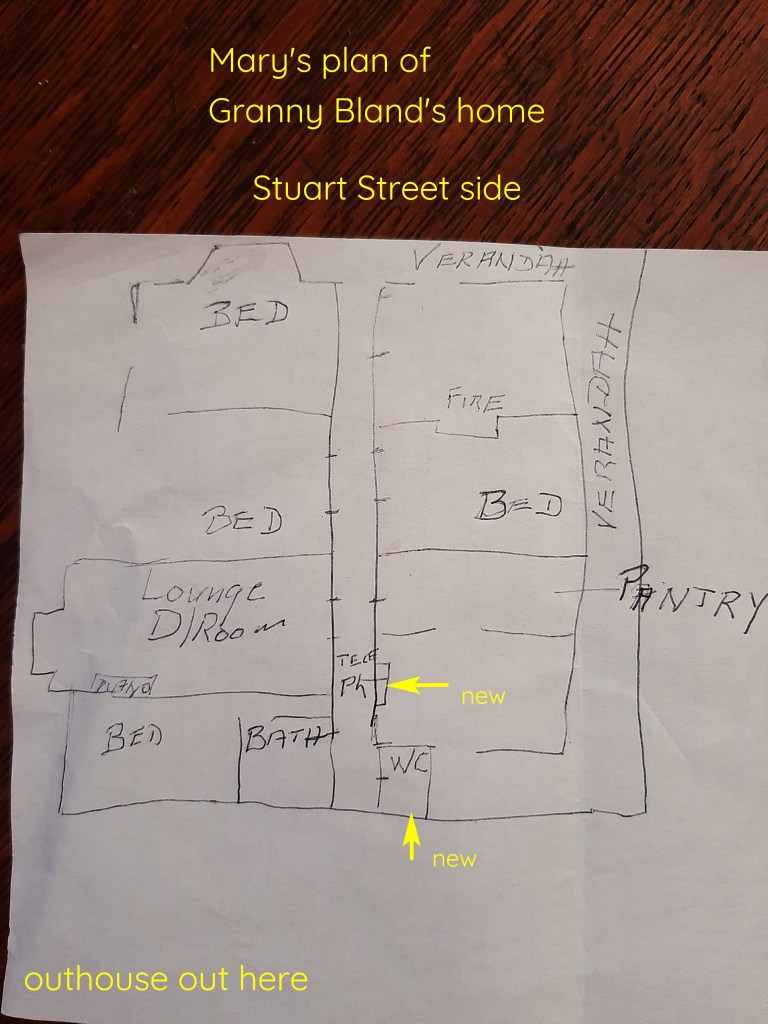
One Saturday morning he walked out to the wisteria-covered outside toilet, about twenty metres off the back veranda. Granny Bland watched him walking back, hand on hip as she always stood and wearing an apron, as she always did.
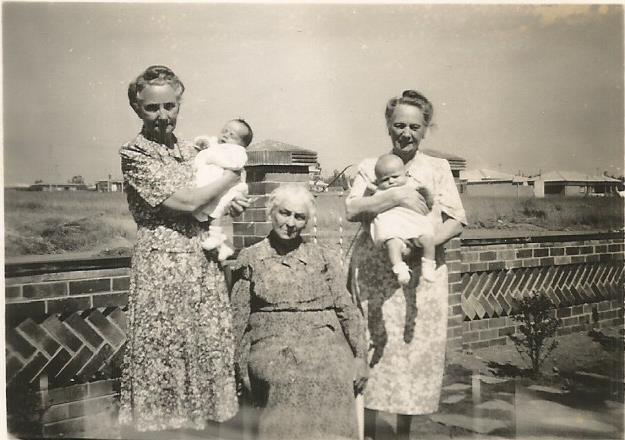
She spoke to him and he didn’t answer her. That was unusual. When he got to her he collapsed and she caught him in her arms before he could bang his head. They had no phone; it was a Saturday, Annie was at work, eldest daughter Pat was away nursing in Boksburg-Benoni. This time Mary didn’t run to the garage, they must have sent someone else.
‘Poor Dr Reitz,‘ says Mom, ever empathetic. She knows he would have hated it that Frank didn’t recover fully. She speculates that a bloodclot to the brain did him in. The funeral was soon after. Annie told Pat not to come down, and she and Mom stayed at home. After the funeral people came around to tea and to pay their respects. Annie didn’t do funerals.
~~oo0oo~~
The only picture of Frank Bland that I have doesn’t quite include all of him. It does have his daughters Pat and Mary, and older niece Janet Bell.
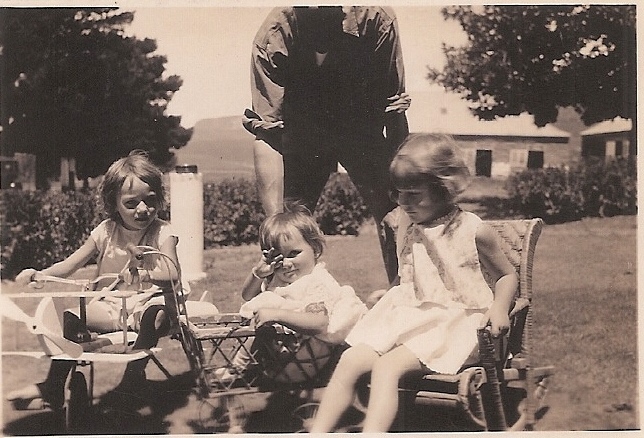
Soon after, Mom’s dear friend Dottie Farquhar’s father died. Then Jessie’s husband __ Bell died. Jessie was Annie’s older sister and they lived in Dundee down in KwaZulu Natal where he was a dentist. Maybe the only dentist? Jessie then also came to stay with Granny Bland. Three widowed ladies.
Granny Bland had lost her husband John Francis Adam Bland II, and now she’d lost her son, John Francis Adam Bland III. Only one of her five sons survived her.
~~oo0oo~~
When Mary aged eighteen came home on her first leave from the Boksburg-Benoni hospital where she’d also started her nursing, a phone had been installed in the house! Where? I asked. She showed me:
~~oo0oo~~
Let’s paint the ’42nd’ up on 42nd Hill! Yeah! We’ll shoot up there with some whitewash and paint it quickly.
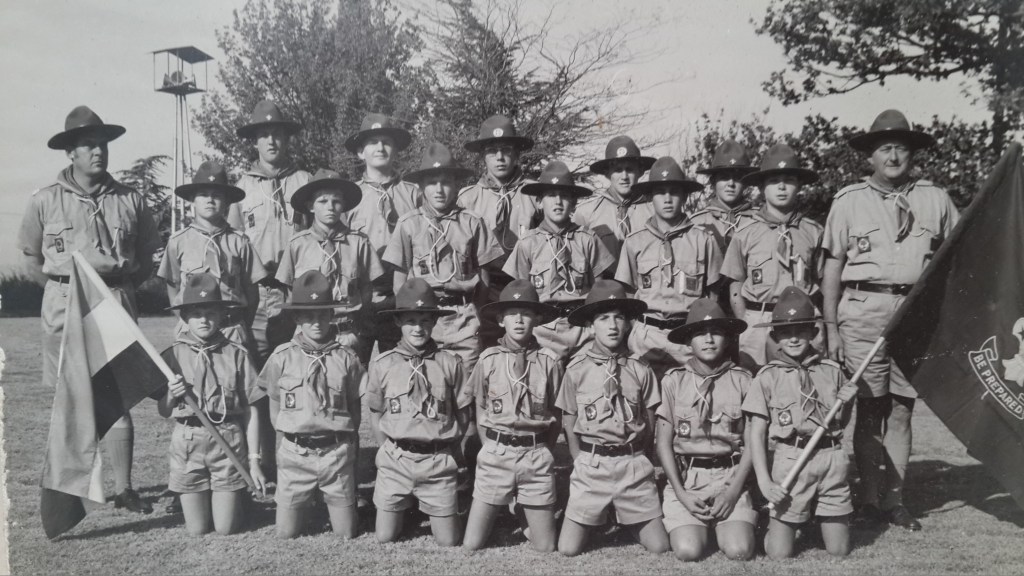
We Boy Scouts needed a PROJECT – a ‘good deed’ – and this seemed a good one. Everyone would notice and be impressed by the shiny white freshly-whitewashed stones spelling out ’42nd’ compared to the dull look it had as the whitewash faded.
This was ca.1970 and the symbol had been put up there by some Pommies of something called 42nd whatever, way back just after the Anglo-Boer War – about seventy years earlier. We would get it looking like new.
I mean, how hard could it be . . . ?

Well . . .
When we got there we parked on the top of the ridge – none of those towers and pylons were there back then – and walked down to the white stones. That ’42nd’ was A LOT bigger than we had imagined. Our big whitewash buckets and wide brushes looked tiny now. We would have painted for hours and run out of whitewash before we even finished the ‘n’ – the smallest of the symbols.
We had a good look around at the unusual – to us, we had never been up in Phomolong before – view of Harrismith and the mountain, climbed back to our Scoutmaster Father Sam van Muschenbroek’s car on the ridge and snuck back to town, tails between our legs! What’s that about biting off and chewing?

~~oo0oo~~
So who put all those stones spelling a huge ’42nd’ there?
From ca.1900, Harrismith was to serve as the base for all military operations conducted by the 8th Division until the end of hostilities. The bulk of the Division were posted at Harrismith. The force under command of Lt Gen Sir H M L Rundle, comprised:
The 16th Infantry Brigade (under command of Maj Gen B B D Campbell) consisting of 2nd Bn Grenadier Guards, 2nd Bn Scots Guards, 2nd Bn East Yorkshire Regt, the 1st Bn Leicester Regt, and the 21st Bearer Company, 21st Field Hospital;
The 17th Infantry Brigade (under Maj Gen J E Boyes) consisting of 1st Bn Worcestershire Regt, 2nd Bn Royal West Kent Regt, 1st Bn South Staffordshire Regt, the 2nd Bn Manchester Regt, and the 22nd Bearer Company, 22nd Field Hospital;
The 1st Brigade Imperial Yeomanry consisting of the 1st, 4th and 11th battalions; 5th Company, The Royal Engineers; 2nd, 77th and 79th Batteries, Royal Field Artillery; 23rd Field Hospital, Royal Army Medical Corps.
So we still don’t know what the 42nd was? No wonder we didn’t paint it.
General Rundle used the de Beer home as his headquarters. Mom Mary Bland’s best friend Joey de Beer grew up here:
By the end of 1902 the regiments comprising the 8th Division had departed, and the 4th King’s Royal Rifles, involved in garrisoning blockhouses from January 1902 until the end of the war, departed in June 1904. In 1904 a census revealed that there was a white population of 4 345 resident at Harrismith of which the soldiers numbered 1 921. In the next decade, Harrismith was occupied by the 2nd Hampshires, the 2nd Yorkshires, the 4th Royal Garrison, the 3rd Dragoons and the 1st Wiltshires.
So I haven’t yet found anything that says ’42nd’ but I did find that the ‘Royal Highlanders’ encamped at 42nd Hill.
More copied snippets: Official withdrawal came at the outbreak of the First World War (WWI) in 1914 (Breytenbach 1978, Pakenham 1997, Dreyer 2007). The remnants of their camps can still be seen at King’s Hill, Queen’s Hill and 42nd Hill. The badges of the 80th Regiment of Foot (Staffordshire Volunteers), the Gloucestershire Regiment and 3rd Dragoon Guards are still recognisable against the hill to the north west of town. Regular maintenance by the Harrismith Heritage Foundation, the MOTHS Military Veteran Society and, until their disbandment, the Harrismith Commando, watched over the stone-built and whitewashed badges against the hill (Dreyer 2013).
Ah! So we should probably have asked the MOTHs or the Commando before we went a-painting anyway!
~~~oo0oo~~~
Boy Scouts was great – a real breath of fresh air to our dorp. Learnt a lot, did a lot, loved being Patrol Leader to ‘my boys:’
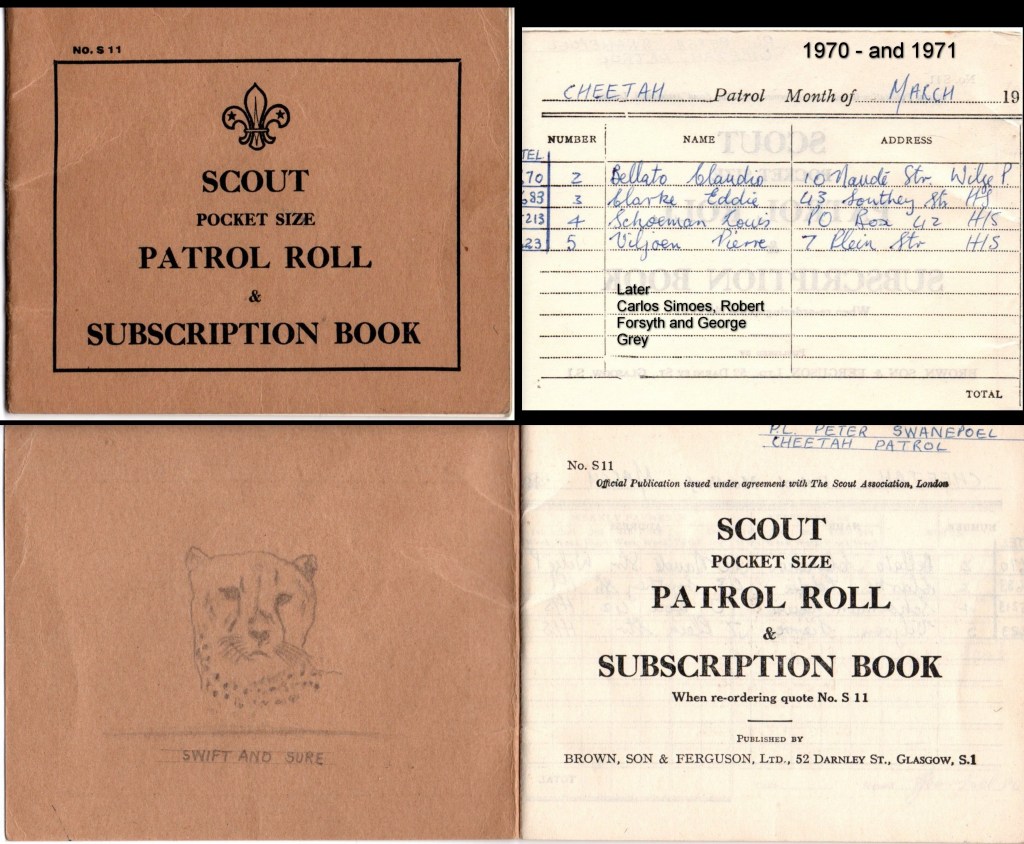

Loved going on camps and hikes, earning badges, drawing maps, navigating by maps and compass . .


I did all sorts of badges – master pet with Jock the staffie; canoeing, cooking, map reading, hiking, swimming, raft-building, tower-building, tying knots I still use today – everything, and was well onto my way to being a 1st-Class Scout; Went to camp in Bloem, after which ‘Haithi’ wrote and said your 1st Class will be soon; Father Sam drove us blindfolded, dropped us off (it was near Nondela) and we plotted our way back in high winds to a microwave tower near Bobbejaankop east of town; Was invited to the Chief Scout’s hike in the Valley of Desolation outside Graaff Reinet starting Sunday 24th September 1972;

We met at the Anglican church, at the MOTH hall, and in our loft.
The favourite, most talked-about thing, the biggest challenge was: The BIG Hike
I drew five maps for this route near Normandien pass. Or really one map, on five pages of SHELL notepad! What I’d forgotten is how much Father Sam and Charlie Ryder drove us around! Probably at their own expense? Eg. We drove out to Robbie Sharratt’s farm one week night and got back at 9:30pm just for Robbie to explain the route we’d be taking on our 50-miler hike!

Then I went to Veld and Vlei in the 1972 July holidays, matric exams followed and suddenly Scouts in Harrismith folded, after a brief but glorious reign. Very sad, great pity but we just didn’t have the numbers.
I pulled out of the Chief Scout’s hike – I had REALLY looked forward to seeing that valley. I had read much about it. One day . .
~~~oo0oo~~~
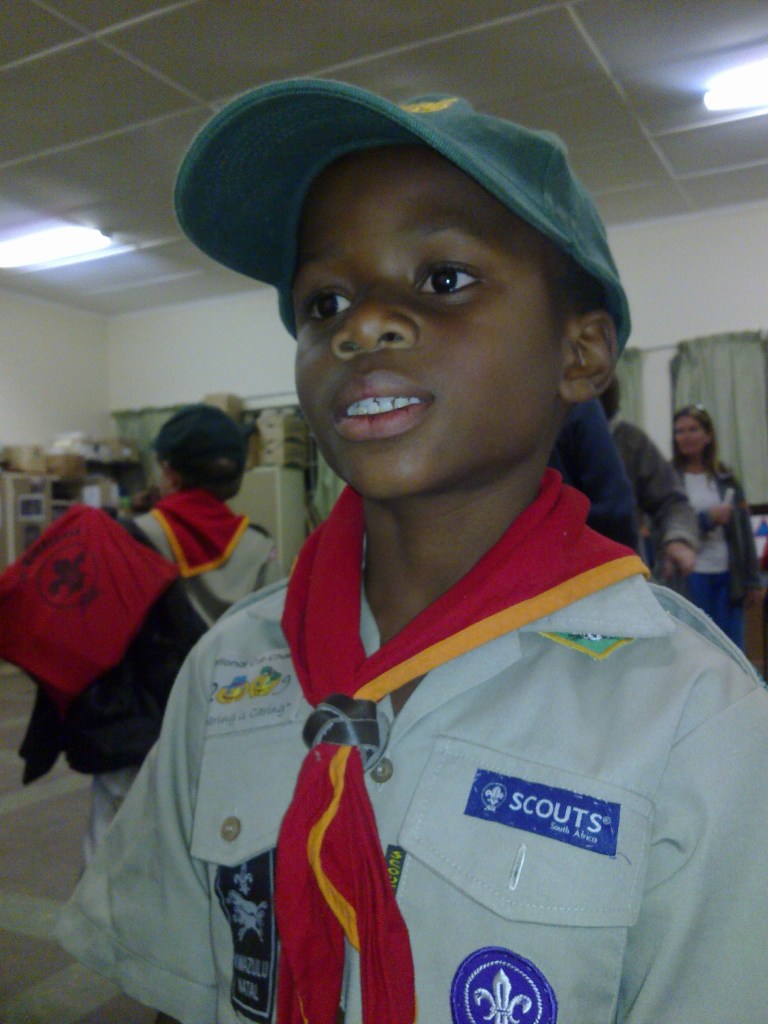
Decades later my boykie followed in my footsteps . .
~~~oo0oo~~~
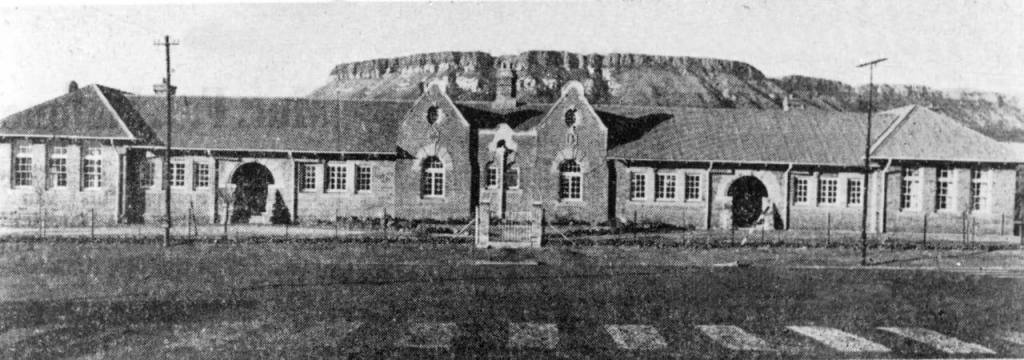

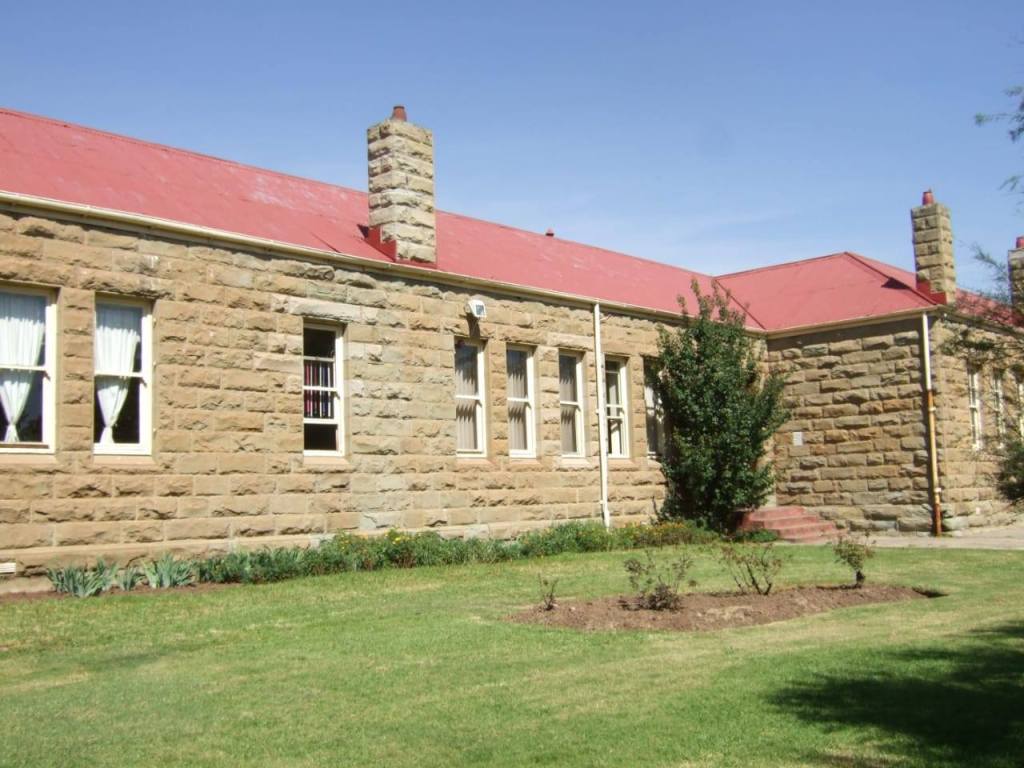
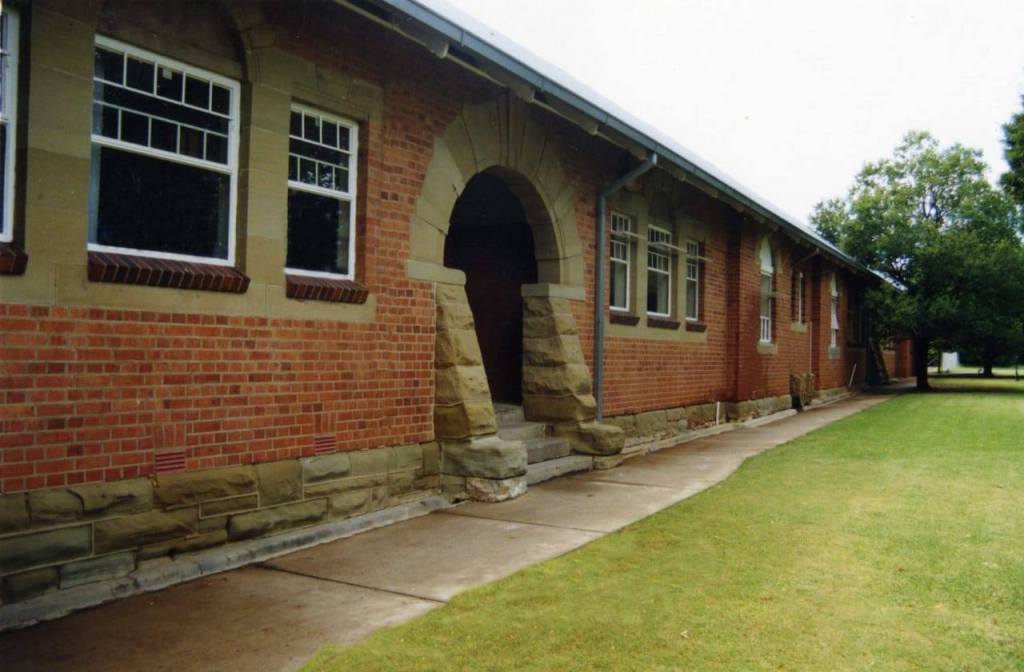
Mom went to this school, as did all three of us kids. Annie, Mom’s Mom, would not have, as it seems it was established in 1915, see below, and Annie was 22yrs old by then.
Before us, Etienne Joubert went, and he remembers:
Playing ‘Hasie’ under the Bluegums near the old Golf club house; Eating ‘Manna’ under the Bluegums; Playing ‘Bok-bok’ behind the bottom class rooms; Playing marbles in the main playground.
Also he remembers the woodwork teacher Giel du Toit – his mother Joyce had a hilarious ‘holy’ nickname for Onse Giel – Heilige Giel, I think it was; and he remembers the smell of the old fashioned wood glue; And the wood vice where ‘we tied a guy’s tie in & walloped his behind. I’ve forgotten his name, but not his face … I can see it now!
He then confesses – I do not remember much about plays & music . . .’ – No worries, sister Barbara does:
Sister Barbara was a year or two later – she finished Std 5 in 1965. She definitely remembers about plays and music, you Philistine, Etienne! She remembers that year was the school’s Golden Jubilee year – so established 1915, I guess? – and an exciting concert was planned and held on the 28th and 29th of October 1965, with all the classes in the Kleinspan School and Primary School – Volkskool – participating.
How could she remember in such detail? Well, she had her program carefully stored away in a shoe-box! She remembers the play her class put on: ‘TO BE OR NOT TO BE’ – by B.J.J. (Bruce) Humphries with Pierre du Plessis and Llewellyn Mileham – or was it Kevin Crawley? – as the smart guys, and Timothy Brockett as Mr. van Snoggery-Boggery, the drunk guy – Pierre remembered this name – and herself – Barbara Swanepoel – as the unnamed lady on the railway station platform.
Interludes between plays were filled by music by the ‘Harrismith Volkskool Orkes / Primary School Band.’ Band members were Rina Minny en Estelle Meyer on trekklaviere – pull pianos – piano accordions; Sylvia Doman on piano; Barbara Swanepoel on melodica; Pierre du Plessis on drums; Willie du Plessis on electric guitar; So much of du Plessis!; Theuns Bam en Bertus Hattingh on acoustic guitars; They were called Die Dorps Mense. Years later The Village People modelled a band on this lot. Um, so I believe.
Then came the Primary School Boys Choir – Die Seunskoor. Under the charming direction of Miss L. Fourie and that delectable redhead Miss Ethel Cronje. I was a soprano in this lot, warbling away merrily before my balls dropped. We sang (according to that program which won’t lie) Wiegeliedjie van Mozart; Drummer Boy; and Dominique; I still remember – and can still sing majestically – the second and third of these liedjies. My kids dispute this fact, unreasonably.

Barbara asks: ‘Now wasn’t there a record produced for this choir? I think so – our own famous ‘Platberg Boys Choir.’ Indeed there were two records cut. Vinyl. The Vienna Boys Sausages were nervous. Especially when we launched a smash hit successful sold-out tour of Zululand. If it wasn’t for rugby and puberty, we’d have usurped those Austrian suckers. We’d have parum pu pum pum’d them out of business . .
~~~oo0oo~~~

Steve Reed wrote:
Gotta love the Scots . .
… and their humour. Met up with Sam, an excellent Scotsman who came in for some glasses today. We were chatting about some of the female news anchors you see on TV. One of them, Virginia Trioli, we agreed is opinionated, superior, demanding and – from all accounts – a piece of work.
He sums her up:
“Ya woodn’t want ta be coming hoome to her wi’ only a half week’s pay packet.”
Later, I am handing him over to Ioannis who has the job of telling him how much his new multifocal glasses are going to cost (cringe) with some light banter … Sam replies:
“Well I am a Scotsman ye know. Every penny a prisoner.”
I packed up – had not heard that one before.
Probably comes up a lot in the local pub.
~~oo0oo~~
Me: So right! Gotta love the Scots!! 😉 – I must remember those pearls!
My gran Annie’s father came to Harrismith straight from the freezing far north of Scotland – a fishing village called Sarclet, south of Wick – but she sadly became heeltemal Engels – the queen, the empire, and all that.
The only Scottish she ever spoke to me was her oft-repeated tale of once on the golf course, waiting to tee off. The oke in front of them sliced off into the bush and said,
‘Och, its gone off in the boooshes,’ to which Annie quipped,
‘That’s betterrr than doon in the wutterrr,’ – upon which she says he spun around and said,
‘Begorrah’ (or whatever a Scotsman would say on an occasion like this), ‘Yer one of oos!’
‘Aye,’ said Annie semi-truthfully.
~~oo0oo~~
Which takes me to her THIRD language: Afrikaans.
Of her ninety years on Earth, Annie spent about eighty seven in Harrismith in ve Vrystaat. She was born there, she went to school there (more than half her schooling) and she sold Caltex petrol to her Vrystaat customers there.
The only few years she was away from Harrismith she spent ‘down in George.’ She went to stay with her sister Jessie Bell when Jessie’s daughter Leslie died.
When she got there there was great excitement as they just knew she’d be very useful in dealing with the kleurlinjeez, who spoke their own Afrikaans and hardly any Engels.
‘Annie speaks Afrikaans, she’ll be able to speak to them and understand them,’ was the buzz.
So the first day the gardener needs instructions and Annie confidently demonstrates her skill to the assembled rooineks:
‘Tata lo potgieter and water lo flowers’ she told the poor man who must have scratched his head at the Zulu-Engels mix in which the only word approximating Off-The-Krans was ‘potgieter’ instead of ‘gieter’ for watering can.
~~o00o~~
One more Harrismith Scots joke I’ve told you before, but I’ll add it to this collection:
Jock Grant arrives from Scotland full of bravado, bulldust, enterprise and vigour.
He’s a plumber – a plooomerr – but soon he’s bought the stone quarry, bought the Montrose Motel in Swinburne, bought the Shell garage, bought a big white Mk 10 Jag and smokes fat cigars.
In the pub at the golf club he removes the cigar from his lips, waves it around and tells the guys he’s started Afrikaans lessons – he’s going to learn to speak Afrikaans.
Jannie du Plessis looked concerned. ‘Jock,’ he says, ‘We think you should rather learn to speak English first.’
~~oo0oo~~
heeltemal – completely
kleurlinjeez – a vague racial classification in apartheid times – and still in use today! Not black, not white, therefore ‘coloured’; actual word: kleurlinge
rooineks – people congenitally unable to speak Afrikaans, try as they might; actually, try as they don’t
~~oo0oo~~
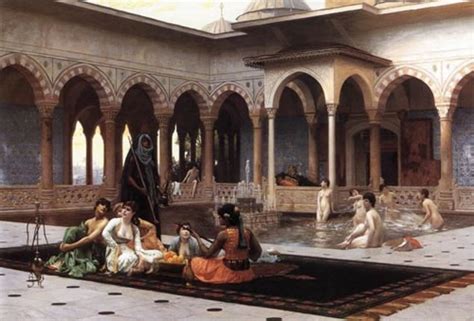
You know that mansion Mal Jurie is building on his farm? It’s a harem!
A what?
A HAREM! A place where you keep lots of ladies in rooms and they lie around swimming and eating grapes and looking beautiful. When they do have clothes on its not clothes like your mother wears. He says he’s going to bring French dancers to his harem from the Moulin Rouge in Paris! A lot of French ladies in Harrismith in the Vrystaat!
Ag Man, You Lie!
No, I swear. He told me himself!
This is how an Urban Legend – in this case really a Rural Legend; or, as Harrismith author and historian Leon Strachan calls them, a ‘Lieglegende’ – got started.
First of all, it’s true. Jurie Wessels DID say that. His neighbour wasn’t lying.
But what Jurie was really saying was, ‘Leave Me Alone!’ ‘Los My Uit!’ ‘Mind your own Business.’ ‘Stop prying.’
Jurie was a successful farmer, an intelligent, interesting and interested man, married to an outgoing and attractive woman, and he was building her a home unlike any other in the district. His problem – his sin – the reason he was called Mal Jurie – was that he was an introverted and eccentric character. He didn’t ‘play by the rules.’ And for that you get punished in most communities, maybe more so in small communities. And Harrismith would have been no exception.
For starters, Jurie had brought his lovely engaging wife from far away. People didn’t know her mother and her grandmother. She was actively involved in the community, well liked, and often entertained; but still . . she was from far away. And also, often Jurie wasn’t at her gatherings, preferring to keep to himself, even when she entertained at home.
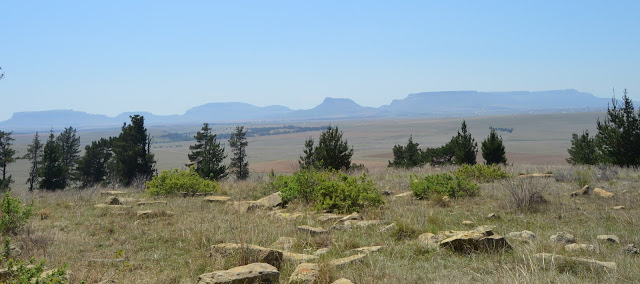
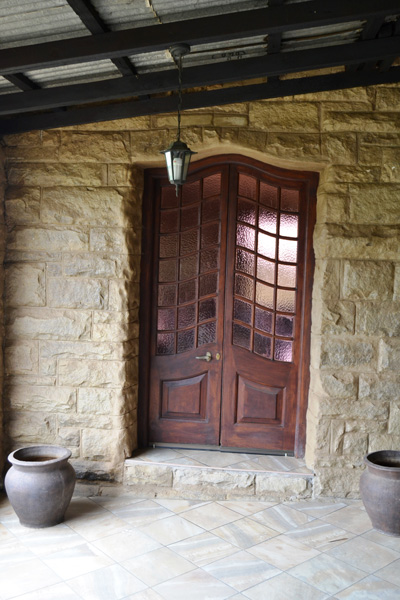
So when Jurie got Italian stone masons to start building a large sandstone structure on the edge of a hill above his more ordinary homestead, overlooking the Wilge river valley west of the dorp, the people started wondering . . and talking.
But it was when a consignment of beautiful and really big wooden windows and doors arrived from Italy at the Harrismith spoorwegstasie that the rumours started building and gathering momentum. From ITALY? Nothing from ITALY arrived at the Harrismith stasie! Where was Italy, anyway? This was weird! Just what WAS Mal Jurie up to? Here was evidence, not just skinner, that Mal Jurie was mal.
Well, he was actually building a beautiful home, but he didn’t want people sticking their nose in his business. People always asked too many questions! So when his neighbour asked, he deliberately gave what he probably thought would be an obvious exaggeration. And it might have been taken as just that, had his reclusive behaviour not made him ‘suspect’ – ‘different.’ And so the rumour – the legend – grew wings and became ‘the truth.’

My mother Mary grew up with one of his sons, Hugo. Hugo was a popular, good-looking and talented Harrismithian who would go on to qualify as a medical doctor, then come back to farm and practice medicine as a GP on the family farm. He and Mom matriculated in the same class of 1945. They both loved music and singing, were talented musicians, and both did well in their exams. Here’s Mom on the piano and Hugo enjoying her playing and getting ready to sing at Mom’s 45th birthday party in 1973.
..
And here’s one of his sons, Max Wessels, who played rugby with me in primary school. Max extreme right front row, dark hair, shortish then – me extreme right back row, blonde, tallish then.

The beautiful new home never got finished. Jurie joined the 1914 rebellie – a rebellion against the British-dominated South African government. He was angry – mad as hell – as were many others, that this blerrie government was joining the blerrie British to fight World War 1! Hadn’t the blerrie Engelse just been killing them a mere twelve years before? Hadn’t the British locked up our women and children in concentration camps, starving them and killing them off through disease and malnutrition!? Why the hell was South Africa fighting WITH those invaders who had ruined our country just a short decade ago, burning our houses and killing our livestock?
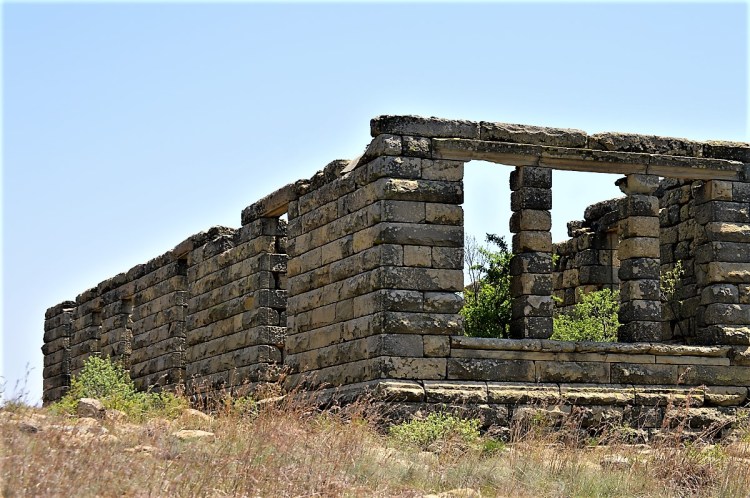
So with Jurie te velde, building on his lovely home ceased. Today the impressive ruins – not ruins: the unfinished start – of the home Jurie wanted to build for his wife still stand:


~~~oo0oo~~~
Many thanks to Harrismith historian Leon Strachan for keeping Harrismith’s history alive – and for the photos. For more and better info, read his book Blinkoog. He wrote four: Blafboom; Blinkoog; Botterbek and Bergburghers.
See this lovely blogpost by former Harrismithian Sandra Cronje, where she wrote a longer, better story with Leon’s research and input.
~~~oo0oo~~~
Reminded me somewhat of this song:

In October 1902, just four months after the end of the Anglo-Boer War, Sir Percy Fitzpatrick bought the farm Dreyersgeluk near Verkykerskop in the Harrismith district from the insolvent estate of Petrus Dreyer, poor bugger. Fitzpatrick then got Herbert Baker to design a fine sandstone homestead, and to assist him in building it in 1903 – ‘but without full professional services’ (Keath 1992:104-105).
Baker, who became Sir Herbert in 1926, was an English architect who worked in South Africa from 1892 to 1913. His first job was for Cecil Rhodes on Groote Schuur; over the next twenty years he dominated the architectural scene in South Africa, designing the Union Buildings in Pretoria in 1910.


James Percy Fitzpatrick was born in 1862 in King William’s Town, the son of Irish immigrants from Tipperary.
Active in politics and very pro-England, Fitz agitated for war against the boers. Calling for an invasion of the sovereign state he was living in! He was convicted of treason against the Transvaal state in 1896. Nasty! Being on the winning side, though, meant he was knighted in 1902. All is forgotten if you win, and what happened gets re-written.

As an author, his most famous work was ‘Jock of the Bushveld’. Written in 1907 while staying at Buckland Downs, it told about his life as a transport rider in the lowveld goldfields of the old Zuid Afrikaanse Republiek. The Jock stories began as bedtime stories told to his children. Apparently urged to publish them by his friend, famous author Rudyard Kipling, the stories became one of South Africa’s most famous books of all time.
Around 1910 Fitzpatrick ordered a large number of different varieties of oak trees from England and planted them in the shape of the Union Jack on about 35ha of land on Buckland Downs. Despite these two obvious anti-local actions, Sir Percy said “I would rather be a meerkat in Africa, than a millionaire in England.” Of course, he meant that only as long as Africa was under British rule.
Fitzpatrick’s daughter Cecily (1899-1992) later stayed on the farm with her husband Jack Niven. In the 1940’s the famous ornithologist Austin Roberts (1883-1948) used to visit them on Buckland Downs. Patrick Niven tells how Roberts involved the family during a 1942 visit in a collecting expedition to the nearby Spitzkop for specimens of swifts – probably at a nesting site?
Cecily became very involved in birds – her name is reflected in the List of Members of the Southern African Ornithological Society (SAOS) for April 1935, the receipt for her subscription is signed by Austin Roberts himself – honorary secretary at the time. In 1948 she established a Committee for Bird Protection as a subsection of the Wild Life Protection Society. In 1957 Cecily was the driving force behind the first Pan African Ornithological Congress which took place in Livingstone, Zambia. In 1960 she established an Institute for African Ornithology – now fondly known as the ‘Fitzstitute’ – dedicated to the memory of her father, Sir Percy FitzPatrick, through a £15,000 endowment (around ten million Rand in 2007 money) from the FitzPatrick Memorial Trust.
~~~oo0oo~~~
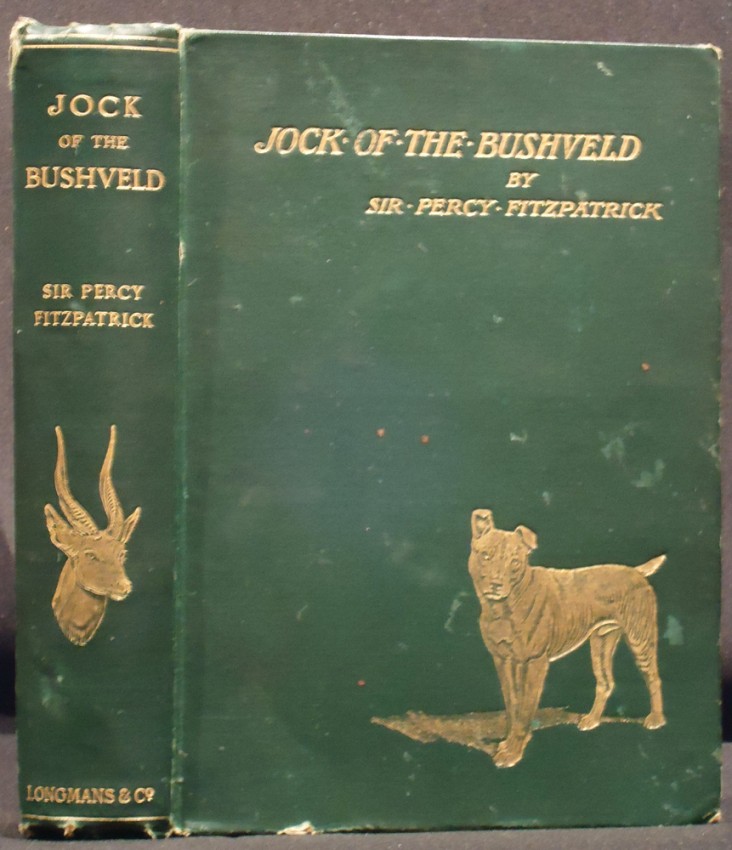
A first edition copy of Jock is going for $7500 in 2019. And then THE first edition is for sale by Clarke’s Bookstore. I wonder how much that will fetch? Here’s the inscription Percy himself inscribed in it:


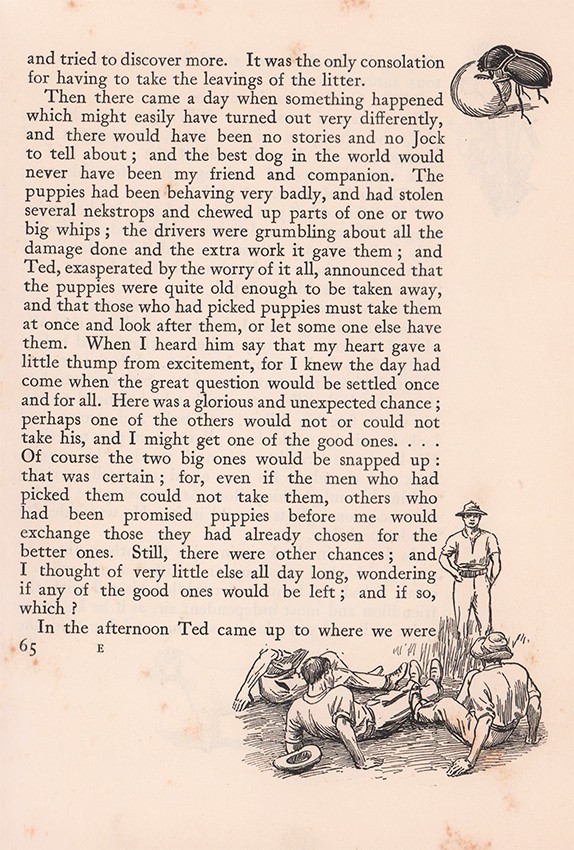

Illustrated by E.Caldwell
DESCRIPTION:
First edition, First impression. 475 pages, colour frontispiece, plates and marginal illustrations, dark green cloth with gilt titling and gilt vignette of Jock on the upper cover, light foxing throughout mainly in the text and on the page edges, with the drawings of a dung beetle pushing his load with his front legs rather than his back legs on pages 65, 337 and 457 and Snowball the horse being dragged out of the river on page 316 – these drawings were changed in later impressions. The spine is starting to fray at the top and the bottom, the bottom edge of the upper cover and the corners are slightly scuffed, housed in a specially made oatmeal textured cloth solander box with a dark green title label gilt on the spine, a very good copy of the first edition. Overall Condition: A Very Good Copy
5000 copies of the first impression were printed at a total cost to Longmans of £416. 7s. 11d.
Signed on the title page by J Percy Fitzpatrick. His full name was Sir James Percy Fitzpatrick.
Inscription on the front paste-down end paper reads: This – the first copy of “Jock”- “belongs to the Likkle People” and the mere narrator desires to acknowledge that fact in proper form. J Percy Fitzpatrick, Hohenheim October 1907
The dedications page reads: It was the youngest of the High Authorities who gravely informed the Inquiring Stranger that “Jock belongs to the Likkle People!” That being so, it is clearly the duty, no less than the privilege, of the mere Narrator to dedicate the Story of Jock to those Keenest and Kindest of critics, Best of Friends, and Most Delightful of Comrades, The Likkle People.
Fitzpatrick’s adventures – centred on his dog Jock, a Staffordshire Bull Terrier cross – when he was pioneering in the Bushveld, are vividly described in this South African classic. He used to recount them in the early 1900’s to his four children, Nugent, Alan, Oliver, and Cecily, to whom the book was dedicated – the likkle people.
Rudyard Kipling, an intimate friend, at some time took part in these story-telling evenings, and he it was who persuaded Fitzpatrick to put the stories together in book form. Having done this, Fitzpatrick searched for a suitable artist to illustrate the book and eventually came across Edmund Caldwell in London and brought him to South Africa to visit the Bushveld and make the drawings on the spot.
The book, which appeared in 1907 for the first time, was an immediate and overwhelming success, being reprinted four times in that year.
Extracted from his South African Memories pages 24 -25: Of course to those who have read Jock of the Bushveld he needs no introduction. Jock and Jess and Jim will always live in the memories of the Likkle People whom he was addressing and whom in every generation of young South Africans he will continue to address. The Likkle People have always loved Jock and his companions because they know what was being told to them was true and that it was all about their own wonderful country.
~~~oo0oo~~~
http://www.krugerpark.co.za/sir-percy-fitzpatrick-kruger-national-park.html
~~~oo0oo~~~
I had a dog called Jock ca.1970. Got him from the Jellimans who farmed very near Buckland Downs.
 Vrystaat Confessions