
The original source of info for this post was on https://deoudehuize.blogspot.co.za/ – do go and look, they are doing wonderful heritage conservation things in Harrismith! And they have a cool old car!
Maximilian John Ludwick Weston was a South African aeronautical engineer, pioneer aviator, farmer and soldier – and mystery man. He was probably born on 17 June 1873 in an ox wagon at Fort Marshall south of Vryheid in British Natal (though he invented an entirely different place of birth when it suited him). He married Elizabet Maria Jacoba ‘Lily’ Weston (nee Roux) a direct descendant of Adam Tas. The couple had three children: Kathleen, Anna and Max.
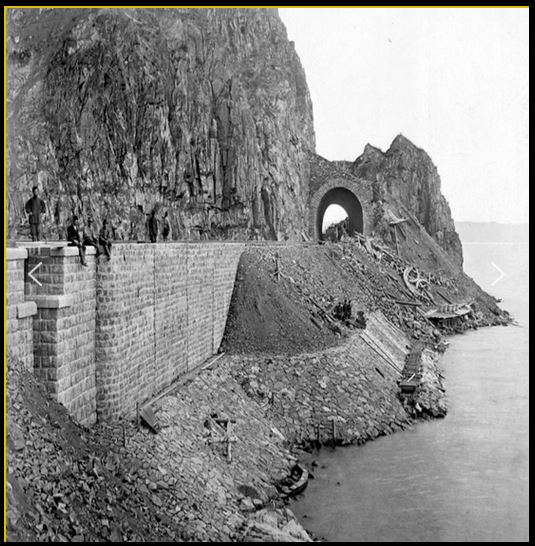
Weston’s early years are . . . interesting. And he may have invented a LOT of his life stories. But some things are verifiable – more or less, and they certainly are interesting! Read more detail here about his time building the railway line around Lake Baikal in Russia!

Weston began the construction of his own aeroplane in 1907 at Brandfort in the Free State. This was the first South African-built aeroplane. He lacked an engine with enough power so he dismantled the aircraft and shipped it to France. In France he fitted a 50hp Gnome rotary engine and flew it successfully in 1910. On 16 June 1911 John made the first flight in Kimberley establishing a South African non-stop flight record of eight-and-a-half minutes in his Weston-Farman biplane.

At the outbreak of World War I Weston was appointed ground officer in charge of landing strips in South West Africa. He prepared an airfield with hangars and workshops at Walvis Bay.
For services rendered to the Greek Ministry of Marine he was made an Honorary Vice-Admiral in the Royal Hellenic Navy. Thus he was often glorified by the title of Admiral. Isn’t that delicious? The land-locked Free State had an Admiral! He appeared to relish the joke and later named his farm “Admiralty Estate”!
In 1918, John Weston took his family on an amazing adventure in this motorhome, a converted Commer truck. From about 1920 for twelve years, he and his family traveled the world.

The ‘Weston Caravan’, as it was called, was an extraordinary example of his tenacity and ingenuity. It doesn’t look like much from the outside and if the truth be told, the interior is enough to give anyone claustrophobia, yet this neat and compact arrangement of luggage and folding beds served them well. According to Weston, the living compartment could be removed from the chassis proper in a mere 10 minutes in order to float it across rivers, while the chassis could drive and/or get pulled across!
This ingenious ‘seven-by-fourteen-foot mansion’ ferried the pioneering Weston family on an overland trip from Cape to Cairo, and on to England, ‘to take the children to school!’
The purpose of Weston’s project was not simply to satisfy his lust for travel but was also an expression of his idealism. “To travel from land to land, to mix with the people of all nations…, to speak to them and hear their views, to study their institutions and their customs, that is his aim”.
It was also a bold experiment in the education of his children: he wanted them to see the world, to be freed from the narrowness and prejudices of those who grow up among never-changing surroundings, who know nothing of life beyond the pale of their dorp or city, the beauties and the grandeur of the earth, or of the nations and races who people it, and adorn (or mar) it with their works. He is preparing them to be citizens of Planet Earth”
On their trip from Cape Town to London they ‘had run-ins with elephants, occasionally had to float their vehicle across rivers on logs, and on occasions entire villages of more than a hundred natives had to dig them out of mud and thick sand and pull them up river banks.’ Weston said, “It can be stated without reservation that the indigenous people encountered on the African continent were all friendly and helpful“.
There were no fuel stations dotted along the route and no easy access to fuel, water or spares shops. Even the kids became handy mechanics. In the Southern Sudan they suffered misfortune when the rains broke later than usual. Weston broke a bone in his foot and the two daughters were also laid up with injuries.
On their trips Weston used to fly the South African blue ensign from a long bamboo pole on “Suid-Afrika” as he called the truck. On the side was painted a disc with the inscription ROUND THE WORLD circling the following:
Our mansion: seven by fourteen feet
Our field: the whole world
Our family: mankind
Today it can be found in the museum of the picturesque little town of Winterton, KwaZulu-Natal.
On his return to South Africa in 1933, Weston bought a farm near the present Sterkfontein dam in the Harrismith district (or was it nearer Bergville?) and called it “Admiralty Estate”. He hoped to keep his kids with him for ever, but would not give them any certainty as to their future on the farm. The youngest two ended up reluctantly leaving to start their own lives, at which he disowned them and never spoke to them again.
One Friday night 21 July 1950 Weston and his wife were in the dining-room when they were attacked by three masked men. Mrs Weston regained conscious three days later in the Harrismith hospital, but John went on his last mission at the age of 78 on 24 July. It was his wish that his funeral should be quiet and simple. His body was cremated and no last word spoken. Lily recovered from the attack although certain permanent injuries persisted. She passed away on 14th April 1967 at the age of 91.
~~~~oo0oo~~~~
Read a fuller story of this amazing man’s astonishing life here. And especially here. where a sleuth has done a fascinating job of trying to unravel the true story of ‘John Weston’! Was he a spy? What was his real name? Where was he born? He wasn’t an admiral; He certainly was no farmer; He had no visible means of support yet often had plenty of money. He would disappear overseas for quite long spells quite frequently, sometimes buying aircraft and shipping them back to South Africa. He DID help build a Russian railway line. He said he personally met Churchill, Roosevelt, Stalin and other notables.
http://www.johnwestonaviator.co.uk is definitely worth a visit and a lo-ong slow read!
~~oo0oo~~
Major D.P. Tidy in a tribute to pioneer SA airmen, wrote about Weston’s oldest child, daughter Anna. he wrote
(Weston) was elected an Associate of the Institution of Electrical Engineers on 5 February 1903 and a Member of the Society of Arts in the same year, in which he also published a slim philosophical handbook in November.
In 1981, his intrepid elder daughter Anna Walker flew with me in a Transall C160Z to the presentation ceremony of the Compton Paterson biplane replica in Kimberley. She gave me a copy of the little book, and was bright and lively at 05h00 when I picked her up from her house in Rosettenville, Johannesburg. She continued thus for the duration of the journey via Waterkloof, Durban, East London, Port Elizabeth, and Cape Town, keeping me enthralled with stories of travels with her father. She has decided views on the origins of the disastrous fire that caused the loss of Weston’s aircraft, and of the identity of those who instigated the murder of her father in the 1950s.
In the little book of her father’s that she gave me he wrote ‘Never allow human conventionality to interfere with the dictates of your conscience; in other words do right and fear not.’ This could be the essence of the thinking of both father and daughter. She was born Anna MacDougal Weston on 6 February 1908, after he had married Miss Lily Roux on 10 August 1906.
Settled at Brandfort in the Orange Free State, he had a well-equipped workshop there in 1909. He himself stated that he built his first aircraft in 1907/1908, presumably on the farm Kalkdam, near Bultfontein.
https://samilitaryhistory.org/vol056dt.html
~~oo0oo~~
 Vrystaat Confessions
Leave a comment