Mom: When the Colemans arrived in Harrismith for Ken to start work in ‘the milk factory’ we met them right away as Dad was a great friend of Ken’s older brother Wally. Wally had been his tutor as an appy electrician in the Pietermaritzburg Post Office back in 1938. I recall visiting Uncle Wally as a kid once – I think in Howick?
– Wally Coleman in the white coat – Dad standing second left – 1938 PMB –
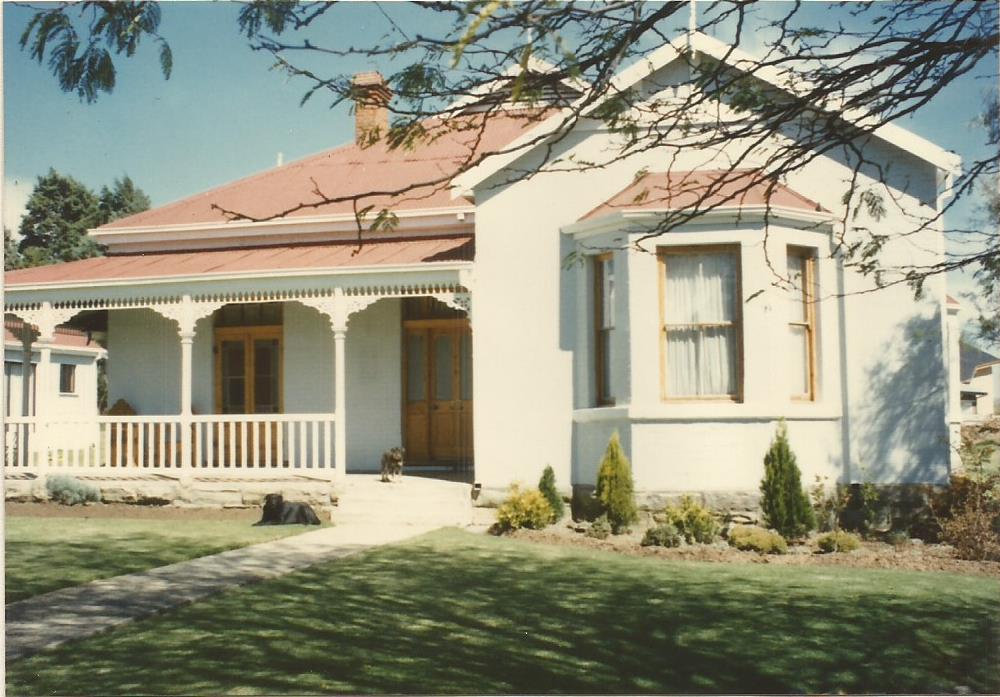
Ken and Jean started building a new house on the corner of Hector street and Berg street, the road that led out of town to our plot less than a kilometre away. While the builders were at it, some leave time came up and Ken took the family away, prompting Dad to opine to Mom, ‘I would never go away while someone was building my house! I would watch their every move.’ Right.
Mom’s not sure, but thinks Donald was already born when they arrived in Harrismith. When Anne was born soon after me, Mary was chosen as her godmother as ‘Jean was a great friend even though she was Anglican.’ Mary Methodist speaking!
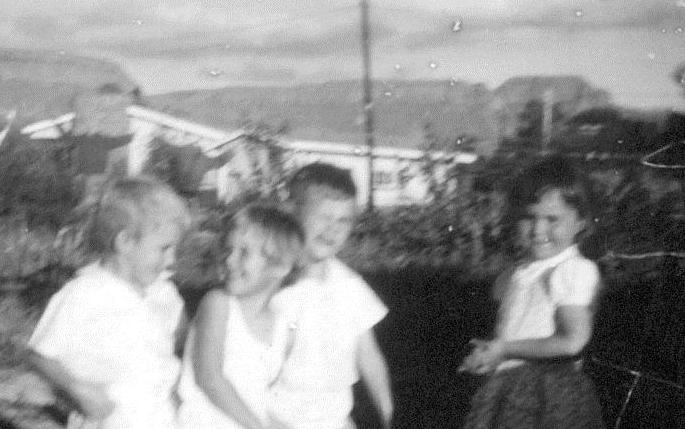
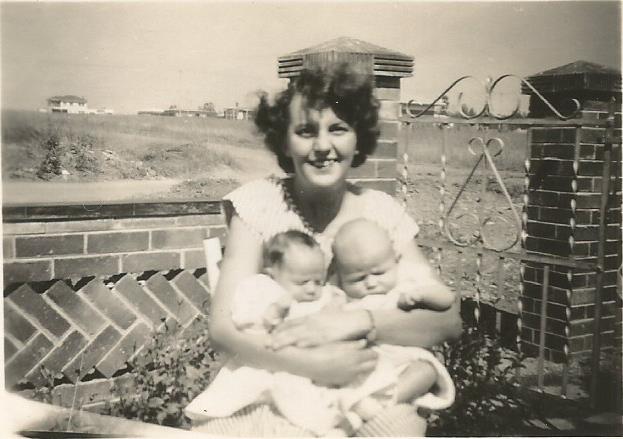
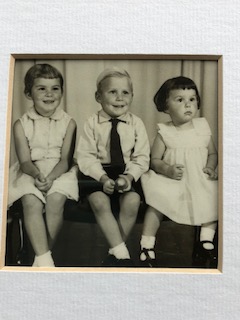
Then Eddie was born and we were like this:
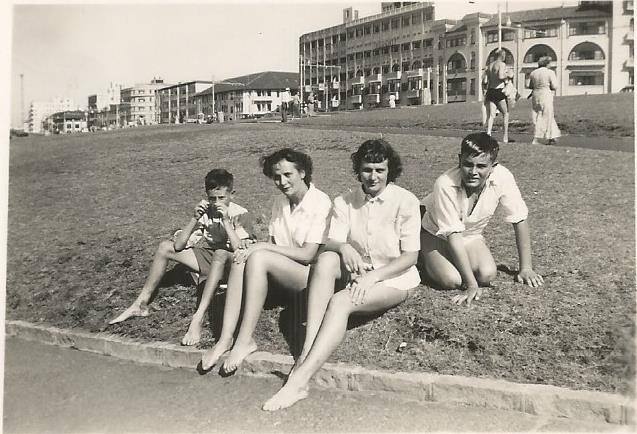
Koos, Anne, Donald & Sheila ca.1959
Donald, Anne and Eddie in front – Durban ca.1965
In 2015 Sheila wrote: Mum says when we still lived on the ‘townlands’ on the way to the waterworks, Jean would often ‘phone and say ‘Have you got a little visitor?’– once again her son Donald had gone missing and she knew exactly where he was – he used to walk all the way to our farm to visit his great mate, Koos. The two were inseparable.
Today in 2020 Mom’s version was slightly different: ‘You used to walk to Donald without telling me. I would phone Jean and ask ‘Is there anything there of mine?’ Maybe the strolling went both ways?
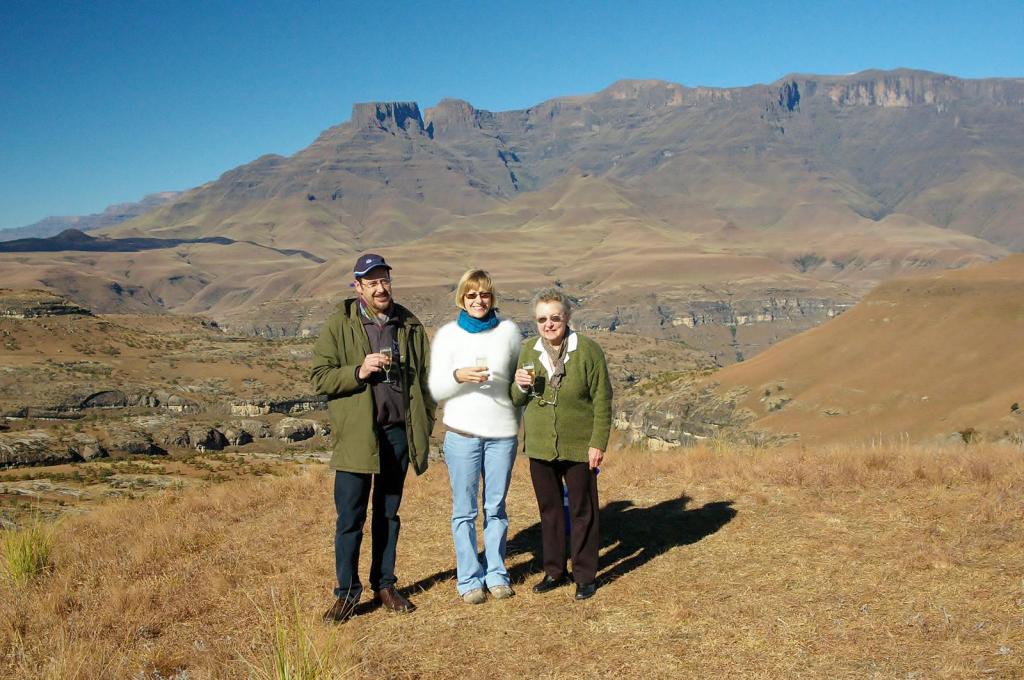
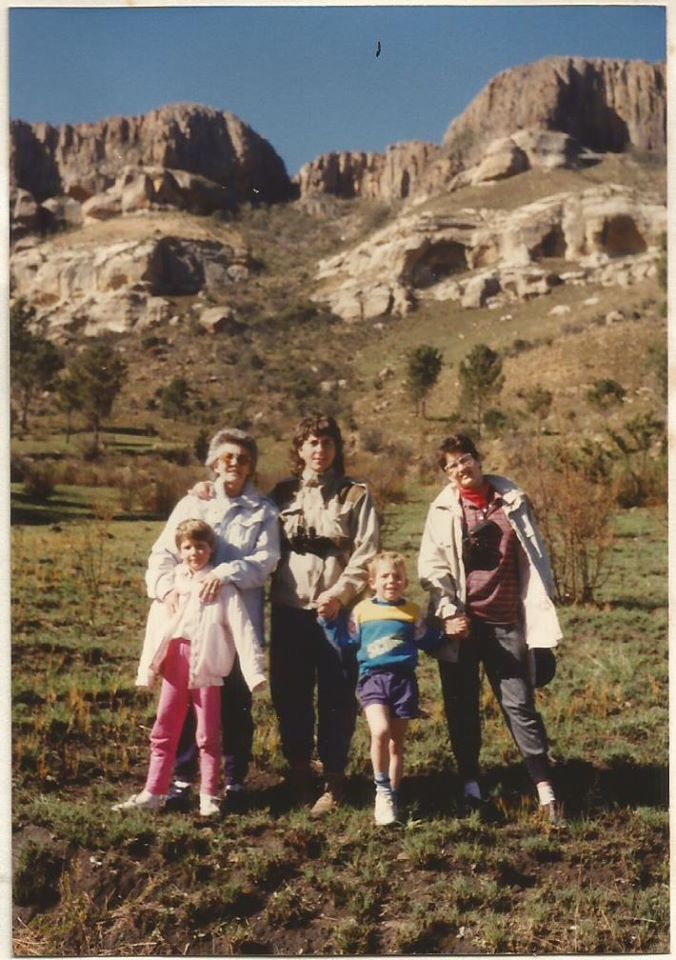
What started this reminiscing was Eddie sending me pics of Jean’s 80th birthday celebration in June 2008, when Anne and Eddie took her on a very special outing:
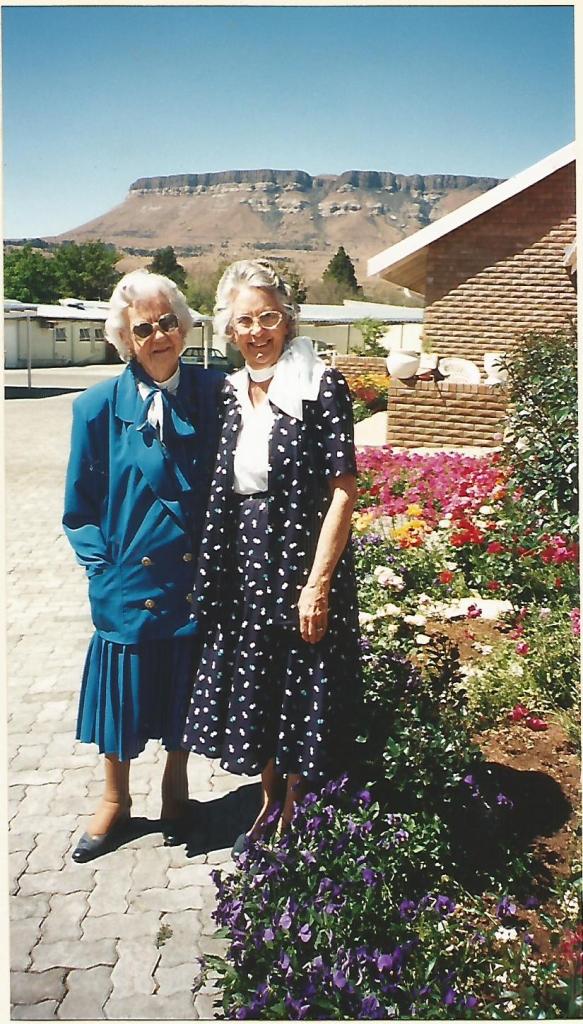
– Eddie, Anne and Jean with Cathkin Peak and Champagne Castle behind –
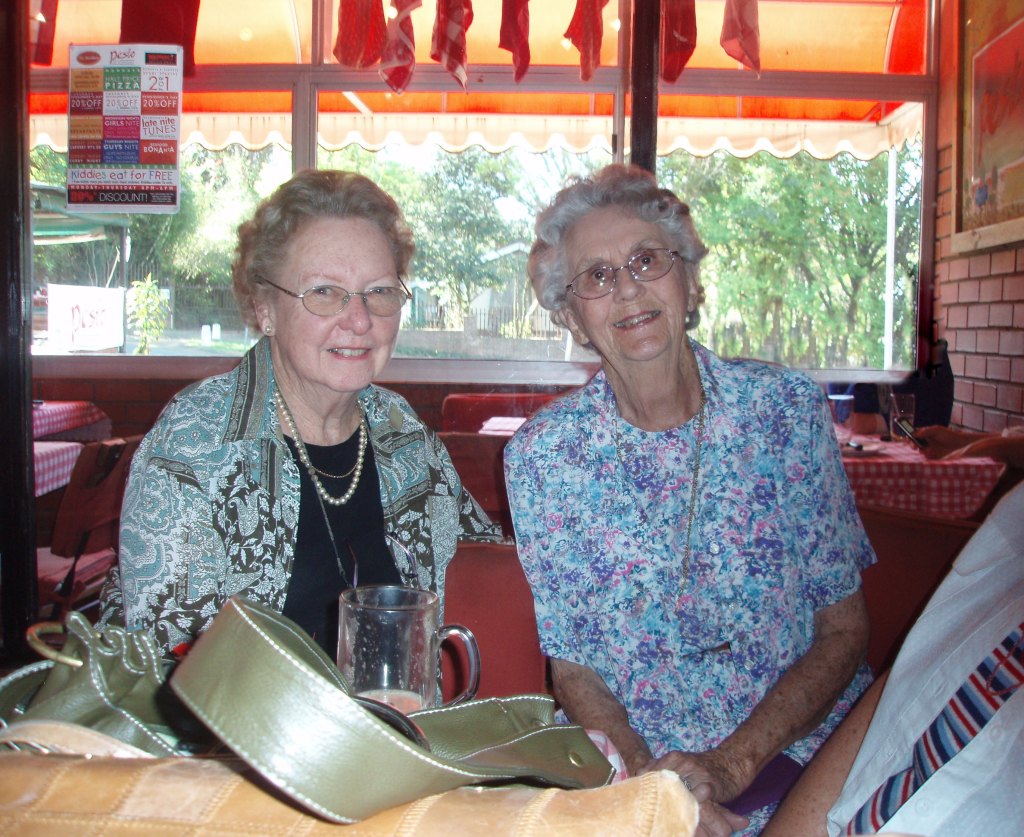
They got together for Mary’s 80th in September 2008
– Mary turns 80 in PMB – 2008 –
For years after the Colemans left Harrismith we heard about their farm outside Winterton. About how Ken built the rondawels and bathroom very rustically. But I never saw Donald again and only lately found out that I had heard from him once!
– view from Craggs outside Winterton – looking at Cathkin and Champagne –– Jean and Ken –
After Maritzburg College, Dad joined the General Post Office as an apprentice electrician. He recalls leaving school on 1st April 1938. Here’s a spirit level he was issued that day:
– Spirit level – Wilson Lovatt & sons Wolverhampton –
While he was still apprenticing, he tried to enlist to join the WW2 war effort, but was sent back. He was sent to the Himeville/Underberg area with a GPO truck and a sidekick called Freddie to do his bidding. Later he was transferred to Harrismith – which fell under Natal for the GPO although it was actually in the Orange Free State – from where he again made his way to Durban to try and enlist, and was again sent home, finally being allowed to join after Oupa reluctantly signed his papers. He left for ‘up north’ in 1941.
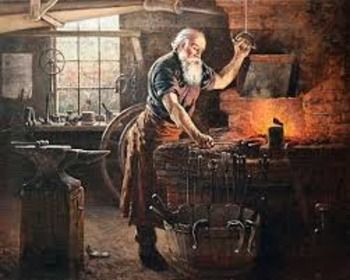
While in Harrismith ca.1940, he met old Mr Buckle the Blacksmith down in McKechnie street, near the railway station. He was from England.
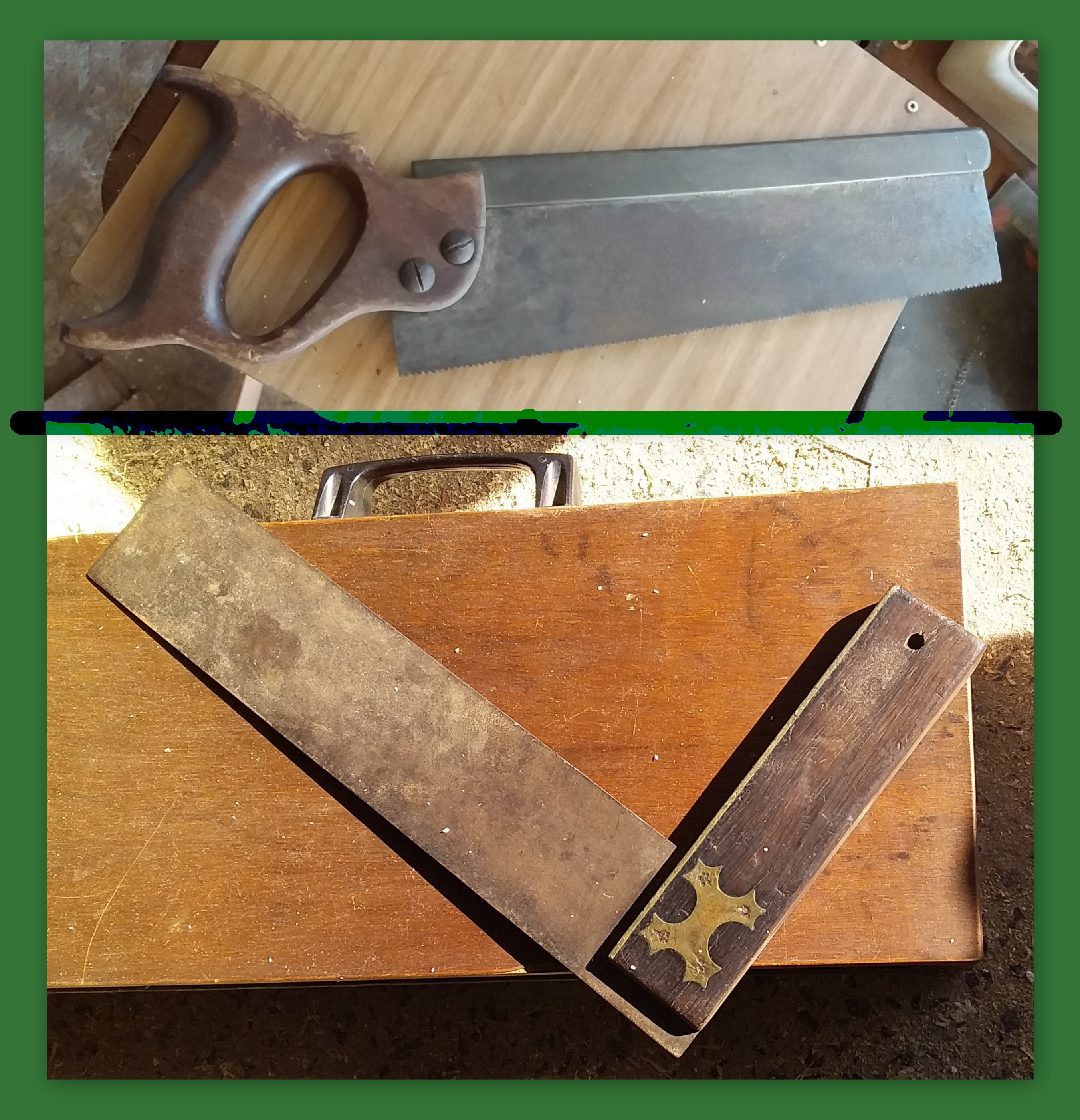
He ended up with a few tools from old man Buckle: a back saw and a set square with a beautiful brass inlay and brass leading edge.
After boarding at the Royal Hotel, whicvh had stables, Dad moved to a plot outside town – townlands – west of town on the Wilge River, downstream of town. There he bought horses, schooled them and sold them for a profit. I assumed he’d had them shod by Buckle but he corrected me. Buckle was a blacksmith, upholsterer, wheelwright and wainwright/wagon-maker. He didn’t shoe horses. That was up to Charlie Rustov, Harrismith’s only farrier.
From his plot on townlands out west of town** he would ride out to Boschetto Agricultural College for Ladies on the slopes of Platberg, the mountain that dominates the town. Boschetto was where the girls were. They were the main buyers of his ponies. The first time he went there, he met the formidable Miss Norah Miller, the founder and principal. Luckily for him she needed a few pictures on her office wall. He was able to help and so became a firm favourite of hers from the outset.
While he was telling the story Mom remembered a story about Norah: She knocked on someone’s door. Whoever answered went back and was asked ‘Who was there?’ They said, I don’t know, but she’s got one eye, one leg and a hell of a cough! Norah had one lens of her glasses frosted out, she wore a leg brace (probably childhood polio?) and smoked like a chimney. When her leg brace buckled, Dr Frank Reitz made her a new one. A better one. He would have loved that challenge. He was a hands-on fixer.
~~~oo0oo~~~
Harrismith author Leon Strachan found some fascinating info on Norah Miller’s leg – it was not polio. His source, Isobel Kemp (Dr Frank Reitz’s receptionist for thirty years. Isobel knew everything): It was probably osteoporosis resulting in a hip fracture in 1928, only six years after she established her college. Usually this would have resulted in incapacity and excruciating pain, but Norah was in luck: she was in the right place at the right time, and knew just the right man, bold innovator and pioneering surgeon Frank Reitz, trained at Guys Hospital in London, then did surgery specialisation in Germany.
He operated and joined the femur using an ordinary screw to hold the femur ends together! This technique would only become common decades later, in the fifties. Thirty years later she was still walking – with difficulty, but still mobile, and in charge of her college. When Cedara took over Boschetto she moved there, where she died in 1959, aged 79.
~~~oo0oo~~~
Aug 2021: Ole man phoned me. He found some (one? more? maybe the one I photographed above?) old ‘tri-squares’ with handles made of ebony with brass inlay. Do I want them? I bought them in the late 40s and Buckle was already an old man, maybe eighty. So they are probably 100yrs old. Hell yes, I’d like to have them!
~~~oo0oo~~~
** Old man bought his first townlands from old Englishman Bill Mundy. On the right bank of the Wilge river downstream from town; out on the road that turns south towards Swallow Bridge after leaving the west edge of town below 42nd Hill.
A lovely post on Women in Ornithology by ornithology historian Bob Montgomerie led me to thinking about Women in – well, My Working Life.
First there was Mom. Mary Methodist. In the Platberg Bottle Store. And Annemarie Maeder, also in the bottle store with Mom. Mom ran the shop, ran the home, played the church organ, was a member of the church Women’s Auxiliary and the MOTHs MOTHWAs. Always involved and ready to help. Annemarie, too, ran her home with husband and three kids.
In the background, too, was our ‘panel of Moms’ – Moms of all your friends. Prominent ones were Jean Coleman, Joan du Plessis, Joyce Joubert, Polly Crawley, Harriet vdMerwe, Emma Morton and others.
Next were women in Apache Oklahoma – all working, all capable: Carol Crews, Joyce Swanda, Katie Patterson, Jackie Lehnertz, Virginia Darnell, Odie Mindemann, Pug Hrbacek, Janie Payne, Peggy Manar . .
When I started my first own practice in 1981 up on the seventh floor of Eagle Building in Murchies Passage between Smith and West Streets in Durban, there was Merle Oosthuizen. I walked in as owner and boss and was lucky enough to have Merle recommended to me as a ‘receptionist.’ Well, ‘receptionist’ indeed. Where’s the appointment book? she asked. Appointment book? I said. The receipt book? Receipt book? She soon twigged my capabilities and knowledge and quietly took over, becoming the Practice Manager and the Me Manager.
Where are you staying? she asked the first day, when she learned I’d just come out of the army. Oh, in a residential hotel, I said. She nodded, satisfied. Some weeks later I breezily told her I’d rented a flat. Do you have a bed? A bed? Bedclothes? Bedclothes? Um . .
Of course she could spot easily how this child masquerading as a man hadn’t a clue. She bought all the above and more for me; and she had all the stuff you need to live a bachelor existence delivered to the flat by the bed and furniture sales people. My first duvet, a kettle, a toaster. Even a fridge.
She was so organised I could say casually to anyone who asked: ‘Oh, I have it all under control. No worries,’ as she organised my practice and my life.
She ruined me. Ever since then I have had capable practice managers run my practice and my life – and I have consequently learnt very little myself. I simply do as I’m told. Later on, twenty six years with Aitch just re-inforced that pattern at home, too.
My usual response to their pointed suggestions along the lines of roer jou gat is, ‘Um, Yes of course, I was just about to do that . . ‘
The baby in the feature picture is Mary Caskie, daughter of Alexander Caskie and Mary Craig.
Her father Alexander Caskie became mayor of Harrismith. She married JFA Bland II and gave birth to JFA Bland III.
JFA III Bland, called Frank, married Annie Watson Bain, daughter of Stewart Bain, mayor of Harrismith. So much of mayors, your worships!
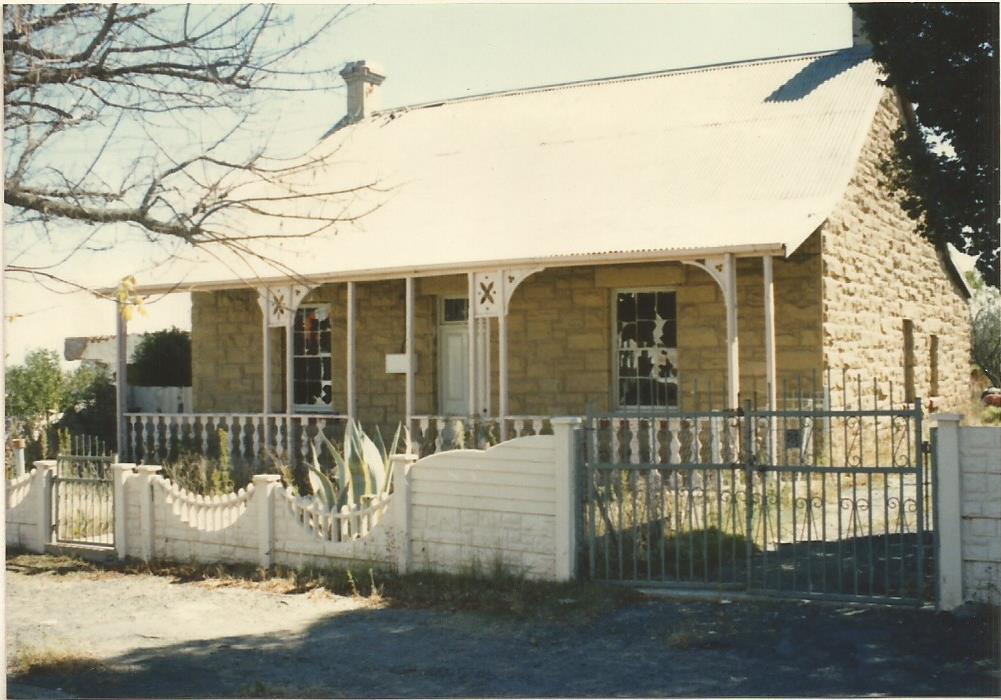
Part of the stone wall which surrounded Granny Bland’s home in Stuart Street, Harrismith; and the oak tree her grand-daughter Pat Bland Cowie planted.
– Granny Bland’s garden wall in 2017 –– Pat Bland planted this oak in her Granny Bland’s garden – 13 Stuart Street Harrismith –
Bain Sisters Annie Bland and Jessie Bell lived with Granny Mary Bland after their husbands died. Annie’s daughter Mary and granddaughter Barbara Mary also lived there for a while. Barbara now has a daughter Linda Mary, who has a daughter Mary-Kate – So much of Marys !
– Annie Bain Bland, Granny Bland, Jessie Bain Bell –
The old home now has an artist family living in it and has been beautifully restored.
Apparently this was Granny Bland’s – we grew up with it in our display cabinet
– Bacchus – the God of Wine, Music and Dance – and 95 Stuart Street –
Granny Bland had a husband and five sons. She buried her husband and three of her sons in the same grave – later she was buried there. Her only surviving son Bunty later joined them all.
Mum says Barnie Neveling had a rather caustic tongue at times – it was he who told Mum that Frank Bland’s brother – either Bobby or Bertie – had “taken his own life” – he was a pharmacist and couldn’t live with his asthma any longer. Granny Bland spoke of it as an accidental overdose. Mum didn’t think it was necessary for Barnie to tell her that.
One of Granny Bland’s other sons, Alex, who was the Royal Hotel barman, played the piano. He cut his finger and it couldn’t straighten properly, so a friend offered to pay for the op to straighten it. Dr Reitz did the op and Alex died on the operating table. One of his favourite pieces was Rachmaninoff’s Prelude – Mum couldn’t remember the key – she sang a bit of it to me – looked it up and I think it was G Minor. Mum says that whenever it was played on the radio, they had to switch the radio off because it made Granny Bland too sad.
This wooden carving was from Granny Bland’s house. We (speculated?) it was carved in Ceylon by a Boer War POW. I wonder if it was actually carved by a Bland (Daniel du Plessis Bland) – the only family member we know was a POW, captured in the Free State, sent to Cape Town, then sent to Ceylon. I’m pretty sure the reverse side was blank, but didn’t take a pic!
– very Roman and Catholic though –– Granny Bland’s hot water jug – then Mary Bland Swanepoel’s –– ‘Ceylon 1902’ – we think this is from a Bland POW – Anglo-Boer War –– Granny Mary Bland’s silver serviette ring – which her granddaughter Mary used for years – I never did understand serviettes once there were shirtsleeves and tablecloths –
~~oo0oo~~
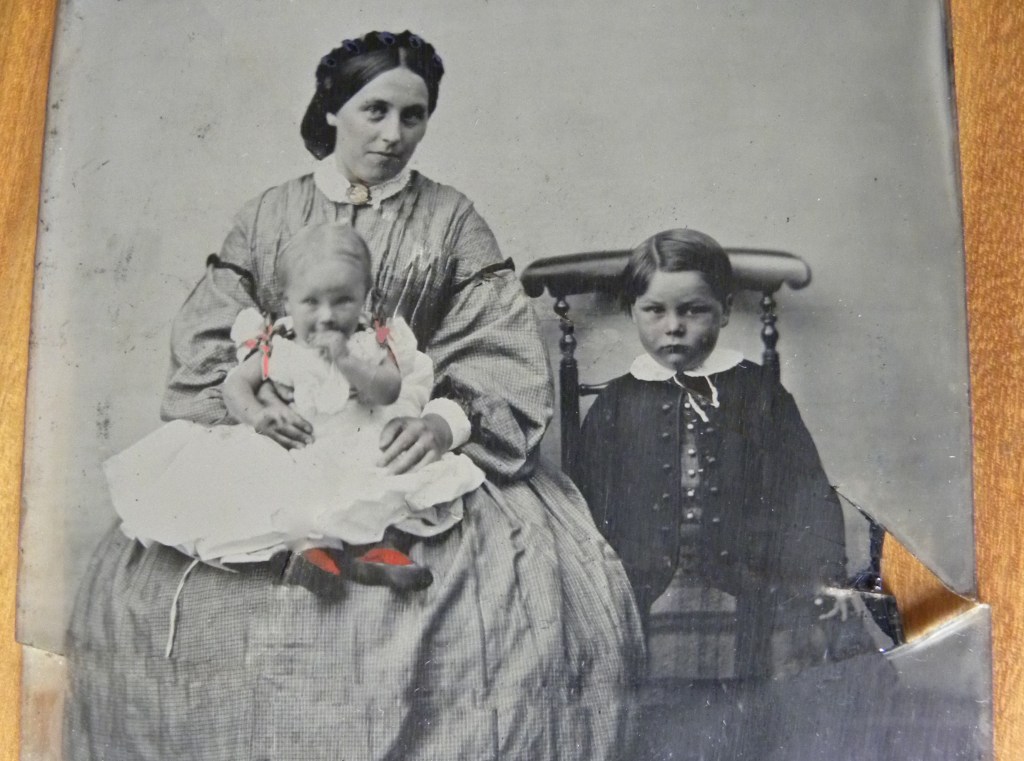
For those interested, here you can see the original broken daguerreotype Sheila had, and how I digitally ‘stitched’ or ‘healed’ it with FastStone Image Viewer (lovely program):
~~oo0oo~~
Update from Sheila on Granny Bland’s five sons:
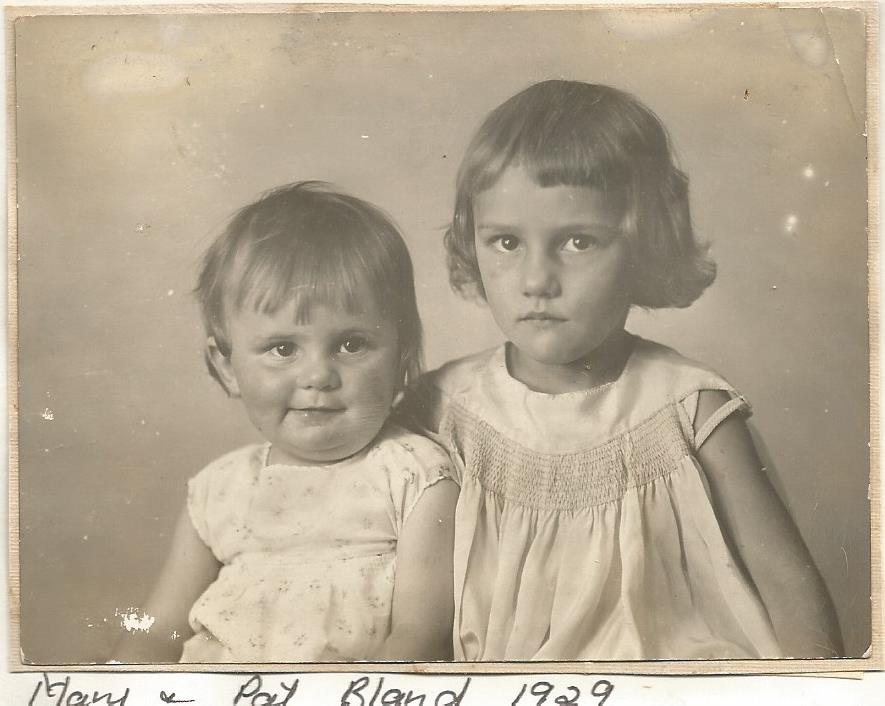
John Francis Adam Bland III (aka Frank) our grandfather – married Annie Bain – two daughters, Pat – born 1925 died 1974 (married Bill Cowie – two daughters, Frankie and Jema) and Mary born 1928 (married Pieter Swanepoel and had 3 kids, Barbara, Koos – me – and Sheila)
Bunty Bland – married Eve Richter – one son, John (not the golfer) – he married Ethel, and they had a son James and a daughter Janine. John & Ethel divorced. John married a girl about 40 years his junior – I bumped into them in Durban once. Ethel, James and Janine all live in NZ. Janine has two kids, James has never married and has no kids – so out of Granny Bland’s five sons, there is no Bland to carry on the name. Granny Bland buried her husband and four of her five sons – only Bunty outlived her. They are all buried in the same grave in HS.
Albert (Bertie ) Bland never married, pharmacist, committed suicide
Robert Bobbie) Bland never married

Alec Bland - he had a crooked little finger, which he couldn't straighten - he played the piano and this finger bugged him, so Dr Frank Reitz offered to fix it for him - a friend sponsored the op (Mum knows who it was - I've just forgotten his name) and Alec died on the operating table.
I was born in Harrismith in 1955, as was Mom Mary in 1928, and her Mom Annie in 1893. Annie thought “the queen” of that little island above and left of France was also the queen of South Africa (and for much of her life she was right!).
I attended the plaaslike schools in Harrismith till 1972. A year in the USA in 1973 as a Rotary exchange student in Apache Oklahoma. Studied optometry in Joburg 1974 – 1977. Worked in Hillbrow and Welkom in 1978. Army (Potch and Roberts Heights, now Thaba Tshwane – in between it was Voortrekkerhoogte) in 1979 and in Durban (Hotel Command and Addington Hospital) in 1980.
I stayed in Durban, paddled a few rivers, and then got married in 1988. About then this blog’s era ends and my Life With Aitch started. Post-marriage tales and child-rearing catastrophes are told in Bewilderbeast Droppings.
‘Strue!! – These random, un-chronological and personal memories are true of course. But if you know anything about human memory you’ll know that with one man’s memory comes: Pinch of Salt. Names have been left unchanged to embarrass the friends who led me (happily!) astray. Add your memories – and corrections – and corrections of corrections! – in the comments if you were there.
~~~oo0oo~~~
Note: I go back to my posts to add / amend as I remember things and as people mention things, so the posts evolve. I know (and respect) that some bloggers don’t change once they’ve posted, or add a clear note when they do. That’s good, but as this is a personal blog with the aim of one day editing them all into a hazy memoir, this way works for me. So go’n re-look at some posts you’ve enjoyed before and see how I’ve improved over time (!). It’s just as my friend Greg says: ‘The older we get, the better we were.’
Annie was one of the seven Royal Bains in Harrismith. She was born in the cottage behind the hotel where her parents Stewart and Janet raised all the kids.
Her daughter Mary says they were Ginger, Stewart, Carrie, Jessie, Annie, Hector and Bennett. They had eight cousins who were ‘Central Bains’ – children of James Bain who owned the Central Hotel.
Mom Mary says only Hector got off his bum and got a job – he went off to become a bank manager in Ndola, Northern Rhodesia, now Zambia. The rest hung around the hotel and had fun, got married, whatever. Ginger played polo; Carrie got married and left for Australia. Stuart did a bit of work on their farm, Sarclet, not far out of town on the Jo’burg road. None of the other six felt compelled to move on, up or out. After all, the hotel had a bar, and Dad was the Lord Mayor of the metropolis and was known as The Grand Old Man of Harrismith to many townsfolk, and ‘oupa’ to his grandkids; so enjoy! Why leave!?
– His Worship the Lord Mayor of Harrismith, known to his many grandkids as ‘Oupa’ Bain –
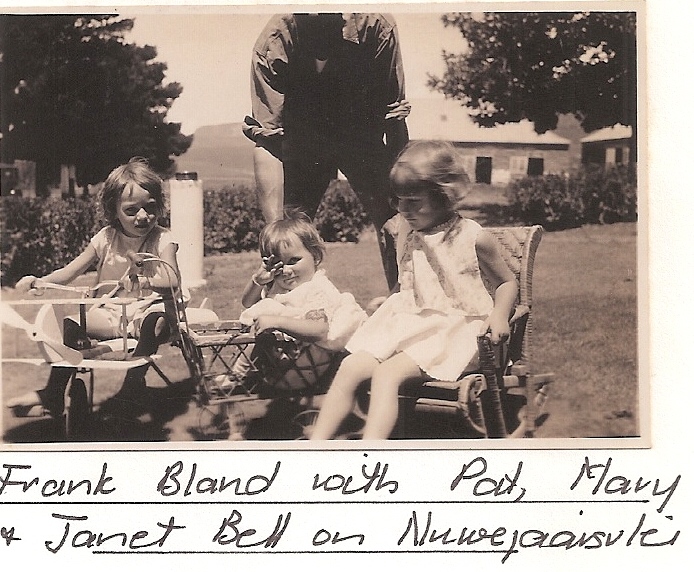
When Annie married Frank Bland, she moved out to their farm Nuwejaarsvlei on the Witsieshoek road;
– I have no pictures of Frank! –
When the farm could no longer support the horseracing they moved in with Frank’s mother Granny Mary Bland, nee Caskie, now with two daughters, Pat and Mary. When Frank died aged only 49, Annie and the girls stayed on. They were joined there by her sister Jessie when her husband Arthur Bell died in Dundee, where he had been the dentist; Then later they were joined by now married daughter Mary, husband Pieter Swanepoel, and daughter Barbara when they arrived back from his work in the Post Office in Pietermaritzburg.
Some time after that – maybe when Granny Bland died? – Annie moved into Randolph Stiller’s Central Hotel; She then left Harrismith for the first time in her life and went to stay with sister Jessie down in George for a few years after Jessie’s daughter Leslie had died; When Jessie died, Annie returned to Harrismith and lived in John Annandale’s Grand National Hotel. John said to Mary he was battling to cope with hosting her, so Mary moved her home. Much to Pieter’s delight. NOT.
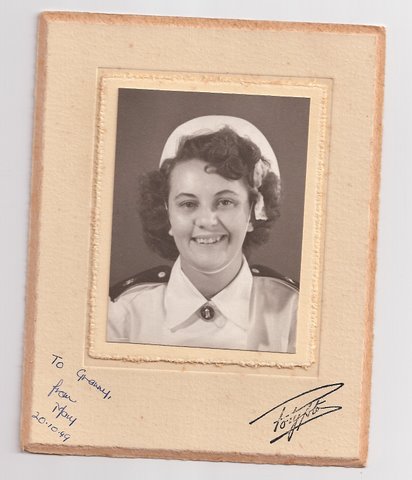
So within a month Mary moved Annie into the Eliza Liddell old age home. Two years or so later, Mom remembers a night hosting bowling club friends to dinner when the phone rang. It was Sister Hermien Beyers from the home. “Jou Ma is nie lekker nie,” she said. Mom said I’ll be right over and drove straight there, she remembers in her red car wearing a navy blue dress. She sat with her dear Mom Annie holding her hand that night and – experienced nursing sister that she was – knew when Annie breathed her last in the wee hours.
Her visitors the next morning included Mrs Woodcock and Miss Hawkins. Mom regrets not letting Miss Hawkins in to see Annie. She should have, she says. She remembers being fifteen years old and not being allowed to see her Dad lying in Granny Bland’s home and has always been glad that she snuck in when no-one was watching and saw his body on his bed and so knew it really was true.
Part of the stone wall which surrounded Granny Bland‘s home in Stuart Street, Harrismith; and the oak tree her grand-daughter Pat Bland planted.
– Granny Bland’s garden wall –– The oak that Pat planted –
Our great-grandmother ‘Granny Bland’ was a Caskie who married a Bland who begat Frank (JFA) Bland who married Annie Watson Bain. Bain Sisters Annie Bland and Jessie Bell lived there with Granny Bland after their husbands died. Her granddaughter – Annie’s daughter – Mary and great-granddaughter Barbara also lived there for a while, some sixty five years ago. Four generations in one home!
The old home now has an artist family living in it and has been beautifully restored.
Granny Bland’s house Stuart Street – renovated again
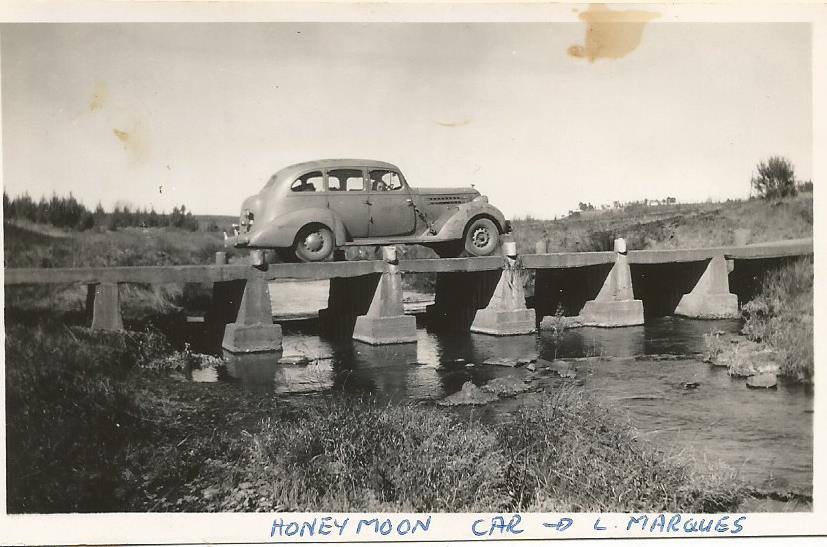
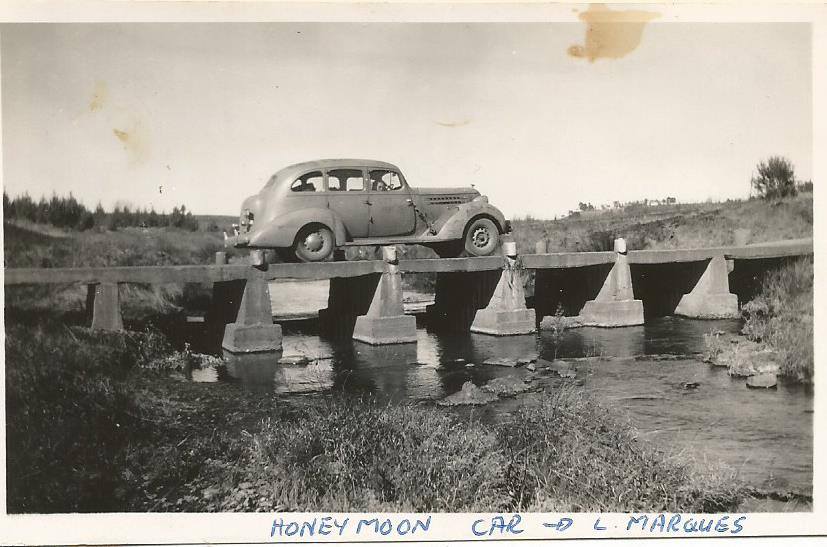
Mom & Dad went to Lourenco Marques in Mocambique for their honeymoon in 1951.
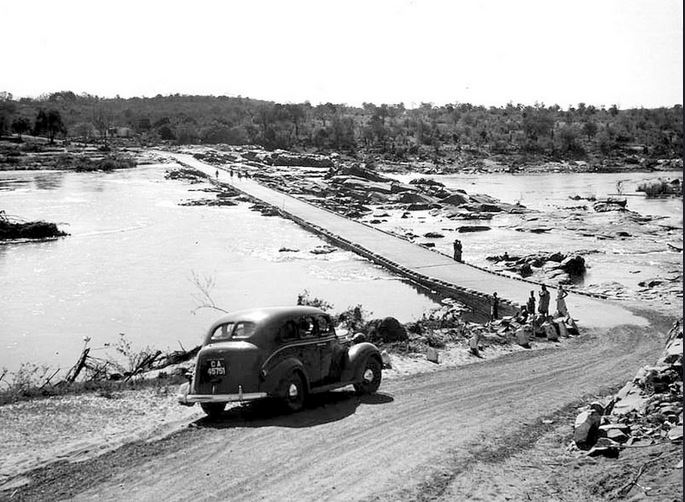
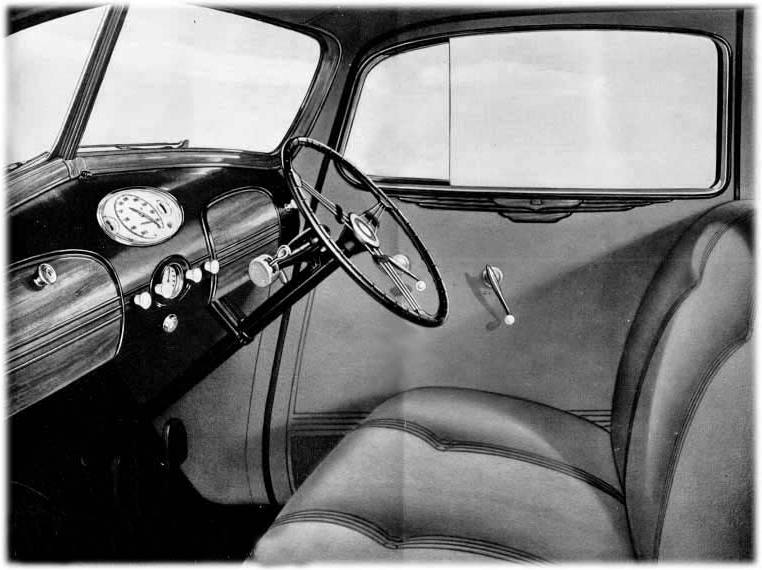
With cars being very scarce after the war, Dad looked around for anything he could afford. He found a Mr Smith selling a fifteen year old Hudson Terraplane 4-door for £100. It came with a spare engine in the boot – and the feeling that it would probably be needed.
– Mary behind the wheel –
On the way after the second day, somewhere in the old Transvaal, they smelt fish – and the smell got worse. They stopped, the ole man opened the bonnet and found a dead fish on the manifold. He said immediately, I know who did this; He’s put it where it will stink, but it won’t cause any harm Only Upsy would do this. Upsy Sorenson. He removed the fish, burning his hand in doing so. Mom says, ‘To think we went to Lourenco Marques in that old thing. Dad says he wouldn’t drive to the gate in it now.’
But it made it to LM – and back. Mom had to put her feet on the seat – the floor got too hot, even with shoes on. While in Lourenco Marques the Hudson started missing, so Dad took it to a garage but the Portuguese owners couldn’t understand him. He tried Italian, which he’d learnt in the war. “Candela?” – Ah! Candela! Yes, they had sparkplugs and they could sort him out.
They stayed in a boarding house a couple blocks back from the seafront. ‘It was cheaper than a hotel’. While there they met with Frank Cabral a big game hunter married to some relative of Mom’s. They swam – Mom remembers the huge beach and the shallow sea with only tiny waves. They had fish for breakfast one morning – a whole fish whose eye gazed balefully at Mom, spoiling her appetite.
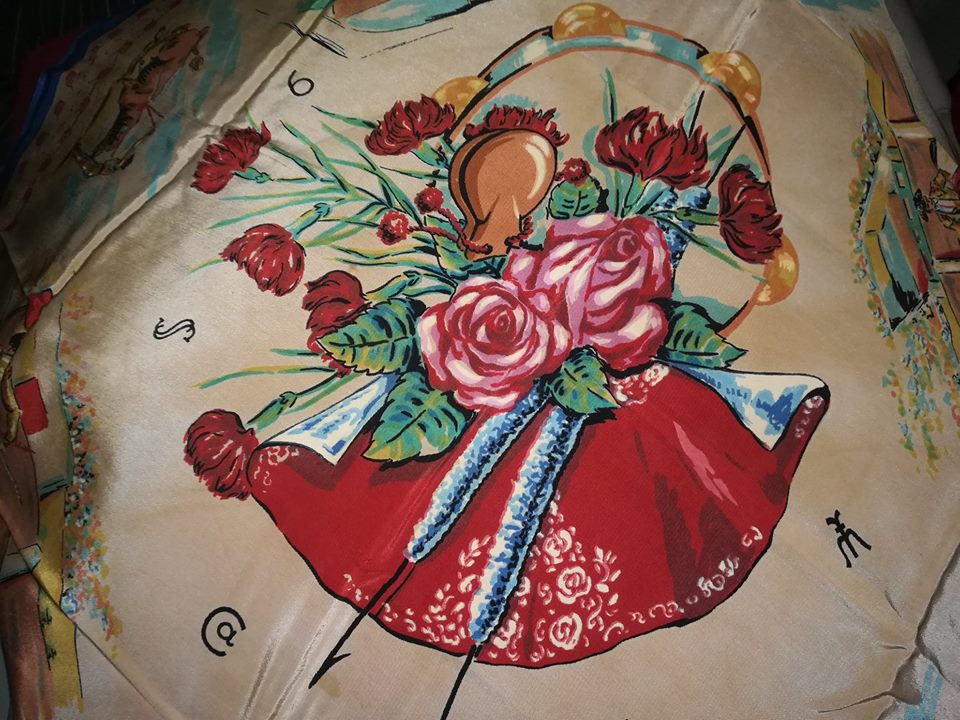
– they went to a bullfight and the matadors signed Mom’s scarf – – detail from the signed matador cloth / scarf –
Outside the zoo Dad bought six parakeets or lovebirds with red faces and a cage for them; as they approached the border he hid it behind the large Hudson cubbyhole – there was plenty of space under the dashboard. So he’s a budgie smuggler.
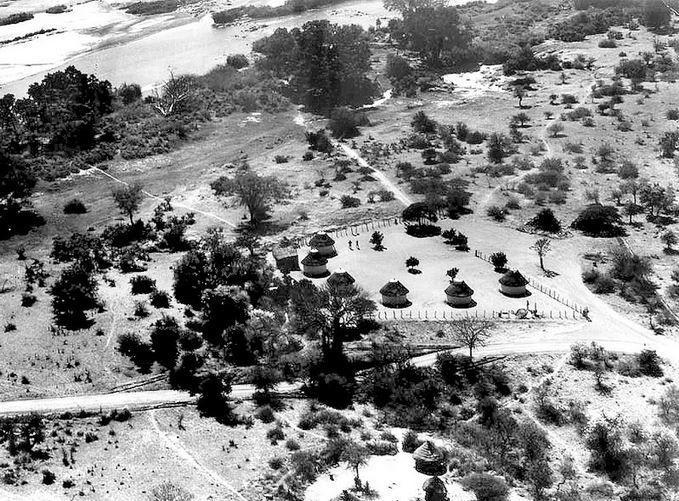
On the way back they went through Kruger Park and Mom recalls feeling very uncomfortable at how flimsy the reed walls of the park huts at Skukuza seemed when she thought of the wild animals outside! They went to visit an old friend of Dad’s, Rosemary Dyke-Wells, a Boschetto agricultural college old girl who was married to a game ranger there, the son of the famous Harry Wolhuter.
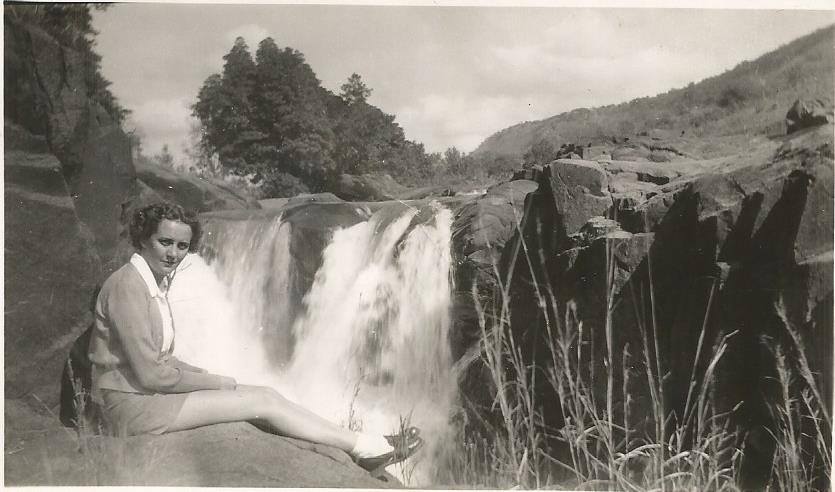
– Montrose Falls in the Lowveld Crocodile River –
~~oo0oo~~
The Kruger Park was opened to tourism in 1927 and after a slow start – only three cars entered the Reserve in that first year – soon turned into a popular destination. Within a decade, 3600 kilometres of roads had been built and several camps established. In 1935, some 26,000 people passed through the gates. By 1950 a research station and rest camp had been developed at Skukuza, transforming Stevenson-Hamilton’s base into the “capital” of Kruger.
Some Kruger Park pics from the later fifties – 1956 to 1958:
…
– Skukuza from the air –
~~oo0oo~~
Later back in Harrismith when the clutch packed up, Dad found out the Hudson had a cork clutch. He bought dozens of cork medicine bottle tops from the chemist and hammered them into the angled holes set in concentric circles in the clutchplate, then cut the protruding parts off as level as he could and it worked again.
When it came time to sell it he can’t remember who he sold it to and for how much, but he does remember Pye von During would pay £25 for them and convert them into horse carts.
Years later they came across one at a vintage car show. Dunno when this was, but this year (edited 2023) they had their 72nd wedding anniversary.
1936 Hudson Terraplane
~~oo0oo~~
Soon after this the Post Office moved Dad back to Pietermaritzburg following a back injury. They stayed in the Creamery Hotel – ‘a dive, but cheap’. They moved to the slightly better (but ‘very hot in the afternoon’ – Mom) Windsor Hotel. Mom took a sewing course at ‘the tech’ while pregnant and then, just before first child Barbara was born they moved in with Ouma Swanepoel in Bourke Street in downtown PMB. Mom gave birth at Greys Hospital in mid-summer, 7th January, then came home to Ouma. Mom remembers Ouma’s kindness and the Bourke street home being beautifully cool.
Somewhere before or after, they stayed in Howick, in The Falls Hotel.
~~oo0oo~~
First ‘date’
Annie came to Mom and said ‘Peter Swanepoel has tickets to the Al Debbo concert in the Town Hall, would you like to go?’ He sat between Mom and Annie in the upstairs stalls, and ‘that was the beginning of their romance,’ says Mom.
– Al Debbo around then – 1949 –
~~oo0oo~~
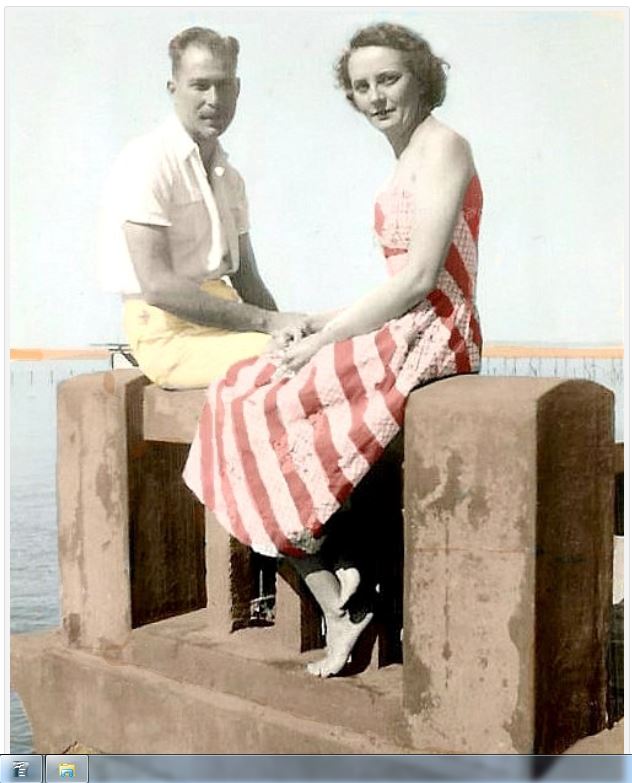
An old LM citizen spotted this post and used the pic of Mom & Dad sitting on the seawall in his bloghere– but first he deftly tidied it and colorised it. It looks terrific! Thanks Antonio!
2021 update: They hit 70yrs marriage – platinum! Well done Ma! You deserve a medal!














































 Vrystaat Confessions