Long long ago Annie said to me I should get her beloved husband Frank’s oak desk. We never knew Frank. He died when Mom was just fifteen or so, still in school. Annie had five grandkids and I suppose her reasoning was the only grandson should get it? A lot of mysterious value was attached to having a penis in ye olden days. OK, so not that much has changed, really.
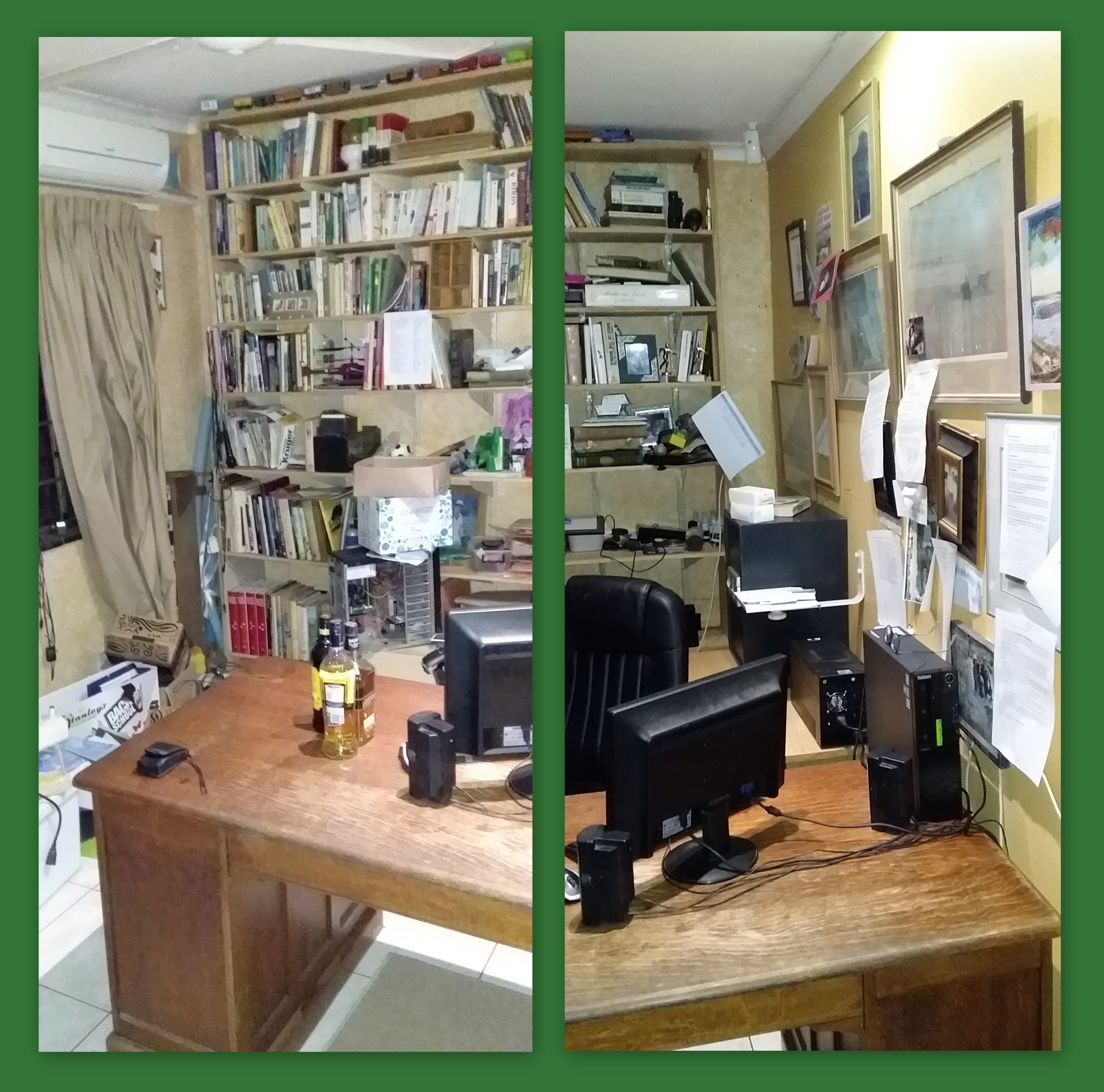
So now Mom’s in Azalea Gardens and Dad will be joining her soon, so it was time to fetch the desk. Dismantle, ship on the back of and inside of my Ford bakkie and re-assemble in my office.
It looks good.
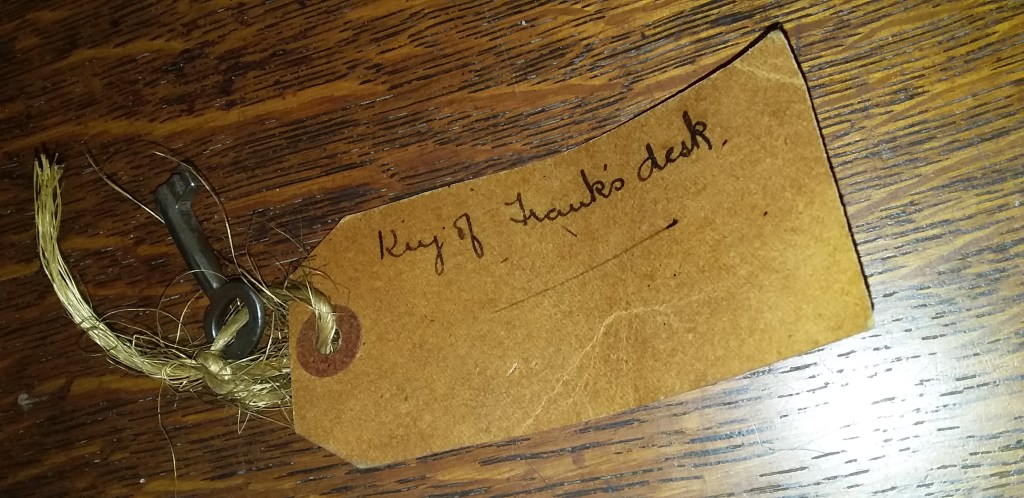
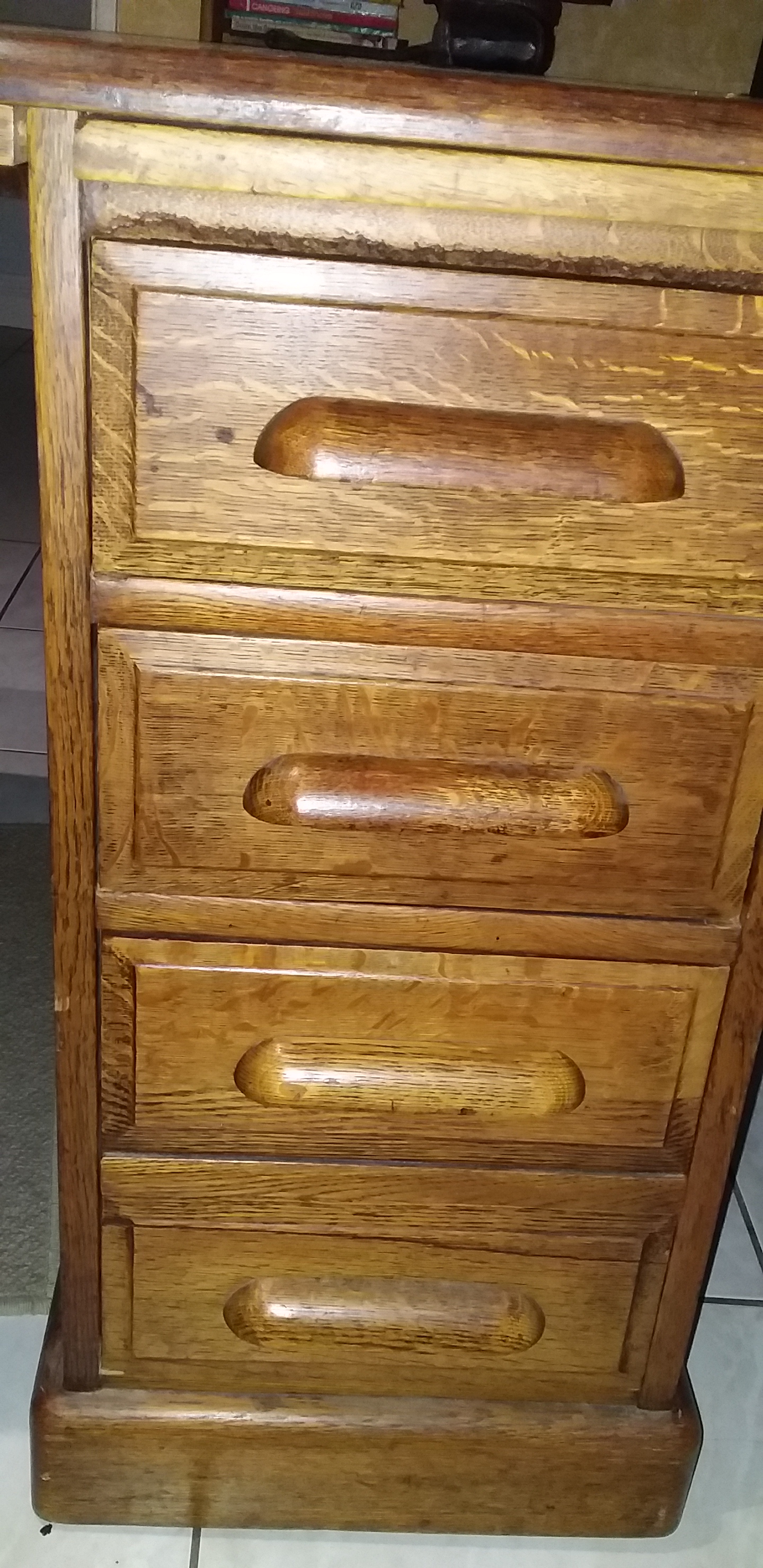
Very importantly, the key is in the top drawer, attached to a label ticket. Written in (I suppose) Annie’s handwriting: “Key of Frank’s Desk.” Interesting, as there’s no lock or keyhole in the desk, nor any of its drawers!
~~~oo0oo~~~
‘Fraid it wasnt in my care for long, Annie! It has moved on. Into Sheila’s care now, as I’ve sold my home. Took it apart again – 14 separate pieces) and schlepped it down to her in my same Ford bakkie. I took care to make sure she got the key, too.
I spose this means the penis (lineage) has been severed!
Harrismith had a very successful sportscar designer! Sheila reminded me on her facebook. He was a big mate of Polly du Plessis. They called each other Sissel Pud (du Plessis backwards) and Tweedie (de Witt backwards). Verster was captain of the rugby team and Mary Bland’s boyfriend. He dopped a few years and was in JC when she wrote matric. A real gentleman, says Mary. When she left to go nursing he said, ‘My fear is that we don’t meet again – worse, that we’re living in the same city and we don’t even know it.’ Sensitive soul.
Here’s the story of Verster de Witt – or the parts I could fish out:
Two Stellenbosch university pals wanted to make a great sportscar. They were Bob van Niekerk and Willie Meissner. In 1958 Meissner went to England and saw a new technology called fibreglass. He wrote a letter to Bob van Niekerk asking him to come to England to study fibreglass crafting. Bob hopped onto a Union Castle ship and joined his mate. In those days that was called ‘instant response’: The letter took a week; the response took a week; the ship took a month; Bang! Two months later there his mate was, ready to help.
Bob recalls: ‘We had full confidence in our ability to produce the mechanicals and a good chassis, but needed someone to put a ‘face’ on it – a good looking design. As luck would have it, Willie knew a lady Joan, nee Peters, who was married to a stylist working at Rootes who would hopefully stop us from producing a mediocre, unattractive body.’
Mary & Polly in Harrismith schooldays
His name was Verster de Wit, an ex-Harrismith boykie and good friend of our Polly du Plessis and Mary Bland-Swanepoel. He very soon had them building quarter-scale models with plasticene during the week in their one-roomed flat in Earls Court while he was off working in Coventry on the Sunbeam Alpine. Fridays, Verster would come down to London to inspect the work they had done. When they got to scale model number 13, it suddenly all came together, and ‘a unanimous decision was made to progress to full-scale.’
– Bob van Niekerk racing a Dart –– a 1962 GSM Dart –
‘We rented a garage in Gleneldin Mews in Streatham and built the mock-up using wooden formers and plaster of paris. The first body came out of the mold in April 1957 and was sold for 75 pounds, which helped to pay for my trip back to Cape Town where Willie had started the Glassport Motor Company (GSM).’
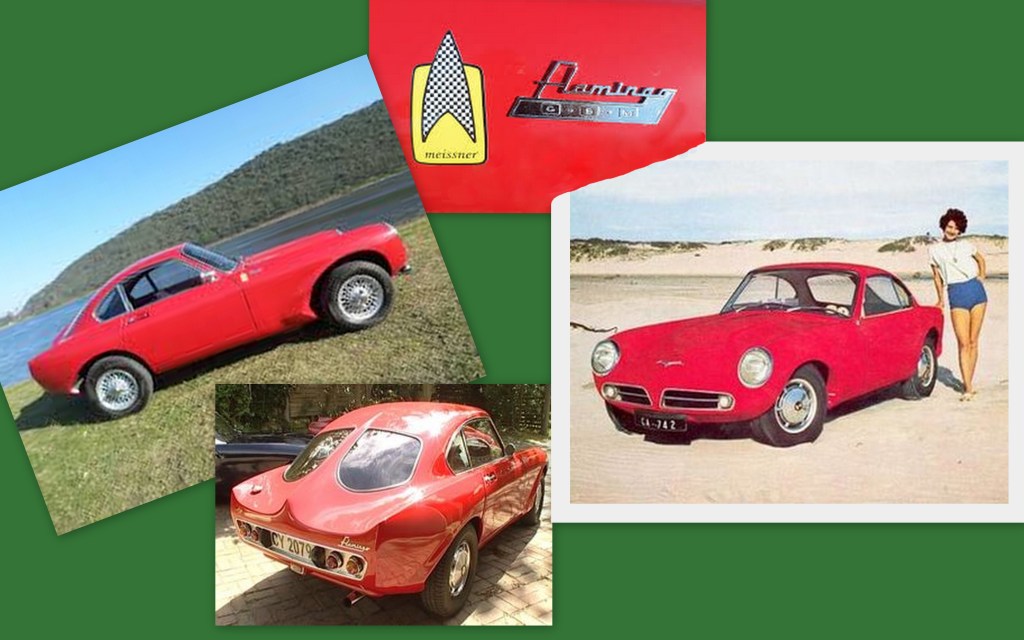
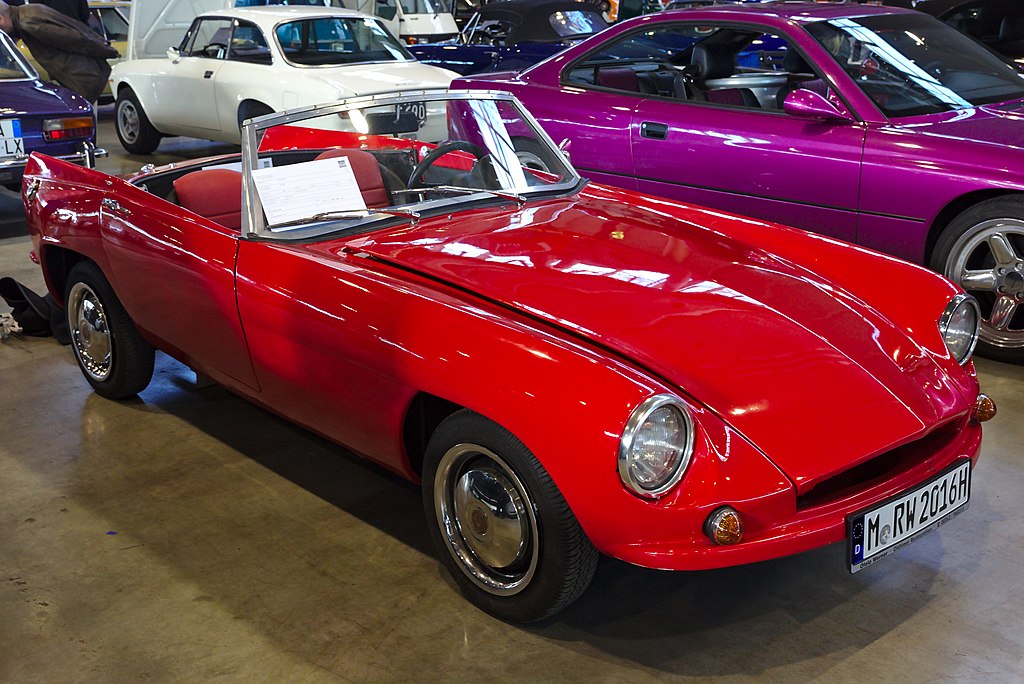
They considered what to name their cars: Cheetah, Mamba, Simba, Zebra, Kudu, Lynx or Tyger? Eventually they called the open top the GSM Dart and the hardtop the GSM Flamingo. On returning to South Africa, they built four prototypes in 1957, and the first production car rolled off the line in early 1958. In total, 116 GSM Darts and 128 GSM Flamingos were produced from 1958 to 1964. Actually, the GSM club tracked down many of them and reckoned there were a few more than that.
The GSM cars were astonishingly quick and agile and won a lot of races. In their first nine hour in JHB, a Dart beat Sarel vd Merwe in his Porsche into second place; they were followed by an MG, another Porsche, a Volvo and an Alfa Romeo!
But perhaps the best story was after they had sold 41 cars by 1959, for racing and road use in Cape Town, they decided they could also be sold in England and Bob set sail with a complete body and chassis kit on the Union Castle liner. In England Bob was introduced to Mr John P Scott at Windsor Garage, West Malling in Kent. Scott agreed to give him a place to build a car and fund all the parts on condition that Bob built the car in 10 days! AND that he entered it in a race at Brands Hatch! AND that he won the race! What a tall – almost impossible – order!
Bob accepted the challenge and worked day and night to complete the Dart by the Friday before the race. On the Saturday, April 18, 1960 Bob found himself in the middle of the grid on an unfamiliar circuit in a brand new and untested car. He steadily worked his way up into first place and won the race! He actually did it! Setting a Brands Hatch lap record that stood for seven years! A delighted Mr Scott then established a GSM production facility in a 5000 square foot factory behind the Windsor Garage to produce the first batch of cars. They couldn’t call them Dart in England, so they used ‘Delta’. Records are vague – it seems somewhere between 35 and 76 GSM Deltas were made in Kent.
The little cars developed a legendary winning reputation in the UK, Europe and SA. To show they weren’t only about racing, the Flamingo was marketed as the road-going version:
In 1964 they ran out of money.
~~~~~ooo000ooo~~~~~
Aftermath with Verster de Wit: 1976
A GSM club was formed in JHB and they tracked down Verster at his home in Kosmos on the Hartebeespoort Dam. He and his new wife Eva hauled out a suitcase full of his photos and sketches of his design days in England and in SA. They regaled the club members with tales of the hours of dedication and hard work Verster had put into his automotive design career. Another well-known design he had also been involved with – in addition to the Sunbeam Alpine – was the Humber Super Snipe.
In the 1980s the design got another lease of life when Jeff Levy got Verster to help him make a series of accurate replicas known as Levy Darts.
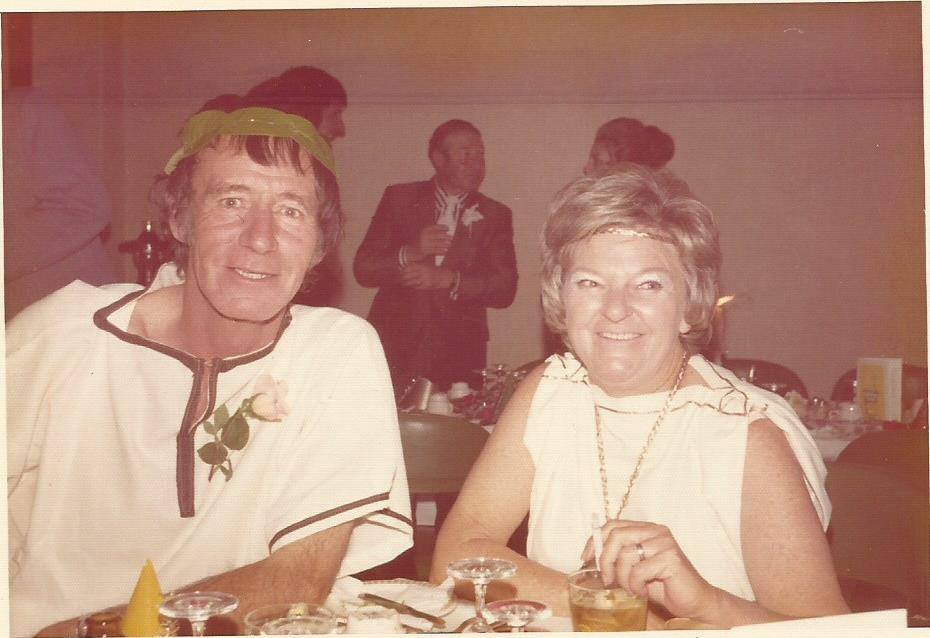
Mom and Dad’s big mates Hester and Steve Schreiber became Mr & Mrs Mayor and Burgemeester of the City of Song and Laughter, Harrismith OFS. A celebration was called for and hizzoner your worship Oom Steve decided to go big.
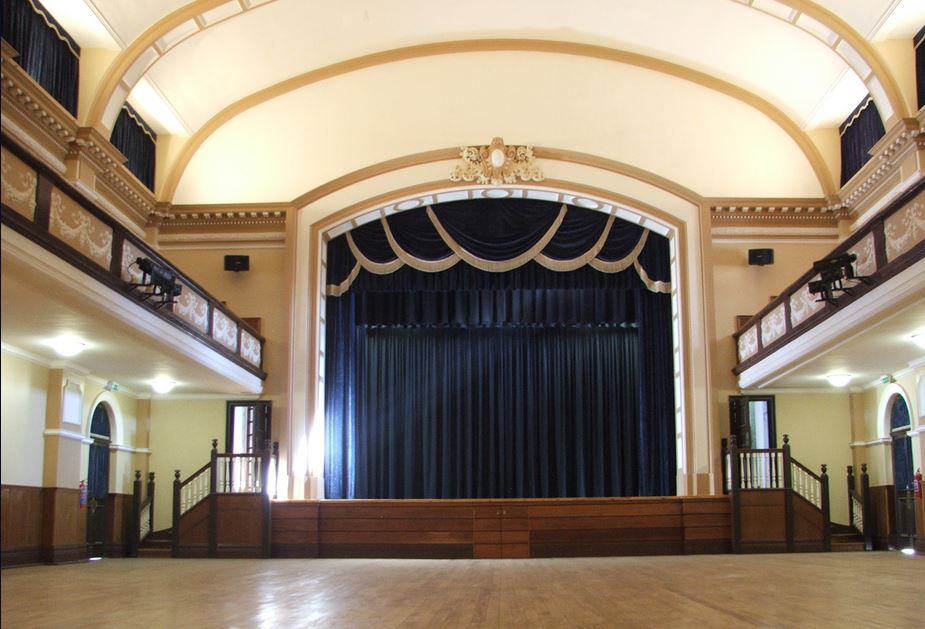
Not only would they use the huge and impressive stadsaal, they would get the new Holiday Inn to cater! They chose as their theme: Mexican! Edelagbare Mexican.
That may have been a continent too far for the dorp as, although they had a wonderful time thanks to the liquid refreshments, it was generally agreed the food was terrible. Much grumbling was heard, but the irrepressible Jack Shannon brought light relief when he said solemnly to his wife Joan: “Ma, next time we go on our around the world tour we must remember to give Mexico a miss!”
~~oo0oo~~
burgemeester – mayor
stadsaal – city hall; we always called it the town hall, though so dorpsaal
dorpsaal – town hall
edelagbare – like hizzonner, your worship, all the OTT shit politicians add to their names; it should be mercilessly mocked
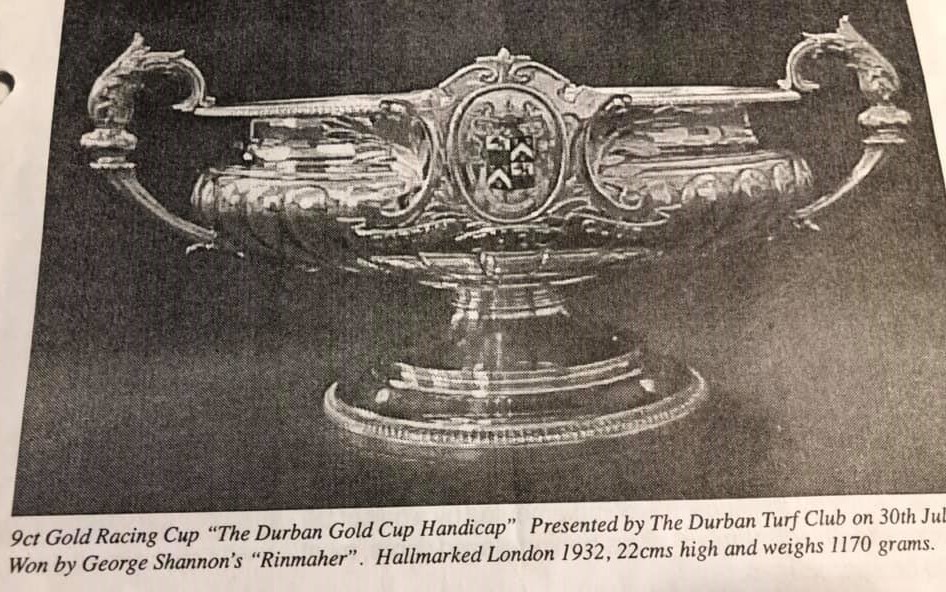
First run in 1921 – or in 1926 ? – over 3200m for a stake of 2000 pounds sterling, the Gold Cup is Africa’s premier marathon for long-distance runners. It boasts a proud history and captures the public imagination. The race starts at the 400m mark in the short Greyville straight; there’s much jockeying for position as the runners pass the winning post for the first time before turning sharply right and heading towards the Drill Hall; normally many runners are under pressure before they turn into the home straight; the race is known to suffer no fools when it comes to fitness and stamina, and it takes a special type of horse and jockey to win the event.
And away they go!
Usually the final big race meeting of the South African racing season, the Gold Cup is often decisive in determining the Equus Award winners for the season. Initially a Grade 1 race, the Gold Cup was downgraded to Grade 2 in 2016 and to Grade 3 in 2017. Nevertheless, it is still the most important horse-racing marathon in the country.
– 1985 – Occult wins –
The distance and unforgiving conditions that prevail as the field go past the Greyville winning post twice, are great levelers and a look at the list of champions beaten in the Gold Cup is a long one, with less-fancied runners carrying less weight often winning.
Sun Lad won the first running in 1926. He raced in the silks of leading owner-breeder Sir Abe Bailey. The Gold Cup was one of just two wins for Sun Lad that season. He is frankly unlikely to be regarded as one of the race’s better winners.
The first horse to win the Gold Cup on two occasions was Humidor, who was victorious in 1933 and 1935.
And so to us:
Harrismith’s winner was the horse Rinmaher (pronounced ‘Rinmahar’) owned by the George Shannons of Kindrochart. What year? Probably 1932 or 1934?
Mom and Dad both tell the story of raucous parties on the Shannon farm where at a suitably ‘sensible’ stage the Gold Cup would be taken off the mantelpiece, filled with champagne or whatever hooch was going, and passed around to the ritual comments from the more sober of “Here we go! We’re drinking moths and mosquitoes again!” At least it had lovely handles to give an imbiber a good grip!
– Jack Shannon on his Shetland pony ‘Suzanne’ on Kindrochart – with Peter Bell –
~~~oo0oo~~~
Later: Sheila rousted Colleen Walker, granddaughter of George Shannon, who straightened me out on some Gold Cup details. She even had an earlier pic of Jack and Suzanne the Shetland. More questions: Is that Kindrochart? Is that George?
~~~oo0oo~~~
May 2020 – Mom sent a message that I must phone her! She wants to tell me the full story of the brothers Shannon. Phone Me Soon does not mean that her cellphone will be on, or charged, or answered; so it was a full two days later I got hold of her;
And away they go! She took a deep breath and set off:
Jim and George Shannon left Ireland on a ship bound for South Africa. Somewhere on the journey they had a fight and fell out; They never spoke to each other again!
They reached Harrismith where they both became ‘rough riders’ – breaking in horses for the British army – I guess also for anyone else who wanted horses broken in and/or trained? Somehow and sometime, they both ended up as farmers, George on Kindrochart and Jim on Glen Gariff.
George married Mrs Belle Stephens who came complete with two daughters Betty and Bobby. Then they had a son Jack – some called him Jock – who also featured in our lives as a friendly, lean, handsome, side-burned, smiling, pipe-smoking, pickup-driving, genial figure in khaki. We loved Uncle Jack! He married Joan from Joburg – Mom Mary and her older sister Pat went to the wedding. Later Bobby married a mine manager and some people thought that was very important. Betty never married, stayed on Kindrochart, worked in town and became a beloved young-in-spirit ‘auntie’ of ours, always a smile and always a tease and some fun. We called her Betty Brooks.
Meantime Jim on Glengariff married Amy, and they had three kids, one of whom they named George, despite the feud ongoing! Maybe there was a prior ancestor George? Other kids were Marshal (died young, not sure what of) and Sylvia. George married Betty McGore and they had sons Jim and Patrick who we knew in Harrismith in the sixties. Handsome lads, Patrick maybe too handsome for his own good!
– Jack and Joan years later –
When the second of the original Jim and George died (I think it was Jim), Jack contacted young George, son of Jim, and said ‘We’re having a party. You and Betty should be there.’ And so a reconciliation took place and they normalised family relations. Up until then, their mothers Belle and Amy had been forbidden to talk to each other! She remembers that after a good few drinks and a meal and another good few drinks, the Gold Cup was taken down off the Kindrochart mantelpiece, filled with wine and passed around! George offered his wife Betty first sip and after a gulp she exclaimed ‘George! It’s full of moths and mosquitoes!’
~~~oo0oo~~~
No doubt there’ll be other versions of this tale – and much more detail. But this is how 91yr-old Mother Mary fondly remembers the story of these good friends from days of yore.
~~~oo0oo~~~
Elizabeth de Kock spotted this post and wrote:
This was so interesting for me to read. My grandfather, William Stocks, was a neighbouring farmer. We spent many holidays on their farm called Lust. We visited Aunty Betty often and enjoyed sitting on the big swing overlooking the dam. She gave us the use of a little grey pony (very naughty) to ride during our holidays. As children we got our blankets from her shop in Harrismith. The shop was an experience in itself. I’m 69 years old now and still have very fond memories of Aunty Betty.
I replied: Hi Liz – Thanks so much for commenting! Lovely memories! Betty was a lovely lady.
I’ll ask my mother Mary Bland Swanepoel (93) what she remembers about the Stocks family. I know I have heard her talk about the Stocks but can’t remember any detail.
Kind regards – BTW, I’m 66, my sister Barbara will 69 in January – maybe you remember her?
I phoned my Mom Mary Bland. She was tickled pink to reminisce about her friend! Here’s her tale:
She nursed with Margaret Stocks at the Harrismith hospital and they were great friends. She says Margaret wasfive years older and much bolder and naughtier than she was!
She once visited her on their farm at Lust. Margaret’s brother was there. Later, that brother was killed in a plane accident in the airforce. His plane wing clipped a sand dune. When she heard about it, Mary phoned Margaret to say, If you like, you can join me to mourn your brother. Margaret said, No thanks, we may as well stay here on the farm and be miserable together.
Margaret married John Reed, a farmer. A few years later, Mary took her two year old daughter Barbara and visited Margaret on the Reed’s farm near Belfast in the Transvaal. (I wasn’t born yet, so this was probably early 1955). One day he was lying in the bath and Barbara wanted to go and see him. Margaret said ‘No my girl, you’ll have to wait another twenty years for that!’ Once in Harrismith, Margaret called out the houseman on duty for her patient. When he didn’t arrive, she sent her junior nurse (who she called ‘Ginger Biscuit’) to call him. The nurse found the houseman in bed with the matron. He had to leave town.
Those were Mary’s memories of Margaret Stocks!
Liz Kibblewhite wrote again:
I was brought up on a gold mine just outside Krugersdorp and went to Lust during school holidays. If I remember correctly, Jury Swart was a neighbouring farmer to my grandfather William Stocks.
The last time I saw Aunty Betty was in 1975 with my future husband, spending the night with her reminiscing. We were on our way to Durban and I wanted to show him the beautiful Orange Free State Drakensberg and particularly Kerkenberg and the old farm before we returned to the UK.
Margaret had a twin sister Edna. My mother Joan was their younger sister.
I have been living in England for 46 years now and am proud to have passed a bit of my South African even to my grand children who live in France – they love bobotie and say muti for medicine.
There was David, Margaret and Edna, Joan (my mother), and Neil. Margaret and John (Umpie) lived in Pretoria after he left farming. Margaret died about 8/9 years ago and John before that.
Mary isn’t getting mixed up: Neil flew in Italy during WW2 and was decorated. DFC. The squadron was called 13th Hellenic Squadron. He also flew in Korea and after that a test pilot in SA.
I always wondered how his crash happened.
He was buried on the farm.
~~oo0oo~~
Ah, that’s lovely that you visited Betty before leaving South Africa!
I said to Mary: Margaret had a twin. “Edna” she said immediately. And she had a younger sister. she thought a while . . “Joan” “Their brother was Neil” she said. “He was younger than the twins.” Mary says, “When I first started dating, Margaret – never slow with her opinions! – huffed: “These people that just say yes to the first person that comes along!” Well, this time Margaret was mistaken, as Mary married her date, and seventy years later they’re still married.
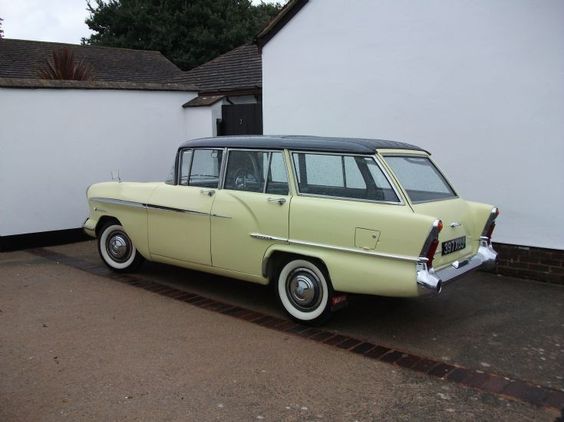
Sometime back in the fifties Mom’s uncle and the family lawyer Bunty Bland needed to go up to Rhodesia – ‘up north’ – to sort out the sale of his sister’s property. His Rhodesian brother-in-law drove down to Harrismith to fetch him. As ever, the finer details of my story should be checked out . . . pinch of salt. The car is probably right, the country – now Zimbabwe – is certainly right, and two of the people – Dad and Bunty – are right, that’s all I know. At first Dad said they drove up in Bunty’s Rover, but I couldn’t find a Rover station wagon. Seems they left ‘that sort of thing’ to Land Rover. I found this Vauxhall Victor station wagon and then Dad remembered it was the bro-in-law’s car and yes, it was a Vauxhall! Memories! Dodgy things.
The reason they took young Pieter Swanepoel, husband of favourite niece Mary, along was to share the driving. He says he ended up driving all the way there and back.
With him he had his new Eumig 8mm cine camera! He took footage of the ruins of the magnificent Great Zimbabwe. Bunty features in his trademark ‘fairisle’ sleeveless jersey . .
Other footage featured the Vauxhall, Bunty again and some fountains . .
Arthur Kennedy arrived in Harrismith like a dwarrelwind. Why we were so lucky as to get Arthur to our town I don’t know, but I think his wife Zita had family here. I think she was related to the Kerkenberg mountain vd Bosch’s.
He brought an exciting new venture to the dorp: A new motel on the N3 on the south-east end of town – at the Jo’burg-Durban-Bloemfontein junction – or the Warden-Swinburne-Kestell junction you could say if you weren’t going to drive far.
The motel – Kennedy Motel – was going to have a ‘flyover’ restaurant suspended over the road so diners could watch the road as they munched their mixed grills. All the Durban-Joburg traffic – the busiest rural freeway in South Africa by far – would have to drive underneath them. But meantime the motel and petrol station had to be built, plus all the rooms – the chalets. A cable car to the top of Platberg was also in the pipeline, according to Arthur. Big plans!
The Kennedy family stayed right on-site in novel half-round semi-portable wooden bungalows above the building site and below the track that was an extension of Vowe Street, below the SE end of Hector Street. Arthur was very hands-on and was deeply involved in everything. He made the cardinal apartheid error of starting to pay his workers more than the “known” Harrismith wage which, according to Steph de Witt, got 5ft 6 inch Arthur a visit from 6ft 4 inch Koos de Witt, Steph’s Dad. Steph says Koos found Arthur in a foundation ditch. He jumped in next to him and “explained” to him in international language how he was not to bend the “local rules” of wage exploitation.
Later he built a triangular house of wood and glass above Vowe Street – a huge novelty for the town. It was next door to the du Plessis home, and Pierre and I hopped the fence and inspected it while under construction. The bathroom had a novelty in it which we hadn’t seen before. We didn’t know it was called a bidet, but we spotted right away what it was for. HaHaHa! Our schoolboy humour kicked in. Arthur’s initials were AW (were they? or did we invent that?) and we proceeded to call him Arse Washer after that bathroom furniture that so tickled our crude funny bones. We weren’t always Methodist-polite, ’tis true.
He even became a town councillor, this foreign rooinek in the vrystaat! If America could have a President Kennedy at that time, why couldn’t we have a possible future mayor Kennedy? Quite a guy was our Arthur!
~~~oo0oo~~~
The Cupboard Snake
For a while the Kennedys lived in the middle of town – in or near the house where Nick Duursema lived, near the circle in Warden street, just down from Arthur Grey’s corner store. That’s where the puff adder landed on top of the bedroom wardrobe.
The first and last puff adder I saw ‘in the wild’ was in Hector Street outside our house in about 1965 when – ware vrystater that she was – Mother Mary ran over the poor thing in the blue VW OHS 155. Doelbewus! Swear! The old man was called out from the pub. He came home, caught it and put it in a box which he gave to Zita Kennedy to give to her brother Tommy van den Bosch. Maybe he’d first stunned it with a blast of cane spirits breath. Probably.
Tommy lived against the slopes of Kerkenberg and wore a cowboy hat and played the guitar. He’d sing you a mournful – or toe-tapping if that was your poison – cowboy song at the drop of a hat. His 10-gallon stetson hat. He collected snakes and took them to the Durban snake park who paid him by the foot. They estimated this puffy at five foot, though of course that length may have grown over time! SSSSS – Snake Stories Seldom Suffer Shrinkage. And: Who knew snakes even had feet?
That night in bed just before lights out Arthur Kennedy asked Zita “What’s that box up on the cupboard?” She hadn’t finished telling him and he was already out in Bester Street opposite the ou groot kerk near the traffic circle in his tiny pie-jarm shorts shouting “Get that thing out of there ! I am NEVER going into that house again until that thing is gone!” and other earnest entreaties.
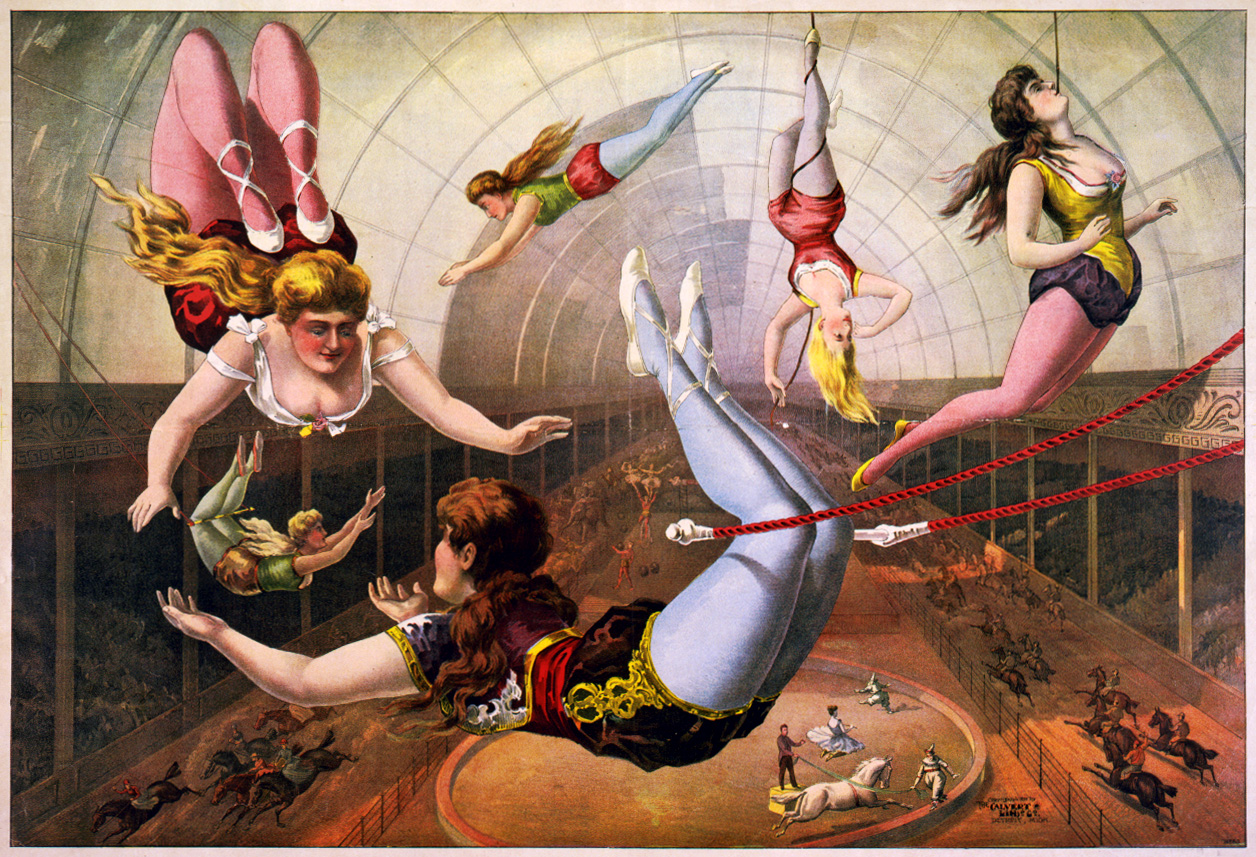
Flying through the air with the greatest of ease – Flew Arthur K on his flying trapeze!
He did! He flew the full length of the stadsaal; again in his tight broeks. So he might have had a fear of snakes, but he was fearless in other ways: Who can forget Arthur Kennedy dressed only in a white Tarzan loincloth, swinging right across the hele stadsaal on a trapeze high above the gob-smacked and ge-be-indrukte Harrismith dorpsmense? And outdoors upside-down high on a thin pole above the skougronde? Fearless aerobatics and acrobatics.
But a snake on his cupboard? That was too much for him!
For a while he made Harrismith seem part of the wider world! It was a bit like this: Flying onderbroeks flashing past your very eyes. In daytime!
Here’s the actual scene of the thrill (the curtains were red back then):
Republic Day 31 May 1961: On the big day celebrating South Africa’s freedom from the tyranny (or oversight?) of Mrs British Queen, Arthur gave a stunning performance on his own equipment down at the President Brand Park in front of a full pawiljoen of ge-be-indrukte Harrismith mense! Dad filmed it:
~~~oo0oo~~~
Arthur ran our mountain race and, further proving his commitment to Harrismith he married a second local girl – much, much younger than him.
~~~oo0oo~~~
dwarrelwind – breath of fresh air; or whirlwind, tornado
doelbewus – with murderous intent; or on purpose; Swear! ‘Strue’s God! Gentle Mary did that. In those days you did. The only thing that made you think maybe you wouldn’t drive over it was the story that it would wind itself around your axle and then climb up into your engine, then climb under your dashboard and THEN . . pik you on the foot! Swear!
pik – snakebite
ware vrystater – genuine free stater; born and bred in the free state, as was her mother before her (who would not have been celebrating the 1961 demotion of QEII from monarch to foreign tannie)
tannie – auntie
ou groot kerk – the old Dutch Reformed Church, the Moederkerk
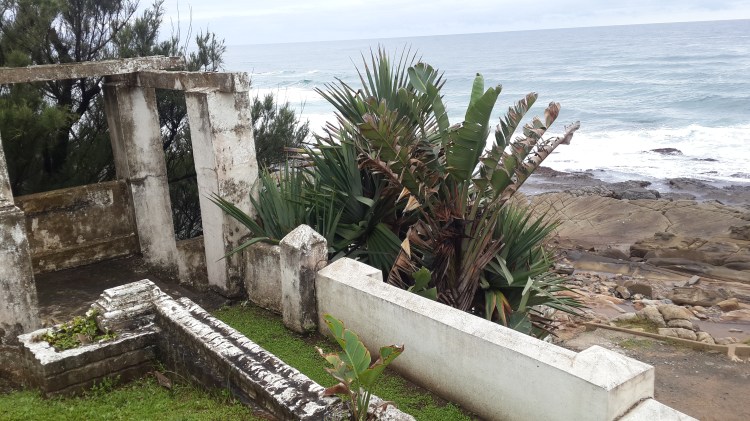
Back in 1963 we joined the du Plessis on a one-week beach and fishing holiday on the Natal north coast – Chaka’s Rock! They were beach regulars, this was one of our two beach holidays that I can remember. (flash: there were three!). Louis Brocket wrote in to remind us that, as Lynn’s boyfriend, he was also there for his first “vakansie-by-die-see“.
Sheila writes: “Found a postcard which Mary Methodist sent to her Mom Annie Bland (1½ cent stamp – remember the brown Afrikaner bull?). Mary wrote ‘We’re enjoying the swimming immensely. Coughs no worse in spite of it. We’re sleeping well and eating very well. The coast is beautiful. This is a picture of the pool where we swim.’ I think the three little Swanies all had whooping cough. Must have been fun for the du Plessis family who shared our holiday!”
It was amazing! The cottage on a hill above the beach, the rocks and seaside cliffs, narrow walkways along the cliffs that the waves would drench at high tide; magic swimming pools set in the rocks. The men were there to fish:
We baljaar’d on the beach and sometimes even ventured into the shallows – just up to safe vrystaat depth. A swimmer I was not, and I still vividly remember a near-death experience I had in the rock pool: a near-metre-high wave knocked me out of Mom’s arms and I was washed away out of her safe grasp! I must have been torn away by up to half a metre from her outstretched hands; little asthmatic me on my own in the vast Indian Ocean for what must have been a long one and a half seconds, four long metres away from dry land! Traumatised. To this day I am wary of the big-dam-that-you-can’t-see-the-other-side-of, and when I have to navigate across any stretches of salty water I use a minimum of a Boeing 707, but preferably a 747.
Well, after all! This was the most threatening Free State water I was used to braving before I met the Indian Ocean: Oh, and also the horse trough.
– and even then I’d lift my broek just in case –
The view from the cottage looking down the asthmatic flight of stairs:
In this next 8mm cine footage, you can see the violent waves inside the rock pools that threatened my frail existence:
vakansie by die see – beach or seaside holiday for naive inland creatures
baljaar – frolic
safe vrystaat depth – about ankle deep; not adult ankle. My ankle
postscript: I tried to keep up the luxury cottage theme but Barbara talked about the big spiders on the walls and yesterday even Dad, who was talking about Joe Geyser, mentioned ‘that ramshackle cottage we stayed in at Chaka’s Rock.’
Dad was saying Joe hardly ever caught a fish. He would be so busy with his pipe, relighting it, refilling it, winding the reel with one hand while fiddling with his pipe with the other. My theory is the fish could smell the tobacco and turned their nose up at his bait. Dad reckons tobacco was never a health hazard to old Joe. Although he was never without his pipe, it was mainly preparation and cleaning, and the amount of actual puffing he did was minimal.
Once he caught a wahoo and brought it back to Harrismith. Griet took one look at it as he walked into her kitchen and bade him sally forth. Some wives had agency. So Joe brought it to Dad and they cut it up and cooked it in our kitchen.
~~oo0oo~~
I went back in 2016 and the beach and rocks and the pools still look familiar.
But don’t look back! The green hillslopes have been concreted. When we humans see beautiful sub-tropical coastal forest we say, ‘Stunning! Let’s pour concrete on it!’
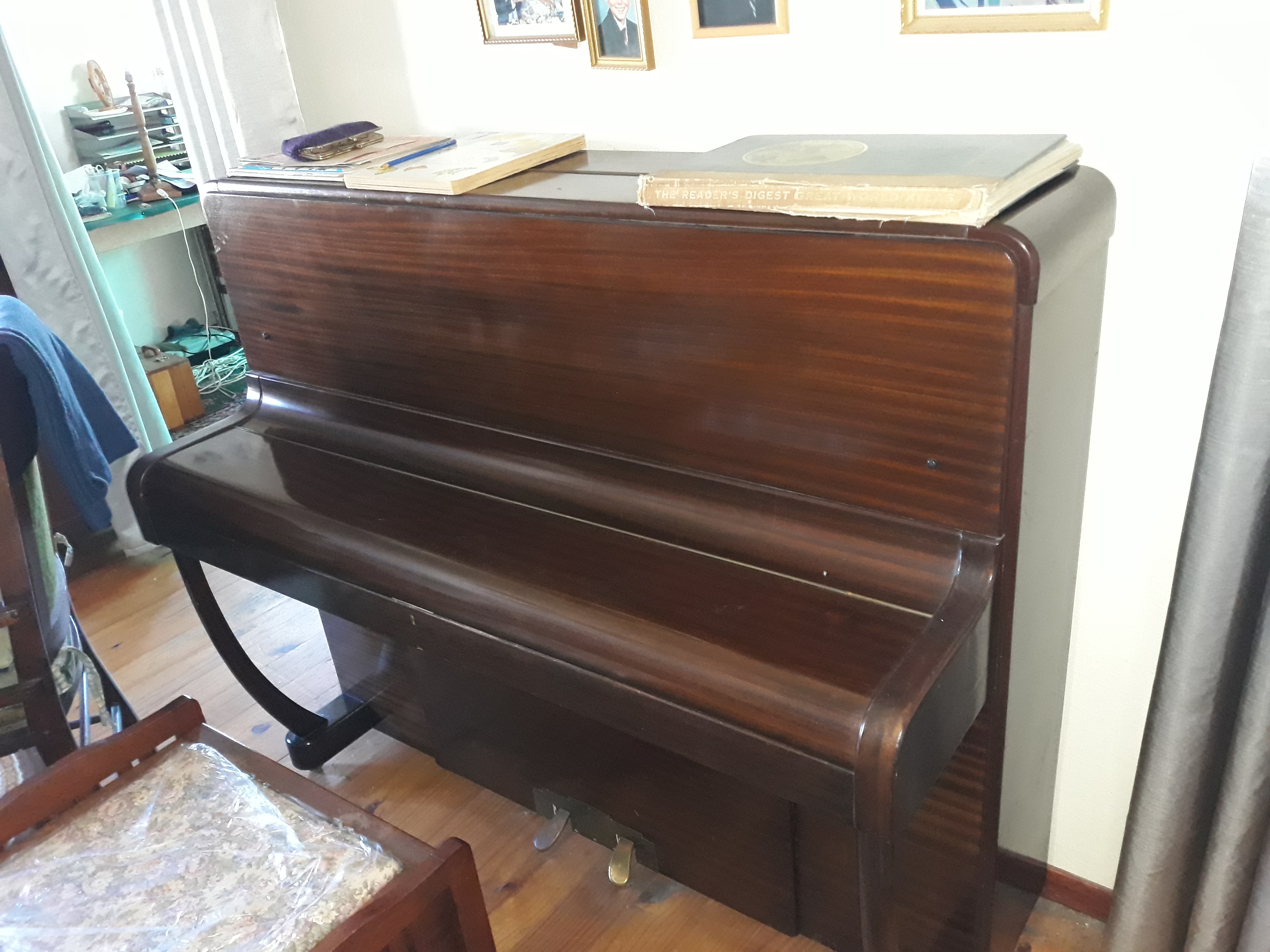
My Mom Mary Bland learnt to play the piano on her Granny Mary Bland’s upright Otto Bach at 13 Stuart Street. Mom’s sister Pat Cowie didn’t play, but when Granny Bland died the piano had to go to the older granddaughter. But how to get it there?
Jack Shannon had a bakkie and he volunteered to schlep it to Blyvooruitzicht, or as the Cowies called it, ‘Blayfore’. It got dropped at some stage in the loading or offloading and had to be repaired when it got there. All was well.
Years later Pat died and Bill decided it should go to Barbara as she played, and his daughters Frankie and Gemma did not. So another farmer with a bakkie was roped in to schlep it back from Blayfore – this time Barbara’s long-suffering husband Jeff Tarr carted it to PMB or Howick or Greytown (must ask Barbara). Barbara still has the piano in her home on their farm Umvoti Villa on the Mispah road outside Greytown. It’s now her daughter Linda’s home and Linda does play – hockey, jolling, all else – just not the piano. Maybe her daughter Mary-Kate will keep up the tradition of ‘Marys that play that piano’?
– the Otto Bach – now at Umvoti Villa –
Meantime Mom had bought another: an upright Bentley. Marie Bain had bought her daughter, Mom’s cousin, Lynn the Bentley hoping she’d learn to play ‘like Mary.’ Well, Lynn never took to playing, so Mom bought it from Marie for the same £100 she had paid for it years before. This was the piano we were so privileged to grow up with at 95 Stuart Street, listening to Mom playing her Methodist Hymns, and her Classical and Popular music. Who could forget the late night drinking songs when the Goor Koor gang would gather round her and bellow out their alcohol fumes, cigarette ash and varying levels of talent with gay abandon.
Mom still has the Bentley in PMB and still plays it beautifully. They’re upright pianos, not ‘grand’ pianos, but they certainly have been a grand part of our lives from about 1920-something – Mom Mary was born in 1928 – to 2019. And hopefully many more to come.
Here Mary at 90 plays someone else’s piano. Her classical pieces she always played with the music score in front of her. She can no longer see well enough to read it, so mainly plays her popular pieces by memory now.
We grew up to these sounds in the background. How lucky can you get!? These next few classical pieces are ones she played. Played here by some wonderful pianists who are almost as good as Mom in her prime!
also this:
I remember a few times getting so overcome by the music – melancholy or something? – I’d run down the passage and ask Mom to stop playing! weird.
~~~oo0oo~~~
Which are the ‘good’ pianos?
In the last 200yrs about 12 500 brands of pianos have been sold – and many more models – 12 500 actual brand names! The branding of pianos is a minefield of bulldust. Here Martha Beth writes amusingly about her forthright opinion on the quality of the pianos she is asked about:
Hilariously, the more authentically German the name sounds, the more it may have been made in Indonesia, Korea, Malaysia, South Africa, America or anywhere else! Once a piano did get a good name, a host of others suddenly had that or a very similar name! Steinway success spawned Steinbergs, Steinburgs, Steinerman, Steiner, Steingraber, Steinbach, Steinhoven, Steinmeyer, you get the picture. Each of them would claim to be THE famous Stein-what-you-call!
English piano makers Whelpdale Maxwell & Codd made – or ‘controlled’ – these brands, among others: Bentley, Broadwood, Knight, Welmar. They’re now out of business.
Otto Bach: See Dietman and Zimmerman for manufacture details. Otto Bach piano are possibly the most popular intermediate pianos in South Africa; the brand is certainly the most well known in South Africa. There are a wide range of Otto Bach pianos assembled in South Africa and some that were manufactured in the Zimmerman Factory in Germany.
“Otto Bach” ~~~~ seems originally to have been a name for pianos exported by Zimmermann, Leipzig for their export range. It appears that they took on the “Otto Bach, Leipzig” name by the twenties. It then seems that Dietmann, South Africa, purchased the “Otto Bach” brand in the 1950s and out it onto pianos they made, apparently not mentioning Leipzig. Alastair Laurence tells me that Knights supplied the piano parts to Dietmann for these, so they were virtually Knight pianos. There are still thousands of these Otto Bach pianos around; besides famous brands such as Steinway or Bösendorfer, it is probably the best-known piano brand in South African homes. By 1971, there were also “Otto Bach” pianos made entirely by Knight in Essex, and identical to their others except for the name on the front. Because of the varying origins of the name, it is not possible to date the pianos by their numbers.
Corrie Roodt was the Barclays bank manager and Mom say he and his wife Lettie were great friends to her and Dad. But ‘Boy, could she talk! She could talk up a storm!’
Mom had a real good laugh as she remembered the story: Lettie was apparently famous for her lo-ong stories.
Once they went overseas and when they got back Theunis van Wyk said to Mom:
“Mary, I just hope I don’t bump into her until she’s over it.”
=======ooo000ooo=======
landradig – long-winded; tedious; um, can you get to the point already?














 Vrystaat Confessions