No.3 in a series of Chopin pieces our Mother Mary would play in our lounge in Harrismith back in the Sixties. Our childhood was filled with sublime music emanating from down the long passage. I have invited sundry pianists to play them here as I have very few recordings on Mom’s classical playing! Thank you, guest artists and youtube!
Tag: Mary Bland Swanepoel
-
Chopin Mom Used to Play – Minute Waltz
No.2 in a series – Mother Mary would play the Bentley upright piano in our lounge. My childhood was filled with sublime music emanating from down our long wood-panelled and dunlop-carpeted on real suspended wooden floors and pressed-metal ceilinged passage.
SO: I have invited some lesser pianists to play in her stead. Thanks to them and to youtube!
~~oo0oo~~
-
Chopin Mom Used to Play – Grande Valse Brillante Op.18
Mother Mary would play the Bentley upright piano in our lounge. My childhood was filled with sublime music emanating from down the passage. My memory bank is filled with wonderful sounds that bring back mostly happy memories! At 91 she now plays her popular pieces from memory. Her classical pieces she would read the music – she can’t see well enough to do that anymore. Sister Sheila has recorded many of her popular songs, but we have few of her classics. A great pity. SO: I have invited some lesser (! – I am slightly biased) pianists to play in her stead. Thanks to them and to youtube we can hear the music again!
Here’s No.1 – enjoy!
~~oo0oo~~
-
Buckle the Blacksmith
After Maritzburg College, Dad joined the General Post Office as an apprentice electrician. He recalls leaving school on 1st April 1938. Here’s a spirit level he was issued that day:

– Spirit level – Wilson Lovatt & sons Wolverhampton – While he was still apprenticing, he tried to enlist to join the WW2 war effort, but was sent back. He was sent to the Himeville/Underberg area with a GPO truck and a sidekick called Freddie to do his bidding. Later he was transferred to Harrismith – which fell under Natal for the GPO although it was actually in the Orange Free State – from where he again made his way to Durban to try and enlist, and was again sent home, finally being allowed to join after Oupa reluctantly signed his papers. He left for ‘up north’ in 1941.
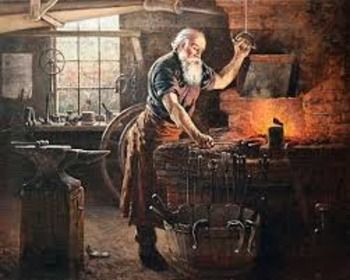
While in Harrismith ca.1940, he met old Mr Buckle the Blacksmith down in McKechnie street, near the railway station. He was from England.

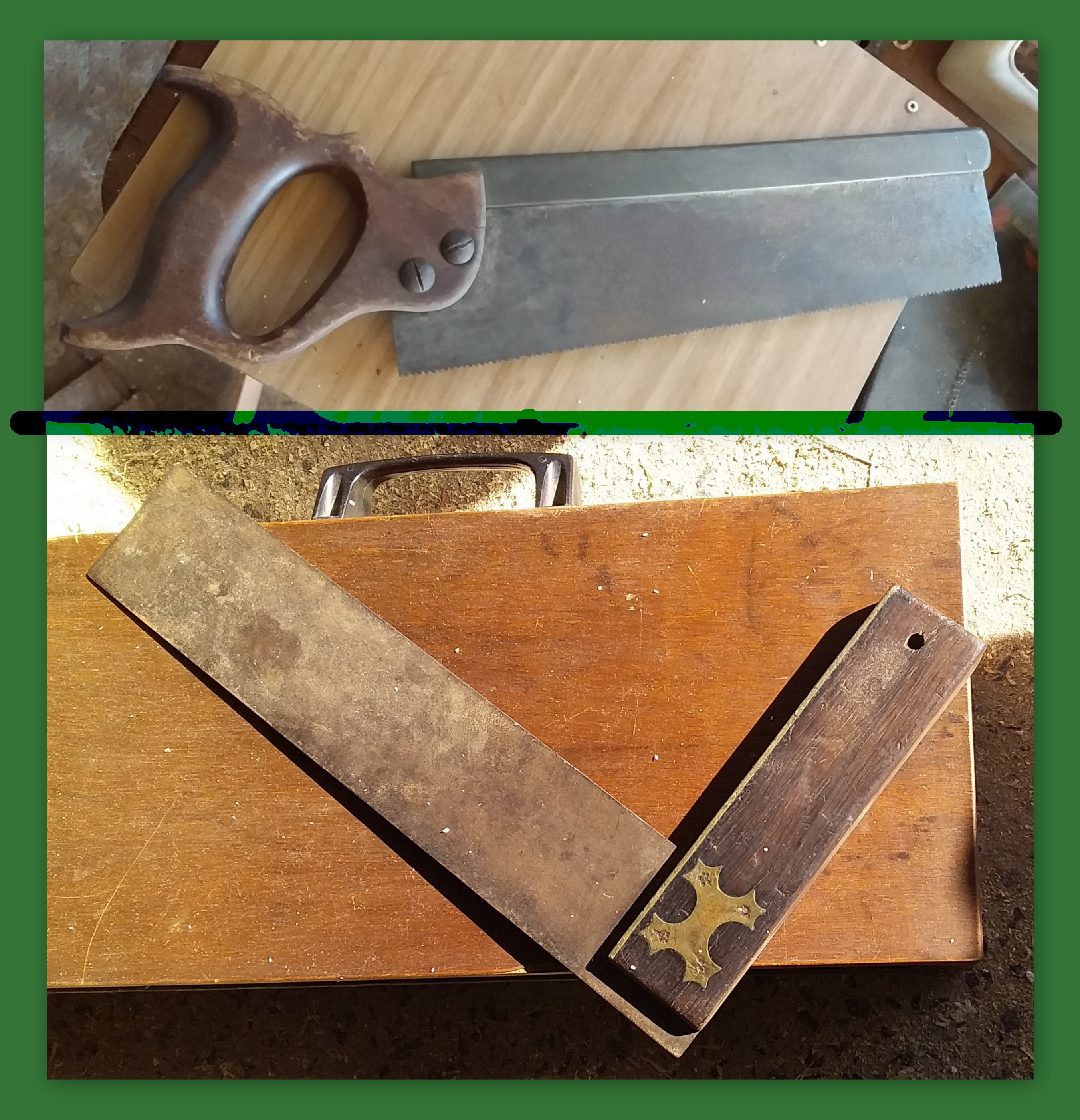
He ended up with a few tools from old man Buckle: a back saw and a set square with a beautiful brass inlay and brass leading edge.
After boarding at the Royal Hotel, whicvh had stables, Dad moved to a plot outside town – townlands – west of town on the Wilge River, downstream of town. There he bought horses, schooled them and sold them for a profit. I assumed he’d had them shod by Buckle but he corrected me. Buckle was a blacksmith, upholsterer, wheelwright and wainwright/wagon-maker. He didn’t shoe horses. That was up to Charlie Rustov, Harrismith’s only farrier.
From his plot on townlands out west of town** he would ride out to Boschetto Agricultural College for Ladies on the slopes of Platberg, the mountain that dominates the town. Boschetto was where the girls were. They were the main buyers of his ponies. The first time he went there, he met the formidable Miss Norah Miller, the founder and principal. Luckily for him she needed a few pictures on her office wall. He was able to help and so became a firm favourite of hers from the outset.
While he was telling the story Mom remembered a story about Norah: She knocked on someone’s door. Whoever answered went back and was asked ‘Who was there?’ They said, I don’t know, but she’s got one eye, one leg and a hell of a cough! Norah had one lens of her glasses frosted out, she wore a leg brace (probably childhood polio?) and smoked like a chimney. When her leg brace buckled, Dr Frank Reitz made her a new one. A better one. He would have loved that challenge. He was a hands-on fixer.
~~~oo0oo~~~
Harrismith author Leon Strachan found some fascinating info on Norah Miller’s leg – it was not polio. His source, Isobel Kemp (Dr Frank Reitz’s receptionist for thirty years. Isobel knew everything): It was probably osteoporosis resulting in a hip fracture in 1928, only six years after she established her college. Usually this would have resulted in incapacity and excruciating pain, but Norah was in luck: she was in the right place at the right time, and knew just the right man, bold innovator and pioneering surgeon Frank Reitz, trained at Guys Hospital in London, then did surgery specialisation in Germany.
He operated and joined the femur using an ordinary screw to hold the femur ends together! This technique would only become common decades later, in the fifties. Thirty years later she was still walking – with difficulty, but still mobile, and in charge of her college. When Cedara took over Boschetto she moved there, where she died in 1959, aged 79.
~~~oo0oo~~~
Aug 2021: Ole man phoned me. He found some (one? more? maybe the one I photographed above?) old ‘tri-squares’ with handles made of ebony with brass inlay. Do I want them? I bought them in the late 40s and Buckle was already an old man, maybe eighty. So they are probably 100yrs old. Hell yes, I’d like to have them!
~~~oo0oo~~~
** Old man bought his first townlands from old Englishman Bill Mundy. On the right bank of the Wilge river downstream from town; out on the road that turns south towards Swallow Bridge after leaving the west edge of town below 42nd Hill.
-

Polo in Harrismith
The first recorded polo game in South Africa took place in October 1874 at the King Williams Town Parade Ground between the Gordon Highlanders and the Cape Mounted Rifles.
The Military Ninth Division played during the 1880s at Harrismith, Orange Free State.
Polo was played in Cape Town in 1885 at a club formed by army officers, and in Natal by the officers stationed at Fort Napier, in Pietermaritzburg; a year later, they formed the Garrison Polo Club.
Play in Transvaal began in Johannesburg in 1894, when the owner of the Goldfields Hotel founded a polo club. The game was dominated by the military, but civilian clubs like this did sprout up in several places.
~~oo0oo~~
Someone must have the history of Harrismith polo. I hope. The first polo field I remember was in the sixties on the far side of the railway tracks; you drove under the subway to get there. Across the road was the sportsfields: a hockey field and then the cricket oval. Legend has it that Jimmy Horsley once hit a famous six across the hockey field, across the road and onto the polo clubhouse roof!

During a recent visit to Harrismith I spotted this on good friend Bess Reitz’s passage wall: Her Dad and Ginger Bain in the winning team!

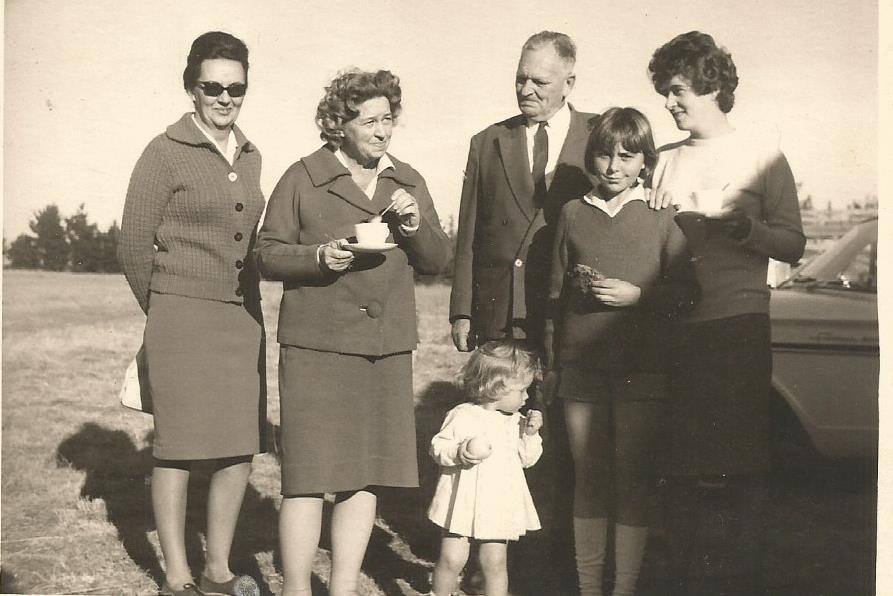
– tea at the old polo field in the sixties –
– note the Ford Fairlane!! –
– poms in Africa – SA Polo has a website with some history.
~~oo0oo~~
-
Early Bird Book
Way back around 1968 a new book appeared at 95 Stuart Street Harrismith. I was fascinated. Nearly as fascinated as I’d been when cousin Jack Grundling was reading Valley Of The Dolls and left it in the big wooden bookshelf in our long, dark, carpeted passage. That novel must have been good, as Mom actually physically took it from me, saying ‘You can’t read that’! Oh? Censorship!
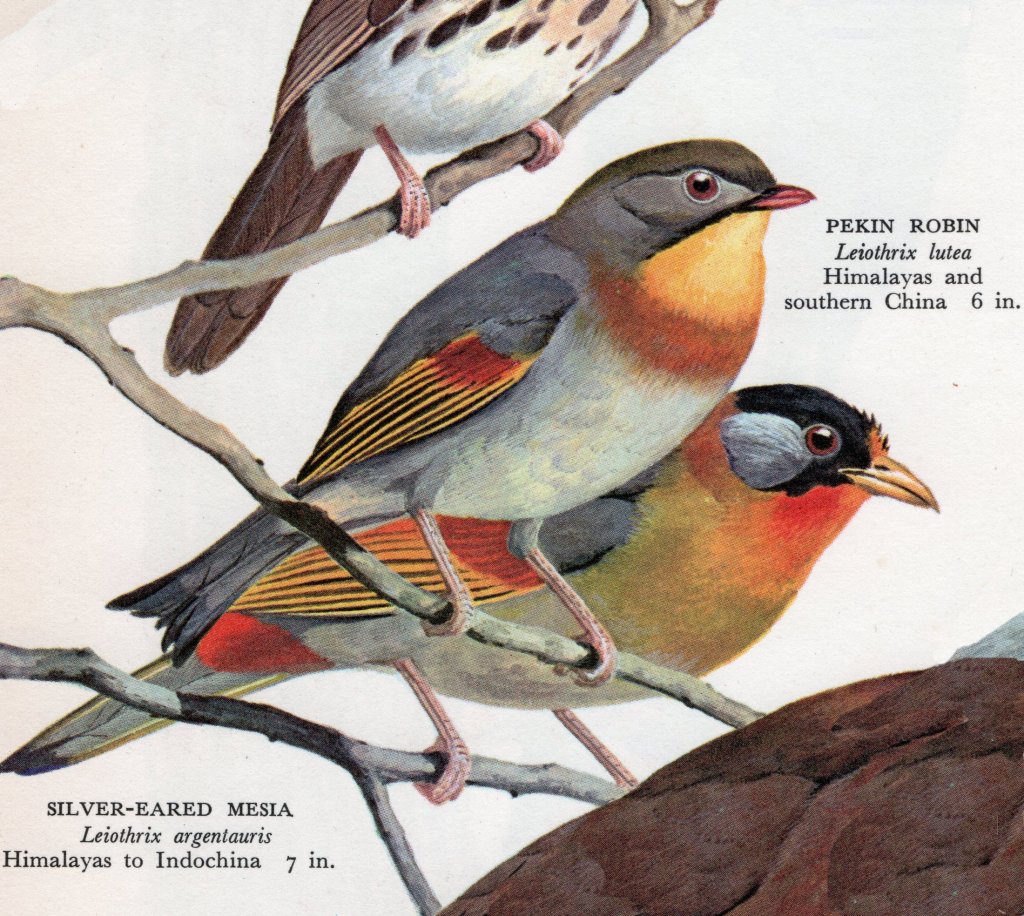
Oh, well, back to the bird book, Birds of the World,

by Oliver Austin, beautifully illustrated by Arthur Singer. I was fascinated by the orange Cock-of-the-Rock on the cover. Fifty years later the book was on my bookshelf in Westville and I was sad recently to discover other bookworms also liked it and had got into it in a big – and deep – way. It was riddled with holes. I copied the pages with the plates I remembered best before turfing it out. Hopefully a whole extended family of borer beetles went with it!

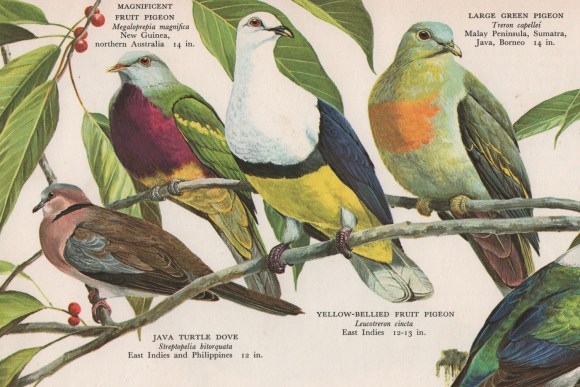

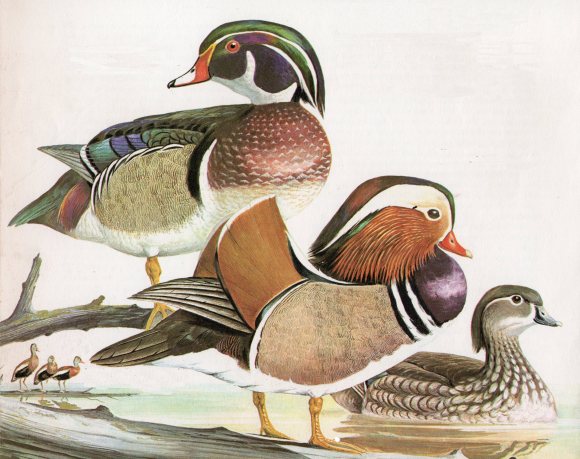

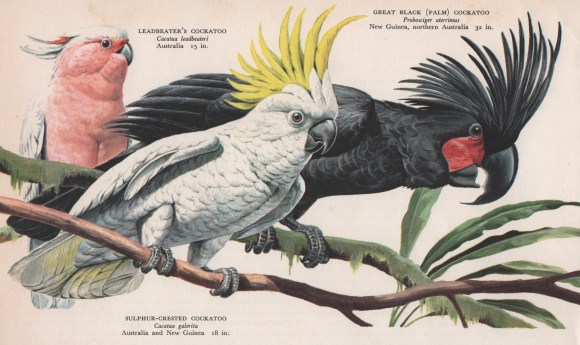
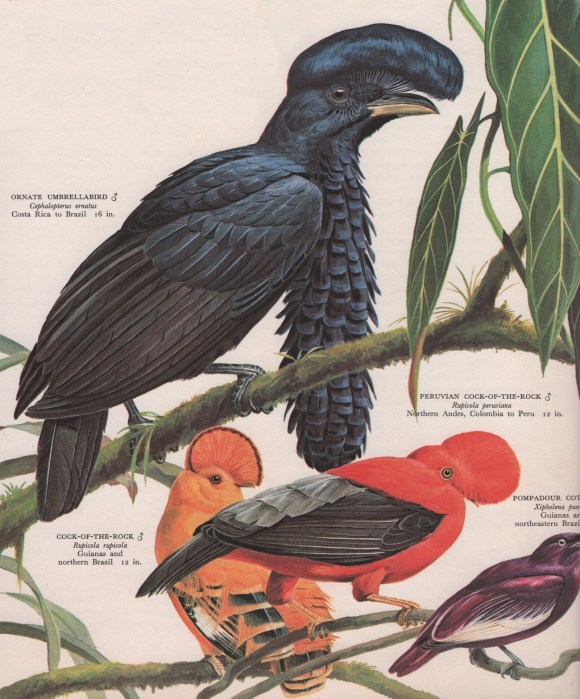

Roberts bird book and this book fuelled a lasting fascination.

~~oo0oo~~

Valley of the Dolls – by Jacqueline Susann was about film stars, their raunchy pecadilloes and their use of ‘dolls’ – amphetamines and barbiturates. Time magazine called it the ‘Dirty Book of the Month,’ probably thinking ‘that’ll kill sales,’ but that and other anti-reviews made people think ‘that sounds interesting,’ and the book was a runaway commercial success, becoming the best selling novel of 1966. I mean, a review saying ‘Dirty Book of the Month’ might have made Mom Mary not buy it, but it likely had cousin Jack head straight for the bookstore! So there it was: From one metropolis to another – New York to Harrismith – in no time.
By the time of Susann’s death in 1974, it was the best selling novel in publishing history, with more than 17 million copies sold. By 2016, the book had sold more than 31 million copies. In 1967, the book was adapted into a film. Like the book, the reviews were scathing, but it was an enormous box-office hit, becoming the sixth most popular film of the year, making $44 million at the box office. Author Jacqueline Susann had a cameo role in it as a news reporter, but she said she hated the film, telling director Robson that it was ‘a piece of shit.’ – wikipedia
~~oo0oo~~
Birds of the world: a survey of the twenty-seven orders and one hundred and fifty-five families, by Oliver L. Austin, (1961); Illustrated by Arthur Singer; Edited by Herbert S. Zim, New York, Golden Press; Many reprints were made and it was eventually published in seven languages over many years. I think ours was the 1968 edition published by Paul Hamlyn;
~~oo0oo~~
bookworms: The damage to books attributed to ‘bookworms’ is usually caused by the larvae of various types of insects including beetles, moths and cockroaches, which may bore or chew through books seeking food. Mine were little brown beetles. Buggers. I’m procrastinating about checking all my other books! Must do it . .
They’ve got into my books before, the blighters!
~~oo0oo~~
-

Mary Frances Bland Pictorial
A Pictorial Timeline
- Ongoing – needs work:
- Better dates (which will fix some wrong sequences) and
- Captions –


Born 19 Sept 1928 
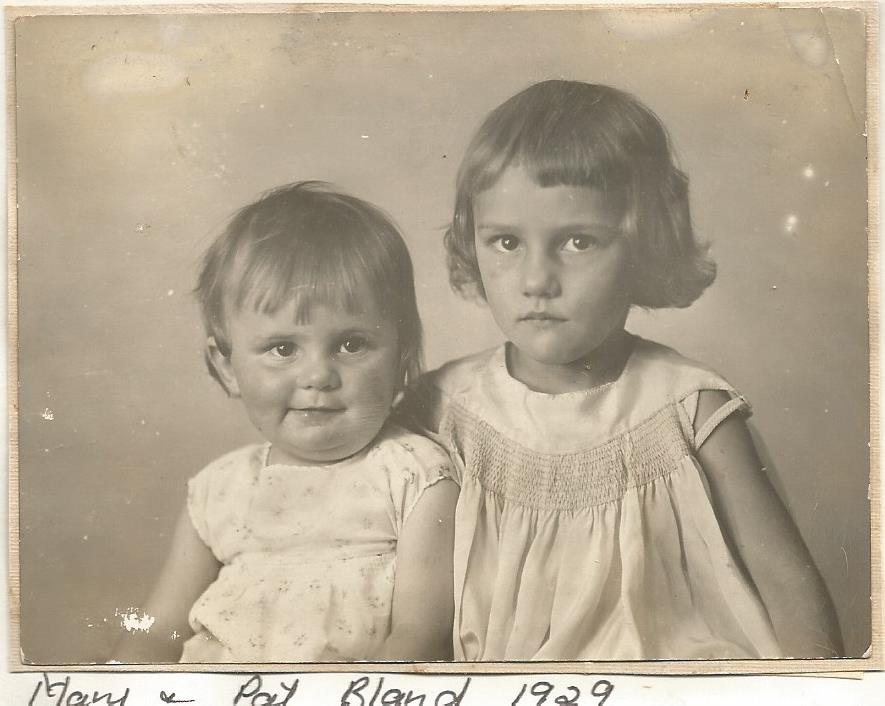
Mary with big sis Pat 

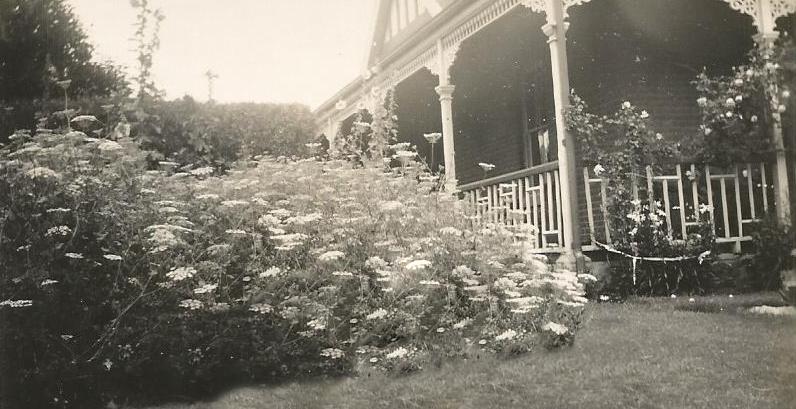

See Platberg? 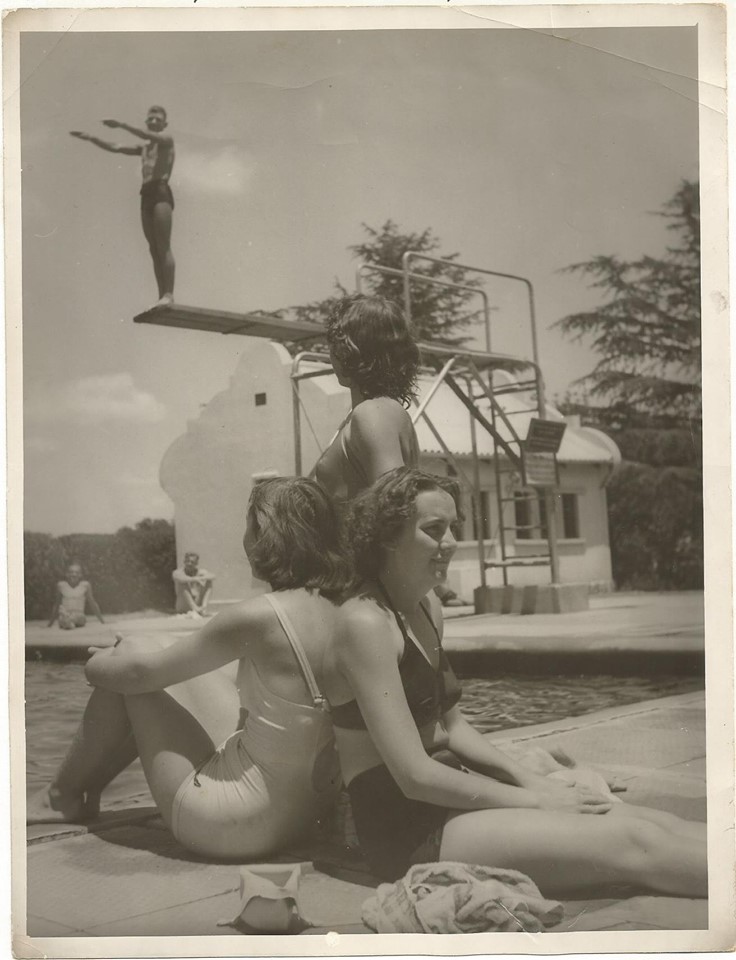

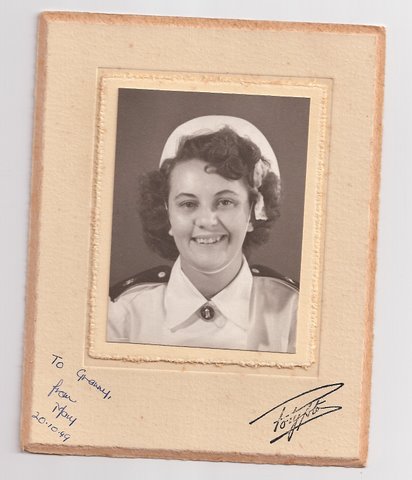
Sister Mom at the Boksburg-Benoni Hospital 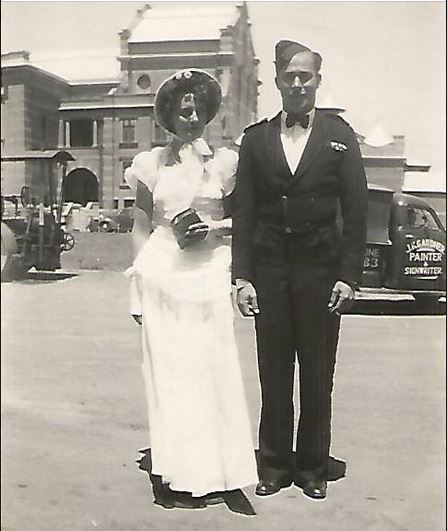
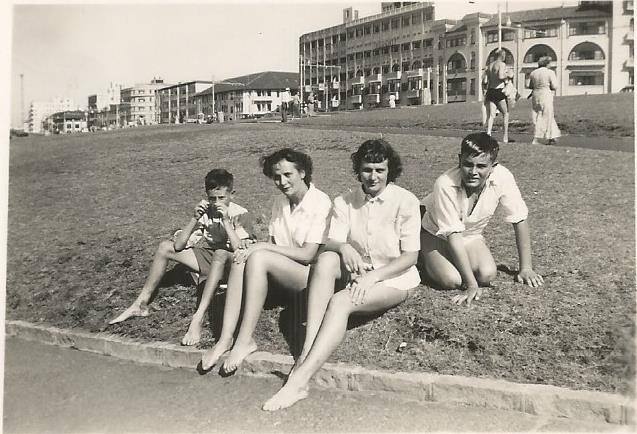
Addington beach Durban 
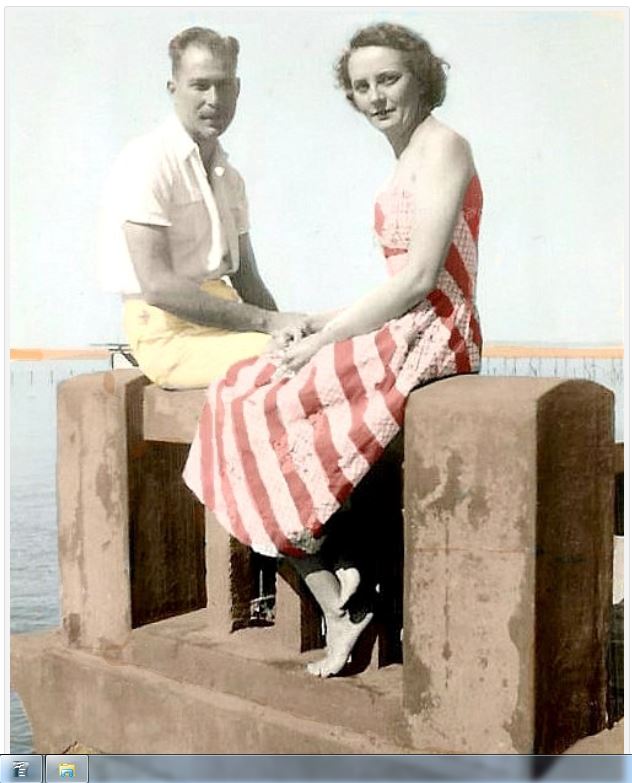
Scottburgh beach 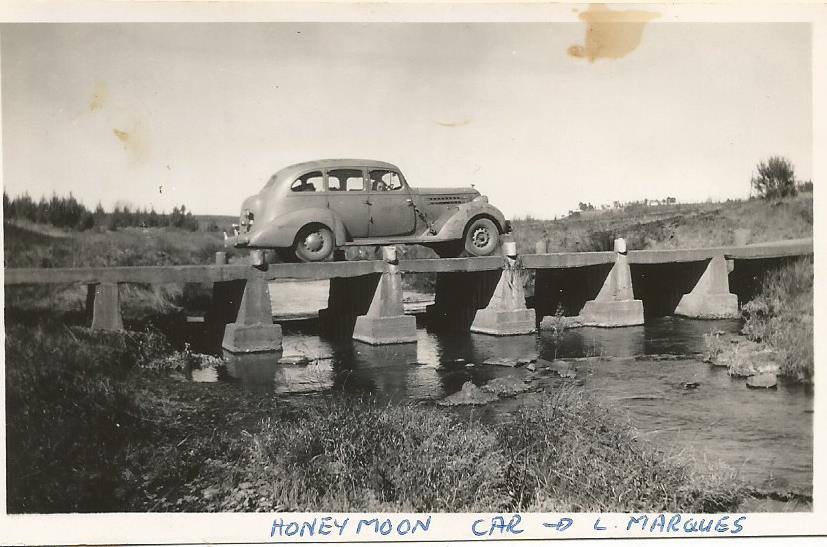
Honeymoon Lourenco Marques 
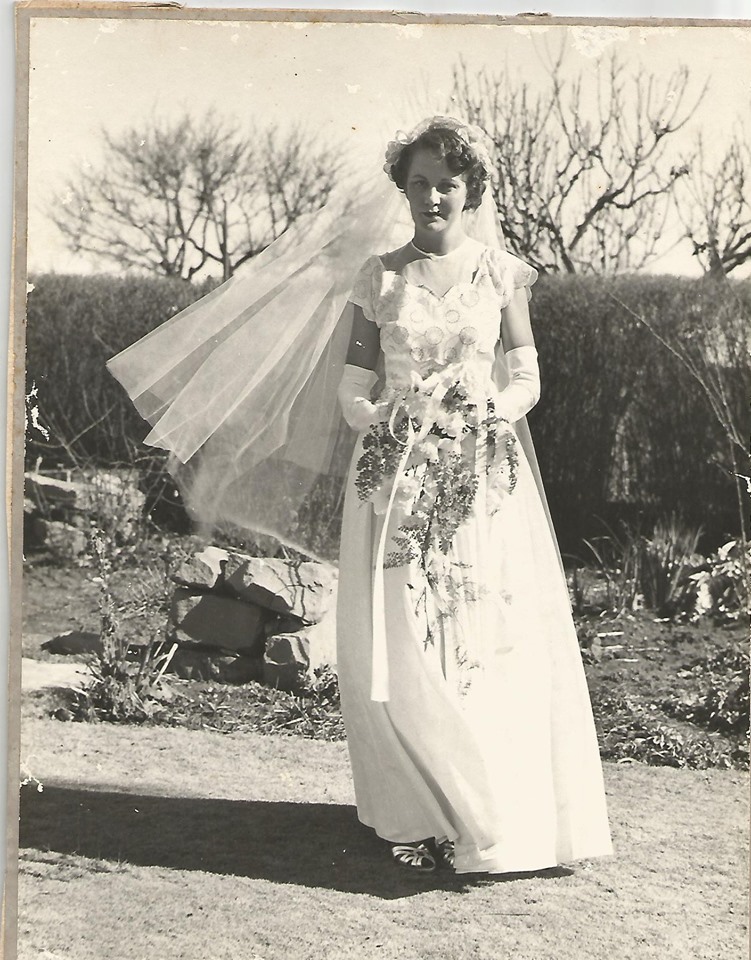
Winter wedding 1951 

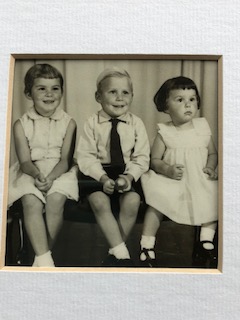
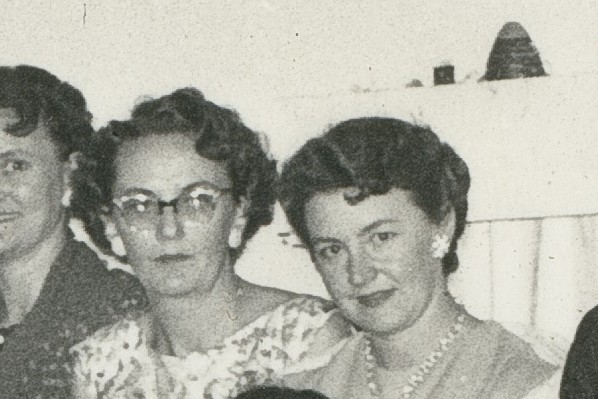
Mary & Trudy 
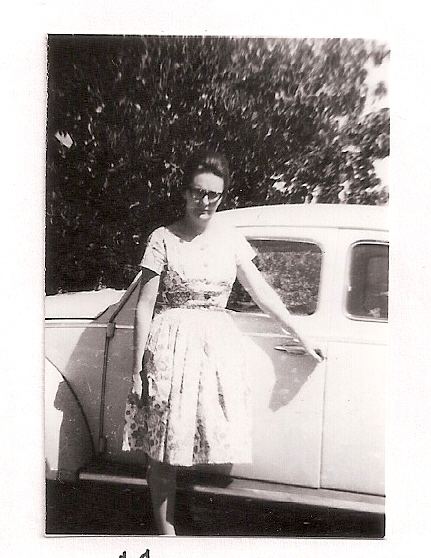
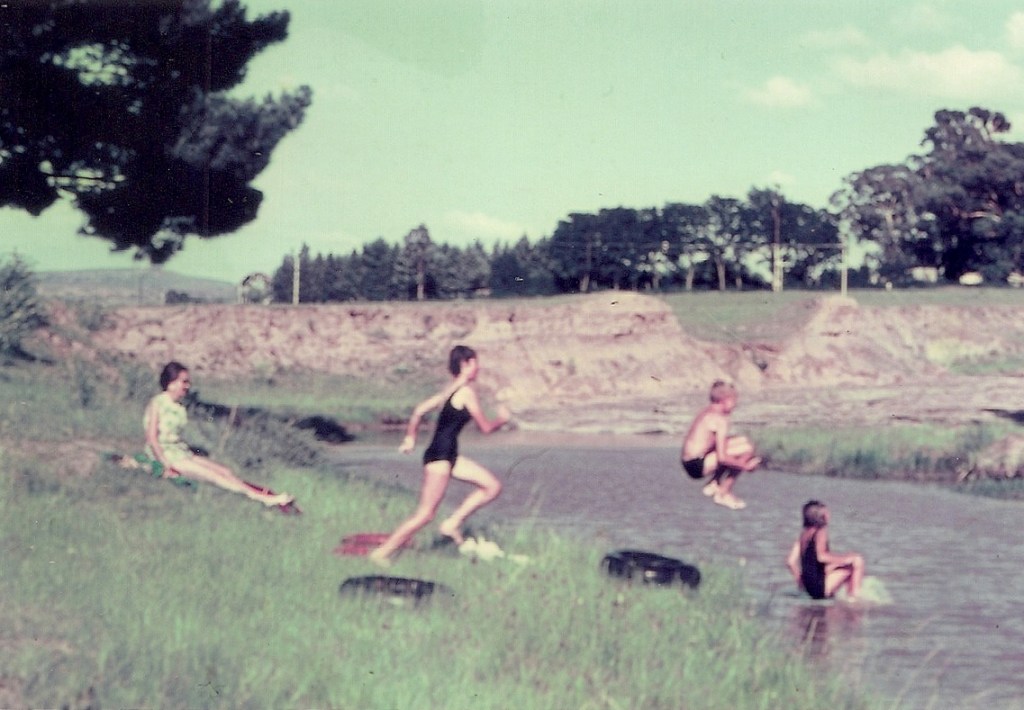







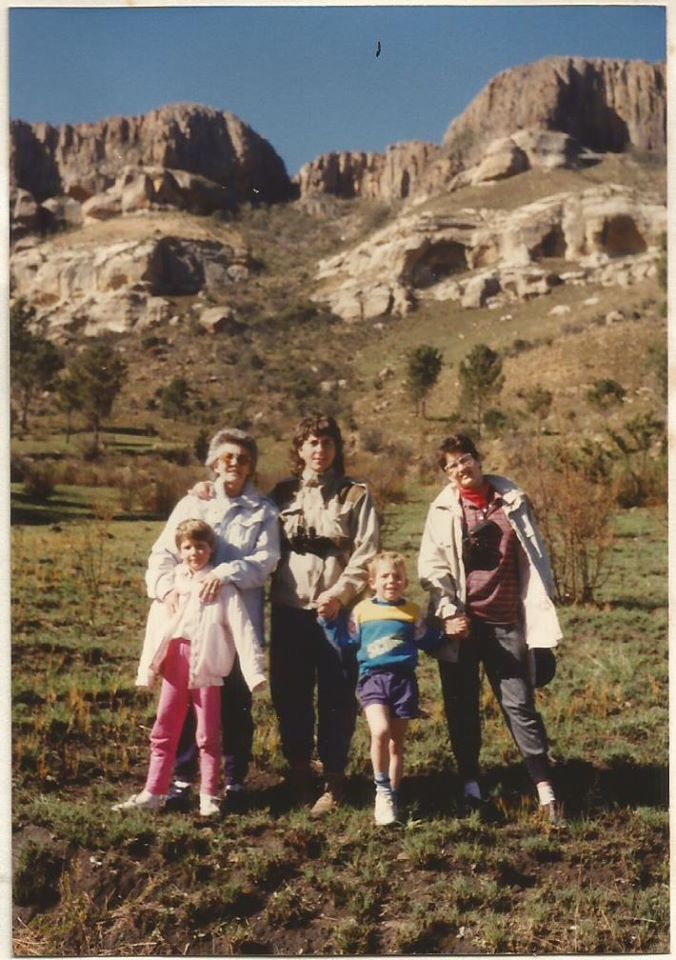

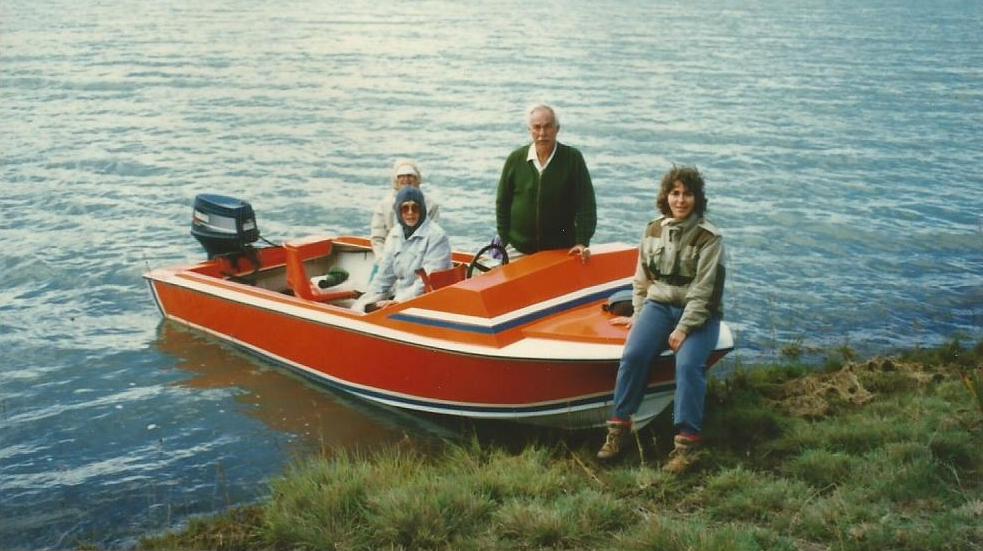
Trish eskimo, Mom eskimo, Dad & Sheila 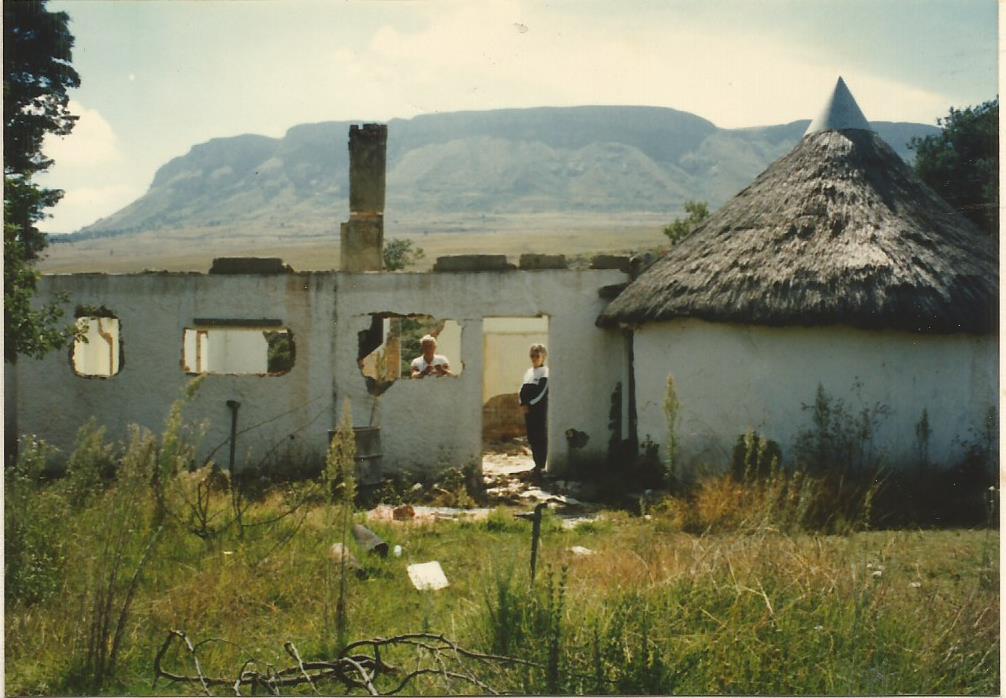
Birdhaven townlands 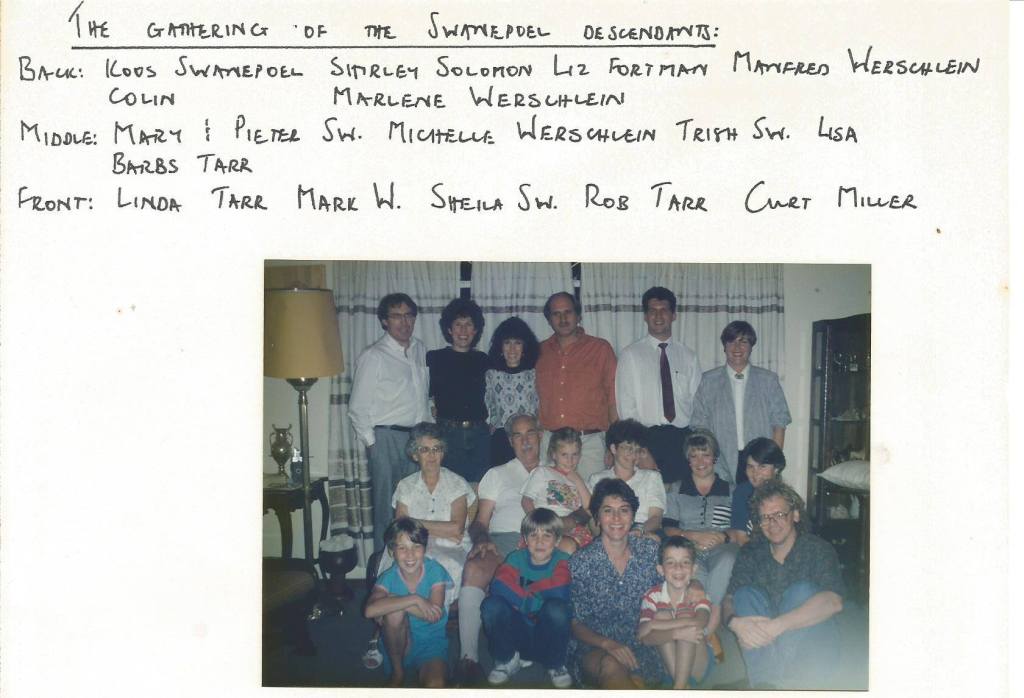

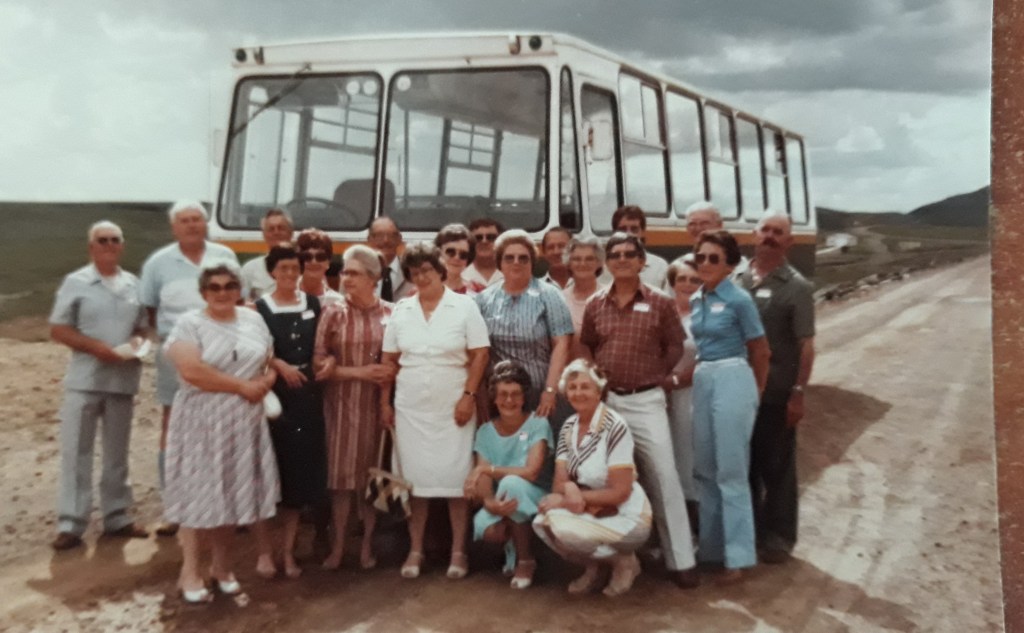
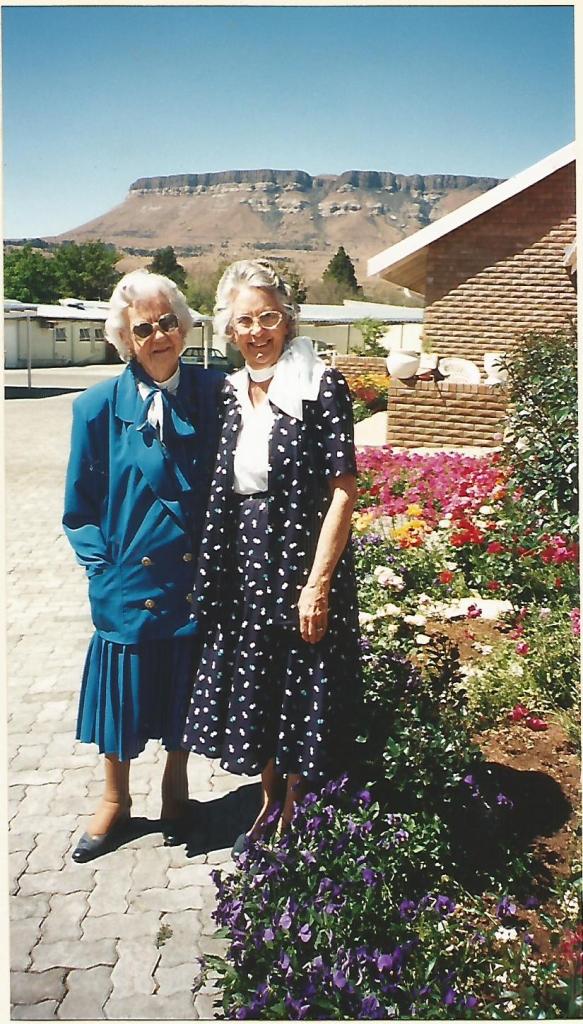

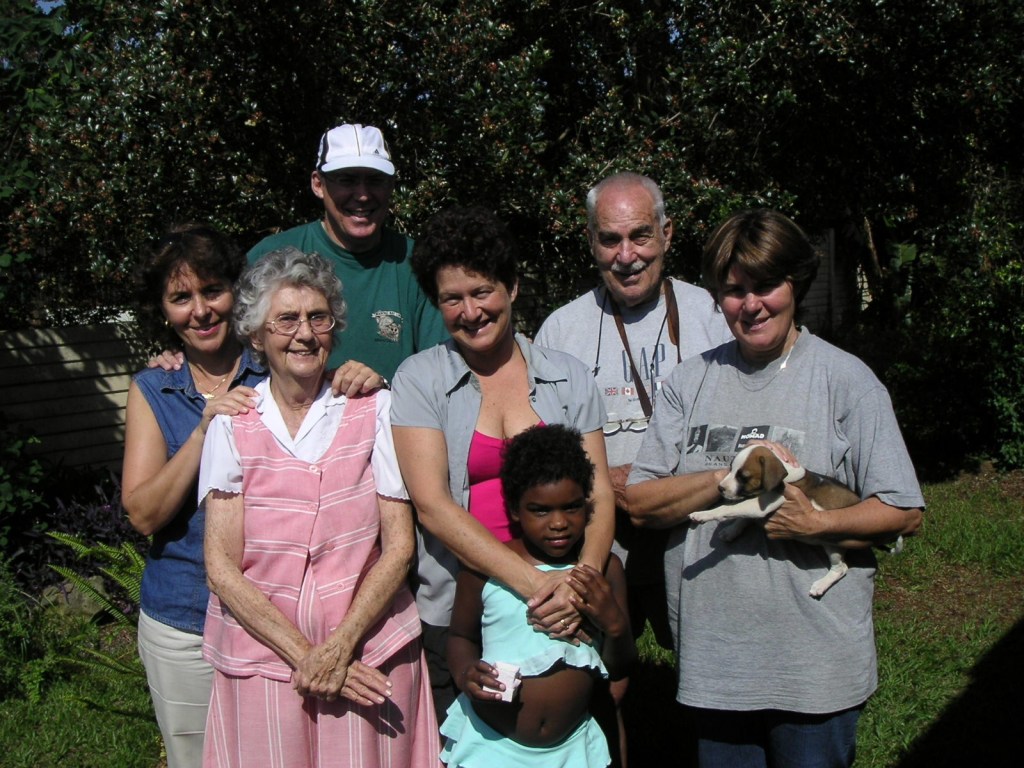
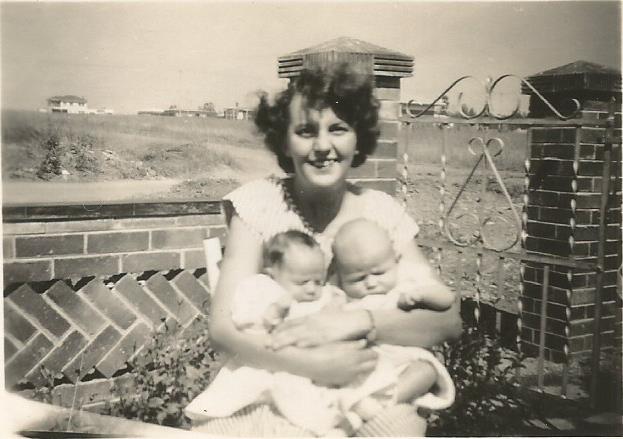
Mary with Trish & Jessica 
Swanepoel ladies 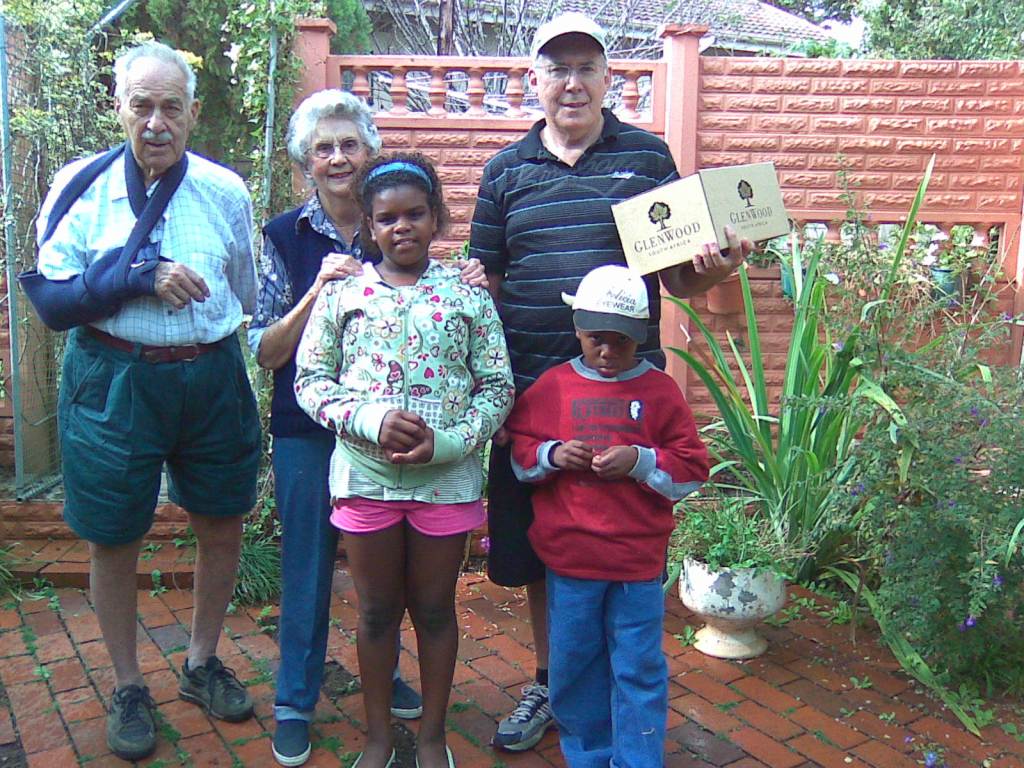
with one son & two grandkids Jessie & Tommy 
90th birthday 
80th birthday 
80th birthday 
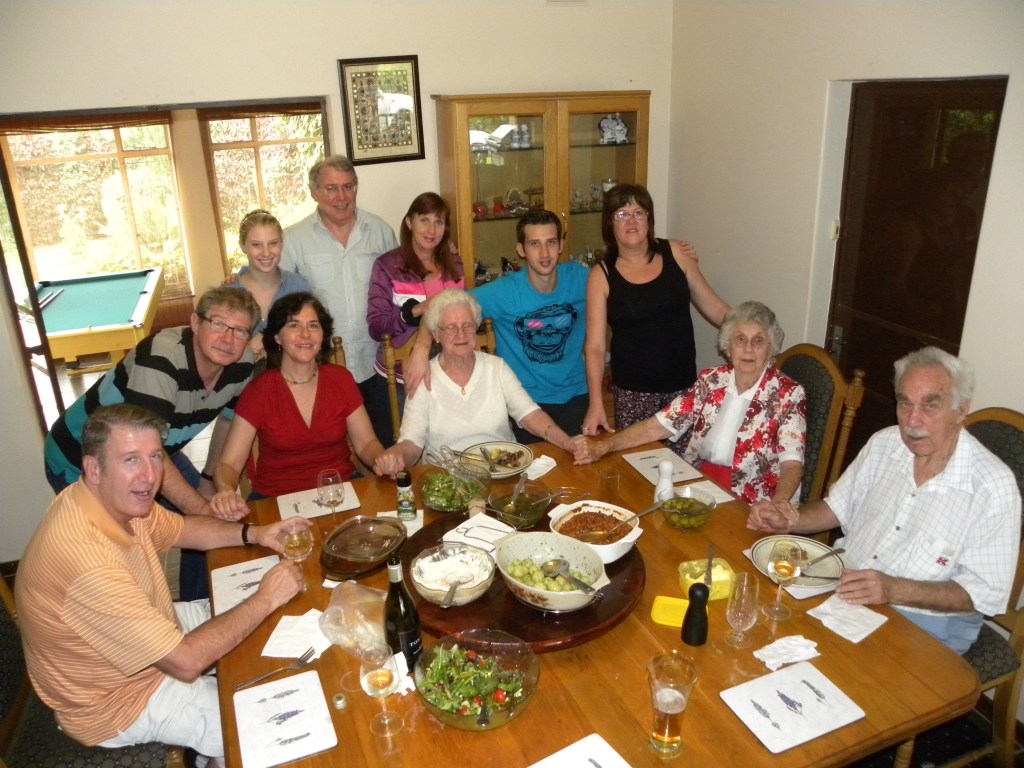


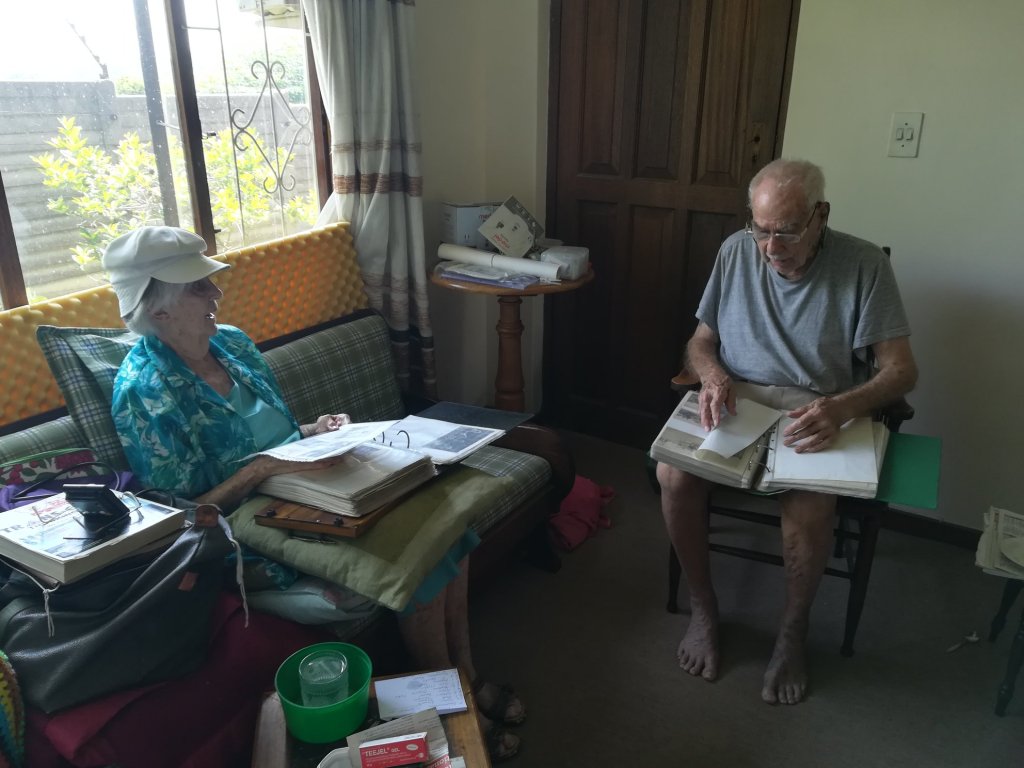

– Four Generations –
Annie, Mary, Barbara & Linda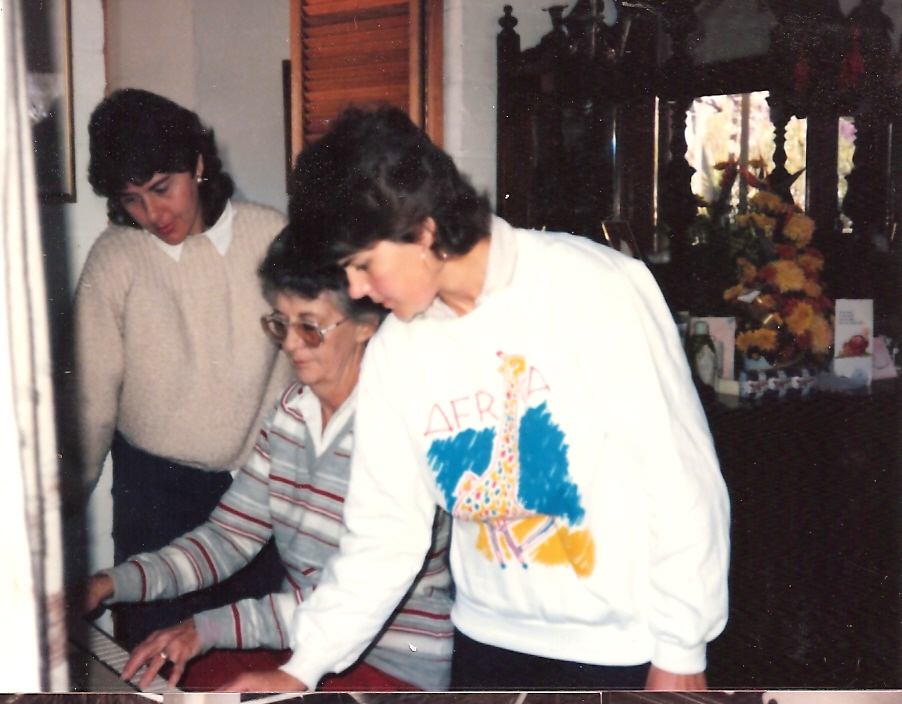


Mary MOTHWA 
Mary Rotary Ann 
First Grandchild Linda Mary Tarr 
Sheila & Mary 
Mary & Jean Coleman
-
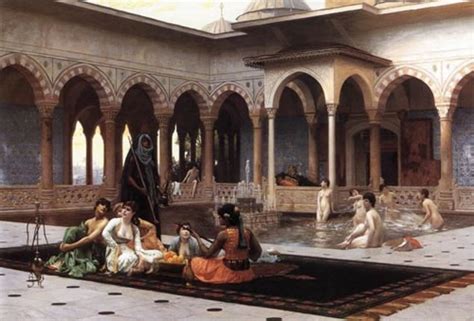
A Harem in Harrismith?
You know that mansion Mal Jurie is building on his farm? It’s a harem!
A what?
A HAREM! A place where you keep lots of ladies in rooms and they lie around swimming and eating grapes and looking beautiful. When they do have clothes on its not clothes like your mother wears. He says he’s going to bring French dancers to his harem from the Moulin Rouge in Paris! A lot of French ladies in Harrismith in the Vrystaat!
Ag Man, You Lie!
No, I swear. He told me himself!
– a typical scene just outside Harrismith, Vrystaat – This is how an Urban Legend – in this case really a Rural Legend; or, as Harrismith author and historian Leon Strachan calls them, a ‘Lieglegende’ – got started.
First of all, it’s true. Jurie Wessels DID say that. His neighbour wasn’t lying.
But what Jurie was really saying was, ‘Leave Me Alone!’ ‘Los My Uit!’ ‘Mind your own Business.’ ‘Stop prying.’
Jurie was a successful farmer, an intelligent, interesting and interested man, married to an outgoing and attractive woman, and he was building her a home unlike any other in the district. His problem – his sin – the reason he was called Mal Jurie – was that he was an introverted and eccentric character. He didn’t ‘play by the rules.’ And for that you get punished in most communities, maybe more so in small communities. And Harrismith would have been no exception.
For starters, Jurie had brought his lovely engaging wife from far away. People didn’t know her mother and her grandmother. She was actively involved in the community, well liked, and often entertained; but still . . she was from far away. And also, often Jurie wasn’t at her gatherings, preferring to keep to himself, even when she entertained at home.
So when Jurie got Italian stone masons to start building a large sandstone structure on the edge of a hill above his more ordinary homestead, overlooking the Wilge river valley west of the dorp, the people started wondering . . and talking.
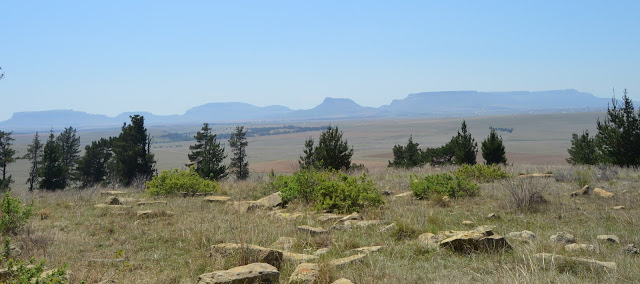
– the view towards Harrismith – The Lakes range, Loskop in the middle, Platberg right – But it was when a consignment of beautiful and really big wooden windows and doors arrived from Italy at the Harrismith spoorwegstasie that the rumours started building and gathering momentum. From ITALY? Nothing from ITALY arrived at the Harrismith stasie! Where was Italy, anyway? This was weird! Just what WAS Mal Jurie up to? Here was evidence, not just skinner, that Mal Jurie was mal.
Well, he was actually building a beautiful home, but he didn’t want people sticking their nose in his business. People always asked too many questions! So when his neighbour asked, he deliberately gave what he probably thought would be an obvious exaggeration. And it might have been taken as just that, had his reclusive behaviour not made him ‘suspect’ – ‘different.’ And so the rumour – the legend – grew wings and became ‘the truth.’

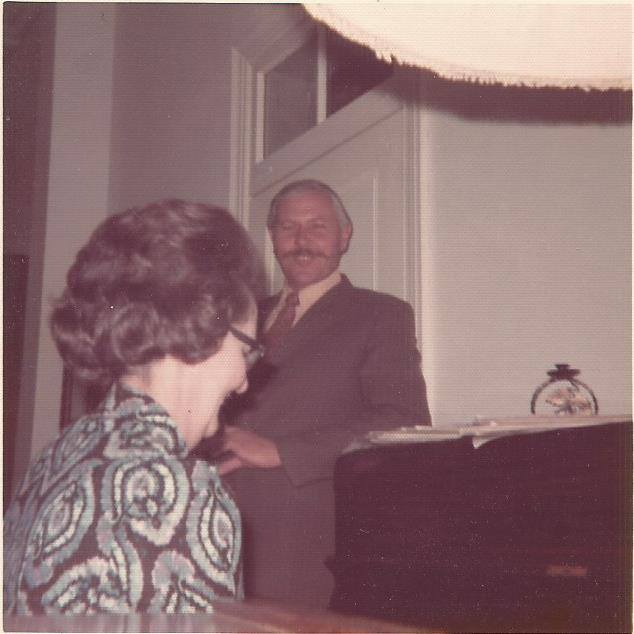
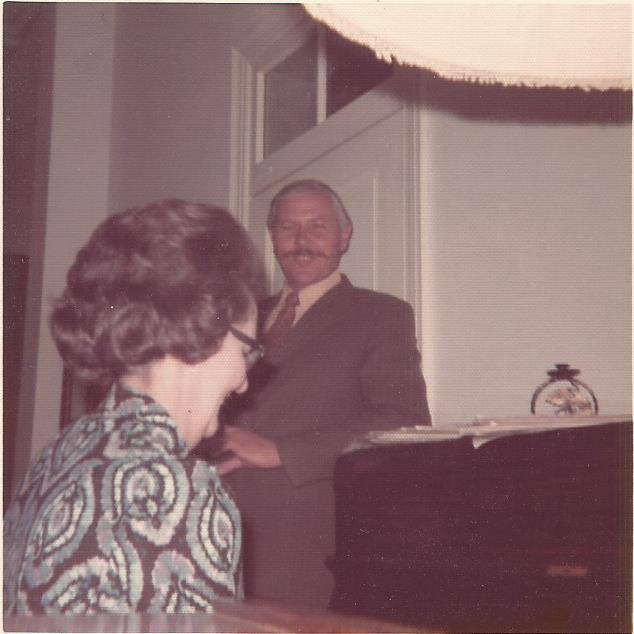
My mother Mary grew up with one of his sons, Hugo. Hugo was a popular, good-looking and talented Harrismithian who would go on to qualify as a medical doctor, then come back to farm and practice medicine as a GP on the family farm. He and Mom matriculated in the same class of 1945. They both loved music and singing, were talented musicians, and both did well in their exams. Here’s Mom on the piano and Hugo enjoying her playing and getting ready to sing at Mom’s 45th birthday party in 1973.
..
And here’s one of his sons, Max Wessels, who played rugby with me in primary school. Max extreme right front row, dark hair, shortish then – me extreme right back row, blonde, tallish then.

The beautiful new home never got finished. Jurie joined the 1914 rebellie – a rebellion against the British-dominated South African government. He was angry – mad as hell – as were many others, that this blerrie government was joining the blerrie British to fight World War 1! Hadn’t the blerrie Engelse just been killing them a mere twelve years before? Hadn’t the British locked up our women and children in concentration camps, starving them and killing them off through disease and malnutrition!? Why the hell was South Africa fighting WITH those invaders who had ruined our country just a short decade ago, burning our houses and killing our livestock?
So with Jurie te velde, building on his lovely home ceased. Today the impressive ruins – not ruins: the unfinished start – of the home Jurie wanted to build for his wife still stand:
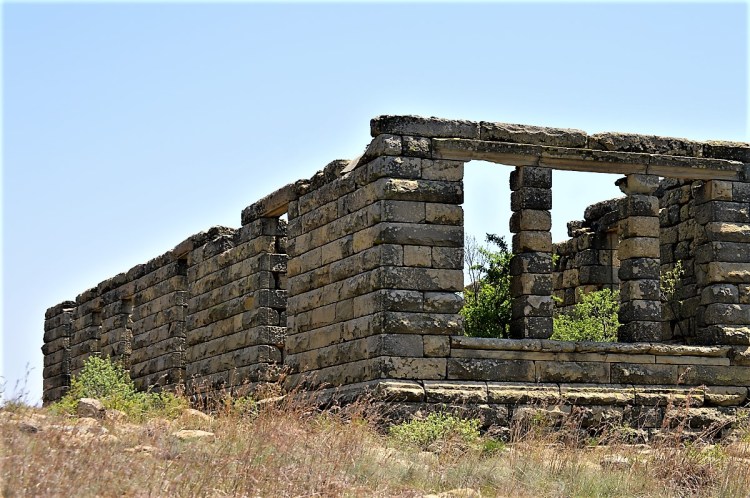


– here you can estimate the scale of the building – BIG windows – 
– another look at the scale of the place – Leon Strachan with Jurie’s grandaughter Mia Prinsloo – ~~~oo0oo~~~
Many thanks to Harrismith historian Leon Strachan for keeping Harrismith’s history alive – and for the photos. For more and better info, read his book Blinkoog. He wrote four: Blafboom; Blinkoog; Botterbek and Bergburghers.
See this lovely blogpost by former Harrismithian Sandra Cronje, where she wrote a longer, better story with Leon’s research and input.
~~~oo0oo~~~
Reminded me somewhat of this song:
-

The Mass Choir Amasses
A large gathering of the Goor Koor – that assembly of happy inebriates led and accompanied by virtual-teetotaller Mary Methodist, our Mom, gathered together – assembled, amassed – on the occasion of Mom’s 45th birthday. Usually there were far fewer of them gathered at any one time, an occasional Lubricated Quartet perhaps, but this was a special occasion in the big loungexat 95 Stuart Street!
And Sheila – thanks goodness! – took pictures. She was in matric at the time, I was in Oklahoma, Barbara in Pietermaritzburg.
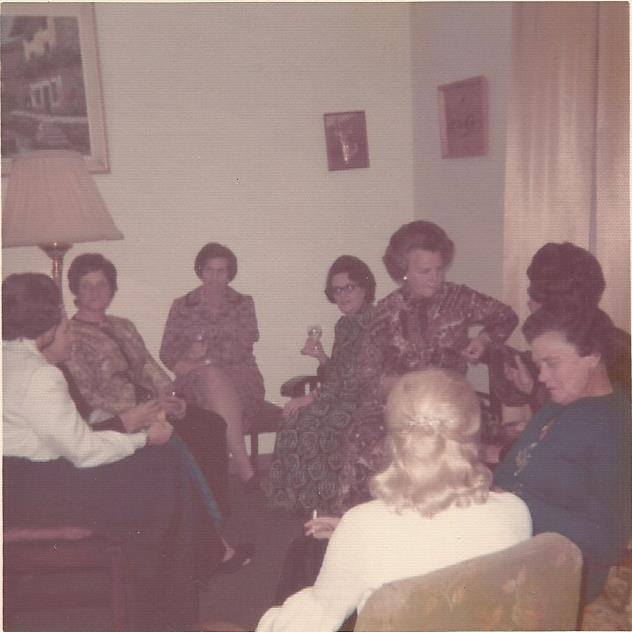
– Joyce Joubert; Marie Roux peeping out; Isobel Kemp; Stella Fyvie; Mary the birthday girl, wearing specs, grog in hand; Mary Wessels; Martie Dreyer; Baby Mandy; Annemarie van Wyk – . . and here – precious picture! – Mary at the keyboard and Hugo Wessels right there, ready to belt out a number! Two very talented people, 45 years old, who were in matric together in 1945. And this fun gathering happened 45 years ago, as Mom is now 90! I think all my stats are right . . .
– in earlier years my ear would be near the floor right outside that door behind Hugo – listening in fascination – 
– Dina de Kock; Hester Schreiber; Koekie de Bruyn; Hugo Wessels; Hannes van Wyk; Jack Kemp; Pierre Roux; Hector Fyvie; Steve Schreiber; Dad; Bennie Dreyer; Joyce Joubert Isobel Kemp; Stella Fyvie: Anna-Marie van Wyk – Wonderful memories of crawling down the long passage to get nearer to the sound of Mom playing the piano; Also of sundry ‘choir members’ over the years, belting out popular songs with high enthusiasm and various degrees of talent. If spotted by any of the choir it would be ‘Hello Kosie!’ – if spotted by Mom or Dad it would be ‘Get back to bed!’
Also memories of the smell of ash trays! Always plenty of ash trays. Ours were from tyre companies, so they were glass inside miniature Dunlop or Goodyear tyres!

– I couldnt find one overflowing with butts and ash! – ~~~~oo0oo~~~~
Goor Koor – Dire Choir
~~~~oo0oo~~~~
– 45yrs later here’s Mary, still beautifully at it – ~~~~oo0oo~~~~
-

Victor Simmonds, Artist
Dad: “Victor Simmonds was a lovely chap and a very good artist. He was a little man, grey, a lot older than me. What? How old? Well, I was probably 35 then and he was grey. He was probably 50. He lodged with Ruth Wright (Ruth Dominy by then) on the plot next door to ours, Glen Khyber. I doubt if he paid them any rent, they were probably just helping him out. He moved to the hotel in Royal Natal National Park where they allowed him to sell his art to the guests and that probably paid his rent.
“He was a hopeless alcoholic, unfortunately. He used to come to me begging for a bottle of brandy late at night, his clothes torn from coming straight across to Birdhaven from Glen Khyber, through the barbed wire fences. (Mom and Dad owned a bottle store, liquor store, in town) I said ‘Fuck off, Victor, I won’t do that to you,’ and sent him away. I wish I had bought one of his paintings. Sheila found these four paintings he gave me for nothing. He said he did these as a young student. As I took them he said, ‘Wait, let me sign them for you.’”

– maybe a self portrait? – 
– nude with amphora? – 
– semi-nude with two amphorae? – 
– maybe the Kak Spruit at or near Glen Khyber? – possibly – So I went looking and found a lot of his work available on the internet. Once again Dad’s memory proved sound. Victor was born in 1909, thus thirteen years older than Dad:
Victor Simmonds’ work has been offered at auction multiple times, with realized prices ranging from $126 to $256, depending on the size and medium of the artwork. Since 2012 the record price for this artist at auction is $256 for South African landscape with two women carrying wood, sold at Bonhams Oxford in 2012. Also see here and here and here

– South African Landscape With Two Women Carrying Wood – 
– shrubs beside a cascading stream – I knew this scene! I recognised it immediately! To me this looks like the stream above the Mahai campsite in Royal Natal National Park – So I went looking and at lovecamping.co.za I found this:

– spot on!! – an image locked in my brain for maybe fifty years! – 
– sunset, poplar trees, a river – the Wilge near Walton farm? – (or – see below . . ) A number of his paintings are available for sale. I’d love to see his ‘The Gorge, Royal Natal National Park, Showing the Inner Buttress and Devils Tooth’ but I’d have to subscribe for one day at 30 euros! That one was apparently painted in 1980, so he kept going for at least 23 years after he stayed in our neck of the woods. That would have made Victor around 70 and his liver a resilient organ.

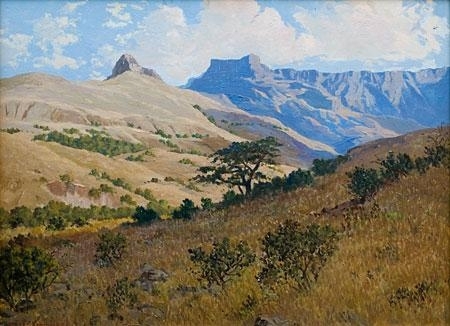
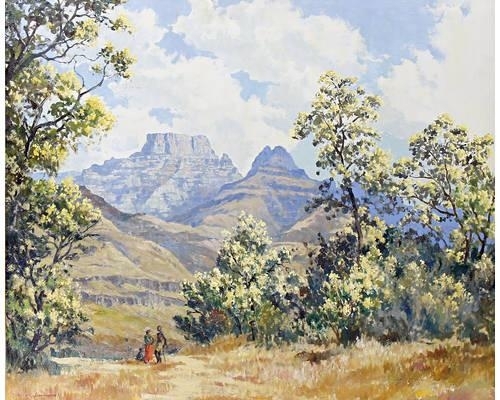
– more Victor Simmonds Drakensberg scenes – ca.1946 – click to enlarge – ~~oo0oo~~
Now its 2024 and look who has popped up onto my vrystaat confessions: All my life I’d heard Mom speak of Corry Cronje and Len Cronje, and Corry’s daughter Liz found my scribblings. Or rather, Liz wrote a delightful nostalgic personal memoir about the Cronjes of Witsieshoek, (post it online Liz and I’ll link to it!). Anthony Maeder sent it to me and put me in touch with her. We got talking and got onto the topic of this talented artist who spent time on a neighbouring plot to the one we grew up on, and on a neighbouring farm to the one Liz grew up on.
Brothers Corry and Len lived in Witsieshoek on neighbouring farms, Patricksdale and Mountainview respectively. Victor Simmonds stayed with Len and his wife Lettie on Mountainview for quite a while and painted on both farms and the surrounding area. Liz Finnie Cronje is Corry’s daughter and when I told Mom she immediately said, “Oh Corry’s wife Rosalie was a big friend of Annie’s (her mom). They would have long chats at Annie’s Caltex garage when the Cronje’s came to town.”
Len and Lettie’s daughter Josie Cronje Batchelor has a number of Victor Simmonds’ paintings and she has OK’d my posting them here. Wonderful! One more place where his talent can be appreciated.

– View from Mountainview across Patricksdale to the ‘Berg – 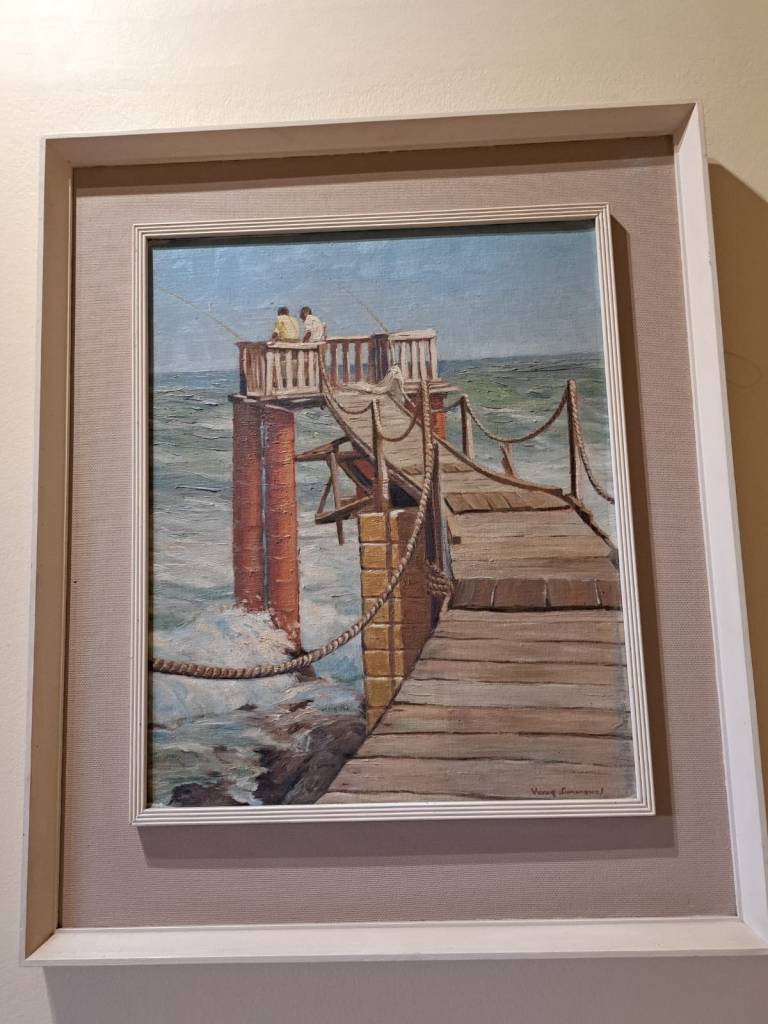

Click to enlarge – Left: Pier – Right: The poplars in Autumn –
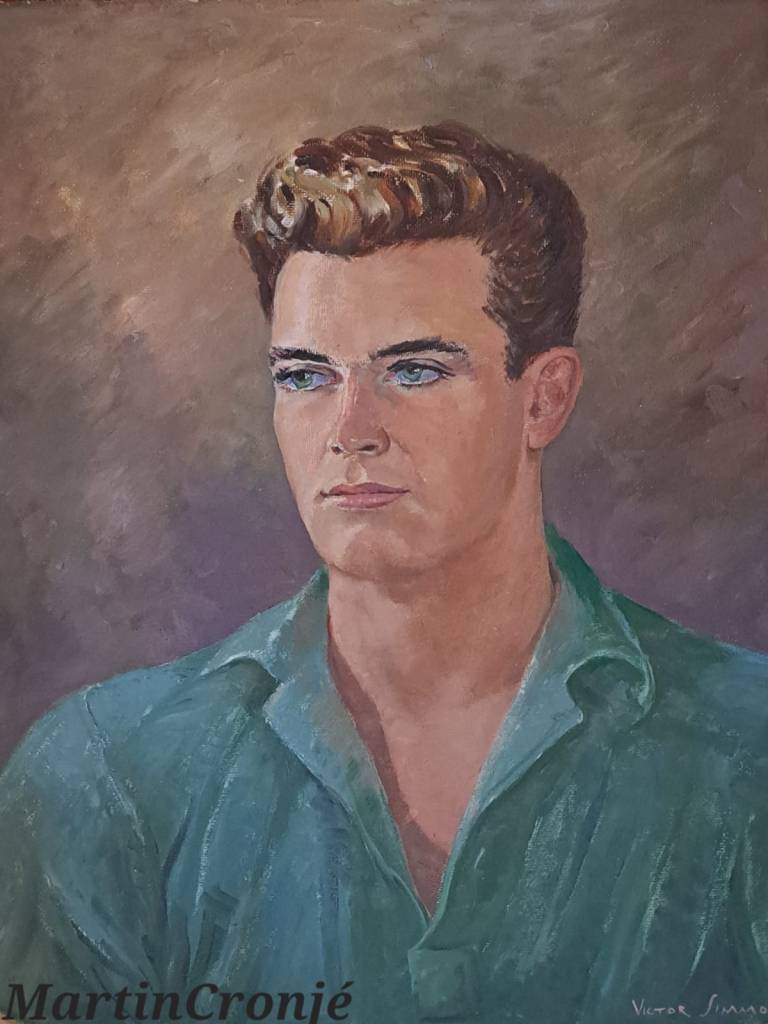
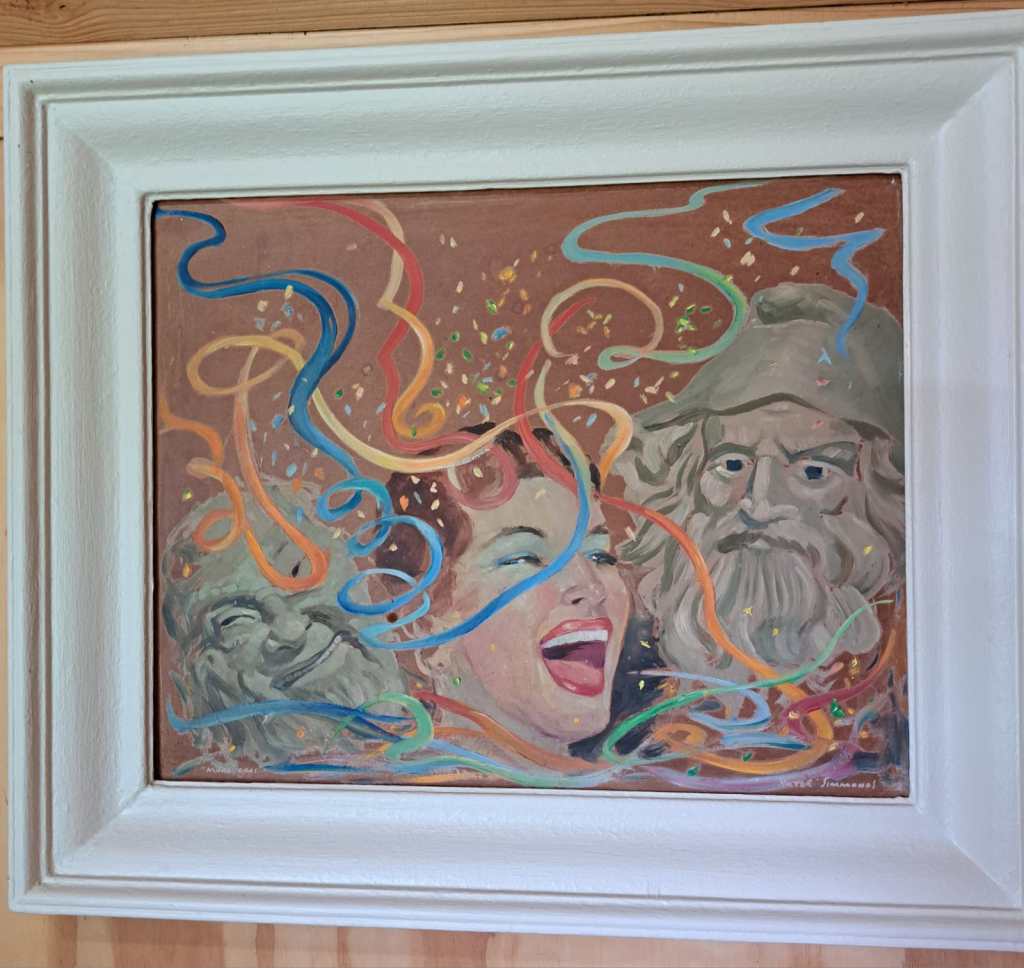
Left: Martin Cronje, Lettie Cronje’s brother, Josie’s uncle – Right: ‘Mardi Gras’ –
This next one has to be on its own. Here’s why: Josie Bachelor, nee Cronje of Mountainview wrote: This is my favourite. The Gold Lamé in the background was my mom’s evening dress. The vase and porcelain horse also Mom’s. Mom did the arrangement. The table belonged to Vic.

Knowing a picture’s background and place and story makes it so much more interesting and valuable, doesn’t it?
~~oo0oo~~
Two more! With a note from Liz: I think I missed out on two more paintings. Both on Mountainview of the original Randall Bros. store in Witzieshoek taken over by Arthur Gray late 19th century I think. The chief (forget his name – ed. maybe Ntsane 1898 – 1918) asked if Arthur could open a shop in Witzieshoek as his people had difficulty getting to the shop during very rainy weather owing to the full Elands River. When my grandparents, Kerneels and Edie Cronje returned after the Boer War they renovated the shop and turned it into a cottage where all but the eldest Cronje (Andries) was born beginning about 1906 when my Dad, Corry was born.

– Mountainview Cottage – 
– Mountainview Cronje’s Birthplace – ~~oo0oo~~
 Vrystaat Confessions