Jessie’s second pre-school was ‘Sinner Lizabeth.’ I think it’s Anglican, but I don’t know, cos I wasn’t interested. I was only interested in the fact that Aitch had chosen it, so I knew they’d look after my Jessie. And they did: Rose and two Pennys treated her good the two years she was there.
But today I found out about Sinner Mary. This was news to me. I gasped.
Gasp!
Right through school Mary, now universally know as Mary Methodist after playing the organ in the Harrismith Methylated Spirits church for something like a hundred years, was churchless!
Her Mom Annie, my gran, was blissfully unimpressed and uninvolved and probably played golf on Sundays. I’m guessing she would use as an excuse, if pushed by the pious, that Harrismith didn’t have a Presbyterian church (it had folded).** I’m not going to say that proves God is Methodist, but you can see right here how the thought did flit across my mind. That would be if She existed, of course.
So Mary the scholar was churchless! I love it! She tells me her teacher Mr Moll – who taught singing, woodwork and religion – never gave her very good marks probly cos he knew she didn’t go to church! She’s joking of course, and her bad marks were probably 80%, but anyway, Tommy Moll was very involved in the Methodists.
So when Mary got married they had to ‘make a plan’ and the wedding made the newspapers. The headline blared: ‘Four denominations at one wedding’ or something. Not ‘and a funeral.’ (Sheila had the actual cutting so I now know my recollection was exaggerated).
The bride ‘was Presbyterian’ they said (but we now know she was actually – gasp -a ‘none’); the groom was Dutch Reformed (‘another faith’ they said, but he too was in reality a ‘none’); the Methodist minister was on leave, so the Apostolic Faith Mission man tied the knot.
Later, when Mary returned to Harrismith, having lived in Pietermaritzburg for a while, where she became Mom to Barbara, she decided to get church. She chose the Methodists as a lot of her friends were Methodists. She maybe forgets she told Sheila the Methodist boys were nicer than the Anglican boys, so she tells me something about not liking the Anglicans’ ‘high church’ aspect. So this twenty five year old mother leaves her baby Barbara with Annie and Dad at Granny Bland’s home in Stuart street, where they have the room with the big brass double bed, and goes off to confirmation classes with a group of schoolkids. She aces the class, gets confirmed in the Lord, sanctified, and starts her epic Methodistian journey, which continues today, sixty seven years later, her only sin on the way being an occasional single ginger brandy with ginger ale while everyone else was drinking bucket loads. When she plays the piano of a Sunday in the frail care dining room in Maritzburg these days, those are Methodist hymns she’s thumping out joyfully.
I sort of feel like I have an excuse for being churchless now if I need one. ‘I’m just taking my twenty five years off now, Ma,’ I’ll tell Mary when she asks.
(BTW: In the pic, Mary is the bridesmaid, back left. The bride is her dear friend and cousin Sylvia Bain who married John Taylor, another ‘none’ I’ll bet).
~~oo0oo~~
– Jess in Livingstone uniform with her Mad Hatter Tea Party hat – 2008 –
After ‘Sinner Lizabeth’ pre-school, Jess went to a remedial primary school whose school song, which they sang with gusto, went:
Live in Sin, Live in Sin, Progress Voorspoed, Live in Sin
Eat cake, Eat soap, Eat porridge too.
Believe in yourself Live in Sin
Can’t say we didn’t give our JessWess a good grounding.
~~oo0oo~~
“Have faith, have hope, have courage too. Livingstone Remedial.” Tom loved telling me the “Live in Sin” real words, Dad!’
~~oo0oo~~
I see anyone can apply to become an Apostolic Faith Mission Marriage Officer! Just download the application form online here. Maybe this is an out if we can find errors in that 1951 dominee-ring application!?
~~oo0oo~~
** Harrismith’s historian Leon Strachan tells a lovely story – I’ll find it – of how Hans Lötter met a Harrismith couple on the train ride from Durban to Harrismith. He was going there to settle, having bought a bookstore sight-unseen. He asked them ‘What church does Harrismith NOT have?’ They racked their brains, then said ‘There’s no Presbyterian Church.’
‘Ah, then I’ll be Presbyterian,’ Hans announced firmly.
For a while, I was an obstetric ambulance driver. Just for a short while early one morning in 1983.
So Wendy wakes the Reed and announces it’s time: Stacey the firstborn is on her way and they need to get to the hospital sommer right now. Oka-ay, now where did the Reed put his car keys? Or at least the spares?
Searching for stuff when you’re not completely calm is fruitless. Rather phone Koos. Who comes roaring around the corner into 10th Avenue, Berea, Durban, KwaZuluNatal, South Africa at three ay emm in the grey and grey 1965 Concorde deluxe four door, column shift Opel. Or was it my puke-green 1974 Peugeot 404 station wagon? Memory fades, and it could be either. Both had slick column shift gear levers anyway. And anyway, it’s a good thing we have vehicles like this for times like these. Spacious bench seats. Ample boep-room between seats.
I whisk them off to the hospital in no time. Efficiently. The robots change when I go through, the clouds dissolve and the sky turns blue . . thanks, Don Maclean. The Concorde is stable around the corners, swift on the straights.
Wendy was in the ward long before 4am the way I remember things.
Stacey, on the other hand, appeared in that ward only at about 6pm that evening. She’s still laid back.
~~oo0oo~~
Decades later we discussed the details.
May 2021, Steve Reed wrote: Was it from there (Whittington Court) that you made your pre-dawn mercy mission to the obstetrics department on 8th June 1983? Possibly not, because you bought that flat in 1984 or were you renting it before then?
– whattacar – built with special event like this in mind – top left is the correct colour for part-time ambuminces –
Me: Memories dim and they’re very malleable. Mine is of getting into my puke-green Pukealot stasiewa OHS 5688 outside my residential hotel on the Berea – or perhaps the Communal house in Hunt Road.
Wie weet?
But not Whittington.
Where did I drive to? I remember Debbin North, but no more detail except I dimly see a flat, not a house? Where were you when Stace was born?
Steve: We were living in 10th Avenue – a little duplex near Greyville a few streets up from Windorah. You visited us there after Stacey was born. I remember your living in a flat not very far away … closer to what was Berea Road. I remember it being pretty spartan – Were you sharing with someone?
I think it may have been your Opel that you came round the corner on two wheels but memory murky. Maybe it was the Pukalot.
I had been spray painting a cot for Stacey’s arrival. Slammed the tip up garage door shut and went to bed with all keys locked inside the garage. Another set of keys had been left at work in Durban North. Somehow I had no key for either of our cars.
Me: So you took Stace home to 10th Avenue? Amazing. I was convinced I roared across the mighty Umgeni River. In the stasiewa, I thought, cos I was imagining being an ambumince driver.
Me: Ah! I might have been staying with Dave Thorrington-Smith in his flat near Botanic Gardens. Spartan it was.
Steve: At 5am you took a moer of a lot of waking up… but damn I was happy to see you. Bliksem!
Me (silently): 5am? He’s trying to downplay my heroics.
Here’s a re-post – I’m running out of things to say as the era of this blog recedes ever-further into the mists of time – and the misseds of my time. This blog’s era ends around about when I met Aitch – 1985-eish. Post-aitch, marriage, kids and other catastrophes, and current stuff are over at bewilderbeast.org
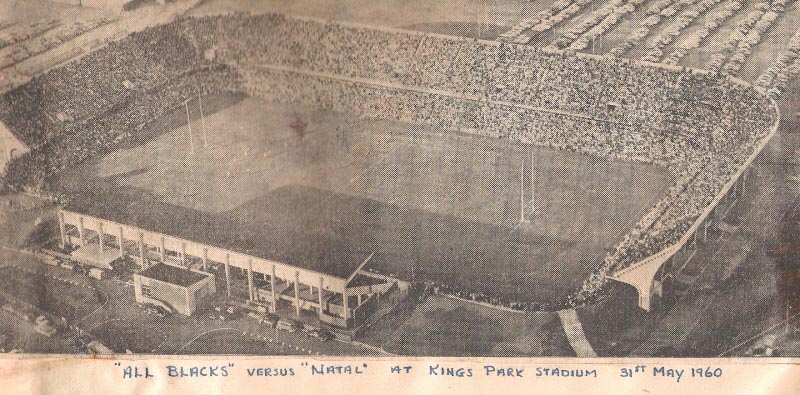
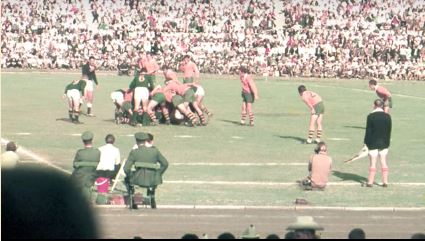
In 1969 a bunch of us were taken to Durban to watch a rugby test match – Springboks against the Australian Wallabies. “Our” Tommy Bedford was captain of the ‘Boks. We didn’t know it, but it was to be one of his last games.
– Boks 16 – Aussies 9 –
Schoolboy “seats” were flat on your bum on the grass in front of the main stand at Kings Park. Looking around we spotted old Ella Bedford – “Mis Betfit” as her pupils called her – Harrismith’s English-as-second-language teacher. Also: Springbok captain’s Mom! Hence our feeling like special guests! She was up in the stands directly behind us. Sitting next to her was a really spunky blonde so we whistled and hooted and waved until she returned the wave.
– This is Ella, a Harrismith teacher’s son –
Back at school the next week ‘Mis Betfit’ told us how her daughter-in-law had turned to her and said: “Ooh look, those boys are waving at me!” And she replied (and some of you will hear her tone of voice in your mind’s ear): “No they’re not! They’re my boys. They’re waving at me!”
We just smiled, thinking ‘So, Mis Betfit isn’t always right’. Here’s Jane. We did NOT mistake her for Mis Betfit.
“corrections of corrections of corrections”
Mrs Bedford taught English to people not exactly enamoured of the language. Apparently anything you got wrong had to be fixed below your work under the heading “corrections.” Anything you got wrong in your corrections had to be fixed under the heading “corrections of corrections.” Mistakes in those would be “corrections of corrections of corrections.” And so on, ad infinitum, ad nauseum and ad weereens! She never gave up. You WOULD get it all right eventually!
Stop Press! Today I saw an actual bona-fide example of this! Schoolmate Gerda van Schalkwyk has kept this for nigh-on fifty years!
– genuine rare Harrismith Africana ! – or is that Engelscana? –
~~oo0oo~~
Tommy’s last game for the Springboks came in 1971 against the French – again in Durban.
~~oo0oo~~
Two or three years later:
In matric the rugby season started and I suddenly thought: Why’m I playing rugby? I’m playing because people think I have to play rugby! I don’t.
So I didn’t.
It caused a mild little stir, especially for Ou Vis, mnr Alberts, in the primary school. He came up from the laerskool specially to politely voice his dismay. Nee man, jy moet ons tweede Tommy Bedford wees! he protested. That was optimistic. I had played some good rugby when I shot up and became the tallest in the team, not because of any real talent for the game – as I went on to prove.
~~oo0oo~~
weereens – again n again
ou Vis – nickname meaning old fish – dunno why
Nee man, jy moet ons tweede Tommy Bedford wees! – Don’t give up rugby. You should become our ‘second Tommy Bedford’ – Not.
~~oo0oo~~
Meantime Jane Bedford has become famous in her own right in the African art world and Durban colonial circles, and sister Sheila and Jane have become good friends.
~~oo0oo~~
Also meanwhile, our sterling Mrs Bedford’s very famous brother – one of twelve siblings – Lourens vd Post, turned out to be a real cad a fraud, an adulterer and a downright liar. Fooled Prince Charlie, but then, that’s hardly a difficult achievement. The vegetables he talks to probably tell him fibs.
I canoed the Vrystaat Vlaktes thanks to Charles Ryder, who arrived in Harrismith in about 1968 or ’69 I’d guess, to start his electrical business, a rooinek from Natal. He roared into town in a light green Volvo 122S with a long white fibreglass thing on top of it like this:
I asked: What’s that? It’s a canoe What’s a canoe? You do the Dusi in it What’s the Dusi?
Well, Charlie now knew he was deep behind the boerewors curtain! He patiently made me wiser and got me going and I got really excited the more I learned. I decided I just HAD TO do the Dusi. What could be more exciting than paddling your own canoe 120km over three days from Pietermaritzburg to the sparkling blue Indian Ocean at the Blue Lagoon in Durban? Charlie made it sound like the best, most adventurous thing you could possibly think of. He showed me how to paddle (how was I to know at the time he was making me a ‘Left Feather’?) and was so generous with his time. Both in paddling and with Harrismith’s first Boy Scouts troop, which he helped establish.
I started running in the mornings with a gang of friends. Tuffy Joubert, Louis Wessels, Fluffy Crawley, Leon Blignaut, who else? We called ourselves the mossies as we got up at sparrow’s fart (and because we weren’t makoue. A teacher named Makou trained our rivals. We couldn’t join them cos we considered ourselves untrainable). Then I would cycle about two miles to the park in the afternoons and paddle on the flat water of the mighty Vulgar River in Charles’ Limfjorden, or Limfy, canoe, which he had kindly lent me/given to me. It was the fittest I’ve ever been, before or since.
Overnight I would leave it on the bank tethered to a weeping willow down there. One day around Christmas time with only a couple of weeks to go before Dusi I got there and it was missing. I searched high and low, to no avail. So I missed doing the Dusi. Not that I had done anything but train for it – I hadn’t entered, didn’t know where to, didn’t belong to a club, didn’t have a lift to the race, no seconds, nothing!
Still enthused, though, I persuaded my mate Jean Roux to join me in hitch-hiking to the race. We were going to do the Duzi! All except the part where you used a boat.
We got to Pietermaritzburg, and early the next morning to the start in Alexander Park. Milling around among the competitors and their helpers, we watched the start and as the last boats paddled off downstream Alexandra Park started emptying, everyone seemed in a big hurry to leave. We asked Wassup? and someone said, We’re Following Our Paddler! so we bummed a lift with some paddler’s seconds to the overnight stop at Dusi Bridge. We slept under the stars and cadged supper from all those friendly people. They let us continue with them the next day to the second overnight stop at Dip Tank and on the third and last day to the sea, the estuary at Blue Lagoon, following the race along the way. In Durbs we slept on the beach, but were herded off it by the cops, so we slept on the stoep at the Point Road police station – and that’s another story! And then I spose we hitched back to Harrismith – I can’t remember – must ask Jean.
Back in the City of Sin and Laughter I continued the search for my missing Limfy, and eventually found a bottle floating in the Kakspruit, a little tributary that flows down from Platberg and enters the river downstream of the weir. I was born on the left bank of this Kakspruit about 5km upstream of here. The bottle had a string attached to it. I pulled that up and slowly raised the boat – now painted black and blue, but clearly identifiable as I had completely rebuilt it after breaking it in half in a rapid in the valley between Swinburne and Harrismith. Come to remember, that’s why Charles gave it to me! I knew every inch of that boat: the kink in the repaired hull, the repaired cockpit, the wooden gunwales, brass screws, shaped wooden cross members, long wooden stringer, shaped wooden uprights from the cross members vertically up to the stringer, the white nylon deck, genkem glue to stick the deck onto the hull before screwing on the gunwales, the brass carrying handles, aluminium rudder and mechanism, steel cables, the lot. In great detail.
~~oo0oo~~
Except! I recently (2020) cleared out my garage under lockdown and discovered this: My notes preparing for the Duzi! I was less disorganised than I remember. I may not have DONE much, but at least I did do a bit of planning! Check: “Phone Mr Pearce” (Duzi boss) – not done; and “Buy canoe?” – not done; uh, OK, maybe not so very well organised!
Once chosen as a Rotary Exchange Student in 1972, I had to get to Durban to get my passport done and – I think – some other paperwork; My big mate Leon Fluffy Crawley hitch-hiked down with me. On the way down – or on the way back – we called in at big sister Barbara where she was staying in the Pietermaritzburg YWCA. We met her friend Lyn there.
That’s about all I remember! Luckily, Fluffy remembers it too!
Other hitch hiking at school was to Witsieshoek with Claudio and Carlos.
Hitch hike to Bloemfontein with Jean Roux to watch a rugby test.
The picture is the group of Rotary exchange students chosen in 1972 for 1973. It may have been taken at the airport, about to leave. If so, it was students from all over South Africa, leaving for all over the world. Kneeling next to me is the guy who went jolling with me in New York; Seated next to him is Eve Woodhouse from Durban, who ended up in a village Fort Cobb near mine – Apache – in Oklahoma; Right behind me is Lynn Wade from Vryheid.
A lovely post on Women in Ornithology by ornithology historian Bob Montgomerie led me to thinking about Women in – well, My Working Life.
First there was Mom. Mary Methodist. In the Platberg Bottle Store. And Annemarie Maeder, also in the bottle store with Mom. Mom ran the shop, ran the home, played the church organ, was a member of the church Women’s Auxiliary and the MOTHs MOTHWAs. Always involved and ready to help. Annemarie, too, ran her home with husband and three kids.
In the background, too, was our ‘panel of Moms’ – Moms of all your friends. Prominent ones were Jean Coleman, Joan du Plessis, Joyce Joubert, Polly Crawley, Harriet vdMerwe, Emma Morton and others.
Next were women in Apache Oklahoma – all working, all capable: Carol Crews, Joyce Swanda, Katie Patterson, Jackie Lehnertz, Virginia Darnell, Odie Mindemann, Pug Hrbacek, Janie Payne, Peggy Manar . .
When I started my first own practice in 1981 up on the seventh floor of Eagle Building in Murchies Passage between Smith and West Streets in Durban, there was Merle Oosthuizen. I walked in as owner and boss and was lucky enough to have Merle recommended to me as a ‘receptionist.’ Well, ‘receptionist’ indeed. Where’s the appointment book? she asked. Appointment book? I said. The receipt book? Receipt book? She soon twigged my capabilities and knowledge and quietly took over, becoming the Practice Manager and the Me Manager.
Where are you staying? she asked the first day, when she learned I’d just come out of the army. Oh, in a residential hotel, I said. She nodded, satisfied. Some weeks later I breezily told her I’d rented a flat. Do you have a bed? A bed? Bedclothes? Bedclothes? Um . .
Of course she could spot easily how this child masquerading as a man hadn’t a clue. She bought all the above and more for me; and she had all the stuff you need to live a bachelor existence delivered to the flat by the bed and furniture sales people. My first duvet, a kettle, a toaster. Even a fridge.
She was so organised I could say casually to anyone who asked: ‘Oh, I have it all under control. No worries,’ as she organised my practice and my life.
She ruined me. Ever since then I have had capable practice managers run my practice and my life – and I have consequently learnt very little myself. I simply do as I’m told. Later on, twenty six years with Aitch just re-inforced that pattern at home, too.
My usual response to their pointed suggestions along the lines of roer jou gat is, ‘Um, Yes of course, I was just about to do that . . ‘
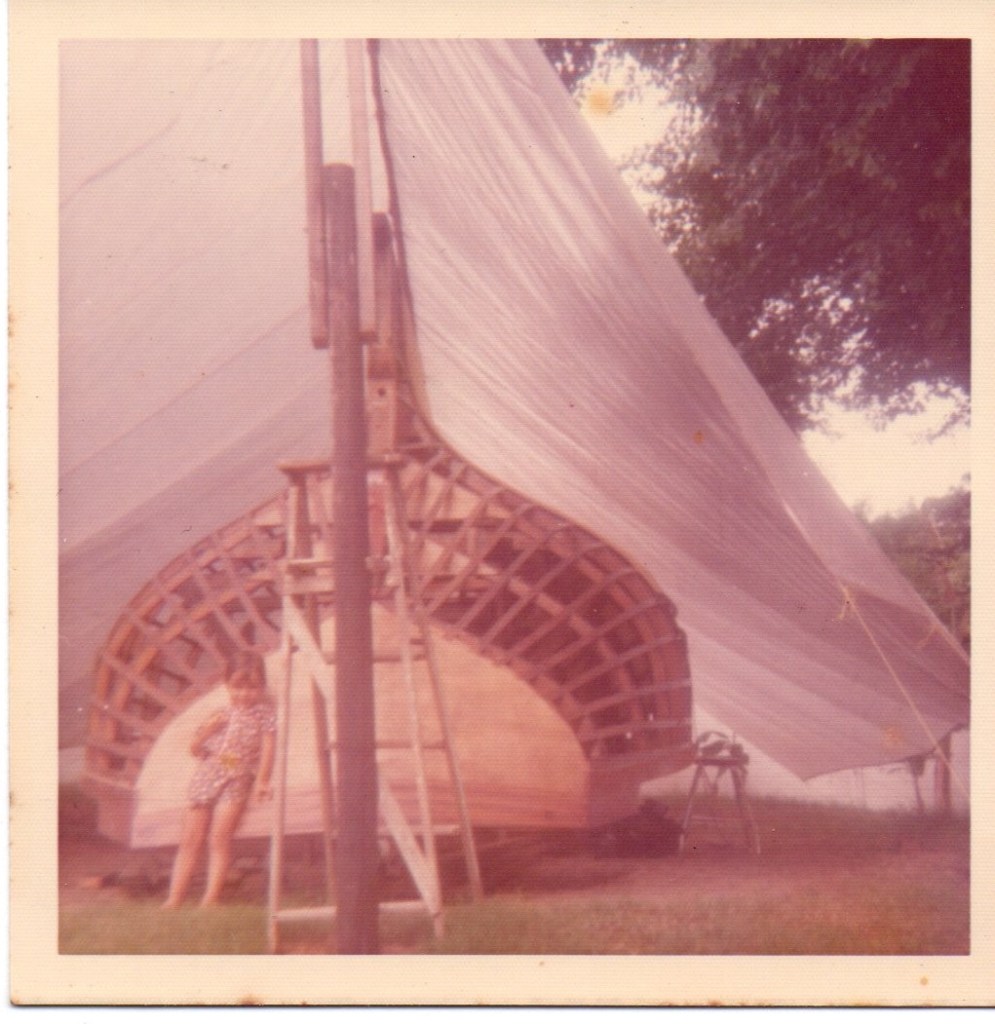
Long before Zimbali became an over-priced gated estate for the rich to hide in, Manfred Bacher, augenoptikermeister from Austria aus, built a yacht in his Umhlanga backyard and called it Zimbali. Or SMS Zimbali, I’d say. He said Zimbali meant ‘forever young,’ which is what he wished for himself and might have been if it wasn’t for the beer and the cigarettes. In isiZulu izimbali means flowers or blossoms, but Manfred always did cruise and sail to the beat of his own drum.
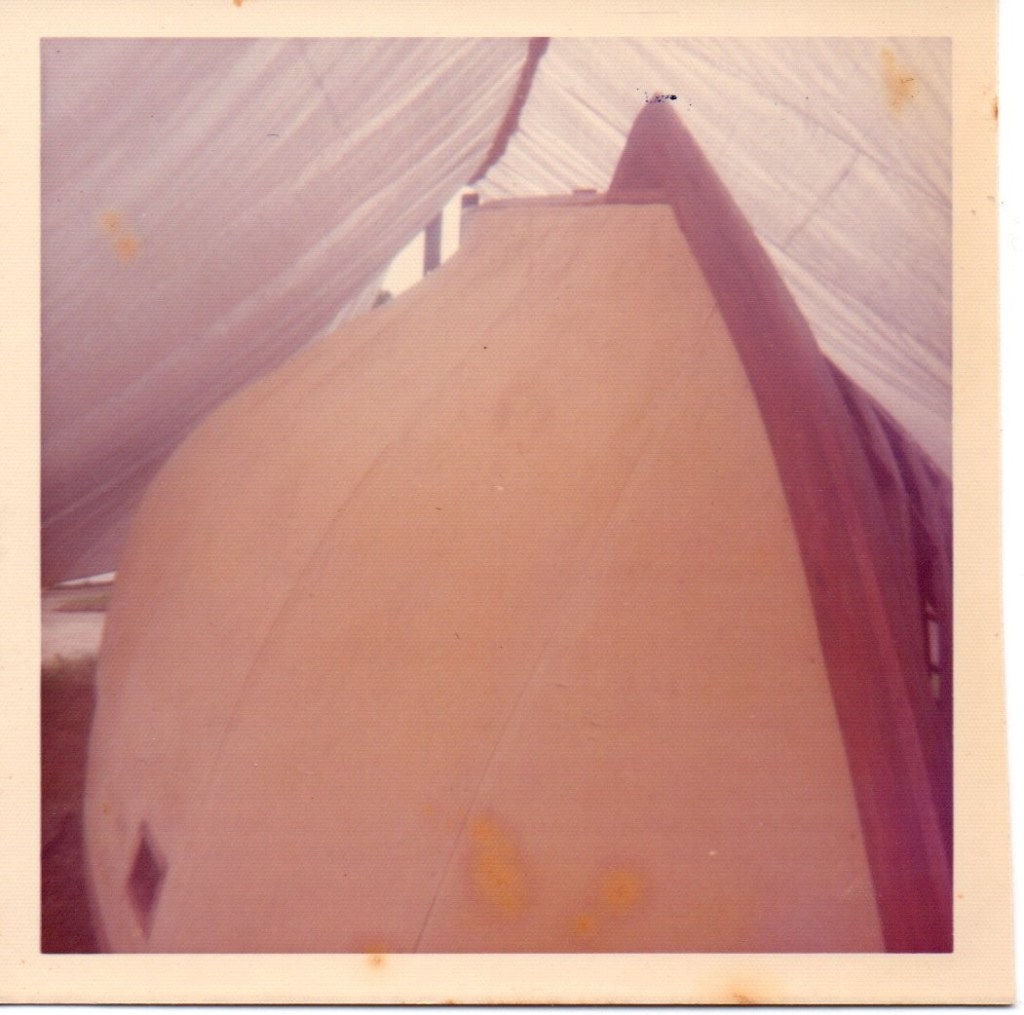
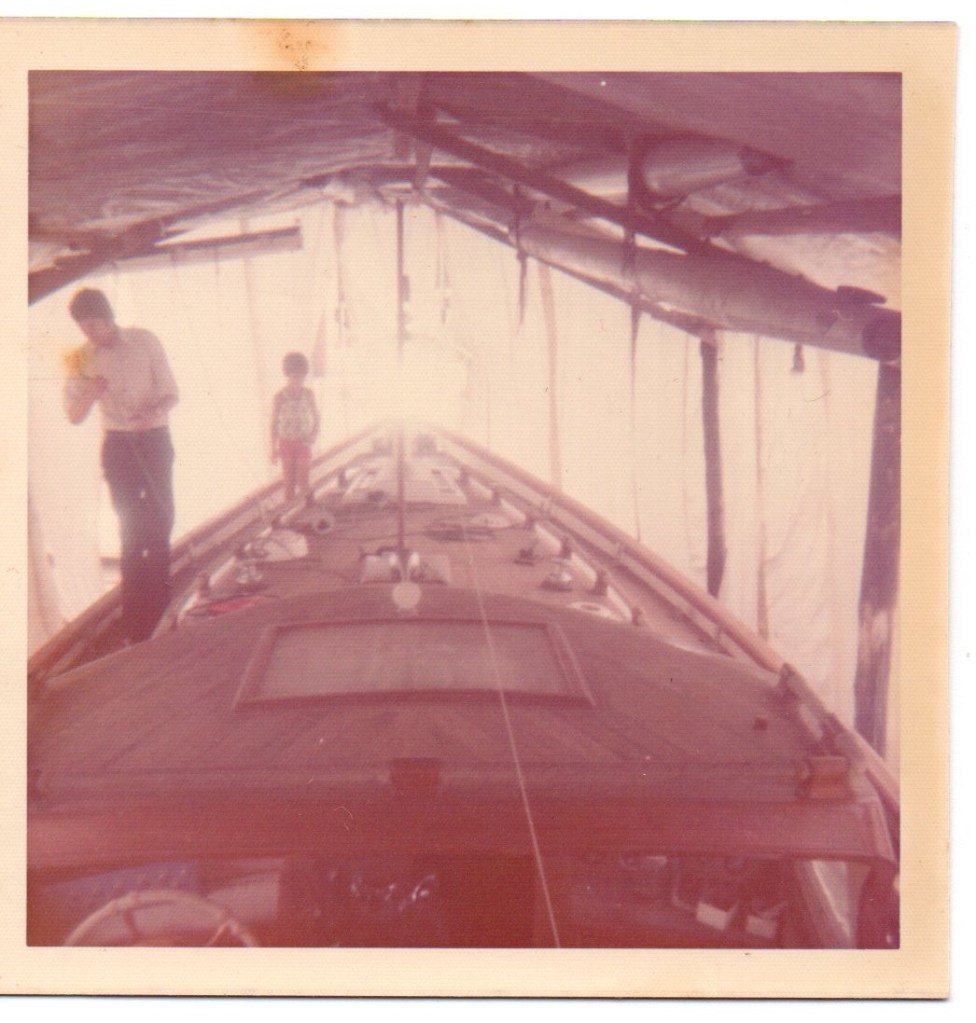
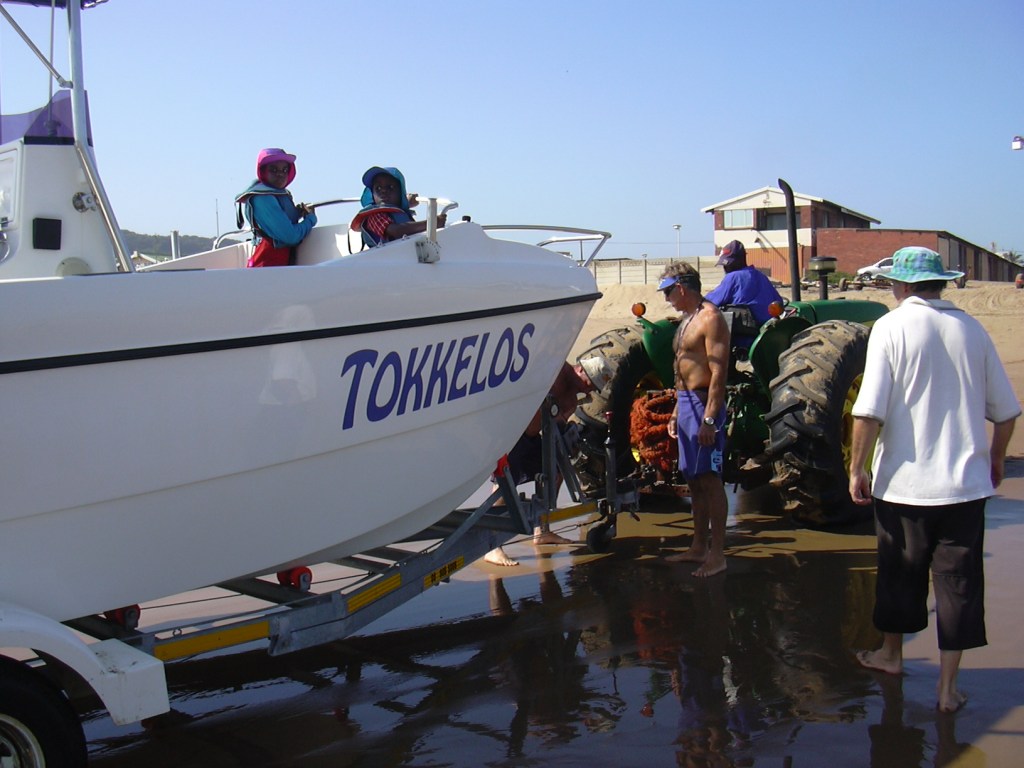
The boat was a beauty. I hope someone has pictures of it. (update: Yes! Steve Reed had these pics). Beautifully finished in carved and highly-polished dark wood. My part in its construction consisted of visiting Umhlanga after work with big buddy Steve Reed, Manfred’s protégé oogkundige. We’d sit in its cabin in the Umhlanga backyard drinking quarts of beer and listen to Manfred wax lyrical. If I remember right, it was built in two locations: it was moved to the Umhlanga new home from somewhere else?
I missed the actual launch day when it was ferried to the harbour and lifted off a trailer and lowered into the salty water, but I then visited it again to sit in the cabin drinking quarts of beer and listen to Manfred wax lyrical while it bobbed up and down and the sheets and cables clanked in the wind. Once after enough beer I climbed right up to the top of the mast and enjoyed the swaying to and fro high above all the other boats in the yacht mole. Wonderful view at night with a million lights reflecting off the oily water. I made it down safely, sanks goodness, as Manfred would have said.
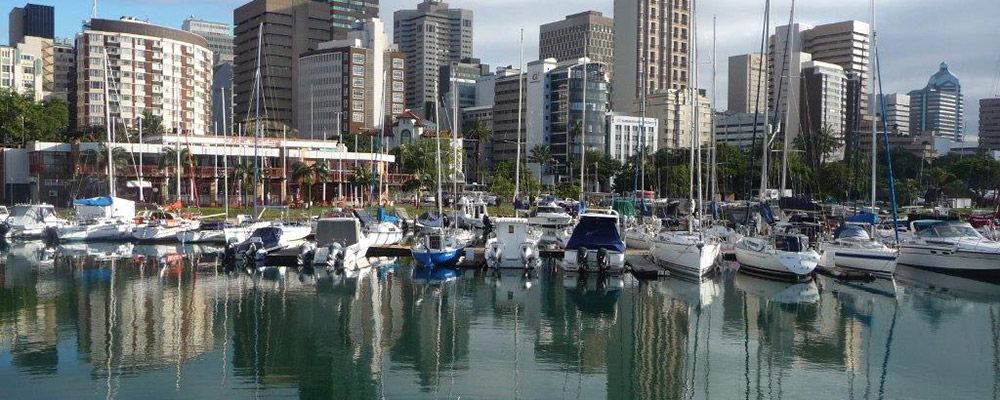
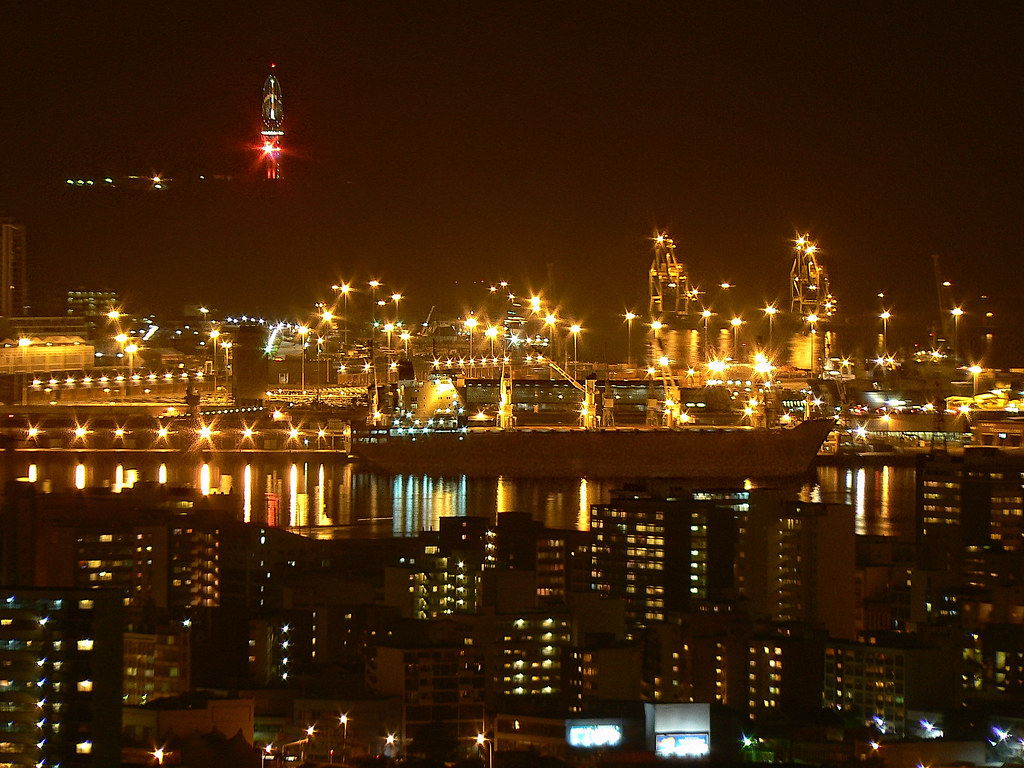
– internet pics – Durban Harbour –
Roomerazzit Zimbali only ever made one trip out of the mouth – never again were the sails hoisted till Manfred sold it. It remained moored as a convenient boys gathering place. Again, some may know better and I’d love to hear.
~~~oo0oo~~~
augenoptikermeister – optician
oogkundige – augenoptikermeister
The kaiserliche und konigliche kriegsmarine, sometimes shortened to k.u.k. kriegsmarine, was the naval force of Austria-Hungary. Ships of the k.u.k. kriegsmarine were designated SMS, for Seiner Majestat Schiff (His Majesty’s Ship).
Greg Bennett told me about his latest Yamaha outboard motor over coffee the other morning – a 425hp V8 5.6litre beast. “Stands taller than me with my hand stretched skywards” he said.
– big mama –
This reminded me of the time we went out to Hazelmere to test his then-biggest outboard motor: I think it was 225hp.
I was slalom skiing behind the beast when I felt a twinge in my hamstring and immediately let go, faithful to my exercise mantra of No Pain, No Pain.
Greg whipped the boat around and roared up to me. “What’s up, Swanie?”, bellowed his big boet Roland.
I think I pulled a muscle, I said.
Roley roared with laughter. “NO! Swanie, can’t be! You couldn’t have pulled a muscle. You must have pulled a fat!” Rude bastid.
We’re all exhorted to Sieze the Day! Carpe diem, said Horace. Grab Opportunities as they arise! Well, some people do just that.
I was reading about Andrew Geddes Bain, geologist, road engineer, palaeontologist and explorer in the Cape up to 1864, and his son Thomas Charles Bain, road engineer in the Cape up to 1888, when it suddenly struck me!
First, let’s see what these two very capable men achieved: Andrew Geddes Bain was in charge of the building of eight mountain passes, including the famous Bain’s Kloof Pass, which opened up the route to the interior from Cape Town. And he (and his wife) had about thirteen children. His son Thomas Charles Bain saw to the building of nineteen passes! His crowning glory was the Swartberg Pass that connects Oudtshoorn in the Little Karoo with Prince Albert beyond the Swartberg mountains in the open plains of the Great Karoo. And he (and his wife) also had about thirteen children.
And I suddenly knew exactly what happened when my Great-Grandfather Stewart Bain and his brother James Bain got off the ship in Durban in 1880. They were fishermen from the tiny fishing village of Wick, in the far north-eastern corner of Scotland, used to being ‘knee-high in brine, mud, and herring refuse.’ * They left Wick and gave up fishing some time after an uncle Stewart had drowned in a fierce storm while out fishing off Wick in one of those little boats. They got onto bigger boats and headed for warmer climes in the colonies: Durban, Natal.
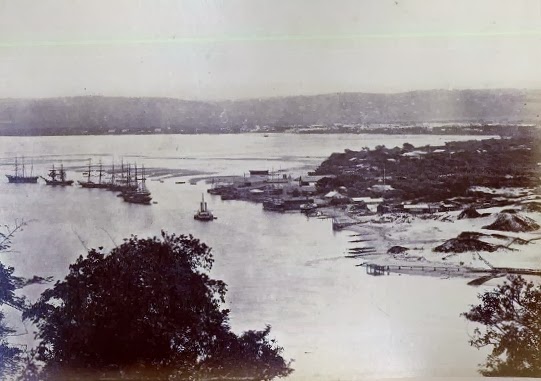
– Durban harbour ca.1880 looking inland from the Bluff, showing the Point at right –
When they arrived in Durban people asked them: ‘Bain? Are you the famous Bain road builders? We need road builders here. Can you build bridges too?’
And I know just what the brothers Bain said. ‘Roads? Och aye, we can build roads. And bridges? We can build them with one hand tied behind our back.’ You know, the old, ‘You’re payin’ how much to do that? Well, you’re in luck. I Happen to be Very Good at it . . . ‘
– some nice bridges there – this one in Swinburne –
And so they built the railway bridges between Ladysmith and Harrismith, utilising their herring netting experience, learning as they went, ‘upskilling’ – thus goes this theory of mine – no doubt with the help of African labourers who had done this before.
And thereby they helped the railroad reach that wonderful picturesque town in the shadow of Platberg, so that I could be born. This subterfuge and venture made them enough money to buy the Railway Hotel (Stewart; he re-named it the Royal cos every Saffrican town has to have one), and build the Central Hotel (James); Then they could marry, have children – only about nine and eight apiece, though – and become leading citizens of their adopted dorp in Die Oranje Vrijstaat Republiek, a sovereign non-British country.
Then: One of Stewart ‘Oupa’ and Janet ‘Ouma’ Bain’s nine ‘Royal Bain’ children Annie, had two daughters; and one of those – Mary – had me! And here I am.
~~oo0oo~~
Think I’m being unkind to Wick, village of my ancestors? Read what Robert Louis Stevenson wrote about Wick to his mother when he stayed there in 1868:
‘Certainly Wick in itself possesses no beauty: bare, grey shores, grim grey houses, grim grey sea; not even the gleam of red tiles; not even the greenness of a tree. The southerly heights, when I came here, were black with people, fishers waiting on wind and night. Now all the boats have beaten out of the bay, and the Wick men stay indoors or wrangle on the quays with dissatisfied fish-curers, knee-high in brine, mud, and herring refuse. The day when the boats put out to go home to the Hebrides, the girl here told me there was ‘a black wind’; and on going out, I found the epithet as justifiable as it was picturesque. A cold, BLACK southerly wind, with occasional rising showers of rain; it was a fine sight to see the boats beat out a-teeth of it. In Wick I have never heard any one greet his neighbour with the usual ‘Fine day’ or ‘Good morning.’ Both come shaking their heads, and both say, ‘Breezy, breezy!’ And such is the atrocious quality of the climate, that the remark is almost invariably justified by the fact. The streets are full of the Highland fishers, lubberly, stupid, inconceivably lazy and heavy to move. You bruise against them, tumble over them, elbow them against the wall — all to no purpose; they will not budge; and you are forced to leave the pavement every step.’
~~oo0oo~~
Now read a sterling and spirited defence of our ancestral Scottish dorp by Janis Paterson – a feisty distant cousin, and also a descendant of the Bains of Wick; who read my post and reached for her quill (I have paraphrased somewhat):
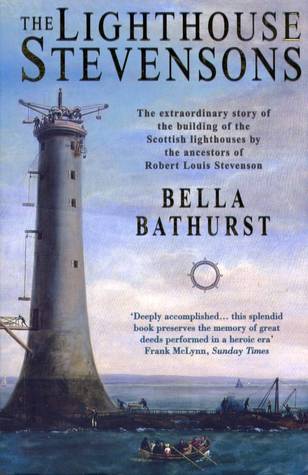
Ya boo sucks to RLS! Robert Louis Stevenson was a sickly child. His father and his uncles were engineers who built lighthouses all over Scotland. Robert was sent to Wick, likely to get involved in building a breakwater there with his Uncle. But he was more interested in writing stories and was just not cut out for this sort of work. I believe he was also ill while in Wick. The first attempt at building the breakwater was washed away during a storm and also the second attempt. The work was then abandoned. I therefore propose that Robert just didn’t want to be in Wick, was ill, fed up with the weather and just wanted to get away to concentrate on his writing. The Stevenson family must have been excellent engineers, as all the lighthouses are still standing. Did Robert also feel that he was a failure as an apprentice engineer?
Stick it to him, Janis! How dare he call Wick fishy? Or smelly!? Or breezy!? Even if it was! Just cos a dorp is fishy smelly and breezy doesn’t mean strangers can call it fishy smelly and breezy!
Janis adds ‘Read this book review:’ ‘ . .fourteen lighthouses dotting the Scottish coast were all built by the same Stevenson family that produced Robert Louis Stevenson, Scotland’s most famous novelist. Who, unlike the rest of his strong-willed, determined family, was certainly not up to the astonishing rigours of lighthouse building.’
Janis was right! 😉 All HE could do was scribble. Like me. But better.
Lots of confusion about the Baines, Baynes and Bains, so Prof Emeritus at UNISA Jane Carruthers set about unravelling eleven of them here in an article titled, The Bane(s) of South African Historians: https://www.theheritageportal.co.za/article/banes-south-african-historians?utm_source=substack&utm_medium=email – Road-builders, hoteliers, preachers, artists and one good trade unionist who fought for the poor honest working people and so gets the appellation “notorious!” Also, a Donald Bain of fighting for a Bushman Homeland Fame was born of a father who, like our Oupa Bain, was from Wick, so possibly related and may also have smelt of herring when he first got to South Africa.
~~oo0oo~~
On our big Karoo / Garden Route tour in 2023 Jess and I stopped at a monument to the original road-building Bains who I say inspired our newly-arrived, soon-to-be Vrystaat Bains to do likewise.
~~oo0oo~~
Later I found this on the Ladysmith to Harrismith extension of the rail line. Maybe the Bain bros got a piece of this action?
LADYSMITH – VAN REENEN – HARRISMITH
After the survey for the rail link from Ladysmith to Van Reenen was finalised, the route was pegged out in June 1889. A junction was formed a mile north of Ladysmith Station, recorded as 190¼ miles from Durban and 3350ft asl, and appropriately named Orange Free State Junction. However, terminating the line at Van Reenen was not considered very remunerative, and tapping into the OFS’s rich agricultural eastern region would make the undertaking more profitable. Negotiations with the OFS Volksraad resulted in the Natal Railway Administration being granted the sole right to build, equip and operate the extension from Van Reenen to Harrismith. Representatives of both Governments met in Harrismith on 25 February 1890 to work out the agreement’s details. In terms of the agreement signed on 24 June 1890, the railway was to be completed within three years of the turning of the first sod. Significantly, while profits would be equally shared between the two Governments, all operating losses would be borne by Natal alone. The Free State could, at any time, after giving six months’ notice, take over the railway at the cost of its original construction and any other capital expenditure.
Contracts for the earthworks and masonry culverts from Van Reenen to Harrismith were awarded on 22 January 1891†. The route generally followed the course of the Wilge River, graded at 1 in 80 with 600ft minimum radius curves. The energetic approach of the work crews completed the extension four months ahead of schedule. The extension from Van Reenen to Harrismith was taken into use on 13 July 1892. Initially, there was only one station, Albertina, later renamed Swinburne, between Van Reenen and Harrismith.
Distance from Durban, elevation in feet
Van Reenen 226 5520·49 Staging Station at the Natal/OFS border
Albertina 234¼ 5408·46 Passing Station
Harrismith 249½ 5322·30 Temporary Terminus
† The section from Van Reenen to Harrismith was built and operated by the NGR under an agreement signed on 24 June 1890 between the Orange Free State Volksraad and the Natal Colonial Government. The Orange Free State Volksraad authorised the Natal Railway Administration to construct, maintain and work, at its own risk, the line from Van Reenen to Harrismith. The working of the line was taken over by the CENTRAL SOUTH AFRICAN RAILWAYS (CSAR) in November 1903. No construction maintenance was allowed under capital expenditure (Under Law 29 of 1890, a sum of £260 000 was authorised for the construction of this section).
This ‘Bain’s Railway Map, c. 1903’ must surely be one of the famous Bains?
A visit to Tuffy, then stationed on the Bluff in Durban with Recce Battalion was a happy reunion. There he was in uniform and me with long hair, his student mate from Harrismith. He introduced me to his sergeant ‘Vingers’ Kruger and all his comrades and announced we’d be partying tonight.
We started off at the famous / notorious Smugglers Inn off Point Road and had a good few there, warming up to a fun night on the tiles. On our way out, en route to a nice place one of the guys knew where ladies would remove their tops with sufficient encouragement, we heard shouting – screaming really – in the alley next to the entrance to Smuggies: ‘You’re married to my sister and here I catch you fucking a man!’ We didn’t wait to hear the fellow’s explanation for his errant behaviour – the other side of the story, y’know, in fairness – but there were some smacking sounds.
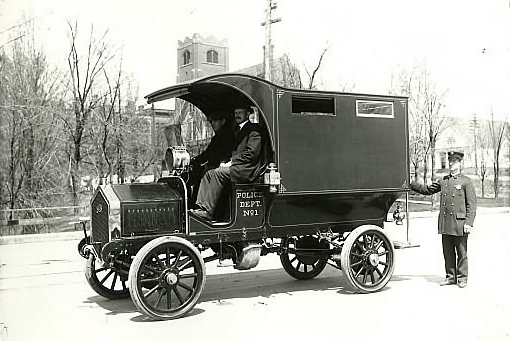
Later outside another nightclub a few insults thrown around started a fight between some of the short-haired soldiers and a group of longer-haired ‘civvies’. In the interests of transparency, one of our boys had started it. It soon developed into a brawl and the cops were there in a flash. They took no nonsense and a number of prisoners, throwing anyone near the fighting indiscriminately into the back of the black maria. Which was grey, not black. I tried to explain how very innocent I was, having hung back and danced around the edges of the fight, but was told to fokkin keep quiet and shoved into the van.
like this, just newer; and grey; with mesh windows
As we huddled uncomfortably and with foreboding with some of the okes who minutes before had been throwing punches at us – OK, for me, potentially anyway – I saw through the mesh window Sersant Vingers having a quiet word with the cop in charge. Probably something about fellows-in-uniform, our obvious innocence, how little we’d had to drink, how the blackguards had attacked us, look at their hairstyles and other good, if biased, points. The cop in charge nodded and approached the door of our van. As Vingers pointed out his men – we all looked the same in civilian clothes – the cop brusquely shouted ‘You, you and you! OUT!’ Thankfully Vingers included me among ‘his’ men. Any friend of Tuffy’s was a friend of Vingers’.
Once Vingers had counted his men he trooped us back into the club with a grin for a victory drink, with lots of congratulatory slaps raining down on his back. ‘Justice’ had been served.














 Vrystaat Confessions