I was born in Harrismith in 1955, as was Mom Mary in 1928, and her Mom Annie in 1893. Annie thought “the queen” of that little island above and left of France was also the queen of South Africa (and for much of her life she was right!).
I attended the plaaslike schools in Harrismith till 1972. A year in the USA in 1973 as a Rotary exchange student in Apache Oklahoma. Studied optometry in Joburg 1974 – 1977. Worked in Hillbrow and Welkom in 1978. Army (Potch and Roberts Heights, now Thaba Tshwane – in between it was Voortrekkerhoogte) in 1979 and in Durban (Hotel Command and Addington Hospital) in 1980.
I stayed in Durban, paddled a few rivers, and then got married in 1988. About then this blog’s era ends and my Life With Aitch started. Post-marriage tales and child-rearing catastrophes are told in Bewilderbeast Droppings.
‘Strue!! – These random, un-chronological and personal memories are true of course. But if you know anything about human memory you’ll know that with one man’s memory comes: Pinch of Salt. Names have been left unchanged to embarrass the friends who led me (happily!) astray. Add your memories – and corrections – and corrections of corrections! – in the comments if you were there.
~~~oo0oo~~~
Note: I go back to my posts to add / amend as I remember things and as people mention things, so the posts evolve. I know (and respect) that some bloggers don’t change once they’ve posted, or add a clear note when they do. That’s good, but as this is a personal blog with the aim of one day editing them all into a hazy memoir, this way works for me. So go’n re-look at some posts you’ve enjoyed before and see how I’ve improved over time (!). It’s just as my friend Greg says: ‘The older we get, the better we were.’
We’re all exhorted to Sieze the Day! Carpe diem, said Horace. Grab Opportunities as they arise! Well, some people do just that.
I was reading about Andrew Geddes Bain, geologist, road engineer, palaeontologist and explorer in the Cape up to 1864, and his son Thomas Charles Bain, road engineer in the Cape up to 1888, when it suddenly struck me!
First, let’s see what these two very capable men achieved: Andrew Geddes Bain was in charge of the building of eight mountain passes, including the famous Bain’s Kloof Pass, which opened up the route to the interior from Cape Town. And he (and his wife) had about thirteen children. His son Thomas Charles Bain saw to the building of nineteen passes! His crowning glory was the Swartberg Pass that connects Oudtshoorn in the Little Karoo with Prince Albert beyond the Swartberg mountains in the open plains of the Great Karoo. And he (and his wife) also had about thirteen children.
And I suddenly knew exactly what happened when my Great-Grandfather Stewart Bain and his brother James Bain got off the ship in Durban in 1880. They were fishermen from the tiny fishing village of Wick, in the far north-eastern corner of Scotland, used to being ‘knee-high in brine, mud, and herring refuse.’ * They left Wick and gave up fishing some time after an uncle Stewart had drowned in a fierce storm while out fishing off Wick in one of those little boats. They got onto bigger boats and headed for warmer climes in the colonies: Durban, Natal.
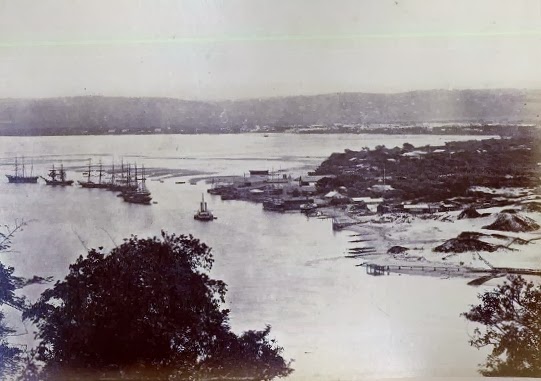
– Durban harbour ca.1880 looking inland from the Bluff, showing the Point at right –
When they arrived in Durban people asked them: ‘Bain? Are you the famous Bain road builders? We need road builders here. Can you build bridges too?’
And I know just what the brothers Bain said. ‘Roads? Och aye, we can build roads. And bridges? We can build them with one hand tied behind our back.’ You know, the old, ‘You’re payin’ how much to do that? Well, you’re in luck. I Happen to be Very Good at it . . . ‘
– some nice bridges there – this one in Swinburne –
And so they built the railway bridges between Ladysmith and Harrismith, utilising their herring netting experience, learning as they went, ‘upskilling’ – thus goes this theory of mine – no doubt with the help of African labourers who had done this before.
And thereby they helped the railroad reach that wonderful picturesque town in the shadow of Platberg, so that I could be born. This subterfuge and venture made them enough money to buy the Railway Hotel (Stewart; he re-named it the Royal cos every Saffrican town has to have one), and build the Central Hotel (James); Then they could marry, have children – only about nine and eight apiece, though – and become leading citizens of their adopted dorp in Die Oranje Vrijstaat Republiek, a sovereign non-British country.
Then: One of Stewart ‘Oupa’ and Janet ‘Ouma’ Bain’s nine ‘Royal Bain’ children Annie, had two daughters; and one of those – Mary – had me! And here I am.
~~oo0oo~~
Think I’m being unkind to Wick, village of my ancestors? Read what Robert Louis Stevenson wrote about Wick to his mother when he stayed there in 1868:
‘Certainly Wick in itself possesses no beauty: bare, grey shores, grim grey houses, grim grey sea; not even the gleam of red tiles; not even the greenness of a tree. The southerly heights, when I came here, were black with people, fishers waiting on wind and night. Now all the boats have beaten out of the bay, and the Wick men stay indoors or wrangle on the quays with dissatisfied fish-curers, knee-high in brine, mud, and herring refuse. The day when the boats put out to go home to the Hebrides, the girl here told me there was ‘a black wind’; and on going out, I found the epithet as justifiable as it was picturesque. A cold, BLACK southerly wind, with occasional rising showers of rain; it was a fine sight to see the boats beat out a-teeth of it. In Wick I have never heard any one greet his neighbour with the usual ‘Fine day’ or ‘Good morning.’ Both come shaking their heads, and both say, ‘Breezy, breezy!’ And such is the atrocious quality of the climate, that the remark is almost invariably justified by the fact. The streets are full of the Highland fishers, lubberly, stupid, inconceivably lazy and heavy to move. You bruise against them, tumble over them, elbow them against the wall — all to no purpose; they will not budge; and you are forced to leave the pavement every step.’
~~oo0oo~~
Now read a sterling and spirited defence of our ancestral Scottish dorp by Janis Paterson – a feisty distant cousin, and also a descendant of the Bains of Wick; who read my post and reached for her quill (I have paraphrased somewhat):
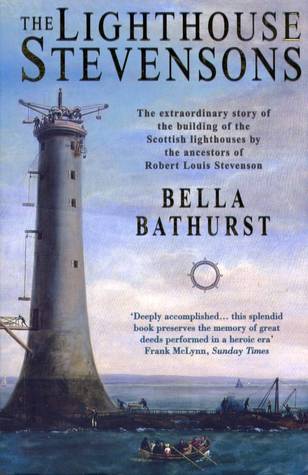
Ya boo sucks to RLS! Robert Louis Stevenson was a sickly child. His father and his uncles were engineers who built lighthouses all over Scotland. Robert was sent to Wick, likely to get involved in building a breakwater there with his Uncle. But he was more interested in writing stories and was just not cut out for this sort of work. I believe he was also ill while in Wick. The first attempt at building the breakwater was washed away during a storm and also the second attempt. The work was then abandoned. I therefore propose that Robert just didn’t want to be in Wick, was ill, fed up with the weather and just wanted to get away to concentrate on his writing. The Stevenson family must have been excellent engineers, as all the lighthouses are still standing. Did Robert also feel that he was a failure as an apprentice engineer?
Stick it to him, Janis! How dare he call Wick fishy? Or smelly!? Or breezy!? Even if it was! Just cos a dorp is fishy smelly and breezy doesn’t mean strangers can call it fishy smelly and breezy!
Janis adds ‘Read this book review:’ ‘ . .fourteen lighthouses dotting the Scottish coast were all built by the same Stevenson family that produced Robert Louis Stevenson, Scotland’s most famous novelist. Who, unlike the rest of his strong-willed, determined family, was certainly not up to the astonishing rigours of lighthouse building.’
Janis was right! 😉 All HE could do was scribble. Like me. But better.
Lots of confusion about the Baines, Baynes and Bains, so Prof Emeritus at UNISA Jane Carruthers set about unravelling eleven of them here in an article titled, The Bane(s) of South African Historians: https://www.theheritageportal.co.za/article/banes-south-african-historians?utm_source=substack&utm_medium=email – Road-builders, hoteliers, preachers, artists and one good trade unionist who fought for the poor honest working people and so gets the appellation “notorious!” Also, a Donald Bain of fighting for a Bushman Homeland Fame was born of a father who, like our Oupa Bain, was from Wick, so possibly related and may also have smelt of herring when he first got to South Africa.
~~oo0oo~~
On our big Karoo / Garden Route tour in 2023 Jess and I stopped at a monument to the original road-building Bains who I say inspired our newly-arrived, soon-to-be Vrystaat Bains to do likewise.
~~oo0oo~~
Later I found this on the Ladysmith to Harrismith extension of the rail line. Maybe the Bain bros got a piece of this action?
LADYSMITH – VAN REENEN – HARRISMITH
After the survey for the rail link from Ladysmith to Van Reenen was finalised, the route was pegged out in June 1889. A junction was formed a mile north of Ladysmith Station, recorded as 190¼ miles from Durban and 3350ft asl, and appropriately named Orange Free State Junction. However, terminating the line at Van Reenen was not considered very remunerative, and tapping into the OFS’s rich agricultural eastern region would make the undertaking more profitable. Negotiations with the OFS Volksraad resulted in the Natal Railway Administration being granted the sole right to build, equip and operate the extension from Van Reenen to Harrismith. Representatives of both Governments met in Harrismith on 25 February 1890 to work out the agreement’s details. In terms of the agreement signed on 24 June 1890, the railway was to be completed within three years of the turning of the first sod. Significantly, while profits would be equally shared between the two Governments, all operating losses would be borne by Natal alone. The Free State could, at any time, after giving six months’ notice, take over the railway at the cost of its original construction and any other capital expenditure.
Contracts for the earthworks and masonry culverts from Van Reenen to Harrismith were awarded on 22 January 1891†. The route generally followed the course of the Wilge River, graded at 1 in 80 with 600ft minimum radius curves. The energetic approach of the work crews completed the extension four months ahead of schedule. The extension from Van Reenen to Harrismith was taken into use on 13 July 1892. Initially, there was only one station, Albertina, later renamed Swinburne, between Van Reenen and Harrismith.
Distance from Durban, elevation in feet
Van Reenen 226 5520·49 Staging Station at the Natal/OFS border
Albertina 234¼ 5408·46 Passing Station
Harrismith 249½ 5322·30 Temporary Terminus
† The section from Van Reenen to Harrismith was built and operated by the NGR under an agreement signed on 24 June 1890 between the Orange Free State Volksraad and the Natal Colonial Government. The Orange Free State Volksraad authorised the Natal Railway Administration to construct, maintain and work, at its own risk, the line from Van Reenen to Harrismith. The working of the line was taken over by the CENTRAL SOUTH AFRICAN RAILWAYS (CSAR) in November 1903. No construction maintenance was allowed under capital expenditure (Under Law 29 of 1890, a sum of £260 000 was authorised for the construction of this section).
This ‘Bain’s Railway Map, c. 1903’ must surely be one of the famous Bains?
Annie was one of the seven Royal Bains in Harrismith. She was born in the cottage behind the hotel where her parents Stewart and Janet raised all the kids.
Her daughter Mary says they were Ginger, Stewart, Carrie, Jessie, Annie, Hector and Bennett. They had eight cousins who were ‘Central Bains’ – children of James Bain who owned the Central Hotel.
Mom Mary says only Hector got off his bum and got a job – he went off to become a bank manager in Ndola, Northern Rhodesia, now Zambia. The rest hung around the hotel and had fun, got married, whatever. Ginger played polo; Carrie got married and left for Australia. Stuart did a bit of work on their farm, Sarclet, not far out of town on the Jo’burg road. None of the other six felt compelled to move on, up or out. After all, the hotel had a bar, and Dad was the Lord Mayor of the metropolis and was known as The Grand Old Man of Harrismith to many townsfolk, and ‘oupa’ to his grandkids; so enjoy! Why leave!?
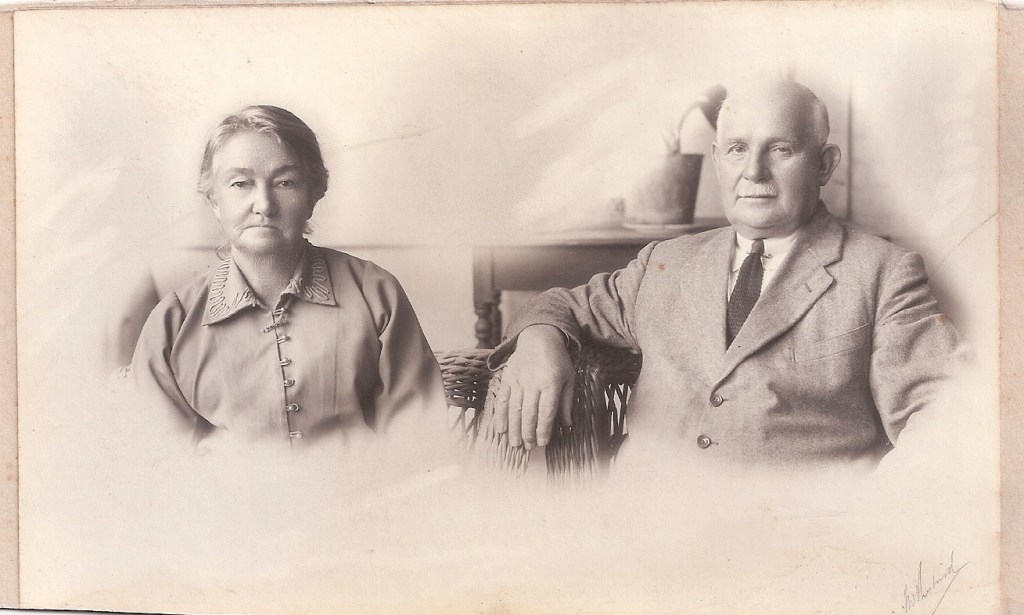
– His Worship the Lord Mayor of Harrismith, known to his many grandkids as ‘Oupa’ Bain –
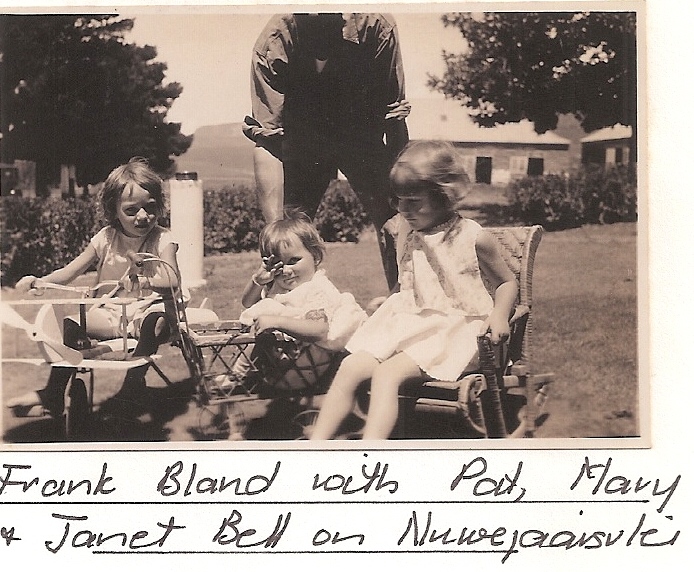
When Annie married Frank Bland, she moved out to their farm Nuwejaarsvlei on the Witsieshoek road;
– I have no pictures of Frank! –
When the farm could no longer support the horseracing they moved in with Frank’s mother Granny Mary Bland, nee Caskie, now with two daughters, Pat and Mary. When Frank died aged only 49, Annie and the girls stayed on. They were joined there by her sister Jessie when her husband Arthur Bell died in Dundee, where he had been the dentist; Then later they were joined by now married daughter Mary, husband Pieter Swanepoel, and daughter Barbara when they arrived back from his work in the Post Office in Pietermaritzburg.
Some time after that – maybe when Granny Bland died? – Annie moved into Randolph Stiller’s Central Hotel; She then left Harrismith for the first time in her life and went to stay with sister Jessie down in George for a few years after Jessie’s daughter Leslie had died; When Jessie died, Annie returned to Harrismith and lived in John Annandale’s Grand National Hotel. John said to Mary he was battling to cope with hosting her, so Mary moved her home. Much to Pieter’s delight. NOT.
So within a month Mary moved Annie into the Eliza Liddell old age home. Two years or so later, Mom remembers a night hosting bowling club friends to dinner when the phone rang. It was Sister Hermien Beyers from the home. “Jou Ma is nie lekker nie,” she said. Mom said I’ll be right over and drove straight there, she remembers in her red car wearing a navy blue dress. She sat with her dear Mom Annie holding her hand that night and – experienced nursing sister that she was – knew when Annie breathed her last in the wee hours.
Her visitors the next morning included Mrs Woodcock and Miss Hawkins. Mom regrets not letting Miss Hawkins in to see Annie. She should have, she says. She remembers being fifteen years old and not being allowed to see her Dad lying in Granny Bland’s home and has always been glad that she snuck in when no-one was watching and saw his body on his bed and so knew it really was true.
Here’s a stirring tale of Boy Scouts and Girl Guides and my family. It also obliquely references a lockdown and social distancing. In fact a much longer lockdown than we have endured: From 13 October 1899 to 17 May 1900, the people of Mahikeng – which the Poms called Mafeking were locked down and besieged by the locals – during the Anglo-Boer War. 217 days.
In Oct 2018 I wrote: Whenever I hear Jimmy Buffet singing Pencil Thin Mustache I think of my uncle Dudley, oops, my cousin Dudley.
Dudley Bain was a character and my second cousin. I had known him over the years when he used to visit his old home town of Harrismith, but really got to know him once I started practicing optometry in Durban. He was very fond of his first cousin, my Mom Mary – and thus, by extension, of me.
Dudley worked in the Mens Department of John Orrs in downtown Durban back when there was only downtown. Anybody who was anybody worked in downtown. Anywhere else was “the sticks”. Even in 1980 I remember someone saying “Why would you want to be out there?” when optometrists De Marigny & Lello opened a practice in a little insignificant upstairs room on the Berea above a small gathering of shops called Musgrave Centre.
Dapper, hair coiffed, neatly dressed, often sporting a cravat, Dudley had a pencil thin moustache and definite opinions. He was highly chuffed he now had a pet family optometrist to look after him when I first hit downtown and then Musgrave centre.
Fitting his spectacle frame was a challenge as he got skin cancer and his surgeon lopped off ever-bigger pieces of his nose and ears until he had no ear one side and a tiny little projection on which to hook his glasses on the other side. He would hide these ala Donald Trump by combing his hair over them and spraying it carefully in place. I am glad I wasn’t his hairdresser.
– here he is at Ethne’s 80th birthday with me sitting behind him –
He would pop into the practice frequently ‘to see my cousin’ – for me to adjust his frames by micro-millimetres to his satisfaction. He walk in and demand ‘Where’s my cousin?’ If the ladies said I was busy he’d get an imperious look, clutch his little handbag a bit tighter and state determinedly, ‘I know he’ll see me.’ They loved him and always made sure I saw him. He’d ‘only need a minute; just to adjust my frame, not to test my eyes,’ and half an hour later their knocks on the door would get ever more urgent. Then they’d ring me on the internal line, and I’d say ‘Dudley, I got to go.’
I would visit him occasionally at their lovely old double-storey home in Sherwood – on a panhandle off Browns Grove. Then they moved to an A-frame-shaped double-storey home out Hillcrest way, in West Riding.
We had long chats while I was his pet optometrist and I wish I could remember more of them. I’ll add as they come floating back. I’m trying to remember his favourite car. One thing he often mentioned was the sound of the doves in his youth. How that was his background noise that epitomised Harrismith for him. The Cape Turtle Dove . .
~~~oo0oo~~~
Dudley married the redoubtable Ethne, Girl Guides maven. I found this website, a tribute to Lady Baden-Powell, World Chief Guide – so that’s what me link this post tenuously to our lockdown:
Olave St. Clair Soames, Lady Baden-Powell, G.B.E., World Chief Guide, died in 1977. In 1987 her daughter and granddaughter, Betty Clay and Patience Baden-Powell, invited readers to send in their memories of the Chief Guide to The Guider magazine.
They wrote:- Everyone who knew Olave Baden-Powell would have a different story to tell, but if all the stories were gathered together, we would find certain threads which ran through them all, the characteristics which made her beloved. Here are a few of the remembrances that people have of her, and if these spark off similar memories for you, will you please tell us?
Here’s Ethne’s contribution: 3 West Riding Rd., Hillcrest, Natal 3610, South Africa When I was a newly-qualified teacher and warranted Brownie Guider in Kenya in 1941, our Colony Commissioner – Lady Baden-Powell – paid a visit to the Kitale Brownie Pack. Due to an epidemic of mumps, the school closed early and Lady B-P was not able to see the children, but she took the trouble to find me and had a chat across the driveway (quarantine distance) for a short time.
A year later at a big Guide Rally at Government House in Nairobi, the Guides and Brownies were on parade, and after inspection Lady B-P greeted us all individually, and without hesitation recognized me as the Guider who had mumps at Kitale. Each time we met in the future, she joked about the mumps.
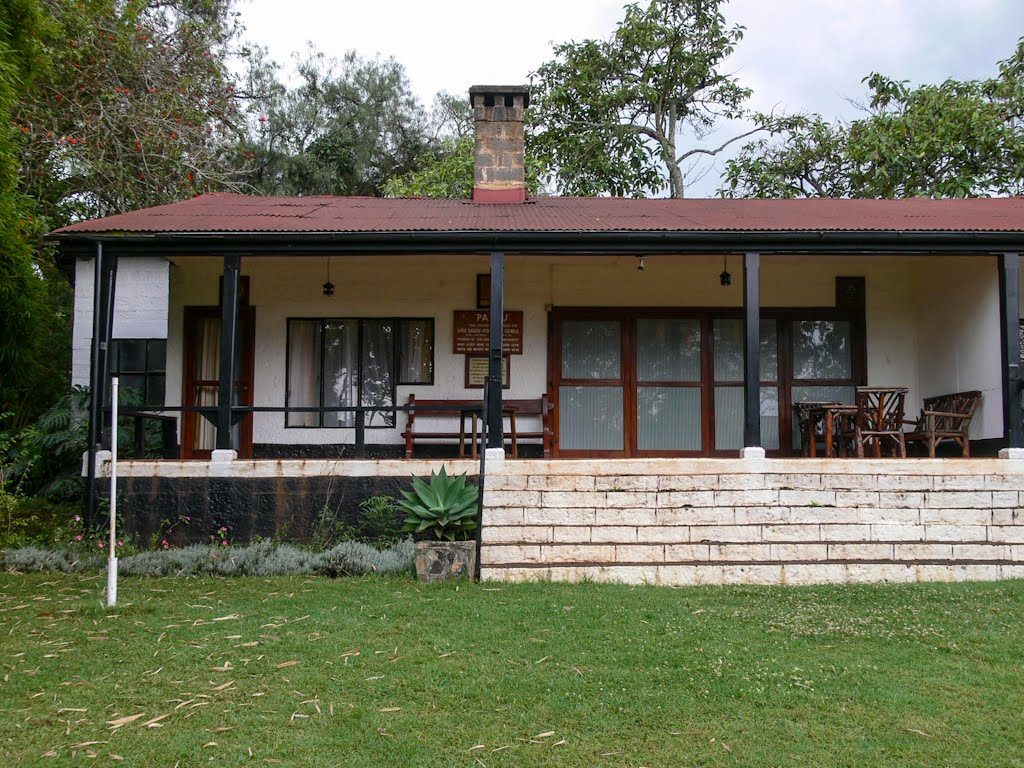
My next encounter was some twenty years later, on a return visit to Kenya, in 1963, with my husband (that’s our Dudley!), our Guide daughter D. (Diana) and our Scout son P (Peter). We stayed at the Outspan Hotel at Nyeri where the B-Ps had their second home Paxtu. We soon discovered that Lady B-P was at home, but the Hotel staff were much against us disturbing their distinguished resident. However, we knew that if she knew that a South African Scout/Guide family were at hand she would hastily call us in. A note was written – “A S.A. Scout, Guide and Guider greet you.” Diana followed the messenger to her bungalow but waited a short distance away. As lady B-P took the note she glanced up and saw our daughter. We, of course, were not far behind. Immediately she waved and beckoned us to come, and for half-an-hour we chatted and were shown round the bungalow, still cherished and cared for as it had been in 1940-41.
– paxtu at Nyeri –
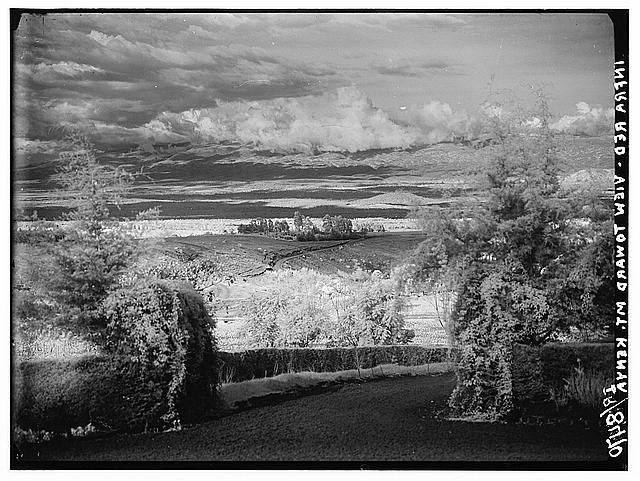
It was easy to understand her great longing to keep returning to this beautiful peaceful place, facing the magnificent peaks of Mount Kenya with such special memories of the last four years of B-P’s life. From her little trinket-box, Lady B-P gave me a World Badge as a memento of this visit which unfortunately was lost in London some years later. Before leaving Nyeri we visited the beautiful cedar-wood Church and B-P’s grave facing his beloved mountain.
– Mt Kenya from Nyeri –
My most valued association with Lady B-P was the privilege and honour of leading the organization for the last week of her Visit to South Africa in March 1970. Each function had a lighter side and sometimes humorous disruption by our guest of honour. The magnificent Cavalcade held at King’s Park, PieterMaritzBurg deviated from schedule at the end when Lady B-P called the Guides and Brownies of all race groups to come off the stand to her side; they were too far away. A surge of young humanity made for the small platform in the centre of the field where she stood with one Commissioner, a Guide and three Guiders. Without hesitation, Gervas Clay (her son-in-law) leapt down from the grandstand two steps at a time and just made Lady B-P’s side before the avalanche of children knocked her over. Anxious Guide officials wondered how they were going to get rid of them all again. The Chief Guide said to them, “When I say SHOO, go back to your places, you will disappear.” Lo, and behold, when she said “SHOO, GO back!” they all turned round and went back. You could hear the Guiders’ sighs of relief.
~~~oo0oo~~~
Steve Reed wrote: Hilarious – I reckon every family worth its salt should have had an uncle like that. Something for the kids to giggle about in secret at the family gatherings while the adult dads make grim poker faced humorous comments under their breath while turning the chops on the braai. And for the mums to adore the company of. Good value.
And funny Steve should mention that!
Sheila remembers: “After Annie’s funeral, in our lounge in Harrismith, Dudley was pontificating about something and John Taylor muttered to me under his breath ‘Still an old windgat.‘”
~~~oo0oo~~~
Family tree: (Sheila to check): Dudley Bain was the eldest son of Ginger Bain, eldest son of Stewart Bain who came out to Harrismith from Scotland in 1878. My gran Annie Bain Bland was Ginger’s sister, so Mom Mary Bland Swanepoel and Dudley Bain were first cousins.
Here’s his Funeral notice. He would have loved the picture on it – maybe he had requested it?
Stewart Bain was born in Wick, Scotland on 9 September 1854. He and his brother James came to South Africa in 1878, to Durban. They soon got a job building bridges for the railway line extension up the Drakensberg from Ladysmith to Harrismith. How, one wonders, did two herring fishermen convince people they could build bridges? And so they reached the metropolis of Harrismith in the Oranje Vrijstaat, an independent sovereign state at the time. Britain had recognised the independence of the Orange River Sovereignty – before that it had been the Orange River Colony ORC – after losing the first Anglo-Boer War at Majuba. The Vrijstaat officially became independent on 23 February 1854, seven months before Stewart was born, with the signing of the Orange River Convention. This history is important in view of Britain’s and many of Harrismith’s inhabitants’ conduct in the Anglo-Boer War of 1899-1902.
– sandstone bridge across the Wilge River at Swinburne –
So they built bridges. I am not sure, but I fondly imagine they built the beautiful sandstone bridge across the Wilge River at Swinburne, where I launched two separate canoe ‘expeditions’ with good friends Fluffy Crawley and Claudio Bellato many decades later.
Settling down in Harrismith after their bridge-building days, Stewart bought the Railway Hotel and changed its name to the Royal – we believe with official ‘royal” permission – while brother James built the Central Hotel uptown, on the central market square.
It appears here as if some people (!) carried on referring to the Vrijstaat as the ORC, even though it was actually the sovereign nation Oranje Vrijstaat by then!?
Stewart married Janet Burley in Community of Property in Durban, I’m not sure whether that was before moving to Harrismith or after. Janet was born in Hanley, Staffordshire, England in 1859 of David Burley and Caroline Vaughan. They had __ children between 18 __ and 18__ . . . the fifth child in 1893 being our grandma Annie. Annie married Frank Bland and had two daughters, Pat and Mom Mary, Mom Mary remembered the hotel as having two big (‘huge’ says Mom, but she was little back then!) statues at the front door: A lion rampant with a human face, fighting; an antelope rampant on the other side of the door – she thinks a hartebees or a sable or something. Both were rearing up on their hind legs.
Stewart became Mayor of the town and ‘reigned with the gold chain’ for years, becoming known – by some – as ‘The Grand Old Man of Harrismith.’ To their grandkids they were always ‘Oupa’ and ‘Ouma’ Bain;
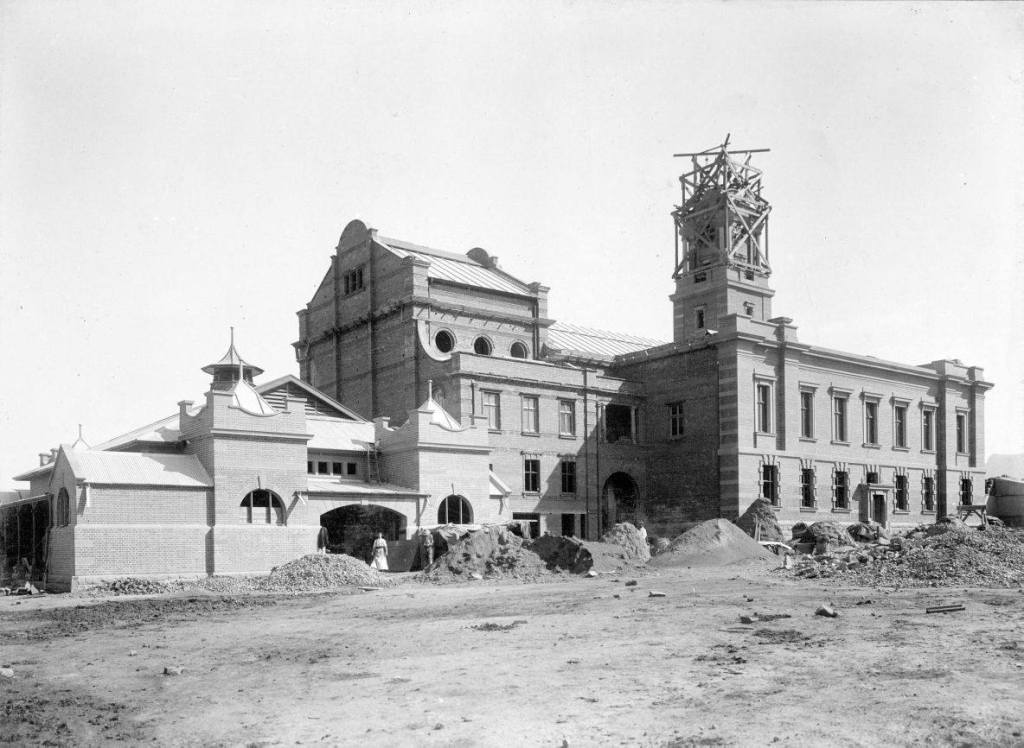
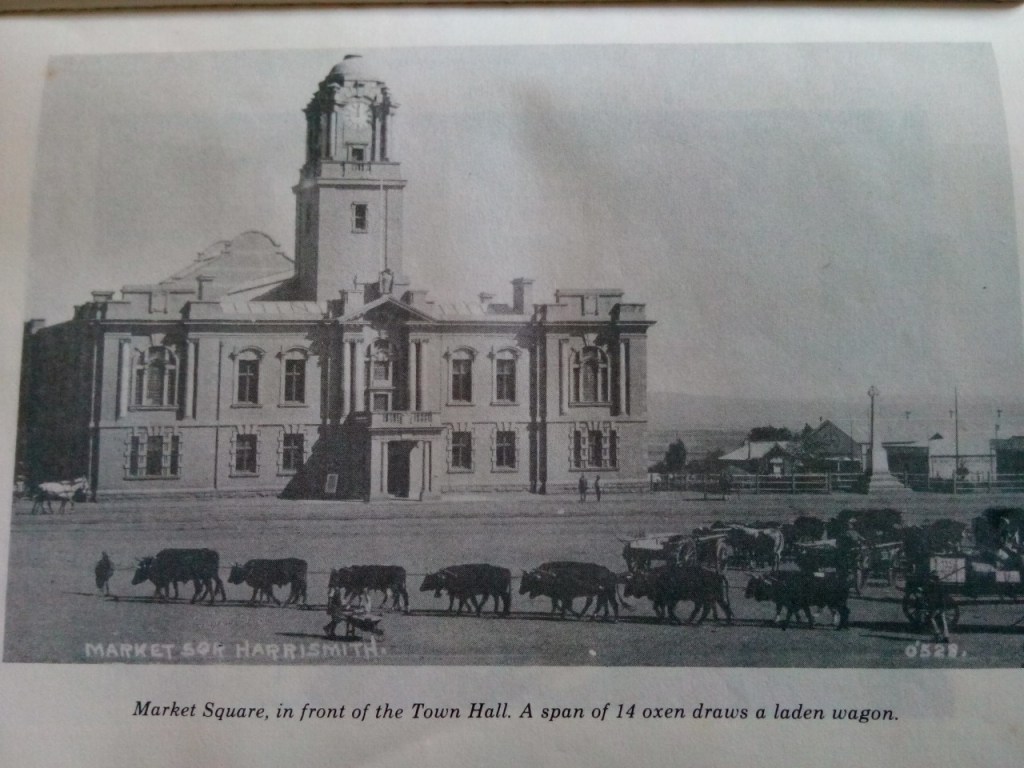
He pushed for the building of a very smart town hall. Some thought it was way too fancy – and too big – and too expensive – and called it ‘Bain’s Folly.’ Did Stewart have the tender? Was he an early tenderpreneur? Was it an inside job? *
Here’s a reason someone gave for the “need” for such a grend gebou: ‘The erection of the new Town Hall, officially opened in September 1908, was largely the result of support the troops had given for theatrical performances and concerts in the former building which had proven unsuitable.’ – (found that here: http://samilitaryhistory.org/vol082sw.html)
– building operations – lots of imported stuff –– ta da! – a palace fit for a dorp –
Here’s a lovely 3min slide show of the building of Bain’s Folly – completed in 1908 – by Hennie & Sandra Cronje of deoudehuizeyard.com and thanks to Biebie de Vos, Harrismith’s archive and treasures man. Thank goodness for all the stuff that Biebie ** has saved and rescued!
Here’s that impressive building in a dorp on the vlaktes!
– the market at the rear of the building soon after completion – 1908 –
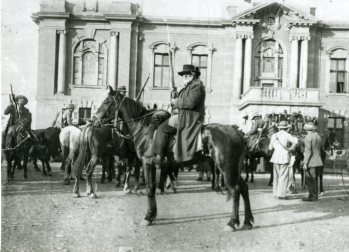
Opskops probably had to be arranged to justify the place, and the occupying British force that remained after the illegal and unjust invasion that was the Anglo-Boer War which saw so many war crimes committed by the British, benefited hugely, their officers dancing nights away with the local lasses.
Janet died on 15 January 1924; Her daughters Jessie & Annie (who was then aged thirty) were with her when she collapsed. They summoned Dr Hoenigsburger (Hoenigsburg?), but Ouma died within minutes. The Harrismith Chronicle article reads in part: ‘Ex-Mayoress’s Death. Sudden demise of Mrs S Bain. The news which stunned the town on Tuesday morning of the painfully sudden death of Mrs Stewart Bain, evoked a feeling of deepest sympathy from all who knew the deceased lady, not only in Harrismith and the district but in places far remote.’
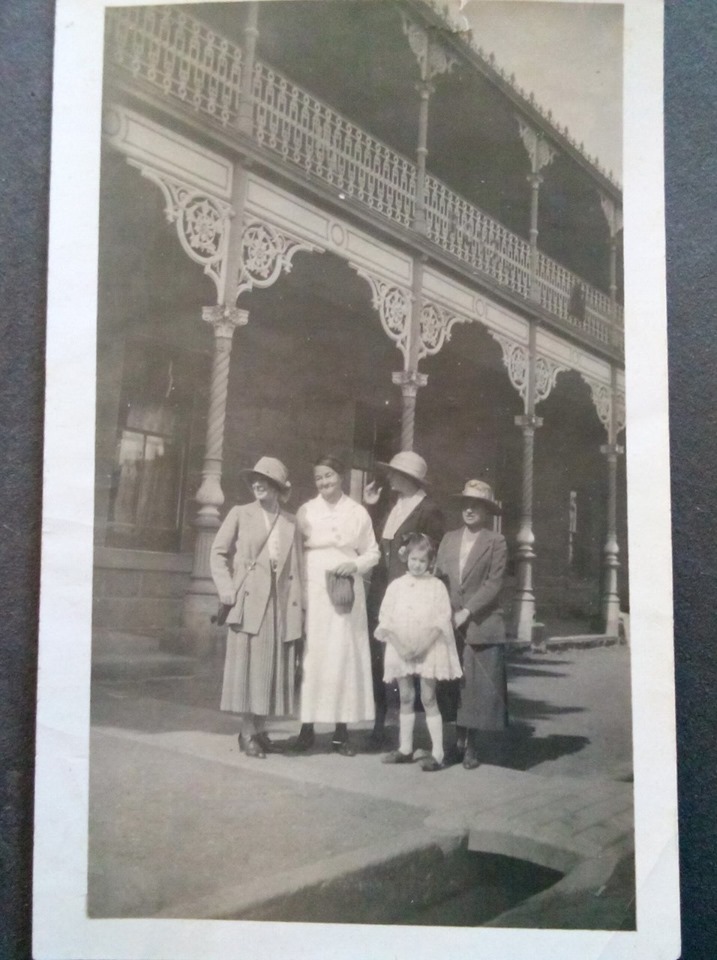
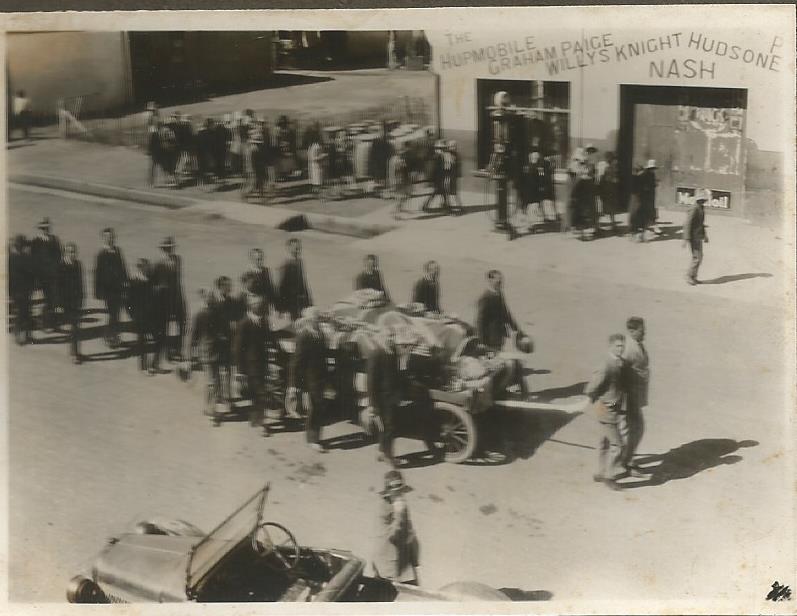
When the dust settled on the town hall, the townsfolk must have quite liked the result, as when Stewart Bain died in September 1939, the town pulled out all the stops for his funeral; These pictures were taken from the balcony of his Royal Hotel, with ‘his’ Town Hall visible in the background, and ‘his’ mountain behind that. Most Harrismithers and Harrismithians regard Platberg as ‘theirs.’
– Oupa Bain’s funeral procession – who paid?! –
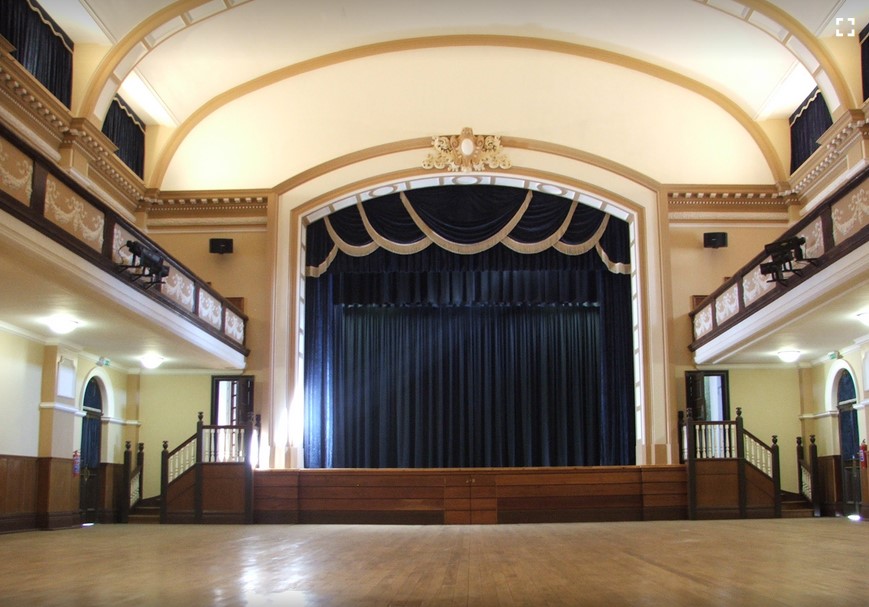
At one notable local event ca.1949 in this huge hall – an Al Debbo concert! – Stewart’s grand-daughter Mary met her future husband. Maybe that was the Lord Mayor Hizzonner’s intention in building this impressive edifice all along? In 1951 they got married there. Years later Stewart’s great grandaughter Barbara also got married in ‘his’ town hall.
~~~oo0oo~~~
Found this pic of the town hall in Wick and wondered if Stewart got the idea of a bigger, better town hall for his new town from his old town?
– built in 1828 –
~~~oo0oo~~~
Snippet: Old Mrs Batty was Stewart Bain’s housekeeper at the Royal Hotel. Mum’s cheeky cousin, Janet Bell – later enhanced to Hastings-Bell – asked Mrs Batty one day, “Why do you say ‘somethink and nothink?” Back came the reply, “Cos I aren’t eddacated.” Mrs Batty lived around the corner from the Royal, on the same block, in a little house right on the pavement.
~~~oo0oo~~~
I thought I remembered that, despite every dorp in South Africa seeming to boast a ‘Royal Hotel’ – from whence ‘hier sirrie manne innie Royal Hotel’ – the Harrismith Royal Hotel was one of only two in South Africa that could officially call itself ‘Royal’. Sister Sheila, family Keeper-of-the-Archives, has hereby confirmed that I have a flawless memory. Well, something along those lines:
– evidence – or “evidence” – of our close link to royalty –
~~~oo0oo~~~
Couldn’t resist this close-up so enthusiasts can read which cars were around in 1939:
~~~oo0oo~~~
Postscript:
A young post office worker left his little 1935 Morris in that garage in the care of the owner Cathy Reynolds (nee Bain), while he went off to war, ca 1941; When he returned around 1946 it was waiting for him. He then met Mary, second daughter of Annie Bland, nee Annie Watson Bain, Stewart’s fifth child. Their first date was in the Town Hall. Best and luckiest thing that ever happened to him. They got married in the Town Hall in 1951. He was Pieter G Swanepoel, originally from Pietermaritzburg, and my Dad.
So two women, a Central Bain and a Royal Bain, ran garages in Harrismith.
* Shades of our Moses Mabida stadium in Durban for the 2010 FIFA soccer world cup – ‘Do we need such a big, fancy stadium!?’ I called it the Moses MaFIFA stadium. Call it FIFA Folly, Corruption it almost certainly is. Americans call it a boondoggle.
opskops – parties, shindigs, events, pissups, balls, dances, concerts; involve alcohol; kick up your heels
grend gebou – grand building
~~oo0oo~~
Phone call to Mom May 2025, Talk turned to the Bains, her Oupa Bain and his Royal Hotel. He was Stewart Bain, Mayor of Harrismith.
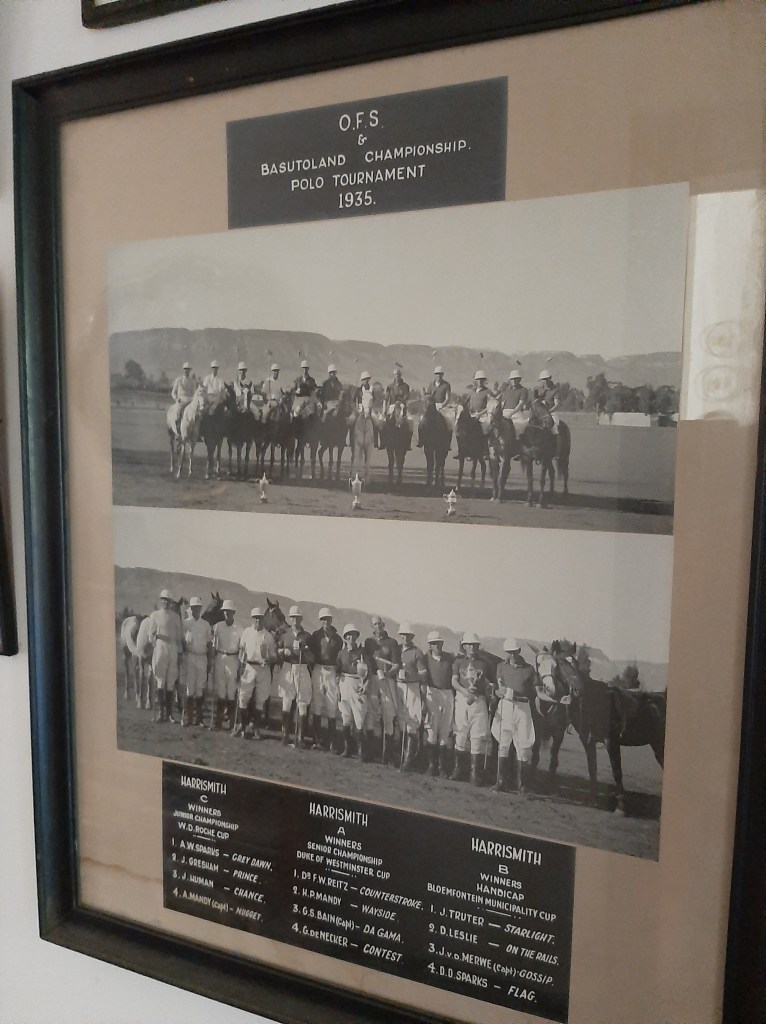
The Bain sons went to Hilton. At least two – Ginger and Stewart – came home to work for Oupa, their Dad, and play sport. Never studied after school.
Dick the Waiter
Ginger played polo and rugby. Stewart (Smollie) worked in the bar. Smollie was thin and stooped, walked with a shuffle. Getting in and out of his wife Marie’s car was a struggle. Something about his legs couldn’t bend. Like ‘welded straight.’ Arthritis maybe?
The chef’s name was Kaiser Adam. He wore a white uniform and a tall white hat. The two waiters were Dick and Shabalala – ‘smartly dressed waiters.’ Kaiser and Dick were Indians from Durban. They must have had a lonely life living in Harrismith, unable to go anywhere really. They lived on the large hotel grounds with their families. Shabalala was a local Sotho man. Dick, with his jet black hair and little moustache, was said by local wags to look just like Rhett Butler from the movie Gone With The Wind! …
Koos (me): This is weird, and maybe I’m constructing the memory from tales told at home, but I have a clear memory of sitting at a table in the dining room; being handed a paper menu; then a tiny bit of fish arriving on a large plate followed by a piece of meat and two veg on a large plate, followed by a tiny bit of pudding in a bowl. I do remember the dining room and the big fireplace and the staircase. The bar leading off the front stoep I remember from later years, once we started looking for beer after dark.
Big sis Barbara remembers visting the Royal when her good friend and cousin Glenda Taylor used to visit Smollie and Marie Bain.
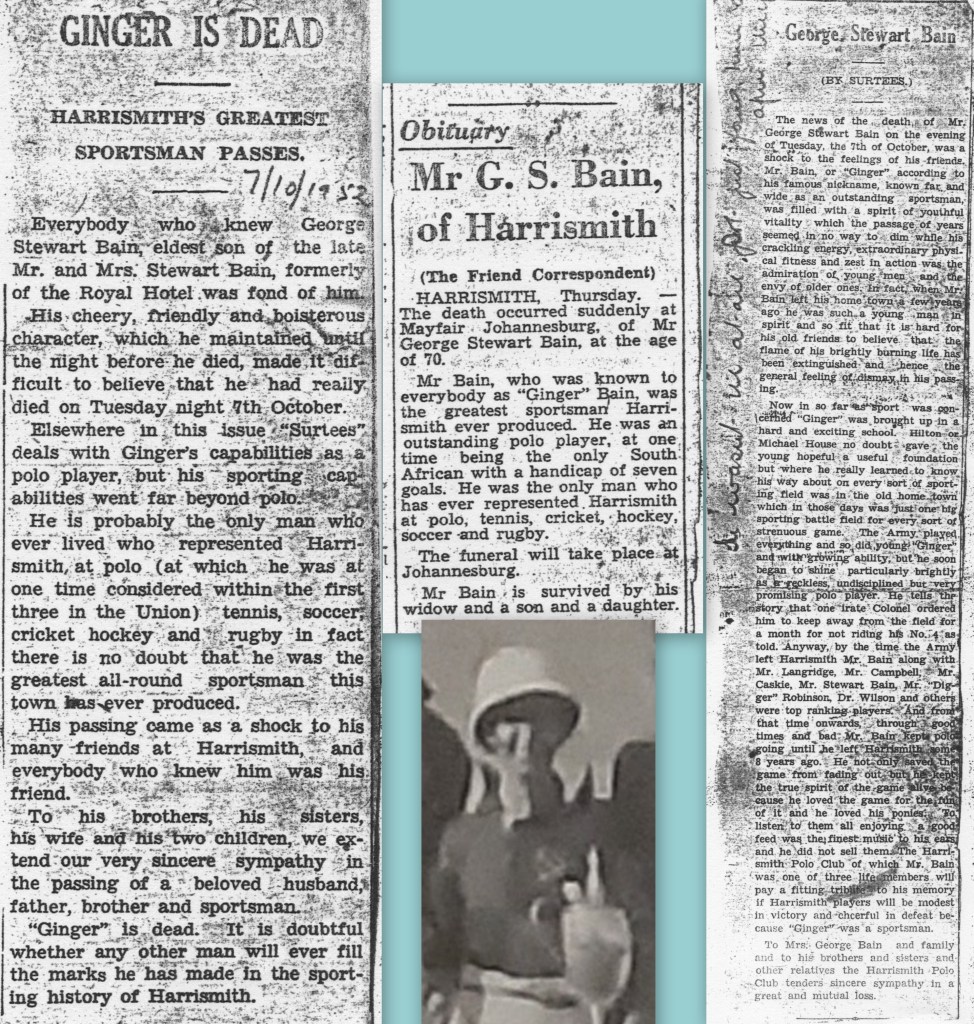
My granny Annie had an older brother Ginger. He was the oldest of the seven ‘Royal Bains’ and a great sportsman. They owned the Royal Hotel and they were ‘Royal’ so as not to be confused with the ‘Central Bains’, who owned the Central Hotel! As fishermen from the tiny hamlet of Wick on the more freezing end of Scotland, they couldn’t really claim the traditional ‘Balmoral Castle’ kind of royalty.
Playing rugby for Hilton, ‘Bain of Harrismith’ became the bane of Michaelhouse in the first rugby game between these two toffee-nosed schools, where vaguely bored and lazy shouts of ‘a bit more pressure in the rear, chaps!’ are heard through the gin fumes surrounding the rugby fields.
Here’s the report on the 1904 derby – the first game between the two schools:
– reprinted in the 1997 Hilton vs Michaelhouse sports day brochure –
Drop goals were four points and tries were three in those distant days. I like that the one side was “smarter with their feet” . . and that being smarter with your feet was better than “pretty passing.”
A century later these rugby genes would shine again as Bain’s great-great-grandson – grandnephew actually – also whipped Michaelhouse.
I’ve included a lovely picture of the Michaelhouse scrum on top.
~~oo0o~~
Rugby in Harrismith was full of Bains and Blands, seven in this team:
– Ginger also captained the Harrismith A Polo team –
~~oo0oo~~
~~oo0oo~~
Handwritten on the edge of one of these is “He wasn’t ill at all. (illegible) just found him (illegible) “
Katrina (nee Miller) Duncan, from near Oban in Scotland, stumbled across my other blog here and made contact with us. She sounds delightful, but so she would – she’s family!
– pick one –
She has been researching the Bain family tree and she and my sister Sheila have worked out that we share a Great-Great-Great Grandfather, one Donald Bain, born in Wick on the 14th of April 1777. He married Katherine Bremner and they lived in Sarclet, just south of Wick way up in north-east Scotland. And then I spose they had children and then those had children, and – you know how it goes.
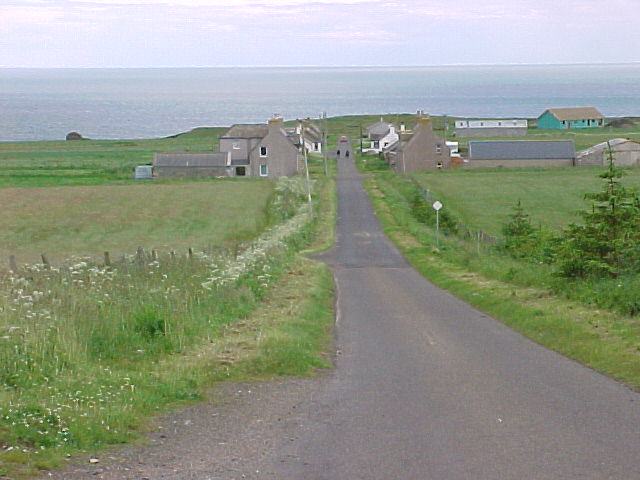
– Sarclet coast –– Sarclet village –
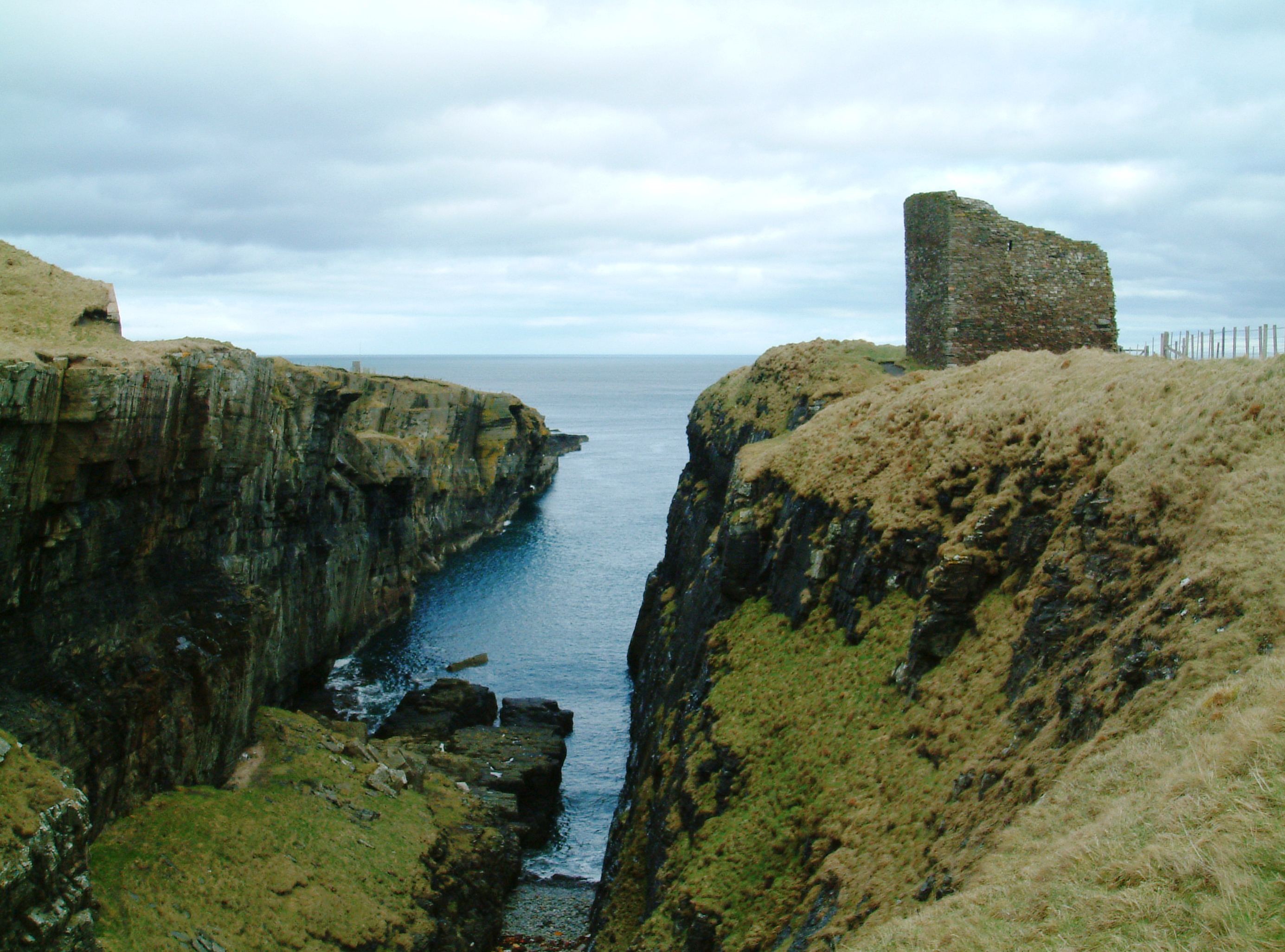
I reckon if you dipped your toe in that Wick water you’d know why some Bains moved to Africa! Also, they may have been dodging giving the castle a much-needed revamp . . .
– Wick Castle –
Stewart Bain was born in 1819 in Caithness, to Donald (42) and Katherine (41). On the 7th of February 1845 Stewart married Christina Watson in his hometown. They had four children during their marriage.
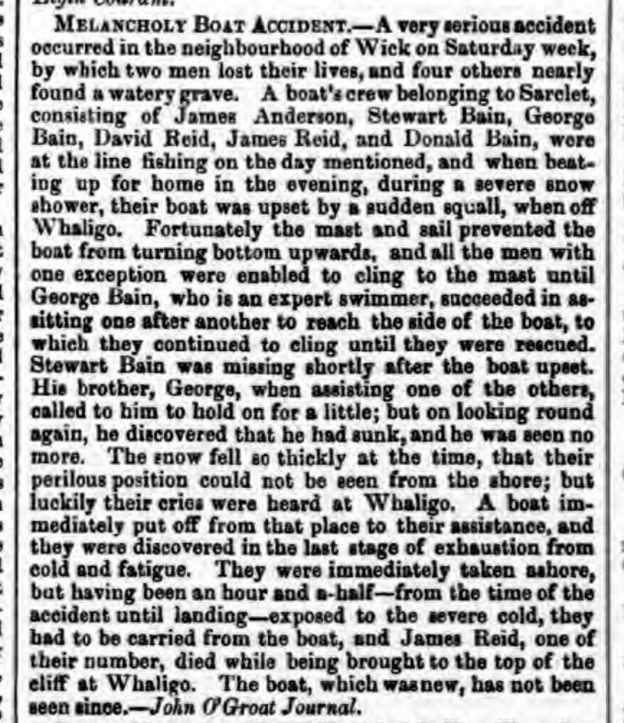
In 1853 Donald’s sons George and Stewart were out fishing when their boat was swamped and Stewart drowned in the freezing winter sea. He died as a young father aged 34 on 19 February 1853, and was buried in Thrumster, Caithness.
Katrina found an 1853 newspaper article about the tragedy.
It seems Stewart’s father Donald also died that year. The next year, 1854, his brother George and wife Annie (nee Watson) had a son. They named him Stewart.
This Stewart is the Stewart Bain who came to Harrismith, Orange Free State – the sovereign country Oranje Vrijstaat – in South Africa with his brother James in 1878 and married Janet Burley. They had seven kids: The seven ‘Royal Bains’ of Harrismith, named after their hotel, The Royal Hotel in Station Road. This ‘title’ was to distinguish them from the ‘Central Bains’, not to claim royalty! My grandmother was the fifth of these seven ‘Royal Bains’ – Annie Watson Bain. She got her paternal grandmother’s surname as her second name.
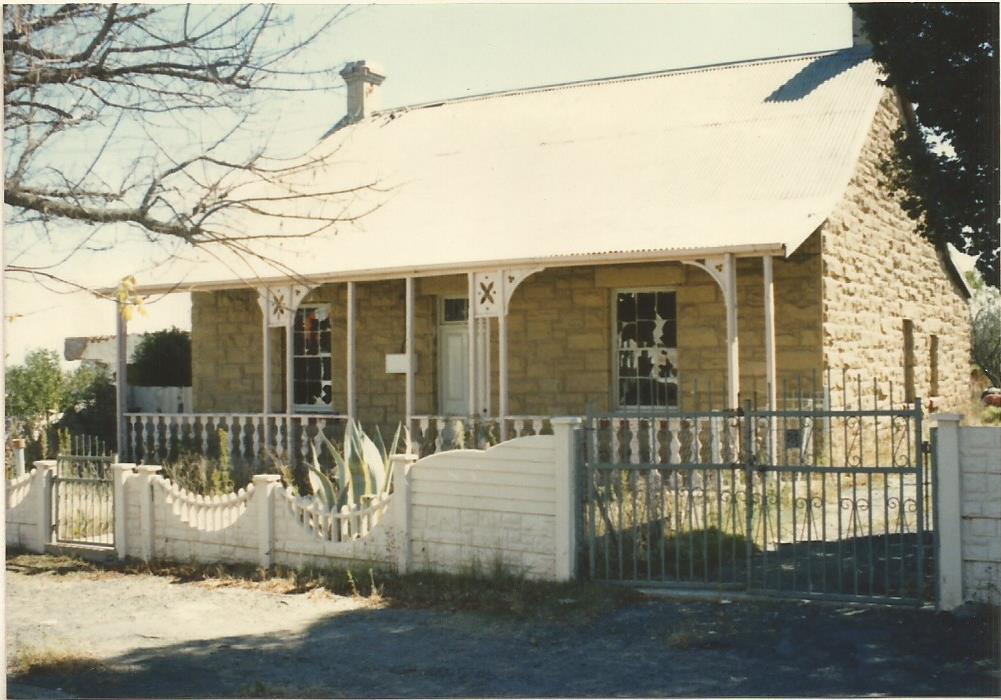
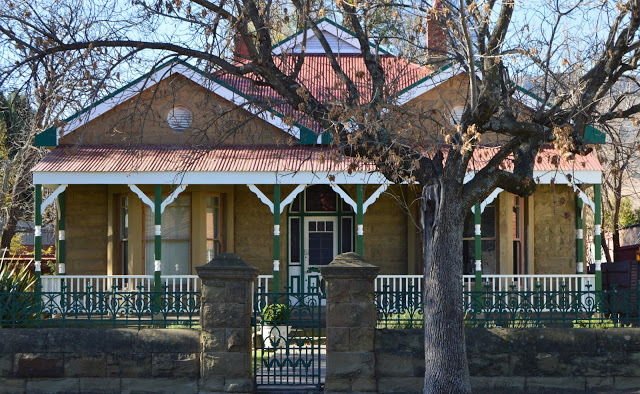
Stewart and Janet raised their ‘Royal Bain’ brood in this cottage adjacent to their hotel in Station Road, down near the railway line:
James Bain, Stewart’s brother and owner of the Central Hotel, called his rather larger home ‘Caithness’. It was in Stuart Street near their hotel in the centre of town. There they raised their brood – eight ‘Central Bains.’ One of them was also named Annie Watson Bain. Her story ended tragically early, in World War 1 in France. Thanks to Katrina we know more about it.
– Caithness, Harrismith –
On Katrina’s ancestry web page “Miller Family Tree” the names Annie, Jessie, Stewart, Katherine, Donald etc have been used for generations.
The Scottish Tartan register confirms that there is no ancient Clan Bain tartan. This one – ‘The Bains of Caithness’ – was designed in 1993 for Robert Bain of Caithness.
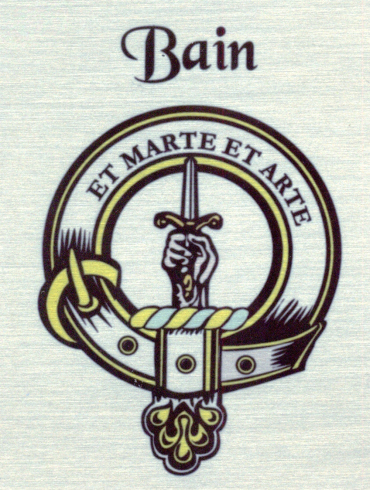
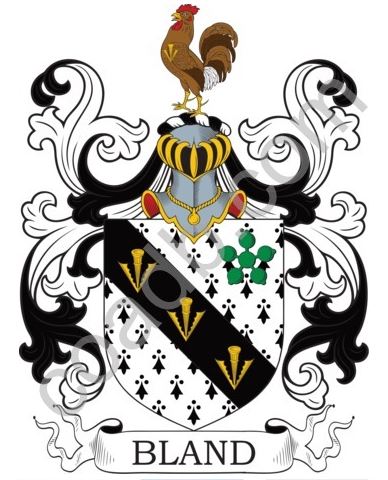
There are a few coats of arms; I chose two examples.
This post needs work by someone who knows what they’re on about. This is almost as confusing as the Bible’s begats. Advice: If your name is John, name your son Basil. Or Cyril. Or Percy. Anyway, here goes with what I’ve got:
Our distant cousin Hugh Bland has been doing some wonderful detective work sniffing out the Bland family history. He’s of the Blands that trekked north, to the lowveld and on to Southern Rhodesia (if it was called that yet?), leaving their cousins behind on a farm at Oliviershoek on the Natal-Free State boundary. Maybe on a farm called Oliviershoek.
Today Hugh found the grave of Josiah Benjamin Adam Bland.
Josiah Benjamin Adam Bland was born in 1799 in England. His parents were Reverend John Francis Bland (born 1764 Fordham, Cambridgeshire died 1807) and Elizabeth Adams (born Dunfermline, Scotland. He arrived at the Cape in 1825 on the good ship Nautilus, under the care of the ship’s captain, a Mr Tripe. The voyage cost his family £42.
He got a job on a wine farm, in the Drakenstein area of Stellenbosch, met his future wife Cecelia there (du Plessis?), married her, packed their belongings in a Cape cart and trekked to Mossel Bay. They found land on the Gourits river and settled there. Their first son, John Francis Adam, was born in 1836, followed by eight more children. John the eldest then married Petronella Johanna ‘Nellie’ de Villiers and had a son, John Francis Adam II. He and Nellie left for inland while the baby JFA the second was just a few months old. They headed for Colesberg, Bloemfontein, Winburg and on to Harrismith, where they settled ‘in a house not far from the centre of town’ – 13 Stuart Street, maybe?
Back in Mossel Bay, Josiah Benjamin Adam Bland (JBA) became mayor and the main street was called Bland Street. Maybe it still is? He died in 1861. His grave is now hidden in thick bush on a farm in the Wydersrivier district near Riversdal.
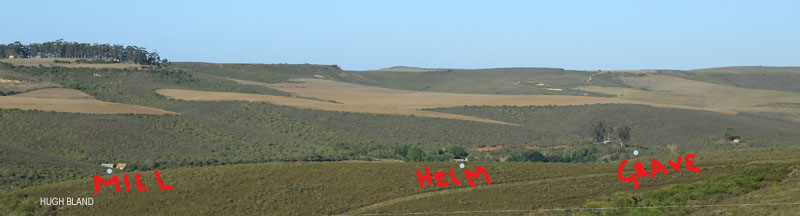
When Hugh Bland visited die Kaap ca.2010 the farmer very kindly took him to the gravesite. Hugh says you can still read the inscription on the gravestone – it’s indistinct, but there’s no doubt that it’s JBA’s grave. He says it was “quite a moment” for him – JBA was buried there 156 yrs ago and Hugh wondered when a Bland last stood at that grave.
Hugh put two proteas – which it looks like he skoffel’d out nearby? – on the grave; then laid his shadow down next to his great-great-great grandfather and took this pic:
– Hugh Bland’s shadow next to Josiah Benjamin Adam Bland’s grave – left – Mossel Bay – right – Blands Drift on the Gourits River –
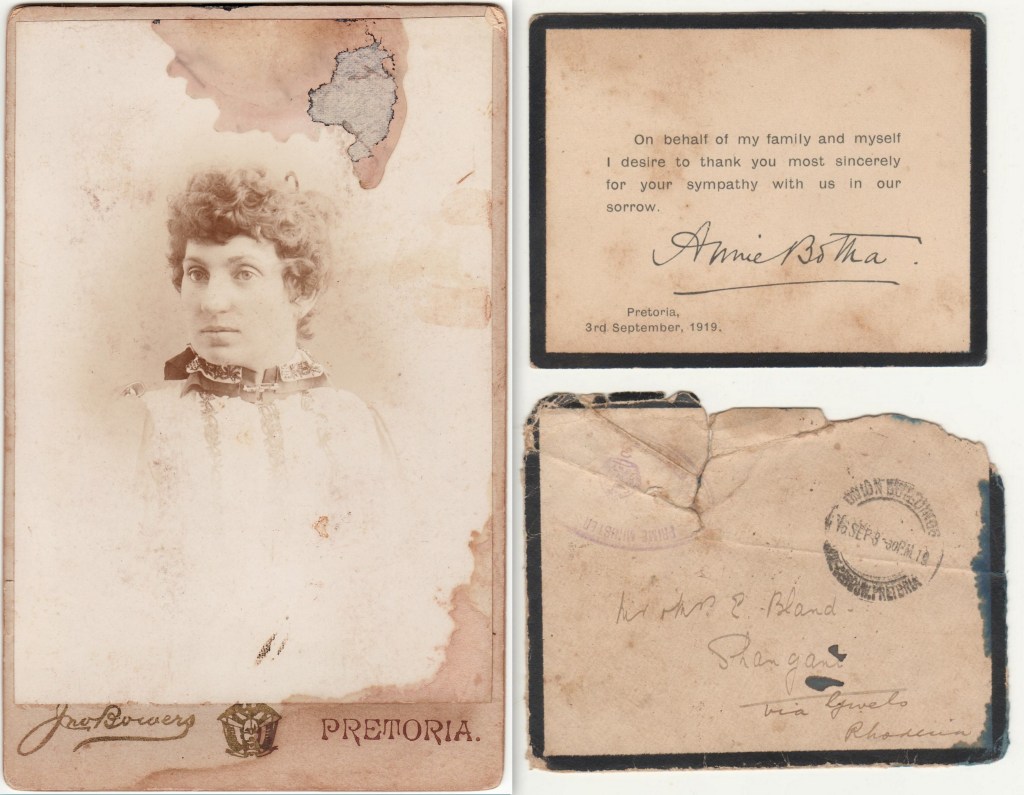
Valuable memorabilia from Hugh:
Prime Minister’s wife’s letter to the Rhodesian Blands
~~oo0oo~~
The Harrismith Branch of the Blands:
Josiah Benjamin Adam Bland had a daughter, Annie Emmett Bland, who married Louis Botha, Boer war general who became the first President of the Union of South Africa in 1910.
He also had a son John Francis Adam Bland (JFA), born in 1836.
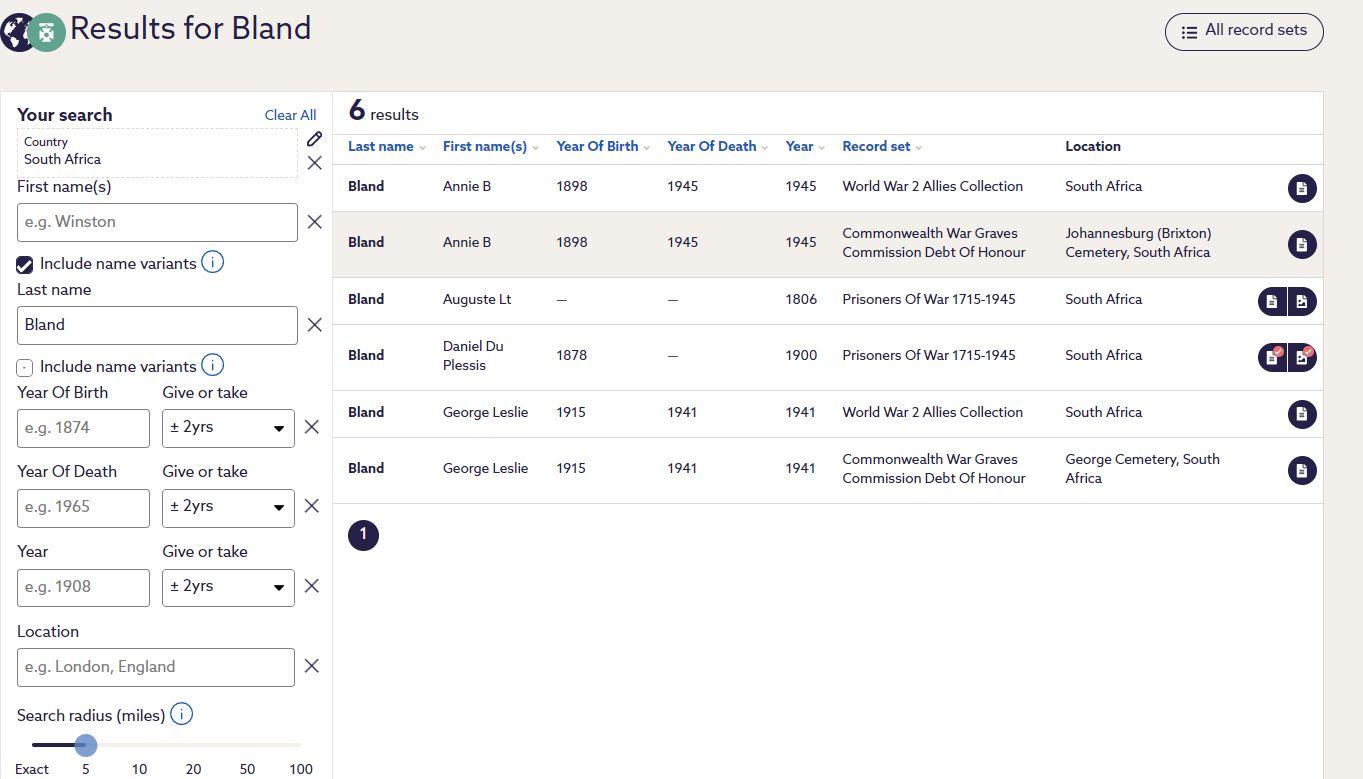
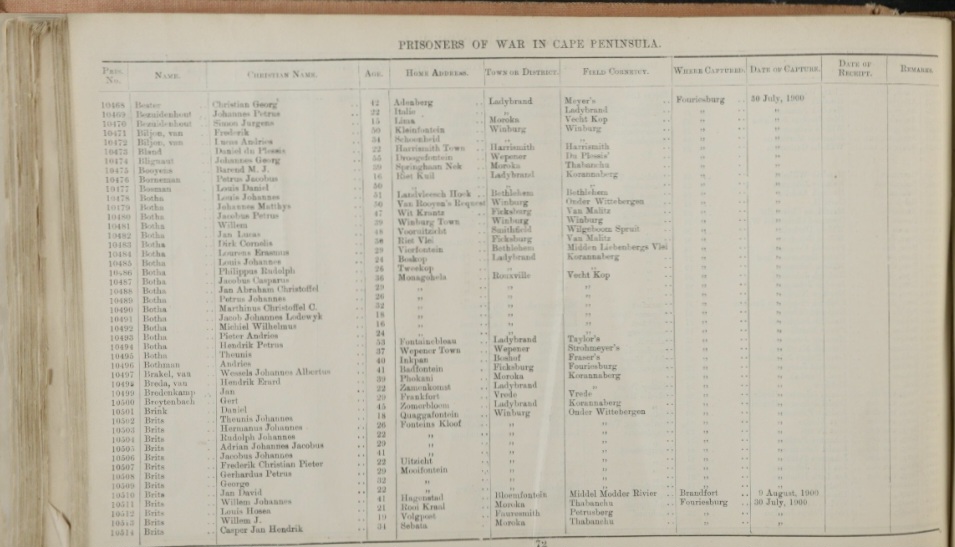
This JFA I later trekked inland ca.1861 to Harrismith in the Orange River Colony with a small baby – John Francis Adam Bland the Second – JFA II. This started ‘our branch’ of the Blands, The Vrystaat Blands. One of them – I must try and find out who – would end up as a prisoner of war in Ceylon for doing the right thing and fighting for his new homeland against the invading, thieving, plundering British in the Boer war of 1899-1902.
John Francis Adam Bland II married Mary Caskie, who became the beloved Granny Bland of Harrismith. They had five sons of whom our grandfather Frank was the oldest, again: John Francis Adam; JFA III.
Hugh found out that JFA the First died on 10 September 1891 aged 55, and is buried in the lost, dusty, verlate metropolis of Senekal, Vrystaat. In Harrismith Granny Bland buried her husband JFA II and four of her five boys, including JFA III. As Sheila said, ‘What a tragic life.’ Poor Granny Bland! She loved her namesake grandaughter Mary, our Mom, and she lived long enough to know us, her great grandkids before she died in 1959. So in that she was Lucky Granny Bland! We knew Bunty, the only child who outlived her, very well. He died in 1974 and joined his father JFA II, his mother, and his four brothers in the propvol family grave in Harrismith.
JFA III married Annie Watson Bain – our lovely granny Annie Bland. Known as just Annie. They farmed racehorses and clean fingernails on the farm Nuwejaarsvlei on the Nuwejaarspruit outside Harrismith on the road to Witsieshoek, towards the Drakensberg. He died in 1943 while my Mom Mary was still at school. Pat was nursing in the Boksburg-Benoni hospital. Pat also died at age 49 in 1974. Mom Mary then looked after Annie until she died aged ninety in 1983. Mom Mary is still alive and well. She turned ninety in September 2018 (update, 95 in 2023). Nuwejaarsvlei was later submerged under Tugela river water pumped up the Drakensberg to fill the new Sterkfontein dam. Drowning vleis is environmental destruction, BTW!!! Grrrr!
(I’m hoping sister Sheila will fact-check me here! Also that cousin Hugh will tell us what happened to the misguided Bland branch that didn’t stay in the Vrystaat, but got lost and ended up in Zimbabwe. They lived near Oliviershoek for a while before trekking on. Hugh tells tales of transport riding, ox wagons, meeting Percy Fitzpatrick, farming in Rhodesia and other exaggerations . . . you know how historians are).
~~oo0oo~~
Must add:
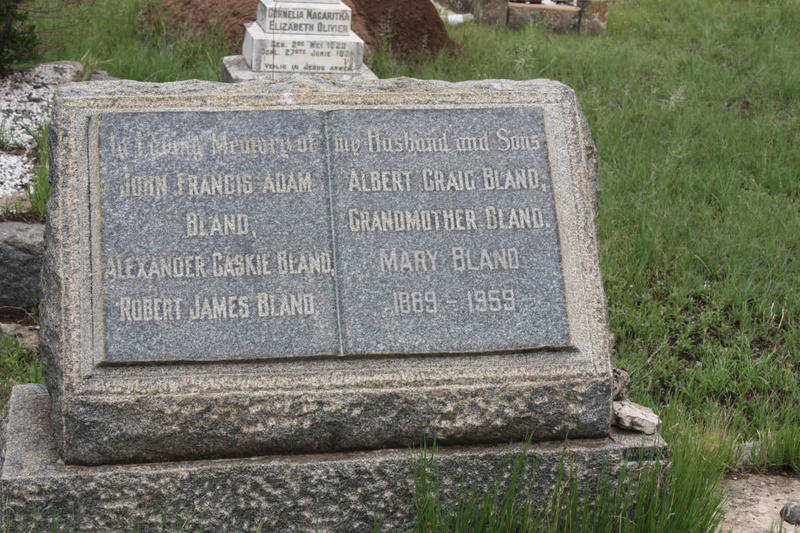
A Bland grave pic – Harrismith cemetery
Annie’s oldest daughter Pat Bland – married Bill Cowie, and had two daughters Frankie & Gemma; Bill worked in Blyvooruitsig on the gold mine; We visited them once, and would see them on their way to their wonderful Wild Coast fishing trips. They called Blyvooruitsig ‘Blayfore or Blayfaw,‘ and pronounced Gert as though it didn’t have an ‘r.’
Mary Bland second and youngest daughter – married Pieter Swanepoel in Harrismith in 1951.
~~oo0oo~~
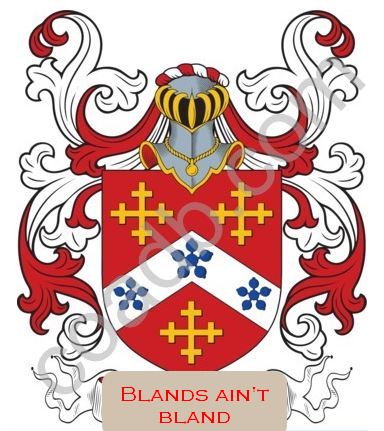
Bland might sound bland, but hey, the surname is thought to derive from Old English (ge)bland meaning ‘storm’, or ‘commotion.’ Don’t use dictionaries that say, ‘dull, flavorless, or just plain ‘blah.’ Rather use the Merriam-Webster that says it means ‘smooth and soothing in manner or quality;’ or use vocabulary.com that says it means ‘alluring;’ or try ‘flattering’ from the Bland Family History on ancestry.com; That’s better. A new motto for the coat of arms, maybe? Blands ain’t bland.
~~oo0oo~~
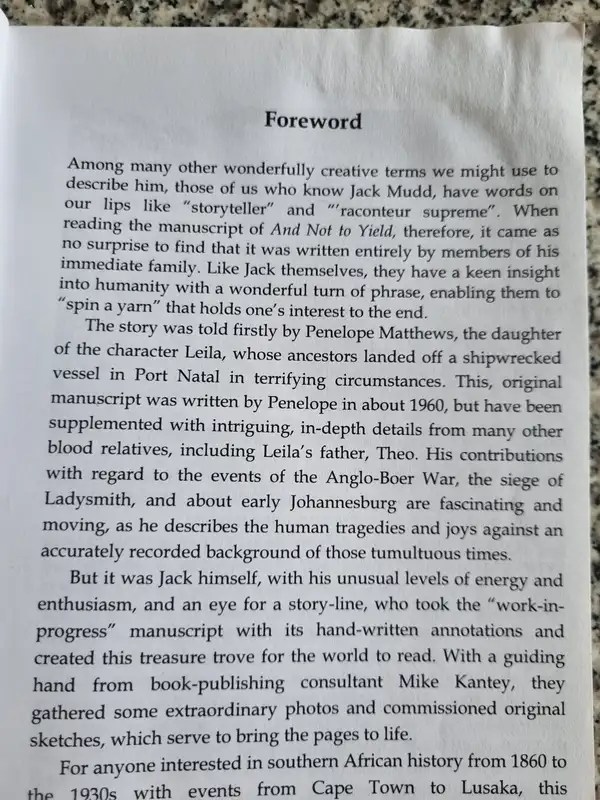
Some of the information on Josiah Benjamin Adam Bland first coming to the Cape I got from Sheila’s book And Not To Yield about Susan Bland. Susan was born in Harrismith, had a brother Willie, married a Theo Allison and lived seven miles outside Harrismith – west, I think, near Sarclet? – farming ostriches for a while.
And Not To Yield by Penelope Matthews, Watermark Press – ISBN 978-0-620-58162-2
~~oo0oo~~
Mom’s more contemporary assessment of her Bland, the Eastern Vrystaat Nuwejaarsvlei branch of the Bland Clan:
She didn’t know her dear Dad Frank’s father – he died rather young. He farmed on Nuwejaarsvlei and sent his son Frank to Michaelhouse. After high school Frank went straight back to the farm, he didn’t do any further studying or training. Mom thinks her grandfather must have had some money, as he built his wife a rather lovely house in town while still on the farm – 11 or 9 Stuart Street. After Frank lost the farm (maybe because as Annie once told me reproachfully when she saw me covered in mud one Christmas morning at 95 Stuart Street, “You know, I never once saw Frank with dirty fingernails!” I loved and admired my gran Annie but I just knew that day that what me and Sheila and Jemma had done in getting covered in mud at the Kakspruit down Hector Street past the du Plessis’ house that Christmas morning was not a bad thing. We washed off in the horse trough and made it to church that morning, I’m sure looking like spotless sweet little angels. JC and FC both would have nodded approvingly, methinks. I’m sure we got presents later that day, so there’s some proof that the Religion of Father Christmas is an understanding, forgiving one.
Frank lost the farm – too many racehorses and too few sheep? – and he and Annie, older sis Pat and Mom moved to town into Granny Bland’s home. Frank bought a filling station in Warden Street in town. When he died – early like his father before him – Annie surprised traditionally-minded people in town by carrying on with the Central Service Station. It was near the corner of Retief Street; later she moved it half a block nearer to the Town Hall, to Caskie Corner, probably the prime spot in town, on the corner of Southey Street. In time she rented spaces to the Flamingo Restaurant and Platberg Bottle Store. Between the Flamingo and the VC Cafe in Southey Street was the ramp up to her workshop, where At Truscott fixed cars for her.
Granny Bland was a Caskie. Maybe she owned Caskie Corner? I asked Mom Mary and she thinks her gran Mary Caskie Bland may well have. And that would be how Annie could move her Caltex filling station and garage to the best corner in town from half a block down Warden Street – and later how Mom Mary could move the bottle store next door to it from round the corner in Southey Street.
































 Vrystaat Confessions