Long long ago Annie said to me I should get her beloved husband Frank’s oak desk. We never knew Frank. He died when Mom was just fifteen or so, still in school. Annie had five grandkids and I suppose her reasoning was the only grandson should get it? A lot of mysterious value was attached to having a penis in ye olden days. OK, so not that much has changed, really.
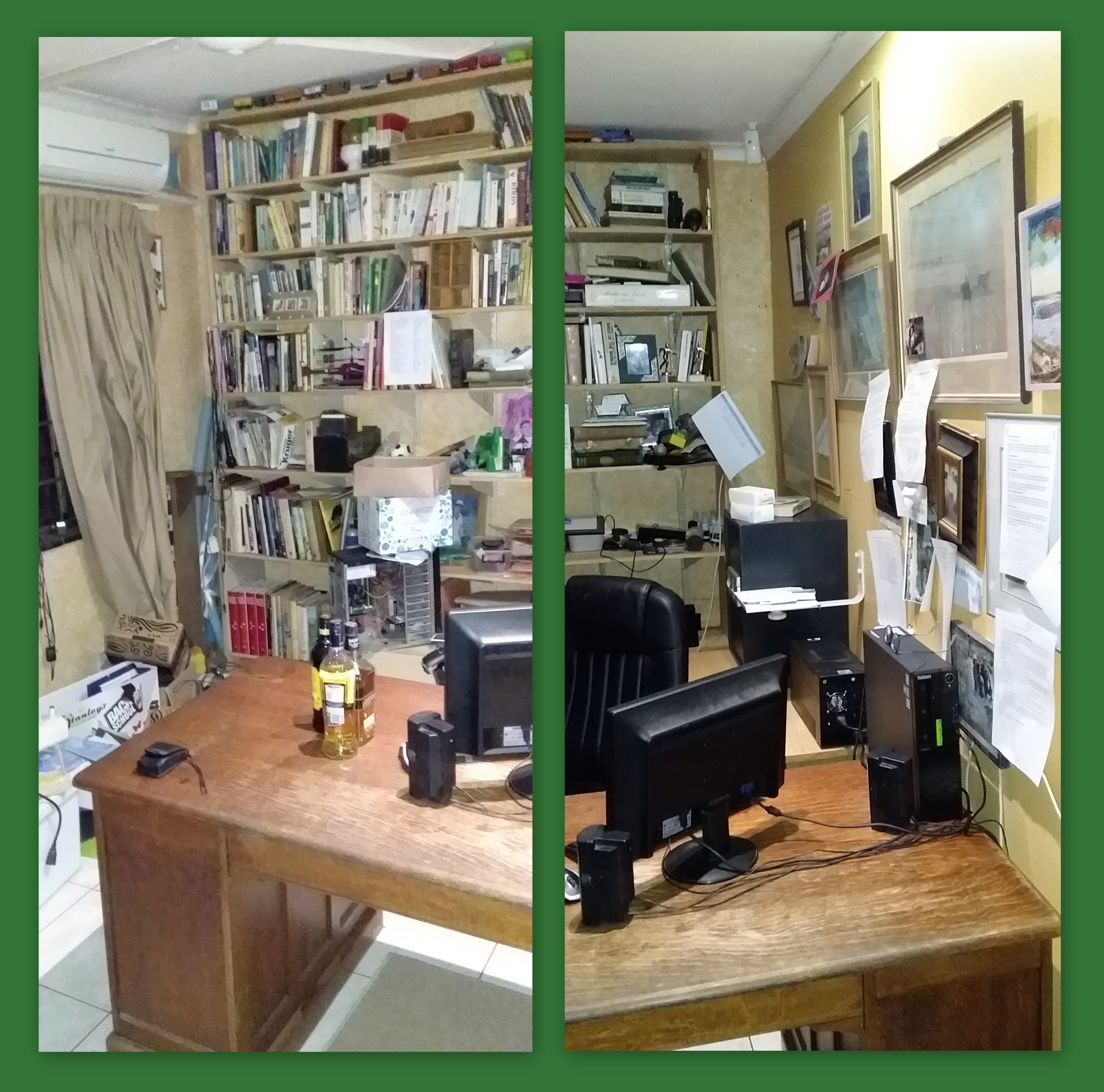
So now Mom’s in Azalea Gardens and Dad will be joining her soon, so it was time to fetch the desk. Dismantle, ship on the back of and inside of my Ford bakkie and re-assemble in my office.
It looks good.
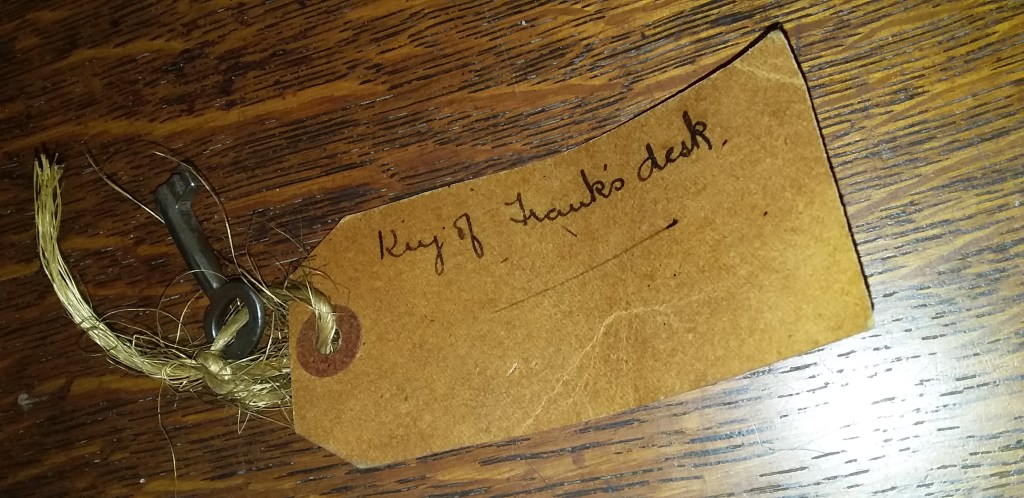
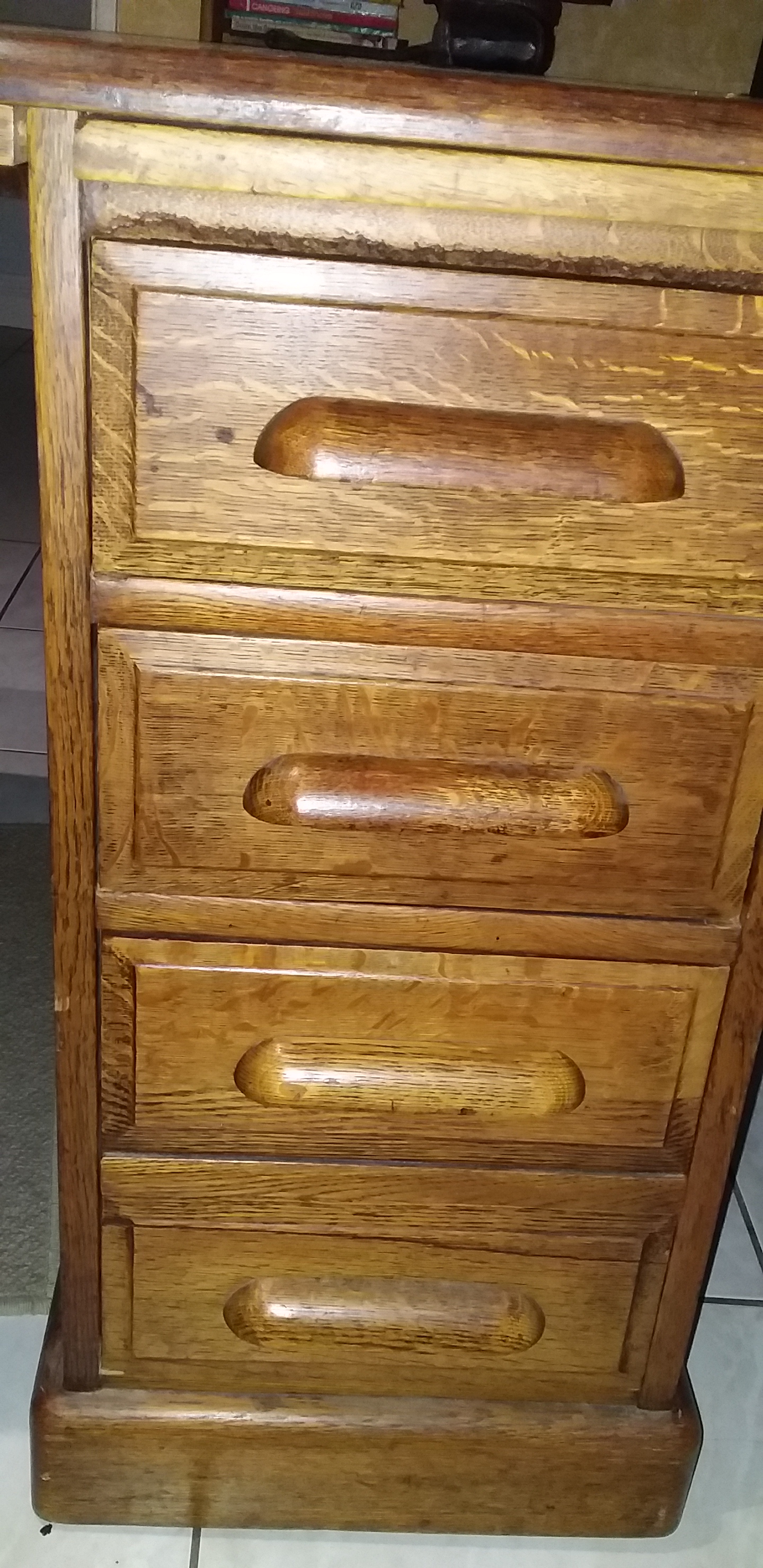
Very importantly, the key is in the top drawer, attached to a label ticket. Written in (I suppose) Annie’s handwriting: “Key of Frank’s Desk.” Interesting, as there’s no lock or keyhole in the desk, nor any of its drawers!
~~~oo0oo~~~
‘Fraid it wasnt in my care for long, Annie! It has moved on. Into Sheila’s care now, as I’ve sold my home. Took it apart again – 14 separate pieces) and schlepped it down to her in my same Ford bakkie. I took care to make sure she got the key, too.
I spose this means the penis (lineage) has been severed!
Steve Reed sent a picture of old American cars in Aussie .. I wrote:
These lovely old motorised wrecks remind me of Swinburne character Abe Sparks‘ Rolls Royce bakkie. And that reminds me of Nell van Heerden.
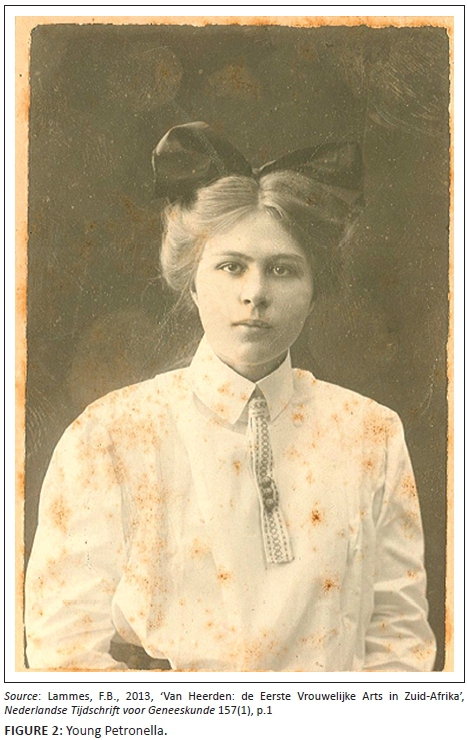
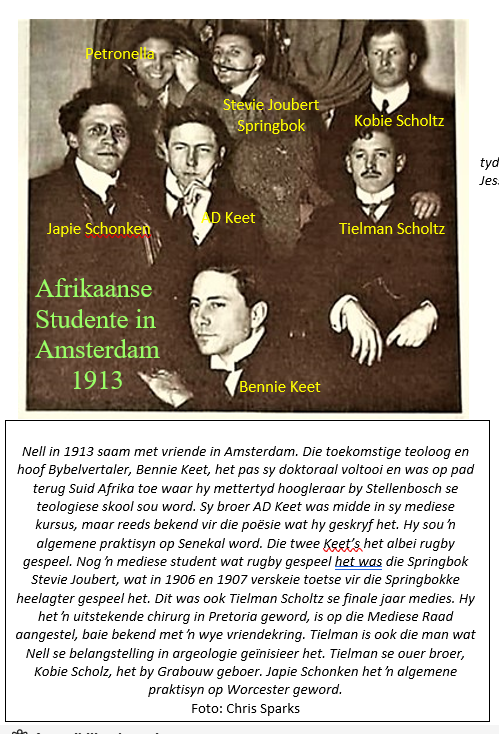
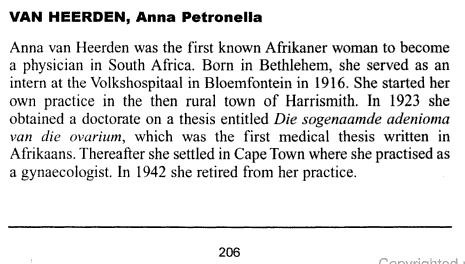
Dr Anna Petronella van Heerden, born 1887 in Bethlehem. She studied at the University of Amsterdam from 1908 to 1915 where she completed her medical degree. Thanks to our Harrismith historian Leon Strachan and Chris Sparks, Abe Sparks’ grandson, here she is with fellow students, a pretty elite group of South Africans of the day:
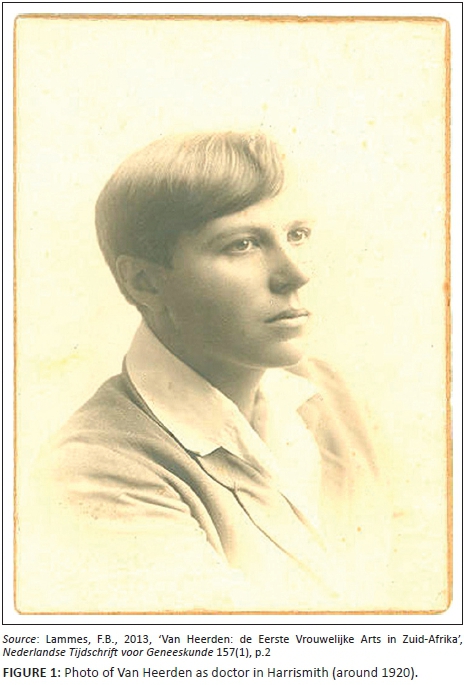
Van Heerden served as an intern at the Volkshuishospitaal in Bloemfontein in 1916 and had her own practice in Harrismith from 1917. She specialised in gynaecology in London from 1921 before returning to Amsterdam to complete her PhD in 1923. She moved to Cape Town where she practiced as a gynaecologist. She retired from her practice in 1942 to go farming in Harrismith.
Apparently she bought the Roller in England, toured the continent in it, then shipped it back to Kaapstad where she ran her specialist practice. Then, I’m guessing, drove it up to Harrismith to go farming. This part about the car is according to my 96 year-old Dad.
EXCEPT! The Roller was a Cadillac! Again Leon Strachan’s research to the rescue. I was just believing what I heard from my ole man. Not Leon, he did the research and found out Nell had ordered a custom 1929 Cadillac from the Cape Town General Motors dealer. Also that after swanning around the Cape in it, she decided to tour America with her life partner Freddie Heseltine, and modified the Caddy as a camper for the trip. An enterprising and indefatigable character. – (note the difference between a historian and a peddler of hearsay: The Rolls Royce bought in London and shipped to SA was actually a Cadillac bought in Cape Town and shipped to the USA and back!)
She gave up practicing medicine and came to Harrismith to farm cattle and was legendary among the boere here.
Before that, she went digging:
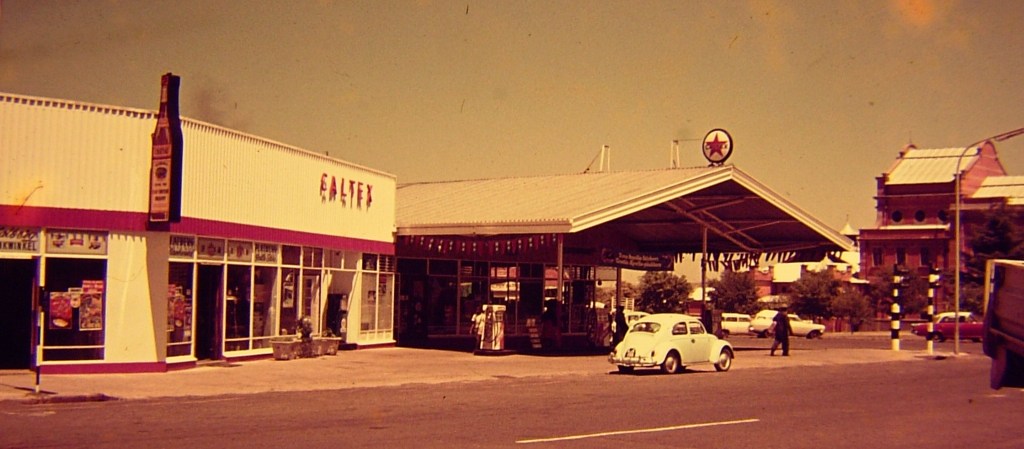
Usually dressed in khaki trousers, khaki shirt, sturdy shoes and hoed, she would answer my gran Annie’s, How are you, Nell? query with ‘Fair to bloody’ as she filled up her bakkie with Caltex fuel at Annie’s Central Service Station. She had a live-in girlfriend Freddie Heseltine, who sometimes had to move out to the cottage when Nell had city girlfriends over for lekker wild parties on her farm Grootfontein, behind the mountain. So we were told!
A cattle farmer, she would be seen at the vendusies where if any of the boere made the mistake of saying something, she’d be ready along the lines of “Ja, (Jan, Piet, Koos) ek is n fokken vrou al lyk ek nie so nie!” A true character, salt of the earth, a socialist and a real mensch. Imagine how strong you’d have to be, being ‘anders’ in a milieu where being a Male White Afrikaans Christian made you a baas, made you automatically right, and should have made all women appreciative and in their plek – and NOT at vendusies! And if they must be at vendusies they should serve the tea and koeksisters! The local boere would have known she was well-connected, though – she had served on National Party bodies – and was not to be taken lightly.
She did genealogy research and wrote two autobiographical books.
Anna Petronella van Heerden (1887–1975), was the first Afrikaans woman to qualify as a medical doctor. Her thesis, which she obtained a doctorate on in 1923, was the first medical thesis written in Afrikaans. She practiced as a gynaecologist, retiring in 1942. She also served in the South African medical corps during World War II.
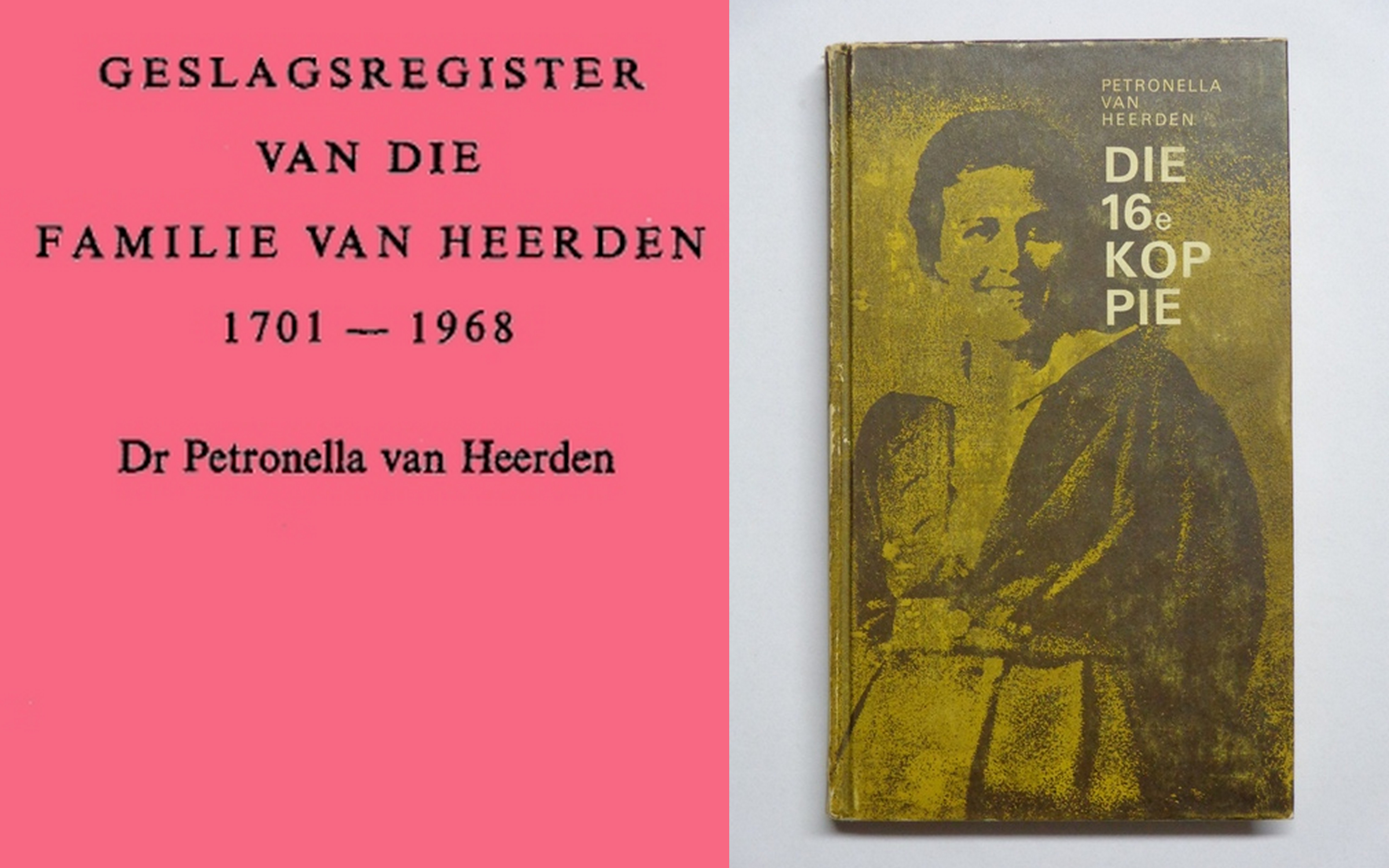
She campaigned for women’s suffrage in the 1920s, and worked as a farmer after retiring from her medical work. She also published two autobiographical texts, Kerssnuitsels (Candle Snuffings) and Die Sestiende Koppie (the Sixteenth Cup), and other works, including: Waarom Ek ‘n Sosialis Is (1938) (Why I’m a Socialist), and Dames XVII (1969). Her awakening came, she writes in Die Sestiende Koppie, when she found out just how few rights women had, and that they were – she was! – legally classified with children and idiots!
~~~oo0oo~~~
This from Women Marching Into the 21st Century: Wathint’ Abafazi, Wathint’ Imbokodo:
This from “Nationalism, Gender and Sexuality in the Autobiographical Writing of Two Afrikaner Women,” Viljoen L. (2008):
Viljoen investigates questions of nationalism, gender and sexuality in the autobiographical texts of Petronella van Heerden and Elsa Joubert, and makes the point that autobiography, a genre often considered marginal to the literary canon, can be regarded as a site for examining the impact of nationalism on the construction of gendered and sexual identity. Petronella van Heerden (1887-1975) became the first Afrikaner woman to qualify as a medical doctor and published two short autobiographical texts, Kerssnuitsels (‘Candle Snuffings’) and Die Sestiende Koppie (‘the Sixteenth Cup’), in the early 1960s. The article argues that van Heerden’s omission of overt references to her lesbianism can be attributed to the strong, though embattled, position of Afrikaner nationalism at the time her texts were published.
My guess is there would also have been a fair dose of Nell saying ‘its none of your bloody business’ in there as well.
There’s an article about Nell in Journal of Literary Studies. (the link takes you to a summary – they want US$43 to read the whole thing!)
~~~oo0oo~~~
From the National Library of Medicine: Petronella van Heerden (1887-1975) was born in South Africa. She studied medicine in Amsterdam from 1908 to 1915 and then worked as the first female doctor in her native country for 4 years before specialising in gynaecology in London. She then returned to Amsterdam, where she gained a PhD in 1923 on a thesis on endometriosis that was written in Afrikaans. She settled in Cape Town and participated in many political and emancipatory activities alongside her work as a doctor. She wrote two autobiographies.
Nell van Heerden died in 1975, aged 88.
~~~oo0oo~~~
Oh, back to the Rolls Royce Cadillac! I imagine – but I don’t know for sure – that Abe Sparks converted this Rolls Caddy into a bakkie, a pickup, a ute, after buying it from Nell. We always heard stories of how Aussie sheep farmers ‘drove Rolls Royces around their farms, as the running boards were wide enough to carry dead sheep.’ Abe would have liked that, and my guess is he thought ‘Hell, I can do that too.’ Maybe?
~~~oo0oo~~~
Kaapstad – Cape Town
boere – farmers
hoed – hat
vendusies – livestock sales / auctions
“Ja, (Jan, Piet, Koos) ek is n fokken vrou al lyk ek nie so nie!” – Yes, Koos, I am a fuckin woman even if I don’t look like one!
anders – different; anything other than white, straight, conformist and obedient
plek – place; as in ‘know your place’
koeksisters– ‘South African doughnut’; deep-fried, very sweet
bakkie – pickup; ute
Wathint’ Abafazi, Wathint’ Imbokodo: You touch a woman, you touch a rock.
Tributes:
Nell was the first female SA citizen to qualify as a doctor – as far as I can tell. Other women practiced medicine in SA before her, but they were not born here.
Before Nell van Heerden: The first female to practice medicine in South Africa was Margaret Ann Bulkley. She was born in Ireland in 1789. She disguised herself as a man and called herself James Barry from then on. She qualified as a medical doctor in Edinburgh in 1812 and practiced medicine in Cape Town from 1816 to 1828. She effected significant changes, among them improvements to sanitation and water systems, improved conditions for enslaved people, prisoners and the mentally ill, and provision of a sanctuary for the leper population; performed one of the first known successful caesarian sections in which both mother and child survived; the child was christened James Barry Munnik in Barry’s honour, and the name was passed down through the family, leading to Barry’s name being borne by a later Prime Minister of South Africa, JBM Hertzog. Her birth sex only became known to the public and to her military colleagues after her death.
Before Nell:Jane Elizabeth Waterston was born in Inverness in 1843. One of the first women to be trained at the London School of Medicine for Women where she took her medical degree in 1880. She received a medical license from the Irish King and Queen’s College of Physicians. In 1883 she became a physician in Cape Town, where she died in 1932.
Same time as Nell:Mary Gordon b. 1890 in Lithuania, qualified as a doctor at the University of Durham in 1916 and emigrated to Johannesburg that year, taking up a position at the Johannesburg hospital. By 1944 she was registered as a specialist physician. Died 1971 aged 80. (Wits Review Oct 2017 Vol 38)
After Nell: In 1947 Mary Malahlele-Xakana (1916 – 1981) was the first black woman to register as a medical doctor in South Africa. Born in Polokwane, she qualified at Wits.
Arthur Kennedy arrived in Harrismith like a dwarrelwind. Why we were so lucky as to get Arthur to our town I don’t know, but I think his wife Zita had family here. I think she was related to the Kerkenberg mountain vd Bosch’s.
He brought an exciting new venture to the dorp: A new motel on the N3 on the south-east end of town – at the Jo’burg-Durban-Bloemfontein junction – or the Warden-Swinburne-Kestell junction you could say if you weren’t going to drive far.
The motel – Kennedy Motel – was going to have a ‘flyover’ restaurant suspended over the road so diners could watch the road as they munched their mixed grills. All the Durban-Joburg traffic – the busiest rural freeway in South Africa by far – would have to drive underneath them. But meantime the motel and petrol station had to be built, plus all the rooms – the chalets. A cable car to the top of Platberg was also in the pipeline, according to Arthur. Big plans!
The Kennedy family stayed right on-site in novel half-round semi-portable wooden bungalows above the building site and below the track that was an extension of Vowe Street, below the SE end of Hector Street. Arthur was very hands-on and was deeply involved in everything. He made the cardinal apartheid error of starting to pay his workers more than the “known” Harrismith wage which, according to Steph de Witt, got 5ft 6 inch Arthur a visit from 6ft 4 inch Koos de Witt, Steph’s Dad. Steph says Koos found Arthur in a foundation ditch. He jumped in next to him and “explained” to him in international language how he was not to bend the “local rules” of wage exploitation.
Later he built a triangular house of wood and glass above Vowe Street – a huge novelty for the town. It was next door to the du Plessis home, and Pierre and I hopped the fence and inspected it while under construction. The bathroom had a novelty in it which we hadn’t seen before. We didn’t know it was called a bidet, but we spotted right away what it was for. HaHaHa! Our schoolboy humour kicked in. Arthur’s initials were AW (were they? or did we invent that?) and we proceeded to call him Arse Washer after that bathroom furniture that so tickled our crude funny bones. We weren’t always Methodist-polite, ’tis true.
He even became a town councillor, this foreign rooinek in the vrystaat! If America could have a President Kennedy at that time, why couldn’t we have a possible future mayor Kennedy? Quite a guy was our Arthur!
~~~oo0oo~~~
The Cupboard Snake
For a while the Kennedys lived in the middle of town – in or near the house where Nick Duursema lived, near the circle in Warden street, just down from Arthur Grey’s corner store. That’s where the puff adder landed on top of the bedroom wardrobe.
The first and last puff adder I saw ‘in the wild’ was in Hector Street outside our house in about 1965 when – ware vrystater that she was – Mother Mary ran over the poor thing in the blue VW OHS 155. Doelbewus! Swear! The old man was called out from the pub. He came home, caught it and put it in a box which he gave to Zita Kennedy to give to her brother Tommy van den Bosch. Maybe he’d first stunned it with a blast of cane spirits breath. Probably.
Tommy lived against the slopes of Kerkenberg and wore a cowboy hat and played the guitar. He’d sing you a mournful – or toe-tapping if that was your poison – cowboy song at the drop of a hat. His 10-gallon stetson hat. He collected snakes and took them to the Durban snake park who paid him by the foot. They estimated this puffy at five foot, though of course that length may have grown over time! SSSSS – Snake Stories Seldom Suffer Shrinkage. And: Who knew snakes even had feet?
That night in bed just before lights out Arthur Kennedy asked Zita “What’s that box up on the cupboard?” She hadn’t finished telling him and he was already out in Bester Street opposite the ou groot kerk near the traffic circle in his tiny pie-jarm shorts shouting “Get that thing out of there ! I am NEVER going into that house again until that thing is gone!” and other earnest entreaties.
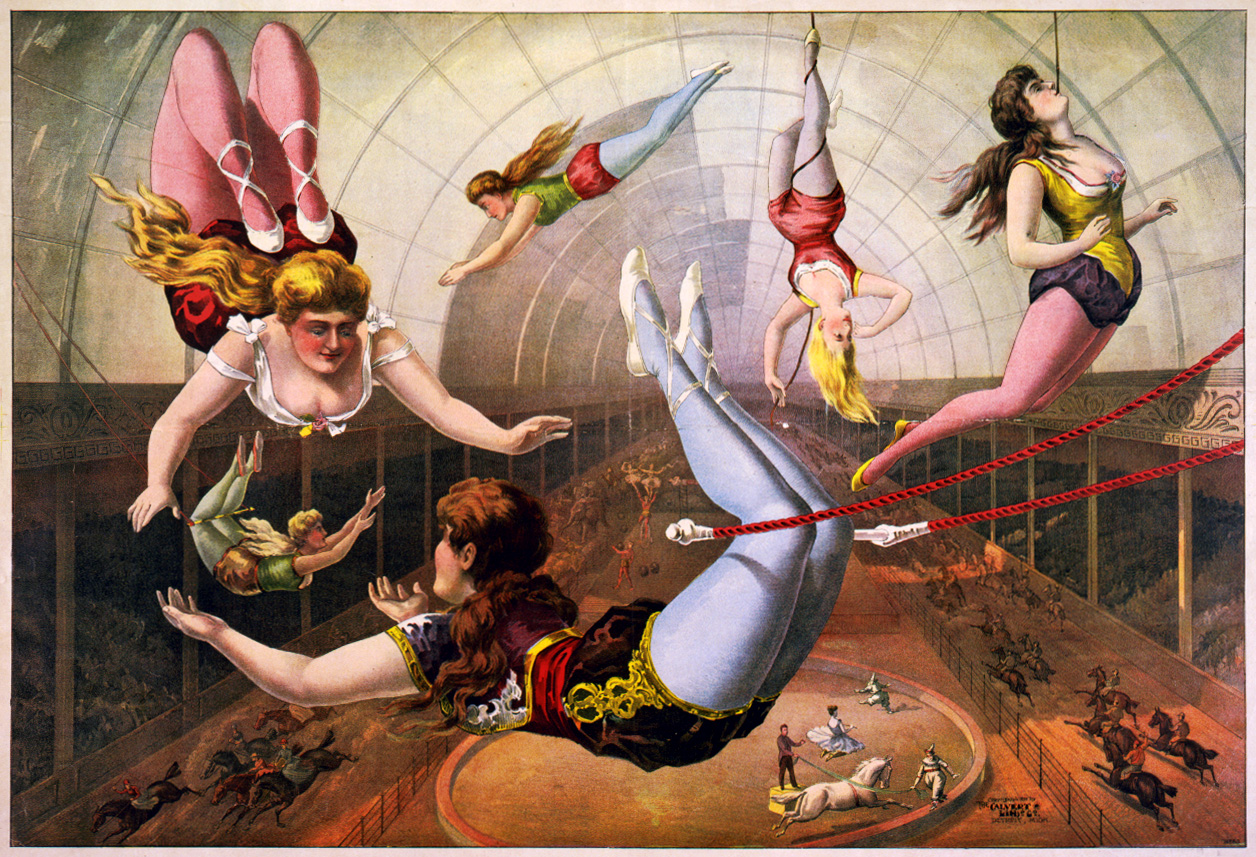
Flying through the air with the greatest of ease – Flew Arthur K on his flying trapeze!
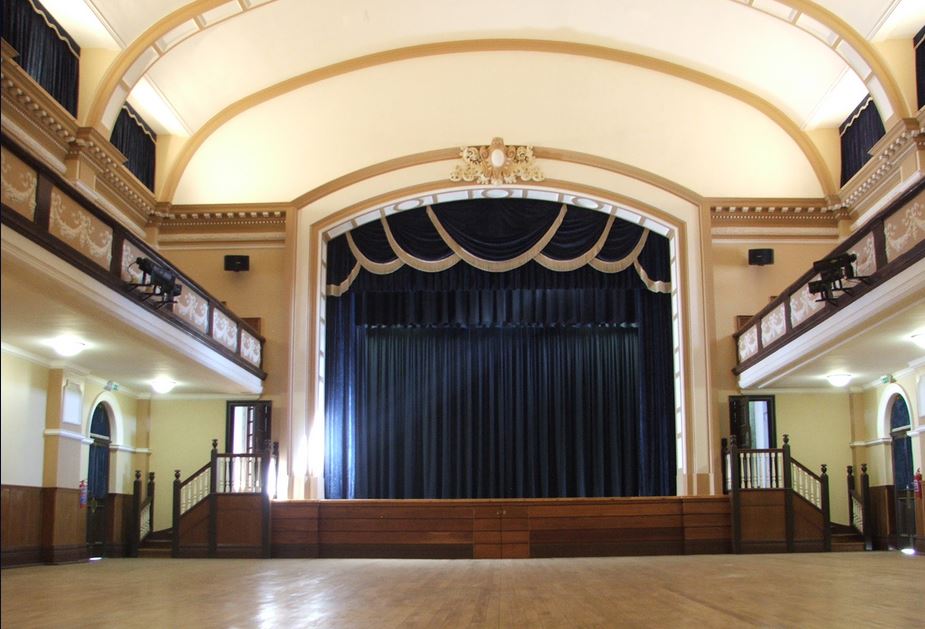
He did! He flew the full length of the stadsaal; again in his tight broeks. So he might have had a fear of snakes, but he was fearless in other ways: Who can forget Arthur Kennedy dressed only in a white Tarzan loincloth, swinging right across the hele stadsaal on a trapeze high above the gob-smacked and ge-be-indrukte Harrismith dorpsmense? And outdoors upside-down high on a thin pole above the skougronde? Fearless aerobatics and acrobatics.
But a snake on his cupboard? That was too much for him!
For a while he made Harrismith seem part of the wider world! It was a bit like this: Flying onderbroeks flashing past your very eyes. In daytime!
Here’s the actual scene of the thrill (the curtains were red back then):
Republic Day 31 May 1961: On the big day celebrating South Africa’s freedom from the tyranny (or oversight?) of Mrs British Queen, Arthur gave a stunning performance on his own equipment down at the President Brand Park in front of a full pawiljoen of ge-be-indrukte Harrismith mense! Dad filmed it:
~~~oo0oo~~~
Arthur ran our mountain race and, further proving his commitment to Harrismith he married a second local girl – much, much younger than him.
~~~oo0oo~~~
dwarrelwind – breath of fresh air; or whirlwind, tornado
doelbewus – with murderous intent; or on purpose; Swear! ‘Strue’s God! Gentle Mary did that. In those days you did. The only thing that made you think maybe you wouldn’t drive over it was the story that it would wind itself around your axle and then climb up into your engine, then climb under your dashboard and THEN . . pik you on the foot! Swear!
pik – snakebite
ware vrystater – genuine free stater; born and bred in the free state, as was her mother before her (who would not have been celebrating the 1961 demotion of QEII from monarch to foreign tannie)
tannie – auntie
ou groot kerk – the old Dutch Reformed Church, the Moederkerk
Back in 1963 we joined the du Plessis on a one-week beach and fishing holiday on the Natal north coast – Chaka’s Rock! They were beach regulars, this was one of our two beach holidays that I can remember. (flash: there were three!). Louis Brocket wrote in to remind us that, as Lynn’s boyfriend, he was also there for his first “vakansie-by-die-see“.
Sheila writes: “Found a postcard which Mary Methodist sent to her Mom Annie Bland (1½ cent stamp – remember the brown Afrikaner bull?). Mary wrote ‘We’re enjoying the swimming immensely. Coughs no worse in spite of it. We’re sleeping well and eating very well. The coast is beautiful. This is a picture of the pool where we swim.’ I think the three little Swanies all had whooping cough. Must have been fun for the du Plessis family who shared our holiday!”
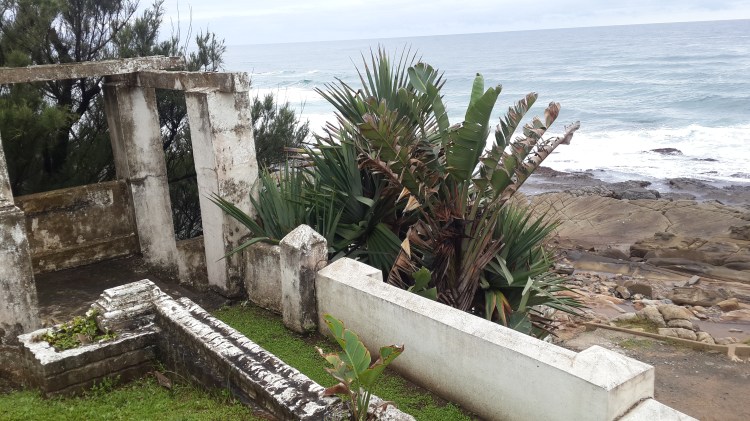
It was amazing! The cottage on a hill above the beach, the rocks and seaside cliffs, narrow walkways along the cliffs that the waves would drench at high tide; magic swimming pools set in the rocks. The men were there to fish:
We baljaar’d on the beach and sometimes even ventured into the shallows – just up to safe vrystaat depth. A swimmer I was not, and I still vividly remember a near-death experience I had in the rock pool: a near-metre-high wave knocked me out of Mom’s arms and I was washed away out of her safe grasp! I must have been torn away by up to half a metre from her outstretched hands; little asthmatic me on my own in the vast Indian Ocean for what must have been a long one and a half seconds, four long metres away from dry land! Traumatised. To this day I am wary of the big-dam-that-you-can’t-see-the-other-side-of, and when I have to navigate across any stretches of salty water I use a minimum of a Boeing 707, but preferably a 747.
Well, after all! This was the most threatening Free State water I was used to braving before I met the Indian Ocean: Oh, and also the horse trough.
– and even then I’d lift my broek just in case –
The view from the cottage looking down the asthmatic flight of stairs:
In this next 8mm cine footage, you can see the violent waves inside the rock pools that threatened my frail existence:
vakansie by die see – beach or seaside holiday for naive inland creatures
baljaar – frolic
safe vrystaat depth – about ankle deep; not adult ankle. My ankle
postscript: I tried to keep up the luxury cottage theme but Barbara talked about the big spiders on the walls and yesterday even Dad, who was talking about Joe Geyser, mentioned ‘that ramshackle cottage we stayed in at Chaka’s Rock.’
Dad was saying Joe hardly ever caught a fish. He would be so busy with his pipe, relighting it, refilling it, winding the reel with one hand while fiddling with his pipe with the other. My theory is the fish could smell the tobacco and turned their nose up at his bait. Dad reckons tobacco was never a health hazard to old Joe. Although he was never without his pipe, it was mainly preparation and cleaning, and the amount of actual puffing he did was minimal.
Once he caught a wahoo and brought it back to Harrismith. Griet took one look at it as he walked into her kitchen and bade him sally forth. Some wives had agency. So Joe brought it to Dad and they cut it up and cooked it in our kitchen.
~~oo0oo~~
I went back in 2016 and the beach and rocks and the pools still look familiar.
But don’t look back! The green hillslopes have been concreted. When we humans see beautiful sub-tropical coastal forest we say, ‘Stunning! Let’s pour concrete on it!’
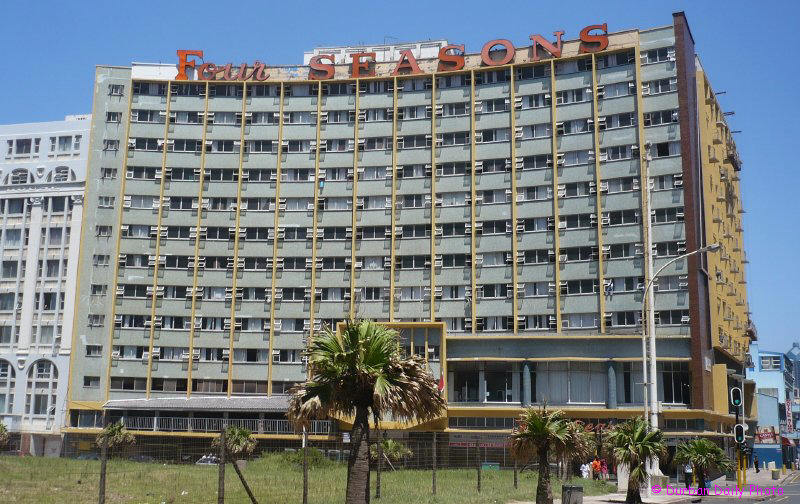
Off they’d go in Mary’s pale blue VW Beetle OHS 155. Off to Durbs-by-the-Sea, the Lonsdale Hotel or the Four Seasons for a whole week!
Might that be Mary’s VW outside the Lonsdale in this picture? Three cars behind the Borgward?
The cost of their stay: R2.95 each per day including meals. Mom thinks Randolph Stiller may have owned the Four Seasons. He and Bebe certainly owned the Central Hotel in Harrismith where Annie stayed, one block away from her Caltex garage in Warden Street. Only the Deborah Retief gardens between her hotel room and her office, but she drove there in her great big old beige Chev Fleetline, OHS 974; one block up to the garage. Mom – ever kind – says her legs were too sore to walk.
In Durban Mom and Annie would visit Annie’s sister Jessie (Bain Bell) and her daughter Lesley (Malcolm-Smith ) in their flat in Finsbury Court in West Street. Lesley worked at Daytons – a supermarket, Mom thinks.
They would all hop into Mom’s car and head off on a drive – to the beach, to the Japanese Gardens; and – always – to visit Annie’s bridesmaid Maggie McPherson who lived in a ‘posh flat up on the Berea. Looked like a bit of Olde England’.
1922 wedding
~~~oo0oo~~~
Many years later – 1980’s – we would go and listen to Joe Parker in the Lonsdale. Beer-soaked, we hosed ourselves, but I don’t think Mom and Annie would have approved!
While we’re getting nostalgic, some names to remember: Gillespie Street; The Italian restaurant Villa d’Este; The Four Seasons Hotel, with its Pink Panther steakhouse; Palm Beach Hotel; Millionaires’ Club; Lonsdale Hotel (Joe Parker being rude); The El Castilian nightclub (remember The Bats?); The Killarney Hotel, where the Monks Inn used to be (“Steak, Egg and Strips” said the sign); Thatcher’s Bar at the former Parkview Hotel.
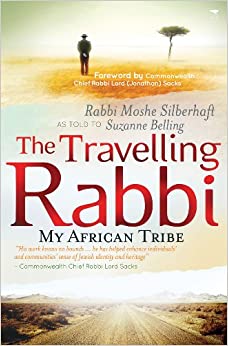
I just read a book (this was in 2014) The Traveling Rabbi by Moshe Silberhaft. It was loaned to me by Pauline Shapiro, Montclair character of note. We got chatting – instead of doing her eyeballs – about how Durban had lost most of its Jews and Harrismith had lost all of its Jews.
Rabbi Moshe went around the country from 1995 to small dorps where the ever-diminishing number of Jews allowed them to live in peace and eat whatever they wanted till he came to give them a skrik and some guilt feelings. He tells me in his book that Bethlehem comes from Beit Lechem, which means House of Bread. His book has three pages on Bethlehem and the main talk is about Rabbi Altshuler, who died in 1983, and the de-consecration of the synagogue, which was converted into offices by attorney Gerald Meyerowitz. Then converted again: car parts shop. That’s pretty hefty de-consecration! That’s like being smote!
With the closing down of the Bethlehem shul Rabbi Silberhaft did the rabbi stuff: “The three Sifrei Torah were removed from the Ark and carried out of the shul by Syd Goldberg, Saville Jankelowitz and Sam Jankelowitz, then aged 90, assisted by Dr Harold Tobias, who had a bad back, in a very solemn procession.”
Shockingly, Moshe didn’t mention my mate Steve Reed as an honorary Jew and extra son of Harold Tobias! Obviously he hadn’t heard Stefanus spin his yiddish. Even more shockingly, he leaves out my whole town! He writes of Parys, Brandfort, the metropolis of Phillipolis, Bloemfontein, Bothaville, the ‘Hem (ahem), Sasolburg, Marquard, Marseilles (Marseilles?!), Heilbron, Winburg, Senekal, Ficksburg, Kroonstad, and other no-name-brand towns, but no mention of that jewel of the Eastern Free State – Harrismith!
Amazing. He writes about all those flat dusty nothing-dorps and he omits the one shining-light green-oasis in the Vrystaat!
I suspect Harrismith “died” before the others? We grew up with the Woolf Chodos’, the Cohens, the Shadfords, Mrs Schwartz, Fanny Glick, the Longbottoms, Randolf & Bebe Stiller and others whose faces I can see but names . . my Mom and Dad, Barbara and Sheila will remember . .
But by 1972 we were dancing to Creedence Clearwater Revival at discos put on by Round Table in the already de-commissioned synagogue – at least fifteen years before Bethlehem’s was closed. So Harrismith’s shul got elevated in its deconsternation – unlike Beflehem’s descent into legal then commercial ignominy!
Sigh! But once again Harrismith got smoked by Bethlehem in the fame stakes. Something to remember: A possible cause for our C-rating in the progress stakes post-1948: Harrismith was a big verraaier-dorp in the Anglo-Boer War: Its citizens that did so well for themselves (my ancestors included) in an independent Republic, WELCOMED and aided and abetted the invaders!! Not good. One of my ancestors was principled, fought for the Boers and was sent to Ceylon as a POW. The others benefited even more after the war from money the British army spent in the town. ‘War is hell, I’m not to blame’ –
~~~oo0oo~~~
– Bethlehem –
The book has plenty amusing snippets. As the last few Jews die in the dorps, Silberhaft buries them, sometimes in cemeteries that haven’t had burials in them for yonks and decades. “Gave the cemetery a new lease on life,” he says . . .
One oke’s Dad was scared of flying and specified: “Don’t you dare send me in a coffin in an airplane hold”, so his son rented a kombi and drove the body to West Park cemetery in Joburg. Silberhaft then buried him and wrote to the son “I know your Dad liked to jol, so I buried him near the fence in case he wants to get out and hit the town.”
Some okes had long given up the faith, so when he tried to visit them in their little dorp some skrikked and quickly – and maybe briefly? – became kosher again! Others were way past all that and “voetsekked” him! Sent him packing.
Seems Silberhaft had a big thing about strict kosher living and – especially – eating. He would make a big thing if people were kosher and a bigger scene if they had slipped off the strict and narrow – and slippery! – path. Even though to stay kosher meant you had to have your meat brought in from outside, or have a kosher slaughterer come to you to slit your animals! He would take kosher meat in his boot to give to people – which suggests that in between his visits they probably ate pragmatically? Hey! Bacon. Some things are forgivable. Pigs have no chance of amnesty cos of bacon; I even have a best man who will occasionally wobble off the straight and narrow and into a bacon sandwich and that’s what forgiveness is for.
Pictures of the Bethlehem shul by Jono David at jewishphotolibrary.wordpress.com. It’s now a car parts shop, but check the lovely pressed-steel ceiling and the chandelier.
The
Bethlehem cemetery picture is also Jono David’s. He’s also at
jewishphotolibrary.smugmug.com
~~~oo0oo~~~
Steve Reed, Bethlehem Boy, wrote:
Thanks Koos, interesting stuff. We lived across the road from the Bethlehem shul. In a flat which was the subject of great intrigue to my school friends, all of whom had huge family homes in Oxford street and Cambridge street. The Tobias residence was in an even fancier part of town, along with the Meyerowitz residence, the Goldberg residence and others, high on the hill. Here you found swimming pools and things called “rumpus rooms.” I was an adopted member of the Tobias family, yes. From the wrong side of town, near Kraay’s Bakery. The Mann brothers, the paint magnates who lived even higher on the hill, referred to them as ‘Kraay the Beloved Baker.’ Once again, the bread connection!
For
Les Tobias’s bar mitzvah, I pitched up in my school (shul?) uniform
as there was no way we could afford a suit. Having been a St. Andrews
boy before moving to Bethlehem, this was an OK thing to do –
presumably with the Saints fees, it was understood there was no money
for suits. Must have got a few tongues wagging. Surprised we didn’t
start getting food parcels from the Jewish community after that.
Brauer wrote: The travelling rabbi’s old man is my mom’s neighbour in JAFFA – the Pretoria Jewish old age home.
~~~oo0oo~~~
skrik – frighten them; put the fear of G_d into them; see that? I wrote the Jewish god G_d
dorp – village; dusty; not Harrismith
voetsek – bugger off; voetsak’d – sent packing
verraaier – traitor
~~~oo0oo~~~
correspondence
followed:
Me: Wrote a little blog post about that book on Bethlehem where they battled to find three wise men.
Brauer: So the shul is a car parts shop? They probably sold the shofar as a much sought-after retro hooter (or horn).
Me: Couldn’t there be a market for a mobile Jewish wedding car – with removable roof and twin shofars, with a floor to dance and smash things on? I have to think of something to make cash post-optometry. Could I be the rabbi, or would I have to use a rent-a-rabbi?
Brauer: Conditional. We’ll let you be the rabbi if you have the snip.
Me: Eish!! It just shrank and retreated to only eleven inches in the shade at the very thought. What the rabbis don’t know is my definition of minor surgery: Minor surgery is Surgery On Someone Else.
I’ll have to stick to driving the mobile wedding car – you could say, ‘being the shofar . . ‘
~~~oo0oo~~~
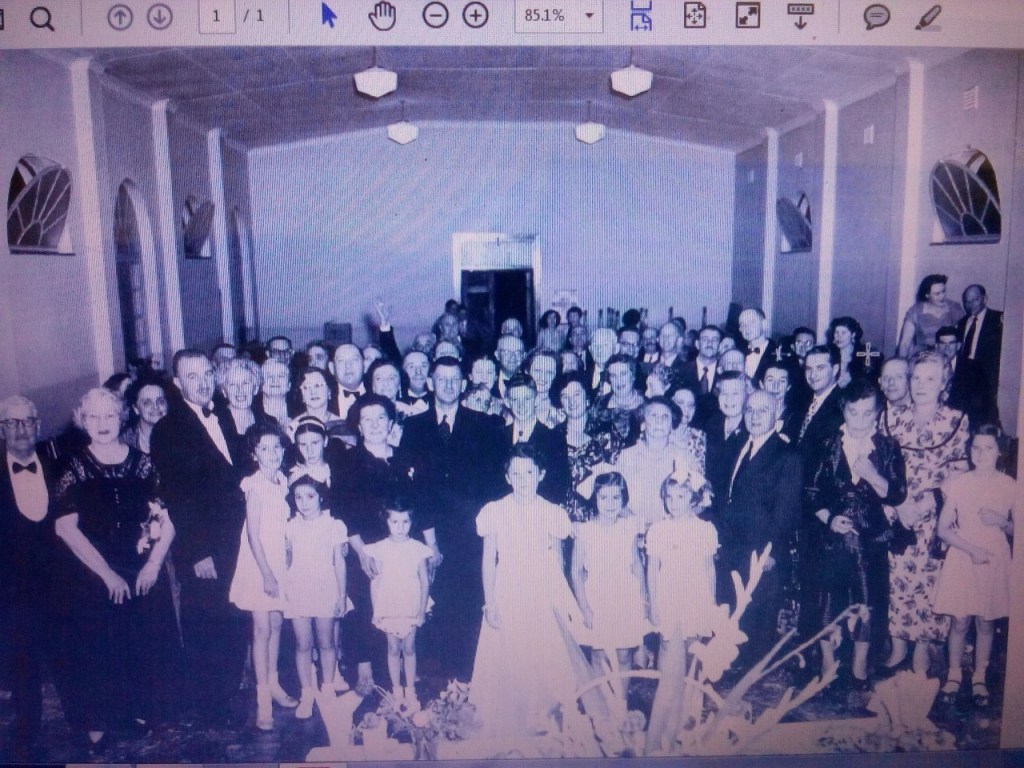
Here’s a lovely old picture taken inside the Harrismith synagogue!
– must get this to the folks for them to ID the people – old friends –
~~~oo0oo~~~
Dec 2020: I learnt today from big sis Barbara that the occasion above was Ivan Katz’s bar mitzvah. He turned 80 this year and has spent most of the year COVID-trapped in New York (state or city, I don’t know) with his daughter. He was matric 1957 in Harrismith. His Dad owned a bakery next door to my gran Annie Bland’s Caltex garage. Barbara found more old Jewish friends and wrote to them – an extract here.
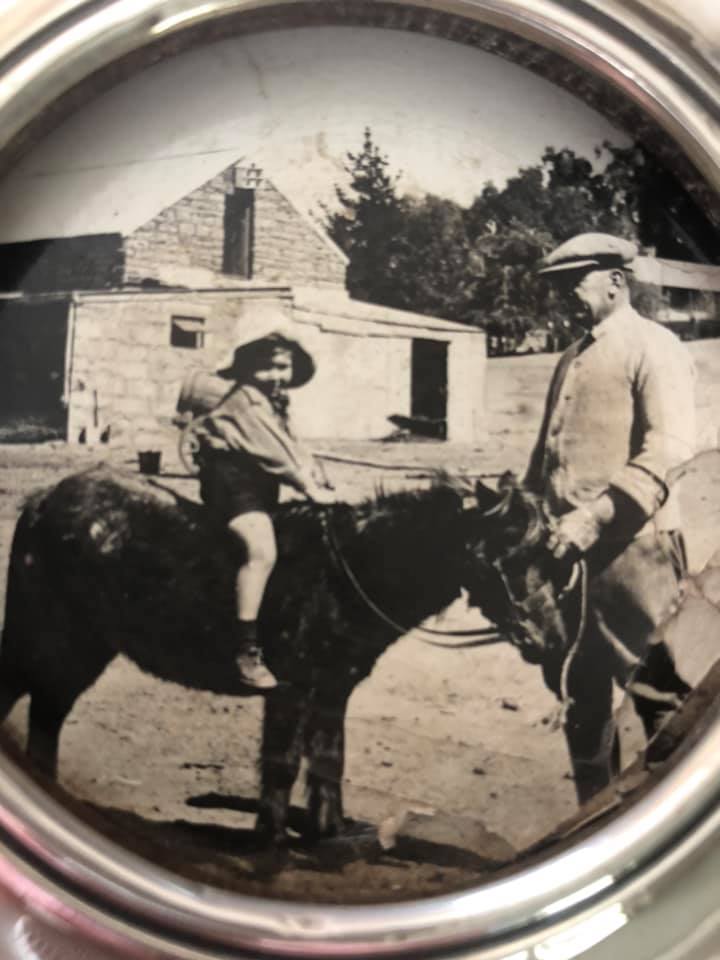
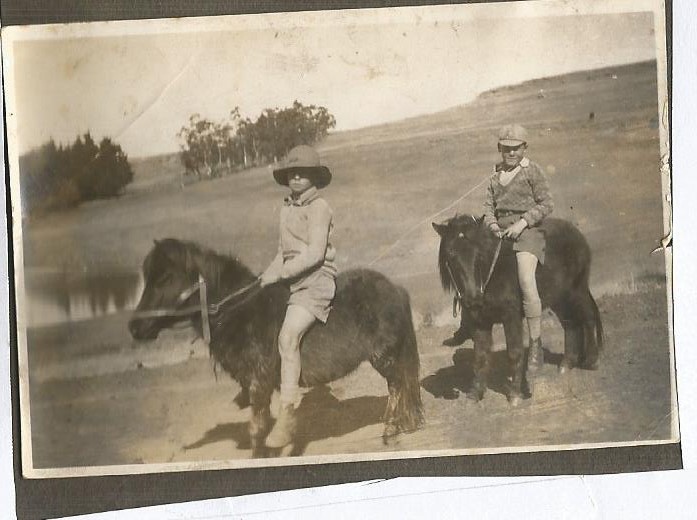
Sister Sheila sent this lovely old photo – she thinks ca 1920 – of Jack Shannon and our Mom Mary’s cousin Peter Bell on their ponies on Kindrochart, the Shannon farm on the Oliviershoek road and near Mom’s parents Frank and Annie Bland’s farm Nuwejaarspruit, on the Witzieshoek road. Sterkfontein Dam now lies between the two farms – in fact, the Nuwejaarspruit homestead is now submerged under the clear waters of the dam.
Peter Bell was Mary’s first cousin – his Mom Jessie Hastings-Bell (neé Bain of the Royal Bains) was Annie’s sister. Peter joined the Rhodesian Air Force in WW2 and went MIA – missing in action – his body was never found.
Mom tells the story of how Jack was urged to give his Shetland pony to “the Bland girls”, Mary and her sister Pat, once he’d outgrown it. He was reluctant but his folks urged him to be generous and asked again if he would be so kind.
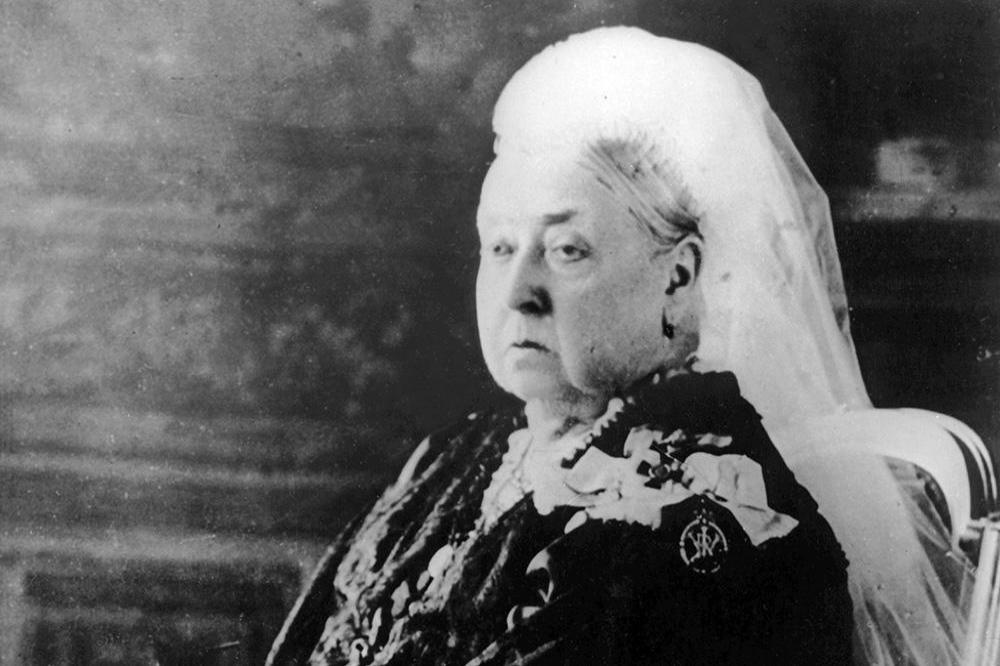
I joked that my gran Annie thought ‘the queen’ was also the queen of South Africa. Elizabeth, not Pieter-Dirk. And I thought ‘You know, Annie was probably alive under Queen Victoria!’
So I thought I’d check.
Well, she certainly was. And what’s more, she actually lived under six British Monarchs!
Smiling Vicky; Eddie Seven; Georgie Five; Eddie Eight; Georgie Six; Lizzie Two Second
How’s that! Long live the Queens! Long live the Kings! But longer live our Annie!
– Annie looking regal, crown without any stolen diamonds in it, complete with corgi accessory –
~~~oo0oo~~~
I myself have lived through the (distant, irrelevant) reign of Lizzie Two Second and . . oh, only Lizzie. She recently de-throned or defrocked her great-great-granma Victoria as longest reigning Breetish monarch. Poor old Bakoor Charlie has gone straight from lifelong unemployment into pensionerhood before ever actually doing anything. He’s sixty nine in the shade, has never worked a day in his life and is still sitting around waiting for a vacancy to arise.
“Royalty” is such BullShit. If his mother keeled over millions would be wasted putting a hat on his head; after which he’ll carry on doing nothing while not wearing that stupid hat. We humans are incredibly stupid often.
– dreaming of his hat –
~~~oo0oo~~~
As a determined anti-monarchist I much prefer this fact: Annie and Mae West were both born in 1893. Mae died in 1980, Annie three years later. As a big fan of Mae West I do hope Annie liked her and didn’t follow the moralistic American censors in panning her. I doubt it. I think she’d have loved her!
Mae West (August 17, 1893 – November 22, 1980): American actress, singer, playwright, screenwriter, comedian, and sex symbol whose entertainment career spanned seven decades. She was known for her lighthearted, bawdy and clever double entendres and breezy sexual independence. She often used a husky contralto voice. Quotable: “Marriage is a fine institution, but I’m not ready for an institution.”
~~~oo0oo~~~
breetish – Mugabe-speak for that island to the left of France;















 Vrystaat Confessions