We went to Durban around this time and stayed in the Impala Holiday Flats, self-catering. Free Staters on the loose in Durbs-by-the-Sea!
We probably drove down in OHS 154, a beige Morris Isis – or in OHS 155, a pale blue VW 1200 Beetle, along the narrow national road between Joburg and Durban. I remember talk of dreading the infamous “Colenso Heights” – apparently the most challenging section of the route.
The high-rise we stayed in was in Gillespie Street one street back from the Golden Mile, or Esplanade. If you took all Harrismith’s houses and stacked them, you’d have a building like this. I remember the lifts and I remember getting back tired and full of sand from the beach. I don’t seem to recall the beach – weird.
The eastern-most pass up Harrismith’s Platberg is the fabled Donkey Pass. We called it Flat Rock Pass. Mountain Passes South Africa says it’s the sixth highest above sea level, and the second steepest pass in South Africa.
The road traverses a nature reserve and you need a permit to drive up. The steep parts – with sections as steep as 1:3 – are concrete stripped to aid traction. 4X4 and low range is essential for a safe and – especially – non-destructive ascent.
For those that do get to drive this amazing pass, you will be one of a select few to have done so.
The fauna and flora are special – adapted to the high altitude – up to 2394m – that’s 7854 feet to those stuck in ancient Empirical measures! When the sun never used to set on old whatsername’s empire. Remember? Plant species, over 669; I know of these animals: grey rhebok; chacma baboon; dassie; there must be many more. I hope the rhebok are still there. They live a precarious existence on this little 3000ha ‘island’, with people, fires and cattle around and encroaching.
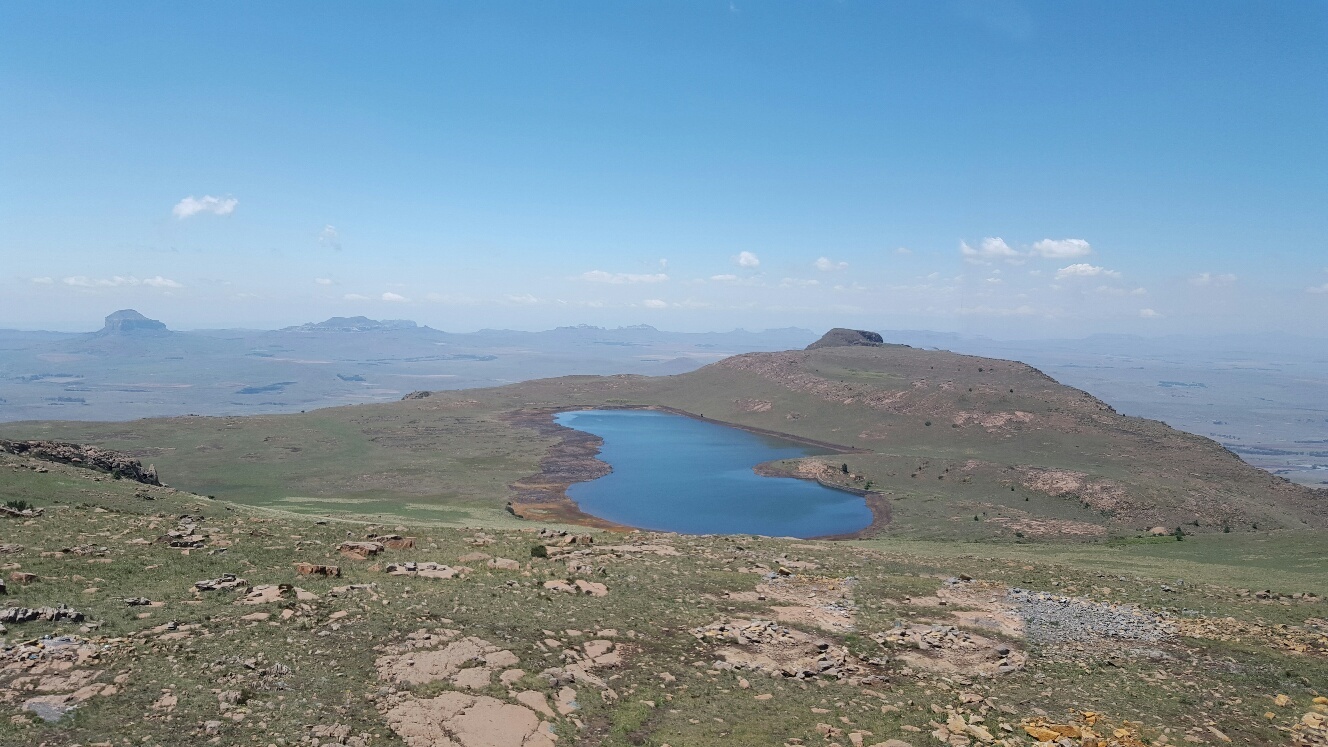
On top you’ll find Gibson Dam, built by British soldiers soon after the Boer War. The donkeys that carried the building material up gave the pass its alternative name.
Other passes on Platberg’s south side – the side facing the town – are Khyber Pass, ZigZag Pass and One Man’s Pass. They’re all footpaths only though.
Hopefully Platberg’s custodians limit the number of vehicles they allow on top to keep the mountain top as undamaged as possible. Sensitive wetlands!
Here’s the extent of Harrismith’s townlands. This means the rare grassland and wetland top of Platberg is unprotected and could be developed. We really need to up its conservation status:
All above are internet pictures. These next I took on a visit in 1973 with fellow exchange students and my Apache host brothers. From left: Dayne Swanda, Kent Swanda, Helen Worswick from Marandellas, Zimbabwe, Jenny Carter from Bromley, Zimbabwe, Jonathan Kneebone from Australia, Evelyn Woodhouse from Durban, South Africa and Robbie Swanda.
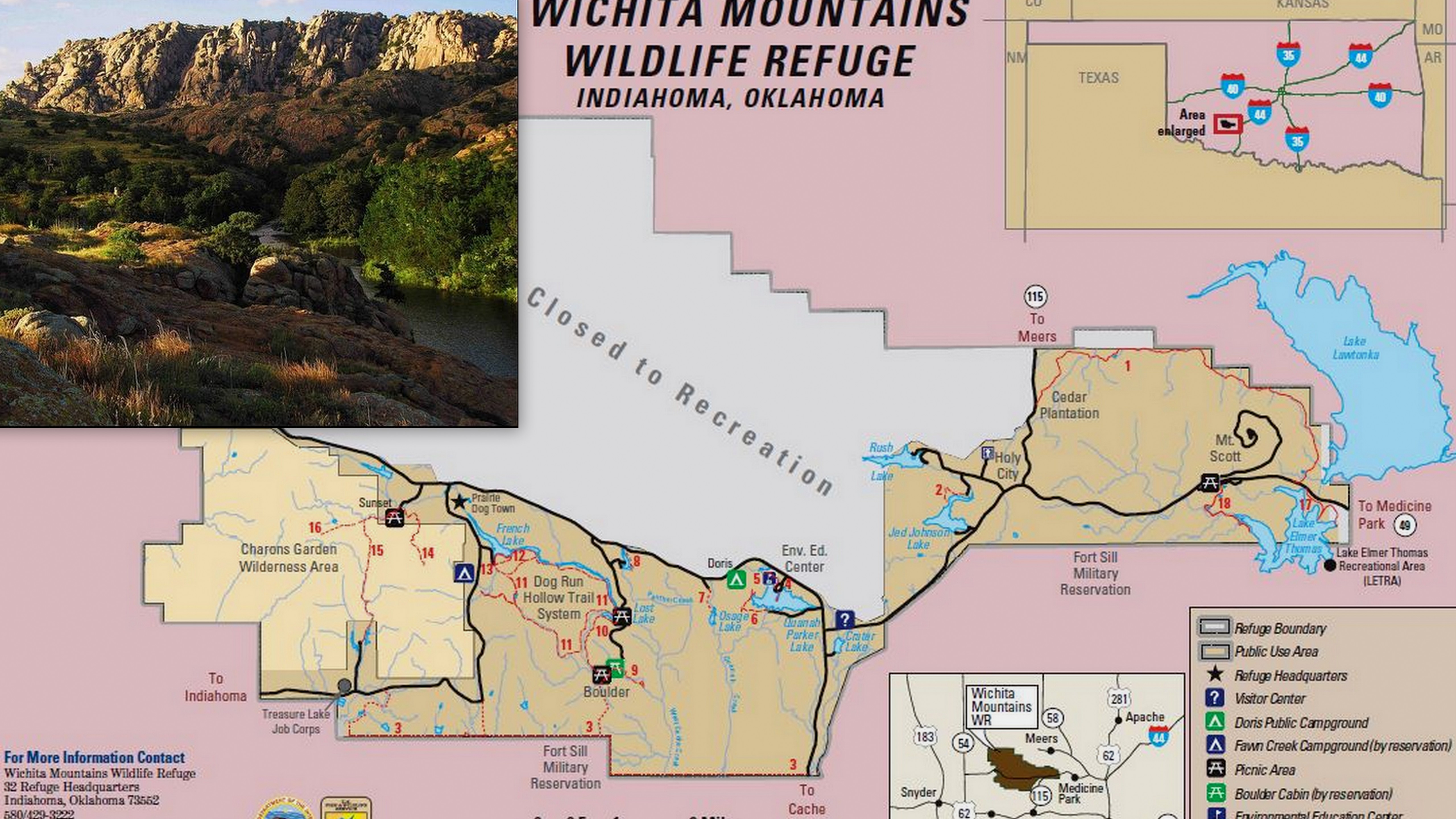
Wichita mountains with Pattersons
Dayne & Kent Swanda, Helen Worswick, Jenny Carter, Jonathan Kneebone, Evelyn ___, Robbie Swanda
Bison, elk and deer are protected on the 23,880 ha wildlife refuge. The refuge also manages a herd of longhorn cattle. The peaks are capped by 540 million-year old granite. Here you can see where the mountains are in SW Oklahoma. Apache is just a few miles north.
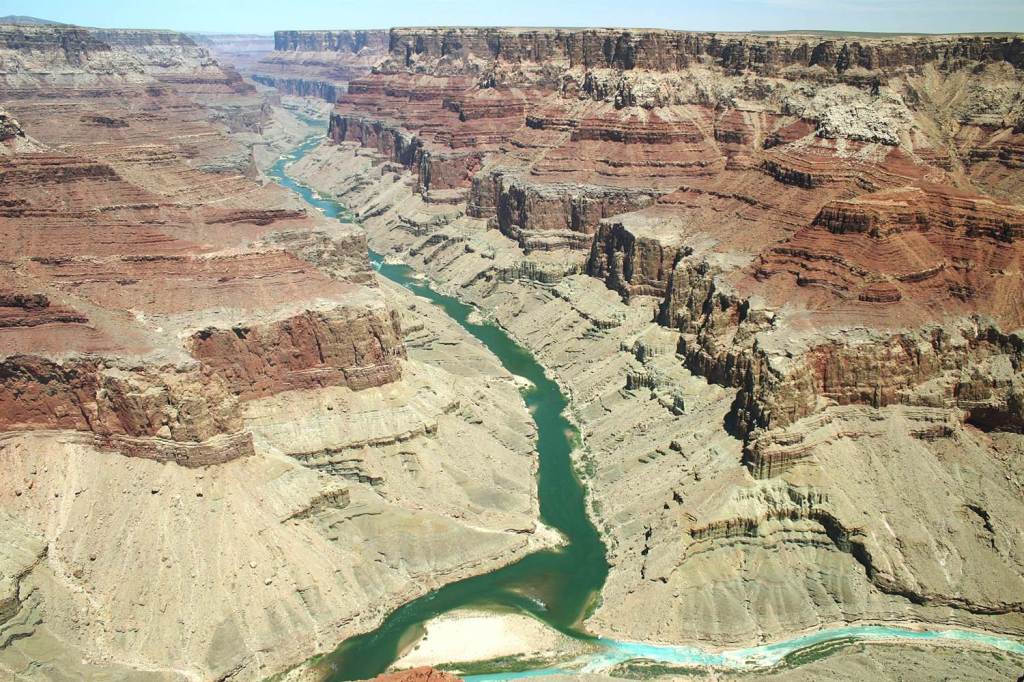
As the Colorado River coming down from the high Rockies in Colorado state carves a deep canyon through the Arizona desert, it is met by the Little Colorado, coming from dryer country in Eastern Arizona and Western New Mexico – bottom right in the picture.
Approaching the confluence, the Little Colorado River carves an extremely steep and narrow gorge into the Colorado Plateau, eventually achieving a maximum depth of about 980m. The depth of the canyon is such that numerous springs restore a perennial river flow.
It joins the Colorado deep inside the Grand Canyon, miles from any major settlement. The confluence marks the end of Marble Canyon and the beginning of Upper Granite Gorge.
It’s a remote and peaceful place which can only be reached by river craft or by a long steep hike into the canyon.
Some developers thought it would be a good idea to put 3km of cable cars or ‘aerial trams’ and walkways down from the South Rim to the confluence, aiming to transport ten thousand paying guests a day down to this special place which they could then reach without effort, scoff fast food at a McD or KFC joint and zoom up out again. They planned the hideous Grand Canyon Escalade:
They planned to ruin a special place. Luckily Canoe & Kayak Magazine reports the Navajo Nation Council voted 16-2 against the development proposal on 31st October 2017. The proposal by developers Confluence Partners from Scottsdale, Arizona, also included a 420-acre commercial and lodging “village” on the rim, huge restrooms, an RV park, gas station, helipad, restaurants, retail shops, motel, luxury hotel, the ‘Navajoland Discovery Center’ and additional infrastructure.
Under the proposal, the tribe would be on the hook for an initial $65 million investment for roads, water and powerlines and communications, while providing a non-revocable 20-year operating license including a non-compete clause. In return, the Navajos would receive just 8 percent of the revenue. A “totally one-sided” and “rip-off” proposal, it met with a cold reception since project lobbying began seven years ago. Even after lengthy debate during the council’s special session led to significant amendments, overwhelming opposition to the project remained, prompting council delegates to pound a stake through its heart.
“We never said we were against economic development but, please, not in our sacred space,” activist Renae Yellowhorse from Save the Confluence said afterward. “We’re going to always be here to defend our Mother, to defend our sacred sites.”
Greedy developers, including some Navajo leaders, aim to try again, so vigilance is called for. Bottom line: There is no need for casual in-and-out tourists to ruin a special area when they can see pictures, videos and even 360º videos – even live footage – without crowding and ruining the place. We must be careful not to turn genuine natural areas into theme parks! We cannot re-create these places. They are not movie sets, they are real, often sensitive, ecosystems.
~~oo0oo~~
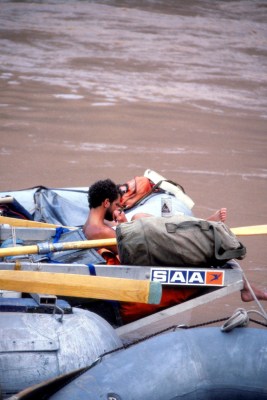
When we got there in 1984 the rivers were running strongly, the Colorado at 50 000cfs, clear from deep in Lake Powell, and the Little Colorado running rich red-brown (“colorado”) from a flash flood upstream. Here you can see the waters starting to mix. From here on we had brown water all the way to Lake Mead.
 And Colorado River water should be brown: Colorado means “ruddy, reddish.” Literally “colored.” Past participle of colorar “to color, dye, paint.” From Latin colorare.
Great friend Larry Wingert is out from the USA and we hop on a flight to Maun in Botswana. It’s 1985 and we’re bachelors on the loose with time and money!
– 1985 Maun – pics by Lee Ouzman, who arrived about then – and stayed –
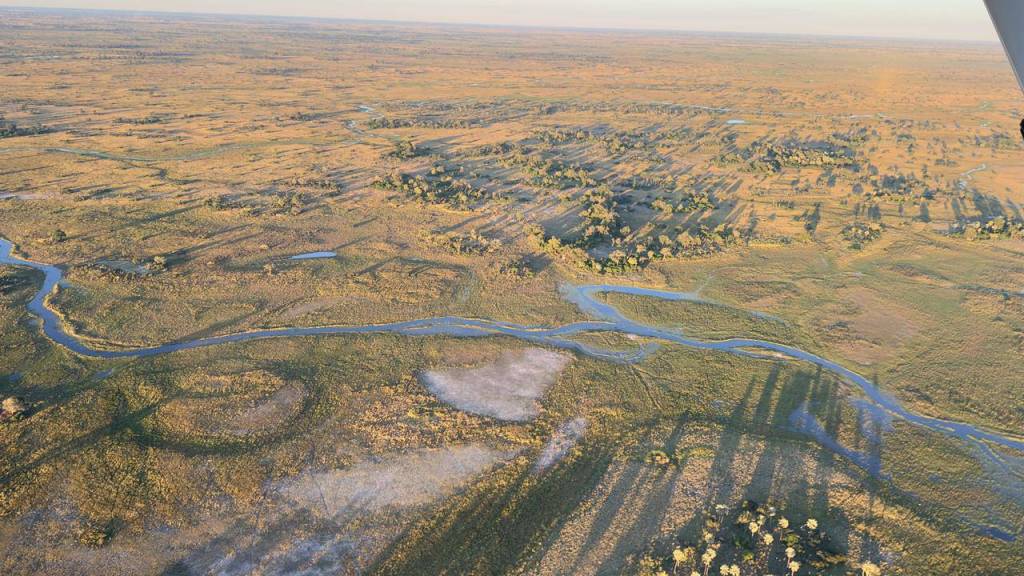
From Maun we fly into the Okavango Delta (Tjou / Chau Island camp) in a Cessna 206. After many beers and wines a resident auntie starts looking enticing at around midnight but the moment passes.
– internet pics of where I think Tjou Island was – names change – I’m hoping to get pics from Larry –– Chau Island in 2025 –
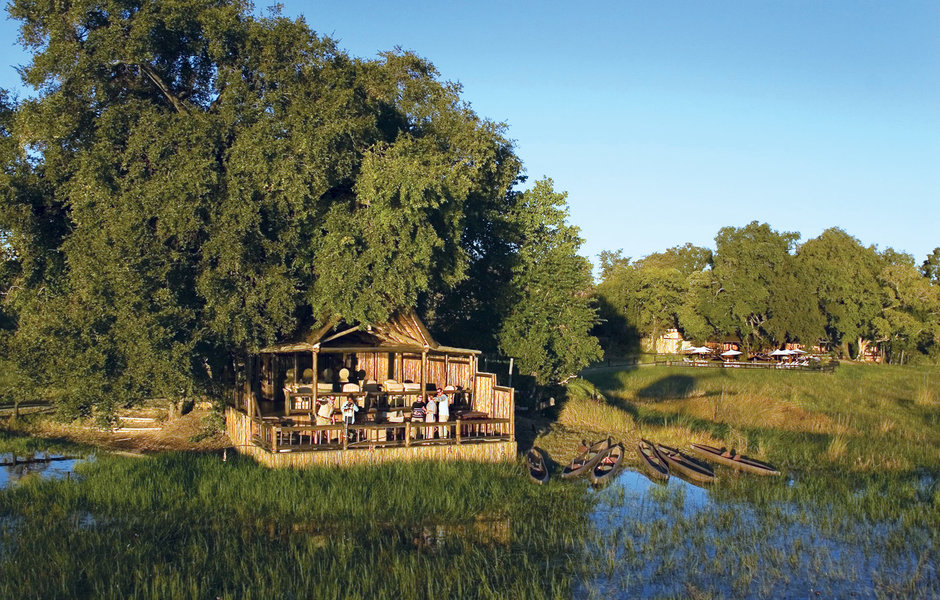
The next morning a pair of tropical boubou fly into the open-air pub under a tree right above where we’re sitting and belt out a startling loud duet. Stunning! That’s a lifer!
– pic from afrol.com – see story on tropical boubou calls –
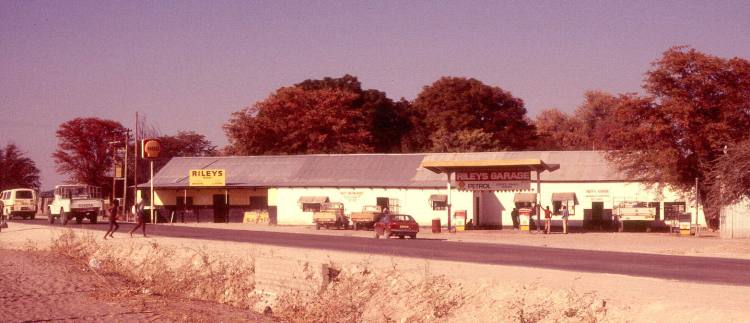
After a short mokoro ride around some islands with a walk on one of them, it’s back to the plane and a short flip back to Maun where we all squeeze into an old Land Rover, fill up at Riley’s Garage . .
– 1985 Rileys Garage by Lee Ouzman –
. . and head off for Moremi, stopping just outside Maun to buy some meat hanging from a thorn tree. Goat? Supper. Our outfit is called Afro Ventures.
We’re a Motley Crew from all over. We get to know two Aussie ladies, a Kiwi lady, a Pom fella – 6 foot 7 inches of Ralph; AND the gorgeous Zimbabwean Angel Breasts (Engelbrecht her actual surname)! Unfortunately, she’s the Long Pom’s girlfriend (*sigh*). Weird how the only first name I can think of now is Ralph, the undeserving Pom.
Our long-haired laid-back hippy Saffer – no, he was probably a Zim, see his letter – safari guide Steve at the wheel is super-cool, a great guide. So off we go, heading north-east, eight people in a Series 2 Landie – “The Tightest-Squeeze-Four-By-Four-By-Far”.
Long Legs in a Landie to the rescue!
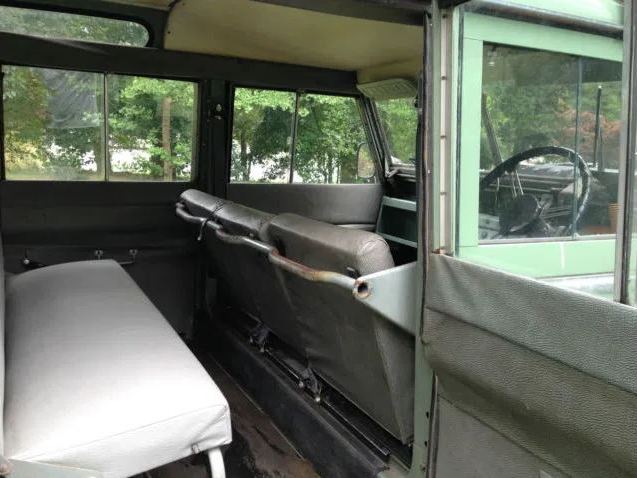
Anyone who has driven in an old Landie will know there’s lots of room inside – except for your shoulders and your knees. Besides that – roomy. Land Rover’s theory is that three people can fit on the front seat, three on the middle seat and two on those postage stamp seats in back. Right! See that metal bar that your knees keep bumping against? That’s what Land Rover used as their prototype airbag. It didn’t work so they only kept it for the next fifty years, then changed it. They made it more safety-conscious 2.0 in the late nineties by using milder steel.
– promotional pic extolling landrover luxury –
Previously a critic of Landrover design, in a flash I’m a keen supporter! Unable to endure the cramped space on the middle seat, the lengthy six foot seven inches of Pom gets out at the very first stop and sits on the spare wheel on the roofrack. I sit with my thigh firmly against Angel Breasts’ thigh (*sigh*).
More clever Landrover design features:
Stretched Ralph stays up there for the rest of the week – whenever we’re driving, he sits on the roofrack! When we stop he has to pick the insects out of his teeth, like a radiator. I’m in seventh heaven. Mine and Angel Breasts’ thighs were made for each other.
– she was like this . . . the landrover wasn’t –
Birding: Problem Solved!
I’m mad keen on birding but I don’t know how these guys feel about it. What if they get pissed off? What if they only want to stop for large furry creatures? After all, five of the seven of us are fureigners, un-African. But the problem gets solved like this: The first time we get stuck in the deep sand, a little white-browed scrub robin comes to the rescue! He hops out onto the road in full view, cocks his tail and charms them. From then on I have six spotters who don’t let anything feathered flit past without demanding,“What’s that, Pete? What’s that? And that one?” I become the birding guide! Steve is happy – it’s not his forte, but he’s keen to learn.
– thanks fella! – see wilkinsonsworld.com –
Moremi – and True Love
At Khwai River camp a splendid, enchanted evening vision befalls me – my best wild life sighting of the whole trip: I’m walking in the early evening to supper and bump into Angel Breasts outside her bungalow – she’s in her bra n panties in the moonlight. Bachelor dreams. Oops, she says and runs inside. Don’t worry, I’ve averted my eyes, I lie (*sigh*). That’s another lifer!
Chobe
At Savuti camp the eles have wrecked the water tank.
At Nogatsaa camp a truck stops outside the ranger’s hut, a dead buffalo on the back. The ranger’s wife comes to the truck and is given a hindquarter. Meat rations. They also drop the skin there and advise us to carry a torch if we shower at night as lions are sure to come when they smell the skin.
– internet pic of nogatsaa waterhole –
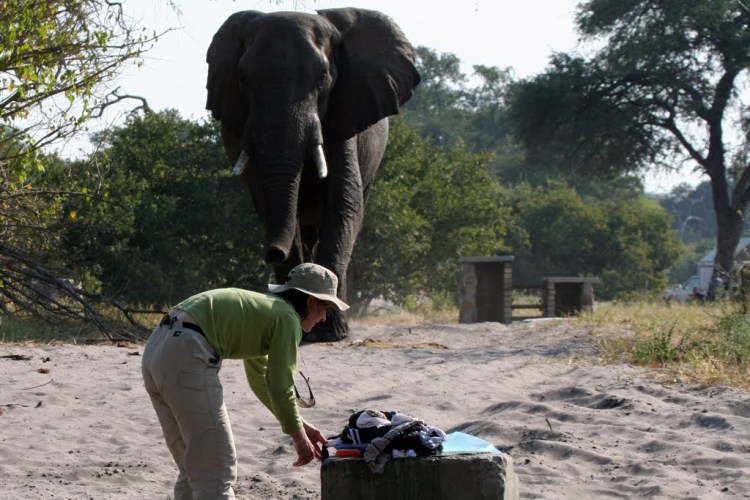
Another Lifer! Later I head for the tiny little shower building – a single shower – to shower while it’s still light. Lion discretion being the better part of valour, I’m not lyin’! A sudden cacophony makes me look out of the broken shower window: The lady-in-residence is chasing an ele away from her hut by banging her pots & pans together! We travel thousands of k’s to see elephant and she says Footsack Wena! Tsamaya! The ele duly footsacks away from that awful noise, looking back as he shuffles off like OK, OK! Jeesh!
While looking out, I spot what I think could be a honeyguide in a tree, so I have to rush back to our puptent wrapped in a towel with one eye on the ele to fetch my binocs. It is a Greater Honeyguide, the one with the lovely Latin name Indicator indicator, and that’s another liferfor me! Moral of the story: Always carry your binocs no matter where you go! He obligingly confirms the sighting by saying:
– Greater Honeyguide, Indicator indicator- also from xeno-canto.org –
That night the elephants graze and browse quietly right next to our puptent, tummies rumbling. Peeping out of the door through the mozzie netting I look at their tree stump legs, can’t even see up high enough to see their heads. Gentle giants.
As we approached the Chobe river the landscape looked like Hiroshima! Elephant damage of the trees was quite unbelievable. That did NOT look like good reserve management! Botswana doesn’t believe in culling, but it sure looks like they should! Too many elephants are spoiling the broth.
The Chobe river, however, was unbelievable. Despite the devastation on its banks – especially after the dry country we’d been in – it was truly magnificent. What a river! What wildlife sightings, the river being the main surface water for miles.
Zimbabwe
On to Zimbabwe, the mighty Zambesi river and Victoria Falls. We stayed at AZambezi Lodge. Here we bid a sad goodbye to our perfect safari companions. Me still deeply in love. Angel Breasts holding the Long Pom’s hand, totally unaware of my devotion (*thigh*).
At the end, our new friend and safari guide Steve gave me and Larry a letter. We read it on the flight out of Vic Falls..
– lovely note –
~~oo0oo~~
Hopeful note: Larry had a camera on the trip, I didn’t, so I have asked him (hello Larry) to scratch around for his colour slides in his attic, his basement, or his secret wall storage space in Akron Ohio. He will one day. As a dedicated procrastinator he is bent on never putting off till tomorrow what he can put off till Wednesday week. Meantime, thanks to Rob & Jane Wilkinson of wilkinsonsworld.com, xeno-canto.org and others on the interwebs for these borrowed pics and sounds!
Edit: There’s hope! Larry wrote 16 December 2017: P.S. I will renew my efforts to locate some photos of our Botswana trip. If you saw the interior of my house, you’d understand the challenge. . . . OK, but if you saw the exterior of his house you’d fall in love with it:
– Bachelor pad, 40 North Portage Path, Akron Ohio –
Terrible note: Update November 2019: Larry has since had a bad fire in the basement of his lovely home. Much of his stuff was ruined by the fire and the smoke, and then the firemen’s water ruined the rest! He may not repair his home! This is so sad! Dammit! Pictures suddenly aren’t important any more.
Update 2020: He sold his home, but thankfully, he got a more convenient place to live, less maintenance, less upstairs and downstairs. And the old home was saved – have a look, beautifully restored.
~~oo0oo~~
Saffer – Suffefrickin; South African
Zim – a Zimbabwean
lifer – first time you’ve seen that bird ever – or anyway in lingerie
Footsack Wena!Tsamaya! – Go away! Be off with you! Eff Oh!
pamberi ‘n chimurenga – forward the liberation struggle! in Shona
The original source of info for this post was on https://deoudehuize.blogspot.co.za/ – do go and look, they are doing wonderful heritage conservation things in Harrismith! And they have a cool old car!
Maximilian John Ludwick Weston was a South African aeronautical engineer, pioneer aviator, farmer and soldier – and mystery man. He was probably born on 17 June 1873 in an ox wagon at Fort Marshall south of Vryheid in British Natal (though he invented an entirely different place of birth when it suited him). He married Elizabet Maria Jacoba ‘Lily’ Weston (nee Roux) a direct descendant of Adam Tas. The couple had three children: Kathleen, Anna and Max.
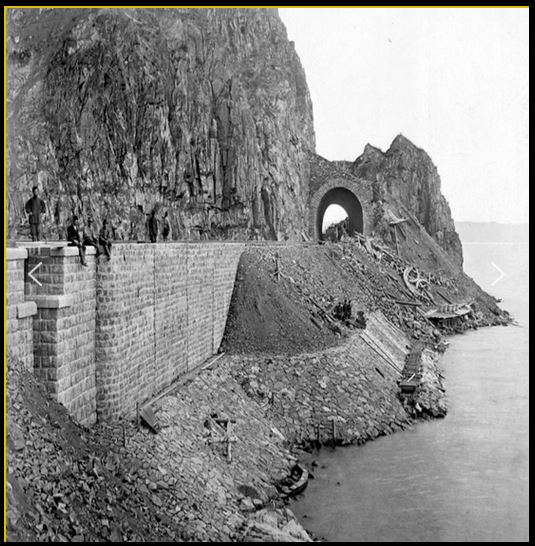
Weston’s early years are . . . interesting. And he may have invented a LOT of his life stories. But some things are verifiable – more or less, and they certainly are interesting! Read more detail here about his time building the railway line around Lake Baikal in Russia!
– was Weston here ca. 1903? –
Weston began the construction of his own aeroplane in 1907 at Brandfort in the Free State. This was the first South African-built aeroplane. He lacked an engine with enough power so he dismantled the aircraft and shipped it to France. In France he fitted a 50hp Gnome rotary engine and flew it successfully in 1910. On 16 June 1911 John made the first flight in Kimberley establishing a South African non-stop flight record of eight-and-a-half minutes in his Weston-Farman biplane.
At the outbreak of World War I Weston was appointed ground officer in charge of landing strips in South West Africa. He prepared an airfield with hangars and workshops at Walvis Bay.
For services rendered to the Greek Ministry of Marine he was made an Honorary Vice-Admiral in the Royal Hellenic Navy. Thus he was often glorified by the title of Admiral. Isn’t that delicious? The land-locked Free State had an Admiral! He appeared to relish the joke and later named his farm “Admiralty Estate”!
In 1918, John Weston took his family on an amazing adventure in this motorhome, a converted Commer truck. From about 1920 for twelve years, he and his family traveled the world.
The ‘Weston Caravan’, as it was called, was an extraordinary example of his tenacity and ingenuity. It doesn’t look like much from the outside and if the truth be told, the interior is enough to give anyone claustrophobia, yet this neat and compact arrangement of luggage and folding beds served them well. According to Weston, the living compartment could be removed from the chassis proper in a mere 10 minutes in order to float it across rivers, while the chassis could drive and/or get pulled across!
This ingenious ‘seven-by-fourteen-foot mansion’ ferried the pioneering Weston family on an overland trip from Cape to Cairo, and on to England, ‘to take the children to school!’
The purpose of Weston’s project was not simply to satisfy his lust for travel but was also an expression of his idealism. “To travel from land to land, to mix with the people of all nations…, to speak to them and hear their views, to study their institutions and their customs, that is his aim”.
It was also a bold experiment in the education of his children: he wanted them to see the world, to be freed from the narrowness and prejudices of those who grow up among never-changing surroundings, who know nothing of life beyond the pale of their dorp or city, the beauties and the grandeur of the earth, or of the nations and races who people it, and adorn (or mar) it with their works. He is preparing them to be citizens of Planet Earth”
On their trip from Cape Town to London they ‘had run-ins with elephants, occasionally had to float their vehicle across rivers on logs, and on occasions entire villages of more than a hundred natives had to dig them out of mud and thick sand and pull them up river banks.’ Weston said, “It can be stated without reservation that the indigenous people encountered on the African continent were all friendly and helpful“.
There were no fuel stations dotted along the route and no easy access to fuel, water or spares shops. Even the kids became handy mechanics. In the Southern Sudan they suffered misfortune when the rains broke later than usual. Weston broke a bone in his foot and the two daughters were also laid up with injuries.
On their trips Weston used to fly the South African blue ensign from a long bamboo pole on “Suid-Afrika” as he called the truck. On the side was painted a disc with the inscription ROUND THE WORLD circling the following:
On his return to South Africa in 1933, Weston bought a farm near the present Sterkfontein dam in the Harrismith district (or was it nearer Bergville?) and called it “Admiralty Estate”. He hoped to keep his kids with him for ever, but would not give them any certainty as to their future on the farm. The youngest two ended up reluctantly leaving to start their own lives, at which he disowned them and never spoke to them again.
One Friday night 21 July 1950 Weston and his wife were in the dining-room when they were attacked by three masked men. Mrs Weston regained conscious three days later in the Harrismith hospital, but John went on his last mission at the age of 78 on 24 July. It was his wish that his funeral should be quiet and simple. His body was cremated and no last word spoken. Lily recovered from the attack although certain permanent injuries persisted. She passed away on 14th April 1967 at the age of 91.
~~~~oo0oo~~~~
Read a fuller story of this amazing man’s astonishing life here. And especially here. where a sleuth has done a fascinating job of trying to unravel the true story of ‘John Weston’! Was he a spy? What was his real name? Where was he born? He wasn’t an admiral; He certainly was no farmer; He had no visible means of support yet often had plenty of money. He would disappear overseas for quite long spells quite frequently, sometimes buying aircraft and shipping them back to South Africa. He DID help build a Russian railway line. He said he personally met Churchill, Roosevelt, Stalin and other notables.
Major D.P. Tidy in a tribute to pioneer SA airmen, wrote about Weston’s oldest child, daughter Anna. he wrote
(Weston) was elected an Associate of the Institution of Electrical Engineers on 5 February 1903 and a Member of the Society of Arts in the same year, in which he also published a slim philosophical handbook in November.
In 1981, his intrepid elder daughter Anna Walker flew with me in a Transall C160Z to the presentation ceremony of the Compton Paterson biplane replica in Kimberley. She gave me a copy of the little book, and was bright and lively at 05h00 when I picked her up from her house in Rosettenville, Johannesburg. She continued thus for the duration of the journey via Waterkloof, Durban, East London, Port Elizabeth, and Cape Town, keeping me enthralled with stories of travels with her father. She has decided views on the origins of the disastrous fire that caused the loss of Weston’s aircraft, and of the identity of those who instigated the murder of her father in the 1950s.
In the little book of her father’s that she gave me he wrote ‘Never allow human conventionality to interfere with the dictates of your conscience; in other words do right and fear not.’ This could be the essence of the thinking of both father and daughter. She was born Anna MacDougal Weston on 6 February 1908, after he had married Miss Lily Roux on 10 August 1906.
Settled at Brandfort in the Orange Free State, he had a well-equipped workshop there in 1909. He himself stated that he built his first aircraft in 1907/1908, presumably on the farm Kalkdam, near Bultfontein.
Dukandlovu rustic camp was underutilised. Parks Board wanted to increase its use and were looking for new ideas. It was a walk-in or cycle-in rustic camp and they were reluctant to open it up to drive-in access, so wanted to try other ideas first.
Rustic, but splendid, it’s a four hut, eight bed camp with basic kitchen facilities and cold water showers. The widows are openings with roll-down reed blinds which keep about half the wind and none of the mozzies out. The beds had mattresses, but bring your own bedding.
It was doomed. So few people want to rough it! Not ‘nowadays’ – always. Since humans first walked upright the majority have chosen the cushiest of whatever’s available. ‘I prefer roughing it’ has always been the weirdness of a few.
– our pic – the rest are internet pics –
But the rugged few in Parks Board were reluctant to give in too easily, so first they tried us: “Let’s test the feasibility of adding canoeing-in to the access menu!” they said. Robbie Stewart was approached and he took Bernie Garcin and I (and others – who?) to test the waters. Literally. We set off with our plastic kayaks to False Bay, launched them and headed south towards the mouth of the Hluhluwe river on the Western Shores. Right from the outset we could see this wasn’t promising: We touched bottom often. Our draft was mere inches, but the lake was that shallow in places. Great for small worms and other marine creatures and for the wading birds that spear them from above, but not good for paddling. Oh well, we had tried. Not long after this they actually did open it to vehicle access. With a sigh, I’ve no doubt.
After staying a night the rest of the guys went home on the Sunday. I stayed over with Parks Board Rangers Dick Nash and Trevor Strydom. Monday morning I woke, eagerly looking forward to my day of ‘rangering’. What derring-do would we get up to with me as ‘ranger-for-a-day’?
Paperwork at a desk, that’s what. As head ranger, Dick first had a whole bunch of admin to sort out! Not what I’d imagined.
But later we got going on their regular bird count in the wilderness area in the north-east arm of the lake. We set off in their spacious craft with a Hamilton jet propulsion system (an impellor rather than a propellor, it sucks water in the underbelly and spits it out the back). This was fine in clear deep water, but when we nosed up the Mkhuze river we soon sucked up waterweeds and came to a halt. Dick pulled rank and ordered Trevor to jump overboard and remove the weed from under the boat. On the bird count we had seen at least fifty thousand and ten of their distant cousins – crocodiles – so the thought of jumping overboard was not inviting! Anyway, before Trevor could remove his shirt Dick was already under the boat doing it himself. A bit disconcerting when you looked at his hand as he chucked the weed away: He only had two fingers and a thumb. Had a croc taken the other fingers?
Looked like this, but I think this is maybe Kosi?
We got going again in fits and starts and after a few more stops to clear the impeller we turned back to the lake and continued to count birds. And thumb our noses at the crocodiles.
So do go to Dukandlovu, you can drive there now. You wimp.
Hance Rapid at Mile 76.5 stands sentinel at the Colorado river’s entry into the Granite Gorge. The river drops 30 feet as it passes through a natural constriction formed by the Red Canyon. The dark dike cutting through the red Hakatai Shale is one of the most photographed features in the Canyon.
I found out more about the man the rapid was named after:John Hance (1840 – January 8, 1919) – thought to be the first non-native resident of the Grand Canyon.
He opened the first tourist trail in the canyon before the canyon was a national park, giving tours of the canyon after his ca.1866 attempts at mining asbestos failed. “Captain” John Hance was said to be one of the Grand Canyon’s most colorful characters, and one early visitor declared that “To see the canyon only and not to see Captain John Hance, is to miss half the show.”
Hance delighted in telling canyon stories to visitors, favoring the whopper of a tale over mere facts. With a straight face, Hance told travelers how he had dug the canyon himself, piling the excavated earth down near Flagstaff (thus ‘explaining’ those mysterious then-unexplained dirt piles).
– wikipedia and archive.org –
John Hance died in 1919, the year the Grand Canyon became a National Park, and was the first person buried in what would become the Grand Canyon Pioneer Cemetery.
In May 1891 one Charley Greenlaw wrote this in John Hance’s guestbook: I can cheerfully say that this, the Grand Canon of the Colorado River, is the grandest sight of my life. As I noticed in this little book of Capt. John Hance, a great many people say ‘indescribable.’ I can say nothing more. It is beyond reason to think of describing it in any way. You must see it to appreciate it. A grand sight of this kind and so few people know of it. By accident I formed the acquaintance of two ladies en route to the Grand Canon. I joined them. We have enjoyed our trip; the stage ride from Flagstaff to the Grand Canon is grand. Good horses, competent and accommodating drivers. I have seen the Yosemite, have visited California several different times, in fact seen all the principal points of interest in the United States, but the most wonderful, awe-inspiring piece of Nature’s own work is this, the Grand Canon of the Colorado River.
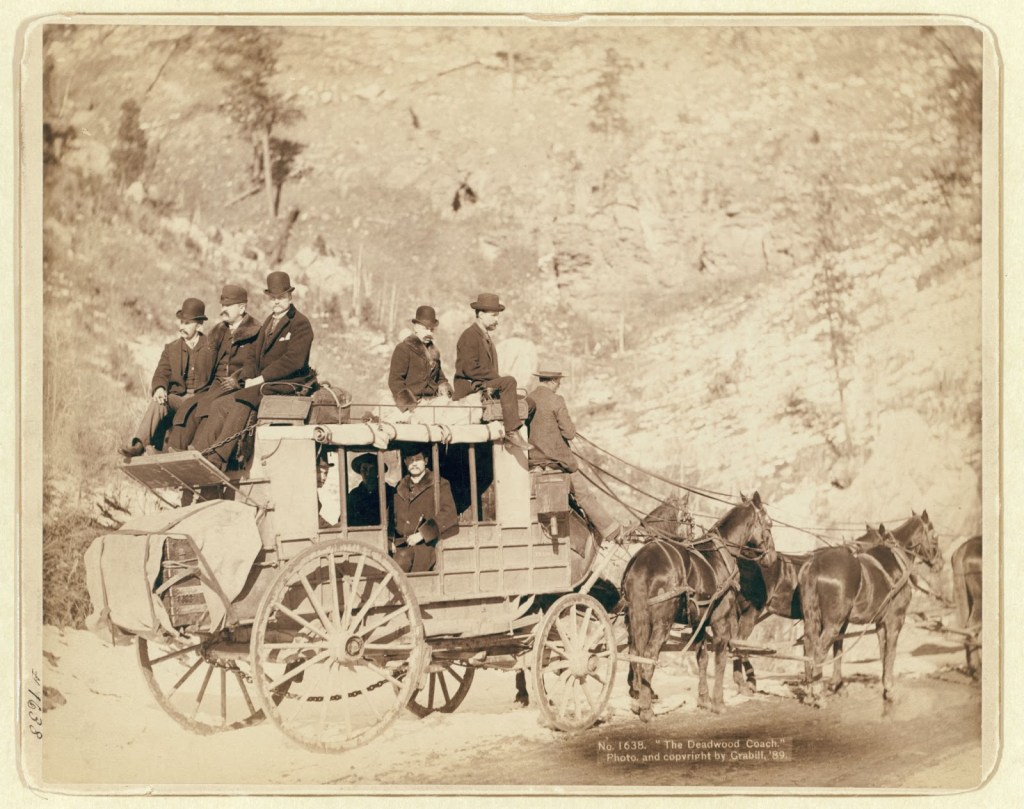
Another Hance guestbook entry by J. Curtis Wasson told of the twelve hour stage coach journey after alighting from the Santa Fe Railroad Company’s train: From Flagstaff at 7 o’clock a.m. our stage-and-six goes out. Arriving at Little Springs Station, where a new relay of six horses is added, we make haste until the half-way station is reached, passing through a fine unbroken forest of Pinus ponderosa, quaking aspen, balsam fir, and spruce. The open forest, the waving grasses, the gorgeously colored mountain flowers, the occasional chirp of the forest songsters, the ice-cold springs traversing our smooth compact road, the peaks, clear-cut and massive, towering up nearly 14,000 feet into the blue above, the low rumbling of our great Concord stage, the sound of two dozen hoofs, the sharp crack of the driver’s whip, the clear, bracing atmosphere, every breath of which seems to stimulate, the indescribably beautiful Painted Desert outstretching for a hundred miles to our right.
– a stage-and-six – high-speed travel –
One fain would linger on scenes like these but we have arrived at Cedar Station, and after partaking of a very refreshing luncheon we are given a new relay of horses and hasten over the desert portion of our ride to Moqui Station, where another relay is provided, which takes us to the hotel at the rim of the Grand canon, where we arrive at 7 o’clock p.m.
Leaving our Concord stage, giving our grips to the porter, not even waiting for “facial ablutions,” we hasten across the yard and up to the rim of the canon, when, looking over — the Chasm of the Creator, the Gulf of God, the Erosion of the Ages, that Erosive Entity, that Awful Abyss, lies in all its awfulness before us, — awful, yet grand; appalling, yet attractive; awe inspiring, yet fascinating in its greetings.
Lee’s Ferry on the right bank of the Colorado River, just above the mouth of the Paria River, at an elevation of 3,170 feet asl is the site of the start for most river trips through the Grand Canyon.
Originally called Lonely Dell by Mormon church-man with 19 wives and 67 children John D Lee, who established the ferry in 1872, it provided the only access across more than 300 miles of river for many years. Actually one of Lee’s 19 wives, Emma ran the ferry for a number of years while he was on the lam – hiding from the law for his leading part in the wicked 1857 Mountain Meadows Massacre.
The massacre near St George, Utah involved a group of emigrants known as the Fancher Party trekking west from Arkansas who were camped at Mountain Meadows in southern Utah preparing for their final push across the Mohave Desert when they were attacked by a group of Mormon Militia who disguised themselves as Native Americans so as to cowardly deflect blame for the attack.
It was a time of great tension between Mormons and the rest of the United States, and the massacred party was most likely attacked because they were not Mormons.
After an initial siege, the treacherous Lee approached the emigrants saying he’d negotiated safe passage for them with protection from their supposed Native American attackers if they surrendered their weapons. The group agreed, whereupon the militia proceeded to kill all but the children under 8 years of age.
One hundred and twenty men, women and children died that day. For almost two decades, the incident was covered up, but in 1874, Lee was brought to trial. Never denying his complicity in the massacre, Lee did insist – probably correctly – that he was acting on orders from high up in the church. He was the only one of about fifty men involved in the massacre to be brought to book. He was convicted and executed by firing squad in 1877.
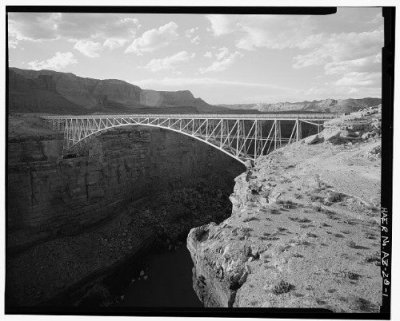
His widow Emma Lee sold the ferry in 1879 for 100 milk cows to the Mormon Church who continued to operate it until 1910 when it was taken over by Coconino County, Arizona. The ferry stayed mostly in use until 1929 when the Navajo Bridge was completed. Ironically, the ferry was used to ship much of the material to build the bridge that put it out of business.
1984: There was only one bridge when we crossed to the right – or ‘north’ (rivers only have left or right banks – think about it) – bank of the river. It was completed in 1929. A larger parallel second bridge was added in 1995. The bridge we crossed is now used for pedestrian sight-seeing.
Now: To make sure there are no misunderstandings, our John Lee on the 1984 trip down the Colorado is a good ou who, at that stage, had zero wives:
How brave was that!? The longer I have teenagers of my own the more I admire my Mom and her quiet courage and fortitude back in the ’70’s! The thought of giving my teenage son my car and allowing him to disappear (it would be in a cloud of dust and tyre smoke) on a three week jaunt fills me with querulous whimpering. (I’ll do it, I’ll do it, but only ‘cos Mom did it for me).
Larry Wingert was an ex-Rotary exchange student to SA from Cobleskill, New York. He and I had been on a previous Road Trip USA in 1973; now he was teaching English in Athens and had flown to Nairobi, then traveled overland down to Joburg where we joined up and hitch-hiked to Harrismith. There, Mom parted with the Cortina keys and we drove to PMB then on to Cape Town. We took ten lazy days in going nowhereslowly style back in 1976.
Wherever we found a spot – preferably free – we camped in my little orange pup tent. In the Weza Forest we camped for free; In the Tsitsikamma we paid.
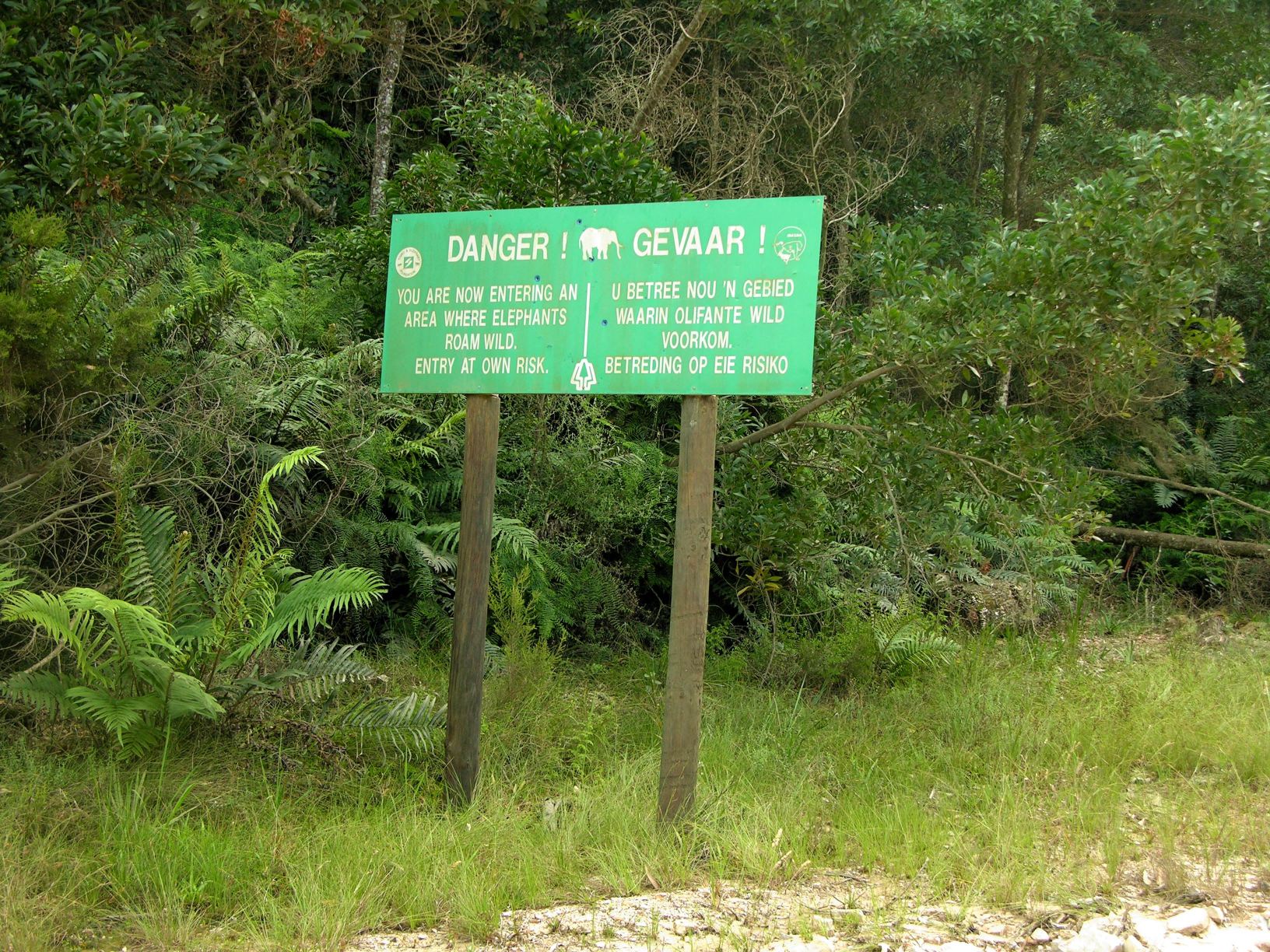
Driving through the Knysna Forest we saw a sign Beware of the Effilumps.
So we took the little track that turned off nearby and camped – for free – out of sight of the road in the undergrowth. Maybe we’d see a very rare Kynsna elephant? Not.
In Cape Town we stayed with Lynne Wade from Vryheid, lovely lass who’d been a Rotary exchange student too. She played the piano for us and I fell deeply in love, then disappeared on yet another beer-fueled mission. Coward. We also visited the delightful Dottie Moffett in her UCT res. She had also been a Rotary exchange student to SA from Ardmore, Oklahoma and was now back in SA doing her undergraduate degree. I was in love with her, too.
We headed for Malmesbury to visit Uncle Boet and Tannie Anna. Oom Boet was on top form, telling jokes and stories and laughing non-stop. That evening he had to milk the cow, so we accompanied him to the shed. Laughing and talking he would rest his forehead against the cow’s flank every now and then and shake with helpless mirth at yet another tale. Meantime, this was not what the cow was used to. It had finished the grain and usually he was finished milking when she had finished eating. So the cow backed out and knocked him off the stool, flat on his back, bucket and milking stool upturned. He took a kick at the cow, missed and put his back out. Larry and I were hosing ourselves as we helped him up and tried to restore a semblance of order and dignity.
Back at the house we gave Oom Boet and Aunt Anna a bottle of imported liqueur to say thanks for a lovely stay. It was a rather delicious chocolate-tasting liqueur and it said haselnuss mit ei. It was only a 500ml bottle, so we soon flattened it. It looked something like this:
“Ja lekker, maar ag, dis bokkerol, Kosie – Ons kan dit self maak!”
Ja?
Larry and I decide to call his bluff. In the village the next day we looked for dark chocolate and hazelnuts, but hey, it’s Malmesbury – we got two slabs of Cadbury’s milk chocolate with nuts.
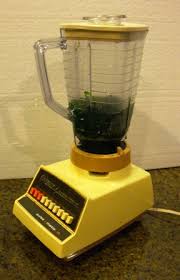
Oom Boet is bok for the challenge. He dives under the kitchen sink and starts hauling things out. He’s on his hands and knees and his huge bum protrudes like a plumber’s as he yells “Vrou! Waar’s die masjien?” Anna has to step in and find things and do things as he ‘organises’. She finds a vintage blender and – acting under a string of unnecessary instructions – Aunt Anna breaks eggs and separates the yolks, breaks chocolate into small pieces. Boet then bliksems it all into the blender and adds a fat dollop of a clear liquid from a label-less bottle. “Witblits, Kosie!” he says triumphantly. He looks and goois more in, then more. Then a last splash.
It looked like this, but the goo inside was yellowy-brown, not green. And it had a layer of clear liquid overlaying it nearly to the top.
He switches the blender to ‘flat-out’ with a flourish and a fine blend of egg yolk, chocolate and powerful-smelling hooch splatters all over the kitchen ceiling, walls and sink. He hadn’t put the lid on! And it was like a V8 blender, that thing.
Vroulief starts afresh, patient and good-humoured as ever. We mop, we add, he blends, and then it’s ready for tasting at last.
And undrinkable. That aeroplane fuel strength home-distilled liquor was just too violent. We take tiny little sips, but even Oom Boet has to grudgingly admit his is perhaps not quite as good or as smooth as the imported stuff. We add sugar, more chocolate and more egg yolk, but its only very slightly better, and still undrinkable.
Ten years later I still had the bottle and despite offering it to many people to sip as a party trick, it was still three-quarters full!
If we had marketed it we’d have called it Oom Boet se Bokkerol Haselnuss mit Eish!
I visited Oom Boet and Aunty Anna in a Ford Cortina again in 1983. The top featured pic with the old Chevy pickup was actually taken then by Sheila.
~~~oo0oo~~~
haselnuss mit ei – hazelnuts with egg
“Ja lekker, maar ag dis bokkerol, Kosie – Ons kan dit self maak!”- Nice, but we could make this stuff ourselves!
“Vrou! Waar’s die masjien?” – Wife! Where’s the machine?
bliksems – throws
witblits – moonshine
goois – throws
Oom Boet se Bokkerol Haselnuss mit Eish! – the same stuff except very different






















 Vrystaat Confessions