Category: sport

  • Caveman Spies in Engels

    Caveman Spies in Engels

    Four Spies brothers lived in the Harrismith and Kestell district. These broers had very different personalities; it was said Andries fought for the Spies clan, Hans cursed for them, Frikkie drank for them and Martiens prayed for them all. Harrismith’s historian Leon Strachan has kept this lovely tale of an amazing Eastern Free State character alive.

    Andries was known locally as Thor, as his strength was legendary. People soon knew not to mess with him. Somewhere around 1920 a young Andries Spies went hunting jackals on Freek de Jager’s farm. The jackal escaped down an aardvark hole and the dogs could not get it out. Andries shucked off all his clothes and went into the hole butt-naked, head-first, taking a riem and a pocket knife. After fifteen minutes of noise and dust down the hole he came into view again, reversing out feet first. Covered in dust and blood he handed the riem over and said “pull’ – and out came the jackal. One of many instances told of where he did unusual things and performed unusual feats of strength and bravery – and foolhardiness? This story was to have an uncanny follow-up a century later.

    He was a boxer, wrestler and strongman, and he was also a very wily showman and self-promoter. Legend has it he would hop on his bicycle, pedal to Bloemfontein – that was over 200 rough miles back in the 1920’s – enter a boxing tournament at Ramblers Club, win it and cycle home with the prize money!

    One day in 1929 his neighbour came to him with devastating news: his fiancee had upped and offed with another man. Hugely upset, Andries packed a suitcase and left the farm without a backward glance. It would be ten years before he returned. In those years he was mainly a boxer. He fought in Joburg and Durban. One fight at the Seaman’s Institute in Point Road in Durban so stunned an English preacherman – Andries’ style consisted of a non-stop flurry of furious blows from the opening bell with no thought of any defensive tactics – that he christened him ‘Caveman.’ And the name stuck.

    The Seamen’s Institute & Rest in Point Road – “All Nations”

    His next port of call was England. He left on a below-decks ticket with just £10 in his pocket and one extra set of khaki clothes. In London in his first fight he KO’d his opponent with his first blow. He could still get opponents after that as his build was not impressive – he looked average and he used that to his advantage, as he was often underestimated. Soon his reputation started preceding him and it grew harder to find men who would fight him, so he crossed the Channel.

    A typical story was a fight in Stockholm where the ref tried to stop him as his opponent Anders Anderson was ‘out on his feet.’ But Caveman wanted him out off his feet! So he KO’d the ref! Spectators stormed the ring in fury – so he KO’d a few of them too!

    The same pattern happened in Holland, Belgium and Germany: He would knock out a number of opponents, then run out of people to fight and move on. When this happened in Germany, he issued a challenge to Max Schmeling, heavyweight champion of the world: Fight me for 500 marks! Apparently this was all Andries had in his money belt. Eventually Schmeling gave in to his persistence and agreed to fight this Caveman character from South Africa.
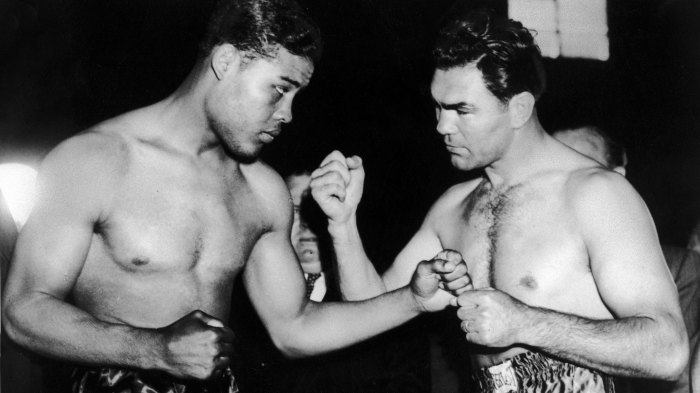
    UNITED STATES – MAY 31: The American Boxer Joe Louis Fighting The German Boxer Max Schmeling During The Heavyweight Championship In New York In June 1938. At The Close Of The Match, Joe Louis Preserved His Title Of World Heavyweight Boxing Champion By Beating Max Schmeling By K.O. In The 1St Round In New York. (Photo by Keystone-France/Gamma-Keystone via Getty Images)

    Well, this was a horse of an entirely different kettle of tea! In his own words he approached Max in his usual crouched stance and received a mighty short right hook to the head and after that ‘I don’t remember much at all! Except a minute or two of gloves raining on me and then merciful oblivion! The biggest hiding I ever received, but well worth it, as I met the great Max Schmeling. He was a good sport – and after the fight he sent me back to my hotel full of beer and Rhine wine, plus an amazing 1000 marks! Schmeling gave me his 500 marks too!’

    In Spain he knocked out ‘The Basque Wrestler’ Antoine Germatte in the first round – drying up any chance of further fights, so he thought he’d try bullfighting. One look at the bull, though and he decided ‘this is out of my league!’

    His French opponent Leon Cartout was disqualified for biting the Caveman. After eighteen fights on the Continent, he returned to England, where a raft of better fighters were keen to challenge him as his fame was now such that they wanted to be seen in the ring with him. Things were looking up.

    Caveman Spies
    – Caveman Spies’ record as a pro boxer – 9 wins, 8 by knockout – 9 losses, 3 by knockout – 3 draws –

    Then he caught a bad bout of flu and ended up becoming asthmatic. He got so bad in the English winter he decided it was home time. Back in South Africa he won a few good fights then ran up against the experienced Tommy Holdstock. He lost so badly that he decided to switch to all-in wrestling which had become very popular and was paying well. The showmanship also suited his extrovert and mischievous personality and his remarkable strength.

    In a typical rabble-rousing traveling series he fought a Russian named Boganski, who became a great friend. They toured the land. The legend of Caveman cycling to Bloemfontein was well-known, so at each scheduled fight venue he would stop their car outside the town and get onto his bicycle; timing his arrival at the ring just in time for the fight, covered in sweat having ‘just got there all the way from Harrismith!’ This put all the locals on his side like – our poor man now has to fight this blerrie Russian when he’s so tired, having cycled so far!

    The showman promoter in him loved public wagers. On the wrestling tour in Grahamstown he bet the local auctioneer, a Mr King, that he could carry a 200lb bag of mealie meal across the town square in front of the cathedral in his teeth without stopping. He did it, donated the bag to child welfare and publicity from the stunt filled the hall for the fight that night!

    In Chodos furniture store in Harrismith’s main street the guys were ragging him as they often did about his strength: You can’t really punch a hole through a meal bag! ‘Bring it,’ he said, and walked away with £10, leaving Woolf Chodos and his staff to clean up the flour all over the counter and the floor. He couldn’t resist a challenge or a dare. In 1936 someone said he’d never walk from Harrismith to Cape town in less than ninety days. He did it in seventy three, averaging twenty eight miles a day. This one earned him £75.

    Whenever the circus came to town Caveman would be there, ready to shine. Owner and strongman William Pagel‘s feats of strength and his control of the big cats soon made him a household name in South Africa, particularly in the countryside. Small towns loved the circus!

    Pagel had a wild mule and offered £50 to anyone who could ride it. Many tried, including Moolman the policeman. Very soon there was Moolman, soaring through the air back into the stalls in an ungraceful arc. Caveman stepped up, jumped on and the mule went wild, bucking, backing up, scraping his legs against the railing, but Cavemans’ legs were firmly hooked under its ‘armpits’ and he rode every move. In the end the mule lay down, exhausted, Caveman still astride it. Get off, said Old Pagel, ‘No, first give me my £50,’ said Caveman. Get off first, said Pagel. He then refused to pay on the grounds that Caveman ‘wasn’t allowed’ to hook his legs under the mule! Caveman threatened ‘Pay me or I shut down the show. Honour your bet!’ Two Alpha males at bay, both famous! Caveman got his due.

    Stanley Boswell also had challenges meant to draw the crowds which drew Caveman like a magnet. He had a strongman lifting weights on a wooden platform. ‘Any non-professional weightlifter who can match (exotic strongman name – maaybe Otto Acron?) will win a prize!’ he boasted. The Harrismith crown bayed for their hero, ‘Show him Caveman! Wys hom! Show him!’
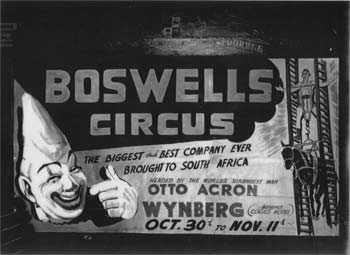
    – Otto Acron – World’s Strongest Man – he thought – till he got to Harrismith! –

    Caveman stepped up, nonchalantly lifted the main man’s maximum weight and looked at Boswell. Boswell, knowing Spies’ reputation, said, ‘ No, you’re professional,’ ducking out of his responsibility. Caveman looked at him, looked at the crowd and slammed the weights down, wrecking the stage as the crowd roared their approval.

    Stories grow. Seldom will a re-teller tell a milder story than the original! And so Caveman’s legend grew. Not only did he ride a bicycle to Cape Town; when he got there he boarded a ship to America; the ship sank and he had to swim more than halfway across the Atlantic; arriving in America just in time (covered in sweat?) for a fight against Joe Louis! Of course, he bliksem’d Joe, caught a ship back to Cape Town, where he got on his bicycle and pedal’d back to Harrismith to calmly tend to his flock of sheep! Of course . .

    In our time in Harrismith – fifties to seventies – Hansie and Pieter Spies were legends in their own right. Nephews of Caveman, they would apparently tell stories of this special and unusual extrovert uncle. In his old age his right hand started shaking – probably the beginnings of Parkinson’s disease. Challenged, he would blurt, ‘Ag, it’s my hand! Leave it alone if it wants to shake! Or I’ll donner you!’

    ~~~oo0oo~~~

    A Century Later

    Truth is stranger than fiction! In 2020, just about one hundred years after Andries went down an aardvark hole to drag out a jackal this video appeared on youtube:

    It went viral and I saw it on two of my whatsapp groups. Soon after, Leon Strachan messaged me: Hi Pete, Do you remember how Caveman crawled down a hole to drag out a jackal? Pure madness! Well, believe it or not, the people in this video are my neighbours and the man down the hole is a great grandson of Hans Spies – Caveman Spies’ brother!

    The strain of eccentricity lives on! Mind you, getting diluted. Notice how he kept his clothes on?

    ~~~oo0oo~~~

  • Polo in Harrismith

    Polo in Harrismith

    The first recorded polo game in South Africa took place in October 1874 at the King Williams Town Parade Ground between the Gordon Highlanders and the Cape Mounted Rifles.

    The Military Ninth Division played during the 1880s at Harrismith, Orange Free State.

    Polo was played in Cape Town in 1885 at a club formed by army officers, and in Natal by the officers stationed at Fort Napier, in Pietermaritzburg; a year later, they formed the Garrison Polo Club.

    Play in Transvaal began in Johannesburg in 1894, when the owner of the Goldfields Hotel founded a polo club. The game was dominated by the military, but civilian clubs like this did sprout up in several places.

    ~~oo0oo~~

    Someone must have the history of Harrismith polo. I hope. The first polo field I remember was in the sixties on the far side of the railway tracks; you drove under the subway to get there. Across the road was the sportsfields: a hockey field and then the cricket oval. Legend has it that Jimmy Horsley once hit a famous six across the hockey field, across the road and onto the polo clubhouse roof!

    During a recent visit to Harrismith I spotted this on good friend Bess Reitz’s passage wall: Her Dad and Ginger Bain in the winning team!

    SA Polo has a website with some history.

    ~~oo0oo~~

  • A Slice of Vrystaat

    A Slice of Vrystaat

    I was born in Harrismith in 1955, as was Mom Mary in 1928, and her Mom Annie in 1893. Annie thought “the queen” of that little island above and left of France was also the queen of South Africa (and for much of her life she was right!).

    – annie watson – mary frances – peter frank –

    To balance that, there’s this side of the family.

    I attended the plaaslike schools in Harrismith till 1972. A year in the USA in 1973 as a  Rotary exchange student in Apache Oklahoma. Studied optometry in Joburg 1974 – 1977. Worked in Hillbrow and Welkom in 1978. Army (Potch and Roberts Heights, now Thaba Tshwane – in between it was Voortrekkerhoogte) in 1979 and in Durban (Hotel Command and Addington Hospital) in 1980.

    I stayed in Durban, paddled a few rivers, and then got married in 1988. About then this blog’s era ends and my Life With Aitch started. Post-marriage tales and child-rearing catastrophes are told in Bewilderbeast Droppings.

    ‘Strue!! – These random, un-chronological and personal memories are true of course. But if you know anything about human memory you’ll know that with one man’s memory comes: Pinch of Salt. Names have been left unchanged to embarrass the friends who led me (happily!) astray. Add your memories – and corrections – and corrections of corrections! – in the comments if you were there.

    ~~~oo0oo~~~

    Note: I go back to my posts to add / amend as I remember things and as people mention things, so the posts evolve. I know (and respect) that some bloggers don’t change once they’ve posted, or add a clear note when they do. That’s good, but as this is a personal blog with the aim of one day editing them all into a hazy memoir, this way works for me. So go’n re-look at some posts you’ve enjoyed before and see how I’ve improved over time (!). It’s just as my friend Greg says: ‘The older we get, the better we were.’

  • High School

    High School

    – aerial view at dawn – thanks Arie Bouwer –
    – and here’s why they marched – the pomptroppies! –
  • Kleinspanskool

    Kleinspanskool

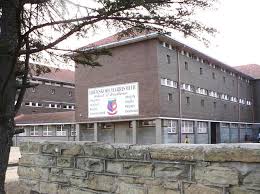
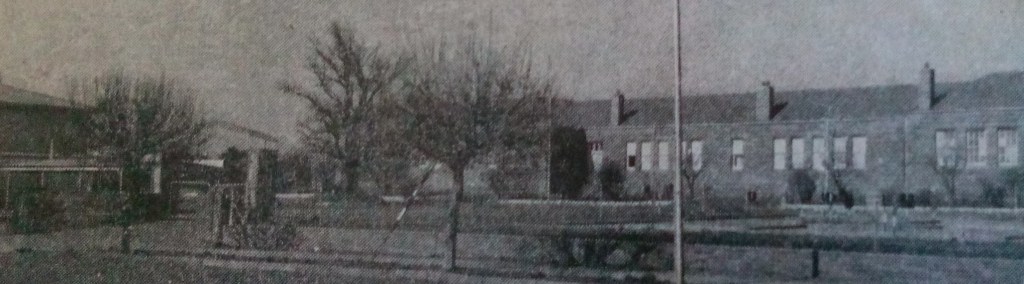
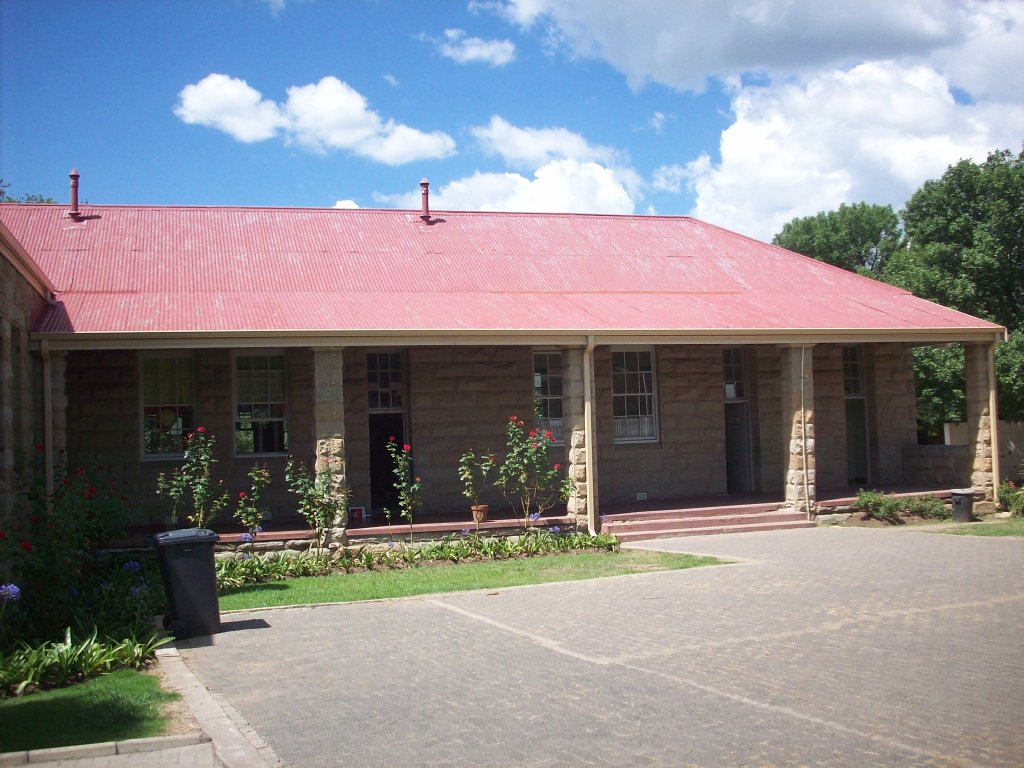
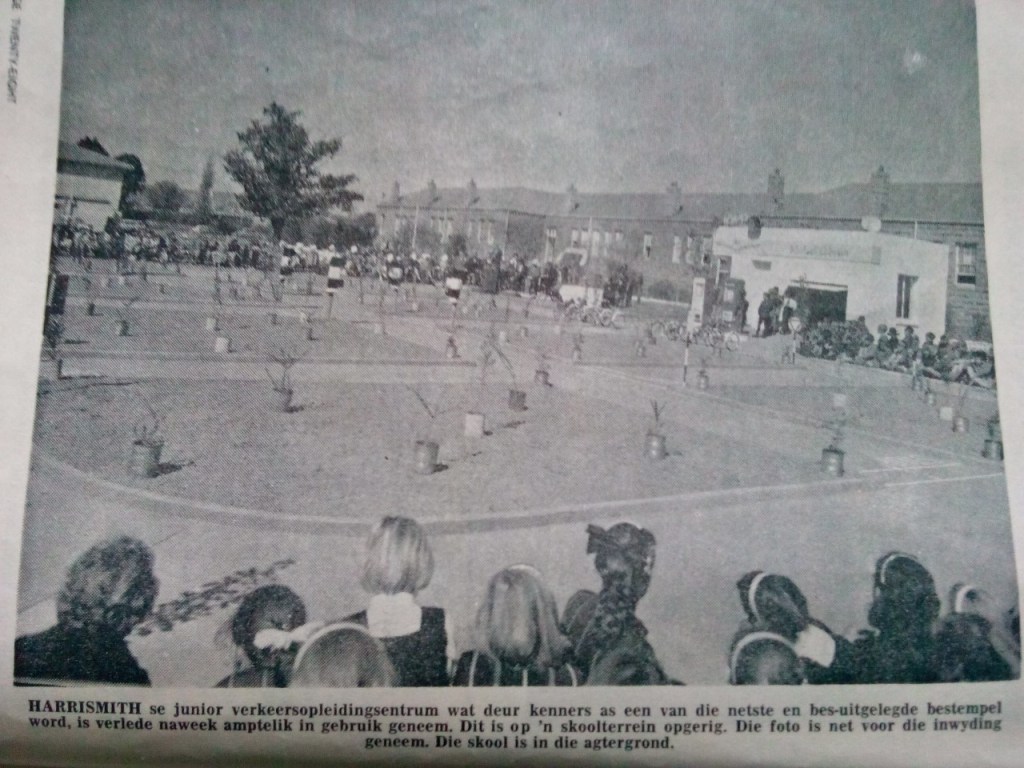
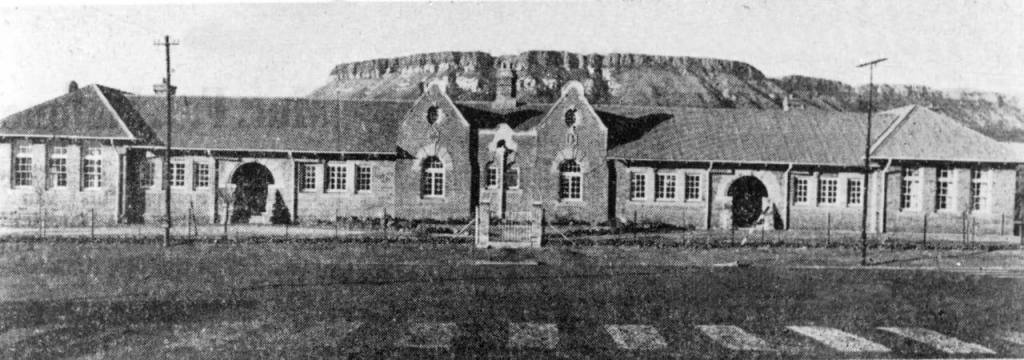
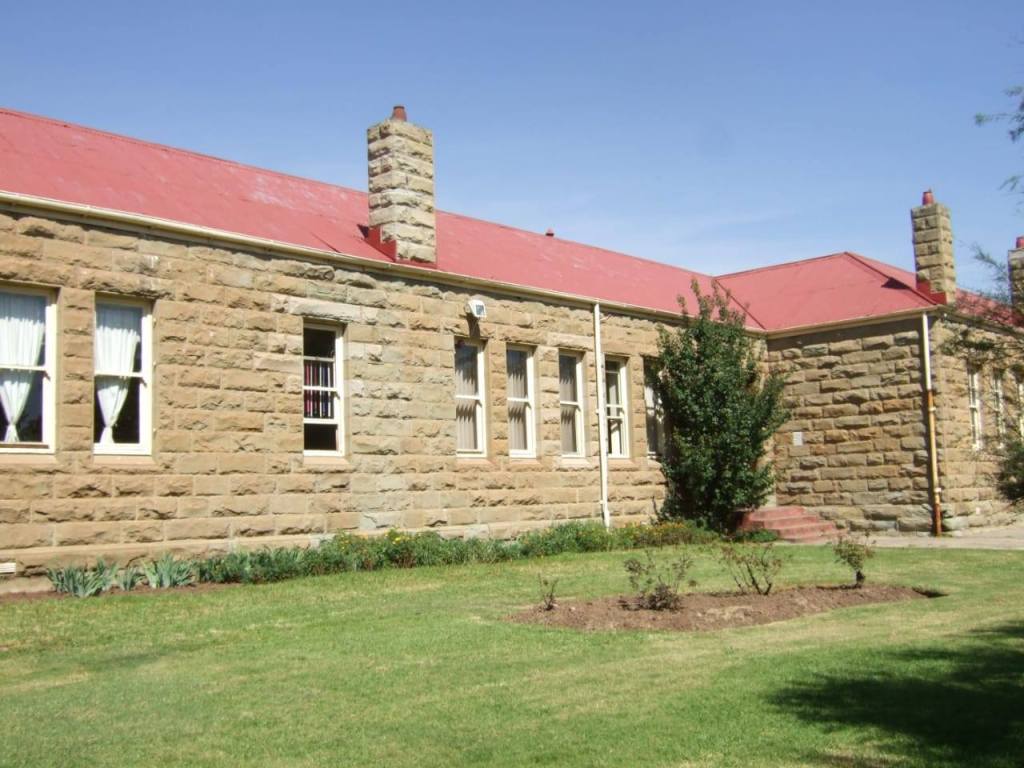
    This building used to be something else, I think – not sure – but in our time it was the junior primary school. Occupying a full block between Stuart and Warden Streets near the centre of the metropolis, our Sub A to Std 1 classes were here. Except if your Std 1, 2 and 3 was all together in one room with one teacher (‘die Engelse klas’). Then you went down to the next school in Std 1. So I had Sub A and Sub B in this old sandstone building. I entered age five and departed age seven. With a blue bicycle. A Rudge, I believe.

    My greatest achievement in this time was probably winning a high-pissing contest in the sandstone boys room and having big mate Fanie Schoeman report the feat to Mrs Van Reenen. Miss! Miss! Peter pee’d on my head, he said. Brief fame, diplomatically handled. The urinal was open to the sky and we’d been trying to see who could leave his wet mark highest up on the sandstone wall above the trough. Wee on sandstone leaves a very satisfactory, undeniable mark which cannot be disputed, in contests like these. It lasts long enough for judges to judge and disputes to be resolved. Mine was highest. And some did go astray and hit Fanie, it’s true.

    Here’s a view of our classroom taken from the boys toilets. In fact this photographer’s head is very near where Fanie’s head was back then. Chips! or Duck!

    – second door from right was our classroom – Far right was girls toilet –

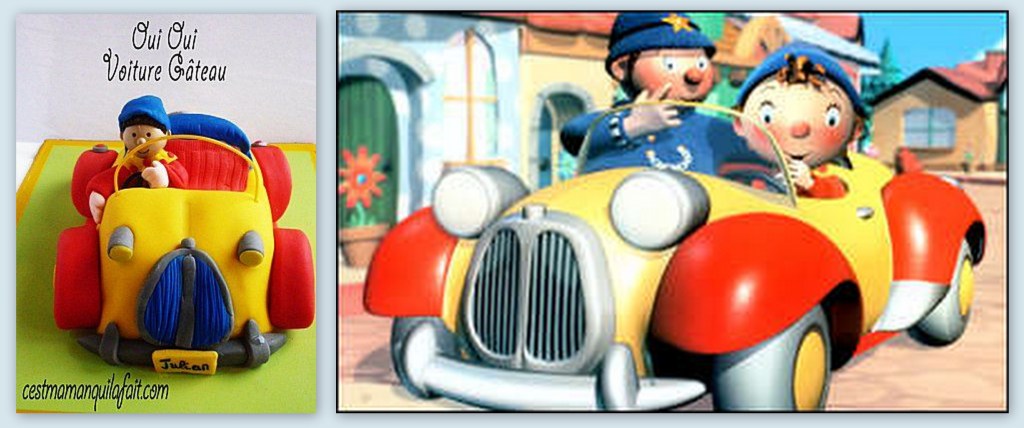
    Another clear memory of that class was admiring the beautifully accurate Noddy car Lincoln Michell made of yellow and red plasticine.

    – Lincoln’s Noddy car looked just like this –

    That sums up my first year of formal education. Luckily it didn’t cost a lot.

    – this was there, but I don’t remember ever using it –

    One of the joys of being in this kleinspanskool was it was a junior part of the bigger primary school down the road and quite regularly something would need to be schlepped down there. To be chosen to pull the wooden trailer or trolley, with its rubber wheels from one school to the other was a much sought-after diversion from classtime. You’d be FREE! FREE AT LAST! and wandering the shady tree-lined streets in school time on a Long Walk To Freedom! Bliss!

    ~~~oo0oo~~~
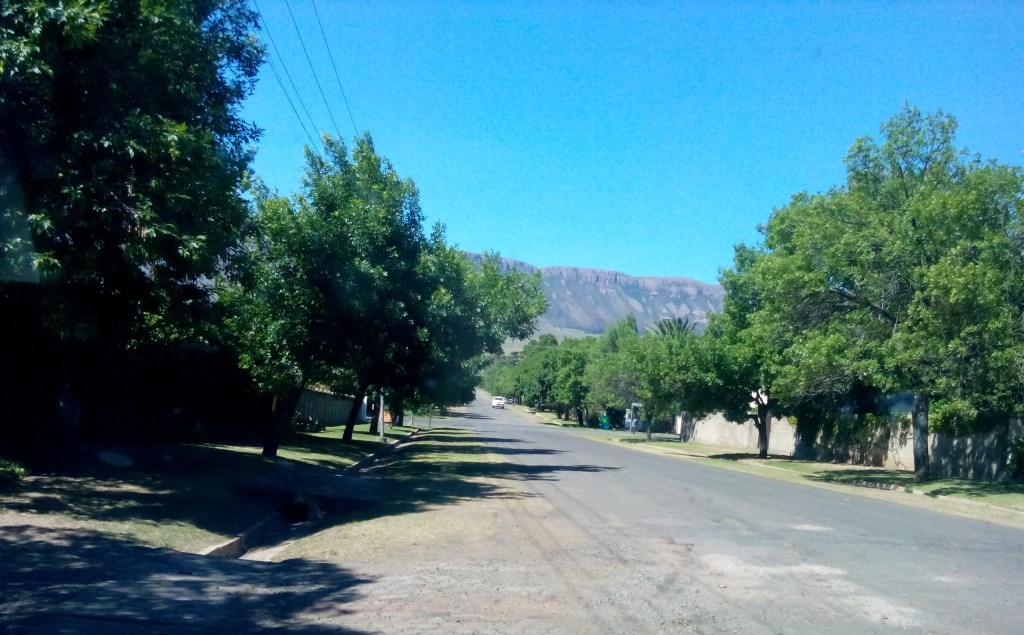
    Behind that long building was a rugby field where Giel du Toit despaired of my ever learning one end of a rugby ball from the other – or one end of the rugby field, for that matter. His coaching methods consisted of patting me on the head and muttering ‘There, there; Moenie worrie nie!’ Everyone was very kind to me in my young days. Occasionally onse Giel (Joyce Joubert called him Heilige Giel) would get a faraway look in his eyes and talk about walking behind the ploughshare and picking up a clod of freshly-turned earth, smelling it and saying something about nothing in the world could ever smell better. The dorpsjapie in me thought ‘huh?’ Years later I speculated he was angling to marry a farmer’s daughter and was practicing his pitch to Pa. Then verily, that came to pass. 

    I played for the under-eleven B team, and the only reason for that was there was no C team. Although we were now down the road at the bigger school, rugby practice was at the old kleinspan school, as the bigger school didn’t have a field.

    The end of the season arrived – near the end of winter – and the last game loomed. The traditional big derby day against the Olde Enemy, Vrede, played home and away each year. This year the final game was away, in that far-off dusty city of sin and ribaldry. OK, dusty dorp. Now famous for not having a dairy, back then it was famous for losing at a range of sports to Harrismith. Though, every now and then they’d spring a surprise and beat us.

    For some unfathomable reason, Giel decided I would captain the under-eleven B’s on that auspicious occasion. It was 1966, so maybe England winning the soccer world cup got him thinking, ‘Miracles Can Happen?’ Anyway, as the lowest of the most junior teams, we would be playing the first game early in the cold Vrede winter morning, long before most spectators arrived, only dedicated Ma’s and Pa’s on the rickety stand. Our job was to break through the frost on the dead grass on the rock-hard ground for the more important games to follow. With our bare feet.

    Which is how I came to have the leather odd-shaped ball in my hand that morning. This was a novel experience. Usually I was only vaguely aware that there WAS even a ball involved in this mysterious game that onse Giel was despairing that I’d ever get the hang of.

    My orange-clad barefoot underlings, now fully under my command, dutifully formed a line behind me as I ran onto the field and skopped the leather ball to start the game. I remember only four things about that game, but they are indelibly etched in my newly rugby-focused tactical brain:

    1. We were awarded a penalty quite late in the game with the score still on 0 – 0;

    2. I made a show of going down on my haunches, and staring at the posts, then tapped the ball and hared straight for the line and dotted the ball down. TRY!!

    3. The ref awarded the try. We were 3 – 0 up!

    4. There was a muttering from the tiny partisan home crowd of early-morning Ma’s and Pa’s, and the ref seemed agitated. At the next lineout I asked him ‘That was a try, nê?’ and he growled ‘Play on!’ So we won the game. My record as captain was 100% wins.

    The next year – 1967 – I was suddenly a rugby player and in the U/13 A team. I’d like to say it was because of this revelation, revival, awakening and discovery of deep latent talent, plus a realisation of my brilliance thanks to Giel’s inspired and kind gesture and talent-forecasting genius, but it was mainly cos my balls dropped, and I shot up four inches and became the tallest oke among the under-thirteens! Size counts in a shoving and huffing and puffing game. When guys have to look up to you they often give way to you. We had a helluva year in 1967, so achieving Harrismith-wide fame by becoming the undisputed World Champions . . OK maybe I’m getting ahead of us here.

    ~~oo0oo~~

    Kleinspanskool – small persons school; junior primary school

    ‘die Engelse klas’ – the English patient

    Moenie worrie nie! ‘ – Dinnae Fash Yersel’; Don’ Wurry

    dorpsjapie – townie; urban chap; not rural; the finer points of ploughing escape him

    dorp – village; hamlet; one-horse town

    skopped – kicked with pinpoint accuracy

  • Pulling a Fa(s)t One

    Pulling a Fa(s)t One

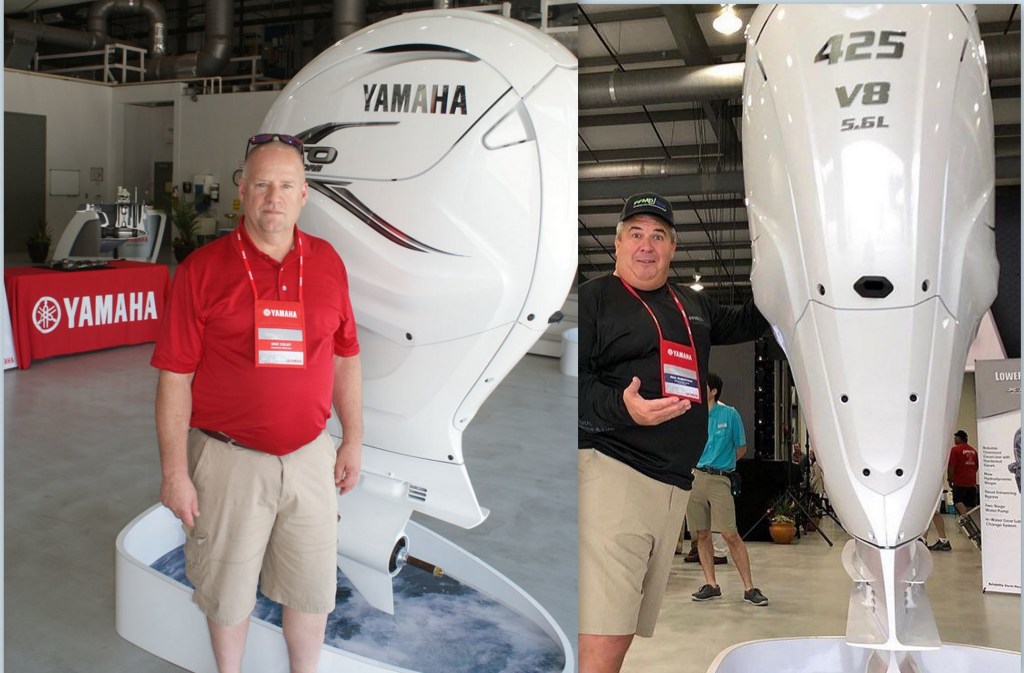
    Greg Bennett told me about his latest Yamaha outboard motor over coffee the other morning – a 425hp V8 5.6litre beast. “Stands taller than me with my hand stretched skywards” he said.

    – big mama –

    This reminded me of the time we went out to Hazelmere to test his then-biggest outboard motor: I think it was 225hp.

    I was slalom skiing behind the beast when I felt a twinge in my hamstring and immediately let go, faithful to my exercise mantra of No Pain, No Pain.

    Greg whipped the boat around and roared up to me. “What’s up, Swanie?”, bellowed his big boet Roland.

    I think I pulled a muscle, I said.

    Roley roared with laughter. “NO! Swanie, can’t be! You couldn’t have pulled a muscle. You must have pulled a fat!” Rude bastid.

    ~~oo0oo~~

  • Slalom Handicap

    Slalom Handicap

    Two Springbok paddlers were watching me intently as I nimbly maneuvered my boat through the water. As I got to the gate that they were judging, I ducked into an eddy and rested on my paddle, getting my breath back and having a chuckle at how clumsily I had bashed through the last gate.

    And this is where it turns nasty. Instead of shouting admiration at my skill and encouragement for me to ‘Keep It Up!’ or “Well Done!” or something, they bellowed, while hosing themselves rudely: ‘Don’t worry Swanie, we’re not using a stopwatch, we’re using a calendar.”

    Put me off my stroke. Kirby and Stewart carry the heavy responsibility of probably ruining a promising international slalom paddling career.

    ~~oo0oo~~

  • Volkskool – Primary School

    Volkskool – Primary School

    Mom went to this school, as did all three of us kids. Annie, Mom’s Mom, would not have, as it seems it was established in 1915, see below, and Annie was 22yrs old by then.

    Before us, Etienne Joubert went, and he remembers:

    Playing ‘Hasie’ under the Bluegums near the old Golf club house; Eating ‘Manna’ under the Bluegums; Playing ‘Bok-bok’ behind the bottom class rooms; Playing marbles in the main playground.

    Also he remembers the woodwork teacher Giel du Toit – his mother Joyce had a hilarious ‘holy’ nickname for Onse Giel – Heilige Giel, I think it was; and he remembers the smell of the old fashioned wood glue; And the wood vice where ‘we tied a guy’s tie in & walloped his behind. I’ve forgotten his name, but not his  face … I can see it now!

    He then confesses – I do not remember much about plays & music . . .’ – No worries, sister Barbara does:

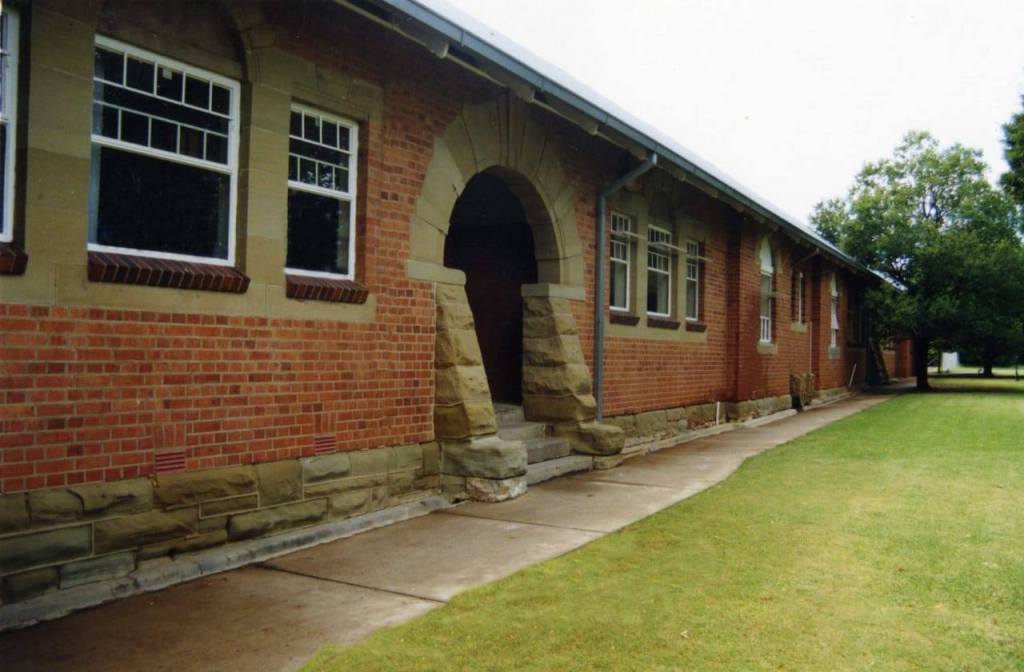
    – the separate woodwork classroom was to the right, just out of picture –
    – some of these windows were Ou Eier Meyer and Ou Vis Alberts classrooms –

    Sister Barbara was a year or two later – she finished Std 5 in 1965. She definitely remembers about plays and music, you Philistine, Etienne! She remembers that year was the school’s Golden Jubilee year – so established 1915, I guess? – and an exciting concert was planned and held on the 28th and 29th of October 1965, with all the classes in the Kleinspan School and Primary School – Volkskool – participating.

    How could she remember in such detail? Well, she had her program carefully stored away in a shoe-box! She remembers the play her class put on: ‘TO  BE  OR  NOT  TO  BE’  –  by  B.J.J. (Bruce) Humphries with Pierre du Plessis and Llewellyn Mileham – or was it Kevin Crawley? – as the smart guys, and Timothy Brockett as Mr. van Snoggery-Boggery, the drunk guy – Pierre remembered this name – and herself – Barbara Swanepoel – as the unnamed lady on the railway station platform.

    Interludes between plays were filled by music by the ‘Harrismith Volkskool Orkes / Primary School Band.’ Band members were Rina Minny en Estelle Meyer on trekklaviere – pull pianos – piano accordions; Sylvia Doman on piano; Barbara Swanepoel on melodica; Pierre du Plessis on drums; Willie du Plessis on electric guitar; So much of du Plessis!; Theuns Bam en Bertus Hattingh on acoustic guitars; They were called Die Dorps Mense. Years later The Village People modelled a band on this lot. Um, so I believe.

    Then came the Primary School Boys Choir – Die Seunskoor. Under the charming direction of Miss L. Fourie and that delectable redhead Miss Ethel Cronje. I was a soprano in this lot, warbling away merrily before my balls dropped. We sang (according to that program which won’t lie) Wiegeliedjie van Mozart; Drummer Boy; and Dominique; I still remember – and can still sing majestically – the second and third of these liedjies. My kids dispute this fact, unreasonably.

    – Ethel Cronje looking strict or smug, her boys looking glum – it was her seunskoor, no doubt about that –

    Barbara asks: ‘Now wasn’t there a record produced for this choir? I think so – our own famous ‘Platberg Boys Choir.’ Indeed there were two records cut. Vinyl. The Vienna Boys Sausages were nervous. Especially when we launched a smash hit successful sold-out tour of Zululand. If it wasn’t for rugby and puberty, we’d have usurped those Austrian suckers. We’d have parum pu pum pum’d them out of business . .

    ~~~oo0oo~~~
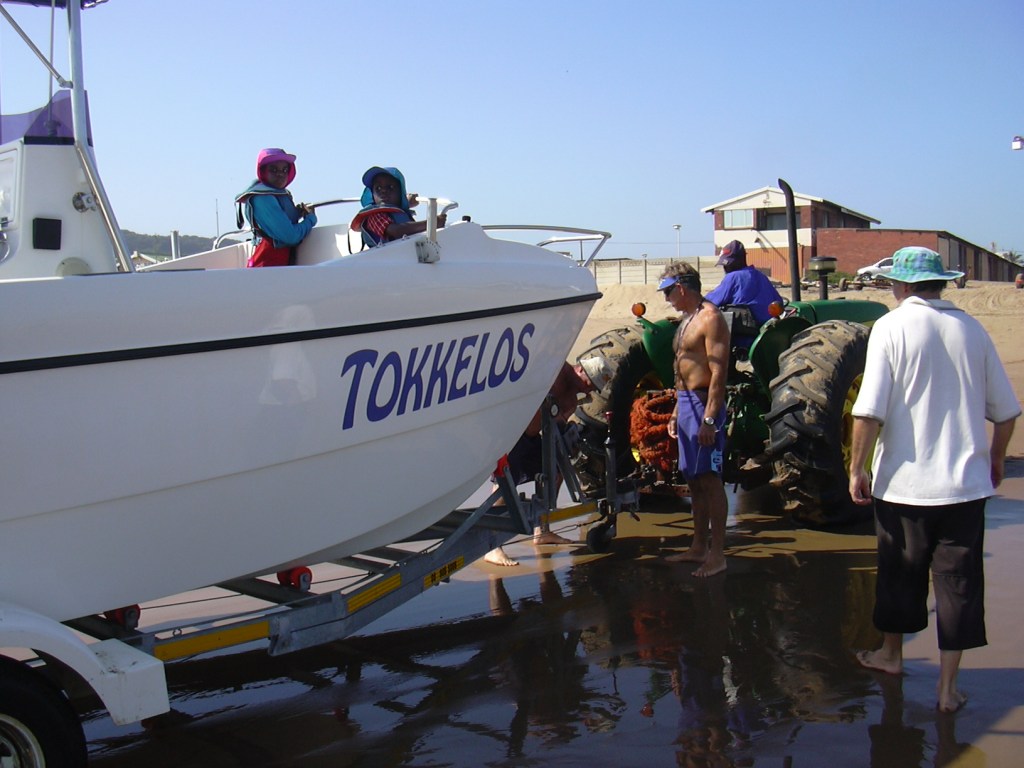
  • Scottish Pith & Our Annie, Linguist

    Scottish Pith & Our Annie, Linguist

    Steve Reed wrote:

    Gotta love the Scots . .

    … and their humour. Met up with Sam, an excellent Scotsman who came in for some glasses today. We were chatting about some of the female news anchors you see on TV. One of them, Virginia Trioli, we agreed is opinionated, superior, demanding and – from all accounts – a piece of work.

    He sums her up:

    “Ya woodn’t want ta be coming hoome to her wi’ only a half week’s pay packet.”

    Later, I am handing him over to Ioannis who has the job of telling him how much his new multifocal glasses are going to cost (cringe) with some light banter … Sam replies:

    “Well I am a Scotsman ye know. Every penny a prisoner.”

    I packed up – had not heard that one before.

    Probably comes up a lot in the local pub.

    ~~oo0oo~~

    Me: So right! Gotta love the Scots!! 😉 – I must remember those pearls!

    My gran Annie’s father came to Harrismith straight from the freezing far north of Scotland – a fishing village called Sarclet, south of Wick – but she sadly became heeltemal Engels – the queen, the empire, and all that.

    The only Scottish she ever spoke to me was her oft-repeated tale of once on the golf course, waiting to tee off. The oke in front of them sliced off into the bush and said,

    ‘Och, its gone off in the boooshes,’ to which Annie quipped,

    ‘That’s betterrr than doon in the wutterrr,’ – upon which she says he spun around and said,

    ‘Begorrah’ (or whatever a Scotsman would say on an occasion like this), ‘Yer one of oos!’

    ‘Aye,’ said Annie semi-truthfully.

    ~~oo0oo~~
    Which takes me to her THIRD language: Afrikaans.

    Of her ninety years on Earth, Annie spent about eighty seven in Harrismith in ve Vrystaat. She was born there, she went to school there (more than half her schooling) and she sold Caltex petrol to her Vrystaat customers there.

    The only few years she was away from Harrismith she spent ‘down in George.’ She went to stay with her sister Jessie Bell when Jessie’s daughter Leslie died.

    When she got there there was great excitement as they just knew she’d be very useful in dealing with the kleurlinjeez, who spoke their own Afrikaans and hardly any Engels.

    ‘Annie speaks Afrikaans, she’ll be able to speak to them and understand them,’ was the buzz.

    So the first day the gardener needs instructions and Annie confidently demonstrates her skill to the assembled rooineks:

    ‘Tata lo potgieter and water lo flowers’ she told the poor man who must have scratched his head at the Zulu-Engels mix in which the only word approximating Off-The-Krans was ‘potgieter’ instead of ‘gieter’ for watering can.

    ~~o00o~~

    One more Harrismith Scots joke I’ve told you before, but I’ll add it to this collection:
    Jock Grant arrives from Scotland full of bravado, bulldust, enterprise and vigour.

    He’s a plumber – a plooomerr – but soon he’s bought the stone quarry, bought the Montrose Motel in Swinburne, bought the Shell garage, bought a big white Mk 10 Jag and smokes fat cigars.

    In the pub at the golf club he removes the cigar from his lips, waves it around and tells the guys he’s started Afrikaans lessons – he’s going to learn to speak Afrikaans.

    Jannie du Plessis looked concerned. ‘Jock,’ he says, ‘We think you should rather learn to speak English first.’

    ~~oo0oo~~

    heeltemal – completely

    kleurlinjeez – a vague racial classification in apartheid times – and still in use today! Not black, not white, therefore ‘coloured’; actual word: kleurlinge

    rooineks – people congenitally unable to speak Afrikaans, try as they might; actually, try as they don’t

    ~~oo0oo~~

  • Ode to a Commode

    I wrote poetry in high school once.

    We were doing Engels and had to read ‘ode to a something’ and so I wrote my Ode to a Commode, which was way better than John Keats’ effort. Hey, I was an immature, scatological teenager easily amused. In some ways . . . .

    I searched for which ode it was and it was ‘Ode on a Grecian Urn’ – ode ON an urn! Now I remember: That’s what set me off giggling. I imagined him sitting on the ‘urn’ see? No? Well, ask a teenager.

    I was thinking about my telescopes and how much joy I’ve had from them; and decided to write an ode to my ‘scope, which reminded me of the above ancient memory.

    So: ‘Scopes:

    – salt marshes near Walvis Bay, Namibia in 1986 –
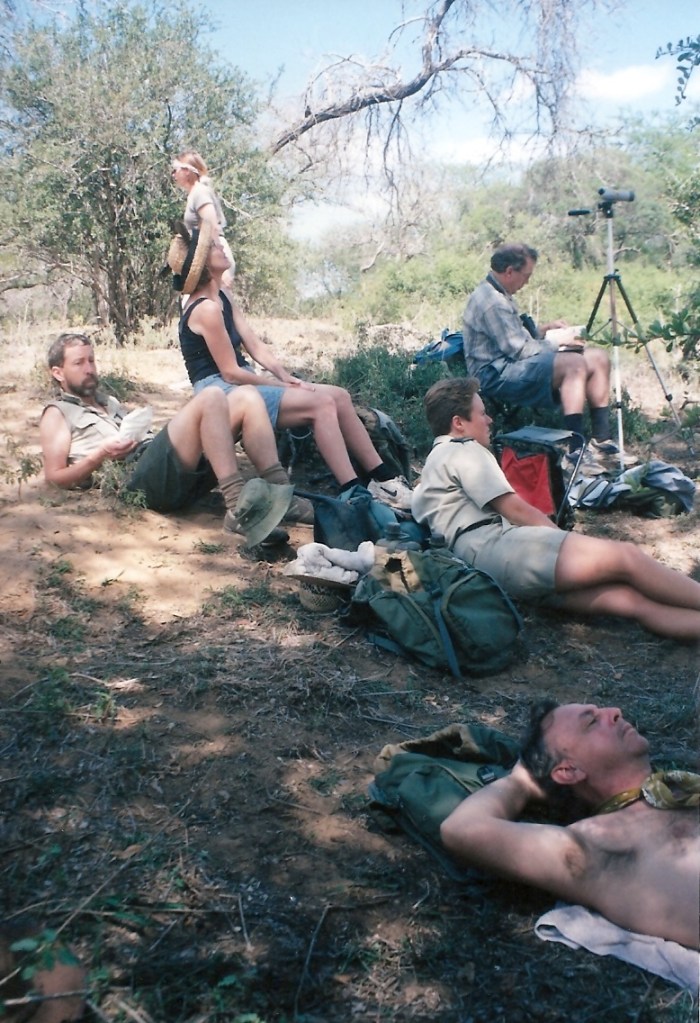
    • top two: Mfolosi wilderness walk; above: Tsavo East, Kenya –
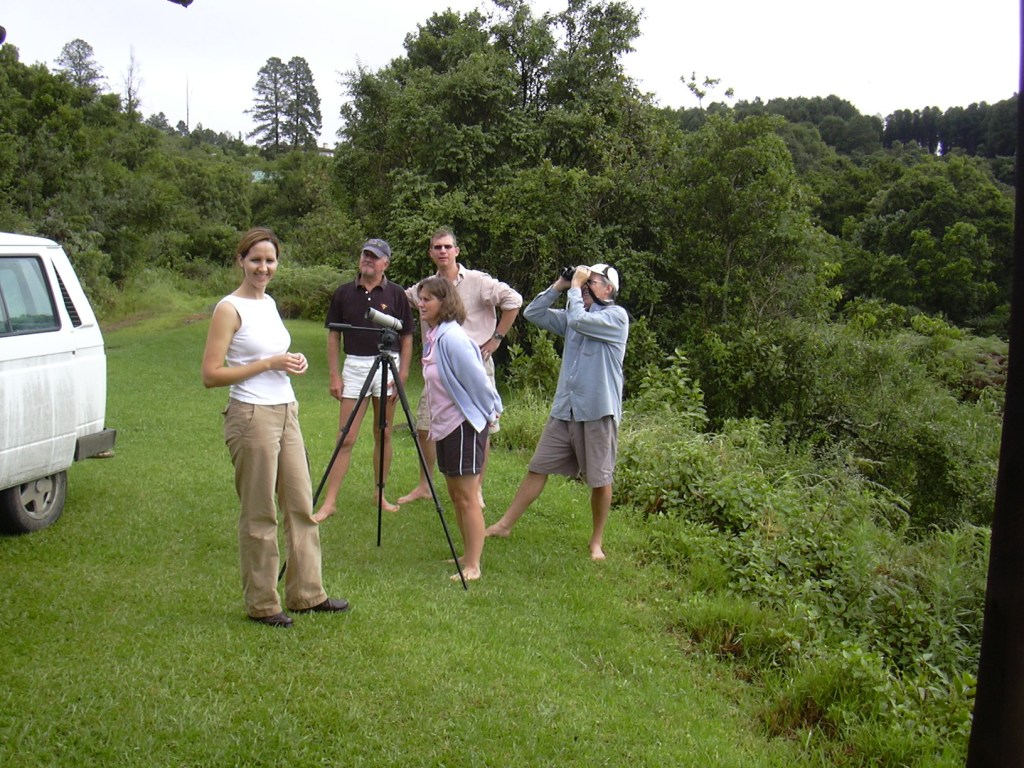
    – showed the crowd a Piet-My-Vrou cuckoo in Mbona, KZN Midlands –
    – see, Jessie? – Super-Jessie peers – resting her Super-vision to amuse Dad –
    – the whole old family with two new additions at Mangeni Falls near Isandlwana –
    – insets: Robbie peering into my scope twice, fifteen years apart –

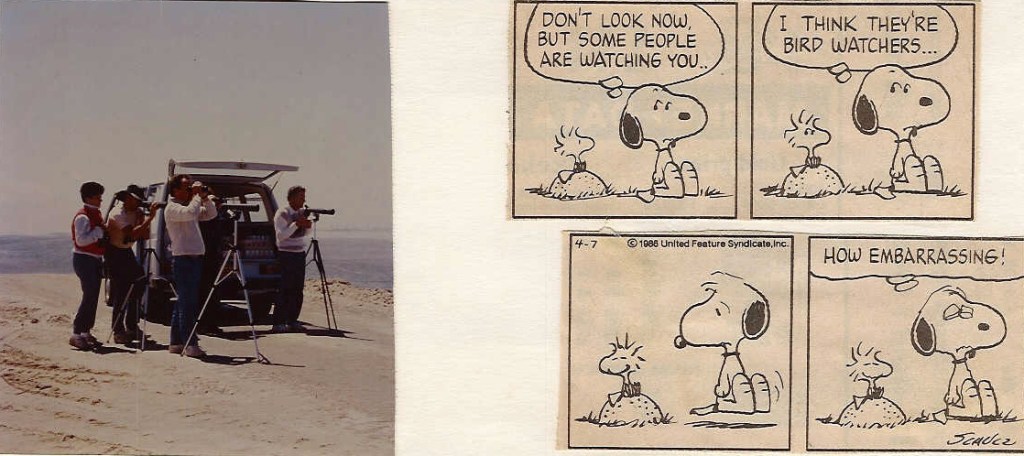
    With a scope you can delight novices; With binocs it’s often, ‘Where? Which tree? Oh hell, it flucked! It flocked off!’ with a scope you can say ‘Look’ and they say ‘Wow!’ I love that.