Category: 8_Nostalgia

Looking back with fondness on those things we couldn’t wait to get rid of, or away from, back then . .

  • Harrismith’s Mountain Goat

    Harrismith’s Mountain Goat

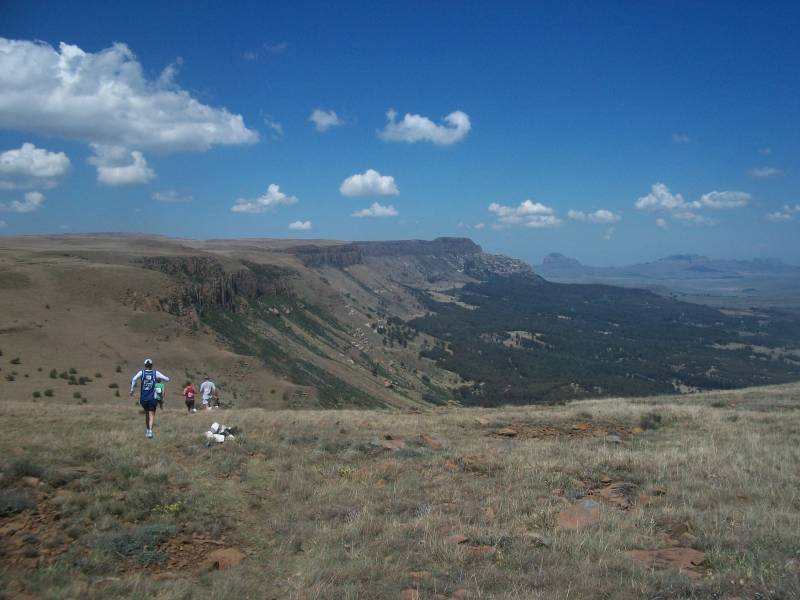
    The people of Harrismith dubbed Michael McDermott ‘The Mountain Goat’. The mountain being Platberg.

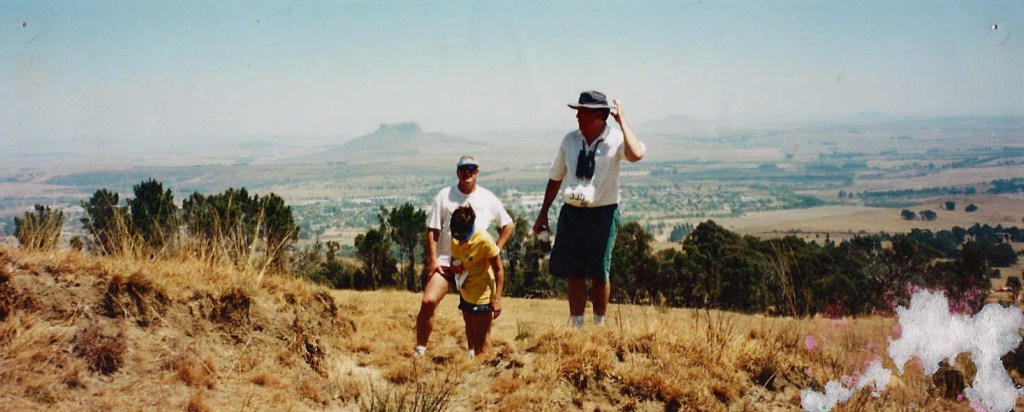
    Or so running e-zine ‘Modern Athlete’ says of SIXTEEN-times winner of our Mountain Race. Apparently we used to write supportive messages for him along the route of the Harrismith Mountain Race, much like supporters do in the Tour De France. Race organisers would set him up in our local hotel with the room number that corresponded with the win he was going for. Michael became a hugely popular and inspirational figure thanks to his sixteen-consecutive-year winning streak in our rugged annual race.
    They go on: Michael’s love affair with Harrismith’s imposing Platberg began in 1978, when he was just 13. “I was alone at home and ran 5km to the Harrismith Harriers clubhouse because I wanted to run that day, but no-one was there, so I ran back home. Then they called me up to ask where I was and came to fetch me. So before the race, I already run 10km,” says Michael, who ran the race and finished 32nd. “Nobody believed I had completed the race, though, because I was so small!” he laughs.

    In 1980, he finished eighth and qualified for a gold medal, but had to receive it unofficially, behind the tent, as he was still below the minimum 16-year age limit for the race. A year later and now ‘legal,’ he finished fifth, and then in 1982 he posted the first of his sixteen consecutive wins, an amazing record putting him right up there in the crazy stakes with uber-talented athletes Michael McLeod of England (won the Saltwell 10km sixteen years in a row), and Jim Pearson of America (won the Birch Bay marathon sixteen times).

    Michael held the record for the short 12.3km course at 50mins 30secs in 1985 and the long 15km course at 1hr 05mins 05secs as the first winner over the new distance in 1996. It came to an end when he ‘stepped skew’ and tore ligaments in his ankle while well in the lead on his way to a 17th straight win in 1998. Michael Miya took over and won the race in a new record time of 1hr 04mins 06secs and became the first black South African winner. While McDermott was really disappointed, it was also “a relief as there wasn’t that pressure to win after that.”

    SPRINGBOK

    Michael earned Springbok colours in 1988 for cross-country, and was invited to run a number of international mountain running events in the early 1990s. He won the Swiss Alpine Marathon three times, shattering the course record in 1993. He also represented South Africa seven times in the World Mountain Trophy, from 1993 to 1999, with a best placing of fifth in 1993 in France. http://www.modernathlete.co.za

    Also see *my potted history of the race*


    This post opened a flood of ancient memories!

    Thanks Koos – very interesting.

    In “our day” Johnny Halberstadt was the King – wonder where he is today? (Koos: In America: Just sold his sports shop in Colorado).

    I strolled the race two or three times in the 1990s – never finished in the allotted time, but always walked away with a medal, ’cause I knew Jacqui Wessels (du Toit) who handed out the medals!

    Remember the year we did it after “peaking” at Pierre’s home the night before – about 3am. You remarked as you crossed the Start Line (not the Finishing Line) – “I think I’m under-trained”. The hangovers were monumental. As we strolled past the adoring, cheering spectators, one guy was heard to remark “Daai mal ou het sy verkyker om sy nek!” That was you! (Koos: Actually, it was Wimpie Lombard and he said “wadafokmaakjymedarieverkykers?” You’ve forgotten: Afrikaans is always one word).

    The year Karin Goss and I did it, (circa 1998) we were so last that even the Coke truck had packed up and left by the time we strolled into Die Groen Paviljoen! We were so busy ‘phoning the whole world from the summit that we forgot to be competitive. Jacqui insisted on giving us medals, but drew the line at Gold – we had to be content with Bronze. Don’t know why she was so strict – there were a few Golds lying in the bottom of the box.

    Was Alet de Witt the first lady to compete?

    Love – stroller Sheila Swanepoel

    ———————————————————————————————————————–

    Jacquie replied: Sheila, I think you forgot that when we allowed you to go through the finish banner after cut-off time, there was a breathalyser test for the finishers. This you seemed to have forgotten! Legal limits are 0,24 milligrams per 1000 millilitres. Finishers (at sunset) with this reading all get GOLD.

    Unfortunately your readings were 0.60 . . . hence the Bronze medal. 😉

    All the best (hope you enter the Mountain Race again this Year).

    Kind Regards – actual finisher Jacquie Du Toit, ex-Mountain Race high-up official

    ——————————————————————————————————————-

    Kar Goss got excited: Hey Sheils
     
    I think we must do it once more!! Seriously!
     
    What comes after bronze?? And is there a medi-vac chopper available?
     
    Thanks for the interesting article Koos!
     
    Happy Women’s Day everyone.
     
    Love- (Sheila-like stroller) Kar Goss xx
    —————————————————————————————————-

    JP de Witt reminisced: Sheila, As far I can remember my Mom Alet and Mavis Hutchison did the race around 1969 / 1970. Koos Keyser won it five times 1964-68. Wally Hayward (five-times Comrades winner) won in 1952.

    actual finisher JP de Witt

    ————————————————————————————–

    Pikkie Loots committed: Sheila, For what it’s worth – I’m seriously considering doing it this year… if anyone wants to join me, perhaps we can motivate each other 🙂 **(Hushed silence from the sundry assorted 60-somethings – *sound of crickets*)**

    And yes, there is a ‘medi-vac’ chopper 🙂 I was running the race in about 1985-ish, when a runner from Welkom dislodged a rock on One-Man’s Pass. The rock fell onto his thigh, cutting and damaging the muscle. Tony Perry, a fellow runner from Newcastle, and I were immediately behind and below the unfortunate gent. With the help of two of his team mates we carried him to the top. Another of his team mates went ahead to tell Doc Mike van Niekerk that we needed a casualty to be taken off the mountain. By the time we got to the top, both Mike and the chopper were ready….

    Tony and I missed out on our silver medals by about 10 minutes (silver time was 1 hour 40 minutes). I moved to Cape Town and never ran another mountain race! So I still only have a bronze. [PS! Mike asked the committee to award Tony and I silver medals, but they must have had a shortage that year 🙂 ]

    Footnote: Michael McDermott was at school when he joined our running club in Newcastle, in about 1979… there were a few ‘windhonde’ in the club at the time, but pretty soon he was chasing and beating most of them on the shorter runs. There were a few Harrismitters I saw regularly at races: Pieter Oosthuyzen and Koos Rautenbach, I especially remember, as I often chatted to them at races.

    Has anyone from Harrismith ever won this besides Volschenk? and btw, I thought it was Koos Keyser who was the big hero winner of our school days? (Koos Swanepoel – not Keyser: True that. Koos Keyser won five times in a row).

    PS: Note I said ‘doing’ the mountain race… no commitment to running it at this stage, but that may change on the day 🙂

    Love to you all – actual finisher Pikkie Loots

    —————————————————-

    Pikkie, you must shine up! The year I strolled it with Sheila, Pierre and Ilse we got silver medals. OK, to be fully honest we gave those back to Jacquie and settled for (unearned) bronzes, but we DID briefly hold silver. So shine up, mate. Try harder.

    Koos

    (and just for the record, I do have four legitimate finishes from pre-rinderpest days – once, I got a medal with a handy bottle opener attached). I ran without binoculars in those days.

    HS Mtn Race badges, medal

    ~~~oo0oo~~~

  • Martha and My Man Friday

    Martha and My Man Friday

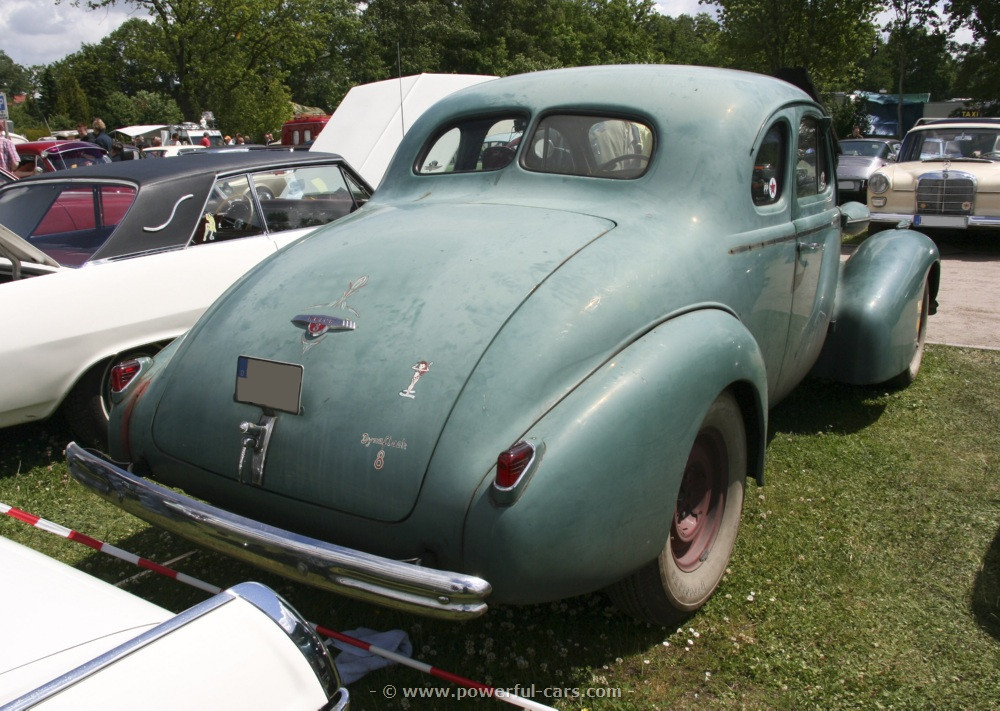
    This beautiful 1938 Buick Coupe was a regular sight on the streets of Harrismith back in the Sixties.

    Martha McDonald and her friend Carrie Friday used to cruise the streets going nowhere. Mom Mary called them Martha and My Man Friday after Robinson Crusoe. She says Roy Cartwright coined the nickname. Roy ran the Tattersalls horse racing gambling joint in town and was full of wit.

    Years later Sheila found out that Pietermaritzburg car enthusiast and restorer Ty Terblanche had found it, bought it and restored it to its former glory. Well done Ty! What a beaut!

    1938 Buick coupe2
    – here’s the actual Buick we frew wif a stone decades ago! Martha and My Man Friday cruised around the metropolis of Harrismith ca. 1960’s –

    With childish logic and mischief we’d occasionally throw it wif a stone (as we’d mockingly say). Always missed, mind you.

    The redoubtable Martha McDonald, asked one day if she had any children replied in the negative, adding loftily “My husband is too much of a gentleman.”

    ~~~oo0oo~~~

    Here’s a better angle to showcase those beautiful lines:

    Buick 1938

    From the front it’s much like other cars of its era, but from the side and half-back you can see why it gets so many oohs and aahs!

    Buick sports coupe 66s 1938

    edit March 2019: I read in ‘Blafboom’, Leon Strachan’s first book about Harrismith, that Martha had actually bought this gorgeous 1938 Buick Century Sports Coupe 66S from Nic Wessels; and that she lived in Murray Street.

    for images, my thanks to conceptcarz.com and powerful-cars.com

    ~~~oo0oo~~~

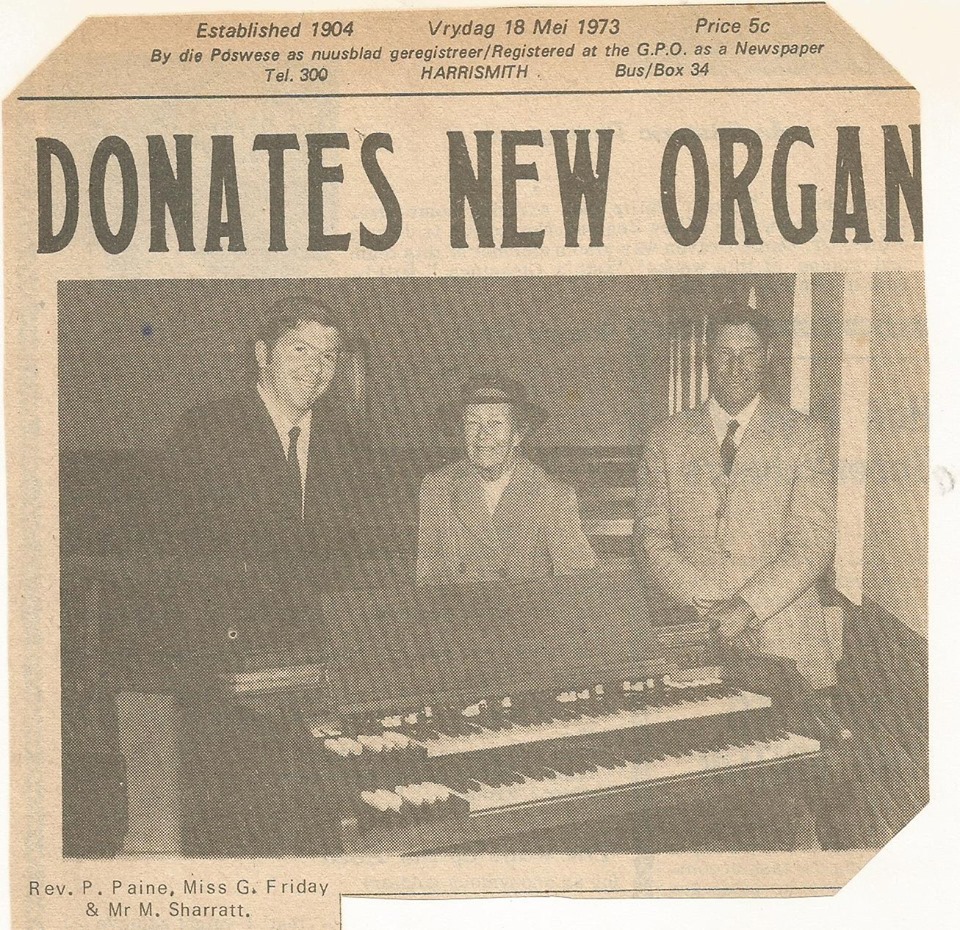
    Later, Carrie Friday became an organ donor:

    – the Methodists get a new organ for Mary Methodist to thump out her hymns on –

    This year when Mom Mary put on a pirates eye patch to play the piano as she sometimes gets double vision ‘and I can’t play if there are two keyboards,’ I reminded her ‘But you used to play a double keyboard, Mom!’ She couldn’t remember that, so I must show her this picture of the My Man Friday organ.

    – Sheila video’d Mom wearing a pirate patch –

    ~~~oo0oo~~~

  • Hector Fyvie’s ‘English Team’

    West Indies cricket. Wow!

    They would play England and thrash them at their own game. We would listen to the games, ears glued to the steam-powered radio.

    Representing England you had names like Hicks, Lamb, Greig and Smith who sound OK, except they were all born in South Africa. Then you had Tavare, de Freitas, Ramprakash, D’Oliviera and Hussain. All Englishmen.

    In the other team you had posh and correct names like Sir Garfield Sobers, Sir Wesley Hall, Charlie Griffith, Sir Andy Roberts, Michael Holding, Colin Croft, Malcolm Marshal, Courtney Walsh, Sir Curtly Ambrose and Ian Bishop.

    So Uncle Hec – always quick to spot an anomaly – would refer to them as . . .

    “The English Team”.

    Hecs Windies Cricket Team

  • The Two Annie Watson Bains

    The Two Annie Watson Bains

    By the time we knew her she was Annie Bland. Never ‘granny’. Only Annie. She was our dear Mom’s dear Mom.

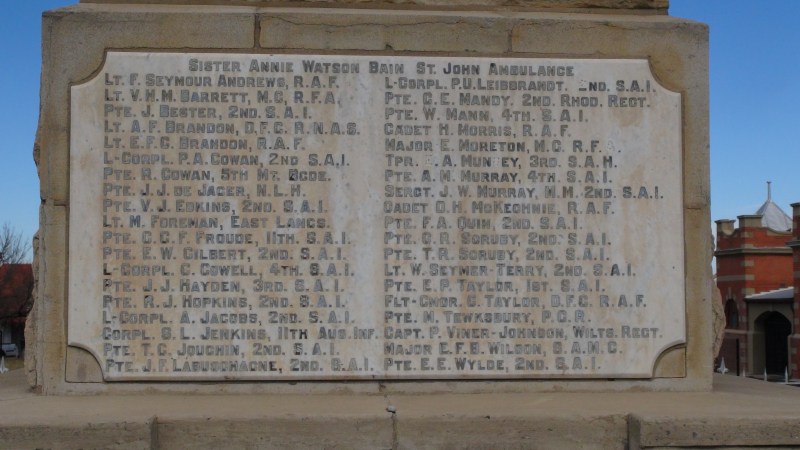
    In fact ‘Annie Watson Bain’ to me was the lady who died in World War 1 and whose name was on one of the monuments outside the Town Hall. She was our Annie’s first cousin, their Dads, brothers Stewart and James Bain, had come out from Scotland together.

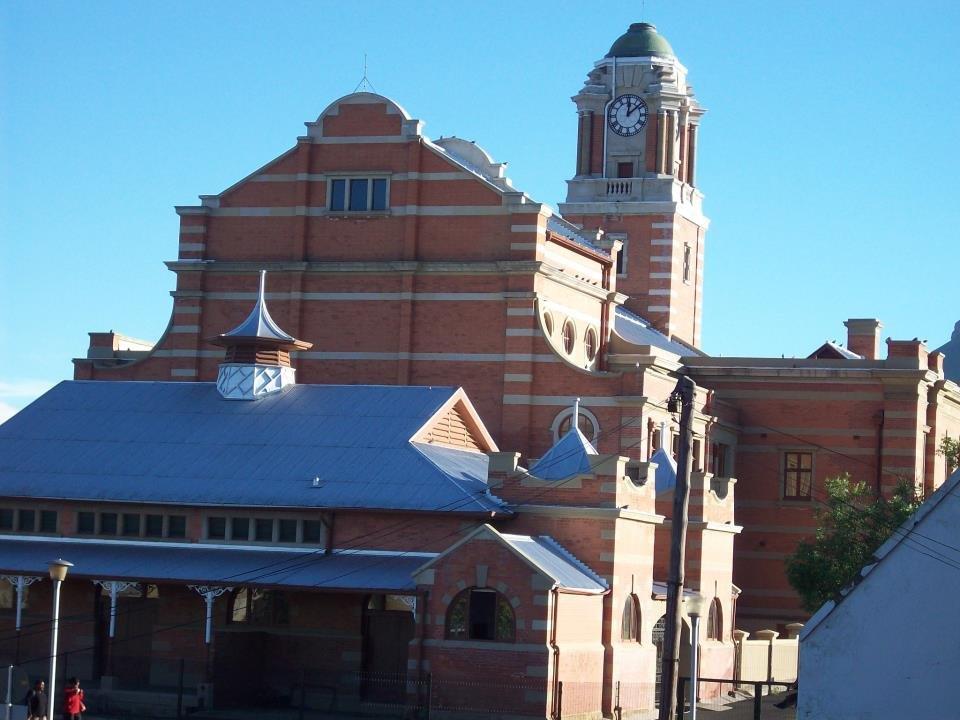
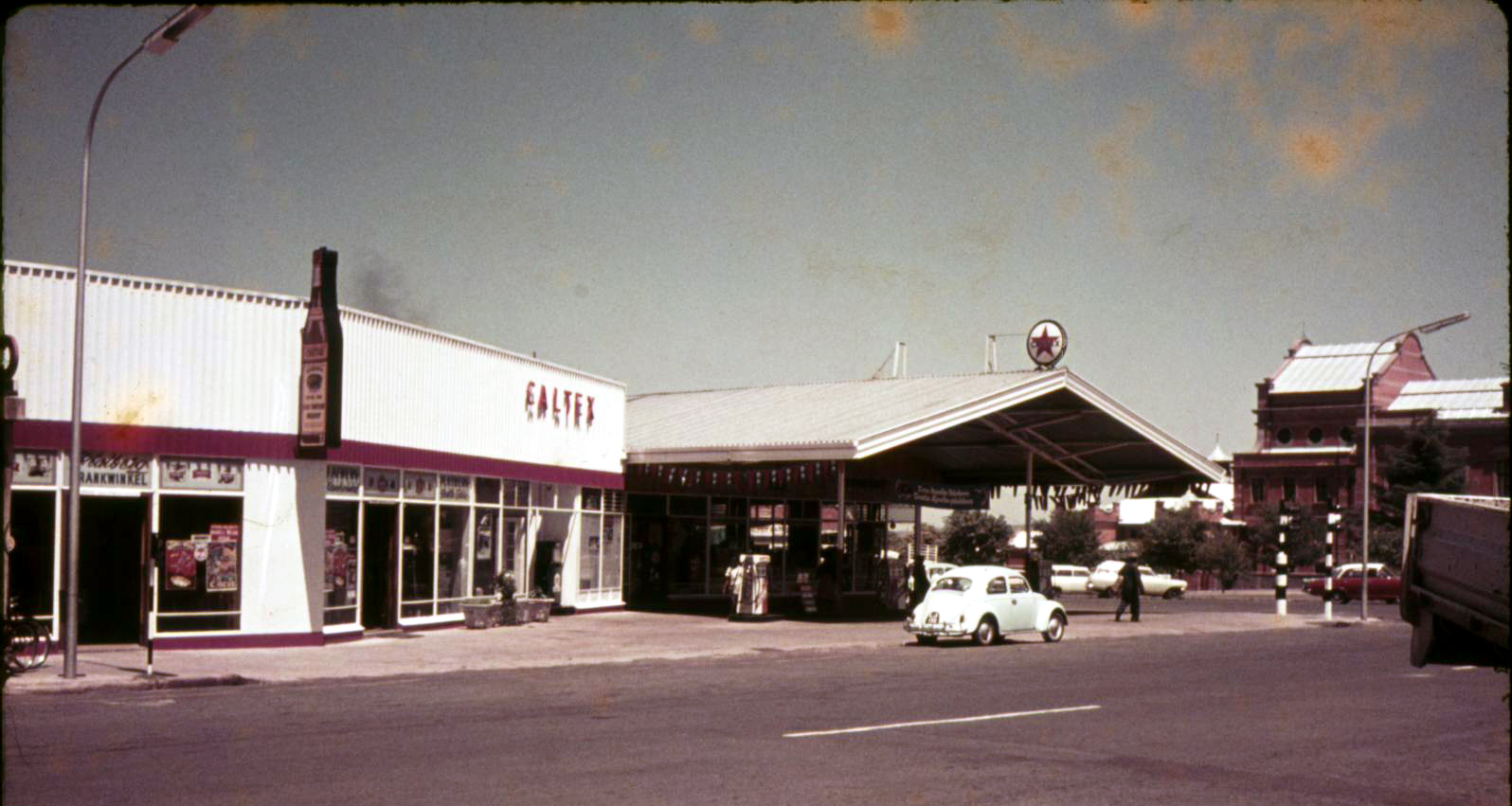
    We never knew our Grandad, Annie’s husband JFA ‘Frank’ Bland. They’d already lost the farms and the racehorses, and they’d moved to town. He had died aged fifty and Annie now owned the ‘Caltex Garage’, as we called it – one of the many petrol filling stations in town. At one time there were seventeen of them! Hers was on ‘Caskie Corner’, opposite our posh Town Hall which her father Stewart Bain had been instrumental in building.

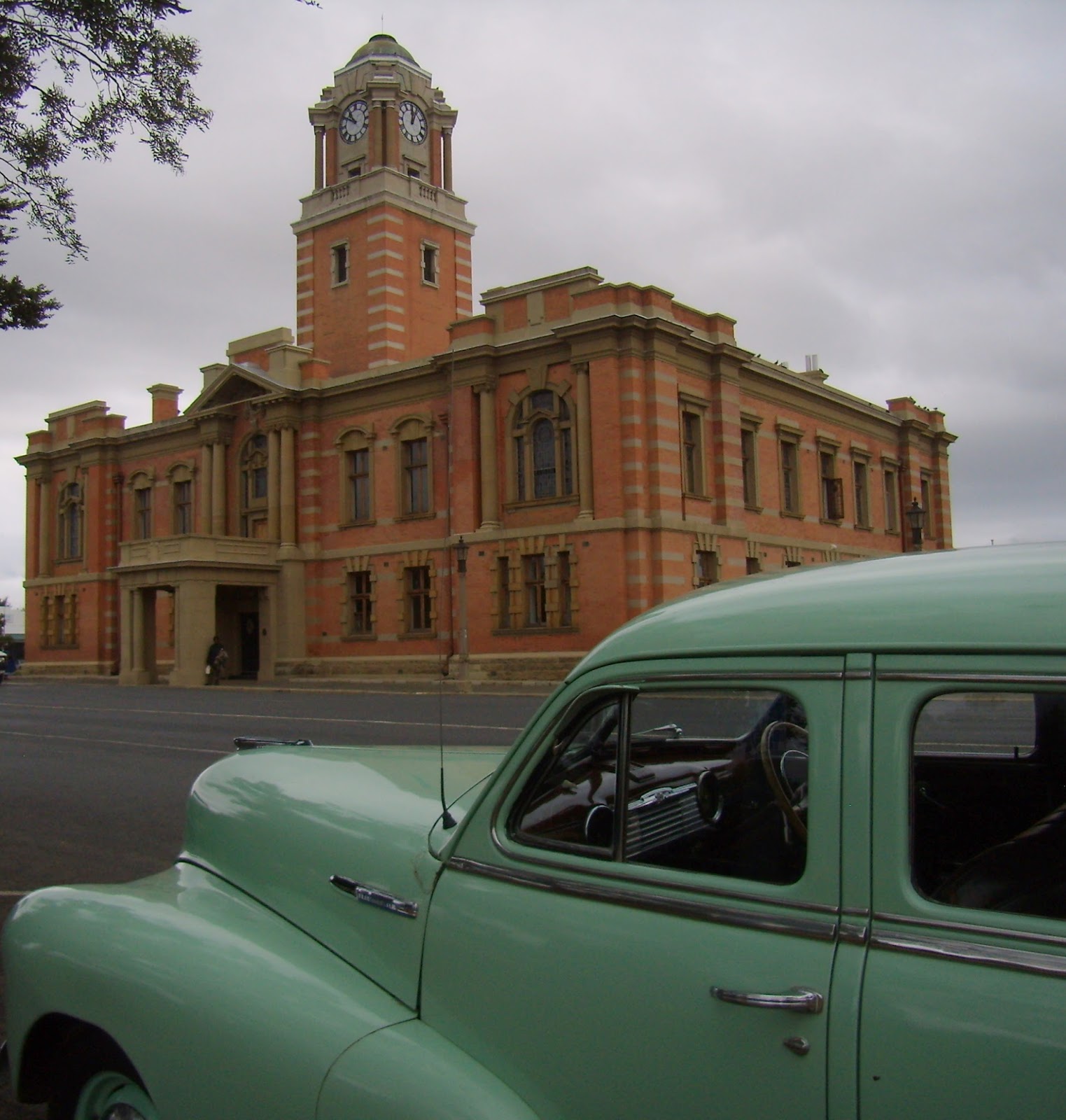
    At the time some called the town hall ‘Bain’s Folly’ as it was such an imposing structure for our modest dorp. I remember exploring inside it with fascination as a kid. High up in the rafters and steel gangways above the stage, with all sorts of ropes and chains hanging down and black curtains behind the red velvet main curtains; the backstage rooms, along the marble-floored passages past the toilets, the museum with the taxidermied animals – a lion, a vulture, what else? The galley above the main hall. I never did get up into the clock tower, come to think of it! Nor onto the outside balcony overlooking Warden Street. I wonder why? Locked doors?

    HS Town Hall
    Harrismith Town Hall Bain's Folly
    Town Hall3

    Annie always spoke with great admiration of her late husband Frank – the granpa we never knew – and told me proudly how she’d never seen his fingernails dirty. This as she looked mildly disapprovingly – probably more disappointedly, she never had a harsh word for me –  at mine. She called me Koosie and the way she pronounced it, it rhymed with ‘wussie’ and ‘pussy’, but don’t say that out loud. And don’t tell anyone. I had been out playing in the mud one Xmas morning with me sisters Barbara and Sheila and cousins Frankie and Jemma and we had arrived back muddy – on WAY more than our fingernails; we were made to wash in the horse trough – and happy, and run into dear ole Annie. I spose the ancient ones were a bit panicked as we still had to get dressed and go to church.

    The car she drove was like this one, except faded beige, and OHS 794:

    A Chevrolet Fleetline, I’d guess a 1948 model. It had a cushion on the seat for her to see over the dash, but under the top rim of the steering wheel.

    It looks better like this. Omigoodness, are our memories actually in sepia tones?

    She was born in 1893, the fifth of seven Bain kids of the ‘Royal Bains’ – meaning the Bains of the Royal Hotel. There were also ‘Central Bains’.

    She went to St Andrews Collegiate School in Harrismith (pic somewhere below) . . . and then to St Anne’s in Pietermaritzburg where she played good hockey ‘if she would learn to keep her place on the field.’ She’s the little one on a chair second from left:

    Annie Bain, ? seated on chair 2nd from left
    – Hmm, looks like St Anne’s in Pietermartizburg was a riot of fun and laughter! –

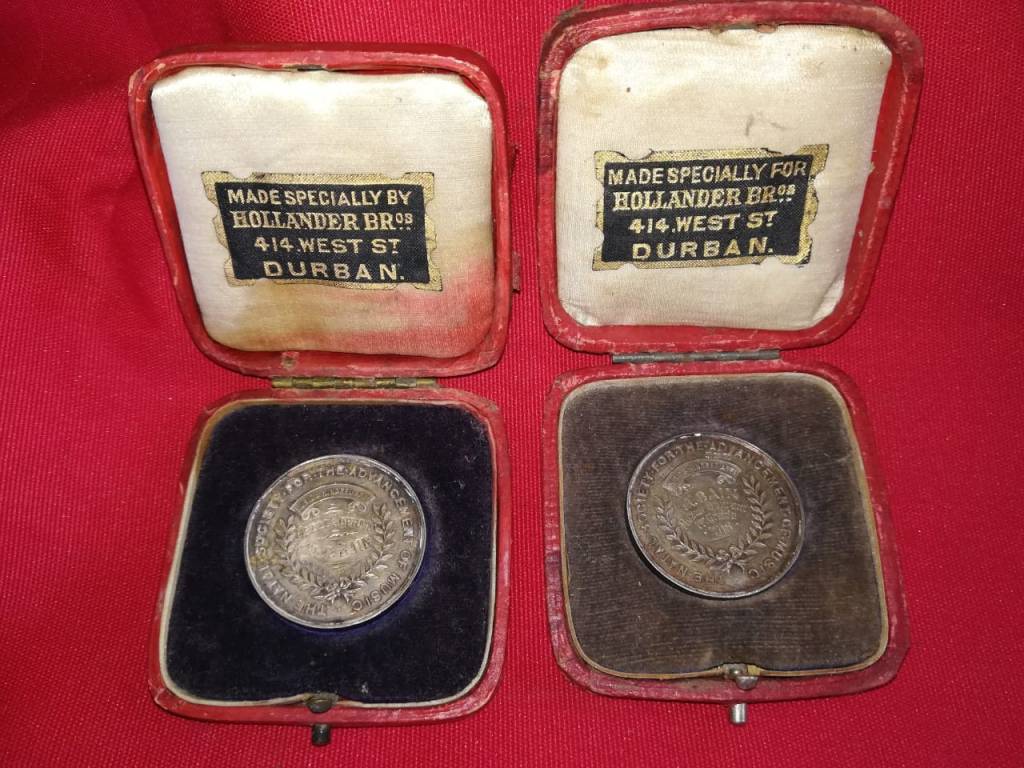
    Medals Annie won for singing in 1915 from The Natal Society for the Advancement of Music. Both say mezzo soprano and one says 1st Grade 1915. (Must tell the kids. THAT’s probly where I got my fine singing voice).

    HS Caltex

    She ran the Caltex forecourt and the workshop at the back, where At Truscott fixed cars. I can still see him tip-toeing, bending over the edge, raised bonnet above him and a lightbulb in a wire cage in his hand, peering through glasses below his bald head. She rented out the adjoining Flamingo Cafe and Platberg Bottle Store premises. At that time she lived in the Central Hotel a short block away across the Deborah Retief Gardens and I do believe she drove to work every day. Maybe drove back for lunch even?

    Sundays were special with Annie as your gran. She’d roll up at our house in the big beige Chev, we’d pile in freshly sanctified, having been to church and Sunday school, and off we’d go on a drive. The back seat was like a large lounge sofa. Sometimes she’d drive to nowhere, sometimes to the park, sometimes cruising the suburbs. OK, the one and only suburb. Usually there’d be a long boring spell parked somewhere like the top of 42nd Hill overlooking the town and watching the traffic. Annie and Glick chatting away on the front seat and us sitting on the back thinking, OK, that’s long enough now. I’m sure they told us the whole history of Harrismith and who lived where and who was who and maybe even who was doing what and with whom. But maybe not, as ‘Anna’ and ‘Glick’ (as they called each other) were discreet gentlefolk. All of which we ignored anyway, so I can’t tell you nothing!

    – our view from the back seat – in sepia –

    Later she got a green Opel and for some reason – maybe after she could no longer drive? – it was parked on our lawn for long spells. I sat in it and changed gears on its column shift about seventy thousand times. Probably why I (like most males in their own opinion) am such a good driver today. It was a Kapitan or Rekord like this, but green and white:

    Annie died in Harrismith in 1983 aged 90. Looked after to the end by her loving daughter Mary. She was ready. ‘All my friends are gone,’ she told me. Her husband Frank had died forty years earlier, and her eldest daughter Pat had died around ten years earlier.

    ~~~oo0oo~~~

    The pic of the Town Hall with the green Chev is thanks to De Oude Huize Yard – do go and see their blog. (Ah! Sandra’s blog is no more! They have left town! Sad). They’re doing great things in the old dorp, keeping us from destroying everything old and replacing it with corrugated iron and plastic.

    ~~~oo0oo~~~

    Also from DeOudeHuizeYard, this information about the building that housed Annie’s school:

    The Dutch Reformed dominee Rev A.A. van der Lingen began his years of service in Harrismith on the 6th May 1875 and remained there until the 12th July 1893.  He and the church ouderlings built a new church on the site of the original building. The cornerstone of the new building was laid on the 25th August 1892.

    – home, military HQ, school, school, boarding house, demolished –

    Around then the Rev van der Lingen ran for President of the Orange Free State. In the hope of impressing the townsfolk and swaying their vote in his favour, he built an impressive house, the first double-story building in Harrismith. The townsfolk seemingly were not impressed though, and he was not elected. Later, with the British occupation of Harrismith in the Anglo-Boer War, the military authorities made the double-story building their headquarters.

    After the cessation of hostilities, Vrede House (Peace House) as it was then known, became St Andrews Collegiate School (1903-1918), then Oakland’s School and finally a boarding house in the 1930’s.

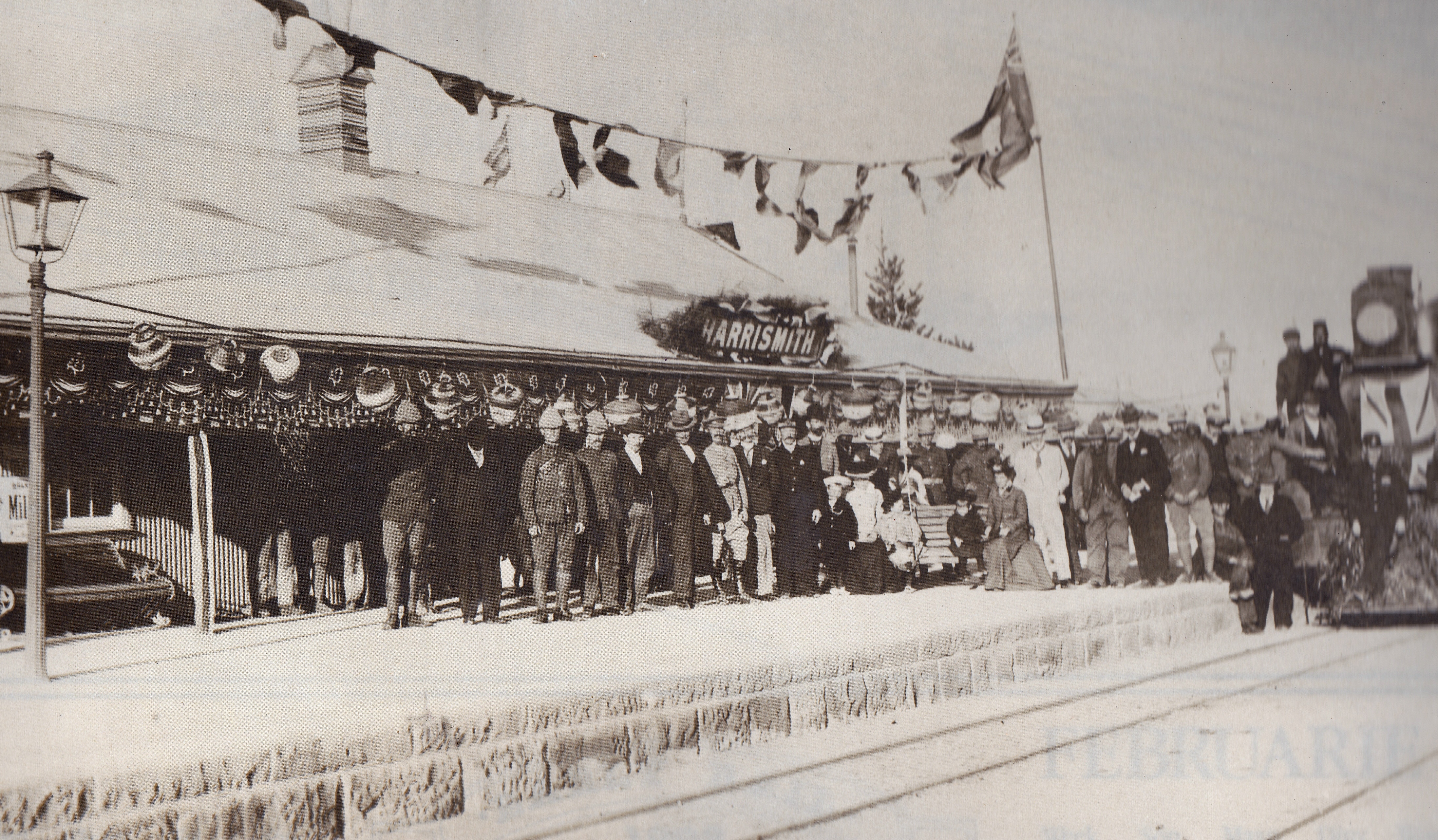
    Five weeks prior to the unveiling of that church cornerstone, on the 14th July 1892, the town had enjoyed a four-day celebration of the momentous arrival of the railroad from Natal. The festival was paid for by a £5 500 donation by the Free State government! Harrismith was now online!

    – Is this when the first train choofed in? Who was there? –

    ~~~oo0oo~~~

    The Other Annie Watson Bain

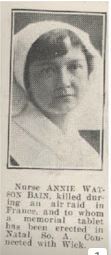
    Here’s some info and pics from the Imperial War Museum (IWM) of the bombing that killed Annie’s namesake, Annie Watson Bain in World War II in France, found by Bain descendant Janis Paterson, raised in Wick, now living in England:

    – hospital at Etaples after bombing 1918 –

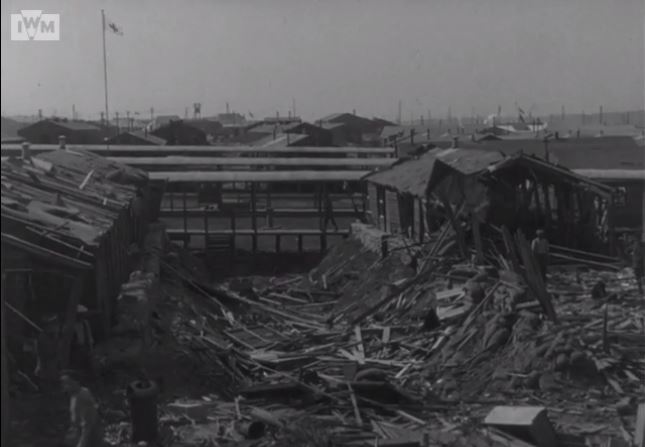
    Filmed at a stationary hospital near Etaples, probably 9 Canadian Hospital three days after a bombing raid hit the hospital on the night of 31 May 1918.

    *** – see IWM movie here – ***

    The wooden huts of the hospital show various bomb blasts but little fire damage. Four coffins, covered in Union Jacks, are wheeled on trollies by soldiers.

    A single coffin, also covered with a Union Jack on a wheeled trolley, is followed by a funeral procession of nurses, soldiers with wreaths, and a few civilians. ** this could have been our Annie’s ** The procession arrives at a temporary but extensive cemetery where a burial service is held.

    Stills taken off the IWM movie:

    Seeing the acres of graves – another Harrismithian was buried here or nearby – and knowing about the “War To End All Wars” who would think mankind would go on to fight another World war just twenty years later – and then be at war continually after that up to today 2018 with no end in sight!? – – – Thanks, America! (* sarcasm *)Update: 2021 and America says its getting out of Afghanistan after 20 years. Predictably, those making money out of death are screaming “Too Soon!”

    Janis Paterson, Bain descendant, distant ‘cousin,’ who keeps a photo record here, visited the cemetery in France and found Harrismith’s other Annie’s grave:

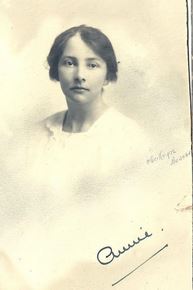
    Our two Annie Watson Bains, first cousins from Harrismith, born of two Scottish brothers, both hoteliers in this small African town in the Oranje Vrij Staat, at that time a free and independent Republic:

    ~~~oo0oo~~~

    Footnote:

    Maybe this Canadian sister attended our Annie in her last hours?

    Edith Campbell, RRC, MM (1871 – 1951) was a Canadian nurse, one of the first to arrive in England in World War 1 to assist in the establishment of a field hospital. She served in both England and France, earning a number of medals, and was twice mentioned in dispatches. First she received the Royal Red Cross, first class, for her actions in England and France, and again for her bravery during enemy air raids at No. 1 Canadian General Hospital in Etaples, France, during which she attended to wounded nurses. For this, she and five other nurses received the Military Medal.

    Her citation read:

    For gallantry and devotion to duty during an enemy air raid. Regardless of personal danger she attended to the wounded sisters and by her personal example inspired the sisters under her charge.

    ~~~oo0oo~~~

    Footnote 2:

    Janis Paterson loves flower arranging and has won cups at local shows. In 2014, one of the floral themes was related to the beginning of WW1.

    Janis’ entry was a tribute to nurses like Annie Watson Bain and won the best in show award. We’re a talented lot, all put together, us Bains! The book in her arrangement “The Roses of No Man’s Land” is about those brave nurses.  She thinks that people often forget what nurses like Annie had to endure. The person escorting the judge told Janis the judge was almost moved to tears.  Isn’t it stunning?:

    ~~~oo0oo~~~

  • Feel The Burn

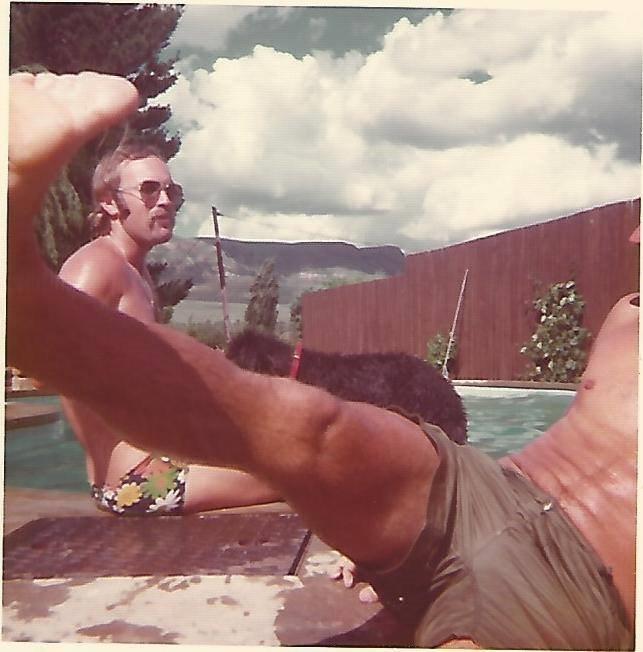
    Sheila sent me an old picture of the du Plessis’ beautiful pool in Harrismith. Joan and Jannie built a big one as they had three amazing swimmers in their stable. As far as I know, Lynn, Pierre and Sonja all represented Vrystaat and South Africa (or at least went to ‘Top Ten’ where the ten fastest swimmers in the country all get into one pool and then see who can get out first on the far side in the big final national gala).

    Here’s Gary Beaton’s butt, Pierre’s leg and a du Plessis poodle with Platberg in the background. Plus the big wooden fence shielding the pool from Arthur Kennedy’s famous triangular wood and glass house next door.

    Gary Pierre poodle Hector St

    Which reminded me:

    We painted that fence with creosote. Child labour unpaid by Jannie. Pierre, Tuffy and me, topless in our swimming cozzies. It was great fun. When one of us (must have been Pierre, he was usually our chief instigator) ‘mistakenly’ painted another on his bare skin, it was hilarious. Retaliation followed. More hilarity.

    And then it started to burn. Really, really burn. Creosote on your skin is unfunny. We ended up in the pool scratching and rubbing and wiser. We’d learnt a chemistry lesson.

    Fifty years later they invented the internet and now I know this:

    Coal tar creosote is a mixture of hundreds of chemicals in a thick and oily liquid. People need to be trained and certified to use creosote. Creosote is also a pesticide. A pesticide is a substance that kills pests.

    So Pierre was in real danger there.


  • Jock Grant

    Jock Grant

    Jock Grant was a Harrismith legend. “A legend in his own lunchtime” as they say.

    Fresh out of Scotland he joined the golf club and announced to the usual crowd leaning up against the bar in his broad accent that he was taking Afrikaans lessons.

    “Jock”, said Jannie du Plessis, “We think you should first take English lessons!”

    He started a plumbing business, married lovely local lass Brenda Longbottom and ended up owning the quarry, becoming famous for his loud booms which would rattle the windows of the town at noon, as he dynamited rock on 80th hill on the western edge of town.

    Then he owned Swinburne. Well, the Montrose Motel, anyway. Not much left now:

    Montrose Motel2

    The entrance was around the corner on the left and as you walked in there was a pianola in the hallway.

    ———

    Ian Fyvie has a story about when Jock went over to visit his family in Scotland. On his return they were playing golf and Ian asked him if he had enjoyed the visit. Jock’s reply was very non-committal and unenthusiastic. Ian said “But you must have enjoyed some part of the trip! What was the highlight of the whole holiday?”

    “When I came over 42nd hill and saw the lights of Harrismith!”

    —————————————————————

    Nick Leslie tells of going for a walk in the veld with Jock and Brenda. Climbing through a barbed wire fence Brenda got her slacks caught. Jock said “Well your name’s not Longbottom for nothing!”

    ————————————————————–

    Dad tells of Jock’s big talk which was most unlike most of their Harrismith friends’ more modest approach. Jock could swagger. He arrived at a party (always there were parties!) smoking his big cigars and between puffs boasted “He wanted *puff* six million *puff* but I said I’ll offer you five million and not a penny more *puff*”. When he left that night Hector Fyvie said in his quiet way “There goes Jock Maximilian”.

    ————————————

    Jock brought his nephew Morris Crombie out from Scotland to join him in his plumbing business. Morris was invited to join Round Table and at his first meeting stood up to announce himself. In his broad Scots accent the lanky Scotsman intoned: “I’m Mawriss Crawmbie – Ploomer” and probably didn’t understand why the whole room collapsed with laughter.

    ———————

    Mom was dancing with Jock at yet another party on Swiss Valley, the Venning’s farm. “Och, its smoky in here, I’m going oot fir a breath a fresh air” said Jock. Mom thought that was rich as he’d been smoking his cigars like a chimney, causing the haze indoors. He was soon back, muttering “I toook one deep breath ootside and I came running back in!” (He was referring, of course, to the famously strong smell of pigshit from the piggery).

    Whenever any new guests on the farm referred to the smell the Venning they mentioned it to would look mystified, sniff around cautiously and then pronounce seriously “I smell money”.

    ——————————–

  • Hance in the Grand Canyon

    Hance Rapid3

    Hance Rapid at Mile 76.5 stands sentinel at the Colorado river’s entry into the Granite Gorge. The river drops 30 feet as it passes through a natural constriction formed by the Red Canyon. The dark dike cutting through the red Hakatai Shale is one of the most photographed features in the Canyon.

    I found out more about the man the rapid was named after: John Hance (1840 – January 8, 1919) – thought to be the first non-native resident of the Grand Canyon.

    He opened the first tourist trail in the canyon before the canyon was a national park, giving tours of the canyon after his ca.1866 attempts at mining asbestos failed. “Captain” John Hance was said to be one of the Grand Canyon’s most colorful characters, and one early visitor declared that “To see the canyon only and not to see Captain John Hance, is to miss half the show.”

    Hance delighted in telling canyon stories to visitors, favoring the whopper of a tale over mere facts. With a straight face, Hance told travelers how he had dug the canyon himself, piling the excavated earth down near Flagstaff (thus ‘explaining’ those mysterious then-unexplained dirt piles).

    – wikipedia and archive.org –

    John Hance died in 1919, the year the Grand Canyon became a National Park, and was the first person buried in what would become the Grand Canyon Pioneer Cemetery.

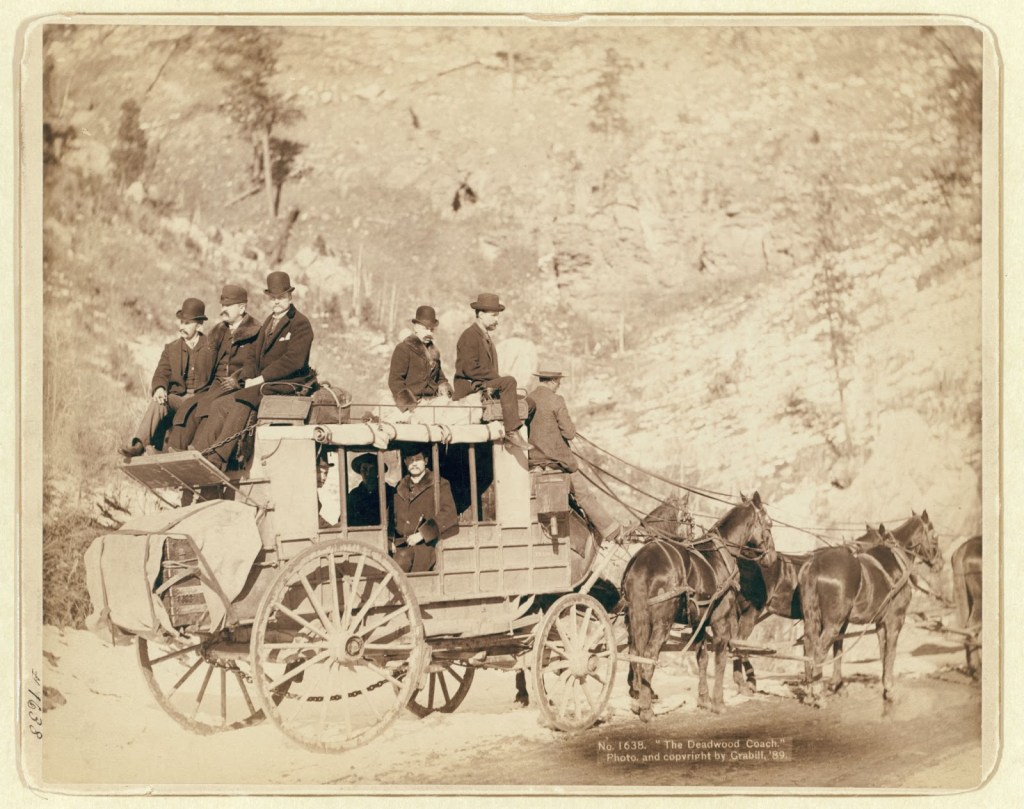
    In May 1891 one Charley Greenlaw wrote this in John Hance’s guestbook: I can cheerfully say that this, the Grand Canon of the Colorado River, is the grandest sight of my life. As I noticed in this little book of Capt. John Hance, a great many people say ‘indescribable.’ I can say nothing more. It is beyond reason to think of describing it in any way. You must see it to appreciate it. A grand sight of this kind and so few people know of it. By accident I formed the acquaintance of two ladies en route to the Grand Canon. I joined them. We have enjoyed our trip; the stage ride from Flagstaff to the Grand Canon is grand. Good horses, competent and accommodating drivers. I have seen the Yosemite, have visited California several different times, in fact seen all the principal points of interest in the United States, but the most wonderful, awe-inspiring piece of Nature’s own work is this, the Grand Canon of the Colorado River.

    Another Hance guestbook entry by J. Curtis Wasson told of the twelve hour stage coach journey after alighting from the Santa Fe Railroad Company’s train: From Flagstaff at 7 o’clock a.m. our stage-and-six goes out. Arriving at Little Springs Station, where a new relay of six horses is added, we make haste until the half-way station is reached, passing through a fine unbroken forest of Pinus ponderosa, quaking aspen, balsam fir, and spruce. The open forest, the waving grasses, the gorgeously colored mountain flowers, the occasional chirp of the forest songsters, the ice-cold springs traversing our smooth compact road, the peaks, clear-cut and massive, towering up nearly 14,000 feet into the blue above, the low rumbling of our great Concord stage, the sound of two dozen hoofs, the sharp crack of the driver’s whip, the clear, bracing atmosphere, every breath of which seems to stimulate, the indescribably beautiful Painted Desert outstretching for a hundred miles to our right.

    – a stage-and-six – high-speed travel –

    One fain would linger on scenes like these but we have arrived at Cedar Station, and after partaking of a very refreshing luncheon we are given a new relay of horses and hasten over the desert portion of our ride to Moqui Station, where another relay is provided, which takes us to the hotel at the rim of the Grand canon, where we arrive at 7 o’clock p.m.

    Leaving our Concord stage, giving our grips to the porter, not even waiting for “facial ablutions,” we hasten across the yard and up to the rim of the canon, when, looking over — the Chasm of the Creator, the Gulf of God, the Erosion of the Ages, that Erosive Entity, that Awful Abyss, lies in all its awfulness before us, — awful, yet grand; appalling, yet attractive; awe inspiring, yet fascinating in its greetings.

    ~~~oo0oo~~~
  • A Fine Spectacle

    A Fine Spectacle

    This story will be fuzzy in parts because of the long passage of time. But although some details may be slightly different, ‘strue. So I must tell the tale before those last few grey cells that hold the memory get blitzed by the box wine.

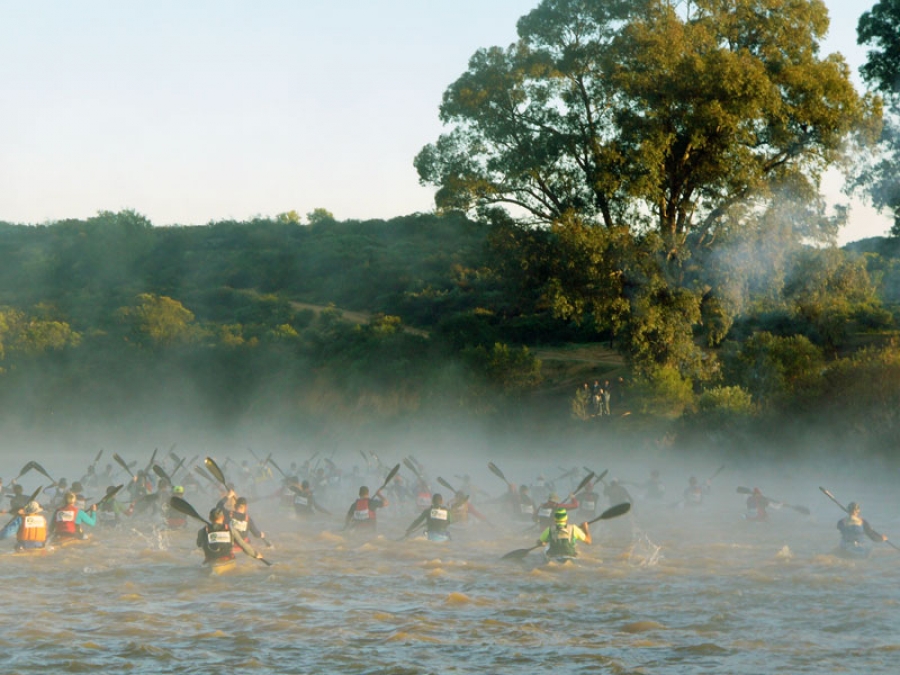
    It was on the Berg River Canoe Marathon that Christof Heyns came to tell me was pulling out of the race. Why!? I asked, dismayed. He’d fallen out in the frigid flooded Berg river and lost his glasses. Couldn’t see past his nose, so it was way too dangerous to carry on in the mid-winter Cape cold and the flooding brown water in the gale-force wind that was the 1983 second day.

    Hell, no, I said, I’ve got a spare pair, you can use mine.

    He rolled his eyes and smiled sadly at my ignorance. His eyes were very special, his glasses were very thick and there was no way just any ‘arb’ specs would do, he mansplained patiently. In his defence, he didn’t know I was an optometrist, that I was wearing contact lenses, that I had a spare pair of specs in my luggage and another tied to the rudder cable in my boat; nor could he know that I had a very good idea of what his prescription was from seeing his glasses on his nose both on this race and on a Tugela trip we had been on together earlier. I knew about his eyes better than he knew about my soul (he might have known a bit about that, as his Dad was a very belangrike dominee in the Much Deformed Church – top dog, in fact).

    So I said, trust me swaer and went and fetched my spares. He put them on and was amazed. I can see! he shouted like I was Jesus who had just restored his sight. I know, I said.

    So he wore the glasses and finished the race and I said keep them till we next meet.

    Many months later I saw an article in the SA Canews, the paddling magazine, titled: “My Broer se Bril”. Christof wrote the story of how he had lost hope when some arb oke said “Here, try mine” and he could see! And he could finish the race.

    He ended off by saying “Actually they were so good I’m wearing them to this day”. Ja, you bugger, I know, I thought. I could have written an article “How a dominee’s son appropriated my bril,” but I didn’t. I’m way too kind! In his defence, we haven’t seen each other since that race.

    Berg marathon

    . . and today – April 2021 – I heard he died, aged only 62. Damn!

    ~~~oo0oo~~~

    belangrike dominee – important churchman; flock leader; the lord is my shepherd, I am a sheep;

    swaer – bro;

    my broer se bril – my brother’s spectacles;

    mansplain – when a man laboriously, carefully and ‘kindly’ explains something to you that you already know; usually inflicted on women;

  • Lee’s Ferry across the Colorado River

    Lee’s Ferry on the right bank of the Colorado River, just above the mouth of the Paria River, at an elevation of 3,170 feet asl is the site of the start for most river trips through the Grand Canyon.

    Originally called Lonely Dell by Mormon church-man with 19 wives and 67 children John D Lee, who established the ferry in 1872, it provided the only access across more than 300 miles of river for many years. Actually one of Lee’s 19 wives, Emma ran the ferry for a number of years while he was on the lam – hiding from the law for his leading part in the wicked 1857 Mountain Meadows Massacre.

    The massacre near St George, Utah involved a group of emigrants known as the Fancher Party trekking west from Arkansas who were camped at Mountain Meadows in southern Utah preparing for their final push across the Mohave Desert when they were attacked by a group of Mormon Militia who disguised themselves as Native Americans so as to cowardly deflect blame for the attack.

    It was a time of great tension between Mormons and the rest of the United States, and the massacred party was most likely attacked because they were not Mormons.

    After an initial siege, the treacherous Lee approached the emigrants saying he’d negotiated safe passage for them with protection from their supposed Native American attackers if they surrendered their weapons. The group agreed, whereupon the militia proceeded to kill all but the children under 8 years of age.

    One hundred and twenty men, women and children died that day. For almost two decades, the incident was covered up, but in 1874, Lee was brought to trial. Never denying his complicity in the massacre, Lee did insist – probably correctly – that he was acting on orders from high up in the church. He was the only one of about fifty men involved in the massacre to be brought to book. He was convicted and executed by firing squad in 1877.

    His widow Emma Lee sold the ferry in 1879 for 100 milk cows to the Mormon Church who continued to operate it until 1910 when it was taken over by Coconino County, Arizona. The ferry stayed mostly in use until 1929 when the Navajo Bridge was completed. Ironically, the ferry was used to ship much of the material to build the bridge that put it out of business.

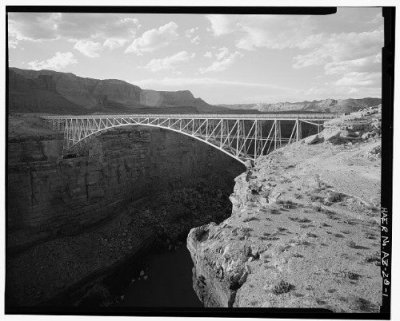
    1984: There was only one bridge when we crossed to the right – or ‘north’ (rivers only have left or right banks – think about it) – bank of the river. It was completed in 1929. A larger parallel second bridge was added in 1995. The bridge we crossed is now used for pedestrian sight-seeing.

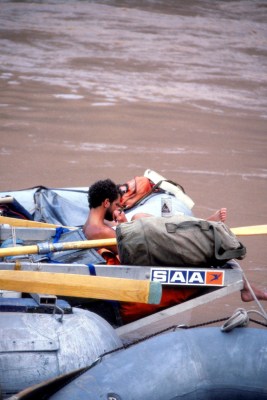
    Now: To make sure there are no misunderstandings, our John Lee on the 1984 trip down the Colorado is a good ou who, at that stage, had zero wives:

    John Lee
  • Dog Knot

    Dog Knot

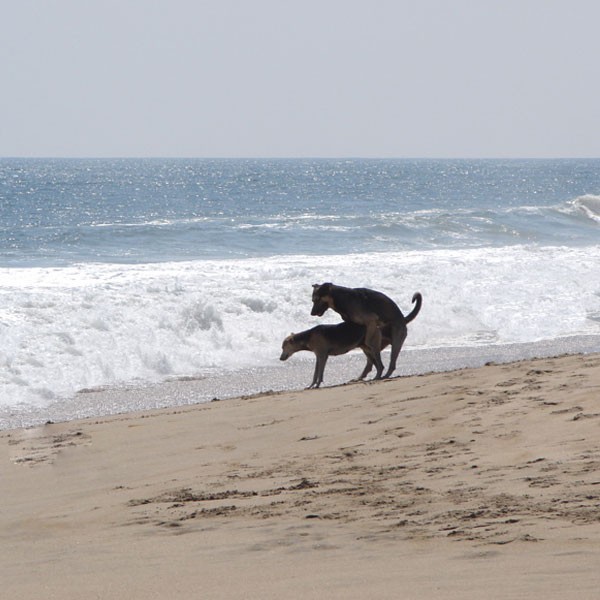
    Dogs accomplish mating by a unique physical way and process. Unlike most other mammals, the dog’s penis has a large bulbous enlargement at the base. When the dog’s penis enters the vagina of the bitch, it must go through a muscular ring or constriction of the external opening of the vagina. The moment the penis is through, the pressure of the tube on the reflex nerve center causes a violent thrust and the dog clings to the bitch with all his strength. The swelling of the bulb prevents the dog from withdrawing his penis.

    Dogs remain hung in this manner for on average twenty minutes. The male turns around and faces the opposite direction from the bitch. While the two are hung in this manner, they may get their nails into the dirt and pull with far more than their own weights, stretching the penis amazingly. Do not be alarmed when they pull this way; neither dog is being hurt. As the valve relaxes, the blood leaves the penis, usually from the bulb part first, and allows the enlarged penis to slip out.

    dog-copulation

    They’re usually bound together for about twenty minutes. Quite long. In fact, in animal kingdom terms I think you could almost call it . . ‘True Love.’ Or ‘commitment.’

    I didn’t know this when I first saw it on the Fyvie’s Gailian farm outside Harrismith in the Free State. Tabs and I were farming with his Dad Hector, who was driving the pickup. We rounded a bend and there they were. I watched in fascination. It did seem a bit like, after the passion, they had turned their backs on each other, avoiding eye contact, and were like:

    I can’t believe this; He doesn’t write, he doesn’t call; and him: Will she still respect me in the morning . . . ?

    We watched a few seconds and then Uncle Hec in his inimitable quiet, deadpan way, said: “Locked in Holy Matrimony.”

    ~~oo0oo~~

    Another famous dog knot featured our first dog’s famous father: Stan the Man

    ~~oo0oo~~