After the 1983 Berg River Canoe Marathon ended in Velddrif, we stopped in at Boet & Anna Swanepoel’s smallholding outside Malmesbury, about 50km north of Cape Town. Boet was Dad’s older brother. Mom and Sheila had seconded me on the race, driving my Cortina to each of the three overnight stops.
I’d forgotten this visit, remembering only an earlier 1977 visit with Larry Wingert, but Sheila had pictures! And there I am, sticking up above Uncle Boet’s head, watching the activity from a safe distance, hands in pockets. Probably too tired and cold to help after the four-day freeze I had just endured? Or lazy? I do know my hands would not have appreciated hoisting hay bales after 240km of holding a wet paddle!
We won’t mention child labour, nor overloading, nor our way of saying “I loaded the Chev with hay” rather than “I had the Chev loaded with hay”, OK?
=======ooo000ooo=======
The bakkie: My research suggests this was a 1955 Chev 3200 ‘Task Force’ 3/4 tonner. Probly with a bit more than that onboard!
We went to Durban around this time and stayed in the Impala Holiday Flats, self-catering. Free Staters on the loose in Durbs-by-the-Sea!
We probably drove down in OHS 154, a beige Morris Isis – or in OHS 155, a pale blue VW 1200 Beetle, along the narrow national road between Joburg and Durban. I remember talk of dreading the infamous “Colenso Heights” – apparently the most challenging section of the route.
The high-rise we stayed in was in Gillespie Street one street back from the Golden Mile, or Esplanade. If you took all Harrismith’s houses and stacked them, you’d have a building like this. I remember the lifts and I remember getting back tired and full of sand from the beach. I don’t seem to recall the beach – weird.
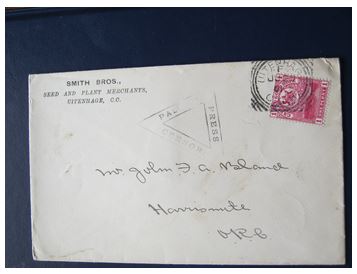
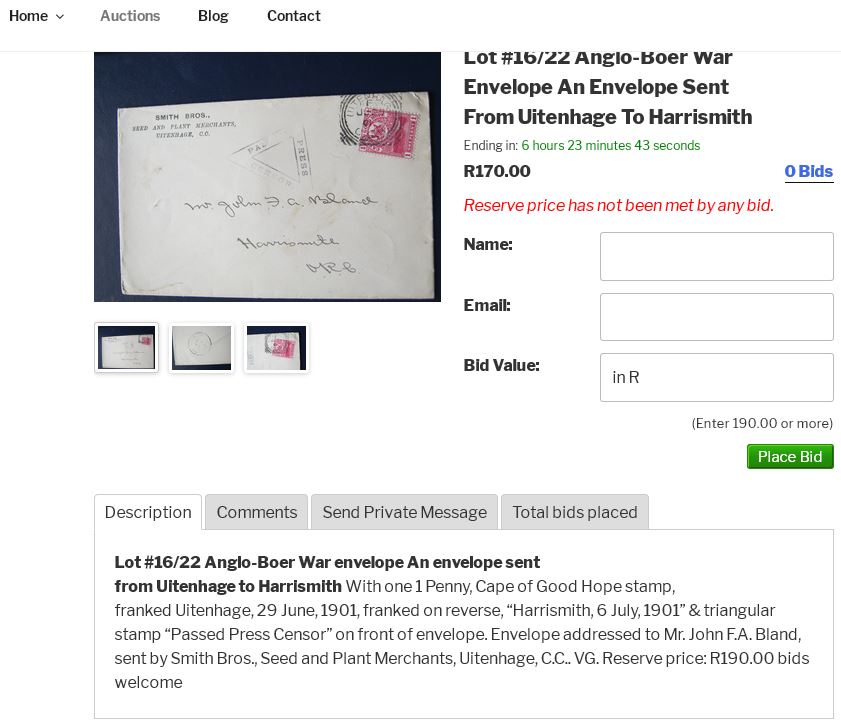
My great grandfather got a letter from a seed and plant merchant in Uitenhage in July 1901. I know cos I found the envelope on an online auction site. It was sent to Harrismith, Orange River Colony (ORC).
It was stamped ‘Passed by the wartime Press Censor’ as the wicked Poms were trying to steal our diamonds and gold at the time and were waging the Anglo-Boer War.
~~oo0oo~~
Sheila responded:
“Yes, I would think it was JFA Bland II who was our Grandad Frank’s father. He came to Harrismith by oxwagon with his father JFA Bland I and they settled near Witzieshoek.
JFA Bland I is buried in Senekal apparently – I made contact with someone in Senekal who offered to go looking for his grave, but she’s never come back to me – so if you ever find yourself in Senekal with nothing to do …….”
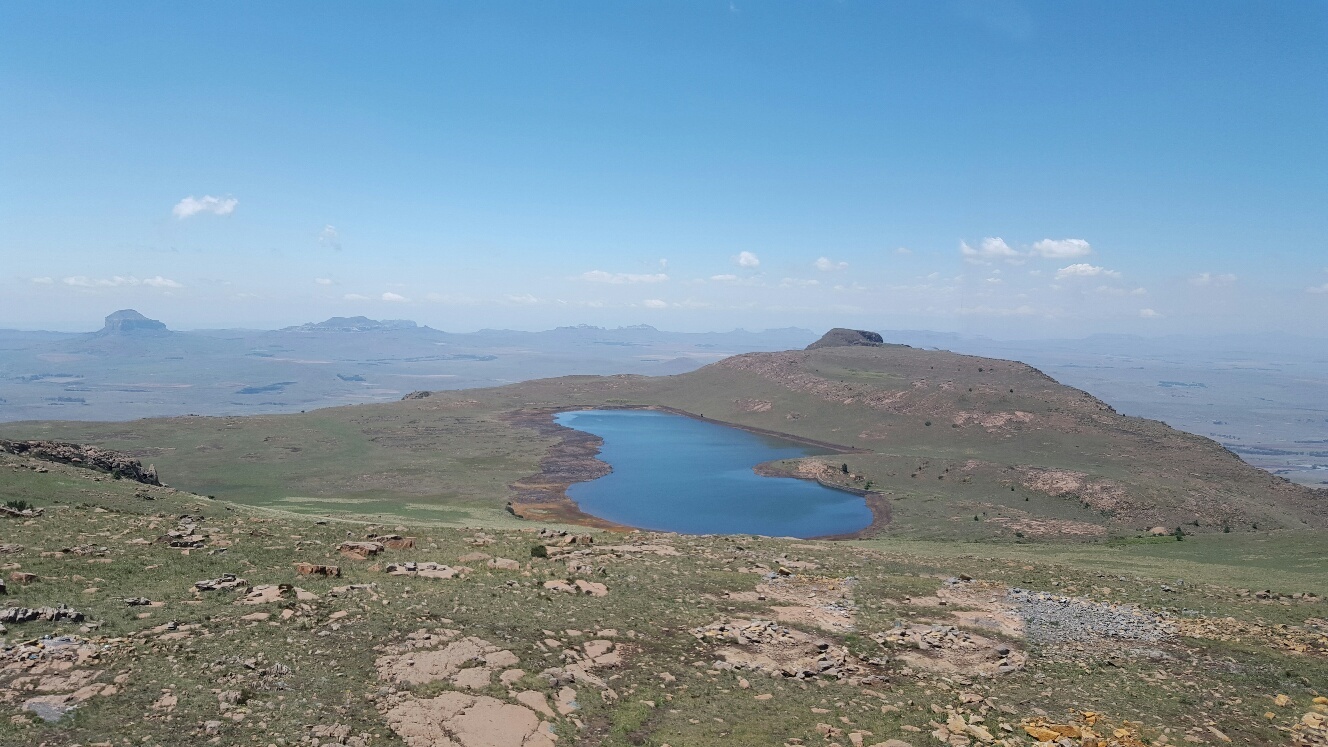
The eastern-most pass up Harrismith’s Platberg is the fabled Donkey Pass. We called it Flat Rock Pass. Mountain Passes South Africa says it’s the sixth highest above sea level, and the second steepest pass in South Africa.
The road traverses a nature reserve and you need a permit to drive up. The steep parts – with sections as steep as 1:3 – are concrete stripped to aid traction. 4X4 and low range is essential for a safe and – especially – non-destructive ascent.
For those that do get to drive this amazing pass, you will be one of a select few to have done so.
The fauna and flora are special – adapted to the high altitude – up to 2394m – that’s 7854 feet to those stuck in ancient Empirical measures! When the sun never used to set on old whatsername’s empire. Remember? Plant species, over 669; I know of these animals: grey rhebok; chacma baboon; dassie; there must be many more. I hope the rhebok are still there. They live a precarious existence on this little 3000ha ‘island’, with people, fires and cattle around and encroaching.
On top you’ll find Gibson Dam, built by British soldiers soon after the Boer War. The donkeys that carried the building material up gave the pass its alternative name.
Other passes on Platberg’s south side – the side facing the town – are Khyber Pass, ZigZag Pass and One Man’s Pass. They’re all footpaths only though.
Hopefully Platberg’s custodians limit the number of vehicles they allow on top to keep the mountain top as undamaged as possible. Sensitive wetlands!
Here’s the extent of Harrismith’s townlands. This means the rare grassland and wetland top of Platberg is unprotected and could be developed. We really need to up its conservation status:
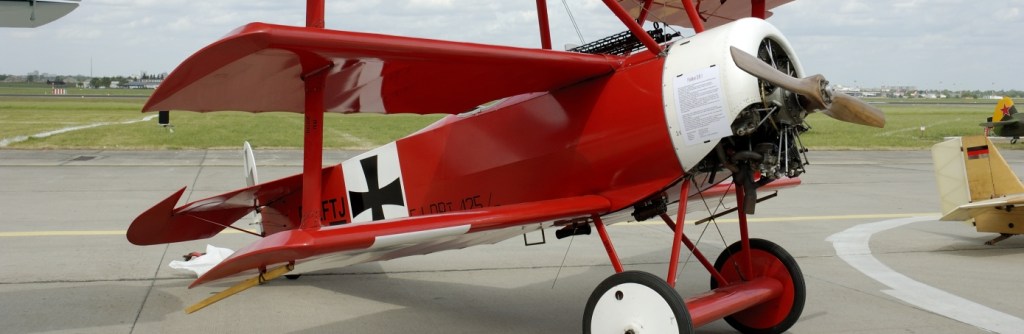
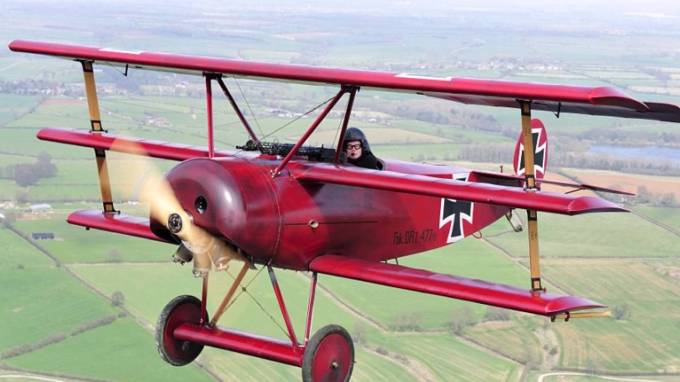
– von Richthofen’s famous red Fokker Dr.1 triplane –
Sheila found this:
On the 16 April 1917, the crimson killer Manfred Von Richthofen shot down his 45th Allied aircraft, which included 2nd Lieutenant Frederick Seymour Andrews, the son of Thomas Frederick and Louisa G. Andrews, of Warden Street, Harrismith, in the Orange Free State, South Africa.
Andrews was born in 1889, and was educated at Merchiston College, Pietermaritzburg and – even better – at school in Harrismith. Like many of his countrymen Andrews made the trek to England to volunteer his services in the ‘Great War.’ Approximately 10,000 South Africans and Rhodesians served in the British Armed forces during World War 1, around 3,000 of them in the Royal Flying Corps (RFC).
Andrews joined the RFC and initially served in the ranks with No.1 Squadron, before being commissioned and gazetted as 2nd Lieutenant to the General List in March 1917. He was then posted to No.53 Squadron where he was to meet his pilot, Lieutenant Alphonso Pascoe, who hailed from Cornwall. Andrews and Pascoe were subsequently transferred, in tandem, to No.13 Squadron on the 18 March 1917, the squadron helping to pioneer formation bombing during the war.
Unfortunate timing. April 1917 has gone down in British history as ‘Bloody April’ as the RFC was to suffer a disproportionate amount of casualties – three times as many – in relation to German losses. Since September 1916, the Germans had held the upper hand in the contest for air supremacy on the Western Front, with the Albatros DII and DIII outclassing the British and French fighters charged with protecting their exceptionally vulnerable two-seater reconnaissance and bomber machines.
On the 9 April 1917 the Battle of Arras began with RFC support. In subsequent engagements with the German air-force, the British lost roughly 245 aircraft, with 211 aircrew killed or missing, and a further 108 taken prisoner. A catastrophic period of RFC history.
Andrews’s squadron was equipped with the Royal Aircraft Factory Bleriot Experimental 2 single engine two-seat biplane, the BE2. Approximately 3,500 were built during the war and used as fighters, interceptors, light bombers, trainers and reconnaissance aircraft. The BE2 was not a popular aircraft with the British airmen, being seriously under-powered and unreliable – even by the standards of the time.
Due to bad weather, rain and low clouds, there had been few combats on 16 April but at 14:50 hours, Pascoe and Andrews were dispatched in their BE2e aircraft No. 3156 on an Artillery Observation sortie. According to Von Richthofen, flying his red DIII, No. 2253/17, he approached Pacsoe and Andrews from approximately 1,000 metres. The two ‘British’ pilots were flying at an altitude of 800 metres, and were supposedly totally unaware of the enemy. Von Richtofen promptly attacked, whereupon Pascoe’s aircraft lost control and began smoking. The pilot regained control, but in the end the plane plummeted from approximately 100 meters to the ground below, coming down between Bailleul and Gavrelle. It was the Baron’s 45th victory in total.
Pascoe and Andrews survived the initial crash. Pascoe was the luckier and could be sent home to England to recover from his wounds. His ‘Springbok’ observer was not so fortunate. Desperately wounded, Fred Andrews was lifted from the smashed wreckage and passed through a series of casualty stations until he finally reached Le Tocquet Hospital, where he was to die thirteen days later, on the 29 April 1917.
How short and hurried life can be in war. Fred Andrews lasted barely a month in combat. Von Richthofen’s spell was much longer, but still pitifully short.
Von Richthofen earned his pilot’s license in June 1915. After honing his skills flying combat missions over France and Russia, he met the famed German flying ace Oswald Boelcke, who enlisted him in a new fighter squadron called Jasta 2.
Under Boelcke’s tutelage, Richthofen grew into a seasoned fighter pilot. He recorded his first confirmed aerial victory in September 1916 by shooting down a British aircraft over France. He soon racked up four more kills to earn the title of “flying ace.”
He had his Albatros D.III fighter plane painted blood red. The distinctive paint scheme gave rise to the immortal nickname ‘The Red Baron’.
In June 1917 Richthofen was promoted to leader of his own four-squadron fighter wing and was outfitted with the Fokker Dr.1 – Dreidecker = triplane – the distinctive three-winged machine that would become his most famous aircraft.
The Red Baron’s final flight took place on April 21 1918, when pilots from his Flying Circus engaged a group of British planes over Vaux-sur-Somme, France. As Richthofen swooped low in pursuit of an enemy fighter, he came under attack from Australian machine gunners on the ground and a plane piloted by Canadian ace Arthur Roy Brown.
During the exchange of fire, Richthofen was struck in the torso by a bullet and died after crash-landing in a field. Brown got official credit for the victory, but it seems it was probably the Australian infantrymen who fired the fatal shot.
Allied troops recovered Manfred von Richthofen’s body and buried him with full military honors. The 25-year-old had only prowled the skies for a little over two years, but his 80 confirmed aerial victories proved to be the most of any pilot in World War 1.
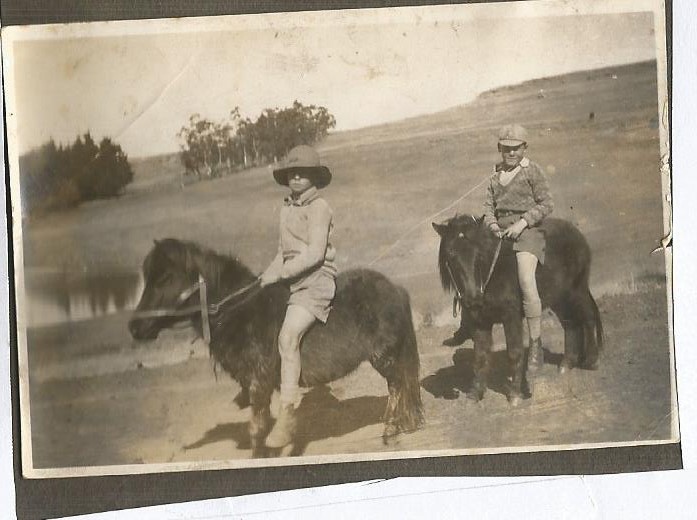
Sister Sheila sent this lovely old photo – she thinks ca 1920 – of Jack Shannon and our Mom Mary’s cousin Peter Bell on their ponies on Kindrochart, the Shannon farm on the Oliviershoek road and near Mom’s parents Frank and Annie Bland’s farm Nuwejaarspruit, on the Witzieshoek road. Sterkfontein Dam now lies between the two farms – in fact, the Nuwejaarspruit homestead is now submerged under the clear waters of the dam.
Peter Bell was Mary’s first cousin – his Mom Jessie Hastings-Bell (neé Bain of the Royal Bains) was Annie’s sister. Peter joined the Rhodesian Air Force in WW2 and went MIA – missing in action – his body was never found.
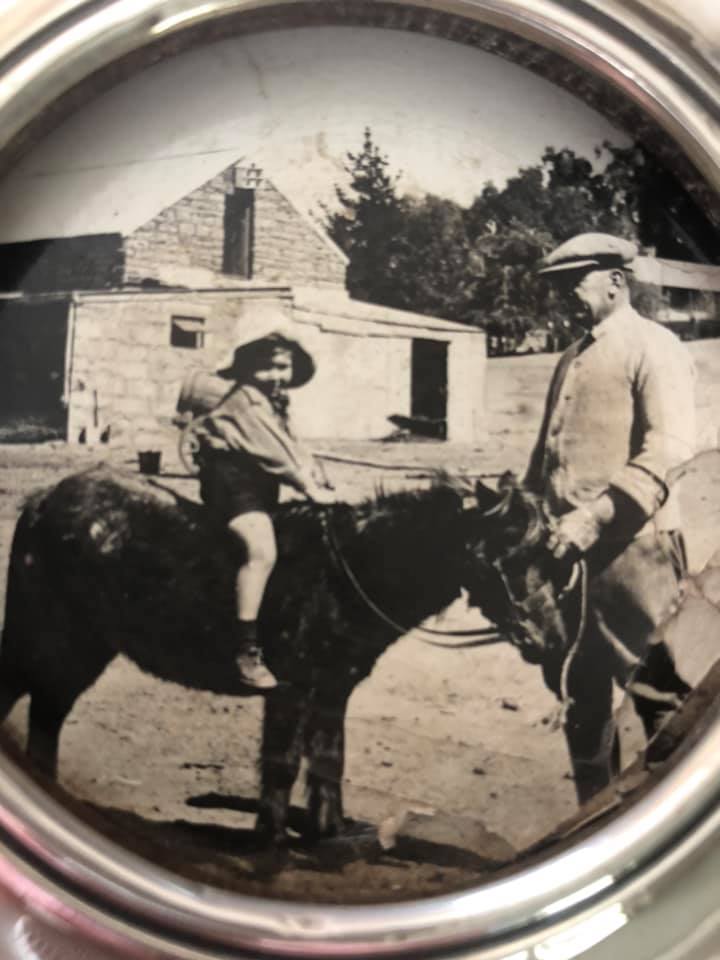
Mom tells the story of how Jack was urged to give his Shetland pony to “the Bland girls”, Mary and her sister Pat, once he’d outgrown it. He was reluctant but his folks urged him to be generous and asked again if he would be so kind.
Tue 2nd May 2017 – I got a phone call at work from a friend who had just visited Mom & Dad – “Your Mom was saying strange things and was not herself, I think you should visit”, said Keith Griffiths. I phoned sister Sheila (who phoned other sister Barbara) and drove to Maritzburg.
Mom was physically fine, but a bit confused and – tragically – with marked short-term memory loss. Trying hard to be alright she asked me “How’s Trish?” Trish who died six years ago. Dear old Mom has had a probable TIA leading to sudden short-term memory loss. Tragic, she has always been so sharp and organised. Luckily her longterm memory and sharp sense of humour is unaffected.
DAMN!!
Probably a transient ischaemic attack (TIA) or “mini stroke”.
~~~oo0oo~~~
A TIA is caused by a temporary disruption in the blood supply to part of the brain. The disruption in blood supply results in a lack of oxygen. This can cause sudden symptoms similar to a stroke, such as speech and visual disturbance, and numbness or weakness in the face, arms and legs. However, a TIA doesn’t last as long as a stroke. The effects often only last for a few minutes or hours and fully resolve within 24 hours.
But Mom’s memory loss is still apparent a week later.
~~~oo0oo~~~
Phoned them this morning
Dad says he told Mom to stay in bed till the sun came up but she didn’t. He wants her to see an audiologist as she doesn’t listen! (He’s as deaf as a post and her hearing is great, making the joke all the better).
~~~oo0oo~~~
Mom says she prays for Tom n Jessie every day that they’ll understand their lessons and pass their tests. I asked her if that wasn’t cheating? Mary Methodist hosed herself. But slightly cautiously – she was raised not to tempt fate.
~~oo0oo~~
A Missive From Sheila:
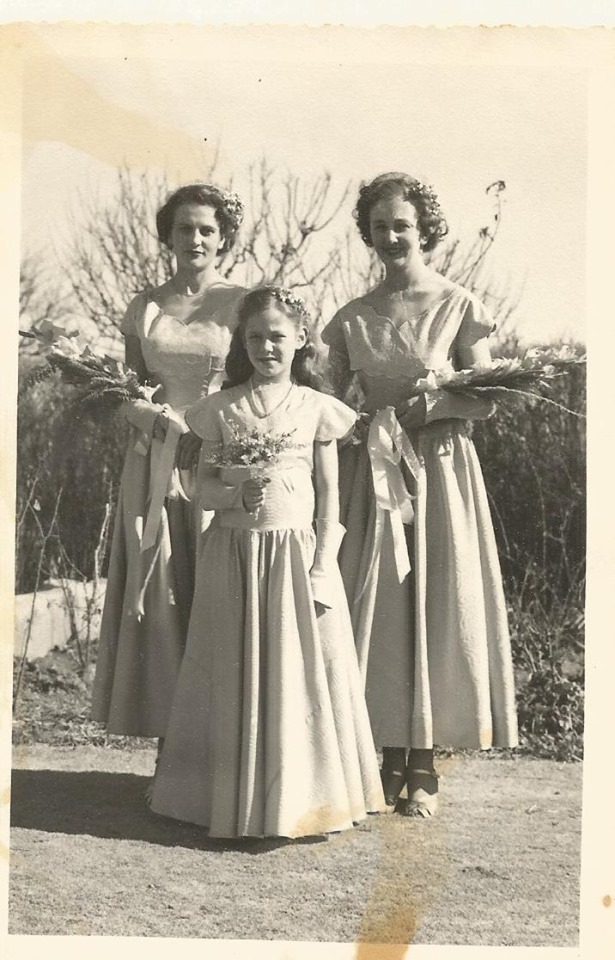
Hi Everyone – I’m in the middle of a massive clean-up and came across this – on the back is written:Marjory, Pat & Peggy – Harrismith 1938 – Signed DC Reed
Pat Bland and Marjory Farquhar. In front, Peggy Hastings
So I phoned Mum for more info:
Marjory was Farquhar – her younger sister was Dossie, who was Mum’s great mate – Dossie lives in an old age home in Bethlehem and she and Mum chat quite often.
Pat was Bland, Mom’s older sister.
Peggy was Hastings – Michael’s sister – she had a lovely sense of humour – she had 3 kids and then her husband walked out on her – she came back to Harrismith and married Bert Starkey – her kids were Barbara, Stuart and 1 other.
The Hastings were leaving Harrismith! Michael Hastings to Mary Swanepoel as they were leaving Harrismith in 1964: “There’s been a Hastings in Harrismith since 1066 and now we’re leaving.”
The “DC Reed” Mum thinks was Peggy’s cousin Daphne, whom they called Dodo – Mum says she was lovely and they all loved her.
It’s really a gorgeous pic and Pat looks so full of fun and nonsense, which she usually was!
So now you know. Love Sheila
~~~oo0oo~~~
One day, before Mum started school, Brenda Longbottom came to play. She lived across the road in Stuart Street and was 18 months older. Mum very proudly told Brenda about a book she was reading – all about a little girl called Lucky.
When Brenda saw the book she told Mum in a withering tone that the little girl’s name was Lucy, pronounced Loosie, not Lucky! Mum was devastated.
.
Years later I was also teased for getting hard and soft ‘c”s mixed when I said SirSumFurrAnce for circumference. Hey, we read phonetically when we read ‘by our own selves’, so this will happen!
~~oo0oo~~
Mum says Barnie Neveling had a rather caustic tongue at times – it was he who told Mum that Frank Bland’s brother – either Bobby or Bertie – had committed suicide – although Mum used the words “taken his own life” – he was a pharmacist and couldn’t live with his asthma any longer – Granny Bland spoke of it as an accidental overdose. Mum didn’t think it was necessary for Barnie to tell her that.
One of Granny Bland’s other sons, Alex, who was the Royal Hotel barman, played the piano – he cut his finger and it couldn’t straighten properly, so a friend offered to pay for the op to straighten it – Dr Reitz did the op and Alex died on the operating table.
One of his favourite pieces was Rachmaninoff’s Prelude – Mum couldn’t remember the key – she sang a bit of it to me – looked it up and I think it was G Minor (the other one was C Sharp Minor) – Mum says that whenever it was played on the radio, they had to switch the radio off because it made Granny Bland too sad.
Today (June 2020) Mum has so many jerseys on that Sister Rose asked if she was going to the North Pole.
She asked what Mexico’s biggest volcano was – for the crossword – I looked it up while we were chatting – Popocatepetl – I’ve never heard of it – but Mum knew / remembered it! She had asked a friend who was going to her cottage to look it up on her computer – but now, when this friend comes back with the answer – Mum will know it already – she liked that! She’s always been good at geography. Knew all the countries of the world and their capitals, and lots more. She’s not particularly charmed at recent name changes.
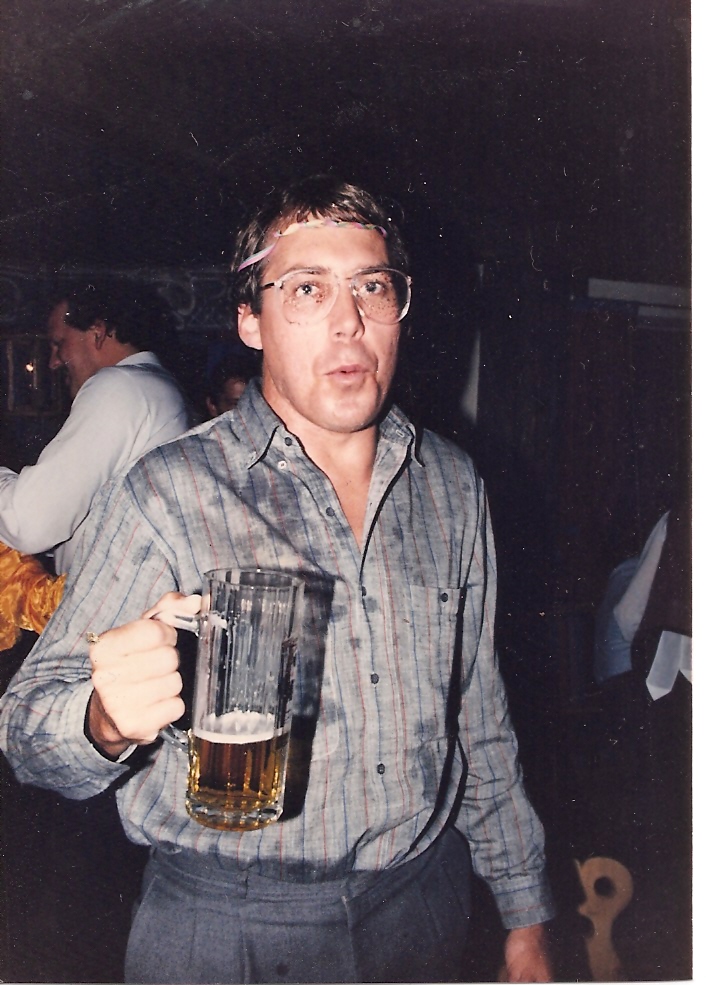
Someone with a better memory must clear up the haze. I remember pretending to help build a ‘float’, acting silly, laughing a lot, drinking a little, and reading Wits Wits. There has to be more detail than that?
Someone probly spiked my beer . . . What happens, when those paper flowers fall into your beer? Have they run tests?
Note the dreaded collection tins! We had to shake them to raise funds for our optometric clinics in Riverlea, Alexandra and Doories!
One year I diligently shook my tin on Jeppe Street outside the big old post office till I received an omen from above that said clearly to me, Goeth Thou Home Now: A pigeon shat on my ear and shoulder. It was a sign.
Even if we live to be a hundred, the first twenty five years are the longest half of our lives. They appear so while they are passing; they seem to have been so as we look back on them; and they take up more room in our memories than all the years that succeed them.
– paraphrased from a quote by Robert Southey, English Romantic Poet
To me it seems it was ten years absorbing; followed by fifteen years of knowing everything; followed by the rest of your life wondering what happened.
How could those fifteen best years not have been great – and unforgettable – with music like this?
All above are internet pictures. These next I took on a visit in 1973 with fellow exchange students and my Apache host brothers. From left: Dayne Swanda, Kent Swanda, Helen Worswick from Marandellas, Zimbabwe, Jenny Carter from Bromley, Zimbabwe, Jonathan Kneebone from Australia, Evelyn Woodhouse from Durban, South Africa and Robbie Swanda.
Wichita mountains with Pattersons
Dayne & Kent Swanda, Helen Worswick, Jenny Carter, Jonathan Kneebone, Evelyn ___, Robbie Swanda
Bison, elk and deer are protected on the 23,880 ha wildlife refuge. The refuge also manages a herd of longhorn cattle. The peaks are capped by 540 million-year old granite. Here you can see where the mountains are in SW Oklahoma. Apache is just a few miles north.

 After the 1983 Berg River Canoe Marathon ended in Velddrif, we stopped in at Boet & Anna Swanepoel’s smallholding outside Malmesbury, about 50km north of Cape Town. Boet was Dad’s older brother. Mom and Sheila had seconded me on the race, driving my Cortina to each of the three overnight stops.












 Vrystaat Confessions