A lovely post on Women in Ornithology by ornithology historian Bob Montgomerie led me to thinking about Women in – well, My Working Life.
First there was Mom. Mary Methodist. In the Platberg Bottle Store. And Annemarie Maeder, also in the bottle store with Mom. Mom ran the shop, ran the home, played the church organ, was a member of the church Women’s Auxiliary and the MOTHs MOTHWAs. Always involved and ready to help. Annemarie, too, ran her home with husband and three kids.
In the background, too, was our ‘panel of Moms’ – Moms of all your friends. Prominent ones were Jean Coleman, Joan du Plessis, Joyce Joubert, Polly Crawley, Harriet vdMerwe, Emma Morton and others.
Next were women in Apache Oklahoma – all working, all capable: Carol Crews, Joyce Swanda, Katie Patterson, Jackie Lehnertz, Virginia Darnell, Odie Mindemann, Pug Hrbacek, Janie Payne, Peggy Manar . .
When I started my first own practice in 1981 up on the seventh floor of Eagle Building in Murchies Passage between Smith and West Streets in Durban, there was Merle Oosthuizen. I walked in as owner and boss and was lucky enough to have Merle recommended to me as a ‘receptionist.’ Well, ‘receptionist’ indeed. Where’s the appointment book? she asked. Appointment book? I said. The receipt book? Receipt book? She soon twigged my capabilities and knowledge and quietly took over, becoming the Practice Manager and the Me Manager.
Where are you staying? she asked the first day, when she learned I’d just come out of the army. Oh, in a residential hotel, I said. She nodded, satisfied. Some weeks later I breezily told her I’d rented a flat. Do you have a bed? A bed? Bedclothes? Bedclothes? Um . .
Of course she could spot easily how this child masquerading as a man hadn’t a clue. She bought all the above and more for me; and she had all the stuff you need to live a bachelor existence delivered to the flat by the bed and furniture sales people. My first duvet, a kettle, a toaster. Even a fridge.
She was so organised I could say casually to anyone who asked: ‘Oh, I have it all under control. No worries,’ as she organised my practice and my life.
She ruined me. Ever since then I have had capable practice managers run my practice and my life – and I have consequently learnt very little myself. I simply do as I’m told. Later on, twenty six years with Aitch just re-inforced that pattern at home, too.
My usual response to their pointed suggestions along the lines of roer jou gat is, ‘Um, Yes of course, I was just about to do that . . ‘
Uncle Cappy was a mentor to his three sons and to many others around him. He was a huge influence in my life. He taught me how to play cricket, how to rough-and-tumble, how to BE THERE for your family; how to do the right thing. And – big lesson in HS where the opposite was revered – that you did not have to be skynheilig to be good.
As Mobiloil’s representative in the district he had new cars every now and then, which were cause for great excitement. His winged green Zephyr 6 Mark III (made 1962-1966), then his stompgat gold Zephyr 6 Mk IV are the ones I remember best.
– Cappy Joubert’s Zephyrs – internet pics
His job with Mobil took him all over the countryside, visiting farmers and the depots, so he knew the back roads around Harrismith – and sometimes he’d take us along.
He was always available to help: With sport, with Sunday school, with church, with lifts to sporting events, being Father Christmas, arranging picnics, organising games at the picnics, umpiring cricket, playing cricket, coaching cricket;
I was raised by my Mom and her Mom Annie, so was in danger of being pieperig, as they were gentle, quiet ladies. Thank goodness for frequent visits to the Jouberts, with rugged Uncle Cappy, three tough boys and – the toughest of them all – Aunty Joyce! Cappy would show you exactly how to hold a cricket bat; he would warn the boys and if they didn’t listen, physically wrestle them to the ground and donner them. I remember Etienne wrestling back, squirming, protesting and not giving up, and Cappy holding him in a vice grip on the grass until he conceded! When Etienne went one step too far for Joyce in trading chirps and talkback, Joyce would finally get to the point where she’d lean forward from the waist and jeer, ‘Etienne Joubert met ‘n bek soos ‘n skȇr!’ LIVELY action at the Jouberts!
Typical older brother, Etienne would try and get youngest of us all, Deon to do stuff, pushing the little one into taking the risk for our reward. Once when Deon refused, he said, “Chicken!” and Deon instantly and heatedly responded “I aren’t a blerrie chicken cos I aren’t got fevvers!”
Full of jokes and ‘streke,’ I wouldn’t be surprised if it was Aunty Joyce with her Cape accent – she pronounced the Afrikaans ‘so’ as sue, not sewah as we did – that put Tuffy up to this prank.
~~~oo0oo~~~
I wrote to his eldest son Etienne one fine morning, soon after Uncle Cappy had died peacefully in his sleep on his ninetieth birthday:
Et
I was lying in bed this morning listening to the birds and de-fragmenting the hard drive in my head when this popped up on some old grey cells:
Knyptang innie broeksakDinamiet innie gatsakVOORWAARTS die Ossewa Brandwag!
Also then, of course you have to remember his song on a moonlit night:
O, die maan skyn so helder . .
. . op my POEPHOL !
He was a huge influence in my life. A very good ‘normalising’ influence to go along with the more conventional, narrow influences!
I’m sure you can remember much more.
~~~oo0oo~~~
Koos,
Yes, he did rather have many funny little sayings.
Hou die blink kant bo was another favourite.
The ‘knyptang’ one he’d say aloud in the yard so that Eben Louw could hear.
“C’mon guys, let’s play the game.” That would be when us children were arguing.
He based a lot of his life’s philosophy on Cricket & the fairness & unfairness thereof.
When he drove me to Pretoria to start in the bank he reminded me:
Never over dress or under dress.Do not drink on your own.A gentleman leaves the club before seven.
I miss him often in sticky situations.
Have a great day Koos.
Etienne
~~~oo0oo~~~
Uncle Cappy widened our horizons where school and others tried to narrow them down. He showed us how you can be thoroughly decent and also naughty! So many skynheilige people who weren’t a patch on him would NEVER swear in front of us boys, but Cappy did – with a twinkle in his eyes. Now, mind, he never swore in front of us in front of Auntie Joyce! That’s for sure! That mischief was for boys-only gatherings.
~~~oo0oo~~~
As he was Mobil and Annie – my gran – was Caltex, those were the ONLY fuels we would even THINK of using in our cars. Our non-existent cars. We would NEVER use Shell or BP!
So when one day we were in his car at the fuel depot and we saw a Caltex tanker filling up from the BP tank we were MORTIFIED!! What!!?
Cappy calmly set our minds at rest, ‘All fuels are basically the same,’ he said – to our loyal mystification. ‘It’s the additives we add afterwards that make them different,’ he explained.
We were half-mollified.
~~~oo0oo~~~
   'You never forget the people
who were kind to you in childhood'
- PD James, English detective novelist
skynheilig – pseudo-holy; fake
stompgat – short tail
pieperig – a softie
Etienne Joubert met ‘n bek soos ‘n skȇr! – ‘Etienne bigmouth’
streke – waggery; jokes; pranks
knyptang, etc – the Ossewa Brandwag was a racist, anti-semitic, anti-British and pro-German organisation in South Africa during World War II. Justifiably angry at what Britain had done to them in the Anglo-Boer war, they over-reacted churlishly. Cappy had volunteered for the war and gone off to battle; on his return his church spurned him for wearing his uniform, so he joined the Methodists – the Methodists’ gain.
O, die maan skyn so helder – romantic: the moon shines so brightly
. . . op my POEPHOL ! – on my arsehole ! The sting in the tail of his mischievous ‘romantic’ song!
Hou die blink kant bo – keep smiling; look on the bright side
Des is a mensch. He’s a gentleman and he has good intentions.
He’s in a serious marriage and under strict starter’s orders. The thing is Des has a bit of a dodgy handbrake. Even when pulled up tight it can occasionally slip and he can lurch forward a few steps and then all hell can break loose and you don’t know if he’ll be able to stop.
So Hector Fyvie being a legend and him being a nephew, Des got written permission to go to Uncle Hec’s funeral and straight back. Promise.
It was a lovely funeral and lots of people were there celebrating the life of a very special man. Now it was time to go home, and Des was definitely going to leave as he had clearly undertaken to do. Honour bright. And he would have . .
But there were Vennings and Fyvies and Leslies and other people there and a strong case was put forward for Des to stay for the wake. The after-gathering was naturally well-catered with sustenance and libations – Aunt Stella, Gail, Ian, Skig and Tabbo always do things right. Still, Des refused to relax and partake, which made the exhortations stronger. With friends like this . . .
He raised himself up, closed his eyes and tilted his chin up in that way he does and made a small speech, one of many we have heard from Des:
“You guys”, he said. “Jy weet: Een is genoeg, Twee is te veel and Drie is te min”and he agreed to have Just One. Just. The. One.
So we knew he was staying for the duration.
– unlike the hooligans, Des kept his jacket on, ready to depart in the getaway car at any moment –
Een is genoeg, Twee is te veel and Drie is te min – “One martini is all right. Two are too many, and Three are not enough” – James Thurber
So there we were ensconced on a farm outside Potchefstroom among raw rockspider seventeen year-olds, fresh out of high school from all over South Africa. We heard it had been a reform school for delinquents before we got there and turned it into a military camp. A SAMS base – South African Medical Services. “Loopspruit” or “Klipdrif” they called it. We’d been sent there for “army basics”. We were around twenty four, having delayed the joys of military life by studying to become optometrists. In hindsight, maybe we shoulda done the army first!? Time would tell . .
Our barracks was an old science lab. It still had the thick wooden workbench tops, the thick ceramic washbasins with fancy taps and the bunsen burner attachments. And best of all – vinyl tile floors! That flooring was to become our biggest asset . .
One young dutchman was big as an ox, quiet as a mouse. He sat listening to us twenty four year-old oumanne praating Engels in fascination. In many pockets of the old South Africa you could grow up hearing very little Engels.
Suddenly one day our man became famous! He burst into song, singing three lines: ‘Are you lonesome tonight? Are your brastrap too tight? That’s why you’re lonesome tonight!‘
He sounded unlike Elvis:
We hosed ourselves and gave him a new name: Jelly Tots. He didn’t really like it, but his name was Lotzoff, and we would see him and say ‘Lots and Lotzoff – JELLY TOTS!’ He learnt new words from us – and taught us a new phrase too: When frustrated he didn’t say “fuck’s sake”, he said “fuck’s fakes” so that became our phrase too.
Another character was as small as Lotzoff was big. He looked twelve years old and was a compact, muscular, good looking, perky, cute little bugger. He had a smattering of Engels and preferred to use it. Some of the others refused to even try – Stoere Boere. His name? GT Jones! Pointless giving someone with so apt and memorable a name a nickname. GT Jones!
We were in the medics and we had to know all about ambulances. GT Jones called them ‘ambuminces.’And so was born a new name for one of the meals in the mess. On ground beef days we would refer to the stuff plopped onto our plates by the bored chefs as ambumince – which led in turn, naturally, to gruesome speculation on its origin!
Among the older, optometrist inmates: Graham Lewis – A companion worth his weight in gold. Never fazed, always cheerful. Keenly aware of the hilarity of this fake existence we were leading. He’d been assigned to D Company. We were in A or C Company and we were chuffed when he got transferred to our (better, natch) company. We were good company and so was he! D Company’s barracks was one of the old residences. Wooden floors. A nightmare to clean. They would regularly get bollocksed for dirty floors after hours of scrubbing them, while we got praise for our vinyl floors after all we had done was sweep them. Typical army illogical unfairness. They would lose weekend passes and we would win bonus weekend passes based on the luck of the floors we’d been allocated! Once while we were away on a weekend pass . . .
Basics was, uh, basic. Get up in the morning, bugger around with your clothes and other domestic stuff like making your bed; Assemble in straight stripes; March; March; Trudge; Omkeer! Eat; March; March; Trudge; MakeeriePAS! Holy shit . . .
Dave Cooper was another worth his weight in gold. Always smiling, always upbeat.
Les Chrich, Les Davies, Les Miller, Okkie Oosthuizen, Rod Stedall, who else?
~~~oo0oo~~~
Loopspruit – walking creek; running stream;
Klipdrif – stony shallow river crossing or drift;
oumanne praating Engels – old men (24yrs) speaking English
~~~oo0oo~~~
– still to come –
weeding duty
guard duty – grootjas, cold; threats if caught not looking sharp on duty; one flyswatter gets DB – the dreaded Detention Barracks
Puma helicopter demo / race / stretchers – we win!
Found some old pics from Apache Oklahoma back in 1973.
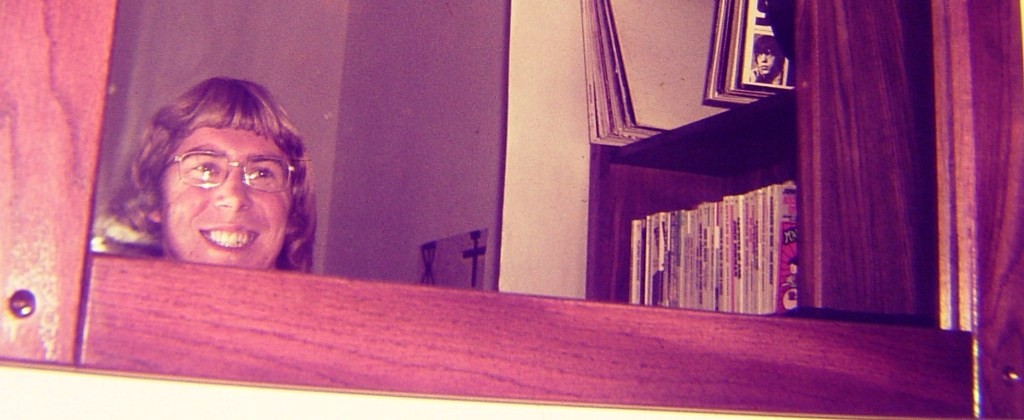
Dragging Main in a Ford Mustang with my Olympus camera – and taking original 1973 selfies!
Next, a self portrait at the Swandas home – my last hosts in Oklahoma.
Their farm outside Apache was called ‘The Swandarosa’ – kidding!! Not really – that was Robbie Swanda’s joke. But can you hear the theme tune?
– Bonanza – and the Ponderosa Ranch –
~~~oo0oo~~~
Well, can you believe this!? I was narrowly beaten to the prize of taking the world’s first-ever selfie! In fact the first photographic portrait ever taken might have been a ‘selfie.’
Taken in 1839 by an amateur chemist and photography enthusiast from Philadelphia named Robert Cornelius. Setting up his camera at the back of the family store in Philadelphia, Cornelius took the image by removing the lens cap and then running into frame where he sat for a minute before covering up the lens again.
~~~oo0oo~~~
And hey! Cornelius himself was also a johnny-come-lately! Selfies were started way earlier . .
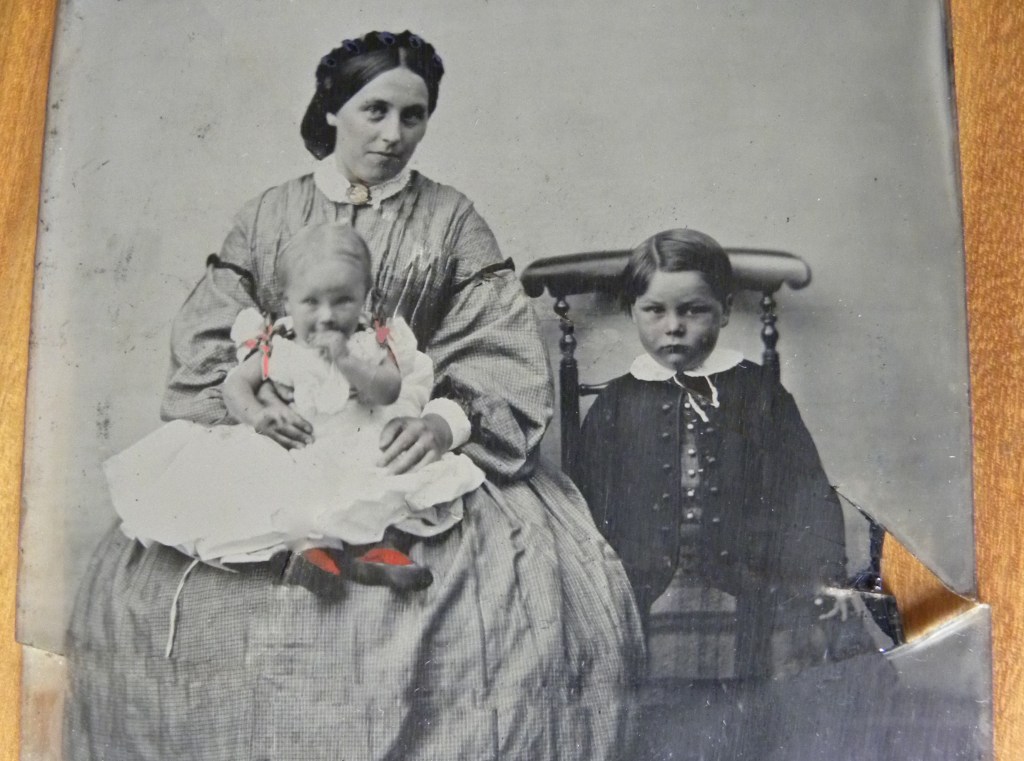
The baby in the feature picture is Mary Caskie, daughter of Alexander Caskie and Mary Craig.
Her father Alexander Caskie became mayor of Harrismith. She married JFA Bland II and gave birth to JFA Bland III.
JFA III Bland, called Frank, married Annie Watson Bain, daughter of Stewart Bain, mayor of Harrismith. So much of mayors, your worships!
Part of the stone wall which surrounded Granny Bland’s home in Stuart Street, Harrismith; and the oak tree her grand-daughter Pat Bland Cowie planted.
– Granny Bland’s garden wall in 2017 –– Pat Bland planted this oak in her Granny Bland’s garden – 13 Stuart Street Harrismith –
Bain Sisters Annie Bland and Jessie Bell lived with Granny Mary Bland after their husbands died. Annie’s daughter Mary and granddaughter Barbara Mary also lived there for a while. Barbara now has a daughter Linda Mary, who has a daughter Mary-Kate – So much of Marys !
– Annie Bain Bland, Granny Bland, Jessie Bain Bell –
The old home now has an artist family living in it and has been beautifully restored.
Apparently this was Granny Bland’s – we grew up with it in our display cabinet
– Bacchus – the God of Wine, Music and Dance – and 95 Stuart Street –
Granny Bland had a husband and five sons. She buried her husband and three of her sons in the same grave – later she was buried there. Her only surviving son Bunty later joined them all.
Mum says Barnie Neveling had a rather caustic tongue at times – it was he who told Mum that Frank Bland’s brother – either Bobby or Bertie – had “taken his own life” – he was a pharmacist and couldn’t live with his asthma any longer. Granny Bland spoke of it as an accidental overdose. Mum didn’t think it was necessary for Barnie to tell her that.
One of Granny Bland’s other sons, Alex, who was the Royal Hotel barman, played the piano. He cut his finger and it couldn’t straighten properly, so a friend offered to pay for the op to straighten it. Dr Reitz did the op and Alex died on the operating table. One of his favourite pieces was Rachmaninoff’s Prelude – Mum couldn’t remember the key – she sang a bit of it to me – looked it up and I think it was G Minor. Mum says that whenever it was played on the radio, they had to switch the radio off because it made Granny Bland too sad.
This wooden carving was from Granny Bland’s house. We (speculated?) it was carved in Ceylon by a Boer War POW. I wonder if it was actually carved by a Bland (Daniel du Plessis Bland) – the only family member we know was a POW, captured in the Free State, sent to Cape Town, then sent to Ceylon. I’m pretty sure the reverse side was blank, but didn’t take a pic!
– very Roman and Catholic though –– Granny Bland’s hot water jug – then Mary Bland Swanepoel’s –– ‘Ceylon 1902’ – we think this is from a Bland POW – Anglo-Boer War –– Granny Mary Bland’s silver serviette ring – which her granddaughter Mary used for years – I never did understand serviettes once there were shirtsleeves and tablecloths –
~~oo0oo~~
For those interested, here you can see the original broken daguerreotype Sheila had, and how I digitally ‘stitched’ or ‘healed’ it with FastStone Image Viewer (lovely program):
~~oo0oo~~
Update from Sheila on Granny Bland’s five sons:
John Francis Adam Bland III (aka Frank) our grandfather – married Annie Bain – two daughters, Pat – born 1925 died 1974 (married Bill Cowie – two daughters, Frankie and Jema) and Mary born 1928 (married Pieter Swanepoel and had 3 kids, Barbara, Koos – me – and Sheila)
Bunty Bland – married Eve Richter – one son, John (not the golfer) – he married Ethel, and they had a son James and a daughter Janine. John & Ethel divorced. John married a girl about 40 years his junior – I bumped into them in Durban once. Ethel, James and Janine all live in NZ. Janine has two kids, James has never married and has no kids – so out of Granny Bland’s five sons, there is no Bland to carry on the name. Granny Bland buried her husband and four of her five sons – only Bunty outlived her. They are all buried in the same grave in HS.
Albert (Bertie ) Bland never married, pharmacist, committed suicide
Robert Bobbie) Bland never married

Alec Bland - he had a crooked little finger, which he couldn't straighten - he played the piano and this finger bugged him, so Dr Frank Reitz offered to fix it for him - a friend sponsored the op (Mum knows who it was - I've just forgotten his name) and Alec died on the operating table.
Harrismith History – Free State Fables – Rural Legends . . well told.
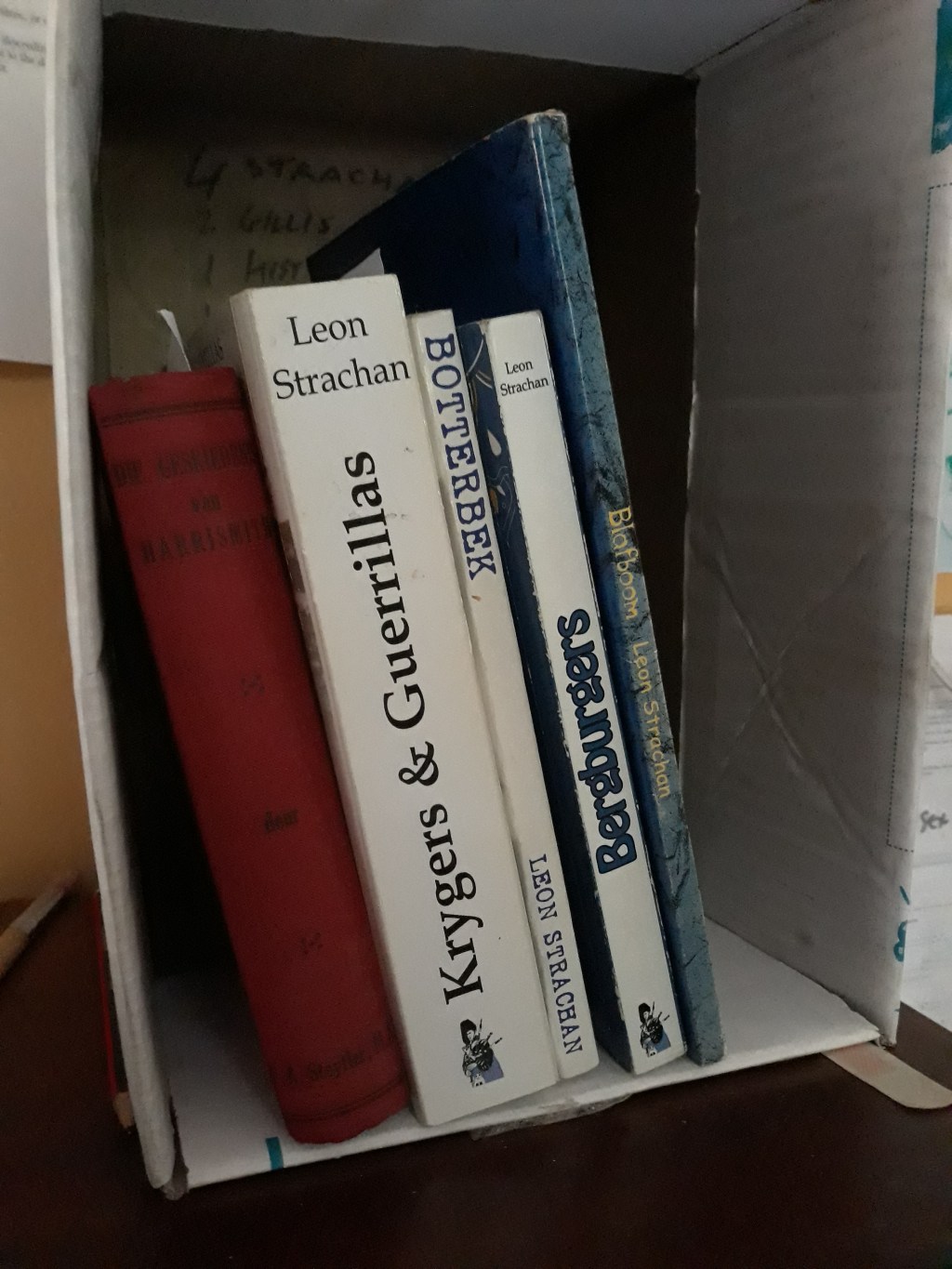
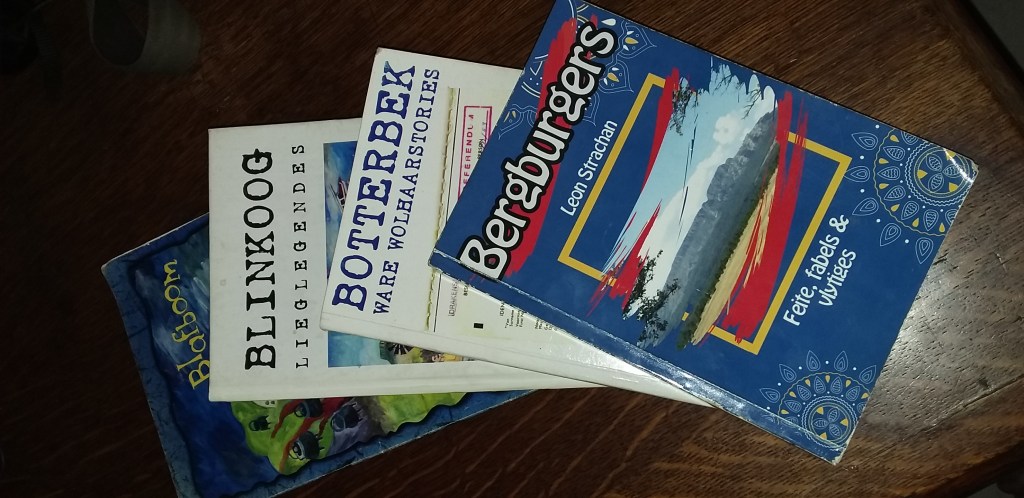
Harrismith has had a few published authors over the 171 years of the town’s existence. One day I’ll make a list. The best by far is Leon Strachan – imho of course! I have four of his books and am searching locally for the others.
– Leon Strachan’s four books on Harrismith characters’ achievements, foibles, shenanigans, pecadilloes and kakaanjaag –
In 1999 Leon wrote Blafboom, tales of Harrismith characters bravely told even when some may not have wanted them told! Admittedly some are told anonymously, but those in the know would know exactly who he was writing about . . and shudder. Some, I must confess, left me in the dark, but with a burning curiosity: One day I’d love to ply him with whisky – he drinks scotch, as like me, he has Scottish ancestry – and get him to tell me who the culprits, the instigators and the victims were! Known characters include ‘the man who swapped his wife for a bicycle;’ Petronella van Heerden, pioneer, leader, doctor and farmer; Caveman Spies, famous local mischievous strongman; He also tells the story of some Byrne settlers who moved to Harrismith from Natal – a step up.
Blinkoog followed in 2002. My mother Mary Bland grew up on Nuwejaarsvlei on the Nuwejaarspruit. Their neighbours were Badenhorsts on Stratherick, and Odendaals on Sterkfontein and Eskol. She told the story of how freewheeling downhill was known as ‘using Casper’s petrol’ – ‘ons ry nou op Casper se petrol’ she would say, smiling. He was known as Suinige Casper (Frugal Casper Badenhorst would be one way of explaining his nickname). Today the beautiful and precious wetlands and streams and valleys of Nuwejaarsvlei and neighbours are irreplaceably lost, drowned under Sterkfontein dam. Sacrificed to feed the industrial monster of Gauteng / iGoli / Joburg. Dead water waiting to be flushed downstream and then flushed down a toilet, where before an amazing ecosystem existed. You’ll notice I love wetlands . .
Botterbek in 2004 – I’d love to know the true identity (identities?) of ‘Botterbek,’ Leon’s narrator! More whisky! Characters who feature here include the very well known Kethlaan Odendaal, Jan Schambreel and jackal hunter Frans Olivier. Jurie Wessels’ remarkable ‘Harrismith Harem‘ is featured and explained in Strachan’s characteristic way: he seeks to understand the people involved; and while he will tell you the scandal and the rumours, he won’t simply leave accusations hanging without investigating them. And so it turns out the impressive building was really meant to be the most impressive home in the district for his wife. And it would have been had the 1914 rebellion – Die Rebellie – not intervened . .
Bergburgers: his fourth book published in 2017 tells of Platberg, the beloved mountain that looms over the town and is visible for miles around; the book’s title alludes to the fact that the citizens of the town – past and present – all consider Platberg ‘theirs.’ Ours. The annual foot race up and down the mountain, started by an insult and a challenge; the geology of the mountain and how it formed over the millennia; Leon corrects the injustice done to the families living in the Lost Valley by telling their real story – a fascinating tale of quietly capable people living their own lives, yet interacting regularly with neighbours and townsfolk, not at all totally isolated, as rumours eagerly repeated would have it; old Professor Bloch the violin teacher who lived down the road from us in Stuart Street; old archeological and fossil findings by Arthur Putterill – one of them maybe the same as the one my mate Donald Coleman found? and two boats built in our district, far from the coast, that sailed the high seas – one in 1886 to England and one in 1986 to the Caribbean;
Some of his stories are in the fine English he was taught by Mrs Ella Bedford, mother of Springbok rugby captain Tommy Bedford, but for most of them you have to be able to read Afrikaans.
~~~~oo0oo~~~~
I know of three heftier tomes he has written:
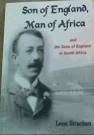
Leon’s Grandad’s Story
– Charles Davie –
Probably all in suiwer Engels (I don’t have a copy, so guessing), Son of England, Man of Africa (2009 is the story of a Harrismithian who led the South African chapter of The Sons of England – Leon Strachan’s grandfather Charles Davie. Leon tells the little-known inside story of a secretive organisation for the first time. He then takes a look at other similar societies which took a leaf out of the SOE book. The SOE’s aim of uniting men who were loyal to England and wanted to remain ‘English,’ – sometimes more ‘English’ than their fellow countrymen ‘back home!’ – was based on the Freemasons; SOE was more influenced by the ‘correct’ political and religious powers of the day; plus they were more into charity work. The Afrikaner Broederbond, the Hebrew Order of David and the Caledonians based their organisations to some extent on the principles of the SOE. Ah, well, nothing exceeds like success . . and there was a time when little ‘England’ was the centre of the known Universe. Leon and I both had grandparents who lived secure in that knowledge!
~~~~oo0oo~~~~
Then Matters Military:
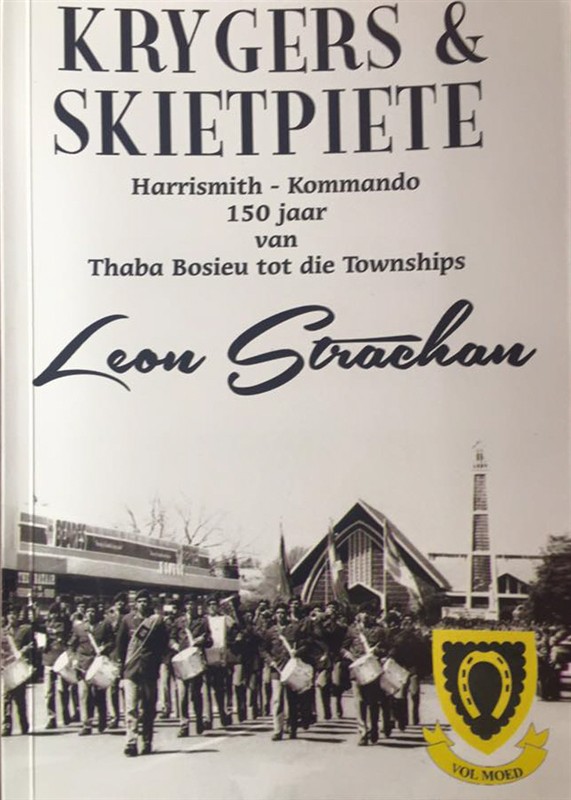
Krygers en Skietpiete (2011): The 150 year history of the Harrismith Kommando, excluding the Boer War, which tale is told in his next volume. From Thabo Bosigo, through the ‘skietpiet’ period; to duty on South Africa’s borders; to deployment against fellow-citizens (though this was denied – ‘they’ were not citizens of South Africa, remember?!) in South Africa’s ‘townships’ – towns in which indigenous African people had to live by law. Leaders and interesting characters; the influence of political developments; incidents, good and bad.
– image from Leon Strachan facebook page –
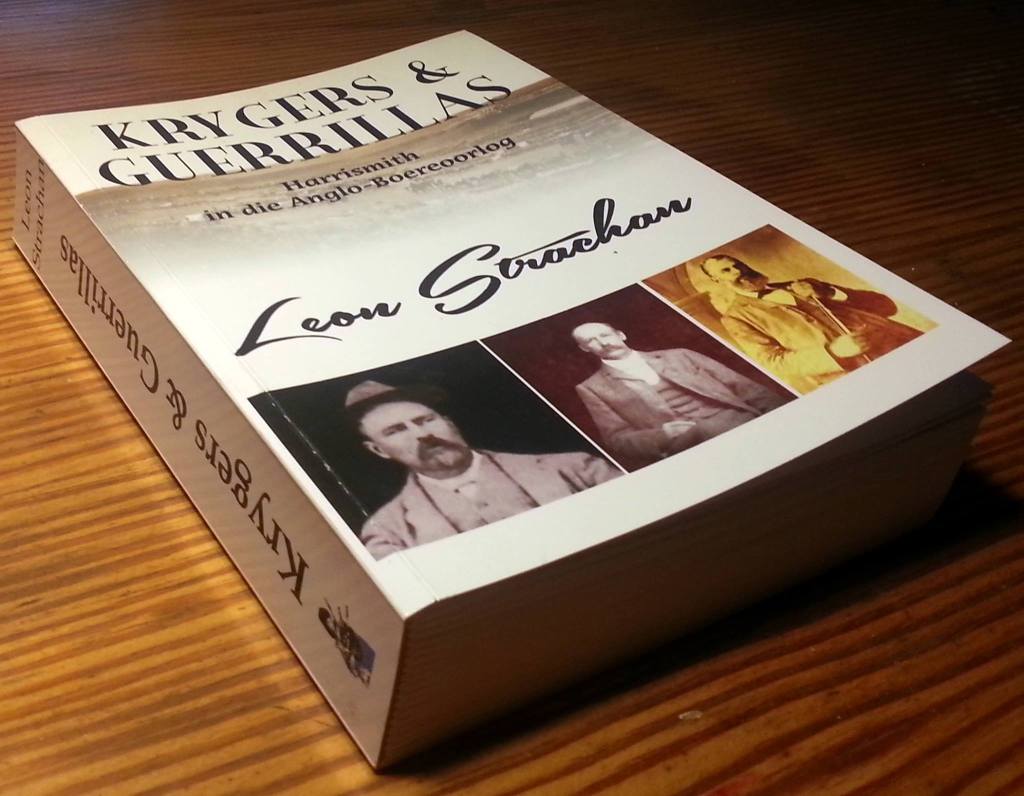
Krygers en Guerrillas (2015). Experience the Anglo-Boer War as it was experienced by people in the Harrismith district, daily as the war unfolded; sometimes far and away and only read about, sometimes in their midst. See why the defenders, invaded by a foreign power, called it the Tweede Vryheids Oorlog – they were fighting for their freedom. Good tales and shocking deeds, including war crimes; the whole war time is unfolded from beginning to end. Comprehensive, the data includes names, casualties, Boer deaths, Brit deaths, prisoners, concentration camp deaths; ‘hensoppers,’ Boers who surrendered; ‘joiners,’ Boers who joined the British invaders; and ‘verraaiers’ who were outright treacherous. Boer Jews and Boer Irishmen and men of other nations who joined the Boers to help them against the invasion by the world’s biggest war machine, deployed by the world’s biggest looting and plundering machine. The war is presented from a local ‘on the ground’ perspective as well as a wide-angle perspective, showing how national and international decisions affected the people doing the actual fighting, suffering and dying.
~~oo0oo~~
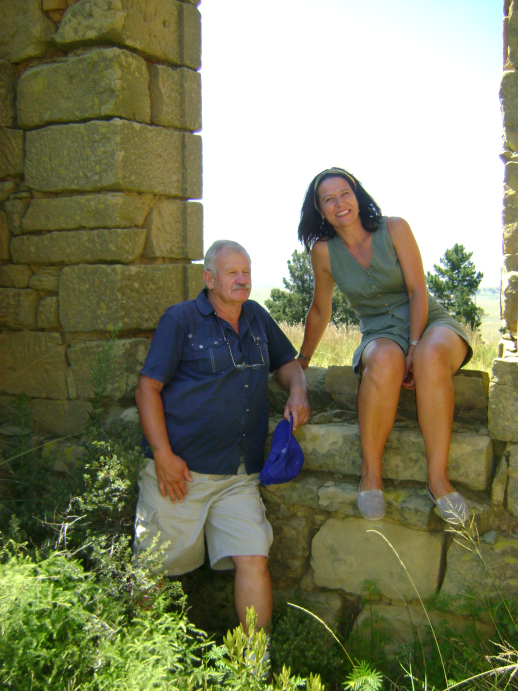
A keen horseman, Leon has led 22 annual rides down into and through the Lost Valley.
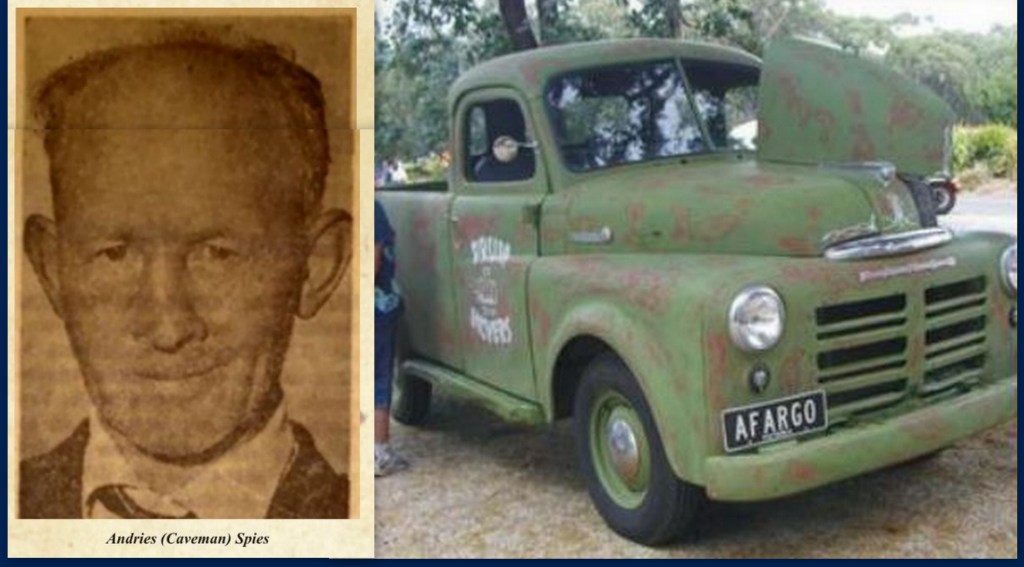
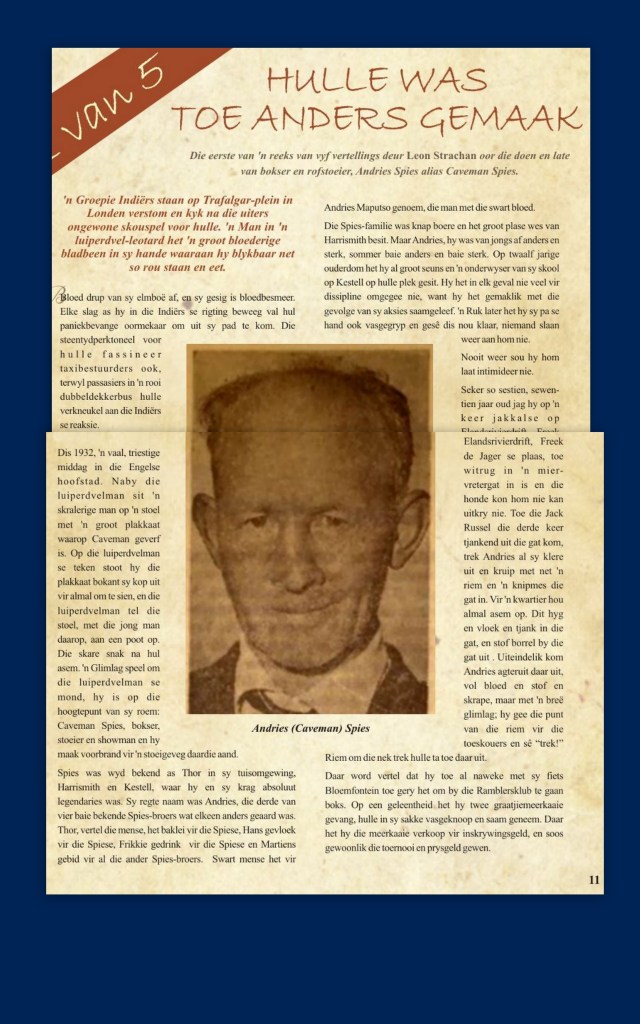
Four Spies brothers lived in the Harrismith and Kestell district. These broers had very different personalities; it was said Andries fought for the Spies clan, Hans cursed for them, Frikkie drank for them and Martiens prayed for them all. Harrismith’s historian Leon Strachan has kept this lovely tale of an amazing Eastern Free State character alive.
Andries was known locally as Thor, as his strength was legendary. People soon knew not to mess with him. Somewhere around 1920 a young Andries Spies went hunting jackals on Freek de Jager’s farm. The jackal escaped down an aardvark hole and the dogs could not get it out. Andries shucked off all his clothes and went into the hole butt-naked, head-first, taking a riem and a pocket knife. After fifteen minutes of noise and dust down the hole he came into view again, reversing out feet first. Covered in dust and blood he handed the riem over and said “pull’ – and out came the jackal. One of many instances told of where he did unusual things and performed unusual feats of strength and bravery – and foolhardiness? This story was to have an uncanny follow-up a century later.
He was a boxer, wrestler and strongman, and he was also a very wily showman and self-promoter. Legend has it he would hop on his bicycle, pedal to Bloemfontein – that was over 200 rough miles back in the 1920’s – enter a boxing tournament at Ramblers Club, win it and cycle home with the prize money!
One day in 1929 his neighbour came to him with devastating news: his fiancee had upped and offed with another man. Hugely upset, Andries packed a suitcase and left the farm without a backward glance. It would be ten years before he returned. In those years he was mainly a boxer. He fought in Joburg and Durban. One fight at the Seaman’s Institute in Point Road in Durban so stunned an English preacherman – Andries’ style consisted of a non-stop flurry of furious blows from the opening bell with no thought of any defensive tactics – that he christened him ‘Caveman.’ And the name stuck.
The Seamen’s Institute & Rest in Point Road – “All Nations”
His next port of call was England. He left on a below-decks ticket with just £10 in his pocket and one extra set of khaki clothes. In London in his first fight he KO’d his opponent with his first blow. He could still get opponents after that as his build was not impressive – he looked average and he used that to his advantage, as he was often underestimated. Soon his reputation started preceding him and it grew harder to find men who would fight him, so he crossed the Channel.
A typical story was a fight in Stockholm where the ref tried to stop him as his opponent Anders Anderson was ‘out on his feet.’ But Caveman wanted him out off his feet! So he KO’d the ref! Spectators stormed the ring in fury – so he KO’d a few of them too!
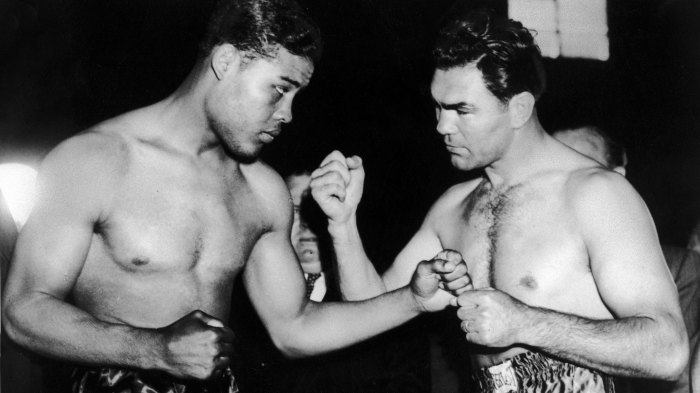
The same pattern happened in Holland, Belgium and Germany: He would knock out a number of opponents, then run out of people to fight and move on. When this happened in Germany, he issued a challenge to Max Schmeling, heavyweight champion of the world: Fight me for 500 marks! Apparently this was all Andries had in his money belt. Eventually Schmeling gave in to his persistence and agreed to fight this Caveman character from South Africa.
UNITED STATES – MAY 31: The American Boxer Joe Louis Fighting The German Boxer Max Schmeling During The Heavyweight Championship In New York In June 1938. At The Close Of The Match, Joe Louis Preserved His Title Of World Heavyweight Boxing Champion By Beating Max Schmeling By K.O. In The 1St Round In New York. (Photo by Keystone-France/Gamma-Keystone via Getty Images)
Well, this was a horse of an entirely different kettle of tea! In his own words he approached Max in his usual crouched stance and received a mighty short right hook to the head and after that ‘I don’t remember much at all! Except a minute or two of gloves raining on me and then merciful oblivion! The biggest hiding I ever received, but well worth it, as I met the great Max Schmeling. He was a good sport – and after the fight he sent me back to my hotel full of beer and Rhine wine, plus an amazing 1000 marks! Schmeling gave me his 500 marks too!’
In Spain he knocked out ‘The Basque Wrestler’ Antoine Germatte in the first round – drying up any chance of further fights, so he thought he’d try bullfighting. One look at the bull, though and he decided ‘this is out of my league!’
His French opponent Leon Cartout was disqualified for biting the Caveman. After eighteen fights on the Continent, he returned to England, where a raft of better fighters were keen to challenge him as his fame was now such that they wanted to be seen in the ring with him. Things were looking up.
– Caveman Spies’ record as a pro boxer – 9 wins, 8 by knockout – 9 losses, 3 by knockout – 3 draws –
Then he caught a bad bout of flu and ended up becoming asthmatic. He got so bad in the English winter he decided it was home time. Back in South Africa he won a few good fights then ran up against the experienced Tommy Holdstock. He lost so badly that he decided to switch to all-in wrestling which had become very popular and was paying well. The showmanship also suited his extrovert and mischievous personality and his remarkable strength.
In a typical rabble-rousing traveling series he fought a Russian named Boganski, who became a great friend. They toured the land. The legend of Caveman cycling to Bloemfontein was well-known, so at each scheduled fight venue he would stop their car outside the town and get onto his bicycle; timing his arrival at the ring just in time for the fight, covered in sweat having ‘just got there all the way from Harrismith!’ This put all the locals on his side like – our poor man now has to fight this blerrie Russian when he’s so tired, having cycled so far!
The showman promoter in him loved public wagers. On the wrestling tour in Grahamstown he bet the local auctioneer, a Mr King, that he could carry a 200lb bag of mealie meal across the town square in front of the cathedral in his teeth without stopping. He did it, donated the bag to child welfare and publicity from the stunt filled the hall for the fight that night!
In Chodos furniture store in Harrismith’s main street the guys were ragging him as they often did about his strength: You can’t really punch a hole through a meal bag! ‘Bring it,’ he said, and walked away with £10, leaving Woolf Chodos and his staff to clean up the flour all over the counter and the floor. He couldn’t resist a challenge or a dare. In 1936 someone said he’d never walk from Harrismith to Cape town in less than ninety days. He did it in seventy three, averaging twenty eight miles a day. This one earned him £75.
Whenever the circus came to town Caveman would be there, ready to shine. Owner and strongman William Pagel‘s feats of strength and his control of the big cats soon made him a household name in South Africa, particularly in the countryside. Small towns loved the circus!
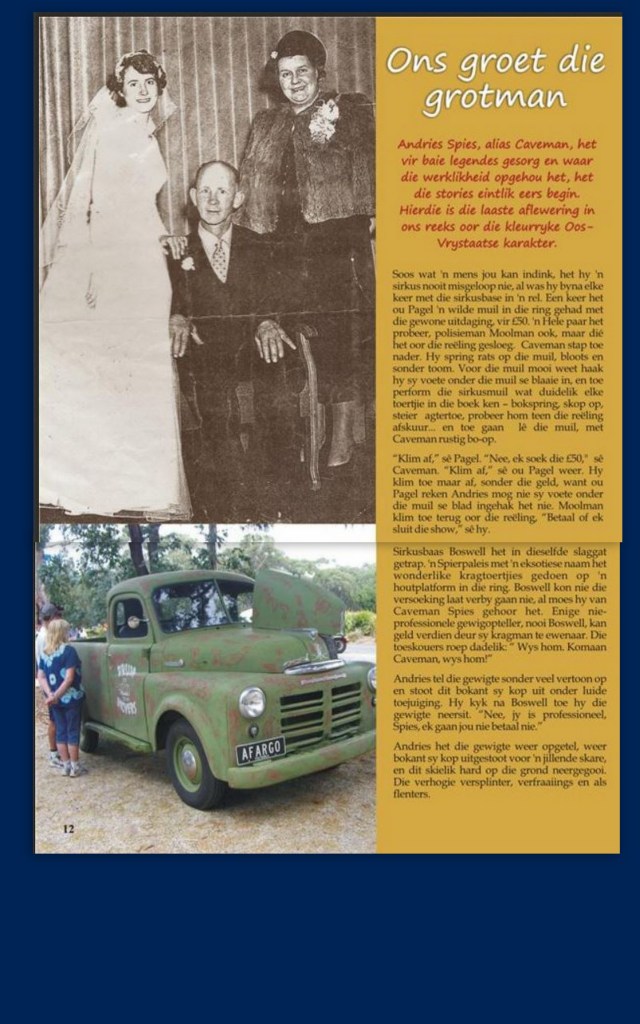
Pagel had a wild mule and offered £50 to anyone who could ride it. Many tried, including Moolman the policeman. Very soon there was Moolman, soaring through the air back into the stalls in an ungraceful arc. Caveman stepped up, jumped on and the mule went wild, bucking, backing up, scraping his legs against the railing, but Cavemans’ legs were firmly hooked under its ‘armpits’ and he rode every move. In the end the mule lay down, exhausted, Caveman still astride it. Get off, said Old Pagel, ‘No, first give me my £50,’ said Caveman. Get off first, said Pagel. He then refused to pay on the grounds that Caveman ‘wasn’t allowed’ to hook his legs under the mule! Caveman threatened ‘Pay me or I shut down the show. Honour your bet!’ Two Alpha males at bay, both famous! Caveman got his due.
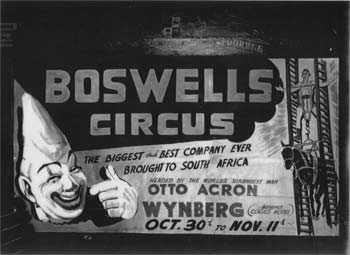
Stanley Boswell also had challenges meant to draw the crowds which drew Caveman like a magnet. He had a strongman lifting weights on a wooden platform. ‘Any non-professional weightlifter who can match (exotic strongman name – maaybe Otto Acron?) will win a prize!’ he boasted. The Harrismith crown bayed for their hero, ‘Show him Caveman! Wys hom! Show him!’
– Otto Acron – World’s Strongest Man – he thought – till he got to Harrismith! –
Caveman stepped up, nonchalantly lifted the main man’s maximum weight and looked at Boswell. Boswell, knowing Spies’ reputation, said, ‘ No, you’re professional,’ ducking out of his responsibility. Caveman looked at him, looked at the crowd and slammed the weights down, wrecking the stage as the crowd roared their approval.
Stories grow. Seldom will a re-teller tell a milder story than the original! And so Caveman’s legend grew. Not only did he ride a bicycle to Cape Town; when he got there he boarded a ship to America; the ship sank and he had to swim more than halfway across the Atlantic; arriving in America just in time (covered in sweat?) for a fight against Joe Louis! Of course, he bliksem’d Joe, caught a ship back to Cape Town, where he got on his bicycle and pedal’d back to Harrismith to calmly tend to his flock of sheep! Of course . .
In our time in Harrismith – fifties to seventies – Hansie and Pieter Spies were legends in their own right. Nephews of Caveman, they would apparently tell stories of this special and unusual extrovert uncle. In his old age his right hand started shaking – probably the beginnings of Parkinson’s disease. Challenged, he would blurt, ‘Ag, it’s my hand! Leave it alone if it wants to shake! Or I’ll donner you!’
~~~oo0oo~~~
A Century Later
Truth is stranger than fiction! In 2020, just about one hundred years after Andries went down an aardvark hole to drag out a jackal this video appeared on youtube:
It went viral and I saw it on two of my whatsapp groups. Soon after, Leon Strachan messaged me: Hi Pete, Do you remember how Caveman crawled down a hole to drag out a jackal? Pure madness! Well, believe it or not, the people in this video are my neighbours and the man down the hole is a great grandson of Hans Spies – Caveman Spies’ brother!
The strain of eccentricity lives on! Mind you, getting diluted. Notice how he kept his clothes on?
Harrismith has always had Spies families. The ones I remember were horsemen; or at least, the times I saw them they were usually riding horses at our agricultural shows, playing polo or competing at gymkhanas. Leon Strachan, Harrismith’s historian, tells of one family of four brothers who all had different characters or traits – and how one became world-famous!
I found this lovely series of articles by Leon at a website promoting Stephen Reed’s hometown Clarens, Free State – inclarens.co.za. I have simply taken snapshots of the articles to save them and be able to access them again. I must check in which of his four books on Harrismith characters Leon wrote about Andries ‘Caveman’ Spies.
I have now tidied and stitched them together in sequence. If you can read Afrikaans – go for it. It’s a fascinating story, which I have translated into English here with Leon’s and the inclarens.co.za editor’s permission. Summarised, mind you, so it loses some of Leon’s spice and story-telling vernuf!
02 – Caveman Spies – stitched
Durban’s Seamen’s Institute & Rest in POint Road – “All Nations” – now also a backpackers
The first recorded polo game in South Africa took place in October 1874 at the King Williams Town Parade Ground between the Gordon Highlanders and the Cape Mounted Rifles.
The Military Ninth Division played during the 1880s at Harrismith, Orange Free State.
Polo was played in Cape Town in 1885 at a club formed by army officers, and in Natal by the officers stationed at Fort Napier, in Pietermaritzburg; a year later, they formed the Garrison Polo Club.
Play in Transvaal began in Johannesburg in 1894, when the owner of the Goldfields Hotel founded a polo club. The game was dominated by the military, but civilian clubs like this did sprout up in several places.
~~oo0oo~~
Someone must have the history of Harrismith polo. I hope. The first polo field I remember was in the sixties on the far side of the railway tracks; you drove under the subway to get there. Across the road was the sportsfields: a hockey field and then the cricket oval. Legend has it that Jimmy Horsley once hit a famous six across the hockey field, across the road and onto the polo clubhouse roof!
During a recent visit to Harrismith I spotted this on good friend Bess Reitz’s passage wall: Her Dad and Ginger Bain in the winning team!
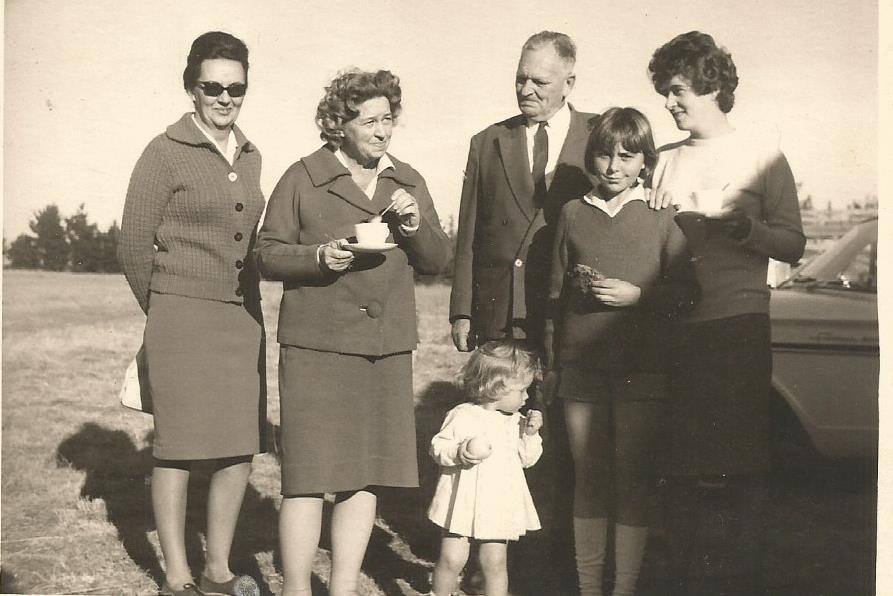
– tea at the old polo field in the sixties – – note the Ford Fairlane!! –– poms in Africa –
















 Vrystaat Confessions