Category: 6_Canoe & Kayak Rivers

  • Old Broads – Harrismith and Abroad

    Old Broads – Harrismith and Abroad

    Email from: steve reed – Mon, 28 Nov 2011

    to: Pete Swanepoel; Peter Brauer; Dave Rorke; Sheila Swanepoel

    Subject: Old timers rock.

    A joke shared at work this week reminded me of a classic moment from the past.

    Pringle and Maddie were sisters, both spinsters in their early eighties. Pringle lived a good three hour drive away up the west coast at Omapere. She would come down to Auckland about four times a year to see her sister and get her stuff done, among other things an occasional eye test with their tame optometrist, yours truly, who would deliver the glasses to Maddie’s place up the road when necessary. Lately they are both looking a bit older and shakier.

    So Pringle comes in (late as usual for her 10am appointment)  and when we are getting up close she says to me (no apology mind you): “Look, there may be a whiff of alcohol. Maddie and I like to have a whisky and milk when I arrive from up north. It’s a bit of a nerve wracking drive down, you know.”

    “Women after my own heart,” I say to her, cementing our friendship even further, thinking I wouldn’t mind one myself.

    ~~oo0oo~~

    Brauer replied: The old duck was probably too bashful to admit that the wee dram was in preparation for the trying ordeal of decision making required between “number one and number two” when they all look the bloody same – and awful at that!

    ~~oo0oo~~

    Koos wrote: Harrismith had a number of sets of old spinster sisters:

    The Hawkins, Flo & Madge & Bill & Blanche
    Lived at Watersmeet, where the Kak Spruit flows into the mighty Vulgar River on the northern edge of the metropolis. The new bypass slices through their front garden. One was a headmistress and varsity lecturer and author (I have one of her books, The History of Harrismith – riveting stuff);

    The Simpsons, Vera** & Joan
    Ran a dairy on townlands on the JHB road just past the Verkykerskop turnoff; Seen in town every day with just a shock of white hair peeping above the steering wheel of their tiny grey Morris Minor bakkie with huge silver milk cans on the back, strapped to the cab – delivering milk to their faithful customers. Supply your own bottles, they’ll decant into them – how green was that! One of them slept on the open verandah of their old farmhouse – I can see her bed in my mind’s eye as clear as yesterday – summer and Harrismith winter for about 100 years. About. Wonder what the price of their milk was? Years later I got a letter in America. 1973. From my sat-next-to-each-other-from-Sunday School-to-Kathy-Putterills-to-Sub-A-to-Matric buddy Fluffy bemoaning the terrible fact (he even said “I don’t know where it will end”) that the price of milk had gone up to 6c a pint and the Scope magazine now cost 20c;

    The Jacobs, Marie & Bessie
    Lived on Walton farm, a paradise on the upper Vulgar River, huge old sandstone house in a garden filled with massive oak trees; Took over the farming when their father died and slowly earned the respect of all the boere with hairy chins (by out-farming them and not rubbing their noses in it); Had a second farm in the Vrede district and roared between the two in their white bakkies; Beesboere, mainly. They helped rescue me and my Italian mate Claudio when we wrapped a canoe borrowed from the Voortrekkers around a tree stump wedged in a rapid on their farm while tripping from Swinburne to Herriesmif on a swollen Vulgar River back in Std 9. 1971. I see old Claudio, engineer, from time to time and when he introduces me he says “Meet Koos. I slept with him.” We shared a damp sleeping bag – the other one was soaked.

    As far as I know, though, none of these spinster sisters “dopped” publicly. Or not much.

    **Vera was famous for asking, at a church meeting where they were desperately searching for “elders” to take the collection for the dwindling Anglican church, and Tabs Fyvie’s name was mentioned as a possible sanctimonious candidate – or anyway as a candidate:
    “Has his shadow ever darkened the door of this church?”

    The nomination was quietly shelved.***

    (Mom Mary also thinks this may have been Flo Hawkins)

    ~~oo0oo~~

    Sheila wrote: Loved reading your e-mail – brought back so many memories – am going to forward it to Etienne, Lynn, Redge, Pierre, Ann and Shirley Mason if you don’t mind and cousin Mike in USA – his memories of Harrismith are also priceless – I’m sure he’ll remember some of these old ducks. 

    Who wrote to you about the price of milk? Was that Fluffy Crawley? (ed: Yep)

    Spoke to Mum – the 5th Hawkins sister was Vi – she was tall and rangy; Mab (not Madge) was short and fat; Blanche wrote the book on Harrismith history; Bloody Bill (actually Mary) was a nurse up north in the war.  They had one brother, who actually married. His grandchild Jill used to visit and play with Barbara – her mother was Val. Their plot on the edge of town was called Watersmeet, full of tall lush green trees, probly cos one of the Waters that Met was the Kak Spruit.

    The Simpsons’ farm was Moyeni – windy. Their step-mother, Dame Simpson, came to live with them for a while. Vera was the bigger of the two and had the square jaw and the wild grey hair – Joan slept on the veranda.  They also sold cream.  I can see that old grey bakkie so clearly, with that mop of grey hair spilling over the steering wheel.

    Mum nursed Norah Miller, who smoked like a chimney – apparently some guy went to Boschetto one day and knocked on the door – as he was telling the story, someone said, “Who opened the door?” “I don’t know, but she had one eye, one leg and a helluva cough!” This was the principal, Norah Miller – she had smoked glass on one lens of her glasses and a very bad leg – Dr Reitz made her some sort of metal caliper which helped enormously with her walking.  Dad used to sell ponies to the young lady students – Billy Leslie was one of them.  Mum remembers her cousin Leslie (Jessie Bain’s daughter) telling her the story of the “cough” but she can’t remember who the man was. (The feature pic shows Boschetto below the mountain with agricultural gals hard at work).

    ***Stella was furious about Blanche’s (ed: or Vera’s) comment – Tabs was perfect, didn’t she know that?

    The Jacobs – Mum agreed that old Mrs Jacobs didn’t have a name – she was just Mrs Jacobs – Bessie was the wizard in the kitchen and Marie worked with the animals and the crops.  Their cousin Robin Jacobs inherited everything when they died.  Remember the scuff marks from the British officers’ spurs which could still be seen on the low down window sills in that beautiful old farmhouse? I remember them so clearly.  The men used to hop in and out of the windows, instead of using the doors.  The house was commandeered by the Poms during the Boere Oorlog.  I seem to remember that we were camping on their farm when either the first heart transplant was done – or man walked on the moon – I can see us sitting huddled in the caravan listening to the radio – am I right?

    Koos: I don’t remember I’m afraid, my only clear memory of a visit to Walton was this: I veered off from the rest of the people in that beautiful garden to have a pee under one of the impressive oak trees. When I got back to the group, Mom was disapproving! She whispered that she “could see – and everybody could have seen,” how I was weeing because my one leg of my shorts was pulled right up, so it was obvious from behind what I was doing. I remember thinking that was not such a big deal, and though I just kept quiet, I couldn’t imagine that it was a cardinal sin. I was fairly sure me n Jesus were still an item.

    Who can add to these memories?  And the man who started all this is Steve Reed, whom many of you will remember as Spatchmo, Koos’s great mate from Optom Student days, now resident in NZ.  Ex-resident of Clarens – known as Nêrens since he left.

    ~~oo0oo~~

  • My Lekker Canadian Wooden Paddle

    My Lekker Canadian Wooden Paddle

    . . is a work of industrial art.

    (reposted as I received a surprise visit – see the end of the post)

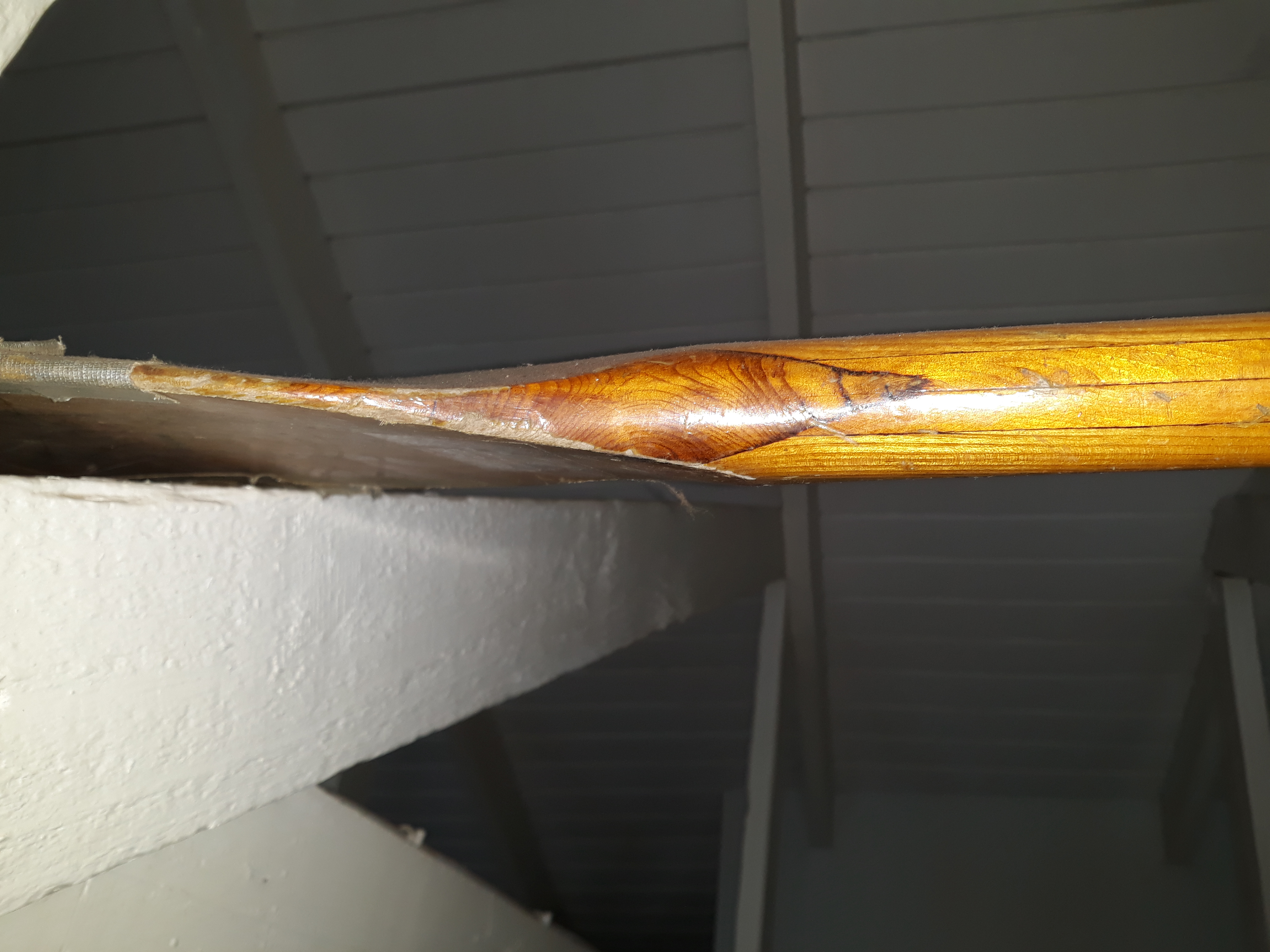
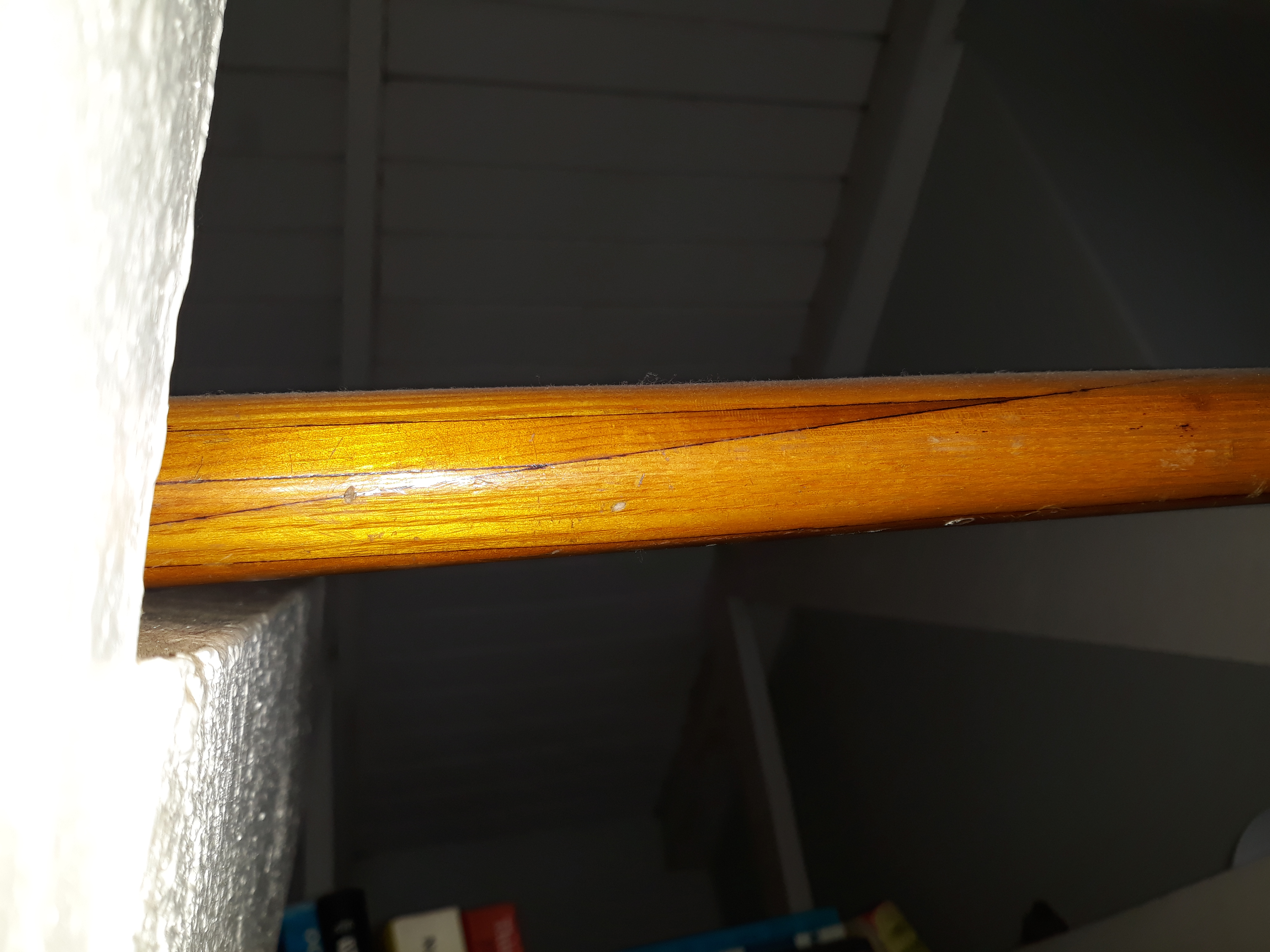
    Made of Beech, Birch, Cherry and Maple wood*, it has a hollow laminated oval shaft, the oval at right angles so each hand has its own correct oval. The blade is also laminated, then kevlar-clad and teflon-tipped.

    Bruce the Moose Clark of Gauteng and Umko paddling fame was waxing lyrical about Struer sprinting paddles and that got me thinking about my Nimbus river paddle from Port Coquitlam in British Columbia. Not a racing paddle, not a flatwater paddle. A wild rivers work of art for slow-boating. See, I have an arrangement with rivers: I bring a boat to keep afloat, and a paddle to keep upright; All forward motion must be provided by the current.

    Shit Creek

    I ordered two from our trip leader Cully Erdman before we paddled the Colorado in 1984. Being left feather I didn’t want to risk being stuck up a canyon without a paddle. Or with a dreaded right feather paddle.

    Dave ‘Lang Dawid’ Walker is also left feather so he used the second paddle for the twelve days. The river was running high, so I didn’t touch a rock the whole 480km way. The only person I heard did touch a rock was Dave in Crystal and the gentleman he is, he immediately came to me to show me the damage: a slight scratch on the kevlar! Chris Greeff, who led the South African trip through the Canyon in Arizona, is also a left feather paddler aus Parys, Vrystaat!

    Good friend and tripping companion Bernie Garcin is holding my paddle in the top picture.

    Here’s some more paddle porn; Feast your eyes:

    ~~oo0oo~~

    I Meet My Maker!

    We paddled thru the Grand Canyon back in 1984; I wrote this post in 2018, and now in 2023, this pleasant surprise: My Paddle Maker!

    Since I am the one who designed and build most of the Nimbus wooden paddles in the 1970s and 80s, here the scoop. *The shaft was made of American Ash, the inner laminates are Sitka spruce hollowed a bit more than 3/8 inch. The blades are Sitka spruce, the hardwood edges usually african mahogany. the blades were reinforced with 2 oz. kevlar / epoxy. The tips are urethane, the same material for roller blade wheels. the tips were also cross reinforced with carbon fiber / fiberglass (the black stripes – carbon fiber).

    I could make 4 paddles a day.

    A labor of love..

    Regards – Joe Matuska – Victoria, BC, Canada

    How neat is that!? Thank you Joe!

    ~~oo0oo~~

    It took me a long time before I got my first paddle.

  • Messing about in Boats

    Messing about in Boats

    ‘There is nothing – absolutely nothing – half so much worth doing as simply messing about in boats.‘ Kenneth Grahame Wind in the Willows

    Random thoughts on various boats I’ve enjoyed in my largely landlubber life.

    Motorboating

    The first thing I knew about boats was they took up the whole lounge and nothing else could happen in there. The old man built a wooden-hull motorboat in our lounge on the plot outside Harrismith ca.1959. There was a lot more room to move about in that lounge when we visited it about half a century later, ca.2007:

    Speedboat built in the lounge

    As far as I recall Dad used the boat just a few times on the Wilge River (‘The Mighty Vulgar’) at Sunnymede.

    Then he sold it and bought a bigger boat. It had a 50hp Mercury outboard. He soon sold that one to local farmer Harry Mandy for delivery to Richards Bay, where the Mandys were going to use it for fishing. I went with Dad towing it behind our 1956 Morris Isis to Richards Bay, my first visit to ‘Zululand’ ca.1965. Someone else – Jimmy Horsley? – went along for the ride. The two adults sat in front, smoked cigarettes and talked, ignoring me. I could happily daydream and stare out the window. Maybe I “looked out the window and dreamed I was a cowboy” – ala John Denver?

    At a re-fuelling stop, I stood on the forecourt after we had refuelled the Isis. Always in a hurry, the old man said impatiently, ‘Come on! Hop in!’ and I said, ‘But the boat isn’t hitched up,’ It had been unhitched so the numberplate could be dropped to get at the filler cap under it. They had to quickly hook up the trailer before we could go! I felt very important. Like, needed, almost.

    I remember crossing an impressive high-arched bridge – probably this one across the Umhlatuze.

    felixton-mill-nearbye-umhlatuze-bridge-3
    – pic: Hugh Bland kznpr.co.za –

    In the village of Richards Bay we stayed in a motel-type hotel; rustic, but still luxury – or at least novelty – to me.

    ~~oo0oo~~

    Sunnymede on the Wilge River, waterskiing behind Richard Scott’s boat.

    Tabs’ Balmoral dam. Tabs Fyvie’s first boat we fetched in Howick – On the way home a wheel came past us and we chuckled at the misfortune of ‘whoever’s it was!’ It was ours!

    When Tabs finally got the little boat to Sarclet a week or two later, we battled to start the old Johnson outboard motor. We all took turns pulling and plukking the cord. EVENTUALLY it started, so we all jumped aboard the tiny boat – and promptly sank it! Drowned the motor! Three hours of schlep and zero minutes of skiing!

    Later Tabs got a bigger boat, ‘The Pheasant Plucker’ with a V6 inboard motor and a Hamilton jet. I once embarrassingly beached it when the motor cut at speed as I slammed it into reverse, aiming for a windgat sudden stop; I landed up high and dry next to the cars parked on the bank;

    Back in 1958, Drove an old V8 . . .

    Canoeing

    The old weir on the Wilge river – shooting the old sandstone weir on tubes and our mostly-open red-and-blue canoe. We didn’t realise then how dangerous weirs are!

    Pierre du Plessis and I paddled from town to Swiss Valley in our open red-and-blue canoe on my 15th birthday.

    Swinburne to Harrismith down the Wilge River:

    – Once with Fluffy Crawley – very low level in that same open red-and-blue canoe.

    – Once with Claudio Bellato – river at a high level – we both lost our spectacles – in an Accord K2 owned by the Voortrekkers, white fibreglass with green vinyl deck. We proceeded to wreck it in Island Rapid on Mrs Girly and the Misses – Bessie and Marie – Jacobs’ farm Walton. Had to pay for it. R50!

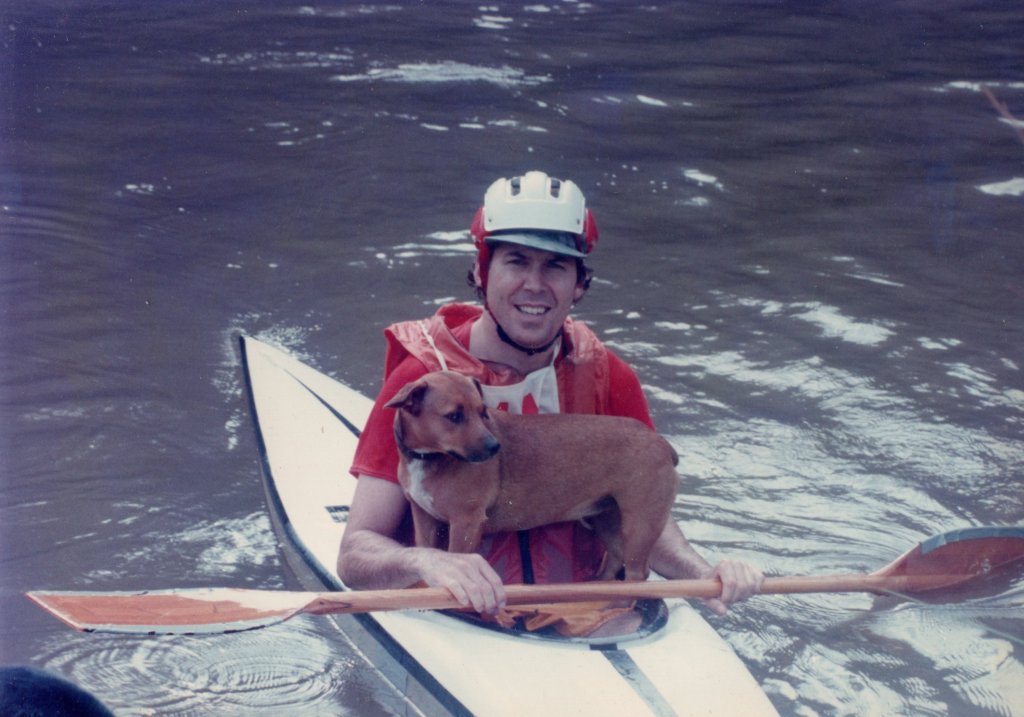
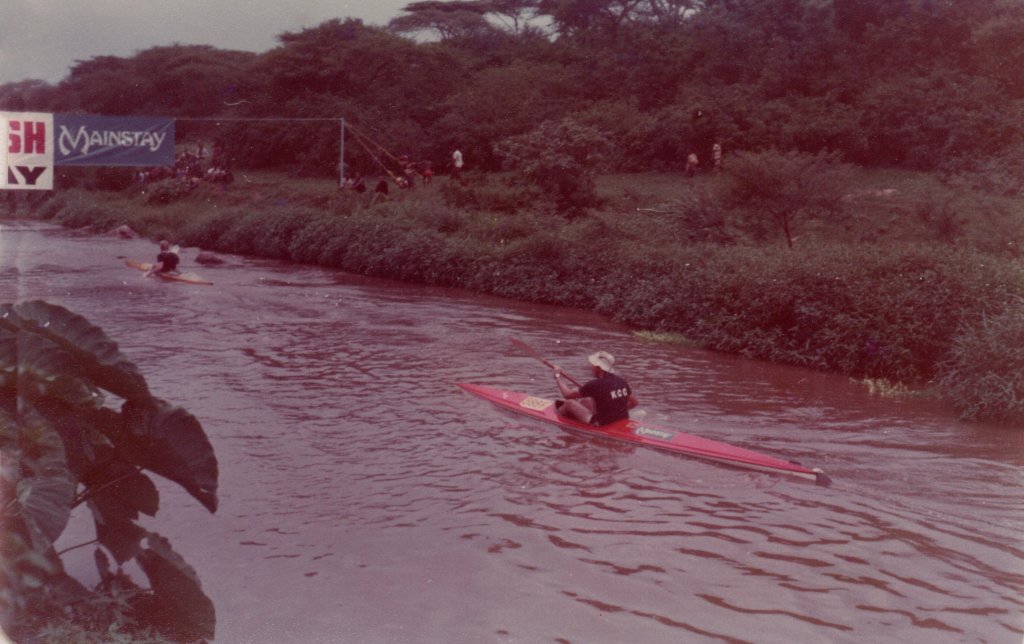
    ca.1969, Charles Ryder arrived in Harrismith in a lime-green Volvo 122S. On his roofrack he had a  fibreglass Limfjorden 17’6″, glass cockpit, white vinyl deck, clear hull, wooden struts, crossbars and gunwales, brass handles.

    I wrapped (‘wrecked’) it on the Wilge – also on the Jacobs’ farm Walton. There’s an island and the river descends in rapids on both sides of it.

    I then completely rebuilt that boat. Learnt a lot about kayak construction. Also that I don’t like fiberglass. Not at all.

    Trained for the ’72 Dusi on the mighty Wilge River. Then the boat disappeared! So I hitchhiked to PMB to follow the Dusi. Later I found the boat submerged in the Kakspruit and reclaimed it.

    One day I saw the late zoo warthog Justin floating downstream, bloated and feet-in-the-air after the zoo closed down and he’d been turned loose.

    Before I knew the danger of creeks in flood, I took a short trip under the bridge on HS-Swinburne road N3, on the Swartspruit to test the Limfy (and me!) as it was running high – Mom took me in her car, trusting soul.

    USA

    1973 – Lake of the Woods near Quetico National Park, Ontario Canada in open ‘Canadian’ canoes. With Oklahomans Sherry Higgs, Dottie Moffett, Dale Moffett and Jonathan Kneebone from Aussie. The no-see-ems (black flies) and mozzies drove us out after just one night!

    Canoe Marathons

    Dusi 1972 – My Limfy stolen in Harrismith, so no boat! Hitched to PMB with Jean Roux. Hitched a ride with someone’s second to 1st overnight stop at Dusi bridge; Hitched on to Diptank 2nd overnight stop; Slept in the open under the stars; On to Blue lagoon; Slept on the beach near Addington, then at Point Road police station (an eye- and ear-opener!).

    Dusi 1976 – Drove down with Louis van Reenen in his blue VW Beetle. I had a white Limfy with a vinyl deck, he had a red all-glass Hai whitewater boat (small cockpit, rudderless) from Jerome Truran’s Dad in JHB! We tossed a coin and he won, so I seconded him driving his VW. We stayed in my orange puptent. It was a very high river – he swam and swam! But he finished, tough character that he was!

    Dusi 1983 – at last I paddled the Dusi! New white hulled Limfy with a red fibreglass deck. At the start I spied Louis, starting his second Dusi.

    Umko 1983 – Hella Hella to Goodenough’s weir in my Limfy.

    Berg 1983 in a Sabre – after (luckily!) training in ‘Toti with Chris Logan. Cold as hell! Freezing! Gail-force winds! Horizontal rain! Madness.

    Fish 1983 – ( from the Fish website): In those days, the race was held on a much lower river (roughly half of the current level!) and it started with a very long first day (over 50km). The paddlers left the Grassridge Dam wall and paddled back around the island on the dam (the WORST part of the race for my hangover!!) before hitting the river, eventually finishing at the Baroda weir, 2,5 km below the current overnight stop. The paddlers all camped at Baroda overnight, before racing the shorter (33km) second stage into Cradock. “In those days the paddlers had to lift the fences, and the river mats (fences weighed down by reeds and flotsam and jetsam) took out quite a few paddlers”, said Stanford Slabbert (winner of the first Fish in 1982). “Getting under (or over) them was quite an art. I recall one double crew, the front paddler bent forward to get under the fence and flicked the fence hoping to get it over his partners head as well. It didn’t. The fence caught his hair and pulled him right out of the boat and they swam!”

    Legends were already being born. Herve de Rauville stunned the spectators by pioneering a way to shoot Marlow weir. He managed to reverse his boat into the chute on the extreme left, and took the massive slide back into the river going forward, and made it!

    The field doubled in 1983, as the word of this great race spread. 145 paddlers in 110 boats. It was won on debut by Joburg paddler Niels Verkerk, who recalls, “It was a very long first day, especially as the river was not as full as it is now (it was running at 17 cumecs in 1983). Less than half the guys shot Keiths Flyover, which was not that bad as the hole at the bottom wasn’t that big. Very few people shot Cradock weir in those days. I won the race without shooting Cradock”, he added.

    At a medium level, the lines at Soutpansdrift were also different. The weir above Soutpans was always a problem, as there was no chute, and even the pipes that created a slide down the weir face were not there yet. At the bottom of the rapid, the only line was extreme left, underneath the willow tree, and then a sharp turn at the bottom to avoid hitting the rocks, where the spectators gathered in numbers hoping to see you come short.

    Crocodile 1984 (lowveld croc) marathon to Nelspruit. Back in the days when the race finished in Nelspruit and you had to portage the Montrose Falls. Scouts would check ahead on the second day to see where the hippos were. Sometimes you had to portage round their pool. Other times it was deemed OK to paddle past them. Our year they were in Nelspruit, so the race was ended just above their pool in the river. I loved that river and was disappointed to dip out on those last couple of kays. Short-changed by the river horses!

    Tripping

    Umko, Tugela, Umzimkulu, Orange, Vaal, Ocoee River in Tennessee 1984, Colorado river in Arizona 1984

    —————————————————–

    Other boats – I got a Sella – white deck, clear hull new from Rick Whitton at Kayak Centre.

    Later I bought a second hand Jaguar (I think) at the KCC club auction. Red deck.

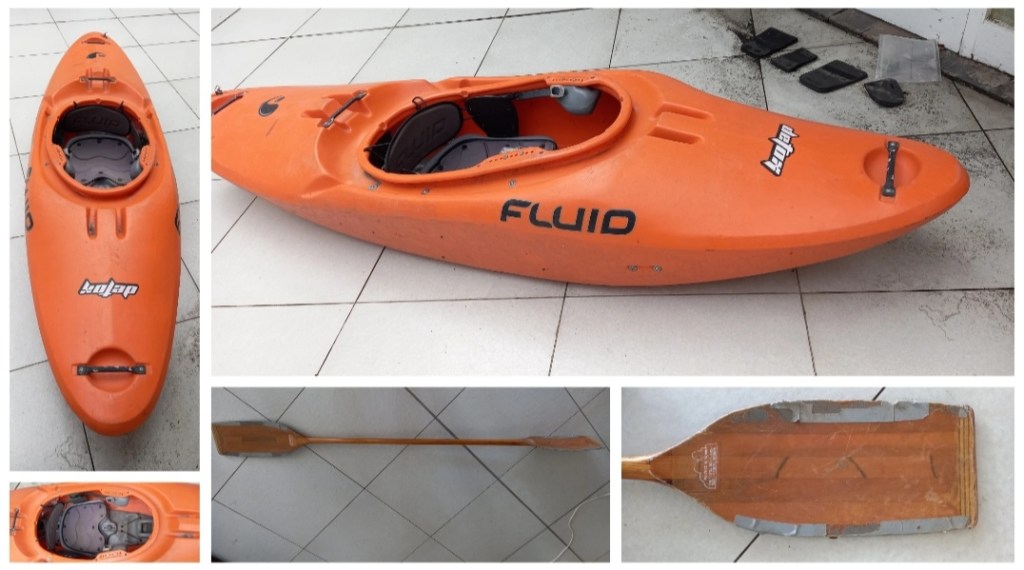
    Now I have plastics – my old Perception Quest Greg Bennett imported for his Paddlers Paradise venture, and sold to us at a generous discount; a Fluid Flirt, an Epic something – a bit bigger – and a Fluid Detox bought from Owen Hemingway. Gathering dust.

    In 2020 I gave the Flirt and the Epic to Rob Hill, who does great work teaching kids to handle swift water, and vital sweeping, and plus river rescue.

    Later: Also donated the Fluid Detox plus paddling kit to Rob.

    Wilge Swinburne – Harrismith

    Wilge Harrismith to Swiss Valley (Near Nieuwejaarspruit confluence)

    Vaal near Parys

    Orange above Augrabies falls

    In 1983 or 84 I bought a Perception Quest plastic from Greg Bennett at Paddlers Paradise – in the first batch he imported – for R525.

    Tugela – Colenso to Tugela Ferry;

    Tugela – Ngubevu to Jamieson’s – with Doug Retief, Dave Walker, Bernie Garcin

    Umko – Mpendle – Lundys Hill

    Umko – Lundys Hill – Deepdale

    Umko – Deepdale – Hella Hella

    Umko – Hella Hella – No. 8

    Umko marathon – Hella Hella to Goodenoughs Weir

    Umzimkulu Hatchery to Coleford bridge

    Lake St Lucia – Dukandlovu – Robbie Stewart, Bernie Garcin, and –?

    Ocoee river in Tennessee – rented Perception Mirage

    Grand Canyon Colorado – rented Quest-like plastic

    Colorado river in Arizona (480km through the Grand Canyon). Got two wonderful wooden paddles made in Canada: Hollow oval shaft at right angles, laminated blade kevlar-clad and teflon-tipped. Left feather, of course. Beaut! Still got one, gave Greg Bennett the other.

    Vaal near Parys

    Orange above Augrabies with Aitch with some local outfitter recommended by Dave Walker.

    Trip: We paddled in the Umfula’s store area for the last time before the Inanda dam flooded the Umgeni valley. I borrowed extra boats for non-paddling friends, but we ended up walking it was so low!

    Botswana – in borrowed plastic expedition sit-in kayaks, we paddled the Thamalekane river – outside Maun, Botswana; and the Nhabe river in flood – Aitch, Janet, Duncan and I paddled the last 5 to 8 km into Lake Ngami and then back upstream to our vehicle.

    Never kayak’d the Zambesi. Rafted a one-day trip below the Falls.

    ~~oo0oo~~

    post needs editing. One day . . .

  • I was Born to be a Kayaker . .

    I was Born to be a Kayaker . .

    . . just not a very good one. *

    Actually ‘born to be’ . . ? Yep. Check it out here.

    I love rivers and river valleys; water, especially water rushing downhill in the direction I wish to go; big water, we call it; hairy rapids; fun and scary and I enjoy the . . let’s call it excited, tense anticipation. Yeah, fear. My approach to scary rapids is logical / statistical: I know that big water is high perceived danger, but low real danger and that driving to the river is low perceived danger, but high real danger. So I’d reassure myself with that, have a pee, then fasten my splashy and push off into the current. Of course once you’re there on the riverbank, ‘scouting your line’ through the rapid, peer pressure does have a bit to do with it! You going? Yeah? So’m I.

    I love little rapids too. As long as the water is flowing I’m happy. If I can do much of the trip with my arms folded and the current schlepping me downstream, I’m in paradise. Still water may run deep, but it’s hard work – no progress unless you’re paddling. And the wind is always agin ya!

    Perspiration? Not so much. On many a trip my crazy paddle mates would paddle back upstream to where I was drifting in awesome wonder and ask, ‘What’s Wrong Swanie?’ Nothing was wrong, the day was long. My thought was, What’s the hurry?

    In big water my mate ace paddler Chris Greeff would say, ‘If you ain’t scared, you ain’t havin’ fun!’ a quote he got from Cully Erdman. ** Now Chris – he was a very good one. And also a FreeStater who was ‘born to be’ a kayaker. Like me, he grew up on the banks of a Vrystaat river – the lesser Vile (Vaal) as opposed to my mighty Vulgar (Wilge). I used to give him good advice but he’d ignore it and win races. He has no handbrake; He won just about every race you can win except the one South African laymen ask about. And he nearly won that one, despite short and sensibly reluctant legs. These things are hard to verify, but if there was a combination trophy for the highest beer consumption the night before, coupled on the tote with winning the race the next day, I reckon the only other paddler who would maybe come close was Jimmy Potgieter, a decade earlier.

    Chris should write a book.

    ~~oo0oo~~

    * I saw this lovely basketball quote –

    ‘I was born to be a point guard, but not a very good one,’ by Pat Conroy (interesting man)

    seen on Dr Mardy’s Quotes

    ** fear quotes:

    Closest I can find are –

    ‘It ain’t brave if you ain’t scared,’ by Victor J. Banis in Deadly Nightshade.

    ‘If you ain’t scared you ain’t human,’ by James Dashner in The Maze Runner.

    ~~oo0oo~~
  • Cunene River Pioneers

    Cunene River Pioneers

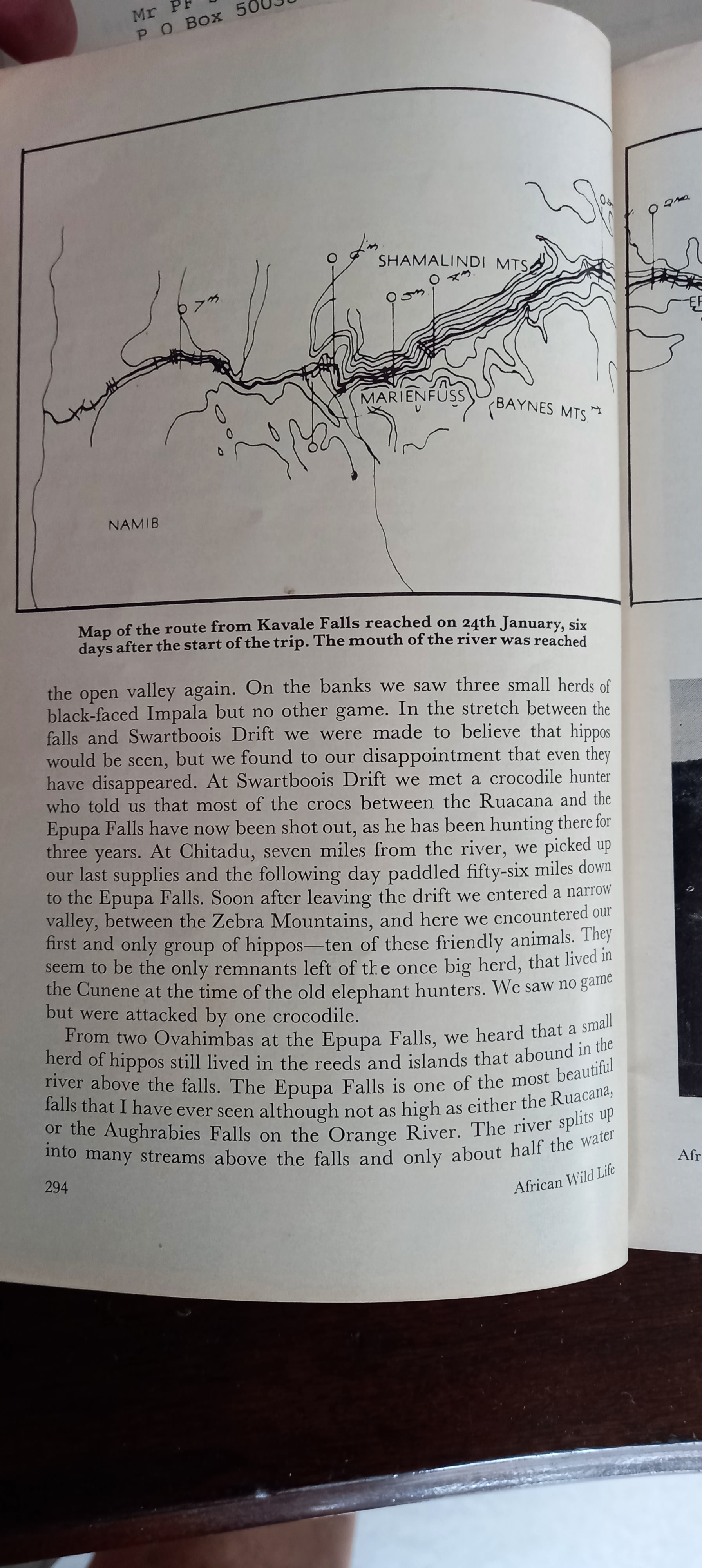
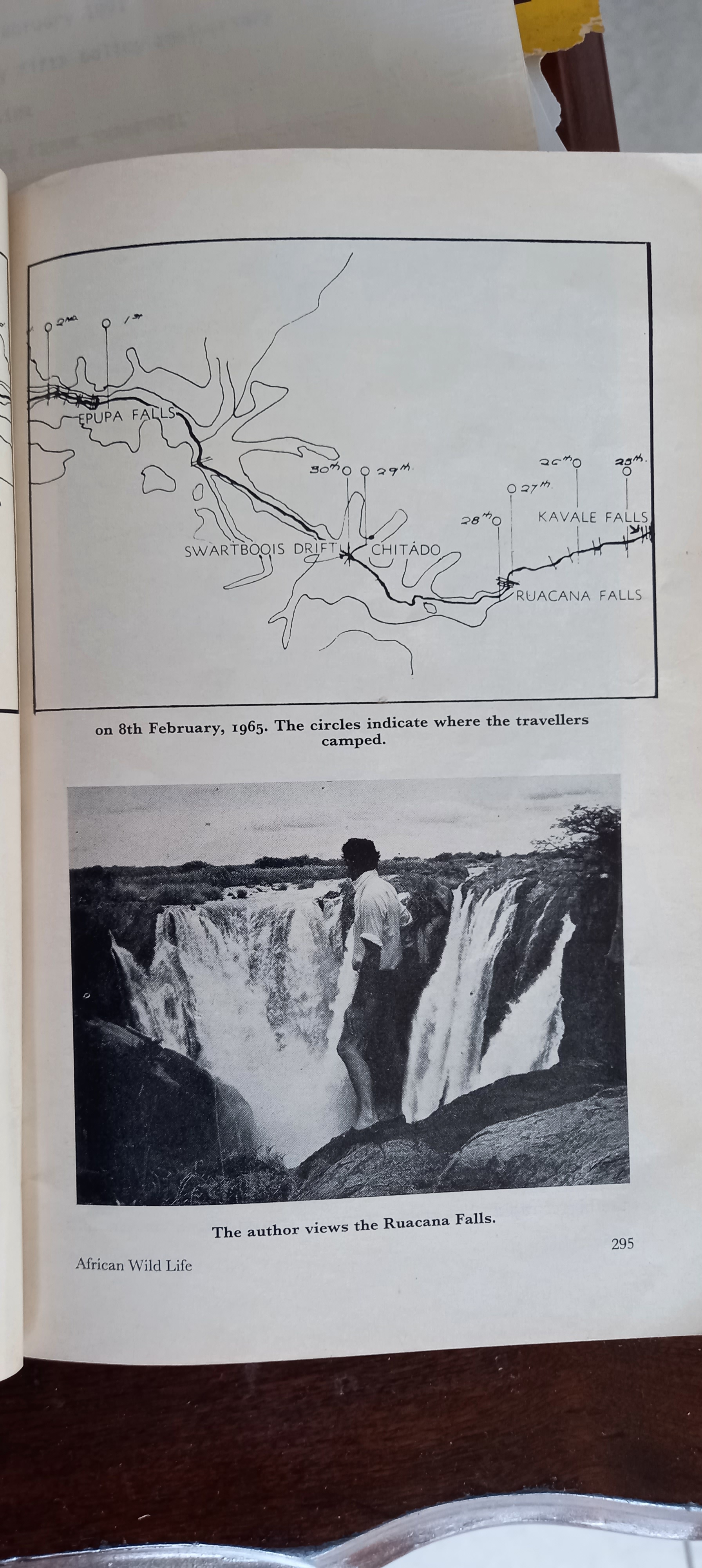
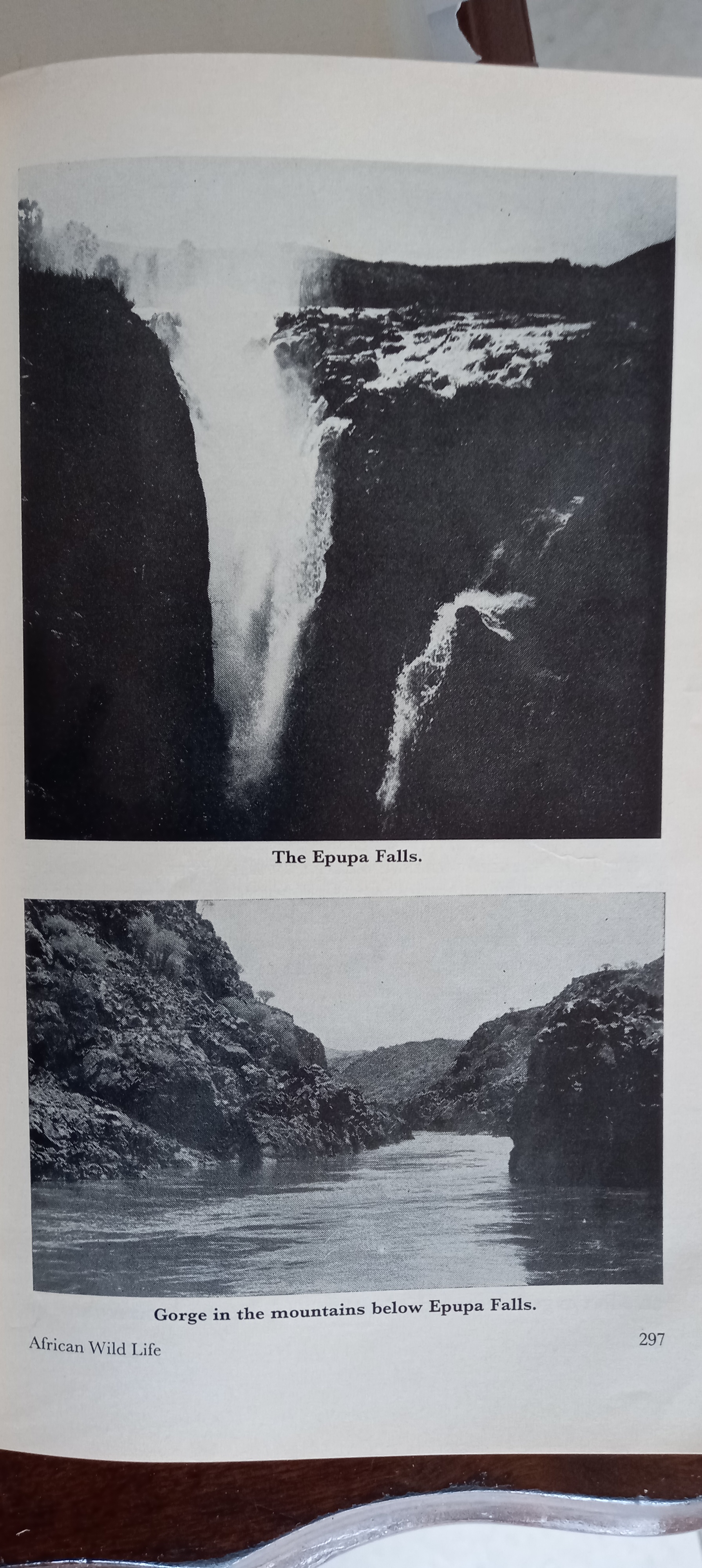
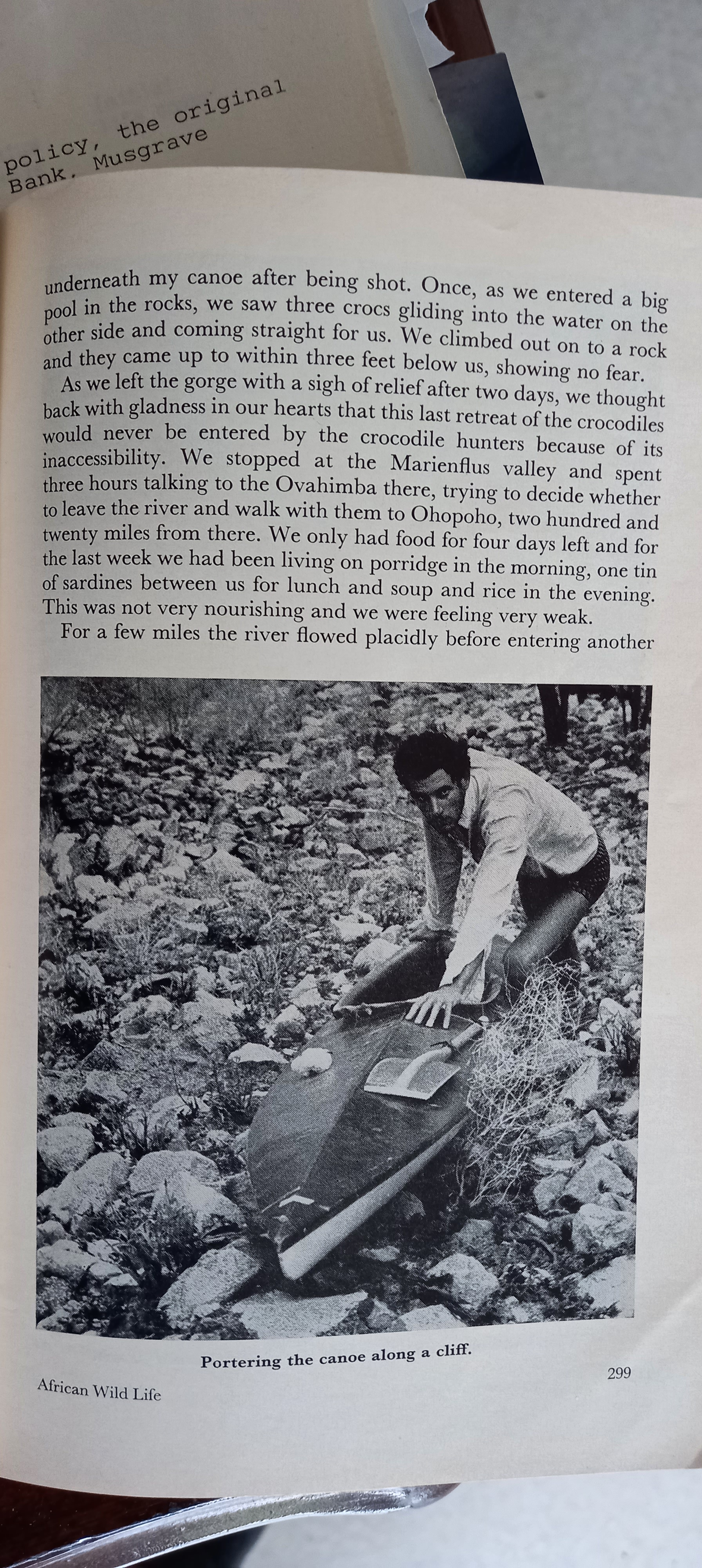
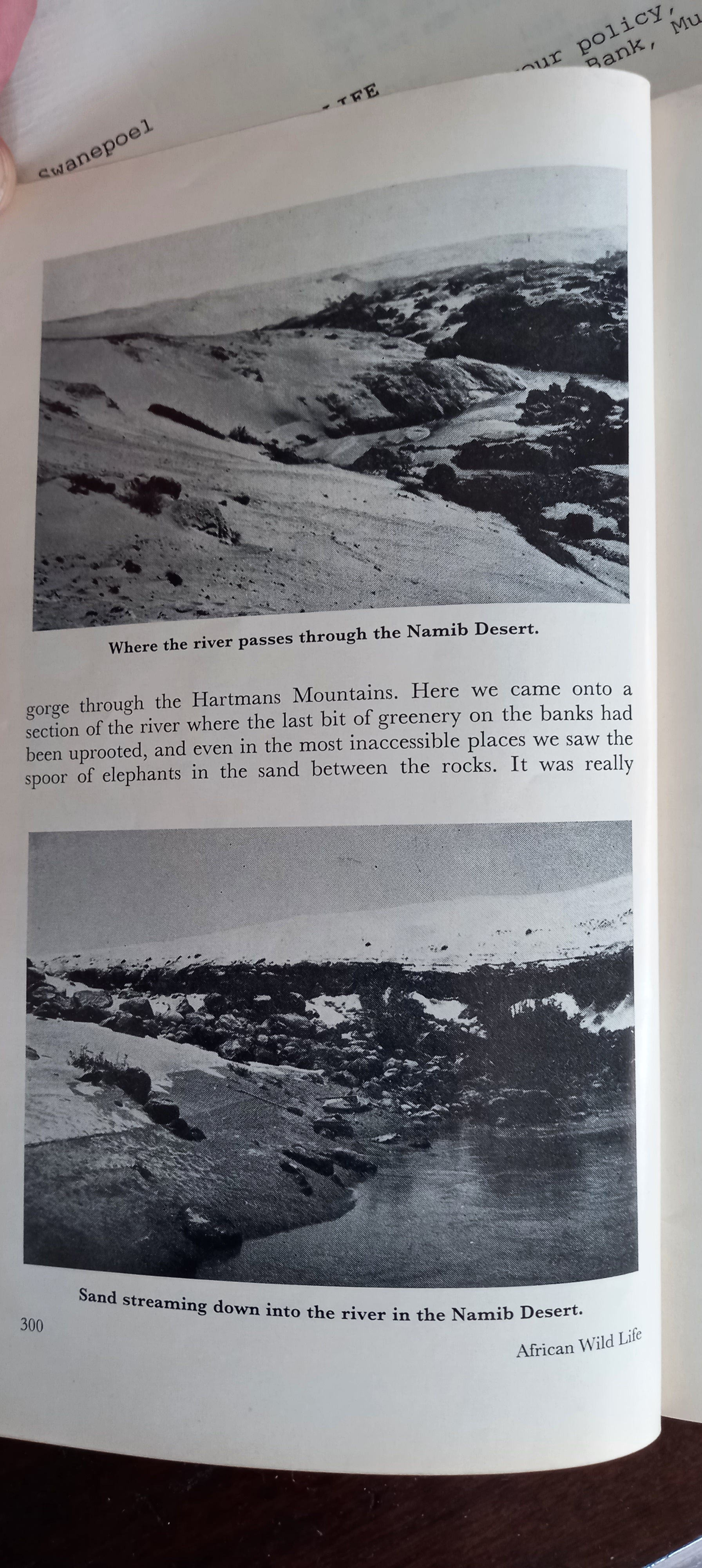
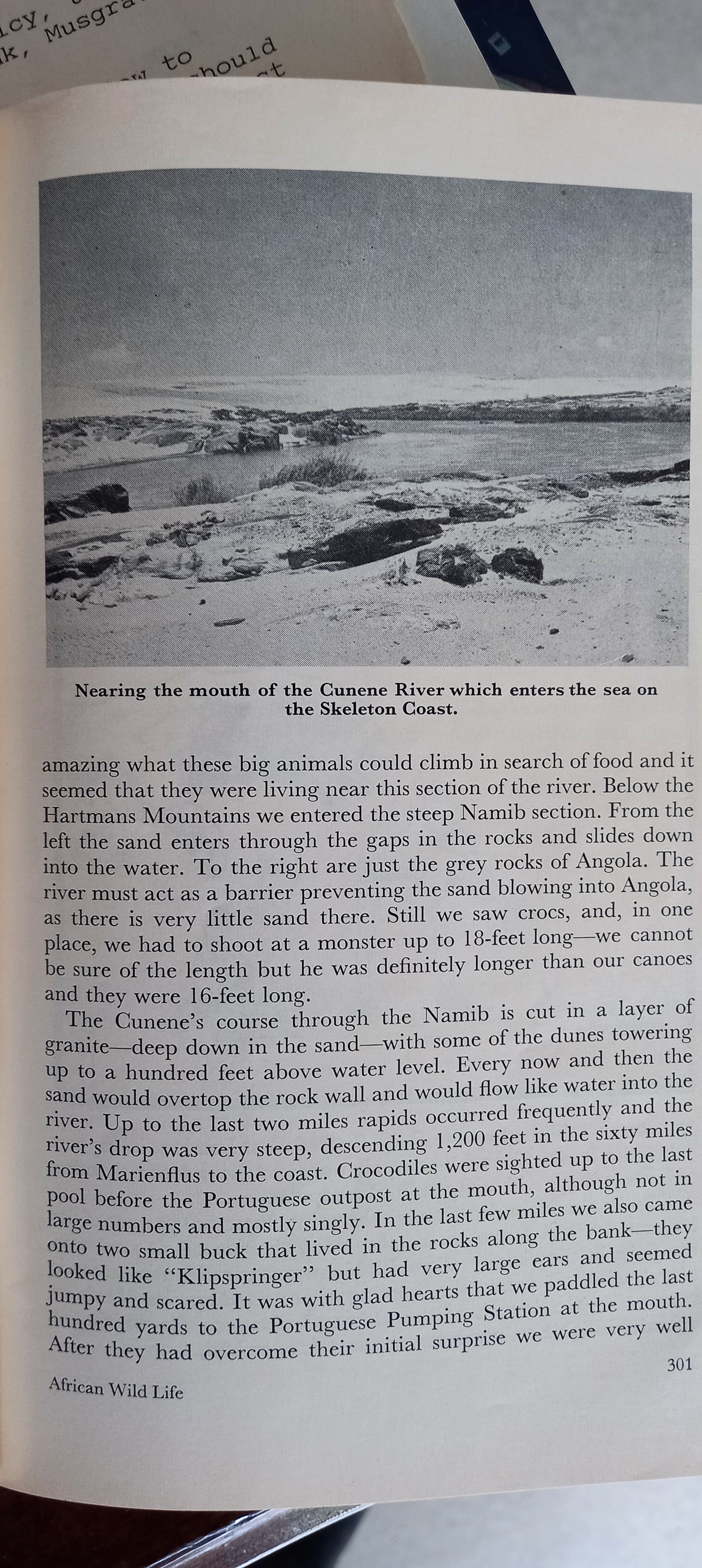
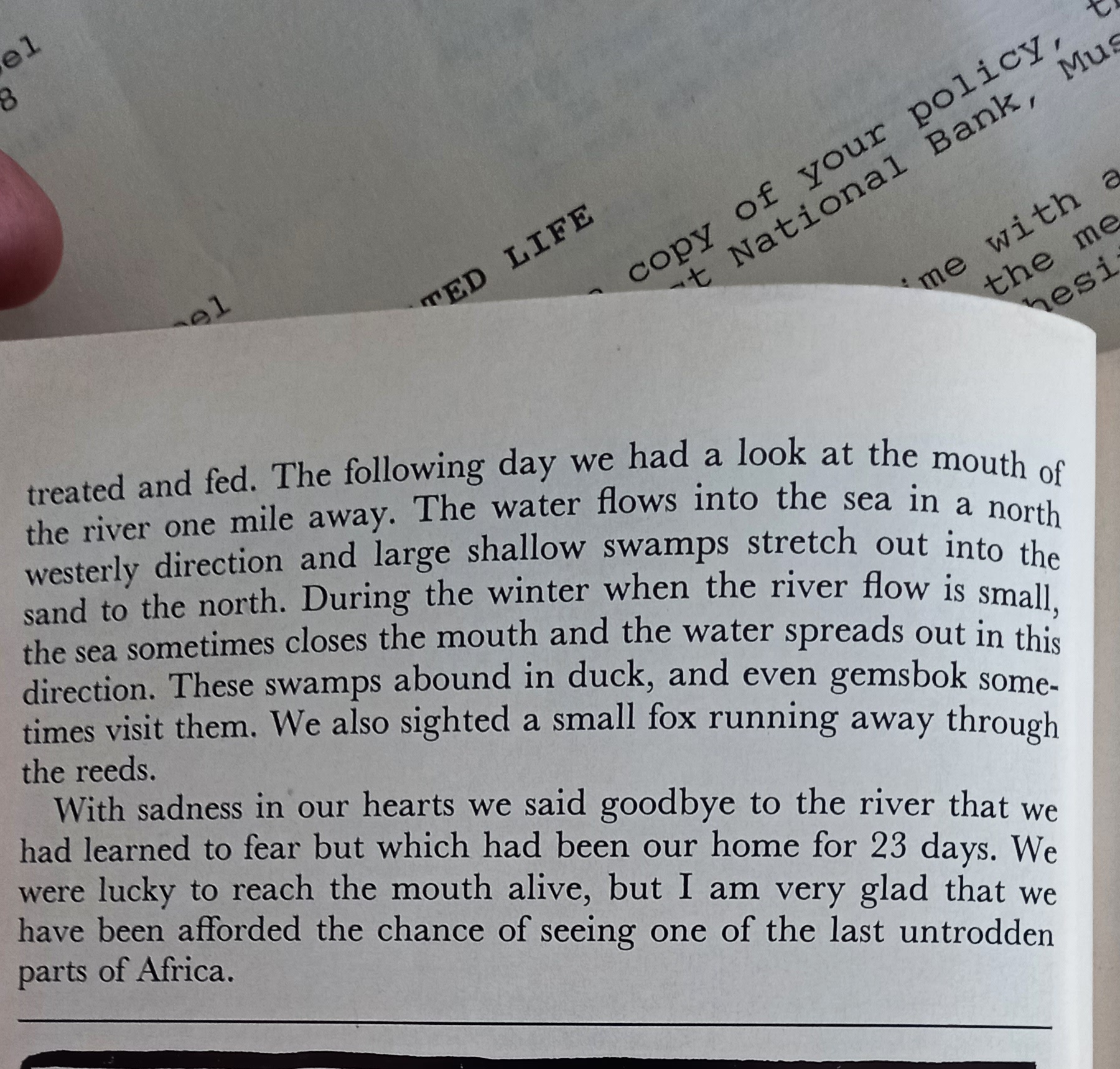
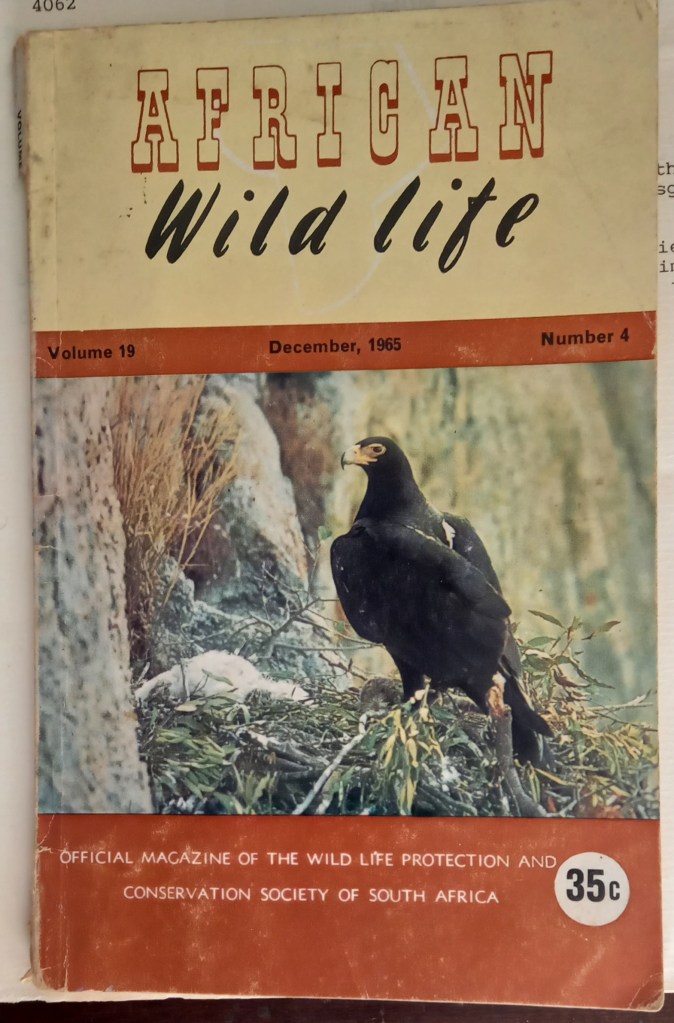
    While clearing out my stuff I found a 1965 African Wildlife magazine we used to subscribe to. It contained Willem van Riet‘s tale of his and Gordie Rowe’s trip down the Cunene river – blind (unscouted) trip down the Cunene! Shades of Powell’s first trip down the Colorado! I took photos to quickly save it here. Small differences between the two rivers: No Crocs in the Colorado! and Epupa Falls actually falls, like Lava Falls doesn’t.

    ~~oo0oo~~

    I could tell Willem wrote this account sober. His tales after a few beers are way more dramatic and epic! In fact, moerse dramatic.

    ~~oo0oo~~

  • Two Colorado River Trips

    Two Colorado River Trips

    In 1984 fifteen South African kayakers drifted 300 miles down a full Colorado river through the Grand Canyon, from Lee’s Ferry to where the current now dies in Lake Mead, arrested since 1936 by the massive concrete Hoover Dam. Our trip was amazing and awe-inspiring but one couldn’t really call it an ‘expedition’ as we were guided by people who had been there before; and we were catered for, and we were just fifteen of about twenty thousand people who trip the canyon each year. Admittedly few do it in kayaks, most going in inflatable rafts. Some still use dories similar to the wooden ones Powell used on the first float down the river.

    THE CANYON: Recent studies support the hypothesis that the Colorado River established its course through the area about 5 to 6 million years ago, exposing around two billion years of Earth’s geological history in the various layers as you descend. Current archaeological evidence suggests that humans first reached the Grand Canyon area as far back as 10,500 years ago, and inhabited the area around 4,000 years ago.

    In 1540, led by local Hopi guides, Spanish Captain Lopez de Cardenas reached the rim of the Grand Canyon on foot; In 1776 a Spanish priest was taken by a Havasupai trader to his place in Havasupai Canyon, again on foot.

    In 1857 a party ventured about 300 miles up the river from the mouth in the Sea of Cortes in a 54ft steamboat to Black Canyon, downstream of the present Lake Mead.

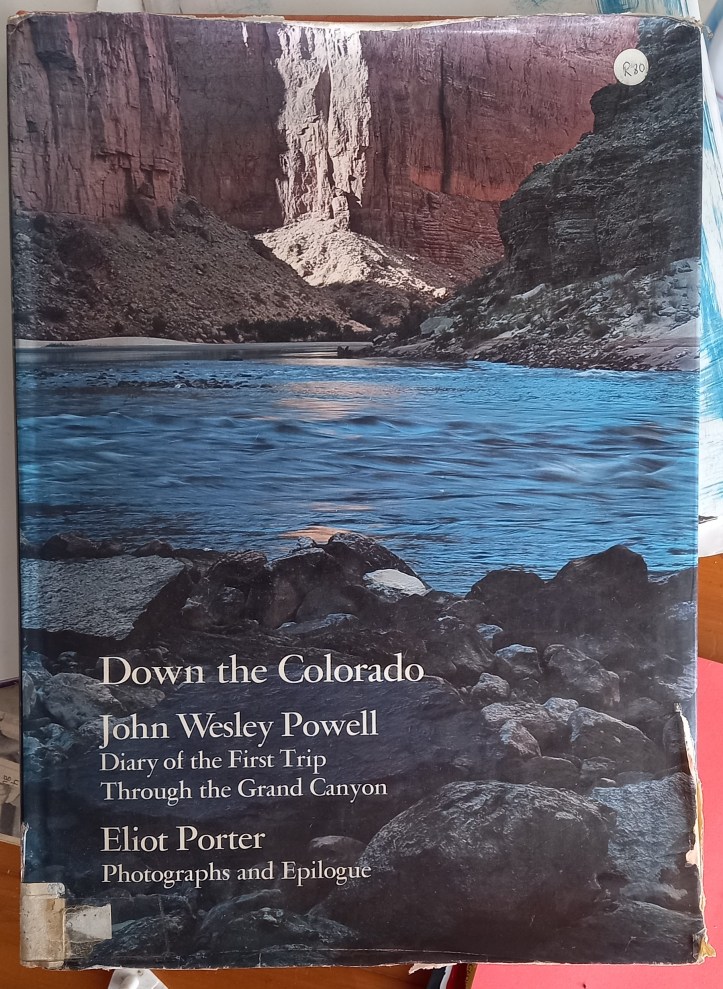
    THE FIRST DOWN-RIVER TRIP: The first known trips that floated downstream through the whole of the deep canyonlands were in 1869 and 1871, led by an adventurous one-armed Major with a scientific bent, John Wesley Powell. He kept a diary of his first trip, but no pictures; I have the diary in a beautiful book published a hundred years later:

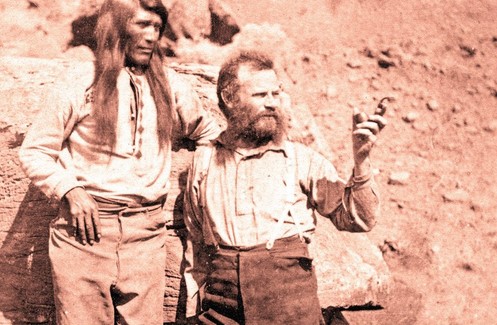
    Powell led a party of ten men in four wooden boats 1000 miles down the Green river, into the Colorado river and through both Glen Canyon and the Grand Canyon to below where we finished. As almost always on any continent, local guides – in this case Native Americans – helped them. Most European ‘explorers’ were guided to and through places, local people showing them their countries, more than lone intrepid explorers.

    – Map Grand Canyon Powell 1869 – One Trip, One Expedition! –

    This was different. It’s very unlikely any humans had actually floated down this whole course – especially the wildwater sections. Read much more about this amazing 1000 mile river trip – all the way through these amazing river canyons – on the Green River, and then on the Colorado River, through beautiful Glen Canyon (now drowned under Lake Powell) and the awe-inspiring Grand Canyon.

    The expedition had little communication with the world outside the valley, leading to rumours they were lost; many reports on the expedition while they were gone were written, mostly made-up to sell newspapers, and some including obituaries. Powell apparently enjoyed reading his own obituary on his way to New York after the trip ended! What actually happened on the three-month trip is in doubt. New diaries have surfaced that show there were probably tensions leading to people abandoning the journey. Powell’s hero status led to most historians glossing over any doubts. Amazing that one hundred and fifty years later we can still uncover new diaries, new information, new sources – including interviews with descendants of other trip members – that add to our knowledge.

    NEW BOOK: John Wesley Powell’s 1869 expedition down the Green and Colorado Rivers and through the Grand Canyon continues to be one of the most celebrated adventures in American history, ranking with the Lewis and Clark expedition and the Apollo landings on the moon.

    For nearly twenty years author Don Lago has researched the Powell expedition from new angles, traveled to thirteen states, and looked into archives and other sources no one else has searched. He has come up with many important new documents that change and expand our basic understanding of the expedition by looking into Powell’s crew members, some of whom have been almost entirely ignored by Powell historians. Historians tended to assume that Powell’s was the whole story and that his crew members were irrelevant. More seriously, because several crew members made critical comments about Powell and his leadership, historians who admired Powell were eager to ignore and discredit them. Lago offers a feast of new and important material about the river trip, and it will significantly rewrite the story of Powell’s famous expedition. His book is not only a major work on the Powell expedition, but on the history of American exploration of the West.

    Book with more Detail on the Powell Expedotion thru the Canyons of the Green and Colorado rivers - Don Lago

    ~~~oo0oo~~~

    TAKE A TRIP: Here’s a 23 minute video of a six-day raft trip down the canyon on quite a low river. Turn the sound down – it’s just muzak. The footage gives a good glimpse of the magnificent scenery.

    Here’s a short report on an 18-day raft trip through the canyon – interesting how the popularity of this adventure means one has to enter a lottery to get allocated your own private trip down the canyon – getting your turn to go may take many years! Apply now!

    Or join one of the sixteen commercial outfits who’ll take you down the river in their craft, as we did. They’ll guide you and feed you and tell you about ‘their’ canyon.

    ~~~oo0oo~~~

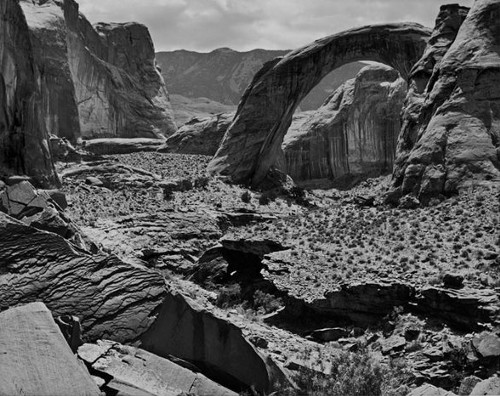
    – Rainbow Arch in Glen Canyon – now underwater –

    Above the Grand Canyon the Powell party passed through beautiful Glen Canyon. The feature pic above this post and this one here show Glen Canyon, which is now gone – drowned beneath the waters of Lake Powell. An environmental desecration committed so crops could be grown where they shouldn’t be grown, so golf courses could be made where they shouldn’t be, and so lawns could be watered and mowed where there should not be lawns. NO MORE DAMS! Hydro power is very seldom green power.

    ~~oo0oo~~

    Great news in 2021 that four dams on the Klamath river in Oregon and California are going to be removed, allowing the river to flow free again. And slowly – very slowly – the river and its valleys will hopefully recover.

    Free Glen Canyon

    The Glen Canyon dam should be removed, Lake Powell should go, Glen Canyon should be revealed again in all its splendour. Let’s never give up that fight. Crazy to think Homo sapiens 2021 model feels he “cannot” halve the size of his lawn – which he seldom walks on, and then usually just to burn fossil fuel over, to mow it under the critical eye of his neighbour!) When by simply doing so, he could save a river and its valley! And save money for himself.

    Update 2025: The Klamath runs free! It happened! The first descent of the full length of the Klamath was succesfully paddled!

    ~~oo0oo~~

  • What’s Wrong Swanie?

    What’s Wrong Swanie?

    This was the problem: Most of the guys and gals I would do river trips with had a serious deficiency: a lack of some specific paddling strokes one should use on a river trip. They all had the boring stroke where you reach forward, grab a big helping of the river, and pull it back to level with your hip. Over and over. Most of them, however seldom executed my favourite stroke: Place the paddle on your lap, fold your arms, gaze around in awesome wonder, and allow the boat to gently rotate in the current. The Swanie 360° River Revolution, or Swannee River for short.

    They were racing snakes. They’d say ‘Let’s Go,’ and then they would actually do that! Isn’t that weird? Then they’d look back, wait till I eventually caught up and ask, ‘What’s Wrong Swanie?’ I was, of course much too polite to reply, ‘Nothing. What’s The Hurry?’ I’m polite that way. What I meant was, ‘I don’t want this day to end.’

    And so we would gently bumble downriver. Every few hundred metres they’d wait, or one of them would paddle upstream (more weirdness) back to me and ask ‘What’s Wrong Swanie?’

    Strange. Although I must admit, you wouldn’t want me in charge of timing or logistics on a trip!

    When the current was swift enough my speed could match theirs. It was the flat water that was tricky. In their defence, they were actually going slowly and enjoying the scenery in awesome wonder too. It’s just that their slowly and mine was out of sync!

    ~~oo0oo~~
    Watch Luca Sestak (then 14yrs-old) show us how to do the Swannee River:

  • Whittington Court

    Whittington Court

    ‘We think it’s him, but we haven’t been able to catch him. He must distribute the leaflets in the absolute dead of night, probly just pre-dawn. They’re scurrilous. Well, we’ll see if they end when you move in.’

    Owners in the shareblock building were gossiping about the mystery vendetta that had been waged for a long time in the block. Someone pecked away on an old typewriter, telling tales (and truths?) about other residents and criticising what the managing committee did and didn’t do for the building. They suspected their mystery person was the owner I had just bought from, and they were looking forward to his leaving to stay far away in the little dorp of Richmond out in the sticks.

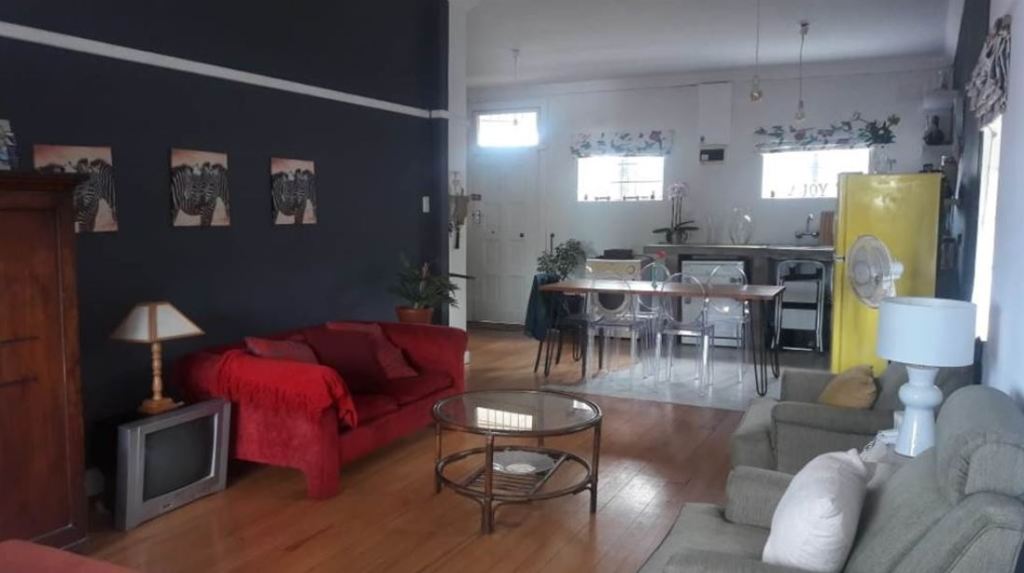
    My first own home! A spacious, high-ceilinged one (‘and a half’) bedroom flat in a good-looking ‘Art Deco’ building in Marriot Road one block up from Cowey Road.

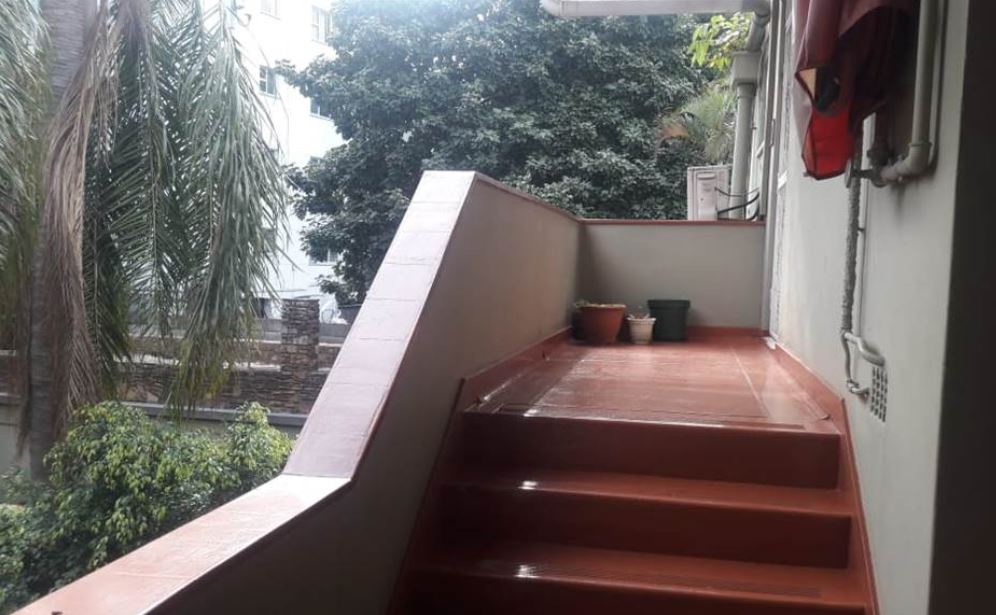
    – the stairs to my door – which cascaded as Vomit Waterfall one night, rumour had it – or Chunder Cataract – or Ralph’s Rapid –

    On the day I moved in I was ambushed by a gang of Kingfisher Canoe Club mates who had spread the word ‘Party at Swanie’s New Place Tonight!’ The electricity wasn’t yet connected, but no problem to these hooligans: They dangled an extension cord out the window and politely asked the elderly Scots couple below me to please plug it in. Bless ’em they did, and hats off to them they withstood the temptation to switch off as the noise lasted long into the night! There was some excess (did I mention they were canoeists!?) and tales – exaggerated surely? – were told of vomit streaming down the steps.

    Once I settled in and my fellow occupants realised I was obviously the innocent party in the opening night cacophony (ahem!), I was told more about the strange old geezer I’d bought from. And I was told of a mysterious campaign of leaflets surreptitiously distributed, pointing out people’s faults and complaining of things not done, etc. in harsh language. They suspected it was him, but were never able to prove it. Soon I was able to solve the mystery: A secret compartment in the lounge cupboard revealed copies of his printed leaflets – the vendetta stash!

    ~~oo0oo~~

    I bought ca.1984 for R45 000. Sold ca.1992 for R90 000. I saw it offered for sale recently (2021) for R967 000. That’s where I found these pics. The indoor one is a big change from how it was – they opened up the small kitchen so now the lounge and kitchen are all one big room. It looks great.

    ~~oo0oo~~

  • Launch Aborted

    Launch Aborted

    After a long gap from paddling I decided to relaunch my river paddling career, striking fear into the heart of all contenders.

    I would need a boat. Being a cheapskate I searched far and wide, high and low and I found one far and low. In PMB dorp. A certain gentleman in fibreglass, Hugh ‘user-friendly’ Raw had one for sale at a bargain price. His glowing description of the craft made me know this was the boat with which to relaunch – OK, launch – my competitive career in river paddling.

    At Hugh’s place he showed me the boat and it did indeed look pristine. I went to pick it up and load it on my kombi’s roofrack, but Hugh held me back with a firm, ‘NO. Let me have that done for you!’ Customer service, I thought. User-friendly. So I watched as he got his two biggest workers to load the boat for me, which they did with ease. Big, strapping lads.

    On the way back to Durban the kombi seemed to be struggling. I had to gear down on the hills, never had that before. Strong headwind, I thought.

    The boat stayed there till Thursday, the big day. The first day of my relaunched paddling life. The dice on the Umgeni river outside my Club, Kingfisher. And then I understood. Getting the boat down off my roofrack took a Herculean effort. When I plopped it into the water the Umgeni rose two inches.

    I can say this: Rands-per-Kg – pound-for-pound – I got the best bargain from Hugh ‘user-friendly’ Raw of that century. The 20th, it was.

    While I was contemplating thus, and thinking I’m loving being back on the water, what kept me away so long?, Ernie yelled at me through his megaphone and the water exploded around me. What the hell!? All these fools around me suddenly went berserk, water was flying everywhere. It took a few minutes before calm returned and I was sitting bobbing on the disturbed surface. This tranquility was again ruined by Ernie yelling through that same damned megaphone: ‘Swanie what are you waiting for!?’

    Jeesh! I headed off after the flotilla disappearing in the distance and after twenty or thirty strokes it suddenly came to back to me in a blinding flash of realisation: I knew why I had stopped paddling. It’s damned hard work.

    And race days are noisy, chaotic things.

    ~~oo0oo~~

  • Duzi 1972

    Duzi 1972

    I canoed the Vrystaat Vlaktes thanks to Charles Ryder, who arrived in Harrismith in about 1968 or ’69 I’d guess, to start his electrical business, a rooinek from Natal. He roared into town in a light green Volvo 122S with a long white fibreglass thing on top of it like this:

    I asked:
    What’s that?
    It’s a canoe
    What’s a canoe?
    You do the Dusi in it
    What’s the Dusi?

    Well, Charlie now knew he was deep behind the boerewors curtain! He patiently made me wiser and got me going and I got really excited the more I learned. I decided I just HAD TO do the Dusi. What could be more exciting than paddling your own canoe 120km over three days from Pietermaritzburg to the sparkling blue Indian Ocean at the Blue Lagoon in Durban? Charlie made it sound like the best, most adventurous thing you could possibly think of. He showed me how to paddle (how was I to know at the time he was making me a ‘Left Feather’?) and was so generous with his time. Both in paddling and with Harrismith’s first Boy Scouts troop, which he helped establish.

    I started running in the mornings with a gang of friends. Tuffy Joubert, Louis Wessels, Fluffy Crawley, Leon Blignaut, who else? We called ourselves the mossies as we got up at sparrow’s fart (and because we weren’t makoue. A teacher named Makou trained our rivals. We couldn’t join them cos we considered ourselves untrainable). Then I would cycle about two miles  to the park in the afternoons and paddle on the flat water of the mighty Vulgar River in Charles’ Limfjorden, or Limfy, canoe, which he had kindly lent me/given to me. It was the fittest I’ve ever been, before or since.

    Overnight I would leave it on the bank tethered to a weeping willow down there. One day around Christmas time with only a couple of weeks to go before Dusi I got there and it was missing. I searched high and low, to no avail. So I missed doing the Dusi. Not that I had done anything but train for it – I hadn’t entered, didn’t know where to, didn’t belong to a club, didn’t have a lift to the race, no seconds, nothing!

    Still enthused, though, I persuaded my mate Jean Roux to join me in hitch-hiking to the race. We were going to do the Duzi! All except the part where you used a boat.

    We got to Pietermaritzburg, and early the next morning to the start in Alexander Park. Milling around among the competitors and their helpers, we watched the start and as the last boats paddled off downstream Alexandra Park started emptying, everyone seemed in a big hurry to leave. We asked Wassup? and someone said, We’re Following Our Paddler! so we bummed a lift with some paddler’s seconds to the overnight stop at Dusi Bridge. We slept under the stars and cadged supper from all those friendly people. They let us continue with them the next day to the second overnight stop at Dip Tank and on the third and last day to the sea, the estuary at Blue Lagoon, following the race along the way. In Durbs we slept on the beach, but were herded off it by the cops, so we slept on the stoep at the Point Road police station – and that’s another story! And then I spose we hitched back to Harrismith – I can’t remember – must ask Jean.

    Back in the City of Sin and Laughter I continued the search for my missing Limfy, and eventually found a bottle floating in the Kakspruit, a little tributary that flows down from Platberg and enters the river downstream of the weir. I was born on the left bank of this Kakspruit about 5km upstream of here. The bottle had a string attached to it. I pulled that up and slowly raised the boat – now painted black and blue, but clearly identifiable as I had completely rebuilt it after breaking it in half in a rapid in the valley between Swinburne and Harrismith. Come to remember, that’s why Charles gave it to me! I knew every inch of that boat: the kink in the repaired hull, the repaired cockpit, the wooden gunwales, brass screws, shaped wooden cross members, long wooden stringer, shaped wooden uprights from the cross members vertically up to the stringer, the white nylon deck, genkem glue to stick the deck onto the hull before screwing on the gunwales, the brass carrying handles, aluminium rudder and mechanism, steel cables, the lot. In great detail.

    ~~oo0oo~~

    Except! I recently (2020) cleared out my garage under lockdown and discovered this: My notes preparing for the Duzi! I was less disorganised than I remember. I may not have DONE much, but at least I did do a bit of planning! Check: “Phone Mr Pearce” (Duzi boss) – not done; and “Buy canoe?” – not done; uh, OK, maybe not so very well organised!

    Graeme Pope-Ellis won his first Duzi that year.

    ~~oo0oo~~